HONG KONG – Hong Kong leader Carrie Lam said on Tuesday “ideologies” posed risks to national security and urged parents, teachers and religious leaders to observe the behaviour of teenagers and report those who break the law to the authorities.
The financial hub has taken a swift authoritarian turn since China’s imposition of a sweeping national security law last year and changes to its political system to reduce democratic participation and oust people deemed disloyal to Beijing.
At her weekly news conference, Ms. Lam expressed dismay at some residents mourning the death of a 50-year-old who stabbed a policeman before killing himself on July 1, the anniversary of the former British colony’s return to Chinese rule and the Chinese Communist Party’s centenary.
“For a long time, citizens have been exposed to wrong ideas, such as achieving justice through illegal means,” Ms. Lam told reporters, adding that national security risks stemmed not only from “public order” acts, but also from ideology.
The city has been polarised since protesters took to the streets in 2019 demanding greater democracy and accountability for what activists called police violence. Authorities have said the protests were fuelled by foreign forces and exposed risks to national security.
Since the security law was introduced, the most prominent government opponents have been jailed or fled abroad. Critics say the legislation has crushed the city’s wide-ranging rights and freedoms, while supporters say it has restored stability.
Government departments “shouldn’t allow illegal ideas to filter through to the public through education, broadcasting, arts and culture, beautifying violence and clouding the conscience of the public,” Ms. Lam said.
“I also call on parents, principals, teachers, and even pastors to observe acts of teenagers around them. If some teens are found to be committing illegal acts, they must be reported.”
Police and security officials said the stabbing of the 28-year-old policeman was a “terrorist,” lone-wolf attack, based on unspecified materials found on the attacker’s computer.
People went to the scene of the attack on Friday, some with children, to pay their respects to the attacker and lay flowers, drawing condemnation from Ms. Lam and other officials.
Lam said residents should not be deceived by messages circulating online suggesting the government had any responsibility for the violence, or by slogans such as “there’s no violence, only tyranny.”
“Do not look for excuses on behalf of the violent,” Ms. Lam said. – Reuters
SINGAPORE – Singapore researchers have developed a smart foam material that allows robots to sense nearby objects, and repairs itself when damaged, just like human skin.
Artificially innervated foam, or AiFoam, is a highly elastic polymer created by mixing fluoropolymer with a compound that lowers surface tension.
This allows the spongy material to fuse easily into one piece when cut, according to the researchers at the National University of Singapore.
“There are many applications for such a material, especially in robotics and prosthetic devices, where robots need to be a lot more intelligent when working around humans,” explained lead researcher Benjamin Tee.
To replicate the human sense of touch, the researchers infused the material with microscopic metal particles and added tiny electrodes underneath the surface of the foam.
When pressure is applied, the metal particles draw closer within the polymer matrix, changing their electrical properties. These changes can be detected by the electrodes connected to a computer, which then tells the robot what to do, Tee said.
“When I move my finger near the sensor, you can see the sensor is measuring the changes of my electrical field and responds accordingly to my touch,” he said.
This feature enables the robotic hand to detect not only the amount but also the direction of applied force, potentially making robots more intelligent and interactive.
Tee said AiFoam is the first of its kind to combine both self-healing properties and proximity and pressure sensing. After spending over two years developing it, he and his team hope the material can be put to practical use within five years.
“It can also allow prosthetic users to have more intuitive use of their robotic arms when grabbing objects,” he said. – Reuters
SYDNEY – The premier of Australia’s New South Wales (NSW) said on Tuesday she aims to decide within the next 24 hours whether to extend a COVID-19 lockdown in Sydney that is due to end on Friday as new infections dropped in the country’s most populous state.
Just 18 new locally acquired COVID-19 cases were detected in NSW on Tuesday, half of the previous day’s number. But Premier Gladys Berejiklian said the decision would also take into account her administration’s determination to make the current lockdown in the city of five million people the last, as it aims to step up vaccinations.
“That will factor into our decision-making as to whether it (the two-week lockdown) finishes on Friday or whether we continue for a period longer,” Ms. Berejiklian told reporters. “I hope to be able to communicate to the community tomorrow on what next week looks like.”
Sydney went into a hard lockdown on June 26 to quash the latest flare-up – an outbreak of the Delta variant of COVID-19 – but officials have been frustrated after finding new infections linked to illegal gatherings and people flouting social distancing rules, raising prospects of an extension.
Of Tuesday’s cases, 16 were either in isolation throughout or for part of their infectious period. Two cases spent time in the community while they were infectious.
With Sydney battling its worst COVID-19 outbreak of 2021, total infections in the flare-up crossed 330 since the first case was detected nearly three weeks ago in a limousine driver who transported overseas airline crew.
Speedy contact tracing, lockdowns, tough social distancing rules and a high community compliance have kept Australia’s COVID-19 numbers much lower among developed economies, with just over 30,800 cases and 910 deaths since the pandemic began. – Reuters
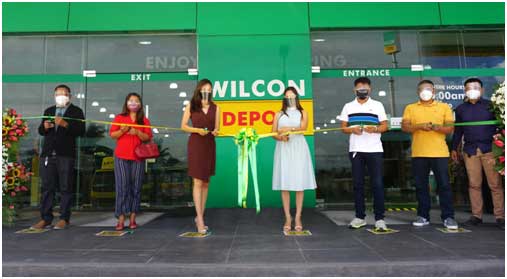
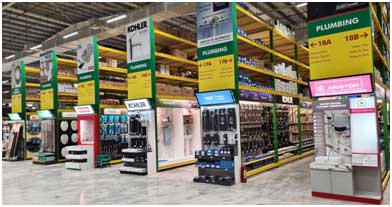
The giant home retailer Wilcon Depot, known for its high-quality home improvement and building needs, continues its expansion with its newest store location at Cordon, Isabela.
The successful opening of its first store in the province of Isabela on June 25, 2021, brings the Philippines’ leading home retailer store count to 67 across the country, wherein 18 branches are in Metro Manila and 49 stores located in key cities and municipalities of Luzon, Visayas, and Mindanao.
The company sees the municipality of Cordon as a viable place for their newest store. Valued shoppers can enjoy great home and building shopping every day from 8:00 AM to 7:00 PM with Wilcon Depot Cordon, Isabela located at Purok 2, Brgy. Malapat, Cordon, Isabela.
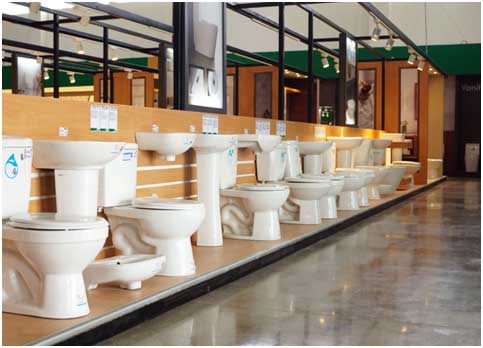
Isabelan homeowners and builders can now shop through the newest store and explore the wide array of product selections ranging from Tiles, Sanitarywares, Plumbing, Furniture, Home Interior, Building Materials, Hardware, Electrical, Appliances, and other DIY items.
“Wilcon gives our valued customers, the Filipino homeowners and builders across the Philippines, the widest product selections and great customer experience that they deserve. With this new store opening, we are keeping our promise to help Filipino homeowners, especially the Isabelan to build, improve, and refine their homes for a sustainable and comfortable life,” said Wilcon Depot SEVP-COO Rosemarie Bosch-Ong.
Photo shows: (L-R) AVP for Engineering Nicholas Agbing, Cordon Municipal Vice Mayor Hon. Jane Ngipol, Isabela 4th District Representative Hon. Alyssa Sheena Tan, Cordon Municipal Mayor Hon. Lynn Zuniega, representative from the Office of the Vice Governor Hon. Faustino G. Dy III, Wilcon Depot AVP for Information Technology Rowel Mapolon, and AVP for Sales and Operations Francisco Lazaro
The inauguration of its 67th store nationwide was graced with the presence of Wilcon Depot AVP for Sales and Operations Francisco Lazaro, AVP for Engineering Nicholas Agbing, and AVP for Information Technology Rowel Mapolon together with the local government officials—Cordon Municipal Mayor Hon. Lynn Zuniega, Vice Mayor Hon. Jane Ngipol, Isabela 4th District Representative Hon. Alyssa Sheena Tan, and representative from the Office of the Vice Governor Hon. Faustino G. Dy III. A video conference with Wilcon Depot President and CEO Lorraine Belo-Cincochan and SEVP-COO Rosemarie Bosch-Ong was also held before the official ribbon-cutting ceremony.
Photo screenshot shows: (from top left) Wilcon Depot President and CEO Lorrain Belo-Cincochan, SEVP-COO Rosemarie Bosch-Ong, Cordon Municipal Mayor Hon. Lynn Zuniega, Vice Mayor Hon. Jane Ngipol, and Isabela 4th District Representative Hon. Alyssa Sheena Tan
“Recognized as the queen province of the Philippines, Isabela is naturally beautiful and rich in agriculture business, human resource, and biodiversity. Wilcon is thrilled to be part of the growing and progressive province. The new store opening here in Cordon is a fulfillment of our #FlyingHighTo100 store expansion campaign of having a 100-strong store network by 2025, barring any unexpected external factors,” said Lorraine Belo-Cincochan, President and CEO of Wilcon Depot.
Wilcon Depot Cordon offers endless home products and solutions. You’ll never run out of options as it provides everything you need for your home. Discover the various exclusive brands and in-house brands like GROHE and KOHLER Sanitarywares, FRANKE Kitchen Systems, POZZI Bathroom Solutions, Sanitarywares, Whirlpool Bathtubs, Ceramics, and Shower Enclosures, ARISTON Water Heaters, GEBERIT Monolith Puro, MACROAIR HVLS Fans, BULL Outdoor Products, RUBI Tile Cutter, and REHAU Premium PPR pipes.
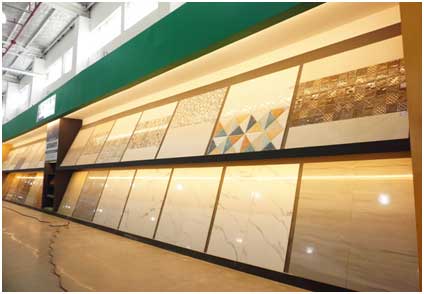
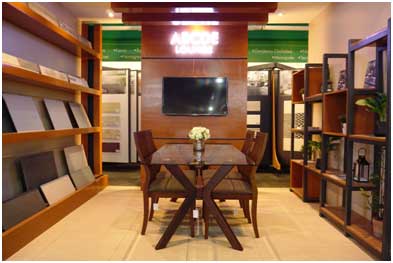
Premium quality Italian tile brands such as NOVABELL, ENERGIE KER, GARDENIA, IMOLA, HERBERIA, OPERA, CASTELVETRO, KERADOM, NAXOS, DOM, and VERSACE alongside with Spanish tile brands ALCALAGRES, GRESPANIA, ROCERSA, CIFRE, EMIGRES, KEROS, TESANY, ONIX, OSET, VITACER, GRUPO HALCON, MYR, ECO CERAMICA, and ETILES are showcased in their Tile Studio.
Asian tile brands are also available like ARTE, SOL, LOLA, HUANQIU, VERONA, PICASSO MOSAIC, ROMAN, MULIA, KIA, CHINA NATURAL GRANITE, BASEL, SAIGRES, and GEMMA.
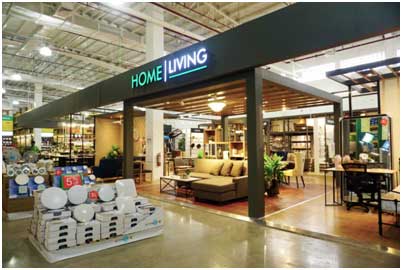
HERITAGE Furniture and HEIM Home Interior, Furniture and Decor are exhibited at the Home Living Showroom. HAMDEN Kitchen Appliances, KAZE Ceiling Fans and Air conditioners, and ALPHALUX Lighting Solutions are displayed in the Appliance, Kitchen, Lighting section. HOMEBASICS and INTERDESIGN Housewares, BIRKE faucets and Bathroom Accessories, SEFA Specialty Bathroom Faucets, Bathroom Accessories, Shower Heads, and Kitchen Organizers, SUNCRUST BBQ Grills, LANDJACK Bicycles, CROWN and PRUSSIA Kitchen Sink QUARTEX Quartz Kitchen Sink, ELECTRON Generators, DIRECT HARDWARE, TRUPER Tools, P.TECH Builder’s Aid and Quartz Stone, FOREST Wood Products, IGLOO and RUBBERMAID Coolers, UNITED SOLUTIONS Outdoor trash bins, and SOLUTHERM PPR pipes and 304 stainless Steel Pipe Fittings are displayed in the DIY Section of the store.
Wilcon Depot gives the utmost customer satisfaction and redefines the home and building shopping experience through their Design Hub, Home Living Showroom, Tile Studio, and Architects, Builders, Contractors, Designers, and Engineers (ABCDE) Lounge including their value-added services such as ample free parking spaces, reliable delivery service, and tile cutting service.
For a bigger and better home shopping experience, valued customers nationwide can now also shop online at Wilcon by visiting shop.wilcon.com.ph. Shop for all your all-around home needs and have your items delivered right at your doorsteps or choose to pick-up in store. Customers can conveniently pay with their credit card, debit card, BancNet, and GCash.
Customers can also enjoy the Browse, Call, and Collect or Deliver and Wilcon Virtual Tour, and these shopping options give you a safe and convenient shopping journey. Wilcon also provides contactless payment options like bank transfers, GCash, PayMaya, Instapay, PesoNet, WeChat, and Alipay for customers’ convenience.
To ensure a safe and convenient shopping environment in all Wilcon stores, the company continuously prioritizes the implementation of safety protocols for the health and well-being of both employees and valued customers.
Start building big ideas for your home and experience more of what Wilcon has to offer. Shop now and visit their newest store in Purok 2, Brgy. Malapat, Cordon, Isabela.
Wilcon makes loyalty more rewarding for their valued customers with its loyalty program that offers exclusive perks and discounts. The Wilcon Loyalty Mobile App allows customers to earn and check their points, as well as convert their purchases to rewards after they sign up. The Wilcon Loyalty Mobile App is available for download at the Google Play Store and App Store for free.
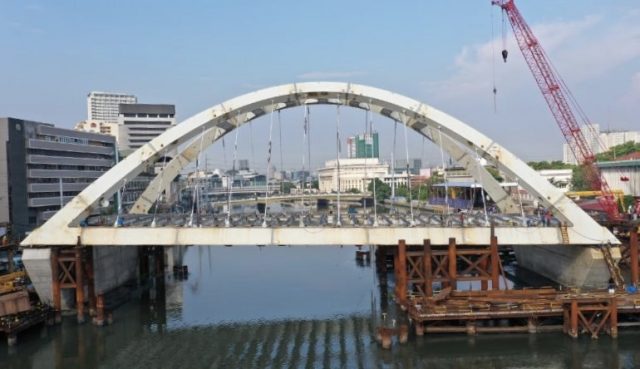
The Binondo-Intramuros Bridge is set to be completed by end-2021. Courtesy of DPWH
Near the center of Manila, construction workers are now rushing to complete a $69-million China-funded bridge by the end of this year after repeatedly missing deadlines.
The Binondo-Intramuros Bridge is set to be among the first to be completed out of the 14 China-funded infrastructure projects in the pipeline. Back in 2016, Philippine President Rodrigo Duterte traveled to Beijing and dramatically embraced China. “I announce my separation from the U.S.,” Duterte said at the time to a packed room of business leaders in Beijing after meeting Chinese President Xi Jinping.
Still, not everyone was convinced the $24 billion in Chinese investments would come without strings attached.
The pledges caused some “reservations” from the start, said former Philippine Economic Planning Secretary Ernesto Pernia, who was among the top officials who signed deals with Beijing. “The quid pro quo seemed logically slanted in China’s favor, the super-powerful one.”
Five years later and about 10 months away from the next election, most big-ticket projects funded by China have yet to break ground or haven’t been approved, with only three under construction.
Even worse, Chinese vessels this year have swarmed disputed territory claimed by the Philippines in the South China Sea — exactly the kind of aggressive moves that Duterte had hoped to avoid by getting closer to Beijing at the expense of the U.S., a long-time treaty ally.
Boxer-turned-senator Manny Pacquiao criticizd the president’s response to Chinese incursions, while Vice President Leni Robredo — the opposition’s possible bet for the top post — has blasted Duterte for “selling out” to China and throwing away the nation’s sovereignty by describing as “a scrap of paper” the 2016 international arbitration ruling favoring the Philippines’ territorial claims.
“Duterte’s policy of tilting toward China has only produced false Chinese promises of development and of Beijing’s friendship while it tries to take more island territory from the Philippines,” said Paul Chambers of Naresuan University’s Center of Asean Community Studies in Thailand.
China originally agreed to provide $9 billion in soft loans, yet Beijing’s loans and grants to the Philippines were at $590 million in 2019, up from $1.6 million in 2016, according to data from the National Economic and Development Authority. It also pledged $15 billion worth of direct investments, yet approved investments totaled $3.2 billion from 2016 to 2020, according to data from the Philippine Statistics Authority.
FIRST IN AID
Japan’s official development assistance dwarfs China’s aid to the Philippines, with $8.5 billion in 2019. Beijing charges higher interest rates on loans that “have clauses on strict confidentiality,” according to Philamer Torio, professor at the Ateneo School of Government in Manila.
“Our traditional allies Japan and the United States continue to be our best funders for official development assistance,” said Torio, who has researched on infrastructure funding.
Duterte’s government has defended the country’s China policy, with Trade Secretary Ramon Lopez saying last month it has reaped economic benefits. Beijing’s significance to the Philippines has increased in the past five years, he said by phone, with China now its top trading partner and with a China Telecommunications Corp. venture becoming one of the nation’s mobile service provider.
China-funded projects “were negotiated to promote the national interest,” Finance Secretary Carlos Dominguez said in April in response to a newspaper report about these deals. Contracts have been disclosed and can be scrutinized by the public, he added.
Describing the relationship as “win-win,” Duterte said last month: “I am confident that my administration’s Build Build Build program, together with the Belt and Road Initiative, will reap long-term benefits for our peoples.”
Duterte’s administration has also said its policies have helped in the South China Sea, even as their Coast Guards had several “dangerous” encounters and officials have recently protested the presence of Beijing’s “maritime militia.” The U.S. has backed the Philippines and expressed concerns over China’s recent actions, which Beijing has said were normal and legitimate.
Presidential spokesman Harry Roque said the Philippine leader succeeded in preventing China from occupying more areas claimed by Manila.
“No new occupation, no new reclamation, we’re at status quo,” Roque said in May. “That’s the legacy of the Duterte administration.”
When asked about the pace of Beijing-funded infrastructure rollout on Monday, Roque said Duterte’s government wants to tap Chinese funding for more projects. “We are satisfied, because we got nothing before,” Roque said at a briefing.
Duterte has maintained friendly ties with China, recently calling Beijing a “ benefactor” and praising it for supplying COVID-19 vaccines. Throughout his term, his positive stance toward China hasn’t hurt his own popularity even though sentiment toward Beijing has plummeted. A Social Weather Stations poll in July last year found trust in China fell from poor to bad, hitting a new low under Duterte.
TRUST ISSUES
Chinese Foreign Ministry spokesman Wang Wenbin on Friday defended the value of the projects. “China and the Philippines always work together to promote cooperation on the basis of mutual respect and mutual benefit,” Wang said. “Relevant projects have also made positive contributions to the Philippines’ economic and social development.”
One big problem the projects face is the Philippines’ lengthy approval process, according to Tina Clemente, a professor at the University of the Philippines’ Asian Center. Chinese investors are also staying away from the country and investing more elsewhere in the region due to structural problems in the business environment such as foreign ownership restrictions, high power costs and poor infrastructure, she said.
“Economic engagement with China is inevitable, but expectations could have been managed better,” said Clemente, who has researched on China’s economic diplomacy. “The hype that was supposed to sell the idea that engaging with China is for our benefit is now backfiring.” — Bloomberg
Philippine inflation eased to a six-month low in June, the Philippine Statistics Authority (PSA) reported this morning.
Preliminary data from the PSA showed headline inflation at 4.1% in June, slowing from the year-on-year rate of 4.5% in May. However, this was still above the 2.5% recorded in June last year.
The latest headline figure is lower than the 4.3% median in a BusinessWorldpoll conducted late last week. Nevertheless, it fell within the 3.9%-4.7% estimate given by the Bangko Sentral ng Pilipinas (BSP) for June.
The June print was also slowest in six months, or since the 3.5% annual rate recorded in December 2020. Prior to the June result, year on year inflation remained unchanged for three straight months at 4.5%.
Year-to-date inflation settled at 4.4%, beyond the BSP’s 2-4% target this year and above the forecast of 4% for the entire year.
Core inflation, which discounted volatile prices of food and energy items, stood at 3%. This was slower than the 3.3% recorded in the previous month, but was steady from the rate recorded in the same month last year.
Core inflation averaged 3.3% so far this year.
“The slower pace in the inflation in June 2021 was primarily due to the lower annual rate of increase in the transport index at 9.6%, from 16.5% in May 2021,” the PSA said in a statement.
The PSA also attributed the easing in June to the slower increase in prices of alcoholic beverages and tobacco at 11.2% from 11.8% in May, clothing and footwear at 1.6% from 1.7%, health at 2.9% from 3.2%, and communication at 0.2% from 0.3%.
Inflation on food items stood at 4.9%, unchanged from May, but still higher compared with the 2.7% posted in June last year.
Meanwhile, the inflation rate for the bottom 30% of income households stood at 4.3% in June, slower than the 4.5% recorded in the previous month, but still faster than the 3% in June 2020.
The inflation rate for the bottom 30% takes into account the spending patterns of this income segment. Thus, its consumer price index differs from that of the average household with the former assigning heavier weights on necessities. — B.T.M. Gadon
Several cities in the Philippine capital region have halted their first-dose vaccination programs as supply from the national government runs out.
Makati City, home to the nation’s main financial district, said the scheduled inoculation of frontline workers receiving the COVID-19 vaccine for the first time won’t push through on Tuesday. It also shut several vaccination sites in malls and schools, the city government said on Facebook.
Paranaque, Caloocan and Valenzuela cities have also stopped first-dose vaccinations as they await for additional supplies, while Malabon and Muntinlupa announced they will no longer entertain walk-ins.
Metro Manila and adjacent provinces account for about two-thirds of the Southeast Asian nation’s economic output. With over a quarter of the nation’s population, vaccination in the capital region is key to boosting domestic demand and reviving the economy after last year’s record slump.
The Philippines will receive about a million AstraZeneca Plc doses from Japan and 170,000 Sputnik V vaccines it ordered from Russia this week, presidential spokesman Harry Roque said on Monday. About 2.87 million Filipinos have been fully vaccinated, less than 3% of its population. — Bloomberg
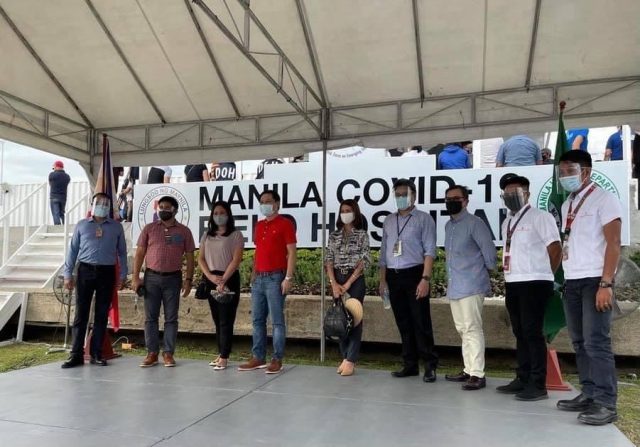
Meralco officials led by Maita David - Head of Central Business Area, Ricky Joseph Martinez - BC Head of Malate BC, Jerry Lao - Head of Central Distribution Services, Engr. Randy Sadac of Manila Electrical Division, Radius Telecoms President/CEO Exequiel Delgado, Noel Espiritu – Manila Sector Manager, Annette de Ocampo - Maynilad AVP and Government Relations Head, and Radius Telecoms COO Jen Dela Paz pose for photo opportunity during the inauguration of the Manila Mega COVID Field Hospital on June 24, 2021.
Consistent with its support to the country’s fight against COVID-19, the Manila Electric Company (Meralco) energized the Mega Field Hospital at Rizal Park in Ermita, Manila.
In particular, Meralco assisted in the power requirement assessment and facilitated timely energization of the facility to supply the applied load 805 kW for the whole hospital and extended 10 spans of primary line, and installing three (3) 333-kilovolt-ampere transformers in the process.
Meralco’s wholly-owned subsidiary Radius Telecoms Inc. provided 25 Red Fiber lines and modems for reliable internet connectivity to both the facility’s admin and staff and for patients to get in touch with their families while in isolation.
The inauguration was led by the Manila local government through Mayor Francisco “Isko Moreno” Domagoso with the presence of key attendees including Sen. Christopher “Bong” Go, Health Secretary Francisco Duque, Executive Secretary Salvador Medialdea, Deputy Chief Implementer, and BCDA President Vince Dizon, and MMDA Chairman Benjamin Abalos as well as Meralco officials led by Central Business Area Head Maita David, and Central Distribution Services Head Jerry Lao, and Radius Telecoms President and Chief Executive Officer Exequiel Delgado.
With a capacity of 344 beds, the field hospital began receiving COVID-19 patients with mild to moderate symptoms. It is open not only to residents of the City of Manila, but also patients from other cities.
Atty. Ray C. Espinosa, Meralco President, and CEO, underscored Meralco’s efforts and stated, “Going beyond the power and light we deliver, this current crisis calls for us to be beacons of reliability and hope. We are keeping the lights on for our front liners and affected Filipinos, and we are one with the government in overcoming this crisis.”
The Manila Mega Field Hospital is located at the western section of Rizal Park, in front of the drive-thru vaccination site at the Quirino Grandstand.
Meralco has been continually energizing treatment facilities, vaccination centers, and vaccine storage in a bid to support economic recovery.
THE NATIONAL GOVERNMENT’S (NG) outstanding debt breached the P11-trillion mark as of end-May as it increased local borrowings to plug the widening budget deficit, the Bureau of the Treasury (BTr) reported.
Preliminary data from the BTr showed the government’s debt stock inched up by 0.73% to P11.071 trillion as of end-May from its P10.991-trillion level as of end-April.
The debt pile rose by 13% since the year started, after the government borrowed an additional P1.276 trillion.
Year on year, the debt stock jumped by 24.5% from P8.89 trillion as of May 2020.
The increase was largely due to higher domestic borrowings in May, which rose by 1.3% to P7.916 trillion from P7.812 trillion as of end-April. This grew by 31.2% from P6.034 trillion a year ago.
The BTr hiked the volume of securities it issued in the local debt market that month, pushing its outstanding government securities 1.4% higher to P7.376 trillion.
The state’s direct loans from the central bank and other domestic obligations remained steady at P540 billion and P156 million, respectively.
Local outstanding debt accounted for 71.5% of the total debt stock.
Meanwhile, the country’s external debt pile slipped by 0.7% to P3.155 trillion as of May from P3.179 trillion the month prior.
The Treasury said this was due to the government’s settlement of P220 million of its maturing debt, and the impact of peso’s appreciation against the dollar that reduced the value of the debt pile by P28.58 billion.
“These more than offset the P5.24-billion revaluation in the peso value of debt denominated in other currencies such as [euro- and Japanese yen-denominated debt],” the BTr said.
Around P55 billion was added to the government’s foreign debt so far, up 1.8% from P3.1 trillion in end-2020 and by 10.5% from P2.857 trillion as of May 2020.
Broken down, direct loans from foreign lenders totaled P1.369 trillion in May, a tad lower than its value in April.
Outstanding global bonds issued by the government also edged down by 0.6% to P1.787 trillion from P1.798 trillion in April.
This consisted of P1.315 trillion in dollar-denominated bonds, P236.34 billion in euro-denominated papers, P131.2 billion in Japanese yen-denominated bonds, P85.57 billion in peso global bonds and P18.7 billion in Chinese yuan-denominated notes.
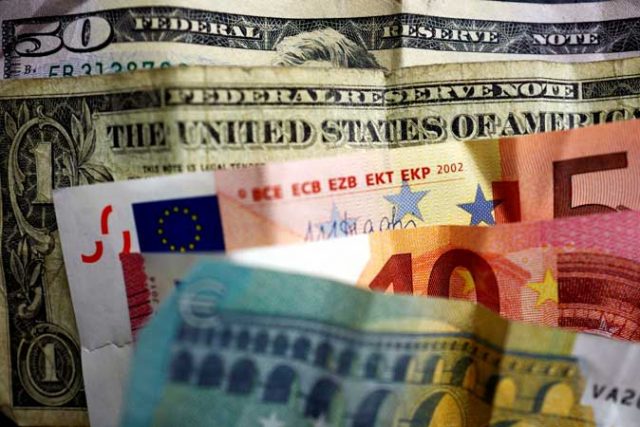
The BTr noted that the data were based on the peso’s P47.72 value against the greenback in May, versus the P48.16-per-dollar exchange rate in April.
Total guaranteed obligations of the government also fell by 2% to P426.59 billion as of May from P434.74 billion in the period ending April, and 8.4% lower year on year.
Outstanding local guaranteed debt reached P233 billion as of May, sliding 2.3% from P238.53 billion in April, and 3.2% smaller than its year-ago level.
External guaranteed obligations likewise dipped by 1.3% to P193.58 billion from P196.21 billion in the previous month. Year on year, this was 14% lower.
The government borrows from local and foreign sources to fund its budget deficit seen to widen to 9.3% of total economic output this year. It started ramping up its borrowings last year when the state had to boost spending to support the economy amid a coronavirus pandemic.
Gross borrowings rose by 17% year on year to P1.766 trillion in the five months to May.
The budget deficit narrowed to P200.3 billion in May from P202.1 billion a year ago as the surge in revenues outpaced spending. However, this was nearly five times larger than the P44-billion deficit in April.
Official estimates showed the govern-ment’s debt stock could rise to P11.98 trillion by end-2021. — Beatrice M. Laforga
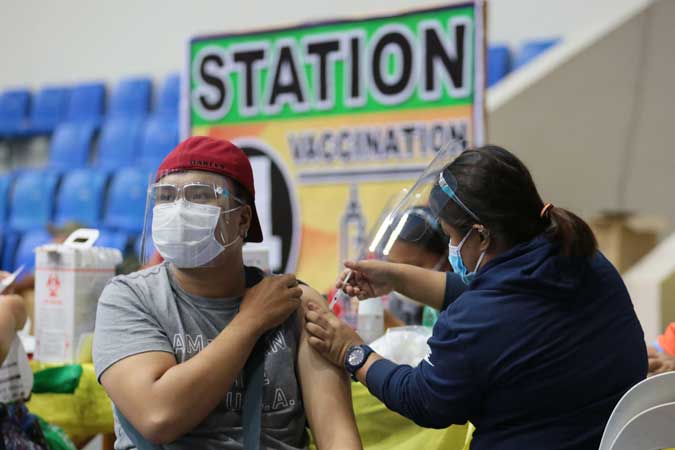
The Health department said 2.86 million have been fully vaccinated in the Philippines as of July 4. —PHILIPPINE STAR/ MICHAEL VARCAS
By Luz Wendy T. Noble and Beatrice M. Laforga, Reporters
MOODY’S ANALYTICS downgraded its growth forecast for the Philippines this year, as a “sluggish” vaccine rollout may leave it vulnerable to a fresh wave of coronavirus disease 2019 (COVID-19) infections.
It now expects the country’s gross domestic product (GDP) to grow by 4.9% this year, a tad slower than the 5.3% estimate it gave in May. The latest forecast is also more pessimistic than the government’s 6-7% full-year target.
In an e-mail to BusinessWorld, Moody’s Analytics Senior APAC Economist Katrina Ell and Associate Economist Dave Chia said GDP growth this year has remained “relatively low” due to the quarantine restrictions in Manila and the slow national vaccination program.
“We are closely monitoring the performance of domestic demand and the COVID situation, and may adjust the GDP forecast if the outlook becomes more optimistic,” the economists said.
By 2022, they expect the Philippines’ GDP to grow by 7%.
In its latest note titled “Macro Roundup: COVID-19 Keeps Denting Southeast Asia’s Recovery” released on Monday, Moody’s Analytics said a faster vaccination drive will be crucial to support the Philippine economy as outlook is already improving amid lower COVID-19 infections and easing restrictions.
“Declining COVID-19 cases in the Philippines pave the way for its economic recovery as retail activities start to pick up. However, the country needs to step up its vaccination efforts, as the sluggish campaign leaves it vulnerable to fresh resurgences,” the report authored by Ms. Ell and Mr. Chia said.
Moody’s Analytics acknowledged that the situation in the Philippines has improved as cases declined from the peak of 11,000 new cases seen around late March to April.
The Health department reported 5,392 new COVID-19 cases on Monday, bringing the active cases to 51,594.
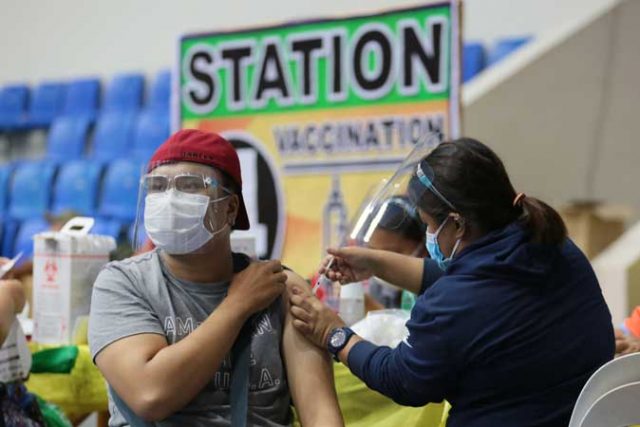
Based on Bloomberg’s vaccine tracker, it will take 21 months for the Philippines to cover 75% of its population at its average rate of 236,867 jabs per day. As of July 4, 2.86 million have been fully vaccinated in the Philippines, while 8.83 million have received their first vaccine dose.
The government aims to vaccinate 500,000 people daily in Metro Manila, Rizal, Bulacan, Cavite, Laguna, Metro Cebu and Metro Davao to achieve herd immunity in these high-risk areas by end-November. However, delays in the delivery of supplies will affect the rollout.
As restriction measures are gradually eased, analysts said some businesses will benefit but other industries will likely continue to see muted activities.
“Consumer-facing businesses such as food and beverage and broader hospitality services will continue to benefit with the government easing restrictions in Manila, as households are allowed to more freely access goods and services,” Ms. Ell and Mr. Chia said.
“However, hotel and service exports will continue to underperform and will be sluggish to recover as international arrivals remain well below pre-pandemic levels,” they added.
The economy shrank by 4.2% in the fourth quarter. Philippine GDP contracted by a record 9.6% in 2020.
STILL A LAGGARD Meanwhile, investment bank Nomura said the Philippines and Thailand will continue to lag behind Southeast Asian peers in economic recovery this year.
In a virtual media roundtable on Monday, Euben Paracuelles, Nomura’s chief economist for ASEAN, said the country’s economic output is only seen returning to pre-crisis levels by the third quarter of 2022.
Mr. Paracuelles said the Philippines is struggling to recover at a faster rate because of the slow pace of vaccination compared with its peers, as well as the lack of fiscal support from the government.
“If you look at the packages that has been passed by the government, it’s not really that comparable to the rest of the region where you see all kinds of packages being announced from wage subsidies to healthcare spending, and other types of support measures,” he said.
While the second stimulus package worth P205 billion under Bayanihan to Recover as One Act (Bayanihan II) was “not that impactful” to offset the fallout from fresh outbreaks and lockdowns, he noted that underspending still persisted and agencies were not able to fully utilize the funds before the law expired on June 30.
Data from the Budget department showed agencies were only able to spend P141.45 billion from Bayanihan II, five days before the law’s expiration, leaving P63.55 billion of unspent funds.
“Bayanihan II was not really that impactful when trying to provide some offset to the new pressures on growth. This now expires so there’s even less room for them to do more fiscal spending, which I think is really necessary. Other countries were able to provide more sizeable measures and a little bit faster,” Mr. Paracuelles said.
He said it remains uncertain if the government can still pass another stimulus package with Congress on recess until late-July.
The Philippines recorded $30.453 billion in monetary and fiscal stimulus measures so far, which was the fifth-highest coronavirus package among 11 Southeast Asian countries, data compiled by the Asian Development Bank (ADB) showed. The country’s package accounted for 8.62% of its economic output and translated to spending per capita of $281.67.
In April, Nomura slashed its growth forecast for the Philippines to 5.5% this year from 6.8% previously.
Mr. Paracuelles said infrastructure spending will have to provide the much-needed boost for the economy, especially ahead of the national elections in May 2022.
“That’s going to help the recovery somewhat, but what that also means it will increase importation and therefore the current account deficit will widen in the second half, which makes the country relatively vulnerable to capital outflow risks,” he warned.
Meanwhile, Mr. Paracuelles said they projected inflation to average at 3.9% by year’s end on expectations that the monthly print will start easing after two to three more months of breaching the central bank’s 2-4% target.
THE ANTI-MONEY Laundering Council (AMLC) told covered entities to urgently follow freeze order processes, as the Philippines needs to show tangible progress in effectively implementing tighter laws on anti-money laundering and counter-terrorism financing (AML/CTF) to be able to exit the Financial Action Task Force’s (FATF) “gray list.”
The AMLC advisory comes over a week since the country was added to jurisdictions placed under the FATF’s increased monitoring, specifically the implementation of AML/CTF measures.
AMLC Executive Director Mel Georgie B. Racela said urgent compliance to freeze orders will be closely monitored by the FATF.
“Covered persons’ mandate to urgently implement freeze orders as required in the 2018 Implementing Rules and Regulations of the Anti-Money Laundering Act of 2001, is a key component in ensuring that the Philippines sufficiently addresses the International Co-operation Review Group (ICRG) action plan items, particularly those relative to money laundering and counter-terrorism financing investigations; and targeted financial sanctions that would effectively deny funds to designated terrorists,” Mr. Racela said in a Viber message on Sunday.
The AMLC told covered persons to strictly observe the period for filing of returns and to consider the start of the 20-day effectivity of freeze orders from the time the accounts are actually frozen.
According to the AMLC advisory, some covered persons only implement freeze orders a few days or weeks before the expiry of the period prescribed by the court.
The AMLC said some covered persons only submit returns for related accounts when the six-month effectivity of a freeze order is almost at its expiry.
Based on implementing rules and regulations, written returns with pertinent details on an account should be submitted to the AMLC and the Court of Appeals (CA) within 24 hours since the account was frozen.
A freeze order covers a main account, which the AMLC and CA determined there is probable cause that it is related to money laundering and terrorist financing. On the other hand, related or materially linked accounts are determined by covered persons in compliance with the freeze order.
Mr. Racela said there could be serious repercussions from the delayed implementation of freeze orders against designated persons and suspected money launderers.
“If freeze orders are not immediately implemented, the accounts not frozen can be disposed of by the owner, thwarting the AMLC’s efforts in building its case and eventually filing civil forfeiture proceedings and/or prosecuting the owner. Worse, the money in the accounts can be further used in the commission of unlawful activities and/or money laundering,” Mr. Racela said.
The late implementation of a freeze order as well as delayed submission or non-filing of returns are considered as money laundering offenses that could result in penalties for uncooperative covered persons, the AMLC said.
The agency also stressed that failure to immediately freeze accounts upon receipt of a freeze order is considered a grave violation under Republic Act 9160 or the Anti-Money Laundering Act of 2001 (AMLA), as amended.
The late implementation of a freeze order and the subsequent delay in the filing of returns are also considered money laundering offenses that could be punishable with imprisonment of four to seven years and a fine of not less than P1.5 million, the AMLC said. Covered persons that fail to comply may face penalties from P25,000 to P500,000 per violation, it added.
In case the delayed implementation of a freeze order involving accounts in relation to the Terrorism Financing Prevention and Suppression Act of 2012 and the Anti-Terrorism Act of 2020, the action could be considered as dealing directly or indirectly with the designated persons. AMLC said this could be punishable with reclusion temporal in its maximum period of 20 years to reclusion perpetua (up to forty years) and a fine of P500,000 to not more than P1 million.
Meanwhile, submitting late written returns or incomplete information related to a freeze order are considered as lighter offenses, the AMLC said. A complete written return should include the account number; names of account holder/s; amount in an account at the time it was frozen; all relevant information pertaining to the nature of an account or property; any information on related accounts or property related to the frozen asset, and the time when a freeze order took effect.
Under the Republic Act 11521 which further tightened the AMLA, covered persons were expanded to include Philippine offshore gaming operators and service provides as well as real estate brokers and developers.
In January, the Bangko Sentral ng Pilipinas (BSP) ordered lenders to submit their reports on accounts that have links to the Communist Party of the Philippines (CPP), the New People’s Army (NPA), and Islamic extremist groups following freeze orders issued by the AMLC.
To recall, Republic Act 11521 was enacted into law on Jan. 29, only days ahead of the Feb. 1 deadline set by the FATF for the country to show effective implementation of tighter AML/CFT laws. Republic Act 11479 or the controversial Anti-Terrorism Act of 2020 took effect in July 2020.
BSP Governor and AMLC Chairman Benjamin E. Diokno is hopeful that the country will be able to show its progress and leave the gray list on or before January 2023. — Luz Wendy T. Noble