Home Blog Page 7447

Permits for all types of telco tower works to be streamlined — ARTA

BW FILE PHOTO

THE PERMIT process for all types of works on telecommunication towers, including applications for repairs and maintenance, is due for streamlining, according to a revised circular from the Anti-Red Tape Authority (ARTA).

The revised circular requires the reduction of requirements for all pending and new applications to build, repair, install, operate, and maintain telco infrastructure, including both shared and exclusively-run infrastructure, ARTA said in a press release Thursday.

This expands the circular signed by ARTA and several government agencies last year requiring process streamlining covering just the construction of shared passive telecommunications tower infrastructure.

The circular was revised to harmonize with the provisions of Republic Act No. 11494 or the Bayanihan to Recover as One Act (Bayanihan II) and address confusion among local government units (LGUs). The law suspended for three years almost all requirements needed to build, repair, and operate all telecommunications and internet infrastructure.

“We hope that the clarifications brought by this Expanded JMC will remove (issues brought up) by some LGUs in complying with the streamlined process,” ARTA Director-General Jeremiah B. Belgica said.

Building permit applications are still required. The revised circular lists the documents needed for this permit, removing those that are not applicable to passive telecommunications tower infrastructure. It also removed the fire safety evaluation clearance requirement for tower construction.

The revised circular also requires a unified application for building permits, locational clearances, and barangay clearances under a one-stop shop set up by LGUs.

Passive telecommunications tower infrastructure under a certain height that will be built outside the Civil Aviation Authority’s critical areas will no longer be required to apply for the civil aviation clearance. They will instead be required to submit an affidavit certified by a geodetic engineer.

Proposed projects that will be built in a residential area with no registered homeowners association can submit a certification that no such association exists in the area and that they will engage with affected homeowners.

Meanwhile, ARTA on Thursday also launched the Philippine Good Regulatory Principles framework. The principles will guide regulators in drafting policies and service standard, as well as set expectations for businesses on the regulatory regimes they will operate under.

The principles are “a set of guidelines and core principles on how to promote proportionate, consistent, accountable, and targeted regulations through effective dialogue between regulators and regulated entities,” ARTA said.

“Regulators without these good regulatory principles would be oppressive, could actually have the propensity to be oppressive without any principles or guidelines to go back to,” Mr. Belgica said. — Jenina P. Ibañez

LRT-2 to run 8 trains on Recto-Antipolo line next week

LRT-2 / TWITTER

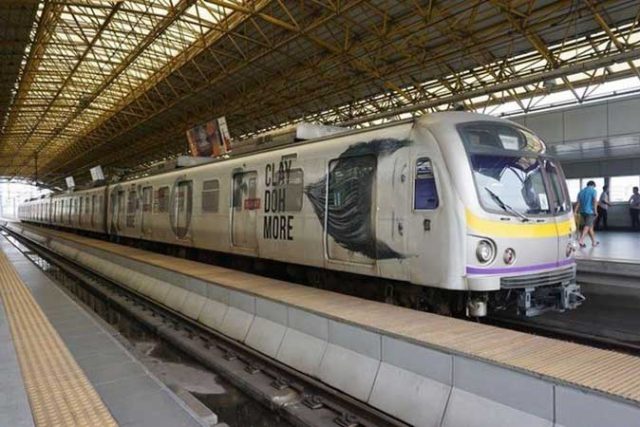
THE GOVERNMENT inaugurated on Thursday the Light Rail Transit Line 2 (LRT-2) East Extension, which is due to start operations next week.

“The promise of a better commuting experience will now become a reality, as President Rodrigo R. Duterte, together with Department of Transportation (DoTr) Secretary Arthur P. Tugade and Light Rail Transit Authority (LRTA) Administrator Reynaldo I. Berroya, lead the formal inauguration of the LRT-2 East Extension Project today, July 1,” the Transportation department said in a statement.

The LRT-2 East Extension will start commercial operations on July 5.

The project added four kilometers to the 13.8-kilometer LRT-2 light rail line, connecting Recto in Manila to Antipolo, Rizal via two new stations: Marikina-Pasig and Antipolo.

“Trains on the line running from Recto Station in Manila to the Antipolo Station have also been increased to eight from the previous five that ran from Recto Station to the Santolan Station,” the department said.

“Once operational, the LRT-2 East Extension Project will reduce travel time from Claro M. Recto in Manila to Masinag in Antipolo from three hours via bus or jeepney to just 30 to 40 minutes,” it added.

The LRT-2 East Extension increased the rail line’s average daily capacity to 320,000 passengers from 240,000 previously.

The extension project is expected to help reduce congestion along Marcos Highway, especially in Marikina, Pasig and Antipolo.

“Actual and full-blast construction of the two new stations (Marikina-Pasig and Antipolo) started on Feb. 20, 2017 (contract amount: P1.1 billion), while the electromechanical systems contract (contract amount: P3.4 billion) was awarded on Dec. 14, 2018,” the department said. — Arjay L. Balinbin

Major delays before commercial launch seen in 27 power projects

TWENTY-SEVEN committed power projects with capacity equivalent to 2,045 megawatts (MW) have faced setbacks to reaching commercial launches since 2016, the Senate Committee on Energy said Thursday, adding that further delays may compromise the power supply.

Facilities, including those targeted to begin commercial operations this year, account for 71% of the committed projects which had been due to go live five years ago, according to Senator Sherwin T. Gatchalian, who cited data from the Energy department.

Committed projects are those that have achieved financial closing with investors or bankers.

“They were supposed to be online a long time ago. Some were delayed twice, some three times. If projects are delayed, we will have problems in supply and planning will get thrown off,” Mr. Gatchalian, who chairs his chamber’s energy committee, said during a hearing Thursday.

“We’re very happy that we have committed plants but if the plants do not come on time, then definitely we’ll have brownouts,” he added.

One of these plants, which was delayed five times, is the 668-MW Unit 1 of the GNPower Dinginin coal-fired power plant.

“We will call all these plants to a meeting to give us the details on how we can fast-track all of these. We have to know the details of where the problems are specifically and we will also guide them on what mechanisms to use — whether its EVOSS (Energy Virtual One Stop Shop system) or any other mechanism that the DoE can utilize,” Energy Undersecretary Felix William B. Fuentebella said.

Mr. Gatchalian also noted the plants which cannot provide power to the grid because they are undergoing testing and commissioning.

The Philippine Independent Power Producers Association (PIPPA) and the market operator indicate that 12 coal, solar, diesel and biomass-run power facilities with a capacity of 1,154.6 MW are still in the testing and commissioning phase as of June.

The Luzon grid underwent a series of red alerts that month which triggered rotational brownouts in parts of the island after forced plant shutdowns, which thinned reserve levels, while higher temperatures drove up demand.

During the hearing, groups representing power producers and developers said that they had no incentive to deliberately halt operations at their plants, saying that this did not make business sense.

“We’re businessmen. We don’t have no motivation to go on outage because going on outage means no business for us. When (our plants) are down, we don’t make money,” Anne Estorco-Montelibano, president and executive director of PIPPA, said, in response to a question about possible market collusion to restrict supply and drive prices up.

“In our contracts, we have to buy replacement power from the WESM. It’s our obligation to procure the power we lost…Really, (this is a) disincentive for us to go on outage; we would rather keep on running,” she added.

Jay M. Layug, president of the Developers of Renewable Energy for Advancement, Inc. said that there is “no business reason” for any power plant to deliberately shut down.

“It can be easily seen in the spot market. All energy must be bid (out) in five (minutes). If collusion is going on, the generators are going to call each other every five minutes. It does not make sense operationally,” he said. — Angelica Y. Yang

NEDA Board approved 20 projects worth P832.056B in 2020

PHILSTAR

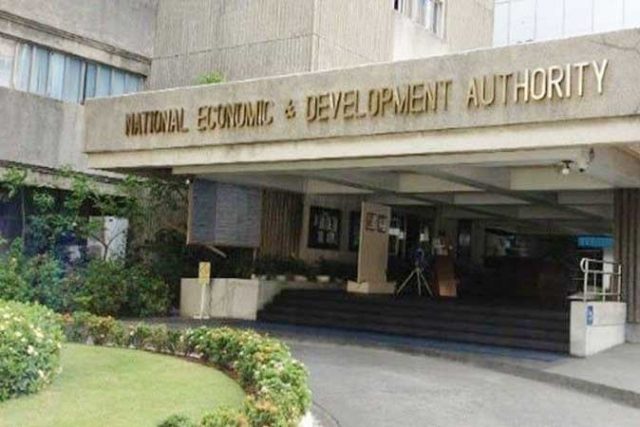
NATIONAL Economic and Development Authority (NEDA) Board, through the Investment Coordination Committee (ICC), approved 20 projects worth P832.056 billion last year, adding that it hopes to end this year with an expanded project pipeline.

According to the agency’s annual report issued Wednesday, the NEDA Board, through the ICC-Cabinet Committee (CabCom), cleared 18 new projects with a combined cost of P710.58 billion last year, which included changes in the cost and scope of certain projects.

This is an improvement from the 17 projects approved in 2019 worth P246.7 billion, which included 12 foreign aid-funded projects, three locally-funded ones and two unsolicited public-private partnership projects.

Of the 18 new projects undergoing the approval process, the NEDA said three were returned for re-approval: the P8.79-billion EDSA Greenways Project and two programs concerning the government’s response to coronavirus disease 2019 (COVID-19) worth P71.5 billion.

The two COVID-19-related programs were adjusted to include additional funding for vaccine procurement.

Approved adjustments in ongoing projects include a request to extend the loan validity for mass transit systems in Metro Manila for another three years, and a proposal to increase the budget of the Davao City Bypass Construction Project to P20.96 billion, as well as its scope. 

By source of funds, 19 of the 20 approved projects were financed via through foreign loans or official development assistance. One was financed from budget funds.

Proposed projects have to undergo initial assessment by NEDA’s ICC technical board, followed by a review by the ICC-CabCom, before these get to the NEDA Board, chaired by President Rodrigo R. Duterte, for final approval.

NEDA said it conducted 11 ICC technical board meetings and one ICC-CabCom meeting last year.

This year, NEDA ICC-CabCom will be reviewing 17 more infrastructure and other development projects worth P394.96 billion, while 26 projects worth P1.387 trillion will be reviewed by the NEDA ICC technical board.

The NEDA Board has approved 92 projects worth P3.87 trillion between July 2016 and May 2021.

The government promised to deliver P8 trillion worth of infrastructure projects under its flagship Build, Build, Build infrastructure program.

Government spending on infrastructure rose 45% from a year earlier to P58.2 billion in April, bringing the year-to-date total to P253.4 billion, up 29%.

The government plans to spend P1.02 trillion on infrastructure this year. — Beatrice M. Laforga

DoE, Angkas in fuel price monitoring collaboration

PHILIPPINE STAR/EDD GUMBAN

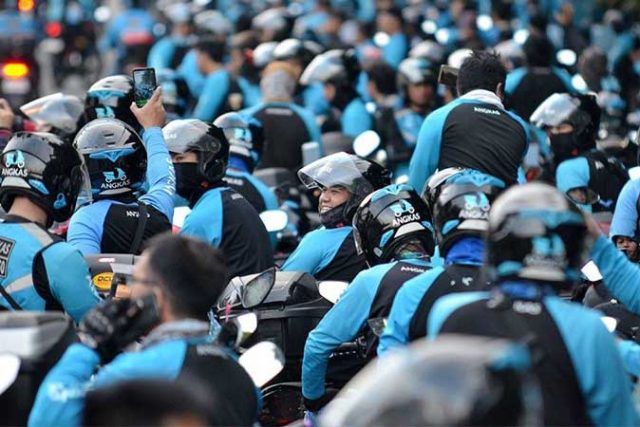
THE DEPARTMENT of Energy (DoE) is partnering with motorcycle ride hailing operator Angkas to monitor pump prices in fuel stations with the help of a dedicated mobile app.

The program, which will run between July 12 and Nov. 15, will cover Metro Manila. During this period, authorized Angkas riders can scan DoE-generated QR codes to report on fuel prices in gas stations, and evaluate the facilities and services of these outlets.

“This initiative is another testament to the DoE’s commitment in ensuring the responsiveness of our liquid fuels retail market under a regime of fair prices and quality public service,” Energy Secretary Alfonso G. Cusi said in a statement on Thursday. 

At stake for fuel retailers is a seal of excellence from the DoE for complying with the government’s downstream oil industry rules and regulations, providing quality service, and maintain cleanliness.

The department said it is currently doing a pilot run of its monitoring initiative in Makati and Taguig to identify areas of improvement.

The DoE said it will enter into a memorandum of agreement with Angkas before unveiling the program soon.

It added the initiative received support from the industry, including Petron Corp., Phoenix Petroleum Philippines., Inc., and Pilipinas Shell Petroleum Corp. — Angelica Y. Yang

Philippines at low risk from coronavirus — DoH

PHILIPPINE STAR/ MICHAEL VARCAS

By Vann Marlo M. Villegas and Kyle Aristophere T. Atienza, Reporters

HEALTH authorities on Thursday said the Philippines was at low risk from the coronavirus after declining infections in the past two weeks.

Infection rates fell by 9% in the two weeks that ended on June 26, Health Director Alethea de Guzman told an online news briefing.

People should still adhere to health protocols, she added, noting that the situation is “very prone to a sudden, possible increase.” “We need to widen the decline.”

The average national daily attack rate — new cases divided by the population — stood at 5.42, within the moderate risk classification. An average of more than seven is considered high risk.

Ms. de Guzman said 46.5% of health care facilities had been used as of June 29, while 55.2% of intensive care unit beds had been occupied. She added that 24% of isolation beds had been used.

The daily infection tally increased slightly to 5,772 from June 24 to 30, from 5,638 from June 17 and 23, she said.

She flagged the Davao region, Western Visayas, Soccsksargen and Eastern Visayas for rising coronavirus infections.

The infection rate in the Davao region had more than doubled in the past two weeks, while the rate in Western Visayas was 63%, 67% in Soccsksargen and 118% in Eastern Visayas, Ms. de Guzman said.

The daily attack rate in the Davao region was 9.14, 8.12 in Western Visayas, 7.1 in Soccsksargen and 7.05 in Eastern Visayas, she said.

Coronavirus cases in Metro Manila fell by 26% from June 13 to 26, while its average daily attack rate was at 5.01, which is considered low risk.

Infections in the capital region have plateaued after a slow decline in the past weeks. The average daily tally in the seven days ended June 30 stood at 694, from 686 a week earlier.

“We often describe the trend in the National Capital Region (NCR) as fragile,” Ms. de Guzman said. “This is a crucial time for NCR because we don’t want it going up again.”

Coronavirus infections in Luzon have fallen except for the Cordillera Administrative Region, Ilocos and Mimaropa, the Health department said.

Cases in Eastern and Western Visayas were rising, while Central Visayas has experienced a plateau after a sharp decline, Ms. de Guzman said. Infections in Mindanao have been falling except for the Davao region, where the trend is inconsistent.

DAILY TALLY
The Department of Health (DoH) reported 5,795 coronavirus infections on Thursday, bringing the total to 1.4 million. The death toll rose by 135 to 24,797, while recoveries increased by 2,859 to 1.34 million, it said in a bulletin.

There were 51,567 active cases, 1.5% of which were critical, 91% were mild, 3.8% did not show symptoms, 2.1% were severe and 1.56% were moderate.

The agency said 17 duplicates had been removed from the tally, 14 of which were tagged as recoveries. Twenty-seven recoveries were reclassified as active cases, while 93 cases tagged as recoveries were reclassified as deaths. Five laboratories failed to submit data on June 29.

About 14 million Filipinos have been tested for the coronavirus as of June 29, according to DoH’s tracker website.

The coronavirus has sickened about 183 million and killed almost four million people worldwide, according to the Worldometers website, citing various sources including data from the World Health Organization.

About 167.6 million people have recovered, it said.

Meanwhile, Health Secretary Francisco T. Duque III said a Bloomberg report ranking the Philippines second to the last of 53 countries in terms of pandemic response was unfair. He said the report favored rich countries with a high vaccination rate.

He said the country does not have enough vaccines to inoculate at least half of the population, adding that rich countries have already gotten 80% of the global vaccine supply.

“That leaves us among the middle-income countries scrambling and almost begging for vaccines, and they are already talking about the luxury of a third booster dose,” he told the ABS-CBN News Channel.

The Philippines ranked 52nd out of 53 countries in terms of pandemic response, according to Bloomberg’s COVID-19 resilience ranking, where the government scored poorly in vaccine rollout, among other things.

The country got a score of 45.3, ahead of Argentina, which ranked last on the list with a score of 37.

Meanwhile, The World Health Organization and National Commission of Senior Citizens urged local government units (LGUs) to speed up the vaccination for priority groups, including senior citizens.

They said only 28.3% or about 8.2 million senior citizens had received their first coronavirus vaccine dose as of June 28.

WHO Representative to the Philippine Rabindra Abeyasinghe said the vaccines are important especially with the risk of more contagious variants.

“We strongly urge our LGUs to ramp up efforts to improve access of the elderly to vaccines, along with improving convenience at vaccination sites,” he said in a statement. “Let us give our elderly the protection they need and the best quality of life they deserve without delay.”

Also on Thursday, presidential spokesman Herminio L. Roque, Jr. apologized for the vaccine shortage after some local governments complained.

“We apologize. That’s the reality and we can’t do anything about it,” he told a televised news briefing in Filipino.

Mr. Roque said the National Government is prioritizing coronavirus-hit areas for vaccination. Metro Manila and nearby provinces are being prioritized “not only because of the higher cases there but also because of the higher population.”

The Philippines aims to inoculate at least 500,000 people daily in Metro Manila, Rizal, Bulacan, Cavite, Laguna, Metro Cebu and Metro Davao to achieve herd immunity by Nov. 27.

SC: Ombudsman can regulate release of net worth records

PHILSTAR

THE SUPREME COURT (SC) has rejected a lawsuit questioning the validity of a government memo limiting public access to net worth records of public officials.

In a Feb. 2 resolution made public on Wednesday, the tribunal said the Ombudsman may regulate access to official records including statements of assets, liabilities and net worth (SALN) of government officials.

“While the right of access to information to a public official’s SALN is provided under the Constitution and Republic Act 6713, the same is not an absolute vested right,” it said. “The court has declared in the past that while no prohibition could stand against access to official records such as the SALN, the same is undoubtedly subject to regulation.”

Ombudsman Samuel R. Martires has issued a memo requiring notarized consent of an official before a request for a copy of his net worth statement is approved.

The High Court also scolded litigant Louis Biraogo for going straight to the tribunal instead of filing his suit before a lower court.

“The rule is now well-settled that litigants do not have unfettered discretion to invoke the court’s original jurisdiction in the issuance of extraordinary writs, which it concurrently shares with the regional trial courts and the Court of Appeals,” it said.

It also said there was no actual case or controversy since the Ombudsman had only verbally denied, based Mr. Biraogo’s own account, his request for a copy of the net worth statement of Vice President Maria Leonor G. Robredo.

The plaintiff wanted a copy of the vice president’s net worth statement supposedly to study her office’s use of a mansion in Quezon City that was allegedly paid for using taxpayer’s money.

After getting no response, he supposedly called the Ombudsman’s office and was verbally that his request had been denied given Mr. Martires’s memo issued in September.

The court called his account a “bare, self-serving and unsubstantiated allegation.”

The high court noted that as custodian of the net worth statements of justice and judges, it had issued rules on access and denied requests due to improper motives.

In September, it blocked the attempts by a private lawyer and the Solicitor General to gain access to the net worth statement of Justice Marvic Mario Victor F. Leonen.

A plan to file a suit inquiring into the magistrate’s legal right to his post did not prosper, but an impeachment complaint was filed against him at the House of Representatives. Among the allegations was his failure to file his net worth statement for 15 years when he was still teaching at the University of the Philippines.

A House committee in May rejected the complaint as lawyers, judges, human rights advocates and even retired Supreme Court Justice Antonio T. Carpio defended Mr. Leonen’s, saying the complaint was baseless.

The Ombudsman memo has allowed President Rodrigo Duterte to keep his 2018, 2019, and 2020 net worth statements secret. Some public officials including Ms. Robredo release their statements to journalists who request a copy.

Under the law, it is illegal to obtain or use net worth statements for any commercial purpose other than by news media that write stories for public consumption.

The Supreme Court said the lawsuit, which sought to compel the Ombudsman to perform a government duty, was wrongly filed because the country’s chief graft buster can deny such requests as the custodian of SALNs of presidents, vice presidents and heads of constitutional bodies. — B.A.D. Añago

PHL allows shorter quarantine period for vaccinated travelers from 57 low-risk countries

DFA

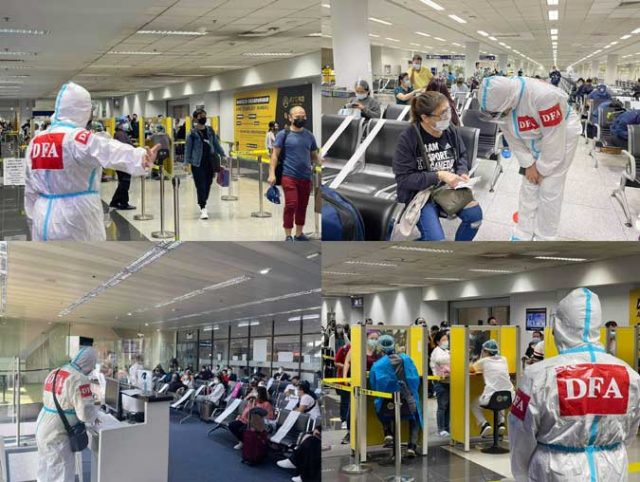
FULLY VACCINATED travelers from 57 “green” countries or those considered low risk by health authorities are now entitled to a shorter quarantine of seven days instead of 10, the Bureau of Immigration announced late Wednesday.

The new policy is based on Resolution No. 123-C issued on June 28 by the task force managing the coronavirus response.

The resolution covers “the inbound international travel to any port of the Philippines of all individuals fully vaccinated in the Philippines  regardless of travel history, and those vaccinated abroad who stayed exclusively in “Green” countries/jurisdictions in the past fourteen days immediately preceding arrival.”

The list of countries released by the Immigration bureau includes: Albania, American Samoa, Anguilla, Antigua and Barbuda, Australia, Benin, Belize, British Virgin Islands,  Brunei, Burkina Faso, Burundi, Cayman Islands, Chad, China, Ivory Coast, Eswatini, Falkland Islands, French Polynesia, Gambia, Ghana, Greenland, Grenada, Hongkong, Iceland, Isle of Man, Israel, Laos, Liberia, Malawi, Malta, Marshall Islands, Mauritius, Micronesia, Montserrat, Morocco, Mozambique, New Caledonia, New Zealand, Niger, Nigeria, Northern Mariana Islands, Palau, Rwanda, Saba, Saint Barthelemy, Saint Kitts and Nevis, Saint Pierre and Miquelon, Sierra Leone, Senegal, Singapore, Saint Eustatius, South Korea, Taiwan, Togo, Turks and Caicos Islands (UK), Vietnam, and Zimbabwe.

Passengers covered by the new policy need to present proof of their seven-day booking in a government-accredited quarantine hotel or facility during primary inspection by immigration authorities upon arrival.

The proof of vaccination will be presented to designated Bureau of Quarantine representatives.   

REPATRIATION
Meanwhile, the Department of Foreign Affairs reported on Thursday that around 1,920 overseas Filipinos from the United Arab Emirates (UAE) were repatriated in June.

Flights from India, Pakistan, Sri Lanka, Bangladesh, Nepal, Oman, and the UAE are still banned in the Philippines until July 15, but government-chartered flights for repatriation are exempted.

Foreign Affairs Undersecretary for Migrant Workers’ Affairs Sarah Lou Arriola, in a statement, said more flights are being organized to bring home land- and sea-based workers.

“We wish to assure our distressed kababayan (countrymen) in the UAE that we are not only firming up plans but executing these plans swiftly to bring them home at the soonest possible time,” Ms. Arriola said.  “We will have more flights in the coming days.” — Bianca Angelica D. Añago

COVID-19 response fund reports sent to Pacquiao

PHILIPPINE STAR/ BOY SANTOS

HEALTH SECRETARY Francisco T. Duque III on Thursday said he has submitted to Senator Emmanuel “Manny” D. Pacquiao the reports on the use of funds received by the department for the coronavirus response.

Lahat po itong mga report na ito pinadala ko na kagabi kay (I have sent all these reports last night to) Senator Manny Pacquiao,” Mr. Duque told ABS-CBN News Channel.

Mr. Pacquiao, acting president of the ruling party PDP-Laban, has been in a squabble with a faction of their political group supported by President Rodrigo R. Duterte, the party chair.

The senator last week made allegations of corruption in government.

Mr. Duterte on Monday said he would campaign against Mr. Pacquiao in next year’s elections if he fails to identify the alleged corrupt officials.

The senator on Tuesday accepted the challenged and cited anomalies in the government’s purchase of rapid test kits, masks and other materials for the coronavirus pandemic. He also asked the Health department to account for expenditures.

Mr. Duque, in a statement on Tuesday, said the department was disheartened by the accusations and they are open to inquiries from legislators.

In Thursday’s interview, he said the procurement arm under the Budget department purchased the test kits, face masks and other supplies for the pandemic.

The Health chief also said that he talked on Wednesday to Budget Undersecretary Lloyd Christopher A. Lao, who said they are ready to show the budget utilization and transactions.

The funds for the vaccines coming from multilateral funding agencies go directly to the vaccine manufacturers, Mr. Duque added.

“If there is any hearing, we’ll be very glad to be there and show a full accounting of all the funds and budget that have been allocated to the DoH (Department of Health),” he said.

Palace Spokesperson Herminio L. Roque, Jr., meanwhile, said the administration complied with the reporting requirements provided under the Bayanihan laws.

“There was a regular reporting required by the law by itself which Malacañang complied with,” he told a news briefing Thursday. — Vann Marlo M. Villegas and Kyle Aristophere T. Atienza

Duterte accepts Parlade’s resignation as NTF-ELCAC spokesperson 

PHILSTAR

PRESIDENT R. Duterte has accepted the resignation of Lieutenant General Antonio G. Parlade, Jr. as spokesman for the country’s anti-communist task force, according to the presidential palace.

“The President has accepted the resignation of Gen. Parlade as spokesperson of NTF-ELCAC (National Task Force to End Local Communist Armed Conflict),” Palace Spokesperson Herminio L. Roque, Jr. told a televised news briefing, citing confirmation from Defense Secretary Delfin N. Lorenzana.

Mr. Parlade, in a statement, said his resignation was submitted almost a month ago “to ease the pressure on the NTF ELCAC principals who are being questioned” by legislators for designating him as an official of the civilian task force despite being an active military officer.

“I am happy that there are now six more civilian NTF spokespersons who shall carry on the fight passionately and with conviction,” he said.

The Senate earlier recommended the immediate relief of Mr. Parlade from his duty as spokesman of the task force, citing a provision in the 1987 Constitution barring an active military officer from holding a civilian position in the government.

Mr. Parlade has been controversial for tagging civic leaders and media personalities critical of the government as communist fronts.

“As spokesperson of NTF-ELCAC, Parlade used and abused his position to attack government critics, spread fake news, and red-tag activists and organizations, he should be held accountable for this,” Bayan Muna Party-list Rep. Ferdinand Gaite said in a statement.

Mr. Parlade, who is set to retire on July 26, heads the military’s Southern Luzon Command. — Kyle Aristophere T. Atienza

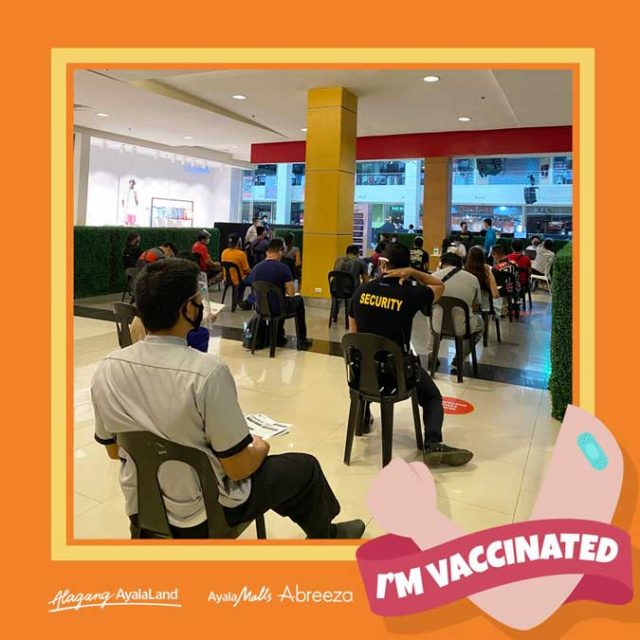
Vaccination starts for 14,000 tourism frontliners, Ayala complex workers in Davao City

AYALAMALLS ABREEZA FB PAGE

DAVAO CITY has started the vaccination of about 14,000 workers in tourism, one of the sectors hit hardest by the coronavirus pandemic.

Generose D. Tecson, officer-in-charge of the city tourism office, said the head count covers workers in all primary and secondary tourism establishments as well as allied services.

“It’s our way forward and will pave the way in reopening the tourism industry. This ensures the safety of our tourism workers,” she said in a statement.

During the first day of inoculation on June 30, held at the Waterfront Insular Hotel, an initial 500 workers received their first dose.

“The Waterfront is our lone vaccination site (for tourism workers) and they contributed snacks and stuff as part of their 60th anniversary. Our volunteers are from the Davao Tourism Association and other tourism associations,” she said.

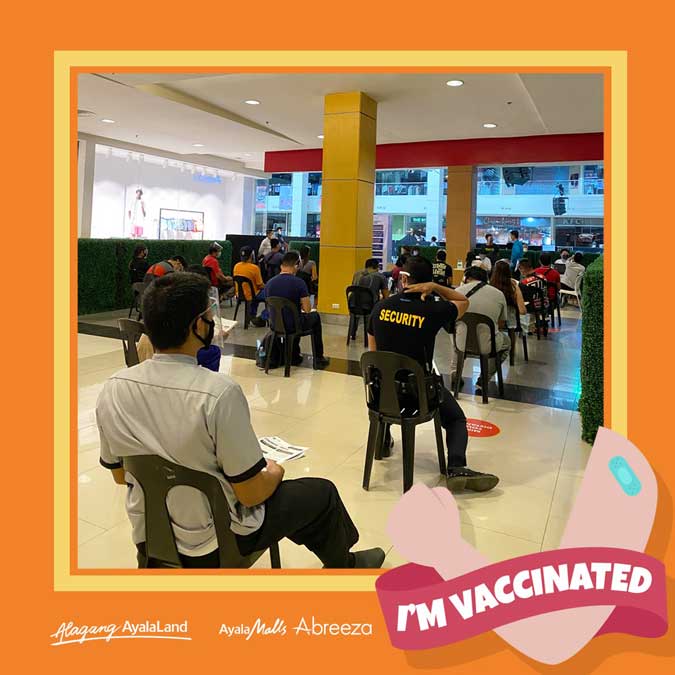
Meanwhile, the Ayala group also rolled out its vaccination program on Wednesday for workers within the Abreeza complex, which includes a shopping mall, Seda Hotel, and condominiums. 

The Ayala Malls Abreeza management said the vaccination drive, undertaken in partnership with the city and regional health authorities, “is in line with the shopping mall’s mission to safeguard the health and safety of mall employees… as well as to further ensure a safe shopping experience for its shoppers.”

An initial 350 employees out of the more than 1,600 target got their first jab on June 30.

Data from the Davao City Vaccination Cluster show 238,236 coronavirus vaccine doses have been administered as of June 28. Of the total, 196,886 were first doses while 41,350 have completed the two shots.

Majority of those inoculated are senior citizens at 70,952 with a first dose and 10,988 fully vaccinated. The city’s 26,361 healthcare workers are fully vaccinated. For persons with comorbidities, 80,859 have received their first jab while 3,976 are fully vaccinated.

City Health Office acting head Ashley G. Lopez said the local vaccination program has been covering an average of 10,000 recipients per day.

The city government of Davao, which has a population of over 1.8 million, is aiming to fully vaccinate at least 70% of residents. — MSJ

Taal Volcano alert level raised, at least 2 villages to be evacuated 

SCREEN GRAB FROM PHIVOLCS FB PAGE

THE STATE volcanology agency on Thursday raised the alert level for Taal Volcano after it spewed a one kilometer-high plume, and called for the evacuation of two villages considered at high-risk.

At 3:16 p.m., the volcano’s main crater “generated a short-lived dark phreatomagmatic plume 1 kilometer-high with no accompanying volcanic earthquake,” the Philippine Institute of Volcanology and Seismology (Phivolcs) said in an advisory.

Under Phivolcs’ 5-level alert system, Taal’s status was raised to 3 or a “high level of volcanic unrest.”

“This means that there is magmatic intrusion at the Main Crater that may further drive succeeding eruptions,” Phivolcs said.   

The high-risk barangays are Agoncillo and Laurel in Batangas.

“In addition, communities around the Taal Lake shore are advised to take precautionary measures and be vigilant of possible lakewater disturbances related to the ongoing unrest,” Phivolcs said.

The entire volcano island, located about 100 kilometers south of the capital region Metro Manila, has been declared a permanent danger zone.

Its last major explosion was in Jan. 2020. — MSJ