Home Blog Page 7430

Bucks may be without Antetokounmpo for pivotal Game 5 vs Hawks

DURING a postseason defined by fallen superstars, the Atlanta Hawks showed they have what it takes to overcome the absence of a key piece to the puzzle.

The Hawks head into Game 5 of the Eastern Conference finals at Milwaukee on Thursday after getting even at 2 in the series while playing without team leader Trae Young. Standout sixth man Lou Williams jumped into the starting lineup in Game 4 and recorded 21 points and eight assists as the Hawks topped the Bucks (110-88).

The Bucks will limp back home with Giannis Antetokounmpo listed as doubtful after Milwaukee’s all-everything performer hyperextended his left knee in the third quarter on Tuesday. He did not return as the Hawks put the game away, and his status for Game 5 remains in doubt.

An MRI exam on Wednesday showed no structural damage but the club hasn’t revealed a plan for the rest of the series.

Atlanta went from uneasy during pregame when Young was ruled out with a bone bruise in his right ankle, to joy when they pulled away before the fourth quarter after Antetokounmpo went down.

“Losing Trae was, of course, a big loss for us, but we’ve been in that position before,” Hawks coach Nate McMillan said. “We needed to come out and play a good solid basketball game.

“The guys that are stepping into those roles and getting those opportunities, we just tell them to stay in their lane. We don’t need them to try to be that player that is out; play your game.”

It is advice the Bucks could use as well, especially with Antetokounmpo ailing. Milwaukee already has been without Donte DiVincenzo because of a tendon injury in his foot.

Antetokounmpo was injured as he landed awkwardly while contesting a Clint Capela dunk attempt.

On their heels after Antetokounmpo departed, the Bucks watched the Hawks go on a 25-10 scoring run until the end of the third quarter. Milwaukee’s 25-point deficit heading into the fourth quarter ended up being its largest of the game.

Khris Middleton never got on track for Milwaukee, scoring 16 points and missing all seven of his 3-point attempts. Jrue Holiday scored 19 points with nine assists as Milwaukee shot just 39.3 percent from the field and 20.5 percent (8 of 39) from distance.

“Two games in a row we got off to a bad start,” Middleton said. “(In Game 3) we were able to pull it out and this game we were never able to get it going. They played hard. They hit shots. We just have got to do a better job of getting those 50/50 balls. That was a big part of the game in the first half. Play with more urgency. Get after it more.”

Regardless of whether the Hawks get Young back, they know they can play with the Bucks, even at Milwaukee. They won the opener of the series 116-113 on the road and a victory in Game 5 would put them one victory from the NBA Finals with Game 6 at home.

Williams said he is ready to operate in whatever role is necessary. But he won’t think about it too much. He wants to put his head down and just play basketball.

“Did I look ahead and say we can be a championship contender day one? Probably not,” Williams said about his mind-set after he was traded from the Clippers in March. “But we’re two wins away like everybody else, and we feel good about it.” — Reuters

The other Paul

In the aftermath of Game Four of the Western Conference Finals, not a few quarters argued that All-Star Paul George needed to live up to his self-styled “Playoff P” moniker and carry the load for the beleaguered Clippers. Top scorer and defender Kawhi Leonard was still out due to a knee injury, and he had to pick up the slack as a result. And considering his not-so-stellar resume when it comes to performing in the crunch, the prognosis was not good, especially with the Suns up three to one and playing Game Five hosts.

As things turned out, George did show up, and how. He finished the set-to, an emphatic victory for the Clippers, with a career postseason high 41 points (on an extremely efficient 15-of-20 clip from the field), 13 rebounds, six assists, and three steals. And as he basked in the glow of his emphatic performance, he couldn’t help but use it as an opportunity to declare himself undeserved of the criticism he hitherto faced. Perhaps he was being overly dramatic in his assessment; after all, microscopic scrutiny comes with the territory, and stars shine precisely because they are able to withstand all the pressure and deliver.

Needless to say, expectations get magnified with achievement. With even Paul considering his effort as validation of sorts, nothing but an encore was acceptable. He had to be at least as good in Game Six, and not simply because the Staples Center faithful were going to be on hand. The good news was that he declared himself ready for the challenge. The bad news was that he could not rise to it as promised. When the battlesmoke cleared, he had no choice but to doff his hat to yet another 41-point effort, but not his own.

Indeed, Paul is again being weighed, measured, and found wanting. That he fought valiantly in a losing cause is not the point. That the all he gave proved inadequate is. Once more, he failed to show that he has ice in his veins. He toiled for 41 minutes, and all he had to produce for his exertions were 21 markers on 15 attempts, nine caroms, and two dimes. His match-worst minus-25 ratings is all naysayers need to trumpet to prove their case.

Make no mistake. George is good. In fact, he’s very, very good. And, really, his remarkable comeback from his freak injury in 2014 should be the only answer he requires to silence those unfairly questioning his resolve. Unfortunately, he cannot but be judged by his accomplishments, and, in this regard, he will have to wait for another opportunity to exorcise the demons that have plagued him throughout his career. As another Paul named Chris shone with the Suns to book a ticket to the Finals, he is left to ruminate on his immediate past body of work for one more long offseason. He is who he is, and Game Six underscored what he isn’t.


Anthony L. Cuaycong has been writing Courtside since BusinessWorld introduced a Sports section in 1994. He is a consultant on strategic planning, operations and Human Resources management, corporate communications, and business development.

University-based research unit to combat election disinformation

PIXABAY

Boses, Opinyon, Siyasat, at Siyensya para sa Pilipinas (BOSES Pilipinas), a university-based research initiative established by the Ateneo School of Government, said it will not conduct surveys commissioned by politicians for the coming May 2022 elections. 

“We are a non-partisan and academic-based survey unit, and to ensure our independence, we will not accept commissioned surveys from politicians,” said Dr. Imelda B. Deinla, convenor of BOSES Pilipinas, during its online launch Wednesday. 

The initiative, established in partnership with the pro-democracy coalition Participate, aims to “advance empirical, interdisciplinary, and policy-oriented studies of public opinion on democracy, governance, and development.”  

The initiative seeks to combat both disinformation and misinformation, said Ateneo School of Government dean Ronald U. Mendoza. He pointed out that, just like a virus, “these two can spread like contagion, adding to the political polarization and division that now afflict many democracies.” 

Commission on Elections (Comelec) spokesperson James B. Jimenez agreed with the severity of this issue, adding, “It’s good that (BOSES Pilipinas) is university-based. It’s good that it’s run by academics because at least there’s that level of security that the conclusions that the projects undertake will be undertaken for the right reasons, and certainly for the enlightenment of the audience.” 

An ongoing survey aims to examine youth’s preferences in the upcoming national elections and what factors make them susceptible to misinformation or disinformation campaigns in social media. 

Upcoming projects by BOSES Pilipinas include various researches on presidential satisfaction in the Philippines, the role of social media in democracy, and also youth leadership. “Our unit would like to contribute further in deepening the understanding of public opinion, not only what they are, but the why’s — how they arrive at these opinions,” said Dr. Deinla. — Brontë H. Lacsamana 

Turkey formally quits treaty to prevent violence against women

Women hold placards that read “There is no coming back from our feminist struggle” and “No to intervention to our lives” during a Women’s Day March in Istanbul on March 8, 2017. Photo via Özge Sebzeci/CC BY-NC-ND 2.0/Flickr

ANKARA  Turkey officially withdrew on Thursday from an international treaty to prevent violence against women, enacting a decision that drew condemnation from many Turks and Western allies when President Tayyip Erdogan announced it in March. 

Thousands were set to protest across Turkey, where a court appeal to halt the withdrawal was rejected this week. 

“We will continue our struggle,” Canan Gullu, president of the Federation of Turkish Women’s Associations, said on Wednesday. “Turkey is shooting itself in the foot with this decision.” 

She said that since March, women and other vulnerable groups had been more reluctant to ask for help and less likely to receive it, with COVID-19 fueled economic difficulties causing a dramatic increase in violence against them. 

The Istanbul Convention, negotiated in Turkey’s biggest city and signed in 2011, committed its signatories to prevent and prosecute domestic violence and promote equality. 

Ankara’s withdrawal triggered condemnation from both the United States and the European Union, and critics say it puts Turkey even further out of step with the bloc that it applied to join in 1987. 

Femicide has surged in Turkey, with one monitoring group logging roughly one per day in the last five years. 

Proponents of the convention and related legislation say more stringent implementation is needed. 

But many conservatives in Turkey and in Mr. Erdogan’s Islamist-rooted AK Party say the pact undermines the family structures that protect society. 

Some also see the Convention as promoting homosexuality through its principle of non-discrimination on grounds of sexual orientation. 

“Our country’s withdrawal from the convention will not lead to any legal or practical shortcoming in the prevention of violence against women,” Mr. Erdogan’s office said in a statement to the administrative court on Tuesday. 

This month, Council of Europe Commissioner for Human Rights Dunja Mijatovic sent a letter to Turkey’s interior and justice ministers expressing concern about a rise in homophobic narratives by some officials, some of which targeted the convention. 

“All the measures provided for by the Istanbul Convention reinforce family foundations and links by preventing and combating the main cause of destruction of families, that is, violence,” she said.  Ece Toksabay and Daren Butler/Reuters 

Tokyo mom creates COVID-19 vaccination database amid information vacuum

Screenshot via findadoc.jp

TOKYO  Balancing a new software programming job and caring for a toddler in Tokyo, LaShawn Toyoda saw increasing confusion in her social media feeds among non-Japanese speakers about how they could get a coronavirus disease 2019 (COVID-19) vaccine. 

The 36-year-old, a former English teacher who had recently completed an intensive coding course as part of a pandemic-prompted career change, decided she had the skills to help ease concerns amid a lack of clear direction from officials. 

“There was no news available in any language other than Japanese about when they would be able to get vaccinated, how they could get vaccinated or where,” said Ms. Toyoda, who moved from Maryland in the United States to Tokyo a decade ago. 

“I told my husband, ‘watch our daughter, I gotta make something.’” 

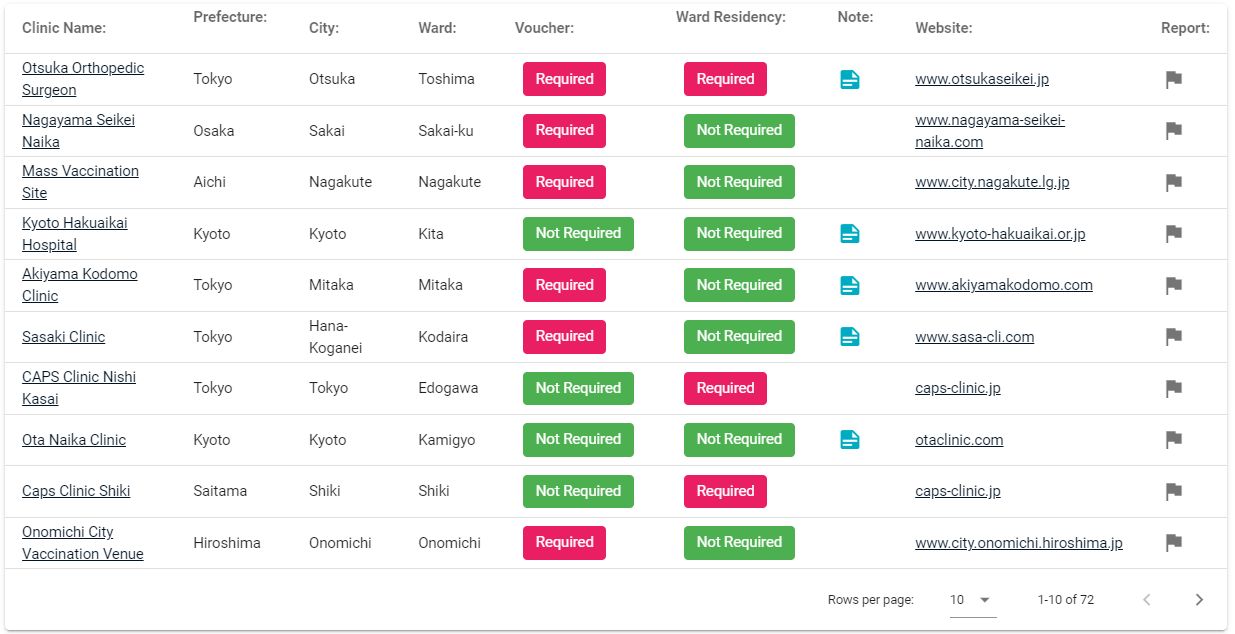
Hours later, Ms. Toyoda launched her database Find a Doc, a health database that helps non-Japanese speaking people find clinics with COVID-19 vaccine doses to spare after cancellations from prioritized elderly patients. 

The database, which went live on June 13, quickly grew from just two clinics to almost 70 with information in 19 languages. 

Ms. Toyoda’s Twitter stream @theyokohamalife is filled with thanks and anecdotes of people who got their shots through the site, which she said has been used by more than 36,000 people. 

The site’s popularity underscores nervousness about Japan’s sluggish vaccination rollout, particularly in Tokyo, where the Olympics Games are due to begin in less than a month. 

Just 23% of the population have received at least one dose, according to a Reuters tracker, one of the lowest levels among major economies. 

After a slow start with limited supplies prioritizing medical workers and older people, Prime Minister Yoshihide Suga has pledged to have the elderly population fully vaccinated by the end of this month and all other adults by November. 

To speed up the process, the government handed over more control to municipalities and companies to set up their own systems and centers for administering shots. 

That has meant that availability, particularly for the general public, has varied widely depending on where someone works and lives. 

Ms. Toyoda, who reskilled after the school she was teaching at part time shut down during a state of emergency in the capital last year, booked her own first shot through a clinic on her database last week. 

The site has received wide support, with more experienced programmers from Alphabet Inc.’s Google, Mercari Inc., and Amazon.com Inc. volunteering to add features and make it more secure. 

The combined efforts echo online community activism in the wake of the 2011 Fukushima disaster when there was a similar perceived vacuum of official information. 

“We take for granted that government will do everything and anything. No they won’t,” said Pieter Franken, who co-founded volunteer group SafeCast, which began by collecting radiation readings around Japan but has since expanded into tracking air quality and other quality-of-life factors. 

“You can fill the void by citizen action.” — Rocky Swift/Reuters 

Developing resilience through positivity

(Upper boxes) from L-R: Maria Luisa Gamino – Project Development II, SDO Nueva Ecija Carolina Uno-Rayco, RGC, RPsy – National Executive Director, Philippine Mental Health Association  John Darryl Caysido – School DRRM Coordination, Teacher III, Marawa Elementary School, SDO Nueva Ecija (Lower boxes) from L-R: Elizabeth Sibayan – Public Schools District Supervisor, Gabaldon District, SDO Nueva Ecija  Maria Lourdes Ramirez – Secondary School Principal II, NEHS – Senior High School, SDO Nueva Ecija


Globe, DepEd tackle new ways of facing adversity

Resilience is the ability to bounce back from misery or hardships, and Filipinos have been lauded as a resilient nation in the face of crisis and adversity. This valuable trait was the main focus of the sixth edition of Globe and the Department of Education’s (DepEd) webinar series, TAYO Naman! (Tulong, Alaga, Yakap at Oras para samgaTagapagtaguyod ng Edukasyon) titled “Resilience Through Positive Psychology – Emerging and Keeping Up with Adversities.”

“Resilient individuals not only recover stronger from a crisis but often also find meaning in the experience. They are able to make sense of the hardship. Tipong kaya pala nangyari ito, at ito ay nagagamit nila para harapin ang mga susunod na dagok ng buhay,” said Dr. Carolina Uno-Rayco, Ph.D., RGC, RPsy, National Executive Director of the Philippine Mental Health Association.

Dr. Uno-Rayco discussed how educators can cultivate resilience in themselves and also tackled the different factors that can affect their mental health during the pandemic.

She highlighted the role of using Positive Psychology in developing resilience. She explained that positive psychology is the study of happiness and optimal functioning and it helps individuals, communities, and societies thrive and flourish.

“Positive psychology is highly connected with resilience because when we talk about resilience, we talk about resistance and recovery from distress. We cannot stay long with the negative feelings that go with stress or disasters in our lives,” she said.

She added: “Ang mga taong resilient alam nila na may kahirapan, may trahedya, may kaguluhan, but they are optimistic. Iniisipn iyana ang nangyayaring difficulty ay hindi permanente.  Ang negative experience ay hindi nakakaapekto sa kabuuan ng buhay niya.  Alam niya na bad things happen, but good things also happen.”

However, Dr. Uno-Rayco pointed out that resilience is not about toxic positivity, which is the denial that negative emotions exist and should not be felt.

Human beings, she emphasized, are both capable of feeling positive and negative emotions, but all emotions are fleeting. She advised everyone to keep things in perspective, “live, grieve, be happy, be sad, but still have a meaningful existence. We must be able to ride the peaks and lows of our emotions.”

Dr. Rayco ended her lecture by giving the audience four strategies on how to develop resilience:

  1. Increase positive emotions through the practice of gratefulness;
  2. Strengthen relationships and develop a support system of friends and loved ones;
  3. Create meaning out of negative experiences by having the power to choose whether the meaning gives hope or causes sadness; and
  4. Think of things that one has control over, focus on thoughts that would cause less sadness and anxiety, and tune out those that are not helpful.

The second half of the session featured panelists from the Schools Division Office (SDO) of Nueva Ecija and was facilitated by Project Development Officer III Maria Luisa Gamino. Panelists were Teacher John Darryl Caysido, Public Schools District Supervisor Elizabeth Sibayan, and Secondary School Principal Maria Lourdes Ramirez. The webinar was hosted by Mr.  Jeffrey Aquino, and Master Teacher, MarichellePagaragan.

TAYO Naman! is an online Mental Health and Psychosocial Support program designed to help teachers, non-teaching personnel, and parents learn about self-care, wellness, and resilience.

The 14-part webinar series is led by the DepEd Disaster Risk Reduction Management Service (DepEd-DRRMS) and the Bureau of Human Resource and Organizational Development-Employee Welfare Division (BHROD-EWD) in collaboration with Globe’s Global Filipino Teachers Series on Psychosocial Support Services, Philippine Mental Health Association, and MAGIS Creative Spaces.

The webinars are held every Friday until August 20, 2021, from 8:30 to 10:00 am and streamed live on DepED Philippines, DepEd DRRMS, and  Globe Bridgecom. The next session will focus on “Practicing Mindfulness to Manage Stress” on July 2.

The company strongly supports the United Nations Sustainable Development Goals, particularly UN SGD No. 3 on good health and well-being and UN SDG No. 4 on inclusive and equitable quality education for all. Globe is committed to upholding the 10 United Nations Global Compact principles and 10 UN SDGs.

To know more about Globe, visit https://www.globe.com.ph/about-us/sustainability.html.


Trump’s company and its chief financial officer indicted, source says

U.S. President Donald Trump — REUTERS/LEAH MILLIS/FILE PHOTO

NEW YORK  Former US President Donald J. Trump’s namesake company and its chief financial officer were indicted on Wednesday, a person familiar with the matter said, the first charges to arise from a more than two-year probe by New York prosecutors of Mr. Trump and his business dealings. 

The charges by a Manhattan grand jury against the Trump Organization and its CFO Allen Weisselberg are expected to be unsealed on Thursday. 

 Mr. Weisselberg is expected to surrender to authorities on Thursday morning, the person said, and will be formally charged in the New York Supreme Court in Manhattan on Thursday afternoon. 

Mr. Trump himself is not expected to be charged this week, his lawyer has said, though the blowback from the case could complicate Trump’s political future as he considers a 2024 White House run. 

The criminal case stems from the probe by Manhattan District Attorney Cyrus Vance in collaboration with New York state Attorney general Letitia James. It is expected to focus on whether Mr. Weisselberg and other officials received perks and benefits such as rent-free apartments and leased cars without reporting them properly on their tax returns, people familiar with the probe have said. 

A spokesman for the Manhattan District Attorney declined to comment. A lawyer for Mr. Weisselberg also declined to comment. And lawyers for Trump and the Trump Organization did not immediately respond to requests for comment. 

Mr. Trump’s lawyer, Ronald Fischetti, told Reuters on Monday that prosecutors suggested the charges would be related to taxes and fringe benefits and said Mr. Trump himself would not be charged in the indictment. 

“This will be their first blow,” Mr. Fischetti said of the prosecutors, adding that prosecutors had said in a meeting with them last week that they were still pursuing their investigation. 

Mr. Trump, during a trip on Wednesday to Weslaco, Texas, near the Mexican border to criticize President Joseph Biden R. Biden, Jr.’s immigration policies, did not respond to questions shouted by reporters about the criminal charges. 

In a statement on Monday, Mr. Trump called prosecutors biased and said his company’s actions were “in no way a crime.” 

The Trump Organization could face fines and other penalties if convicted. 

POTENTIAL ‘SCHEME TO DEFRAUD’ CHARGES
Charges could increase pressure on Mr. Weisselberg to cooperate with prosecutors, which he has resisted. Mr. Weisselberg is a close Trump confidant, making his cooperation potentially crucial to any future case against the former president. 

Court filings, public records and subpoenaed documents have shown that Mr. Weisselberg and his son Barry have received perks and gifts potentially worth hundreds of thousands of dollars, including many benefits related to real estate. 

The case could be charged as a scheme by the company to pay people off the books in order to hide assets over many years. 

One possible charge would be “scheme to defraud,” according to New York attorney Marc Scholl, a former prosecutor in the Manhattan DA’s office. 

“‘Scheme to defraud’ is a crime that allows the prosecution to detail a narrative in the indictment describing the criminal conduct and how it originated, no matter how long ago the crime started,” Mr. Scholl said. 

Mr. Scholl said that the charges could also include a “scheme to defraud under the tax law,” which would carry far more serious penalties. 

Prosecutors in Mr. Vance’s office accelerated their focus on the Trump Organization’s use of perks and benefits last fall. The office of New York state Attorney General Letitia James, which had also been looking into the Trump Organization, said in May that its probe had turned into a criminal investigation and that it had joined forces with Mr. Vance’s office. 

Mr. Vance, a Democrat, has in his nearly three-year investigation examined an array of potential wrongdoing, including whether Mr. Trump’s company manipulated the value of its real estate to reduce its taxes and secure favorable loan terms. 

Before entering the White House in 2017, Mr. Trump put his company into a trust overseen by his adult sons and Mr. Weisselberg, who has maintained tight control over its finances. It is unclear what role Mr. Trump now has at the company. 

The case could complicate Trump’s political future, as he flirts with a possible 2024 White House run. 

Jennifer Weisselberg, the former wife of Barry Weisselberg, has met with prosecutors half a dozen times. 

Her lawyer, Duncan Levin, told Reuters on Wednesday that “over the past half year, Jen has been cooperating with prosecutors. We have turned over a mountain of evidence to them to support these charges. We’re very gratified the DA’s office is moving forward with these charges.” 

In an interview with MSNBC, Jennifer Weisselberg said she would be prepared to testify while adding: “My documents at this time are witnesses themselves. They are being used, and they’re being walked through the grand jury panel.” 

“We’ve been going through questions pertaining to compensation, perks and taxes just to review how to … inform a grand jury,” she added.  Karen Freifeld/Reuters

Hong Kong’s No. 2 official says city has returned to stability from ‘chaos’

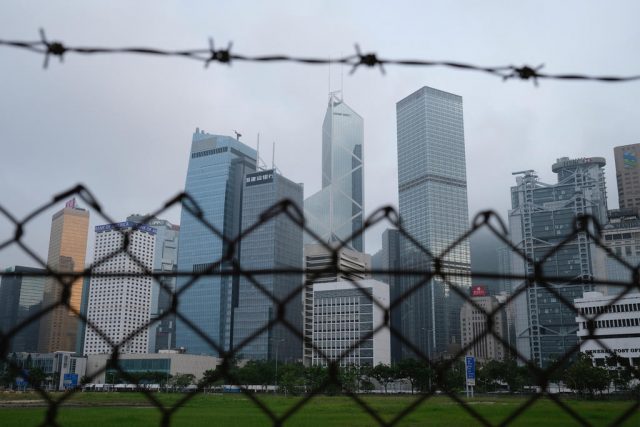
A GENERAL VIEW of skyline buildings in Hong Kong, China May 28, 2020. — REUTERS

HONG KONG  Hong Kong has returned to order from chaos since China imposed a sweeping national security law on the global financial hub last year, the city’s acting chief executive, John Lee, said on Thursday. 

Beijing imposed the security law just before midnight on June 30 last year to punish anything China deems as subversion, secession, terrorism and collusion with foreign forces with up to life in prison. 

The security law was Beijing’s first major step to put the global financial hub onto an authoritarian path, kick-starting a campaign dubbed “patriots rule Hong Kong,” which included moves to reduce democratic representation in the city’s legislature and various screening mechanisms for politicians. 

Mr. Lee was speaking for the first time as acting city leader at a flag-raising ceremony marking the 24th anniversary of the former British colony’s return to Chinese rule in 1997, which coincides with the centenary of the Chinese Communist Party. 

Chief Executive Carrie Lam and other senior officials were invited to Beijing for the party celebrations. Mr. Lee was appointed as her No.2 last week after playing a key role in the city’s crackdown over the past year as security secretary. 

“In the coming year, we will continue to take a steady stance to protect national security,” Mr. Lee said. “Hong Kong absolutely has the conditions to rebound from a trough.” 

Mr. Lee said the security legislation and electoral reforms had made “Hong Kong society change from chaos to order.” 

Critics of the government say it has used the security law to crush dissent in the former British colony, an assertion officials in Beijing and Hong Kong reject. 

Supporters of the legislation say it has restored order and plugged national security “loopholes” exposed by anti-government demonstrations in 2019. 

So far under the new law, described as a “birthday gift” by senior Chinese official Zhang Xiaoming when it was introduced last year, authorities have arrested 117 people, mostly democratic politicians, activists, journalists, and students. 

Beijing said it was necessary after mass pro-democracy and anti-China protests in 2019 that have been described as acts endangering national security. Many protesters, however, say they were demanding Beijing respect constitutionally guaranteed rights and freedoms. 

Usually on July 1, tens of thousands of people take to the streets in Hong Kong to protest against anything from Beijing’s maneuvers in the city to unaffordable housing. 

That tradition, which set the semi-autonomous city apart from tightly controlled mainland China, is unlikely to be followed by many people this year after police denied permission for a rally, citing coronavirus restrictions. 

“It is crystal clear that under the NSL (national security law), over a year, it does have a chilling effect on Hong Kong people … less people would have the confidence to go on the street to speak out,” said Raphael Wong, an activist with the League of Social Democrats who held a protest with three others that was hemmed in by dozens of police officers. 

In many other areas, there was a palpable security presence, with police vans, water cannon trucks, armored vehicles and units of police officers patrolling many areas. — Reuters 

Deaths surge in US and Canada from worst heat wave on record

Image via Windy.com
Image via Windy.com

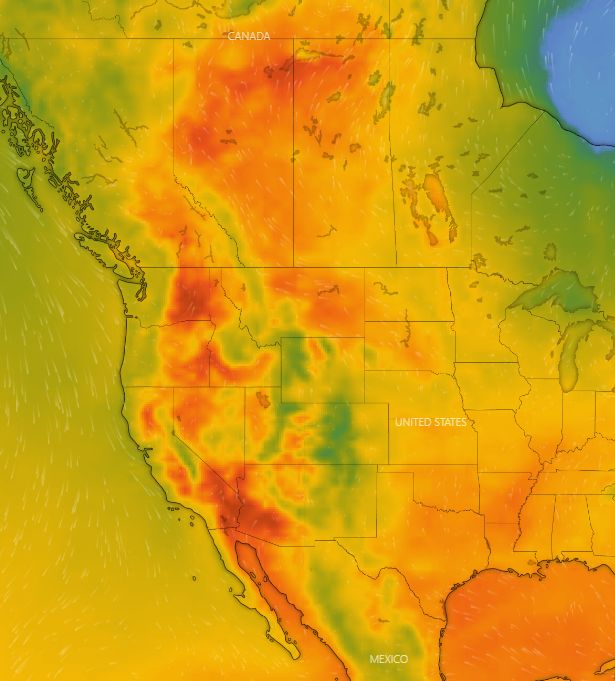
VANCOUVER/PORTLAND  A heat wave that smashed all-time high temperature records in western Canada and the US Northwest has left a rising death toll in its wake as officials brace for more sizzling weather and the threat of wildfires. 

The worst of the heat had passed by Wednesday, but the state of Oregon reported 63 deaths linked to the heatwave. Multnomah County, which includes Portland, reported 45 of those deaths since Friday, with the county Medical Examiner citing hyperthermia as the preliminary cause. 

By comparison all of Oregon had only 12 deaths from hyperthermia from 2017 to 2019, the statement said. Across the state, hospitals reported a surge of hundreds of visits in recent days due to heat-related illness, the Oregon Health Authority said. 

In British Columbia, at least 486 sudden deaths were reported over five days, nearly three times the usual number that would occur in the province over that period, the B.C. Coroners Service said Wednesday. 

“This was a true health crisis that has underscored how deadly an extreme heat wave can be,” Multnomah County Health Officer Dr. Jennifer Vines said in the statement. “As our summers continue to get warmer, I suspect we will face this kind of event again.” 

The heat dome, a weather phenomenon trapping heat and blocking other weather systems from moving in, weakened as it moved east, but was still intense enough to set records from Alberta to Manitoba, said David Phillips, senior climatologist at Environment and Climate Change Canada, a government agency. 

“In some of these places, their (temperature) records are being annihilated,” Mr. Phillips said. “It really is spectacular, unprecedented for us.” 

It was unclear what triggered the dome, but climate change looks to be a contributor, given the heatwave’s duration and extremes, Mr. Phillips said. 

Canadian Prime Minister Justin Trudeau paused to remember the dead during remarks in Ottawa on Wednesday and expressed concern over the fire threat. 

“We’ve been seeing more and more of this type of extreme weather event in the past years,” Mr. Trudeau said. “So realistically, we know that this heatwave won’t be the last.” 

In Washington, US President Joseph R. Biden. Jr., said climate change was driving “a dangerous confluence of extreme heat and prolonged drought,” warning that the United States was behind in preparing for what could be a record number of forest fires this year. 

SMASHING RECORDS
Lytton, a town in central British Columbia, this week broke Canada’s all-time hottest temperature record three times. It stands at 49.6 degrees Celsius as of Tuesday. The previous high in Canada, known for brutally cold winters, was 45°C, set in Saskatchewan in 1937. 

In the US Northwest, temperatures in Washington and Oregon soared well above 38°C over the weekend. Portland set all-time highs several days in a row including 47°C on Sunday. 

In Washington state, where media also reported a surge in heat-related hospitalizations, Chelan County east of Seattle topped out at 48°C on Tuesday. 

Oregon Governor Kate Brown declared a state of emergency due to “imminent threat of wildfires” while the US National Weather Service in Portland issued a red-flag warning for parts of the state, saying wind conditions could spread fire quickly. 

The Portland Fire Department banned use of fireworks for the Fourth of July weekend, when Americans celebrate Independence Day. 

FIRE AND MELTING ICE POSE RISKS
Most of Alberta and large parts of British Columbia and Saskatchewan are at extreme risk of wildfires, according to Natural Resources Canada’s fire weather map. 

“All the ingredients are there. It’s a powder keg just looking for a spark,” said Mike Flannigan, professor of wildland fire at University of Alberta. 

But the Chilcotin region, roughly 600 km north of Vancouver, was on flood warning due to the “unprecedented” amount of snow melting at “extraordinary” rates, according to a government release. 

“These are the types of issues that are going to be confronted more and more over the next few years,” said Adam Rysanek, assistant professor of environmental systems at the University of British Columbia.  Moira Warburton and Sergio Olmos/Reuters 

To tap global market, MSMEs should digitalize, shift to indirect exports — study

PHILIPPINE STAR/EDD GUMBAN

As lockdown restrictions ease, micro, small, and medium enterprises (MSMEs) that possess niche specializations and technologies should consider supplying raw materials to larger enterprises, according to a study recommending a “shift to a value-chain approach from a firm-centric approach.” 

This approach does away with the challenges presented by direct exportation, said John Paolo R. Rivera, associate director of the Asian Institute of Management’s Dr. Andrew L. Tan Center for Tourism, who presented the findings of the study he co-authored with Brian C. Gozun, former Dean of the Ramon V. del Rosario College of Business at De La Salle University, at a recent symposium organized by the Philippine Institute of Development Studies and the Philippine APEC Study Center Network. 

Titled “Navigating the New Normal: Restarting and Rebuilding Global MSMEs,” the virtual event mapped a post-pandemic path for MSMEs. “I prefer to call it a better normal because we can’t call it a new normal, particularly for business models rendered obsolete by the pandemic,” said Mr. Rivera. 

“If direct exporting is too gargantuan for MSMEs, indirect exporting, outsourcing, or subcontracting can be an alternative where entrepreneurs provide inputs in the form of raw materials and work-in-progress to other larger domestic businesses who have exporting capabilities and who have access to the global value chain,” recommended the study co-authored by Mr. Rivera. 

At the symposium, he added that it is important for entrepreneurs to go digital to normalize peer-to-peer connections, and to take advantage of government-sponsored capacity-building and mentoring programs. 

“Capacity-building and mentoring programs should touch on both hard and soft skills, as well as micro- and macro- perspectives,” said Mr. Rivera. Micro-perspectives include crowdfunding, total quality management, and risk management, whereas macro-perspectives referred to familiarity and proficiency in regulatory and economic policies. 

“These will allow MSMEs to proficiently and confidently participate in a globalized business environment, not only because risks have been mitigated, but also because they are well-equipped to strengthen their value chain,” he said. “MSMEs are ready, but they need assistance.” 

The 2019 List of Establishments of the Philippine Statistics Authority recorded a total of 1,000,506 business enterprises operating in the country. Of these, 995,745 (99.5%) are MSMEs. The top five industry sectors according to the number of MSMEs that year were: wholesale and retail trade; repair of motor vehicles and motorcycles; accommodation and food service activities; manufacturing; other service activities; and financial and insurance activities. A majority of MSMEs can be found in the National Capital Region (NCR), followed by Region 4-A (CALABARZON), and Region 3 (Central Luzon). — Patricia B. Mirasol

Cisco’s Ilagan champions digital resilience to achieve PH digital transformation

Having gone through months of lockdown and a continuous struggle to adapt to changes brought by the pandemic, IT adoption in the Philippines was done rapidly. In a study of the global workforce done by Cisco, 77% of organizations are promoting workplace flexibility, making a hybrid workforce a reality, where people have the option to work from anywhere or at an office. This radical change in the workplace has prompted many discussions on the digital journey that the Philippines is bound to take.

However, digital transformation goes beyond remote work. Karrie Ilagan, Managing Director of Cisco Philippines, grounds the discussion on the country’s digital journey to a more foundational concept: digital resilience.

Karrie Ilagan

“Digital transformation is inevitable, yes, but there are many missing pieces before we even begin to consider ourselves digitally transformed. The COVID-19 pandemic will not be the last challenge that will turn the world upside down, and we see every day what happens to the Philippines when we’re not ready,” said Karrie Ilagan, Managing Director of Cisco Philippines. “At Cisco, we focus on an organization’s digital resilience –the organization’s capability to readily adapt to disruptions not only be able to restore operations but more importantly be able to find opportunities in these shifts in the environment.”

“The only way to do that is to have the right digital infrastructure in place that is flexible, agile, and innovative enough to keep our society running,” she emphasized.


While the sudden shift to digital brought rising technological complexity, organizations’ manpower and know-how are not always able to keep up with this rapid innovation. There is therefore a greater need for automation and simplicity in solutions that will help organizations be agile and secure despite uncertainty. While digital resilience is normally connected to crisis situations, the pace and frequency of disruption only increases over time. Early adopters of technology will always be best positioned to maintain and sustain operations during disruptions.

Due to learnings from the pandemic, research group IDC revealed that digital resilience became a priority investment in 2020, and is expected to accelerate in 2021. This was seen in significant investments in cloud, collaboration, and security solutions despite the notable decline in overall IT spending due to financial constraints of the COVID-19 outbreak.

“The world is evolving from a product-led motion to an outcome-based approach, consumed as-a-Service more than ever. As a result, networking and security solutions are increasingly being combined and delivered from the cloud to support the needs of organizations – solutions that are dynamic, secure, and accessible. These are all possible in a cloud-first world where apps can be distributed from anywhere to anywhere, from small to large scale, and with security never compromised,” Ilagan explained.

Powering an inclusive digital future

As a world leader in IT and networking, Cisco was quick to respond to the almost-overnight evolution of the landscape. Within a year, the IT giant has released a series of products and innovations to support businesses in future-proofing their organizations.

On the security front, Cisco unveiled innovations to further its journey to radically simplify and deliver end-to-end security, across users, devices, networks, applications and data. These new solutions improve Extended Detection and Response (XDR) with greater visibility across network, endpoint, and cloud. New innovations expand Cisco’s vision for Secure Access Service Edge (SASE) with enhanced threat detection in the cloud and redefine and simplify network security.

Most recently, as the hyper-connected, distributed world we live in now relies on cloud more than ever, Cisco unveiled the Cisco UCS® X-Series, powered by Cisco Intersight™, and a full suite of solutions on hybrid cloud operations, observability, and insights, and customer service experience services for the cloud. These solutions enable customers to be cloud smart to advance their digital operating models to securely deliver new types of apps that live across on-prem, multiple clouds, and the edge.

“There is no such thing as a one-size-fits-all solution, so technology has to be as flexible and agile as the businesses need them to be,” said Ilagan. “While the Philippines hasn’t fully realized its digital transformation, there are already signs and beginnings happening all around the country. If we continue to support and invest in the right technology that can deliver all this, there is a big chance that our country can stand head-to-head with our more advanced neighbors in the region.”

Unemployment, underemployment decline in May

PHILSTAR

THE COUNTRY’S jobs situation improved in May as the ranks of unemployed and underemployed Filipinos declined during the period, the government’s latest jobs data show.

Preliminary results of the Philippine Statistics Authority’s May 2021 round of the Labor Force Survey released earlier this morning put the country’s unemployment rate at 7.7%, down from the 8.7% recorded in April.

This was the second-lowest unemployment rate recorded since the start of the year, following the 7.1% posted in March.

This was equivalent to 3.730 million jobless Filipinos in May, down from 4.138 million in April.

Likewise, the underemployment rate — the proportion of those already working, but still looking for more work or longer working hours — improved to 12.3% in May from 17.2% in April. This was the lowest underemployment rate since the PSA started tracking jobs figures on a monthly basis this year.

In absolute terms, this equated to 5.492 million underemployed Filipinos in May, lower than the 7.453 million the previous month.

The size of the labor force was approximately 48.446 million in May, up from 47.407 million in April. This brought the labor force participation rate to 64.6% of the country’s working-age population in May from 63.2% the previous month.

The employment rate was recorded at 92.3% in May from 91.3% in April. This was equivalent to 44.716 million people in May from 43.269 million previously.

The service sector made up 57.8% of total employment in May, inching up from the 57.4% cited in April. The industry sector likewise saw its employment rate slightly improve to 18.4% during the period from 18.2%.

Meanwhile, agriculture had an employment rate of 23.8%, down from 24.4%. — Ana Olivia A. Tirona