Home Blog Page 7425

What animals can teach humans about living with stress

BRGFX-FREEPIK

CONSIDERING how bad stress is supposed to be for our bodies, it’s still a confusing concept. Is it worse for our health to have too much work or too little? To have too much responsibility or to be bored? The COVID-19 pandemic triggered lots of stress — even in people who never got the virus. It’s not clear how much the forced isolation, fear or job loss harmed our health.

But scientists are starting to identify the kinds of stress that damage us physically by studying other species — not just lab rats, but animals from whales to iguanas to fish. That research has already generated some understanding of the harms we have imposed on them through captivity, pollution, and underwater noise. It might also help us understand the harms we impose on each other.

Decades ago, scientists established a questionable narrative that stress was associated with “Type A” personalities — people who try to do too much. Much of the foundational research was funded primarily by the tobacco industry. That research came out at a time in the mid-20th century when heart disease had been sharply rising in the United States in parallel with the rise in smoking.

The tobacco-funded research propagated the message was that it wasn’t smoking that was killing people but our busy “modern” lifestyle combined with Type A personalities and behavior. But no reliable, repeatable studies ever backed up a link between heart disease and Type A behavior or personalities.

But others over the years suspected there was something valuable there that needed to be untangled. “It’s been so hard to define stress that people have made proposals that we jettison the word from science,” says Michael Romero, a Tufts University biologist. “For many years people were asking what is a stress response … It’s something that the body initiates in response to a noxious stimulus called a stressor,” he says. “And what is a stressor? That is something that turns on a stress response.” It’s a circular definition.

He says he had a flash of insight early in his career when he traveled to the Arctic — a wet, cold, and seemingly stressful place. It was stressful for him, but not for the native animals. They were adapted to live in that environment.

The current understanding equates stress with environmental conditions more than with behavior. Romero says unhealthy stress in animals comes from extreme weather events such as storms or floods — things that go beyond what they’re adapted to. The other major causes of stress are predators, famine, infectious disease, social conflicts, and human-generated environmental changes — chemical and noise pollution, for example.

A few years ago, he studied marine iguanas in the Galapagos. A group of them survived a terrible oil spill, but those with the most elevated stress hormones were more likely to die months later. Another study in fish showed that those living downstream of a mining spill showed hormonal changes associated with stress.

In his favorite stress research technique, scientists measure stress hormone levels in Eastern right whales by using dogs to sniff out fresh whale feces, which contain stress hormones (and happen to float for about an hour after being deposited). Those studies revealed that noise and fishing lines create stress, but that whales’ stress levels plummeted in the days that ship traffic subsided, temporarily, after 9/11.

He says stress hormones represent an evolutionary trade-off. They can be lifesaving in an emergency by channeling energy to a fight or flight response.

Most stress-related disease seems to be connected to problems regulating the hormone cortisol, he says, which is an anti-inflammatory substance. This can be beneficial — think of the most effective drug against acute COVID-19, dexamethasone, which is an anti-inflammatory. But anti-inflammatory substances can also suppress the immune system, so a long-term cortisol imbalance can leave an animal more vulnerable to viruses, bacteria, or parasites.

And stress can help animals by shutting down fertility during times when it might be unfavorable to reproduce — when there’s too little food, for example. That’s been documented in humans, too. Women who have recently survived famines or been freed from concentration camps are unlikely to get pregnant.

There’s a popular idea about “the upside of stress” — which is the title of a popular TED talk and book by a psychologist who said she had once been wrong to tell patients to avoid stress.

The problem with that thesis is that if the source of stress is something people can avoid, then it probably isn’t the health-destroying kind of stress that’s killing whales and iguanas, and probably people as well.

Stimulation, challenge, and excitement may be something we humans are adapted to live with — just as those arctic creatures are adapted to extreme cold. As I learned from biologist Lori Marino, a lack of challenge will also stress out and sicken captive marine mammals. When they’re in captivity, she said, people used to think they led “cushy” lives, with abundant food, safety, and no need to work beyond performing in shows. But they die much more often of infectious disease than their wild counterparts even though they usually live in clean, filtered water.

They were clearly suffering psychologically, she says. Captive orcas are known to bash their heads against the walls and shatter their own teeth. “It becomes a situation where there’s really no escape … they are literally bored to death.”

While fewer animals are captured today, those born in captivity are still stressed. They may not know a different life, but evolution shaped them to live in an open ocean surrounded by others of their species — not the solitary confinement of a tank.*

The lesson for us is that it’s not enough to tell people to focus on the positive — or to avoid stress, which looks to be rooted in environmental factors rather than behavior. You might not be stressed by working 80 hours a week if you love what you do. If you hate your job, on the other hand, you can avoid one source of stress by quitting, but might risk replacing it with the stress of being short of money.

But maybe those animals can guide us toward ways to change the way we treat each other. That way we can help each other through the rest of this pandemic and be less vulnerable to the next one.

*The best solution to help already captive whales is to free them into sanctuaries, Morino says. They can’t be dumped back into the sea and survive any more than a city dweller could be dumped alone into a rain forest or desert.

BLOOMBERG OPINION

The TikTok Revolution

MYRIAMMIRA-FREEPIK

TikTok is taking the world by storm and even challenging Facebook, Instagram, and YouTube for social media dominance. Not only is it an engaging platform to pass time, TikTok has proven to be a potent tool for product marketing, image building and driving sales.

For those unaware, TikTok, known as Douyin in China, is a video sharing/social networking service owned by Chinese company, ByteDance. The platform is used to make a variety of short-form videos whose genres span dance, comedy, political commentary, educational clips, entertainment, and personal blogs, among others. Each video has a duration from 15 seconds to one minute.

Between 2019 and 2020, TikTok increased its user base by 582%. In February 2019, TikTok reached its first billion downloads and it took them just eight months to gain another half-billion users. As of April 2020, the app surpassed the two billion mark. It may be approaching 3 billion by now. No surprise, the Chinese app recently beat YouTube and Instagram in the Apple App Store in terms of number of downloads.

TikTok provides the tools and platform for amateur video makers (called “creators”) to publish their work for an international audience. Creators upload their works on the platform with an eye towards garnering engagements. Engagements come in the form of “likes,” comments, and/or followers — the more engagement, the more gravitas a creator carries. This gravitas can be monetized by way of product endorsements, collaborations, and brand ambassadorships. This, on top of royalties from TikTok itself which is about $.02 to $.04 per thousand views, depending on the territory.

The 15-second to one-minute videos are designed to be fast paced and extremely engaging. Unlike Facebook, TikTok algorithms feed you the types of videos you engage with the most and where you spend the most time in. In other words, you are only fed the videos that suit your interest. This is what makes it addicting. Studies show that TikTok users spend an average of 81 minutes per day on the App which they open 16 times a day, on average. Users spend four times more time on TikTok than they do on Instagram. TikTok is presently available in some 155 countries and territories.

Sixty-two percent TikTok users are aged 10 to 29 years old. This age demographic represents the largest market for consumer goods. They are highly impressionable and particularly conscious about trends. This makes TikTok an ideal marketing platform for companies engaged in fashion (apparel, accessories, and footwear), cosmetics, gadgets, trendy food products, and lifestyle products. The caveat, however, is that in this segment, trends change rapidly and product preferences tend to be fickle.

Marketers of consumer goods can penetrate the world of TikTok by collaborating with creators. Creators are selected by how the tonality, mood, and theme of their videos match the values of the product or brand. Of course, number of followers weighs heavy on the equation too. Authenticity sells, hence, a video has a higher probability of going viral if there is a match between the creator’s personality and that of the brand.

The cost to collaborate depends on the creator’s number of followers, his/her reputation, and country of origin. As a point of reference, a local advertising agency quoted a fee of P75,000 per video for a Filipino A-list celebrity to feature a product on his TikTok. Some A-listers in the US, Europe, and South Korea charge an upfront fee plus a royalty computed as a percentage of gross revenues for the duration of the campaign.

Creators prefer long term relationships rather than one-off engagements. Hence, it is more cost efficient to negotiate “brand ambassadorships” with creators whereby they feature the product or brand not only on TikTok but also on their other social media platforms. In the Philippines, it is common to include personal appearances at special events as well. In a brand ambassadorship arrangement, however, the brand’s image becomes intertwined with the image of the creator himself. This is why an eject clause is often included in the contract in case of untoward events.

Apart from fair compensation, what matters to TikTok creators is the artistic freedom to conceptualize and create their videos. When working with a creator, companies are advised not to be over-prescriptive nor should they bind the creator with strict guidelines. The less parameters, the better. Creators must be given the license to create since the most effective videos — those that go viral — are those that appear organic.

American TikTok consultants Mavrck, advises creators and product promoters to make TikTok’s algorithm work to your advantage. Captions, keywords, and hashtags play an import role in how often and to whom the video is to be channeled to. Interestingly, the choice of background music and/or sound effects determines frequency of exposure too. Trending music get higher exposure.

Sound shouldn’t be an afterthought, says Mavrck. Unlike other social media platforms, music and sound are inherent to the TikTok experience. Mavrck advises brand promoters to work with creators to consider the best approach for sounds. This can drastically change how the brand is perceived.

TikTok is all about starting and promulgating trends. Mavrck advises that videos be made to pique emotions towards social causes. Starting and promulgating a movement helps to increase engagements.

Startup brands that have been the early adaptors of TikTok have grown large enough to challenge mainstream brands in their local markets. For instance, Vessi Shoes of Canada achieved instant fame and tremendous sales growth on the back of its videos that give away free shoes for singing duets. International restaurant chain, Chipotle Mexican Grill, achieved brand awareness and sales growth for their “cool” testimonials and cooking demonstrations. Elf Cosmetics of California is now a hot brand after they commissioned a song specifically for a TikTok campaign. The song, which takes inspiration from Kash Doll’s hit “Ice Me Out” and is called “Eyes Lips Face.” These new brands are challenging traditional market leaders like Vans shoes, McDonalds, and L’Oreal, all of whom are now scrambling to get a piece of the TikTok market. Early adaptors in the Philippines include Pocofino Coffee, Belo Clinics, and Shopee.

Times have changed and so have the platforms that influence our consumer behavior. In just five years, TikTok has become an effective marketing platform that challenges not only Facebook and Instagram but TV and radio itself. It should be a part of every consumer brand’s marketing strategy, especially those that target the youth.


Andrew J. Masigan is an economist

andrew_rs6@yahoo.com

Facebook @AndrewJ. Masigan

Twitter @aj_masigan

US triples coronavirus vaccines for Taiwan with shipment of 2.5M doses

FREEPIK

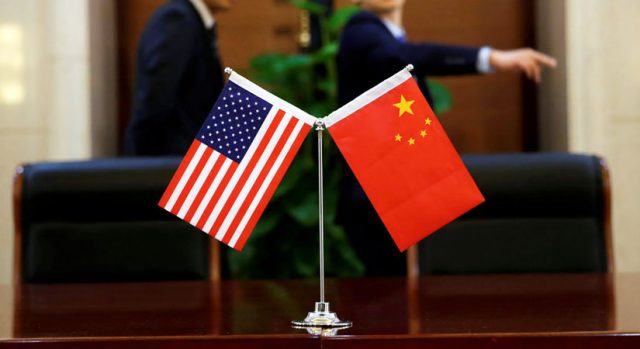
WASHINGTON — The United States shipped 2.5 million COVID-19 vaccine doses to Taiwan on Saturday, more than tripling Washington’s previous allocation of shots for the island, which has faced increasing political and military pressure from China.

Washington, competing with Beijing to deepen geopolitical clout through so-called “vaccine diplomacy,” initially had promised to donate 750,000 doses to Taiwan but increased that number as President Joseph R. Biden’s administration advances its pledge to send 80 million US-made shots around the world.

China, which considers Taiwan an integral part of its territory, has repeatedly offered to send coronavirus vaccines to the island, which has been battling a spike in domestic infections. Taipei has expressed concern about the safety of Chinese shots.

The 2.5 million donated doses of the Moderna, Inc. vaccine were set to leave Memphis, Tennessee, on a flight belonging to Taiwan’s China Airlines early on Saturday and arrive in Taipei on Sunday evening, a senior US administration official told Reuters, noting that the prompt delivery was due to experts from both sides being able to work out regulatory issues.

State Department spokesman Ned Price later tweeted that the plane carrying the vaccines had departed.

“We are not allocating these doses, or delivering these doses, based on political or economic conditions. We are donating these vaccines with the singular objective of saving lives,” the senior official said.

“Our vaccines do not come with strings attached,” the official said, adding Taiwan had “faced unfair challenges in its efforts to acquire vaccines on the global marketplace.”

A deal for Taiwan to purchase vaccines from Germany’s BioNTech SE fell through this year, with Taiwan’s government blaming pressure from Beijing.

China has denied the accusation, saying Taiwan is free to obtain the vaccines through Shanghai Fosun Pharmaceutical Group Co. Ltd., which has a contract to sell BioNTech’s vaccine in China, Hong Kong, Macau and Taiwan.

“We believe that these attempts by China to block purchases, for political purposes, are reprehensible,” the senior Biden administration official said.

Taiwan is trying to speed up the arrival of the millions of vaccines it has on order, although infections remain comparatively low despite a rise in domestic cases. Only around 6% of Taiwan’s 23.5 million people have received at least one shot of a vaccine regimen.

The US shipment comes at a time when Washington has been working with Taipei to create secure supply chains for strategic items such as computer chips, of which Taiwan is a key producer, that are vital for US automobile manufacturers and other industries.

It also comes after Taiwan announced on Friday that it will allow Terry Gou, the billionaire founder of Taiwan’s Foxconn and semiconductor giant TSMC, to negotiate on its behalf for COVID-19 vaccines.

Taiwan Presidential Office spokesman Xavier Chang said Washington’s assistance with vaccines confirmed the “rock-solid friendship between Taiwan and the United States.”

Jonathan Fritz, a senior State Department official, said on Thursday that China had been “very aggressively using vaccine donations as a lever to induce more of Taiwan’s diplomatic partners to switch recognition.”

Beijing has steadily whittled down the number of Taiwan’s diplomatic allies, which now stands at just 15 countries.

The United States, which like most countries has no formal diplomatic ties with Taiwan, has watched with alarm the stepped up tensions with Beijing, and Mr. Biden’s administration has vowed to boost ties with the island, which it is required under US law to supply with the means of defense.

Earlier this week Taiwan reported the largest incursion yet by China’s air force, including fighters and nuclear-capable bombers, into its air defense identification zone. — Reuters

As Iran veers right, ties with Gulf Arabs may hinge on nuclear pact

DUBAI — Gulf Arab states are unlikely to be deterred from dialogue to improve ties with Iran after a hardline judge won the presidency but their talks with Tehran might become tougher, analysts said.

Prospects for better relations between Muslim Shi’ite Iran and Sunni Gulf Arab monarchies could ultimately hinge on progress to revive Tehran’s 2015 nuclear accord with world powers, they said, after Ebrahim Raisi won Friday’s election.

The Iranian judge and cleric, who is subject to US sanctions, takes office in August, while nuclear talks in Vienna under outgoing President Hassan Rouhani, a more pragmatic cleric, are ongoing.

Saudi Arabia and Iran, longtime regional foes, began direct talks in April to contain tensions at the same time as global powers have been embroiled in nuclear negotiations.

“Iran has now sent a clear message that they are tilting to a more radical, more conservative position,” said Abdulkhaleq Abdulla, a UAE political analyst, adding that Mr. Raisi’s election might make improving Gulf ties a tougher challenge. “Nevertheless, Iran is not in a position to become more radical … because the region is becoming very difficult and very dangerous,” he added.

The United Arab Emirates, whose commercial hub Dubai has been a trade gateway for Iran, and Oman, which has often played a regional mediation role, were swift to congratulate Mr. Raisi.

Saudi Arabia has yet to comment.

Mr. Raisi, an implacable critic of the West and an ally of Supreme Leader Ayatollah Ali Khamenei, who holds ultimate power in Iran, has voiced support for continuing the nuclear negotiations.

“If the Vienna talks succeed and there is a better situation with America, then (with) hardliners in power, who are close to the supreme leader, the situation may improve,” said Abdulaziz Sager, chairman of Gulf Research Center.

LEVERAGE
A revived nuclear deal and the lifting of US sanctions on the Islamic Republic would boost Mr. Raisi, easing Iran’s economic crisis and offering leverage in Gulf talks, said Jean-Marc Rickli, an analyst at Geneva Centre for Security Policy.

Neither Iran nor Gulf Arabs want a return to the kind of tensions seen in 2019 that spiralled after the US killing, under former US President Donald Trump, of top Iranian general Qassem Soleimani. Gulf states blamed Iran or its proxies for a spate of attacks on oil tankers and Saudi oil plants.

A perception that Washington was now disengaging militarily from the area under US President Joseph R. Biden has prompted a more pragmatic Gulf approach, analysts said.

Nevertheless, Mr. Biden has demanded Iran rein in its missile programme and end its support for proxies in the region, such as Hezbollah in Lebanon and the Houthi movement in Yemen, demands that have strong support from Gulf Arab nations.

“The Saudis have realized they can no longer rely on the Americans for their security … and have seen that Iran has the means to really put pressure on the kingdom through direct attacks and also with the quagmire of Yemen,” Mr. Rickli said.

Saudi-Iran talks have focused mainly on Yemen, where a military campaign led by Riyadh against the Iran-aligned Houthi movement for over six years no longer has US backing.

The UAE has maintained contacts with Tehran since 2019, while also forging ties with Israel, Iran’s arch regional foe.

Sanam Vakil, an analyst at Britain’s Chatham House, wrote last week that regional conversations, particularly on maritime security, were expected to continue but “can only gain momentum if Tehran demonstrates meaningful goodwill.” — Reuters

Brazil passes half a million COVID-19 deaths; experts say worse ahead

SAO PAULO — Brazil’s death toll from coronavirus disease 2019 (COVID-19) surpassed 500,000 on Saturday as experts warn that the world’s second-deadliest outbreak may worsen due to delayed vaccinations and the government’s refusal to back social distancing measures.

Only 11% of Brazilians have been fully vaccinated and epidemiologists warn that, with winter arriving in the southern hemisphere and new variants of the coronavirus circulating, deaths will continue to mount even if immunizations gain steam.

Brazil has registered 500,800 deaths from 17,883,750 confirmed COVID-19 cases, according to Health Ministry data on Saturday, the worst official death toll outside the United States. Over the past week, Brazil has averaged 2,000 deaths per day.

COVID-19 continues to devastate countries around the region with the Pan American Health Organization (PAHO) reporting 1.1 million new cases of COVID-19 and 31,000 deaths in the Americas last week. PAHO noted upticks in six Mexican states, Belize, Guatemala, Panama and some places in the Caribbean.

PAHO warned that Colombia’s COVID-19 situation is at its worst point yet, with intensive care unit beds filled in major cities.

Experts see the toll in Brazil, already the highest in Latin America, climbing far higher.

“I think we are going to reach 700,000 or 800,000 deaths before we get to see the effects of vaccination,” said Gonzalo Vecina, former head of Brazilian health regulator Anvisa, predicting a near-term acceleration in fatalities.

“We are experiencing the arrival of these new variants and the Indian variant will send us for a loop.”

Vecina criticized far-right President Jair Bolsonaro’s handling of the pandemic, including the lack of a coordinated national response and his skepticism toward vaccines, lockdowns and mask-wearing requirements, which he has sought to loosen.

Thousands of Brazilians protested against Mr. Bolsonaro’s management of the pandemic in nationwide demonstrations on Saturday, blaming the administration for the high death toll and calling for the president’s ouster.

Raphael Guimaraes, a researcher at Brazilian biomedical center Fiocruz, said delays in the vaccination program in Latin America’s most populous nation meant its full effects would not be felt until September or later.

Mr. Guimaraes warned that Brazil could revisit scenes from the worst of its March-April peak, when the country averaged 3,000 deaths per day.

“We are still in an extremely critical situation, with very high transmission rates and hospital bed occupancy that is still critical in many places,” he said.

Last week, new confirmed cases in Brazil accelerated to more than 70,000 per day on average, edging past India for the most in the world.

Vaccination will be crucial in beating the virus in Brazil, since the country has failed to reach a consensus on social distancing and masks, said Ester Sabino, an epidemiologist at the University of Sao Paulo.

“We really need to increase vaccination very quickly,” she said.

However, evidence from neighboring Chile, which like Brazil has relied overwhelming on a vaccine developed by China’s Sinovac Biotech, suggests it may be months before mass immunization will effectively curb transmission.

Nearly half of Chileans have been vaccinated, but their capital Santiago just went back into lockdown as cases surged again to near peak levels.

Brazil will need to inoculate some 80 million people to reach Chile’s current per capita vaccination levels.

That will require a more consistent supply of vaccines and ingredients in Brazil, which have been spotty in recent months, as imports from China were delayed after Mr. Bolsonaro antagonized Beijing with comments perceived as anti-Chinese. — Reuters

Airlines, holiday companies ramp up pressure on Britain to ease travel rules

LONDON — Britain’s airlines and holiday companies are planning a “day of action” on Wednesday to ramp up pressure on the government to ease travel restrictions, with just weeks to go before the start of the peak summer season.

Travel companies, whose finances have been stretched to breaking point during the pandemic, are desperate to avoid another summer lost to COVID-19. But with Britain’s strict quarantine requirements still in place that now looks likely.

As the clock ticks down to July, Europe’s biggest airline Ryanair and Manchester Airports Group on Thursday launched legal action to try to get the government to ease the rules before the industry’s most profitable season starts.

On Wednesday, June 23, pilots, cabin crew and travel agents will gather in Westminster, central London, and at airports across Britain to try to drum up support.

Britain’s aviation industry has been harder hit by the pandemic than its European peers, according to data published by pilots trade union BALPA on Sunday.

That showed daily arrivals and departures into the United Kingdom were down 73% on an average day earlier this month compared to before the pandemic, the biggest drop in Europe. Spain, Greece and France were down less than 60%.

UK airports were also badly affected, with traffic in and out of London’s second busiest airport Gatwick down 92%, according to the data.

Time is running out for the industry, said the union.

“There is no time to hide behind task forces and reviews,” said BALPA general secretary Brian Strutton.

“BALPA is demanding that the UK Government gets its act together and opens the US routes and European holiday travel destinations that it has blocked with no published evidence at all.”

Over 45,000 jobs have already been lost in UK aviation, with estimates suggesting that 860,000 aviation, travel and tourism jobs are being sustained only by government furlough schemes. — Reuters

UAE to suspend entry from three countries, Dubai updates travel protocols

CAIRO — The United Arab Emirates (UAE) will suspend travelers from Liberia, Sierra Leone and Namibia from entering the country on national and foreign flights, effective 23:59 p.m. on Monday, June 21, state news agency WAM reported on Saturday, citing a statement by the General Civil Aviation Authority (GCAA).

The GCAA said the restrictions would also include transit passengers, with the exception of transit flights travelling to the UAE and bound for those countries.

Cargo flights between those countries and the UAE will continue, as usual, the statement added.

It said the restrictions were being introduced to limit the spread of COVID-19.

The GCAA added that exemptions to its decision include: UAE nationals, their first-degree relatives, diplomatic missions, official delegations, business jets — after getting prior approvals — and golden and silver residency permit holders, in addition to those who work essential jobs.

Those who are exempted will still have to take a PCR test at the airport and enter a mandatory 10-day quarantine.

Separately, Dubai’s Supreme Committee of Crisis and Disaster Management said on Saturday it would allow travellers from South Africa, who have received two doses of a UAE-approved vaccine, to enter Dubai starting from June 23, WAM said.

Travelers from India, who have valid residence visas and have received two doses of a UAE-approved vaccine, will also be allowed in the emirate.

Meanwhile, travellers from Nigeria must only present a negative PCR test taken 48 hours prior to departure and will also undergo another PCR test on arrival in Dubai, WAM added. — Reuters

Taiwanese staff to leave Hong Kong office in ‘one China’ row

XANDREASWORK-UNSPLASH

TAIPEI — Taiwanese staff working at the island’s representative office in Hong Kong will begin leaving the Chinese-run city from Sunday, a senior official said, after the government there demanded its officials sign a document supporting Beijing’s claim to Taiwan. 

Chinese-ruled Hong Kong has become another bone of contention between Taipei and Beijing, especially after Taiwan lambasted a security law imposed on Hong Kong by Beijing and began welcoming Hong Kongers to settle on the island. 

Lin Fei-fan, deputy secretary general of Taiwan’s ruling Democratic Progressive Party, said only local staff would remain at the office. 

“This is because the Chinese Communist Party and the Hong Kong government continue to force our personnel stationed in Hong Kong to sign a ‘one China commitment letter’ to recognize ‘one China,’” he said on his Facebook page. 

“As a political prerequisite for the visa renewal, we will of course not accept it!” 

China sees democratically ruled Taiwan as part of “one China” and has never renounced the use of force to bring the island under its control. 

Mr. Lin said Taiwan would never accept “one China” or “one country, two systems,” Beijing’s way of running Hong Kong under Chinese sovereignty it hopes to one day apply to the island. 

A senior Taiwan official familiar with the matter told Reuters seven Taiwan officials will return on Sunday afternoon, with the last remaining official to come back after visa expiry next month. 

In a statement earlier on Sunday, Taiwan’s Mainland Affairs Council said that since July 2018 the Hong Kong government has “repeatedly set unreasonable political conditions for staff visas for our Hong Kong office, demanding the signing of a ‘One China Commitment Letter.’” 

Starting from Monday, the Hong Kong office will “adjust its business handling method,” it added, saying the office will maintain “necessary operations.” 

Taiwanese staff will not sign any such “one China” letter, it added. 

Last month, Hong Kong suspended operations at its Taiwan representative office, blaming Taipei’s “gross” interference in internal affairs, including with its offer to assist “violent” protesters, accusations Taiwan rejected. 

Macau’s government followed suit on Wednesday. — Ben Blanchard and Yimou Lee/Reuters  

Rohingya artists tackle COVID-19 fears as refugees wait for vaccines

UNSPLASH

DHAKA — Busy with his brushes beneath a tarpaulin roof, Rohingya artist Ansar Ullah works on a mural depicting a giant vial of coronavirus disease 2019 (COVID-19) vaccine towering over the ramshackle homes of the world’s largest refugee settlement in Bangladesh. 

More than 700,000 Rohingya who fled Myanmar in 2017 live in Bangladesh’s refugee camps, where a vaccination drive scheduled to start in March has been postponed indefinitely due to delays in supplies from the COVAX program, the United Nations said. 

COVID-19 cases have remained relatively low despite a recent uptick, but the artists said many refugees have misconceptions about the coronavirus vaccines, which they aim to allay through their work. 

“Firstly, we hope someone or some organization sees this painting and helps us get vaccines. Our camps are crowded and we need them the most,” Mr. Ullah, 26, told the Thomson Reuters Foundation by phone. 

“There are also fears about the vaccine in our camps. Some are scared they might die or that their health might worsen because of the injection. We want to address these rumors, so that when the vaccine does come, everybody takes it,” he added. 

Painted ahead of Sunday’s World Refugee Day by a dozen artists, the mural also depicts a refugee receiving the jab and a man using a megaphone to challenge vaccine hesitancy and encourage camp residents to get vaccinated as soon as possible. 

“Fear and stigma around COVID-19 has proven to be a major barrier to people getting tested,” Louise Donovan, a spokesperson for the office of the United Nations High Commissioner for Refugees (UNHCR), said by e-mail. 

“Hence major efforts are being undertaken to ensure that refugees have adequate information when the vaccination campaign will begin,” she added. 

Mr. Ullah and his fellow artists are supported by New York-based nonprofit Artolution, and their project is the latest in a series of arts-based initiatives aimed at tackling issues in the camps  from gender-based violence to mental health concerns. 

THE WEDDING SINGER
Rohingya singer Nabi Hossain used to perform at weddings back home in Myanmar, but last year the 50-year-old visited homes around the camps to sing songs about the importance of wearing face masks and respecting social distancing. 

“The same messages are given by authorities through megaphones, but people understand the messages better through music,” said Mr. Hossain, 50, who was forced to leave for Bangladesh after his village was destroyed during a military crackdown. 

UN investigators later concluded that Myanmar’s military campaign was executed with “genocidal intent.” Myanmar denies that, saying the army was battling an insurgency. 

While most of Mr. Hossain’s family made it safely across the border, two of his sisters who lived in another village were killed. 

Mr. Hossain said he still grieved for his sisters, but that singing songs about them brought some relief. 

“It’s not just me. Many Rohingya have lost their relatives. They ask me to sing about them. They cry when I sing about those days. But they also laugh when I sing happy songs. Some of them even record the songs and take them back,” he added. 

Max Frieder, executive director and co-founder of Artolution, said he had witnessed “massive improvements” in the mental health of the artists he has worked with in recent years. 

“The shifts we’ve seen are not always quantitative, but qualitative … We’ve seen our artists, many of whom have had traumatizing experiences, go from becoming victims to survivors to becoming agents of social change,” he said. 

Numerous murals adorn the plastic and bamboo structures at the camps in Cox’s Bazar, a city in southeastern Bangladesh, and many contain broader references to Rohingya culture. 

One shows an elephant crossing the river Naf, which thousands of Rohingya had to pass as they fled Myanmar four years ago, and being welcomed by a rooster symbolizing Bangladesh. 

Even when the artists work in partnership with UN agencies and are given set themes, camp residents come up with the ideas for the murals  often after a discussion about key social issues with other members of the community, Mr. Frieder said. 

‘MUST FOR SURVIVAL’
Before the pandemic, theater was widely used in the camps to highlight residents’ concerns, too. 

The Bangladesh Institute of Theatre Arts (BITA), a nonprofit, organized more than 1,200 plays on issues including trafficking, drug abuse and early marriage, and the entity’s executive director, Sisir Dutta, said they had raised awareness. 

“Take the trafficking cases. Initially many adolescents didn’t even know the term, let alone the dangers. But when they could visualize it, they understood how brokers worked and how their life could be in danger,” he said. 

Many arts-based projects have seen their activities reduced during the pandemic, said Ms. Donovan, but she added that the UNHCR aimed to boost community-led art projects later in the year in partnership with groups like Artolution. 

Another of the COVID-19 mural painters, Ayla Akter, 18, said the artistic initiatives were “a must for survival” in the camps. 

“As long as we sit together and paint, life in the camp feels really good,” she said. “I don’t really have anything else to look forward to. This gives my mind peace.” — Naimul Karim/ Thomson Reuters Foundation 

French far-right tests voters’ appetite in regional elections

Image via Rémi Noyon/Flickr/CC BY-SA 2.0

PARIS  French voters go to the polls on Sunday in regional elections that will test the appeal of far-right leader Marine Le Pen’s softened image less than a year before the next presidential election. 

Coming after a grueling year and a half of lockdowns, curfews and restrictions, Sunday’s first round is likely to prove dire for President Emmanuel Macron, whose party is projected to win none of mainland France’s 13 regions. 

Boosted by a resurgence of law-and-order issues during the campaign, despite the fact French regions have no police powers, Le Pen is hoping to capitalize on a rebrand that has seen her ditch promises of “Frexit” and inflammatory rhetoric. 

“She appears less extreme in the eyes of the French, less dangerous for democracy, than she did a decade ago,” Brice Teinturier, an analyst with pollster IPSOS told Reuters. 

Her best chance is in the south of France, the region around Marseille and Nice, where one of her lieutenants, a former conservative minister, is projected by one opinion poll as winning the race even if all parties rally against him. 

Gaining one region, for the first time ever, would give Ms. Le Pen a major boost less than a year before presidential elections, and would be a slap in the face for Mr. Macron, who has painted himself as a bulwark against the far-right. 

The far-right is also likely to do well in two other regions, around Calais in the north and in Burgundy, helped by low turnout in a country whose attention is shifting to summer holidays to forget the pandemic. 

In the deindustrialized north, the incumbent and frontrunner to become the conservatives’ candidate in the presidential election, Xavier Bertrand, is facing Ms. Le Pen’s party spokesman and Mr. Macron’s justice minister. 

Whether Mr. Macron’s party reaches the 10% threshold will determine if it can force Mr. Bertrand into an alliance to defeat the far-right, which would undermine his pitch as Mr. Macron’s opponent-in-chief in 2022. 

However, a win for Mr. Bertrand would bolster his chances of becoming the conservatives’ presidential candidate. Mr. Macron aides see the one-time health minister as a rival who would erode the president’s center-right voting base. 

Results of Sunday’s first round will send parties into frantic backroom dealing for two days to strike alliances ahead of June 27’s final round. — Reuters

Australia’s top economists call for budget measures to speed the switch to electric cars

Image via Ivan Radic/CC BY 2.0

By Peter Martin 

Australia’s top economists overwhelmingly back government measures to speed the transition to electric cars in order to meet emission reduction targets. 

An exclusive poll of 62 of Australia’s preeminent economists — selected by their peers — finds 51 back measures to boost the take-up of electric cars including subsidizing public charging stations, subsidizing the purchase of all-electric vehicles, and setting a date to ban the import of traditionally-powered cars. 

Only 11 oppose such measures, three of them because they prefer a carbon tax. 

Six of the 51 who supported special measures said they did so reluctantly, as their preferred alternative would be a carbon price or a carbon tax, rather than subsidizing “one alternative out of many to reduce emissions.” 

Cars account for roughly half of Australia’s transport emissions, making them about 8% of Australia’s total emissions. 

Yet Australia’s take-up of electric vehicles is dwarfed by the rest of the world. 

On one measure, all-electric cars accounted for just 0.7% of new car sales in Australia in 2020 compared to 5% in China and 3.5% in the European Union. 

Australia has no domestic car industry to protect, meaning industry policy concerns needn’t hold back the transition. 

Norway plans to outlaw new petrol car sales from 2025; Denmark, the Netherlands, Ireland and Israel from 2030; and California and Britain from 2035. 

Asked whether Australia should take action to speed the transition, eight in ten of the 62 economists selected by the Economic Society said it should. 

The results represent a departure for a profession whose usual advice is to avoid interfering with markets. 

One participant, University of New South Wales (NSW) professor Gigi Foster said an important question needed to be answered in order to justify government intervention: “what is the market failure here?” 

The market failure was pollution, imposing costs on the community beyond the drivers of conventionally powered cars and on the planet by pushing up global temperatures. 

If it wasn’t to be dealt with by a carbon price, measures that sped up the switchover to electric vehicles could achieve some of the same effect. 

By far the most popular measure of six presented to the panelists who supported government action was subsidizing public charging points, backed by 84%. 

The next most popular was removing the luxury car tax from electric-only vehicles. At present the 35% tax applies to cars valued at more than $69,152, and $79,659 for fuel-efficient vehicles. 

According to the survey, 43% supported making charging points compulsory in new homes and new car parks; 39% supported setting a date to ban the import of petrol and diesel cars. 

Matthew Butlin, who chairs South Australia’s Productivity Commission, noted that much of Australia was not urban and unlikely to be served by charging points for some time. 

Without government measures to speed the installation of remote charging stations, many buyers would be reluctant to go electric, even if most of their driving was in cities. 

When they were in place, there would be a good case for banning the import of petrol and diesel vehicles, but not until then. 

Others wanted to hold off on banning the import of conventionally-powered cars until Australia had a lower-emissions mix of electricity. 

Macquarie University’s Lisa Magnani said that with three quarters of Australia’s electricity generated from coal, electric vehicles created considerable emissions. 

The Grattan Institute’s Danielle Wood disagreed, saying “network effects” built a case for switching over early. 

The more people switched, the more charging stations would be built and the lower electric vehicle prices would drop, driving more people to switch, and increasing the benefits of decarbonizing the electricity supply. 

The sooner Australia swapped over, the easier it would be to get to net zero emissions by 2050 without the need for a “cash for clunkers” style scheme to buy back polluting vehicles. 

Setting 2035 as the date for banning imports of gas-powered cars as recommended this year by the International Energy Agency would give buyers time to adjust while the charging infrastructure developed. 

Tax specialist John Freebairn said electric cars were already heavily subsidized by escaping the fuel excise used to fund roads, despite the efforts of some states to plug the gap. 

Sydney University economist Stefanie Schurer argued on the other hand bulky and polluting sport utility vehicles were effectively subsidized because of the tax benefits they attracted when used for work. 

Former Liberal Party leader John Hewson who heads the Crawford School of Public Policy said smoothing the transition had become urgent. 

It took only 10 years from 190313 for the United States to switch from horse-drawn to gas-driven vehicles, and technology take-up was quicker today, particularly in Australia. 

Other economists surveyed noted that there was much that could be done to reduce harmful emissions in addition to going electric. 

Sue Richardson said Australia should impose serious limits on the tailpipe emissions of new cars. Australia is unusual among developed nations in not having such a limit, making it a favored market for high-emission cars. 

Rana Roy said a better approach would be to limit transport itself through remote working and efforts to encourage walking and cycling. Subsidies for electric cars could send such moves backwards. 

When responses to the survey were weighted by the confidence respondents had in them on a scale of 1 to 10, support of special measures to drive the transition remained about as strong, backed by 8 in 10 of the economists surveyed. — The Conversation 


Peter Martin is a visiting fellow at the Crawford School of Public Policy, Australian National University. 

This article is republished from The Conversation under a Creative Commons license. Read the original article. 

Cheers and quiet reflection as US crowds mark Juneteenth

ATLANTA/CHICAGO  Marching bands sparked loud cheers and quieter reflections about racial justice from crowds gathered on Saturday to mark Juneteenth as a new US federal holiday commemorating the end of the legal enslavement of Black Americans.  

President Joseph R. Biden, Jr., and Vice-President Kamala D. Harris on Thursday signed a bill making Juneteenth the 11th federally recognized holiday, just over a year after the murder of George Floyd in Minneapolis ignited nationwide protests for racial justice and for ending police brutality.  

“Juneteenth is a day of profound weight and profound power,” Mr. Biden tweeted on Saturday.  

Juneteenth, or June 19th, marks the day in 1865 when a Union general informed a group of enslaved people in Texas that they had been made free two years earlier by President Abraham Lincoln’s Emancipation Proclamation during the Civil War.  

“This particular Juneteenth is special because last year we were in the George Floyd protests, and this year we received some resolution,” said Andrea Johnson of Atlanta, watching a parade under rainy skies near the historic Ebenezer Baptist Church in Atlanta.  

Outside the church where Martin Luther King, Jr. preached and led protests for voting rights, equal access to public services, and social and economic justice, boisterous crowds cheered marching bands and their dancers, who competed with dramatic dips and twirls and were followed by Jeeps adorned with “Black Lives Matter” signs.  

Many onlookers were joyful but some said declaring a national holiday might be a hollow victory for Blacks, many of whom still suffer racial injustice in the United States that can be remedied only through more substantial efforts by the federal government.  

“There are mixed feelings for me,” said Jermaine Washington, a marching band director who lives in Stone Mountain, Georgia, just 20 miles northeast of Atlanta.  

“Oftentimes we see these types of events as a win when it’s just pacification for the Black community instead of making sure there’s an equal education or equitable housing,” Mr. Washington said as he herded his young musicians at the Atlanta procession.  

Stone Mountain, a tiny village that is holding its first ever Juneteenth celebration this year, stands in the shadow of a nine-story high bas-relief of Confederate figures carved into a sprawling rock face, the largest monument to the pro-slavery legacy of the US South.  

Around the United States, concerts, rallies, art displays, and lots of food were among events planned for Juneteenth.  

Atlanta and its metro area have been celebrating Juneteenth for years. Richard Rose, president of the Atlanta chapter of the NAACP, said this year’s designation of Juneteenth as a federal holiday resonates in the city often called the “cradle of the civil rights movement.” 

“While we celebrate, what we have to remember is that we must fight for our rights  in the ballot box, in the schools. And we have to stand up, city-to-city, across this nation,” Mr. Rose said.  

Across the country, many events will take place in-person, unlike last year, as the United States emerges from the coronavirus pandemic and more Americans get vaccinated.  

Chicago’s “March For Us” has a mile-long route in the city’s business district known as the Loop.  

“We celebrate Independence Day, so we would be remiss if we don’t celebrate the day that people who were worth three-fifths of the person finally became free and started this journey towards equality,” said “March for Us” organizer Ashley Munson.  

Ms. Munson said that while strides have been made, recent incidents of police brutality toward Black people and legislation in several US states that curtails voting rights show that much work still needs to be done.  

Among events planned in New York City is “Juneteenth in Queens,” a week-long festival of virtual panel discussions set to conclude on Saturday with food trucks of jerk chicken and waffles, BBQ and more, as well as in-person live performances.  

The initiative is spearheaded by Assemblymember Alicia Hyndman, who sponsored legislation last year that made Juneteenth a state holiday.  

One of the events taking place in Colorado is a flyover to honor the legacy of aviation pioneer Bessie Coleman, who in 1921 became the first African-American woman to earn a pilot’s license.  

Deneen Smith, a 17-year-old Black high school student and aspiring pilot, is inspired by Coleman’s story.  

“That’s what Juneteenth means to me  independence and freedom for African Americans because of what our ancestors struggled through,” Smith said. — Rich McKay and Brendan O’Brien/Reuters