Home Blog Page 7263

P600-M commercial irradiation facility to rise in Tanay

CONSTRUCTION of the first commercial electron beam (E-Beam) irradiation facility in the Philippines serving the medical and food industries is expected to be completed by late 2023, A Brown Co., Inc. (ABCI) said.

Paul Francis B. Juat, A Brown vice-president, told BusinessWorld that the facility, run by fully-owned subsidiary Irradiation Solutions, Inc., has entered the engineering works stage. It will rise on a 1.2-hectare site in Tanay, Rizal.

Mr. Juat said the facility, to be built for around P600 million, will offer a cost-effective means of sterilizing medical devices and agricultural products.

“It is one of the cheapest sterilization methods compared to other alternatives and the company feels that this will be a big help to industries in the Philippines,” Mr. Juat said.

According to Mr. Juat, the facility will be able to accommodate volume of 20,000 tons each year, and has received letters of interest from 10 agricultural and medical companies.

“We have received interest from… food additive companies, food processors, and medical devices firms,” Mr. Juat said.  

He also estimated the cost for users at between P15 and P50 per kilogram, depending on the type of product that will undergo the process.

Luvimina G. Lanuza, Philippine Nuclear Research Institute (PNRI) Irradiation Services Section former head, said ABCI’s planned facility helps address the need for more local commercial irradiation facilities.

Ms. Lanuza said the demand is expected to come from the herbal and spice industries, adding that the facility can also be used to eliminate pests on fruits and vegetables.

She also confirmed that the facility can be used on frozen fish and other seafood, cosmetic raw materials, packaging materials, animal feeds, and crops such as onions and potatoes.

Ms. Lanuza added that the facility can service medical products such as syringes, personal protective equipment, surgical masks, surgical gloves, gauze, and cotton dressings, among others.

“The facility exposes the products to a beam of electrons just like how cargoes undergo x-ray scanners in airports. It sterilizes the product, reduces the microbial load, eliminates pathogens, extends shelf life, and reduces postharvest losses,” Ms. Lanuza said.

A Brown’s Mr. Juat said the company is also looking to establish another commercial E-beam irradiation facility in Toril, Davao City.

“The budget for the Toril facility is expected to be around the same budget as the Tanay facility,” Mr. Juat said.

According to its website, A Brown is involved in real estate, power generation, public utilities, and agribusiness. — Revin Mikhael D. Ochave

Employers, unions launch drive to ratify ILO convention on workplace violence, harassment

THE LEADERS Forum, an organization of employers and unions, said it will work towards getting the International Labor Organization’s (ILO) Violence and Harassment Convention ratified.

The initial steps will involve consultations with workers and employers, the forum said.

The Violence and Harassment Convention or Convention 190 provides a framework for companies to create work environments that are free from violence and harassment, grounded on the principles of dignity and respect. 

“(T)he (Leaders Forum) calls on its constituents to participate in this process so that workplaces, whether at home or in the site (e.g., factory, office, etc.) are free from violence and harassment in whatever form to achieve a safe space for all workers regardless of gender, sex, race, age, beliefs, and ability,” it said in a joint statement Tuesday. 

The Leaders Forum members include the Employers Confederation of the Philippines, the Philippine Chamber of Commerce and Industry, the Philippine Exporters Confederation, the Federation of Free Workers, Sentro ng mga Nagkakaisa at Progresibong Manggagawa (Center for United and Progressive Workers), and the Trade Union Congress of the Philippines. 

These groups are currently working with the Labor department for the ratification of the ILO Convention 190. The convention came into force on June 25 after it was ratified by two ILO member states, Fiji and Uruguay.

Five other countries have so far ratified Convention 190 — Argentina, Ecuador, Mauritius, Namibia, and Somalia.

The Leaders Forum said it recognizes the passage of Republic Act 11313 or the Safe Spaces Act in April 2019, and the signing of its implementing rules and regulations in October 2019, as significant developments aligning the country’s laws with ILO Convention 190.

The Safe Spaces Act expands the scope of Republic Act 7877 or the Anti-Sexual Harassment Act of 1995 by recognizing that sexual harassment may also occur among peers, co-employees, in the streets and other public places, and online. — Bianca Angelica D. Añago

PHL 5G still in infancy, but improvements significant, Opensignal says

REUTERS

THE FIFTH generation (5G) of mobile communications technology in the Philippines is still in its “infancy,” but has delivered improvements to users’ mobile experience, mobile analytics company Opensignal said.

“We’ve seen that 5G already delivers significant improvements to our Filipino users’ mobile experience when compared to that seen when they only connect to 4G services, for video, multiplayer gaming and for speed,” Opensignal said in its latest analysis.

“The improvements are just the start in the 5G era,” it added, noting that unlike 4G, 5G is still a developing technology, “so the gap will likely widen between 4G and 5G in future.”

Comparing Filipinos’ experience with early-stage 5G to when they adopted 3G and 4G technologies, Opensignal said users saw “10.2 times faster speeds” from 5G.

“Our users racked up an impressive 149 Mbps (megabits per second) when connected to 5G which is 10.2 times faster than the 14.6 Mbps seen in 4G,” Opensignal said.

“The speed gap between 3G and 4G was smaller with 4G speeds a much lower (but still impressive) 3.5 times faster than 3G speeds,” it added.

Filipino users experienced 3.7 times faster upload speeds on 5G than on 4G.

“Our users saw average upload speeds of 14.5 Mbps when connected to 5G or 10.5 Mbps higher than those seen on 4G,” Opensignal said.

But the ratio between 5G and 4G is lower than that between 4G and 3G, it noted. “5G upload speeds were 3.7 times faster than 4G, while average 4G upload speeds were four times faster than those seen when connected to 3G.”

“This indicates that currently, the 4G/5G uplift on average upload speeds is less in percentage terms than the difference seen when moving from 3G to 4G. However, the boost that 5G provides is likely to make a noticeable difference to our users,” Opensignal added.

Opensignal also said in its analysis that Filipino smartphone users experienced an “excellent” video experience when connected to 5G.

“We found that our users enjoyed an Excellent (75 or above) video experience when connected to 5G, instead of the Good (55-65) video experience seen when connected to 4G. In contrast, with 3G, they had a Fair (40-55) video experience.”

Opensignal defines an excellent rating as “very consistent experience across all users, video streaming providers and resolutions tested, with fast loading times and almost non-existent stalling.”

In terms of user experience when connected to 4G, Opensignal said the rating was 19.3 points (46.8%) higher than when connected to 3G.

Filipino smartphone users also had a “much better” gaming experience on 5G and 4G.

“Our Filipino users had a Fair (65-75) games experience when connected to 5G and the 5G score was a startling 29.6 points (1.7 times) higher than the score for 4G games experience,” Opensignal noted.

“The gap between the 3G and 4G games experience was not as large, as there was a difference of 9.9 points between the two scores and the 4G games experience score was 1.3 times higher than the 3G games experience. The games experience observed on 4G and 3G connections was Poor (40-65) and Very Poor (under 40), respectively,” it added. — Arjay L. Balinbin

Peso rebounds on stock market’s rise, weak US data 

THE PESO strengthened versus the greenback on Tuesday following gains at the stock market and weak US data. 

The local unit closed at P50.401 per dollar on Tuesday, gaining 24.4 centavos from its P50.645 finish on Monday, data from the Bankers Association of the Philippines showed. 

The peso opened Tuesday’s session at P50.65 versus the dollar. Its weakest showing was at P50.67, while its intraday best was at P50.32 against the greenback. 

Dollars traded dropped to $859.9 million on Tuesday from $967.5 million on Monday. 

The peso rose to track the stock market’s climb, Rizal Commercial Banking Corp. Chief Economist Michael L. Ricafort said. 

The Philippine Stock Exchange index gained 47.73 points or 0.73% to close at 6,561.41 on Tuesday. The broader all shares index likewise increased 19.31 points or 0.48% to finish at 4,072.47. 

Meanwhile, a trader said the local unit strengthened after the weaker-than-expected US consumer sentiment report. 

The preliminary consumer index sentiment index conducted by the University of Michigan saw a reading of 70.2 in the first half of August, falling from the 81.2 final print in June, Reuters reported. This was the lowest level since 2011 and was below the 81.2 forecasted by economists who participated in a Reuters poll. 

The survey’s gauge of current economic conditions also fell to 77.9 from 84.5 in July while its measure of consumer expectations slid to 65.2 from 79.0 in July. 

For today, Mr. Ricafort gave a forecast range of P50.30 to P50.50 per dollar, while the trader expects the local unit to move between 50.25 and 50.50. — LWTN with Reuters 

Shares rise on remittances data, firms’ earnings

PHILIPPINE shares rose on Tuesday after remittances recorded a six-month high in June and as the corporate earnings season ends on a “high note.”

The Philippine Stock Exchange index (PSEi) went up by 47.73 points or 0.73% to close at 6,561.41 on Tuesday, while the all shares index climbed 19.31 points or 0.47% to 4,072.47.

“Upbeat remittances growth last month of seven percent was a pleasant and welcome respite from the slew of negative news linked to the virus,” First Metro Investment Corp. Head of Research Cristina S. Ulang said in a Viber message. “Also, [the] corporate earnings season [is] ending on a high note.”

“Philippines shares closed higher ahead of big retail earnings releases slated this week in the region while others are awaiting retail-related and industrial production data, [which] will be released later [in the day],” Regina Capital Development Corp. Head of Sales Luis A. Limlingan said in a separate Viber message.

“Investors have been searching for clues as to how much the economy has recovered or will need [to] in the coming month. Meanwhile, local funds managers are taking positions as to the state of the country next week, and whether ECQ (enhanced community quarantine) in selected areas will be extended,” he added.

Money by overseas Filipino workers (OFWs) reached a six-month high in June, as more host countries gradually reopened their economies amid the rollout of coronavirus vaccines.

Cash remittances rose by 7% to $2.638 billion in June from $2.465 billion a year ago, data released by the Bangko Sentral ng Pilipinas (BSP) on Monday showed.

June marked the fifth consecutive month of year-on-year growth and the biggest inflows since the $2.89 billion recorded in December.

This brought inflows in the first half to $14.918 billion, up by 6.4% from $14.019 billion in the same period of 2020.

Meanwhile, the Health department reported 14,610 new coronavirus cases on Monday, bringing the country’s tally to 1,755,846. Active cases stood at 106,672.

The government is expected to announce new quarantine classifications by Thursday.

Majority of sectoral indices closed in the green on Tuesday except for mining and oil, which went down by 4.06 points or 0.04% to 9,504.31.

Meanwhile, property gained 37.98 points or 1.25% to 3,060.28; industrials rose 92.27 points or 0.97% to 9,583.88; services went up 11.87 points or 0.73% to finish at 1,628.80; financials inched up 6.84 points or 0.48% to 1,430.44; and holding firms gained 14.90 points or 0.23% to close at 6,476.96.

Value turnover decreased to P6.76 billion with 1.20 billion issues traded on Tuesday, from the P8.65 billion with 1.82 billion shares on Monday.

Decliners narrowly outnumbered advancers, 98 against 97, while 50 names closed unchanged.

Net foreign selling slowed to P534.4 million on Tuesday from P1.86 billion the previous day. — K.C.G. Valmonte

Setbacks cited in Philippine pandemic response

PHILIPPINE STAR/EDD GUMBAN

By Kyle Aristophere T. Atienza, Reporter
and Alyssa Nicole O. Tan

A MORE contagious Delta coronavirus variant has worsened the pandemic situation in the Philippines, with 16% of its hospitals nearly full, according to Fitch Solutions Country Risk and Industry Research.

Of 1,291 hospitals in the country, more than 200 have reached critical levels amid a fresh surge in infections spurred by the Delta variant from India, it said in a report.

Twenty-five of 159 hospitals in Metro Manila, which is under a strict lockdown from Aug. 6 to 20, are also nearly full, it added.

“With only 9.9% of the population fully vaccinated as of Aug. 5, the country remains a long way off from reaching herd immunity such that it can ease preventative measures more significantly,” Fitch Solutions said.

The slow vaccine rollout and setbacks in containing the pandemic would delay the country’s goal of achieving universal healthcare, it added.

Health Undersecretary Maria Rosario S. Vergeire said coronavirus infections nationwide increased by 45% in the previous week.

The spike was being felt in the National Capital Region, Central Luzon, Southern Tagalog, Western Visayas and Central Visayas, she told a televised news briefing on Tuesday.

Rising infections were being experienced across all age groups, she added. There was a 74% increase in infections among children aged up to nine years, and a 60% increase among kids aged 10 to 19 years, Ms. Vergeire said.

The Department of Health (DoH) reported 10,035 coronavirus infections on Tuesday, bringing the total to 1.77 million.

The death toll rose to 30,462 after 96 more patients died, while recoveries increased by 10,858 to 1.63 million, it said in a bulletin.

There were 105,787 active cases, 96.1% of which were mild, 0.9% did no show symptoms, 1.3% were severe, 90% were moderate and 0.7% were critical.

The agency said 206 duplicates had been removed from the tally, 201 of which were tagged as recoveries. Thirty-nine recoveries were tagged as deaths. Six laboratories failed to submit data on Aug. 15

“As the number of COVID-19 (coronavirus disease 2019) cases quickly increased, the lack of and strain on health resources and personnel revealed the weaknesses of the country’s healthcare system,” Fitch Solutions said.

There are, on the average, 3.7 doctors for 10,000 people in the Philippines. This is below the World Health Organization-prescribed ratio of 1 doctor for 1,000 people, according to the University of the Philippines COVID-19 pandemic response team.

It also cited a “regional discrepancy” in the bed-to-population ratio, which was 1:1,121 nationwide. There is one bed for 591 people in Metro Manila, but in Mindanao, there is only one bed for 4,200 people, it said.

“These shortages in medical facilities and personnel are due to the government’s low prioritization of the health sector as seen in the national budget,” Fitch Solutions said.

While the health sector budget increased to P185.5 billion in 2020 from P177.7 billion in 2019, its overall share in the national budget had fallen to 4.5% from 4.9%, the research firm said.

It cited cuts to much-needed health programs that could have boosted the country’s pandemic response.

Fitch Solutions said the coronavirus pandemic would delay the country’s goal of achieving universal healthcare.

Funding sources for the country’s universal health care program are “under pressure” due to the falling excise tax collections, which are used to subsidize healthcare costs, and “a global wave of job losses and pay cuts” that threatens collections from Filipino workers at home and abroad.

Philippine health authorities on Sunday reported the detection of the country’s first case of the Lambda coronavirus variant, which is believed to be more resistant to vaccines.

Health experts have said the Lambda variant might have spread across the country before being detected. The country is having a hard time detecting variant cases because of its limited genomic surveillance, they said.

“Genomic surveillance is highly dependent on the quality and efficiency of coronavirus testing, which is still not at ideal levels,” said Joshua L. San Pedro, convenor of the Coalition of People’s Right to Health.

He said the Health department’s target of at least 90,000 tests daily had not been met.

“It is from the PCR tests that DoH collects samples for genome sequencing,” the medical doctor said in Facebook Messenger chat. “If there are not enough samples from all over the country, then the sampling method might not be as robust.”

Meanwhile, Senator Juan Miguel F. Zubiri has filed a resolution seeking a probe of delays in multi-party agreements between the government and entities seeking to buy coronavirus vaccines.

He asked the Senate Committee of the Whole to investigate reports that agreements submitted by local governments and private companies had been left unsigned.

“Their number one concern has been the delay on delivery and the unavailability of vaccines in far-flung areas,” the senator said in a statement. “As it stands, no one knows what’s causing the delays, and it’s frustrating.”

Duterte risks losing political capital over DoH chief — analysts

PRESIDENTIAL PHOTO/ JOEY DALUMPINES

PHILIPPINE President Rodrigo R. Duterte risks eroding his political capital after he refused to fire his Health chief, who has been blamed for the government’s poor pandemic response, according to analysts.

Mr. Duterte could be negatively affected if Health Secretary Francisco T. Duque III fails to clear himself of corruption allegations, said Institute for Political and Electoral Reform Executive Director Ramon C. Casiple.

“Duterte may be negatively affected by Duque if the state auditor’s report is not convincingly refuted and it is perceived that there is an improper investigation by his administration,” he said in a Facebook Messenger chat.

In his late-night public address on Monday, the President defended the Department of Health (DoH) from allegations that it had mishandled P67.3 billion in COVID-19 (coronavirus disease 2019) funds.

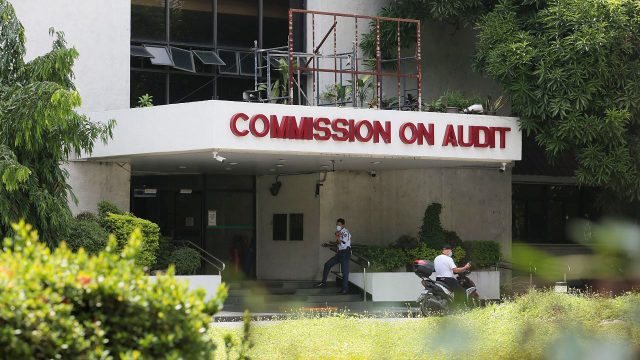
The Commission on Audit (CoA) has flagged various deficiencies in the handling of the funds, which affected the agency’s response to the pandemic.

The President said he would reject any potential resignation by Mr. Duque, who had been implicated in other corruption scandals involving the state-run Philippine Health Insurance Corp.

The President’s continued show of support for Mr. Duque “may further test the patience of people worried about the continuing threats of the pandemic, insufficient vaccine supply and testing, continuing poor quality of the healthcare system and economic effects caused by the pandemic,” said Maria Ela L. Atienza, a political science professor at the University of the Philippines.

During his televised speech, the President said the so-called deficiencies in the Health department’s budget only meant that some documents were missing.

“It’s impossible for anyone to steal P67.3 billion,” he said in Filipino.

Mr. Duterte’s trust rating could fall once the people realize that he is accountable for the failure of his Cabinet officials and agencies under his watch, Ms. Atienza said in a Viber message. “We are already seeing some slight dips in his popularity with more people saying they are unsatisfied with how the government has managed the pandemic based on the surveys,” she said. “People are increasingly worried and impatient with the economic downturn and the continuing rise in COVID cases.”

The opposition can capitalize on the issue by “speaking loudly” and explaining to the public why the President is partly to blame for the failures of his Cabinet, said Michael Henry Ll. Yusingco, a senior research fellow at the Ateneo de Manila Policy Center.

“This is a good opportunity to gauge their respective tolerance for corruption in the Cabinet,” he said in a Facebook Messenger chat. The President’s popularity will be severely damaged once the masses realize that the inefficiencies of the DoH and other agencies involved in the pandemic response are partly to blame for their coronavirus hardships, said media research expert Jay L. Bautista. — Kyle Aristophere T. Atienza

Fewer restrictions on vaccinated people sought by Trade chief

PCOO.GOV.PH

THE COUNTRY’S Trade chief wants the government to relax restrictions during lockdowns for people who have been vaccinated against the coronavirus as soon as the vaccination rate improves.

“We can suggest a change in protocol,” Trade Secretary Ramon M. Lopez told an online news briefing on Tuesday. “During lockdowns, we can allow the vaccinated to go out,” he said in Filipino.

Fully vaccinated workers can work on site and inoculated consumers could move more freely, he said, noting that the proposed rule would be premised on improved vaccination rates and supply.

Unvaccinated people would have to stay home to be protected against the virus, Mr. Lopez added. He asked the public to prepare for potential rule changes and avail themselves of vaccines.

Presidential adviser for entrepreneurship Jose Ma. “Joey” Concepcion III has been advocating for the creation of “bubbles” for fully vaccinated people, or areas where they can move freely.

He earlier said the country could have enough lockdown-free areas through these bubbles.

The United States Center for Disease Control and Prevention said coronavirus vaccines, like those developed by Pfizer-BioNTech and Moderna, Inc. reduce the risk of hospitalization and death. Vaccinated people are also less likely to acquire COVID-19 or transmit it to others.

“However, the risk for (COVID-19) breakthrough infection in fully vaccinated people cannot be completely eliminated as long as there is continued community transmission of the virus,” the public health agency said.

Mr. Lopez said 16% of about a million Philippine businesses are at risk of remaining shut if the strict lockdown in the capital region is extended.

He reiterated his support for easing restrictions in Metro Manila to the less strict modified enhanced community quarantine while imposing “granular lockdowns” in areas with a high infection risk. — Jenina P. Ibañez

CoA finds lapses in DSWD program for crisis fund 

PHILIPPINE STAR/MICHAEL VARCAS

STATE AUDITORS have found “oversight” by the Department of Social Welfare and Development (DSWD) in its implementation of the assistance program for members of marginalized sectors in crisis situations.  

The Commission on Audit (CoA), in its 2020 report, cited “deficiencies” in around P722.8 million worth of funds distributed under the Assistance to Individuals in Crisis Situation (AICS).   

The AICS is intended as an immediate cash and material assistance for individuals who have gone through an unexpected crisis such as illness or death of a family member. 

The lapses in program implementation, which CoA said deprived “the poor, vulnerable, and marginalized sectors of the society as the main priority concern of the program,” were observed in the regions of Calabarzon, Western Visayas, and Eastern Visayas.   

Among the deficiencies found by state auditors were defective or lack of supporting documentation to the disbursed funds, and incomplete information encoded into the Crisis Intervention Monitoring System (CrIMS).  

CoA recommended in its report that DSWD order regional offices to submit the complete and proper documents, conduct an investigation on the special disbursing officer in charge, and simplify the CrIMS encoding system.  

“CrIMS requires 77 data entries per client and a longer time is required for the encoder to ensure that all client’s information have been encoded in the system, coupled with inadequate personnel assigned to CrIMS,” CoA said. 

MANDATE
Meanwhile, members of the House of Representatives said on Tuesday that President Rodrigo R. Duterte has no authority to stop CoA from performing its constitutional mandate. 

Mr. Duterte, in a late Monday night televised address, told CoA to stop flagging government agencies and publishing its audit reports following public outrage over “deficiencies” found in over P67 billion worth of funds under the Department of Health for pandemic response.  

“The right of the people to information cannot be negated and quashed by invoking that [government] officials should be shielded from ‘corruption by perception’,” Albay Rep. Edcel C. Lagman said in a statement.  

He added that it is CoA’s obligation as an independent commission to disclose “sanctionable negligence to utilize public funds and the culpable misuse of the people’s money.”    

Mr. Lagman also said that Mr. Duterte should order the prosecution of officials responsible for flagged deficiencies in concerned agencies instead of castigating state auditors.    

Similarly, Bayan Muna Party-list Rep. Carlos Isagani T. Zarate said CoA is just doing its constitutional duties and a disruption of its mandate would enable widespread corruption in government.  

“[President Duterte] said before that ‘a whiff of corruption’ would be broken, but why is a government agency in charge of safeguarding against corruption being silenced and those who have irregularities in the use of public funds are being protected,” he said in Filipino. — Russell Louis C. Ku 

CoA questions TESDA fund transfers to anti-communist insurgency program   

THE COMMISSION on Audit (CoA) has questioned the Technical Education and Skills Development Authority (TESDA) for the fund transfer of P160.08 million to its regional offices for the implementation of programs under the national task force against communist insurgency.   

State auditors cited that these transfers have a “lack of proper authority [or] legal basis and the absence of appropriate guidelines as to how this fund will be utilized, likewise exposing these funds to possible misuse or appropriation” in its 2020 annual audit report made public on Monday.    

CoA reported that in their initial review, a P6-million fund provided by TESDA to the National Task Force to End Local Communist Armed Conflict (NTF-ELCAC) in the Soccsksargen region was used for “questionable activities.”   

These activities include monthly meetings for the regional task force worth P1.7 million, security escorts for various activities worth P600,000, communication allowance worth P20,000, and accommodation worth P700,000.  

CoA recommended that TESDA provide “legal authority” for its fund transfers as these may lead to charges for “technical malversation of public funds.” 

Section 9 of Executive Order (EO) 70, which created NTF-ELCAC, notes that “the initial funding requirements for the implementation of this Order shall be charged against existing member-agencies of the task force,” which included TESDA.  

According to the audit report, TESDA has explained that P147.38 million of the releases to the regional offices were taken out of the agency’s centrally-managed scholarship funds under the 2020 budget.  

The agency also said that the transfers were in accordance with EO 70, along with TESDA Circular No. 11 which provides omnibus guidelines for its scholarship programs, defining special clients to include marginalized sectors along with wounded-in-action or killed-in-action military and police personnel along with their dependents.    

State auditors responded in their rejoinder that Section 9 of EO 70 “does not give sole discretion to the head of the member agency to utilize its approved budget” for the NTF-ELCAC, especially when the order had “no well-defined program of activities and no guidelines were specifically formulated for its utilization.”  

They also questioned the justification of TESDA Circular No. 11 as “the regular training of TESDA can readily cater to the needs of the targeted clients.” — Russell Louis C. Ku 

Senate probe sought on slow payment release for transport service contracting  

PHILIPPINE STAR/ MICHAEL VARCAS

SENATOR GRACE Poe-Llamanzares has filed a resolution seeking an inquiry on the slow rollout of pandemic response funds intended to help the transport sector.   

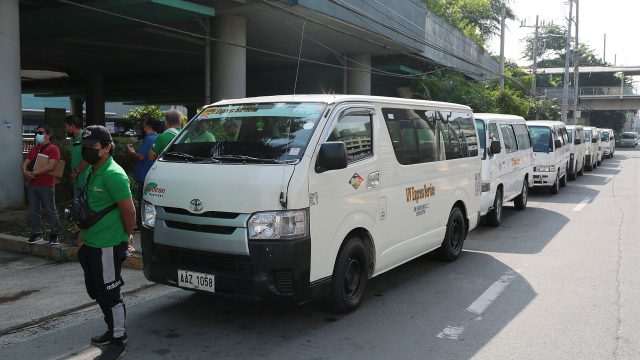
“It is lamentable that the government simply shrugged its shoulders over its inability to disburse payments to our operators under the service contracting program,” Ms. Poe, chair of the Senate Committee on Public Services, said in a press release on Tuesday.   

She cited the Commission on Audit (CoA) 2020 report showing that only P3.02 million or 0.05% of the P5.58-billion budget for the service contracting program under Republic Act No. 11494 or the Bayanihan to Recover as One Act (Bayanihan II) were released to beneficiaries.  

The contracting program was intended to assist public utility vehicle drivers and operators by hiring them to provide transport to frontline workers.  

The proposed Senate probe aims to look into the “utterly dismal rollout of the service contracting program,” which is led by the Land Transportation Franchising and Regulatory Board (LTFRB).  

Chairman Martin B. Delgra III of LTFRB has previously said that they have disbursed P1.25 billion or 26.55% of the total allocation for payouts as of June this year.  

Ms. Poe said “the incredibly slow release of funds to pay operators and drivers” is “unacceptable.” — Alyssa Nicole O. Tan 

Labor chief tests positive for COVID-19  

PHILIPPINE STAR/KRIZ JOHN ROSALES

LABOR SECRETARY Silvestre H. Bello III has tested positive for coronavirus, his department announced on Tuesday.  

Mr. Bello is asymptomatic and “remains on top of his health,” the Department of Labor and Employment (DoLE) said in a news release.  

DoLE Information and Publication Service Director Raul M. Francia, in a private Viber message on Tuesday, said the secretary is fully vaccinated with the AstraZeneca brand.   

He was tested for coronavirus disease 2019 (COVID-19) on Saturday at his hometown in Ilagan City, Isabela and is currently in isolation there.   

“Even while in isolation, the Secretary continues to discharge his functions,” DoLE said.  

It added that prior to the test, Mr. Bello received officials and guests at his office in Intramuros, Manila, and traveled to various places around the country to lead the distribution of cash assistance to displaced and disadvantages informal sector workers who were affected by the pandemic.   

POLICE FORCE
Meanwhile, four more cops have died after contracting COVID-19, bringing the total number of police force deaths to 96 as of Tuesday.   

Two of the four were in their 40s assigned in Central Visayas, one was a 34- year-old assigned in the National Capital Region, and the other is a 48-year-old policewoman assigned at the headquarters in Camp Crame.   

A total of 176 new COVID-19 cases were also recorded on Tuesday, bringing the total to 32,631 with 1,985 as active cases, according to the Philippine National Police’s (PNP) Health Service department.  

There were also 157 new recoveries, raising the total to 30,550.   

As of Tuesday, 81,125 or 36.5% of the total 45,700 PNP personnel were already fully vaccinated, while 42.9% or 95,345 are waiting for their second dose. — Bianca Angelica D. Añago