Home Blog Page 7214

Human-centered approach to work

VECTORJUICE-FREEPIK

(Part 1)

In the ILO report on “The Future of Work in the Philippines,” it was clearly stated that an ILO Declaration issued a call to action for “a human-centered” approach for the future of work that focuses on increasing investment in people’s capabilities, strengthening the institutions of work, and promoting sustained, inclusive and sustainable economic growth, and full and productive employment and decent work for all.” The report focused on the effects of digital technologies, in particular the adoption of artificial intelligence in the workplace, as regards disruption and transformation on occupations and their implications for sectors and skills development approaches in the Philippines. It mapped and assessed existing national policy responses and initiatives related to Industry 4.0 in the Philippines and collected information on current upskilling policies and programs.

While reading the report, I got the impression that, despite the good intention of taking a human-centered approach, somewhere along the way the focus turned to technology, especially the innovations related to what is called Industry 4.0, such as Artificial Intelligence, Robotics, Internet of Things, and Data Analytics. It was assumed that the Philippines should strive to be at the same stage of Industry 4.0 as other more advanced economies which have gone much beyond the low-upper middle-income stage, which the Philippines is still struggling to leave behind, and which have reduced their poverty incidence to zero- or single-digit levels as compared to the almost 20% poverty incidence in the Philippines. Much importance was given to digitalization as becoming pervasive in all sectors and occupations of the economy. The idea is that digitalization could render tasks or occupations previously carried out by human workers obsolete — “destructive digitalization.” In the same vein, exposure to new technologies could transform existing occupations — “transformative digitalization.” This line of reasoning assumes that it should be the workers that necessarily have to adapt to technology rather than technology adapting to the types of workers the Philippines can reasonably turn out in the next 10 to 20 years.

I take the position that there is no need for the Philippines to fully be part of the existing “global value chain.” Only those countries that are heavily dependent on exports for economic growth have to be ready for the “emergence of new, more sophisticated and advanced technologies that are seen to trigger structural changes in global value chains (GVC) such as selective reshoring, nearshoring, more distributed value activity and greater competition for skills specific to certain GVC segments.” I maintain that the large domestic market of the Philippines, based on a population growing towards 150 million people in the next two decades, will be the main engine of growth of the economy. We have to export only to the extent of having to supplement the foreign exchange earnings that we receive from the Overseas Filipino Workers (OFWs), the BPO-IT (which is part of Industry 4.0) and the very promising tourism sector, which, despite digitalization, will continue to be labor-intensive. The warm smiles and soft skills of the Filipinos and Filipinas cannot be digitalized.

To refocus our attention towards the human person in planning the economy of the future, it would be useful to borrow some basic principles about the essence of human work from Catholic social doctrine. The one who wrote extensively on the philosophy and theology of work was St. John Paul II. In his encyclical letter entitled “Laborem Exercens” (On Human Work), St. John Paul II defines work as “any activity by man, whether manual or intellectual, whatever its nature or circumstances; it means any human activity that can and must be recognized as work, in the midst of all the many activities of which man is capable and to which he is predisposed by his very nature, by virtue of humanity itself. Man is made to be in the visible universe and image and likeness of God himself, and he is placed in it in order to subdue the earth. From the beginning therefore he is called to work. Work is one of the characteristics that distinguish man from the rest of creatures, whose activity for sustaining their lives cannot be called work.”

According to Christian social doctrine, work — in whatever form — is very much part of the reason for man’s existence on earth. God created man for him to work, to “subdue the earth.” In a homily that he delivered on May 1, 2020 (Feast of St. Joseph), Pope Francis said that “work is none other than the continuation of God’s work: human work is man’s vocation received from God at the end of the creation of the universe… Work makes the human person similar to God, because with work man is a creator, capable of creating many things; also of creating a family to raise. The human person is a creator, and creates through work. This is his vocation, and it says in the Bible that ‘God saw all He had made, and indeed it was very good’ (Gen 1:31). That is, work has goodness within itself and creates the harmony of things — beauty, goodness — and involves man in everything: in his thought, his actions, everything. Man is involved in work. It is man’s first vocation: to work. And this gives dignity to man. The dignity that makes him resemble God. The dignity of work.”

In his homily, he told the story of a businessman who telephoned him (at the height of the pandemic). This employer was asking for prayers from the Pope so that he would not be obliged to lay off any of his workers, saying “Because to lay off one of them is like firing myself.” The Pope praised employers like him who are good, who take care of their employees as if they were their own children. He asked his listeners to pray to St. Joseph that he might help all to fight for the dignity of work, so that there may be work for everyone, and that the work may be dignified, not slave labor.

In the last century, a towering figure in the Catholic church who taught most eloquently about the essence of human work was St. Josemaria Escriva, Founder of Opus Dei. In a homily he delivered, also on the feast of St. Joseph, entitled “In St. Joseph’s Workshop,” St. Josemaria made it very clear that “Work is part and parcel of man’s life on earth. It involves effort, weariness, exhaustion: signs of the suffering and struggle which accompany human existence and which point to the reality of sin and the need for redemption. But in itself work is not a penalty or a curse or a punishment: those who speak of it that way have not understood sacred Scripture properly… It is time for us Christians to shout from the rooftops that work is a gift from God and that it makes no sense to classify men differently, according to their occupation, as if some jobs were nobler than others. Work, all work, bears witness to the dignity of man, to his dominion over creation. It is an opportunity to develop one’s personality. It is a bond of union with others, the way to support one’s family, a means of aiding in the improvement of society in which we live and in the progress of humanity… And moreover, since Christ took it into his hands, work has become for us a redeemed and redemptive reality. Not only is it the background of man’s life, it is a means and path to holiness. It is something to be sanctified and something which sanctifies.”

To further elaborate on the relationship between the human person and technology, St. John Paul II, in the encyclical “On Human Work,” distinguishes between the objective and the subjective sense of work. At the objective level, there is reason to classify work according to the degree by which man “subdues the earth” through his higher spiritual faculties. As St. John Paul wrote: “Man dominates the earth by the very fact of domesticating animals, rearing them and obtaining from them the food and clothing he needs, and by the fact of being able to extract various natural resources from the earth. But man ‘subdues the earth’ much more when he begins to cultivate it and then to transform its products; adapting them to his own use. Thus agriculture constitutes through human work a primary field of economic activity and an indispensable factor of production. Industry in its turn will always consist in linking the earth’s riches — whether natures’ living resources or the products of agriculture, or the mineral or chemical resources — with man’s work, whether physical or intellectual. This is also in a sense true in the sphere of what are called service industries, and also in the sphere of research, pure or applied.”

Technology is what embodies the use of the higher faculties of man, not only his physical prowess as was the case before the First Industrial Revolution, which was the increasing use of machines that significantly increased the productivity of human work. As St. John Paul wrote: “The development of industry and of the various sectors connected with it, even the most modern electronics technology, especially in the fields of miniaturization, communications and telecommunications and so forth, shows how vast is the role of technology, that ally of work that human thought has produced, in the interaction between the subject and object of work. Understood as a whole set of instruments which man uses in his work, technology is undoubtedly man’s ally… It facilitates his work, perfects, accelerates and augments it. It leads to an increase in the quantity of things produced by work, and in many cases improves their quality.”

There is a downside, however, to technology. It can cease to be man’s ally and become almost his enemy, as when the mechanization of work “supplants” him, taking away all personal satisfaction and the incentive to creativity and responsibility, when it deprives many workers of their previous employment, or when, through exalting the machine, it reduces man to the status of its slave.

St. John Paul II rightly points out that the phrase “subdue the earth” in today’s digital world includes a relationship with technology, and in today’s terminology, both hardware (machines) and software. Some very important questions have to be raised. These questions are particularly charged with content and tension of an ethical and social character.

(To be continued.)


Bernardo M. Villegas has a Ph.D. in Economics from Harvard, is professor emeritus at the University of Asia and the Pacific, and a visiting professor at the IESE Business School in Barcelona, Spain. He was a member of the 1986 Constitutional Commission.


bernardo.villegas@uap.asia

Energy security for Philippine recovery and development

VECTORJUICE-FREEPIK

As the development of the energy sector was not at all part of the Duterte administration’s agenda or priorities, the looming energy crisis is giving goose-bumps to Filipino consumers, businesses, and the industry itself.

To bring the energy predicament to the national attention, the Stratbase ADR Institute, in partnership with CitizenWatch Philippines, hosted a virtual town hall discussion on “Ensuring Power Supply Security for a Sustainable Economic Recovery” on Nov. 11.

In welcoming the panelists and the hundreds in attendance, I specifically highlighted the interdependence between the following factors. Given a stable power supply and modern electricity supply system in the country, the business climate will improve while simultaneously attracting foreign investments. If business is good and more investments are here, more jobs will eventually be created. Altogether, these will redound to the speedy revival of the Philippine economy.

Echoing through the town hall discussion was of course the urgent question of improving the energy supply. Duly noted by Louie Montemar (Convenor of Bantay Konsyumer, Kalsada, at Kuryente or BK3), the top priority should be improving the supply, as this has been a problem immediately after EDSA, and has been since.

For Senator Sherwin Gatchalian, the exploration for new energy sources to improve supply necessitates financial muscle and technology. Risking a hefty investment of $20 million to make one drill, he rightly pointed out that contractors must have the financial and technical expertise.

The current contractors wanted to start drilling new wells and would naturally want an extension of their contracts, but for some reason, they were not given that opportunity, which many observers see as an alleged set-up.

Mr. Gatchalian argued for the need to diversify the energy supply, particularly maximizing renewable energy, and diversifying energy sources in oil and gas. According to him, “There is potentially 31,000 megawatts of power which can be drawn from renewable sources.”

Some speakers, however, aired the concern about the high prices involved in renewable resources. For instance, Victorio A. Dimagiba (President, Laban Konsyumer, Inc.) harped on either junking the feed-in tariff (FIT) policy or repealing the existing Renewable Energy Act 9513 or the RE law. Further, they have even initiated a petition to the Energy Regulatory Commission (ERC) to nullify the FIT increases for the consumers’ protection.

Still on improving the energy supply but in terms of making prices competitive, Romeo Bernardo, Vice-Chairman of the Foundation for Economic Freedom (FEF), stated that bringing down the price is based on the assurance of the supply side. This scenario is a pre-condition where competition will bring down the price. Unfortunately, according to him, “some of the interventions of government went on restricting supply.”

In connection with this, Ernesto Pantangco, Chairman of the Energy Committee of the Management Association of the Philippines (MAP), ventilated the need to have a long-term integrated power development plan that spans the next two to three decades. Having been involved in the power industry for the past four or five administrations, he gave due emphasis on the shifting priorities of every administration and emphatically expressed that there has been no consistency.

Another issue that impacts on both energy supply and prices is the importance of having a transmission facility in place. As argued by Mr. Bernardo, “if generators are discouraged from building because they cannot connect to the system, you will have a shortage in supply, then high prices. Our government regulators, DOE (Department of Energy) and ERC, have to do a better job in making sure that transmission facilities are built in a timely way.”

Mr. Montemar, on the issue of power generation, cited the live case of Meralco and the DoE regarding a reported “solar hybrid micro-grid” project in Cagbalete Island in the east coast of Luzon. The lesson, according to him, is that we already have a working model that uses solar power technology and battery storage supplemented by several diesel-powered generators for continuous electricity supply to the island. This can be further developed and replicated for unserved and underserved communities across the archipelago, he said.

With both technology and investments, we can diversify our energy sources and develop indigenous sources, and create more supply and cleaner energy in the process.

Another perspective floated in the discussions pertinent to energy security is the concept of energy mix. As global energy prices continue to rise, Mr. Pantangco opined that the impact could have somewhat been mitigated if we had a more balanced energy mix, together with renewable power plants. He also cited that adding nuclear power in the energy formula will add to diversification. On this point, Bienvenido “Nonoy” Oplas, Jr. (President, Minimal Government Thinkers) stated that the consumers are the ones who decide the energy mix, not the government, NGOs, UN, DoE, and ERC.

The immediate context where in the looming energy crisis may happen is that we are now in the electoral season. As Terry Ridon (Convenor, InfraWatch PH) reminded everyone, “we should not lose sight of the elections, and the most important thing is for us to elect better leaders at the highest levels.”

Energy is essential to our country’s inclusive recovery. The next government must put energy security among the top items of the development agenda. A shift from populist to a more developmental, sustainable, and strategic thinking.


Victor Andres “Dindo” C. Manhit is the president of the Stratbase ADR Institute.

The subtle power of FIRB

VECTORJUICE-FREEPIK

COVID-19 triggered economic losses since the first case was recorded in January 2020. The community quarantine measures imposed by the government severely disrupted business operations and commercial activities and led to a negative impact in our economic performance. For these reasons, the enactment of the Corporate Recovery and Tax Incentives for Enterprises (CREATE) law this year was a welcome development.

The CREATE law aims to provide relief to businesses adversely impacted by the pandemic, and reverse the effects of the COVID-19. Several government officials, business entrepreneurs, and stakeholders touted the measure as a well-crafted law.

The CREATE law offers a three-tier structure of incentives to attract high-value and labor-intensive investments in the country. The determination on which incentives an entity can enjoy and the period of availment will depend on its registered project/activity, location, and industry tier which will be defined in the Strategic Investment Priorities Plan (SIPP). Interestingly, the rule-making power rests upon the Fiscal Incentives Review Board (FIRB) to ensure success of this incentive scheme.

One of the salient features of the CREATE law is the expanded functions of the FIRB. Prior to CREATE, the FIRB’s function was limited to the administration and grant of subsidies to Government-Owned and -Controlled Corporations (GOCCs). With CREATE, the FIRB is now granted vast power which includes policy making and oversight function for the administration and grant of tax incentives; the approval and disapproval of the application for tax incentives or tax subsidies; the formulation of place-specific strategic investment plan; and the cancellation, suspension, and withdrawal of tax incentives and subsidies, among others. The most crucial of these powers are the formulation of the new SIPP which set out the countries’ list of priorities, industries, and the grant of the incentives.

Last June, the FIRB adopted the SIPP drafted by the Department of Trade and Industry — Board of Investment. As envisaged, the framework includes industries that are high-value and labor-intensive investments. Among the industries identified under the SIPP are electrical and electronics, chemical and pharmaceuticals, machinery and transport, agriculture and agribusiness, information technology-business process management, research and development, and artificial intelligence, automation, robotics, and digital technologies. As of date, the draft SIPP has yet to be approved by the President. The implementation of the SIPP is expected to begin in January 2022.

Pending the issuance of the new SIPP, FIRB issued Resolution 5-21 adopting the 2020 Investment Priorities Plan (IPP) as the transitional SIPP. Hence, the list of priority sectors under the 2020 IPP are still eligible for incentives. To streamline the process of registration and application for the availment of incentives, the FIRB introduced the online Fiscal Incentives Registration and Monitoring System (FIRMS). Through this online portal, investors or enterprises can submit and monitor their applications for incentives in any of the investment promotion agencies.

With all these policies in place, we will expect a boost in investments, and economic recovery in the years to come. It must be emphasized, however, that the success still lies with the FIRB. Under CREATE, the FIRB is given the authority to grant tax incentives to registered business enterprises. It may only delegate its authority to investment promotion agencies for registered projects or activities with investment capital of P1 billion and below.

It should be noted that the incentive scheme has its cost, that is, forgone revenue for the government. The Board should thus maximize the benefits from these tax incentives by granting the incentives to qualified target investors only. Otherwise, it will pose a burden to our economy.

To emphasize, the law was crafted not only to encourage investments but also to increase competitiveness of the country in the global market. The FIRB is tasked with the burden of streamlining an SIPP worthy of investors’ minimum investment capital of P5 million and more, which is required to enjoy the special corporate income tax (SCIT) of 5% over 10 years.

Presently, the board is composed of the Secretary of Finance, the Secretary of Trade and Industry, the Executive Secretary of the Office of the President, the Secretary of Budget and Management, and the Director General of the National Economic and Development Authority.

One notable aspect is that the board is composed of presidential appointees. We are uncertain if the present members of the FIRB will retain their posts after the 2022 election. For now, we can only hope that the next set of members of the FIRB won’t be a rubberstamp for the new administration. Notwithstanding, this is a call to the FIRB to stay true to its mandate, and that is, to preserve the legacy of CREATE as a fiscal relief and economic recovery measure.

The views and opinions expressed in this article are those of the author. This article is for general information and educational purposes, and not offered as, and does not constitute, legal advice or legal opinion.


Princess Rexille V. Liboon is an associate at the Tax Department of the Angara Abello Concepcion Regala & Cruz Law Offices.

(632) 8830-8000

pvliboon@accralaw.com

Push for civil registration set to hit key milestone in Asian and Pacific countries

YANALYA-FREEPIK

MOST COUNTRIES in the Asia-Pacific region are on track to reach universal birth registration by 2030: an incredible achievement and a significant milestone in realizing human rights and equality. However, as the COVID-19 pandemic has exposed, many weaknesses remain in official recording systems, creating gaps in knowledge about the population and affecting how authorities respond to crises and reach those in greatest need.

Civil registration and vital statistics (CRVS) systems record births and other key life events such as deaths and marriages. Birth registration is fundamental for accessing a wide range of social services, benefits, and rights. It provides an individual with a legal identity and a proof of age, which are often requirements to enroll in school, receive healthcare, apply for formal work, register to vote, inherit property, obtain a passport and social protection, or open a bank account. And often it is the hard-to-reach and marginalized populations that are least likely to receive official documentation, including those living in rural, remote, isolated or border areas; minorities; indigenous persons; migrants; non-citizens; asylum-seekers; refugees and people who are stateless or of undetermined nationality.

As regional leaders gather this week for the 2nd Ministerial Conference on Civil Registration and Vital Statistics in Asia and the Pacific, the focus will be on regional and country-level achievements, obstacles and challenges in realizing the shared commitment that all people in the region will benefit from universal and responsive CRVS systems by 2024. It marks the midpoint of the Asia-Pacific CRVS Decade (2015-2024) and is an important milestone in the pursuit of creating national CRVS systems that are universal and responsive to the needs of entire populations.

Since 2014, more than 70 million more children in the region have greater access to education, health and social protection because their birth has been officially recorded and recognized through the issuance of a birth certificate. This is a notable achievement and a testament to the resolve and commitment of governments to the shared goals made in 2014, the strength of regional cooperation, and the support of 13 development partners, including the United Nations Economic and Social Commission for Asia and the Pacific (ESCAP) and UNHCR, the UN Refugee Agency.

Still, there is work to do. Robust and universal marriage registration systems are needed to prevent girls from being coerced into early marriage, which often threatens their lives and health. The region also has an opportunity to reduce the risk of statelessness and human trafficking, as well as to promote solutions for refugees and asylum seekers by documenting links to the country of origin. UNHCR’s work with national governments to strengthen and broaden civil registration systems to formally register people considered stateless or of undetermined nationality has led to profound policy changes across Central Asia and the legal recognition of every birth, irrespective of parents’ status.

Furthermore, as we have witnessed during the global pandemic, when civil registration systems fail to reach everyone in the country and not everyone is counted, a public health crisis intensifies. Whereas robust CRVS systems enable governments and health authorities to track the pandemic and respond quickly and in an informed manner, a poorly functioning civil registration system masks the true impact of a crisis: deaths go uncounted — especially among the poorest and most vulnerable — and individuals are unable to access humanitarian relief or benefit from financial stimulus measures and, more recently, national vaccination programs.

Governments that are unable to account for the entire population face barriers to creating and implementing effective public policy and responding to a crisis in an equitable manner. A comprehensive approach to civil registration, with timely and accurate data that are put to the right use, has the power to benefit every individual and inform public policy simultaneously, including by reducing statelessness across the region.

Leaving no one behind through universal birth and death registration demands bold and ambitious outcomes from the upcoming ministerial conference. We have the knowledge, experience and technical ability to create registration systems that are responsive to the needs of the population and can guide us through current and future challenges.

(The 2nd Ministerial Conference on Civil Registration and Vital Statistics in Asia and the Pacific will take place from Nov.  16 to 19.)


Armida Salsiah Alisjahbana is executive secretary of ESCAP, while Gillian Triggs is assistant high commissioner for protection at the UNHCR.

Biden signs $1 trillion infrastructure bill into law

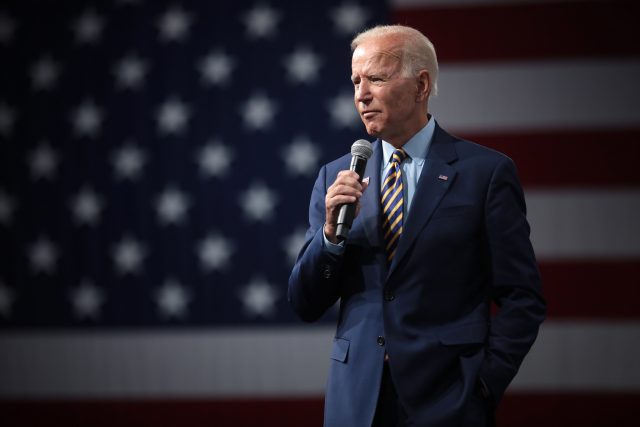
US PRESIDENT JOSEPH R. BIDEN, JR. — IMAGE VIA GAGE SKIDMORE/CC BY-SA 2.0/FLICKR

WASHINGTON – President Joe Biden signed into law a $1 trillion infrastructure bill at a White House ceremony on Monday that drew Democrats and Republicans who pushed the legislation through a deeply divided U.S. Congress.

The measure is designed to create jobs across the country by dispersing billions of dollars to state and local governments to fix crumbling bridges and roads and by expanding broadband internet access to millions of Americans.

The bill-signing ceremony, held in chilly weather on the White House South Lawn to accommodate a big crowd, was an increasingly rare moment when members of both parties were willing to stand together and celebrate a bipartisan achievement.

Biden, whose job approval ratings have dropped because of his handling of the economy and other issues, heard supportive chants of “Joe, Joe, Joe” from some in the crowd and got a standing ovation as he stepped to the microphone.

Biden said the bill‘s passage showed that “despite the cynics, Democrats and Republicans can come together and deliver results.” He called the bill a “blue-collar blueprint to rebuild America.”

“Too often in Washington, the reason we don’t get things done is because we insist on getting everything we want. With this law, we focused on getting things done,” Biden said.

Speakers included Senator Kyrsten Sinema, the centrist Arizona Democrat whose opposition to some tax increases has forced a scaling back of a companion piece of legislation, Biden‘s $1.75 trillion “Build Back Better” social safety net plan.

Sinema and fellow Democratic Senator Joe Manchin of West Virginia, who also attended, have angered some in their party for resisting a number of items sought by progressives in the social spending bill. Sinema appeared to refer to the criticism in her remarks.

“Delivering this legislation for the American people – this is what it looks like when elected leaders set aside differences, shut out the noise and focus on delivering results on the issues that matter most to everyday Americans,” she said.

Republicans attending included Senator Rob Portman of Ohio, Senator Mitt Romney of Utah and Maryland Governor Larry Hogan.

Some Republicans who drew fire from their party’s right wing for backing the legislation stayed away.

Biden signed an executive order before the ceremony directing that materials made in the United States be given priority in infrastructure projects, the White House said.

It also established a task force made up of top Cabinet officials to guide implementation of the legislation, co-chaired by former New Orleans Mayor Mitch Landrieu.

The bill had become a partisan lightning rod, with Republicans complaining that Democrats who control the House of Representatives delayed its passage to ensure party support for Biden‘s $1.75 trillion social policy and climate change legislation, which Republicans reject.


BATTLE OVER SOCIAL SPENDING LOOMS

There was a festive atmosphere at the ceremony. Biden joked that Portman, who is not standing for re-election and does not have to face critics within his own Republican Party, is a “hell of a good guy. I know I’m not hurting you, Rob, because you’re not running again.”

Representative Don Young, an 88-year-old Alaska Republican, teased Biden about the hour-plus length of the ceremony when he sat down to sign the bill.

“We were wondering when you were gonna stop. We damn near froze to death,” he said.

How long the bipartisan spirit will last is unclear as both sides expect a big battle over the social safety net plan.

Biden‘s Build Back Better package includes provisions on childcare and preschool, eldercare, healthcare, prescription drug pricing and immigration.

The White House is hoping House Speaker Nancy Pelosi will bring the bill to a vote this week. That will only be a first step, however, as the Senate has not yet taken up the legislation, and Democratic divisions could threaten its chances in that chamber.

Biden and top officials in his administration are hitting the road to promote the infrastructure plan. He visits New Hampshire on Tuesday and Michigan on Wednesday. – Reuters

Coal shares lose ground after Glasgow climate deal

SYDNEY – An international agreement to reduce coal use dragged miners’ shares lower on Monday, but tight supply of the commodity provided a floor for a sector that has chalked up huge gains this year.

U.N. climate talks in Glasgow ended on Saturday with a deal targeting fossil fuel use. Wording was softened to call for a “phase down” rather than “phase out” of coal after lobbying from India, among others.

Big miners China Shenhua Energy and Yanzhou Coal fell 1% and 2.4% respectively in Hong Kong, where the broader stock market edged up slightly.

An index of mainland-listed miners fell about 1%. Coal stocks in other regions also came under pressure.

Climate activists will undoubtedly frame COP26 as failing on coal (and fossil fuels). We look past this frustration (and current energy market conditions) and see ongoing incremental consensus in the need to reduce demand for fossil fuel,” said Cowen analyst John Miller.

In Indonesia, the world’s biggest coal exporter, declines were exacerbated by surging production in China, a top customer. No. 1 miner Bumi Resources fell 5.7%, while Adaro Energy and Indika Energy tumbled 4.5% and 7% respectively.

Shares in Australia-listed thermal coal miner Whitehaven Coal fell 1.6% and rival New Hope about 1% in a slightly firmer broad market.

Stocks were also hit in the United States. Shares of Peabody Energy Corp were down roughly 8%, Arch Resources Inc slumped 5% and Consol Energy Inc dropped about 3%. Warrior Met Coal slipped about 3%, while Hallador Energy Co fell 7%.


‘CASH GENERATOR’

Metallurgical coal miners South32 and Coronado Global Resources slid some 1.4% and 4% respectively.

The moves extend a recent pullback that has taken the edge off huge year-to-date gains for Whitehaven, South32 and New Hope amid a global energy crunch. They are still each up more than 40%.

“The reality is that coal is going to be used during the next decade or so. It’s still going to be a cash generator,” said Mathan Somasundaram, chief executive of Sydney-based research firm Deep Data Analytics.

China, the world’s biggest producer and consumer of coal, churned out its highest tonnage in more than six years last month, official data showed, which helped to knock near-term spot prices on Monday.

The Glasgow deal has elicited promises of future cuts to use, resolved rules for carbon markets and also takes aim at fossil fuel subsidies – all of which could speed up the transition to other energy sources.

Elsewhere in Asia, Seoul-listed mine owners and suppliers KEPCO, LX International and Doosan Heavy traded between a fall of 2.5% and a gain of 0.6% in a broader market that was up 1%.

Thai miner Banpu fell 2.7%. Shares in Coal India slid 4.3%, also weighed down by soft quarterly results.

Among other mining stocks, Anglo American , the world’s third largest exporter of metallurgical coal, fell around 1.4% in London, while Sasol, which operates coal mines in South Africa, gained over 1%.

George Boubouras, head of research at K2 Asset Management in Melbourne, said under-investment in coal projects would probably keep spot prices elevated from a historical perspective but the fuel’s likely eventual demise might limit gains for stocks.

“High thermal coal prices… will not necessarily translate into higher share prices to the same degree,” he said. Oil fell around 1% and gas was firmer.

Some investors see uranium filling some of the gap left as energy firms retreat from coal. This has helped uranium futures to soar along with other commodities in recent weeks.

Large miners have rallied, lifting Canada’s Cameco to a decade high last week and Kazakhstan’s Kazatomprom to a record. – Reuters

N.Korea’s Kim visits new city in first public outing in over a month

SEOUL – North Korean leader Kim Jong Un visited a new city being built near the border with China and a sacred mountain revered by his family, state media reported on Tuesday, in his first public appearance in more than a month.

The northern alpine town of Samjiyon is being transformed into a massive economic hub, called a “socialist utopia” by officials, equipped with new apartments, hotels, a ski resort and commercial, cultural and medical facilities.

The developing city is near Mount Paektu, the holy mountain where Kim‘s family claims its roots, and he has made multiple visits since 2018, with the official KCNA news agency touting it as “epitome of modern civilisation.”

KCNA said Kim‘s latest trip was designed to inspect the third and last phase of construction, due to be completed by the end of this year after delays caused by international sanctions and the coronavirus pandemic.

KCNA did not give a date for Kim‘s visit, but it is the first report of public activity by the leader for 35 days, since he gave a speech at a defence exhibition, his longest absence since 2014.

The young, reclusive leader’s disappearance from state media often sparks speculation over his health or whereabouts. South Korea’s intelligence agency said late last month that he had no health issues.

“He said Samjiyon has turned into an example of a mountainous modern city under socialism and a standard of rural development thanks to the workers’ steadfast struggle despite the unfavourable northern environment,” KCNA said.

Kim said building the new city provided experience in construction, design and technologies that would boost economic growth for other regions.

The city is one of the largest initiatives Pyongyang has launched as part of Kim‘s push for a “self-reliant” economy as the country faces international sanctions over its nuclear and missile programmes.

Nearly two years after sealing borders to head off COVID-19, North Korea has recently resumed rail freight with China, the latest sign that they could reopen the border soon. – Reuters

Tesla’s Musk sells $930 mln in shares to cover stock option tax – filings

Tesla CEO Elon Musk has sold $930 million in shares to meet tax withholding obligations related to the exercise of stock options, U.S. securities filings showed on Monday.

Musk sold 934,091 shares after exercising options to buy 2.1 million stocks at $6.24 each on Monday. Tesla shares closed at $1,013.39. He is required to pay income taxes on the difference between the exercise price and fair market value of the shares.

This is the second time in a week that the billionaire has exercised his stock option. Last Monday, he sold another 934,000 shares for $1.1 billion after exercising options to acquire nearly 2.2 million shares.

The two options-related sales were set up in September via a trading plan that allows corporate insiders to establish preplanned transactions on a schedule, the filings said.

As of the end of 2020, he had an option to buy 22.86 million shares, which expire in August next year, a Tesla filing shows.

On Nov. 6, Musk polled Twitter users about selling 10% of his stake, pushing down Tesla’s share price after a majority on Twitter said they agreed with the sale. It was not clear how or whether the trading plan related to Musk‘s Twitter poll. – Reuters

Urban farming initiatives address food insecurity, loss of income

IBON Foundation

By Brontë H. Lacsamana 

Sustainable farming is a fresh source of livelihood for urbanites who lost their jobs over the pandemic. In Metro Manila, both government and non-government groups are pushing farming projects in the face of already rampant food insecurity exacerbated by coronavirus disease 2019 (COVID-19).  

“Communities initially took on urban gardening to support community pantries,” said Maricar “Cay” R. Piedad, a research assistant at think tank IBON Foundation, on their efforts to document urban farming initiatives. “Based on our observations, the boom of urban gardening in the cities is mainly due to loss of jobs or income in the pandemic.”  

IBON is documenting eight urban communities, including informal settlers in factory zones, barangays within the vicinity of churches, and undeveloped areas in Quezon City.   

Asuncion Perez Memorial Center, Inc., a partner of IBON Foundation, set up multiple urban farms in Metro Manila inspired by the rural bungkalan, which refers to collective land cultivation wherein farmers produce food for everyone.  

“This started when we decided to be part of the nationwide campaign for community pantries. Of course, there was recognition that since we are a very small church-based institution, we couldn’t provide long-term,” said Liza A. Cortez, executive director of Asuncion Perez. “Community pantries aren’t sustainable to begin with. We saw it as a good response to mass hunger but we knew it wasn’t the solution.”  

She shared that the communities each embarked on different efforts depending on the natural environment and character of the population — a group of housewives in Parañaque, for example, had more access to tools and planting space compared to a gathering of persons with disabilities (PWDs) in Muzon, Bulacan.  

What they all had in common, however, was the motivation to not go hungry amid rising prices and limited supply.  

“Even the poorest community was open to start by planting in small pots or bottles. Others already started in their own backyards, but are now appreciating the value of doing it as a collective effort,” said Ms. Perez.  

TRAINING FUTURE FARMERS 
Whether it’s preparing for rising food prices after a storm or making up for the lack of ayuda, a community can’t begin without proper training.  

Agriculturists’ and scientists’ group Magsasaka at Siyentipiko para sa Pag-unlad ng Agrikultura (MASIPAG) is IBON Foundation’s partner in training communities in the ways of sustainable farming.  

“It’s just difficult to conduct trainings because it’s not possible to do them via Zoom,” said Dishan Joy Pilar, another research assistant at IBON. “They want to be [physically] present in the community not just to train, but to survey the area.”  

Aside from these NGOs, the Department of Science and Technology’s Philippine Council for Agriculture, Aquatic, and Natural Resources (DOST-PCAARRD) has also begun a similar food security project, dubbed the “Participatory Enhancement of Food Security in Laguna through S&T (science and technology)-based Home Garden Systems.”  

It trains community representatives in the production of quality seeds and planting materials, crop management, and sustainability efforts. Conducted by the University of the Philippines Los Baños’ Institute of Plant Breeding, the objective is to spread knowledge of low-cost vegetable home gardening.  

Ms. Pilar of IBON maintained that while the documentation of these projects may end with a report this year, urban farming itself will likely continue beyond pandemic recovery.  

“It should be shared to the public so that they’re aware Filipinos can be self-sufficient,” she said. “It’s not just about the effect of urban farming on individual households or communities, but on the entire economy.”   

FILRT joins MSCI Philippines Small Cap Index

Filinvest Axis, Northgate Cyberzone Alabang Muntinlupa City

Filinvest REIT Corp. (FILRT), the Gotianun-led real estate investment trust company, will enter the MSCI Philippines Small Cap Index this November.

FILRT joins the exclusive MSCI Philippines Small Cap Index alongside 20 other constituents. The closely-watched index represents approximately 14% of the free float-adjusted market capitalization of the Philippine equity universe according to a recent report by global index provider MSCI.

MSCI rebalances its indices semi-annually and quarterly. The adjustment for its November semi-annual index rebalancing will take place on Nov. 30, 2021.

The news gave rise to stimulated market activity with investors buying up FILRT ahead of the scheduled rebalancing. Last Friday, FILRT closed at P7.68 per share, up by 3.78% from the previous day and its highest closing price since listing. This places FILRT at a substantial gain of 9.7% from its listing price of P7 per share. Value turnover was at P73.6 million. FILRT ended the trading day with a market capitalization of P36.2 billion.

FILRT debuted in the PSE in August and became the country’s third listed REIT company and the first sustainability-themed REIT. Its portfolio of over 300,000 square meters of the gross leasable area consists of 17 Grade A office buildings mainly occupied by global BPOs. Sixteen of the 17 buildings are located in Filinvest City, the country’s first and Asia’s largest central business district to receive the LEED v4 Gold for Neighborhood Development Plan certification, while another building is part of Filinvest Cyberzone Cebu located in the gateway of Cebu IT Park in Lahug, Cebu City.

“FILRT’s achievements amidst a backdrop of a pandemic is testament to the resiliency of the office leasing sector and its significant potential upside when the economy turns around,” said FILRT President and CEO Maricel Brion-Lirio. “We see our inclusion in the MSCI Philippines Small Cap Index as a confirmation of the continuous growth that we envision for FILRT. This is indeed a positive development that could boost the liquidity and attractiveness of FILRT for the investors,” she added.


Spotlight is BusinessWorld’s sponsored section that allows advertisers to amplify their brand and connect with BusinessWorld’s audience by enabling them to publish their stories directly on the BusinessWorld Web site. For more information, send an email to online@bworldonline.com.

Join us on Viber to get more updates from BusinessWorld: https://bit.ly/3hv6bLA.

e-marketplace linking startups and MSMEs to growth opportunities launched

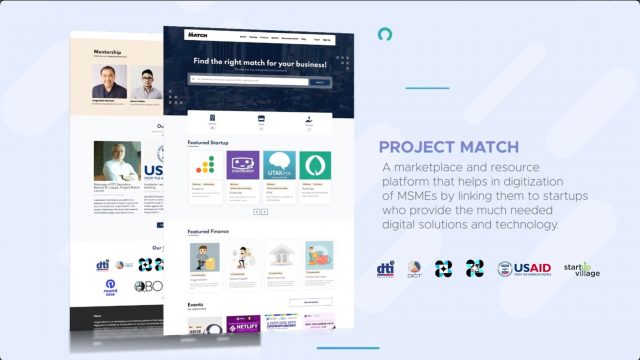
MATCH, an electronic marketplace platform developed by Filipino startup accelerator Startup Village (SUV), was launched in time for the opening of the Philippine Startup Week on Nov. 15, 2021.

Project MATCH is an 18-month grant activity funded by the United States Agency for International Development (USAID) implemented by SUV that aims to help improve the access to market of startups, enable the digital transformation of micro-, small-, and medium enterprises (MSMEs), and facilitate increased access to available financing institutions for both MSMEs and startups.

Through this initiative, startups have the opportunity to showcase and demonstrate their products and capabilities for the benefit of the MSMEs who are looking for possible digital solutions. The platform also integrates a Learning Management System (LMS) where curated content such as videos, case studies, and worksheets are organized as an e-library of resources.

MATCH also features a pool of industry expert mentors who can provide one-on-one coaching sessions and guidance for both startups and MSMEs.

Furthermore, MATCH provides access to finance links and opportunities to MSMEs and startups as it also partners with various financial institutions such as banks, microfinance institutions, investors, and venture capitalists to help fuel the growth of their businesses. Details and guidance on requirements and finance processing are also made available on the platform.

During its official launch, the Department of Trade and Industry (DTI) Secretary Ramon Lopez graced the event and expressed his utmost support and appreciation for the materialization of the initiative through the MATCH Platform, a catalyst for MSME and Startup digital transformation.

“DTI Welcomes this opportunity to collaborate with StartUp Village through a Memorandum of Understanding to address the most vital need of most micro SMEs today and that is to have the linkage and access to the appropriate digital solutions and financing for their business needs and what better way to do that than to match and pair them with startups that provide these services as well as the technology. As you know, innovation has always been at the core of our strategic policies and programs in DTI; we really want to create innovative smart micro SMEs, not just plain micro SMEs. Through embracing innovation, we have seen improvements in the productivity and competitiveness of our business sector pushing us to be ahead of the pack. The initiatives of Project Match complement our efforts and projects in support of MSMEs and startups particularly linking them to potential partners in the market,” Mr. Lopez said.

A ceremonial memorandum of understanding (MoU) signing was also done between Startup Village and the DTI to solidify the partnership in pursuit of the joint effort to accelerate MSME-Startup development through digitalization.

Trade Secretary Ramon Lopez and Startup Village President and Executive Director Carlo Calimon

The USAID/Philippines Acting Mission Director (AMD), Atty. Sean Callahan, witnessed the MoU signing and delivered a message of support, recognizing DTI’s significant role in fostering a more enabling environment for Filipino innovators.

“I am grateful to DTI for the consistent trust and confidence in our teams and I am pleased that our partnership, not only for these initiatives, but for the many other programs we are collaborating on, are producing results. I am excited to see more developments unfolding under this innovative grant activity designed to help unleash greater potential of Filipino startups,” Mr. Callahan underscored.

To date, Project MATCH has also partnered with Department of Information and Communications Technology (DICT), Department of Science and Technology (DoST), DTI-Laguna, DoST-Philippine Council for Industry, Energy and Emerging Technology Research and Development (PCIEERD) and private organizations such as Ideaspace-QBO, Brainsparks, 917Ventures, Bayan Academy, Asian Centre for Small Business Philippines Chapter, Asian Institute of Management (AIM) Alumni Association, International Council for Small Business, Association of Filipino Franchisers, Inc., Round One, University of Iloilo, and Unboxed of Miriam College.

“Through Project Match, we are able to elevate and prepare our MSMES and startups for the new world we will live in today while also providing them with the needed capacity and capability building tools and resources needed to not only survive but thrive,” SUV President and Executive Director Carlo Calimon said.

MATCH is seen as a catalyst in not only jump-starting the digital transformation of MSMEs but more importantly contributing to the reinvigoration of the Philippine economy. The growth of the MSMEs will pave the way towards the country’s economic rebound leading to employment, innovation and sustainability of both MSMEs and startups.


Spotlight is BusinessWorld’s sponsored section that allows advertisers to amplify their brand and connect with BusinessWorld’s audience by enabling them to publish their stories directly on the BusinessWorld Web site. For more information, send an email to online@bworldonline.com.

Join us on Viber to get more updates from BusinessWorld: https://bit.ly/3hv6bLA.

Coca-Cola and Eco Rangers improving communities with Blastik Project

Coca-Cola Foundation and PeacePond Farmers Association collected, processed and recycled approximately 15,422 kilos (or a little more than 17 tons) of mixed bottles, bottle caps, sachets, and plastic labels, despite the challenges presented by the pandemic.

The Philippines’ plastic recycling rate stands at only 28%, according to a 2018 report by the National Solid Waste Management Commission. Of the 2.7 million tons of waste generated annually, a staggering 9,000 tons end up in landfills or at sea due to a lack of recycling facilities and improper disposal of waste.

When the COVID-19 pandemic forced many people to use disposables and rely more on e-commerce to get their essentials, the use of plastic became even more prevalent. To mitigate an impending waste crisis, improved collection and recycling of plastic have become even more critical.

Reducing the amount of plastic that reaches the landfills and the oceans is a key priority for Coca-Cola Philippines as aligned with its World Without Waste vision, where it aims to collect and recycle the equivalent of every bottle it sells by 2030.

The Blastik Project began as a component of a project launched in 2019 by the Philippines-based NGO Alternative Indigenous Development Foundation, Inc. (AIDFI). The project piloted a village-scale plastic recycling center funded by The Coca-Cola Foundation, the international philanthropic arm of The Coca-Cola Company, with the aim of boosting environmental awareness, providing livelihoods and financial assistance, and recycling more plastic.

After the project’s successful pilot run, Coca-Cola Philippines ­— through its social investment arm Coca-Cola Foundation Philippines — took over the financing of the partnership with a grant that runs from 2020 until 2023 with PeacePond — an organization that advocates solid waste management, organic and natural farming, education, culture and the arts, livelihood opportunities, and women and child empowerment, taking the lead in sustaining and expanding the project. The continuation of the Blastik Project hopes to unlock and share this value to more people both in cities and in the countryside.

A Vehicle for Change

The PeacePond Farmers Association (PFA) in Binalbagan, Negros Occidental, is the main proponent of the Blastik Project in communities. These farmers’, or as they call themselves, the Blastik Eco Rangers, main responsibility is to educate and empower the community about proper waste segregation, recycling, and livelihoods through community workshops/webinars and ensure the proper implementation of the project.

Among the beneficiaries of the project are Jo Guanco, a 53-year-old solid waste management advocate and secretary of the PeacePond Farmers Association, and Junjun Gantes, a 54-year-old PeacePond farmer.

Jo and Junjun have been part of the Blastik Project since 2019. The initiative helped them understand the value of collecting and recycling used and clean plastic bottles. As Blastik Eco Rangers, they look at these used recyclable plastic bottles not as trash but as materials that can be used over and over again. Recyclable plastic bottles, as they have seen in the past years working on the Blastik Project, are seen as a versatile, lightweight material and, therefore, can be collected, recycled and used repeatedly. With this new way of looking at used collected plastic bottles as a valuable resource material, Blastik Project was able to open more livelihood opportunities for the people in their community — ultimately, giving them another source of income and way of putting food on their tables.

Sa Blastik Project po, itinuturo namin ang importansya ng segregation at recycling sa aming mga kapitbahay at kalapit na mga barangay. Kami po ang naka-assign na mangolekta at makipag-coordinate sa mga barangay para sa schedule ng pagkolekta at kung minsan ang mga offices na ng barangay ang kumukontak sa amin para kunin ang plastic bottles dahil alam na po nila ang tungkol sa Blastik Project,” shares Blastik Eco Ranger Jo Guanco.

(With the Blastik Project, we’re able to impart our knowledge and educate our neighbors and people from nearby barangays on the importance of waste segregation and recycling. As a Blastik Eco Ranger, I manage and assign the schedule of recyclable collection per area. There are also instances where the barangay proactively contacts us to schedule the pickup in their area.)

Through the Blastik Project, plastic bottles and caps are collected and upcycled into wall tiles, desks, chairs, kitchen cabinets, bowls, plant pots, home décor and more. Some PET bottles, mixed with sachets and plastic bags, are turned into pavers for footwalks and garden footpaths. Other PET bottles were transformed into free-standing walls for six structures in PeacePond while some are used for bottle gardens in the organic farm. Plastic labels are turned into handcrafted wallets, purses, bags, gadget pouches, laptop sleeves and even face mask cases.

Malaking tulong rin po ang Blastik Project (at Coca-Cola) sa aking pamilya, lalo sa pang araw-araw naming pamumuhay. Dahil dun sa organic garden, nakakakuha kami ng gulay na maaaring ipakain sa aming mga pamilya at binabahagi rin namin ito sa aming mga kapitbahay at kapwa Eco Rangers,” shares Blastik Eco Ranger and PeacePond farmer Junjun Gantes.

(The Blastik Project [and Coca-Cola] greatly helped my family, especially in supporting our daily needs. Through the organic garden in our backyard, we’re able to get fresh produce that we can cook for our family, and we also share the excess vegetables to our neighbors and other Eco Rangers like us.)

The Blastik Project is rapidly expanding because the program is effective and easy to replicate. In fact, the initiative is being replicated in several communities including, but not limited to, over 600 beneficiaries from Bakyas Community in Oringao, Kabankalan, Ellite Ads Corp. Parañaque, and Ellite Ads Corp. Carmona. The Blastik Project also has active partnerships with Seda Hotel in Bacolod City and Southland College in Kabankalan, Negros Occidental.

A Promising Future

Even with the challenges presented by the pandemic, the Blastik Project has collected, processed and recycled approximately 15,422 kilos (or a little more than 17 tons) of mixed bottles, bottle caps, sachets, and plastic labels.

Coca-Cola is a company known for its innovation, whether in product development, brand building, or facilitating positive change in the community. As the world evolves and modernizes, opportunities for environmental protection and innovation also arise. With projects like the Blastik Project and over 40 more zero-waste communities supported by the Coca-Cola Foundation Philippines, communities are increasingly seeing the value of plastic waste segregation and recycling.

“We are happy and excited about the Blastik Project’s initial success,” shares Cecile Alcantara, president of Coca-Cola Foundation Philippines. “The Coca-Cola Foundation Philippines will continue to partner with like-minded organizations and communities, supporting initiatives towards a world without waste.”

Read more about the World Without Waste vision of Coca-Cola and their initiatives at https://www.coca-colacompany.com/reports/business-environmental-social-governance-report-2020 and watch the Coca-Cola and Blastik Project partnership HERE. To get updated on what Coca-Cola is doing in the Philippines, follow the Facebook official page.


Spotlight is BusinessWorld’s sponsored section that allows advertisers to amplify their brand and connect with BusinessWorld’s audience by enabling them to publish their stories directly on the BusinessWorld Web site. For more information, send an email to online@bworldonline.com.

Join us on Viber to get more updates from BusinessWorld: https://bit.ly/3hv6bLA.