Home Blog Page 7166

ADB approves $400-million loan to improve LGU services
BW FILE PHOTO

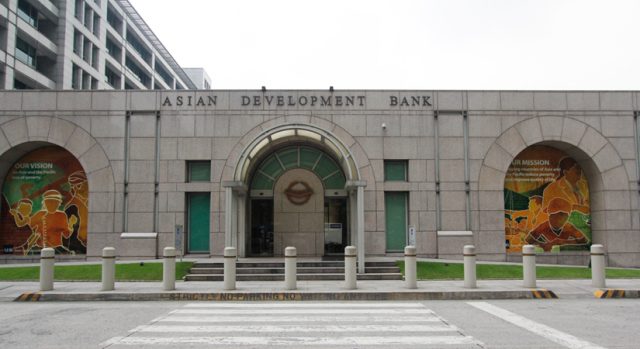
The Asian Development Bank (ADB) approved Friday a $400-million (P20 billion) loan to the Philippines to help improve local governments’ capacity to deliver public services and generate revenue. 

The bank said in a statement that the funding will support the second phase of the Local Governance Reform program for local government units (LGUs) to modernize their public financial management. 

The program was implemented in anticipation of the devolution of functions to LGUs from the national government in response to the Supreme Court Mandanas ruling, which increase the share of LGUs of national taxes starting 2022. 

LGUs are set to receive P1.116 trillion from the national budget next year and implement programs and projects that were devolved to them by the national government. 

The ADB said the Bureau of Local Government Finance has established a property valuation office and a committee will monitor ongoing real property tax reform. 

“Much is expected from LGUs, especially now, as they are at the forefront of public service delivery during the COVID-19 pandemic,” ADB Public Finance Economist for Southeast Asia Aekapol Chongvilaivan said. 

“The reform program will help ensure local governments have the capacity and adequate resources to quickly respond to the basic needs of local communities at critical times like this,” he said. 

The scope of financing for local development has also been expanded to include public–private partnership projects, according to the bank. 

The ADB provided a $26.5-million loan last year to support the reform of the real property tax system for LGUs, and a $300-million loan in 2019 to help the government create a legal and institutional framework for LGU revenue. 

The ADB aims to lend $3.9 billion to the Philippines this year. – Beatrice M. Laforga 
Philexport says SME exporters can tap interest-free gov’t loans for shipping costs

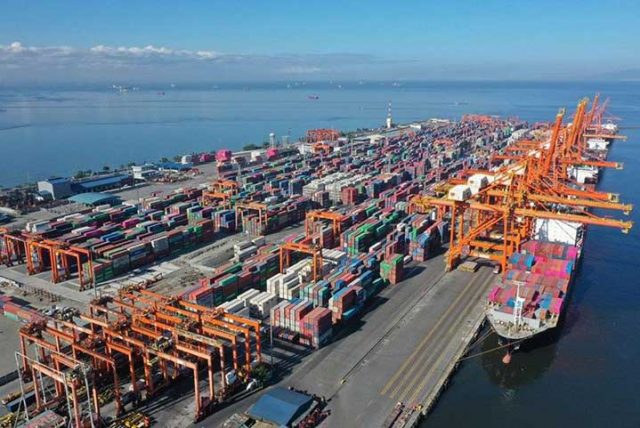
The Philippine Exporters Confederation, Inc. (Philexport) said Friday that SB Corp. is providing a “quick-response fund” for small exporters whose operations have been affected by the government’s community quarantine rules. 

“Small and medium-sized enterprises (SMEs) with at least one year’s experience in export transactions can apply for interest-free government loans to meet their shipping freight costs requirement,” Philexport said in a statement. 

Lourdes Rosario M. Baula, head of the Financing Sector of SB Corp., acknowledged that the increase in freight rates and cost of raw materials resulted in an increase in total production cost. 

“Exporters have to compromise their profit margin to meet export sales targets and keep their businesses afloat,” she said. 

SME exporters are those with assets of between P3 million and P100 million.  

They must also be able to show at least three consummated purchase orders or letter sof credit, Philexport said. – Arjay L. Balinbin 

Insurance premiums surge in Q1 to nearly P100 B

PHILSTAR

Insurance premiums surge in Q1 to nearly P100 B 

Gross premiums collected by insurance companies and mutual benefit associations (MBAs) rose 27.82% from a year earlier in the first quarter to P99.89 billion, the Insurance Commission (IC) reported. 

Insurance Commissioner Dennis B. Funa said in a statement Friday that the overall premiums written by the industry climbed were reported by insurers on an unaudited basis. 

Mr. Funa said the companies’ adoption of technology helped boost their overall performance and sustained their operations during quarantine, as did new rules allowing remote selling. 

The life insurance sector booked P83.2 billion in total premium income in the first quarter, up 36.64% from a year earlier. 

MBA premiums rose 11.2% to P3.18 billion in the three months. 

Non-life premium income declined 10.33% while new insurance contracts written fell 7.95%, Mr. Funa said. 

Combined net profit of the domestic insurance industry grew 46% year-on-year during the period to P11.85 billion. 

Non-life insurer earnings rose 626.2% to P1.19 billion in the first quarter. The life segment’s earnings grew 38.16% to P9.42 billion. 

The insurance industry’s investments grew 17% to P1.67 trillion in the first quarter. 

Life insurers’ investment portfolios rose 17.67% to P1.44 trillion followed by a rise of 10.92% posted by MBAs and an 8.96% gain by non-life. – Beatrice M. Laforga 

PDIC says two weeks left to file claims vs. Rural Bank of Caloocan

THE Philippine Deposit Insurance Corp. (PDIC) said creditors of the shuttered Rural Bank of Caloocan, Inc. have until Sept. 13 to file claims against the bank’s assets. 

The PDIC said in a statement Friday that claims filed beyond the deadline will be denied and creditors will have to send their claims to liquidation court within two months after receiving the final notice of denial, or 20 days after the order that set the petition for assistance in the liquidation proceeding has been published. 

Those eligible to file claims are former creditors with a valid claim against the rural bank’s assets, including depositors who had uninsured deposits that were not covered by PDIC. The agency insures deposits worth up to P500,000 per person. 

Claims can be filed online through e-email, physical mail addressed to the insurer, or by appointment. 

The Bangko Sental ng Pilipinas (BSP) shut down Rural Bank of Caloocan on June 24 and assigned the PDIC to take over and liquidate its assets. 

The bank’s main office was at Maypajo, Caloocan City and had an extension office at A. Mabini St., Caloocan City. 

In 2015, the BSP launched the Consolidation Program for Rural Banks, incentivizing mergers and consolidations among smaller lenders, which had been set to run until 2017, and later extended until 2019. 

It also rolled out the Rural Banking Industry Strengthening Program in March to create an interagency task group that will assess the needs and challenges of rural banks. 

The PDIC has 78.2 million deposit accounts fully covered as of the end of March, or 96.7% of all accounts in the country. – Beatrice M. Laforga 

8990 Holdings sees sales ‘normality’ in 2022

8990 Holdings, Inc. said on Friday the company’s growth should stabilize next year, when vaccinations are expected to be completed.

The company expects to see “double-digit growth” by the end of the year, 8990 Holdings Acting President, Chief Operating Officer and Director Alexander Ace S. Sotto said.

“By next year, we should see revenue growth normalizing to pre-pandemic growth levels,” he said at the company’s virtual annual stockholders’ meeting, when asked if the first half results were sustainable or expected to normalize in 2022.

The listed holding company, which operates as a low-cost mass housing developer through its subsidiaries, is coming from a low base as its income and revenues fell last year. It reported a 95.2% decline in its net income to P4.83 billion for 2020, while revenues slid by 86.8% to P14.23 billion.

8990 Holdings Deputy Chief Executive Officer Anthony Vincent S. Sotto described this year as still “sort of unpredictable.”

“Because the vaccination program of the government has not really been finished yet, we can still expect lockdowns like what happened in August. It’s [still] sort of unpredictable,” he said.

“But [maybe] by 2022, when all the vaccinations have already been done and, in fact, I’m very proud to say that our vaccinations in the company would probably be finished by September or early October, then we can finally see some semblance of normality in our sales and revenues,” he added.

The company recently reported a second-quarter net income of P1.91 billion, jumping from P138.93 million in the previous year.

Its first-half profit climbed 133% to P3.46 billion, or more than half of its pre-pandemic full-year income of P5.86 billion in 2019.

On Friday, shares in 8990 closed unchanged at the stock exchange at P7.20 each. — Arjay L. Balinbin

Del Monte Pacific: ‘less cyclical’ earnings ahead

DEL MONTE Pacific Ltd. (DMPL) expects less-cyclical results for future earnings as it implements strategies to improve sales and distribution.

“Our US subsidiary had already implemented major restructuring and implemented asset light strategy (i.e. optimizing production footprint with plant closures) which led to one-off costs in prior years from fiscal year 2018-2020,” DMPL said in a stock exchange disclosure on Friday.

The listed company said it would further increase its sales of branded packaged products and fresh pineapples in the United States and Asia, along with the Philippines, through expanded distribution, renovation of key categories and brands, and entry into new categories such as frozen foods, snacks, and dairy.

“We also have initiatives in place to protect and improve the margins in fiscal year 2022 despite high inflation being experienced across major commodities. We expect earnings to be less cyclical going forward,” it added.

On the planned initial public offering (IPO) of its subsidiary, Del Monte Philippines, Inc., DMPL said it is continuously watching and reviewing the market, together with its bankers.

“The company will provide an update on the new timeline at such time when the company has assessed that market conditions are favorable for the resumption of the offering,” DMPL said.

DMPL disclosed that there is no minimum period required to be observed before reviving the IPO, adding that the decision will be subject to market conditions, among other factors.

“The financial statements and, consequently, the prospectus submitted to the regulators, will need to be audited and updated, respectively, and will entail review by the regulators. The IPO window is within 135 days from the end of the period covered by the audited financial statements,” DMPL said.

Meanwhile, DMPL said it is checking options to redeem the $200 million A1

preference shares by April 2022.

“Options include securing bridge loans or raising debt through bond issuance which will eventually be repaid either through internally generated funds or the IPO proceeds when it is relaunched,” DMPL said.

For the year ended April 2021, DMPL recorded a $63.3-million profit, a turnaround from the $81.4-million loss it incurred the previous year on the back of better sales mix and improved margins from lower sales of low-margin segments.

On Friday, shares of DMPL at the stock exchange rose 4.1% or 54 centavos to end at P13.70 apiece. — Revin Mikhael D. Ochave

Tender offer prompts First Gen’s trading halt

Lopez-led First Gen Corp. has sought a one-day suspension in the trading of its shares on the stock exchange, citing a newspaper advertisement put out by a company that offered to acquire up to 5.7% of its shares.

“The request is being made to give the company’s shareholders equal access to the said information,” First Gen told the Philippine Stock Exchange on Friday when it sought the voluntary trading suspension.

The listed company, which describes itself as the largest clean and renewable independent power producer, identified Philippines Clean Energy Holding Inc. as the entity that intends to acquire the shares through a public and voluntary tender offer.

First Gen said the acquiring company offered to buy a minimum of 3% and up to 5.7% of the total issued and outstanding shares of the listed firm. It said it had yet to receive the tender offer report.

The voluntary trading suspension started at 9:00 a.m. on Friday, Aug. 27, and will be lifted at 9:00 a.m. on Tuesday, Aug. 31. Monday is National Heroes Day, a regular holiday in the Philippines.

First Gen’s shares were last traded on Aug. 26 and closed at P28.30 each.

The tender offer from Philippines Clean Energy comes after First Gen President and Chief Operating Officer Francis Giles B. Puno said earlier this month that the company was “steadily progressing” with building the country’s first liquefied natural gas (LNG) terminal.

The LNG terminal is “for delivery” in the fourth quarter of 2022, he said.

Mr. Puno also said that First Gen was working to deliver more power projects across its portfolio despite market uncertainty and business risks.

First Gen unit FGEN LNG Corp. had been issued on Sept. 23, 2020 a permit to construct an ancillary facility for its interim LNG floating regasification and storage unit.

In a media release last week, the Department of Energy (DoE) said the facility is scheduled for commercial operation in the third quarter of next year, making FGEN LNG about a quarter ahead of the only other company issued a permit to construct an LNG terminal: Energy World Gas Operations Philippines, Inc.

Behind them are four companies issued by the DoE with a “notice to proceed” to build their separate LNG facilities, namely: Excelerate Energy L.P.; Atlantic Gulf & Pacific Co. of Manila, Inc.; Shell Energy Philippines, Inc.; and Vires Energy Corp.

First Gen has 3,495 megawatts of installed capacity in its portfolio, which it said accounts for 19% of the country’s gross power generation.

In the second quarter, the company posted a net income attributable to equity holders of $62.5 million for the second quarter, down 37.5% from $67.75 million in the same period last year.

Its first-half attributable income rose 46.5% to $146.52 million, figures posted on the stock exchange website show. First Gen said it benefited from higher electricity sales and prices, as well as lower interest expenses and taxes. — VVS

AirAsia’s Teleport sets Zamboanga cargo operations in Sept.

Philippines AirAsia, Inc. said its logistics venture Teleport will begin commercial cargo operations in Zamboanga in September.

“AirAsia Philippines is expanding its commercial cargo operations through its logistics venture, Teleport, in Zamboanga starting next month,” the low-cost carrier said in a recent statement.

The airline said the new venture is expected to bring in four tons of cargo per day.

“Our expansion in terms of infrastructure development will allow us in AirAsia to fly in more goods and services as we strengthen our cargo operations in Zamboanga to cater to the demands of Southern Mindanao,” the company noted.

Philippines AirAsia is a unit of Malaysia-based investment holding company AirAsia Group Berhad .

The group recently reported that its Philippine unit saw a 2% increase in passengers carried in the second quarter of the year, indicating a better performance than the previous quarter.

“Monthly breakdown showed that load factor was as high as 83% in June 2021, boosted by active capacity management,” the group said in a statement.

“This was despite running a limited number of charter and passenger flights due to community quarantine restrictions and despite flying only from its Manila hub,” it added.

The group has said it expects domestic operations in the Philippines to be below 25% of pre-pandemic levels until at least September while the population awaits widespread vaccination against the coronavirus disease 2019 or COVID-19. — Arjay L. Balinbin

Duterte says govt running out of money, to allow casino on Boracay

PHILSTAR FILE PHOTO

President Rodrigo R. Duterte said late Thursday that he will allow a casino to operate on Boracay, citing the need to raise more funds for the government, which he said is running out of money. 

In a taped Cabinet meeting, Mr. Duterte acknowledged the softening of his previous reluctance to allow the expansion of gambling. 

Kung magsabi kayo, ‘Itong si Duterte, akala ko ayaw mong sugal tapos ngayon ‘yung sa Boracay, ‘yung gambling house doon, ine-encourage mong buksan para sa tourists.’ Patawarin na po ninyo ako for the contradiction (Pardon me if you see a contradiction in encouraging gambling on Boracay, as I was previously opposed to gambling),” he said. 

Ngayon po wala tayong pera. Kung saan man tayo makakuha ng pera, kukunin ko. Kung diyan sa gambling, so be it (We don’t have money, and need to raise funds using whatever means. If it’s from gambling, so be it),” he added.  

The President in February 2018 had ordered the industry’s regulator, the Philippine Amusement and Gaming Corp., to stop approving new casinos due to the risk of oversupply. 

The operations of foreign offshore gaming firms were briefly suspended after the pandemic hit in March 2020. They were allowed to resume partial operations in May last year after being classified as business processing outsourcing companies, which are deemed essential to the economy. 

Previous gambling venues on the resort island had to shut down after Boracay underwent a six-month rehabilitation to repair damage to the environment starting in April 2018. – Kyle Aristophere T. Atienza 

Outstanding fish import certificates at 60,000 MT 

PHILIPPINE STAR/ MICHAEL VARCAS

THE Department of Agriculture (DA) said Friday that it has approved certificates of necessity to import (CNI) for 60,000 metric tons (MT) of fish, in order to increase supply during the latest lockdown and to offset the impact of the closed season in major fishing grounds.   

In a statement, the DA said the approved imports cover species such as round scad (galunggong), mackerel, and bonito, with the imports to be sold in public wet markets in Metro Manila and other areas with fish deficits.   

“The CNI is valid from Sept. 2 until December 2021, with the approved quantity being slightly lower than the supply deficiency projected by the Bureau of Fisheries and Aquatic Resources (BFAR) of 65,000 MT in the fourth quarter,” the DA said.  

Agriculture Secretary William D. Dar said: “Our primordial concern is to enhance and sustain the development of our fisheries sector, and provide our fellow citizens affordable fish on the table,” Mr. Dar said.   

Mr. Dar said the decision was made on the recommendation of the BFAR, in coordination with the Philippine Fisheries Development Authority (PFDA), and in consultation with the National Fisheries and Aquatic Resources Management Council (NFARMC) as well as the fishing industry.   

The DA said the National Economic and Development Authority (NEDA) recommended a cap on imports of 200,000 MT for the fourth quarter of 2021 and first quarter of 2022.   

According to the DA, closed season is in force in the Davao Gulf (June 1 to Aug. 31), Visayan Sea (Nov. 15 to Feb. 15), Sulu Sea (Dec. 1 to Feb. 28), and Northeast Palawan (November to January) to allow the regeneration of small pelagic fish and other species.   

Mr. Dar also signed Administrative Order No. 22 Friday, which lays out the guidelines for the implementation of the CNI.   

Under the order, only importers of good standing and compliant with food safety guidelines will be allowed to participate.   

It added that interested importers should have imported at least 70% of the total volume assigned to them during the previous importation period, and are not involved in illegal, unreported, and unregulated fishing.   

The order also provided that the imported fish should arrive within 20 days from receipt of the sanitary and phytosanitary import clearances (SPSIC), and prescribed an auction to determine allocations from the 60,000 MT.   

“The BFAR will process the SPSICs of winning (auction participants) and endorse them to the DA Secretary for approval. Transfer of allocation is not allowed. Importers should sell the imported fish at P88 per kilogram wholesale, based on the 2020 CNI fish auction conducted by BFAR, or lower as a result of the cost unbundling for imported small pelagic fishes,” the order said. 

“From the Customs Clearing House, the importer should directly unload the imported frozen/chilled fish at its BFAR-registered cold storage facility and trade the imported products at the PFDA fish ports or PFDA-designated trading areas,” it added.  – Revin Mikhael D. Ochave 

Chinese investors express interest in ecozones; Israeli locators sought

The Federation of Filipino Chinese Chamber of Commerce and Industry, Inc.  (FFCCCII) said more Chinese investors are interested in exploring business opportunities in Philippine economic zones. 

“Our federation members and many Chinese investors expressed their interests to explore opportunities to do business in PEZA (Philippine Economic Zone Authority) ecozones, especially in export manufacturing, IT services, tourism, agro-industrial, and logistics,” FFCCCII President Henry Lim Bon Liong said in a statement Friday. 

PEZA Director-General Charito B. Plaza said the agency is inviting more investors to locate in its ecozones, including those from the Filipino-Chinese business community, noting that they are among the country’s “big landowners.” 

“We aim to invite more investors to the country and replicate the multiplier effects our enterprises created by locating and even creating more ecozones,” Ms. Plaza also said. 

There are currently 172 Chinese locators registered with PEZA, according to the agency. 

“These companies contribute P24.093 billion in investment, $196.374 million in exports, and employ 10,518 workers,” it said. 

Also Friday, PEZA said it invited more Israeli investors to explore more opportunities in its economic zones. 

“Ecozones will hasten the development of our regions and achieve more inclusive growth. This is also the best and fastest economic masterplan that national government must promote to hasten development especially in the countryside and bounce back from this crisis,” Ms. Plaza said in a separate statement. 

Seven Israeli businesses are registered with PEZA. “These companies contribute P114.521 million in investment, $0.255 million in exports, and employ 175 workers,” the agency said.  

“We must attract more Israeli investors to come and bring the industries that are unique to Israeli especially … pharmaceutical and defense industries,” Ms. Plaza said. 

“We have created different types of economic zones such as the Pharmaceutical Ecozone and the Defense Industrial Complex to make use of our idle land and cater to industries that will in turn boost socio-economic progress in the regions,” she added. 

Ambassador Designate of Israel to the Philippines Ilan Fluss said: “As the incoming ambassador, my main goal is to promote business activities and economic relations between our… countries. Israel is the source of innovation, technology, and high-tech entrepreneurship with a lot of experience and expertise. Which is why, Israel would like to share these with the Philippines.” – Arjay L. Balinbin 

Cacao, coconut, rubber, sugarcane post output gains in Q2  

PRODUCTION of cacao, coconut, rubber, and sugarcane increased in the second quarter while output of abaca, coffee, and tobacco declined, the Philippine Statistics Authority (PSA) said.  

PSA said in a bulletin that coconut production for the three months to June rose 0.8% year-on-year to 3.29 million metric tons (MT). 

The Davao Region accounted for 13.8% or 455,448.53 MT, Northern Mindanao 13.3% or 436,738.98 MT, and Zamboanga Peninsula 12.7% or 416,403.45 MT.   

Sugarcane output for the quarter rose 34.8% to 6.91 million MT.   

“Sugarcane for centrifugal sugar accounted for 98.2% of total sugarcane production. The remaining 1.8% was the collective share of sugarcane for ethanol, panocha/muscovado, chewing, and basi/vinegar,” PSA said.   

Western Visayas was the top sugarcane producer with 46.9% of the total or 3.24 million MT, followed by Northern Mindanao at 20.4% or 1.41 million MT, and Central Visayas at 13.8% or 956,008.56 MT.  

Rubber production rose 5.9% to 123,819.09 MT, led by the Zamboanga Peninsula, which accounted for 39.1% or 48,377.01 MT, followed by ARMM (Autonomous Region in Muslim Mindanao) at 36.2% or 44,774.45 MT, and SOCCSKSARGEN (South Cotabato, Cotabato, Sultan Kudarat, Sarangani, and General Santos City) at 16.5% or 20,404.2 MT.

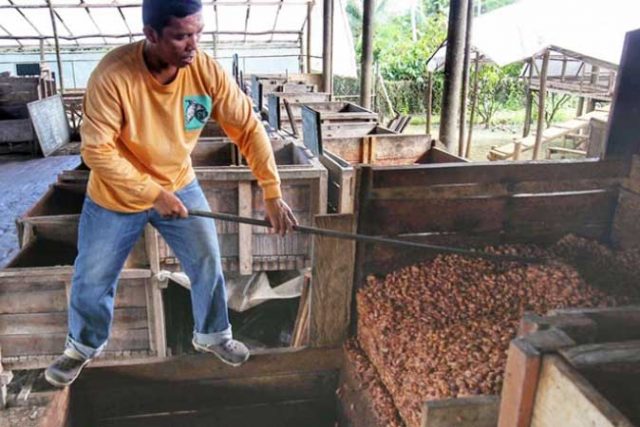
Cacao output during the quarter rose 9.9% to 2,224.57 MT. Davao Region accounted for 71.4% or 1,588.54 MT, Zamboanga Peninsula 6.5% or 145.54 MT, and Cagayan Valley 5.7% or 125.79 MT.   

Abaca fiber production for the quarter fell 1.2% to 18,057.76 MT. The top producer was the Bicol Region with a 29.6% share or 5,349.97 MT, followed by Eastern Visayas at 19.7% or 3,551.65 MT, and CARAGA a14.7% or 2,661.75 MT.   

Dried coffee berry output fell 0.3% to 5,866.16 MT. 

“Robusta coffee was still the most produced type (with) 56.6% of the total during the period,” the PSA said.   

Arabica coffee accounted for 30.2%, followed by Excelsa coffee with 12.5%, and Liberica coffee 0.5%. SOCCSKSARGEN accounted for 30.7% or 1,800.92 MT, followed by Davao Region with 21.8% or 1,276.76 MT and ARMM 21.3% or 1,250.17 MT.   

Dried leaf tobacco production declined 2.1% to 36,831.33 MT, led by Ilocos Region with 67.7% of the total or 24,933.85 MT, followed by the Cagayan Valley with 30% or 11,042.17 MT, and the Cordillera Administrative Region 1.4% or 532.89 MT.    

The burley variety accounted for 42.4% of the crop, followed by Virginia tobacco with 41.4%, the PSA said.   

The PSA reported in early August that the value of production of Philippine agriculture contracted by 1.5% in the second quarter as the livestock and fisheries subsectors declined 19.3% and 1.1%, respectively. Crop production rose 3.1% while poultry production improved 2.5%.  

The Agriculture department has lowered its 2021 growth target for the agriculture sector to 2% from 2.5% as a result of the lockdowns and the African Swine Fever outbreak.  – Revin Mikhael D. Ochave