Home Blog Page 7063

Uncertainty

To argue that 2021 has been a tough year for sports would be to understate the obvious. “COVID” and “injury” have been the two most used words insofar as bad news hitting the grapevine is concerned, and there is nothing to suggest that the new year figures to be better. In fact, 2022 will likely feature more of the same uncertainty that has engulfed all disciplines.

No sport has been spared. On Christmas Day, for instance, the National Basketball Association had forced absences that affected both the appeal and the competitive balance of the five matches on tap. And even as preparations for the Australian Open, the first stop in the tennis’ grand slam rota, have been shrouded in the stringency of safety protocols, notices of withdrawals are mounting.

All quarters are left scrambling in the time of Omicron. In the NBA, officials have seen fit to shorten quarantine periods for vaccinated players and staff in an effort to keep up with the turnover and maintain some semblance of roster continuity. Meanwhile, developments in tennis have highlighted the importance of mental health amid the prevalence of the unknown.

It’s a tug-of-war, really, and one that appears to be in the offing for some time to come. On one hand, increasing inoculation rates afford some semblance of hope that better things are in the offing for fans who can’t wait to see matches firsthand. On the other, virus mutations and the introduction of strains far more infectious and resistant to vaccines have raised concerns in regard to the spread of the virus. Positive test numbers are on the rise anew, and differing — even contradictory — regulations depending on jurisdiction haven’t helped. The result is a landscape in which the quality of entertainment is compromised for those who can’t wait for more.


Anthony L. Cuaycong has been writing Courtside since BusinessWorld introduced a Sports section in 1994. He is a consultant on strategic planning, operations and Human Resources management, corporate communications, and business development.

Peso weakens amid news of new virus cases

THE PESO weakened versus the greenback on Tuesday amid concerns over higher cases of coronavirus disease 2019 (COVID-19) in some countries due to the Omicron variant.

The local unit closed at P50.46 per dollar on Tuesday, depreciating by 23 centavos from its P50.23 finish on Monday, based on data from the Bankers Association of the Philippines.

The peso opened Tuesday’s session at P50.20. Its weakest showing was at P50.465 a dollar, while its intraday best was at P50.16.

Dollars exchanged dropped to $994.8 million on Tuesday from $1.011 billion on Monday.

A trader in an e-mail said the peso retreated versus the greenback following reports of higher infections amid the rapid spread of the Omicron variant.

Reuters on Tuesday reported that daily COVID-19 cases increased by 55% to an average of 205,000 per day over the last seven days.

Amid the rising infections paired with bad weather, airlines have canceled more than 1,000 flights on Monday. The government’s top infectious disease expert, Anthony Fauci, said vaccine mandate for domestic air travel should be considered.

Other countries like the UK and Australia are also seeing higher infections reported due to the Omicron variant.

Concerns on the higher local infections also caused cautious sentiment and led to the peso’s depreciation, Rizal Commercial Banking Corp. Chief Economist Michael L. Ricafort said in a Viber message.

COVID-19 cases increased by 421 on Tuesday, bringing active infections to 9,750, based on data from the Department of Health.

The country also logged its fourth recorded patient sickened with the Omicron variant, the department said.

For Wednesday, Mr. Ricafort gave a forecast range of P50.30 to P50.50, while the trader expects the local unit to move within P50.35 to P50.55. — Luz Wendy T. Noble with Reuters

Easing fears on Omicron’s impact lift local shares

STOCKS continued to improve on Tuesday as worries about the new coronavirus disease 2019 (COVID-19) variant, Omicron, ease.

The Philippine Stock Exchange index (PSEi) on Tuesday advanced 31.70 points or 0.43% to 7,286.50, while the broader all shares index inched up by 14.95 points or 0.38% to 3,857.91.

“Philippine stocks rose on optimism the global economic recovery could weather the Omicron threat with its mild symptoms and less severity than previous variants,” First Metro Investment Corp. Head of Research Cristina S. Ulang said in a Viber message.

As of Tuesday, the Philippines’ Health department has announced four confirmed Omicron cases in the country.

Two separate studies from London and South Africa suggested reduced risks of hospitalization and severe disease in people infected with the Omicron variant versus the Delta one, though the authors say some of that is likely due to high population immunity, Reuters reported.

Diversified Securities, Inc. Equity Trader Aniceto K. Pangan said the market continued its rebound on window dressing. He said this came while the Department of Health “showed that Omicron cases in the country have so far manifested mild symptoms in the same manner as what had been experienced, generally, in other countries despite being a contagious variant.”

Philstocks Financial, Inc. Senior Research Analyst Japhet Louis O. Tantiangco said that local shares improve on the positive spillover from Wall Street caused by the robust US holiday sales data.

US retail sales rose 8.5% during the holiday shopping season from Nov. 1 to Dec. 24, powered by soaring e-commerce sales, a report from Mastercard SpendingPulse said on Sunday.

On Wall Street, the Dow Jones Industrial Average rose 0.98%, while the S&P 500 gained 1.38% after hitting a record high during the session. The Nasdaq Composite added 1.39%, Reuters reported.

Back home, most sectoral indices ended on Tuesday trading day in the green, except for property, which lost 4.13 points or 0.12% to finish at 3,190.67.

Meanwhile, mining and oil gained 141.72 points or 1.53% to 9,369.25; industrials grew 125.91 or 1.21% to 10,502.49; services rose 16.85 or 0.84% to 2,021.11; holding firms increased 38.83 points or 0.55% to 7,094.39; and financials advanced 4.11 points or 0.25% to 1,638.02.

Value turnover increased to P5.09 billion with 3.31 billion issues traded on Tuesday, from the previous trading day’s P3.87 billion with 1.10 billion shares switching hands.

Advancers outnumbered decliners, 115 versus 75, while 52 names closed unchanged.

Foreigners turned buyers with P659.90 million in net purchases posted on Tuesday, a reversal from the P110.42 million in net outflow on Monday. — Marielle C. Lucenio

Apple closes New York City stores to shoppers as COVID-19 cases rise

STOCK PHOTO | Image by matcuz from Pixabay

Apple Inc said on Monday it has closed all of its 12 New York City stores to indoor shopping as cases of the Omicron coronavirus variant surged across the United States.

Customers will be able to pick up online orders at the stores, an Apple spokesperson said.

The affected stores include outlets at Fifth Avenue, Grand Central and SoHo.

“We regularly monitor conditions and we will adjust both our health measures and store services to support the wellbeing of customers and employees,” the company said in a statement.

Earlier this month, Apple said it had temporarily closed three stores in the United States and Canada after a rise in COVID19 cases and exposures among the stores‘ employees.

For the same reason, Apple also mandated that all its customers and employees wear masks at its U.S. stores.

Globally, concerns over the Omicron variant have prompted major companies to tighten protocols.

A U.S. court earlier this month ordered the reinstatement of a nationwide vaccine-or-testing COVID19 mandate for large businesses, which covers 80 million American workers. Opponents of the move have rushed to the Supreme Court to overturn the reinstatement.

Apple shares closed up 2.3% at $180.33. – Reuters

N.Korea’s Kim convenes major party meeting ahead of New Year -KCNA

KCNA VIA REUTERS

SEOUL – North Korean leader Kim Jong Un this week opened a key ruling party meeting, state media reported on Tuesday, a forum he has previously used to make major New Year policy announcements.

The 4th Plenary Meeting of the 8th Central Committee of the Workers’ Party of Korea (WPK) was convened on Monday, state news agency KCNA said.

The gathering of party and government officials comes as North Korea grapples with compounding economic crises caused by an anti-pandemic lockdown, international sanctions over its nuclear weapons programme and natural disasters.

It also comes as North Korea marks the 10th anniversary of Kim assuming supreme command of the military after the death of his father, Kim Jong Il, in 2011.

“The plenary meeting is to review the implementation of main Party and state policies for the year 2021,” the report said.

The meeting would also discuss and decide on strategic and tactical policies and practical steps for “dynamically guiding the struggle of our Party and people to usher in a new period of the development of socialist construction to the next stage of victory,” KCNA said. Around the new year, Kim has often made major policy announcements, including in 2018 when he announced a delegation to the Winter Olympics in South Korea, and in 2019, when he discussed his desire to continue talks with then-U.S. President Donald Trump.

Kim has used speeches around the new year holiday in the past to make friendly overtures to the U.S. and South Korea, but also to reveal nuclear weapon developments and other military plans,” NK News, a Seoul-based website that monitors North Korea, said in a report on Monday.

North Korea has said it is open to resuming talks, but only if Washington and Seoul take steps to end “hostile policies” such as sanctions and military drills.

South Korea’s unification ministry, which handles relations with the North, said on Monday it hoped North Korea “will start the new year by opening the door for dialogue with the international community, and take a step forward for engagement and cooperation.” – Reuters

Fauci says U.S. should consider air travel vaccine mandate as flights grounded

SEATTLE – Rising COVID-19 cases, along with bad weather, caused airlines to cancel more than 1,000 flights on Monday, and the spread of the Omicron variant prompted the U.S. government’s top infectious disease expert to suggest the government consider mandating vaccines for domestic flights.

Monday’s travel woes marked a fourth day of flight cancellations, capping a glum Christmas weekend for thousands of passengers who were left waiting in airport queues and on customer service phone lines to re-book flights.

Airlines have struggled with staffing shortages as the spread of infections blamed on the Omicron variant forced many pilots, cabin crew and other workers to isolate at home.

Winter storms also took a toll on travel. On Monday, airlines canceled more than 1,300 commercial flights within or into and out of the United States. Travel-related stocks fell.

Dr. Anthony Fauci, the U.S. government’s top infectious disease expert, said a vaccine mandate for domestic air travel should be considered.

“That is just another one of the requirements that I think is reasonable to consider,” Fauci told MSNBC in an interview.

President Joe Biden, speaking to reporters on Monday, declined to say whether he endorsed a vaccine mandate for domestic air travel. The president has previously said he did not consider them necessary.

Fauci appeared to walk back his remarks in a second interview on MSNBC later on Monday, and told CNN in another interview that he did not expect to see a vaccine mandate anytime soon.

“I did not say I support mandates on domestic flights. I said that is something on the table for consideration,” Fauci told MSNBC host Joy Reid.

In the CNN interview Monday evening, Fauci said he doubted the Biden administration would call for vaccine mandates for domestic flights “in the reasonable foreseeable future.”


CDC SHORTENS QUARANTINE TIME

The average number of new COVID-19 cases in the United States has risen 55% to over 205,000 per day over the last seven days, according to a Reuters tally.

The U.S. Centers for Disease Control and Prevention (CDC) said on Monday it was shortening the recommended isolation time for infected Americans to five days from 10 days previously, if they are asymptomatic. The move could help airlines and other businesses mitigate staff shortages.

The CDC also said on Monday it was investigating 68 cruise ships after reports of COVID-19 cases on board.

On Monday, snowy weather in the Pacific Northwest contributed to the cancellation of more than 110 flights scheduled to land at Seattle-Tacoma Airport.

A representative for Alaska Airlines, which canceled more than 140 flights on Monday due partly to snowy conditions in Seattle, told a passenger on Twitter that it would take hours to speak by phone to someone from customer service, a sign of how airlines were overwhelmed with frustrated passengers.

“The hold time is about 7 hours. I am so sorry,” Alaska Airlines wrote on Twitter in response to a customer complaint.

Aisling Daniel, an 18-year-old college student, was trying to return home to Anchorage, Alaska, with her younger sister and two black Labrador retrievers on Monday after visiting family in Kansas City. She was stuck in the Seattle-Tacoma International Airport and holding out hope that her newly booked flight out Monday afternoon would not be canceled.

“The weather and the airport being understaffed is a really big problem here right now,” she said.

Harley Garner, a 27-year-old creative strategist from Portland, Oregon, and his brother from Seattle were staying with their parents in Pahrump, Nevada, over the holidays and had planned to fly home Sunday evening. Both brothers’ flights – to Portland via Alaska Airlines and to Seattle via Allegiant Airlines – were canceled Sunday afternoon.

After those flights were canceled, the brothers’ father was driving them to Bakersfield, California, where they planned to rent a car and then drive to Portland and Seattle, a total of some 17 hours on the road. – Reuters

Australia COVID numbers surge as Omicron outbreak strains domestic politics

SYDNEY – Australia recorded another surge in COVID-19 infections on Tuesday as an outbreak of the highly infectious Omicron variant disrupted a staged reopening of the economy, while state leaders argued over domestic border controls.

The three most populous states, New South Wales (NSW), Victoria and Queensland, reported just under 10,000 new cases between them the previous day, putting the country on course to eclipse the previous day’s record total of 10,186 cases.

There were five COVID-19 deaths reported, although the authorities did not specify whether any were related to the Omicron variant.

The country’s five other states and territories, which have also been experiencing flareups of the virus, were yet to report figures.

The Omicron variant, which medical experts say is more transmissable but less virulent than previous strains, began to spread in Australia just as the country got underway with its plan to reopen after nearly two years of stop-start lockdowns.

With the resumption of rising case numbers – despite a vaccination rate of more than 90% for Australians aged over 16 – the country’s state leaders have brought back some containment measures like mandatory mask-wearing and QR code check-ins at public venues.

But the rising case numbers have led to mandatory self-isolation for thousands of workers in the hospitality, entertainment and airline sectors – the sectors worst hit by lockdowns – resulting in cancelled theatre shows, closed restaurants and postponed flights.

The new outbreak has also fuelled a resumption of fractious domestic politics which defined much of the pandemic as some states resist calls to remove internal border controls.

NSW, home to Sydney and a third of Australia‘s 25 million population, called on neighbouring Queensland to shift from mandatory clinical testing to on-the-spot rapid antigen testing for people travelling to the tourist-popular state following complaints of hours-long wait times.

NSW Health Minister Brad Hazzard said a quarter of his state’s PCR tests were “tourism tests”, causing enormous pressure of the health system, extraordinary long testing queues and wait times for results, sometimes for days.

In one case, a Sydney testing clinic sent incorrect negative test results to some 1,400 people. Hazzard said the bungle was the result of “human error, and when people are under presure, human errors are more frequent”.

Queensland has promised to review its border testing rules from Jan. 1, but Hazzard urged Queensland to drop the rule immediately.

Queensland Health Minister Yvette D’Ath did not respond to Hazzard’s comments about border testing at a news conference, but said the state would remove another testing rule for interstate arrivals: people arriving in the state would no longer have to take a virus test five days after arriving.

Australia‘s international border remains effective closed, but Australian nationals may return without mandatory hotel quarantine and the country has said it would allow certain skilled workers and foreign students in. – Reuters

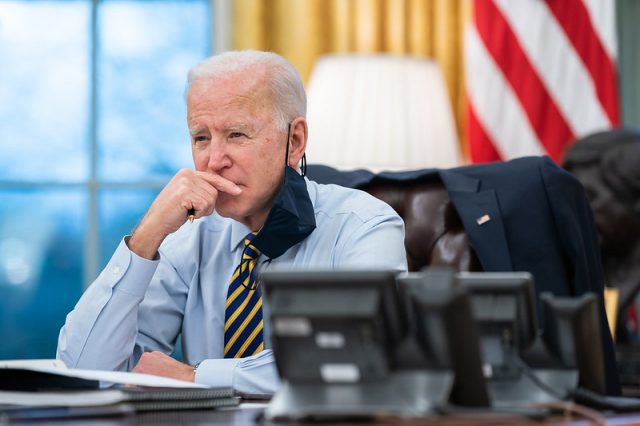
U.S. President Biden signs $770 billion defense bill

Official White House Photo by Lawrence Jackson

U.S. President Joe Biden signed into law the National Defense Authorization Act, or NDAA, for fiscal year 2022, which authorizes $770 billion in defense spending, the White House said on Monday.

Earlier this month, the Senate and the House of Representatives voted overwhelmingly for the defense bill with strong support from both Democrats and Republicans for the annual legislation setting policy for the Department of Defense.

“The Act provides vital benefits and enhances access to justice for military personnel and their families, and includes critical authorities to support our country’s national defense,” Biden said in a statement after signing the bill into law.

The NDAA is closely watched by a broad swath of industry and other interests because it is one of the only major pieces of legislation that becomes law every year and because it addresses a wide range of issues. The NDAA has become law every year for six decades.

Authorizing about 5% more military spending than last year, the fiscal 2022 NDAA is a compromise after intense negotiations between House and Senate Democrats and Republicans after being stalled by disputes over China and Russia policy.

It includes a 2.7% pay increase for the troops, and more aircraft and Navy ship purchases, in addition to strategies for dealing with geopolitical threats, especially Russia and China.

The NDAA includes $300 million for the Ukraine Security Assistance Initiative, which provides support to Ukraine’s armed forces, $4 billion for the European Defense Initiative and $150 million for Baltic security cooperation.

On China, the bill includes $7.1 billion for the Pacific Deterrence Initiative and a statement of congressional support for the defense of Taiwan, as well as a ban on the Department of Defense procuring products produced with forced labor from China’s Xinjiang region.

It creates a 16-member commission to study the war in Afghanistan. Biden ended the conflict – by far the country’s longest war – in August.


GUANTANAMO BLUES

Even as the White House heralded passage of the NDAA, it criticized provisions in the bill barring the use of funds to transfer Guantánamo Bay detainees to the custody of certain foreign countries or into the United States unless certain conditions are met.

“It is the longstanding position of [the White House] that these provisions unduly impair the ability of the executive branch to determine when and where to prosecute Guantánamo Bay detainees and where to send them upon release,” Biden said in a statement.

Set up to house foreign suspects following the Sept. 11, 2001, attacks on New York and Washington, the prison came to symbolize the excesses of the U.S. “war on terror” because of harsh interrogation methods that critics say amounted to torture.

Biden has said he hopes to close the prison before his tenure is up but the federal government is still barred by law from transferring any inmates to prisons on the U.S. mainland. Even with Democrats controlling Congress now, Biden has majorities so slim that he would struggle to secure legislative changes because some Democrats might also oppose them. – Reuters

Iran nuclear talks resume with Tehran focused on sanctions relief

STOCK PHOTO - Pixabay.com

VIENNA – Indirect talks between Iran and the United States on salvaging the 2015 Iran nuclear deal resumed on Monday with Tehran focused on one side of the original bargain, lifting sanctions against it, despite scant progress on reining in its atomic activities.

The seventh round of talks, the first under Iran‘s new hardline President Ebrahim Raisi, ended 10 days ago after adding some new Iranian demands to a working text. Western powers said progress was too slow and negotiators had “weeks not months” left before the 2015 deal becomes meaningless.

Little remains of that deal, which lifted sanctions against Tehran in exchange for restrictions on its atomic activities. Then-President Donald Trump pulled Washington out of it in 2018, re-imposing U.S. sanctions, and Iran later breached many of the deal’s nuclear restrictions and kept pushing well beyond them.

“If we work hard in the days and weeks ahead we should have a positive result…. It’s going to be very difficult, it’s going to be very hard. Difficult political decisions have to be taken both in Tehran and in Washington,” the talks‘ coordinator, European Union envoy Enrique Mora, told a news conference.

He was speaking shortly after a meeting of the remaining parties to the deal – Iran, Russia, China, France, Britain, Germany and the European Union – formally kicked off the round on Monday evening.

“There is a sense of urgency in all delegations that this negotiation has to be finished in a relatively reasonable period of time. Again, I wouldn’t put limits but we are talking about weeks, not about months,” Mora said.

Iran refuses to meet directly with U.S. officials, meaning that other parties must shuttle between the two sides. The United States has repeatedly expressed frustration at this format, saying it slows down the process, and Western officials still suspect Iran is simply playing for time.

The 2015 deal extended the time Iran would need to obtain enough fissile material for a nuclear bomb, if it chose to, to at least a year from around two to three months. Most experts say that time is now less than before the deal, though Iran says it only wants to master nuclear technology for civil uses.


END OF THE ROAD

“The most important issue for us is to reach a point where, firstly, Iranian oil can be sold easily and without hindrance,” Iranian media quoted Foreign Minister Hossein Amirabdollahian as saying.

Mora, however, said both the lifting of sanctions and Iran‘s nuclear restrictions would be discussed.

Iran insists all U.S. sanctions must be lifted before steps are taken on the nuclear side, while Western negotiators say nuclear and sanctions steps must be balanced.

U.S. sanctions have slashed Iran‘s oil exports, its main revenue source. Tehran does not disclose data, but assessments based on shipping and other sources suggest a fall from about 2.8 million barrels per day (bpd) in 2018 to as low as 200,000 bpd. One survey put exports at 600,000 bpd in June.

Mora said he decided to reconvene the talks during many officials’ holidays between Christmas and the New Year so as not to lose time, but he added that talks would stop for three days as of Friday “because the facilities will not be available”, referring to the luxury hotel hosting most meetings.

When the seventh round wrapped up, incorporating some Iranian demands, negotiators from France, Britain and Germany said in a statement: “This only takes us back nearer to where the talks stood in June”, when the previous round ended.

“We are rapidly reaching the end of the road for this negotiation,” they added. – Reuters

Five reasons why you should invest in a pre-selling condo

The pandemic has called for a worldwide habit of practicing wellness while staying at home. This is why people are making big changes in curating their living spaces into a place where all needs can thrive – personal, health-wise, and work-related.

Given that we’re all in the “now normal,” searching for your future home requires a new set of standards. Going for a pre-selling condo investment is an excellent choice especially if you are still saving up and planning for a new chapter in your life. Thinking long-term, this will not only serve as an income-generating asset but also a place where you can settle down when the time comes.

With these said, you need to know what makes a property worth the wait and deserving of your hard-earned money.

  1. A wide array of amenities and features

Not only will it be an added financial asset when the turnover day comes, but you can also come home to retreat and recharge with amenities surrounded by verdant landscapes for when you choose to keep it for you or your loved ones to settle in.

At this point, we are all certainly craving a significant time outdoors to be one with nature. Imagine a home that is also your very own breathing space. This and more can be found and experienced in Woodsville Crest.

If you’re one to seek refuge in relaxing and picturesque sceneries, you can picture yourself basking in nature’s beauty everyday in this standout property. Pegged as your oasis South of Metro, it prides itself on open spaces that empower your leisure activities such as the jog trail, pools, grilling stations, veranda, and the resort-like clubhouse featuring a lounge area.

What’s more, there are the building features that support the residents’ hobbies and other life pursuits, including designated bike parking slots and storage solutions.

  1. Upgraded lifestyle in a future-ready home

Purchasing a condo requires a big portion of your hard-earned money and for it to really stand out as an investment, it must have superb and impressive selling points that can make you see yourself living your best life inside it.

At Woodsville Crest, one can experience a lifestyle they can only dream of before. Every unit is all for your convenience and efficiency, showcasing fiber-optic readiness which will entitle you to faster connectivity and enhanced to seamless control of the Smart Home features across devices and appliances.

Studio units already come with a dedicated space for work-from-home setups for those working remotely. Others may even utilize it for recreation purposes.

For the one-bedroom unit types, growing families can take advantage of its built-in kitchen and bath upgrades such as additional storage and shower enclosures. Two-bedroom units, on the other hand, have all of the above-mentioned upgrades as well as a stylish walk-in closet.

  1. Access to life’s essentials

Now that you have promising amenities and home innovations in check, another important factor to look for in a pre-selling condo is its accessibility.

Staying close to the places and people that matter is also a promise at Woodsville Crest. Strategically located in Merville, Paranaque, and within the established neighborhood of Woodsville Complex, you have easy access to life’s essentials.

It’s in close proximity to various health, BPO, and bank companies as well as major thoroughfares like EDSA, SLEX, C5, and C6, and two main highways. If you’re planning a quick trip to nearby provinces such as Tagaytay, Laguna, and Batangas, this is also a familiar and convenient location to come from.

  1. Introductory price advantages and promotions

Acquiring a condo during its pre-selling phase is considered a wiser investment because of the huge savings you can get. Units sold while under construction have lower prices because of multiple promotions such as introductory prices, launch discounts, and even flexible payment terms. Add to that the value appreciation by the time the development is built and ready to welcome its new homeowners.

RLC Residences recently launched a nature-inspired development South of Metro, Woodsville Crest. It’s the last addition to the Woodsville Complex midrise condominiums in Merville, Paranaque. Studio, one-, and two-bedroom units are all available for pre-selling, which means you can take advantage of the introductory prices, 5% launch discount, and stretched payment schemes available for a limited-time offering.

As we continue navigating the pandemic, we must look for ways to maximize our resources not just to what can be the most profitable but beneficial to our physical and mental health as well. By buying a pre-selling condo, you’ll have ample time to prepare for what the next chapter of your life entails.

  1. Built to last by an award-winning developer

A tried and trusted developer is among the primary considerations before signing that lease. Given the amount you need to produce to purchase a condo unit, it’s only right to be 100% sure that the company you’re putting your money into is trusted and offers top-notch properties.

RLC Residences is a brand you can put your faith into as they carry a wide portfolio that is a testament to their expertise. As the residential arm of Robinsons Land Corporation, RLC Residences brings with it the company’s three-decade expertise of building beautiful and well-built homes, as seen in all of its residential developments strategically located in Metro Manila and Cebu.

This year alone, the brand recorded its most number of distinctions to date from various award-giving bodies in the country and across the region. Led by Robinsons Land Corporation’s President and CEO, Mr. Frederick D. Go, there’s no stopping RLC Residences from changing the game of real estate in the country. He was recently the recipient of the Property Man of the Year award from the FIABCI Philippines Property and Real Estate Awards.

Also a notable accolade for RLC Residences was being hailed Philippines Developer of the Year by the DOT Property Awards 2021 for its premier projects, among others.
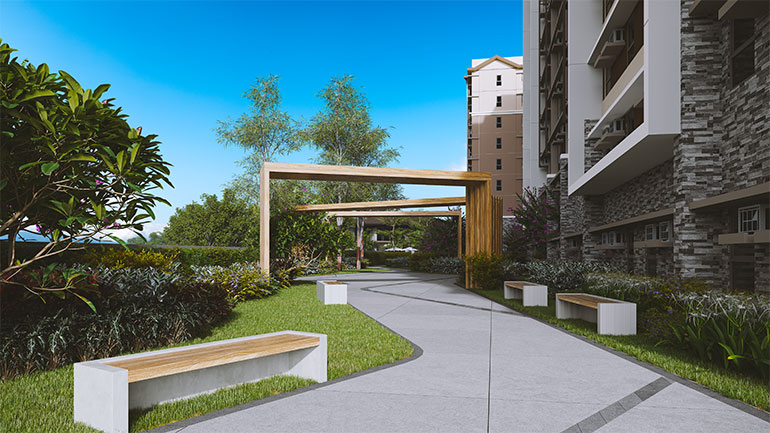
These said properties adhere to RLC Residences’ brand promise of raising the standards of living for an elevated lifestyle experience, allowing residents to live smart and productive while connecting them to their loved ones and more opportunities available.

If you dream to live in a residential sanctuary where you can experience peace and quiet without being left out of life’s possibilities, then this might be the right moment for you to start making that a reality.

Take advantage of the exclusive offerings and deals you can score as early as now when you connect with an RLC Residences Property Specialist. Learn more about Woodsville Crest and other top-notch developments when you visit rlcresidences.com and follow its social media pages at facebook.com/RLCResidencesPH and at instagram.com/rlc_residences for promos and other updates.


Spotlight is BusinessWorld’s sponsored section that allows advertisers to amplify their brand and connect with BusinessWorld’s audience by enabling them to publish their stories directly on the BusinessWorld Web site. For more information, send an email to online@bworldonline.com.

Join us on Viber to get more updates from BusinessWorld: https://bit.ly/3hv6bLA.

Roxas Blvd’s partial closure opposed

By Arjay L. Balinbin, Senior Reporter

A TRUCKERS’ GROUP on Monday expressed alarm over the plan to close a portion of Roxas Boulevard, as the Department of Public Works and Highways (DPWH) rehabilitates a damaged drainage structure that could take two to three months, saying this would badly affect business.

At the same time, the Philippine Exporters Confederation, Inc. (Philexport) urged the authorities to consider other ways to repair the damaged structure without implementing full closure of the southbound lane of Roxas Boulevard.

Metropolitan Manila Development Authority (MMDA) Chairman Benjamin “Benhur” de Castro Abalos, Jr. said in a statement that among the possible solutions being eyed is “for the container vans to be carried on the barge and will be transported from MICT (Manila International Container Terminal) going to the Cavite Gateway Terminal in Tanza, Cavite.”

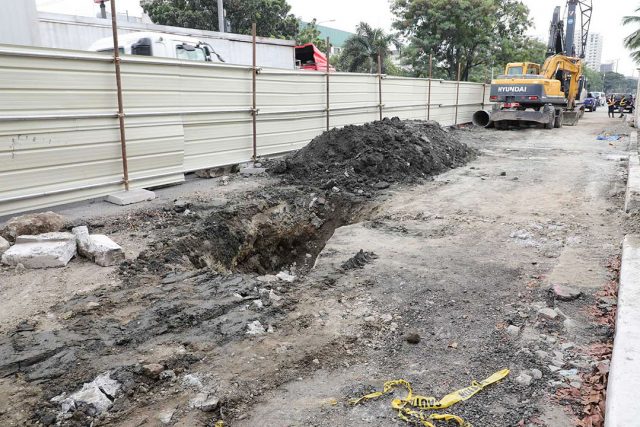
The MMDA said the rehabilitation of the damaged Libertad Drainage Main Box Culvert in front of Libertad Pumping Station in Pasay City requires the immediate closure of the southbound portion of Roxas Boulevard.

“Approximately 1,000 cargo trucks and trailers per day are traversing the Roxas Boulevard southbound direction alone,” it said in a statement.

In a phone interview, Confederation of Truckers Association of the Philippines President Maria B. Zapata said this is worrisome, as some operators using the road, with 10,000 units of trucks, could be affected.

Kung ang lahat ng kargamento going to Cavite is via a barge na, nasan na ’yung negosyo ng trucking? Eh di wala na, hindi ba? Pinapatay nila ’yung hanapbuhay ng truckers (If all the cargo going to Cavite will be done via barge, what will happen to the trucking business? It will be gone, right? They are killing the livelihood of truckers),” she said.

She said the DPWH and the MMDA informed them about the planned road closure before Christmas.

Instead of full closure, Ms. Zapata said the group is urging the DPWH and MMDA to allow the use of part of the northbound lanes.

“Our suggestion is ’yung northbound na apat na lanes ay baka naman pwedeng gawing two lanes ’yung papuntang south, at dalawa papuntang north para at least may outlet para naman hindi ma-congest ’yung papuntang South Superhighway (Our suggestion is for two out of the four northbound lanes to be used as southbound lanes, so there would be no congestion going to South Superhighway),” she added.

For its part, the MMDA said Mr. Abalos has “yet to determine if a portion of the southbound direction of Roxas Boulevard fronting HK Sun Plaza will be totally or partially closed.”

“The structural integrity is at stake. Hence, we are appealing for the public’s understanding of the inconvenience the road closure would cause. This is temporary. The construction is only for three months,” Mr. Abalos said.

Ms. Zapata said the truckers’ group wants to further discuss the matter with the Metro Manila Council of the MMDA. The council is composed of Metro Manila mayors and representatives from government agencies, including the Department of Transportation (DoTr) and DPWH.

In a separate phone interview, Philexport President Sergio R. Ortiz-Luis, Jr. said: “There must be a better way than closing it… Can you imagine we are trying to recover, andami-daming problema at isasara mo (we have so many problems and then you close it)… There must be other ways of doing it without having to close it.”

“They should present a narrative of what has to be done, what are the pros and cons, and what are the other options,” he added.

DPWH South Manila district engineer Mikunug D. Macud said in a phone interview that the project should really be implemented as soon as possible.

“The project is P67 million, pero kung meron pang (but if there’s) additional request na  another P40 million, so more or less nasa P100 million,” he said, referring to the project cost.

Mr. Macud also expressed doubt that the total closure would be implemented considering the current situation of transporting goods during the pandemic. However, total closure would mean the rehabilitation of the structure would be done by first week of March, he added.

He said the DPWH is hoping to start work by the first week of January.

He also stressed that the concerns of truckers will be taken into consideration.

Palace postpones signing of 2022 budget — Sotto

COURTESY OF JILSON TIU/GREENPEACE PHILIPPINES
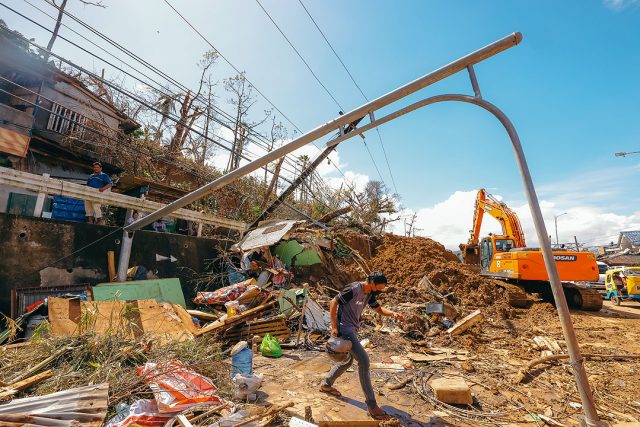
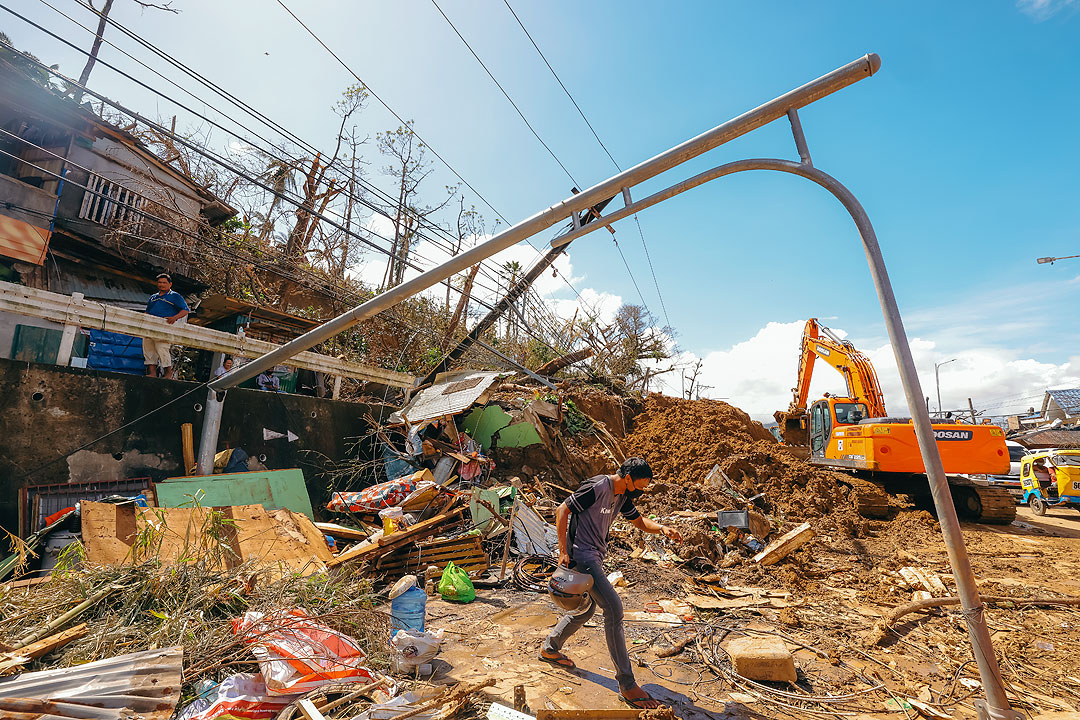
The Budget department is set to release another P1 billion from the President’s contingent fund to assist local government units (LGUs) affected by typhoon Odette. A landslide caused by Typhoon Odette in Surigao City in this photo provided by Greenpeace Philippines. COURTESY OF JILSON TIU/GREENPEACE PHILIPPINES

SENATE PRESIDENT Vicente C. Sotto III said the expected Tuesday signing of the proposed P5.024-trillion national budget for 2022 will be postponed, a delay that could affect financial markets looking for a spending plan that would support economic recovery.

“I just received word now of the postponement. No reason given,” Mr. Sotto told reporters in a Viber group on Monday.

Budget Officer-in-Charge Tina Rose Marie L. Canda said at a public briefing on Monday that President Rodrigo R. Duterte was expected to sign the proposed budget by Tuesday afternoon, with some provisions up for veto.

Items that will be vetoed are “very few,” she said. “I don’t think I’m in a position to discuss it at this point.”

Congress on Dec. 15 ratified the Bicameral Conference Committee report on the national budget.

Mr. Duterte must sign the General Appropriations Bill before Dec. 31 to ensure that the government will not operate on a reenacted budget.

Rizal Commercial Banking Corp. Chief Economist Michael L. Ricafort said the timely enactment of the national budget would have a positive impact on the economy and financial markets.

“The national budget, alongside the extension of the validity of unused funds into the following year, would support increased government spending, especially on infrastructure as a major pillar of the country’s economic recovery,” he said in a Viber message.

Delays to signing of the national budget could slow down economic recovery due to lower spending on infrastructure, as well as weigh on sentiment in local financial markets, Mr. Ricafort added.

Meanwhile, Ms. Canda said another P1 billion is set for release from the president’s contingent fund on Monday to assist local government units (LGUs) affected by typhoon Odette. The government released P1 billion from the same fund on Friday.

The money will assist affected LGUs in Western, Central and Eastern Visayas, Mimaropa (consisting of the provinces of Mindoro, Marinduque, Romblon, and Palawan), Northern Mindanao and the Caraga Administrative Region.

Mr. Duterte last week declared a state of calamity in these six regions affected by the typhoon to speed up aid delivery and relief efforts, setting a P10-billion spending plan for typhoon recovery efforts.

Another P4 billion in aid will be released to local governments to assist their constituents before the end of the year, Ms. Canda said. This fund will come from excess revenues charged against unprogrammed appropriations, she said in a Viber message.

In total, government funds for release before yearend will reach P6 billion, while another P4 billion will be released next year.

If Mr. Duterte signs the national budget soon, the funding for Odette recovery efforts next year could be released as soon as Jan. 3. — Jenina P. Ibañez with inputs from Alyssa Nicole O. Tan

ADVERTISEMENT
ADVERTISEMENT