Home Blog Page 6879

Hong Kong risks global status as Singapore opens up to world

THE DIVIDE between Asia’s two main financial hubs in handling the pandemic is growing ever wider, with one opening up to global travel and the other maintaining one of the world’s harshest quarantine policies.

In Singapore, officials are taking steps to reconnect with the global economy even as the government faces pressure to favor locals over foreigners for well-paying jobs. Speaking in a televised address over the weekend, Prime Minister Lee Hsien Loong said that Singapore can’t stay “locked down and closed off indefinitely” and residents should prepare to see “many COVID-19 (coronavirus disease 2019) cases for some time to come.”

Hong Kong Chief Executive Carrie Lam has taken the opposite approach, stressing in a Bloomberg Television interview Monday that even a single death would be a “major concern” as she follows China’s COVID Zero approach that tolerates no local infections. While expressing concern about the city’s reputation, Ms. Lam said she was “duty bound to protect my people” and businesses in any case saw Hong Kong as a gateway to the mainland.

The divergence is raising questions about Hong Kong’s future as a regional hub, particularly among an expat business community that for years has bounced back-and-forth between the former British colonies known for low tax rates, friendly labor laws and easy immigration policies. Even fully vaccinated residents in Hong Kong face a mandatory 21-day hotel stay if they visit locations like the US and UK, while Singapore is starting to allow quarantine-free travel to those places and more.

A Facebook post on Saturday captured the ennui many are feeling in Hong Kong. In a group with 55,000 members to support those stuck in quarantine, one member wrote that the city’s restaurants, bars, beaches and hiking trails were getting monotonous, and many residents who see life returning to normal in Europe or the US often don’t want to come back.

“I was born here and have lived in this beautiful city for 36 years, but I can’t go on anymore. I can’t take it,” the person wrote in the post, which had more than 1,000 likes and nearly 500 comments as of Monday afternoon. “The thing is if there was any semblance of hope — on X date we will open up — then the atmosphere here would be buzzing. But the feeling is there is no hope or end in sight.”

Hong Kong’s strict travel policies show just how much its leaders are keen to impress Beijing, which has moved to eliminate dissent following sometimes-violent pro-democracy protests in 2019. But quarantines are required even for travel to the mainland and there’s no clear criteria for easing restrictions, leaving the business community with nowhere to go that doesn’t involve a lengthy time locked in a hotel room.

Danny Lau, who runs a factory in Guangdong province across the China border that manufactures construction materials mostly for US clients, said “Hong Kong could easily be taken over by Singapore” as Asia’s international financial hub if it continues with its COVID Zero policy.

“We of course welcome the Singapore model because it’s very difficult to eradicate COVID,” said Lau, who serves as honorary chairman of the Hong Kong Small and Medium Enterprises Association. “There may still be cases after five years. Are you going to close the border for five years?”

Ms. Lam and other Hong Kong officials say the policies are popular with the public and have worked in suppressing the virus: The city has seen less than 12,300 cases and only 213 deaths throughout the entire pandemic. Disputing accusations that Hong Kong can’t autonomously set policy, Ms. Lam said Monday the city was doing “very well” as a financial center. Last week she said the mainland was “more important” than international business.

But the travel policies are adding to concerns for businesses in Hong Kong, which were already facing a China-backed clampdown on free speech, questions about the independence of the judiciary and an education system now focused on patriotism.

Hong Kong saw a record outflow of 89,200 residents in the year that ended in June, while the latest annual government survey showed the number of US-based firms in the city fell for a third straight year to 1,267 — down 6.2% from 2018. And while the overall number of companies with foreign parents has risen to a record of 9,049 this year — a statistic Ms. Lam cited on Monday as a sign of the city’s competitiveness — data show the increases have come mostly from China.

In one survey, the American Chamber of Commerce said more than 40% of its members were considering leaving the city. Amcham’s president, Tara Joseph, told Bloomberg News last week that lobbying the Hong Kong government to reopen was like “talking to a wall.”

SHRINKING FOOTPRINT

“We’re looking toward the second Christmas in a row when not many families will be traveling home, and that doesn’t help the overall confidence of decision makers in Hong Kong,” said Frederik Gollob, chairman of the European Chamber of Commerce in Hong Kong. He said many companies were discussing measures short of moving their businesses, including relocating people to the mainland or moving certain jobs to other places like Singapore.

That may not be so easy. Singapore has toughened up its immigration policies, increasing scrutiny of banks, fund managers, management consultancies and other firms suspected of “discriminatory hiring practices” that pass over locals for foreigners. In August, Prime Minister Lee pledged to tighten restrictions on foreign workers and raise wages for low-income laborers as the city-state recovers from a pandemic-induced recession.

Singapore has also seen its population drop for a second consecutive year, primarily due to an exodus of foreign workers, students and residents amid tight COVID controls.

Still, the Hong Kong business community is worried. Felix Chung, a pro-establishment lawmaker who represents the textile industry in the Legislative Council, said Hong Kong “cannot disconnect with the rest of the world” if it’s going to be an international financial center.

“Singapore, as a rival to Hong Kong, will definitely take the chance to grab as many of our businesses as possible,” he said. “It’s a threat to Hong Kong.” — Bloomberg


Climate action at COP26 could save millions of lives

IMAGE VIA WHO/P. VIROT

GENEVA — The World Health Organization (WHO) and about three-quarters of global health care workers on Monday called on governments to step up climate action at the COP26 global climate conference, saying it could save millions of lives a year.

The UN health agency’s report on climate change and health calls for transformational action in every sector including energy, transport and finance, saying the public health benefits of ambitious climate actions far outweigh the costs.

“The burning of fossil fuels is killing us. Climate change is the single biggest health threat facing humanity,” the WHO said on Monday.

The WHO has previously said some 13.7 million deaths a year, or around 24.3% of the global total, were due to environmental risks such as air pollution and chemical exposure.

It is not clear exactly how many of those are directly linked to climate change, although the WHO’s Maria Neira said about 80% of the deaths from air pollution could be prevented through compliance with its guidelines.

Climate change is also stoking some infectious diseases such as dengue fever and malaria, causing deaths in some of the world’s poorest regions, said Diarmid Campbell-Lendrum, head of a WHO climate change unit.

“Our health is not negotiable: we are going into climate negotiations, we are negotiating many things but the life of a single child whether it is lost to air pollution or climate change is not something that should be on the table,” he said.

The report’s release coincides with a letter backed by more than 400 health bodies representing more than 45 million nurses, doctors and medical professionals also calling for action.

“Pediatricians are speaking up because we do prevention, we give immunizations to prevent communicable diseases and we are speaking up now because we know that the health of the people and the health of the climate are one,” said Ruth Etzel with the International Pediatric Association.

Last week, the United Nations Human Rights Council recognized access to a clean and healthy environment as a fundamental right, adding its weight to the fight against climate change. — Reuters

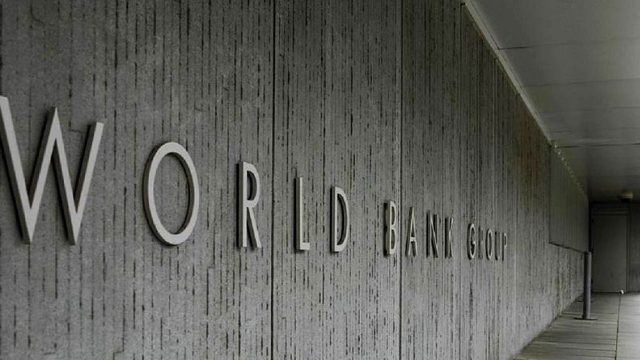
World Bank taking steps to boost research integrity after data rigging scandal

By David Lawder and Andrea Shalal

WASHINGTON – The World Bank is taking steps to rebuild the credibility of its research after a datarigging scandal forced it to cancel its flagship “Doing Business” report on country business climates, bank President David Malpass said on Monday.

Speaking to reporters ahead of the World Bank and International Monetary Fund annual meetings this week, Mr. Malpass said strong research products remain a high priority for the bank and it would work on new ways to help countries improve their business climates.

Asked how the bank would rebuild its credibility after the scandal, Malpass the bank had taken “several steps” to improve research integrity, including elevating chief economist Carmen Reinhart to a role in senior management.

Mr. Malpass declined to answer questions on the IMF executive board’s review of a World Bank external investigation report alleging that IMF Managing Director Kristalina Georgieva pressured World Bank staff to alter data to favor China in the Doing Business report in 2017, when she was the bank‘s CEO.

The IMF board was to deliberate again on Monday over whether she should continue as the IMF’s leader.

The same investigation report by law firm WilmerHale found that World Bank staff altered data to boost Saudi Arabia’s “Doing Business” ranking in October 2019 – six months after Mr. Malpass took over the bank‘s top job – but it did not find evidence of involvement by the bank‘s Office of the President or board members.

Mr. Malpass did not detail other steps that the bank was taking to shore up its research function, but said that Reinhart would be a senior president and among the top 10 executives of the World Bank Group that guide policy and decision-making at the Multilateral Development lender.

“I want really to reinforce the importance of top-quality research and the bank‘s ability to produce that research in high volumes,” Mr. Malpass said.

“Doing Business,” which ranked country business climates on measurements such as ease of navigating regulations, financing availability and legal frameworks, was the bank‘s most popular publication, current and former bank officials say.

Launched in 2003, “Doing Business” was widely used by private fund managers to assess country risks and guide investment decisions, but countries routinely sought to persuade researchers why they deserved a higher ranking.

Mr. Malpass said that helping countries improve their business climates is “vital to development” and a priority for the World Bank, so it will work on new ways to help countries expand their private sectors and foster good business practices. However, he did not provide any details on what those plans may include. – Reuters

Cyclone Kompasu strikes Philippines, kills 9

MANILA – Nine people have been killed in the Philippines and 11 were missing on Tuesday due to floods and landslides caused by heavy rain from tropical cyclone Kompasu, the national disaster agency said.

Kompasu, with maximum sustained winds of 100 kilometres (62 miles) per hour, had absorbed remnants of an earlier cyclone before making landfall in the Philippines on Monday evening. Nearly 1,600 people were evacuated.

The disaster agency said it was verifying information from its regional units that reported four people killed in landslides in northern Benguet province and five killed in flash floods in Palawan, an island province in the country’s southwest.

Authorities were conducting search and rescue operations for 11 people missing mostly after landslides. The Philippines, an archipelago of more than 7,600 islands is hit by about 20 storms or typhoons annually, bringing heavy rains that trigger deadly landslides.

President Rodrigo Duterte was monitoring the government’s disaster response, his spokesperson, Harry Roque said on Tuesday.

Rescue personnel were at the scene, while power and water restoration and road clearing was ongoing, he added.

Kompasu, the 13th tropical storm to enter the Philippines, is expected to leave its territory on Tuesday, the state weather agency said. – Reuters

Poor countries’ debt rose 12% to record $860 bln in 2020- World Bank

REUTERS

By Andrea Shalal

WASHINGTON, Oct 11 (Reuters) – The World Bank on Monday warned of a significant 12% rise in the debt burden of the world‘s low-income countries to a record $860 billion in 2020 as a result of the COVID-19 pandemic, and called for urgent efforts to reduce debt levels.

World Bank President David Malpass told reporters the bank‘s International Debt Statistics 2022 report showed a dramatic increase in the debt vulnerabilities facing low- and middle-income countries; he also urged for comprehensive efforts to help countries reach more sustainable debt levels.

“We need a comprehensive approach to the debt problem, including debt reduction, swifter restructuring and improved transparency,” Mr. Malpass said in a statement accompanying the new report.

He said half of the world‘s poorest countries were in external debt distress or at high risk of it.

Mr. Malpass said sustainable debt levels were needed to help countries achieve economic recovery and reduce poverty.

The report said the external debt stocks of low- and middle-income countries combined rose 5.3% in 2020 to $8.7 trillion, affecting countries in all regions.

It said the rise in external debt outpaced gross national income (GNI) and export growth, with the external debt-to-GNI ratio, excluding China, rising five percentage points to 42% in 2020, while their debt-to-export ratio surged to 154% in 2020 from 126% in 2019.

Mr. Malpass said debt restructuring efforts were urgently needed given the expiration at the end of this year of the Group of 20 major economies’ Debt Service Suspension Initiative (DSSI), which has offered temporary deferral of debt payments.

The G20 and Paris Club of official creditors launched a Common Framework for Debt Treatments last year to restructure unsustainable debt situations and protracted financing gaps in DSSI-eligible countries, but only three countries – Ethiopia, Chad and Zambia – have applied thus far.

Mr. Malpass said further debt payment freezes could be included as part of Common Framework debt restructurings, but more work was also needed to increase the participation of private sector creditors, who have thus far been reluctant to get involved.

The report showed that net inflows from multilateral creditors to low- and middle-income countries rose to $117 billion in 2020, the highest level in a decade.

Net lending to low-income countries rose 25% to $71 billion, also the highest level in a decade, with the IMF and other multilateral creditors providing $42 billion and bilateral creditors $10 billion, it said.

Carmen Reinhart, the World Bank‘s chief economist, said the challenges facing highly indebted countries could get worse as interest rates rose.

The World Bank said it expanded the 2022 report to boost transparency about global debt levels by providing more detailed and disaggregated data on external debt.

The data now include a breakdown of a borrowing country’s external debt stock to show the amount owed to each official and private creditor, the currency composition of this debt, and the terms on which loans were extended.

For DSSI-eligible countries the data also show the debt service deferred in 2020 by each bilateral creditor and the projected month-by-month debt-service payments owed to them through 2021. – Reuters

JPMorgan CEO blasts bitcoin as ‘worthless’

PIXABAY

NEW YORK – Jamie Dimon, JPMorgan Chase & Co. chief executive, said on Monday at a conference that cryptocurrencies will be regulated by governments and that he personally thinks bitcoin is “worthless.”

“No matter what anyone thinks about it, government is going to regulate it. They are going to regulate it for (anti-money laundering) purposes, for (Bank Secrecy Act) purposes, for tax,” Dimon said, referring to banking regulations in a conversation held virtually by the Institute of International Finance.

Dimon, head of the largest U.S. bank, has been a vocal critic of the digital currency, once calling it a fraud and then later saying he regretted the statement.

This summer, JPMorgan gave wealth management clients access to cryptocurrency funds, meaning the bank’s financial advisers can accept buy and sell orders from clients for five cryptocurrency products.

Stating that his views are different from those of the bank and its board, Dimon said he remains skeptical.

“I personally think that bitcoin is worthless,” Dimon said. “I don’t think you should smoke cigarettes either.”

“Our clients are adults. They disagree. If they want to have access to buy or sell bitcoin – we can’t custody it – but we can give them legitimate, as clean as possible access.” — Reuters

Superman comes out as bisexual; ‘not a gimmick,’ writer says 

Out, out and away! — for Superman on National Coming Out Day.  

Jon Kent, the son of original Superman Clark Kent and journalist Lois Lane, turns out to be bisexual in DC Comics’ latest iteration of the superhero’s adventures.  

The young man kisses reporter Jay Nakamura in issue five of the comic book Superman: Son of Kal-El, which will be released on Nov. 9.  

“It’s not a gimmick,” the writer, Tom Taylor, said in an interview from Melbourne, Australia, wearing a T-shirt with a rainbow-striped Superman logo.  

“When I was offered this job, I thought, ‘Well, if we’re going to have a new Superman for the DC Universe, it feels like a missed opportunity to have another straight white savior,” he said.  

National Coming Out Day is observed on Oct. 11 to support lesbian, gay, bisexual, and transgender people.  

“We didn’t want this to be ‘DC Comics creates new queer Superman,’” Mr. Taylor said. “We want this to be ‘Superman finds himself, becomes Superman and then comes out,’ and I think that’s a really important distinction there.”  

Reactions have been mostly positive, Mr. Taylor said.  

“I’m seeing tweets of people saying they burst into tears when they read the news, that they wished that Superman was this when they were growing up, that they could see themselves,” he added.  

“People are saying for the first time ever they’re seeing themselves in Superman — something they never thought was possible.”  

Jon Kent cares about climate crisis and refugees.  

“He is as powerful as hope, faster than fate and able to lift us all and he’s a very new hero finding his way, fighting things his father didn’t as much,” Mr. Taylor said, who wants this to be the new normal.  

“I hope this isn’t a headline in a few years time. I hope this isn’t trending on Twitter. I hope this just something about a person and good rep for everybody that that represents.” — Rollo Ross/Reuters  

Sustainable agriculture: key to achieving food security in urban communities

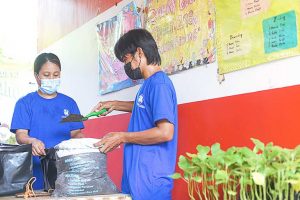
SMFI KSK farmers set up their urban farm space where they will practice the various sustainable agriculture techniques that they will learn from the program.

The future of food security lies greatly on sustainable agriculture. It is a given that practicing sustainable agriculture in the urban areas comes a bit harder compared in the rural zones because of the availability of land for farming.

While it is true that a healthy, spacious land plays a vital role in attaining sustainable agriculture, our urban dwellers need not to worry as various farming techniques and innovations are currently available to augment their resources in farming.

It is in this light that the SM Prime Holdings (SMPH), through SM Foundation (SMFI), recently mobilized its efforts to bring the SMFI’s Kabalikat Sa Kabuhayan (KSK) on Sustainable Agriculture program to 50 Pasay City residents.

The said beneficiaries are mostly made up of members of the Pantawid Pamilyang Pilipino Program (4Ps) in Pasay City. The KSK program aims to equip farmer-participants with knowledge and skills on modern urban farming techniques that will allow them to bring food on their tables and eventually, enable them to establish their own agri-enterprises.

SMFI KSK farmers set up their urban farm space where they will practice the various sustainable agriculture techniques that they will learn from the program.

Aside from the agri training, the trainees will also be assisted in creating markets through various SM Business Units and government agencies.

This effort was also made possible through a sustained social good collaboration with the City Government of Pasay, Technical Education and Skills Development Authority (TESDA), Department of Agriculture (DA), Department of Social Welfare and Development (DSWD), and the Department of Trade and Industry (DTI).

Growing together with its host communities

Speaking before the farmer-participants and representatives of its partner organizations through a virtual platform, SMFI Trustee Engr. Ramon Gil Macapagal underscored the Foundation’s goal and ambition for its host communities: “Palagi naming inaasam sa SM Foundation ang ganitong panahon na aming maisusulong sa ating komunidad ang isang programang gaya nito pong KSK. Kami ay may ambisyon na tayo ay umunlad sa pamamagitan ng ating likas kaya na pamamaraan.”

Mr. Macapagal also highlighted how SM sees the significance of growing the business together with its host communities, “Ang gusto po natin ay tayo ay lumago na kung saan ang SM ay makapagdaragdag ng benepisyo sa ating lipunan. Gusto po naming lumago sa pamamaraan na ang ating bansa ay makapagpo-produce ng mga mamamayan na handa sa kanilang mga haharapin sa buhay.”

SMFI KSK farmers set up their urban farm space where they will practice the various sustainable agriculture techniques that they will learn from the program.

He further explained that aside from the KSK program, SM through its corporate social arm — SM Foundation — reaches its host communities by its social good programs focused on education, health and wellness, and disaster response.

Corporate Social Responsibility (CSR) like those implemented by SM Foundation is becoming increasingly relevant as an inclusive development tool for businesses, especially in areas where they operate or “host communities.”

For companies such as SM, being a responsible corporate citizen is the bedrock of the strong relationship that they sustain with their host communities. And to achieve this, the company maintains constant community dialogues. They also work collaboratively with communities and stakeholder leaders over the life of their social good projects.

Kami ay lubos na nagpapasalamat sa pagkakataong ibinigay sa amin para dalhin ang programang ito sa Pasay. Nawa’y makapagdulot ito, hindi lamang ng pagkain sa hapag- kainan ng bawat residente ng Pasay kundi pati karagdagang kabuhayan. Makakaasa kayo na patuloy kaming makikipagtulungan sa inyong lokal na pamahalaan upang makamit natin ang kaunlaran,” Mr. Macapagal concluded.

The KSK program complements Pasay City’s Urban Farm tourism program that intends to promote a clean and green Pasay City through various urban farming methods like vertical and plastic container gardening by showcasing successful “greening” projects at the barangay level.

SM’s Kabalikat Sa Kabuhayan (KSK) Farmers’ Training Program aims to bring modern and sustainable farming skills in both rural and urban communities to help farmers have food on their table and have potential economic opportunities. To date, the program has trained more than 28,100 farmers from more than 900 cities/municipalities nationwide.


Spotlight is BusinessWorld’s sponsored section that allows advertisers to amplify their brand and connect with BusinessWorld’s audience by enabling them to publish their stories directly on the BusinessWorld Web site. For more information, send an email to online@bworldonline.com.

Join us on Viber to get more updates from BusinessWorld: https://bit.ly/3hv6bLA.

Exports and imports continue double-digit growth in August

THE COUNTRY’S exports and imports of goods continue to post double-digit expansion in August, the Philippine Statistics Authority (PSA) reported this morning.

Preliminary PSA trade data showed the value of merchandise exports went up by 17.6% year on year to $6.47 billion. The August result marked a turnaround from the 12.7% drop posted in the same month last year and was faster than the revised 13.8% growth in July 2021.

Meanwhile, merchandise imports grew by 30.8% to $10.04 billion in August, inching up from the revised 29.5% year-on-year expansion recorded in the previous month. This was also a reversal from August 2020’s 17.5% decline.

The export and import figures in August brought the country’s trade balance to $3.58-billion deficit, wider than the $2.18-billion gap recorded in the same month last year, but narrower than the revised $3.66-billion deficit posted the previous month.

Year to date, the trade gap reached $25.25 billion, from a $15.69-billion shortfall in 2020’s comparable eight months.

For the same eight-month period, exports and imports grew by an annual 19.6% (to $48.93 billion) and 31.1% (to $74.18 billion), respectively. These continue to surpass the Development Budget Coordination Committee’s targets for exports and imports at 10% and 12% for the year, respectively. — Ana Olivia A. Tirona

July FDI inflows highest in 19 months

PHILIPPINE STAR/ MIGUEL DE GUZMAN
Analysts are hopeful that foreign direct investment inflows will improve in the next few months as the pandemic subsides. — PHILIPPINE STAR/ MIGUEL DE GUZMAN

By Luz Wendy T. Noble, Reporter

FOREIGN DIRECT investments (FDIs) jumped to its highest level in 19 months in July when investors turned optimistic as the domestic and global economy appeared to have shown signs of recovery. 

FDI net inflows climbed by 52% to $1.263 billion in July from $831 million a year earlier, based on data released by the Bangko Sentral ng Pilipinas (BSP) on Monday. This is also 52% higher than the $833 million inflows seen in June.

The July FDI inflows were the highest in 19 months or since the $1.36 billion in December 2019.

In the first seven months of 2021, FDI inflows increased by 43.1% to $5.562 billion from the $3.885 billion in the same period of 2020.   

“The overall improvement in real sector activity compared to last year, both in the Philippines and globally contributed to the rebound in direct investment flows,” ING Bank N.V. Manila Senior Economist Nicholas Antonio T. Mapa said in an e-mail.

In July, the government loosened lockdown restrictions in the Philippine capital while other Southeast Asian countries experienced a Delta-driven surge in coronavirus disease 2019 (COVID-19) cases. As infections spiked, Metro Manila was placed under the strictest form of lockdown for two weeks in August.

UnionBank of the Philippines, Inc. Chief Economist Ruben Carlo O. Asuncion said the July inflows reflected investor sentiment before the latest surge in COVID-19 cases.

“I think July was the last month that restrictions were low and the external environment were still largely positive before the Delta variant risk became full blown,” Mr. Asuncion said.

Central bank data attributed the rise in FDI net inflows in July to the 61% jump in non-residents’ net investments in debt instruments to $1.074 billion from $667 million a year earlier.

Equity and investment fund shares likewise grew by 15.2% to $189 million from $164 million in the same month last year.

In July, reinvestment of earnings surged by 87.1% to $155 million from $83 million a year ago.

“The fact that three categories of direct investments showed growth bodes well for the economy,” Mr. Mapa said.

On the other hand, equity inflows dropped by 58.3% year on year to $34 million. This, as placements inched up 2.4% to $91 million, while withdrawals plummeted more than seven times to $57 million.

Analysts are hopeful that FDI inflows may be better in the coming months if the COVID-19 situation continues to improve both in the Philippines and abroad.

“I do expect prospects towards the end of 2021 and the first quarter of 2022 to be better compared to previous months. I wouldn’t be surprised if we get better numbers moving forward,” Mr. Asuncion said.

Mr. Mapa said continued rebound in FDI inflows will help to support the economy’s recovery.

The BSP last month lowered its full-year projection for FDI net inflows to $7 billion, from $7.5 billion previously.

Net Foreign Direct Investment (July 2021)

Philippines among least attractive FDI destinations in APAC

PHILIPPINE STAR/ MICHAEL VARCAS
The Philippines remains one of the least attractive destinations for foreign direct investment in the Asia Pacific region due to its poor infrastructure. — PHILIPPINE STAR/ MICHAEL VARCAS

By Jenina P. Ibañez, Reporter

THE PHILIPPINES is one of the least attractive destinations for foreign direct investment (FDI) in the Asia-Pacific as the country continues to have poor infrastructure and business environments, Oxford Economics said.

The think tank in a brief released on Monday said the country ranked 13th out of 14 Asia-Pacific (APAC) economies in its FDI attractiveness scorecard, ahead only of Taiwan.

Oxford Economics said the poor ranking adds weight to its forecast that the Philippines will experience deep economic scarring from the coronavirus pandemic.

Under the scorecard, the Philippines had negative scores under the categories of infrastructure and logistics; political and business climate; and market size and potential.

Oxford Economics said the country ranked low in terms of quality of infrastructure and performed worse than its neighboring economies in the 2020 World Bank Ease of Doing Business report.

The Philippines ranked 95th place among 190 economies in the World Bank report that has since been discontinued.

In contrast, the country had positive scores in export structure and labor dynamics.

“Indonesia and the Philippines both score high in terms of their labor dynamics,” Oxford Economics said.

“Ongoing urbanization and a relatively young workforce mean that over the next decade we expect the labor supply in these two economies to rise by 25 million. We also forecast their average annual earnings to be around a third lower than in China in 2029,” it added.

Oxford Economics also noted the country’s efforts to lower the corporate tax rate and its plans to ease mandatory local employment for foreign investors.

John Forbes, senior advisor at the American Chamber of Commerce of the Philippines, said this is one of many similar reports in recent years that show the Philippines lagging in terms of attracting FDI in the region.

However, Mr. Forbes noted that Oxford Economics’ projection that infrastructure spending as a percentage of GDP for Vietnam by 2025 will be at five times the Philippine rate is “hard to believe.”

“And the report does not account for the biggest FDI success of the Philippines in (business process outsourcing) service exports, second in Asia only to India,” he said.

The American Chamber is one of several foreign groups that support amendments to the Public Service Act (PSA), which could change the definition of public utilities to allow more foreign investment in telecommunications and transport. 

Economies topping the Oxford Economics FDI attractiveness scorecard are China, Vietnam, and Malaysia.

“We believe prospects for FDI inflows into APAC over the medium term remain strong, even though pandemic-driven supply disruptions and uncertainties over the pace of recovery may see some firms rethink their supply chains,” Oxford Economics said.

“We expect China to remain the top destination for FDI given its rapidly growing domestic market. And as supply chains continue to adjust to higher labor costs in China and trade protectionism, we anticipate Southeast Asia, notably Vietnam, to be the key beneficiary. The region is well established in global supply chains, and its labor dynamics and openness to trade and FDI remain very favorable.” 

Oxford Economics in July warned that the Philippine economy faces deep scarring from the pandemic, estimating that the country’s projected gross domestic product (GDP) in 2025 will still be 8.4% lower than its pre-pandemic forecasts.

Economic managers expect GDP to grow by 4-5% this year and by 7-9% in 2022, after a record 9.6% contraction in 2020.

Vehicle sales slip in Sept. 

PHILIPPINE STAR/ MICHAEL VARCAS
CAR AND TRUCK manufacturers reported a 12% year-on-year decline in sales in September. — PHILIPPINE STAR/ MICHAEL VARCAS

VEHICLE SALES dropped 12% year on year in September, although month-on-month sales showed an improvement as lockdown restrictions eased in the Philippine capital, industry data showed.

A joint report from the Chamber of Automotive Manufacturers of the Philippines, Inc. (CAMPI) and Truck Manufacturers Association (TMA) showed 21,493 vehicles were sold in September, 12.4% down from the 24,523 sold in the same month a year ago.

September sales, however, increased by 35.6% from the 15,847 vehicles sold in August, thanks to double-digit sales growth in passenger cars and commercial vehicles.

The government last month eased quarantine restrictions in Metro Manila and shifted to a new alert system with granular lockdowns to allow more sectors of the economy to reopen.

CAMPI President Rommel R. Gutierrez said in a statement the double-digit month-on-month growth will help the industry reach its 20.9% sales growth target this year. The industry is aiming to sell 295,400 units, a fifth higher than the 244,274 units sold in 2020.

For the first nine months, vehicle sales jumped by 29.5% to 191,605 from 148,012 during the same period in 2020, as the government implemented looser quarantine restrictions this year.

“Amidst the challenges, the industry’s optimism still lingers for a better sales performance in the fourth quarter this year. This is driven by the overall improved consumer confidence resulting from a more buoyant economic condition and household spending, according to the recent government data,” Mr. Gutierrez said.

In September, passenger car sales declined by an 23% year on year to 6,580. Year to date, passenger car sales surged by 38.3% to 60,982.

Commercial vehicle sales slipped by 6.6% to 14,913 in September, but its nine-month sales tally rose by 25.7% to 130,623.

Toyota Motors Philippines Corp. remained the sales leader this year with 92,318 vehicles sold in the first nine months of the year, accounting for 48% of the market. 

Mitsubishi Motors Corp. currently has a 14% market share, followed by Ford Motor Co. Phils. Inc. (7.67%), Suzuki Philippines, Inc. (7.54%) and Nissan Philippines, Inc. (6.9%).

Earlier in the year, Mr. Gutierrez estimated that the car industry may see a return to pre-pandemic sales level as late as 2023. — R.M.D.Ochave