Home Blog Page 6831

Group urges Comelec to assign health workers in area for symptomatic voters

A NON-PARTISAN coalition urged the Commission on Elections (Comelec) to improve safety protocols for voters who exhibit coronavirus symptoms during the May 9 national and local elections.

“Designating personnel with medical training or knowledge for the IPP (isolated polling places) is a practice worth replicating,” the group PARTICIPATE said in a statement on Wednesday. 

“Support staff stationed in the IPP should be provided with additional personal protective equipment to cater to symptomatic voters,” it added.

Comelec Spokesman James B. Jimenez said in a virtual forum last week that voting sites will have separate booths for symptomatic voters, as implemented in last year’s Palawan plebiscite.

There will be around 105,000 polling precincts this year, mostly public schools. In comparison, there were 80,000 during the 2019 elections, Mr. Jimenez said. — John Victor D. Ordoñez 

1st phase of New Clark City-Clark Airport road completed

BCDA

THE FIRST phase of the P8.2-billion access road project connecting New Clark City to Clark International Airport has been completed, according to the Bases Conversion and Development Authority (BCDA). 

BCDA said in a statement on Wednesday that the first segment of the project, costing P3.7 billion, consists of a 5.33-kilometer road and a 900-meter bridge crossing the Sacobia River in Bamban, Tarlac.

The 19.83-km access road will cut travel time to 15 minutes from about 45 minutes between New Clark City in Tarlac province to the Clark airport and surrounding areas in the neighboring province of Pampanga.

Full project completion is expected by the second quarter this year with substantial construction work already done in the remaining segments of the road, according to BCDA.

“Both Phase 2 and 3 feature bike and pedestrian lanes, roadway lighting and linear parks,” BCDA said.

The project is funded through the national budget. — Revin Mikhael D. Ochave

Commercial fishing in Palawan resumes as closed season lifted 

BFAR.DA.GOV.PH

THE THREE-month closed fishing season in northeastern Palawan has been lifted starting Feb. 1, paving the way for the resumption of commercial activities in one of the country’s main fishing grounds. 

The annual November-January closed season — aligned with the peak spawning season for round scad or locally known as galunggong — is intended to protect and replenish aquatic resources for sustainability.

The closed season prohibits the use of purse seine, ring net and bag net in catching galunggong within the conservation area, according to the Bureau of Fisheries and Aquatic Resources (BFAR). 

On Jan. 18, the Department of Agriculture said it authorized imports of 60,000 metric tons (MT) of frozen small pelagic fish in the first quarter to augment supply in areas hit by Typhoon Odette (international name: Rai). 

The fisheries sector sustained typhoon losses amounting to P3.97 billion or 29.81% of the total.

A report from BFAR showed that for the first three quarters of 2021, the fisheries industry produced 3.12 million MT of fish, which was 1.94% lower than 2020’s production of 3.18 million MT. 

Closed fishing seasons are also implemented in other parts of the country, including the Visayan Sea, Zamboanga Peninsula, and Davao Gulf. — Luisa Maria Jacinta C. Jocson 

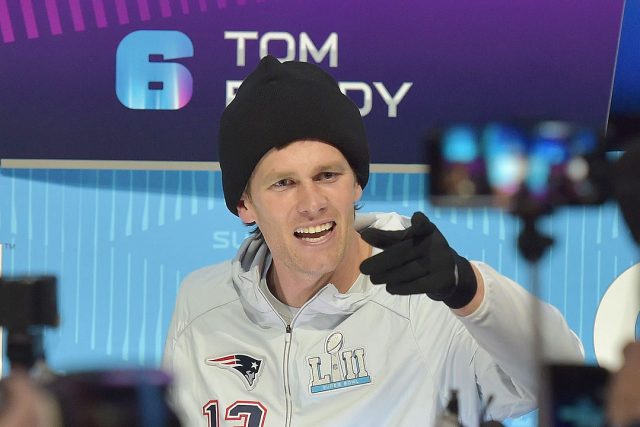
Brady hangs up his cleats after ‘thrilling ride’ with Buccaneers and Patriots

TOM BRADY — REUTERS

TAMPA BAY Buccaneers quarterback Tom Brady announced his National Football League (NFL) retirement on Tuesday after an age-defying career during which he won a record seven Super Bowl championships and established himself as arguably the greatest player in the sport’s history.

The 44-year-old Brady, known for his tenacity, intelligent playmaking abilities and remarkable leadership, spent 20 seasons with the New England Patriots where he won six Super Bowl titles and added another last year in his first season with the Bucs.

“I have always believed the sport of football is an ‘all-in’ proposition — if a 100% competitive commitment isn’t there, you won’t succeed, and success is what I love so much about our game,” Brady wrote in a lengthy social media post.

“There is a physical, mental, and emotional challenge EVERY single day that has allowed me to maximize my highest potential. And I have tried my very best these past 22 years. There are no shortcuts to success on the field or in life.

“This is difficult for me to write, but here it goes: I am not going to make that competitive commitment anymore. I have loved my NFL career, and now it is time to focus my time and energy on other things that require my attention.”

Brady’s decision follows a dominant season during which he led the NFL in touchdown passes and passing yards. He could win a fourth league Most Valuable Player (MVP) trophy, which would make him the oldest player to win the award.

In what proved to be his final game, Brady rallied the Bucs from a 27-3 second-half deficit against the Los Angeles Rams nine days ago, but his team were ultimately eliminated from the playoffs by a last-second field goal.

A surefire first-ballot Hall of Famer, Brady’s decision to retire comes after conflicting reports over the weekend about his competitive future.

“I’ve done a lot of reflecting the past week and have asked myself difficult questions,” wrote Brady.

“And I am so proud of what we have achieved. My team mates, coaches, fellow competitors, and fans deserve 100% of me, but right now, it’s best I leave the field of play to the next generation of dedicated and committed athletes.”

PATRIOTS DYNASTY
A lightly regarded prospect coming out of college, Brady was the 199th pick in the 2000 NFL Draft but made the most of his chance when it finally came and in doing so turned around the fortunes of the Patriots franchise.

At the start of the 2001, campaign Brady was a then-unknown backup but took over the starting role in the second game of the season after starter Drew Bledsoe went down with an injury and he never relinquished the role.

Brady went on to lead the Patriots to an 11-3 record that season, which culminated with an upset win over of the St. Louis Rams in the Super Bowl where he was named the game’s MVP and so began one of the greatest dynasties across any sport.

“Tom Brady will be remembered as one of the greatest to ever play in the NFL,” said NFL Commissioner Roger Goodell.

“An incredible competitor and leader, his stellar career is remarkable for its longevity but also for the sustained excellence he displayed year after year.

“Tom made everyone around him better and always seemed to rise to the occasion in the biggest moments.”

But Brady’s career was not without controversy.

He was suspended for the first four games of the 2016 season as a result of the so-called “Deflategate” scandal after the NFL discovered the Patriots used underinflated balls in a 45-7 rout of the Indianapolis Colts that sent them to the Super Bowl.

In 2020, Brady made a surprising decision to join a Bucs team that had not been to the post-season in 13 years and said at the time the move was in part to seek out new challenges and do things that had never been done before.

But despite a different setting, the result was familiar.

Brady, in his first season with his new team, reached his 10th Super Bowl and Tampa Bay became the first team to play the championship game in their home stadium. Brady also became the second quarterback to win a title with two separate teams.

“To my Bucs teammates the past two years, I love you guys, and I have loved going to battle with you. You have dug so deep to challenge yourself, and it inspired me to wake up every day and give you my best,” said Brady.

“I am always here for you guys and want to see you continue to push yourselves to be your best. I couldn’t be happier with what we accomplished together.”

RECORD SETTER
A Northern California native, Brady rewrote the NFL record book during his glittering career, including holding the mark as the all-time leader in passing yards, passing touchdowns and quarterback wins.

He appeared in a record 10 Super Bowls, winning the game’s MVP award five times, and his 15 Pro Bowl selections is the most in league history.

Brady is the father of three and he and his wife, supermodel Gisele Bundchen, have been building a house together near Miami. He said how he spends his days will be a “work-in-progress” but that he wants to spend time giving to others.

“My playing career has been such a thrilling ride, and far beyond my imagination, and full of ups and downs. When you’re in it every day, you really don’t think about any kind of ending,” said Brady.

“As I sit here now, however, I think of all the great players and coaches I was privileged to play with and against — the competition was fierce and deep, JUST HOW WE LIKE IT.

“But the friendships and relationships are just as fierce and deep. I will remember and cherish these memories and re-visit them often. I feel like the luckiest person in the world.” — Reuters

Countdown to Super Bowl begins as NFL rebrands SoFi stadium

LOS ANGELES — SoFi Stadium’s transformation from the home of the Rams to a neutral site for the upcoming Super Bowl is underway, but National Football League (NFL) officials said the game will still feature plenty of Los Angeles flavor.

The location of the game is picked years in advance but with their win over San Francisco on Sunday, the Rams became the second team to play for the title on their home field after the Buccaneers won it all in Tampa Bay last season.

“We had the NFC championship game here with the Rams, so all of that branding, all of those field colors, all of that artwork has to be completely taken off and we start from scratch,” NFL field director Ed Mangan told reporters at SoFi on Tuesday.

“Then we’ve got to come back in with a different scheme designated by the NFL.”

Despite the rebranding inside the $5.5-billion stadium, Los Angeles culture will still be well represented.

“Whenever we go to a city, we like to highlight the flavor of that city,” said NFL senior director of events Katie Keenan.

“We’ll have different local Los Angeles food elements in the stadium here and at our different parties,” she said.

The biggest party of them all will take place when LA rappers Dr. Dre, Snoop Dogg and Kendrick Lamar, as well as Eminem and R&B singer Mary J. Blige, come together for the half time show.

“We’ve obviously got an amazing half time show that is a true ode to Los Angeles, so we just can’t wait for everybody to see it,” Keenan said.

While there will be no restrictions on attendance, coronavirus disease 2019 (COVID-19) safety measures will still be in place. Fans will need to be vaccinated or show a negative test and masks will be required in the stadium when not actively eating or drinking.

But the NFL is planning on a celebration.

“We’ve got a full stadium. We’ve got a new stadium. We’ve got a big city. We’ve got a home team in the game,” Keenan said.

“We’re just really excited.” — Reuters

Chicago Bulls finish strong vs Orlando Magic to win season series

DEMAR DeRozan scored a game-high 29 points to go with 10 rebounds and Zach LaVine added 26 points to lift the host Chicago Bulls to a 126-115 victory against the Orlando Magic on Tuesday night.

Nikola Vučević had 18 points and 13 rebounds for Chicago, logging his 27th double-double of the season and seventh in the past eight games. The Bulls closed the game on an 11-0 run, limiting the Magic to zero points over the final 5:34.

Former Bull Wendell Carter, Jr. flirted with a double-double for the Magic, contributing 24 points, eight rebounds and six assists. Franz Wagner (22 points), Cole Anthony (20) and Gary Harris (13) rounded out a balanced attack.

Chicago shot 51.1% compared to 49.5% for Orlando. With their 32nd victory of the season, the Bulls surpassed their win total from last season.

Orlando proved pesky throughout the night. Facing a 10-point deficit with 7:38 to go, the Magic uncorked a game-tying, 10-0 run in just 1:36, getting five points from Wagner during the spurt.

The Bulls channeled grittier defense down the stretch while spreading the ball. Ayo Dosunmu had nine of Chicago’s 25 assists to go with 13 points. Javonte Green scored 11 points and grabbed seven rebounds. — Reuters

South Korea seals World Cup spot with win over Syria

HONG KONG — South Korea booked their place at the World Cup in Qatar on Tuesday after Paulo Bento’s side beat Syria 2-0 in Dubai to confirm their progress to a 10th consecutive finals.

Second-half goals from Kim Jin-su and Kwon Chang-hoon ensured the Koreans continue a run of successive qualifications that stretches back to Mexico in 1986 as they wrapped up a top-two finish in Group A of Asia’s preliminaries.

The South Koreans join Iran in confirming their place at November’s finals after Dragan Skocic’s side claimed their ticket for Qatar on Thursday.

Only the top two finishers in each of Asia’s two qualifying groups can secure guaranteed berths at the finals, while the third-placed nations will face off for the right to meet South American opposition in an intercontinental playoff.

Kim Jin-su put the Koreans in front eight minutes into the second half, the Jeonbuk Motors left back rising to meet Kim Tae-hwan’s cross from the right and power his header home.

Kwon Chang-hoon made sure of the win 18 minutes from fulltime with a dipping left-footed strike from outside the area that bounced beyond goalkeeper Ibrahim Alma.

Iran defeated the United Arab Emirates 1-0 through a Mehdi Taremi goal to remain on top of the Group A standings and leave Bert van Marwijk’s side third on nine points.

Van Marwijk’s team hold a three-point lead over Lebanon, who were held to a 1-1 draw by Iraq in Sidon.

Japan, meanwhile, closed in on the finals with a 2-0 victory over Group B leaders Saudi Arabia at Saitama Stadium that moves Hajime Moriyasu’s side to within a point of the summit.

Takumi Minamino and Junya Ito were on target for the Samurai Blue as they handed Herve Renard’s side a first defeat of the current round of preliminaries.

Winger Ito rolled the ball to Minamino and his attempt was powerful enough to prevent Mohammed Al Owais from keeping it out as Japan went in front in the 32nd minute.

Five minutes after the restart, Ito went from provider to goalscorer with a stunning strike from the edge of the area, leaving Al Owais with no chance as the ball flew into the top corner.

Australia’s hopes of automatic qualification were hit by a late Abdullah Fawaz penalty as Oman claimed a 2-2 draw with Graham Arnold’s side in Muscat.

Jamie Maclaren’s 15th-minute penalty put Australia ahead but Fawaz leveled with a drive into the top corner.

Aaron Mooy restored Australia’s lead 11 minutes from time when he shot past Faiyz Al Rashidi, only for Fawaz to score from the spot following Fran Karacic’s foul on Muhsen Al Ghassani.

Australia remains third in Group B but are now four points behind Saudi Arabia and three adrift of Japan, with games against the leading pair to come in the final two rounds of qualifiers in March.

Vietnam picked up their first win of the campaign as their 3-1 victory in Hanoi ended China’s slim hopes of finishing third in Group B and claiming a playoff berth. — Reuters

Brazil cruises past Paraguay in comfortable 4-0 win

BELO HORIZONTE, Brazil — Brazil scored twice in the last four minutes, including a first international goal for Real Madrid striker Rodrygo, to cap a comfortable 4-0 win over Paraguay in Tuesday’s World Cup qualifier in Belo Horizonte.

The defeat ended Paraguay’s hopes of qualifying for Qatar and further cemented Brazil’s position as one of the favorites to lift the trophy in December.

Brazil tops the South American qualifying group with no defeats in 15 games and the win extended to 61 matches their unbeaten home record in World Cup qualifiers.

Paraguay, who has yet to win any of their first five games under coach Guillermo Barros Schelotto, are second from bottom of the 10-team group with 13 points from 16 games.

It was a successful but frustrating night for Raphinha, who scored one, had another chalked off, and also hit the post.

The Leeds United winger thought he had put Brazil 1-0 up after just 93 seconds only to see the goal ruled out after a lengthy consultation with the Video Assistant Referee (VAR).

However, with 28 minutes gone he superbly controlled a long ball from Marquinhos and wriggled between two defenders to put Brazil 1-0 ahead.

He was unlucky not to get another early in the second half as he saw his volley come back off the post.

Philippe Coutinho got a deserved second for the home side just after the hour when he placed a sumptuous shot into the top corner of the net from 30 meters out.

Antony made the scoreline more reflective of the play with four minutes left when he curled a left-foot shot past a helpless keeper.

And Rodrygo tapped home a minute later to round off a commanding performance from the five-times world champions.

Vinícius Júnior, Matheus Cunha, and Lucas Paqueta also came close for Brazil, who, with qualification already guaranteed, fielded a much-changed side.

Talismanic striker Neymar was out injured and there were rare starts for goalkeeper Ederson, midfielder Fabinho, left back Alex Telles and captain on the night Dani Alves.

New Newcastle signing Bruno Guimaraes made a substitute appearance in the second half.

In the last game of the round, Peru and Ecuador shared the points in a scruffy 1-1 draw in Lima.

Michael Estrada put Ecuador ahead after two minutes, but Edison Flores equalized 24 minutes into the second half.

The result takes Ecuador a point closer to qualification.

The Andean side sit third in the South American group and are hot favorites to cement a place in Qatar in the final two group matches in March.

Brazil and Argentina have already guaranteed their spots. — Reuters

Asian Tour’s Saudi-backed International Series to host event in London

THE Asian Tour is set to stage an event in London as part of its 10-event International Series in its 2022-23 schedule, the continental governing body said on Tuesday.

The breakaway competition sanctioned by the Asian Tour has a partnership with LIV Golf Investments, a company backed by Saudi Arabia’s Public Investment Fund (PIF). The prize money on offer is between $1.5 million to $2 million per event.

The Asian Tour said LIV Golf Investments has also increased its investment from $200 million to $300 million as it looks to take on established tours such as the PGA and DP World Tours. Australia’s ex-world number one Greg Norman is its CEO.

“We are on the threshold of a new era for Asian golf,” said Cho Minn Thant, Asian Tour commissioner and CEO.

“The International Series is a new upper-tier of elite events, the likes of which the region has not seen before, that will mark the start of a phenomenal period of growth for the Asian Tour.

“It also signifies the beginning of our relationship with our new strategic partner LIV Golf Investments and its CEO Greg Norman.”

The Asian Tour said the series begins in Thailand in March before moving to Britain, Korea, Vietnam, the Middle East, China, Singapore and Hong Kong.

The London event will be held at Centurion Club from June 9-12 with a $2-million purse.

The announcement was made two days before the Saudi International from Feb. 3-6, which has a prize fund of $5 million and has attracted players such as Phil Mickelson, twice champion Dustin Johnson and Bryson DeChambeau.

They were granted waivers to miss the PGA Tour’s AT&T Pebble Beach Pro-Am, which is taking place over the same weekend. — Reuters

Censorship isn’t the best way to crack down on quack science

FREEPIK

MISINFORMATION is like pornography — people think they know it when they see it. But I’ve spent more than a year studying medical misinformation as part of a Pulliam Fellowship and have come to find the term isn’t particularly enlightening. The dictionary calls it “false information, especially that which is deliberately intended to deceive.” Much of what’s popularly labeled medical misinformation is really minority opinion — and that can be presented responsibly or in a way that’s misleading.

This distinction applies to star Spotify podcaster Joe Rogan and his controversial interviews with scientists. The most heavily criticized episode, featuring biologist Robert Malone’s non-mainstream concerns over COVID vaccines, was further on the fringe than listeners were led to believe — but there’s no reason to assume Malone was lying rather than expressing wildly overconfident opinions.

In medical matters, airing minority views might cause people to make poor decisions, such as skipping their COVID vaccine, so Spotify’s remedy — to add an advisory to episodes about COVID and direct listeners to more information — is reasonable. What celebrity singers and their fans are flagging as misinformation has a subjective quality that makes it impossible to police in a systematic, scientific way.

There’s a spectrum of minority opinion in science — from the bold and visionary to the crazy and dangerous. The important question for Spotify, and everyone else creating or consuming news about health, is how to tell the difference and present minority views responsibly, in the right context, so viewers get a sense of where the preponderance of evidence lies.

That means demanding those with minority opinions back their arguments with logic and evidence — not with boasts about their connections or accolades.

Both Rogan and I have interviewed science writer Gary Taubes, for example, whose minority viewpoint on higher fat diets has become increasingly accepted. And I have also interviewed vaccine expert Paul Offit — who is well within the mainstream, but has written a book poking holes in a variety of mainstream medical beliefs, from the need for cancer screenings to daily vitamins to the imperative to fight fevers. Lately, he’s taken a contrarian turn by not advocating COVID booster mandates. (Offit does support boosters for high-risk people.)

The problem with the Robert Malone episode was not that he criticized COVID-19 vaccines. It’s important to look at all medical interventions critically. And on the surface, Malone might seem like a reasonable source to discuss the pandemic. He did some clever experiments 30 years ago which contributed to the scientific foundation for mRNA vaccines. The problem with the episode is that Malone’s critique relied on unchecked speculation and baseless assertions.

I listened to Rogan’s whole three-plus hours with Malone, and discovered that it hit on many of the topics I’ve covered in my own podcast, Follow the Science: Ivermectin as experimental therapy,  side effects of the COVID-19 vaccines including menstrual irregularities in women, the concern that vaccines would make the disease worse, shortcomings in vaccine clinical trials, confusion over the effects of vaccines on transmission, and problems with politicized science. (Disclosure: my podcast is also on Spotify but I have no financial relationship with the company.)

But unlike Malone, my interview subjects mostly spoke within their specific areas of expertise, and offered lots of scientific evidence. They also drew very different conclusions than he did. Some, such as chemist Derek Lowe, used not just data but an understanding of biochemistry to explain why Ivermectin is unlikely to cure COVID-19 (even if it does cure other diseases), and why vaccines are very unlikely to cause enhanced vulnerability to disease (even though that has happened with some other vaccines).

Malone took on a lot by himself, and his arguments were rambling and often rested not on evidence but on his claimed insider status at the Department of Defense and other government agencies. Sometimes there was kernel of real data, but his interpretations were alarmist. While other experts have raised concerns about menstrual irregularities in women who’ve gotten the COVID-19 vaccines, he suggested the shots would cause premature menopause. That point needed rebuttal.

In an apology, Rogan promised to try to bring on guests “with differing opinions.” That’s laudable, but what really matters is making sure listeners know where the scientific consensus lies.

Mavericks will always capture the public’s imagination. In 2012, Rogan interviewed a character very similar to Malone — Peter Duesberg, who had been an acclaimed virologist with a contrarian view that HIV doesn’t cause AIDS. Colleagues have said Duesberg’s criticism of mainstream science was valuable back in the 1980s, but there’s now overwhelming evidence that HIV does cause AIDS. (At one point in Malone’s interview, he and Rogan sang Duesberg’s praises.)

Plenty of mainstream journalists gave Duesberg airtime because the public loves a good underdog story — the triumph of the rebel nobody believed. It’s also one of the reasons media outlets gave Theranos CEO Elizabeth Holmes a free pass when she claimed she was changing the world of blood testing. But the burden of proof should be on the maverick to bring powerful evidence. Science writer Gary Taubes did that when it came to debunking low-fat diets. Malone and Holmes instead relied on name-dropping, innuendo, and sometimes paranoia.

Sometimes the crowd can be wrong. Dissenting views are worth listening to, as long as those presenting them bring evidence and a rational argument. Asking media companies to censor “misinformation” likely won’t work because it’s not that simple. Most people don’t know it when they see it.

BLOOMBERG OPINION

Only time will tell

ARTHURHIDDEN-FREEPIK

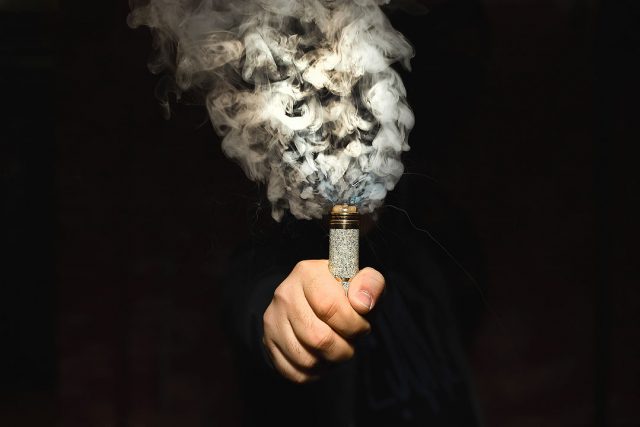
On Tuesday, I received e-mails from groups that oppose a Senate bill awaiting the President’s signature. In particular, the groups want the President to veto the proposed legislation that will allow more youngsters to “vape,” or use what are officially known as electronic nicotine and non-nicotine delivery systems as well as heated tobacco products.

Proposed for veto is Senate Bill No. 2239, ratified in December 2021 along with House Bill No. 9007, on regulating vaping or the sale and use of vaporized nicotine and non-nicotine products such as electronic cigarettes, as well as heated tobacco products. The ratified bill is now with Malacañang for the President’s signature.

It is my understanding that both the Department of Health and the Department of Education are actually opposed to the vaping bill. Not that they oppose regulating vaping per se, but they question some provisions of the proposed law that seems to make vaping more accessible to a demographic younger than the current crop of smokers.

By law, smoking is allowed only for those 21 years old and up. But SB 2239 lowers the access restriction from 21 to 18 years old for vaping; allows youth-appealing flavors other than plain tobacco and menthol; and, allows online sales, claimed Social Watch Philippines in its e-mail. The bill also transfers the regulation of vaping products from the Food and Drug Administration (FDA) to the Department of Trade and Industry (DTI).

“If passed into law, SB 2239 will continue to alter the image of vapor products, promote doubts on its harms, and mislead the public,” Social Watch Philippines said. It thus backed the DoH’s and DepEd’s opposition to the bill, quoting Education Secretary Leonor Briones as saying, “I strongly join the Department of Health in opposing the bill and humbly request the President to veto the legislation.”

Social Watch also cited a DepEd study with the Philippine Pediatric Society (PPS) that “initiation for vape use” was usually at the age of 10 to 15 years old, and that the top reasons for vape use among Filipino students were “online accessibility, varied flavors, and the belief that such items are allegedly safer than tobacco products.”

Social Watch also quoted Sara Salvador, National Coordinator of Aktibong Kilusan Tungo sa Iisang Bayan (AKTIB) Philippines, as saying that based on the Global Youth Tobacco Survey, “there is a 110% increase in vape use in just four years among the Filipino youth, from 11.7% in 2015 to 24.6%. By lowering the age of access and allowing kid-friendly flavors, the bill clearly targets our youth and puts them at risk to subsequent nicotine addiction. The vape bill is not a coherent public response to the tobacco epidemic.”

On the other hand, a news report quoted Dr. Fernando Fernandez, Secretary General of the Asia Pacific Dental Federation and the past president of the Philippine Dental Association, as saying that the “Vape Bill is clearly a big win for public health. [And that] those who would like to ban vaping may indirectly be supporting smoking.”

“The logical conclusion is that vapor products will save the lives of 16 million Filipino smokers or at the very least reduce their health risks. Therefore, regulation and not prohibition is key. This is what the vape bill seeks to do,” Dr. Fernandez said. “The science has become extremely strong in recent years that e-cigarettes are less harmful than conventional cigarettes,” he added.

The same news report quoted Dr. Arleen Reyes, past president of the Philippine Dental Association, as saying that “a ban on vapor products only perpetuates the use of cigarettes that endangers the lives of 16 million Filipino smokers.” She also insisted that vaping products were scientifically proven to be less harmful alternatives to cigarettes.

In my opinion, there is no debate on whether vaping should be banned or regulated. Regulation is the way to go. However, I don’t see any reason for vaping to be given more leeway than cigarettes or tobacco products. To encourage smokers to shift to a “healthier” alternative? If this is the argument, then why make vaping accessible to a younger set of people? Why allow SB 2239 to lower the access restriction from 21 to 18 years old for vaping, allow youth-appealing flavors other than plain tobacco and menthol, and allow online sales as well as advertising?

In a Jan. 12 story in The New York Times titled “That Cloud of Smoke Is Not a Mirage,” by John Ortved, the author noted that “cigarettes, once shunned, have made a comeback with a younger crowd who knows better.” He wrote that “across New York City, as the pandemic waxes and wanes, a social activity that had seemed diminished, or replaced (with vapes, cannabis and education), seems to have reappeared.”

Quoting Isabel Rower, a 24-year-old sculptor, he wrote, “Smoking is back… Weirdly, in the last year or two, all my friends who didn’t smoke, now smoke. I don’t know why. No one is really addicted to it. It’s more of a pleasure activity.” He also quoted Kat Frey, a 25-year-old copywriter who lives in Brooklyn, as saying, “We’re having a very sexy and ethereal 1980s revival, and smoking is part of that… A lot of people I know are posting pictures doing it. I’m doing it. It’s having its moment for sure.”

But Ortved also cited research by David Hammond, a professor of public health at the University of Waterloo, who noted that cigarette smoking has actually been on a steady decline among adults in the United States for 30 years. However, overall nicotine use has gone up because of vaping. Moreover, in 2020, for the first time in two decades, cigarette sales have increased.

The author also quoted Dr. Nigar Nargis, the scientific director of tobacco control research at the American Cancer Society, as saying “that there was evidence of ‘a higher level of smoking’.” “It’s probably not just young people, but there are higher sales, which indicates higher consumption,” Dr. Nargis said. And this brings us to the question of whether vaping is, indeed, an effective tool to help smokers quit, or just the tobacco industry’s attempt to get new generations addicted to nicotine.

Ortved cited Ken Warner, an emeritus dean of public health at the University of Michigan, who believed that vaping was “a powerful weapon in public health’s war on smoking.” And this appears to find a basis in data. Ortved wrote that in 2019, the CDC reported that cigarette smoking among American adults had hit an all-time low, of 13.7%, in 2018. He also cited a Gallup poll that reported that 17% of Americans ages 18 to 29 vape, as CDC reported that only 8% of Americans ages 18 to 24 smoke.

Ortved added that Monitoring the Future, a pre-eminent study on youth smoking since 1975, reported that in 2020, the study recorded the first uptick in smoking in years. But by mid-December 2021, the group also released its newest findings that cigarette use was actually down in every school grade in the United States.

So, in this sense, the pro-vapers in the US may yet be right in pushing for vaping as an alternative to cigarette smoking. And despite the seeming resurgence of smoking of late, the overall picture is that cigarette smoking is on the decline in the United States. And vaping, without doubt, has taken hold among the American youth.

But locally, what are our guarantees that the vaping bill, as drafted, will actually encourage smokers to shift to a “healthier” alternative? Or, will we just end up growing rather than reducing the population that either smokes or vapes or both? After all, offering an alternative, without enticing a shift through incentives, may be for naught.

I guess only time will tell if Congress acted wisely in crafting the vaping bill as it did.


Marvin Tort is a former managing editor of BusinessWorld, and a former chairman of the Philippine Press Council

matort@yahoo.com

How things have turned upside down

FREEPIK

We observed last week, on Jan. 25, the 89th birth anniversary of the late Corazon C. Aquino, 11th President of the country. As we commemorated her birthday, we remember the events that led to the EDSA People’s uprising that brought then plain housewife Corazon Aquino to the presidency. It was natural that we would also remember her husband, Ninoy’s martyrdom on Aug. 21, 1983. Ninoy had said “the Filipino is worth dying for,” while President Cory declared that “the Filipino is worth living for,” and their son, Noynoy, also a former President, whose main message was “the Filipino is worth fighting for.”

In remembering them, we also recall those who gave up their lives and fought for freedom and justice in the 1800s until our contemporary times: Andres Bonifacio, Jose Rizal, Gabriela Silang, and the thousands of others who were martyred in fighting the Marcos dictatorship and immortalized at the Bantayog ng mga Bayani. Of course, there were thousands more who perished during the revolution against Spain, the Philippine-American War; the resistance against the Japanese invasion; Filipino soldiers who fought in the Korean War; a great number of student activists, labor leaders, indigenous Filipinos fighting for their land; media personalities, lawyers for activists and dissidents; educators; urban poor and peasant leaders; and the whole gamut of Philippine society. Many torture victims are still around like Neri Colmenares, Etta Rosales, and Gerry Bulatap, to name a few.

To bring justice to the thousands of victims of human rights violations, the Philippine government had to create institutions which could systematize and organize the payment of compensation to these victims of human rights abuses during the Marcos regime. A report of the Human Rights Violations Victims’ Memorial Commission states, “The Roll of Victims is the official list of Martial Law 1972-1986 era victims, including the place of incident of the violation against them, as resolved by the Human Rights Victims’ Claims Board (HRVCB), an independent and quasi-judicial body created by RA 10368 to receive, evaluate, process and investigate reparation applications of Human Rights Violations Victims, as defined by RA 10368.”

The starting point of all these systematic and organized human rights violations was of course on Sept. 22-23, 1972, when all the illegal arrests were carried out, although Proclamation 1081, putting the entire country under martial rule, was promulgated on Sept. 21, 1972.

In 1978, Marcos decided that it was time to “share” power with the legislative branch or congress, which he shut down on the day he declared Martial Law. Sharing power meant calling for elections for assemblymen by Region. Elections would please the Americans, for whom elections were concrete proof of democracy since elections reflected the consent of the governed in an atmosphere of open discussion, freedom of association, and to peaceably assemble.

A campaign period was allowed and groups started putting up their parties to contest the elections against Marcos’s Kilusang Bagong Lipunan (KBL) which was, of course, the only party that fielded a complete slate in all the country’s regions. In many places, it was a contest among Marcos’s own men eager to outdo each other to show Marcos that they (especially the Cabinet members who had to run for the election under Marcos’s parliamentary form of government) were not just good administrators and technocrats but could double up as politicians with their own base. They would demonstrate that they were not just dependent on Marcos to stay in power — they had a direct mandate from the electorate.

There was hardly any real opposition, except in the National Capital Region (NCR), where Ninoy, campaigning from his prison cell, put up LABAN, acronym for Lakas ng Bayan. A long and spirited debate among the opposition preceded the formation of LABAN. A group led by senators Jovito Salonga and Ka Pepe Diokno, all advocated a boycott of the elections, stating that the whole exercise would be rigged and to participate would legitimize the sham. The 21-person LABAN slate would go up against the KBL line up led by Imelda Marcos (then governor of Metro Manila). LABAN’s slate was made up of Ninoy and fellow opposition leaders like northern Mindanao’s Nene Pimentel, former Marcos cabinet member Ernie Maceda, student leader Jerry Barican, the urban poor’s Trinidad Herrera, Palawan Senator Monching Mitra, former Manila Vice-Mayor Felicisimo Cabigao, constitutional convention delegate Ernesto Rondon, newsman Nap Rama, former Education Secretary Anding Roces and other oppositionists.

Ninoy Aquino relished the opportunity to be back on the campaign trail even if he was in prison. He had pleaded with his fellow oppositionists who advocated a boycott of elections for parliament to allow him, and others who had been silenced since September 1972, to run. All the people had heard about the opposition was what Marcos and his propaganda machinery had fed the people who had been cowed into submission. Ninoy said he needed to talk to the people directly and this was the only way he could do it, even if the elections were to be rigged.

Ninoy got his chance to talk to the people in an interview on government television, on an evening primetime show called Face the Nation. Interviewing Ninoy were some of Marcos’s most loyal media assets, Ceylon-born Ronnie Nathanielsz, Teddy Owen of the Bulletin and the editor of the Philippine Daily Express (which was owned by a Marcos associate and sugar baron, Roberto Benedicto).

As expected, Ninoy displayed the wit and charm that had served him in good stead all throughout his political career. Filipinos saw for themselves that the opposition, exemplified by Ninoy, was alive and kicking and was fighting back despite the tremendous odds. They showed courage and energized people who had lost the nerve to assert their rights and question corrupt practices of government and the extravagance of the Marcoses. But Ninoy assured them that LABAN was fighting, even if it knew it would lose. The important thing was to be heard and gauge people’s reactions and see if the opposition still had a base.

The noise barrage of April 6, 1978, the day before the rigged elections, sent warning signals to Marcos that Metro Manila, the political, financial, and commercial nerve center of the country, remained opposition at heart and was willing to publicly express its sentiments despite the intimidating presence of military, police, and goons embedded in all local government units. LABAN supporters spontaneously came out of their homes in protest against the Marcos regime by banging pots and pans, honking car horns, and making noise in a variety of ways to show their support for the opposition. Arrests were made well into the night by Marcos forces, and military and police officials later went on air to announce that the noise barrage was the work of communists operating in urban areas. They had, according to these authorities, masterfully orchestrated the spontaneous display and unscripted show of opposition to the Marcos regime.

So-called noisemakers went out that night to express solidarity with Metro Manilans. A number of people commented that the noise making was to remove evil spirits before the election precincts opened the next morning. Hundreds of motorists went through the streets of Manila, Makati, Pasay, Mandaluyong, San Juan, Pasig, Caloocan, a great number ending up at the Aquino home on Times St. in Quezon City.

The opposition won only 15 of 165 assembly seats nationwide. In 1983, LABAN had coalesced with Nene Pimentel’s Partido ng Demokratikong Pilipino (PDP) to become PDP-LABAN.

It was not the PDP-LABAN of today, not at all.


Philip Ella Juico’s areas of interest include the protection and promotion of democracy, free markets, sustainable development, social responsibility and sports as a tool for social development. He obtained his doctorate in business at De La Salle University. Dr. Juico served as secretary of Agrarian Reform during the Corazon C. Aquino administration.