Home Blog Page 6749

Lingayen Gulf black sand mining proposal flagged for possible impact on tourism

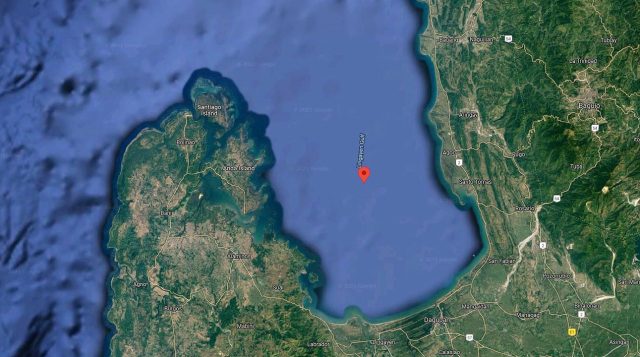
A PROPOSED black sand mining project in the Lingayen Gulf is expected to negatively affect the area’s tourism industry, a marine scientist said.

Fernando P. Siringan, a professor at the University of the Philippines Marine Science Institute, said during a virtual briefing organized by food security advocacy group Tugon Kabuhayan Monday, said mining will cause the clarity of the water to deteriorate, likely discouraging tourism.  

“Tourists want to see a clean beach and clear water… if a beach’s water is not clear, it will drive them away,” Mr. Siringan said.

Mr. Siringan said sand mining will cause the resuspension and dispersal of fine-grained material, thereby disturbing the habitat of marine organisms.

“The project site is covered in more than 10 meters of thick and muddy material, which will be first extracted, then sorted and dumped back into the ocean. The undesired materials will be carried onto the entire gulf, releasing harmful pollutants,” Mr. Siringan said.  

He said mining may also affect fish production, which could lead to higher prices.

“The high volume of suspended material in Lingayen Gulf due to the mining project will also lessen the fish catch. These fish products are also bought by tourists who wish to eat fresh seafood,” Mr. Siringan said.

The mining project is the Iron Ore Pangasinan Offshore Magnetite Mining Project proposed by Iron Ore, Gold, and Vanadium Resources (Phils.), Inc. It covers an area of 9,252.45 hectares.

The communities on the shore of Lingayen Gulf, a major fishing area, include Dagupan City, Binmaley, Labrador Lingayen, and Sual.  

Associations of fishermen such as the Pambansang Lakas ng Kilusang Mamamalakaya ng Pilipinas have expressed fears that the project will affect its members’ livelihood.

“This proposed offshore mining would certainly spell doom to the livelihood of thousands of small fishers who subsist in Lingayen Gulf. Not to mention its adverse impact to the livelihood of other coastal residents involved in inland fisheries and salt farms,” the group said. — Revin Mikhael D. Ochave

Legal defenses against tax assessments

With the government hard-pressed for funds to finance economic recovery programs, much of the burden falls on the Bureau of Internal Revenue (BIR) to increase tax collections. It is no wonder that BIR audits are proliferating like TikTok videos. For taxpayers, one of the most common fears is being subjected to a BIR audit. Such audits not only entail substantial investments in time and effort, mainly to prepare supporting documents and legal arguments; they also require strength of character and tremendous patience to see the process to its conclusion.

Before falling into a catatonic stupor after receiving a tax assessment, taxpayers should check possible defenses that may be applicable to their cases. Most of the circumstances below negate the right of the taxpayer to due process and render the assessment void. If these defenses are properly used, the assessment may ultimately be cancelled.

NO LOA WAS ISSUED
Check if a valid Letter of Authority (LoA) was issued. In the case of Medicard vs. Commissioner of Internal Revenue (CIR), the Supreme Court (SC) ruled that no assessments can be issued, or no assessment functions or proceedings can go forward without an LoA. Any tax assessment issued without an LoA is a violation of the taxpayer’s right to due process and is therefore “inescapably void.”

Cases where this defense may be used include an investigation process which may have started through a letter notice (LN). Note that an LN, alone, is not an authority for the BIR to conduct a tax audit. If the initial LN ripened into a tax audit, the BIR is required to issue an LoA for the tax assessment to be valid.

Also, for various reasons such as resignation, reassignment, or promotion, the examiners named in the original LoA may have been replaced. The BIR is required to issue a new LoA for the new revenue officers to continue the tax audit. Without a valid LoA, the revenue examiners who continued the audit did so without authority.   

IMPROPER OR NO SERVICE OF ASSESSMENT NOTICE
In CIR vs. Azucena vs. Reyes, the SC categorically ruled that if there is no valid notice sent, the assessment is void. “The law imposes a substantive, not merely a formal, requirement. To proceed heedlessly with tax collection without first establishing a valid assessment is evidently violative of the cardinal principle in administrative investigations: that taxpayers should be able to present their case and adduce supporting evidence.” 

Thus, if the taxpayer denies receiving the assessment notice, the BIR must prove that the letter was indeed received by the taxpayer. Without a clear showing of the fact of receipt, the taxpayer will be deemed denied of his right to due process and the tax assessment is void.

In one case, the BIR was not able to sufficiently prove fact of receipt as the BIR records showed only an indecipherable signature bearing no name of the person who received the notice.

Other circumstances where the Court of Tax Appeals found invalid service include (a) the Final Assessment Notice (FAN) received by a security guard who is not even an employee of petitioner, (b) the assessment notice sent to the taxpayer’s old address despite the BIR being properly notified of the change of address of the taxpayer, and (c) the assessment notice left to an employee of a related party of the taxpayer.

VIOLATIONS OF PROCEDURAL DUE PROCESS
Taxpayers should always check the dates when the preliminary assessment notice (PAN) and the FAN were issued and received by the taxpayers. In CIR vs. Yumex, the BIR issued a PAN on Dec. 16, 2010 and a FAN on Jan. 10, 2011. The taxpayer received both PAN and FAN Jan. 18, 2011. The Court held that the taxpayer was clearly not given any notice of the preliminary assessment at all and was deprived of the opportunity to respond to the same before being given the final assessment.

In another case, the taxpayer denied receiving the PAN. The BIR argued that the requirements of due process are satisfied as long as the FAN was properly received by the taxpayer. The SC held that Section 228 of the Tax Code clearly requires that the taxpayer must first be informed that he is liable for deficiency taxes through the sending of a PAN.

UNREASONABLE DISREGARD OF EVIDENCE
In another case, the taxpayer claimed that from the start to finish of the administrative process, the BIR ignored all its protests and submissions to contest the deficiency tax assessments. The taxpayer alleged that the BIR issued identical PAN, FAN, and Collection Letters without considering the taxpayer’s submissions or its partial payment of the assessments. The SC held that while the BIR is not obliged to accept the taxpayer’s explanations, the BIR is still required to give reasons for rejecting these explanations. Thus, the BIR’s inaction and omission to give due consideration to the arguments and evidence submitted by the taxpayer were held as “deplorable transgressions of (the taxpayer’s) right to due process. The right to be heard, which includes the right to present evidence, is meaningless if the Commissioner can simply ignore the evidence without reason.”

PRESCRIPTION
Check the date of the FAN to find out whether it was issued before the prescription period. The BIR generally has three years to assess the taxpayer. The period is counted from the time the taxpayer filed his return or was required to file his return, whichever is later. Hence, if the FAN was issued after the said date, it is possible that the right of the BIR to assess has prescribed. However, before jumping with joy, the taxpayer must confirm that he has not issued a valid waiver to the statute of limitations or that the case does not involve fraud, false return, or non-filing of return in which case, the prescription period is 10 years.  

These scenarios offer only some of the legal arguments that taxpayers may use to convince the courts that the assessment of the BIR is void. For while the government’s power to tax is immense, such powers must be exercised within the limits of the constitutional right of the taxpayers to due process.

Let’s Talk Tax is a weekly newspaper column of P&A Grant Thornton that aims to keep the public informed of various developments in taxation. This article is not intended to be a substitute for competent professional advice.


Eleanor Lucas Roque is a principal of the Tax Advisory & Compliance division of P&A Grant Thornton, the Philippine member firm of Grant Thornton International Ltd.

pagrantthornton@ph.gt.com

Capital region now at low risk from coronavirus

PHILIPPINE STAR/ MICHAEL VARCAS

By Kyle Aristophere T. Atienza, Reporter

MANILA, the capital and nearby cities are now at low risk from the coronavirus amid decreasing infections, researchers from the country’s premier university said on Monday.

The infection rate in the National Capital Region (NCR) had fallen to 5%, while only 30% of its healthcare system was being used, OCTA Research Group from the University of the Philippines said in a report.

The virus reproduction rate in the region was 0.53, lower than the critical cut-off of 1.4, OCTA said. The average daily attack rate or the number of infected people for 100,000 people had gone down to 5.72, it added.

The seven-day average for coronavirus infections in the capital region had fallen by 14% to 810, OCTA said.

While some local government units (LGU) in Metro Manila had a one week growth rate, all 17 LGUs had a [virus] reproduction number of less than 0.9,” the group said. “This means all LGUs in NCR are still on a downward trend.”

The Department of Health (DoH) reported 3,117 coronavirus cases on Monday, bringing the total to 2.8 million.

The death toll rose to 43,276 after 104 more patients died, while recoveries increased by 5,124 to 2.7 million, it said in a bulletin. 

There were 43,185 active cases, 72.6% of which were mild, 4.9% did not show symptoms, 7.2% were severe, 12.32% were moderate and 3% were critical.

DoH said 18 duplicates had been removed from the tally, 13 of which were reclassified as recoveries, while 68 recoveries were relisted as deaths. Eight laboratories failed to submit data on Oct. 30.

The agency said 45% of intensive care units in the Philippines were occupied, while the rate in Metro Manila was 39%.

Meanwhile coronavirus infections nationwide would probably fall to 2,000 by the end of the month, OCTA Research fellow Fredegusto P. David said.

“If the current downward trend continues, we may have just 2,000 cases per day nationwide by the end of November,” he told a televised news briefing in Filipino. 

Mr. David backed the proposal of business groups to further ease the lockdown in Metro Manila.

“We support the lowering of Metro Manila to Alert Level 2 so that more businesses can recover but we should do it in a safe manner,” he said.

Under Alert Level 2, businesses may operate indoors at 50% capacity. They will get an additional 10% capacity if they have a so-called safety seal from the government. For outdoor operations, they may operate at 70% capacity.

Mr. David said at least 80% of Metro residents have been fully vaccinated against the coronavirus. “The chances of a COVID-19 (coronavirus disease 2019) resurgence are lower since many people in Metro Manila are already protected.”

He reminded the public to follow minimum public health standards and avoid large gatherings. Mr. David said OCTA recommends limiting public transportation to fully vaccinated people.

An inter-agency task force has approved a plan to increase passenger capacity in road- and rail-based public transportation in Metro Manila and nearby provinces from 70% to full capacity starting Nov. 4.

Metro Manila is now under Alert Level 3, which allows 50% capacity for outdoor services and 30% capacity for indoor activities.

The government started enforcing granular lockdowns with five alert levels in the capital region after the country struggled to contain a fresh spike in infections triggered by a highly contagious Delta variant.

Mr. David on Sunday said Metro Manila may record just 500 cases per day by mid-November.

Economic adviser seeks full vaccination at some businesses

A GOVERNMENT economic adviser on Monday cited the need to require workers in some businesses to get vaccinated against the coronavirus.

These include workers at restaurants and spas, which only accept fully vaccinated customers, presidential adviser on entrepreneurship Jose Ma. “Joey” Concepcion III told the ABS-CBN News Channel.

“Restricting the movement of the unvaccinated is protecting their own life,” he said.

The Trade Union Congress of the Philippines last month said some employers were withholding the salaries of workers who were not fully vaccinated, which is illegal.

The government allows restaurants and personal care businesses to operate at limited capacity as long as their workers have been fully vaccinated against the coronavirus.

Under the law, vaccination cards should not be required for education or employment.

Some congressmen have filed bills seeking to force Filipinos to get vaccinated against the coronavirus.

More than 59 million coronavirus vaccines had been given out as of Oct. 31, with 27.36 million Filipinos having been fully vaccinated.

Meanwhile, Mr. Concepcion said the lockdown in Metro Manila should be eased further to Alert Level 2 by Nov. 15 to allow small businesses to recover faster.

“There is no way but to move towards Alert Level 2,” he said. “It is very clear that the infection levels have gone down.”

The lockdown level in local governments with a vaccination rate of more than 70% should be eased further, he added.

Metro Manila is now under Alert Level 3, which allows 50% capacity for outdoor services and 30% capacity for indoor activities.

Mr. Concepcion said 40% of annual sales happen in the last quarter due to increased demand.

“This is the quarter when the Christmas season induces a lot of spending for gifts and greater mobility since people want to celebrate with loved ones,” he said.

He said there is no reason to panic in case of a fresh surge in infections, as long as more people have been fully vaccinated. “Even if infections go up, we must remember that vaccinations prevent hospitalization.”

He also said granular lockdowns should continue to speed up economic recovery. “Confidence is going to be very important, and for confidence to happen, we need to open the economy.”

The government started enforcing granular lockdowns with five alert levels in the capital region after the country struggled to contain a fresh spike in infections triggered by a highly contagious Delta variant.

Under Alert Level 2, businesses may operate indoors at 50% capacity. They will get an additional 10% capacity if they have a so-called safety seal from the government. For outdoor operations, they may operate at 70% capacity.

Presidential spokesman Herminio L. Roque, Jr. also said an inter-agency task force had approved a plan to increase passenger capacity in road- and rail-based public transportation in Metro Manila and nearby provinces from 70% to full capacity starting Nov. 4.

The Department of Transportation on Friday said it would gradually increase the passenger capacity of public transportation in Metro Manila starting this week.

The agency cited greater demand for public transport after businesses were allowed to operate at increased capacity and as more Filipinos get vaccinated against the coronavirus.

It said it would issue guidelines on the gradual increase in passenger capacity while enforcing health and safety protocols to help contain the coronavirus. — Russell Louis C. Ku and Revin Mikhael D. Ochave

PHL foreign minister appeals to rich countries to take climate action as typhoon-prone nations suffer from global warming 

PHILIPPINE STAR/ MICHAEL VARCAS

THE TOP diplomat of the Philippines appealed to developed countries to take concrete action and fulfill commitments as typhoon-prone nations suffer the most from climate change.   

“Those who have greater capacity to absorb the brunt of hard solutions, take it and help those with less capacity, who even now are taking as much of the brunt as they can,” Foreign Affairs Secretary Teodoro L. Locsin, Jr. said in a recorded video during the 26th United Nations (UN) Climate Change conference (COP26).   

He quoted President Rodrigo R. Duterte who said at the 75th UN General Assembly last year: “Year after year, we yearn for climate justice, people drown, lands forsaken, livelihood painfully lost, this is not the way to live, but for Filipino families, visited by 20 typhoons a year as a matter of course, this has become a lesser life lived.”  

“The greatest injustice here is that those who suffer the most are those the least responsible for this existential crisis.”  

The Philippines is one of the countries at highest risk for climate-related disasters, though it is responsible for only 0.33% of global greenhouse gas emissions, based on global knowledge portal Climatelinks. 

Mean temperatures across the country are expected to rise by 1.8°C to 2.2°C in 2050, according to state weather agency PAGASA.  

The National Integrated Climate Change Database Information and Exchange system said that this could lead to annual losses in gross domestic product (GDP), changes in rainfall patterns and distribution, droughts, threats to biodiversity and food security, sea level rise, public health risks, and endangerment of vulnerable groups   

Mr. Locsin said the forum must not focus on finger-pointing but on practical discussions. “Here are no enemies, only friends in earnest for a common purpose: to keep everyone alive on a planet that offers a tolerable existence as opposed to none at all.”  

“Developed countries must fulfill their longstanding commitment to climate financing, technology transfer, and capacity building in the developing world,” said Mr. Locsin.   

“This is a moral obligation that cannot be avoided.”  

COP26, being held in Glasgow, Scotland until Nov. 12, opened Sunday with heads of states, delegates, and campaigners from around the globe set to negotiate a coordinated response to the climate emergency. 

The meeting is being heralded as the last best chance to avoid devastating temperature rise that would endanger the lives of billions of people and disrupt the planet’s life-support systems. — Alyssa Nicole O. Tan 

Tourism dep’t offers free swab tests for local tourists; more areas waive test for vaccinated travelers 

DENR

THE TOURISM department is now offering free swab tests to domestic travelers as more areas across the country drop the requirement of a negative coronavirus result for those who are fully vaccinated.   

“We decided to subsidize their RT-PCR tests 100%, so starting Nov. 1, it would cost zero,” Tourism Secretary Bernadette Romulo-Puyat said in a statement on Monday.  

The subsidy was previously set at 50%.   

“It’s now (fully) subsidized by the DoT (Department of Tourism) and the Tourism Promotions Board,” she said.  

DoT said 350 applicants per day will be granted free RT-PCR tests at the Philippine Children’s Medical Center (PCMC) starting Nov. 1. The department plans to tie up with more government hospitals.   

The DoT hopes that initiative would boost local tourism and recover jobs lost during the pandemic.  

“This program helps ensure the safety of tourists, tourism workers, and local stakeholders in various destinations,” it said.   

“Many of the country’s destinations now accept fully vaccinated visitors without requiring the swab test,” the DoT said. “The free testing is only for domestic tourists whose destination still requires a negative result from a RT-PCR test or for staycation purposes.”  

Among the areas that have lifted the testing requirement are: the freeport zones of Clark and Subic; Cebu, including the cities of Cebu, Lapu-Lapu, and Mactan; Catbalogan City, -Tacloban City, Bohol, Iloilo City, Negros Occidental; and Misamis Oriental. — Kyle Aristophere T. Atienza 

Bangsamoro transition extension a win for continuity, but a threat to autonomy 

BW FILE PHOTO/ TSBASMAN

THE BANGSAMORO regions’s chief lawyer said the new 80-member transition team who will be appointed to serve until 2025 is expected to still be led by the Moro Islamic Liberation Front (MILF), assuring continuity of peace and development programs.  

“There will be a change in the composition of appointed BTA (Bangsamoro Transition Authority) members. Under Section 2 of Republic Act No. 11593, the current President will appoint another set of 80 BTA members but still, it shall be Moro Islamic Liberation Front (MILF)-led,” Attorney General Sha Elijah Dumama-Alba said in a statement a day after the law was passed.  

RA 11593, signed by President Rodrigo R. Duterte on Oct. 28, amends the Bangsamoro Organic Law (BOL) to extend the new region’s transition period by three years.  

Section 2 of the new law does not specify continued leadership by the MILF, which signed a peace deal with the government that paved the way for the new region, but analyst Michael Henry Ll. Yusingco said the attorney general’s statement is in line with the intent of extending the transition period.  

“I think the AG’s opinion reflects the intent of the advocates of the extension law,” said Mr. Yusingco, a senior research fellow at the Ateneo de Manila University Policy Center.  

“However, that is not an interpretation that can be immediately deduced from just a plain reading of Section 2… President Rodrigo Duterte, or even the next president, appears to have the full discretion to appoint the new members of the BTA,” he added. “Obviously, this gap in the extension law can be a source of confusion and conflict amongst the political stakeholders in the BARMM.”   

Bangsamoro Autonomous Region in Muslim Mindanao (BARMM) Chief Minister Ahod B. Ebrahim, meanwhile, thanked the President for signing the extension law, saying it will ensure “that the government-MILF Peace Process will be successful.” 

“The call towards extending the transition period speaks the collective desire of the Bangsamoro people in making sure that we have a strong regional bureaucracy that can address our decades-long challenges and make sure that a brighter future awaits them,” said Mr. Ebrahim, also chair of MILF.  

The postponement of the BARMM parliamentary election does not affect the local polls in the region in May 2022.   

“We don’t want to cause confusion, and we are looking at the possibility of continuation. There is nothing prohibiting the President from appointing those who are still sitting at the moment except, of course, if they file a Certificate of Candidacy and win,” Ms. Dumama-Alba said.  

AUTONOMY 
But while the extension period has been widely supported by stakeholders, Mr. Yusingco warned that the passage of an amending law poses a threat to the concept of autonomy embodied in the organic law.    

“Another truly worrisome repercussion of the extension law is that it has set a precedent that the BOL can be amended by Congress without a plebiscite. The BOL is a mini-constitution for the BARMM. Hence, the Bangsamoro polity should be fiercely skeptical about moves to change it without their consent,” he said.  

“Amending the BOL without a plebiscite has provided Congress a wider latitude to interfere with BARMM autonomy. With the country being deep in debt, lowering the block grant could be in their eyesight next,” he added.   

Under the BOL, or RA 11054, the National Government is mandated to provide an annual block grant to the BARMM as the region’s share from tax and Customs collections.    

The block grant is automatically appropriated under the annual national budget and transferred directly to the regional government.    

“Allowing Congress to unilaterally amend the BOL means permitting the national government to institute changes in the region even without approval from the Bangsamoro community. Thus, opening a path for a compromised regional autonomy to once again rear its ugly head in the BARMM,” Mr. Yusingco said. — Marifi S. Jara  

Pangilinan pushes for passage of bill incentivizing local medical supply manufacturers 

DTI.GOV.PH

SENATOR Francis “Kiko” N. Pangilinan on Monday pushed for the passage of a measure that will provide tax perks to local manufacturers of medical supplies, noting that this will lessen costs and increase jobs.   

The proposed Pandemic Protection Act, contained in Senate Bill 1759 and House Bill 7165, gives incentives to local manufacturers and producers of personal protective equipment (PPE), test kits, ventilators, face shields, and face masks, among others.  

“As much as we are protecting the welfare of our frontliners, we must not forget our backliners who make critical COVID-19 supplies available,” he said in a statement in Filipino.  

“Government should encourage them to stay the course,” he added. “If factories are operating, Filipinos have jobs.” 

Under the proposed measure, importation of capital equipment, raw materials, and other necessary articles is exempt from customs duties, value-added tax (VAT), other taxes, and fees.  

If enacted, it will exempt the local sales of critical products and services from VAT. It will also require businesses that produce and export critical products or services to supply up to 80% of their daily production to government institutions, hospitals, and private establishments for local and domestic use.  

The bill is currently pending in both houses. 

When the pandemic broke out last March 2020, Mr. Pangilinan said that the country lacked locally manufactured options for medical supplies. “We were forced to import and paid more for the COVID-19 supplies, and thus hurting our budget, the people’s money.”  

During an earlier Blue Ribbon Committee hearing, members of the Coalition of Philippine Manufacturers of PPE (CPMP) and the Confederation of Wearables Exporters of the Philippines also pushed for the passage of the Pandemic Protection Act.  

CPMP Executive Director Rosette Carrillo told the hearing that local exporters are unprotected from importers whose “predatory pricing endangers healthcare workers as well as the Philippine economy.”   

She cited that the budget department’s procurement service would demand short-term deliveries for high volume, high value orders of PPE, which disadvantaged local manufacturers.   

She explained that before local producers could begin manufacturing, raw materials had to pass international testing standards which had to be done abroad since there is no Food and Drug Administration-accredited testing facility in the Philippines. They also had to submit the finished product for testing.   

“This two-tiered process would add four weeks to their production cycle,” she said. “Meanwhile, traders or importers did not have to bother with any of this.”  

“The local exporters would simply be no match to foreign traders or importers that merely repack expired PPEs which also allowed them to advance easily in the bidding process,” she added.  

Ms. Carillo suggested setting up a stockpiling program that will allow the country to swiftly respond in the event of a public health emergency, and increase or at least bring back jobs that were lost during the pandemic. — Alyssa Nicole O. Tan 

3 South Koreans involved in phone scam arrested 

AGENTS of the Bureau of Immigration (BI) have arrested three South Koreans involved in phone scams. 

An operation conducted last week led to the arrest of 29-year-old Jin Unghyeon, who is wanted in Seoul for involvement in telecommunications fraud, Immigration Commissioner Jaime H. Morente said in an e-mailed statement on Monday.   

The raid on Mr. Jin’s condominium residence in Novaliches resulted in the arrest of two other South Koreans who were identified as 34-year-old Choi Sukhyun and 23-year-old Lee Seungsu. They were all caught “in the act of manning and operating their computer workstations which they used to defraud their victims through voice phishing,” Mr. Morente said.  

Voice phishing, perpetrated by people pretending to represent a trusted institution, involves the use of fraudulent phone calls to entice people to give money or reveal personal information, according to the Immigration bureau.  

Mr. Jin will be immediately sent back to South Korea “as an order for his deportation was already issued against him by the BI’s board commissioners in October last year,” Mr. Morente said.   

“His two accomplices will be expelled as well after they are charged with violation of immigration law and undergo deportation proceedings,” he said.    

“Their names will then be included in our blacklist to prevent them from re-entering the country.”  

Mr. Jin’s “cohorts are overstaying aliens as examination of their passports showed that their tourist visas have already expired,” BI said, citing a report by the bureau’s fugitive search unit.   

Mr. Jin, who was “a subject” of a so-called interpol red notice released after a Philippine court issued an arrest warrant against him in Oct. 2019, is “subject of an outstanding arrest warrant issued by the Suwon district court in Korea after he was indicted for being an alleged member of a syndicate that swindled their compatriots of over $US840 million since they ran their voice phishing racket in Jan. 2017,” the Immigration bureau said. — Kyle Aristophere T. Atienza 

DENR targets full dredging of Cagayan River sandbar next year  

DRRMO

THE DEPARTMENT of Environment and Natural Resources (DENR) said it is aiming to complete the dredging of the 134.7-hectare sandbar of the Cagayan River by the first quarter of 2022.  

In a news release on Monday, DENR Secretary Roy A. Cimatu said 8.43% or 81,807 cubic meters of the targeted 970,962 cubic meters has so far been dredged since the start of operations in June.    

Mr. Cimatu said materials dredged from the river have been placed at the Cagayan riverbanks and will be used to restore the ideal alignment of eroded parts. The restoration is also seen to speed up the flow of water to the river’s mouth in Aparri, Cagayan.   

He also said that the Department of Public Works and Highways and the Armed Forces of the Philippines will deploy additional equipment and workforce to help in the dredging operations.   

The project is part of the department’s efforts to rehabilitate areas devastated by flooding during typhoons, like Cagayan.   

The province experienced its worst flooding in four decades in November last year during typhoon Ulysses (international name: Vamco), which affected 583,493 individuals and left 24 dead in the Cagayan Valley region. — Bianca Angelica D. Añago  

A new global tax regime

STELLRWEB-UNSPLASH

(First of two parts)

Rapidly shaping up at the global tax arena is a new tax regime that challenges the very core of generally accepted international tax rules and principles.  Agreed to by 136 member countries of the Organization of Economic Co-operation and Development (OECD) on Oct. 8 is a historic tax pact in what could be the most drastic global tax reform of the century.

At the center of this two-phased reform (Pillar 1 and 2) is fairness in the sharing of revenues between and among countries owing to the rapidly increasing digitalization of the world’s economy where territorial borders, physical presence in brick-and-mortar businesses, on which the current global tax rules are based, are becoming inapplicable. This is Pillar 1 of the Blueprint.

Pillar 2 of the Blueprint, on the other hand, works for the eradication of tax havens and the so called “race to the bottom” practice of tax cuts/lowered tax rates and offering attractive incentives in attracting businesses and investments, resulting in revenue imbalances and significant losses to governments. To accomplish this, a 15% global minimum corporate tax (effective tax rate) has been agreed to.

This article focuses on Pillar 1.  The next article (part 2) will focus on Pillar 2.

Under Pillar 1, a new concept called “market jurisdictions” are given taxing rights over revenues of companies despite absence of physical presence in their jurisdictions.  Market jurisdictions refer to the locations/countries where goods and services are consumed. This is prevalent in digital companies which could earn income without having to set foot in those countries.  Netflix, for example, has subscribers worldwide, earns revenue therefrom without having to pay tax in those countries (under current tax rules) absence physical presence. Under Pillar 1, Netflix can now be made to pay a tax in these market jurisdictions.

Apart from digital companies, Pillar 1 would also potentially apply to “consumer facing” businesses. Consumer facing businesses are those that generate revenue from the sale of goods and services typically sold to consumers. One example is Amazon. The scope of “consumer facing” businesses will be further defined.

Not all businesses will be covered by Pillar 1.  As intended, Pillar 1 shall cover only large and profitable businesses with revenues of Euro 20 billion (P1.2 trillion, more or less) and a profit margin of 10% or more. Those falling into this category shall be required to reallocate 25% of their revenue above 10% (profit before tax) to the market jurisdictions with at least Euro 1 million (P60 Million, more or less) generated in that country.  Applying it here, digital companies earning P60 million from Philippine customers may be made to pay income tax even without a physical presence in the country.

In terms of implementation, Pillar 1 shall first be applied, then Pillar 2, which means that companies would need to pay the taxes due to the location where they generate revenue and if the taxes paid is below the agreed minimum corporate tax of 15%, these companies would be required to “top up” the taxes to the host jurisdiction to meet the global minimum level agreed upon. In our earlier example, Netflix would be required to pay tax in every jurisdiction it earns revenue despite the absence of a physical presence, and if the taxes paid, computed on a per country basis, does not meet the 15% minimum corporate tax, it shall be required to pay additional tax in those jurisdictions where tax payments do not meet the minimum level.

The OECD has set a deadline of Dec. 14, 2021 for comments on the proposals with the hope of reaching an agreement on the final parameters by mid-2022 and implementation in 2023. At this point in time, the proposals remain subject to change.

WHAT TO WATCH OUT FOR
Analyzing the proposed design parameters of the new global tax regime, there are a number of implications which we should watch out for.  As they say, the devil is in the details.

Many of the issues surrounding the two Pillars are not yet set out. Certainly, there will be significant implementation burden and changes on both businesses and governments. Revenue authorities would need to have financial information, on a worldwide scale, of the income and operations of these multinational enterprises to be able to calculate what is theirs.  Similarly, companies will have to keep up with humungous requirements for data reporting, tracking, system change, and compliance, among others.

Those in the host developing countries, like ours, may only have access to information about a multinational’s local data and may not be able to reasonably ascertain its share in the whole pie.   For Pillar 1, our revenue authorities would need to know the global financial data of the multinationals to be able to ascertain and claim a portion of the residual profits for their country. This would need not only compliance reporting by businesses, but more so, a tighter, more transparent, honest-to-goodness government-to-government coordination and sharing of information.

Many implementation questions are still left hanging. How are jurisdictional effective tax rates going to be determined considering the variations in the tax systems of countries? How would the tax base be calculated? How will companies pay taxes to a specific jurisdiction when it has no relevant tax identification number in that location? Will the companies be taxed on a presumptive income or estimated basis? Will gross taxation be allowed as a substitute? How will collection be enforced? These are some of the questions that are yet to be addressed.   

These new concepts are complex, especially in their application. Hopefully, the OECD and the Inclusive Framework will release common rules and guidelines, standardized model or templates for tax treaty agreements and even domestic legislation to lessen complexity and promote uniformity.

Locally, there may be a need to change domestic rules, laws, and regulations to align with these drastic changes in tax rules and principles under this global reform.  Internationally, there may be a need to produce a new tax treaty model or renegotiate treaty agreements to effect and carry-out these changes.

Global taxation on the digital economy is inevitable.  Businesses and governments should begin considering the impact of these global tax changes on their revenues and operations and prepare for adoption.  There remain areas that require further guidance to provide certainty to businesses.

(To be continued.)

This article reflects the personal opinion of the author and does not reflect the official stand of the Management Association of the Philippines or MAP.


Benedicta “Dick” Du-Baladad is chair of the MAP Tax Committee, and founding partner and CEO of Du-Baladad and Associates (BDB Law).

map.map@map.org.ph

dick.du-baladad@bdblaw.com.ph

Engaging workers in The New Normal

AIRFOCUS-UNSPLASH

The pandemic is forcing companies to rethink how they are managing people. Two major forces are pushing this. Firstly, work-from-home arrangements make it difficult, if not impossible, for managers to really know what workers are doing and to directly collaborate in a work process. Gone are the days when a manager can simply ask call a worker to ask, “How’s that report coming along?,” and have the worker drop by the manager’s office to give an update. Managers can do a lot in a face-to-face meeting to know the status of the work and to provide the needed coaching and encouragement.

Nowadays, managers supervise office workers through some combination of messaging, calls, video conferencing and document sharing over the internet. However, without the worker’s physical presence in the office, suspicious managers will always have lingering doubts about how much time the worker is actually devoting to the work.

Secondly, as a side effect of the first issue plus the growth of digital payment platforms, workers now know how much they can do with technology. This opens up many possibilities for entrepreneurship that workers can do for themselves through online businesses.

How can managers engage the minds and hearts of workers in the New Normal?

Let us remember that engagement is the willingness of employees to go the “extra mile” to achieve the goals of the company — to give that extra discretionary effort on the job. In the ferociously competitive global business landscape facing most companies, that extra effort is a big deal!

Before the pandemic, research companies like Gallup had been warning about a global employee engagement crisis. The company had been tracking employee engagement data since the early 2000s and had found that, unfortunately, even though many companies and their leaders worldwide are interested in and actively measure engagement, the low engagement level had not budged in more than a decade.

In the case of the Philippines, a Gallup survey found that less than 30% of workers are engaged at work. For a country that prides itself in its human resources, this is not a good situation. The productivity the country needs to achieve post-pandemic recovery can be achieved only with higher levels of employee engagement. To make our situation more challenging, the country’s predominantly young workers fall right into the least engaged group of employees reported by Gallup — the millennials.

With such low levels of engagement to begin with, the pandemic makes the work of managers even more difficult under work-from-home and the ever-present option for workers to simply opt out and go into digital self-employment businesses where they control their own time.

Today’s managers need to transform the way they manage. The classic idea, developed circa 1910s, that management is about planning, organizing, leading, and controlling (POLC) is hopelessly obsolete and will not engage the modern worker in The New Normal. This idea of management was developed when the average worker was not highly educated and advanced digital technology did not exist. Then, managers focused on standardizing and controlling the work of employees. Achieving psychological commitment was secondary. The workplace has completely changed. Managing in business-as-usual mode is already leading to a massive loss of worker talent in the US which has been dubbed “The Great Resignation.”

Managers in The New Normal need to transform the work culture so that it encourages customer-focus, entrepreneurship, networking, and innovation among all workers.  This means breaking up traditional bureaucratic command-and-control systems and functional silos which limit worker initiative and discretion so that workers can collaborate with each other across the organization to deliver higher value products and exceptional service for customers.

Workers need to be in closer contact with customers so that they can understand the latter’s needs better. Then, their innovative ideas for meeting these needs need to be supported by managers and other units within the company.

The workers’ new roles have to be supported by retraining and retooling to provide the much-needed skills and confidence to generate value-creating innovations for the company’s customers. Technology tools have to made available to turbo-charge collaboration with customers and co-workers. Finally, perhaps most importantly, managers need to revamp the company’s reward systems so that entrepreneurial workers will get a fair share of the fruits of their innovative work. The current system where the lion’s share of economic returns go to top management and shareholders has to go.

Managers in The New Normal will need to reinvent themselves from being top-down objective setters, incentive providers, and rule enforcers. If they are to keep workers on board and engaged, POLC has to give way to Inspiring, Connecting, Empowering, and Rewarding (ICER).


Dr. Benito Teehankee is the Jose E. Cuisia professor of Business Ethics and head of the Business for Human Development Network at De La Salle University.

benito.teehankee@dlsu.edu.ph