Home Blog Page 6728

Digital upskilling beyond technologies

In photo during the BusinessWorld Insights (clockwise, from top left) are panelists Philip Gioca, JobStreet Philippines country manager; Ellen Imasa, AIA Philippines chief human resource officer; moderator Santiago Arnaiz; and panelist Clark Fernandez, TCS Philippines head of Cognitive Business Operations.

The demand for digital upskilling is currently evident across organizations to prepare their people for the digital future of work. And for a successful digitally upskilling of the workforce, the requisite that first comes to mind is having the right technology and tools in place.

What needs more emphasis is that digital upskilling deals with people, not machines. The human and cultural aspects of digital upskilling were the highlights in the BusinessWorld Insights online forum, in partnership with Tata Consultancy Services, titled “Digitally Upskilling the Workforce” held on Feb. 17. It’s the second leg of the four-part series on “Mapping Out Successful Digital Journeys.”

Philip Gioca, country manager of JobStreet Philippines, noted that there are roles that may be of high risk in the future as digitalization and automation may make those irrelevant.

“We need to look at the future to be very soon because of this digitalization and transformation,” he urged. “It’s really important for everyone to upskill, together with the leaders, the staff, and our organization needs to create a culture and an environment so that we will be still relevant in the future.”

Mr. Gioca also noted that the pandemic brought opportunities for digital learning. Several free tools are also available that can enable learners to develop themselves.

“There are tools out there that we can use for free. We have our time to consume whatever we need to improve ourselves. But we also have to look at a very focused learning system for ourselves to say, ‘Okay, this is something that I would need to learn in my job or my future job so I might as well invest my time and effort to it already today,’” he said.

Furthermore, Mr. Gioca considered ‘the future is in your fingertips’ in digital upskilling.

“The future is really up to you. If you want to use your fingertips, you need to learn, you need to unlearn, and you need to face the challenges that upskilling would require an investment of your time, effort, and yourself if you really want to be part of that relevant future that we’re talking about. A lot of it in the company culture, in the support team, the government, all of them are there. But if you do not willingly embrace that challenge, opportunity, and future, you will not be relevant,” he said.

Fostering, embedding a culture of learning
Talking about her organization’s goal of becoming a digital insurer, Ellen Imasa, chief human resources officer at AIA Philippines, mentioned that their people have to upskill while undergoing culture change to keep up with the needed demands towards this transformation.

Their objective is to make certain that employees take charge of their growth through ensuring accessible learning, the availability of opportunities for upskilling, and presenting career opportunities open to them. “We have to come up with strategies to help people see the value in investing in their soft and technical skills. It is not just about teaching them but creating an environment where there is a mutual agreement that it is the right thing to do,” she added.

“Digital transformation is not just a matter of learning and having the new trends and technology in place. It is about creating an environment that fosters or supports a learning culture and setting the tone for people to be better and see the value on developing themselves,” she considered.

Yet, Ms. Imasa noted that transformation also involves several considerations to look into.

“First, is the organization set up to be able to adapt to the changes that it would like to implement? Are the people actually ready to be able to cope with the changes in terms of the roles and responsibilities, the programs that will be implemented for them, and will they have the appreciation to be able to embrace all these changes? And will they be able to answer the question of what’s in it for them? What will be the sense of purpose for these people if they will actually embark on this digital transformation?” she asked.

Introducing new technologies to the organization for digital transformation is “just the tip of the iceberg,” Ms. Imasa further emphasized. “What matters at the bottom is the adaptation of the employees, the adjustment or transition of the culture in the organization, and embracing that kind of mind-set that makes the organization embark into a learning journey that will be able to sustain the requirements of the business,” she said.

Also talking about change management, Ms. Imasa reminded to heed to how the people is adapting and accepting the changes thrown in their way. “Most often than not, we are so focused on just pushing a lot of initiatives, not really taking into consideration that it’s not landing properly, therefore not achieving the target or the goal that we have intended it to be.”

Clark Fernandez, Cognitive Business Operations head of Tata Consultancy Services (TCS) Philippines, Inc., shared how his organization reinforced learning.

TCS year on year invests thousands of hours for its people to learn and take advantage of its technology platforms, according to Mr. Fernandez. “Those trainings that our employees are getting from web-based courses or face to face, we have an on-the-job deployment that gets facilitated by their respective supervisors. TCS Philippines utilizes various motivational tools to promote continuous learning,” he explained.

The company also created a career path to motivate its workforce to upskill themselves proactively. “This helps TCS Philippines ensure that our team on the ground will have access to the latest technology that they can utilize in their day-to-day job. This also helps us attract talent, given we offer a certification that is recognized in the market,” he said.

Mr. Fernandez also said that “to be able to actually reap the benefits of upskilling the workforce, you need to have that embedded [and] integrated into your day-to-day. Because otherwise, it will be a great program that HR will or learning to implement, but there’s no application and reinforcement.”

“For change to actually happen, it needs to be applied on a daily basis. Digital upskilling is so broad. But unless you apply that, that’s the only time that an organization, even employees, will be able to see the change in them,” he explained.

Furthermore, responding on the way to launch digital learning programs to make certain that people would pursue and apply to their day-to-day work, Mr. Fernandez highlighted the need for a holistic approach.

“We’re trying to actually embed this to our usual culture. And for that to be successful, you need to take a holistic approach. There’s no such thing as just one action then everything will just follow through. It’s not like that. It’s a journey. Every organization would need to consider, ‘What are some of the pitfalls? How do you make sure that there’s a constant follow-through of those objectives that you set, digital upskilling wise?’” he explained.

“TCS created a holistic approach that would cover various roles [and] different departments so that we all speak the same language. We develop that in-house for learning so that everyone would have access to it,” he shared. “You don’t need to actually force the learning, it needs to be coming from someone,” he reminded.


Spotlight is BusinessWorld’s sponsored section that allows advertisers to amplify their brand and connect with BusinessWorld’s audience by enabling them to publish their stories directly on the BusinessWorld Web site. For more information, send an email to online@bworldonline.com.

Join us on Viber to get more updates from BusinessWorld: https://bit.ly/3hv6bLA.

BW Insights | Philippine Stock Market: Prospects in 2022

Although some investors are still cautious given the uncertainties brought by the COVID-19 pandemic, experts believe that majority are increasing their investments in the coming months and optimistic about the reopening of the economy.

Whether growth drivers or potential risks, what else should investors watch out for on the prospects of the country’s stock market in 2022?

Learn that and more in BusinessWorld Insights themed “Philippine Stock Market: Prospects in 2022” in partnership with Meralco and Security Bank.

This session of #BUSINESSWORLDINSIGHTS is sponsored by First Gen Corp. and Udenna Corp.; with the support of the British Chamber of Commerce of the Philippines, Management Association of the Philippines, Philippine Chamber of Commerce and Industry and The Philippine STAR.

Manulife and Manulife China Bank Life launch FutureBoost to help Filipinos achieve their goals faster

Manulife Philippines, a subsidiary of leading international financial services provider Manulife, announces the launch of FutureBoost, a flexible insurance plan that provides customers with multiple rewards and bonuses to help them achieve their life goals and enrich their future.

Manulife FutureBoost includes life and financial protection in one plan, and offers Filipinos a number of key benefits, including:

• Potential income through a premium bonus equivalent to 5% of their basic premium, if paid on time;

• An additional bonus equivalent to 2% of their basic premium, if they opt to add to their premium by extending the number of years they put funds into their policy; and,

• An annual loyalty bonus equivalent to either 0.5% or 0.75% of their account values upon completion of their policy’s 10th year.

There are no upfront premium charges, and payments are automatically invested in the customers’ chosen funds, allowing them to start building their investments quickly.

“Despite the challenges of the pandemic, Filipinos have become more empowered to take charge of their health and financial well-being,” said Richard Bates, President and CEO, Manulife Philippines. “FutureBoost offers Filipinos a flexible life insurance plan with built-in investments that they can tailor to their needs. Through this product offering, we hope to help more customers secure every stage of their life journey, accelerate growth in their finances and achieve their financial goals quicker.”

COVID-19 has had a significant impact on Filipinos’ attitudes to financial planning, with 91% of respondents to Manulife’s third Asia Care Survey saying they had developed greater appreciation of insurance since the start of the pandemic. Moreover, 86% said they plan to buy insurance in the next 12 months, and 76% are looking for simple and affordable insurance products.

Sandeep Deobhakta, President and CEO, Manulife China Bank Life (MCBL), also added: “Filipinos are looking for new ways to build financial resilience through savings, investments and insurance. We remain committed to offering innovative solutions that provide our customers with financial security and help sustain their well-being where it truly matters — making their decisions easier and lives better.”

Customers can choose various options depending on their budget and goals. FutureBoost is available for as little as Php 20,000 a year in premiums, payable over a minimum of 5 or 10 years. Customers also have the flexibility to increase their coverage anytime and to enhance protection no matter their life stage — starting their careers as young professionals, growing their family, legacy-building for children or grandchildren, or growing their money while securing optimum protection coverage.

Interested customers can find out more about FutureBoost when they visit Manulife Philippines at manulife.com.ph/FutureBoost and Manulife China Bank Life at https://manulife.pub/MCBLfutureboost. Those who wish to secure individualized quotations may connect with a Manulife Financial Advisor at any Manulife business center nationwide, or through an MCBL Financial Sales Associate at a China Bank or China Bank Savings branch.

The product information in this press release does not contain the full terms and conditions of the product and is for reference only. For more information, please visit www.manulife.com.ph.


Spotlight is BusinessWorld’s sponsored section that allows advertisers to amplify their brand and connect with BusinessWorld’s audience by enabling them to publish their stories directly on the BusinessWorld Web site. For more information, send an email to online@bworldonline.com.

Join us on Viber to get more updates from BusinessWorld: https://bit.ly/3hv6bLA.
Senate unlikely to give nod to RCEP

PHILIPPINE STAR/EDD GUMBAN

By Alyssa Nicole O. Tan, Reporter

THE SENATE appears unlikely to give its concurrence to the Regional Comprehensive Economic Partnership (RCEP) agreement even when the session resumes after the May elections, as lawmakers question the lack of support from Malacañang.

“The RCEP will be difficult to pass if the Executive branch doesn’t show full support for it,” Senator Aquilino Martin L. Pimentel III, who heads the Foreign Affairs Committee, told BusinessWorld in a Viber message on Tuesday. “If the Executive branch wants RCEP then they should show it.”

Senate President Vicente C. Sotto III, who is running for vice-president in the upcoming elections, earlier said that if the decision was based on previous deliberations, the RCEP would likely be rejected by the Senate.

The Senate failed to give its concurrence to the RCEP deal before it adjourned the session on Feb. 3 for the election break. President Rodrigo R. Duterte ratified the RCEP on Sept. 2, 2021.

Mr. Sotto had pointed out that the Senate only has six days to discuss the RCEP when it resumes session on May 23. Congress is scheduled to adjourn sine die on June 3.

“Six days for something that requires a lot of explanation, it’s unlikely,” he said in Filipino.

If the current Senate fails to act on the RCEP, the President can resubmit it to the Senate when the 19th Congress opens in July.

The RCEP, a mega-trade deal involving Australia, China, Japan, South Korea, New Zealand and the 10 members of the Association of Southeast Asian Nations (ASEAN), namely Brunei, Cambodia, Indonesia, Laos, Malaysia, Myanmar, the Philippines, Singapore, Thailand and Vietnam, was signed in November 2020. It has been in force in 11 countries since Jan. 1.

Mr. Pimentel said he and other senators agreed with Mr. Sotto’s sentiment, saying that they need more convincing that the country needs RCEP.

“But it should not only be the chairman of the Senate Committee on Foreign Relations who should do the convincing. The branch of the government which negotiated this deal and which referred it to the Senate for concurrence should also do its share of convincing the senators,” he said.

Trade Assistant Secretary Allan B. Gepty, in a text message to BusinessWorld, said many business organizations, foreign chambers, and industry associations have repeatedly expressed support for the mega-trade deal.

“If the Philippines will not participate or delay its participation in RCEP, then it will give a wrong signal to investors and trading partners,” Mr. Gepty said on Wednesday.

“In addition, our businesses, exporters, and investors will be put to a disadvantage as their competitors in the region will be enjoying certain advantages under RCEP such as wider sourcing of raw materials and intermediate goods and enhanced market access which they cannot avail under existing agreements,” he added.

Without participation in the RCEP, Mr. Gepty said that trade and investments would be diverted from the Philippines, hurting local businesses and the economy.

In response to the issues raised by the agriculture stakeholders, Mr. Gepty said they have conducted consultations with the sector since 2013.

He said it is incorrect to assume that RCEP will liberalize the agriculture sector since, under existing free trade agreements (FTAs), most products have already been liberalized except for highly sensitive or sensitive products.

Under RCEP, Mr. Gepty said the country only offered 33 agricultural tariff lines for further liberalization or improvement, specifically for Australia, New Zealand, China, and South Korea compared with the existing ASEAN+1 FTAs. “This is only equivalent to 1.9% of the total agricultural tariff lines,” he added.

“In fact, for RCEP more agricultural tariff lines were excluded from tariff commitments vis-à-vis ASEAN Trade in Goods Agreement and the ASEAN+1 FTAs,” he said.

On safety nets, Mr. Gepty said the agreement has a transitional safeguard, allowing parties to suspend further reduction of customs duties or increase customs duties following a surge in imports caused by commitments under the treaty.

He said RCEP is not only about goods but also investments, services, e-commerce, competition, and intellectual property.

“With this agreement, we provide a more stable and conducive business environment. This will complement our current policy direction as well as economic reforms,” Mr. Gepty said.

Food for thought: Philippine restaurants care for workers for post-pandemic future

REUTERS
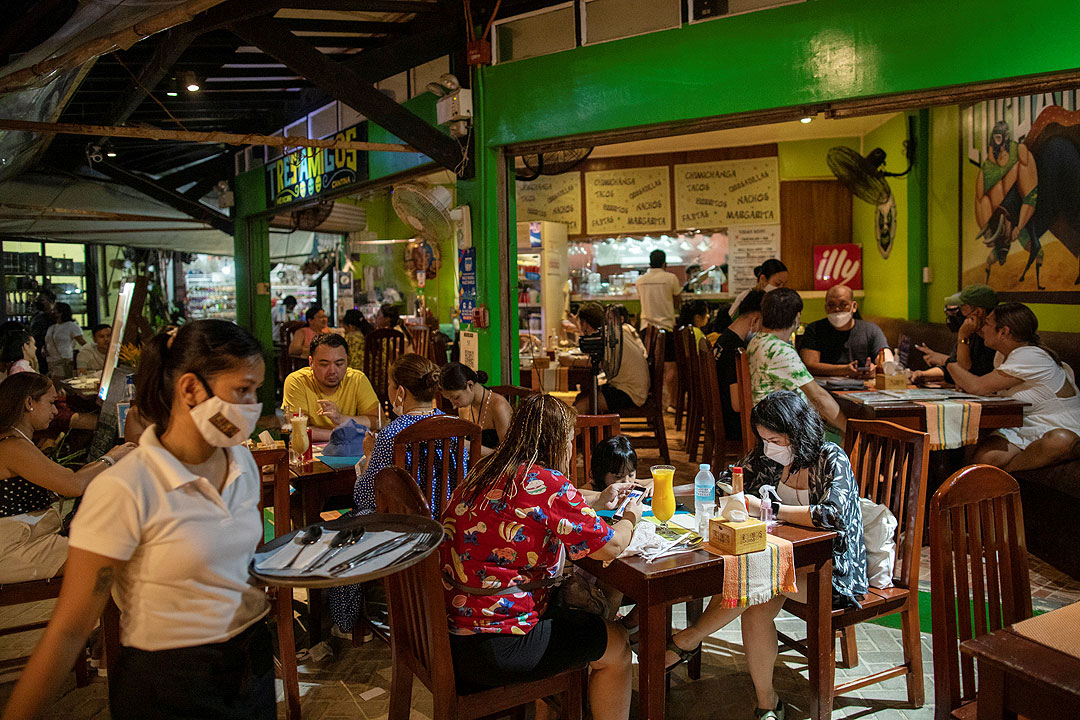
PEOPLE dine in a restaurant amid the coronavirus disease 2019 (COVID-19) outbreak in Boracay, Aklan on Nov. 30, 2021. — REUTERS

By Joseph L. Garcia, Reporter

ACTOR KEN CHAN confessed to pandemic woes that he and his co-actors felt when the coronavirus pushed the world into a standstill two years ago.

“It was too much,” he said via Zoom in Filipino. “The anxiety doesn’t go away. We always talked about it in our chat groups: What will happen to us? What will we do?”

Anxieties spawned by the pandemic spurred him to start new businesses, including several gas stations, a wellness center that sells massage chairs and finally, his childhood dream — a Christmas-themed restaurant called Café Claus.

The year-round Christmas theme comes from his childhood enthusiasm for the holiday, apart from a desire to counter negative feelings spawned by the global health crisis, he said.

With businesses closing left and right due to economic hardships, some still make an effort to thrive and survive.

Last year, Shakey’s, under Shakey’s Pizza Asia Ventures, Inc., opened 13 new stores in Metro Manila, which has been under the second-most relaxed lockdown status in a five-tier system. This brought the total in the capital region to 130 stores.

Under Alert Level 2, stores may operate at higher capacities ranging from 50% to 70% depending on whether these are indoors or outdoors.

The coronavirus has sickened about 3.7 million and killed about 56,000 Filipinos. Worldwide, more than 425 million have been infected and almost six million people have died.

“We pushed with expanding and opening new stores based on the strong demand for more Peri-Peri branches and the need for more delivery branches to ensure we cover the entire Metro Manila within 31 minutes,” Shakey’s President Vicente L. Gregorio said in an e-mail.

The pizza chain guarantees  31-minute delivery in Manila, the capital and nearby cities.

“We’ve always had the advantage of having developed multiple store model designs that allow us to achieve very fast ROI (return on investment) periods,” he said. “Our discipline in site selection and new store execution has been honed for some time already.”

The new pizza parlors were smaller and designed to handle off-premise business, Mr. Gregorio said.

Concerns about virus exposure have changed the way the restaurant industry maintains properties. For example, Mr. Chan’s Claus Café started using high-efficiency particulate air filters in their air-conditioners for added anti-COVID security, and more are arriving for two forthcoming branches in Eastwood and Greenhills.

They also have twice-weekly sanitation and fumigation and an eight-point sanitation checklist in the kitchen. “If you could go to our kitchen at night after closing, you can eat off the floor. It’s that clean,” said Ryan Kolton, Mr. Chan’s business partner.

“This pandemic has reminded us why we have always prioritized safety and hygiene in our operations,” Mr. Gregorio said. “The practices and playbooks that we adopted during this crisis will continue to form part of our arsenal in the way we execute in this very dynamic industry.”

“If you, on one hand, put the value of customer safety versus the value of construction, it’s a clear answer — it’s their safety first,” Mr. Kolton said.

The maxim that a restaurant is only as good as its last review can be modified for these times, he added. “You’re only as good as your last safe customer.”

“We’re not just dealing with what customers are experiencing in front of them — we’re trying to mitigate what they could feel inside,” he added.

More than keeping customers safe and satisfied, both of these restaurants are investing in their own employees.

Shakey’s Project NERDY (Near and Ready) was designed to ensure that workers are assigned to the branch closest to their homes, Mr. Gregorio said. “This not only makes it easier and safer to report to work, but it also gives them more time for their family and helps them save on costs,” he said.

As a result, the pizza chain adapted more quickly as many areas were locked down to contain the pandemic, he said. “It allowed us to show how we value and think of our employees’ well-being.”

In the past, workers who requested to be assigned near their homes were thought of as selfish and lacking dedication. That’s no longer the case now, Mr. Gregorio said, citing a so-called paradigm shift.

With the reassignments, more than 87% of employees now spend less than 30 minutes to reach a Shakey’s store, according to a company statement.

“We also learned that a lot can still be done remotely,” he said in an e-mail. “Extensive use of digital collaboration tools had kept productivity high despite the lockdowns. We intend to continue using these platforms when possible, to reduce transportation costs and minimize travel time.”

Shakey’s also lets its workers file their vaccination schedule as official business. Fully vaccinated staff are given tokens and included in an employee raffle to encourage them to take life-saving vaccines.

The company also has provisions for the vaccination of their employees’ dependents. All of its dine-in employees have been fully vaccinated against the coronavirus. Café Claus has also required its workers to get vaccinated.

Aside from the usual hazard benefits during the pandemic, Shakey’s employees are also connected to telemedicine services for contact tracing, PCR tests and random antigen testing. The pizza chain also encourages workers to avail themselves of free online psychological services.

“While we understand the need to focus on business recovery, we also believe that our team members’ safety and well-being should be our top priorities,” Mr. Gregorio said.

Café Claus also relies on weekly random antigen testing for their staff. The company had spent more than a million pesos on their workers’ insurance packages that also cover dependents, Mr. Kolton said.

“It’s a way for us, as the employers, to say that our employees are not just our employees; they’re family,” he said. “We care about them. They’re the backbone of this business.”

“We are grateful and feel blessed, seeing the way our team has adapted to the crises and continues to face and overcome the challenges,” Mr. Gregorio said. “Last but not the least, we are indebted to our guests who continue to patronize our brands during the difficult periods of the pandemic.”

Café Claus plans to keep its practices even after the pandemic ends, Mr. Kolton said. “It shows an extra level of care. These may not be the most cost-efficient or most frugal way, but it betters the community as a whole.”

European Union extends P1.7B in agriculture, climate grants for PHL

PHILIPPINE STAR/ MICHAEL VARCAS
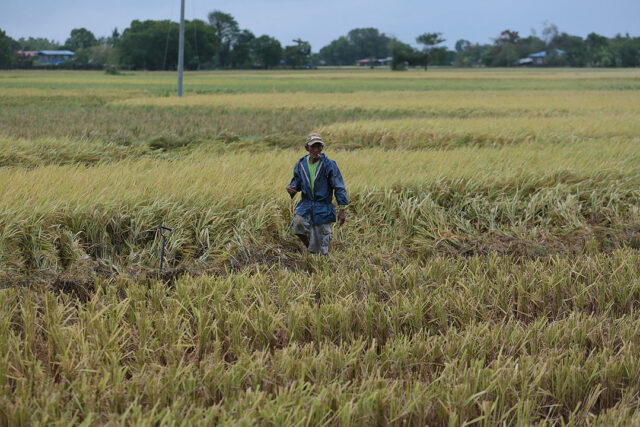
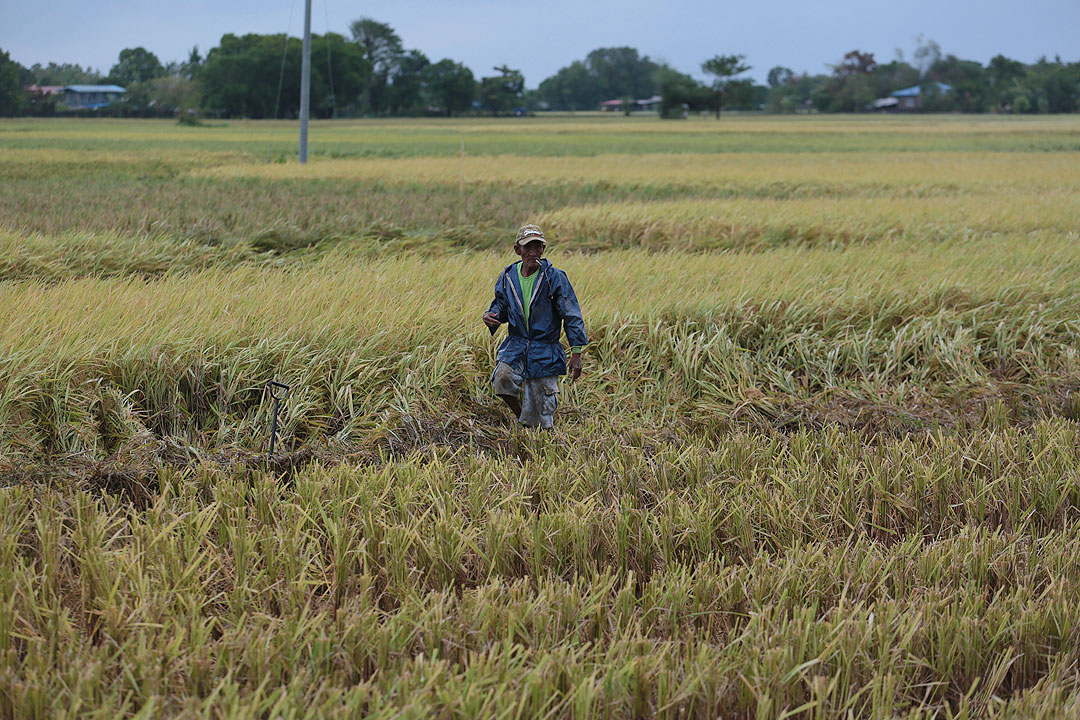
Rice fields were flooded when Typhoon Maring hit La Union, Oct. 12, 2021. — PHILIPPINE STAR/ MICHAEL VARCAS

THE EUROPEAN UNION (EU) agreed to grant €30.4 million (about P1.76 billion) to the Philippines to support agriculture and climate projects over the next few years.

The Department of Finance (DoF) and the EU delegation to the Philippines on Wednesday signed financing agreements for a €20.2-million (P1.17-billion) grant that will support agriculture businesses in the Bangsamoro region.

Set to start this year, the five-year grant will fund assistance to the agriculture business sector in BARMM (Bangsamoro Autonomous Region in Muslim Mindanao).

The program will help local farmers and cooperatives use integrated farming systems that will improve their ability to increase the quantity and quality of their produce.

The Bangsamoro Agri-Enterprise Program will also help set product standard quality systems for halal and sea-aqua goods.

“The program will improve the quality and diversity of local agricultural production to respond better to the needs of the market,” the EU said in a press release.

The aim is to help agriculture businesses in the region be recognized as attractive investment opportunities, and help them export products to Brunei Darussalam, Indonesia, and Malaysia. It also hopes to boost women’s participation in business and create employment opportunities.

“The EU will engage a technical assistance support service provider to work directly with local governmental bodies within the BARMM to improve their institutional capacities.”

The project will be rolled out with the help of international organizations that work on trade promotion, local technical institutes, university departments, quality control services, the private sector, and civil society organizations.

SATELLITE DATA
Meanwhile, €10.2 million (P591 million) will go to the three-year National Copernicus Capacity Support Action Program for the Philippines (CopPhil) that would develop space science and technology for use against climate change.

The project will work on reducing disaster risks and adapting to climate change using data from the EU Copernicus Earth Observation satellites and ground-based data collection.

“It will also support the Philippine government’s capacities for decision making and monitoring of policy implementation based on timely and accurate data,” the EU said through its external action service.

The CopPhil project aims to help the Philippines effectively manage its natural resources and make sure that local jobs are resilient against natural disasters.

The European Space Agency, the Department of Science and Technology and the Philippine Space Agency will implement the program.

The project may be replicated in other countries, especially if the data exchange done in the initial agreement is later scaled up at the regional level, the EU said.

“This will facilitate access to Copernicus data and development of applications, products and services from the Philippines for the benefit of government authorities and stakeholders in the highly disaster-vulnerable ASEAN and Asia- Pacific regions.”

The agreements were signed by Finance Secretary Carlos G. Dominguez III and European Union Delegation to the Philippines Ambassador Luc Veron. — Jenina P. Ibañez

Philippines places 119th in bribery risk matrix

By Revin Mikhael D. Ochave, Reporter

THE PHILIPPINES ranked 119th out of 194 countries globally in a matrix that measures the risk of businesses in experiencing public sector bribery.

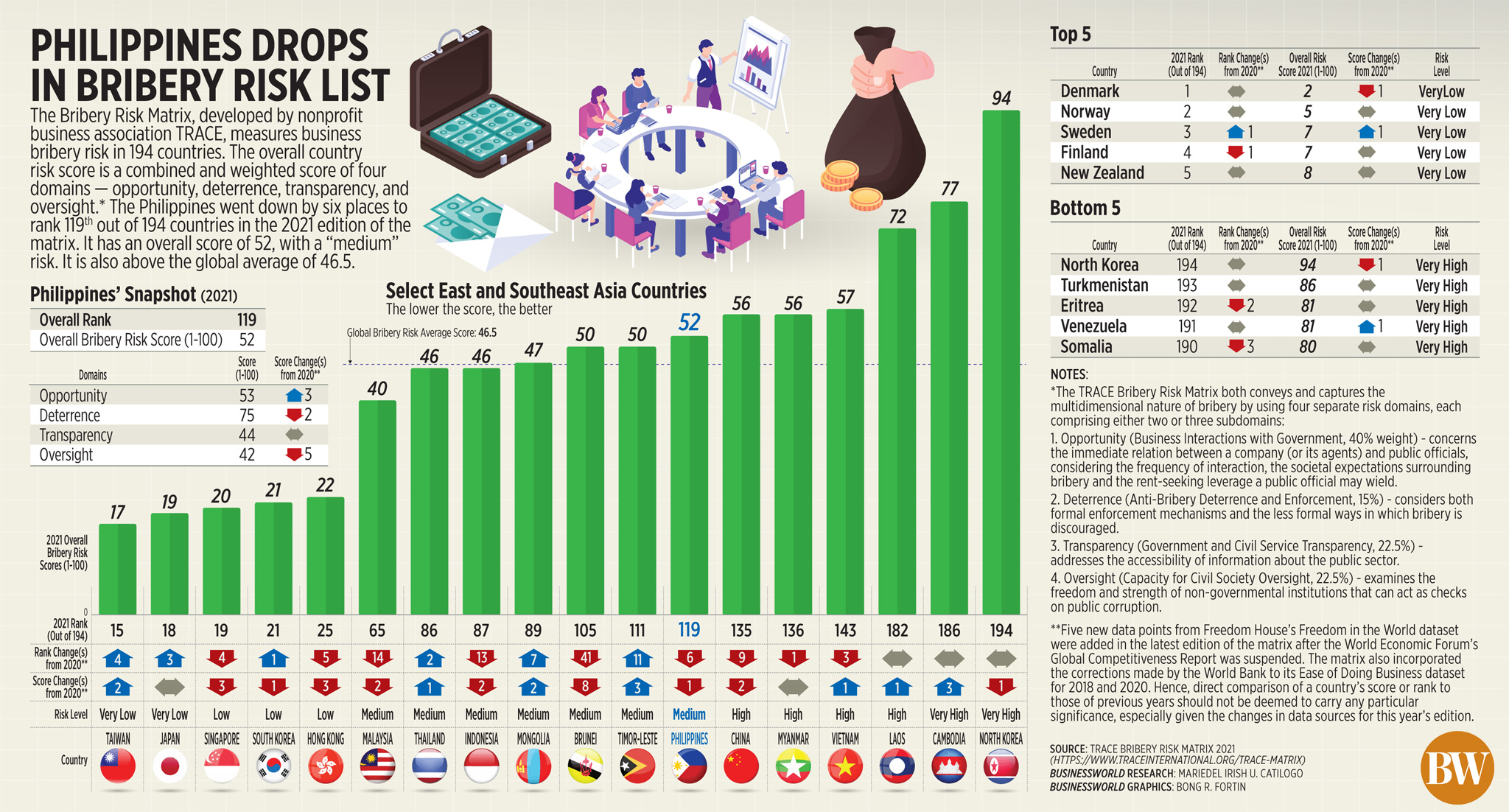
The 2021 Bribery Risk Matrix by United States-based business association TRACE showed the Philippines slipped six spots from 113th place in the previous report.

Based on the matrix, the Philippines has a “medium” risk level after getting an overall risk score of 52, lower than the previous year’s score of 51.

Philippines drops in bribery risk list

According to TRACE, the risk score ranges from 1 (lowest risk) to 100 (highest risk).  TRACE said the matrix is “designed to reflect our current best understanding of country-level bribery risk conditions worldwide.”

The Philippines lagged behind Taiwan (15th), Singapore (19th), Malaysia (65th), Thailand (86th), Indonesia (87th), Brunei (105th), and East Timor (111th).   

On the other hand, it placed higher than Myanmar (136th), Vietnam (143rd), Laos (182nd), and Cambodia (186th).   

TRACE said the matrix examines four areas that indicate potential business bribery risk: business interactions with government which looks at regulatory burden, expectation of bribes, and contact with government; anti-bribery deterrence and enforcement which looks at factors that deter bribery; government and civil service transparency which refers to regulations; and capacity for civil society oversight or the extent of press freedom and civic engagement.    

According to the matrix, the Philippines scored 53 in business interactions with government, 75 in anti-bribery deterrence and enforcement, 44 in government and civil service transparency, and 42 in capacity for civil society oversight.   

Zy-za Nadine Suzara, Institute for Leadership, Empowerment, and Democracy (I-LEAD) executive director, said in a mobile phone message that bribery and other forms of corruption in business and government interactions only thrive when there is lack of government transparency.

“A high degree of opacity in government prevents media and civil society from monitoring government transactions and processes. It is difficult to demand accountability from an administration that way,” Ms. Suzara said.   

Michael Henry Ll. Yusingco, a senior research fellow at the Ateneo de Manila University Policy Center, said in an e-mail interview that bribery is a complex problem which needs a lot of time and effort to address.   

“Bribery is one of the criminal acts that fall under the umbrella term ‘graft and corruption.’ This happens with the lowliest government official to even the highest public official in the land. This can come in the form of a direct and straightforward quid pro quo transaction. But sometimes it can also manifest through multi-layered and multi-party arrangements,” Mr. Yusingco said.   

“This is a very complex and deeply rooted problem. This will not be solved overnight. Getting rid of this problem, or at least lessening its pervasiveness in our politics and governance, is going to take a lot of time and effort,” he added.   

IBON Foundation Executive Director Sonny A. Africa said in a Facebook messenger chat that the country’s ranking should be “taken with a grain of salt.”   

“Placing in the bottom third of 194 countries will resonate with many dissatisfied with corruption in the country but over reading it may even distract from more basic socioeconomic problems or shut out possible solutions,” Mr. Africa said.   

“Fixing bribery without reforming the way the economy and social services is structured will not necessarily improve development outcomes,” he added.   

According to Ms. Suzara, the country can improve its performance in the bribery matrix by enacting the Freedom of Information (FOI) bill.   

“The next administration should go beyond the Duterte administration’s token measures on anti-corruption and institutionalize measures that would ensure open and transparent government. One concrete step towards that direction is to enact the FOI bill so that transparency and accountability can once again be the norms in governance,” Ms. Suzara said.   

For Mr. Yusingco, the Philippines can reduce bribery risk by accelerating the digitalization of government transactions, especially those that involve money.   

“The digitalization of government must be pursued relentlessly. The goal is to minimize face-to-face interaction between civil servants and the public. Transacting with government should now be done electronically as the norm subject only to a few exceptions,” Mr. Yusingco said.   

“Obviously, digitalization does not mean public service must become impersonal and unsympathetic. The public’s welfare is still paramount. But some transactions, especially ones that involve money, must now be done online,” he added.   

Further, Mr. Yusingco said people should not tolerate bribery at all, especially in government.

“This is very hard to do since people have been accustomed to ‘speeding up’ transactions with government agencies by paying off the right people. There must be a cultural shift in dealing with government agencies and that has to begin with citizens being strong in resisting bribery,” Mr. Yusingco said.

Shrinking fiscal space may be a risk in Asia, study shows

REUTERS

SHRINKING fiscal space may become a risk in Asia despite debt that has remained relatively sustainable, research from the Asian Development Bank (ADB) showed.

Georgetown University Professor Marcelo M. Giugale at a briefing on Wednesday said Asian debt is sustainable “for now,” noting that there are still some risks.

“The fiscal space has been shrinking, and is projected to continue shrinking,” he said. “It’s difficult to see how the reconstruction and the recovery will be funded.

Mr. Giugale is the editor of the ADB book, The Sustainability of Asia’s Debt, published on Feb. 17.

He expects two major trends in Asia in the coming years. The first is the retrenchment of expenditures related to the pandemic, including subsidized loans.

“The second retrenchment is monetary,” he said. “That retrenchment will not be painless. We’ll see it in housing — the cost of mortgages. We’ll see it in consumer credit.”

He said debt sustainability will be the dominant global issue post-pandemic.

“Asia has been borrowing fast, extremely fast,” he said. “That was before the pandemic. The pandemic made it a lot worse.”

The Philippines had “limited” fiscal space leading up to the pandemic, showing the sustainability levels of its fiscal position as it responds to coronavirus-related shocks, the ADB book showed.

The book classified the Philippines — along with Myanmar, Bangladesh, Indonesia, among others — as having limited fiscal space. These countries had a fiscal sustainability gap between -2% and 2% of their gross domestic product (GDP) in 2019.

The fiscal sustainability gap, or the difference between the overall fiscal balance and what is needed to stabilize debt-to-GDP ratio, is a key measure of fiscal space, IMF economist Andrea F. Presbitero said in the book.

This fiscal space indicates the capacity of countries to deal with the impact of unexpected shocks, including that of the coronavirus disease 2019 (COVID-19).

“Our analysis shows that developing countries have to deal with the current crisis starting from a weaker fiscal position than they had before the global financial crisis,” Ms. Presbitero said.

“However, Asian developing countries are in a better position than other developing countries, thanks to a more prudent fiscal policy in recent years.”

Countries with “high fiscal space” like Cambodia have a gap over 2% of GDP. On the other hand, countries with no fiscal space like India and China have fiscal sustainability gaps less than -2% of GDP.

For developing countries with no fiscal space, debt relief and higher concessional lending could help reduce debt and improve fiscal space, Ms. Presbitero said.

“Countries with fiscal space could instead develop a prudent borrowing strategy to preserve public investment plans also in the short term, by diversifying their financing sources.”

The Philippines ended 2021 with P11.73 trillion in outstanding debt, up by almost 20% year on year and pushing the country’s debt-to-GDP ratio to 60.5%.

The Department of Finance (DoF) is preparing a fiscal consolidation plan as it transitions to the next administration, but has not yet shared details.

The Institute of International Finance’s global debt monitor said $10 trillion in global debt was added last year, bringing the total figure to a record $303 trillion.

“While the pace of accumulation slowed in 2021, emerging market government debt levels remain elevated,” the report said.

For the Philippines, government debt as of the fourth quarter last year represented the equivalent of 58% of GDP, higher than 51.7% a year earlier.

Households represented 15.7%, while corporations accounted for 32.1%. The financial sector represented 10.4%. — Jenina P. Ibañez

PHL climbs six notches on download speed ranking 

PHILIPPINE STAR/ MICHAEL VARCAS

OVERALL mobile download speeds in the Philippines had increased to 15.1 megabits per second (Mbps) in the last quarter of 2021 from 7 Mbps in the first quarter of 2019, or before the adoption of fifth-generation (5G) network, according to UK mobile analytics company Opensignal Ltd.

Out of 100 global markets, the Philippines ranked 67th at the end of the fourth quarter last year in terms of 5G’s impact on the mobile network experience, better than the 73rd ranking in the first quarter of 2019.

Countries with the highest download speeds in the 5G era were South Korea (129.7 Mbps), Norway (78.1 Mbps), The Netherlands (76.5 Mbps), Canada (64.1 Mbps), and Switzerland (62 Mbps).

The Philippines was followed by Indonesia and Peru in the ranking at 14.4 Mbps, Kazakhstan (13.9 Mbps), Chile (13.8 Mbps), Malaysia (13.5 Mbps), Colombia (13.1 Mbps), and India (13 Mbps).

Countries with the worst download speeds in the 5G era were Afghanistan (2.8 Mbps), Sudan, (4.7 Mbps), Cameroon, (6.1 Mbps), and Somalia (6.2 Mbps).

According to Opensignal, most countries that saw the greatest increase in average download speeds were either “earlier or later” 5G markets.

The Philippines is among the earlier markets, where there was an increase of 8.2 Mbps between the first quarter of 2019 and the fourth quarter of 2021.

Globe Telecom, Inc. launched its 5G service in the Philippines in June 2019, while PLDT, Inc. launched its own the following year.

Opensignal said, however, that the best of 5G experiences has yet to come.

“We expect speeds to rise considerably as more 5G spectrum becomes available for use, even in markets that already offer 5G,” it said.

“Responsiveness will improve with updated 5G technology. Networks will support many more devices simultaneously. Reliability should be boosted,” it added.

On games experience, Opensignal said that users in most markets have yet to feel the impact of 5G. But the Philippines ranked 66th, with 41.2 Mbps, at the end of 2021 across 100 global markets, a big jump from 86th at the start of 2020.

Countries with the best games experience were South Korea (88.5 Mbps), The Netherlands (85.5 Mbps), Czech Republic (83.8 Mbps), and Denmark (79.9 Mbps).

Meanwhile, countries with the worst games experience in the 5G era were Uganda (29.8 Mbps), Afghanistan and Zimbabwe (30.3 Mbps), and Madagascar (30.6 Mbps).

“Current 5G networks based on the initial 5G standards do not significantly improve the characteristics of mobile services that underpin a great real-time multiplayer gaming experience,” Opensignal said.

“Notably, a great games experience requires a combination of low latency, little packet loss and low jitter among other characteristics,” it added.

Opensignal noted that for now, most 5G services use early versions of the 5G. “There are already several versions of 5G either at various stages of development or which have been finalized and will soon see widespread commercial deployments.”

Meanwhile, in its “Global Mobile Network Experience Awards 2022” report, a ranking of the world’s mobile network operators on the real-world user experience they provide, Opensignal saw Globe being a “global rising star” in terms of video experience, voice app experience, download speed experience, upload speed experience, and fourth-generation (4G) availablity.

PLDT’s Smart Communications, Inc. was also a global rising star in video experience, games experience, voice app experience, and download speed experience.

Opensignal said that users of Globe reported the second largest percentage increase (6.6%) in 4G availability in the Asia-Pacific region between the second half of 2020 and the same period of 2021.

Meanwhile, Smart users saw the greatest percentage improvement in their games experience between the first six months of 2020 and the same period last year — an increase of 42.9%, followed by Smartfren in Indonesia (26.9%), India’s Jio (20.5%), and Taiwan’s GT (16.7%).

“Smart takes third position globally in terms of percentage improvement in voice app experience with a rise of 19.4% ahead of Globe. However, Globe is also a global rising star in this category with a respectable increase of 8.6%,” Opensignal noted.

Hastings Holdings, Inc., a unit of PLDT Beneficial Trust Fund subsidiary MediaQuest Holdings, Inc., has a majority stake in BusinessWorld through the Philippine Star Group, which it controls. — Arjay L. Balinbin

PetroEnergy to focus on solar, offshore wind farms

RAWPIXEL.COM-FREEPIK
RAWPIXEL.COM/FREEPIK

PETROENERGY Resources Corp. targets to add 400 megawatts (MW) to its portfolio in the next three to four years, while it plans to build three offshore wind farms in the long term, a company official said.

“In the next one to two years, we will add 100 MW of new solar projects and another 300 MW in the next three to four years, while in the long term we are betting on offshore wind because of the advantages of the offshore wind in scaling up the renewable energy generation,” said PetroEnergy Vice-President Francisco G. Delfin during the Rizal Commercial Banking Corp. (RCBC) virtual forum on sustainability on Wednesday.

In December, the Energy department endorsed to the grid operator three offshore wind projects of PetroEnergy subsidiary PetroGreen Energy Corp. for a study on their impact on the power grid system. These projects will be In Northern Luzon, Northern Mindoro, and East Panay.

The company, through its subsidiary PetroWind Energy, Inc., has the 36-MW Nabas-1 wind project, which started operations in 2015.

Mr. Delfin added that offshore wind energy projects are more flexible as they do not have limitations on size and accessibility unlike solar and geothermal projects.

He said the company is considering partnering with financial institutions and other companies for the wind farms as these are costly.

Energy Undersecretary Felix William B. Fuentebella said the country holds a potential 178 gigawatts of offshore wind energy.

He also said he is confident that government would achieve its goal of having 35% of the country’s energy mix sourced from renewables by 2030.

“However, there will be lot of improvements and a lot of things that need to be synergized. That’s why we are urging the grid operators to comply to their contracted requirements because we need them to contract as the secondary price gaps in the wholesale electricity spot market are too low,” he said.

“Contracting is the key to shield us form the volatility of prices,” he added.

Mr. Delfin said PetroEnergy is also planning to expand its 32-MW Maibarara geothermal power plant, but this will take a back seat as the company’s priority is its new solar and offshore wind projects.

On Wednesday, shares in PetroEnergy rose by two centavos or 0.47% to close at P4.30 each. — Marielle C. Lucenio

AG&P books floating storage for LNG import terminal

ABU Dhabi National Oil Co. Logistics and Services will provide a containment vessel for the import terminal from its fleet of eight LNG ships.

ATLANTIC, Gulf & Pacific International Holdings Pte. Ltd. (AG&P) on Wednesday announced the signing of a 15-year contract with an Abu Dhabi company to charter a 137,512-cubic meter storage vessel for its liquefied natural gas (LNG) import terminal project in Batangas Bay.

In a media release, AG&P said Abu Dhabi National Oil Co. Logistics and Services (ADNOC L&S) will provide a Japan-built, moss-type containment vessel as a floating storage unit (FSU) for the import terminal from its fleet of eight LNG ships.

“We are privileged to have ADNOC [L&S], a foremost global leader in LNG logistics, as our partner to transition the Philippines to cleaner fuel through AG&P’s Philippine LNG import terminal,” said Joseph Sigelman, the AG&P group’s chairman and CEO.

The chartered vessel will be part of the company’s offshore/onshore terminal with an initial storage capacity of five million tons per year, allowing it to provide LNG supply in extreme weather conditions.

The FSU will be commissioned along with the operations of the first phase of the LNG import terminal in July.

ADNOC L&S CEO Abdulkareem Al Masabi said that by providing AG&P a storage solution it is also extending the operational life of its asset, which can lead to growth opportunities for the logistics company.

“Our project with AG&P in the Philippines will contribute to the economic growth of the country by leveraging the potential of clean LNG for power generation,” he added.

Alexander P. Gamboa, managing director and global head of business development Atlantic, Gulf & Pacific Company of Manila, Inc., said in an interview with BusinessWorld on Friday that the company is “all hands on deck” in rushing the completion of the integrated LNG terminal in Batangas.

He said the project would help provide energy security in the country.

“This essentially replaces Malampaya. The terminal will not only supply Korean Electric Power Corp.’s 1,200-megawatt (MW) power plant in Ilijan, Batangas, but will also supply LNG to the 1,300-MW power plant of the SMC Global Power Holdings Corp., which will be built beside the terminal,” he said. — Marielle C. Lucenio

Sudden Fed hikes seen leading to volatile market

THE US Federal Reserve’s interest rate hike could result in volatility across the globe, an analyst said, adding that the market is already pricing in a series of rate increases until the end of the year.

“It remains to be seen, but my initial impression is that this could have a knee-jerk negative reaction on our risk assets, stocks, and also bonds as the Fed will show that they are committed to have a more frequent rate hike path,” SB Equities, Inc. Research Head Angelo B. Taningco said in a BusinessWorld Insights webinar on Wednesday.

He said the market is pricing in seven rate hikes, one for each of the Federal Open Market Committee meetings until yearend. The market is also pricing in a 50-basis point hike in March.

In the US market, the eventual Fed interest hike has already been priced in, Mr. Taningco said.

However, he said “there’s still potential volatility in the sense that the market is still blind when it comes to the other side of monetary tightening, which is the balance sheet reduction.”

“As we know, the Fed has expanded its balance sheet close to $9 trillion already with purchases of government securities and that has to be reversed in order to also contain inflation so we do not know yet to what extent, how much the balance sheet reduction will be,” Mr. Taningco said.

“If it surprises the market, then we’ll have another bout of volatility, which could reverberate across emerging markets as well,” he added.

Meanwhile, Investagrams Chief Marketing Officer and Co-Founder John Michael Lapiña said more foreign funds should come into developing countries, including the Philippines, Vietnam, and Thailand.

He said the country could also attract more foreign investments if it is more lax with foreign investors. He said there is also “a need to list more companies in the market” as the country is behind in terms of the number of listed firms.

“For the country to really grow the exchange, to really grow the market, we need to put in more volume coming from foreign institutions… we need to make it more attractive to them, for us to have a really stable growth,” Mr. Lapiña said. — Keren Concepcion G. Valmonte