Home Blog Page 6699

Manila Water earnings up 6% at end-September

MANILA Water Co., Inc. reported a 6% year-on-year increase in its net income to P3.39 billion for the first nine months of the year on the back of higher contribution from its international affiliates and some domestic units.

The listed water provider said in a disclosure on Thursday that total revenues for the January to September period dropped by 5% to P15.28 billion compared to P16.07 billion last year.

“On a group level, the revenues declined due to lower billed volume in the east zone concession and in several domestic subsidiaries, with the continuing impact of the coronavirus disease 2019 (COVID-19) restrictions be-ing felt across the company’s customer base,” Manila Water said.

“This decline in revenues was partially offset by the strong performance from the international affiliates, with equity share in net income of associates growing by more than four times versus last year to P486 million,” the com-pany added.

Manila Water’s costs and expenses for the nine-month period stood at nearly P6.2 billion, 7% higher compared to a year ago, due to an increase in business and operating activities, which were suspended during the enhanced community quarantine last year.

“This increase was partially offset by lower power and chemical costs in line with lower production during the period, as well as the 40% decline in provision for income tax with the adoption of Republic Act No. 11534 or the Corporate Recovery and Tax Incentives for Enterprises (CREATE) Law,” the listed water firm said.

For its east zone water concession, Manila Water said it recorded 4% decline in billed volume in the period due to lower consumption in the commercial and industrial segments amid COVID-19 mobility re-strictions.

The water firm added that its east zone concession executed nearly P7-billion worth of projects for the period, which are mainly for wastewater expansion, network reliability, and water supply under its service improvement plan.

Meanwhile, Manila Water said the growth of Manila Water Asia Pacific (MWAP) and Manila Water Philippine Ventures (MWPV) offset the decline in its east zone concession.

“Specifically, growth in MWAP came by way of a higher equity share in the net income of associates, notably from East Water (Thailand), Thu Duc Water (Vietnam), and Kenh Dong Water (Vietnam). This was coupled with the additional contribution from the management, operations, and maintenance contract with the National Water Co. in the Kingdom of Saudi Arabia,” Manila Water said.

“The improvement in contribution of MWPV was driven by the good performance of its domestic subsidiaries for the period, such as Laguna Water and Clark Water,” it added.

J.V. Emmanuel A. De Dios, Manila Water president and chief executive officer, said the company is hopeful that water consumption will increase with the easing of quarantine restrictions, the coming holiday season and the further opening of the economy.

“Despite the challenges brought about by the pandemic, we are also extremely excited with the addition of the Pangasinan bulk water project to our local ventures as well as the second water contract for the Eastern Cluster in the Kingdom of Saudi Arabia,” Mr. De Dios said.

“These twin developments are perfectly aligned with Manila Water’s vision of being recognized as a global Filipino company in the field of water and wastewater services,” he added.

Manila Water provides water and wastewater services in the eastern part of Metro Manila, which includes Marikina, Pasig, Taguig, Makati, San Juan, Mandaluyong, portions of Quezon City and Manila, and Rizal province.

On Thursday, shares of Manila Water at local bourse dropped by 2.20% or 55 centavos to close at P24.50 apiece. — Revin Mikhael D. Ochave

DBM says 2021 budget release rate tops 97%

THE DEPARTMENT of Budget and Management (DBM) said it had released 97.4% of the 2021 budget at the end of October.

Allotment releases hit P4.39 trillion after 10 months, compared with the P4.5 trillion due for release this year.

That leaves the DBM P115.57 billion to release in the last two months of the year.

Releases to government agencies hit P2.496 trillion representing 94.6% of the P2.637 trillion allotted for them. This leaves DBM P141 billion to release for the rest of this year.

Meanwhile, releases for special purpose funds — allocations for specific socioeconomic uses — totaled P387.12 billion, or 88% of the P440 billion allotment for the year.

Special-purpose funds include budget support to local government units, the Contingent Fund, the Miscellaneous Personnel Benefits Fund, and the National Disaster Risk Reduction and Management Fund.

Automatic appropriations releases totaled P1.24 trillion for an 86.6% release rate.

These appropriations include retirement and life insurance premiums, the Internal Revenue Allotment, block grants and interest payments.

The DBM also released P270.12 billion from last year’s budget.

Government spending increased 13.6% in the third quarter, higher than the 5.8% growth posted a year earlier, the Philippine Statistics Authority said.

Government spending had declined by 4.2% in the second quarter — the first since the 2.1% fall in the first quarter of 2017.

The Senate is currently tackling the proposed P5.024-trillion national budget for 2022, which has been approved by the House of the Representatives. — Jenina P. Ibañez

Ayala chair joins Temasek’s board

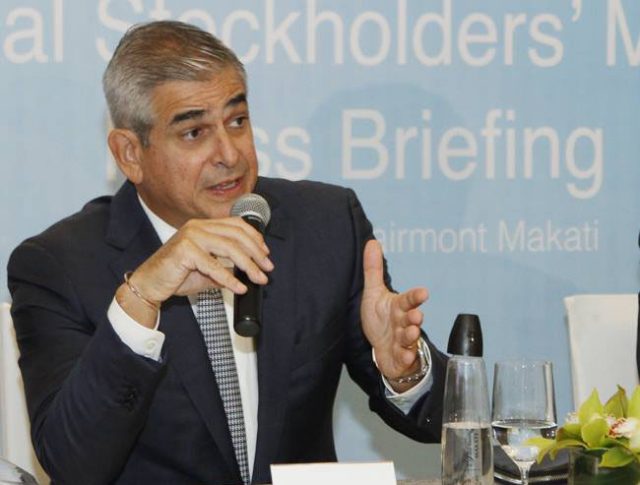
AYALA CORP. Chairman Jaime Augusto Zobel de Ayala was named as one of the newest directors of Temasek Holdings Ltd., an investment company in Singapore with a focus on “sustainable solutions.”

In a statement dated Nov. 10, Temasek said the appointments came after retirements in the last two years. Mr. Zobel will also be joined by Tan Chee Meng SC, who is the deputy chairman of what is said to be one of the Lion City’s largest law firms, WongPartnership LLP, and a director at Ausnet Services Ltd.

“Jaime and Chee Meng are pre-eminent leaders in their fields and professions. However, beyond their professional areas, they are both deeply committed to their communities, which is important to Temasek given our wider stewardship role,” said Lim Bong Heng, chairman at Temasek.

Temasek said the two will be joining its board beginning Jan. 1 next year, along with GGV Capital Managing Partner Jenny Lee.

“Together with Jenny, who joins the Board on the same day, we look forward to the contribution each of these leaders will make to the future development of our firm,” Temasek said.

Temasek describes itself as a firm that “actively seeks sustainable solutions to address present and future challenges, as it captures investible opportunities to bring about a sustainable future for all.” — K.C.G. Valmonte

Tech seen requiring robust competition policy

PHILIPPINE COMPETITION policy needs to be geared towards confronting major digital companies and head off monopolies that could worsen the digital divide, an Asian Development Bank (ADB) think tank said.

ADB Institute Dean and Chief Executive Officer Tetsushi Sonobe said large-scale mergers among digital companies are causing a digital divide by destroying the business of other service providers and causing exorbitant pricing that excludes many consumers from accessing services.

“We need to confront big tech to save domestic consumers, firms, workers, and freelancers,” he said at a forum organized by the Philippine Economic Society Thursday. “We need to strengthen the capability of competition agencies.”

Digitalization, Mr. Sonobe said, must level the playing field and be accompanied by social safety nets to ensure most people better off.

Leveling the playing field translates to investment in digital literacy and digital infrastructure, while social safety nets are targeted towards industries that lose out due to digitalization, he said.

But Mr. Sonobe also noted that the behavior of digital platforms are sufficient on their own to cause a digital divide.

The European Union, he said, has investigated Google’s alleged abuse of its dominant position in the market, and is working to force big technology companies to share customer data with smaller competitors.

Google recently lost an appeal against a $2.8-billion antitrust decision against the EU, which fined the company after Google used its own price comparison shopping services to unfairly gain an advantage against European firms, Reuters reported.

The Philippine Competition Commission (PCC), Mr. Sonobe said, can work with counterparts in other countries and multilateral agencies to strengthen its capability to confront big technology.

“We need to increase awareness of consumers, firms, workers, freelancers and policymakers and then we review the competition policy of the country, maybe strengthen the competition policy, competition law.”

Meanwhile, PCC Commissioner Arsenio M. Balisacan at the same event said improvements in information and communications technology competition have been made in the Philippines, including the entry of a third telecommunications player.

But he said that further reforms are needed, including the streamlining of permit requirements to deploy broadband equipment and restructuring spectrum user fees, which he added would encourage investment. — Jenina P. Ibañez

Women bag top awards in Tokyo Film Fest

Kaltrina Krasniqi’s Vera Dreams of the Sea

FEMALE-LED films by female directors reigned at the 34th Tokyo International Film Festival (TIFF) after bagging top awards in the main competition section.

An Albanian film about a woman taking on a male-centered world after her husband’s suicide was named the winner of the Tokyo Grand Prix, while a Romanian film about a mother looking for her daughter who was kidnapped by a Mexican cartel won the Special Jury Prize at the festival.

Kaltrina Krasniqi’s Vera Dreams of the Sea was described as a “touching portrait of a woman grappling with the death of her husband and a commentary into the structures of patriarchy that strangles those who do not partici-pate in the deep-set rules of the game set by men,” by French actress Isabelle Huppert, jury president, during the awards ceremony held on Nov. 8. This is Ms. Krasniqi’s debut feature.

Meanwhile Teodora Ana Mihai’s La Civil was a film that “[explored] the devastating effects of the cartels in Mexico,” said jury member, film producer and curator Lorna Tee.

“The director and scriptwriter have masterfully crafted a narrative that gives us complex characters and everyone is complicit in the unending cycles of violence and loss. It is an accomplished first feature by a director not afraid to give us a film based on true stories that had taken many lives in a country torn apart by drugs and violence,” she added.

Teodora Ana Mihai’s La Civil

This is also Ms. Mihai’s debut feature. It previously won the Prize of Courage in the Un Certain Regard Section at the 2021 Cannes Film Festival.

Eight of the 15 main competition films of this year’s hybrid festival were films about women struggling against the patriarchy.

“In the past, a folkloric view of cultures has often been prevalent in world cinema, but this was not the case in Tokyo this year. The competition gave us many portrayals of women,” Ms. Huppert said in a statement. “The pro-tagonists… all face overwhelming difficulties… yet it is very striking that none of the protagonists is shown as a victim. Each of these women becomes able to recognize and confront her enemy.”

A MORE INTERNATIONAL TOKYO INT’L FILM FEST

After its 10-day run, this year’s TIFF set the stage for the future of one of the most prestigious film festivals in Asia. It was a year of changes — from changing the venue from the Roppongi to Hibiya, introducing a hybrid program, and the introduction of a new programming director — meant to “internationalize the festival,” according to TIFF chairman Hiroyasu Ando.

“I would like to bring in more film people and film critics and journalists from abroad and mix with the Japanese counterparts… so that people can come up with co-productions and exchanges of comparing the reviews, etc.,” Mr. Ando told reporters during a roundtable interview held via Zoom on Nov. 5.

He pointed out that in previous years, the “internationality” of the festival was, “frankly speaking, not so strong and remarkable,” which was the reason for the sweeping changes made to the festival.

Moving from Roppongi, where the festival had been held for years, to the Hibiya area, Mr. Ando said, was also to appeal to a wider public.

“The Hibiya-Yurakucho-Ginza district has been called a town for cinema and theater… that’s one of the many reasons (for the shift),” he explained.

The hybrid program will also continue as the online component is “quite useful” and “can appeal to many people in foreign countries,” Mr. Ando remarked. — contributed by ZB Chua


Tokyo International Film Festival winners Competition Section

Tokyo Grand Prix, The Governor of Tokyo Award: Vera Dreams of the Sea by Kaltrina Krasniqi
Special Jury Prize: La Civil by Teodora Ana Mihai
Award for Best Director: Darezhan Omirbaev (Poet)
Award for Best Actress: Julia Chávez (The Other Tom)
Award for Best Actor: Amir Aghaee, Fatih Al, Baris Yildiz, Onur Buldu (The Four Walls)
Award for Best Artistic Contribution: Crane Lantern by Hilal Baydarov
Audience Award: Just Remembering by Matsui Daigo
Special Mention: Just Remembering by Matsui Daigo
Asian Future section
Asian Future Best Film Award: World, Northern Hemisphere by Hossein Tehrani
Amazon Prime Video Take One Award: Sunday & Calm Sea by Kim Yunsoo
Amazon Prime Video Take One Award Special Jury Prize: Under the Bridge by Sangoumi Midori

Banks should have safeguards vs risks from use of blockchain

BW FILE PHOTO

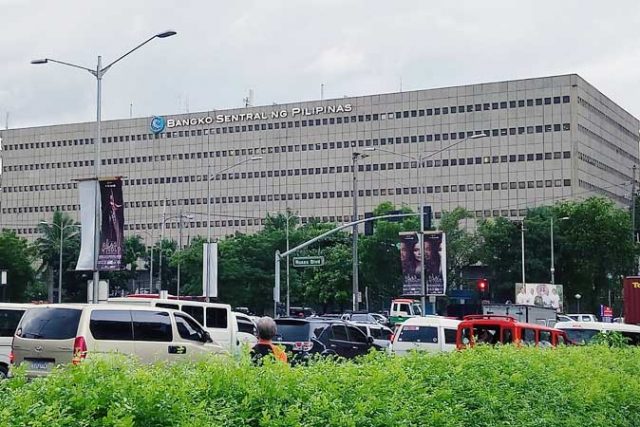
The Bangko Sentral ng Pilipinas (BSP) supports banks’ use of blockchain technology to make processes more efficient, but said there should be safeguards against risks like money laundering.

“We support that because it will make services more efficient, less costly, and it will broaden the reach of financial services. In fact, I know it (blockchain technology) has been adopted by some rural banks,” BSP Governor Benjamin E. Diokno said at a virtual forum organized by the Philippine Economic Society on Thursday.

“But we have to make sure that it does not become a tool for concerns like money laundering, for example. We have to balance, but we welcome any innovation that will make the system more efficient, less costly, and more sustainable,” he added.

Mr. Diokno said the BSP wants to enable industry players to pursue innovative products without compromising financial stability, cybersecurity, data integrity and consumer protection.

“By balancing innovation openness with the pursuit of safeguarding consumer protection, cybersecurity and financial stability, the BSP aims to develop the public’s trust in the financial system, thereby promoting financial inclusion, narrowing the social and economic gaps among Filipinos, and paving the way for an inclusive economic recovery,” he said.

He noted the central bank’s sandbox or test-and-learn approach allows prudential assessment of innovative financial products prior to actual deployment or live production.

Blockchain makes use of fully digital and decentralized ledgers to record transactions. This distributed ledger also serves as the platform where virtual currencies are transacted.

The storage units used in blockchain are continuously updated and secured using cryptography, making data management and other data-driven processes decentralized, tamper-proof and more transparent.

Use cases in the financial industry that involve blockchain technology include fraud reduction, Know-Your-Customer processes, trading platforms, and even payments.

Among local lenders that have tapped blockchain is UnionBank of the Philippines, Inc., which launched a cross-border remittance service for local rural banks using the technology in 2019.

The Aboitiz-led lender’s upcoming innovation campus in Laguna will also house, among others, an institute that will focus on blockchain. — LWTN

Facing a boom without workers, Australian employers deploy bonuses and raises

SYDNEY — As closed borders intensify a skills shortage, demand for Australian mergers and acquisitions lawyers is so high that firms are offering sign-on bonuses for the first time in 15 years and have nearly doubled recruiting fees.

Firms are also reviewing salaries twice a year and have raised base pay by up to 15% as they try to avoid losing workers amid record-high demand for the industry’s services, people in the hiring process said.

“I had sign-on bonuses for nearly every deal in 2007 and this is very much like that, and actually probably more is required in this market to compete for those candidates,” said Belinda Fisher, a legal industry recruiter who has raised her fee from 18% to 30% of a placed lawyer’s salary.

The measures reflect a sense of desperation among Australian employers as a sharp increase in demand for some services — from M&A law to data analytics to hospitality — runs headlong into a workforce thinned out by two years of closed borders.

Demand for skilled technology workers, for instance, has soared as pandemic-related movement restrictions jolted the world into conducting business online. But the shortage has been especially pronounced in Australia, where immigration remains on hold.

Job ads are 54% above pre-pandemic levels, but the number of job applications is down about the same amount, according to jobs website SEEK, just as Australia’s economy reconfigures itself to cope with supply chain blockages and a requirement to automate many aspects of trade.

People in fields seen as essential to the changed conditions — data management, business intelligence, cybersecurity, talent acquisition — can expect salary increases of up to 20% thanks to demand, according to recruiter Robert Half.

“We’re finding ourselves talking to our clients about how they can retain staff because in many ways the cost of replacement is more,” said Andrew Brushfield, Robert Half’s Australia director. “If employers don’t have their back yard sorted, employees are leaving.”

Increasing pay is the main way to attract and keep staff, but flexibility in working at home was a close second, he added.

Wild Tech, a Sydney operator of cloud-based business software, is offering a A$10,000 sign-on bonus for the first time because of the “tight labor conditions we’re experiencing,” said Managing Director Grant Wild. “I haven’t seen (sign-on bonuses) used this way, having worked 25 years in the technology space.”

‘BRAIN DRAIN’

Though Australia opened its borders this month to vaccinated citizens, recruiters say the difficulty of finding and keeping personnel may worsen in 2022 as workers shake off some of the world’s longest COVID-19 lockdowns and look abroad.

About 2 million of Australia’s 25 million population postponed applying for or renewing a passport since early 2020, but the number of applicants is now doubling every two months, a Department of Foreign Affairs and Trade spokesperson said.

“Without question we’re going to see a brain drain to major markets around the world as some of the younger people in an earlier stage of careers really do try and soak up some of that pent-up demand,” said Jason Johnson, a recruiter for white-collar jobs.

Johnson added that one fifth of the executives on his books have in recent months said they would consider positions abroad instead of staying home.

Hospitality companies in Britain, the most popular destination for Australians working abroad, are battling their own labor shortage caused by the country’s exit from the European Union. Many are offering flights, accommodation and even European tours for Australians willing to move, said Nick Hare, founder of UK Pub Co., which arranges industry jobs for Australians in Britain.

“The rush for the exit is certainly there,” he said. — Reuters

Emperador nets P7.9 billion

EMPERADORBRANDY.COM

LISTED brandy and whisky manufacturer Emperador, Inc. said its net income to owners “normalized” in the nine-month period and already “matched” its full-year P8-billion earnings in 2020.

The company posted a 35% net income growth year on year to P7.9 billion, while its topline grew by 11% to P38.4 billion, it said in a disclosure to the local bourse.

“We are extremely delighted with our performance in spite of challenges in global logistics as well as the hard lockdown in the Philippines in the third quarter of 2021,” Winston S. Co, president and chief executive officer of Em-perador, said.

Emperador said its international business “continues to do well” in Asia, Canada, Spain, the UK, and the US.

Its whisky business likewise showed strong results in North America, Europe, and including Asia, thanks to demand in China.

Emperador’s products are on the shelves in over 100 countries across six continents.

“We are confident that 2021 will be another banner year for Emperador,” Mr. Co said. “As economies open up, we look forward to an even better 2022.”

Emperador shares on Thursday went up by 1.10% or 20 centavos to close at P18.38 apiece. — Keren Concepcion G. Valmonte

The way old friends do

FANS long dreamed for the Swedish pop group ABBA to make a comeback, yet never really expected it. While all four members have reunited for public appearances, such as at the Swedish premiere of the film adaptation of Mamma Mia! in July 2008, they never made new music or performed together. But now, finally, for the first time in 40 years, ABBA has released a new album and will be going on tour.

Even after going their separate ways in 1982, the Swedish pop group’s music remained, enjoyed by old and new fans globally, with nearly 400 million albums sold worldwide, garnering 17 No. 1 songs. In 2010, the group was in-ducted to the Rock & Roll Hall of Fame.

Now in their 70s, the members of ABBA returned to the studio, with Benny Andersson and Björn Ulvaeus again writing and producing songs which were recorded by Agnetha Fältskog and Anni-Frid “Frida” Lyngstad.

The 10-track album opens with “I Still Have Faith in You,” one of the singles launched in September. While it carries an optimistic message of their comeback, with lyrics: like “Do I have it in me? I believe it is in there,” the track is a rather mellow opening compared to their previous albums that began with upbeat tunes. The other new single, “Don’t Shut Me Down,” which comes in as the fourth song on the album would have been better opening to hook the listener into enjoying more dance tunes.

The 1970s disco style returns in “When You Danced with Me,” “No Doubt About It,” and “Just a Notion,” the later an unreleased track from 1978.

Then there is, “Keep an Eye on Dan,” which, despite being a danceable track, narrates a devastating event in the life of a divorced couple who are co-parenting a young son. The song’s outro is also signatured by the piano in-strumentation in “S.O.S” (1975).

The ballad “I Can Be that Woman” can pass as this album’s “The Winner Takes It All.” Instead of melodic piano instrumentation, the new song takes on a 1980s soft rock ballad style. Rather than tackling a failed romantic rela-tionship like the 1980 classic, the song follows a woman’s reconciliation, with the lyrics: “You’re not the man you should have been, I let you down somehow, I’m not the woman I could have been. But I can be that woman now.”

The uplifting musical arrangement of “Bumblebee” is reminiscent of the flutes in “Fernando” (1975). The album’s only Christmas song, “Little Things,” is a sweet song about a couple talking about celebrating the holidays with their children. Both tracks are refreshing, lovely tunes to wake up to in the morning.

The album ends on a hopeful note with “Ode to Freedom.” As the lyrics note: “If I ever write my ode to freedom. It will be in prose that chimes with me… I wish someone would write an ode to freedom that we all could sing.”

A first listen through the entire record is like going on a time machine to the 1970s, with its disco music and straightforward song narratives. While Msses. Fältskog and Lyngstad’s vocals and harmonies have matured, they have maintained its quality.

The album mostly involves themes on family life, separation, and regaining motivation to revisit music, reflecting similar experiences in their lives. While some of these themes may not resonate with younger listeners, it is a gift of nostalgia, a wave to loyal fans who have followed the group since their heyday.

Messrs. Andersson and Ulvaeus have previously stated in interviews that the new songs were written without adapting to contemporary trends in pop music, which is acceptable. ABBA remains loyal to a distinct disco and pop sound, an upbeat rhythm, Mr. Andersson’s melodious piano playing, and Msses. Fältskog and Lyngstad’s harmonies, their signatures as artists.

Even after these years, still I say, thank you for the music. For more information on ABBA Voyage, visit https://abbavoyage.com/. — Michelle Anne P. Soliman

PCCI expresses support for Malampaya probe

BW FILE PHOTO

THE Philippine Chamber of Commerce and Industry (PCCI) expressed its support for an investigation into the sale of stakes in the Malampaya operators, as previously requested by other business groups.

PCCI President Benedicto V. Yujuico said in a virtual briefing Thursday that the Malampaya stake sale raises many questions that need to be looked at.

“We should actually look into it and… really find out what is going on. We want to be able to see both sides of the coin. We want this to be ventilated properly,” Mr. Yujuico said.

Mr. Yujuico said the PCCI is still gathering facts and has no comment on the actual merits of the stake sales.

“The PCCI is a very careful organization. Until such time that we have all of the data and the facts, I believe it might be premature to comment on that transaction. But as soon as we have, we are going to comment on this,” he added.

On Wednesday, various business associations urged the government to examine the sale of shares in the foreign companies operating the Malampaya gas field.

The associations include the Energy Lawyers Association of the Philippines, the Financial Executives Institute of the Philippines, the Filipina CEO Circle, the Integrity Initiative, Inc., the Investment Houses Association of the Philippines, the Makati Business Club, the Philippine Women’s Economic Network, and the Women’s Business Council Philippines.

“The government should scrutinize the buyer’s financial and technical capabilities and interests and should reserve, enforce and exercise its right to block and invalidate transfers of shares and control that may be disadvantageous to the Filipino people,” the groups said in a statement.

In March 2020, Udenna group unit UC Malampaya Philippines Pte. Ltd. acquired a 45% stake in the gas-to-power project previously held by Chevron Malampaya, which received the approval of the Department of Energy (DoE).

In May this year, Shell Petroleum N.V. concluded an agreement with another Udenna subsidiary, Malampaya Energy XP Pte Ltd., for the sale of its 45% stake to the latter. The stake is held by project operator Shell Philippines Exploration B.V.  Currently, the DoE is validating the technical, financial, and legal aspects of the deal.

Pending conclusion of the review, Udenna is poised to hold a 90% interest in Malampaya, while the remaining 10% is held by Philippine National Oil Co.

The PCCI announced in the briefing that it will host the 47th Philippine Business Conference & Expo on Nov. 17- 18, which will focus on the need to rebuild the economy by adopting innovative processes and technologies.

“The role of innovation and technology has proven to be imperative to hasten the country’s economic development and in building a resilient and inclusive economy,” Mr. Yujuico said.

“As a business chamber, we have a major role to play in creating the ecosystem where the culture of innovation can flourish among our people, especially the youth and business enterprises, particularly micro, small, and medium enterprises,” he added. — Revin Mikhael D. Ochave 

Banking industry’s net income improves at end-Sept.

The Philippine banking industry recorded a higher net profit in the first nine months of 2021 despite lower income streams as losses on financial assets also declined.

The cumulative net income of the banking system increased by 35% to P168.213 billion as of September from P124.554 billion in the same period in 2020, based on preliminary data released by the Bangko Sentral ng Pilipinas (BSP) on Thursday.

Net interest income stood at P485.005 billion in the January to September period, down by 4% year on year from P505.29 billion. This, as interest earnings dropped by 11% to P572.38 billion, while expenses declined by 40% to P86.871 billion.

Meanwhile, non-interest income declined by 5% to P164.576 billion as of September from P173.368 billion in the same period in 2020.

Dividend and trading income in the period were lower from a year ago by 29% and 22% to P1.838 billion and P75.475 billion, while earnings from fees and commissions increased by 18% to P76.125 billion.

Lenders’ non-interest expenses rose by 1.85% year on year to P373.417 billion from P366.603 billion.

The industry’s losses on financial assets dropped by 48% to P83.55 billion as of end-September from P161.379 billion a year earlier.

Provisions for credit losses declined by 44% to P90.344 billion from P161.123 billion, while bad debts written off surged by 126% to P6.364 billion from P2.814 billion.

Banks’ total loan portfolio rose by 2.63% to P10.959 trillion as of end-September from P10.678 trillion a year earlier.

Meanwhile, deposit liabilities stood at P15.643 trillion as of end-September, rising by 8.8% year on year from P14.377 trillion.

The local banking industry’s assets rose by 7.2% to P20.079 trillion as of end-September from P18.724 trillion a year earlier. — L.W.T. Noble

Sorry, Wall Street. You’re going to have to work New Year’s Eve

It’s the Grinch That Stole New Year’s.

Thanks to whoever created an obscure piece of New York Stock Exchange (NYSE) red tape — officially known as Rule 7.2 — US equity markets won’t commemorate the start of 2022 with a holiday.

The rule stipulates that when a holiday falls on a Saturday, the market will close on the preceding Friday — unless, that is, “unusual business conditions exist, such as the ending of a monthly or yearly accounting period.” Since Dec. 31 marks the end of the month, quarter and year, that means a full session on New Year’s Eve and no day off on the following Monday.

While the exchange published its holiday schedule a long time ago, complete with a footnote under the New Year’s Day 2022 column, some market participants are only now realizing they’re getting stiffed on the holiday. Adding salt to the wounds, bond traders get to start their New Year’s Eve parties a little earlier: Sifma is calling for a 2 p.m. market close that day.

“People are going to lose their minds, honestly,” Kim Forrest, founder and chief investment officer at Bokeh Capital Partners, said by phone. “I’m looking at that Monday and saying, what the what? Are you kidding me?”

There could be more at stake than just sour grapes. Scott Bauer, chief executive officer of Prosper Trading Academy, has a family ski vacation planned for the end of the year and said he will adjust his holdings ahead of time just in case.

“What I will certainly do is position myself accordingly so that going into that long weekend, any positions that don’t expire Dec. 31st, anything that I may have subsequent to that, I’ll make sure I don’t have any expiring options or futures positions that first week of January,” he said. “I’ll be attuned to the market, but I absolutely will not be putting on new positions.”

It’s not the first time Wall Street has been deprived of a day off for the holiday. Rule 7.2 also reared its ugly head 11 years ago when New Year’s Day fell on a Saturday in 2011. And there’s actually good news on the holiday calendar this year: A new day off for Juneteenth National Independence Day has been added on Monday, June 20.

Not to mention, many traders these days can get away with avoiding the office since the pandemic forced them to establish robust work-from-home setups. Volumes remained elevated in the days ahead of Thanksgiving last year as more traders, stuck at home due to the pandemic, remained logged on for clients.

Paul Nolte, portfolio manager at Kingsview Investment Management, plans to fly from Chicago to Florida at year-end and bring his “office,” meaning his laptop, along. “I still plan on partying,” he said. “I’ll just have to start a little later.”

Still, it goes without saying that not everyone is thrilled about a missed day off, especially since it’s a federal holiday. An NYSE representative declined to comment.

“A bunch of Grinches,” Steve Chiavarone, portfolio manager and head of multi-asset solutions at Federated Hermes, said while looking at the calendar. Holiday or not, he added, many fund managers try not to be too active at the end of the year.

“You generally see liquidity tail off that last week of the year, really from Christmas on,” he said.

It’s not just market liquidity that will be reduced this year.

“Maybe I wait a little bit later in the day to start sipping champagne,” Chiavarone said. “I don’t really need to be drinking before 4 p.m.”  — Bloomberg