Home Blog Page 6585

Cebu to provide P5M per town for rebuilding of typhoon-hit houses

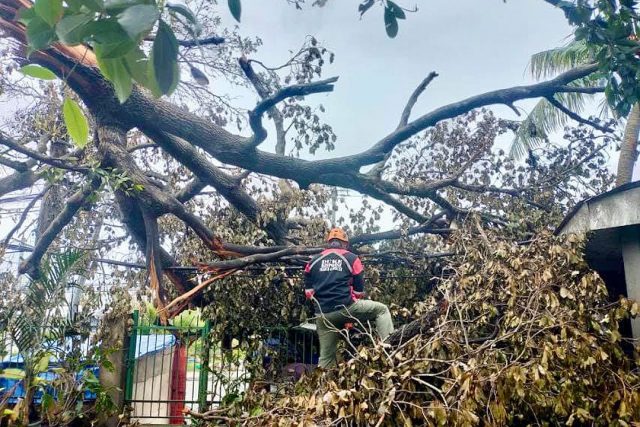
MUNICIPALITY OF LILOAN FB PAGE

THE LOCAL government of Cebu, ranked as the richest province in the country, will be distributing P5 million to each city and municipality for the rebuilding of houses hit by typhoon Odette, internationally known as Rai. 

Cebu Governor Gwendolyn F. Garcia, who has been making the rounds of the province since last week, ordered mayors to prioritize residents’ shelter needs over repairs on public buildings. 

Ms. Garcia, in a statement on Tuesday, said the province has enough funds for the relief and recovery efforts and will not be requesting special financial assistance from the national government outside what will be allocated under the emergency budget for affected regions. 

“We will not demand (from the national government) since we are (financially) capable,” she said in Visayan.

The governor added that she recognizes that many other affected provinces would require the help.

Cebu was the richest province in 2020 with P208.27 billion in net assets, keeping the top spot from P203.9 billion in 2019, based on the latest Commission on Audit annual financial report on local governments. The province is also debt-free.

Ms. Garcia earlier said that “the distinction of being the richest province must be felt by Cebuanos through projects and programs that would have an impact on their lives, such as good infrastructure, among others.”

Cebu City, the province’s capital and commercial hub, along with the cities of Lapu-Lapu and Mandaue are independent units that are not under the provincial government’s administrative authority.

Cebu province, composed of the mainland and over 167 islands, covers 44 municipalities and six cities.

RADIO COMMUNICATION
For next year’s budget, funds will be allocated for radio communication facilities across the province.

The governor said “Odette taught her the importance of going back to basics.” 

She said the provincial government will set up a radio base in every local unit and police station to ensure continued contact when commercial telecommunication services are affected by natural events. — MSJ 

Maynilad sending mobile water treatment plants to Cebu, Bohol 

MAYNILAD Water Services, Inc., the Metro Manila west zone water supplier, is deploying mobile water treatment plants in Cebu and Bohol, two of the provinces affected by typhoon Odette, internationally known as Rai.

Each mobile equipment, capable of processing water from rivers or floodwater, can produce 43,000 gallons per day, enough to meet the drinking water requirement of 80,000 people, the company said in a statement on Thursday.

Maynilad also said it earlier donated P6.5 million cash aid for typhoon survivors through the Philippine Disaster Resilience Foundation and One Meralco Foundation. It also sent around 10,000 bottled water to the provinces of Cebu, Bohol, Palawan and Surigao del Norte. 

“We are sending potable water to address the immediate need for it, but we will also extend sustainable support so these provinces can work toward full rehabilitation,” Maynilad President and Chief Executive Officer Ramoncito S. Fernandez said.  

Metro Pacific Investments Corp., which has a majority stake in Maynilad, is one of three Philippine units of Hong Kong-based First Pacific Co. Ltd., the others being Philex Mining Corp. and PLDT, Inc.

Hastings Holdings, Inc., a unit of PLDT Beneficial Trust Fund subsidiary MediaQuest Holdings, Inc., has an interest in BusinessWorld through the Philippine Star Group, which it controls. 

Comelec to revise guidelines on voting procedures after mock elections outcome

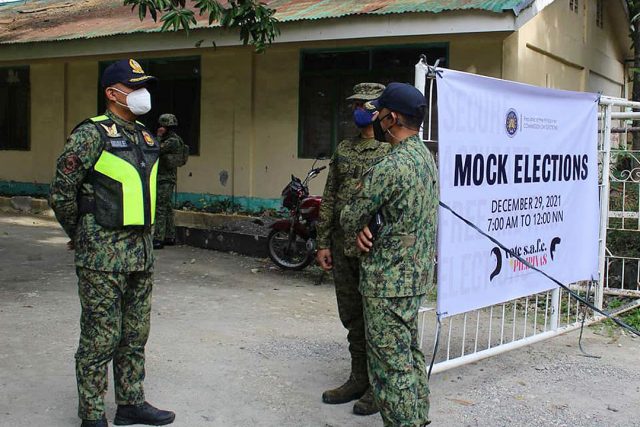
BARMM POLICE REGIONAL OFFICE

THE COMMISSION on Elections (Comelec) will revise its voting procedures for the May 2022 polls to address issues that were observed during the mock elections held Wednesday in several areas across the country. 

Among the problems encountered involved technical matters relating to ballots to vote counting machines as well as ensuring the observance of health protocols such as distancing.

“The Comelec will discuss that (maintaining distance at voting lines). We will come up with protocols or guidelines on how to address that problem,” Comelec Director Eliza Sabille-David said in Filipino in an interview Thursday with government-run PTV.

She also said that the commission would need to address potential crowding at the voting sites. — Jaspearl Emerald G. Tan

Rizal in 3D-print

DOST PHILIPPINES

A STATUE of the Philippine’s national hero, titled Dr. Jose P. Rizal, The Filipino Scientist, made using 3D printing was unveiled on Dec. 30 at the Department of Science and Technology (DoST) complex in Bicutan, Taguig as the country observed his 125th year of martyrdom.

PHL in 2022: Need for a new social contract

PHILIPPINE STAR/ MICHAEL VARCAS

Why we need a new social contract in the Philippines should not be trick question. True, in theory, it could be as fundamental as reiterating that the people are the only source of government power, that the people can withhold granting such power to the government because they have the ability to do so. To what extent should the people exercise their individual rights as to constitute popular sovereignty rounds out the conversation.

These premises rationalize the role of government in protecting the people and in promoting their well-being. If the government, for any reason, fails to uphold the rule of law and frustrates the cause of truth and justice, freedom and equality, love and peace, the people can exercise their power within the bounds of the law to ensure that our ideals and aspirations in the Philippine Constitution are always upheld.

However, rewriting the social contract is now imperative because of the sea changes in the policy environment. With the so-called pandemic of disinformation, for instance, it is necessary to define the rights and obligations of Filipinos in seeking the truth as the basis of both state policy and action, and their own defense against the opposite of truth. Digitalization of business activities also ought to lead to a rethink of social obligations and the government’s role in delivering public goods. Moreover, corruption involving public money has become an enduring culture, now more pronounced in a time of pandemic and a spate of natural calamities.

Precisely three years ago, the International Monetary Fund (IMF) and the London School of Economics (LSE) jointly sponsored a workshop on “Social Protection in a Changing World.” The Fund was looking into strategic ways of shaping more relevant social spending in member countries. LSE had decided to prioritize its research on welfare provision. The nexus between the two institutions and their goals could not be clearer. Social spending is crucial in promoting more inclusive and sustainable economic growth and financial stability. In the workshop, the issue was immediately elevated to one of rewriting the social contract by LSE’s director Minouche Shafik by pointing out that while social safety nets have been beneficial, constraints on public spending, high levels of inequality, economic slowdown, and fears about the rapid technological change have exacerbated social discontent, leading to the rise of populism.

What Shafik proposed was that the new social contract should reinstate reciprocity and insurance elements of a social safety net, mitigate any imbalance in labor and capital taxation, consider “predistribution” measures like wage floors, investments in education and health, enhance social mobility and more effective rollout of infrastructure.

World Bank’s Michal Rutkowski, Harvard’s Jeni Klugman, and LSE’s Nick Barr and Ian Gough made an interesting point about the contemporary aspect of climate change. “Climate change, and climate-induced migration introduce new requirements for policies to be not just economically but also environmentally sustainable, and highlighted new needs for protection.” This would also warrant a rethink of the social contract.

In the Fund’s Finance and Development of December 2018, Shafik discussed anew the need for a new social contract. People are unhappy because of inequality, aggravated by the concern about the consequences of automation and population aging. Inequality was observed to have improved among countries but worsened within those countries. It was correct for Shafik to argue that while globalization and technology have their own share of blame, the greater blame should be on the failure of the social contract, and we suggest on the political leaders, too, “to manage properly the consequences of both.”

Thus were protectionism and anti-immigration sentiment born. But as Shafik reasoned, “the answer is not to deglobalize and revert to our national silos, but to rethink our social contract to heal these tensions and help people adjust.” What made matters worse is the coincidence of globalization, the financial crisis of 2008 and the ensuing financial squeeze that brought about poverty, inequality with a weak social safety net as mitigant. This would explain how a Donald Trump could win in the polls, or perhaps populist strong men becoming electoral darlings despite a slide to authoritarianism.

This is the global context of a possible rewriting of the social contract in nation states.

Going back to the Philippines, it would therefore be ideal for the new leader to announce the proposal to develop and implement a new social contract that would be explicit, for instance, in how workers displaced by modern technology and automation would be assisted by the government. The social contract should also ensure that the interest of special groups is promoted in the face of recent economic and social developments. We have a law giving some benefits to senior citizens, but we need a more systematic articulation of how the state intends to provide healthcare to them, even in providing health insurance and other pre-need coverage. A social contract mitigates marginalization in society.

Inequality is another challenge to a new social contract. Pre-distribution policies are definitely game changers. Good education, increased social mobility, and infrastructure development all lead to more robust economic growth. Quality education over time benefits from high payoff and inspire confidence in the future of the system. More flexible movement of people enabled by a good transport network and spatial location of firms allows better job matching and higher productivity. Infrastructure supports more sustainable growth in the future.

It is imperative to correct structural rigidities like the lack of flexibility in hiring and firing workers as the economy undergoes changes. This would have to be matched by generous unemployment benefits, training, and job placement. Shafik quoted a Danish practice of “flexicurity.” Firms pay higher taxes with a compensatory flexibility in labor practices.

In reconstructing the social contract, the people’s buy-in is key.

Who can argue against the cause of meaningful electoral reforms so that the will of the people may be freely expressed through the ballot? The social contract should redefine and address any new impediment to this cause.

Who can argue against the rule of law in people’s affairs in relation to any agency of their government? What other kind of recourse do the people have when the Constitution and the system of laws are transgressed openly?

Who can argue against the cause of upholding the country’s sovereignty as a nation? How else do we preserve our democratic rights as a nation if we allow aliens to eat into our own territories?

Who can argue against strengthening our public health system and quality education as we chart our destiny into the new year, and beyond? The pandemic has more than demonstrated the weaknesses of both institutions and government neglect even as they are both guaranteed by the Constitution.

Who can argue against promoting sustainable and inclusive economic growth that empowers even the marginalized sector to participate in business activities to help build the nation? Alienation and social strife develop when economic growth is not only feeble but also exclusivist.

Who can argue against strengthening communities that are resilient to both a health pandemic and climate change? It is not enough to subject health and climate issues to public discourse, they should be funded, and funded well.

A new year is like a new wineskin ready to accommodate a new wine of pure energy and new visions, and the past year is good only for remembering the tragedies we should avoid and the gains we should fight for.

The Lord will bless us and keep us all in 2022, and beyond!


Diwa C. Guinigundo is the former deputy governor for the Monetary and Economics Sector, the Bangko Sentral ng Pilipinas (BSP). He served the BSP for 41 years. In 2001-2003, he was alternate executive director at the International Monetary Fund in Washington, DC. He is the senior pastor of the Fullness of Christ International Ministries in Mandaluyong.

DENR sees lifting of open-pit ban not hindering measures to deter illegal mining

THE Department of Environment and Natural Resources (DENR) said the recent lifting of a ban on open-pit mining is not expected to hinder the department’s efforts in deterring illegal mining activity.

“The lifting of the open-pit ban does not… result in more illegal miners because their areas are separate from that of the large-scale miners,” Director of Mines and Geosciences Bureau (MGB) Wilfredo G. Moncano said in a text message.

On Dec. 23, Department Administrative Order (DAO) 2021-40 lifted the four-year ban. This supersedes DAO 2017-10, issued by the late DENR Secretary Regina L. Lopez, which had banned the open-pit method of mining for copper, gold, silver and complex ores.

DAO 2017-10 contended that “most, if not all, open pits have ended up as perpetual liabilities, causing adverse impacts on the environment, particularly due to the generation of acidic and/or heavy metal-laden water, erosion of mine waste dumps and/or vulnerability of tailings dam to geological hazards.”

Mr. Moncano said the DENR is working to ensure the closure of all small-scale illegal mines.

“The MGB-DENR has addressed this issue via a program on the Expeditious Approval of Declaration of Minahang Bayan (MB), coupled with the formalization of small-scale miners and small-scale mineral processors,” Mr. Moncano said. “In 2016, there were only six Minahang Bayan or People’s Small-Scale Mining Areas approved but now we have 49 all over the country, and about 50% of them are in Mindanao. But there are still more than a hundred MB applications pending.”

“If these small-scale miners are inside approved MPSA and the MPSA holder does not give consent to the MB in its MPSA, the “Big Brother-Small Brother” set up also can be employed. The MPSA holder is the big brother who will help monitor them and implement safety and environmental practices at the same time buying the small-scale miner’s production,” he added.

In a statement, the MGB announced that it issued 144 cease and desist orders against violators of the Philippine Mining Act of 1995, exceeding by 240% its original target of 59 orders.

“In our heightened campaign for responsible mining in the country, we are proud of our milestone in cracking down illegal and irresponsible use of our mining resources and areas beyond the target we have set,” Secretary Roy A. Cimatu said.

The bureau also exceeded its target for mining permits and contracts, with a total of 4,526 permits, agreements, or ore transport certifications.

“The MGB expects to have more permits and contracts issued because of this new policy development,” Mr. Moncano said.

“The increase in the issuance of mining permits and contracts will compel mining companies and entities to abide by environmental laws, policies, and regulations, thus, making our mining sector more responsible,” Mr. Cimatu added. 

The Department of Finance (DoF) said it supported the lifting of the ban, noting that the government has the capacity to enforce regulations to minimize the impact on the environment.

In a statement on Thursday, Finance Secretary Carlos G. Dominguez III said: “I am confident that the DENR is fully capable of regulating mining operations in the country so that mining activities are conducted safely with due regard to the protection of the environment.”

“Strict monitoring and enforcement to ensure compliance with environmental standards shall be undertaken to prevent any abuse in the implementation of this type of mining activity,” he added.

The DoF said that with the return of open-pit mining, the industry must be mindful of the impact of its activities on the environment.

“The protection of the environment is nonnegotiable. We have to strike a careful balance between preserving and protecting the environment and pursuing our economic development objectives,” Mr. Dominguez said.

The DoF also said that the lifting of the ban will help revitalize the economy as it recovers from the pandemic, by generating additional revenue, royalty fees, exports, and jobs.

“The mining industry can become a key contributor to the nation’s economic recovery as the DENR has projected that open-pit mining will lead to the immediate development of 11 pending projects that are expected to generate about P11 billion combined in yearly government revenue, increase annual exports by P36 billion and provide employment to 22,880 people living in remote municipalities,” Mr. Dominguez said.

“These economic prospects can still be realized while we continuously implement strategies to manage and avoid the negative impacts of the open-pit mining method,” he added.

Environmental organizations and political parties expressed their opposition to the lifting of the ban. Bayan Muna Rep. Eufemia C. Cullamat said the return of open-pit mining will negatively affect the environment and indigenous tribes.

“Sa gitna ng krisis sa klima at mga tumitinding bagyo, lalong lalala ang epekto ng mga sakuna sa mamamayan sa pagtanggal ng ban na ito. Tiyak na magdudulot din ito ng mas matinding panunupil at malawakang pagpapalayas sa mga katutubo mula sa lupang ninuno (As we endure the climate crisis, which features stronger typhoons, people will be put in greater danger with the lifting of the ban. This is sure to result in the oppression and eviction of indigenous peoples from their native land),” Ms. Cullamat said in a statement. — Luisa Maria Jacinta C. Jocson

ADB report notes ‘uncontrolled’ growth at tourist destinations

PHILSTAR

MUNICIPALITIES in the Philippines are developing tourism destinations without proper infrastructure planning, contributing to the country’s poor tourism management, the Strategia Development Research Institute, Inc. said.

In an Asian Development Bank Institute (ADBI) report, “Developing the Philippine Blue Economy: Opportunities and Challenges in the Ocean Tourism Sector,” Strategia Development Research Institute Executive Director Maria Angela G. Zafra said the country has a strong marine economy, with coastline tourism activities generating revenue and jobs within municipalities.

Tourism destinations are still experiencing uncontrolled development despite marine ecosystem protection policies, according to the report.

“Poor implementation and enforcement of laws are typical in the Philippines,” she said in the paper released in December.

“Despite having a national ecotourism strategy and supposed coordination of different national agencies, many tourist destinations in the Philippines are experiencing uncontrolled development.”

 A technical expert with the Climate Change Commission, Ms. Zafra said municipalities are focused on using tourism to improve the local economy and alleviate poverty.

“However, many municipalities are developing their tourism portfolios without proper planning and without putting the necessary infrastructure in place,” she said.

She said the Philippines must analyze the ecosystems of tourism destinations in order to estimate the area’s ability to cater to tourists.

“This would allow tourism planners to manage tourist numbers and not exceed the carrying capacity when planning for tourism development,” she said.

“Limiting tourist numbers each day for each site or attraction based on assessments of the carrying capacity and infrastructure can help to address the issue of capacity.”

She said infrastructure needs must be assessed before creating a tourism development plan, adding that civil society groups can help monitor environmental violations.

Tourism was one of the hardest hit sectors after borders closed during the coronavirus disease 2019 (COVID-19) pandemic, with the industry’s revenue declining 83% to P81.4 billion in 2020 after the number of foreign visitors fell.

 The Tourism department has said it is preparing an infrastructure development plan for 2022 to 2028, which aims to improve destination management infrastructure, including sanitation, engineered landfill, healthcare facilities and emergency response systems. — Jenina P. Ibañez

Approaching midnight

FREEPIK
FREEPIK

The number of the dead and injured and the toll on agriculture and infrastructure are still rising in the regions devastated by super typhoon Odette. It should be more than apparent that the country cannot long endure the costs of the increasingly more violent weather disturbances that afflict it annually.

Those disturbances have made the Philippines’ development, burdened by bureaucratic incompetence and corruption as it already is, even more problematic. This cannot continue without the passing of what little hope for a better future the population has. But Odette is also one more warning among many — floods in Europe and Malaysia, tornados of unprecedented power in the US Midwest — that the clock is ticking and approaching the midnight of human extinction.

Nearly 400 people have been killed by the winds and torrential rains of Odette. Communication facilities are still down, and so is electric power in many communities, where there are critical shortages in food and drinking water. Crammed into basketball courts, barangay halls, and other improvised evacuation centers, those who have lost their homes are in constant peril of COVID-19 and other infections. A surge in coronavirus cases in the affected areas in the coming weeks could reverse the currently low-risk status of the entire country.

The Philippines is in the path of the storms generated in the Pacific, and sits in the ring of fire that power earthquakes and volcanic eruptions. These disasters cost the country deaths and injuries as well as billions in property losses and livelihood that contribute to the poverty and want that already define the lives of millions of Filipinos. (The National Anti-Poverty Commission puts the number of poor Filipinos at 23%, but warns that many more are in danger of impoverishment because of loss of employment, the death of a breadwinner, or the impact of natural disasters.)

To lighten the costs in lives and property of the disasters that regularly befall the Philippines and its people, putting in place a national disaster mitigation program has always been among the primary responsibilities of any Philippine administration. But to the need for such a program has been added the necessity of incorporating in it provisions that will enable the Philippines to survive the onslaught of the increasingly more powerful weather disturbances wrought by global warming.

Indicative of how government has been remiss in the making of such a program and its failure to competently discharge its limited focus on disaster relief rather than risk reduction is the erratic and even non-existent reach of the food and other aid hundreds of communities need.

President Duterte’s excuse that the funds for disaster relief are no longer available has been challenged by some regime critics, given the billions specifically budgeted for that purpose. But Mr. Duterte has dismissed that argument and has promised to look for the funds needed to rehabilitate the devastated communities. In the meantime, however, it is mostly from foreign aid that the people in those places could get some relief — assuming, however, that the help the UN, Japan, the US and other countries course through government is not hijacked by the corrupt bureaucrats who infest the regime.

Such aid has never been as urgently needed. Not all of the 20 or so weather disturbances that enter the Philippine Area of Responsibility (PAR) make landfall. But even those that do not can influence the weather enough to bring rains and flooding as well as landslides. Depending on the power of their winds, the amount of rain they bring, and the number of places they batter, those that do make landfall can be even more devastating.

The COVID-19 pandemic is adding to the human cost of typhoon Odette. Already condemned to limited access to education, medical care, and other social services, the poor are also the most vulnerable to the contagion. But the threats to life, limb, and fortune from stronger typhoons, storm surges, and floods are bad enough in themselves. These phenomena are likely to intensify and to affect entire countries and the lives of everyone in them.

Social and natural scientists have described the climate crisis as a threat worse than nuclear annihilation to the future of organized human life — and among the countries most susceptible to it is disaster-plagued Philippines. But little is being done by either local governments or their national counterpart to protect the most vulnerable communities from flooding and storm surges. Rather than risk-reduction, which global warming has made more urgent, government response to disasters has been mostly reactive and limited to moving those affected to improvised evacuation centers, and — if at all — distributing food packs.

The residents of coastal communities in perennial danger from storm surges and those who live in places below average flood levels have not been provided the incentives, the means, and the opportunity to relocate. Some do manage to evacuate when typhoons smash into their communities. But they return to the same sites to repair or rebuild damaged or destroyed homes, and hence remain at risk.

Relocating can prevent the repetition of the same misfortunes. But without any assurance of access to sources of livelihood, to water, and to electric power in places they are unfamiliar with, few families decide to do so. The hundreds of millions spent on such costly absurdities as the Department of Environment and Natural Resources’ Dolomite Folly could have been better spent on, among others, providing endangered communities the incentives that could help reduce the annual typhoon death toll.

Together with such a feasible relocation program, however, a national plan could include the construction of a system of levees and sea walls along the country’s most vulnerable coastal areas. Additionally, a system of well thought-out and permanent evacuation centers could also be constructed, even as stricter engineering standards are implemented in the construction of roads, bridges, buildings, and homes.

Global warming has been attributed to the greenhouse gasses —carbon dioxide and methane among others — released into the atmosphere by the burning of fossil fuels and by the industries of such countries as the United States, the European countries, Japan, and China. Reducing such emissions to stop the rise in global temperatures to mitigate or put a stop to it is mostly those countries’ responsibility. They have to forge and implement working agreements to regulate their environmentally destructive industries and reduce the amount of pollutants from other sources discharged into the atmosphere. There are existing conventions such as the Paris Climate Agreement and the Kyoto Protocol for that purpose. But their full implementation is plagued by the industrialized countries’ hesitancy in regulating the industries responsible.

On its part, the Philippines should make the use of alternative sources of power generation mandatory, together with the rigorous implementation of the Clean Air Act (RA 8749). It can contribute to the global imperative of halting a threat to organized human life by adopting a national plan devised by marine scientists, environmentalists, and other experts to mitigate the impact of disasters on the most vulnerable sectors of the population of this island nation.

The alarm bells have long been ringing about the threat of climate change, but the governments of most countries — and certainly that of the Philippines — have not paid much attention to it as they threaten to morph into a death knell for the entire planet. Not only a national plan is needed. A truly global program to address climate change is also imperative. The demonstration effect of the ravages of typhoons on the Philippines could help convince the rest of the world of its urgency.


Luis V. Teodoro is on Facebook and Twitter (@luisteodoro).

www.luisteodoro.com

How 2021 was the year governments really started to wise up against Big Tech

RAWPIXELS.COM-FREEPIK

After all the bad press tech companies have received, would anyone still be surprised to learn the outwardly smiling face of social media conceals a sophisticated data-collection industry?

This year’s headlines delivered news of an array of concerning data and privacy violations from the world’s biggest tech players. But interestingly, it also seemed to be the year governments around the world addressed the problem head on.

In April, Australia’s consumer watchdog, the Australian Competition and Consumer Commission (ACC), took Google to Federal court, citing Australian Consumer Law relating to consumer privacy.

It was alleged Google did not clearly identify how it collected and used users’ location data collected through Android devices in 2017 and 2018. Google was accused of leading users to mistakenly believe their personal location data was not being collected, when it actually is.

The Court found Google’s conduct was liable to misleading the public. Here’s how.

There are two settings on Android devices that govern how data is collected: location history and web and app activity.

Stepping through the setup screens, the user is shown their location history as being switched off by default. But it’s not made clear the web and app activity setting (located elsewhere) is on by default, and could also be used to collect location data — even if location history is switched off.

So the user might believe location tracking is switched off, but in reality tracking may still be performed because of the default web and app activity setting (which they might not know about).

Android 12 (released in October) now has a new privacy dashboard that goes some way towards remedying the permissions transparency issue. It shows the user which apps have accessed location services, and allows them to deny further access.

However, the web and app activity setting is still located elsewhere and not easily found. It is still switched on, by default, and able to track users’ movements.

To switch this setting off, follow the instructions here (If you use Google, you’re likely being tracked. Change these settings to stop it — CNET). But be aware that once you do this Google Maps might not work as well for you, and ads will become less relevant, along with search recommendations.

In separate proceedings in July, Google was once again sued by the ACCC for allegedly not disclosing it receives sensitive information about users from third-party websites and apps. Google was accused of using this information commercially without making the process clear to users.

The company was also hit with yet another major antitrust lawsuit, in which its influence over app developers was called into question.

Specifically, the multi-state lawsuit accused Google of abusing its market power to stifle competition and force users and developers to engage with Google’s own high-fee payment processing system.

This was one in a number of US state and federal antitrust cases against the company, with the first one brought forward in October last year.

Meanwhile, Meta Platforms (or Facebook) is still reeling from Francis Haugen’s damning testimony to the US Congress in October.

A former manager at Facebook, Haugen accused Facebook of a catalogue of antisocial behavior, in which it knowingly allowed the amplification of hate speech, propagation of misinformation and instigation of political unrest on the platform.

Haugen claimed employees had expressed concerns internally, but these were disregarded, or at least were not enough to change the situation. She is due to give a follow-up testimony in December.

Meta CEO Mark Zuckerberg refuted the allegations, saying they are “just not true.” He wrote in a blog post:

“The argument that we deliberately push content that makes people angry for profit is deeply illogical. We make money from ads, and advertisers consistently tell us they don’t want their ads next to harmful or angry content.”

More recently, the Washington Post reported on another anonymous whistleblower and former Facebook employee, who came out with a sworn affidavit saying Facebook puts profits ahead of stopping hate speech, misinformation and other threats to the public interest.

In April, the former children’s commissioner for England, Anne Longfield, launched a legal action concerning the way video-sharing app TikTok collects and uses the data of children using the app.

The lawsuit alleges TikTok (which is now said to have more than one billion users) collects sensitive personal information including children’s phone numbers, where they live, and unspecified “biometric data” without sufficient transparency, and without asking consent as required by UK law.

TikTok’s policies simply state it will collect information “you share with us from third-party social network providers, and technical and behavioral information about your use of the platform.” But this does not sufficiently explain the nature and extent of the data collection.

The lawsuit also claims there’s no transparency regarding how users’ personal information is used. Longfield described TikTok as “a data collection service that is thinly veiled as a social network.”

TikTok responded by saying user privacy and safety were its top priorities, and it has “robust policies, processes and technologies in place to help protect all users.”

There’s also the larger debate on whether TikTok — owned by Beijing-based company ByteDance — may be using user data for censorship, spreading propaganda among users, or to spy on users by feeding data back to the Chinese government (which is a ByteDance shareholder).

Currently, the fact people could read a terms and conditions document before clicking “agree” apparently amounts to informed consent, in the legal sense. The result is most users consent to their data being collected and used in numerous ways, but are none the wiser of the specifics.

Regulators must oblige platforms to be upfront and transparent about how user data is collected, used, and whom it is forwarded to (and for what purpose).

This could be achieved quite easily by including this information in plain language on the very same terms and conditions page. But as it stands it’s too easy for platforms to hide behind loose definitions of informed consent.

Although if the events of the past year are anything to go by, this may be starting to change.


David Tuffley is a senior lecturer in Applied Ethics & CyberSecurity at Griffith University.

In 2022, let’s be more positive and less negative

I LOATHE my readers. They willfully misunderstand my columns and send me abusive and threatening e-mails. The other day I tried to forward one to my boss, but Bloomberg’s algorithm blocked the message because it contained such vile expletives.

Actually, wait. I thought I hated my readers. Then I took the trouble to browse through this year’s reader e-mails again, and I made a surprising discovery. Yes, I saw all those memorable rants and insults again. But to hop from one to the next, I had to scroll through many notes of praise, encouragement and appreciation. Some readers offered nuanced arguments and insightful facts. I love my readers.

The reason that my initial and instinctive view of, well, all of you was so skewed is that I have a human brain. Cognitively, we’ve evolved to have what’s called a negativity bias. Our ancestors in the savannas had a better chance of surviving and, therefore, of passing on their genes, if they paid disproportionate attention to anything actually or even just potentially bad.

The result is that our brains don’t average, add up or net off positive and negative stimuli but consistently favor the bad and suppress the good. So the whole is more negative than the sum of its parts. That’s why I vividly remembered your jeremiads but was foggy on your paeans. It’s also why you can get a glowing performance review but later feel like a failure — because you’re obsessing over that one footnote in “areas for improvement.” It’s why past traumas still haunt you, but joyous memories are often elusive.

The negativity bias explains why spouses and others in intimate relationships tend to forget the thousands of lovable qualities in each other and — when facing those dirty dishes, say — focus exclusively on the few bugbears. It’s why you can spend a whole week having polite interactions with strangers but on Friday night remember only that one driver with road rage, and tell your family that you had a terrible day. Overall, we lose a lot of harmony, happiness and health because our cognitive system is rigged.

Now the real bummer: The early hominids whose genes we’re carrying were, in at least one respect, blessed. They didn’t have Fox News and shock jocks who intentionally accentuate the negative. They weren’t yet hooked on Facebook, Twitter, and Instagram. They didn’t have trolls, revenge porn, doxxing and the rest. We do. Thanks to our stunning cognitive abilities, we keep inventing technologies to make our rigged system even more efficient at being negative.

That’s why I quit using Facebook years ago. And I never joined Instagram. I’m still on Twitter — I’m told it goes with the job description of a columnist — but I try to minimize my time there. Whenever I exceed my ration, I find myself pulled into its vortex of negativity. Sometimes I unwittingly carry the bad vibes into my real relationships. Not good.

You can think of negativity bias, especially in the currency of social media, as the psychological equivalent of Gresham’s Law in economics. That’s the one explaining why “bad money drives out good.” It was coined, as it were, by Sir Thomas Gresham — financial adviser to Queen Elizabeth I in the 16th century — when he noticed that people hoarded the shillings that contained only silver and spent the ones debased with inferior metals. The coins in circulation soon consisted almost entirely of the bad stuff. Does that remind you of our public discourse today?

The bad news is that we can’t outrun evolution; and technology won’t go away. The good news is that we have the option of awareness. The first step is to simply notice our negativity bias, then label and interrogate it — as I did when I inspected my e-mail folder. A lot of dark thoughts drain away just while you’re doing that. Observing that mental chatter and letting it evaporate is what Buddhists call mindfulness.

We can go further. Why not, for example, schedule five minutes a day, or an hour a week, to pause and consciously evoke a good memory from the past, or a lovable quality in the people around us, or an eloquent passage in a column (starting with mine, of course). Remember that the brain processes negative stimuli more readily than positive. So if we want to adjust the asymmetry at least partially, we have to intentionally dwell on the positive sometimes.

Naive? Futile? Maybe. In that case, we can always give up and go back to Twitter to trade our barbs and taunts, then flip off the driver straddling lanes before settling on the couch to yell at the TV screen. That worked so well in 2021, didn’t it?

Or you could join me this January as I try to manage my cognitive negativity bias with some unaccustomed positivity. The goal is to keep it up for all of 2022. But I’m happy to compare notes in February — on Twitter, perhaps. 

BLOOMBERG OPINION

Nations try to contain Omicron while keeping economies open

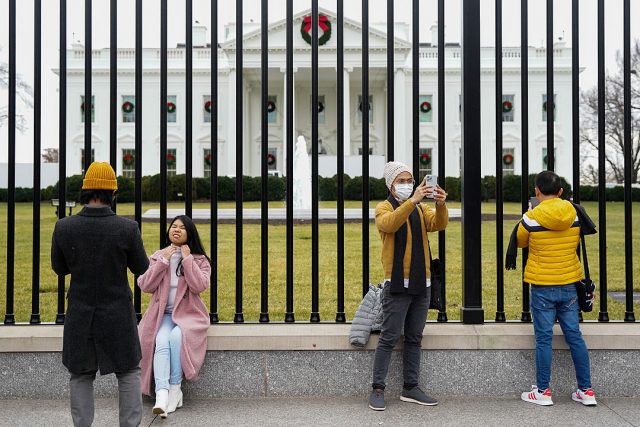
VISITORS take photos outside the White House in Washington, US, Dec. 27. — REUTERS

ROME/WASHINGTON — Global COVID-19 infections hit a record high over the past seven-day period, Reuters data showed on Wednesday, as the Omicron variant raced out of control and governments tried to contain its spread without paralyzing fragile economies.

Almost 900,000 cases were detected on average each day worldwide between Dec. 22 and 28. A number of countries posted all-time highs during the previous 24 hours, including Argentina, Australia, Bolivia, the United States and many nations in Europe.

Studies have suggested Omicron is less deadly than some previous variants. But the sheer number of people testing positive could overwhelm hospitals in some countries and leave e businesses struggling to carry on without workers who government officials have ordered to quarantine.

Researchers in South Africa found that a key part of the immune system’s second-line defense — its T cells — are highly effective at recognizing and attacking the Omicron variant, preventing most infections from progressing to critical illness.

Political leaders in some nations, fearful of the economic impact of keeping so many workers at home, were considering shortening the period required for isolation after a positive COVID test or exposure.

Spain said on Wednesday it was reducing the quarantine period to seven days from 10, while Italy said it was planning to relax isolation rules for those who came into close contact with sufferers of the virus.

Earlier this week US health authorities released new guidance shortening the isolation period for people with a confirmed infection to five days from 10, as long as they are asymptomatic.

“I am highly concerned that Omicron, being highly transmissible and spreading at the same time as Delta, is leading to a tsunami of cases,” WHO Director-General Tedros Adhanom Ghebreyesus told a news briefing.

French Health Minister Olivier Veran told lawmakers France was seeing a “dizzying” rise in cases, with 208,000 reported in the space of 24 hours — a national and European record.

Britain, Italy, Spain, Portugal, Greece, Cyprus and Malta all registered record numbers of new cases on Tuesday, while the seven-day average number of new daily cases in the United States hit a record 258,312, according to a Reuters tally on Wednesday. The previous peak was 250,141, registered last January.

Despite the surge in coronavirus infections, deaths and hospitalizations are comparatively low, Rochelle Walensky, the director of the US Centers for Disease Control and Prevention (CDC), said on Wednesday.

While the current seven-day daily average of cases is about 240,400, up 60% over the previous week, the hospitalization rate for the same period is up just 14% to about 9,000 per day over the same period. Deaths were down about 7% to 1,100 per day, Ms. Walensky added.

Some experts questioned the new CDC rules that halve the isolation period for asymptomatic coronavirus infections, saying more infections could result. The new directive does not require testing to confirm that a person is no longer infectious before they go back to work or socialize.

“They were trying to strike a balance: How do we do good public health principles at the time we don’t have to get to the point where you’re forced to essentially shut the country down,” Anthony Fauci, the US government’s top infectious disease official, told MSNBC in explaining the CDC’s new guidance.

Britain reported 183,037 COVID-19 cases on Wednesday, a new record and over 50,000 more than the previous high registered just a day earlier, government statistics showed. Ireland, too, reported record cases on Wednesday, with more than 16,000 new infections.

British Prime Minister Boris Johnson has said he will not issue new restrictions this year to limit the spread of Omicron, which now accounts for roughly 90% of all community infections, according to health officials.

Australia registered almost 18,300 new cases, eclipsing Tuesday’s previous pandemic high of around 11,300.

In Spain, demand for free testing kits from the Madrid regional government far outstripped supply, with long queues forming outside pharmacies.

Governments are increasingly worried by the economic impact of huge numbers of people being forced into isolation because they had been in contact with a coronavirus sufferer.

“We just can’t have everybody just being taken out of circulation because they just happen to be at a particular place at a particular time,” Australian Prime Minister Scott Morrison told reporters.

Mr. Morrison wants to make urgent changes to COVID-19 testing rules to ease pressure on testing sites. He said Australia needed “a gear change” to manage overburdened laboratories and get people out of isolation.

While Spain and Italy moved to relax some isolation rules, China stuck to its policy of zero tolerance, keeping 13 million people in Xian, capital of central Shaanxi province, under rigid lockdown for a seventh day as 151 new cases were reported on Tuesday, albeit none with Omicron so far.

“I just want to go home,” said a 32-year-old mechanic who was in the city on business last week when it was effectively shut off from the outside world. — Reuters

Omicron yet to curb driving across most of Asia in boon for oil

PHILIPPINE STAR/ MICHAEL VARCAS

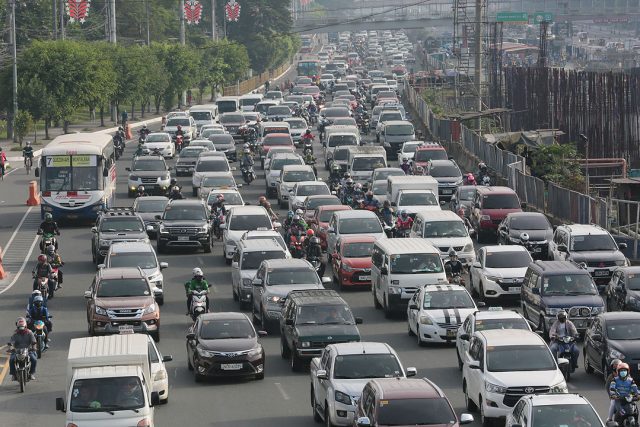
THE RAPID spread of Omicron has yet to dampen road traffic across most of Asia even as it leads to restrictions in parts of Europe, suggesting energy demand in the region may be spared a significant hit.

More cars have thronged the main roads in December amid yearend festivities than seen last month. All but one major Asian country registered a rise in mobility on-month, according to data compiled by Bloomberg using Apple, Inc. mobility statistics until Dec. 27. 

The broadly positive picture from Asia — at least so far — may help to support gasoline demand and refining margins, which in turn could aid physical crude consumption and oil futures into 2022. Global benchmark Brent advanced by more than 3% in the week leading up to Christmas, and has extended gains since then, briefly retopping the $80-a-barrel level on Wednesday.

Still, the region’s biggest oil guzzler, China, has shown signs of weakening fuel demand. While Apple doesn’t provide data on China, other local providers like Baidu, Inc. showed that road congestion has eased in Shanghai, while it was up a little in Beijing. Xi-an, a city of more than 10 million people that’s under lockdown after a surge in virus cases, saw congestion drop by a fifth on Wednesday from a week earlier, according to data from Baidu’s map service.

China’s relentless zero-COVID approach continues to undermine travel plans, while an increasingly tough line against pollution is further impeding demand. Consumption of transport fuels may face headwinds heading into the new year. On Wednesday, Chinese officials renewed their commitment to a zero-tolerance approach against the disease as they battle the biggest and most protracted outbreak since the virus emerged.

In India, demand may remain more resilient as the federal government has avoided fresh nation-wide restrictions even as some states announced night curfews and other curbs. Driving activity in December has been significantly higher, with crowds thronging malls and markets. Diesel sales in the first half of this month were up 18% on-month, while gasoline usage rose about 7%.

Traffic has surged in Australia too, with driving activity 12 percentage points higher through Dec. 27 than in November. Still, a surge in cases clouds the outlook as it may test the government’s resolve to continue reopening. New South Wales recorded 11,201 new cases on Wednesday, almost double over the previous day’s figure, and hospitalizations hit the highest since mid-October.

While road fuels such as diesel and gasoline may be holding up against the rise in Omicron so far, jet fuel demand may not be so resilient as borders close again. Asian aviation hub Singapore froze ticket sales for flights under its vaccinated travel lane program, while Indonesia may ban overseas travel. Meanwhile, China’s new aircraft-cleaning rules may trigger cancellations. Hong Kong landed another blow to regional travel as it axed quarantine exemptions for all crew working on non-mainland China passenger flights. — Bloomberg