Home Blog Page 6446

Fuel marking program generates over P358 billion as of end-Jan.

PHILSTAR

TAXES collected from marked fuel products amounted to P358.6 billion at the end of January, counting back to 2019 when the program started, according to the Department of Finance.

The volume of marked fuel was nearly 36 billion liters since Sept. 4, 2019, according to data provided by Finance Secretary Carlos G. Dominguez III via Viber on Wednesday.

Revenue included P328.79 billion in Customs duties and P29.81 billion in excise tax.

Almost three-quarters of the fuel was marked in Luzon, with more than a fifth in Mindanao and 5.49% in the Visayas.

Diesel accounted for more than 60%, while gasoline had a 38.82% share, with kerosene taking up the remainder.

The program seeks to deter fuel smuggling by injecting a special dye into the products to signify tax compliance. The absence of the dye is an indication the fuel was smuggled.

In 2021, the Bureau of Customs (BoC) collected P166 billion in duties from the fuel marking program, the bureau said last week.

The BoC last year marked over 17 billion liters of gasoline, diesel, and kerosene.

It intercepted nearly 87,000 liters of smuggled diesel and kerosene worth P5.16 million last year, along with two tanker trucks containing unmarked fuel valued at P7.4 million. — Jenina P. Ibañez

BPO sector declares support for PHL participation in RCEP

BW FILE PHOTO

THE Regional Comprehensive Economic Partnership (RCEP) trade agreement is expected to help boost investment in the business process outsourcing (BPO) industry, according to the industry association, the Information Technology and Business Process Association of the Philippines (IBPAP). 

IBPAP President Jack Madrid said in a statement that the stable regulatory environment provided by the trade deal will encourage the entry of more investors and boost the economic recovery.

Mr. Madrid added that RCEP will provide seamless networks among member countries who will be tied to common standards, intellectual property regulations, rules of origin, customs processes, e-commerce, and competition policy.

“With stable and predictable rules, the Philippines could aspire to become a regional manufacturing and services hub, thereby creating much-needed domestic jobs. We believe that RCEP will increase external trade and spur more investments that create more livelihood and other business opportunities in the country,” Mr. Madrid said.  

“This framework will benefit the Information Technology and Business Process Management industry by making the country a more attractive investment destination and help expedite the economic recovery from the pandemic by creating more job opportunities,” he added.

IBPAP represents over 332 companies and six partner associations involved in the BPO industry and related sectors.

RCEP was signed by President Rodrigo R. Duterte on Sept. 2, 2021 and is currently in the Senate for ratification.

Touted as the world’s largest trade deal, RCEP started to take effect on Jan. 1, 2022 in Brunei, Cambodia, Laos, Singapore, Thailand, Vietnam, Australia, China, Japan, New Zealand, and South Korea. On March 18, Malaysia is also set to implement the trade agreement. — Revin Mikhael D. Ochave

Mining firms in Davao river siltation incident say complying with rehab order

DAVAO ORIENTAL PROVINCIAL GOVT

RIVERBEND Consolidated Mining Corp. and Arc Nickel Resources, Inc., the mining operators responsible for the river siltation incident in Davao Oriental, said they are complying with the order from the Mines and Geosciences Bureau (MGB) to rehabilitate the damaged areas.

The order was issued by the MGB to prevent a repeat of the discoloration and siltation on the Mapagba and Pintatagan rivers in Banaybanay, Davao Oriental on Jan. 13-14.

Operations were suspended on Jan. 17 following a cease-and-desist order from authorities.

Riverbend Mining is the contractor that holds the mineral production sharing agreement while Arc Nickel is the authorized operator.

“Upon discovery of the unfortunate incident, we immediately implemented measures to address the discoloration and siltation of the Mapagba and Pintatagan rivers. And with the prescribed environmental control improvements already in place, we are seeing significant progress in the clean-up and rehabilitation efforts and are confident similar occurrences won’t happen again,” Arc Nickel President and Chief Executive Officer Josue A. Lapitan said in a statement.

The firms will be constructing 13 settling ponds and two dams, installing silt curtains, and suctioning impounded water to ensure zero wastewater discharge.

The Department of Environment and Natural Resources and MGB have been on site to monitor the ongoing clean up and the construction of new infrastructure to improve the mine’s capacity to handle rainfall.

The companies said they also provided assistance to affected residents and launched a program to plant bamboo along the rivers to prevent erosion.

“We would like to express our sincere apologies to all those in the affected communities and we assure them that their welfare is of utmost importance. We are working as fast as we can to clean up the affected rivers and thus lessen the inconvenience to them,” Mr. Lapitan said. — Luisa Maria Jacinta C. Jocson

ERC approves increased subsidized rates for SPUG suppliers

BW FILE PHOTO

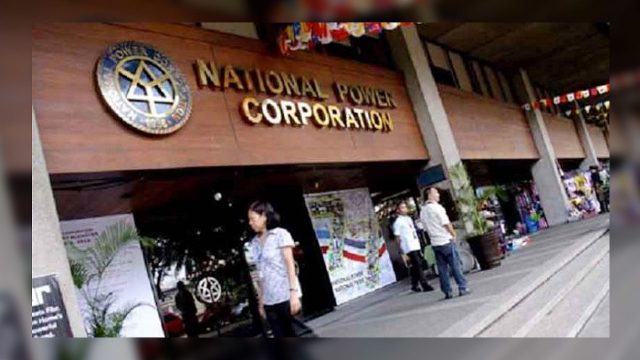
THE Energy Regulatory Commission (ERC) has approved the petition of the National Power Corp. (NPC) to increase the subsidized approved generation rate for distribution utilities and new power providers operating with the Small Power Utilities Group (SPUG).

Generation rates in Luzon, the Visayas, and Mindanao will increase by P0.7289 per kilowatt-hour (kWh), P0.8345 per kWh, P0.6702 per kWh, respectively, in the first billing period of the year.

On the second year, rates will increase in Luzon, the Visayas, and Mindanao by P1.3116 per kWh, P1.5022 per kWh, and P2.0029 per kWh, respectively.

Another generation rate hike of P1.7496 per kWh, P2.0029 per kWh, and P1.9048 per kWh will be implemented on the third year in Luzon, the Visayas, and Mindanao grids, respectively.

“On one hand, for SPUG customers, this will mean an increase in their bills.  On the other hand, this will reduce the amount of subsidy needed from on-grid customers (via the universal charges for missionary electrification) like Meralco customers,” Laban Konsyumer, Inc. President Victorio Mario A. Dimagiba told BusinessWorld in a Viber message.

In its petition, the NPC wrote that it filed the request in its capacity as the implementing agency for missionary electrification, which is to be funded through the revenue from sales in missionary areas and from the universal charge to be collected from all electricity end-users as determined by the ERC. — Marielle C. Lucenio

Easing barriers to foreign direct investment

Barriers to foreign direct investment (FDI) in the Philippines are highly restrictive. In 2020, the Philippines ranked third-most restrictive out of the 84 countries in the Organization for Economic Cooperation and Development’s (OECD) foreign direct investment regulatory restrictiveness index (FDI Index).

The FDI Index released by the OECD gauges the restrictiveness of a country’s FDI rules by looking at four main types of restrictions: 1) Foreign equity limitations; 2) Discriminatory screening or approval mechanisms; 3) Restrictions on the employment of foreigners as key personnel; and 4) Other operational restrictions, e.g., restrictions on branching and capital repatriation or land ownership by foreign-owned enterprises.

The restrictions are evaluated on a 0 to 1 scale (1 being the most restrictive). It is no surprise that the Philippines scored 0.374, as we have several laws restricting FDI and most of them are enshrined directly in the Constitution. The Philippines is just a few points behind Libya and Palestine, both scoring a total FDI index of 0.713 and 0.388, respectively.

Last year, the President certified three bills as urgent —amendments to the 85-year-old Public Service Act (Senate Bill No. 2094), the 30-year-old Foreign Investments Act (Senate Bill No. 1156), and the 20-year-old Retail Trade Liberalization Act (Senate Bill No. 1840). These reforms primarily aim to spur economic activity by creating employment in the wake of the pandemic. 

Before closing the first month of the new year, we welcomed the roll-out of Republic Act No. 11595 – An Act Amending Republic Act No. 8762, otherwise known as the Retail Trade Liberalization Act of 2000, signed into law on Dec. 10 and taking effect on Jan. 21.  Below are the substantial amendments to the law:

LOWERING MINIMUM PAID-UP CAPITAL REQUIREMENT AND INVESTMENT PER STORE
Prior to the amendment, corporations engaged in retail trade under Category B, i.e., with foreign participation of not more than 60%, were required to have a minimum paid-up capital of $2.5 million. On the other hand, an enterprise may be wholly foreign-owned (Category C) if it has paid-up capital equivalent to at least $7.5 million, while enterprises under engaged in the sale of high-end or luxury goods (Category D) must have a paid-up capital of at least $250,000 per store. 

Furthermore, the minimum investment per store for foreign retailers engaged in retail trade through more than one physical store was $830,000.

Now under RA 11595, the investment categories have been removed. Foreign-owned corporations, partnerships, and sole proprietorships may engage or invest in a retail business in the Philippines with a minimum paid-up capital requirement of P25 million (approximately $500,000).

In the case of retail trade through more than one physical store, the minimum investment per store is now down to P10 million (approximately $200,000).

SIMPLIFIED CONDITIONS FOR FOREIGN RETAILERS
Previously, all retail trade enterprises under Categories B and C, with foreign ownership exceeding 80%, must offer a minimum of 30% of their equity to the public, through any stock exchange in the Philippines, within eight years from their start of operations.

In addition, foreign retailers were required to submit an application for pre-qualification to the Board of Investments before filing a formal application with the Securities and Exchange Commission (SEC) to engage in retail or invest in a retail store.

RA 11595 removes both the public offering of shares of stocks and the pre-qualification requirements.

IMPLEMENTING AGENCIES
The monitoring and regulation is to be the responsibility of the SEC instead of the Department of Trade and Industry (DTI). However, the DTI will continue to have regulatory authority over foreign retailers that have or will establish sole proprietorships in the Philippines.

In coordination with the SEC and National Economic and Development Authority (NEDA), the DTI will issue the implementing rules and regulations of RA 11595 within 90 days after approval of the law, or by March 10.

REDUCTION OF PENALTIES
RA 11595 also reduced the penalties for violations from the imprisonment of six to eight years to four to six years, and capping the fine to P5 million, down from the previous maximum of P20 million.  

As with all things, balance is the key. To protect domestic retailers, RA 11595 encourages foreign retailers to have a certain level of inventory consisting of products made in the Philippines. Moreover, it explicitly mandates compliance with the provisions of the Labor Code of the Philippines on the determination of non-availability of a competent, able, and willing Filipino citizen, before engaging the services of a foreign national.

The P25 million minimum paid-up capital is also subject to review by the DTI, SEC, and NEDA every three years from the effectivity of the law.

The scale of the disruption caused by the pandemic has pushed the government to prioritize amendments to FDI rules.  Even prior to the updated rules, foreign retailers had been selling directly to Filipino consumers through e-commerce and internet retailing. Relaxing the restrictions and allowing foreigners to register and invest directly in the Philippines may allow the country to reap more benefits, particularly employment generation.

The amendments to the Retail Trade Liberalization Act (RTLA) represent just the first of three priority bills seeking to lift or reduce FDI barriers to put our country in a more competitive position relative to our Asian peers. We wait in anticipation whether the other bills (Senate Bill No. 2094 and Senate Bill No. 1156) pending before Congress will be enacted before the upcoming national elections or carried over as priority bills in the next administration. Either way, I hope the government continues to relax the rules while also protecting the local industry because I believe that easing barriers to FDI will help boost economic recovery. 

The views or opinions expressed in this article are solely those of the author and do not necessarily represent those of Isla Lipana & Co. The content is for general information purposes only, and should not be used as a substitute for specific advice.


Kyra Kae B. Diola is an assistant manager at the Tax Services Department of Isla Lipana & Co., the Philippine member firm of the PwC network.

kyra.kae.diola@pwc.com

‘Grand design’ to install Marcos as president cited

TWITTER/ROWENA_GUANZON

By John Victor D. Ordoñez

DELAYING the disqualification lawsuit against the son and namesake of the late dictator Ferdinand E. Marcos is part of a “grand design” for him to retake the presidential palace, according to a retiring election official.

“There is a grand design to delay it, because they already probably know he is going to be disqualified given the evidence,” election Commissioner Maria Rowena V. Guanzon told CNN Philippines on Wednesday, referring to former Senator Ferdinand “Bongbong” R. Marcos, Jr.

She said the Commission on Elections (Comelec) would probably delay the disqualification cases against Mr. Marcos, who is leading in presidential opinion polls, until the results of the May 9 elections come out.

“They want to delay it so that he will win and then hopefully he can sit and then even if the Supreme Court will disqualify him a year after the elections, he can still sit [as president],” she added.

Victor D. Rodriguez, Mr. Marcos’s lawyer, did not immediately reply to a Viber message seeking comment.

Ms. Guanzon and two other commissioners — Antonio T. Kho, Jr. and Comelec Chairman Sheriff M. Abas — were to retire on Wednesday. Without a ruling by the First Division, her vote to disqualify Mr. Marcos will not get counted.

She earlier accused Commissioner Aimee P. Ferolino, who was assigned to write the ruling, of delaying the case — an allegation that the latter rejected, citing case load.

Ms. Guanzon said she had been telling her friends, including Marcos loyalists, that it might be better for him to be disqualified before the elections and let his wife Liza take his place.

“If they voted for him and then he gets disqualified and won’t be able to sit as president, they will be frustrated,” she said in mixed English and Filipino.

“My question for Commissioner Ferolino is ‘Why won’t you release it? Are you going to turn it into fermented fish?’”

Comelec spokesman James B. Jimenez earlier said Mr. Marcos could participate in the presidential campaign pending the ruling. If he gets disqualified before he can be proclaimed president, his votes would be considered stray. If he gets proclaimed but gets disqualified after, he will be replaced by the vice-president.

A ceremony was held at the Sofitel Philippine Plaza Manila on Wednesday in honor of the retiring Comelec officials.

“The best way to honor these three is to make this year’s elections a success,” Commissioner Socorro B. Inting said at the ceremony streamed live on Ms. Guanzon’s Facebook page.

Mr. Casquejo will transfer from the Comelec First Division to the Second Division as presiding commissioner.

Ms. Guanzon on Tuesday said Ms. Ferolino was delaying the case to invalidate her and Mr. Casquejo’s votes.

Comelec has a chairman and six other members. Its two divisions have three members each. Decisions issued by the two divisions are eventually appealed to the seven-member en banc.

Ms. Inting will become the officer-in-charge until President Rodrigo R. Duterte appoints a new chairman. She is a member of the Second Division, which on Jan. 17 favored Mr. Marcos in a similar lawsuit seeking to bar his presidential run.

Ms. Guanzon, an appointee of the late President Benigno S.C. Aquino III — Mr. Duterte’s predecessor — has alleged that a senator from Davao whom she has not named was trying to meddle in the Marcos disqualification cases. The other six commissioners are Duterte appointees.

Political analysts have said Comelec should investigate these allegations at the agency to keep its independence and avoid public distrust.

The four remaining commissioners are left to decide on pending election cases.

“All in all, I have enjoyed all your company even though we have disagreed,” Ms. Guanzon told her fellow commissioners. “This will certainly not be the end of my career as a public servant. I’m confident that the senior commissioners will run successful elections this year.”

Earlier in the day, she told CNN: “If Comelec can’t resolve disqualification cases judiciously, how can it run elections well?”

Meanwhile, Comelec handed over the source codes that will be used for the May 9 elections to the Philippine central bank on Wednesday.

“The fact that the source codes are here and protected from dangers guarantees the integrity of the elections,” Mr. Jimenez said during the turnover ceremony streamed live on Facebook.

The source codes were deposited in a secure vault of the Bangko Sentral ng Pilipinas (BSP) under the custody of election officials.

Comelec and BSP signed a deal on Monday for the source codes — the instructions used by software programs — to be held in escrow by the central bank as mandated by the election laws.

“We are one with the Comelec in ensuring the peaceful and orderly conduct of this year’s elections,” central bank Director Rosabel B. Guerrero said.

Congress ratifies new PDIC charter

SENATE.GOV.PH

By Jaspearl Emerald G. Tan 

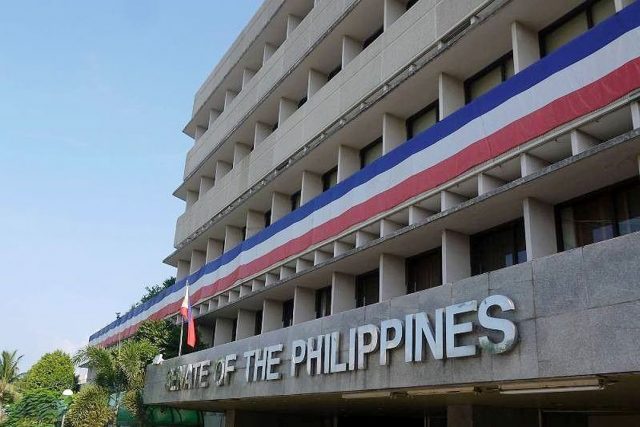
The House of Representatives and Senate on Wednesday night separately ratified several bicameral committee reports, including a bill that allows the Philippine Deposit Insurance Corp. board to raise deposit insurance coverage every three years. 

The measure that seeks to amend the PDIC charter transfers supervision of the state-owned deposit insurer to the Philippine central bank from the Finance department. 

Under the measure, the PDIC board may increase deposit insurance every three years to adjust for inflation. 

Lawmakers also ratified a bill that will give workers at state-owned companies a night differential pay equivalent to more than 20% of their basic hourly rate.

Meanwhile, lawmakers alao ratified a new Comprehensive Firearms and Ammunition bill that fixes the validity of a gun license and the permit to carry it outside one’s house and business.  

It aims to simplify registration and renewal of guns to cut illegal possession of firearms. 

The House likewise ratified bicameral reports on measures that will amend the Public Services Act, require the registration of subscriber identity modules, set up community weighing scales, give health workers emergency benefits and strengthen policies against human trafficking.

Congress will go on a more than three-month recess on Feb. 5 to May 22 for the May 9elections. It will resume sessions on May 23 to June 3 and go on sine die adjournment from June 4 to July 24. 

Country at moderate risk from coronavirus — Health department

PHILSTAR

By Kyle Aristophere T. Atienza, Reporter

THE PHILIPPINES is now at moderate risk from the coronavirus, according to the Health department, as it reported fewer than 10,000 cases for the second straight day.

“We were previously at high and critical risk but we are now at moderate risk,” Health Undersecretary Maria Rosario S. Vergeire told a virtual news briefing on Wednesday in Filipino, citing decreasing infections.

Although the country’s average daily attack rate remained high, it has dropped to 19.93 for 100,000 people, she said.

Ms., Vergeire said hospital and intensive care unit use rates were “well under control.”

The positivity rate is falling, she added, noting that most people can now be treated with rest or by using over-the-counter medicines.

“We are really moving on towards the decline in the number of cases,” she said. “Hopefully it will continue that way.”

The Department of Health (DoH) posted 7,661 coronavirus infections on Wednesday, bringing the total to 3.58 million. The death toll hit 54,097 after 43 more patients died, while recoveries rose by 23,392 to 3.36 million, it said in a bulletin.

It said 24.8% of 40,453 samples on Jan. 31 tested positive for COVID-19, still above the 5% threshold set by the World Health Organization (WHO).

Of the 160,297 active cases, 5,575 did not show symptoms, 149,829 were mild, 3,056 were moderate, 1,521 were severe and 316 were critical.

DoH said 76% of the latest cases occurred from Jan. 20 to Feb. 2. The top regions with new cases in the past two weeks were Western Visayas with 896, Metro Manila with 873 and Calabarzon with 694. It added that 60% of new deaths occurred in January.

The agency said 28 duplicates had been removed from the tally, 18 of which were recoveries, while 28 recoveries were relisted as deaths. Two laboratories failed to submit data on Jan. 31.

The Health department said 46% of intensive care unit beds in the country had been used, while the rate for Metro Manila was 40%.

The government has lowered the virus alert in Manila, the capital and nearby cities to Level 2 starting Feb. 1.

The presidential palace said it was not yet time to scrap the virus alert system in the country, citing low vaccination rates in some areas.

“This is not yet the time to remove the alert level system because while vaccinations are high in the National Capital Region, we still have to increase vaccinations in other regions,” Cabinet Secretary Karlo Alexei B. Nograles told the ABS-CBN News Channel in Filipino.

He added that the country should focus on the shift to Alert Level 1. “The reason why we’re not scrapping the alert levels is that just in case there would be new variants of concern or interest, or if there is a new surge, we could quickly revert to Alert Level 2.”

Also on Wednesday, Vivencio B. Dizon, deputy chief implementer of the country’s pandemic plan, said the government was crafting a plan to exit from a pandemic plan and move to the endemic phase — a time when the public learns to live with the coronavirus.

“I think we’re already headed in that direction,” he told an online forum.

Meanwhile, the OCTA Research Group from the University of the Philippines said coronavirus cases were falling in seven highly urbanized cities in central Philippines.

“Downward trends have been observed in Lapu-Lapu, Ormoc, Tacloban, Bacolod, Cebu City, Iloilo City, and Mandaue,” OCTA fellow Fredegusto P. David tweeted.

He said Lapu-Lapu, Ormoc and Tacloban were at high risk as of Feb. 1, while Bacolod, Cebu, Iloilo City and Mandaue “remained at very high risk.”

The government is scrambling to fully vaccinate more Filipinos as it reopens the economy.

The Philippines had fully vaccinated 59.12 million people as of Feb. 1, while 60.47 million have received their first dose, DoH data showed. Almost 7.58 million booster shots have been given out.

Meanwhile, the Philippine Chamber of Commerce and Industry said the has to cautiously open up the economy.

“The time is proper for us to move ahead cautiously,” chamber President George T. Barcelon told an online news briefing. “Our enemy, the COVID-19 pandemic, is invisible so we have to move forward cautiously.”

Mr. Barcelon said the government should encourage Filipinos to self-test for the virus, citing the practice in Singapore and European countries. “While they are opening up, they have to allow people to self-test so that in case there is a cluster of infection, they can capture it earlier and treat it.” — with Revin Mikhael D. Ochave


Boost cyber-security before May elections, government advised

By Alyssa Nicole O. Tan, Reporter

THE GOVERNMENT should boost cyber-security as candidates in this year’s elections increase their social media presence to attract more votes amid a coronavirus pandemic, information technology and political analysts said.

Agencies should adopt global best practices against cyber-crimes, said William Emmanuel S. Yu, a computer science professor from the Ateneo de Manila University.

“Government agencies must continue to invest in information security because once you are good at securing your platforms today, the world moves on — there will be newer exploits, more faults and more problems,” he said by telephone.

“We have to be able to benchmark ourselves because security is never 100%” he added.

He said agencies should invest in both software hardware as well as human resources to boost cyber-security.

“The months leading to the May elections will be crucial because there will be some trust issues and legitimacy questions,” said Dennis V. Blanco, an associate political science professor from the University of the Philippines (UP).

He cited computer glitches in vote-counting machines and the canvassing system in the past and the alleged hacking of Commission on Elections (Comelec) servers.

The election body should swiftly address these issues to ensure the integrity of the election process and keep the public trust, he said in an e-mail.

“The integrity of the electoral system and our government is at stake,” said Maria Ela L. Atienza, a political science professor from UP. “Does the government have the capability and desire to actually make sure that our systems are secure?”

The Department of Information and Communications Technology has said Comelec’s database remained intact and its vote-counting machine systems were offline when the recent hacking took place.

Mr. Yu said uncertainty about the elections would lead people to doubt election results.

The crime rate usually goes up during an election period, the IT expert said, adding that the only difference now would be the digital nature of the offenses, which would be harder to solve. He also warned about more fake news and information.

Media research expert Jay L. Bautista noted that while Manila, the capital and nearby cities have stable Internet, this is not true for almost half of the country.

Candidates should thus use both social and traditional media to get their political and economic platforms across, he said.

Almost two-thirds of adult Filipinos have Internet access, while the rate in the capital region was 84%, according to a Pulse Asia poll in September. The rate for the rest of Luzon was 65%, 62% in the Visayas and 47% in Mindanao.

Mr. Blanco said candidates should try to reach technologically-challenged areas and find a balance between social media and traditional media use.

A group calling itself Anonymous Philippines hacked the Comelec website on March 27, 2016, defaced it and left a message calling for tighter security measures on vote-counting machines to be used in the 2016 presidential elections.

Days later, a second hacker group a second hacker group posted Comelec’s entire database online and added three more mirror links where the database could be downloaded.

“Every registered voter in the Philippines is now susceptible to fraud and other risks after a massive data breach leaked the entire database of the Philippines’ Comelec,” Trend Micro said at that time.

“While initial reports have downplayed the impact of the leak, our investigations showed a huge number of sensitive personally identifiable information — including passport information and fingerprint data — were included in the data dump,” it added.

VP Robredo is ‘biggest victim of disinformation’, but inched up in a survey 

OVP

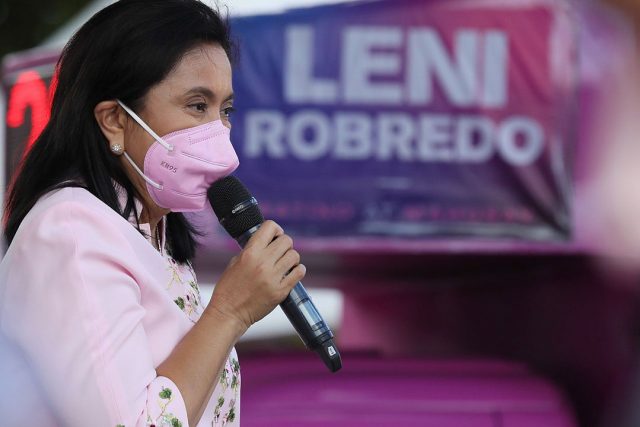
MOST INSTANCES of disinformation in social media platforms are directed against presidential aspirant and Vice President Maria Leonor “Leni” G. Robredo, based on data gathered by an academe-media fact-checking collaboration. 

“A lot has come out ahead of the May elections. Of the 200 (subjected to fact-checking), based on our initial analysis… majority of those are directed against presidential candidate and Vice President Leni Robredo,” University of the Philippines Journalism Professor Yvonne T. Chua said during a hearing held by the Senate Constitutional Amendments and Revision of Codes committee on Wednesday. 

State-owned UP initiated a collaborative fact-checking project called Tsek.ph for the elections with private institutions De La Salle University and Ateneo de Manila University, along with 11 media organizations. 

The project currently has more than 30 partners fact-checking information relating to the May 9 elections. 

“Every week, she is the biggest victim of disinformation or negative messaging” regardless of the issue being discussed at the time, Ms. Chua said.

In the case of the son and namesake of the late Philippine dictator Ferdinand E. Marcos, Ms. Chua said there were several fake endorsements from various sectors, including supposed celebrities and even heads of state. 

Historial inaccuracies in connection with his father have also resurfaced, she added.

In 2019, Tsek.ph found that majority of deceptive and unfounded claims were released on Facebook, mostly in the form of visuals such as infographics, art cards, quote cards, among others. 

“With the findings of our independent fact-checkers, there is really a need to review our criminal laws to address the widespread disinformation and misinformation happening in our digital space,” said Senator Francis “Kiko” N. Pangilinan, who chaired the hearing. 

The senator said online platforms should be held accountable for what they allow to spread. 

SURVEY
Meanwhile, Ms. Robredo’s survey rating gained momentum after two mainstream television networks held presidential interviews, although it is still far from that of her main rival, according to an international think tank. 

In a statement, nonprofit policy research group International Development and Security Cooperation (IDSC) said that based on a survey conducted from Jan. 23 to 27, Ms. Robredo’s rating rose by 4 percentage points to 20% compared to the results of a Jan. 2-7 survey.

“New supporters cite that they are now voting for Robredo as she laid clear plans for the country based on knowledge and experience,” IDSC said.

The IDSC commissioned Philippine-based public opinion and data analytics company WR Numero Research for its opinion poll shortly after GMA News held a Jan. 22 presidential forum, which was not participated in by the late dictator’s son Ferdinand “Bongbong” R. Marcos, Jr. 

The think tank said that while Mr. Marcos is on the lead in the most recent survey, his rating dropped by 9 percentage points to 50% from 59% previously. 

The think tank said Mr. Marcos’ lessened support could be due to the disqualification cases against him. “In addition, his refusal to attend interviews reduces his chance to convey his platform.” — Alyssa Nicole O. Tan and Kyle Aristophere T. Atienza 

Senator confident cases will be filed after committee report on pandemic supply contracts

By Alyssa Nicole O. Tan, Reporter   

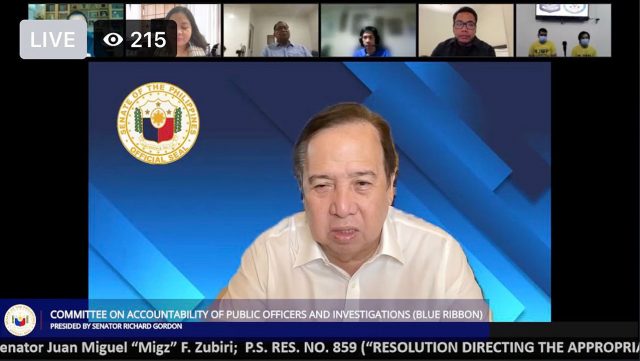
A SENATOR who led the probe on the government’s purchase of allegedly overpriced pandemic supplies said he expects the Justice department, Office of the Ombudsman, or citizens to file criminal charges against those involved, including President Rodrigo R. Duterte. 

Senator Richard J. Gordon, chair of the Blue Ribbon Committee, said Mr. Duterte can be held accountable on the basis of betrayal of public trust after siding with allegedly anomalous individuals involved in the deals instead of supporting the Senate investigation. 

“I am not biased, I have nothing against him personally,” the senator said in a media conference.

He said appropriate cases should be filed in court and allow the country’s legal system to determine accountability. “The court should be the one to say who is guilty and who should be the one behind bars.”

The committee’s 113-page draft report also recommended charges against Health Secretary Francisco T. Duque III, Department of Budget and Management Procurement Director Warren Rex Liong, ex-Budget undersecretary Lloyd Christopher Lao, former Duterte economic adviser Michael Yang, and Pharmally Pharmaceuticals Corp. officers, among others. 

Mr. Duque, in a statement on Wednesday, maintained that the Health department was not involved in the procurement of pandemic-related supplies. 

He said the Senate panel “turned a blind eye” to the “truth” that all procurements for the country’s COVID-19 response were handled by the Budget department’s procurement service.

“We at the Department of Health were not part of the activity as we were focused on the medical side of the pandemic response,” he said.

Mr .Duque said if the Blue Ribbon Committee (BRC) adopts the recommendations, the agency “will wait for the action of the appropriate Tribunal” and “fully cooperate” in the process. 

Meanwhile, the Presidential Palace refused to comment on the report as it has yet to be adopted by the committee.

“It was a partial, unofficial finding,” Palace Spokesman Karlo Alexei B. Nograles told ABS-CBN News Channel. “It’s something we cannot comment on because it is not yet official.” 

Mr. Gordon, when asked if he would file the cases himself, said, “Why are you looking at me, haven’t I done enough? I’ve done my work, let others do their work.”

The senator said he is confident that there will be petitioners based on the number of calls received by his office to ask for updates on the probe.

If nobody pursues any legal action, he said it would “show the definition of our country.” 

Senator Emmanuel “Manny” D. Pacquiao, Sr. expressed full support for the committee’s findings, saying he would sign the report without any reservation. 

“All of that went through the investigations. The hearings did not only happen once,” he said. “This is the result of the investigation, so it should be respected.” 

PRELIMINARY EVALUATION
Justice Secretary Menardo I. Guevarra told reporters late Tuesday in a Viber message that the investigating committees in both the Senate and House of Representatives should first endorse their respective reports to his department and the Ombudsman for appropriate action. 

“On the part of the DoJ (Department of Justice), it will make a preliminary evaluation to determine if there is a need to refer the reports to the NBI (National Bureau of Investigation) for validation of the evidence,” he said. 

“If in the affirmative, the NBI will be directed to conduct its investigation and build, if necessary, on the evidence already gathered by the Congress,” he added. 

Mr. Yang’s legal counsel, Raymond Parsifal A. Fortun, had said the conclusions of the report “have no legal nor factual basis, done not in aid of legislation but solely for reelection.” 

He said his client is looking forward to the report being forwarded to “an impartial investigation body” that would decide on actual evidence.

Lawyer Ferdinand S. Topacio, who represents some of the Pharmally officials, challenged the Senate committee “to write finis to the farce they have started” and let the justice system take its course. 

“Before the courts, I am confident that the evidence will lead to the eventual acquittal of our clients from the charges recommended by the BRC, whose report is, to quote Shakespeare, ‘full of sound and fury, signifying nothing’,” he said. with a report from Kyle Aristophere T. Atienza

Group urges Comelec to assign health workers in area for symptomatic voters

A NON-PARTISAN coalition urged the Commission on Elections (Comelec) to improve safety protocols for voters who exhibit coronavirus symptoms during the May 9 national and local elections.

“Designating personnel with medical training or knowledge for the IPP (isolated polling places) is a practice worth replicating,” the group PARTICIPATE said in a statement on Wednesday. 

“Support staff stationed in the IPP should be provided with additional personal protective equipment to cater to symptomatic voters,” it added.

Comelec Spokesman James B. Jimenez said in a virtual forum last week that voting sites will have separate booths for symptomatic voters, as implemented in last year’s Palawan plebiscite.

There will be around 105,000 polling precincts this year, mostly public schools. In comparison, there were 80,000 during the 2019 elections, Mr. Jimenez said. — John Victor D. Ordoñez