Home Blog Page 6417

Duterte orders re-establishment of maritime inter-agency committee

MARINA FACEBOOK PAGE

President Rodrigo R. Duterte has issued an Executive Order (EO) re-establishing a maritime inter-agency committee, which will improve policy on shipping safety, marine environment protection, and the training of seafarers.

Signed on Dec. 28, EO No. 159 reconstitutes the Inter-Agency Coordinating Committee on the Ratification and Implementation of Maritime Conventions (ICCRIMC) and renames it the Inter-Agency Coordinating Committee to Facilitate the Ratification and Accession to and Implementation of Maritime Conventions (ICCFRAIMC).

EO 159 also prescribes an integrated approach in ratifying and acceding to international maritime conventions and instruments.

According to the EO, “the country strives to become a major maritime nation that (puts a) premium (on) the protection of life and the marine environment, enhancement of the level of safety of shipping, and the advancement of the standards of training, certification and watchkeeping for seafarers.”

In 2015, the Department of Transportation founded the ICCRIMC to monitor developments and consider Philippine participation in new international maritime conventions.

The ICCFRAIMC will be tasked to “consider new international maritime conventions for possible ratification or accession, conduct a national interest analysis for the purpose, and study measures needed to satisfy convention requirements, as well as the implications on the established maritime operations in the country.”

The committee will be chaired by a representative from the Department of Transportation, while the vice chair will be designated by the Department of Foreign Affairs, according to the EO.

The committee will also have representatives from the Department of Science and Technology (DoST), the Philippine Coast Guard (PCG), the Philippine Ports Authority (PPA), the Cebu Port Authority, the Bureau of Fisheries and Aquatic Resources (BFAR), and the Department of Environment and Natural Resources (DENR). – Luisa Maria Jacinta C. Jocson

ILO says 2.2 million Filipino workers affected by Odette

PHILSTAR

The International Labour Organization (ILO) said Friday that about 2.2 million workers were directly affected by typhoon Odetete (international name: Rai), the strongest storm to hit the country last year.

“Although the typhoon hit parts of 10 regions, the impact on employment varied,” the ILO said in a statement, after conducting a rapid assessment.

Among the hardest hit regions were the Western Visayas with 672,000 affected workers, the Eastern Visayas with 343,000 and the Central Visayas with 643,000, the labor organization said.

It added that nearly one-third of the entire workforce in Caraga region in the southern Philippines “was impacted.”

The ILO said almost 38% of the total affected workers are women, noting that about three in five of them were in low-paid jobs like agriculture, wholesale and retail trade or domestic work, prior to the typhoon.

The ILO said young people and older workers were also among those significantly affected by the typhoon, which killed hundreds.

“It is heart-breaking to see how Typhoon Odette has affected already vulnerable workers with limited capacity to earn, less income security, and lack of social protection,” said Hideki Kagohashi, Enterprise Development Specialist of the ILO Country Office for the Philippines.

“A human-centered recovery is vital, one which places decent work and sustainable livelihoods at the heart of efforts to build back better,” he added. — Kyle Aristophere T. Atienza

ADB considering 2022 PHL financing package of $3 billion

The Asian Development Bank (ADB) is considering lending $3 billion to the Philippines this year, focused on programs geared to infrastructure and improving climate change resiliency.

“So, we’re looking at about P3 billion in indicative lending. It’s going to be focusing on infrastructure. We’re also shifting towards financing of climate change reforms, post-COVID recovery and skills development,” ADB Philippines Country Director Kelly Bird said in an online webinar organized by the Nordic Chamber of Commerce of the Philippines Friday.

Among the projects to be funded this year are the South Commuter Railway project, the Davao Modern Bus Project, the Climate Change Action Policy, the Technical Vocational Education and Training Project, and a Post-COVID Business and Employment Recovery Program, Mr. Bird said.

He said the bank is in the final stages of preparations for supporting the South Commuter Railway project, which will run between Manila and Calamba.

The Davao Modern Bus project is also in the final stages of preparations. It will gradually replace some jeepneys and smaller transport units, Mr. Bird added.

The long-term impact of infrastructure is crucial in bringing economic development outside the capital, he said.

“It’s really designed for helping to decongest Metro Manila, but also help promote economic development outside Metro Manila – going out further north and further south, but particularly further north over the longer term. So if you do invest in good infrastructure, population will shift to those areas over the longer term,” Mr. Bird said.

The ADB is expecting the Philippine economy to grow by 6% this year, which is below the government’s official 7-9% goal. — Luz Wendy T. Noble

Taiwan labor office asked to reopen doors to OFWs

Taiwan has been asked to reopen its doors to migrant Filipino workers, the Manila Economic and Cultural Office (MECO) said Friday, following a meeting between the Philippines’ representative office to Taipei and the Taiwan labor ministry.

In a statement, MECO said that its chairman and resident representative Wilfredo B. Fernandez, had sought a meeting with labor minister Minister Hsu Ming-Chun “in his continuing bid for Taiwan to reopen its borders to overseas Filipino workers.”

“During the meeting, (Mr.) Fernandez reiterated his request for ‘stranded’ Filipino workers in the Philippines since the May 2021 suspension of deployment due to the COVID-19 pandemic to be allowed to return to Taiwan,” it added.

Philippine labor attaché in Taiwan Cesar Chavez, Jr said earlier that Taiwan is likely to welcome OFWs after the 2022 Lunar New Year, when more quarantine facilities are expected to be available.

Mr. Hsu said during the meeting that the Philippines is an important international partner, citing the immense contribution of Filipinos to Taiwan’s economic development.

MECO said Mr. Hsu pledged to continuously review labor rules to protect the rights of migrant workers and improve their benefits.

Meanwhile, Mr. Fernandez reiterated his strong objection to “exorbitant fees” Philippine recruitment agencies charge to OFWs, saying the matter could be addressed through simplified recruitment and better collaboration between the two countries.

The MECO said its chairman asked Malacañang in November to “ensure Taiwan’s requirements for the resumption of OFW deployment be addressed immediately” and recommended that Philippine recruitment agencies shoulder all pandemic-related fees.

“The recommendation is in consonance with a January 2021 Memo Circular No.1 of the Philippine Overseas Employment Administration (POEA) explicitly providing that pandemic fees prior to deployment shall be borne by the agency, at no cost to the worker,” it said. — Kyle Aristophere T. Atienza

ARTA backs extended deadlines for business permit renewal, real property tax payment 

BW FILE PHOTO

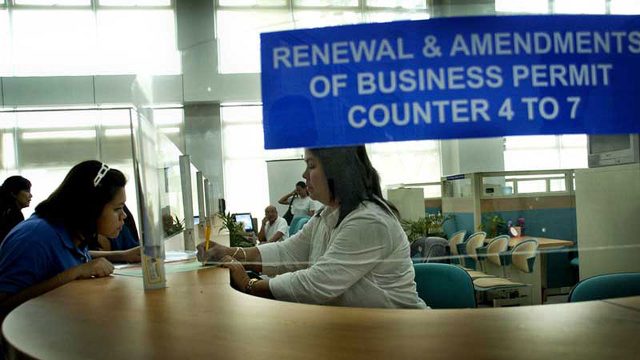
LOCAL government units (LGUs) need to extend the deadline for business permit renewal until the end of the first quarter following the surge in coronavirus disease 2019 (COVID-19) cases, the Anti-Red Tape Authority (ARTA) said.   

ARTA Director General Jeremiah B. Belgica said in a statement Friday that extending the deadline to renew business permits and pay real property tax is necessary to keep the virus from spreading.   

According to ARTA, the period to renew business permits is between Jan. 3 and 20, with mayors having the authority to extend the deadline.   

“This is a time for us to approach situations with more compassion and sensitivity. With record-breaking number of COVID-19 cases being announced almost every day, we at ARTA believe it is only right to extend the period of renewal of business permits,” Mr. Belgica said.   

“Public health should be the government’s topmost priority right now. People traveling to city halls to renew their business permits and pay their real property tax would not help in curbing the spread of the virus,” he added.   

Mr. Belgica reminded LGUs to fully automate their business permit and licensing systems to comply with Republic Act No. 11032 or the Ease of Doing Business and Efficient Government Service Delivery Act.  

“We are again calling on the LGUs to set up their electronic business one-stop shops. Doing so will allow both the public and government employees to conduct their business-related transactions in a safe, contactless, and convenient way, which is ideal especially during this pandemic,” Mr. Belgica said.   

On Nov. 22, Malacañang issued Memorandum Circular No. 57 which directed all local governments to submit their progress reports to ARTA and the Department of the Interior and Local Government (DILG), updating these agencies on how far they have gone in establishing electronic business one-stop shops. — Revin Mikhael D. Ochave  

Shares dip on profit taking as virus cases surge

COURTESY OF PHILIPPINE STOCK EXCHANGE, INC.

Philippine shares joined regional peers and retreated on Friday as investors took profits from a two-day rally after weighing in the country’s coronavirus disease 2019 (COVID-19) situation.

The benchmark Philippine Stock Exchange index (PSEi) slipped by 46.41 points or 0.63% to 7,261.34, while the broader all shares index ended lower by 14.81 points or 0.38% to 3,855.30 on the last trading day of the week.

“The index closed lower as investors preferred to take profits off the table after rallying for two consecutive days. Traders may be assessing the COVID-19 situation in the country, as daily new cases remain elevated,” Timson Securities, Inc. Trader Darren Blaine T. Pangan said in a Viber message.

The Philippines has been breaking its record of new COVID-19 cases this week. It recorded 34,021 new cases on Thursday, making it the biggest number of infections tallied in a day since the pandemic hit the country in March 2020.

“Investors went on profit taking in line with most of the Asian markets as there is possibility of the imposition of increase in restriction level,” said Aniceto K. Pangan, equity trader at Diversified Securities, Inc.

The government announced on Friday that the National Capital Region will remain under Alert Level 3, the second strictest quarantine classification until Jan. 31.

Earlier this week, Alert Level 3 was placed over 28 other areas from Jan. 14 until the end of the month.

Philstocks Financial, Inc. Senior Research Analyst Japhet Louis O. Tantiangco said that the negative spillovers from Wall Street’s overnight performance amid worries over US inflation and the Federal Reserve’s possible monetary tightening also weighed on the local bourse.

Federal Reserve policymakers this week signaled they will start raising US interest rates in March to battle inflation that is eroding the value of workers’ recent wage gains and putting the policy setters under a political spotlight, Reuters reported.

Meanwhile, Asian stocks faltered on Friday on fears over central banks’ hiking rates. Equities in Kuala Lumpur, Philippines, and Thailand dropped between 0.3% and 1%, while Seoul equities sank 1.5%, Reuters reported.

Mr. Tantiangco noted that trading value was tepid as it slipped to P5.8 billion with 947.07 million issues, from P7.2 billion logged on Thursday with 1.5 million shares that switched hands. Friday’s value turnover was also below last year’s daily average of P7.38 billion.

Sectoral indexes ended in the red except for mining an oil, which inched up 4.97 points or 0.04% to 10,087.09.

On the other hand, financials dropped 15.95 points or 0.95% to 1,662.48; services fell 18.38 points or 0.92% to 1,976.48; property lost 16.97 points or 0.52% to 3,217.1; holding firms declined 28.28 points or 0.39% to 7,063.03; and industrials decreased 21.97 points or 0.21% to 10,380.9.

Decliners outnumbered advancers, 97 against 77, while 53 names closed unchanged.

Foreigners turned sellers recording P63.19 million in net outflow, versus the P659.73 million in foreign net buying recorded the previous trading day.

Timson Securities’ Mr. Pangan said that Haus Talk, Inc.’s listing on the exchange on Jan. 17 could affect next week’s trade. — Marielle C. Lucenio

WHO recommends Eli Lilly, GSK-Vir’s drugs, widening COVID-19 treatment pool

A World Health Organization (WHO) panel recommended use of two drugs by Eli Lilly, and GlaxoSmithKline and Vir Biotechnology for coronavirus disease 2019 (COVID-19) patients, adding treatment options as the fast-spreading Omicron variant renders many ineffective.

WHO data shows Omicron, which is evading protection provided by many vaccines and therapies, has been identified in 149 countries. It is quickly replacing Delta as the dominant variant in several nations, forcing governments and scientists to bolster defences with testing, shots and therapies.

The panel on Thursday strongly recommended Lilly’s baricitinib, sold under brand name Olumiant, for patients with severe COVID-19 in combination with corticosteroids, while conditionally endorsed GSK-Vir’s antibody therapy for non-severe patients at the highest risk of hospitalization.

So far, GSK-Vir’s monoclonal antibody therapy is the only one that has shown effectiveness against Omicron in lab tests, while similar treatments from Eli Lilly and Co. and Regeneron Pharmaceuticals offered lower protection in such tests.

The WHO experts noted that the effectiveness of monoclonal antibody treatments — lab-generated compounds that mimic the body’s natural defences — against new variants such as Omicron was still uncertain, and said the guidelines for this class of medicine will be updated when additional data become available.

The WHO guidelines, published in the British Medical Journal, also noted that evidence shows baricitinib improves survival rate and reduces the need for ventilation, with no observed increase in adverse effects.

French medical charity Medecins Sans Frontieres (MSF) welcomed the United Nations agency’s guidelines, and said baricitinib can be a potential alternative to current WHO-recommended monoclonal antibody treatments that remain in short supply for governments and patients in many low- and middle-income countries.

MSF also said that governments must take steps to ensure that patent monopolies do not stand in the way of access to the treatment. — Reuters

Auro Chocolate opens first physical store

AURO Chocolate, a bean-to-bar company which sustainably sources cacao beans from Filipino farmers, launched in December a grab-and-go concept store in SM Mall of Asia’s MOA Square, next to Ikea Philippines, as a way to move forward despite the pandemic.

“Opening a cafe store in the midst of an ongoing pandemic might be surprising for some but we believe that the only way to move forward is by taking a step into it, and for us, that is opening our very first physical location,” said Kelly S. Go, managing director of Auro Chocolate, via e-mail.

In 2020, at the onset of the pandemic and rapid growth of e-commerce, Auro launched its own online platform as well as official online stores through Lazada and Shopee. The physical store is an attempt to further widen their “distribution and presence in Metro Manila and offer a unique sustainable experience for everyone,” she said.

With a vision of being proudly Filipino, the space is made of handwoven material and lit warmly to provide an atmosphere befitting choices like Sourdough Pan de Tsokolate stuffed with Tinapang Bangus, and Tortang Talong and Beef Pares sandwiches.

“We want everything to be locally sourced and crafted,” said Ms. Go, referring to the food and drinks as well as the café itself.

Auro plans to open more physical stores.

FILIPINO TASTES

During the pandemic, Filipinos’ evolving taste in sweets due to various food trends opened up opportunities for introducing more products, according to the company.

There’s Auro’s collaboration with Don Papa Rum, a 70% Dark Chocolate infused with Don Papa Rum; and limited-edition products like the Intergalactic Choco Bomb with The Everyday, and tea-infused chocolate bars with Serenitea.

“We are always looking for different ways how we can innovate the tree-to-bar chocolate experience through our products and honoring our heritage,” Ms. Go said.

She also cited the outpour of support for sustainably sourced, locally made products in the pandemic, increasing the chances of local brands to succeed on the global stage.

SUPPORTING FARMERS

The pandemic didn’t stop Auro from their advocacy of supporting cacao farmers. The company reported that they were able to buy nearly 100 metric tons of cacao beans from farmers, paid with an additional 10–15% premium above the world market price.

Cacao programs also addressed farmers’ concerns regarding production and quality.

Through the Organic Conversion Program (OCP), Auro helps its partners earn international organic certifications that will open new markets for their cacao. Dr. Zoi Papalexandratou, of the ZOTO Cacao Consultancy in Belgium, helps with post-harvest protocols that can maximize the flavor potential of cacao beans.

“With our rich history and tradition with cacao, there is much more to discover in terms of variety, origin, and flavor profile of cacao beans all over the country,” said Ms. Go. — Brontë H. Lacsamana

UK’s Prince Andrew stripped of royal and military links

WIKIPEDIA

LONDON — The Royal Family removed Prince Andrew’s military links and royal patronages on Thursday and said he will no longer be known as “His Royal Highness,” as the son of Queen Elizabeth fights a US lawsuit in which he is accused of sex abuse.

Andrew, 61, the Duke of York, was forced to step down from public duties in 2019 because of his connections to convicted US sex offender Jeffrey Epstein, and after a disastrous BBC TV interview which the prince had hoped would clear his name.

Thursday’s move by the royal family means he will now lose all his royal connections.

“With the queen’s approval and agreement, The Duke of York’s military affiliations and royal patronages have been returned to the queen,” Buckingham Palace said in a statement.

“The Duke of York will continue not to undertake any public duties and is defending this case as a private citizen.”

On Wednesday, Andrew’s lawyers failed to persuade a US judge to dismiss a civil lawsuit in which Virginia Giuffre accuses him of sexually abusing her when she was a teenager.

US District Judge Lewis Kaplan said Ms. Giuffre, 38, could pursue claims that Andrew battered her and intentionally caused her emotional distress while Epstein — a financier who killed himself in jail in August 2019 while awaiting his sex trafficking trial — was trafficking her.

The prince, the 95-year-old queen’s second son, has denied Ms. Giuffre’s accusations that he forced her to have sex more than two decades ago at a London home of former Epstein associate Ghislaine Maxwell, and abused her at two Epstein properties.

The judge’s decision means Andrew could be forced to give evidence at a trial which could begin between September and December 2022 if no settlement were reached.

‘MARATHON NOT A SPRINT’

“Given the robustness with which Judge Kaplan greeted our arguments, we are unsurprised by the ruling,” a source close to Andrew said.

“However, it was not a judgment on the merits of Ms. Giuffre’s allegations. This is a marathon not a sprint and the Duke will continue to defend himself against these claims.”

A representative for Ms. Giuffre did not immediately respond to a request for comment.

Andrew’s links to Epstein had led to a swathe of damaging media reports, leading the prince to decide to do a TV interview in November 2019 which he hoped would resolve the matter.

It instead led to ridicule and further questions, and as the controversy grew, Buckingham Palace had increasingly distanced itself from the prince, declining to comment and referring all questions to his lawyers.

“This is now about the protection of the royal family’s reputation. This is likely to do, and is already doing, considerable reputational damage — it’s being followed around the world,” the BBC’s royal correspondent Nicholas Witchell said.

The US conviction last month of his friend Ghislaine Maxwell on sex trafficking and other charges of recruiting and grooming underage girls for Epstein to abuse, together with his own case, had left his reputation in the British media in tatters.

A royal source said the decision over Andrew came after wide discussions among the Windsors, and that his military affiliations and patronages would be redistributed to other members of the family.

Earlier, an open letter to the queen, signed by more than 150 veterans calling for Andrew to have his military titles taken away and “if necessary, that he be dishonorably discharged,” was published by the anti-monarchy campaign group Republic.

They called for Elizabeth to take immediate action because her son had been “uncooperative and less than truthful” about his relationship with Epstein, and had brought the armed services he represented into disrepute.

“Regardless of the result of Virginia Giuffre’s civil case against Prince Andrew, his position in Britain’s armed forces is now untenable,” the veterans’ letter said.

The scandal surrounding Andrew comes on the heels of the damage caused after the queen’s grandson Prince Harry and his American wife Meghan quit royal duties to forge new careers in Los Angeles, later accusing the royal household of racism.

They too were stripped of all their patronages, the “His and Her Royal Highness” titles, and Harry also lost his prized military roles. — Michael Holden/Reuters

US Supreme Court blocks Biden vaccine-or-test policy for large businesses

WASHINGTON — The US Supreme Court on Thursday blocked President Joseph R. Biden, Jr.’s coronavirus disease 2019 (COVID-19) vaccination-or-testing mandate for large businesses — a policy the conservative justices deemed an improper imposition on the lives and health of many Americans — while endorsing a separate federal vaccine requirement for healthcare facilities.

Mr. Biden voiced disappointment with the conservative-majority court’s decision to halt his administration’s rule requiring vaccines or weekly COVID-19 tests for employees at businesses with at least 100 employees. Mr. Biden said it now is up to states and employers to decide whether to require workers “to take the simple and effective step of getting vaccinated.”

The court was divided in both cases, centering on pandemic-related federal regulations at a time of escalating coronavirus infections driven by the Omicron variant in a nation that leads the world with more than 845,000 COVID-19 deaths.

It ruled 6–3, with the six conservative justices in the majority and three liberal justices dissenting, in blocking the rule involving large businesses — a policy that applied to more than 80 million employees. The court’s majority downplayed the risk COVID-19 specifically poses in the workplace, comparing it instead to “day-to-day” crime and pollution hazards that individuals face everywhere.

The vote was 5–4 to allow the healthcare worker rule, which requires vaccination for about 10.3 million workers at 76,000 healthcare facilities including hospitals and nursing homes that accept money from the Medicare and Medicaid government health insurance programs for elderly, disabled and low-income Americans. Two conservatives, Chief Justice John Roberts and Justice Brett Kavanaugh, joined the liberals in the majority in that case.

In a statement, Mr. Biden said the court’s decision allowing the healthcare worker mandate “will save lives” and his administration will enforce it. Workers must be vaccinated by the end of February.

The court heard arguments last Friday in the legal fight over temporary mandates issued in November by two federal agencies aimed at increasing US vaccination rates and making workplaces and healthcare settings safer. The cases tested presidential powers to address a swelling public health crisis.

In an unsigned ruling, the court said the rule affecting large businesses, issued by the Occupational Safety and Health Administration (OSHA), was not an ordinary use of federal power.

“It is instead a significant encroachment on the lives — and health — of a vast number of employees,” the court said.

“Permitting OSHA to regulate the hazards of daily life -simply because most Americans have jobs and face those same risks while on the clock — would significantly expand OSHA’s regulatory authority without clear congressional authorization,” the court added.

Challengers led by the state of Ohio and the National Federation of Independent Business (NFIB), which represents employers, asked the justices to block OSHA’s rule after a lower court lifted an injunction against it. Companies were supposed to start showing they were in compliance starting this past Monday.

In dissent, Justice Stephen Breyer wrote on behalf of the liberal justices that the decision “stymies the federal government’s ability to counter the unparalleled threat that COVID-19 poses to our nation’s workers.”

‘WELCOME RELIEF’

“Today’s decision is welcome relief for America’s small businesses, who are still trying to get their business back on track since the beginning of the pandemic,” said Karen Harned, executive director of the NFIB’s legal arm.

The high court blocked a Dec. 17 decision by the Cincinnati-based 6th US Circuit Court of Appeals that had allowed the mandate to go into effect.

In the healthcare facilities case, the court’s differently comprised majority concluded that the regulation “fits neatly” within the power Congress conferred on the government to impose conditions on Medicaid and Medicare funds, which includes policies that protect health and safety.

“After all, ensuring that providers take steps to avoid transmitting a dangerous virus to their patients is consistent with the fundamental principle of the medical profession: first, do no harm,” the court said.

Four conservative justices dissented from the healthcare facility decision, concluding that Congress had not given the federal agency the authority to require vaccinations for millions of healthcare workers. In one dissent, Justice Samuel Alito doubted that the agency can “put more than 10 million healthcare workers to the choice of their jobs or an irreversible medical treatment.”

The justices lifted orders by federal judges in Missouri and Louisiana blocking the policy in 24 states, allowing the administration to enforce it nearly nationwide. Enforcement was blocked in Texas by a lower court in separate litigation not at issue before the Supreme Court.

Gerald Harmon, president of the American Medical Association physicians group, said that although he is pleased the court allowed the healthcare worker mandate, the broader workplace rule is also needed.

“Workplace transmission has been a major factor in the spread of COVID-19,” Mr. Harmon added. “Now more than ever, workers in all settings across the country need commonsense, evidence-based protections against COVID-19 infection, hospitalization, and death.” — Lawrence Hurley and Andrew Chung/Reuters

Russia says Ukraine talks hit ‘dead end,’ Poland warns of risk of war

A RUSSIAN FLAG flies with the Spasskaya Tower of the Kremlin in the background in Moscow, Russia, Feb. 27, 2019. — REUTERS

VIENNA/MOSCOW — Poland’s foreign minister said on Thursday that Europe was at risk of plunging into war as Russia said it was not yet giving up on diplomacy but that military experts were preparing options in case tensions over Ukraine could not be defused.

In Washington, the White House said the threat of a Russian invasion of Ukraine remained high with some 100,000 Russian troops deployed and the United States would make public within 24 hours intelligence suggesting Russia might seek to invent a pretext to justify one.

“The drumbeat of war is sounding loud, and the rhetoric has gotten rather shrill,” Michael Carpenter, US Ambassador to the Organization for Security and Cooperation in Europe (OSCE), said after talks with Russia in Vienna.

“The threat of military invasion is high,” White House national security adviser Jake Sullivan told reporters. “There are no dates set for any more talks. We have to consult with allies and partners first.”

Russia said dialogue was continuing but was hitting a dead end as it tried to persuade the West to bar Ukraine from joining NATO and roll back decades of alliance expansion in Europe — demands that the United States has called “non-starters.”

“At this stage it is really disappointing,” Russian Ambassador Alexander Lukashevich told reporters after a meeting of the OSCE, the third leg in a series of East-West talks this week.

He warned of possible “catastrophic consequences” if the two sides could not agree on what Russia has termed security red lines but said Moscow had not given up on diplomacy and would even speed it up.

The Russian comments reflect a pattern of Moscow saying it wants to pursue diplomacy but rejecting calls to reverse its troop build-up near Ukraine and warning of unspecified consequences for Western security if its demands go unheeded.

Earlier, Polish Foreign Minister Zbigniew Rau told the 57-nation security forum: “It seems that the risk of war in the OSCE area is now greater than ever before in the last 30 years.”

While overlooking wars during that period in the former Yugoslavia and parts of the former Soviet Union, his comment highlighted the level of European anxiety over Russia’s build-up of some 100,000 troops within reach of its border with Ukraine.

Russia denies plans to invade Ukraine but its military build-up has forced the United States and its allies to the negotiating table.

Rau reported no breakthrough at the Vienna meeting, which followed Russia-US talks in Geneva on Monday and a Russia-NATO conference in Brussels on Wednesday.

‘DIFFERENCE OF APPROACHES’

Russian Deputy Foreign Minister Sergei Ryabkov said the earlier meetings had shown there was a “dead end or difference of approaches,” and he saw no reason to sit down again in the coming days to restart the same discussions.

He told RTVI television Russian military specialists were providing options to President Vladimir Putin in case the Ukraine situation worsened but diplomacy must be given a chance.

The Russian ruble fell by more than 2% against the dollar on Mr. Ryabkov’s comments, which also prompted a sell-off in government bonds. A trader at a major Russian bank told Reuters the market had partly reacted to a comment from Mr. Ryabkov, in reply to a question, that he would neither confirm nor rule out the possibility that Russia might deploy “military infrastructure” in Cuba and Venezuela.

Mr. Sullivan said US intelligence agencies believed Russia may want “the option of fabricating a pretext for an invasion, including through sabotage activities and information operations, by accusing Ukraine of preparing an imminent attack against Russian forces in Eastern Ukraine.”

Washington would share details “on what we see as this potential laying of a pretext” with the media within 24 hours, he added.

US Defense Secretary Lloyd Austin spoke to his Ukrainian counterpart, Oleksii Reznikov, about the Russian buildup. The Pentagon estimated two-thirds of the Russian forces near Ukraine were “out-of-garrison,” meaning they had deployed from other parts of Russia.

‘ELIMINATE THREATS’

Moscow says it is threatened by NATO’s expansion towards its borders by taking in 14 new members from former communist eastern Europe since the Cold War ended. It wants to draw “red lines” to stop the alliance from admitting Ukraine as a member or basing missiles there.

Washington has rejected those demands but said it is willing to talk about arms control, missile deployments, and confidence-building measures to move on from one of the most fraught moments in East-West relations since the Cold War.

Ambassador Lukashevich told the OSCE that unless Moscow received a constructive response, “we will be forced to draw appropriate conclusions and take all necessary measures to ensure strategic balance and eliminate unacceptable threats to our national security.”

He went on: “Russia is a peace-loving country. But we do not need peace at any cost. The need to obtain these legally formalized security guarantees for us is unconditional.”

Kremlin spokesman Dmitry Peskov criticized a sanctions bill unveiled by US Senate Democrats that would target top Russian government and military officials, including Putin, as well as banking institutions, if Russia attacks Ukraine.

Mr. Peskov said imposing sanctions on Mr. Putin would be tantamount to severing relations.

“We view the appearance of such documents and statements extremely negatively against the background of an ongoing series of negotiations, albeit unsuccessful ones,” he said. — Thomas Escritt and Tom Balmforth/Reuters


Canada-US supply chain still could face disruptions due to vaccine mandates

PIXABAY

OTTAWA — Coronavirus disease 2019 (COVID-19) vaccine requirements for foreign truckers at the Canada-US border still could cause supply-chain disruptions if both countries do not allow exemptions, the head of the Canadian Trucking Alliance (CTA) said on Thursday. 

Late on Wednesday, Canada dropped a vaccine mandate for Canadian truckers returning home from the United States that was supposed to kick in on Saturday, but unvaccinated non-Canadians will still be turned back at the border. 

The United States has signaled, without providing details, that foreign truck drivers will have to show proof of inoculation to enter the United States starting on Jan. 22. 

So if both countries keep their respective bans on unvaccinated foreign drivers, thousands will be taken off the roads, creating the first policy measure since the pandemic began that could limit cross-border trucking traffic. 

“After the 22nd, my members won’t be able to go into the United States if they’re unvaccinated. And the Americans won’t be able to get into here if they’re not vaccinated,” Stephen Laskowski, president and chief executive of the CTA, told Reuters. 

“So we’re asking both countries to work together to remove their foreign national [vaccine] mandate and look for a better date to put this in place,” he added. 

The trucking industry carries more than two-thirds of the C$650 billion ($521 billion) in goods traded annually between Canada and the United States. 

The CTA estimates that 10% to 20%, or between 12,000-22,000 of Canadian truck drivers, and 40%, or some 16,000, of U.S. truck drivers traveling into Canada would be sidelined by mandates. 

Supply chain disruptions drove Canada’s headline inflation to an 18-year high in November, and the Bank of Canada has signaled that it could raise interest rates to counter rising prices as soon as April. 

In the United States, inflation rose at its fastest pace year-to-year in nearly four decades in December. 

Mr. Laskowski said he is in contact with the American Trucking Associations (ATA), and that neither the CTA or the ATA have any information as to how the US mandate will be enforced. The ATA did not immediately respond to a request for comment. 

Canada’s border agency and the ministry of public safety, which oversees the border, did not immediately comment when asked about potential exemptions for foreign drivers. 

The White House declined to immediately comment. — Steve Scherer/Reuters