Home Blog Page 6255

Media policy as election issue

MACROVECTOR-FREEPIK

During a May 31 press conference after the 2016 campaign for the Presidency of this endangered republic, a reporter asked President-elect Rodrigo Duterte his views on the killing of journalists, which among other con-sequences had led the US-based press freedom watch group Committee to Protect Journalists (CPJ) to describe the Philippines as “the most dangerous place in the world to practice journalism.”

Mr. Duterte not only practically justified the killings by saying that those killed “did something wrong,” he also implied that all the broadcasters and print journalists killed in the rural areas were corrupt, despite research findings that only 10% of them had ever been so accused, while some 90% were exposing official corruption and/or local criminality.

Mr. Duterte’s declaration turned out to be indicative of what has since been his repressive press and media policy. Over the past six years of his troubling watch, he has caused the shutdown of the ABS-CBN network, the withdrawal of the Securities and Exchange Commission (SEC) registration of the Rappler news site and the persecution and harassment of its staff, and the banning of journalists from covering his Office as well as public events in which he is present, while his military and police minions “red tag” and arrest on fabricated charges media practitioners he does not approve of.

Deny it as many journalists will, these attacks have dampened the media’s essential role of monitoring government and holding it to account. And even that most fundamental media responsibility of all — providing their audiences the information they need — has also suffered.

Not only is it because the shutdown of ABS-CBN has denied the communities it used to serve such vital information as the imminence of volcanic eruptions and typhoons, it is also because much reporting has fallen into simply quoting this or that source without analysis or interpretation — officially so as not to appear biased, but in reality, in fear of persecution.

Equally distressing is the flagging interest of some media organizations in asking the hard questions that journalists have to ask of the powerful and those aspiring for public office, and even in fact-checking their claims.

Two recent incidents come to mind. The Senate Committee on Electoral Reforms was appraised during a hearing on March 9 by, among other groups, the National Movement for Free Elections (Namfrel) and the Parish Pas-toral Council for Responsible Voting (PPCRV) that the Commission on Elections (Comelec) stopped them from entering the National Printing Office (NPO) where ballots for the 2022 elections were being printed, and the Come-lec warehouse in Laguna in which vote-counting machines are stored. Journalists were similarly excluded.

Only four online media organizations reported the hearing. Neither print nor radio and TV did. Only later did one broadsheet report the absence of witnesses to the printing of ballots. It was followed by other print and TV organizations nearly a week after the event, on March 15. Only then did the Comelec allow media and election watchdog groups into the NPO after allowing access to its Laguna warehouse the day before, on March 14.

The question this incident provokes is why only a handful of online media organizations reported the Comelec breach of the Omnibus Election Code. One possible answer is the hesitancy of some media organizations in call-ing attention to, and being critical of, “untouchable” government agencies whose members are so evidently well connected they are unlikely to suffer any consequences for even their most egregious offenses.

Almost at the same time that all this was happening, some media organizations replicated the claim of one broadsheet that half a million (!) people attended the March 13 Marcos Junior-Sara Duterte rally in Las Piñas, a claim the Marcos-Duterte camp attributed to the local police, which, however, denied making that estimate, and said that only some 18,000 were in attendance in that rally. But two online news sites nevertheless repeated in their reports the same 500,000 figure, while another broadsheet did the same.

In addition to the possibility that what makes such bad reporting possible is the total absence of the skepticism journalists are supposed to have a healthy dose of — “Half a million? Really?” — is the suspicion that there are under-the-table “arrangements” between some media organizations and the more moneyed candidates to make the latter look more popular than their rivals.

But it is also one more indication of the disturbing development in some media sectors of the mindset that even if something seems wrong, there isn’t much sense in looking into it because doing so will most likely get one and one’s media organization into trouble.

Evident is the need for all this to change by restoring the democratic space — and the focus on the principle of doing the right thing as an ethical and professional responsibility — that would encourage all media practition-ers to be as thorough in their roles as government watchdogs as their colleagues who, despite tremendous difficulties, are trying their best to provide the citizenry both the relevant information and analysis these times need.

An administration committed to the defense and enhancement of that space, of which free expression and press freedom are primary elements, can help do that — with, however, the involvement of both the media themselves and the citizenry. But glaringly absent in the current election campaign is any mention of the media as an election issue. No journalist or media organization has asked the candidates, whether for President, Vice-President, Senator, Congressperson, or Party-List Nominee what their policies on the media are or would be once they are elected to the posts they are running for.

No one has even raised, as did that journalist in 2016, any question on this or that candidate’s views on the continuing killing of journalists, the answer to which could provide a clue today, as it did then, on the candidate’s attitude towards, and what could therefore be his or her policies on, the press and media.

The media should raise such questions now, before the May elections, so the candidates can reveal in their platforms of governance whether they intend to honor and respect, to even enhance through words and deeds, the rights to free expression and press freedom the Constitution guarantees and protects — or, for those tyrannically inclined, whether, a la Rodrigo Duterte, they will ignore and even undermine those rights once they are in pow-er.

From the mid-1960s until 1972 when the Marcos dictatorship shut them down, not only the magazines but also some broadsheets were providing in-depth pieces on the most urgent political, social, and other issues the Fili-pino nation had to contend with. But almost on the eve of the declaration of martial law, then Philippines Free Press editor Teodoro M. Locsin, Sr. described the Philippine press as “cheap” rather than free.

He was not referring to all of the media, and neither was he describing only how cheaply some of its sectors could be bought, but also how even those others aware of the value of truth-telling to people’s lives could be har-assed and threatened into silence by an administration focused on keeping itself in power through any and whatever means including repression.

It is to preclude the election of another such regime that the entire country needs to hear what their media policy is or will be from the candidates vying for public office, most specially the Presidency. Make no mistake about it, every last one of them including the most mindless has one.


LUIS V. TEODORO is on Facebook and Twitter (@luisteodoro).
www.luisteodoro.com

The utter inutility of mandatory mask wearing

HELLO-I-M-NIK-UNSPLASH

Had a friend that recently took a plane trip. Finally being able to sit down after going through the interminable boarding procedures, lengthened by even more inane COVID-19 protocols, a stewardess approached her and told her to put on her mask.

Why? Because some guy, 30 feet away, said he was uncomfortable seeing her bare face. My friend argued back saying the request was ridiculous, particularly as everybody had to take off their masks anyway during the flight when the meals are served.

And she’s right: public mandatory mask rules are deranged and absurd.

Science bears this out: “The only two sizeable studies evaluating masks in the context of COVID-19 failed to demonstrate statistically significant reductions in confirmed viral transmission either for surgical masks (one study) or for cloth masks (the other).

“The first study, conducted from April to June 2020 in Denmark, found that 42 (1.8%) of 2,392 subjects provided with more than four dozen three-layer surgical masks reported SARS-CoV-2 infection, versus 53 (2.1%) of 2,470 in the con-trol group. That is a difference of only 0.3%, which is not statistically significant (p = 0.38). Although adherence to masking instructions was imperfect, an analysis of only those self-reporting that they did adhere to the protocol also failed to find a benefit.

“A much larger study in Bangladesh examined the ability of masks to reduce community-wide infection rates, including as source control. Six hundred cluster-randomized villages were studied between November 2020 and January 2021.” Again, the findings indicate that mask mandate benefits were practically non-existent. “Also of interest, five-month follow-up surveillance revealed that proper mask use dramatically declined within intervention villages from approximately 28% to 14%, raising questions about long-term feasibility.” (See “How Effective Are Cloth Face Masks?,” Cato Institute, Winter 2021/2022, http://bit.ly/CATO_FaceMasks; see also “Modeling the filtration efficiency of a woven fabric: The role of multiple lengthscales,” De Anda, Wilkins, et al., AIP Physics of Fluids, March 2022, http://bit.ly/AIP_FaceMasks)

And varied country experiences corroborate the foregoing: South Korea, New Zealand, Japan, Hong Kong, Scotland, and New Mexico and Los Angeles in the United States all saw COVID cases rise following the strict applica-tion of mask mandates. On the other hand, England, as well as Texas, Iowa, and Florida saw cases either maintained or lowered upon the lifting of mask mandates.

For more detailed information on the insanity of mask mandates, Ian Miller’s book, Unmasked: The Global Failure Of COVID Mask Mandates (Post Hill Press, January 2022) is a very good resource.

In fact, masks could actually be doing more harm than good. And this is contrary to those saying that nobody knew of this at the pandemic’s beginning. The Federalist already reported back in November 2020 (“Many Studies Find That Cloth Masks Do Not Stop Viruses Like COVID”) that:

“‘Maskne,’ face rashes, ‘mask mouth,’ and sore throats point to bacteria building up in masks due to the humid, stagnant air and changes in the oral microbiome, which can cause systemic inflammation and downstream disease. A 2015 study found that healthcare workers who wore cotton face masks suffered from significantly more respiratory illness than those who wore surgical masks.

“Previous research conducted by Fauci himself found that the main cause of death in the 1918 Spanish flu pandemic was from bacterial pneumonia. Inhaling higher bacterial counts with every breath sounds like an especially bad idea.

“The WHO specifically recommends against wearing a mask while exercising because ‘masks may reduce the ability to breathe comfortably. Sweat can make the mask become wet more quickly which makes it difficult to breathe and promotes the growth of microorganisms.’”

Of course, pro-maskers regularly bring this up: “If face masks weren’t effective, then why do doctors wear masks when performing surgery?”

The problem with this “argument” is that public settings are obviously not operating rooms. Doctors wear face masks in the operating room’s sterile environment because of the necessity to protect the cut-up patient who now has an open wound that could easily get infected by germs from the doctor’s mouth and nose. Another reason, though secondary, is to protect the doctor from possible splashes when he is cutting up the patient.

And yet this is not the situation being contemplated in relation to mandatory mask requirements with the ostensible objective of controlling COVID-19 spread: the general public’s lack of training with regard to mask-wearing, the feasibility of long-term mask-wearing, the quality and cleanliness of the masks, the extent to which masks can actually stop transmission from one person to another, the physical closeness of people to each other (including population density of the areas involved), air circulation quality, and so on are all clearly different to the circumstances inherent in an operating room.

The point is that, like vaccination, mask wearing should be an individual decision based on personal responsibility. But to force people to wear masks under risk of penalty is simply unjustified and arbitrary government over-reach.


JEMY GATDULA is a senior fellow of the Philippine Council for Foreign Relations and a Philippine Judicial Academy law lecturer for constitutional philosophy and jurisprudence

https://www.facebook.com/jigatdula/
Twitter@jemygatdula

Why finance attracts the least trustworthy among us

JCOMP-FREEPIK

FORMER Goldman Sachs banker Tim Leissner has been fessing up to an awful lot of dishonest behavior lately.

Under questioning from both the prosecution and defense, Leissner admitted to faking divorce documents, creating phony e-mail accounts, marrying multiple women at once, and keeping money that wasn’t his. That’s just a brief summation from an article by Patricia Hurtado of Bloomberg News that also includes a fun bullet-pointed list of Leissner’s “Web of Lies.” For the jury in the trial of Roger Ng over his alleged role in the loot-ing of Malaysian sovereign wealth fund 1MDB, the serial prevarications of Ng’s former boss Leissner (who already pleaded guilty) present some challenges in determining how seriously to take his testimony.

For the rest of us, they raise some interesting questions. Was Leissner, once the Southeast Asia chairman of the world’s most prestigious financial institution, a total outlier? Or was his boundary-pushing and lack of trustwor-thiness just on the extreme end of a financial-industry continuum that includes a lot of other dodgy behavior?

There’s a new(ish) paper by four business and economics professors based in Germany and Austria that attempts to answer this, sort of. A version recently accepted for publication in the journal Management Science is ti-tled “Social Preferences of Young Professionals and the Financial Industry,” while there’s an earlier, paywall-free draft called “Trustworthiness in the Financial Industry.” The key finding is that university students who score low in trustworthiness in a simple game are more likely than others to end up working in finance. You probably want to know more about that game. It was introduced in 1995 by three American accounting professors, who structured it like this:

Subjects in room A decide how much of their $10 show-up fee to send to an anonymous counterpart in room B. Subjects were informed that each dollar sent would triple by the time it reached room B. Subjects in room B then de-cide how much of the tripled money to keep and how much to send back to their respective counterparts. The accounting professors dubbed this an “investment game,” but others took to calling it the “trust game.” For social scientists it has become what one recent review article described as “a workhorse to measure individual differences in trust and trustworthiness.” The decisions made in Room A are said to reflect trust and those in Room B trustworthiness. That is, the more money one sends to Room B from Room A the more trusting one is, and the more money one returns from B to A, the more trustworthy.

My initial reaction upon reading the description of the game was that those in Room B who skimped on their return payments to Room A were just selfish. They weren’t reneging on commitments, just acting like the cold-blooded “economic man” of microeconomic theory and maximizing their gains. The designers of the original trust game posited that its “Nash equilibrium,” the solution that rational players should arrive at in a non-cooperative game, was everybody sitting on their money.

Actual trust-game participants tend to be wiser than that, understanding that trusting behavior in Room A increases the size of the pie for everyone — although they’re generally not willing to maximize potential gains by handing over all the money. When the authors of the paper that inspired this column, Andrej Gill, Matthias Heinz, Heiner Schumacher and Matthias Sutter, conducted a version of the trust game (in which every participant played both roles) among 265 business and economics students at Frankfurt’s Goethe University in 2013, the first-mover students (Room A) sent an average of 38.7% of the money to the second movers (Room B), who in turn returned 20.5% of that (tripled) amount.

Gill et. al. also asked the students about their career interests. While in the first-mover role, the behavior of the 70 students with high interest in finance careers wasn’t much different from the rest. As second movers, though, those with high interest in finance returned just 15.5% of the money, while the 91 with low interest in the field returned 24.3%, and the 104 with medium interest 22.3%.

This difference is statistically significant, with a p-value (chance of it being the product of random variation) of 0.001, so it seemed to the four researchers to be worthy of an article in an academic journal. After getting pushback from journals that students’ stated career preferences might not signify much, they then tracked down 231 of the participants in 2019 and 2020 to find out about their career paths. The results were quite similar. Among the 75 who had gone into finance, the average share returned as second movers was 14.8%, versus 22.8% among the rest. Once again, there was little difference in first-mover behavior. To co-author Sutter, director of the experimental economics group at the Max Planck Institute for Research on Collective Goods in Bonn, the first-mover/second-mover disparity is an indication that it isn’t just selfishness at work. “If the people later on working in the financial industry were simply more selfish, then you would expect that they would send less as first mover,” he told me. “They have the same level of trust in other people, but in their reaction to being sent the money they behave differently.” Another experiment conducted by Heinz and Schumacher among students at the universities of Cologne and Düsseldorf found that those with a high interest in finance were less willing to cooperate in a group game unless they enjoyed clear benefits from the cooperation. They can’t be relied on as much to contribute to mutual success, which in a sense makes them less trustworthy. Whether you buy that or not, it does track with negative public perceptions of bankers and others in finance, especially since the global financial crisis of 2007 and 2008. And it seems like it might be a bad thing for both the financial sector and the economy as a whole. Part of the point of the trust game is that trusting behavior increases overall wealth — something that tends to be true outside the experimental-economics laboratory as well. What is to be done? Before 1990, finance workers earned similar education-adjusted wages to those in other fields. Since then, thanks in large part to deregulation, pay in finance has far outstripped the competi-tion, which has made it “very attractive to people who have a bit more of a selfish gene,” Sutter says. Reforms proposed to reduce financial-crisis risk by changing incentive structures in finance might have the wel-come side effect of attracting different sorts of people into the sector, he and his co-authors conclude.

Or something like that. It’s clear that the main point of the paper is simply to make public an interesting and possibly important experimental result, not to provide a blueprint for financial reform. Though the policy sugges-tions did make me wonder what careers “untrustworthy” people might favor if finance became less attractive. “I have no idea,” Sutter said when I asked him about that. Then he reconsidered: “My guess is they would go into consulting.”

BLOOMBERG OPINION

Putin wants ‘unfriendly’ countries to pay for Russian gas in roubles

RUSSIAN President Vladimir Putin. — REUTERS

LONDON — Russia will seek payment in roubles for gas sold to “unfriendly” countries, President Vladimir Putin said on Wednesday, and European gas prices soared on concerns the move would exacerbate the region’s energy crunch.

European nations and the United States have imposed heavy sanctions on Russia since Moscow sent troops into Ukraine on Feb. 24. But Europe depends heavily on Russian gas for heating and power generation, and the European Union (EU) is split on whether to sanction Russia’s energy sector.

Mr. Putin’s message was clear: If you want our gas, buy our currency. It remained unclear whether Russia has the power to unilaterally change existing contracts agreed upon in euros.

The rouble briefly leapt after the shock announcement to a three-week high past 95 against the dollar. It pared gains but stayed well below 100, closing at 97.7 against the dollar, down by more than 22% since Feb. 24.

Some European wholesale gas prices were up to 30% higher on Wednesday. British and Dutch wholesale gas prices jumped.

Russian gas accounts for about 40% of Europe’s total consumption. EU gas imports from Russia this year have fluctuated by 200 million to 800 million euros ($880 million) a day.

“Russia will continue, of course, to supply natural gas in accordance with volumes and prices… fixed in previously concluded contracts,” Mr. Putin said at a televised meeting with government ministers.

“The changes will only affect the currency of payment, which will be changed to Russian roubles,” he said.

German Economy Minister Robert Habeck called Mr. Putin’s demand a breach of contract and other buyers of Russian gas echoed the point.

“This would constitute a breach to payment rules included in the current contracts,” said a senior Polish government source, adding Poland has no intention of signing new contracts with Gazprom after their existing deal expires at the end of this year.

Major banks are reluctant to trade in Russian assets, further complicating Mr. Putin’s demand.

A spokesperson for Dutch gas supplier Eneco, which buys 15% of its gas from Russian gas giant Gazprom’s German subsidiary Wingas GmbH, said it had a long-term contract denominated in euros.

“I can’t imagine we will agree to change the terms of that.”

According to Gazprom, 58% of its sales of natural gas to Europe and other countries as of Jan. 27 were settled in euros. US dollars accounted for about 39% of gross sales and sterling for about 3%. Commodi-ties traded worldwide are largely transacted in the US dollar or the euro, which make up roughly 80% of worldwide currency reserves.

“There is no danger for the (gas) supply, we have checked, there is a financial counterparty in Bulgaria that can realize the transaction also in roubles,” Energy Minister Alexander Nikolov told reporters in Sofia. “We expect all kinds of actions on the verge of the unusual but this scenario has been discussed, so there is no risk for the payments under the existing contract.”

Several firms, including oil and gas majors Eni, Shell and BP, RWE and Uniper — Germany’s biggest importer of Russian gas — declined to comment.

“It is unclear how easy it would be for European clients to switch their payments to roubles given the scale of these purchases,” said Leon Izbicki, associate at consultancy Energy Aspects. He said, however, that Russia’s central bank could provide additional liquidity to foreign exchange markets that would enable European clients and banks to obtain needed roubles.

Moscow calls its actions in Ukraine a “special military operation.” Ukraine and Western allies call this a baseless pretext.

ONE-WEEK DEADLINE

Mr. Putin said the government and central bank had one week to come up with a solution on moving operations into the Russian currency and that Gazprom would be ordered to make the corresponding changes to contracts.

In gas markets on Wednesday, eastbound gas flows via the Yamal-Europe pipeline from Germany to Poland declined sharply, data from the Gascade pipeline operator showed.

“The measures taken by Russia may also be interpreted as provocative and may increase the possibility that Western nations tighten sanctions on Russian energy,” said Liam Peach, emerging Europe econo-mist at Capital Economics.

The European Commission has said it plans to cut EU dependency on Russian gas by two-thirds this year and end its reliance on Russian supplies “well before 2030.”

But unlike the United States and Britain, EU states have not sanctioned Russia’s energy sector. The Commission, the 27-country EU’s executive, did not respond to a request for comment.

Mr. Habeck said he would discuss with European partners a possible answer to Moscow’s announcement. Dutch Prime Minister Mark Rutte said more time was needed to clarify Russia’s demand.

“In their contracts it’s usually specified in what currency it has to be paid, so it’s not something you can change just like that,” Mr. Rutte said during a debate with parliament.

Russia has drawn up a list of “unfriendly” countries corresponding to those that have imposed sanctions. Deals with companies and individuals from those countries must be approved by a government com-mission.

The countries include the United States, European Union member states, Britain, Japan, Canada, Norway, Singapore, South Korea, Switzerland and Ukraine. Some, including the United States and Norway, do not purchase Russian gas.

The United States is consulting with allies on the issue and each country will make its own decision, a White House official told Reuters. The United States has already banned imports of Russian energy. — Reuters

By offloading rote tasks to bots, retailers can focus on strategy

PIXABAY

By Patricia B. Mirasol, Reporter

The use of robotic process automation (RPA), in conjunction with artificial intelligence (AI), will free retailers from rules-based tasks and allow them to focus on strategic and creative ones.

RPA is a form of automation that uses software bots to carry out structured and repetitive tasks. The combination of RPA, AI, and machine learning (ML) working together is often referred to as intelligent automation, said Kevin Redmond, vice president of data, AI & automation at IBM Asia Pacific.

“We can say AI and ML is like our brain, taking in available information and making decisions, while RPA is like our hands, performing actions that need to be done — possibly based on the decisions made by AI and ML,” he explained in an e-mail to BusinessWorld.

RPA is an effective way to streamline workflows in supply chain management and tailored promotions, added Natalie Pia H. Azarcon, managing partner at IBM Consulting, IBM Philippines.

“Retailers can author [RPA] bots capable of copying data from supply chain management systems like Oracle into standardized order forms. The bots can even submit orders through online portals, or help process invoices by entering data into accounting systems,” she said in a separate e-mail.

Customer experience can likewise be improved through a bot’s transfer of customer purchase data into a marketing system.

“The data can be used to segment customers for tailored offers and advertisements,” Ms. Azarcon told BusinessWorld. “RPA can also communicate personalized offers to customers through interactive voice response technology… encouraging repeat business.”

Other retail use cases of RPA, which can be deployed in the cloud or on-premise, include fraud detection, sales analytics, and returns processing.

Continuing with his human analogy, Mr. Redmond noted that chatbots are like our ears and mouth. RPA chatbots go beyond the scope of normal chatbots, he said. For instance, instead of sending customers step-by-step instructions on how to change their mailing addresses like the latter is wont to do, the former can go ahead and change the detail itself from the backend.

Mr. Redmond added that the potential for RPA is “limitless,” given that many tasks are candidates for automation. The pandemic — which puts a stress on effective operational management in the face of hybrid work — accelerated its growth.

“RPA is focused largely on cost reduction and is an innovation and survival game plan for companies to stay competitive,” he said. “Manpower cost is one of the top three cost components of organizations, and companies need to optimize their human labor with digital labor to maximize productivity.”

A November 2021 study released by Forrester, a research and advisory company, found that a credit union system organization’s use of RPA resulted in a productivity gain of about $740,000 over three years. The time needed for account creation also fell from two days to 40 minutes, allowing 80% of the 40,000-strong workforce to move on to higher skill tasks.

On invasion milestone, Ukraine urges solidarity as Western leaders gather

Ukrainian President Volodymyr Zelensky — UKRAINIAN PRESIDENTIAL PRESS SERVICE/HANDOUT VIA REUTERS

LVIV/KHARKIV, Ukraine/ BRUSSELS — Ukraine’s leader called for solidarity on Thursday, a month since Russia’s invasion began, warning he would see who sells out at summits in Europe where bolstering sanctions and NATO is planned but restrictions on energy could prove divisive.

US President Joseph R. Biden, Jr., has arrived in Brussels for meetings of the alliance, Group of 7 (G7), and European Union over a conflict that began on Feb. 24 and has caused more than 3.6 million refugees to flee the country.

Mr. Biden’s visit could also shine light on a dispute with European allies, some of whom are heavily reliant on Russian oil and gas, over whether to impose further energy sanctions.

The issue has been a “substantial” topic and the subject of “intense back and forth” in recent days, White House national security adviser Jake Sullivan told reporters. The United States has already banned imports of Russian oil.

President Vladimir Putin on Wednesday said Moscow planned to switch gas sales made to “unfriendly” countries to roubles, causing European gas prices to soar on concerns the move would exacerbate the region’s energy crunch.

As the humanitarian toll from the conflict continues to rise, driving a quarter of Ukraine’s population of 44 million from their homes, President Volodymyr Zelenskyy called on people around the world to take to the streets and demand the war end.

“Come from your offices, your homes, your schools and universities, come in the name of peace, come with Ukrainian symbols to support Ukraine, to support freedom, to support life,” he said in a video address.

The United States planned to announce more sanctions on Russian political figures and oligarchs on Thursday, and officials would have more to say on Friday about European energy issues, Sullivan said.

Ahead of his meeting with Mr. Biden, NATO Secretary-General Jens Stoltenberg said the alliance would boost its forces in Eastern Europe by deploying four new battle groups in Bulgaria, Hungary, Romania, Slovakia.

Mr. Zelenskyy said on Thursday he expected “serious steps” from Western allies.

He repeated his call for a no-fly zone and complained that the West had not provided Ukraine with planes, modern anti-missile systems, tanks or anti-ship weapons.

“At these three summits we will see who is our friend, who is our partner and who sold us out and betrayed us,” he said in a video address released early on Thursday.

KYIV HIT 

Moscow calls its actions in Ukraine a “special operation” that it says is not designed to occupy territory but to destroy its southern neighbor’s military capabilities and capture what it regards as dangerous nationalists.

The West says this a baseless pretext for an unprovoked war.

Although the Kremlin says its operation is going to plan, Russian forces have taken heavy losses, stalled on most fronts and face supply problems. They have turned to siege tactics and bombardments, causing huge destruction and many civilian deaths.

Kyiv Mayor Vitali Klitschko told reporters on Wednesday that 264 civilians in the city had been killed by Russian attacks. He later said one person was killed and two wounded on Wednesday when shells hit a shopping center parking lot.

Russia has denied targeting civilians.

US Secretary of State Antony Blinken said the United States had assessed that members of Russia’s forces had committed war crimes.

Mr. Blinken said there had been “numerous credible reports of indiscriminate attacks and attacks deliberately targeting civilians, as well as other atrocities.”

Worst hit has been the southern port of Mariupol, where hundreds of thousands of people have been sheltering since the war’s early days under constant bombardment and with food, water and heating supplies cut.

Satellite photographs from commercial firm Maxar showed massive destruction of what was once a city of 400,000 people, with residential apartment buildings in flames.

A total of 4,554 people were evacuated from Ukrainian cities through humanitarian corridors on Wednesday, a senior official said, considerably fewer than the previous day.

Ukraine’s armed forces chief of staff early on Thursday said Russia was still trying to resume offensive operations to capture the cities of Kyiv, Chernihiv, Sumy, Kharkiv, and Mariupol.

To counter troop shortages, Moscow was moving in fresh units close to the Ukraine border and calling up soldiers who had recently served in Syria, it added in a Facebook post.

‘UNFRIENDLY’ COUNTRIES 

As Western leaders prepared to meet, British Prime Minister Boris Johnson said he would push for an increase in defensive lethal aid to Ukraine.

The first US shipment from a new, $800 million arms package for Ukraine authorized last week will start flying out in the next day or so, a senior defense official said.

Mr. Putin’s threat to switch certain gas sales to rubles sent European futures soaring on concerns the move would exacerbate an energy crunch and jam up deals that run to hundreds of millions of dollars every day.

Russian gas accounts for some 40% of Europe’s total gas consumption.

Moscow has drawn up a list of “unfriendly” countries which have imposed sanctions. They include the United States, European Union members, Britain, and Japan, among others.

“The changes will only affect the currency of payment, which will be changed to Russian rubles,” said Mr. Putin.

And as an information battle also rages, a Russian regulator blocked Alphabet’s news aggregator Google News, saying it allows access to what it calls fake material about the military operation, Interfax news agency said.

Google said in a statement that some people were “having difficulty” accessing the Google News app and website in Russia and this was “not due to any technical issues at our end.”

Earlier the company said it would not help websites, apps and YouTube channels sell ads alongside content that it deemed exploited, dismissed or condoned the conflict. — Natalia Zinets, Vitalii Hnidiy, and Jarrett Renshaw/Reuters 

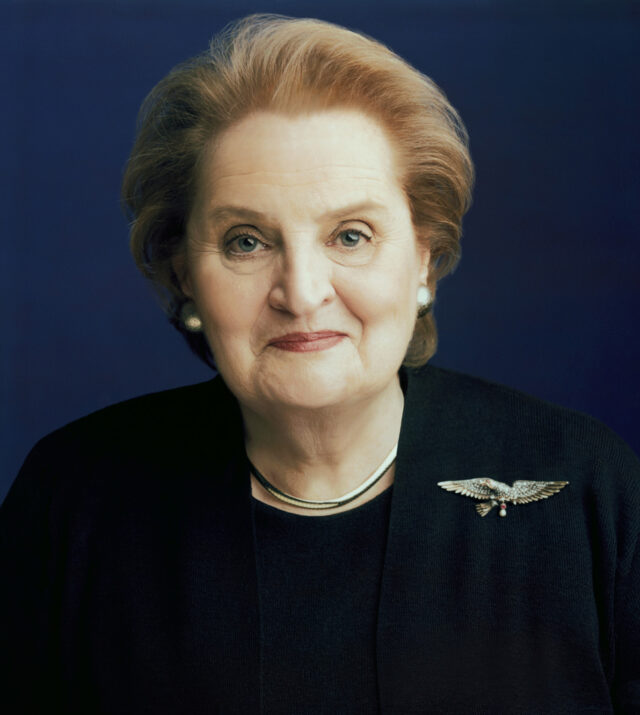
Madeleine Albright, former US secretary of state and feminist icon, dies at 84

Former US secretary of state Madeleine Albright (1937–2022), ca. 1997. US Department of State/Wikimedia Commons

WASHINGTON — Madeleine Albright, who fled the Nazis as a child in her native Czechoslovakia during World War Two then rose to become the first female US secretary of state and, in her later years, a pop culture feminist icon, died on Wednesday at the age of 84. 

Her family announced her death on Twitter and said she had died of cancer. Leaders, diplomats and academics remembered her as a trailblazer on the world stage. 

Albright served as US ambassador to the United Nations from 19931997 in US President Bill Clinton’s administration. He then nominated her to become the first female secretary of state and she served in that role from 19972001. 

“Madeleine Albright was a force. She defied convention and broke barriers again and again,” US President Joseph R. Biden, Jr., said. He directed US flags be flown at half-staff at the White House and government buildings, including embassies, until March 27. 

She was a tough-talking diplomat in an administration that hesitated to involve itself in the two biggest foreign policy crises of the 1990s — the genocides in Rwanda and Bosnia-Herzegovina. 

She once upset a Pentagon chief by asking why the military maintained more than 1 million men and women under arms if they never used them. 

The plain-spoken Albright took a tough line on a 1996 incident where Cuban jet fighters downed two unarmed US-based planes, saying: “This is not cojones, this is cowardice,” using a Spanish vulgarity meaning “testicles.” 

While at the United Nations, where Security Council members stood in silence on Wednesday to honor her memory, she pressed for a tougher line against the Serbs in Bosnia after Bosnian Serb military forces laid siege to the capital Sarajevo. 

During Mr. Clinton’s first term, many of his administration’s top foreign policy experts did not want to get involved because they vividly remembered how the United States became bogged down in Vietnam. 

In 1995, Bosnian Serb soldiers overran three Moslem enclaves, Srebrenica, Gorazde, and Zepa, and massacred more than 8,000 people. 

The United States responded by working with NATO on airstrikes that forced an end to the war but only after it had been going on for three years. 

Albright’s experience as a refugee prompted her to push for the United States to use its superpower clout. She wanted a “muscular internationalism,” said James O’Brien, a senior adviser to Albright during the Bosnian war. 

Early in the Clinton administration, while she unsuccessfully advocated for a quicker, stronger response in Bosnia, Albright backed a UN war crimes tribunal that eventually put the architects of that war, including Serbian President Slobodan Milosevic and Bosnian Serb leaders, in jail, O’Brien said. 

The painful lessons learned in Rwanda and Bosnia served the United States well in Kosovo, when Washington saw the more powerful Serbs begin a program of ethnic cleansing of ethnic Albanians. NATO responded with an 11-week campaign of air strikes in 1999 that extended to Belgrade. 

Kosovo President Vjosa Osmani said on Wednesday she was “deeply shocked by the loss of Kosovo’s great friend,” adding that the intervention “gave us hope, when we did not have it.” 

During efforts to press North Korea to end its nuclear weapons program, which were eventually unsuccessful, Albright traveled to Pyongyang in 2000 to meet North Korean leader Kim Jong-il, becoming the highest ranking US official to visit the secretive Communist-run country at the time. 

FEMINIST HEROINE 

Once the Clinton years and the 1990s were over, Albright became an icon to a generation of young women looking for inspiration in their quest for opportunity and respect in the workplace. Albright was fond of saying: “There’s a special place in hell for women who don’t help each other.” 

Albright was a marked contrast to her predecessors and male colleagues in uniform suits. She used clothes and jewelry to send tart, political messages. One favorite was a snake brooch, a reference to Iraqi leader Saddam Hussein calling her an “unparalleled serpent.” 

She wrote a book about her signature jewelry, one of several bestsellers, explaining that the pins were a diplomatic tool. Balloons or flower pins would indicate she felt optimistic, while a crab or turtle would indicate frustration. 

Born Marie Jana Korbelova in Prague on May 15, 1937, she and her family fled in 1939 to London when Germany occupied Czechoslovakia. She attended school in Switzerland at age 10 and adopted the name Madeleine. 

She was raised a Roman Catholic but after she became secretary of state, the Washington Post dug up documentation showing that her family was Jewish and relatives, including three grandparents, died in the Holocaust. Her parents likely converted to Catholicism from Judaism to avoid persecution as Nazism gained strength in Europe, the paper reported. 

After the war, the family left London and returned to Czechoslovakia, then in the throes of a communist takeover. 

Her father, a diplomat and academic who opposed communism, moved the family to the United States where he taught international studies at the University of Denver. One of his favorite students was Condoleezza Rice, who would become the second female secretary of state in 2005 under Republican President George W. Bush. 

“It is quite remarkable that this Czech émigré professor has trained two secretaries of state,” Albright told the New York Times in 2006. 

Albright attended Wellesley College in Massachusetts, and got a doctorate from Columbia University. She became fluent or close to it in six languages including Czech, French, Polish and Russian as well as English. 

In 1959, she married newspaper heir Joseph Medill Patterson Albright, whom she met while working at the Denver Post, and they had three daughters. They divorced in 1982. 

She followed her father into academia but also became involved in Democratic Party politics. Albright joined the staff of Senator Edmund Muskie, a Maine Democrat, in 1976 and two years later became a member of President Jimmy Carter’s National Security Council staff. 

Since leaving the Clinton administration, she has written a series of books. One, Hell and Other Destinations, was published in April 2020. Others include her autobiography, Madam Secretary: A Memoir (2003), and Read My Pins: Stories from a Diplomat’s Jewel Box (2009). 

The plain-spoken Albright made forays into popular culture. Parks and Recreation star Amy Poehler’s character had a picture of Albright in her office. 

In 2005, the Gilmore Girls television series the character Rory dreamt that Albright, wearing a red suit and an eagle pin, was her mother. 

In 2018, she and fellow former secretaries of state Colin Powell and Hillary Clinton briefed a fictional secretary of state in Madam Secretary, a TV drama where she spoke passionately about the dangers of abusive nationalism. — Diane Bartz/Reuters

El Salvador turns to Binance for help on bitcoin adoption

PIXABAY

SAN SALVADOR — El Salvador is seeking support from cryptocurrency exchange Binance for its implementation of bitcoin as legal tender and the issuance of bitcoin bonds, the Central American country’s ambassador to the United States said on Wednesday.

Binance Chief Executive Officer Changpeng Zhao is visiting El Salvador and plans to meet President Nayib Bukele on Thursday, ambassador Milena Mayorga told reporters.

Ms. Mayorga said Mr. Zhao’s visit was a vote of confidence in Bukele’s decision to adopt bitcoin as legal tender last September, as well as its plan to issue bitcoin-backed bonds.

Mr. Zhao praised El Salvador for taking on a pioneering role in the adoption of bitcoin and said Mr. Bukele’s presidency would be remembered in “heroic” terms for its bold bet on the future.

The country’s adoption of bitcoin has been beset by public skepticism about the cryptocurrency, which has depreciated substantially since hitting a record high in early November.

On Tuesday, the government said it was delaying its planned issuance of bitcoin bonds. — Reuters

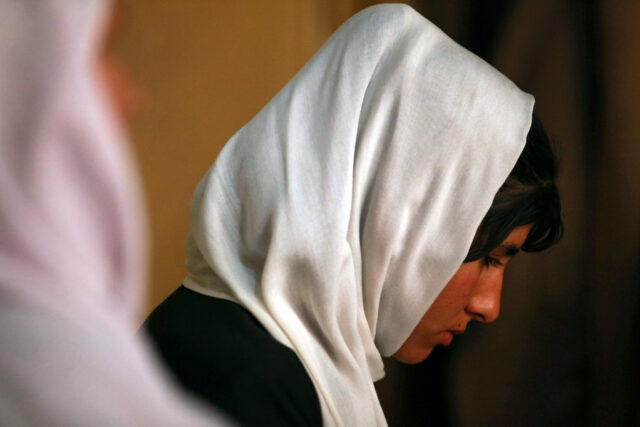
Taliban orders girls’ high schools to remain closed, leaving students in tears

United Nations Assistance Mission in Afghanistan (UNAMA)/Flickr

KABUL — The Taliban on Wednesday backtracked on their announcement that high schools would open for girls, saying they would remain closed until a plan was drawn up in accordance with Islamic law for them to reopen. 

The U-turn took many by surprise, leaving students in tears and drawing condemnation from humanitarian agencies, rights groups and diplomats at a time when the Taliban administration is seeking international recognition. 

Teachers and students from three high schools around the capital Kabul said girls had returned in excitement to campuses on Wednesday morning, but were ordered to go home. They said many students left in tears. 

“We all became totally hopeless when the principal told us, she was also crying,” said a student, not being named for security reasons. 

The last time the Taliban ruled Afghanistan, from 1996 to 2001, they banned female education and most employment. 

The international community has made the education of girls a key demand for any future recognition of the Taliban administration, which took over the country in August as foreign forces withdrew. 

United Nations Secretary-General Antonio Guterres said the Taliban’s decision was “a profound disappointment and deeply damaging for Afghanistan.” 

“The denial of education… violates the equal rights of women and girls to education,” Mr. Guterres said in a statement. “I urge the Taliban de facto authorities to open schools for all students without any further delay.” 

The Ministry of Education had announced last week that schools for all students, including girls, would open around the country on Wednesday after months of restrictions on education for high school-aged girls. 

On Tuesday evening a Ministry of Education spokesman released a video congratulating all students on their returning to class. 

However, on Wednesday, a Ministry of Education notice said schools for girls would be closed until a plan was drawn up in accordance with Islamic law and Afghan culture, according to Bakhtar News, a government news agency. Suhail Shaheen, a senior Taliban member based in Doha, said the postponed opening of girls’ schools was due to a technical issue and the Ministry of Education was working on standardized uniforms for students around the country. 

“We hope the uniform issue is resolved and finalized as soon as possible,” he said. 

Sixteen-year-old Khadija went to school on Wednesday having stayed up all night in excitement after seven months at home. But just minutes after lining up with her classmates for a welcoming speech, the school’s assistant manager instead approached the students, crying, and broke the news they had to leave. 

“We couldn’t believe we face such conditions… it was like a mourning day. Everyone was crying and hugging each other,” she said. 

Returning home, she unpacked her books from her bag and tried to imagine how she could stay motivated, by teaching younger children in her neighborhood to help her remember her lessons. Still, she said the disappointment was hard to overcome. 

“I would like to be a doctor in the future but for now I have no hope, I am like a dead body,” she said. 

Local media broadcast footage of girls holding a protest in Kabul. 

Many in the international community condemned the decision with the UN’s special envoy for Afghanistan formally conveying the organization’s “grave concern and disappointment” to Taliban officials, according to a UN statement. 

The Taliban is seeking to run the country according to its interpretation of Islamic law while at the same time accessing billions of dollars in aid that it desperately needs to stave off widespread poverty. 

“For the sake of the country’s future and its relations with the international community, I would urge the Taliban to live up to their commitments to their people,” US Special Envoy for Afghanistan, Tom West, said in a tweet. — Charlotte Greenfield/Reuters

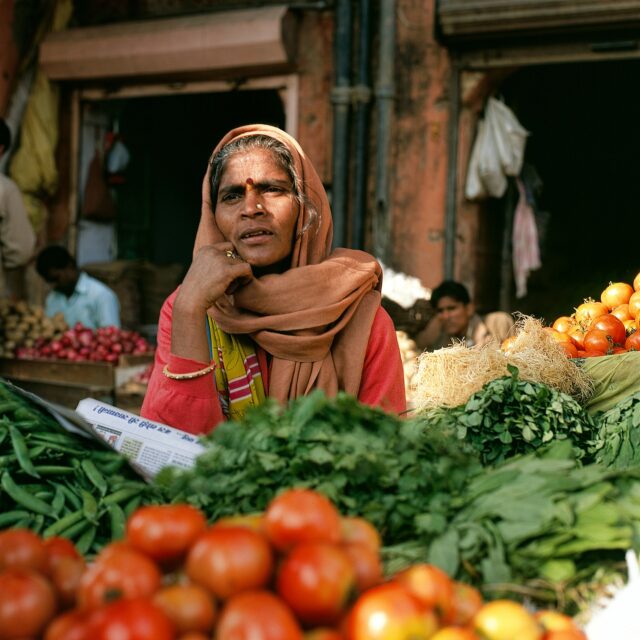
Indians tighten belts as Ukraine war drives up prices of necessities

EVGENY NELMIN/UNSPLASH

NEW DELHI — Many Indians are cutting down on fried food and even vegetables as the Ukraine war inflates the prices of items from edible oils to fuel, threatening a sputtering recovery in the consumption-based economy after two years battling coronavirus disease 2019 (COVID-19)

Consumers in Asia’s third-largest economy are feeling the bite as companies pass on a surge in costs since the invasion, battling the first hikes in five months this week in the prices of diesel and petrol, as well as more expensive vegetable oils. 

“God only knows how we will manage this level of price rise,” said Indrani Majumder, the sole earner in a family of four in the eastern city of Kolkata, adding that the past two years of the pandemic had brought a halving in salaries. 

These days her family eats more boiled food to save on the cost of edible oil, she said. It is just one of almost a dozen homes where people said they were taking similar steps. 

India’s economy expanded at a pace slower than expected in the quarter from October to December, and economists forecast a further dent to growth in the current one, as high fuel prices bring a jump in inflation. 

Private consumption contributes the largest share of gross domestic output, at nearly 60%. 

But since the invasion late in February, which Russia calls a special operation, Indian firms have raised prices of milk, instant noodles, chicken and other key items by about 5% to 20%. 

About 800 million of a population of nearly 1.4 billion received free government supplies of staple foods during the pandemic, and even small price rises now can mean a knock for their budgets. 

Families’ finances could stay anemic for the third year in a row, warned Pronab Sen, formerly India’s chief statistician. 

“The process of rebuilding savings was only beginning post the pandemic,” he added. “Because of this latest shock, they will have to cut back on consumption.” 

DARKENING PICTURE 

Surging global prices of crude have prompted companies in the import-dependent nation to raise retail prices of petrol and diesel twice this week. India imports 85% of its crude oil, which has seen prices rise nearly 50% this year. 

The South Asian nation is also the world’s biggest importer of edible oil, shipping in nearly 60% of its needs. 

But the price of palm, the country’s most widely consumed edible oil, has jumped 45% this year. And supplies of sunflower oil, which Ukraine and Russia produce in large quantities, have been disrupted. 

Some wholesalers said their sales of edible oil had fallen by a quarter in the past month as prices rose. 

These factors helped keep India’s retail inflation in February above the central bank’s comfort level of 6% for the second month in a row, while the wholesale rate was more than 13%. 

“The timing of input price inflation could not have been worse in the context of a slowing consumption trend,” financial services firm Jefferies said in a note. 

The central bank has said it is monitoring crude and commodity prices ahead of its next monetary policy meeting in early April. But markets do not expect the Reserve Bank of India to change key rates, as it looks to prioritize growth. 

This stance compares with global central banks, which have either raised rates or are weighing whether to do so to curb inflation. For instance, policymakers of the US Federal Reserve called this week for big rate hikes in May. 

For consumers, there is little relief in sight. 

The Confederation of All India Traders estimates input costs for makers of consumer durables and fast moving consumer goods (FMCG) to rise another 10% to 15% this month as fuel prices rise, an expense destined to be passed on to the final consumer. 

In Kolkata, vegetable vendor Debashis Dhara said higher transport costs would bump up vegetable prices by a further 5% this week. His sales have already halved since February. 

India’s Mother Dairy and Amul raised milk prices by nearly 5% this month, while FMCG companies such as Hindustan Unilever and Nestle are charging more for items such as instant noodles, tea and coffee. 

Broiler chicken prices have jumped nearly 45% in six months to a record 145 rupees ($1.90) a kg this week, as key feed ingredients corn and soymeal have become costlier after supplies from the Black Sea region were affected. 

Fertilizer prices have shot up to a record $150 a tonne since Russia, one of the biggest producers, rolled tanks and soldiers into Ukraine. 

“It has become very difficult to manage our monthly budget,” said Archana Pawar, a housewife in the financial capital of Mumbai. “This kind of price rise is forcing us to cut down consumption.” — Aftab Ahmed and Rajendra Jadhav/Reuters

Smart brings back annual Infinity Golf Classic exclusive to members

FILIPINO PRIDE Rianne Malixi and PLDT Inc. and Smart President and CEO Alfredo S. Panlilio play golf at the Smart Infinity Classic The President’s Cup early this week at the Sta. Elena Golf and Country Club in Laguna. Smart, through its luxury postpaid brand Smart Infinity, has taken a huge leap into the new normal by bringing back the well-loved annual golf event. (Photo by Nino Carandang)

Mobile services provider Smart Communications, Inc., (Smart), through its luxury postpaid brand Smart Infinity, has taken a huge leap into the new normal by bringing back the well-loved annual Infinity Golf Classic President’s Cup exclusive to members at the Sta. Elena Golf and Country Club in Laguna last March 21.

Part of the many exclusive perks and privileges of every Smart Infinity subscriber, the revival of the Infinity Golf Classic The President’s Cup took on a much deeper meaning as it honored changemakers and advocates of social impact and coincided with the 11th anniversary of the MVP Sports Foundation (MVPSF).

“One of the most important lessons that I learned during this pandemic is that while our time here on earth is finite, we have the ability to make an infinite impact and leave a legacy. Throughout the pandemic, Smart Infinity has been inspired by powerful stories of individuals who contribute to society the best way they can. Now, we aim to empower Infinity members to become Changemakers in their own way and create infinite legacies for a better world,” said Alfredo S. Panlilio, President and CEO at Smart and its parent company, PLDT Inc.

Enabling members, championing Changemakers

Smart Infinity’s The President’s Cup served as a competitive reunion for Infinity members who have been going out of their way to create a positive impact in society.

As a sportsman himself and President of MVPSF, Panlilio recognizes that athletes giving their best for the sport they love is a powerful source of inspiration – be it at the golf course, on the basketball court, or even on the virtual arena.

Amongst the golfers in attendance was 15-year-old Filipino pride and Defending Philippine Amateur Champion Rianne Malixi, who is among the athletes backed by the MVPSF. Definitely a changemaker herself at a young age, the 2021 American Junior Golf Association (AJGA) winner and qualified US Women’s Amateur Championship golfer is expected to be part of Team Philippines in the 2022 Southeast Asian (SEA) Games in Hanoi, Vietnam in May.

Exclusive perks and privileges for Smart Infinity members

Apart from the one-day tournament, Infinity members were treated to a relaxing and rewarding day with exclusive offers from Smart Infinity powered by the country’s fastest 5G mobile network.

“Last year was a pivotal year for Smart Infinity when we relaunched the brand as the luxury postpaid brand of Smart Communications Inc. Today, Smart Infinity is here to highlight how we value our members as we continue to serve their lifestyle needs over and beyond mobile connectivity,” said Sofia Borromeo-Alvarez, Smart Infinity AVP and Brand Head.

“Smart Infinity is here to go the extra mile when it comes to serving our members — be it in sports, travel, and other lifestyle needs — our customer-centric Limitless Plans provide unlimited 5G connectivity, unlimited all-network mobile calls and texts, unlimited landline calls, and a wide array of luxury services though our Worldwide Concierge for both local and international lifestyle needs,” added Borromeo-Alvarez.

Smart Infinity also comes with the services of a personal relationship manager, a 24/7 dedicated hotline, and priority lane at Smart Stores nationwide. Know more about how Smart Infinity empowers changemakers at https://smart.com.ph/Postpaid/infinity.


Spotlight is BusinessWorld’s sponsored section that allows advertisers to amplify their brand and connect with BusinessWorld’s audience by enabling them to publish their stories directly on the BusinessWorld Web site. For more information, send an email to online@bworldonline.com.

Join us on Viber to get more updates from BusinessWorld: https://bit.ly/3hv6bLA.

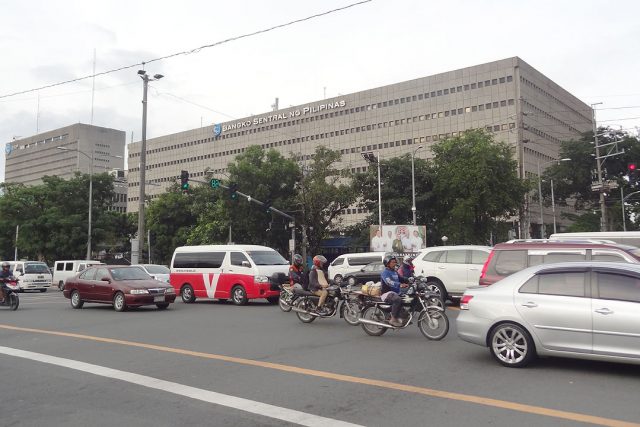
IMF sees need to adjust rates earlier

BW FILE PHOTO

By Luz Wendy T. Noble, Reporter

THE Philippine central bank may have to reassess its loose monetary policy earlier than planned as the surge in commodity prices raised inflation concerns, the International Monetary Fund (IMF) said.

“While there is still some policy space to absorb the price increases, as the latest numbers show that inflation is in the middle of the BSP’s (Bangko Sentral ng Pilipinas) target range, greater vigilance from the monetary authorities will be required, and the accommodative monetary policy may need to adjust earlier than expected,” IMF Representative to the Philippines Ragnar Gudmundsson said in an e-mail.

A poll held by BusinessWorld last week showed 15 out of 17 analysts expect the Monetary Board to retain its record low policy rates today (March 24), in line with signals from the central bank that it will remain patient in supporting growth.

BSP Governor Benjamin E. Diokno has earlier said the central bank would remain patient in supporting the economy and would wait until the second half of the year to assess the need for a rate hike.

The consumer price index (CPI) rose by 3% for the second straight month in February, which is within the BSP’s 2-4% target range. However, the BSP has warned that inflation could breach the target range in the second quarter if oil prices continue to climb.

Global crude oil prices have been extremely volatile in recent weeks after Russia’s invasion of Ukraine. This was due to worries over supply as Russia is the world’s second-biggest oil exporter.

Commodity prices have also spiked around the world. Wheat is a major export for both Russia and Ukraine.

Mr. Gudmundsson noted that oil and gas, energy and transportation, and wheat have a combined weight of about 18% in the country’s CPI.

“The current surge in energy and commodity prices has added to the inflationary pressures already caused by supply chain disruptions and the rebound from the coronavirus disease 2019 (COVID-19) pandemic,” he said.

“One should therefore expect some pass-through of these higher prices to headline inflation in the coming months,” he added.

Mr. Gudmundsson said the IMF estimates that the pass-through impact of world oil prices in emerging markets to prices paid by consumers is 25%.

“The war will affect the cost of living, especially for the poorest households disproportionately affected by the increase in energy prices,” he said.

Since the start of 2022, pump prices of gasoline, diesel and kerosene have increased by P14.90, P19.20, and P16.35 per liter, respectively.

Meanwhile, Mr. Gudmundsson noted the country’s strong external position serves as a safety net amid market volatility and the weakening of the peso caused by the war in Ukraine.

“While market uncertainty may prompt an increase in government bond yields and intensify pressure on the currency, it’s important to note that the Philippines benefits from its flexible exchange rate and a strong foreign exchange reserves position,” he said.

The IMF in a blog titled “How War in Ukraine Is Reverberating Across World’s Regions” last week has said Asia-Pacific economies will only experience limited spillover effect from the war due to the distant economic ties. However, it warned that a slower growth in Europe and the global economy could hit petroleum importers in Southeast Asia.

“Asia’s food price pressures should be eased by local production and more reliance on rice than wheat. Costly food and energy imports will boost consumer prices, though subsidies and price caps for fuel, food and fertilizer may ease the immediate impact — but with fiscal costs,” it said.

The IMF expects the Philippine economy to grow by 6.3% this year, which is below the 7-9% government target. In January, it said the impact of the Omicron variant will be limited to the first quarter of the year.

The economy expanded by 5.6% last year following a record 9.6% contraction in 2020.