Home Blog Page 6144

Legal groups add voice to medical experts vs vape bill   

PHILIPPINE STAR/EDD GUMBAN

A NON-PROFIT group law organization has joined the continued call of medical groups and experts for President Rodrigo R. Duterte to veto a bill that seeks to regulate vaping, citing its threats on public health especially among the youth.  

ImagineLaw Executive Director Sophia Monica San Luis said the vape bill ratified by Congress is grounded on fake news. 

There are no credible studies that back proponentsclaims that vaping products and e-cigarettes are safer alternatives to traditional cigarettes nor are they effective in making smokers quit, she said during a forum on Thursday organized by their group.  

Health Secretary Francisco T. Duque III, among the speakers at the forum, reiterated his stance that vapes and e-cigarettes are harmful and not risk-free.” 

The Department of Health has long been implementing a campaign against smoking, including vaping.  

In reality, the bill is a retrogressive policy that undermines the countrys progress in tobacco prevention and control,said Mr. Duque. The bill will achieve the opposite of its intended purpose of strengthening tobacco industry regulation as it relaxes the restrictions on the minimum age of access, flavorings, regulation, distribution, advertising, promotions, sale and use of these products.” 

Philippine Medical Association President Benito P. Atienza said that despite intention to promote these products to smokers as an alternative, it is more likely that non-smokers, including the youth, will be more interested because of attractive packaging and flavors.  

More than 50 medical groups in the country have been lobbying against the bill, which was approved by both chambers of Congress in late January.  

It has yet to be confirmed if the ratified copy was already transmitted to Malacañang.  

Under the countrys legislation rules, a bill sent to the Presidents office automatically lapses into law 30 days after receipt if no action is taken. Alyssa Nicole O. Tan

Traffic solutions

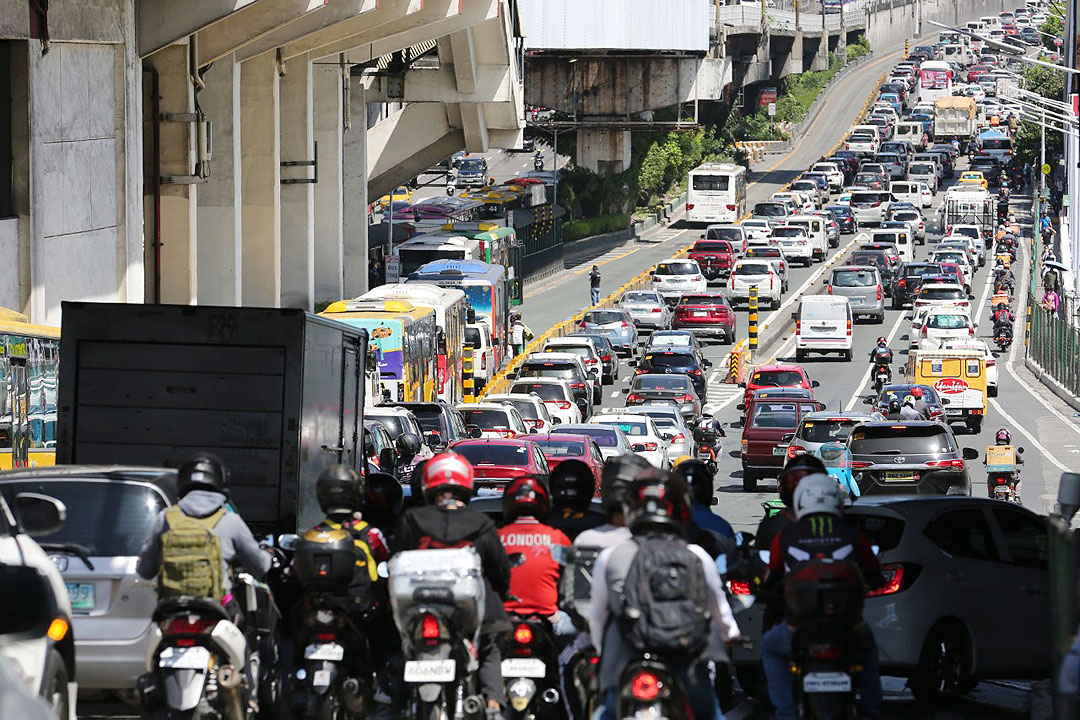
PHILIPPINE STAR/ MICHAEL VARCAS

METROPOLITAN Manila Development Authority (MMDA) Chairman Romando S. Artes speaks on March 17 at the opening of a three-day summit that aims to draw up a comprehensive solution to road congestion in the capital. Recommendations from multi-sector participants will be presented along with MMDA’s proposed expansion of the number coding scheme, re-implementation of motorcycle lanes along EDSA, and the MMDA-Japan International Cooperation Agency (JICA)’s Comprehensive Traffic Management Plan.

Chelsea puts off-field woes aside to reach Champions League last eight

LILLE, France — Holders Chelsea made light of their off-pitch problems to reach the Champions League quarterfinals by beating Lille 2-1 away on Wednesday to complete a 4-1 aggregate victory.

The Premier League side, playing amid sanctions imposed on their Russian owner Roman Abramovich following Russia’s invasion of Ukraine, eased through thanks to goals by Christian Pulisic and Cesar Azpilicueta.

French champions Lille dominated for long spells and opened the scoring thanks to a Burak Yilmaz penalty in the opening half, but lacked precision up front and paid dearly for lapses in concentration.

Chelsea, operating on a special licence from the British government that has limited their spending and impacted their operations, showed great composure to ease into the last eight.

“Everyone is calm at the club. The club’s culture is about football. Football is the priority at Chelsea, that’s why we’re focused on what happens on the pitch,” Chelsea coach Thomas Tuchel told French TV channel RMC Sport.

At their Pierre Mauroy stadium, Lille had made the better start to the match.

Jocelyn Gouvennec’s side put Chelsea on the back foot as Mateo Kovacic, Jorginho and N’Golo Kante struggled to take control of the midfield.

Lille were rewarded in the 38th minute when they were awarded a penalty following a VAR review after a Jorginho handball in the area.

The 36-year-old Yilmaz, the third oldest scorer in the Champions League knockout stages after Paolo Maldini and Ryan Giggs, buried the spot-kick into the top corner to give the hosts a deserved lead and high hopes of an upset after losing the first leg 2-0 at Stamford Bridge.

Lille, who had not conceded a goal in their three Ligue 1 games since the first leg, let their guard down, however, and Chelsea punished them with their first shot on target as Pulisic collected a fine through ball from Jorginho to score with a low shot three minutes into first-half stoppage time.

Although they were hit by injuries which forced Sven Botman and Zeki Celik to leave the pitch, Lille applied more pressure after the break and Yilmaz wasted two clear chances.

Chelsea was far more ruthless and after 71 minutes Mason Mount’s cross bounced off Azpilicueta’s knee into the top corner to end Lille’s hopes of reaching the last eight.

The result left Lille frustrated after a good performance that ended in defeat.

“I’m frustrated by the result, and by the fact that we missed out on qualification,” said midfielder Amadou Onana.

“Congratulations to Chelsea, they were the better team.” — Reuters

Liverpool beats Arsenal to cut Man City lead to a point

LONDON — A clinical Liverpool beat Arsenal 2-0 to cut Manchester City’s once double-digit lead at the top of the Premier League table to a single point on Wednesday, leaving the title race wide open.

An Arsenal side on a five-game winning run in the league and in fourth place represented a big obstacle to Klopp’s title chasers and were the better side in the first half.

But the game tipped decisively early in a frenetic second period as Liverpool extended their own relentless run to nine consecutive league wins.

Their breakthrough came shortly after a misplaced backpass had almost gifted Arsenal a goal, Portuguese Diogo Jota getting ahead of the London side’s defense on 54 minutes to beat goalkeeper Aaron Ramsdale at his near post.

Roberto Firmino sewed up a crucial three points eight minutes later, squeezing a shot under the Arsenal goalkeeper again after the hosts had twice failed to clear the ball.

Liverpool’s title destiny is now very much in their own hands as they still have to visit City in April.

Manager Jürgen Klopp celebrated with the visiting fans at the end.

“We’ve obviously had a good period. It’s what we need. We’re one point (behind), but it’s still the same. We have to win football matches. We then face City, then all the others.

“Hopefully, all the players come back fit from international duty. Then we have an early kickoff against Watford. It’s better to be one point behind than 14 points.

“We know we have a special group here and we’re trying to squeeze everything we can out of the situation.”

While the result was a blow to Arsenal they remain fourth in the table, one point above Manchester United having played two games fewer.

“They really raised the level today but unfortunately games are won in the boxes,” he said of his side. “We opened the door and they went to that door and scored two goals.”

Arsenal more than matched Liverpool for long periods but the game ultimately swung shortly after the interval.

A misplaced backpass by Thiago let in Martin Odegaard who looked poised to score but Alisson made a superb save.

Minutes later, Jota fired the visitors ahead to knock the stuffing out of the hosts.

Firmino, who came off the bench along with Mohamed Salah who surprisingly did not start, then produced a neat flick to convert Andy Robertson’s cross after Arsenal was guilty of not getting the ball clear on several occasions.

“I saw a hard-working team in the first half and in the second half we enjoyed it more and that was when we really stepped up,” Klopp said. “We really want to enjoy the situation we are in by winning football matches.” — Reuters

Halep downs Martic, faces Świątek in Indian Wells semifinals

SIMONA Halep took less than an hour to breeze past Petra Martić (6-1 ,6-1) on Wednesday and reach the semifinals of the World Tennis Association (WTA) Indian Wells tournament for the fourth time, while Iga Świątek also advanced in style dismantling Madison Keys.

Halep went up a break at 2-1 in the opening set after her opponent double-faulted, and the Romanian reeled off the next six games behind confident groundstrokes and precise serving.

The tournament’s 2015 champion was never really pushed, winning 55 points to Martić’s 21.

The unseeded Martić had notched impressive wins over 28th-seeded Ludmilla Samsonova and US Open champion Emma Raducanu en route to the quarterfinal, but appeared to run out of gas under sunny skies in the California desert.

“I feel like I played my best tennis so far this year,” said Halep, who beat Martić in the 2018 quarterfinal in three sets.

“I knew it was going to be a tough match against her. The one in 2018 was a longer match and was much more difficult. But today, I felt great. I’ve been on a mission. I wanted to be focused on what I had to do.

“When I entered the court, I said my return has to be strong because she has a huge serve with a kick. At my height, it’s not easy to return. But I did it pretty well. I practiced it a little bit more yesterday and this morning.”

Next up for Halep is Świątek, who got past big-serving American Keys 6-1, 6-0 in 56 minutes. The pair have met three times previously with Halep winning twice.

“Tough match, because she’s playing the best tennis of her life,” Halep said. “She’s in the best moment. I expect a really tough one. But I’m here in the semifinal, so I’ll take that. I’ll just try my best.”

Świątek, the 2020 French Open champion, had been pushed to three sets in her last three matches but looked in a hurry to secure a WTA Tour-leading 18th victory of the season.

“I was getting tired a little bit, so I wanted to make it quick,” said the 20-year-old Pole.

“Madison played a great tournament. Her whole season is pretty great. I didn’t really know if I was going to be able to push back her speed, because she can play pretty fast. I wanted to stay low on my legs and control it a little more.” — Reuters

Rafa smashes Opelka, Kecmanović shocks Berrettini at Indian Wells

RAFA Nadal toppled big-serving American Reilly Opelka (7-6(3), 7-6(5)) to remain perfect on the year while unseeded Serbian Miomir Kecmanović stunned world number six Matteo Berrettini (6-3, 6-7(5), 6-4) in the fourth round of Indian Wells on Wednesday.

Despite Opelka’s serve reaching speeds as high as 147 miles per hour, the Spaniard was the better in their rallies, dictating points and eliciting errors from the baseline.

After a high-level first set, Nadal wobbled in the second, playing a sloppy service game to go down a break at 3-2 and he tapped his head in frustration during the changeover.

But he regained his focus, breaking back to level at 4-4 and remaining perfect on serve in the second tiebreaker. He sealed the victory with a beautifully constructed point that pushed Opelka off the court.

“He is a very difficult player to play against with his huge serve and huge forehand, but I think I played my best match of the tournament so far,” Nadal said in an on-court interview.

Nadal stood as far back off the baseline as the court would allow on his returns and often had to hit them at head height or higher.

“It’s not only about the speed. The spin is also difficult to read. Sometimes it’s coming with topspin, sometimes with slice.

“It’s a great victory for me against one of the toughest opponents I can play and I’m very happy. I can’t thank you enough for all the positive energy that I receive every single day here.”

Nadal is now 18-0 to start the season and if he can win his fourth title in the California desert, he will move into a tie with Novak Djokovic for the most Masters 1000 titles with 37.

To do so, the 21-time Grand Slam champion will need to defeat another huge server in Australian Nick Kyrgios, who advanced by walkover after Italian Jannik Sinner withdrew from the tournament due to illness.

Nadal holds a 5-3 lead over Kyrgios in their previous meetings.

Earlier in the day Kecmanović absorbed Berrettini’s power serve in the first set, converting on a break point chance in the fourth game, as a frustrated Berrettini won just eight return points.

But Kecmanović, 22, was unable to close out the match as a break point opportunity slipped through his fingers late in the second set, in which Berrettini, who reached his first Grand Slam final at Wimbledon last year, struck 21 winners and won a tense tie-break to level.

Berrettini saved two breaks in the eighth game in a tightly fought final set to stay alive but Kecmanović pounced to break the Italian’s serve to love in the final game.

He will next play Taylor Fritz who outlasted Australian Alex de Minaur 3-6, 6-4, 7-6(5). A break down in the third, it was the second consecutive match Fritz won in a third-set tiebreaker.

Elsewhere, Bulgarian Grigor Dimitrov beat American John Isner 6-3, 7-6(6) and will face Andrey Rublev in the quarters after the Russian won a tight opening set before easing past Hubert Hurkacz 7-6(5), 6-4.

Carlos Alcaraz became the youngest Indian Wells men’s quarterfinalist since 17-year-old Michael Chang in 1989, as the 18-year-old Spaniard beat Gael Monfils 7-5, 6-1.

Up next for Alcaraz in his first Masters quarterfinal is 12th seed Cameron Norrie or Jenson Brooksby. — Reuters

Wolves cruise past Lakers for third straight win

KARL-Anthony Towns scored 30 points and Anthony Edwards added 27 as the Minnesota Timberwolves never trailed in a 124-104 win over the Los Angeles Lakers on Wednesday in Minneapolis.

Patrick Beverley contributed 18 points while Taurean Prince added 13 and Jaylen Nowell had 10 for Minnesota, which led by as many as 25 in the second quarter. The Wolves have won three straight and nine of their past 10.

LeBron James paced Los Angeles with 19 points while Carmelo Anthony scored 16 and Russell Westbrook added 15. The Lakers have lost 12 of their past 15 games, and they have dropped each of their past 11 road contests.

Los Angeles outscored the Wolves 31-19 in the third quarter and pulled within 86-77 when D.J. Augustin closed the period with a 3-pointer at the buzzer.

Augustin scored with 10:12 remaining left to cut the gap to 89-85 before Minnesota answered with a 25-9 run to squelch the Lakers’ comeback attempt.

Malik Monk finished with 13 points for Los Angeles, which shot 10 of 45 (22.2%) from 3-point range.

The Lakers trailed by at least 14 points after the first quarter for the third straight game, falling behind 31-17 after shooting 28.6% from the field and missing all 10 3-point attempts.

Minnesota stretched its lead to 51-26 after opening the second quarter on a 20-9 run, and the hosts held a 67-46 advantage at the break.

Edwards scored 24 points in the first half for the Wolves, who have held a double-digit lead in 10 straight games.

One game after scoring a franchise-record 60 points in a 149-139 win over the San Antonio Spurs on Monday, Towns was limited to 12 points in the first half while battling foul trouble.

Towns picked up his fourth foul early in the third quarter and Los Angeles scored 10 straight points to cut the deficit to 69-56 with 8:34 left.

Edwards wound up with six 3-pointers and six rebounds for Minnesota, which won the season series against the Lakers 3-1.

Lakers guard Talen Horton-Tucker exited the game in the second quarter after aggravating his left ankle injury. He did not return. — Reuters

LIV Golf

Considering how Phil Mickelson’s attacks on the PGA Tour backfired spectacularly, not a few quarters believed LIV Golf Investments would want to let the controversy die down first before pushing through with its launch of a breakaway campaign. Not so. Yesterday, CEO Greg Norman announced the conduct of an eight-tournament series to be held between June and October. And, in the process, he made sure to underscore that the endeavor is “truly additive to the world of golf. We have done our best to create a schedule that allows players to play elsewhere, while still participating in our events. I believe players will increasingly make progress in achieving their right to play where they want. We will help in any way possible and will provide golfers with opportunities to achieve their full potential.”

Interesting choice of words. Indeed, the fact that LIV Golf exists points to a void in the offerings of the PGA Tour. That said, Norman went out of his way to indicate that he doesn’t see any conflict from the players’ standpoint. Forget that the longtime incumbent clearly feels threatened to the point where sanctions — suspension and even expulsion — have been conveyed to await those who join the events. And never mind that the schedule of the upstart league, while steering away from major championships, eats into the existing one.

It bears nothing that LIV Golf has done its homework. It used studies to address what it perceives to be flaws in the current game from the fans’ standpoint. At the same time, it went about addressing prevailing concerns of the players themselves. From the shotgun start to the shorter schedule to guaranteed weekend play to the three-round limit, measures have evidently been instituted to make participation easy and viewership frustration-free. And that’s saying nothing of the eye-popping payouts lined up — a whopping $255 million all told.

To be sure, Norman’s big bang did not come with names, said to be in the cards prior to Mickelson’s monumental miscue. Whether those rumored to be initially joining LIV Golf will make the leap despite the specter of bans remains to be seen. In any case, two things are apparent: 1) the Saudi Arabia-backed disruptor of the status quo will not be going anywhere; and 2) the PGA Tour has already stepped up its game, which is to say it’s dangling both carrot and stick. If nothing else, the development proves yet again that competition is good.


Anthony L. Cuaycong has been writing Courtside since BusinessWorld introduced a Sports section in 1994. He is a consultant on strategic planning, operations and Human Resources management, corporate communications, and business development.

Their own worst enemies

FREEPIK

The electoral watchdog Kontra Daya (literally, Against Cheating) has found that seven out of 10 groups running for party-list seats in the House of Representatives are in the hands of far from marginalized and far from voiceless sectors and interests.

Their findings have revived demands to amend the 1994 Party-List Act (Republic Act 7941) because they validate the observation of most election watch groups that the Party-List system has become yet another means through which political dynasties and traditional politicians are perpetrating their dominance in Congress. It has morphed into the very antithesis of the 1987 Constitution’s intent to assure “proportional representation” in the House of Representatives.

Kontra Daya said in a March 3 statement that “at least 120 out of 177 party-list groups [are] identified with political clans and big businesses [and have] incumbent local officials, connections with the government and military, unknown or unclear representations, and pending court cases and criminal charges…”

Those groups are among the organizations certified by the Commission on Elections (Comelec) as qualified to run for the seats reserved in Congress for party-list list formations. Kontra Daya has therefore asked the Comelec to explain why it is allowing them, with their political connections and their presumably ample campaign funds, to contest Congressional seats against those groups that can legitimately speak for the unrepresented sectors of Philippine society.

Three years ago, the Comelec did consider asking Congress to amend RA 7941 to plug the loopholes in it that allow even billionaires and dynasts to pretend that they represent the poor, the marginalized, and the voiceless legions who account for at least 20% of the Philippines’ 100 million-plus population. But not only has it since reneged on that intent — that was in 2019 — the current Lower Chamber is also  unlikely to do so. The dynastic interests of its majority members are contrary to making that body truly serve the voiceless and marginalized sectors of Philippine society.

The 1987 Constitution specifies that the party-list seats in the House of Representatives “shall be filled by the labor, peasant, urban poor, indigenous cultural communities, women, youth, and such other sectors as may be provided by law, except the religious sector.”

In the awareness that such communities have historically been denied a voice in the legislative process, the drafters of the People Power Constitution wanted to assure them some participation in this country’s governance, and to somewhat correct the disproportional representation in Congress of a handful of political dynasties.

The social and economic reforms their participation could make possible, it was hoped, would help put a stop to the rebellions and uprisings — the “insurgencies” — that have been fueled by the poverty and inequality that have haunted this country for centuries.

The Constitutional provision on the Party-List system is an implicit acknowledgement that despite the Philippines’ supposedly democratic character, its legislature has for decades since 1946 been dominated by political dynasties and/or their surrogates, agents, and allies whose economic and political interests are antithetical to the making of a just society.

The Party-List System was supposed to correct that anomaly.

But through a series of decisions, the Supreme Court made it possible for the over-represented political parties as well as those who claim to represent such sectors as tricycle drivers and security guards, but who are neither, to seek party-list seats.

Billionaires were thus among the nominees of certain victorious party-list groups in 2019, as well as government officials and oligarchs from various dynasties. A system intended to represent the marginalized has fallen into the hands of the most corrupt and most self-aggrandizing political elite in Southeast Asia and its minions whose monopoly over power has made reforms impossible through legislative means — and made rebellions and armed social movements inevitable.

Like the passage of an anti-dynasty law, any amendment to RA 7941, as is now being demanded so as to make representation in the House at least partly proportional, is doomed to fail. What could prosper are changes in it that will make the system even more pliable to the manipulation of the creatures who claim to be this country’s leaders. Their primary reason would be the failure of past and present regimes to prevent the election of the party-list groups that truly represent marginalized sectors.

Despite police and military harassment, threats, and even the murder by supposedly unknown assailants of some of their leaders, these groups nevertheless again won seats in the House in 2019 and could once again do so this May. Their numbers were reduced, but even that is unacceptable to the present regime on the argument that they’re no more than “fronts,” allies, and part of the “legal infrastructure” of the Communist Party of the Philippines (CPP).

Any similarity between the programs of those groups and those of the CPP does not prove that allegation. But their detractors “red-tagged” them in 2019 and are doing the same today, despite the fact that what is at issue is whether their presence in Congress has been and could continue to be of any value to the democratic imperative of giving the marginalized a voice in governance so they can be part of the discourse on how to address the country’s problems.

The Party-List system is a sophisticated attempt to make government responsive to the plight of the poor, the underprivileged, and the powerless, which ignoring fed and continues to feed social unrest and rebellion.

That level of sophistication is totally absent in the Duterte regime and its police and military loyalists, for whom State violence is the sole solution to any problem. Oddly enough, it was the Fidel Ramos Presidency that supported and supplemented the Party-List system’s potential to make government open to reforms.

The same administration resumed peace talks with both the CPP and the Moro National Liberation Front (MNLF), while its allies in the then Congress repealed the Anti-Subversion Law (RA 1700) in 1992. The idea was to endow reformists and even revolutionaries the opportunity to legally work for their programs, and even get elected to public office. It could convince the dispossessed and discontented that they need not take up arms because the political system works well enough to heed the demand for reforms and even radical change.

But that clever approach at preserving the ruling system has met only limited success. It is failing, among other reasons, because dynastic dominance over government institutions has made running for public office an exclusive billionaire and warlord game, and because of police and military allegiance to their local and foreign patrons and the unjust order that has so enriched and empowered them.

The perversion of the Party-List system into its opposite, and the exclusion of the powerless and voiceless from participation in their own governance partly explain why rebellions and so-called “insurgencies” have been, and could always be, part of the Philippine landscape.

But it could also help end the oligarchy’s decades-long monopoly over the political power it has so steadfastly denied the marginalized millions in this rumored democracy. More than the supposed “fronts” of the CPP, what the demise of the Party-List system as it was originally conceived is telling the poor and the powerless is that reforms can only be achieved through armed means. The political clans and dynasties still in total control of governance are thereby undermining the very social order that has benefitted and served them so well; they are their own worst enemies.


Luis V. Teodoro is on Facebook and Twitter (@luisteodoro).

www.luisteodoro.com

What Marcos Jr. can do for fiscal policy and the Filipino people

FREEPIK

The buzzword today is inflation. And also discussed is what Russia’s invasion of Ukraine has set off to inflate fuel prices to breach the decade-high $120 per barrel, and dim the prospects of quick economic recovery of oil-dependent emerging markets including the Philippines. If it comes to pass, Singapore’s Tharman Shanmugaratnam’s “perfect long storm” scenario must be a nightmare to our current public policymakers who have barely three months and a half to make a difference.

The Duterte administration cannot afford to allow things to fall apart because this easily could prick the electoral balloons of those allied with Malacañang. If this is the inevitable outcome at the polls this May, the cracks are definitely beginning to show. The exodus has begun. Some broadsheets have reported a number of incumbent local government officials have switched loyalty, some declaring it to have been blessed by no less than President Duterte himself.

But we must all be pleased that some adults in the Duterte cabinet chose to transcend politics and put together a “transition plan to help the next administration manage the country’s debt.” At the least, managing the country’s serious debt problem should keep the new President busy for most of the next six years. This plan consists of a combination of improvements in tax administration to plug existing leaks, and updated tax proposals leveraging on previous reforms.

Just knowing how big is the Philippines’ debt problem should be enough to deter presidential aspirants from offering themselves to lead this Republic. The National Government (NG) debt, both external and internal, as of the end of January 2022 stood at $12 trillion or more than 60% of 2021 GDP. One can look at this level as more than twice the annual national budget. In the last two years alone, the Duterte government had to borrow P1.15 trillion to fund the pandemic response.

Definitely, it is costly to service the NG debt. For 2021, the NG paid nearly P430 billion in interest and almost P330 billion in principal obligation. Interest payments alone stood at 2.2% of GDP. The fiscal deficit ballooned from P660 billion or 3.4% of GDP before the pandemic to P1.7 trillion, more than two and a half times, or 8.6%, of GDP.

These obligations actually exclude those incurred by non-financial public corporations and financial public corporations, net of intra-debt holdings among them. In addition, contingent liabilities of government pension agencies have to be recognized as well because they are huge at nearly P10 trillion, should they become actual liabilities.

We cannot even take comfort in the argument made by some that such debt statistics are nowhere near those we faced during the debt moratorium in the 1980s. There is contrary evidence. In an article in the IMF’s Finance and Development in March 2022, the Fund’s Ceyla Pazarbasioglu and World Bank’s Carmen Reinhart reported that “many emerging markets and developing economies have encountered crises at lower debt levels than those prevailing in 2021” at the height of the pandemic.

The situation is not expected to improve soon because central banks in advanced economies are likely to begin monetary tightening. Already, the US Fed the other day lifted its key rate by a quarter of a percentage point, which to Bloomberg, “is an opening bid to curb inflation.” Six more hikes may be expected this year. On top of this plan, the US Fed also announced it would begin shrinking its $8.9 trillion balance sheet.

With higher interest rates, debt servicing becomes more acutely difficult for emerging markets like the Philippines.

The new occupant of the Palace and economic managers will have to grapple with the question of debt sustainability. In the same publication, former IMF chief economist Olivier Blanchard addressed this issue by saying that “debt becomes unsafe when there is a non-negligible risk that, under existing and likely future policies, the ratio of debt to GDP will steadily increase, leading to default at some point.”

Abstracting from Blanchard’s suggested approach, a strong economy with a good track record in revenue collection will find little incentive to expose itself to the credit markets for too much and for too long. It will have more favorable debt metrics. Blanchard puts a higher premium to debt service to GDP ratio rather than debt level to GDP ratio. This means the size of the debt service also matters, the rate of interest, and the maturity. Longer maturities can stretch out debt service payments and reduce annual allocation for debt service.

Precisely, these debt sustainability considerations make us averse to the fuel tax suspension following the unprecedented rise in petroleum prices globally. Lower public revenues will force the hand of the NG to borrow some more and bust the traditional debt metrics, reduce market confidence in our ability to manage our economy and, finally, push up even more our cost of borrowing. Equity considerations also dictate the better alternative of allowing everyone to share in the burden posed by higher fuel prices but part of the fuel tax could very well be assigned to subsidizing the marginal sectors in society including public transport. To his credit, President Duterte decided to keep the fuel tax.

In the same vein, we are expectant of two possible sources of public funds, both made possible by the rulings of our own Supreme Court. One is the NG collectible from the ill-gotten Marcos wealth. As of 2020, 34 years since the Marcoses were deposed and sent on exile to Hawaii, the Philippine government has recovered some P174.2 billion which was earmarked for the farmers through the agrarian reform program, the coco levy trust fund, and the indemnification of the human rights victims during the military dictatorship.

We have yet to recover P125.98 billion from the Marcoses, whose only son Bongbong is running for President of the Republic. Some 942 items of real properties worth P29.1 billion are still under court litigation. We are also running after 914 items of personal properties like corporations, aircraft, and paintings worth P96.9 billion. All in, P125.98 billion is 2.5% of our annual budget. Before the pandemic, that amount was some 20% of the fiscal deficit.

The next head of state should be more serious and forthright in ensuring all obstacles to full recovery are hurdled. Each day of delay puts us in debt’s way.

The next item to consider is the Marcoses’ estate tax liabilities to the NG of P203.819 billion. This should not sound impossible considering that the former First Lady Imelda Marcos has actually disclosed that many big companies are owned by their family. Since Bongbong Marcos is the administrator of the estate, and as a former public official who swore his allegiance to the flag and the Constitution, he should be the first person to settle his family’s tax liabilities.

The Bureau of Internal Revenue (BIR) has clarified that as early as 1993, 29 years ago, it had “already executed its final assessment” on the subject properties. Equally important is the clarification that “as early as 1997, the judgment on the tax case had bec              ome final and executory.” Hence, Marcos Jr. and his spokesman’s reasoning that the tax obligation could not be settled all these years because the amount is yet to be settled between the BIR and the Presidential Commission on Good Government, does not hold water. If Marcos Jr. cares enough for this country, all he needed to do is simply to admit the facts and pay their tax obligations to the government.

This collection case is live. No less than BIR Commissioner Caesar Dulay confirmed that “the BIR did send a written demand to the Marcos heirs on Dec. 2, 2021, regarding their tax liabilities.”

We cannot capture in clearer terms how far this P203.819 billion, plus the P125.98 billion in unrecovered ill-gotten Marcos’ wealth, could go in easing the fiscal stress. More important, so much could go a long way in delivering social services to our people and mitigating their poverty.

The next President of this Republic can truly demonstrate a serious pursuit of people-oriented, good governance policy if the gorilla in the room is no longer ignored. It has been choosing where to sit all these years.


Diwa C. Guinigundo is the former deputy governor for the Monetary and Economics Sector, the Bangko Sentral ng Pilipinas (BSP). He served the BSP for 41 years. In 2001-2003, he was alternate executive director at the International Monetary Fund in Washington, DC. He is the senior pastor of the Fullness of Christ International Ministries in Mandaluyong.


Southeast Asia’s road to recovery

BEFORE the COVID-19 pandemic struck, Southeast Asia had been a global success story in fostering growth and reducing poverty. The pandemic abruptly reversed those gains, casting 4.7 million more people into dire poverty in 2021 and leading to 9.3 million fewer jobs created in the same year, compared with a no-COVID scenario. While green shoots of recovery are starting to appear, the region’s aggregate output this year is projected to remain at least 10% below what would be expected in the absence of COVID-19.

At this crucial juncture, it is imperative for countries to address rising income inequality, and ensure this trend does not become the region’s “new normal.” Rising inequality is a bane to growth and erodes the backbone of society. It creates disincentives for lower-skill workers, diminishing labor productivity. It impedes education and skills development for those lacking sufficient income or credit. Rising inequality also undermines social cohesion.

As the region continues laying the groundwork for recovery, a new Asian Development Bank (ADB) study, “Southeast Asia: Rising from the Pandemic,” advises leaders to adopt a series of important policy measures that can spur recovery, and better ensure that Southeast Asia’s rejuvenation in the wake of COVID-19 benefits all.

Countries need to significantly bolster investment in national health systems to improve core healthcare capacities, improve surveillance, ensure continued availability of adequate medical supplies, and enhance preparedness for future pandemics. The ADB study shows that an increase in countries’ health investment to about 4.8% of gross domestic product, up from the 2021 average of 3% of GDP, would deliver a 1.5% percentage point uptick in economic growth. Stronger healthcare investment would reduce disease burdens, and lead to higher labor participation rates and enhanced productivity in the workplace. Countries should also consider putting universal healthcare frameworks in place to ensure that no one is left behind.

In parallel, countries should aggressively pursue structural reforms that can improve productivity and competitiveness, including increased investment in human capital. In the wake of the pandemic, accelerated digitalization, a massive reallocation of jobs across sectors, and a growing number of jobs requiring workers with technical skills have resulted in large skills gaps. A recent APEC (Asia-Pacific Economic Cooperation) survey on digital skills gaps reveals that 75% of employers are seeing significant skills mismatches for those entering the workforce. Greater investments are needed to create a future workforce that is better equipped to support a modern economy. This involves substantial improvements in education systems, programs supporting workplace apprenticeship and training, and incentives for reskilling and upskilling. To enhance competitiveness, countries can remove trade barriers to improve efficiency and productivity, reduce red tape, improve logistics, and support the modernization of small enterprises through technology adoption and incubation.

Policymakers in the region also need to strengthen macroeconomic fundamentals, and maintain fiscal prudence in managing debts as they finance recovery. Large COVID-19 response packages have dramatically enlarged fiscal deficits and debt levels in Asia. In 2020, developing Asia’s pandemic response amounted to $3.8 trillion, almost doubling the fiscal deficit-to-GDP ratio in the region from 5% in 2019 to 9.8% in 2020. As Southeast Asia emerges from the pandemic, countries need to correct existing economic and financial imbalances, and help cushion possible future shocks by maintaining sufficient international reserves and policy space.

Finally, as countries focus on accelerating economic recovery, it is essential that they don’t simply return to business as usual. This crisis presents an opportunity to expand green investments and lay the groundwork for a greener economy. Policies should be redesigned to protect rivers and oceans and to support countries’ switch to cleaner fuels. The public and private sectors should more closely collaborate on minimizing the environmental impacts of industry through more active recycling and reuse of materials. Tax policies should incentivize carbon emissions reduction. Recovery plans should also promote green infrastructure investments, which are good for the environment and a major creator of growth and jobs. To support the region’s climate goals, ADB is working with regional and international partners to cut back on coal power through the innovative Energy Transition Mechanism and Green Recovery Platform.

In tandem, this people-centered approach to recovery can help create more productive jobs, particularly in hard-hit sectors like transport, hospitality, and tourism. It can help restore productivity trends in Southeast Asia, which were reversed due to COVID-19.

Two years after the start of the pandemic, Southeast Asia is beginning to recover with more buoyant growth, and countries are intensifying their push to build back better. While strong headwinds remain, there is reason for hope. If countries increase investments in health, structural reforms, and a green economy, while maintaining fiscal prudence, they can return Southeast Asia to prosperity, and usher in a new era of revitalization for the region.


Ramesh Subramaniam is the director general of the Southeast Asia Department of the Asian Development Bank.

Brevity and verbosity

FREEPIK

“When he gets started his tongue is like a racehorse; it runs fastest the less weight it carries.” — Franklin Pierce Adams, US writer

The glib tongue of an official spokesperson often confuses the impressionable audience. It is worse when there are several spokespersons giving vague statements. They use words and statistics that are excessive but mean nothing. (High fallutin’ nonsense to be polite.)

The French have a phrase: “Revenons à nos moutons” (Let us come back to our sheep.) Its interpretation is “Let’s get back to the main point.”

Observe how verbose grandstanding politicians and civic leaders are when the TV cameras are whirring. Suddenly, they project and emote as though they were acting in a TV show or a stage play. (Not that they could all be considered credible.)

The orators project their well-modulated voices and dramatize their long-winded sentences with exclamation points!!!

A few speakers are entertaining and witty. Others are boring, bland characters who have a captive (albeit reluctant) audience (Ho hum.) They wear themselves thin while their listeners tune out. Some hyperventilate and gesticulate madly.

At plenary sessions, the non-verbal ones tend to keep quiet, pretend to listen, scribble notes or fantasize. The verbosity of their colleagues put them to sleep.

Sir Winston Churchill once described Lord Charles Beresford thus: “He is one of those orators of whom is well said, ‘Before they get up, they know what they are going to say; when they are speaking, they do not know what they are saying; and when they have sat down, they do not know what they have said.’”

A few OTT (over the top) caricatures have exaggerated facial quirks — raising eyebrows, flaring nostrils, twitching ears, or jutting lips. When they speak, they grin. It is a poor camouflage for the smirk, sneer, and the snobbish sniff.

Turn off the volume and watch the circus on TV. It is entertaining without all the noise.

Most political animals master the art of saying a lot that does not mean anything. Everything is calculated for the right effect and response. Loquacious speakers — at a town fiesta, a campaign sortie, and a wake or a funeral service are always so boring. Eulogies are delivered with overextended pages of long paragraphs.

They could be condensed into two sentences. The same recycled speech extolling the virtues of the departed sound like broken records from a past era. “Mr. Z was an honorable man… He was my best friend.” (Even if the speaker had a long history of unpaid personal loans with the deceased.)

Abraham Lincoln once commented about a talkative politician. “He can compress the most words into the smallest ideas better than any man I ever met.” A witty, subtle but withering remark.

“Thomas Macaulay is like a book in breeches. He has occasional flashes of silence, that make his conversation perfectly delightful,” a British clergyman Sydney Smith, once wrote.

We just look around the office, family gathering, church or institution. (Social events and fundraisers are good places.) We can recognize these composite characters immediately.

The boss who holds court at the office and regales his underling with the same stories ad infinitum.

The lecturer and religious evangelist whose lengthy speeches and homilies lull people to sleep. Inflicting others with so many details is so tedious.

The well-meaning zealot who tries to convert everyone to his religious sect or cult.

At a party, the parent who praises his own superior offspring. (Even with bragging rights, there is a limit to praise.)

The tycoon “wannabe” or the “has been” who talks about himself. The Ivy League degrees, exotic safaris, mansions, art collections, estate jewelry…

The condescending self-made professional who basks in his achievements but disparages his less successful colleagues. His speeches are peppered with “I, me, myself.” At panel discussions, he holds the microphone and gabs — to the dismay of the other panelists and the moderator.

The professor-scientist-teacher who enumerates his inventions, and expounds his ideas and philosophical theories. As the saying goes, “Those who can, do. Those who can’t, teach.”

The sportsman with expensive toys and trophies — fancy golf and tennis equipment, polo ponies, yacht, helicopter, and cars. Conspicuous consumption is tasteless. Bragging about it with descriptions and hefty price tags is worse.

At a symphonic concert, the music critic Henry Taylor Parker, known by his initials “HTP” (“Hell to Pay”), was so irritated by the windbags seated near him. He turned to his noisy neighbors and hissed, “Those people onstage are making such a noise, I cannot hear a word you are saying!”

Tallulah Bankhead was legendary for her volubility. She was described as “…more of an act than an actress.” After an interview, magician Fred Keating commented, “I’ve just spent an hour talking to Tallulah for a few minutes.”

At the end of a very long lecture, one might wonder: what the whole thing was about. What was the point?

To the confused and bewildered, one should remember an old quote, “Brevity is the soul of wit.”


Maria Victoria Rufino is an artist, writer and businesswoman. She is president and executive producer of Maverick Productions.

mavrufino@gmail.com