Home Blog Page 5845

Analysts’ expectations on policy rates (June 23)

THE BANGKO SENTRAL ng Pilipinas (BSP) is widely expected to raise interest rates on Thursday, with several analysts now forecasting a 50-basis-point (bp) increase after the aggressive tightening by the US Federal Reserve last week. Read the full story

Analysts’ expectations on policy rates (June 23)

How PSEi member stocks performed — June 17, 2022

Here’s a quick glance at how PSEi stocks fared on Friday, June 17, 2022.


Curbs on plastics output seen needed

BW FILE PHOTO

By Alyssa Nicole O. Tan

LEGISLATION that will hold plastics producers accountable for managing the life cycle of their products will make companies conscious of the possible legal fallout from acting irresponsibly, but curbs on imports and production may ultimately be needed, environmental advocates said.

“If properly and fully implemented the law has significant potential to reduce plastic waste leaking into the environment,” Antonio Gabriel M. La Viña, a lawyer, educator and environmental expert, told BusinessWorld in a Viber message.

“However, there needs to be equal focus on upstream measures to reduce plastics used and put into the market to have a long-term dent on the Philippines’ plastic footprint,” he added. “Right now, the law does not have strong provisions on upstream measures and policies.”

Congress has ratified a consolidated version of a bill seeking to promote sustainability by holding enterprises responsible for the life cycle of their plastic products.

Senator Cynthia A. Villar, primary sponsor of the bill, has said that the reconciled bill focused on “waste reduction, recovery and recycling, and the development of environment-friendly products that advocates the internationally accepted principles on sustainable consumption and production, the circular economy, and producers’ full responsibility throughout the life cycle of their products.”

The act compels large or obliged enterprises to establish or phase in extended producer responsibility (EPR) programs for the plastic packaging of their products to efficiently manage waste and reduce the production, import, supply, or use of plastic packaging deemed low in reusability, recyclability or retrievability; and to achieve plastic neutrality through efficient recovery and diversion schemes.

“Obliged companies need to make sure the processes, methods and schemes they choose, to meet the diversion or collection targets, are environmentally sound and won’t cause equal harm to the environment,” Mr. La Viña said.

“There needs to be investment in facilities and infrastructure which will reuse and recycle as much of the plastic as technologically possible,” he added.

He called it a “good start” to focus on large companies to kick start the initiative, since they have the biggest market share, but said the government must make a clear plan on how to eventually cover micro, small, and medium enterprises as well.

“This will also avoid free-rider issues and inconsistent application of the law,” he added.

EcoWaste Coalition Plastic solutions campaigner Coleen Salamat said that to effectively reduce plastic waste, the government should not only require the retrieval and recycling of plastics but also regulate their production.

“The target of EPR should not solely be on recovery of plastic waste but how much plastics large businesses actually reduce in production,” she told BusinessWorld in an e-mail.

“If there are no plans and guidelines on reducing or phasing out non-environmentally acceptable products and packaging, then this might just be another band-aid solution,” she added.

Ms. Salamat also pointed out an “alarming” provision in the proposed law that includes the establishment of commercial or industrial-scale recycling, composting, thermal treatment, and other waste diversion or disposal facilities for waste products when investment is viable.

“The current trend on the initiatives of consistent top polluters like Nestlé, Procter and Gamble, Unilever, Coca-Cola, still heavily rely on cement kilns, chemical recycling, and other false solutions that burn or melt single-use plastics,” she said.

“These false solutions do not reduce or prevent waste but also contribute to worsening of air pollution and release harmful chemicals that are actually carcinogenic,” she added. “False solutions delay and distract from addressing the root problem of plastics, which is in production at source.”

Since plastics are made with fossil fuels, allowing commercial-scale recycling which includes thermal treatment like waste-to-energy and cement kilns, will only fuel the climate crisis, Ms. Salamat said.

“Obliged enterprises must make sure that they are not doing more harm to the environment,” she added.

Under the bill, obliged enterprises may voluntarily organize themselves into producer responsibility organizations (PRO) to establish viable platforms to implement their EPR program.

Such enterprises must also establish and implement an auditing system to monitor and assess their compliance performance. An independent third-party auditor must certify the veracity of the report using standards established by the department.

Ms. Villar has said the targets for the recovery of plastic products generated are as follows: 20% by the end of 2023; 40% by 2024; 50% by 2025; 60% by 2026; 70% by 2027; and 80% by 2028 and every year thereafter.

Mr. La Viña said this was difficult to achieve considering the current infrastructure available for waste management “but not impossible if industry is pushed with some government support.”

“Industry wanted to start at 10% increments with a longer transition period which they saw as more doable,” he added.

Ms. Salamat also found the goals set to be achievable, noting that the current targets of large enterprises are in line with the EPR targets for recovery.

However, she noted that this legislation, if not fully implemented and enforced, will represent “business as usual.”

She also noted that there is little precedent for large enterprises being held accountable.

“The bill will only impose fines and penalties if obliged enterprises or PROs do not register their EPR programs and if they fail to meet the targets for recovery of plastic product footprint,” she said. “It is very important to note that recovery is not the only problem but (also) the continuous production of single-use plastics.”

“EPR, in its true sense, follows a ‘polluters pay’ principle. Producers have the main responsibility under EPR. Without prohibited acts (regulating) the production, use, distribution, and importation of non-environmentally products and packaging, then it does not really hold polluters accountable,” she added.

Obliged enterprises that fail to comply with the law can be fined at most P20 million and an automatic suspension of their business permits until the law is complied with.

“This law will help make businesses more conscious of their impact on the environment,” Mr. La Viña said.

“Not tackling environmental impacts and being more sustainable in operations will have consequences not just legally but in other aspects such as investments, cost of doing business and even reputation and brand name,” he added.


Government urged to make big green energy push

By Tobias Jared Tomas

THE GOVERNMENT needs to refocus its borrowing to aggressively pursue sustainable energy initiatives, which multilateral institutions are willing to fund on favorable terms, in response to the rising cost of traditional fuels, economists said.

“The ongoing constraints posed by the current global landscape should highlight the importance of alternative sources of energy,” ING Bank N.V. Manila Senior Economist Nicholas Antonio T. Mapa said in an e-mail. “Other nations have decided to accelerate their plans to shift to renewable forms of energy to ensure stable supply chains while simultaneously championing sustainability.”

“Loans from the World Bank (WB) and the Asian Development Bank (ADB) offer very affordable rates and oftentimes target projects that are not just viable, but have a substantial impact on development, equity, and environmental sustainability.” 

Mr. Mapa said that such loan exposure is less vulnerable to swings in global markets.

“Such investments do not bear fruit overnight; thus the government must identify this shift as a priority,” he added. “Currently, the Philippines has made some strides in chasing environmental sustainability with the legislative framework recently passed. Despite these developments, however, the Philippines lags its peers in terms of progress, with the country yet to set a target date for net zero carbon emissions.”

The Philippines has set a goal of cutting its greenhouse gases emissions by 75% by 2030, particularly for agriculture, waste management, industry, transport, and energy.

Leonardo A. Lanzona, who teaches economics at the Ateneo de Manila University, said in a Viber message that “it may appropriate to invest in environment and renewable energy,” but called for “careful analysis of the expected returns” from such projects.

Recent loans that the government recently took on are not cause for concern, but attention should be paid to how productively they are deployed, UnionBank of the Philippines, Inc. Chief Economist Ruben Carlo O. Asuncion said.

“I think that we have a great window in dealing with the nation’s debt and be able to assess debt sustainability,” Mr. Asuncion said in an e-mail. “It is all right to be worried, but it is more productive to hold government accountable for whatever that they will do moving forward.”

The government took out a string of loans over the past few weeks. The Asian Development Bank (ADB) lent $250 million for climate mitigation, $400 million for capital market development and insurance, and $4.3 billion for the South Commuter Railway Project. It also signed a $350-million loan with China for the construction of the Samal-Davao bridge.

“In order to be sustainable, the rate of return coming from these loans needs to be greater than the interest imposed by these loans,” Mr. Lanzona said. “Regardless of the sector where these loans are placed, as long as this condition is satisfied then the loans are properly placed.”

“The concern is not the amount of loans per se, but the returns or the productivity obtained,” he added.

Cybercrime agency plans crackdown on online scams

A man holds a laptop computer as cyber code is projected on him in this illustration picture taken on May 13, 2017. — REUTERS

THE Cybercrime Investigation and Coordinating Center (CICC), which recently opened a cybercrime laboratory in Quezon City, said it will expand its operations to online fraud after initially focusing on addressing online sexual abuse and exploitation of children (OSAEC).

CICC Executive Director Cezar O. Mancao II said at a June 17 briefing that the opening of the facility, known as the Digital Forensics Platform and Laboratory (DFPAL), “will allow the CICC to monitor and coordinate with other law enforcement agencies in conducting thorough digital and forensic investigations and assist them in prosecuting cybercriminals nationwide.”

“We have acquire powerful state-of-the-art technology, which will improve the success rates of investigators and policing operations in the ongoing pursuit to identify, apprehend, and convict individuals and networks associated with online child sexual exploitation,” he added.

Mr. Mancao noted that the agency is taking “one step at a time” in addressing cybercrimes.

“We are also concerned with other cybercrimes that are now rampant. We have… (other) agencies that can best address those kinds of cybercrimes. For the CICC’s part, in a week or in a few days, we will launch our ‘E-Scam Alert PH’ app as well as our hotline and our websites,” he said.

CICC Deputy Executive Director and Assistant Secretary James A. Layug said: “Scams are second (in importance after) online sexual abuse.”

“The e-scam alert… is intended to address (the problem of) scams because they also victimize many of our countrymen.”

CICC is an arm of the Department of Information and Communications Technology.

“OSAEC is a tragic and growing problem in the Philippines, but it does not need to be a permanent one. We will do everything that we can to protect Filipino children. We have to act now and fight against these predators. We need to help each other to protect our netizens,” Mr. Mancao said.

“The opening of this new facility will provide law enforcement agencies with updated data and intelligence that can lead to the arrest and prosecution of these predators,” he added.

The agency said that the pandemic has aggravated the problem of online child exploitation via pornography and other forms of child online sexual abuse, specifically with children from low-income families.

“To support this advocacy, we have child online protection programs and initiatives in partnership with various civil society organizations and many stakeholders,” Mr. Mancao said. — Arjay L. Balinbin

PHL has chance to maximize WTO deal to make vaccines

REUTERS

By Revin Mikhael D. Ochave, Reporter

THE PHILIPPINES should maximize the opportunities on offer from a deal reached at the 12th Ministerial Conference (MC12) of the World Trade Organization (WTO), particularly in the areas of vaccines and fisheries, analysts said.  

George N. Manzano, University of Asia and the Pacific economist and former tariff commissioner, said in a mobile phone interview that the ministerial decision on Trade-Related Aspects of Intellectual Property Rights (TRIPS) waives patent protections on the production of coronavirus disease 2019 (COVID-19) vaccines, providing opportunities for the incoming Marcos administration to boost domestic vaccine output.  

President-elect Ferdinand R. Marcos, Jr., is set to take office on June 30.

“The incoming administration can use the TRIPS waiver to boost local production of vaccines by… invit(ing) foreign partners to set up production facilities in the country. By doing so, the vaccine rollout will be carried out faster,” Mr. Manzano said.

“The partial patent waiver is the right step in forging a collective response to the pandemic. The challenge for the Philippines… is to upgrade the capacity to produce the vaccine. This may involve investment in productive resources. In short, implementation and securing partners are now part of the challenge for which the private sector is a key actor,” he added.  

During the MC12 held in Geneva, which ended on June 17, the 164 WTO members agreed to limit the patent rights on COVID-19 vaccines by allowing the use of patents “without the consent of the right holder to the extent necessary to address the COVID-19 pandemic,” subject to certain conditions.  

The waiver is applicable for five years and may be extended “taking into consideration the exceptional circumstances of the COVID-19 pandemic.”

WTO members will also decide, within six months, on the waiver being expanded to COVID-19 diagnostics and therapeutics, while also blocking the re-export of COVID-19 vaccines produced under the waiver.

Trade ministers at MC12 also reached consensus on restricting harmful subsidies that result in illegal, unreported and unregulated fishing.

Mr. Manzano said that the agreement on fisheries bodies well for fisherfolk.

“The fisheries agreement calls for limiting or ending subsidies to fisheries in the unregulated high seas, particularly beyond the economic zones. This would be good for sustaining the stock of fishery resources, in the light of overfishing. The Philippines can (gain) flexibility in the treatment of aid to poor and artisanal fisheries,” Mr. Manzano said.

Kristine C. Francisco-Alcantara, managing partner of legal trade and technology firm Abad Alcantara and Associates and a Foundation for Economic Freedom fellow, said in a phone interview that the incoming administration could also take advantage of the MC12 agreement not to restrict food exports.

There is scope for “developing similar aggressive policies to improve food security in the Philippines,” Ms. Francisco-Alcantara said, noting that the World Food Programme has won an exemption from export prohibitions or restrictions.

“The focus on food security… as a means to remove barriers to trade is a good start to the WTO’s efforts in dealing with a global trade crisis,” Ms. Francisco-Alcantara said.

“While the provisional extension on the e-commerce tariff moratorium may be seen as advantageous in aiding global digitalization, the WTO needs to start a definitive discussion on trade policies and rules on the digital economy,” she added.

“The TRIPS waiver is also an opportunity to improve the health system (by) enabling a business environment where low cost medicine can be manufactured locally,” she added.

Ms. Francisco-Alcantara said that results of MC12 confirmed the relevance and necessity of the WTO, which demonstrated that multilateral cooperation is possible despite the global crisis.

“The next step is for these discussions to take on a deeper level, not to be reactive in a crisis, but to be proactive,” Ms. Francisco-Alcantara said.

Supreme Court allows PSALM to pay lawyers advising on privatization

THE Supreme Court has overturned a ruling by the Commission on Audit (CoA), paving the way for the Power Sector Assets and Liabilities Management Corp. (PSALM) to pay lawyers who had advised on privatization projects.

In a 31-page decision on Nov. 21 and made public on June 17, the High Court found that CoA had abused its discretion by blocking PSALM’s legal fees after three years.

“CoA has not admitted its fault, much less, provided any real and justifiable reason why after making PSALM wait after over three years, it denied PSALM’s request for concurrence,” according to the ruling, written by Associate Justice Amy C. Lazaro-Javier.

The court ordered the commission to allow payment to the lawyers for services rendered.

It also ruled that the PSALM officers who approved the engagement of lawyers are not liable for the payment of professional fees.

PSALM had hired lawyers to advise on Independent Power Producer contracts of the National Power Corp., the auction of energy generation projects, and other transactions.

The court added that the advisors had rendered satisfactory service under the contract entered into with PSALM for the benefit of the government.

CoA rules require the commission to evaluate a request for concurrence on a retainer contract engaging private lawyers within 60 days.

PSALM had asked CoA to act on the request for concurrence on or before May 30, 2011.  The commission denied the company’s request on Nov. 6, 2014, more than three years since receipt.

“CoA’s unjustified refusal and delay to perform its obligation to review, evaluate, and render its concurrence prevented PSALM from securing the required concurrence,” the court noted. “Thus, there was no fault on the part of PSALM as the fault lies with CoA.”

The tribunal added that CoA’s inaction to the request represented  “evasion of positive duty” and “virtual refusal to discharge a duty enjoined by law.” — John Victor D. Ordoñez

The Metaverse beckons: Is it time to explore?

The Metaverse is the new industrial frontier. Futurists, entrepreneurs, and professionals have defined it in multiple ways, but its meaning continues to mystify the public. Organizations that decide to embrace it are more likely to discover a turning point, similar to the growth of the internet spurring globalization, or the rise of the smartphone that made on-the-go services available. As technologies cause a cultural shift that influence ways of living, they open a plethora of opportunities which businesses may consider for early adoption for their long-term strategy.

DEFINING THE METAVERSE
The word “Meta” in Metaverse is derived from Greek that means “transcending.” Paired with the word “universe,” it implies an area that is beyond the physical. The Metaverse can be defined as a virtual world where a real person can extend themselves and their lives onto digital identities. They can earn, purchase, socialize, learn, and enjoy in this digital space, and the results from these activities can connect and apply to the real world. This is much more immersive than the current ecosystem of social media, online shopping, or gaming communities, because the Metaverse involves key characteristics enabled by key technologies.

When derived from various forums, the key characteristics of the Metaverse include (1) Persistence: where your central digital identity is maintained even as you enter and leave the Metaverse; (2) Ownership: where everything you earn or purchase in the world is certified and attributed to be truly yours; (3) Interoperability: where you can carry what you own and use it in other virtual places, and (4) Decentralization: where there is no central organization that dictates the rules of the space, and is instead defined by the users themselves.

It is these characteristics that make it an overarching realm, as opposed to current platforms or small metaverses (with a lowercase “m”). These metaverses are managed centrally by the company that created them, and users typically are not able to consume or port digital assets across these.

On the other hand, notable technologies that realize the characteristics of the overarching Metaverse are 5G, blockchain, and virtual or augmented reality (VR/AR). Widely rolling out 5G infrastructure provides faster speeds for data consumption of up to potentially 10 GB per second, which is essential for a smooth experience in the virtual world. Blockchain is foundational in what creates the true ownership of certified digital assets or currencies, building a de-centralized autonomous environment enabled by the smart contracting that connects them. Moreover, VR and AR technology, which allows the creation of 3D environments supported by wearables, can make the experience more immersive. There are other layers of technologies involved, such as decentralized applications, but implementing the necessary infrastructure fast tracks the vision.

TAPPING INTO DIGITALLY NATIVE CONSUMERS
Understanding what the Metaverse is helps enable organizations to determine how they can generate new revenue streams or create new business models while positioning themselves early for success in this evolving technology — which can grow exponentially in the future. Leaders must realize that doing so taps into a promising audience: the digital natives. These are the people who grew up in the information age, and who spend a significant amount of their time using laptops, smartphones, and Internet of Things (IoT). Digital natives often prefer to interact online first rather than through traditional face-to-face transactions.

In 2019, CNN Philippines said in an online story that the people of the Philippines are some of the heaviest users of the internet, averaging about 10 hours a day. General information from the Philippine Statistics Authority (PSA) indicates that digital natives likely comprise a third or above of the population. These numbers alone provide ample opportunity for new revenue.

RECOGNIZING THE POTENTIAL OF NFTs
To cite potential application to business, it is also important to understand the concept of non-fungible tokens or NFTs in the Metaverse. NFTs are digital assets that are unique and authenticated through blockchain. This can be anything from digital art, gaming items, or video clips that are owned by people through their digital personas. Their financial value is created through supply and demand within the digital world. Its appeal can be tied to the human psychology that seeks ownership of things, which is why authenticating through blockchain is important to make it “real” and exclusively “mine.” Aside from the advent of cryptocurrency, NFTs have opened possibilities of other forms of virtual ownership, and it drives demand.

In effect, real world brands can use NFTs in various ways, whether for creating brand awareness as people transact through their digital identities to own these NFTs or use the actual ownership itself to unlock a privilege, such as exclusive access or discount to a physical store or location. The applications are almost endless. The experience can be gamified, where online gamers not only play for entertainment, but have their actual efforts translate to acquiring NFTs that have value for trading purposes or even for benefits in the physical world.

According to Navigating the Metaverse, A Guide to Limitless Possibilities in a Web 3.0 World, by Cathy Hackl, Dirk Lueth, and Tommaso Di Bartolo, there are also potential recurring revenue streams from a secondary market for royalties for branded NFTs. This means that aside from earning from the primary purchase, royalties can still be applied as NFTs get traded down the line so that businesses can continue to receive earnings from subsequent trading.

Aside from products with NFTs, services for the Metaverse can also be provided by businesses, according to the EY white paper on the “Metaverse” by Bikram Dasgupta and Aarathi Panikkar. These can range from curating and developing virtual environments, pursuing business integration, running advertising campaigns, implementing smart contracting, and so on. There is a whole ecosystem that needs to support running and maintaining the world itself, which is also an area that can be engaged in for revenue.

THE METAVERSE AS AN INEVITABLE CULTURAL SHIFT
Back in October 2021, the most popular social media platform renamed itself to “Meta.” This clearly demonstrates the explicit commitment of the organization to support the direction of the online environment. Moreover, one of the largest software companies has been acquiring well-known gaming companies, also alluding to how these platforms with their own communities and exchanges will play into the future of the Metaverse. The big players are preparing as early as now to help curate the future experience the Metaverse will be able to offer.

Given the current interest and increasing entry into the Metaverse globally, business leaders should recognize and understand the phenomenon — even if it sounds far-fetched or unreal — and consciously consider this in their periphery or as a direct future strategy for their organization. The Metaverse is looking to inevitably shift the culture, driven by technology, and should be given the requisite attention so that companies are prepared if it becomes a truly global-level disruption.

Similar to how digitization accelerated due to the obvious market of digital natives and even more so with the pandemic requiring seamless virtual work, consumerism, and lifestyles, the time to explore the potential of the Metaverse is now.

This article is for general information only and is not a substitute for professional advice where the facts and circumstances warrant. The views and opinions expressed above are those of the author and do not necessarily represent the views of SGV & Co.


Lee Carlo B. Abadia is a technology consulting principal of SGV & Co.

Sara takes oath as VP before Marcos inauguration

Vice President-elect Sara Z. Duterte-Carpio (2nd from left) stands on stage with (from left) Supreme Court Justice Paul L. Hernando, her mother Elizabeth Zimmerman and her father President Rodrigo R. Duterte after taking her oath in her hometown Davao City on June 19. — BW FILE PHOTO/ MMPADILLO

By Maya M. Padillo and
Kyle Aristophere T. Atienza, Reporters

PRESIDENTIAL daughter Sara Duterte-Carpio took her oath as vice-president in her hometown of Davao City late Sunday, days before the presidential inauguration of her running mate in the May 9 election.

“Today, our children are facing a very complex future — one rife with conflict and uncertainties,” Ms. Duterte-Carpio, who is set to take charge of the Education department, said. “Some of these challenges include the winding cycle of poverty, the trauma of broken families, the lifelong baggage because of irresponsible and bad parenting.”

Ms. Duterte-Carpio also mentioned drugs, sexually transmitted diseases, online misinformation, recruitment by supposed “terrorist” groups as among the issues confronting Filipino children. 

She also mentioned “abandonment issues due to an absentee parent” and the “anguish of gender confusion” and discrimination. “The list could be endless.”

“We can never go wrong if we are a people dedicated to honoring the will of God, to serving our country and our fellowmen and protecting the integrity of our families and the future of our children,” Ms. Duterte-Carpio said.

President-elect Ferdinand R. Marcos, Jr., with whom Ms. Duterte-Carpio ran under a unity message, attended her inauguration. Both won the election by a landslide.

Her father President Rodrigo R. Duterte, mother Elizabeth A. Zimmerman and partymate former President Gloria Macapagal Arroyo also attended the event. Some senators and congressmen and diplomats were likewise present.

Supreme Court Justice Paul L. Hernando, her former professor in law school, administered the oath.

Political analysts said Mr. Marcos must remain popular during his six-year term to avoid a rift with Ms. Duterte-Carpio.

“I think it is natural for Sara to distance herself if there is discontent against Marcos, especially if she intends to run in 2028,” Jean Encinas-Franco, who teaches political science at the University of the Philippines (UP), said in a mobile phone message. “The 2025 mid-term elections and the trust ratings of Marcos will test the strength of their alliance.”

Ms. Duterte-Carpio’s spokesperson, Liloan Mayor Christina Codilla-Frasco, and Victor D. Rodriguez, Mr. Marcos’ chief of staff, did not immediately reply to separate Viber messages seeking comments.

Mr. Marcos Jr. has chosen Ms. Duterte-Carpio as his Education chief. She earlier said she wanted to head the Defense department.

“The offer of the education portfolio is an indication of the Marcos camp starting to flex its muscle,” Ms. Franco said.

“We expect the Carpio camp, together with the kingmaker Gloria Arroyo, to mount a separate slate for the Senate and even a separate slate for local positions in the 2025 midterm elections,” said Arjan P. Aguirre, who teaches political science at the Ateneo de Manila University. “This is to prepare for the next presidential elections in 2028.”

Ms. Duterte-Carpio could easily mobilize her own bloc for the midterm challenge through political machinery and traditional alliances, which her partymate Ms. Arroyo could broker, he said in a Facebook Messenger chat.

“Marcos has to be careful in dealing with Duterte-Carpio because her camp can really do these things in the years to come,” Mr. Aguirre said. “His presidency is built on a shaky foundation based on an alliance of convenience and not of principle.”

The alliance is weak because “it is bound by the need to win and for the families’ interests to be protected,” Maria Ela L. Atienza, a political science professor at UP, said in a Viber message.

“They are not bound by principles and party programs,” she said. “They already won. If the interests of their respective families are threatened, that can cause tensions in the alliance.”

People should expect efforts to continue the “unity façade,” Ms. Atienza said. “What we should watch out for is if the president-elect will have high trust ratings and remain popular.”

She said the disqualification cases against Mr. Marcos Jr. at the Supreme Court, the potential lawsuits against Mr. Duterte in connection with his war on drugs, and the possible sidelining of Ms. Duterte-Carpio and her allies could weaken the alliance.

Before being elected vice-president, the presidential daughter served as Davao City mayor, a position held by her father for more than two decades. Her brother, Vice Mayor Sebastian Z. Duterte, will succeed her.

Mr. Duterte took his oath at a small ceremony at the presidential palace in Manila, the capital on June 30, 2016. Vice-President Maria Leonor G. Robredo, who came from a different party, was inaugurated separately on the same day.

70M Filipinos fully vaccinated against the coronavirus

PHILSTAR

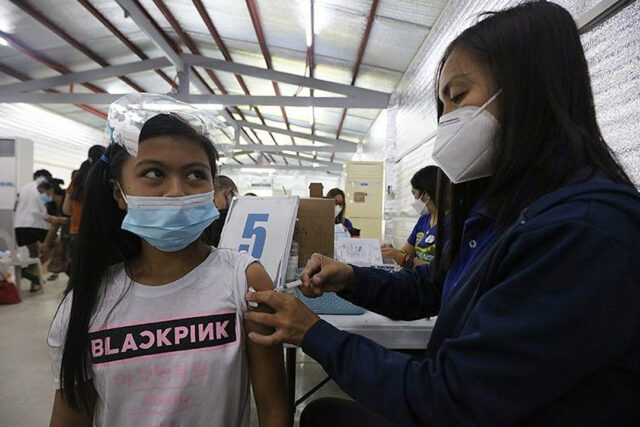
MORE than 70 million Filipinos have been fully vaccinated against the coronavirus, the government’s vaccine czar said at the weekend.

The number is about 78% of the target population, vaccine czar Carlito G. Galvez, Jr. said in a statement, citing the latest government data. The Philippines started its vaccination program in March last year.

Mr. Galvez said that this is a testament of the administration’s commitment to vaccinate as many Filipinos as possible to protect them from the coronavirus.

“The National Task Force thanks our health workers, volunteers and our fellowmen who worked together to make sure that we vaccinate and protect more people from COVID-19 (coronavirus disease 2019),” he said in Filipino.

“This is our parting gift to the next administration,” Mr. Galvez said. “We hope that our new leaders will also prioritize our vaccination program and continue to build an immunity wall among our people.”

President Rodrigo R. Duterte, who will finish his six-year term this month, will be replaced by President-elect Ferdinand R. Marcos, Jr.

The government had given out more than 153 million vaccine doses as of June 17, with 75 million people having received at least one dose.

Almost 15 million Filipinos have been injected with their first booster shot, while more than 600,000 have received their second top-up dose.

More than 3 million children aged 5 to 11 and 9.5 million minors aged 12 to 17 have been fully vaccinated against the coronavirus.

Mr. Galvez said the country’s high vaccination rate and compliance with health protocols could prevent another coronavirus surge.

“We have had many superspreader events in the past months, including the national elections, but we still managed to keep our new COVID-19 cases low because of our high vaccination rate,” he said. “Vaccination alone is not enough. We still have to follow our public health protocols, including frequent washing of hands and wearing of best-fitted face masks.”

About 3.7 million Filipinos had been infected with the coronavirus as of June 18. Only a little over 4,000 people still have the virus, according to the Health department.

The capital region could post as many as 1,200 daily coronavirus infections by end-June, the Department of Health (DoH) said on Saturday. It also warned about rising hospitalizations in some regions.

On June 16, the OCTA Research Group from the University of the Philippines said the government was unlikely to tighten the lockdown in the Philippine capital and nearby cities this month despite rising coronavirus infections.

Daily infections could only go as high as 500 in the capital region by end-June, while cases nationwide could hit 2,000 — far below the 6,000 threshold that would spur a higher alert level, OCTA fellow Fredegusto P. David told One News Channel.

Metro Manila has been under Alert Level 1 — the most relaxed in a five-tier system — since March after a drop in daily coronavirus infections. An inter-agency task force has recommended to extend this until June 30. — Norman P. Aquino

Land owners give final consent for the opening of Mati airport 

BW FILE PHOTO

THE PRIVATE owners of the land where the Mati City airport is located have given their final consent, paving the way for the commercial opening and expansion of the facility, according to a city official.  

Right now, they are finalizing ng mga documents, all the heirs have already signed, for both the Rocamoras and Rabat (families),Vice Mayor Glenda Rabat-Gayta said in an interview during the opening of the 15th Cityhood Day of Mati and the 19th Pujada Bay Festival on June 13.   

Its just a matter of time. You know how documentation isI think they are targeting (to finalize the papers) before the end of this month, before the turnover to the next administration,she said.   

Mati City, the capital of Davao Oriental province, is located about 182 kilometers west of Davao City, where the Francisco Bangoy International Airport is located. A land trip from Davao to Mati takes an average of 3.5 to 4 hours.   

The rehabilitation and development of the Mati airport, built in the 1980s, started in 2019 with an initial P200-million fund from the national government. The facility was designed just for small aircraft.   

Under a plan approved by local officials, the Department of Transportation, and the Civil Aviation Authority of the Philippines, the airports runway will be expanded to accommodate bigger planes, which would require at least another 27 hectares. The terminal building will also have to be improved while basic facilities such as a fire station and parking area will have to be constructed.  

Governor Nelson L. Dayanghirang, who is returning to Congress after winning in May as House representative, has said that the airport would boost tourism and investments in the province.   

We have a lot of destinations to offer in terms of tourism which can be maximized if we could offer our tourists an alternative and inviting means to reach us,he said. 

Davao Orientals popular tourist destinations include the Dahican Beach in Mati, the UNESCO World Heritage Site Mt. Hamiguitan, and Aliwagwag Falls, among others.  

PUJADA BAY
Meanwhile, the Mati local government assured that it is continuously strengthening efforts to protect Pujada Bay, one of three bays in the city included in the Most Beautiful Bays in the World Association (MBBWA) since 2020.  

Mayo and Balete Bays are the other two recently included in the list.   

Pujada Bay is also declared under Philippine law as a Protected Landscape and Seascape.  

Ms. Rabat-Gayta said one of the priority areas they are focusing on is waste management involving the coastal communities.    

We are really boosting our campaign on waste management and other programs by partnering with the communities because we thought that the best way to solve this concern is to involve the communities so that they can be part of the solution,she said. 

One of the criteria for inclusion in the MBBWA list is community involvement in environmental protection. Maya M. Padillo 

Bangsamoro board approves 3 investments worth P734M

@BANGSAMOROGOVT

THREE companies have been given the green light for their proposed projects in the Bangsamoro with a combined outlay of over P734 million, the regional investment board announced at the weekend.   

These are: P340.8 million from Nama Concrete Philippines Corporation (NAMA) for a pre-mixed cement facility in Sultan Kudarat, Maguindanao; P340.8 million from Mount Kalantungan Agri-Ventures, Inc. (MKAVI) for the expansion of its Cavendish banana production for export in Amai Manabilang, Lanao Del Sur; and P169.8 million from the Austrian Trade and Investment Group Asia, Inc. (ATIGA) for products relating to Halal coffee in Cotabato City. 

As we conduct our (most likely) last board meeting during the administration of President (Rodrigo R.) Duterte, we are glad that we are ending the term on a high note with three additional registered investment projects,Bangsamoro Board of Investments Chairman Ishak V. Mastura said in a statement released by the regional government.  

MKAVIs project is an expansion of its existing operations that started 18 years ago. 

Since the start of our operation way back in 2004, our company did not fail in choosing its location for putting up banana plantation in the Bangsamoro region because Regional BBOI is always there ready to assist us, we thank the BARMM government for the approval of our new application,MKAVI External Relations Officer Joyal Maquinto is quoted in the statement.   

NAMA Manager Jabib Guiaber, for his part, said their facility will help ease cement supply in the region for various infrastructure projects.   

ATIGA is setting up an assembly line that offers parts and components for coffee vending machines.  

The new investments are expected to create 636 jobs, including 304 workers for NAMA, 213 for MKAVI, and 119 workers for ATIGA.  

WAGE HIKE
Meanwhile, the Bangsamoro Tripartite Wages and Productivity Board also approved last week a P16-minimum wage within the Bangsamoro Autonomous Region in Muslim Mindanao (BARMM).  

Under Wage Order No. 02, all minimum wage earners of the private sector in all industries are covered by the pay hike, except for family drivers, those employed in the personal service of another, and workers in registered Barangay micro enterprises.   

Also exempted are retail and service establishments regularly employing up to 10 workers, and establishments validated as distressedor affected by disasters.   

After public consultations and hearings, the BARMM regions wage increase is P16.00 in the meantime, since we also have to listen to our business sectors and we have to consider that they were also affected by the COVID-19 pandemic,said Bangsamoro Minister for Labor and Employment Muslimin Sema.  

The last wage increase in the region took effect on Jan. 1, 2020.  

Current rates are: P300.00 for the non-agriculture sector and P290 for the agriculture sector in the provinces of Maguindanao, Lanao del Sur, Basilan, Sulu, Tawi-Tawi, and the cities of Lamitan and Marawi.  

In Cotabato City, the regional center, and the 43 barangays in North Cotabato that are clustered as Special Geographic Area (SGA), existing rates are P325.00 for the non-agriculture sector and P300.00 for the agriculture sector.  

The increased rates will take effect 15 days after publication of the wage order in at least one newspaper of general circulation in the region. MSJ