Home Blog Page 5608

BoI approves P924-M desiccated coconut project

CENTURYPACIFIC.COM.PH

THE Board of Investments (BoI) has approved an application to register for incentives Consolidated Coconut Corp.’s desiccated coconut project in Misamis Oriental worth P924 million, which is expected to generate export income.  

In a statement on Tuesday, the BoI said that the company’s project will be located in Plaridel, Misamis Oriental, and will begin commercial operations in September. The facility has an annual capacity of 93,750 metric tons (MT) of desiccated coconut.

“The firm will engage in the production and export of high-quality food-grade desiccated coconut. Further, the target markets for the product to be exported are North and South America, Europe, China, Asia, Australia, and the Middle East,” the BoI said.

“We are making headway in sustaining Philippine exports, particularly desiccated coconut, with the approval of the project by Consolidated Coconut Corp. We are truly seizing the opportunity, as the Philippines is the top producer of such products globally,” BoI Managing Head Ceferino S. Rodolfo said.

The BoI said that the first five years of the project’s commercial operations and construction will generate 475 jobs. The project will utilize raw materials, specifically dehusked coconuts from Misamis Oriental and nearby provinces.

The company will be importing paring machines, dryers, and laboratory equipment worth P430 million from Sri Lanka, India, and Singapore, respectively.

“The project exploits the country’s competitive advantage in manufacturing and exporting desiccated coconut. Based on the Philippine Coconut Farmers and Industry Roadmap (2021-2040), the Philippines is the world’s largest exporter of desiccated coconut and has the greatest ability to compete in the global market,” the BoI said.

According to the BoI, the Philippines has the largest land area planted to coconut and the second-largest coconut output in the world, accounting for 23.4% of global production.

It added that the project will support one of the goals of the Coconut Farmers and Industry Development Plan, which is to promote integrated processing systems to optimize use of the produce.  

“In 2020, the total volume of desiccated coconut exported in the world (was) 438,052 MT. The Philippines sits at the top with 147,000 MT of desiccated coconut exported, representing 33.56% of the world exports, and the country’s top export destinations of desiccated coconut are the US, Netherlands, Australia, the UK, and Russia,” the BoI said.  

“Coconut is the second largest crop in the country in terms of area planted at 3.6 million hectares in 2020, or approximately 26% of the country’s total agricultural land. The Philippines represents 26.8% of global coconut exports which are valued at $229.79 million annually,” it added. — Revin Mikhael D. Ochave

Miners call on gov’t to provide stable environment, spell out ESG best practices

MINERS have asked the government to provide a stable environment and to specify how the industry can best comply with environmental, social, and governance (ESG) standards.   

“We hope for nothing less than a stable business environment to allow mineral resource development to flourish, the harmonization of national and local laws to avoid conflicts, and the promotion as well as reporting of environmental, social, and governance (ESG) best practices for resource development,” Philex Mining Corp. said in a Viber message.

The listed miner said that “through responsible and sustainable means, mining has the potential to contribute to economic growth and national development.” 

Finance Secretary Benjamin E. Diokno has said that the government is hoping to accelerate the revival of the mining industry, the operations of which were disrupted by the Duterte administration, which found large parts of the industry non-compliant with environmental rules. The government before that had declared a moratorium on new mining permits.

Last year, then President Rodrigo R. Duterte lifted the nine-year-old permit moratorium and lifted the ban on open-pit mining.

In 2021, the mining and quarrying industry posted output growth of 5.0%, accelerating from 2.6% in 2020, according to the Philippine Statistics Authority.

“It has always been our strong belief that responsible mineral development, when allowed to flourish, could substantially contribute to economic recovery, particularly in increasing government revenue, job generation, and poverty alleviation that are most needed in this time of pandemic and beyond,” Chamber of Mines of the Philippines Chairman Michael T. Toledo said in a statement.

On the opposite of the issue, Alyansa Tigil Mina (ATM), an advocacy group, said the environmental consequences of mining outweigh its economic benefits.

“A revitalization of the mining industry could only lead to food and water insecurity, land-use changes, loss of biodiversity, soil erosion, air and water pollution and the displacement of communities,” ATM National Coordinator Jaybee Garganera said in a statement.

Mr. Garganera said that environmental concerns should be one of the government’s priorities in its economic recovery program.

“Ignoring the harmful environmental consequences of mining in the drive to revitalize the mining industry could only do more damage to the economy,” he said.

“It is imperative that alternatives to mining be pursued if the government truly wants to revive the economy. These include: agroforestry, eco-tourism and watershed development, agriculture and fisheries, and community-based enterprises,” he added.

ATM called for the full disclosure of all the mine audit reports and the immediate review of these mine audits.

“The new administration must immediately convene an environmental summit that will involve affected communities and environmental groups in order to assess and craft this administration’s environmental and climate program,” it added. — Luisa Maria Jacinta C. Jocson

Pharma group backs DTI plan to develop PHL as an industry hub

MIZIANITKA FROM PIXABAY

THE Pharmaceutical and Healthcare Association of the Philippines (PHAP) said it is confident that the Philippines can be developed as a hub for the industry, expressing support for a Department of Trade and Industry (DTI) plan to build up domestic production.

In a statement on Tuesday, the PHAP said that the Philippines can “position itself as regional hub for biopharmaceutical innovation.”

Trade Secretary Alfredo E. Pascual has said he is pushing for more domestic manufacturing in health and life sciences, targeting biopharmaceuticals, pharmaceuticals, medical devices, and healthcare services.

“With a health crisis at the root of the current global economic distress, the health and life science cluster plays a strategic security role, opening income-generating opportunities in all countries, including the Philippines,” Mr. Pascual said.

According to PHAP Executive Director Teodoro B. Padilla, the group’s aim is to develop a “vibrant biopharmaceutical industry.”

“We are eager to share our expertise to accelerate the attainment of this goal for us to better prepare for and respond to current and future emergencies while at the same time sparking economic activity,” Mr. Padilla said.  

Diana M. Edralin, PHAP president, said the Philippines has much to offer in biopharmaceutical research and development, which can become a catalyst for future investment.

“The Philippines can be part of the actual research and development process… The country is currently an active participant in the conduct of clinical trials, and we are eager to partner to see more of these research and development activities in the Philippines,” Ms. Edralin said.

“When we participate in global clinical trials, we are creating early access to innovation, bringing in major investment, and building the scientific capacity… to pursue pharmaceutical research and development,” she added.

According to the PHAP, the DTI is the lead agency in the Industry Strengthening Working Group developing the integrated roadmap for the pharmaceutical industry.

“We will work with the DTI and related agencies for us to build capacity and foster an environment conducive to innovation to make available life-saving biopharmaceuticals for Filipinos and even to people in neighboring countries in the long term,” PHAP Chairman Emeritus Beaver R. Tamesis said.

“(The) PHAP is keen to continue working with the DTI to pursue pandemic recovery and foster pharmaceutical security for an uninterrupted supply of life-saving medicines, vaccines and diagnostics amidst global demand or political instability in other regions,” the group added. — Revin Mikhael D. Ochave

Gov’t budget utilization hits 99% at end of June

BW FILE PHOTO

GOVERNMENT agencies raised their cash utilization rate to 99% at the end of June, up from the 97% rate posted a year earlier, the Department of Budget and Management (DBM) said.

The DBM said the National Government, local governments and state-owned firms used P2.01 trillion of the P2.033 trillion in notices of cash allocation (NCAs) issued to them in the first half of the year, leaving P24.22 billion unused.

NCAs are a quarterly disbursement authority from the DBM issued to agencies, allowing the latter to withdraw funds from the Treasury to support their spending needs.

“This may have to do with the election year to optimize budget utilization as needed to accomplish (and) complete more government projects and programs,” Rizal Commercial Banking Corp. Chief Economist Michael L. Ricafort said.

“Furthermore, some government spending especially on infrastructure could have been rushed before the election ban on some public works,” he added in a Viber message.

Line departments used 98% or P1.39 trillion in NCAs released to them as of June.

Those recording a utilization rate of 100% were the Office of the Vice-President, and the Departments of Education, Foreign Affairs, Health, Interior and Local Government, National Defense, Public Works and Highways, and Transportation.

The Joint Legislative-Executive Councils, the Judiciary, the Civil Service Commission, the Commission on Audit, the Commission on Elections, the Office of the Ombudsman, and the Commission on Human Rights also posted a 100% utilization ratio.

In June, the Department of Social Welfare and Development announced the distribution of the first batch of cash aid intended for an initial 1.2 million Filipino households amid the rising costs of fuel and other commodities. The subsidy under the Targeted Cash Transfer program amounts to P500 per month for six months.

The DBM released P4.68 trillion or 93.2% of this year’s P5.02 trillion spending plan as of June.

In the same period last year, the DBM had released P3.83 trillion or 85.1% of that year’s P4.51-trillion budget. — Diego Gabriel C. Robles

DOE studies impact of fuel price hikes as gov’t plans to extend subsidies

PHILSTAR

The Department of Energy (DoE) is studying the impact of fuel price hikes on the agriculture and transport sectors, as the government plans to implement a new round of fuel subsidies.

“We are currently coordinating with the Department of Agriculture, the Department of Transportation, and the Land Transportation Franchising and Regulatory Board to calculate the impacts of fuel price increases on agriculture and transport sectors,” Rino E. Abad, director of the DoE’s Oil Industry Management Bureau, told a televised news briefing.

“These sectors will be given subsidies,” Mr. Abad said. “The DoTr has already finished its computation. We expect that the computations will be requested by the President.”

President Ferdinand R. Marcos, Jr., who rejected calls for the suspension of excise tax on fuel, has committed to expanding the fuel subsidy for the transport sector, including tricycle drivers.

ROLLBACK
At the same briefing, Mr. Abad said fuel cost adjustments would heavily depend on COVID-19 curbs and interest rate hikes across the world, which could further temper economic activity and lower demand.

He said the rollback trend in the pump prices of petroleum products could continue if the Federal Reserve, which is due to meet on July 26-27, raises rates aggressively.

On the other hand, price hikes in petroleum products can be expected if the US does not hike interest rates, Mr. Abad said, citing supply side pressures triggered by the Russia-Ukraine war.

If the Fed and other central banks raise interest rates, it will be an enabling environment for continuous price rollbacks, he said.

He noted that the price rollback implemented this week was caused by the lockdowns in China and interest rate hikes in the US and other countries.

Lockdowns and higher borrowing rates could force consumers to spend less, and consequently lower demand and market prices.

China vows to finish Philippine railway projects

WANG WENBIN CHINESE FOREIGN MINISTRY SPOKESPERSON FACEBOOK PAGE

CHINA will finish infrastructure projects with the Philippines including three railways, and launch more that will set new benchmarks for cooperation, according to its Foreign Ministry spokesman.

These projects would “help upgrade Philippine infrastructure in both traditional and emerging sectors,” Wang Wenbin told a news briefing in Beijing on July 18, according to a transcript posted on the ministry’s website.

He also said China would “coordinate seamlessly” with the Philippine government after President Ferdinand R. Marcos, Jr. ordered the Department of Transportation to renegotiate the loans for three railway projects that got delayed.

These are the Calamba-Bicol, Subic-Clark and Mindanao railway projects.

Mr. Wang said the construction of more projects, including the three major railways, are well under way.

A transport official last week said China’s funding commitment for the three railways was “deemed canceled” because it had failed to respond to the Philippine government’s loan application since 2019.

Critics have said China’s failure to act on the Philippines’ loan applications showed its lack of commitment despite former President Rodrigo R. Duterte’s friendly stance toward China.

Mr. Marcos is now eyeing both foreign and private sector support for railway projects, according to Transportation Undersecretary Cesar B. Chavez.

Mr. Marcos ordered the Transportation department to go back to the negotiating table to secure loan agreements for the three railway projects, the presidential palace said in a statement at the weekend.

“Infrastructure cooperation is a highlight in the practical cooperation between China and the Philippines in the past six years,” Mr. Wang said. “China welcomes President Marcos’ instruction to the responsible department on discussing with China on the projects.”

The P142-billion Calamba to Bicol project is a 380-kilometer railway from Banlic in Calamba, Laguna, to Daraga, Albay, while the P50-billion Subic-Clark railway is a 71-kilometer railway divided into two sections — a 64-kilometer main line connecting the Subic Bay Freeport Zone and Clark Freeport Zone and a seven-kilometer link to the Subic Bay Port’s new container terminal.

The first phase of the P82-billion Mindanao railway project stretches from the Tagum Station and depot in Davao del Norte to Digos City in Davao del Sur. It will have stations in Carmen, Panabo, Santa Cruz, and three in Davao City, including a sub-depot.

“China always sees the Philippines as a priority in its neighborhood diplomacy,” Mr. Wang said. He reiterated four key areas of cooperation with the Philippines — large-scale agriculture, infrastructure, energy and people-to-people exchange.

These will carry forward the friendship of both nations and bring benefits to their people, he said.

“The Philippines is a friend and a neighbor of China. With the new Philippine government coming into office, China-Philippine relations are at a new starting point,” he added.

Earlier this month, Mr. Marcos said the Philippines and China should explore avenues of cooperation and not just discuss territorial disputes.

Mr. Marcos has tagged China as the Philippines’ “strongest partner” in pandemic recovery efforts, saying their relationship is very important and advantageous to both countries.

Meanwhile, National Security Adviser Clarita A. Carlos said China’s attempt to invalidate a 2016 arbitral ruling by a United Nations-backed tribunal that voided its claim to more than 80% of the South China Sea is “not anything new.”

“They have said that before but I think we have made our position clear there, and the president of the republic has made our position clear,” she said in a statement.

Mr. Wang has said “China neither accepts nor recognizes it and will never accept any claim or action based on the award.” “By doing so, we are upholding international rule of law,” he added, calling the ruling “illegal, null and void.”

In 2016, the Permanent Court of Arbitration based in the Hague upheld the Philippines’ rights to its exclusive economic zone within the waterway. It rejected China’s claim to most of the sea based on a 1940 nine-dash line map that Philippine Foreign Affairs Secretary Enrique A. Manalo said “had no basis in law and is without legal effect.”

Mr. Manalo has said the findings of the arbitration court “are no longer within the reach of denial and rebuttal, and are conclusive as they are indisputable.” — Alyssa Nicole O. Tan

OCTA cites rising infections in Luzon

PHILIPPINE STAR/ WALTER BOLLOZOS

CORONAVIRUS infections in some parts of the Philippines including the main island of Luzon have increased, though still not at an alarming level, according to the OCTA Research Group.

The infection rates in Calabarzon, Central Luzon, Western Visayas, Pangasinan and La Union have had increased, Fredegusto P. David, a fellow from the OCTA Research Group, told a news briefing on Tuesday.

Infections in the provinces of Cagayan, Isabela, Iloilo, Pampanga, Bulacan, Bataan, Nueva Ecija and Tarlac have also spiked, he said.

“We have monitored rising cases in most of Calabarzon except Quezon, but this is not alarming,” Mr. David said in Filipino. “We just want the public to be aware that cases in these areas have increased and we need to be safe.”

He said health authorities are looking at the country’s healthcare use rate to ensure it doesn’t get bogged down by rising infections.

The Philippines posted 14,640 coronavirus infections in the past week, with a daily average of 2,091 cases, the Department of Health (DoH) said on Monday.

The daily average from July 11 to 17 rose by 44% from a week earlier, according to a DoH bulletin. Of the new patients, 35 were severe and critical, it added.

One death was confirmed in the past week, but there were no deaths from July 4 to 17, the agency said.

It added that 481 of 2,630 intensive care unit (ICU) beds had been used as of July 18, while 5,189 of 21,809 non-ICU beds were occupied. There were 589 severe and critical admissions.

The coronavirus infection rate in the Philippines has increased in recent weeks, sparking discussions on whether it is safe to enforce face-to-face classes by November.

Mr. David expects about 2,000 daily coronavirus infections in the next few days, though it seemed to have peaked in Metro Manila.

He traced rising infections to more contagious Omicron subvariants and people’s failure to observe minimum health standards.

More than 70 million Filipinos have been fully vaccinated against the coronavirus, with more than 15 million having received a booster shot.

Meanwhile, President Ferdinand R. Marcos, Jr. has decided to keep the country’s five-tier COVID-19 alert system, as he awaits a new classification scheme by next month, according to the presidential palace.

“To avoid confusion, we will retain the alert level system for now,” Mr. Marcos told DoH officer-in-charge Maria Rosario S. Vergeire at a recent meeting, based on a press release sent by Malacañang.

“We are studying very closely, and we’ll come to a decision very soon as to decoupling the restrictions from the alert levels,” the president said. 

Mr. Marcos met with Ms. Vergeire and other Health officials on Monday to discuss the government’s pandemic plan. 

Ms. Vergeire said DoH might release new classifications by the second week of August, when more restrictions will have been eased.

Mr. Marcos, who has vowed to ditch lockdowns, wants the new restrictions to be compatible with the milder variants of the coronavirus, the palace said.

It noted that among the factors being considered for easing of restrictions is the country’s low booster uptake

Mr. Marcos at the weekend said his government would start a campaign to encourage more Filipinos to get booster shots against the coronavirus.

The program is part of the preparations for face-to-face classes and full economic reopening, he said in his latest video blog.

The Health, the Interior and Local Government, and Education departments would lead the campaign to increase the country’s booster uptake, he said.

Mr. Marcos, 64, recently finished his seven-day isolation on Friday after he tested positive for the coronavirus.

Most areas in the Philippines including the capital region are under the lowest virus alert, allowing businesses to operate at full capacity. — Norman P. Aquino and Kyle Aristophere T. Atienza

Marcos administration tackles education, social service concerns

PHILIPPINE STAR/KRIZ JOHN ROSALES

PRESIDENT Ferdinand R. Marcos, Jr.’s third Cabinet meeting focused on the plans of the education and social welfare agencies, his office said on Tuesday.

The Department of Education, which is headed by Vice President Sara Z. Duterte-Carpio discussed its priority programs and projects for basic education, Press Secretary Rose Beatrix “Trixie” Cruz-Angeles said in a statement.

Policymakers are now discussing reforms in the education sector, as the Philippines has been rocked by reports that learners have been falling below the expected minimum levels of proficiency.

The education crisis has been aggravated by the physical closure of schools in the past two years due to the coronavirus pandemic, with the Philippines having the longest ban on in-person classes.

The Marcos administration is now backing calls for the review of the country’s ten-year-old education curriculum, also known as the K-12 program, which extended the basic education period to include two additional years in the secondary level with the goal of giving learners opportunities to acquire the necessary skills demanded by the labor market.

Almost a decade after the implementation of the K-12 program, which was designed to comply with global standards, Filipino learners hardly excel as shown in major assessment tests.

A recent Pulse Asia survey commissioned by a senator showed 44% of adults are not satisfied with the K-12 program.

Ms. Duterte-Carpio has said the program’s review is already in progress.

At the same meeting, the Department of Social Welfare and Development “presented its own programs and projects,” Ms. Cruz-Angeles said.

“Of note is Sec. Erwin Tulfo’s declaration that in the Pantawid Pamilyang Pilipino Program (4Ps), at least 1.3 million beneficiaries out of 4.4 are no longer considered ‘poor’,” she said.

“This frees up P15 billion for other qualified persons to replace them and now be included in the said program.”

The 4Ps program is a conditional cash transfer scheme intended for the country’s poorest families. — Kyle Aristophere T. Atienza

Senate inquiry sought on flood control master plan 

PHILIPPINE STAR/ MIGUEL DE GUZMAN

A RESOLUTION seeking a probe into the government’s flood control master plan and pending projects has been filed at the Senate following recent flooding in the capital city and other parts of the country due to incessant rains or thunderstorms.

Senator Ramon B. Revilla, Jr., who filed Senate Resolution 52 on July 18, said “it is important for us to be prompt and make sure the town is ready before disasters strike.”

“The commuting public have been laden with this decades-old issue. It is high time we look into this before it is too late,” he said in a statement on Tuesday.

The Department of Public Works and Highways (DPWH) is the lead implementing agency for the Flood Management Master Plan for Metro Manila and Surrounding Areas Project, in close coordination with local government units.

DPWH has reported the completion of 13,224 flood control structures nationwide in the last six years, while the Metro Manila Development Authority (MMDA) has said that pumping stations in the National Capital Region are prepared and are at 100% capacity for the rainy season.

However, Mr. Revilla said that despite the master plan and billions allocated for the program, flooding and its adverse effects continue to endanger many communities nationwide.

The senator said that issues with flooding have only become worse over the years, citing climate change which has intensified natural calamities.

“The country has repeatedly witnessed catastrophic flooding of communities,” Mr. Revilla said. “We cannot simply forget the unthinkable number of lives lost, complete devastation of areas directly affected, and the severe effects on living conditions and livelihood which led to a long-term negative impact on the health of many Filipinos and on the country’s economy.”

The Philippines, situated within the typhoon belt, is struck by an average of 20 typhoons per year.

It is losing an average of 1.7% of its overall economic output each year due to typhoons, according to estimates by the Asian Development Bank, which noted the country’s need to strengthen its resilience against natural disasters. — Alyssa Nicole O. Tan

Cebu’s Daanbantayan gets road, port improvements from provincial gov’t

DAANBANTAYAN LGU FACEBOOK PAGE

INFRASTRUCTURE projects worth more than P70 million have recently been completed in Daanbantayan, a beach and diving destination in northern Cebu, the provincial government said.

Cebu Governor Gwendolyn F. Garcia inaugurated on Monday the expanded causeway in Tapilon, which is used by boats that ferry passengers and dry and fresh goods from Daanbantayan to nearby islands and islets.

With the P7.6-million pier expansion project, motorized boat operators no longer have to transfer people and products to smaller flat-bottom vessels to reach the shore during low tide, said resident and boat crew member Alex Baslan in a press release from the provincial government.

Also completed is a P54.8-million upgraded road section from the town center to the Tominjao and Maya localities.

In Tominjao, a reinforced concrete box culvert for a bridge was also reconstructed at a cost of P8.6 million.

Daanbantayan is classified as a first class municipality with a population of about 93,502 as of 2020. Its white sand beaches and dive sites, particularly in the islands of Malapascua and Carnaza, are popular tourist destinations.

Cebu was recently cited as one of the best island destinations in the Philippines, along with Palawan and Boracay, by the the New York-based travel magazine Travel + Leisure. — MSJ

House bill criminalizing occupational safety and health violations filed

PHILIPPINE STAR/ MICHAEL VARCAS

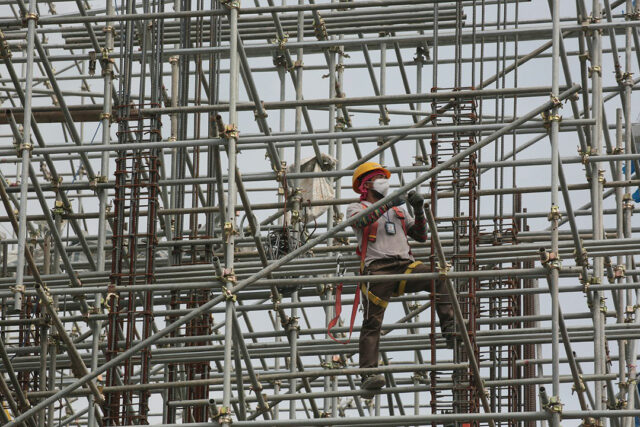
A BILL criminalizing occupational safety and health (OSH) violations was filed at the House of Representatives on Tuesday, which will amend the existing OSH law with stricter penalties and imprisonment for non-compliant employers.

“Even with the enactment of the OSH Law, employers continue to neglect workers’ health and safety which often lead to injuries and death,” Gabriela Party-list Rep. Arlene D. Brosas said in a statement on Tuesday.

“That is why we need to introduce stiffer penalties and imprisonment in the law.”

“The consecutive workplace deaths during the past one and a half months are alarming. The government should decisively act now to put an end to workplace deaths,” Institute for Occupational Health and Safety Development (IOHSAD) Executive Director Nadia de Leon said in a separate statement.

According to the Integrated Survey on Labor and Employment in 2019, there were 310 fatal cases of occupational accidents that year.

“The recent recognition of OSH as a fundamental principle and right at work by the International Labor Organization highlighted government responsibility in ensuring safe and healthy working environments at all times,” Ms. De Leon said.

The IOHSAD joined the Gabriela Party-list as it filed House Bill 2126.

Under the proposed amendment, violators may face imprisonment for up to 12 years and a maximum fine of P3 million if the incident results in the death of a worker.

If the violation causes injury, the violator may be fined a maximum of P500,000 and imprisoned for up to six years.

A P75,000 compensation must also be given to every injured employee.

Employers, their contractors and subcontractors also stand to lose their business permits for repeated violations of the OSH Law.

“Our bill enumerated the gross violations of OSH Law which can be penalized by fines or imprisonment or both, including failure to heed the Labor department’s compliance order, failure to hold OSH trainings, failure to designate safety officers, and failure to secure a fire safety certificate,” Ms. Brosas said.

The proposed measure also prevents waivers or affidavits of desistance from derailing the pursuit of legal actions against erring employers, citing the usual tactic of guilty employers to force grieving families to sign waivers in case of workplace deaths.

Under the bill, top officials of a corporation will be held liable for the violation.

“One death is too many. How many workers must die for the government to realize this? A single workplace death is unacceptable. Workers do not work to die. Businessmen should keep in mind that pursuing higher profits should never mean violations of workers’ rights and workers’ deaths,” said Ms. De Leon. — Alyssa Nicole O. Tan

Rights group says anti-communist task force’s amnesty offer is a ‘facade’

HUMAN rights group Karapatan on Tuesday said the offer of the government’s anti-communist task force to grant amnesty to former communist rebels is a “facade” that would be used to continue state violence and repression.

The group made the statement after the task force, with new leadership under the administration of President Ferdinand R. Marcos, Jr., said last week that it would consider the measure to “prevent the resurgence of the communist terror group.”

“The anti-communist task force is now dangling the idea of granting amnesty through so-called ‘localized peace talks’ — but any talk of ‘peace’ from the task force rings hollow when it continues to deny its hand in red-tagging and inciting human rights violations,” Karapatan Secretary General Cristina E. Palabay said in a statement.

In its first executive meeting last Friday, National Security Adviser Clarita R. Carlos, the vice chairperson of the anti-communist task force, said they have yet to finalize the amnesty proposal.

During the meeting, Presidential Peace Adviser Carlito G. Galvez, Jr. did not recommend the resumption of peace talks between the government and the National Democratic Front of the Philippines-Communist Party of the Philippines-New People’s Army (NDFP-CPP-NPA), adding previous peace talks “ended up in nothing.”

Former President Rodrigo R. Duterte, who revived peace talks with communist groups when he started his administration in 2016, eventually terminated the negotiations in late 2017, citing ceasefire violations by the NPA.

In December 2018, Mr. Duterte signed an executive order that calls for localized peace talks involving local governments and the multi-agency national task force.

“Any talk of peace should be anchored on granting general, unconditional, and omnibus amnesty to all political prisoners, the resumption of formal peace talks, and upholding all previously signed agreements,” said Ms. Palabay. — John Victor D. Ordoñez