Home Blog Page 5411

Stop trying to be indispensable at work

KRAKENIMAGES-UNSPLASH

BE INDISPENSABLE.” This commonly given career advice is hard to argue with. No doubt it sounds appealing these days, with a softening economy and layoffs once again dominating the business news. It’s advice I’ve tried to follow for much of my own working life.

But the idea is deeply flawed.

Yes, being indispensable ought to be insurance against getting fired, and getting fired is horrible. Anyone who has been through even a single round of layoffs knows the anxiety it causes, the Hunger Games-ish feeling of needing to out-compete one’s friends and colleagues. Indispensability seems like the best armor — but that armor can become a cage.

Sometimes an effort to be indispensable turns an employee into a one-person bottleneck. But if they’re the single point of failure for a project, or the only person who knows how the system works, or the one employee the client is willing to talk to, it can be near impossible for them to leave — whether that’s taking time off for vacation or advancing to a bigger job.

A boss might reluctantly think, “Janice has really earned a promotion, but we’d need to hire two people to replace her,” or “It’s not fair to keep sending Paul to deal with the angriest customers, but he’s the only one who can talk them down.”

These employees are so valuable in their current jobs that promoting them would create an immediate problem for their managers. In a 2020 survey by LinkedIn, talent professionals said the biggest barrier to internal recruiting was bosses wanting to hold on to their best people. This might not be a problem if those employees are happy, but because so many organizations require a promotion in order to get a raise, indispensable people can quickly become underpaid.

Say Janice were given the opportunity to move into management — maybe she could teach more employees to be as productive as she is, maybe she’d create 12 mini-Janices. With Paul’s hard-won knowledge of customer needs, perhaps he’d be better off in a new role, helping to redesign the product so it doesn’t make people so angry.

But their indispensability — and management’s shortsightedness — keeps them and the whole organization on the hamster wheel. This failure to promote people out of individual roles to that first rung of management is sometimes called a sticky floor, and it especially hurts women and people of color, stunting their careers before they ever have a chance to run into a glass ceiling.

In organizations that lean too heavily on indispensability, valuable people become incentivized to leave to get recognition. A 2022 McKinsey study found that more than 80% of role moves involved someone switching employers; internal promotions remain rare. Most job changes they studied also involved people taking on substantially new skills, indicating that they had abilities their old employer had overlooked.

When these crucial employees eventually depart, sometimes that’s the first time bosses and colleagues realize the true extent of all the work they handled. It can take months for the team to recover. A paper by MIT economist Simon Jäger and IAB economist Jörg Heining (called “How Substitutable Are Workers? Evidence from Worker Deaths”) concluded that when departed workers can be readily replaced, wages rise as their colleagues quickly pick up the slack. When workers are harder to replace, it has a negative effect that hurts wages for those left behind.

Instead of aspiring to be indispensable, workers and companies should recognize that it’s better for everyone if employees are skilled and valuable but interchangeable. This would mean an employee can leave for vacation with minimal fuss, knowing that her colleagues will handle anything that comes up while she’s out. When workers can easily substitute for each other, their hours can be more predictable and also more flexible.

Interchangeability can even help close the wage gap between men and women: A study of pharmacists by Harvard economists Claudia Goldin and Lawrence Katz found that increased substitutability among pharmacists — thanks to uniform training, computerized customer data, and the rise of national chains — has brought the profession some of the highest hourly pay and one of the lowest gender-pay gaps.

In an organization with skilled, substitutable employees, managers can redistribute work seamlessly when they realize that one person has taken on too much, or that another doesn’t have enough to do. It’s not a disaster if someone retires or quits. Customers aren’t upset if they don’t get to talk to a particular person. And when employees fill in for each other, fraud has fewer places to hide; that’s one reason some big banks make vacations mandatory.

If indispensability is so costly, why do we valorize it? Emotionally, it feels gratifying to be needed. And being indispensable might seem like good insurance against getting laid off. But as we’ve seen, that career insurance comes at a high premium. Nor is it foolproof — consider the layoffs rippling through top consulting and law firms over the past few weeks. Did any of those recently fired professionals consider themselves substitutable when they were pulling yet another 80-hour week? More likely, they thought their efforts were uniquely essential.

Fungibility gets a bad rap. We associate it with being lower-value, with being a cog in a larger machine. But there are a lot of highly skilled, highly paid jobs where workers can step into one another’s shoes: pilots, tax accountants, software developers. Healthcare is full of examples. If you need surgery, do you forgo pain medication until your preferred anesthesiologist is available?

In most sectors, indispensability is a habit, not a law of physics. Take editing, a profession I’ve been in for almost 20 years. I’ve worked at places where editors substitute for one another, filling in when one is out on vacation, and at places where editors do not. Although it somewhat hurts my ego to admit it, the copy turns out just as well when we stand in for each other.

Indispensability isn’t only costly, it’s unnecessary. There are many other ways to impress one’s boss. Be diligent, meticulous, efficient, respectful, cheerful. Exceed expectations. Minimize errors. Take initiative. Figure out what your boss’s priorities are and make them your own. And let that be enough.

BLOOMBERG OPINION

Energy, taxes, pensions first challenges for Italy’s Meloni

LEADER of Brothers of Italy Giorgia Meloni is seen at the party’s headquarters, in Rome, Italy, Sept. 26. — REUTERS

ROME — Giorgia Meloni, widely expected to be named Italy’s first woman prime minister after Sunday’s elections, will have to tackle a raft of pressing economic problems as soon as her government takes office.

The country’s laborious institutional proceedings mean that will not happen for at least a month, during which outgoing Prime Minister Mario Draghi remains in charge. This week he will issue new economic forecasts expected to show a darkening outlook, sources said.

The first task for Meloni, leader of the far-right Brothers of Italy, will be finding billions of euros to keep her election pledges to soften energy costs, cut taxes and block a hike in the retirement age due to kick in from January.

The energy crisis “will be the first test for the new government,” League leader Matteo Salvini, her main coalition ally, told reporters.

Mr. Draghi has already set aside 66 billion euros ($63.63 billion) this year for tax breaks and subsidies to help energy-intensive firms and poor households.

Those are due to expire in November, and extending them for another month would cost 4.7 billion euros, Treasury officials said.

Ms. Meloni is helped by the fact that higher energy prices increase government revenues from excise duties and value added tax, meaning she can probably find the money without raising state borrowing, the officials said.

However, with business activity across the euro zone rapidly deteriorating, it is likely she will have to approve similar measures in 2023.

At an additional cost of 3.5 billion euros, the new government also plans to extend to 2023 existing tax breaks for workers due to expire this year, a senior Meloni aide in the running for a prominent cabinet post told Reuters.

Pensions are another problem Ms. Meloni has to tackle fast.

A temporary regime allowing people to take a state pension when they are 64 expires in December, after which the age will rise to 67 under an unpopular 2011 reform which Mr. Salvini wants scrapped.

Blocking the rise in retirement age will add to a state pension bill which is the second highest in the euro zone as a proportion of national output, after Greece.

Because pensions are index-linked, Italy’s almost double-digit inflation rate is compounding the problem. In June, the Treasury said the pension bill would rise next year to 16.2% of gross domestic product from 15.7% expected in 2022. — Reuters

Hong Kong-Los Angeles business class fares hit $13,000 in rush to fly

TRAVEL to and from Hong Kong is easier now that hotel quarantine has ended. It is also more expensive. Much more expensive.

A business class ticket between Hong Kong and Los Angeles leaving Friday and returning on Oct. 7 cost HK$102,270 ($13,029) Monday with Cathay Pacific Airways Ltd., the only carrier offering the nonstop service in the wake of the pandemic. That’s more than double the HK$44,499 fare for the same flight next year. The price dropped to about HK$76,000 Tuesday morning.

Flight-booking websites have been swamped following Hong Kong’s eagerly-awaited decision to ditch mandatory hotel quarantine, which for months during the pandemic was as long as 21 days — a major deterrent to travel. Trouble is, airlines can’t bring capacity back and rebalance schedules fast enough.

Economy tickets to London Heathrow were listed on Cathay’s website at HK$28,899 on Monday, four times the cost of the same flight next year. Business class fares to the UK capital and New York were close to six figures.

With a public holiday in Hong Kong on Oct. 4 presenting the chance for a rare long weekend away, shorter flights in the coming days turned more expensive too. Return on business class to Singapore, which is hosting the Formula One Grand Prix this weekend, cost HK$38,800 on Singapore Airlines Ltd., more than double the lowest price for the same ticket next year.

Online travel agency Trip.com said Monday that outbound bookings made on Sept. 24-25 jumped 400% from the previous weekend, with orders for flights to Osaka in Japan surging 7,300%. Inbound bookings to Hong Kong climbed 155%.

Japan is the most popular destination from Hong Kong, the co-founder of Klook Travel Technology Ltd. said on Bloomberg Television. The cheapest nonstop, roundtrip tickets to Tokyo offered Monday came from Japan Airlines Co. at HK$7,878 in economy and HK$18,818 in business. Cathay unit HK Airlines had returns to Osaka for HK$6,156 in economy and HK$10,710 in business. — Bloomberg

New coins, banknotes, stamps and cypher for Britain’s King Charles

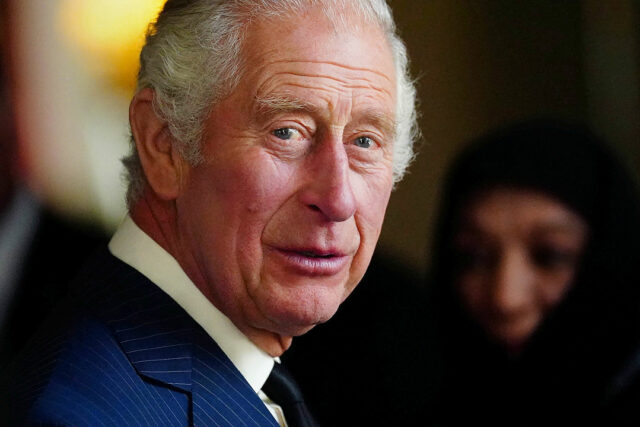
KING CHARLES — REUTERS

LONDON —  Britain will gradually see coins, banknotes and stamps bearing the image of King Charles, while the new monarch’s cypher will also appear on government buildings and red mail pillar boxes, manufacturers and Buckingham Palace announced on Tuesday.

As the country begins adapting to its first new head of state for 70 years, the makers of its currency and stamps said they would begin the slow process of switching from using an image of the late Queen Elizabeth II to the new king.

“The first coins bearing the effigy of His Majesty King Charles III will enter circulation in line with demand from banks and post offices,” said Anne Jessopp, the Chief Executive Officer at the Royal Mint.

“This means the coinage of King Charles III and Queen Elizabeth II will co-circulate in the UK for many years to come.”

The replacement process will take some time with the Royal Mint estimating there are some 27 billion coins bearing an effigy of the late queen who died this month.

Likewise, the Bank of England said banknotes with a portrait of Charles were expected to enter circulation by the middle of 2024, and it would reveal images of the updated notes by the end of the year.

Meanwhile, the Royal Mail said the current picture of the late queen used on “everyday” stamps would be updated to feature an image of Charles. Those new stamps will enter circulation once the current stock is exhausted.

All existing currency and stamps bearing the queen’s image will remain valid.

Buckingham Palace has also unveiled the new cypher for Charles — the sovereign’s monogram which is used on state documents, by government departments and by the Royal Household for franking mail as well as appearing on pillar boxes — but only new ones that have not yet entered production.

The cypher, selected by the new monarch from a series of designs prepared by the College of Arms, consists of the initials ‘C’ and ‘R’ — representing Charles’ name and “Rex”, the Latin for king — alongside a depiction of the crown.

“The decision to replace cyphers will be at the discretion of individual organizations, and the process will be gradual,” the palace said. — Reuters

Putin grants Russian citizenship to US whistleblower Snowden

EN.WIKIPEDIA.ORG

PRESIDENT Vladimir Putin on Monday granted Russian citizenship to former US intelligence contractor Edward Snowden, nine years after he exposed the scale of secret surveillance operations by the National Security Agency (NSA).

Mr. Snowden, 39, fled the United States and was given asylum in Russia after leaking secret files in 2013 that revealed vast domestic and international surveillance operations carried out by the NSA, where he worked.

US authorities have for years wanted him returned to the United States to face a criminal trial on espionage charges.

Mr. Snowden’s name appeared without Kremlin comment in a Putin decree conferring citizenship on 72 foreign-born individuals.

Mr. Snowden later issued a message, essentially an updated version of a November 2020 tweet, saying he wanted his family to remain together and asking for privacy.

“After years of separation from our parents, my wife and I have no desire to be separated from our SONS,” the tweet read.

“After two years of waiting and nearly ten years of exile, a little stability will make a difference for my family. I pray for privacy for them – and for us all.”

The new tweet made no reference to the Kremlin leader’s decree, but it was attached to a 2020 Twitter thread in which Mr. Snowden said he and his family were applying for dual US-Russian citizenship.

The news prompted some Russians to jokingly ask whether Mr. Snowden would be called up for military service, five days after Mr. Putin announced Russia’s first public mobilization since World War II to shore up its faltering invasion of Ukraine.

“Will Snowden be drafted?” Margarita Simonyan, editor-in-chief of the state media outlet RT and a vocal Putin supporter, wrote with dark humor on her Telegram channel.

Mr. Snowden’s lawyer, Anatoly Kucherena, told RIA news agency that his client could not be called up because he had not previously served in the Russian army.

He said that Mr. Snowden’s wife Lindsay Mills, who gave birth to a son in 2020, would also apply for citizenship.

US State Department spokesperson Ned Price said he was unaware of any change to Mr. Snowden’s status as a US citizen.

“I am familiar with the fact that he has in some ways denounced his American citizenship. I don’t know that he’s renounced it,” Mr. Price said in a press briefing.

Russia granted Mr. Snowden permanent residency rights in 2020, paving the way for him to obtain Russian citizenship.

That year a US appeals court found the program Mr. Snowden had exposed was unlawful and that the US intelligence leaders who publicly defended it were not telling the truth.

Mr. Putin, a former Russian spy chief, said in 2017 that Mr. Snowden, who keeps a low profile while living in Russia, was wrong to leak US secrets but was not a traitor. — Reuters

What’s new? Safer spaces at Toyota La Union with nanoeTM X technology of Panasonic

The threat of the coronavirus remains even if the restrictions and protocols have eased up around the country. Other viruses have also been surfacing and raising legitimate concerns worldwide. That’s why ensuring safety against COVID-19 and other highly resistant viruses is a top priority for everyone, including different business owners.

Consequently, commercial institutions like Toyota La Union (TLU) looked for ways on how to address this issue.

Spearheading this mission of providing safer spaces for all its customers, TLU chose Panasonic Air Conditioners with nanoeTM X to help purify and inhibit different pollutants present in the air and surfaces.

“Customer safety is of utmost importance for Toyota La Union. True to our culture as Filipinos, we try our best to treat all our customers with the Filipino hospitality. That is why we always strive to look for ways to improve not just our service but also our facility in order to give the best possible convenience we can offer to our customers. So when my friend shared with me the nanoe X technology of Panasonic, we did not hesitate to study the technology and try to incorporate it in our dealership”, said Mr. Richmond Glenn So, General Manager of Toyota La Union Dealership.

nanoeTM X is Panasonic’s patented air purification technology that neutralizes harmful air pollutants like viruses, allergens, bacteria, and molds, giving you clean air all around. More recently, nanoeTM X has also been proven to inhibit four types of novel coronavirus variants – Alpha, Beta, Gamma, and Delta in a 45-liter test space (with size of 350mm×350mm×400mm), in as fast as 2 hours by over 99.7%. *1

This breakthrough in health and wellness plays a big role in the new normal. As the pandemic has gradually transformed how we think about our economies and policies, customer safety is valued with great importance.

Mr. So further adds, “By far, the nanoeTM X technology of Panasonic far exceeds what the other brands has to offer. And as far as I know, Panasonic is the leading brand when it comes to innovating in the space of inhibiting virus and bacteria. Also, it is noteworthy to mention that Toyota, as a brand who prioritizes quality and safety, also use the nanoeTM technology of Panasonic in some of the vehicles in our line-up in the Philippines.”

Eight units of the Panasonic NX Series Ceiling Exposed Air Conditioners were installed inside Toyota La Union. The units were strategically placed to cover all possible spaces for the different customers. Even employees themselves lauded the move.

“I feel safer now knowing that my workplace is protected from COVID-19 and other viruses”, said Mhariczel Trinidad, Customer Relations Officer of Toyota La Union.

3D mockup of how the clean air circulates inside Toyota La Union

Now, anyone can visit Toyota La Union without having to worry about the transmission of bacteria and viruses. You are assured of a safe and protected car-buying experience every time!

For more information about nanoe™ and nanoe™ X technology please visit www.panasonic.com/ph/nanoe.

To know more about Panasonic air solution products equipped with nanoe™ and nanoe™ X technology, please visit www.panasonic.com/ph/air-solutions.


Spotlight is BusinessWorld’s sponsored section that allows advertisers to amplify their brand and connect with BusinessWorld’s audience by enabling them to publish their stories directly on the BusinessWorld Web site. For more information, send an email to online@bworldonline.com.

Join us on Viber to get more updates from BusinessWorld: https://bit.ly/3hv6bLA.

NASA’s DART spacecraft hits target asteroid in first planetary defense test

Illustration of the DART spacecraft flying towards the asteroids Dimorphos and Didymos. — NASA/Johns Hopkins/APL

NASA’s DART (Double Asteroid Redirection Test) spacecraft successfully slammed into a distant asteroid at hypersonic speed on Monday in a test of the world’s first planetary defense system, designed to prevent a potential doomsday meteorite collision with Earth.

Humanity’s first attempt to alter the motion of an asteroid or any celestial body played out in a NASA webcast from the mission operations center outside Washington, DC, 10 months after DART was launched.

The livestream showed images taken by DART’s camera as the cube-shaped “impactor” vehicle, no bigger than a vending machine with two rectangular solar arrays, streaked into the asteroid Dimorphos, about the size of a football stadium, at 7:14 p.m. EDT (2314 GMT) some 6.8 million miles (11 million km) from Earth.

The mission was devised to determine whether a spacecraft is capable of changing the trajectory of an asteroid through sheer kinetic force, nudging it off course just enough to keep our planet out of harm’s way.

Whether the experiment succeeded beyond accomplishing its intended impact will not be known until further ground-based telescope observations of the asteroid next month. But NASA officials hailed the immediate outcome of Monday’s test, saying the spacecraft achieved its purpose.

“NASA works for the benefit of humanity, so for us it’s the ultimate fulfillment of our mission to do something like this — a technology demonstration that, who knows, some day could save our home,” NASA Deputy Administrator Palm Melroy, a retired astronaut, said minutes after the impact.

DART, launched by a SpaceX rocket in November 2021, made most of its voyage under the guidance of NASA’s flight directors, with control handed over to an autonomous on-board navigation system in the final hours of the journey.

Monday evening’s bullseye impact was monitored in near real time from the mission operations center at the Johns Hopkins University Applied Physics Laboratory in Laurel, Maryland.

Cheers erupted from the control room as second-by-second images of the target asteroid, captured by DART’s onboard camera, grew larger and ultimately filled the TV screen of NASA’s live webcast just before the signal was lost, confirming the spacecraft had crashed into Dimorphos.

DART’s celestial target was an oblong asteroid “moonlet” about 560 feet (170 meters) in diameter that orbits a parent asteroid five times larger called Didymos as part of a binary pair with the same name, the Greek word for twin.

Neither object presents any actual threat to Earth, and NASA scientists said their DART test could not create a new hazard by mistake.

Dimorphos and Didymos are both tiny compared with the cataclysmic Chicxulub asteroid that struck Earth some 66 million years ago, wiping out about three-quarters of the world’s plant and animal species including the dinosaurs.

Smaller asteroids are far more common and present a greater theoretical concern in the near term, making the Didymos pair suitable test subjects for their size, according to NASA scientists and planetary defense experts. A Dimorphos-sized asteroid, while not capable of posing a planet-wide threat, could level a major city with a direct hit.

Also, the two asteroids’ relative proximity to Earth and dual configuration make them ideal for the first proof-of-concept mission of DART.

ROBOTIC SUICIDE MISSION

The mission represented a rare instance in which a NASA spacecraft had to crash to succeed. DART flew directly into Dimorphos at 15,000 miles per hour (24,000 kph), creating the force scientists hope will be enough to shift its orbital track closer to the parent asteroid.

The DART team said it expects to shorten the orbital path of Dimorphos by 10 minutes but would consider at least 73 seconds a success, proving the exercise as a viable technique to deflect an asteroid on a collision course with Earth — if one were ever discovered.

A small nudge to an asteroid millions of miles away years in advance could be sufficient to safely reroute it.

Earlier calculations of the starting location and orbital period of Dimorphos were made during a six-day observation period in July and will be compared with post-impact measurements made in October to determine whether the asteroid budged and by how much.

Monday’s test also was observed by a camera mounted on a briefcase-sized mini-spacecraft released from DART days in advance, as well as by ground-based observatories and the Hubble and Webb space telescopes, but images from those were not immediately available.

DART is the latest of several NASA missions in recent years to explore and interact with asteroids, primordial rocky remnants from the solar system’s formation more than 4.5 billion years ago.

Last year, NASA launched a probe on a voyage to the Trojan asteroid clusters orbiting near Jupiter, while the grab-and-go spacecraft OSIRIS-REx is on its way back to Earth with a sample collected in October 2020 from the asteroid Bennu.

The Dimorphos moonlet is one of the smallest astronomical objects to receive a permanent name and is one of 27,500 known near-Earth asteroids of all sizes tracked by NASA. Although none are known to pose a foreseeable hazard to humankind, NASA estimates that many more asteroids remain undetected in the near-Earth vicinity.

NASA has put the entire cost of the DART project at $330 million, well below that of many of the space agency’s most ambitious science missions. — Reuters

CARD Pioneer framework used as global benchmark for financial inclusion

The country’s first microinsurance company, CARD Pioneer Microinsurance Inc. (CPMI), has partnered with global accelerator Microinsurance Master to share best practices in protecting low-income households through simple, affordable and accessible insurance solutions.

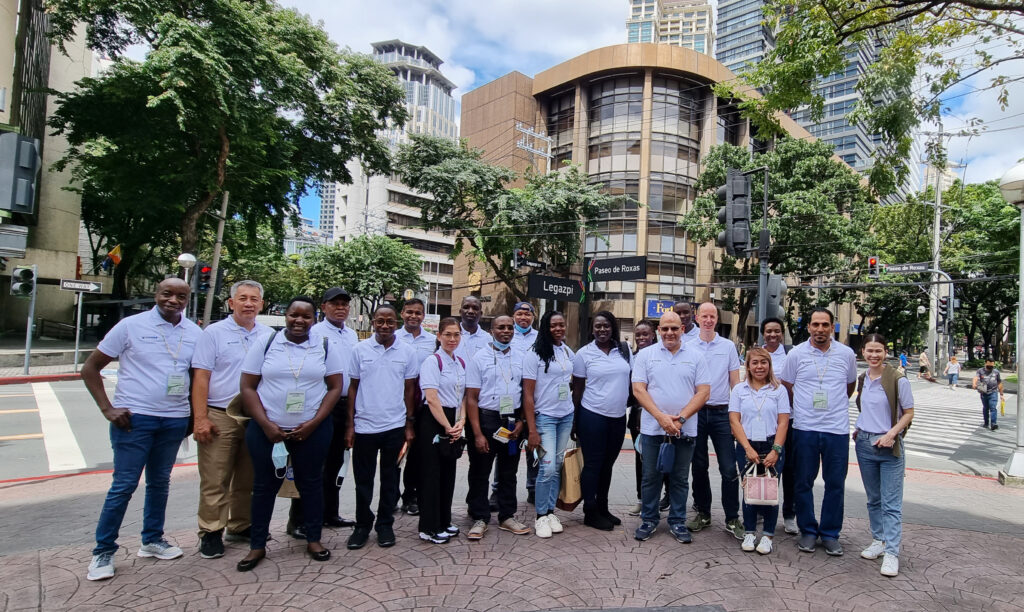
This is the Pioneer group’s third time to host the Microinsurance Master in the Philippines. Twenty microinsurance practitioners from 14 different countries are attending the program to learn from Pioneer’s experience in growing its market from 270,000 to over 18 million enrolments in less than a decade.

CPMI is a joint venture between the Pioneer group and CARD MRI, the country’s largest microfinance institution, to principally address the range of protection needs of the low-income population, including but not limited to coverage for calamity, agriculture, business interruption, health, accident and loss of life.

“The fulfillment of our shared vision to eradicate poverty starts from providing Filipinos in the low income bracket affordable and accessible insurance. By understanding their needs and filling the gaps, we were able to not only grow our market but also to protect more Filipinos from unforeseen and unavoidable risks,” said CARD MRI founder Dr. Aris Alip in a session also attended by Pioneer Group Head Lorenzo Chan Jr.

“Microinsurance is such an important tool for low-income families in emerging markets and developing countries like the Philippines, where almost 24% of the population are engaged in agriculture,” said Mr. Chan. From 2010 to 2019, agricultural damage amounted to P290 billion. Typhoons in 2020 alone have wiped out P14.25 billion worth of agricultural goods. “By making insurance products more affordable and accessible, you bring value to your customers by offering a solution to those who need it most.”

Mr. Chan also stressed the role of public-private partnerships in making social development more inclusive through microinsurance. Early this year, state-run Philippine Crop Insurance Corp. and CPMI entered a risk-sharing program that would benefit the agriculture sector by protecting them from risks such as flood, typhoon, drought, plant diseases, and pest infestation, among others. This will cover crops ranging from rice and corn to coffee, banana, sugar etc.

“This public and private partnership in agri-insurance is the first in the Philippine market. An effective collaboration between the two sectors is vital to provide sustainable and effective insurance products to farmers and ultimately help those who provide food for our tables manage the risks they face,” Mr. Chan stressed in another recent global forum.

Microinsurance Master is a unique leadership programme intended to inspire, equip and strengthen those who are involved with or wish to embark on microinsurance with transformative insights, frameworks, and tools. The program is initiated by Bert Opdebeeck, a believer in inclusivity who works closely with various microinsurance champions.


Spotlight is BusinessWorld’s sponsored section that allows advertisers to amplify their brand and connect with BusinessWorld’s audience by enabling them to publish their stories directly on the BusinessWorld Web site. For more information, send an email to online@bworldonline.com.

Join us on Viber to get more updates from BusinessWorld: https://bit.ly/3hv6bLA.

Canada to remove all COVID travel restrictions from Oct. 1

A PERSON stands in front of a Canadian flag in Montreal, Quebec, Canada, Sept. 20, 2022. — REUTERS

OTTAWA — Canada will drop all coronavirus disease 2019 (COVID-19) restrictions for travelers from Oct. 1, including vaccination and masking requirements for flights and trains, the government said on Monday.

The move is likely to boost the Canadian travel industry, already booming after months of lull during the pandemic.

Canadian carriers were also pressing for an end to mask mandates on flights, citing thousands of incidents of non-compliance this year alone.

“As Canadians and international visitors look to make travel plans, the long-awaited removal of all remaining measures effective Oct. 1, 2022, will further expedite recovery for our industry and the Canadian economy,” Canada’s second-largest carrier WestJet Airlines said in a statement.

The decision to end restrictions was based on Canada’s vaccination rate, availability of newer vaccines and treatments and data showing the country had passed the peak of the latest wave of coronavirus infections, the government said.

More than 90% of Canadians over 12 have taken the primary series of a COVID vaccine. This month, Canada authorized Moderna Inc’s bivalent COVID-19 shots for adults, the country’s first Omicron-adapted vaccine.

“Thanks largely to Canadians who have rolled up their sleeves to get vaccinated, we have reached the point where we can safely lift the sanitary measures at the border,” Health Minister Jean-Yves Duclos said.

Mr. Duclos said the government was prepared to reinstate restrictions if needed.

“Obviously we have no hope to reintroduce some of these measures but if we need to protect the safety of Canadians, we will have to,” he told reporters in Ottawa.

Travelers, regardless of citizenship, will not have to submit health information through the ArriveCAN app or provide proof of vaccination from Saturday.

A requirement for travelers to wear masks on planes and trains would also be dropped. Cruise ship passengers and crew would also no longer be subject to vaccine requirements or COVID testing. — Reuters

Philippines to shut 175 offshore gambling firms, deport 40,000 Chinese workers

REUTERS

MANILA — The Philippines will stop operations of 175 offshore gambling firms and deport about 40,000 Chinese workers, a justice ministry official said on Monday, part of a crackdown on the notoriously opaque online gaming industry.

The sector emerged in the Philippines in 2016 and grew exponentially, as operators capitalised on the country’s liberal gaming laws to target customers in China, where gambling is banned.

At their peak, Philippine offshore gambling operators, or POGOs, employed more than 300,000 Chinese workers, but the pandemic and higher taxes have forced many to operate elsewhere.

“The crackdown was triggered by reports of murder, kidnapping and other crimes committed by Chinese nationals against fellow Chinese nationals,” justice ministry spokesperson Jose Dominic F. Clavano IV said.

The POGOs targeted for closure had licenses that either expired or were revoked, for violations like non-payment of government fees, Clavano said, adding the deportation of the Chinese workers would start next month.

The government generated P7.2 billion ($122.21 million) in 2020 and P3.9 billion last year in POGO fees alone, according to the finance ministry. Economists estimate considerably larger amounts are being spent on taxes, workers’ spending and office rental.

China’s embassy in Manila in a statement said Beijing supports the deportation and crackdown on POGO-related crimes, adding the government “firmly opposes and takes tough measures to combat gambling.”

The Philippine regulator, which recently said there were 30 licensed POGO firms versus 60 before the pandemic, did not immediately respond to a request for comment.

Real estate consultancy Leechiu Property Consultants estimates that a complete exit of the POGO industry would leave vacant 1.05 million square meters (259 acres) of office space — a third of the size of New York’s Central Park — and P8.9 billion ($151 million) in foregone annual rent.

The sector employs 201,000 Chinese and 111,000 Filipinos, according to Leechiu’s data, which estimates POGOs deliver P190 billion ($3.22 billion) to the economy each year, a boon to the property and retail sectors. ($1 = 59.01 Philippine pesos) — Reuters

Energy, inflation crises risk pushing big economies into recession — OECD

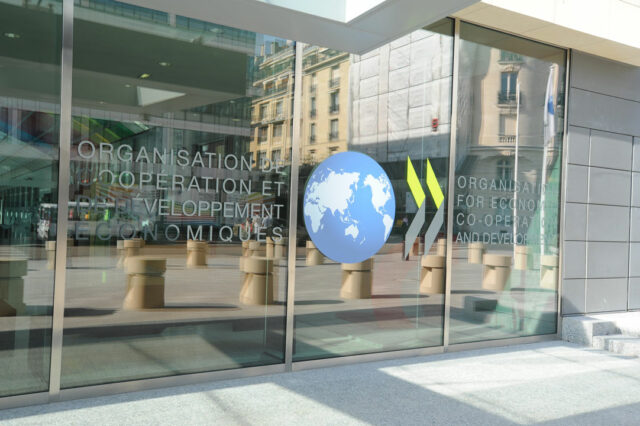
OECD/Flickr

PARIS — Global economic growth is slowing more than was forecast a few months ago in the wake of Russia’s invasion of Ukraine, as energy and inflation crises risk snowballing into recessions in major economies, the Organisation for Economic Cooperation and Development (OECD) said on Monday.

While global growth this year was still expected at 3.0%, it is now projected to slow to 2.2% in 2023, revised down from a forecast in June of 2.8%, the OECD said.

The Paris-based policy forum was particularly pessimistic about the outlook in Europe — the most directly exposed economy to the fallout from Russia’s war in Ukraine.

Global output next year is now projected to be $2.8 trillion lower than the OECD forecast before Russia attacked Ukraine — a loss of income worldwide equivalent in size to the French economy.

“The global economy has lost momentum in the wake of Russia’s unprovoked, unjustifiable and illegal war of aggression against Ukraine. GDP growth has stalled in many economies and economic indicators point to an extended slowdown,” OECD Secretary-General Mathias Cormann said in a statement.

The OECD projected euro zone economic growth would slow from 3.1% this year to only 0.3% in 2023, which implies the 19-nation shared currency bloc would spend at least part of the year in a recession, defined as two straight quarters of contraction.

That marked a dramatic downgrade from the OECD’s last economic outlook in June, when it had forecast the euro zone’s economy would grow 1.6% next year.

The OECD was particularly gloomy about Germany’s Russian-gas dependent economy, forecasting it would contract 0.7% next year, slashed from a June estimate for 1.7% growth.

The OECD warned that further disruptions to energy supplies would hit growth and boost inflation, especially in Europe where they could knock activity back another 1.25 percentage points and boost inflation by 1.5 percentage points, pushing many countries into recession for the full year of 2023.

“Monetary policy will need to continue to tighten in most major economies to tame inflation durably,” Mr. Cormann told a news conference, adding that targeted fiscal stimulus from governments was also key to restoring consumer and business confidence.

“It’s critical that monetary and fiscal policy work hand in hand”, he said.

Though far less dependent on imported energy than Europe, the United States was seen skidding into a downturn as the US Federal Reserve jacks up interest rates to get a handle on inflation.

The OECD forecast that the world’s biggest economy would slow from 1.5% growth this year to only 0.5% next year, down from June forecasts for 2.5% in 2022 and 1.2% in 2023.

Meanwhile, China’s strict measures to control the spread of COVID-19 this year meant that its economy was set to grow only 3.2% this year and 4.7% next year, whereas the OECD had previously expected 4.4% in 2022 and 4.9% in 2023.

Despite the fast deteriorating outlook for major economies, the OECD said further rate hikes were needed to fight inflation, forecasting most major central banks’ policy rates would top 4% next year.

With many governments increasing support packages to help households and businesses cope with high inflation, the OECD said such measures should target those most in need and be temporary to keep down their cost and not further burden high post-COVID debts. — Reuters

World Bank slashes East Asia growth outlook for 2022

MANILA – Economic growth in East Asia and the Pacific will weaken sharply in 2022 due to China’s slowdown, but the pace of expansion will pick up next year, the World Bank said on Tuesday.

The Washington-based lender said in a report it expected 2022 growth in the East Asia and Pacific region, which includes China, to slow to 3.2%, down from its 5.0% forecast in April, and the previous year’s growth of 7.2%.

The weaker forecast was due mainly to a sharp slowdown in China, caused by its strict zero-COVID rules that have disrupted industrial production, domestic sales and exports, the World Bank said.

China, which constitutes 86% of the 23-country region’s economic output, was projected to grow 2.8% this year, a significant deceleration from the bank’s previous forecast of 5.0%. In 2021, China’s economy expanded 8.1%, its best growth in a decade.

For 2023, the world’s second-largest economy was seen growing at 4.5%.

“As they prepare for slowing global growth, countries should address domestic policy distortions that are an impediment to longer term development,” World Bank East Asia and Pacific Vice President Manuela Ferro in a statement.

Another risk to the region’s outlook was aggressive interest rate hikes that central banks across the world are undertaking to combat soaring inflation. These have caused capital outflows and currency depreciations, the World Bank said.

The multilateral aid agency cautioned policymakers on imposing price controls by way of subsidies, warning these measures would only benefit the wealthy and draw government spending away from infrastructure, health and education.

“Controls and subsidies muddy price signals and hurt productivity,” World Bank East Asia and Pacific Economist Aaditya Mattoo, said in a statement. — Reuters