Home Blog Page 5389

BSP notes improvement in accuracy of household inflation views

A supermarket is seen in Quezon City, March 4 2022. — PHILIPPINE STAR/MICHAEL VARCAS

THE Bangko Sentral ng Pilipinas (BSP) said household estimates of inflation have been improving in accuracy since 2014, possibly influencing monetary policy because household expectations are a factor in policy decisions.

In an economic newsletter written by Alan Chester T. Arcin and Michael Lawrence G. Castañares, the BSP’s Department of Economic Research said household views on inflation have been demonstrating a narrower upside bias, first noted during the 2008 financial crisis, when high inflation may have conditioned their expectations.

According to the study, inflation was high between 2005 and 2008, possibly skewing households’ inflation expectations upwards.  

Inflation peaked at 9.1% in November 2008, at the height of the Global Financial Crisis.

“However, from 2014 onwards, this bias was considerably reduced, coinciding with more favorable inflation outturns,” the study found, adding that inflation was mostly within target in 2014 to 2020.

Household inflation expectations are tracked in the central bank’s Consumer Expectations Survey (CES). The BSP also conducts a Business Expectations Survey (BES), and Survey of Professional Forecasters (SPF). The survey findings ultimately serve as inputs for monetary policy setting.

“This improvement may be due to the inclusion of reference inflation rates in the CES questionnaire, some gains in the BSP’s advocacy for economic and financial literacy, improved inflation environment, and better anchoring of inflation expectations with increased credibility of the BSP,” according to the study.

According to the central bank, inflation expectations of businesses also tend to exhibit a bias to the upside, possibly reflecting companies’ sensitivity to changes in production costs.

Meanwhile, private-sector economists produce more accurate inflation forecasts compared with households and businesses, with a margin of error closer to zero. 

The data analyzed in the study is from the CES surveys between the first quarter of 2020 and the first quarter of 2022. BES surveys studied were from the fourth quarter of 2018 to the second quarter of 2022.

The SPF results are from between January 2014 and August 2022.

“Expectations of future inflation can influence the consumption and savings decisions of households as well as the price-setting behavior of firms,” the study added.  

“For instance, expectations that future prices would increase could entice households to purchase sooner rather than later, translating to stronger current demand. In turn, firms could raise prices in response to the observed pick-up in sales,” it said.

“Moreover, if households continue to anticipate faster inflation in the future, clamor for wage hikes could emerge and further fuel the inflationary process. Inflation expectations, therefore, are an important determinant of actual inflation as they shape the decisions of economic agents,” it added.  

In the central bank’s latest CES and BES survey, consumer and business sentiment declined in the fourth quarter due to elevated prices of goods, higher interest rates, and a weakening of the peso.

The consumer confidence index slipped to -14.6% from -12.9% in the third quarter, the 10th straight quarter when the survey returned a pessimistic view. The business confidence index fell to 23.9% from 26.1% in the prior quarter, marking a second straight decline. 

Last week, BSP Governor Felipe M. Medalla said the central bank is likely to raise benchmark interest rates by 25 or 50 basis points (bps) next month, citing the need to anchor inflation expectations. 

The Monetary Board has raised rates by a total of 350 bps last year to tame inflation and slow the peso’s decline. This brought the policy rate to a 14-year high of 5.5%.

Monetary authorities are scheduled to meet on Feb. 16 for their first policy meeting this year. — Keisha B. Ta-asan


PHL mangrove losses second worst in region

THE PHILIPPINES lost 10.5% of its mangrove trees between 1990 and 2010, trailing only Myanmar’s losses of 27.6%, which are reckoned for the separate period of 2000 and 2014, the University of the Philippines said in a study.

The study surveyed 300 mangrove sites across Southeast Asia with the goal of filling “large gaps in our understanding of the current and future state of these already dwindling natural resources.”

The study recommended priority action on mangrove restoration as a climate change adaptation and mitigation measure; monitoring the recovery of biodiversity and ecosystem services; and strengthening of the ASEAN network.

The research also highlighted the need for new technology and innovation to effect a sustainable recolonization of mangrove areas. 

“As a region vulnerable to natural disasters such as typhoons and tsunamis, restoration programs should be designed to adapt to and mitigate climate change impacts. Technological innovation for science-based green-gray coastal engineering are critical for facing changing climatic conditions,” the study concluded. — Ashley Erika O. Jose

PHL looks to US, Japanese tech to improve connectivity

REUTERS

THE Department of Information and Communications Technology (DICT) said on Tuesday that it hopes to tap US and Japanese technology to improve connectivity in the Philippines.

The department will work to bring in “low-orbit satellites from the US and high-altitude platform stations from Japan, among others,” DICT Undersecretary for Public Affairs and Foreign Relations Anna Mae Y. Lamentillo told reporters via chat. 

Ms. Lamentillo has yet to confirm whether the department is in talks with other US satellite companies. Starlink Internet Services Philippines, Inc., a unit of Elon Musk’s Space Exploration Technologies Corp. is expected to start serving remote communities in the Philippines by the middle of 2023.

About 65% of the country still has no access to the internet, according to Ms. Lamentillo.

Separately, the DICT announced that it hopes to collaborate with Singapore’s Ministry of Communications and Information on e-governance and cybersecurity.

Ms. Lamentillo met with Singapore’s Ambassador to the Philippines Gerard Ho Wei Hong on Monday to discuss further the areas of cooperation in relation to the recently signed memorandum of understanding (MoU) on digital cooperation.

“We discussed with Ambassador Ho how we can implement this MoU and which areas we should focus on. Singapore has so much experience in the area of e-governance and cybersecurity and they can share with us their best practices in these areas,” Ms. Lamentillo said.

The department said that the MoU on digital cooperation was signed on Sept. 7 during the state visit to Singapore of President Ferdinand R. Marcos, Jr.

“The MoU covers digital cooperation, including digital connectivity, particularly in inter-operable systems and frameworks that enable electronic documentation; cybersecurity, such as organizing training courses and technical programs through the ASEAN-Singapore Cybersecurity Centre of Excellence to develop and enhance skills related to cybersecurity; and digital government/e-governance, such as in the areas of digital government strategy, digital government services, and digital identity,” the DICT said. — Arjay L. Balinbin

Marcos: Asia-Pacific region won’t take sides amid political tensions

OFFICE OF THE PRESS SECRETARY

COUNTRIES in the Asia-Pacific region should avoid taking sides amid intensifying geopolitical tensions, Philippine President Ferdinand R. Marcos, Jr. said on Monday.

During a luncheon hosted by his economic managers in Davos, Switzerland, the president said nations in the region are being pressured to take sides, without naming a country.

But members of the Association of Southeast Asian Nations (ASEAN) and Asia-Pacific Economic Cooperation (APEC) do not want to return to a “Cold War scenario,” which he said puts the Philippines in a precarious position because it is on the frontline.

He was referring to a period of geopolitical tensions between the United States and Soviet Union and their allies — the Western and Eastern blocs — in the 20th century. There was no large-scale fighting between the two superpowers, but they each supported sides in major regional conflicts known as proxy wars.

“We are determined as a group in ASEAN and in the Indo-Pacific, despite all of this conflict… to stay away from that,” Mr. Marcos said, based on a transcript sent by the presidential palace.

“We are anchored in the idea that the future of the Indo-Pacific, the future of Asia-Pacific, for example cannot be determined by anyone but the countries of the Asia-Pacific,” he said.

“That removes us immediately from that idea that you must choose. We choose our friends, we choose our neighbors. That’s the choice that we will make.”

Mr. Marcos this month said Chinese President Xi Jinping had vowed to “find a compromise” to avoid tensions between Filipino fishermen and Chinese authorities in the disputed waterway.

The Philippine leader said they had discussed during his state visit to China “what we can do to move forward” and avoid any possible mistakes “that could trigger a bigger problem than what we already have.”

Mr. Marcos also said that he and his Chinese counterpart had discussed the resumption of oil and gas talks between the two countries.

Last week, the Supreme Court voided the Philippines’ 2005 energy exploration deal with China and Vietnam for being illegal.

Mr. Marcos took office in June amid tensions in the Indo-Pacific region, with the US leading allies including the Philippines to maintain freedom of navigation in the South China Sea.

China claims more than 80% of the sea, which is believed to contain massive oil and gas deposits and through which billions of dollars in trade passes each year. It has ignored a 2016 ruling by a United Nations-backed arbitration court that voided its claim based on a 1940s map.

The Philippines has been unable to enforce the ruling and has since filed hundreds of protests over what it calls encroachment and harassment by China’s coast guard and its vast fishing fleet.

‘GLOBALIZATION’
Mr. Marcos cited the importance of ASEAN centrality, which considers the bloc as the institutional hub of country members in terms of regional cooperation and dispute in the wider Asia-Pacific region.

“That has become a very important concept,” he said.

Meanwhile, Mr. Marcos said the pandemic and war between Russia and Ukraine have forced state leaders to pursue protectionist agenda.

He said the coronavirus pandemic had forced the Philippines to strengthen its own economy so it could withstand shocks. Russia’s invasion of Ukraine was also a factor, he said.

“There is a tendency of protectionism because we take care first of our own businesses, we take care first of our own industries, we take care first of our own economy,” he added.

Mr. Marcos, who has vowed to limit imports as much as possible, noted that while there are some disruptions that he described as “a very big bump on the road,” the world will find itself on the path of globalization.

Once the dust settles and countries like the Philippines put in place policies that will help them adjust to the emerging global economy, “globalization will start,” the Philippine leader said. “We will start to return to… globalization. I think it is inevitable.”

Mr. Marcos will speak at the World Economic Forum in Davos on Jan. 18. He is expected to deliver a piece on increased global cooperation.

The forum has been held yearly since 1971 to connect leaders from businesses, politics, academia and society and help them search for better solutions to global problems.

This year, discussion topics include new technologies, global trade and digital platforms. — Kyle Aristophere T. Atienza

Senate bill to revive 2007 law on ‘holiday economics’

PHILIPPINE STAR/KRIZ JOHN ROSALES

A SENATOR has filed a bill that seeks to boost local tourism by setting national holidays that fall on a weekend to the following Monday.

“The increase in the number of long weekends can help reduce stress, prevent burnout and promote work-life balance for both employees and students by allowing them to decompress and spend time with their family and friends,” Senator Rafael “Raffy” T. Tulfo said in the explanatory note of Senate Bill 1651.

The measure will amend Republic Act 9492 or the Holiday Economics Law, which was enacted in 2007 under then President Gloria Macapagal Arroyo to boost tourism by moving regular and special holidays to the nearest Monday. Her successor, the late President Benigno “Noynoy” S.C. Aquino III changed this under Proclamation 84.

Under the bill, the president will issue a proclamation on the first Monday of December setting the holidays for the following year.

“The Philippines celebrates 18 national holidays yearly, four of which are considered special nonworking holidays,” Mr. Tulfo said. “Holidays are integral in order to honor and commemorate special events or traditions with cultural or religious significance.”

President Ferdinand R. Marcos, Jr. earlier declared more long weekends for 2023 to ensure the recovery of the tourism industry.

Holiday economics “will help encourage domestic travel and increase tourism expenditures in the country,” he said in Proclamation 90, which declared Jan. 2 a special nonworking holiday in lieu of New Year’s Day, which fell on a Sunday.

The Department of Tourism (DoT) is confident that more long weekends in 2023 will boost local tourism and benefit micro, small, and medium enterprises (MSMEs), especially in tourism hotspots.

The Tourism department in November said more holidays and long weekends would benefit entrepreneurs because the longer Filipino tourists stay in a particular destination, the more they would spend on local products.

Long weekends would help spur economic activities, sustain tourism-related employment opportunities and aid communities that depend on tourism, it said. — Alyssa Nicole O. Tan

Local onion farmers can meet demand with adequate gov’t support

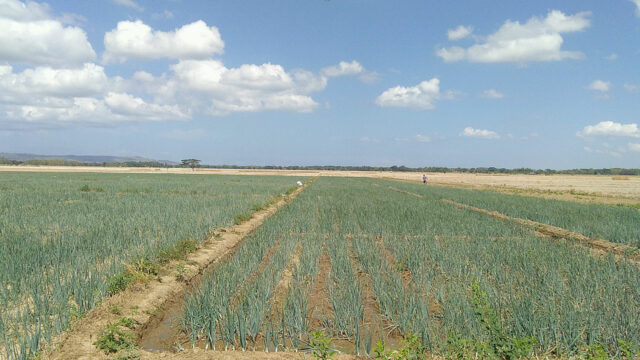
AN ONION farm in Magsaysay, Occidental Mindoro. — REGION4B.NIA.GOV.PH

THE SENATE minority leader slammed government decision makersfor pursuing policies in the agriculture industry that choke onion farmers, who can readily meet the countrys demand given ample support.   

Our onion farmers have never been tested because they have never been fully supported in maximizing their output potential,Senate Minority Floor Leader Aquilino Martin KokoD. Pimentel III said in a statement on Tuesday.  

We have to trust them and place our bets on them,he added.  

Ramon Silverio, chair of the provincial cooperative development council of Occidental Mindoro, said during an agriculture hearing on Monday that their province alone can supply the nationwide demand if they receive proper support from the government. 

Region 4-B or Mimaropa, where Occidental Mindoro belongs, was the second biggest onion producing region in the country, based on a 2021 onion sector investment guide published by the Department of Agriculture (DA). The top producer was Ilocos.   

However, in the current situation, Mr. Pimentel said the decisions that our decision makers have been making are all to the detriment of the Filipino onion farmer.  

Local onion farmers are complaining that in each step of their trading process, imported or traders’ onions are prioritized, including in the allocation of cold storage space,he said.  

Who can make such anti-Filipino decisions, all the time? Only a foreigner can do that to the Philippine farmer,he added. Unfortunately, those decisions were made by fellow Filipinos but prioritizing the interests of traders, importers and ultimately foreign farmers and their business representatives.  

The DA recently authorized imports of 21,060 metric tons (MT) of onions including 17,100 MT of the red variety and 3,960 MT of the yellow to stabilize onion prices.  

The retail price of onions, observed in markets at up to P750 per kilo, has far exceeded the suggested retail price of P250.  

The opposition senator said that he did not trust the supply and demand data presented by the DA, consolidated just a day before the recent Senate hearing.   

Original figures posted by the DA did not align with those from the Bureau of Plant Industry.  

As usual, we have figures on agriculture products, but I personally do not or cannot automatically believe them,he said. Hence, we have difficulty determining root causes because our research or data keeping is so unreliable.”  

Senators on Monday found that the high price of onions is disproportionate to the small shortfall in domestic production, noting that this could have easily been addressed by well-timed imports. Alyssa Nicole O. Tan

CoA orders Bacolod City government to pay cargo company for patrol boat delivery

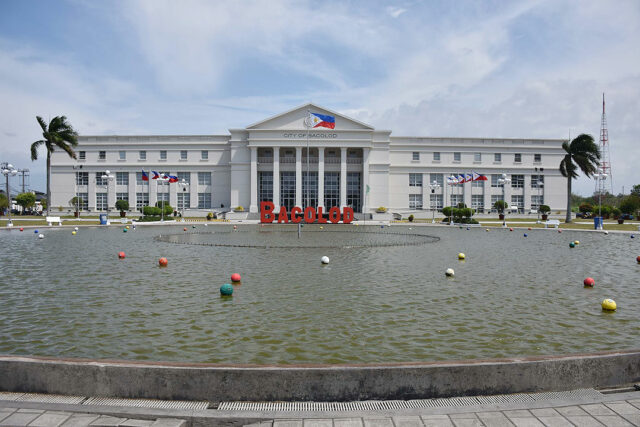
BACOLOD CITY PIO

STATE AUDITORS have ordered the Bacolod City government to pay a cargo service firm for the shipment of a donated patrol boat that was delivered almost eight years ago.  

The city cannot evade payment and unjustly enrich itself, especially when it admitted that it is already in possession of the patrol boat through the freight services of Air-Waves Cargo Services (AWCS),the Commission on Audit (CoA) said in a decision dated May 30, 2022, but only made public recently.  

CoA ordered the Bacolod city government to settle AWCS total claim of P430,200, which covers the shipping service and the cost of the steel trailer that supports the boat.   

The 28-footer boat was donated by the Bureau of Fisheries and Aquatic Resources (BFAR) to the city government for patrolling activities under the governments Bantay Dagat program, which is intended to monitor and implement the countrys laws on fishing.   

Under the donation agreement, the city will cover the expenses of the vessels shipment from Manila to Bacolod city.  

The city government refused to pay AWCS, citing that there was no contract between the two parties.  

AWCS filed a civil case before the Regional Trial Court of Bacolod, which ruled that CoA had primary jurisdiction on the case.   

CoA, in its decision, confirmed that there was no contract between the two parties but said the city government must still pay the shipping company on the basis of quantum meruit or paying for services rendered even if amount due isnt specified in a contract. 

During an ocular inspection, the audit team leader noted that the boat was in rotten and unserviceable condition, proof that the equipment had been in the possession of the city for quite some time.Beatriz Marie D. Cruz 

Probe on abduction of activists in Cebu includes alleged cops’ involvement — PNP

AN INVESTIGATION is underway on the recent abduction of two activists in broad daylight at a Cebu port, including the possible involvement of cops in the crime, the Philippine National Police (PNP) spokesperson said on Tuesday.

“The Cebu City police office is currently coordinating with the families of the missing activists,” PNP Spokesperson Jean S. Fajardo told a televised briefing in Filipino. 

The two, Dyan Gumanao and Armand Dayoha, were reported missing on Jan. 10 and their families announced on Monday that they have returned home. 

Authorities are also looking into the possibility of cops being involved in the incident, Ms. Fajardo noted. 

“However, it remains difficult to gather evidence on the incident since the two individuals did not talk to many witnesses during the time of their abduction,Ms. Fajardo said.

On Monday, a video of the alleged abduction incident at the port taken from an overhead view was shared on social media, and rights groups had raised concerns about the safety of the two activists. 

Family members of the two activists said in a news briefing that the captors introduced themselves as policemen. 

“Why did this happen to them? They dont deserve this,” Danilo Gumanao, Ms. Gumanao’s father said. “If my daughter and Armand violated some laws, then why not arrest them and file charges against them.” 

Dennis Abarrientos, spokesperson of human rights group Karapatan, told the same briefing that the activists were blindfolded after being forcibly taken and possibly tortured.  

“The abduction of Gumanao and Dahoya is an emblematic case that is testament to the gross violations that union organizers experience in the country,” Cristina E. Palabay, secretary general of Karapatan, said in a tweet on Monday.  

She said the International Labor Organization should look into the abduction as a team of its official are set to visit the country this month.  

The government should not stay silent on the cases of violence against activists as it adds to the culture of impunity in the Philippines, Renato M. Reyes, Jr., secretary general of Bagong Alyansang Makabayan (Bayan), an alliance of left-wing organizations, said in a tweet.  

He also called on the Cebu Port Authority and the Philippine Coast Guard to look into the incident.  

“We call on our countrymen to continue providing local police with information on these criminal activities and we hope to continue our campaign against criminality to ensure the safety of the country,” Ms. Fajardo said. John Victor D. Ordoñez

DTI seizes almost P.5-M worth of uncertified consumer items in QC

QC-DTI PHOTO

THE DEPARTMENT of Trade and Industry (DTI) seized almost P500,000 worth of uncertified consumer products during a recent enforcement operations in Quezon City. 

The DTI, through its Fair Trade Enforcement Bureau, inspected 19 retail firms in Balintawak on Jan. 12, wherein 2,152 units of assorted consumer goods worth P482,121.15 were confiscated.    

Among the confiscated products were sanitary wares, electric kettles, electric grills, electric fans, washing machines, self-ballasted LED lamps, incandescent lamps, and ceramic tiles.   

The DTI issued notices of violation for seven non-compliant firms, directing them to explain within 48 hours from the receipt of the notice.    

The uncertified household appliances, lighting devices, and ceramic products that we sealed today surely translate to risks and hazards the moment they reach the homes of Filipino families,Trade Undersecretary Ruth B. Castelo said in a statement on Tuesday.   

Ms. Castelo stressed that the DTI operations are not geared against businesses and sellers but are intended to uphold consumer safety and welfare.  

On Jan. 6, the DTI also conducted enforcement operations in Banawe Street, Quezon City, where P1.29 million worth of uncertified tires for automotive vehicles were seized.     

The nationwide campaign of DTI against uncertified items in the market underscores the enforcement of DTI technical regulations mandating compliance with Philippine Standard Certification Mark Schemes, particularly Department Administrative Order No. 02, Series of 2007,the DTI said. Revin Mikhael D. Ochave

Another bill filed on scholarship for law students

SENATE.GOV.PH

ANOTHER BILL providing scholarships for aspiring lawyers has been filed at the Senate, seeking to increase the legal manpower in government offices.  

There is definitely a need for more public defenders in the country as we only have 2,500 Public Attorney’s Office (PAO) lawyers and each lawyer handles 5,300 cases per year,Senate Majority Leader Emmanuel Joel J. Villanueva said in a statement on Tuesday.  

Senate Bill 1639 seeks to amend Republic Act 7662 or the Legal Education Reform Act of 1993 by including provisions for the establishment of a legal scholarship and return service program (LSRS).  

The program will include free tuition and other school fees; annual medical insurance; free bar review and application; and allowance for books, uniforms, accommodation, and transportation.  

The bill requires passing scholars to render at least a year of return service through the PAO or other government offices, with appropriate civil service rank, salary and benefits.  

A similar measure, Senate Bill 1610 or the Free Legal Education Act of 2023, was filed by Senator Rafael RaffyT. Tulfo in Dec. 14, but requires scholars to render return service for at least two years. Alyssa Nicole O. Tan

Spikers’ Turf men’s volleyball kicks off at Paco Arena on Sunday

SPIKER’S TURF

WHERE passion meets power.

That will be the battlecry of the country’s best and brightest men’s volleyball players as they clash for pride and glory in the Spiker’s Turf unfurling this Sunday at the Paco Arena.

“Our new Spikers’ Turf tagline is very apt. Men’s volleyball may not be at par with the popularity of women’s volleyball, but our men’s players are passionate people as well,” said tournament director Mozzy Ravena during yesterday’s Philippine Sportswriters Association (PSA) Forum at the Philippine Sports Commission conference room in Manila.

Imus, mentored by multi-titled coach Sammy Acaylar, and Sta. Rosa opens up hostilities as the two collide at 4 p.m. with an Army-Navy showdown following suit at 6 p.m.

Other teams seeing action is defending champion National University-Archipelago Builders, Cignal, AMC Volleyball, PGJC-Navy, Army, Vanguard Volleyball, Air Force and newcomer D’Navigators Iloilo.

“We started with a few teams, now we’re up to 11 teams, which is a good sign that shows everybody is interested not just in women’s volleyball but also men’s games,” said organizing Sports Vision Chief Ricky Palou.

Alyssa Valdez, the face of Philippine volleyball who is also Spikers’ Turf president, said she is expecting more intense and exciting action now that the league has started to grow.

“They’re all competitive and the players want to show their talent to everyone so we hope you watch the games and support our league,” said the star from Premier Volleyball League dynasty Creamline.

Gracing the PSA Forum were Cignal head coach Dexter Clamor, Imus head coach Sammy Acaylar, Santa Rosa assistant coach Carlos Cantor, D’ Navigators coordinator Francis Babon, Navy head coach Cecille Cruzada, Air Force head coach Jhim Merza, Army player Ken Baloaloa, Vanguard head coach Edjet Mabbayad, VNS head coach Ralph Ocampo, and NU’s Dela Cruz. AMC did not have any representative.

Gamedays are on Wednesdays, Fridays and Sundays featuring two matches at 4 p.m. and 6 p.m.

The top four teams after a single round robin elims will advance to the semifinals, another single round robin phase with the top two clashing for the championship, a best-of-three affair.

Games will be shown live on ONE Sports ph, ONE ph, Cignal Play and Spikers’ Turf’s Facebook page.

Meanwhile, the PVL, in cooperation and under the guidance of the PNVF (Philippine National Volleyball Federation), will be conducting the PNVF Referees Refresher Course on Jan. 19 and 20 at the Philsports Arena in Pasig City.

“After rolling out the video challenge system last year, we’re kickstarting the new season with this Referees Refresher Course, which will now be a regular fare preparatory to the PVL having its own group of referees culled from the PNVF Licensed Referees,” said Mr. Palou.

No less than Songsak Chareonpong, chairman of the Asian Volleyball Confederation (AVC) Committee, will grace the two-day event, which aims to improve and update the knowledge and competence of the participants as per international standards and at the same time encourage the development of refereeing skills not just in the league but also in the Spikers’ Turf. — Joey Villar

Bay Area will be full power in East Asia Super League

Andrew Nicholson — PBA MEDIA

INJURED Bay Area import Andrew Nicholson vows to be ready with a promise of spewing hotter flames when the Dragons take their act to the East Asia Super League (EASL) in March after a tough campaign that went the full route in the just-concluded PBA Commissioner’s Cup.

The 6-foot-10 American said he’s nearing full recovery from a left ankle injury he suffered in the finals against champion Barangay Ginebra and should be able to suit up when the Dragons resume training later this month. Still here in the Philippines.

“It’s getting better. I’ve been walking already. Another week and I’m good to go,” said Mr. Nicholson after his bad fall in Game 3 of the championship series that reached a pinnacle Game 7 before a record crowd of 54,589 fans at the Philippine Arena this weekend.

Mr. Nicholson served as the alternating import of Bay Area, along with guard Myles Powell, in the elimination round before owning the role as the latter suffered a foot injury of his own entering the playoffs.

A 19th overall pick in the 2012 NBA draft, Mr. Nicholson averaged 38.5 points, 11.5 rebounds and 1.5 assists in the games he played prior to his injury for the Dragons, who eventually gambled on Mr. Powell for the last two games of the finals.

Mr. Nicholson said the entire PBA journey has only molded him and the entire Dragons to a whole different creature moving forward, especially after his all-out battles against the Filipino giants like June Mar Fajardo, Christian Standhardinger and Japeth Aguilar.

“I think we got better. We came here and that was our goal. That’s our main goal. It’s a good preparation for us and we’re looking forward to what we’re gonna have in the EASL,” added Mr. Nicholson as Bay Area revs up for the regional tilt slated on March 1 to 5 in Japan.

“We’re blessed to be a part of it. We’re grateful.”

Messrs. Nicholson and Powell never played together in the PBA as only one could suit up at once, explaining his confidence in what caliber they could potentially unleash in the EASL, where Philippine Cup champion San Miguel and runner-up TNT are also in as PBA bets.

“It will be interesting to see how other teams respond to having our full team play. We’re looking forward to that. It’s gonna be fun. The only times me and Myles have played together is in practice. It’ll be exciting what we can do together on the court at the same time and showcase what Bay Area Dragons are at 100 percent,” he concluded. — John Bryan Ulanday