WASHINGTON – President Joe Biden pledged on Tuesday “there will be consequences” for US relations with Saudi Arabia after OPEC+ announced last week that it would cut oil production over US objections.
His announcement came a day after powerful Democratic Senator Bob Menendez, chairman of the Senate Foreign Relations Committee, said the United States must immediately freeze all cooperation with Saudi Arabia, including arms sales.
Mr. Biden, in an interview with CNN’s Jake Tapper, would not discuss what options he was considering.
White House press secretary Karine Jean-Pierre said a policy review would be conducted but gave no timeline for action or information on who would lead the re-evaluation. The United States will be watching the situation closely “over the coming weeks and months,” she said.
OPEC+ announced plans for an oil production cut last week after weeks of lobbying against one by US officials. The United States accused Saudi Arabia of kowtowing to Russia, which objects to a Western cap on the price of Russian oil spurred by the Ukraine invasion.
US officials had been quietly trying to persuade its biggest Arab partner to nix the idea of a production cut, but Saudi Arabia‘s de factor ruler, Crown Prince Mohammed bin Salman, was not swayed.
Mr. Bin Salman and Mr. Biden had clashed during Biden‘s visit to Jeddah in July over the death in 2018 of Washington Post journalist Jamal Khashoggi, according to a source familiar with the situation.
US intelligence says the crown prince approved an operation to capture or kill Khashoggi, a Saudi insider-turned-critic, who was murdered and dismembered by Saudi agents inside the kingdom’s consulate in Istanbul.
The prince, son of King Salman, 86, has denied ordering the killing but acknowledged it took place “under my watch.” Mr. Biden said in July he told the prince he thought he was responsible.
John Kirby, the White House national security spokesperson, said Biden would work with Congress “to think through what that relationship ought to look like going forward.”
“And I think he’s going to be willing to start to have those conversations right away. I don’t think this is anything that’s going to have to wait or should wait, quite frankly, for much longer,” Mr. Kirby added.
State Department spokesperson Ned Price also said on Tuesday the Biden administration would not overlook Iran, a US adversary and a bitter regional rival of Saudi Arabia, in the review. Read full story
Much of US arms sales to Saudi Arabia have been made with Iran’s threat in the region in mind.
“There are security challenges, some of which emanate from Iran. Certainly, we won’t take our eye off the threat that Iran poses not only to the region, but in some ways beyond,” Mr. Price said. – Reuters
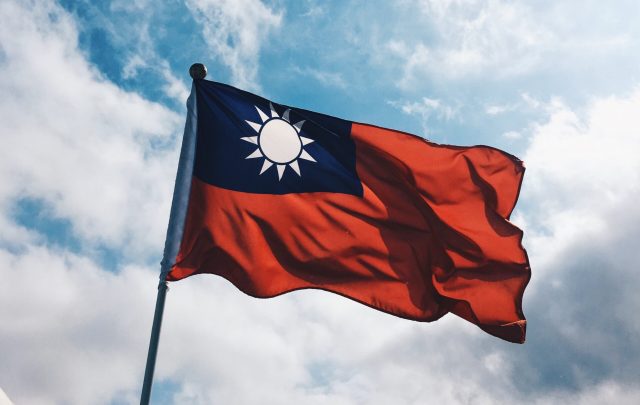
TAIPEI – Taiwan is bolstering its defenses and steeling itself for the possibility of war with China as leader Xi Jinping readies to assume a third term in power and tries to achieve what no predecessor has done by taking control of the island.
Xi has made no secret of his desire to make democratically ruled Taiwan a part of the People’s Republic of China – peacefully if possible but with force if needed – to cement his legacy in the history books.
China’s war games near Taiwan in August pushed tensions to their highest in decades, reigniting fears of conflict that have loomed ever since the defeated Republic of China government fled to the island in 1949 after loosing a civil war to Mao Zedong’s communists.
President Tsai Ing-wen in her national day speech on Monday said war was “absolutely not an option”, which a source familiar with her thinking said was aimed partly at China’s ruling Communist Party congress, which opens on Sunday.
She also outlined steps to boost the military including with mass production of precision missiles and warships.
“Through our actions, we are sending a message to the international community that Taiwan will take responsibility for our own self-defense, that we will not leave anything to fate,” she added.
Xi is widely expected to win his third term at the one-every-five-years party congress.
While Taiwan has lived with the threat of Chinese invasion for more than seven decades and there is no sign of public panic at Beijing’s bellicosity, government officials are alarmed, and offer a stark analysis in private.
“Now we should be abandoning our illusions and preparing to fight. We really need to be prepared to fight,” said a Taiwanese source familiar with the government’s China policy, speaking on condition of anonymity as he was not authorized to discuss intelligence assessments with media.
PRECISION WEAPONS
Tsai has made modernizing the armed forces a priority, to develop what she said this week was “comprehensive asymmetric warfare capabilities” with small, highly mobile precision weapons such as anti-ship missiles that can be launched from the back of a truck and moved to safety after firing.
Xi has showed he has ditched late reformist leader Deng Xiaoping’s maxim of “hiding your strength and biding your time” said Lin Fei-fan, deputy secretary general of Taiwan‘s ruling Democratic Progressive Party.
Xi was trying to push China’s global influence and attain goals not achieved by his predecessors, including by bringing Hong Kong to heel, Lin told Reuters at party headquarters in downtown Taipei.
“When we say achievement, for Taiwan it’s definitely not a good sign, it’s not a good thing,” Lin said.
“I do think that in the next five years it will be more intense for cross-strait relations, it will be more unstable and also the tensions across the Taiwan Strait will escalate to a different level.”
Any war could devastate the global economy, given Taiwan‘s key role as a semiconductor producer, and potentially drag in the United States, whose President Joe Biden pledged last month to defend Taiwan in the event of any “unprecedented attack” by China.
One senior Taiwanese security official said Xi’s third term would bring “unpredictable tensions” across the strait.
“We will not be provocative. We will not let him use it as an excuse.”
China’s Taiwan Affairs Office did not respond to a request for comment.
Last month it reiterated a pledge to achieve peaceful “reunification” under the “one country, two systems” model of autonomy used for Hong Kong, though that has been widely rejected in Taiwan.
In one aspect on Taiwan, Xi already made his mark on history by meeting with then-Taiwan President Ma Ying-jeou in Singapore in 2015, the first such get together since the Republic of China government fled to Taiwan in 1949.
But China has refused to speak to his successor, Tsai, since she was first elected in 2016, believing her to be a separatist. Tsai has repeatedly offered talks on the basis of equality and mutual respect.
China has not come up with a timetable for “resolving the Taiwan issue” as Chinese officials term it, but Xi said in his first year as president in 2013 that a political solution could not wait forever.
Huang Kwei-bo, an associate professor of diplomacy at Taipei’s National Chengchi University who was part of Ma’s delegation to the Singapore summit, said Xi would likely want to get Taiwan under his control sooner rather than later.
“Because the later the two sides get unified the greater cost Beijing is going to pay for national unification,” he told Reuters. “Xi Jinping, I think, in his mind, sooner is better than later.” – Reuters
WASHINGTON – A price cap on Russian seaborne oil deliveries being developed by the United States and G7 countries could significantly reduce Russia’s revenues while encouraging Moscow to continue to produce oil, 16 economists from top U.S. and British universities told U.S. Treasury Secretary Janet Yellen.
The cap, agreed in principle last month by the Group of Seven rich countries, should lower Russia’s revenues by strengthening the negotiating position of any buyers, economists including Simon Johnson at the Sloan School of Management at the Massachusetts Institute of Technology, Harvard University’s Jason Furman and the University of Chicago’s Ryan Kellogg said in a letter to Yellen, which was reviewed by Reuters.
“While we do not expect all trades will be performed under the price cap, its existence should materially increase the bargaining power of private and public sector entities that buy Russian oil,” they wrote in the letter, dated Oct. 11.
The European Union last week approved its eighth batch of sanctions against Russia for its invasion of Ukraine including the price cap, but said more work was required for its implementation.
Concerns about the uncertainty created by the price cap are one reason Saudi officials backed OPEC+ output cuts last week.
U.S. officials on Tuesday said work was continuing on the measure. Read full story
A senior U.S. Treasury official said the OPEC+ production cut would raise energy costs for countries already struggling with high prices – and could prompt some to look for opportunities to buy oil under the price cap once Europe stopped buying Russian oil after Dec. 5.
“It creates a real opportunity for some of these countries that are facing the challenge to try and buy oil under the price cap in order to alleviate both the budgetary pressures … and the headline inflation pressure,” the official said.
The price cap would maintain economic incentives for Russia to keep producing at current volumes, while reducing its revenues, the economists wrote.
Russia still supplied oil to world markets in April 2020, when the Brent benchmark LCOc1 was close to $20 a barrel, because that price was above the cost of production in many or most existing Russian oil fields, they noted.
The price of Brent now is around $96 per barrel. Russia receives less due to the “Urals discount” reflecting the impact of Russia’s invasion of Ukraine, a gap that has shrunk in recent weeks.
“The oil price cap proposal would effectively institutionalize the Urals discount and consequently further lower the dollar value of the Russian government’s primary revenue stream,” they said.
Daniel Berkowitz at the University of Pittsburgh; Severin Borenstein, Yuriy Gorodnichenko, Carl Shapiro and Anastassia Fedyk at the University of California, Berkeley, and Rick Van der Ploeg at the University of Oxford were also among the signatories. – Reuters
The spacecraft NASA deliberately crashed into an asteroid last month succeeded in nudging the rocky moonlet from its natural path into a faster orbit, marking the first time humanity has altered the motion of a celestial body, the U.S. space agency announced on Tuesday.
The $330 million proof-of-concept mission, which was seven years in development, also represented the world’s first test of a planetary defense system designed to prevent a potential doomsday meteorite collision with Earth.
Findings of telescope observations unveiled at a NASA news briefing in Washington confirmed the suicide test flight of the DART spacecraft on Sept. 26 achieved its primary objective: changing the direction of an asteroid through sheer kinetic force.
Astronomical measurements over the past two weeks showed the target asteroid was bumped slightly closer to the larger parent asteroid it orbits and that its orbital period was shortened by 32 minutes, NASA scientists said.
“This is a watershed moment for planetary defense and a watershed moment for humanity,” NASA chief Bill Nelson told reporters in announcing the results. “It felt like a movie plot, but this was not Hollywood.”
Last month’s impact, 6.8 million miles (10.9 million km) from Earth, was monitored in real time from the mission operations center at the Johns Hopkins University Applied Physics Laboratory (APL) in Laurel, Maryland, where the spacecraft was designed and built for NASA.
DART’s celestial target was an egg-shaped asteroid named Dimorphos, roughly the size of a football stadium, that was orbiting a parent asteroid about five times bigger called Didymos once every 11 hours, 55 minutes.
The test flight concluded with the DART impactor vehicle, no bigger than a refrigerator, slamming directly into Dimorphos at about 14,000 miles per hour (22,531 kph).
Comparison of pre- and post-impact measurements of the Dimorphos-Didymos pair as one eclipses the other shows the orbital period was shortened to 11 hours, 23 minutes, with the smaller object bumped tens of meters closer to its parent.
POSSIBLE WOBBLE
Tom Statler, DART program scientist for NASA, said the collision also left Dimorphos “wobbling a bit,” but additional observations would be necessary to confirm that.
The outcome “demonstrated we are capable of deflecting a potentially hazardous asteroid of this size,” if it were discovered well enough in advance, said Lori Glaze, director of NASA’s planetary science division. “The key is early detection.”
Neither of the two asteroids involved, nor DART itself, short for Double Asteroid Redirection Test, posed any actual threat to Earth, NASA scientists said.
But Nancy Chabot, DART’s coordination lead at APL, said Dimorphos “is a size of asteroid that is a priority for planetary defense.”
A Dimorphos-sized asteroid, while not capable of posing a planet-wide threat, could level a major city with a direct hit.
Scientists had predicted the DART impact would shorten Dimorphos’ orbital path by at least 10 minutes but would have considered a change as small as 73 seconds a success. So the actual change of more than a half hour, with a margin of uncertainty plus or minus two minutes, exceeded expectations.
The relatively loose composition of rubble that Dimorphos appears to consist of may be a factor in how much the asteroid was budged by DART’s blow.
The impact blasted tons of rocky material from the asteroid’s surface into space, visible in telescope images as a large debris plume, producing a recoil effect that added to the force exerted on Dimorphos from the collision itself, NASA said.
Launched by a SpaceX rocket in November 2021, DART made most of its voyage under the guidance of flight directors on the ground, with control handed over to the craft’s autonomous on-board navigation system in the final hours of the journey.
Dimorphos and Didymos are both tiny compared with the cataclysmic Chicxulub asteroid that struck Earth some 66 million years ago, wiping out about three-quarters of the world’s plant and animal species including the dinosaurs.
Smaller asteroids are far more common and present a greater theoretical concern in the near term, making the Didymos pair suitable test subjects for their size, according to NASA scientists and planetary defense experts.
Also, the two asteroids’ relative proximity to Earth and dual configuration made them ideal for the DART mission.
The Dimorphos moonlet is one of the smallest astronomical objects to receive a permanent name and is one of 27,500 known near-Earth asteroids of all sizes tracked by NASA. Although none are known to pose a foreseeable hazard to humankind, NASA estimates that many more asteroids remain undetected in the near-Earth vicinity. – Reuters
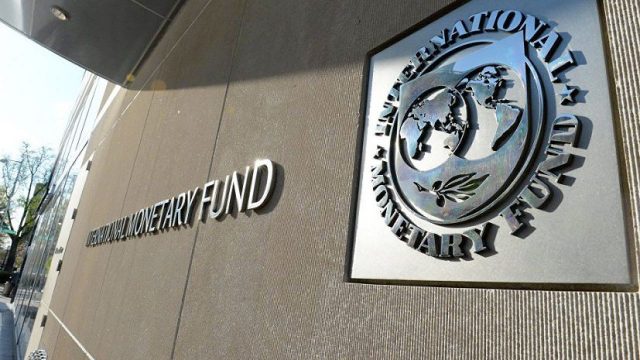
WASHINGTON – The International Monetary Fund warned on Tuesday that colliding pressures from inflation, war-driven energy and food crises and sharply higher interest rates were pushing the world to the brink of recession and threatening financial market stability.
In gloomy reports issued at the start of the first in-person International Monetary Fund and World Bank annual meetings in three years, the IMF urged central banks to keep up their fight against inflation despite the pain caused by monetary tightening and the rise in the US dollar to a two-decade high, the two main drivers of a recent bout of financial market volatility.
Cutting its 2023 global growth forecasts further, the IMF said in its World Economic Outlook that countries representing a third of world output could be in recession next year.
“The three largest economies, the United States, China and the euro area, will continue to stall,” Pierre-Olivier Gourinchas, the IMF‘s chief economist, said in a statement. “In short, the worst is yet to come, and for many people, 2023 will feel like a recession.”
The IMF said Global GDP growth next year will slow to 2.7%, compared, down from its July forecast of 2.9%, as higher interest rates slow the U.S. economy, Europe struggles with spiking gas prices and China contends with continued COVID-19 lockdowns and a weakening property sector.
The global lender maintained its 2022 growth forecast at 3.2%, reflecting stronger-than-expected output in Europe but a weaker performance in the United States, after torrid 6.0% global growth last year as the COVID-19 pandemic eased.
Some key European economies will fall into “technical recession” next year, including Germany and Italy, as energy price spikes and shortages slam output. China’s growth outlooks also were downgraded as it struggles with continued COVID-19 lockdowns and a weakening property sector, where a deeper downturn would slow growth further, the IMF said.
The growing economic pressures, coupled with tightening liquidity, stubborn inflation and lingering financial vulnerabilities, are increasing the risks of disorderly asset repricings and financial market contagions, the IMF said in its Global Financial Stability Report.
“It’s difficult to think of a time where uncertainty was so high,” Tobias Adrian, the IMF‘s monetary and capital markets director, told Reuters in an interview. “We have to go back decades to see so much conflict in the world, and at the same time inflation is extremely high.”
Finance officials from the IMF‘s 190 member countries this week are grappling with these uncertainties from differing economic positions in Washington, along with food and energy crises prompted by the war in Ukraine and other global challenges including massive clean energy financing needs.
PRIORITY: INFLATION
The IMF said central bankers had a delicate balancing act to fight inflation without over-tightening, which could push the global economy into an “unnecessarily severe recession” and heap economic pain on emerging markets that are seeing their currencies fall sharply against the dollar.
But Mr. Gourinchas said controlling inflation was the bigger priority and letting up too soon would undermine central banks’ “hard-won credibility.”
“What we are recommending is that central banks stay the course. Now that doesn’t mean that they should accelerate compared to what they’ve been doing,” Mr. Gourinchas said in a news conference, adding that it was “a bit early” to shift course.
“I think right now our advice is, ‘let’s make sure we see a decisive decline in inflation.'”
The IMF forecast that global headline consumer price inflation would peak at 9.5% in the third quarter of 2022, declining to 4.7% by the fourth quarter of 2023.
But the outlook could darken considerably if the world economy is hit by a “plausible combination of shocks,” including a 30% spike in oil prices from current levels, the IMF said, pushing global growth down to 1.0% next year – a level associated with widely falling real incomes.
Other components of this “downside scenario” include a steep drop-off in Chinese property sector investment, a sharp tightening of financial conditions brought on by emerging market currency depreciations and a continued overheating of labor markets that results in lower potential output.
The IMF put a 25% probability of global growth falling below 2% next year – a phenomenon that has occurred only five times since 1970 – and said there was more than a 10% chance of a global GDP contraction. – Reuters
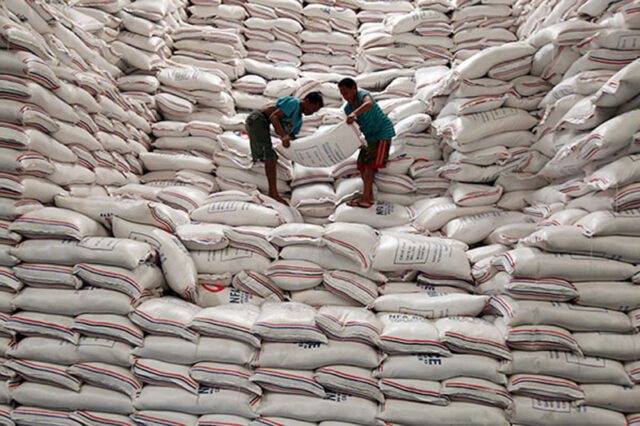
MANILA – The Philippines will boost its budget for rice buffer stocks by around 70% next year to ensure enough supply in times of global food shortages and emergencies, the budget department said on Tuesday.
The National Food Authority’s allocation for rice purchases from local farmers will increase to P12 billion ($203.74 million) under the proposed 2023 budget, from P7 billion this year.
That will increase the agency’s buffer stock capacity to 15 days of national rice demand, from nine days, the Department of Budget and Management said in a statement.
Rising food inflation and tightness in global commodity supplies are among the biggest challenges facing the administration of President Ferdinand Marcos Jr, who is also the agriculture secretary.
“By increasing the budgetary allocation for the buffer stocking program, we are stressing the importance of ensuring food affordability, especially rice,” Budget Secretary Amenah Pangandaman said.
Rice is a staple food in the Southeast Asian country.
Philippine inflation is running at a four-year high and may rise further, likely keeping the central bank on an aggressive monetary tightening path.
The Philippines is expected to remain the world’s second-biggest rice buyer this year next to China, with purchases projected to hit 3.4 million tonnes, up 15% from 2021, according to estimates by the U.S. Department of Agriculture.
Only the private sector imports rice to the Philippines, as the government deregulated the trade in 2019.
The Philippines mainly buys rice from Vietnam and some volumes from Thailand, where prices were expected to rise following India’s move to curb exports of the commodity.
To ensure stable retail prices, the Philippines has extended the time period of an executive order issued last year that lowers the tariff rate for rice imported from suppliers outside Southeast Asia to 35% from 40%-50%, until the end of 2022. — Reuters
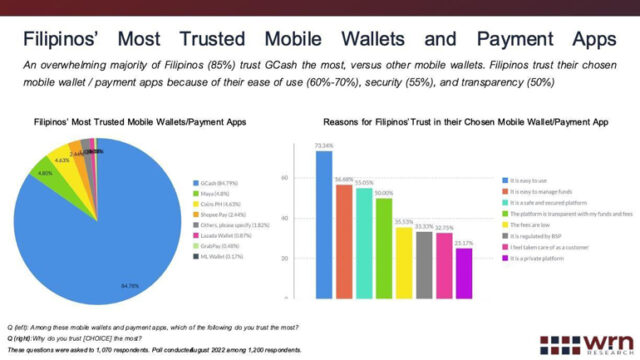
Polling and data analytics firm WR Numero Research (WRN) conducted a new survey, “Special Industry Report on FinTech in the Philippines.” According to the survey, GCash and Binance are the most trusted mobile wallet and cryptocurrency platforms, respectively. These two platforms are trusted because people feel they are easy and safe to use.
85% of the respondents of the survey answered that GCash is the most trusted mobile wallet. They pointed out the application’s ease of use (73%), security (55%), and transparency (50%) as foundations for trust.
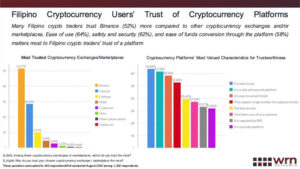
WRN also found that across cryptocurrency exchanges and marketplaces, Binance emerged as the most used and trusted platform, out of 49% of the respondents replied to be cryptocurrency users and of these users 74% were using Binance, and 52% cited Binance as the most trusted exchange.
“Cryptocurrency exchange services are fairly new compared to the other fintech services. And if the current trend of fintech adoption among Filipinos continues, we can expect that the number of Filipino cryptocurrency users is also likely to increase in the coming years,” said Cleve V. Arguelles, research fellow and managing director of WR Numero Research. “According to the survey, most Filipinos (87%) believe that cryptocurrency is beneficial to the Philippines’ economy and for that reason the government should support the industry (81%).”
Users of Binance trust the platform due to its ease of use (64%), safety and security (62%), and ease of funds conversion (58%). Eighty-five percent of the respondents who use Binance answered that the platform will contribute to the growth of the country’s economy.
WRN uses several levels of statistical intervention in its digital surveys to arrive at accurate results. The firm conducted a commissioned nationally representative digital survey of 1,200 Filipino adults between Aug. 27-29, 2022. It has a margin of error of ±4% with a 99% confidence level.
Survey responses were statistically weighted to the national profile of all Filipino adults, including those without internet access. All reputable public opinion research agencies weigh data to correct sampling issues in surveys, whether conducted online or face-to-face. The use of statistical weights ensures that the final survey data properly reflect the target population.
For data and media inquiries, please contact Cleve V. Arguelles, research fellow and managing director of WR Numero Research at +63 9998-770-572 or cleve.arguelles@wrnumero.com.
Spotlight is BusinessWorld’s sponsored section that allows advertisers to amplify their brand and connect with BusinessWorld’s audience by enabling them to publish their stories directly on the BusinessWorld Web site. For more information, send an email to online@bworldonline.com.
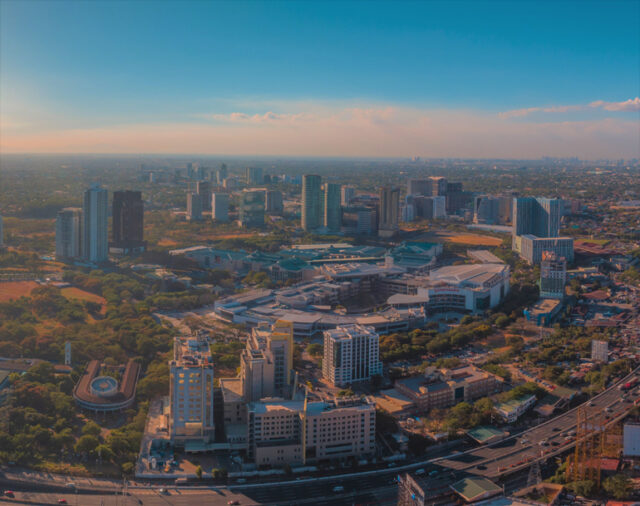
Filinvest City is the country’s first and only central business district to receive the LEEDv4 Gold for Neighborhood Plan certification.
One of the more positive impacts that the COVID-19 pandemic has left on our lives is the way it has brought to the forefront the importance of health and sustainability.
According to the Global Consumer Insights Pulse Survey published by multinational professional services firm PwC last year, half (50%) of global consumers say that they have become more eco-friendly in the past six months, with Southeast Asian and Middle Eastern consumers leading the way.
The Global Consumer Insights Pulse Survey focuses on consumer purchasing habits and behaviors, and shows how consumers have increasingly adapted to be more eco-conscious and digital in the last six months. The Philippines ranks second in this, with 74% of consumers making the change, behind Indonesia’s 86%.
The PropertyGuru Philippines Property Awards 2022 honored Filinvest Land CEO Josephine Gotianun Yap as the Real Estate Personality of the Year. She is the first woman in the country to be given this recognition.
The private sector has had a hand in leading these behavioral trends, as with the case of Filinvest Land, Inc. (FLI). Its Chief Executive Officer Josephine Gotianun Yap shared that long before it was a byword, the company has been putting environmental concerns ahead.
“Our property sustainability program is built on two important themes. First is inclusivity — bringing quality housing to as many segments of our society — as exemplified by the history of our beginnings. Second is our commitment to help protect and enrich the environment,” Ms. Gotianun Yap said while addressing the real estate industry during the recently concluded Philippine Property Awards 2022 by PropertyGuru Philippines. She was recognized as the Real Estate Personality of the Year during the event, making her the first woman to receive the award.
“Our property sustainability program is built on two important themes. First is inclusivity — bringing quality housing to as many segments of our society — as exemplified by the history of our beginnings. Second is our commitment to help protect and enrich the environment.”
She added that FLI will continue to pursue its green development thrusts as one of its long-term strategies in leading the way towards inclusivity.
This is made more significant with the fact that buildings and real estate development have an outsized effect on the environment. A study produced by the Commission for Environmental Cooperation, which evaluated the impact of North American buildings and their contribution to climate change, found that commercial and residential buildings in Canada and the United States are responsible for 20% and 40% of their primary energy consumption, respectively.
Construction and insulation of environmentally-sound buildings, which include using wood, can significantly reduce the carbon footprint of buildings. The United States Green Building Council estimates that green building, on average, currently reduces energy use by 30%, cutting carbon emission by 35%, and generates cost savings of 50% to 90%.
Recalling the origins of FLI, Ms. Gotianun Yap said that sustainability and inclusivity has always been part of the fundamentals that the company was built on. “The entry of Filinvest into property development over 50 years ago came from my parents, Andrew and Mercedes Gotianun’s desire to bring gated and secured communities to the middle class in the 70s when only the upper echelon of society enjoyed that lifestyle. In the 90s, FLI introduced our slogan ‘We build the Filipino dream’ when we brought affordable housing to the mass market,” she said.
Mira Valley, located in Havila, Rizal, is a residential subdivision blessed with natural waterways and features a wide range of nature-inspired amenities.
Today, FLI proves its commitment to creating green and sustainable developments across its residential brands namely the smart-value Futura by Filinvest, the middle-income Aspire by Filinvest, and the high-end Prestige by Filinvest. The developer carries on with offering a healthy home for Filipinos from different walks of life evidenced by its growing portfolio of over 280 ongoing projects in over 50 key areas nationwide.
Filinvest City, a 244-hectare integrated and mixed-use township of its namesake, also illustrates how the real estate developer is walking the talk. Filinvest City is the first and only central business district in the country to receive a 3-star BERDE rating from the Philippine Green Building Council. BERDE’s core framework takes into account a district’s management, use of land and ecology, energy, water, waste management, transportation, health and well-being, and community engagement — to which BERDE awarded Filinvest City with an ‘exemplary performance’ evaluation.
Filinvest City is also the first and only central business district in the country to receive the LEEDv4 Gold for Neighborhood Plan certification. This makes Filinvest City the largest central business district to gain this recognition in Southeast Asia. The US Green Building Council’s Leadership in Energy and Environmental Design or LEED is one of the world’s most credible and recognizable green building certification programs.
Northgate Cyberzone in Filinvest City, where 16 of Filinvest REIT’s 17 buildings are located, is home to the country’s largest district cooling plant that helps reduce energy and water consumption along with greenhouse gas and carbon emissions.
Filinvest REIT or FILRT, the first sustainability-themed REIT to be listed on the bourse, follows suit. Majority of FILRT’s office buildings are located in Northgate Cyberzone, an IT-BPO campus-style hub serviced by the largest district cooling plant in the country. The plant, built through the partnership between Filinvest Land and global sustainable energy company ENGIE, helps reduce power consumption by up to 40% and water consumption, greenhouse gas, and carbon emissions by up to 20%.
“Our property sustainability program paved the way for Filinvest to become one of the most trusted property developers today. We at Filinvest share one vision — to embrace green living as the better normal. We strive to constantly evolve and innovate to stay attuned to the needs and lifestyles of the markets we serve. At the heart of each endeavor is the burning passion to create sustainable, future-forward developments that enhance lives and open up opportunities for our countrymen,” said Ms. Gotianun Yap. — Bjorn Biel M. Beltran
Spotlight is BusinessWorld’s sponsored section that allows advertisers to amplify their brand and connect with BusinessWorld’s audience by enabling them to publish their stories directly on the BusinessWorld Web site. For more information, send an email to online@bworldonline.com.
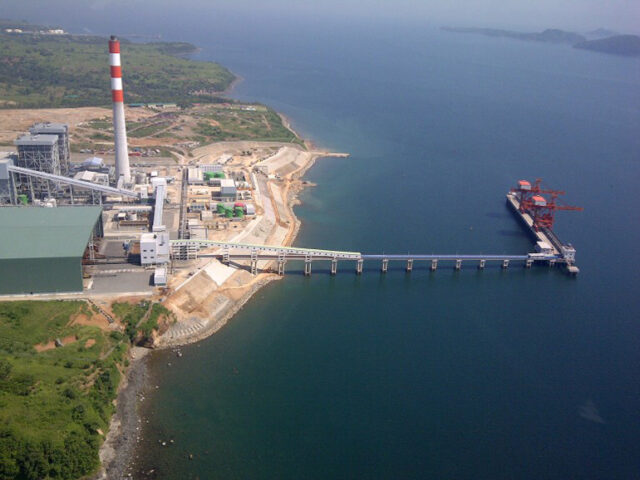
AboitizPower’s GN Power Dingnin 668MW x 2 baseload facility, located in Bataan, is in the final stages of construction.
The world is going through an energy revolution.
Amidst calls for global climate action and the transition towards more sustainable power systems, developed countries lead the efforts to curb climate change and its adverse effects on communities. However, developing nations receive the brunt of the pressure to follow suit, even as this shift cannot happen overnight for emerging economies like the Philippines.
With this in mind, Aboitiz Power Corporation is taking a pragmatic approach. While the company recognizes and supports the imperative for an energy transition in the country, initiatives toward this end should not be done at the expense of social development and economic growth.
Guided by its grand-scale vision and higher purpose of transforming energy for a better world, the company aspires to usher the Philippines into an era where there is energy abundance, zero poverty, and an environmentally sustainable society.
AboitizPower’s thermal business unit, composed of its coal and oil subsidiaries, claims its role in the Philippine energy space by building the future today by leading the energy transition and ensuring security and equity.
“Our mandate has always been to provide reliable, reasonably priced, and responsibly produced electricity to support the Philippines’ economic growth. A sensible energy mix will allow us to help power the country during this change. At the same time, we look for solutions to decarbonize more deeply,” AboitizPower President and Chief Executive Officer Manny Rubio said. “While we pursue the path toward a more sustainable Philippine energy system, our thermal assets will play a crucial role in bridging the gap between the needs of today and the better world we envision tomorrow.”
A well-managed energy shift
Data from the Department of Energy show that by the end of 2021, more than three-fourths of the country’s power came from thermal sources. Transitioning into a more sustainable energy system isn’t as easy as “turning off” all the country’s thermal assets and “turning on” as many renewable energy (RE) facilities as possible. Mr. Rubio said this narrative is over-simplistic and ignores inconvenient truths that tell a more complex energy transition story.
The goal is to ultimately transition to a net-zero emissions energy system in which most electricity is generated by renewable energy, and offsets and sequestration mitigate the remaining emissions. The Philippines can learn from the experience of its developed counterparts that went into RE too fast, too soon, and have now been forced to restart their thermal plants to meet their energy demand.
While AboitizPower has ambitious goals to further grow RE in the Philippines, the organization understands the need for a well-managed energy transformation, especially in a country with much potential for economic growth and human prosperity. Together with its partners, the company is one of the largest clean energy producers in the country today and is currently growing its RE portfolio threefold from its current capacity by 2030.
According to Mr. Rubio, AboitizPower is taking a well-calculated and long-term approach toward decarbonization.
“A decarbonized Philippines requires a well-managed shift involving supply and demand, which realistically will involve a decades-long transition to accomplish,” he stated.
Ensuring energy equity and security for today and tomorrow
AboitizPower’s Therma South, Inc. 300-MW baseload facility in Davao City
As the organization sets its eyes on the future, someone has to take care of the present.
“Whatever we do, we must move ahead and continuously focus on our customers. That’s why in all that we do, we constantly ask ourselves: How can we enhance their experience, keep costs down, and ensure reliable and responsible power delivery?” AboitizPower Thermal Business Group Chief Operating Officer Felino Bernardo said.
In particular, AboitizPower’s coal business unit is approaching the matter holistically, integrating the Environmental, Social, and Governance (ESG) framework into its operations and policies.
“We continue to improve our eco-efficiency and environmental management by leveraging new technologies and innovations,’’ said Mr. Bernardo.
The thermal group also seeks to expand its generation portfolio beyond coal and oil, having partnered in 2021 with JERA, one of the world’s largest power companies based in Japan.
Under this collaboration, both parties will explore co-firing technologies, carbon capture systems, and thermal power generation using green fuels like ammonia and hydrogen to reduce carbon dioxide emissions. Since both Japan and the Philippines rely on imported fuels due to limited domestically sourced fuel, the two companies have teamed up to look for possible alternatives, such as liquefied natural gas (LNG)-to-power projects.
According to the Department of Energy’s Philippine Energy Plan, the country’s electricity demand is estimated to grow 6.6% annually up to 2040 and twice this amount through to the year 2050, presenting AboitizPower with the opportunity to provide secure energy sources for the country.
AboitizPower’s thermal group believes the pivot to natural gas as an alternative baseload power source is the most efficient investment to help the country meet growing electricity demand. LNG also has lower emissions than coal and is an excellent complement to variable RE.
GNPower Dinginin, new kid on the block
AboitizPower’s thermal business group currently has 20 facilities under its portfolio strategically positioned across the Philippines to provide a steady and affordable power supply to homes, businesses and communities.
The latest addition to the company’s fleet, considered by far the country’s biggest in terms of installed capacity, is the 2 x 668-MW supercritical power plant operated by GNPower Dinginin (GNPD) in Mariveles, Bataan. This plant model is considered the standard for modern designs and offers greater efficiency and lower emissions than its predecessors. The project, seen to boost power supply reliability in the grid, is in the final stages of construction.
“We are truly thankful to our partners who share the same mission as ours. GNPD’s capacity allows AboitizPower to continue carrying on our vital role in the country’s power supply chain and meeting increasing power demand at a competitive cost,” Mr. Bernardo said.
Conscious efforts for a better world
The company remains undeterred by external pressures. Although the nature of its business may seem to put it in a precarious position these days, the organization believes this is not the case.
AboitizPower will continue to do what is right as it stands at the edge of the greatest transformation it will ever take in years, ensuring its massive transformative purpose grounds all its perspectives, strategies, and efforts.
“We have already come so far, but this is only the beginning for us in AboitizPower. Maximizing our thermal and renewable assets, we will continue transforming energy toward a more sustainable future,” Mr. Rubio shared. “We are confident that we can help change the country for the better by powering progress and helping build prosperity for all.”
Spotlight is BusinessWorld’s sponsored section that allows advertisers to amplify their brand and connect with BusinessWorld’s audience by enabling them to publish their stories directly on the BusinessWorld Web site. For more information, send an email to online@bworldonline.com.
The Financial Executives Institute of the Philippines (FINEX) held its FINEX annual conference called FINEX WEEK last Oct. 3 to 7, under a central theme, “Reshaping the Future with Transformational Change.” All the days of FINEX WEEK were highlighted by various conferences, including one topic of which is mentioned above, the theme of this article.
“Is your company ready? Understanding Global Investment Opportunities and Risks” as a topic covers a broad spectrum of issues, from many players, many viewpoints, and many angles, that it is quite difficult to keep the reader riveted on the theme. Outward investments? Inward investments? Inward=local risk, outward=foreign country risk, different regulatory regimes, local tax structures vs. foreign country tax structures, local corporate laws vs. foreign corporate laws, et al. There’s a plethora of permutations that can swiftly obscure the objective.
For the sake of pertinence, this article will only dwell on investments being brought into the country or being done intra-country, as these invariably improve the local economy more than an outward one. More companies have been and will continue to be involved and benefit from incoming investments than companies investing outside, typically the predominance of the ultra large companies.
Understanding the investment framework and dynamics: a singular focus on inward and local investments also presents a bit of a challenge in creating a draft which, if extensive, can fill many pages. This article then attempts to present a concise overview of the dynamics.
The players
Investors come in many shapes and forms, and at different stages of your company. Angel investors normally invest when the company needs “seed money” to get the business off the ground. This is typically equity investment which is made after a decision wherein the angel investor can take a risk, as the new company can be successful. Venture capital firms present a model where they invest at a later stage than what the angel investors take; when there is already proof of concept and there is visible positive market reaction to the product or service. Private equity firms (PE firms) come in at a much later stage, when there is a medium to long term history of revenue generating capacity and profit margin consistency. The third type of investor would be the foreign companies that go into the country and establish strong economic partnerships with local entities.
The process
Investors typically require two major documents that they need to study before making a decision to go to the negotiating table. The Information Memorandum, which must contain extensive information about the company; its operations in detail, its products, the markets it serves, its competitive advantage, the quality of its management, shareholder profiles, its historical financial performance with detailed explanations of the dips and rises in revenues and profits and debt levels among other issues, its business plans, and strategy for medium term growth. Next is the Financial Model, which must lay out the historical financial statements accompanied by medium term projections (5 to 7 years), which delineates the underlying assumptions to the model, serving as links to the numbers in the individual cells in Excel format.
Once submitted, the investor should be able to evaluate the company’s financial worth by doing a valuation. The next step is for the investor to present his valuation and the corollary terms which he will propose to accompany the financial investment. The investor will present his valuation amount and terms in a document called the Non-binding Term Sheet. This term sheet will have to go through the company’s approving authority: typically the board of directors of the company, and possibly the shareholders (should the by-laws of the company require the approval of the latter).
The ping pong, the tug of war, and gamesmanship
The road up to the presentation of the non-binding term sheet by the investor is quite straightforward. However, the road between the presentation of the non-binding term sheet until the acceptance of the terms is not so. The end game of an M and A deal (merger and acquisition) is to close the gap between the company’s expectations (the seller) and the investor’s initial offer. The aim is to close the deal, and not just to narrow it. And in all deals, this is typically the most difficult part. Experience shows that deals can be won or lost, or stalled depending on the skillful navigation of the issues that arise between the company and the investor.
This is the ping pong stage which may or may not lead to a tug-of-war between the two. The contentious issue could be in millions of pesos, or billions, or the price of the investment. It may be the number of seats in the board, it could be the dividend policy post investment, the power sharing agreement, or any major issue in the proposed shareholder agreement. Endless hours at the negotiating table, dozens or even hundreds of emails, countless phone calls, and SMS’s. Deals can be closed within a few months or could face delays for years. On and off, or worse, off and on communication, characterizes this phase. All commercial issues, and a few operational, management and shareholder issues, must be sorted out at this phase.
Finally, the handshake
But then again, it’s not over yet. Upon conclusion of the negotiations of the issues in the non-binding term sheet, the investor is required to present the Revised Term Sheet which must embody all the terms agreed upon at the negotiating table. If accepted by the company, the process moves into what is called the confirmatory Due Diligence phase, which entails making available all the books of the company: from financial, legal, tax and operations, which will be reviewed by the investor’s consultants. It’s akin to opening your company’s gut to a stranger you just met a few months ago, who now has an interest to live with you in your house, and you have to graciously accommodate.
This is another key phase of the deal: as depending on the findings of the investor’s due diligence, the Final Term Sheet could contain markedly different terms from the second or revised term sheet which was given previously. Items that could affect the tone of the final term sheet may be the need for higher provisions for the receivables, potential tax liabilities not seen during the initial evaluation, or contingent liabilities such as retirement liabilities. A few deals have been lost in this phase. There are solutions for these, though and it will take another round or two of negotiations to get a final agreement on the final term sheet. Once the final term sheet is accepted by the company, the process moves into formalization of the agreement, which will likely involve drafting of a Share Purchase Agreement (or an asset sale, depending on the final agreement, to document the investment), and a Shareholders’ Agreement, should the investment in the company be a partial stake and not full, and other relevant agreements.
The shadow called RISK
Risk is an issue that can impede, punctuate, illuminate, or enhance any initiative. Either of these at any point in the process, or all of these in certain stages of the process, can happen. Equity and debt instruments carry risks, obvious or hidden, large or small, present or contingent. It’s unavoidable; not the incurrence, but the recognition that it may happen. All investors and lenders acknowledge that it may happen, and it must be addressed, like it or not. Once evaluated, it is then priced. All risks can and must be priced (another topic altogether), for the deal to go through. There’s a technical method and there’s also the subjective way. And believe it or not, risk is the foundation of all investments and lending. Risk must first be analyzed, then understood, then accepted. Product risk, pricing risk, market risk, governance risk, government risk (emphasis supplied), supply risk, demand risk, and more. All these must be done without hesitation and without fail.
Given what has been discussed in this article, it will be meaningful to know: is your company ready for global opportunities and risks?
Spotlight is BusinessWorld’s sponsored section that allows advertisers to amplify their brand and connect with BusinessWorld’s audience by enabling them to publish their stories directly on the BusinessWorld Web site. For more information, send an email to online@bworldonline.com.
Supply chains are crucial in bringing products from the source to consumers, and such value has been further appreciated during the coronavirus pandemic when the fragility of global supply chains has been observed. As global supply chains are managing to stabilize, the need for supply chains to be more resilient and sustainable has also emerged. Supply chains, in fact, are considered “the biggest contributor to the climate change problem,” with 50% of global emissions found by a World Economic Forum report to be generated by supply chains of industries.
Learn more about this on October 12, Wednesday, at 11 a.m. in BusinessWorld Insights with the theme “Building a Strong and Sustainable Supply Chain”. Watch experts as they discuss the challenges being faced by supply chains and the opportunity for them to emerge better while growing further in the new normal. LIVE and FREE on BusinessWorld and The Philippine STAR’s Facebook pages.
This session of #BUSINESSWORLDINSIGHTS is supported by the Asia Society-Philippines, British Chamber of Commerce of the Philippines, Financial Executives Institute of the Philippines, Management Association of the Philippines, Philippine Chamber of Commerce and Industry, Philippine Franchise Association, and The Philippine STAR.





 “Cryptocurrency exchange services are fairly new compared to the other fintech services. And if the current trend of fintech adoption among Filipinos continues, we can expect that the number of Filipino cryptocurrency users is also likely to increase in the coming years,” said Cleve V. Arguelles, research fellow and managing director of WR Numero Research. “According to the survey, most Filipinos (87%) believe that cryptocurrency is beneficial to the Philippines’ economy and for that reason the government should support the industry (81%).”
  For data and media inquiries, please contact Cleve V. Arguelles, research fellow and managing director of WR Numero Research at +63 9998-770-572 or