Home Blog Page 5147

Oil-consuming nations must form their own Anti-OPEC+

FREEPIK

SAUDI ARABIA’s Crown Prince Mohammed bin Salman’s complicity with Russian President Vladimir Putin in violating a Saudi-US agreement to lower oil prices underscores a simple reality: OPEC+ must go.  The oil cartel’s purpose was monopoly pricing. Its side effect has been catastrophic volatility. Its current mission appears to be to knee-cap the world’s last chance to avoid climate catastrophe.

By slashing production by 2 million barrels a day when oil was already at $90 a barrel, the two petro-tsars have just tipped their hand: They intend to lock in $100 oil prices, straining most of the world’s economies at a time when they’re already contending with inflation, food shortages, and continued supply chain disruptions. The higher price benefits not just Russia and Saudi Arabia, but Iran’s ayatollahs and Venezuela’s anti-democratic President Nicolas Maduro.

The idea that the US has no tool except a begging bowl to influence global oil prices is absurd. OPEC+ is cutting production at a time when the world is working to reduce its dependency on petroleum products. The rising tide of electric cars and trucks will dramatically reduce demand for crude in the decades to come. A successful challenge to the OPEC+ monopoly would leave plenty of oil, much of it US shale, to meet the world’s needs.

A bill now pending in Congress known as NOPEC, the “No Oil Producing and Exporting Cartels Act,” would override sovereign immunity protections and subject Saudi Arabia and its allies to US antitrust laws. If the US and Europe initiated antitrust enforcement — such as import duties, limitations on access to public financial markets, fines and sanctions — against Saudi Aramco, Russia’s Rosneft Oil Co., and similar government-controlled oil, the cartel’s ability to engage in price gouging would crumble, and the price of oil with it.

Such potential legal action enjoys genuine bipartisan support in the US Congress. The OPEC+ alliance includes a wide variety of members — Nigeria and Iraq as well as the Saudis — and like any cartel it’s only as strong as its weakest link.  If the US government had the legal tools, OPEC+ might protest but wouldn’t be able to retaliate effectively.

To replace OPEC+, the US and European Union should organize a broad anti-cartel of responsible oil producers and consumers. Such an Organization for Clean and Affordable Transportation — OCAT — would manage oil prices within an affordable but adequately profitable range — probably starting between $70 and $90 a barrel, with the range being lowered as crude demand falls. It should also require all oil exporters to reduce pollution and carbon risk. Such an idea was proposed by China, but ignored, back in 2012. We should dust it off.

In addition to antitrust sanctions, OCAT’s members would need to deploy two primary tools.  First, they would develop a much larger network of Strategic Petroleum Reserves to manage oil prices. By buying oil at $70 during downturns and selling when it tops $90, the reserve would be less costly than today’s wildly volatile oil market and might even make a profit. Like any consumer’s alliance, OCAT would need to respond to changes in the underlying market, raising and lowering its price band as available — not cartel manipulated — supply warranted.  But it would be oil consumers, not just producers, making these decisions. OCAT, to be successful, would need to represent responsible producers, including those current members of OPEC+ who were willing to work for a stable, market-driven oil price.

OCAT could also purchase oil to fill its strategic reserves from oil fields with the lowest climate pollution. This would reward greener oil producers and encourage effective measures to curb climate pollution. In such a market US shale would likely serve as the swing producer. US shale is highly competitive, with the ability to gear up and tamp down production quickly, making it ideally suited to help stabilize a managed oil market. But it needs to be cleaned up — particularly the Texas Permian Basin, where drilling has been going on for a century. Once a competitive global oil market has replaced the cartel, Russia and Saudi Arabia would return to become major players, only this time offering their oil within the OCAT market range.

As their most important long-term tool, OCAT members would double down on their growing investment in electric cars and trucks. This would ensure that demand for crude oil peaks, falls, and then keeps falling, as soon as possible. In particular, the US and EU would scrap outmoded policy, taxation and siting barriers that have hindered the buildout of the massive volumes of solar and wind power, advanced technology transmission grids and charging networks that a heavily electrified transportation system will require. Even West Virginia Senator Joe Manchin’s badly flawed siting bill would have helped US sun and wind outcompete oil. Congress can and should do much better next time.

Demand for oil will not vanish overnight, but by ensuring a competitive supply of petroleum at buffered prices, plus continued strong investment in electrified transport, OCAT could accelerate the end of the age of oil while maintaining a stable energy economy during the transition.  This could happen fast – faster than any other fix on offer to assure both reasonable oil prices and shrinking global consumption. If the countries that have to import petroleum products — the vast majority of the world — organize themselves around the principal of fair and stable oil prices, their common interests would enable them to overcome resistance from oil exporters.

It’s not just rich nations that suffer from OPEC+ price fixing; developing economies watch their growth squeezed every time oil climbs towards $100. As Kenya’s new President William Ruto put it, “fossil fuels are the opposite of freedom” and the world needs to break those chains.

It’s time for affordable, stable, transparently managed oil pricing.  OPEC+ can and should be replaced — Saudi Arabia and Russia cannot be trusted to set the world’s energy prices.

BLOOMBERG OPINION
Move on after their COVID tyranny? Never!

It’s almost like dialogue straight out of the movie Airplane!

COVID “experts”: Let’s just move on, this demand for accountability will get us nowhere.

Normal people: “No accountability,” what’s that?

COVID “experts”: It’s when people do or say anything without consequences, but that’s not important right now.

Laughable, perhaps. But essentially what Emily Oster wrote in her Atlantic piece (“Let’s declare a pandemic amnesty,” October 2022), calling for people to move on and forget the relentless demands to mask up, vaccinate, and be locked down. Needless to say, her article generated an outrage firestorm.

Forgive and forget? COVID tyrants shrieked in a deranged manner: “just put the damn mask on!,” “stay home, save lives!,” “buhay muna bago negosyo (life before business),” “do you want to kill others,” and “don’t be selfish!” They demanded mandatory vaccination, locked-up children at home or forced them to sit at their desks fully masked, and (worse of all) prohibited people from visiting family members or even to bury their dead — only to see doctors and nurses dancing on TikTok — for two freakin’ years and we’re now supposed to act as if nothing happened?

Include among those that wanted people to be deprived of their rights those members of the clergy who simply forgot what courage is and let their faithful be lost for years on end.

These are the “Catholic authorities and experts who followed those in the government and the media who now say ‘we didn’t know’ — but who at the time were obviously silencing discussion (let alone criticism).

“These Catholics insisted on following calls to mask and vaccinate, using religious authority, theological arguments, and the virtue of obedience to harm persons, families, and consciences.

“This group includes various bishops’ conferences, bishops, vicar generals, pastors, parish administrators, theologians, and ethicists, not to mention random pundits, columnists, and podcasters. Many are left-leaning, politically.” They all “abdicated their duty to defend personal autonomy and bodily integrity, as well as justice and right reason.” (“No COVID amnesty for bishops, theologians, et al., either,” Leila Lawler, https://happydespitethem.blogspot.com/2022/11/no-covid-amnesty-for-bishops.html, November 2022)

All simply because they let fear get the better of them, knew it, and thus wanted everyone to join in their misery, these COVID tyrants insisted that those wanting to decide for themselves about their own health should lose their jobs, see their children deprived of an education, be either trapped in their own homes or forcibly removed from it, threatened even with starvation (unbelievably, there was this insane suggestion to not let the unvaccinated enter groceries), be deprived of the sacraments and personal spiritual consolation. To lose any and all constitutional rights.

In short: it was demanded people be punished simply for not being scared of a virus with a 99% survival rate and for using their brains.

Never forget.

Ah, but people like Ms. Oster would say: “In the face of so much uncertainty, getting something right had a hefty element of luck. And, similarly, getting something wrong wasn’t a moral failing.”

Not really. And, yes it is.

Precisely because things were so uncertain, particularly in 2020 and 2021 (regarding lockdowns, masks, and vaccines), it was all the more important that each person be allowed to take responsibility for his or her own health. The fact that those terrified of COVID, many narcissistically so, would bully others when they themselves knew next to nothing about it, is the true act of selfishness. And of being utterly unthinking.

A variation of the COVID defense would argue: “But we didn’t know. Nobody knew then.” But we knew that people didn’t know. We knew then that science could change when more facts came in. And yet, even without waiting for studies, common sense and history already told us that lockdowns and mandatory public masking didn’t work, that they have never been employed in such massive scale effectively. Common sense and history also told us to be wary of a drug that did not exist two years ago.

Indeed, common sense and history tells us there’s something deeply strange about medical “experts” and media so fanatically hard-selling a new and basically untested vaccine and yet see those very same experts and media be very dismissive of medicines (e.g., ivermectin) that have been around and tested for decades.

And now?

Now that studies have confirmed that lockdowns were ineffective at stopping COVID transmission, that it did nothing to keep the death rates down, and yet caused vast economic devastation and millions of lost livelihoods;

Now that research is confirming that masks are basically ineffective in stopping COVID transmission, while at the same time subjecting the wearer to all sorts of bacteria, as well as speech problems in the young;

Now that a deluge of reports has come out that vaccines were ineffective in stopping COVID transmission, without beneficial effects for those below 60 years of age and healthy, and yet see vaccinated healthy young people suddenly fall ill or die of myocarditis or sudden adult death syndrome, of women having menstrual and fertility issues, pregnant women having complications, with birth rates across the globe falling down while excess deaths have gone up;

Now, after all the insults, threats, and even outright deprivation of civil rights, now that they have been proven wrong — about lockdowns and masks and vaccines — these supposed medical “experts,” our “betters” in government and media, the self-righteous scolds in the clergy and the academe, the mask-wearing-never-leaving-the-house-and-triple-vaxxed-and-boosted virtue signalers now want to ignore and forget all that and demand that we just “move on”?

Heck no.

If they are not asking for forgiveness (in fact, many are still even now doubling down on lockdowns, masks, and vaccines against all reason, facts, data, logic), then forgiveness will not be given. And even if they did, forgiveness is given only with contrition. And even with contrition, forgiveness needs to be coupled with justice. And justice must be had.

Also, two words: moral hazard.

And, again, emphasizing what this column repeatedly pointed out: “public officials and employees, contractors, manufacturers, volunteers, and representatives of duly authorized private entities” can be sued and held liable if proven that they acted with “willful misconduct and gross negligence” in using or administering COVID vaccines. Republic Act No. 11525 set aside P500 million to compensate people “inoculated through the COVID-19 Vaccination Program” and because of it suffered “severe adverse effects” including “death, permanent disability or hospital confinement.”

Furthermore, the Employee Compensation Commission (ECC) moved to “grant compensation to all covered members who got vaccinated under the COVID-19 Vaccination Program in the event of disability, serious adverse effects or death that may arise despite the proper use of authorized COVID-19 vaccines” (ECC Board Resolution No. 21-03-08, March 2021). Such a policy was intended to cover “loss of income benefits, medical benefits, death and funeral benefits, and rehabilitation services. ECC shall grant EC benefits upon confirmation of the SSS and GSIS of the causal connection between the vaccination and its medical consequences as supported by relevant medical records and/or findings.”

PhilHealth, in turn, is mandated to “compensate persons inoculated through the National COVID-19 Vaccination Program in case of death, permanent disability, and hospital confinement for serious adverse effects. The COVID-19 Vaccine Injury Compensation Package, as stated in PhilHealth Circular (PC) No. 2021-0007, is on top of the National Health Insurance Program (NHIP) benefits.

“Under the NHIP, all Filipinos including those who will claim for the vaccine injury compensation are eligible for PhilHealth benefits. For hospital confinement, the inpatient benefits shall be based on the applicable case rates. It shall be deducted from the hospital bill and shall be claimed by the hospitals through the usual process and procedures.”

And it is untrue that private institutions are free to discriminate against the unvaccinated or unmasked. Be it businesses, schools, or residential condominiums: they have no right to violate the constitutional prescription that no person shall be deprived of life, liberty, or property without due process of law or be denied the equal protection of laws.

Violation of constitutional rights (e.g., by discriminating against the unvaccinated or forcing people to wear masks) could render such private establishment liable for damages under a myriad of laws, including the Civil Code, particularly Articles 19, 20, 26, and particularly Article 32: Any public officer or employee, or any private individual, who directly or indirectly obstructs, defeats, violates or in any manner impedes or impairs any right or liberty of another person shall be liable to the latter for damages, which includes: freedom of religion; freedom of speech; freedom from arbitrary or illegal detention; the right against deprivation of property without due process of law; the right to the equal protection of the laws; the right to be secure in one’s person, house, papers, and effects against unreasonable searches and seizures; the liberty of abode and of changing the same; and the right to take part in peaceful assembly to petition the Government for redress of grievances.

Filipinos that suffered serious adverse effects (or had a family member that died) due to COVID vaccination are strongly encouraged to document their experiences and claim government compensation, or (as provided by law) prosecute and hold accountable those that forced or misled them into taking the vaccines.

People should save, screenshot, and download posts, articles, memes, memos, e-mails of doctors, government officials, employers that forced them to be vaccinated. Especially from 2020-2021. Aside from illness or death, if you or a family member lost employment, income, education, or suffered stress, the need for accountability is clear. Legally complain also against people or establishments (public or private) forcing you to wear masks.

These “experts” and the COVID self-righteous must be held responsible for their arrogance, bullying, and incompetence.


Jemy Gatdula is a senior fellow of the Philippine Council for Foreign Relations and a Philippine Judicial Academy law lecturer for constitutional philosophy and jurisprudence

www.facebook.com/jigatdula/

Twitter @jemygatdula

Biden gets key break as allies in SE Asia bolster their militaries

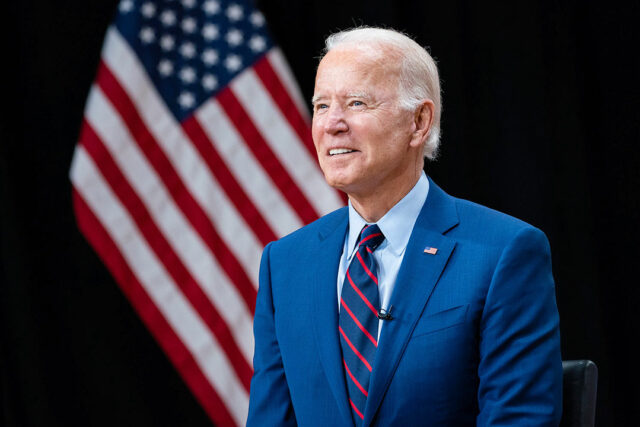
US PRESIDENT JOSEPH R. BIDEN — WHITEHOUSE.GOV

US-CHINA tensions have America’s closest allies in Asia strengthening their militaries. But in a boost to President Joseph R. Biden’s diplomatic efforts, that trend is extending to some Southeast Asian nations which have recently kept the US at arm’s length.

Philippines’ President Ferdinand Marcos, Jr. is looking to buy Chinook helicopters and accelerate talks to implement a defense cooperation pact that would give the US military greater access in the country. The moves come six years after then-President Rodrigo Duterte ended joint patrols with American forces and sought more weapons from China.

Indonesia — the world’s most populous Muslim-majority nation — has expanded joint exercises with the US, unveiled a $125 billion military modernization plan last year and is holding talks over the purchase of dozens of Boeing Co. F-15EX fighter jets. US Defense Secretary Lloyd Austin praised the “significant advancements” in the relationship after meeting Indonesian Defense Minister Prabowo Subianto last month.

Wary of being forced to pick sides between the US and China, Southeast Asian nations have historically struggled to find a middle ground. While many regional governments count on the US as a key security partner, China has been the Association of Southeast Asian Nations’ (ASEAN) biggest economic ally for 13 consecutive years, with two-way trade exceeding $500 billion this year.

President Xi Jinping’s more assertive foreign policy is shifting that equation for some countries as Beijing accelerates its military development and reiterates claims to Taiwan and a huge swath of the South China Sea. Regional governments have also been frustrated that efforts to negotiate a code of conduct between China and Asean in the South China Sea haven’t progressed.

“There’s a better appreciation that the US is an important factor of the strategic equation here and it’s in everybody’s interest that you stay around, and that’s a big change,” said Bilahari Kausikan, Singapore’s former permanent secretary for foreign affairs.

Mr. Biden will get a chance to make the US case to regional allies directly in his first trip as president to Southeast Asia this week, when he arrives to take part in an Asean summit in Cambodia and then heads to a meeting with Group of 20 leaders in Bali, Indonesia.

A State Department official said the US will work with regional leaders to ensure respect for international law and freedom of navigation in the South China Sea.

While Indonesia has long had a foreign policy centered around non-alignment, an ongoing territorial dispute with China around the Natuna Islands prompted President Joko Widodo to send warships to the area on multiple occasions in recent years.

‘IRONCLAD ALLIES’
Further incursions in waters claimed by the Philippines saw Marcos’ government lodge hundreds of diplomatic protests against Beijing less than three months into his term. That comes after the country boosted its defense budget almost 60% from 2017-2022, the most in Asia.

Mr. Biden called the US military alliance with the Philippines “ironclad” in a meeting with Mr. Marcos last year, a sharp shift from the Duterte era when some analysts feared the two nations’ mutual defense treaty could get scrapped in what would have been a huge win for Beijing.

“While we strive to live in peace with others, it is still crucial that our Armed Forces be modernized so that it is ready for all eventualities,” Mr. Marcos said Tuesday. The Philippines gets about $40 million in US security assistance annually, a State Department spokesman said.

US-China tensions and the threat from Beijing aren’t the only reasons regional governments are upgrading their defenses, but they “are clearly a driver of their procurement programs,” said Ian Storey, a senior fellow at the ISEAS-Yusof Ishak Institute who specializes in regional security issues.

Overall, defense spending in the Asia-Pacific region now accounts for nearly a quarter of global investment, with China making up 46% of this year’s total, data from defense specialist Janes shows. Japan, South Korea, India, Taiwan and Australia are all forecast to expand spending significantly in the coming years, adding $100 billion to the region’s annual total by 2032.

Those spending plans could change quickly, given the need of governments to respond to inflation, tight energy supplies and expectations of a global recession. And to be sure, no nation is abandoning China. As they’ve done for decades, ASEAN governments are hedging their bets.  

“The Biden administration is making all the right moves, but I am also somewhat skeptical,” said Zachary Abuza, a professor at the National War College in Washington. For instance, the US looks at Indonesia “as if they should be this natural partner and yet they’re very critical of US freedom of navigation operations,” he said, referring to the US practice of sending warships through the Taiwan Strait.

Officials in Beijing have pushed back on the US outreach, slamming what they call a “Cold War” mindset in Washington. And China has pushed an alternative to the US’s Indo-Pacific Strategy, trying to assuage regional suspicions of its intentions by emphasizing shared economic benefits.

‘BLOODY NOSE’
Bonnie Glaser, director of the Asia Program at the German Marshall Fund, said the developments in the region — but the Philippines especially — are likely getting attention in Beijing even if China isn’t reacting much publicly.

“My guess is that they note the trend and will privately suggest to some interlocutors in Southeast Asia that it isn’t in their interests to align themselves too closely with the US,” Glaser said.

The affinity in ASEAN for US weaponry or joint exercises doesn’t mean those countries would back Washington in a conflict, let alone take part in one. Frustrated by their own continuing disputes with a strengthening China, they mostly want a stronger deterrent so they can’t be totally dominated, said Storey of the ISEAS-Yusof Ishak Institute.

If push comes to shove, “at least they could give China a bloody nose,” he said.

The Taiwan crisis has complicated matters further. US House Speaker Nancy Pelosi’s trip to Taipei in August was seen in some ASEAN capitals as a step too far, unnecessarily provoking China. Beijing responded to the visit by unleashing its biggest military drills ever around the island.

In a sign of the region’s concerns, Singapore Foreign Minister Vivian Balakrishnan warned last week that the geopolitical situation has become so bad that “the stage is almost pre-set” for a miscalculation or accident, akin to the events precipitating World War I.

That would be “a huge setback for both the US and China and the world, and especially for us in Southeast Asia, already grappling with the headwinds of the economic downturn, inflation, stagflation and still recovering from the Covid-19 pandemic,” he added.  Bloomberg

US election misinformation limited, not stopped, on social media – experts

FACEBOOK, TikTok, Twitter, YouTube and Instagram apps are seen on a smartphone in this illustration taken, July 13, 2021. — REUTERS

SCORES of posts on Twitter and Facebook challenged Democratic successes in U.S. midterm elections without evidence on Wednesday, social media experts said, but the misinformation did not rise to the firestorm levels that followed President Joe Biden’s victory in 2020.

Researchers who study misinformation are closely monitoring online discussion following Tuesday’s voting, which will decide control of Congress. False narratives about fraud during the 2020 presidential race, promoted by then-President Donald Trump on Twitter, fueled a deadly siege of the Capitol. Trump was later banned from the social media service.

This time, far less prominent users on Twitter Inc and Meta Platform’s META.O Facebook have been raising doubts about unsettled results in Arizona, citing voting machine problems and slow counting.

Overall, Republicans made modest gains nationwide but Democrats performed better than expected, and control of Congress hinged on a few races that remained too close to call as of Wednesday evening.

Some posts noted that Republicans won big in Florida after the state enacted new voting restrictions and claimed that the lack of such laws in other states resulted in fraud.

“We are seeing people drumming up the idea that Democratic success was the result of widespread fraud, but they don’t have much to hang it on,” said the Southern Poverty Law Center’s Intelligence Project, which is monitoring social media.

So far, the conspiracy theories have not sparked major demonstrations or gone as viral as last time around.

“There’s a bunch of balls frozen up in the air and we’re just wondering when they are going to come down or if they have disappeared for good,” said Mike Caulfield, a research scientist at University of Washington who is part of the Election Integrity Partnership consortium.

The partnership said some Republican commentators may be holding back on spreading fraud claims in states such as Arizona because the party is expected to come out partially victorious in those places and such claims could undermine their positive results.

Efforts by election officials and online misinformation experts to push back on misleading narratives on social media appeared to have worked better than in 2020, also helping curtail spread of false claims, partnership researchers said.

Actions taken by the social media services have been patchy.

Both Facebook and Twitter have systems to add context from fact-checking organizations to posts describing debunked election conspiracies. But none of this context appeared along several posts reviewed by Reuters that insinuated fraud.

Facebook also aims to restrict the spread of conspiratorial content by recommending it less, and problematic posts found by researchers had no more than a few hundred likes. But the company declined to comment on how well the feature worked this election, citing the ongoing ballot counting.

Common Cause, which monitors social media for voter suppression efforts, said on Tuesday that Twitter had taken no action on posts that the organization had flagged as inappropriate.

Twitter, now owned by billionaire Elon Musk, laid off roughly half its staff last week, including many employees responsible for curating and elevating credible information on the service.

Twitter did not respond to a request for comment.

Twitter did suspend a user who on Tuesday posted a video claiming a masked man was “cheating in front of the cameras” at a polling station in Philadelphia.

Seth Bluestein, city commissioner of Philadelphia, had tweeted that the video is false.

“I personally visited the East Passyunk Community Center polling place today,” Bluestein wrote. “The interior shot is not of a Philadelphia polling location, as you can see in these photos I just took tonight. This is another example of dangerous misinformation.” — Reuters

Cambodian PM Hun Sen to give luxury watches as ASEAN summit souvenirs

COURTESY OF CAMBODIAN PRIME MININSTER HUN SEN’S FACEBOOK PAGE

PHNOM PENH — Cambodian Prime Minister (PM) Hun Sen, an aficionado of luxury watches, will hand out intricate, locally made timepieces as souvenirs for world leaders at an international summit he is hosting this week.

Hun Sen, who has ruled Cambodia for 37 years, has faced public scrutiny in recent years after being photographed wearing luxury watches, including by Patek Philippe and Richard Mille, that cost more than $1 million each, while much of the country struggles with poverty.

Photos shared by Hun Sen on his official Facebook page showed a close-up of the limited-edition watch face with gold hands, a transparent case and a brown leather strap, emblazoned with the words “ASEAN Cambodia 2022” and “Made in Cambodia”.

“These watches have been prepared and assembled by pure Cambodian technicians, which is part of scientific and technology and developments of Cambodia,” Hun Sen wrote of the 25 limited-edition watches.

US President Joseph R. Biden is among the global leaders attending the Association of Southeast Asian Nations (ASEAN) summit in the capital Phnom Penh.

A video showed the elaborate inner gears of the watch, engraved with “tourbillon” and “twenty-five (25) jewels” and the name of the Cambodian watchmaker, Prince Horology.

The cost of the Cambodian-made timepieces has not been made public.

One expert said photos and videos of the ASEAN watch appeared to show the sophisticated tourbillon mechanism, which requires a high level of craftsmanship and can carry a six-figure price tag, though he declined to speculate on the value of the Cambodian-made version.

“The mechanism is not vital to accurate timekeeping, but it is marketed as a complicated feature and (part of) a luxury timepiece,” said Jeremiah Chan, an editor at Singapore-based Revolution magazine, which specializes in high-end watches.

The prime minister’s office did not respond to requests for further information on the watches, and Prince Horology — part of the Prince Group owned by Chinese-Cambodian tycoon Chen Zhi — could not be reached for comment.

While some Cambodians criticized the extravagance of the high-end gift, others praised Hun Sen for promoting the country’s fledgling watchmaking ambitions.

The country’s first watchmaking school staffed by Swiss experts opened in 2019.

“It truly represents our country,” said businessman Ramaneth Heur. “These gifts … show that Khmers can do it and enter the world stage.”

Sok Eysan, a spokesperson for Hun Sen’s ruling Cambodian People’s Party, said there was “nothing political or strange” about the watches.

“It is the kindness of the host country to give them as souvenirs to leaders,” he said via telephone.

ASEAN goodie bags have in the past featured signature handicrafts from the host country, including a silver “lei” or miniature garland of flowers from Thailand in 2019. — Reuters

Paris commuters face travel chaos as metro workers strike

A VIEW of the Eiffel Tower in Paris, France, Nov. 28, 2015. — REUTERS

PARIS — Paris commuters and visiting tourists are set to face serious disruptions on Thursday as metro workers go on strike, with a third of subway lines completely closed and most others working only at peak hours.

The hardline CGT union called on workers nationwide to walk off their job but the impact beyond the millions who take the Paris metro every day could be quite limited. Other unions have not joined in after similar calls over the past weeks failed to gather much traction.

There will be minor disruptions to broader train traffic, and teachers may walk off the job in some schools.

But Murielle Guilbert, co-head of Solidaires, another hardline union, told Reuters the union did not join the call for a nationwide strike because it “did not feel there was a potential for a massive mobilization over wages and preferred focusing on specific sectors”.

A sector-specific, weeks-long strike called by CGT at TotalEnergies ended with a wage agreement after triggering major shortages at petrol stations.

Thursday’s walkout comes in a tense political climate as the French government, which lacks a straight majority in parliament, repeatedly used special constitutional powers to push the 2023 budget bill in parliament without a vote.

Unions are also focused on President Emmanuel Macron’s ability to pass a pension reform, which most of them oppose and could trigger mass protests. — Reuters

Crypto’s FTX CEO looking at all options as Binance deal collapses

PIXABAY

NEW YORK — FTX Chief Executive Officer Sam Bankman-Fried told employees he was exploring all options for his firm after a deal with cryptocurrency exchange Binance collapsed on Wednesday. 

The proposed deal between Mr. Bankman-Fried and rival Binance Chief Executive Officer Changpeng Zhao had been the latest emergency rescue in the world of cryptocurrencies this year, as investors pulled out from riskier assets in the wake of rising interest rates. The cryptocurrency market has fallen by about two-thirds from its peak to $1.07 trillion. 

“As a result of corporate due diligence, as well as the latest news reports regarding mishandled customer funds and alleged US agency investigations, we have decided that we will not pursue the potential acquisition of FTX.com,” Binance said in a statement on Wednesday. 

It leaves Mr. Bankman-Fried, 30, who had previously been throwing lifelines to other faltering digital asset platforms, with dwindling options himself. 

“I’m working, as quickly as I can, on next steps here. I wish I could give you all more clarity than I can,” said Mr. Bankman-Fried, who is from California but lives in the Bahamas where FTX is based, in a message to FTX employees seen by Reuters. 

Mr. Bankman-Fried, whose wealth was estimated at $17 billion as of September according to Forbes, had made billions arbitraging cryptocurrency prices in Asia beginning in 2017 before heading FTX. 

Mr. Bankman-Fried said in the staff message his goals were to protect customers and provide any help he could for staff and investors. 

“I’ll keep fighting for those (goals), as best as I can, as long as it’s correct for me to. I’m exploring all the options.” 

Mr. Bankman-Fried also told employees that Binance had not previously expressed reservations about the deal. 

“I’m deeply sorry that we got into this place, and for my role in it,” he wrote. “That’s on me, and me alone, and it sucks, and I’m sorry, not that it makes it any better.” 

In a later message to staff, seen by Reuters and sent around 6pm Eastern Time (2300 GMT Wednesday), Mr. Bankman-Fried said: “I will post many more updates tonight, I promise.” 

A representative for FTX did not immediately respond to a request for comment. 

FTX.com is also facing scrutiny from US regulators over its handling of customer funds, as well as its crypto-lending activities. The US Securities and Exchange Commission (SEC) is investigating crypto exchange FTX.com’s handling of customer funds amid a liquidity crunch, as well its crypto-lending activities, a source with knowledge of the inquiry said on Wednesday. Bloomberg first reported the probe. 

Bloomberg also reported that the Department of Justice (DOJ) is looking into the turmoil and officials are working with the SEC. A DOJ spokesperson declined to comment on the Bloomberg report. 

FTX’s woes are the latest sign of trouble in the fast-moving world of cryptocurrencies where prices have slumped this year as a broader downturn in financial markets prompted investors to ditch riskier assets. 

After rapid growth in 2020 and 2021, bitcoin is down more than 60% in 2022 and was last off 13% on the day at $16,277. 

FTT, the smaller token tied to FTX, was down a further 67%, after collapsing 72% on Tuesday. 

Investors in FTX have been hurt by the turmoil. Sequoia Capital said while its exposure to FTX is limited, it marked its investment down to zero. 

“It has been a truly devastating year for the industry,” said Ryan Wong, a senior researcher at crypto exchange Huobi. Mr. Wong said the turmoil in the industry would “lead to massive distrust from the public towards centralized establishments.” 

LIQUIDITY CRUNCH
Speculation about FTX’s financial health that started over the weekend snowballed into $6 billion of withdrawals in the 72 hours before Tuesday morning. Binance revealed a proposal to acquire the rival exchange’s non-US assets on Tuesday. 

The deal to cover a “liquidity crunch” was non-binding and subject to further due diligence, leading some investors and analysts to question if it would go ahead. 

The Wall Street Journal reported on Wednesday that Mr. Bankman-Fried told investors he needs emergency funding to cover up to $8 billion of withdrawal requests, citing sources familiar with the situation. FTX did not immediately respond to a request for comment. 

Mr. Zhao earlier on Wednesday tweeted a letter to staff that there was no “master plan” behind the deal and that “FTX going down is not good for anyone in the industry” and is not a win. 

Mr. Zhao also urged investors not to trade FTT tokens and to ignore the prices. 

Binance had not been the only possible partner sought. Prior to the Binance proposed deal, Bankman-Fried approached cryptocurrency exchange OKX on Monday morning about a deal, but the exchange declined to move forward. — Reuters

2022 edition of Network Readiness Index Report to reveal most digitally ready economies in Southeast Asia

The latest global rankings of the Network Readiness Index (NRI) is set to be released next week, with a virtual regional launch highlighting Southeast Asian economies, particularly the Philippines’ performance, on Nov. 16. The NRI ranks a total of 131 economies based on their performance across 58 indicators and is grounded in four fundamental dimensions: Technology, People, Governance, and Impact.

The regional event, organized by the United States Agency for International Development (USAID) through its Better Access and Connectivity (BEACON) project, Portulans Institute, and University of Oxford’s Saïd Business School, together with media partner BusinessWorld, will bring together government officials, industry representatives, and civil society organizations to discuss ways in which the Philippines can leverage the power of digital technologies to build a sustainable and inclusive future, and how NRI metrics can help policy makers design effective digital strategies that address regional and economy-specific needs.

In prior years, Southeast Asian economies have generally stood out for their performance in the Impact pillar, supported by leadership in high-tech exports, a prevalent gig economy, and efficient high-tech and medium-high tech manufacturing. Increasing investments in emerging technology and a high international Internet bandwidth capacity also position the region well in the Technology pillar.

The Philippines has shown relative strength in the use of information and communications technology (ICT) by People, due to increasing investments in telecommunication services and an emphasis on the publication and use of open data by governments. Similar to other economies in the region, the Philippines also performs well when it comes to the economic impact of its participation in the network economy, given its strength in indicators like high-tech exports, e-commerce legislation, ICT services exports, and mobile connectivity.

“Digitalization is foundational for accelerating national economic growth and regional competitiveness. Addressing gaps in skills such as digital literacy and information security, access to equitable and affordable internet infrastructure, and in utilization of transformational technology services are essential for the Philippines to benefit from digital transformation,” said John Garrity, Chief of Party of USAID’s BEACON project.

USAID through the BEACON project is enhancing the Philippines’ digital ecosystem with public and private sector partnerships by leveraging innovations and increasing investment in ICT to make the country’s digital infrastructure and related services more accessible, affordable, and secure.

The NRI’s holistic approach covers issues ranging from future technologies such as AI and the Internet of Things to the role of the digital economy in reaching the Sustainable Development Goals (SDGs).

Over the last two decades, the NRI has established itself as one of the world’s most comprehensive assessments of digital readiness. Initially launched in 2002 by the World Economic Forum, the NRI was brought under the auspices of the Portulans Institute in 2019 and redesigned by its founders and co-editors Soumitra Dutta and Bruno Lanvin to better assess the dynamic landscape of digital transformation and network readiness. The 2022 edition is being published by Portulans Institute in partnership with Oxford’s Saïd Business School and 2022 Knowledge Partner malomatia. This edition’s theme will focus on how and why digital natives will shape the world as we step into the new digital era.

“Gen-Z and millennials are digital natives who are pointing to the direction of our digital futures. The shape of business and society tomorrow is being influenced by digital technologies in ways that we are only starting to understand today. The NRI is a valuable tool that provides better metrics and insights into creating a safe, inclusive, and trusted digital future for businesses and society,” said Soumitra Dutta, co-founder and President of Portulans Institute, co-author of the report and Dean of Oxford Saïd.

Register for free at bit.ly/NRI2022Ph or scan the QR code in the poster to join the regional launch on Nov. 16, at 9:30 to 11:00 a.m. Manila Time.


Spotlight is BusinessWorld’s sponsored section that allows advertisers to amplify their brand and connect with BusinessWorld’s audience by enabling them to publish their stories directly on the BusinessWorld Web site. For more information, send an email to online@bworldonline.com.

Join us on Viber to get more updates from BusinessWorld: https://bit.ly/3hv6bLA.

Potentially divided US government tees up tough economic debates for 2023

Official White House Photo by Cameron Smith

WASHINGTON — Potential Republican control of at least one chamber of the US Congress sets the stage for economically risky battles in 2023 over federal spending limits and the government’s response should a recession develop. 

Results of Tuesday’s election remain uncertain, with President Joseph R. Biden Jr.’s Democratic party performing better than expected and potentially in position to retain control of the Senate. 

The Republican party had a better chance winning a majority in the House of Representatives, and if that happens it would likely complicate and temper Mr. Biden’s economic plans for his second two years in office — a time during which the economy will likely still be undergoing an inflation shock and adjusting to the rising interest rates imposed by the Federal Reserve to control it. 

Gridlock is sometimes viewed positively by markets and the private sector, putting limits on the ability of either side to make disruptive changes to taxes, laws and regulations. 

But it can also gum the wheels of basic governance and in doing so pose its own set of risks. 

Congress, for example, will need to lift the limit on US debt at some point likely next year, though perhaps not until the fall. Depending on the election result, and the size of any Republican majority in the House, that has the potential to disrupt the economy at a point when Fed interest rates may well still be at their peak. 

Under President Barack Obama, the GOP used debt ceiling talks to force federal spending cuts at a point when the economy was still struggling to its feet following the deep 2007 to 2009 recession, a “fiscal drag” that Fed officials bemoaned at the time as sapping already weak economic growth. 

“A similar scenario could play out next year,” Goldman Sachs analysts wrote in an election post-mortem that put the odds in favor of Republican control of the House. 

US stock markets were down on Wednesday, with major indexes lower by more than one percent in the early afternoon. 

IT’S THE ECONOMY
Voters cited economic issues as top of mind ahead of Tuesday’s voting, with the pocketbook pain of higher inflation and rising Fed interest rates offsetting a low unemployment rate, steady job creation, and household wealth and bank accounts that remain flush from fiscal spending during the pandemic. 

In the end voters punished the incumbent Democratic party less than pre-election polls suggested, even after Republicans used the campaign’s closing weeks to emphasize rising food and gas prices. 

The political and economic battle over inflation remains underway, however, with a pivotal period approaching in which either the pace of price increases will abate, or the Fed will feel it necessary to raise rates even higher than currently anticipated in a fresh hit to the economy. 

“Bringing supply and demand back into alignment may require still more from us, creating risk to the broader economy,” Richmond Fed President Thomas Barkin said on Wednesday. 

In a recent Fed survey of bank loan officers, more than 57% of respondents put the odds of a recession in the next 12 months at 60% or more, though it was also expected to be only mild or moderate in nature. 

Unless inflation were to take an unexpectedly sharp dive, that could leave the United States facing both still-rising prices, high interest rates, and shrinking output — stagflation. 

It would also leave fiscal policy as the primary driver of any recession response, with decisions made more difficult by divided rule and the beginnings of what could be a tendentious presidential election cycle. 

The US response to the pandemic recession in 2020, initially under Republican President Donald Trump and a Democratic Congress then later under Mr. Biden, was considered textbook in some respects — with the quick rollout of a broad safety net that asked few questions other than how to stave off a second Great Depression. 

But it also may have helped trigger the current round of inflation, and has pushed US public debt to record levels. 

That may mean a more reluctant fiscal response to any coming downturn. 

“We continue to believe divided government in 2023 will underscore the shift from fiscal tailwinds to headwinds, and will likely result in a lack of fiscal support during our forecasted recession,” analysts from Nomura wrote. — Reuters

Meta cuts 11,000 jobs as it sinks more money into the metaverse

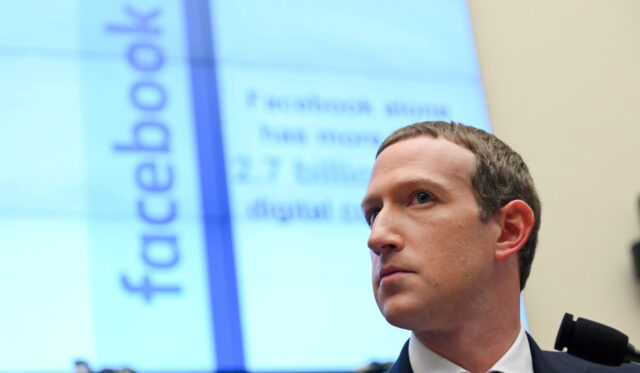
Meta Platforms Inc. Chief Executive Officer Mark Zuckerberg. — REUTERS

Meta Platforms Inc. said on Wednesday it would cut more than 11,000 jobs, or 13% of its workforce, as the Facebook parent doubled down on its risky metaverse bet amid a crumbling advertising market and decades-high inflation. 

The mass layoffs, among the biggest this year and the first in Meta’s 18-year history, follow thousands of job cuts at other tech companies including Elon Musk-owned Twitter Inc., Microsoft Corp., and Snap Inc. 

Like its peers, Meta aggressively hired during the pandemic to meet a surge in social media usage by stuck-at-home consumers. But business has suffered this year as advertisers and consumers pull the plug on spending in the face of soaring costs and rapidly rising interest rates. 

“Not only has online commerce returned to prior trends, but the macroeconomic downturn, increased competition, and ads signal loss have caused our revenue to be much lower than I’d expected,” Chief Executive Officer Mark Zuckerberg said in a message to employees. 

“I got this wrong, and I take responsibility for that.” 

On a short call on Wednesday that Reuters had access to, a red-eyed Mr. Zuckerberg addressed employees but took no questions. He stuck to a script that closely followed the wording in the morning’s blogpost and called the increased investments in e-commerce a “big mistake in planning.” 

He said he would host another townhall on Friday in which he would take questions. 

Meta, once worth more than $1 trillion, is now valued at $256 billion after losing more than 70% of its value this year alone. 

Meta shares rose 4% on Wednesday as investors cheered caution by a company that has been pinning its future on the metaverse with pricey investments that Mr. Zuckerberg himself says will take a decade to bear fruit. 

“The market is breathing a sigh of relief that Meta’s management or Zuckerberg specifically seems to be heeding some advice, which is you need to take some of the steam out of the growing expenditure bill,” Hargreaves Lansdown analyst Sophie Lund-Yates said. 

The company now expects 2023 expenses of $94 billion to $100 billion, compared with the $96 billion to $101 billion projected previously. It also narrowed its 2023 capital expenditures forecast range. 

Other than the job cuts, which will impact units across Meta with a disproportional hit to the recruiting and business teams, the company will also reduce office space, lower discretionary spending, and extend a hiring freeze into the first quarter to rein in expenses. 

METAVERSE CASH BURN
Still, more of the leftover resources will go toward the Reality Labs unit responsible for its metaverse investments. The business lost $9.44 billion from January to September this year, with losses expected to grow significantly in 2023. 

The spending spree has drawn the ire of Wall Street and shareholders, with one investor recently calling the investments “super-sized and terrifying.” Analysts have also questioned how long Meta can pour money into the project in a weak economy. 

“They’re going to have to continue to rightsize. … Next year is going to be a difficult environment for them,” said Paul McCarthy at Kisco Capital, which previously owned Meta shares. 

Mr. McCarthy added he was skeptical about the company’s metaverse bets, and that rising interest rates and a gloomy macro environment could continue to weigh on the ad market. 

As part of the severance package, Meta will pay 16 weeks of base pay and two additional weeks for every year of service, as well as all remaining paid time off. 

Affected employees will also receive shares that were set to vest on Nov. 15 and healthcare coverage for six months, according to Meta, which had 87,314 employees as of the end of September. 

The company did not disclose the exact charge for the layoffs, but said the figure was included in its previously announced 2022 expense outlook of between $85 billion and $87 billion. — Reuters

Show us the money: Developing world at COP27 seeks financing details

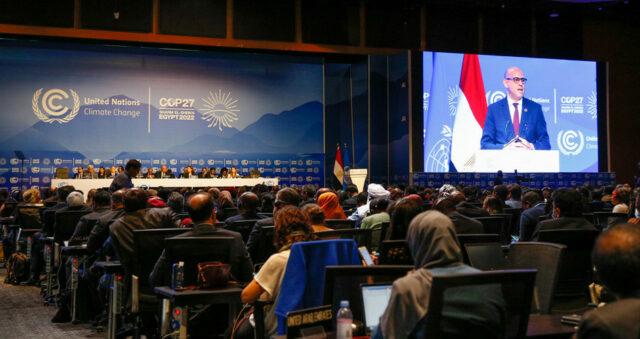
UN Climate Change

SHARM EL-SHEIKH, Egypt — Finance took center stage at the COP27 climate talks on Wednesday, with United Nations (UN) experts publishing a list of projects worth $120 billion that investors could back to help poorer countries cut emissions and adapt to the impacts of global warming.

A $3 billion water transfer project between Lesotho and Botswana and a $10 million plan to improve the public water system in Mauritius were among dozens of projects listed, including 19 in Africa. 

“We can now show that a meaningful pipeline of investible opportunities does exist across the economies that need finance most,” Mahmoud Mohieldin, one of the UN appointed experts, known as UN Climate Change High-Level Champions, said in a statement to accompany the report. 

In an effort to answer the argument by private sector financiers that it’s too risky to invest more in emerging markets, the experts, who help the COP host-governments engage with business, pulled together a list of projects that could be funded more quickly. 

After a year of meetings with stakeholders around the world, they released the initial list so that banks and others can assess the projects. 

“We now need a creative collaboration between project developers and public, private and concessionary finance, to unlock this investment potential and turn assets into flows,” said Mr. Mohieldin, High-Level Champion for COP27. 

However, another report released on Tuesday suggested that developing countries would need to secure $1 trillion in external financing every year by 2030, and then match that with their own funds, in order to meet the world’s goal of preventing runaway climate change. 

By contrast, the world’s leading development banks lent $51 billion to poorer countries in 2021, with private investors contributing just $13 billion, a recent report from the lenders said. 

Among a clutch of separate deals announced on Wednesday, Egypt said it had signed partnerships for its Nexus of Water-Food-Energy (NWFE) programme to support the implementation of climate projects with investments worth $15 billion. 

France and Germany also signed loan agreements to extend 300 million euros ($300.69 million) in concessional financing to South Africa to support its shift away from coal-fired power. 

Italy, Britain and Sweden were among donors to pledge more than $350 million to finance nature-based solutions to the climate crisis in countries including Egypt, Fiji, Kenya and Malawi. 

A group of over 85 African insurers also pledged to provide $14 billion of cover to help the continent’s most vulnerable communities deal with climate disaster risks such as floods and droughts. 

US climate envoy John Kerry announced creation of a carbon offset plan, dubbed the Energy Transition Accelerator, that aims to help developing countries raise cash to fund their transition away from fossil fuels. 

MALPASS CHALLENGE 

Getting money to low- and middle-income countries so they can build infrastructure such as renewable energy plants has long been a focus for the UN climate talks. But progress has been slow. 

“Even though the pipeline of interesting projects is there, they will require technical and financial help to get to a position where they can attract the right kind of finance,” said Nigel Topping, High-Level Champion for COP26. 

“We need all actors in the system to roll up their sleeves to make that happen,” he said., “We won’t get anywhere near unlocking the scale of finance developing economies need if everyone continues to pass the buck.” 

World Bank President David Malpass addressed delegates on Wednesday, running through the bank’s climate efforts and involvement in a partnership under which Western nations would provide $8.5 billion to South Africa for its energy transition. 

Mr. Malpass’ arrival at COP27, originally scheduled for Sunday, was delayed when his flight from South Africa was hit by lightning, a source familiar with the matter told Reuters. 

When asked in Wednesday’s event about his past comments seen as downplaying climate change, Mr. Malpass again dismissed the allegation that he is a climate change denier. 

“You know that I’m not. You know that I’m not, so don’t misreport it,” Mr. Malpass said in response to a reporter’s question as he was leaving the event. 

Mr. Malpass has faced months of criticism from campaign groups and figures including former UN climate agency chief Christiana Figueres after answering a question in September at a New York Times event about whether he believed man-made emissions from the burning of fossil fuels was fueling global warming. At the time, he had replied: “I don’t even know. I’m not a scientist.” 

When the comments made international headlines, he clarified his remarks later in September and said it was clear greenhouse gas emissions were causing climate change. — Reuters


Inflation brings end to beloved 114-year-old Japanese candy

TOKYO — A beloved Japanese candy eaten by generations, so iconic it even appeared in a hit anime film, has come to the end of the line, a victim of surging raw material and energy prices.

Tokyo-based Sakumaseika Co. said on Wednesday that it would go out of business in January due to rising production costs, a labor shortage and a drop in sales of its main product “Sakuma’s Drops.” 

The discontinuation of its trademark candy — hard, colorful fruit drops sold in a red steel can — threw Japan into mourning. 

“We always had a can at home when I was in grade school,” said 53-year-old sweets-shop owner Naoe Watanabe, remembering how he used to use a 10-yen coin to pop open the lid of the treat — a staple in corner candy shops for 114 years. 

“It feels like a sign of the times. There are so many choices now, compared to when I was a kid,” he said. 

Sakumaseika said it hadn’t raised the price of the product, which consists of eight flavors such as strawberry and lemon, for years. Many Japanese firms remain hesitant to raise prices at all or fully pass on surging input costs out of fear of losing customers. 

The future of Sakumaseika’s 100 or so employees remained uncertain, a company representative said. The company declined to comment further. 

Established in 1908 by confectioner Sojiro Sakuma, Sakumaseika produced the candy through the air raids of World War Two, inspiring anime giant Studio Ghibli to immortalize it in its 1988 film Grave of the Fireflies

In that film, set during the war, an orphaned girl struggling to survive with her brother, carries with her the red can of Sakuma’s Drops — one of the siblings’ few possessions after their house is destroyed. 

SPOILED FOR CHOICE 

Hiroshi Matsuzawa, a snacks store owner on a popular Tokyo shopping street, said Sakuma’s Drops were mostly popular with older consumers, while children were spoiled for choice with countless new products. 

Teruyo Ishiguro, who runs a mom-and-pop “dagashiya” snacks store — traditionally a pit-stop for children on their way home from school — said she had stopped carrying Sakuma’s Drops last year, noting that most buyers tended to be in their 50s or older. 

“It’s very sad to see something disappear that’s been around for so long,” the octogenarian, who has been selling snacks for more than 60 years, told Reuters. 

Near double-digit wholesale inflation and a weak yen have squeezed profits at many food producers. In January, the maker of popular corn snack Umaibo raised prices for the first time since the snack’s 1979 debut, making national headlines. 

Sakumaseika suffered a net loss of more than 150 million yen ($1 million) in the 2021 financial year, according to credit survey firm Tokyo Shoko Research, which first reported the company’s closure on Wednesday. 

Still, all is not lost for fans. 

Rival Sakuma Confectionery Co., which was formed when its management parted ways with Sakumaseika’s after the war, will continue to produce a similar product, confusingly named Sakuma Drops, carried in a similar can but in green. 

“As a competitor, we feel sad” about Sakumaseika’s exit, said a Sakuma Confectionery spokesperson. “But perhaps we tried harder to try new ways, a new product line-up.” — Reuters