Home Blog Page 5051

Wind and solar hit record 12% of global power generation last year

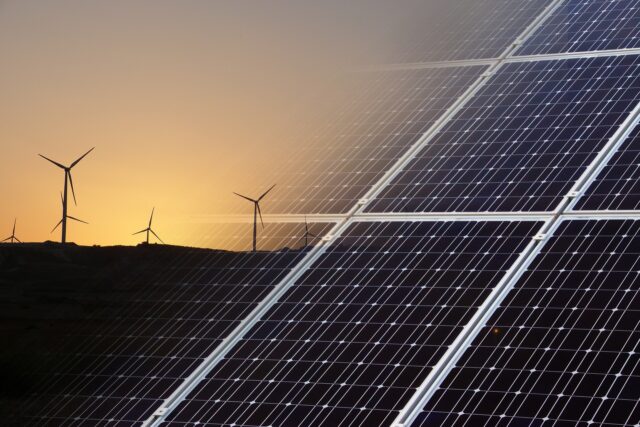
LONDON – Wind and solar energy represented a record 12% of global electricity generation last year, up from 10% in 2021, a report on Wednesday found.

The report by climate and energy independent think tank Ember said last year could have marked peak emissions from the power sector, which is the largest source of planet-warming carbon dioxide (CO2) worldwide.

Ember studied power sector data from 78 countries in its annual global electricity review, representing 93% of global power demand.

It concluded that all renewable energy sources and nuclear power combined represented a 39% share of global generation last year, with solar’s share rising by 24% and wind by 17% from the previous year.

The growth in wind and solar in 2022 met 80% of the rise in global electricity demand.

In spite of a global gas crisis and some countries firing back up old coal-fired power stations to meet demand, coal generation grew by 1.1%, while gas-fired power generation declined by 0.2% as high prices made it more expensive to use the fuel.

While CO2 emissions from the power sector rose by 1.3% last year, the growth of wind and solar slowed that rise. If all electricity from wind and solar generation came instead from fossil fuels, power sector emissions would have been 20% higher in 2022, the report said.

Assuming average growth in electricity demand and in clean power, Ember forecasts fossil fuel generation will decline 0.3% this year, followed by bigger falls in subsequent years as more wind and solar comes online.

As the power sector is the leading source of CO2 emissions, the International Energy Agency says it needs to become the first sector to reach net zero emissions by 2040 and this would mean wind and solar would have to reach 41% of global electricity generation by 2030. – Reuters

Phil Star columnist and PAGEONE CEO wins Thought Leader of the Year Award in APAC

The multi-awarded Chairman and Chief Executive Officer of PAGEONE Group  and business columnist of Philippine Star and BusinessWorld wins another international award recognizing him for his exemplary work in public relations and reputation management.

Ron F. Jabal, APR, won a Bronze award and was adjudged one of the Thought Leaders of the Year for Asia Pacific in the 2023 APAC Stevie Awards.

The Though Leader of the Year award  recognizes the innovative achievements of individuals who have demonstrated excellence in thought leadership in Asia Pacific.

Mr. Jabal regularly writes a business column in Philippine Star and its sister publication, BusinessWorld. He writes about reputation management and sustainability issues.

Based on the comments of the judges, Mr. Jabal  is being recognized as  an excellent example of thought leader as he spearheads other powerful executives and helps steward organizations and brands in shaping people’s behavior towards positive change.

A jury panel member commended him for his expertise in communication, public relations, and reputation management. “With numerous accolades, extensive experience, and advisory roles in prestigious organizations, Ron is a sought-after expert. Ron’s influence is evident across multiple sectors with regular contributions to leading newspapers, founder of the Reputation Management Association of the Philippines, and an advisor for governmental and educational institutions,” one judged stressed.

Another judge wrote, “He is a well-known and respected thought leader in the public relations industry, not only in the Philippines but also throughout Southeast Asia. His extensive experience in providing communication advice to multi-million dollar projects for various international organizations, as well as his numerous awards from various award-giving bodies, attest to his expertise and leadership. Keep up the good job”.

In receiving the news of this recognition, Mr. Jabal said, “I am truly honored by this recognition. But this will not happen without the collective support of my team in PAGEONE Group and all our clients and supporters. Rest assured that I will continue to promote the scholarship and practice of good reputation management and principles,”.

Throughout his three decades of PR experience, Ron has already received  awards and recognition in London, New York, San Francisco, Washington, Toronto, Beijing, Hong Kong, Singapore and the Philippines for his body of PR works. As an international communications executive, he has been awarded with more than 200 metals from local and international award giving bodies.

In 2013, Ron was awarded the Global Communicator of the Year in UK, London by Melcrum Awards. In 2020, he was recognized as People of The Year (Communicator of the Year) in the Golden Flag Awards in Beijing, China, for his body of international work in communication, advocacy, public relations, marketing, advertising and branding. In 2021, he was recognized as Best PR Practitioner in Southeast Asia during the 3rd  ASEAN PR Excellence Awards in Jakarta, Indonesia. In 2022, he was adjudged Most Innovative Communications Professional for Asia Pacific by the Stevie Awards in Singapore.


Spotlight is BusinessWorld’s sponsored section that allows advertisers to amplify their brand and connect with BusinessWorld’s audience by enabling them to publish their stories directly on the BusinessWorld Web site. For more information, send an email to online@bworldonline.com.

Join us on Viber at https://bit.ly/3hv6bLA to get more updates and subscribe to BusinessWorld’s titles and get exclusive content through www.bworld-x.com.

IMF hikes Philippine growth outlook

A construction worker walks next to colorful mural in Barangay Kaybagal in Tagaytay City. — PHILIPPINE STAR/EDD GUMBAN

By Keisha B. Ta-asan, Reporter

WASHINGTON — The International Monetary Fund (IMF) expects the Philippines to post the fastest growth in emerging and developing Asia this year, despite a global economic slowdown.

In its latest World Economic Outlook (WEO) released here on Tuesday morning, the IMF raised its 2023 gross domestic product (GDP) growth projection for the Philippines to 6%, from the 5% forecast given in January.

This would be slower than the 7.6% GDP expansion in 2022 but matched the lower end of the government’s 6-7% target for this year.

IMF GDP forecasts for select Asia-Pacific economies

Based on IMF projections, the Philippines’ 6% GDP growth outlook is the fastest among emerging and developing Asia economies. It is faster than India (5.9%), China (5.2%), Vietnam (5.8%), Indonesia (5%), Malaysia (4.5%) and Thailand (3.4%).

However, the multilateral lender also lowered its 2024 growth projection for the Philippines to 5.8%, from 6% previously.  The government targets 6.5-8% GDP growth for 2024.

In the WEO report, the IMF said high uncertainty continues to cloud the global economic outlook this year, citing downside risks from central banks’ tight monetary stance, high debt levels, limited fiscal buffers, commodity price spikes and geopolitical tensions.

“But these forces are now overlaid by and interacting with new financial stability concerns. A hard landing — particularly for advanced economies — has become a much larger risk. Policymakers may face difficult trade-offs to bring sticky inflation down and maintain growth while also preserving financial stability,” the IMF said.   

The IMF trimmed its global growth forecast for 2023 to 2.8% (from the 2.9% given in January) and for 2024 to 3% (from 3.1%). If realized, this will be slower than the 3.4% global expansion in 2022.

In a “plausible alternative scenario” with further financial sector stress, the IMF said global growth may decline to around 2.5% in 2023.

The IMF sees emerging and developing Asia expanding by 5.3% this year and 5.1% in 2024.

Pierre-Olivier Gourinchas, economic counsellor and the director of research of the IMF, said in a statement that inflation is stickier than expected, even from a few months ago.   

“While global inflation has declined, that reflects mostly the sharp reversal in energy and food prices. But core inflation, which excludes energy and food, has not yet peaked in many countries,” Mr. Gourinchas said.   

In the Philippines, inflation eased to 7.6% in March from 8.6% in February. However, core inflation quickened to a new 22-year high of 8% from 7.8% a month prior.

Since May 2022, the Monetary Board raised key interest rates by 425 bps, bringing the benchmark policy rate to a near 16-year high of 6.25%.     

The IMF expects Philippine headline inflation this year to reach 6.3%, higher from the previous 4.5% estimate. It sees Philippine inflation slowing to 3.2% by 2024.

These forecasts are higher than the BSP’s average full-year projection of 6% this year and 2.9% for 2024.

“More worrisome are the side effects that the sharp monetary policy tightening of the last year is starting to have on the financial sector, as we have repeatedly warned might happen. Perhaps the surprise is that it took so long,” Mr. Gourinchas said.   

The IMF said the recent instability in the global banking sector showed the economic recovery is still fragile, and that vulnerabilities exist both among banks and nonbank financial intermediaries.

The failures of Silicon Valley Bank and Signature Bank of New York and the loss of confidence in Credit Suisse rattled the global financial system.

“We are therefore entering a tricky phase during which economic growth remains lackluster by historical standards, financial risks have risen, yet inflation has not yet decisively turned the corner,” Mr. Gourinchas said.   

The effects of the recent banking turmoil have been so far limited for emerging markets and developing economies, the IMF said.

“For emerging markets and developing economies, economic prospects are on average stronger than for advanced economies, but these prospects vary more widely across regions,” it said.   

Based on the IMF’s Global Financial Stability Report, emerging markets have smoothly managed the aggressive tightening of monetary policy compared to advanced economies. 

“In addition to having generally stronger fundamentals and higher buffers than in the past, they have benefited from policy space created by commencing their own tightening cycles ahead of advanced economies,” the IMF said.


FDI net inflows fall to 20-month low

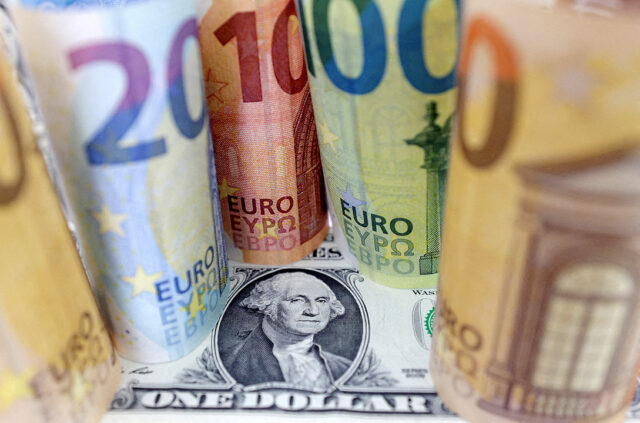
US dollar and euro banknotes are seen in this illustration taken July 17, 2022. — REUTERS/DADO RUVIC

By Luisa Maria Jacinta C. Jocson, Reporter

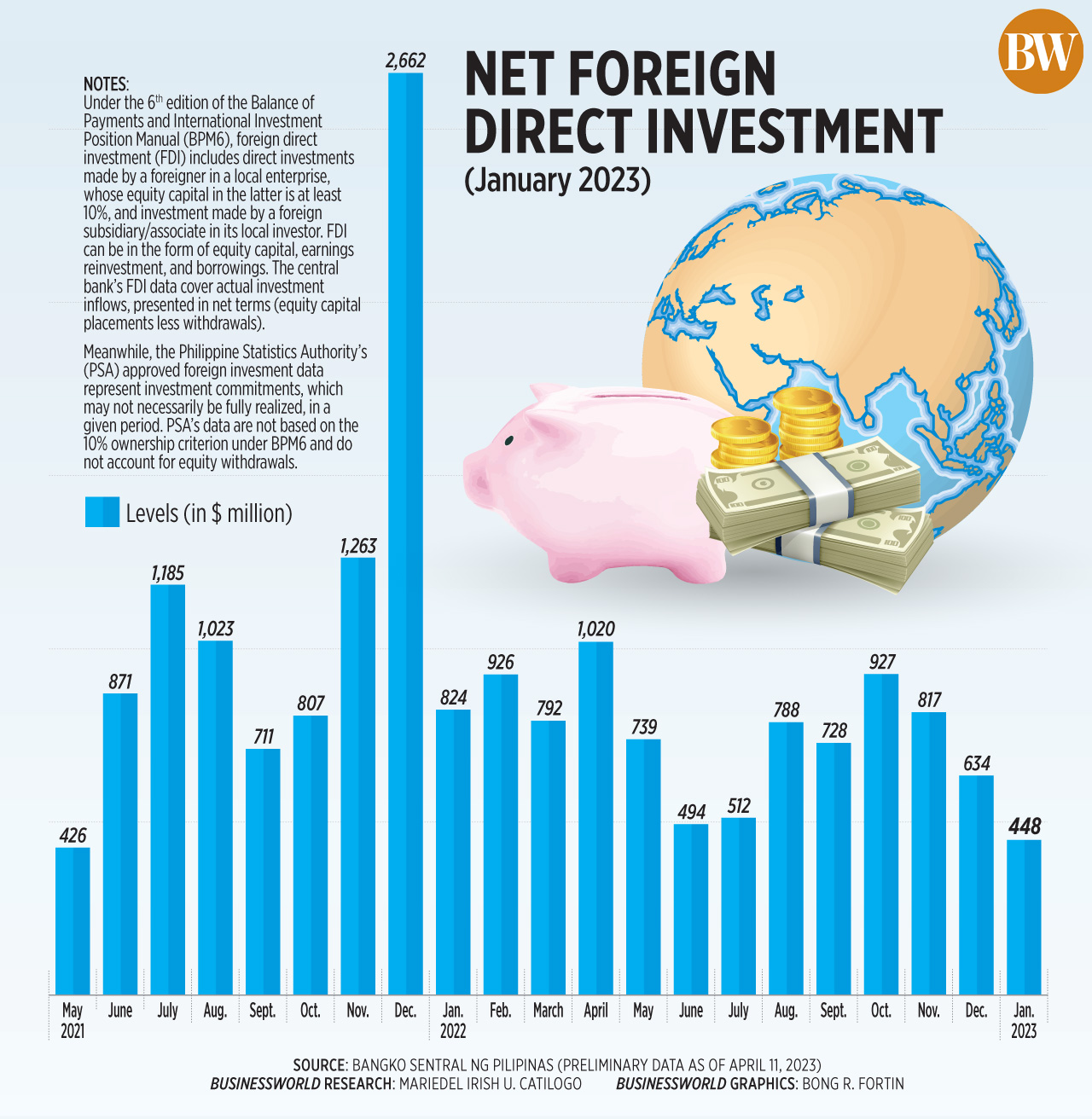
FOREIGN direct investment (FDI) net inflows slumped to a 20-month low in January as heightened global economic uncertainty weighed on investor sentiment.

FDI net inflows plunged 45.7% to $448 million in January from $824 million in the same month a year ago, data from the Bangko Sentral ng Pilipinas (BSP) showed.

The January figure was the lowest monthly FDI inflow since the $426 million recorded in May 2021.

Net foreign direct investment

“FDI net inflows declined during the month amid global economic uncertainties and high inflation, which continued to weigh on investor decisions,” the BSP said in a statement.

The BSP data showed a decline in non-residents’ net investments in debt instruments and equity capital in January.

Non-residents’ net investments in debt instruments of local affiliates fell by 56.6% to $280 million from $645 million in the same month a year ago.

Investments in equity and investment fund shares slipped 6.2% to $168 million in January from $179 million a year ago.

January saw equity other than reinvested earnings decline by 13.1% to $93 million from $107 million.

Broken down, gross placements jumped by 26.3% to $149 million while withdrawals surged by 413.6% to $56 million.

Equity capital placements were mainly from Japan, Singapore, and the United States. These were mostly invested in manufacturing, financial and insurance, and real estate industries.

On the other hand, reinvestment of earnings increased by 4.1% to $75 million from $72 million in January 2022.

“The weak net FDI in January bodes poorly for the rest of the year. A weaker global economy and higher interest rates could have deterred investors and will likely continue to do so for the first half of the year, at least,” China Banking Corp. Chief Economist Domini S. Velasquez said in a Viber message.

Rizal Commercial Banking Corp. Chief Economist Michael L. Ricafort said in a Viber message that elevated inflation, rising interest rates and risk of a US recession weighed on investment inflows in January.

Inflation accelerated to a 14-year high of 8.7% in January, before easing to 8.6% in February and 7.6% in March.

Since May 2022, the central bank has raised its benchmark rate by 425 basis points. This brought the policy rate to 6.25%, the highest in nearly 16 years.

“The government’s economic team’s roadshows could pique investor interest, but as long as we are in the midst of a high interest rate environment, investment expansion will likely remain limited for the rest of the year,” Ms. Velasquez said.

On the other hand, Mr. Ricafort said net FDIs could pick up in the next few months as the Philippine economy is expected to have one of the fastest growth rates in the region. He also expects investment commitments obtained by from President Ferdinand R. Marcos, Jr. from his foreign trips to materialize in the coming months.

The government is targeting 6-7% gross domestic product growth this year.

This year, the BSP expects FDI net inflows to reach $11 billion.

Higher oil prices unlikely to ‘disturb’ BSP inflation outlook, says Medalla

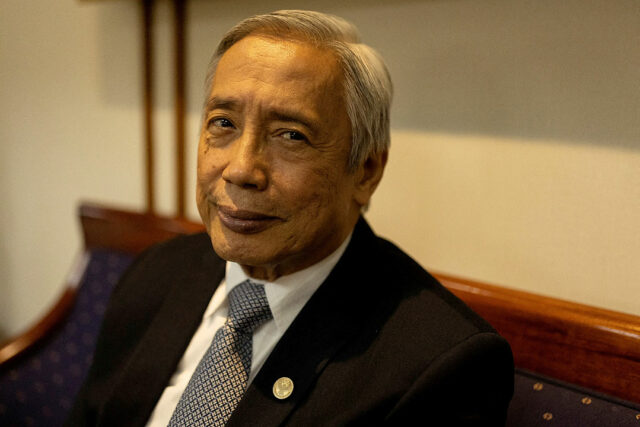
Bangko Sentral ng Pilipinas Governor Felipe M. Medalla poses for a photograph in his office at Manila, Nov. 18, 2022. — REUTERS/ELOISA LOPEZ/FILE PHOTO

By Keisha B. Ta-asan, Reporter

WASHINGTON — The Bangko Sentral ng Pilipinas (BSP) is confident headline inflation will return to within its 2-4% target by the fourth quarter this year amid a recent spike in global oil prices and still-elevated core inflation.

BSP Governor Felipe M. Medalla told BusinessWorld that even though higher global oil prices is an upside risk to inflation, it won’t “disturb” the central bank’s main scenario.   

“(Higher global oil prices) is one of our upsides. The risk is still there. If something happens… oil becomes the battleground again. But our main scenario won’t be disturbed by this event,” Mr. Medalla said in an interview at the sidelines of the International Monetary Fund and World Bank spring meetings here. 

He said the central bank still sees inflation going below 4% by November or December this year, before normalizing in 2024.   

“Why the confidence? In the past, inflation has a natural tendency to normalize precisely because the central bank is acting on it. In fact, inflation has normalized starting February,” he said in mixed English and Tagalog. 

Inflation slowed for a second straight month to 7.6% in March from 8.6% in February. Still, March marked the 12th month in a row that inflation exceeded the central bank’s 2-4% target band.

The average inflation rate in the first quarter stood at 8.3%, still above the BSP’s full-year forecast of 6%.   

Since May last year, the Monetary Board raised benchmark interest rates by 425 basis points (bps), bringing the key policy rate to a near 16-year high of 6.25%.    

“If we have three very low month-on-month (inflation), then we’re more confident that inflation has peaked in January, and it will continue to normalize. But again, we have to be vigilant that something can happen,” Mr. Medalla said.   

Inflation rose to 8.7% in January, the highest in 14 years.   

BSP Deputy Governor Francisco G. Dakila, Jr. told BusinessWorld in the same interview that global oil prices may drive up food costs, which may fuel inflation.

Global oil prices spiked earlier this month following the announcement by the Organization of the Petroleum Exporting Countries and their allies including Russia, of further output target cuts of around 1.16 million barrels per day from May through the rest of the year.   

“So, surprises can come from anywhere, but right now it looks like the worst is over,” Mr. Medalla said, adding that inflation may even go below 2% by January next year due to high base effects.   

The BSP chief said he is not worried about elevated core inflation, which hit a 22-year high of 8% in March. Core inflation, which excludes volatile items of food and fuel, has been rising since March 2022.

Mr. Medalla said that although there is a six-month lag, core inflation would historically start to ease if headline inflation is clearly slowing down.   

Asked if the Monetary Board will mirror the projected Fed rate cuts this year, the BSP governor said: “Maybe we will, but it’s too soon to say. What’s easier to make sure is we can either – depending on the data in April – we can either pause or maybe do another 25 basis points.”

The US Federal Reserve has been aggressive in its tightening cycle since March last year, raising rates by 475 bps to 4.75-5%. The Fed is scheduled to meet on May 2-3 to discuss policy.   

The Monetary Board will meet on May 18.

While the US economy may fall into a recession, Mr. Medalla said a recession is unlikely in the Philippines as consumption is expected to continue to fuel growth.

The government is targeting a 6-7% expansion for this year, slower than the 7.6% growth in 2022.

Feb. trade deficit narrows to smallest in three months

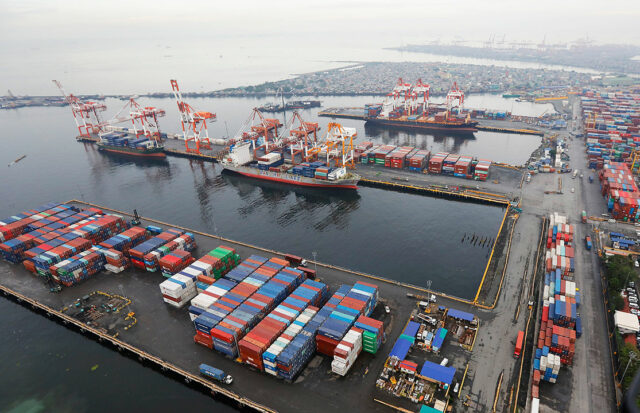
Container ships are seen in the port area in Manila in this file photo. — PHILIPPINE STAR/WALTER BOLLOZOS

By Lourdes O. Pilar, Researcher

THE Philippines’ trade deficit in goods narrowed in February to the smallest in three months, as imports and exports slumped to their lowest levels in over two years.

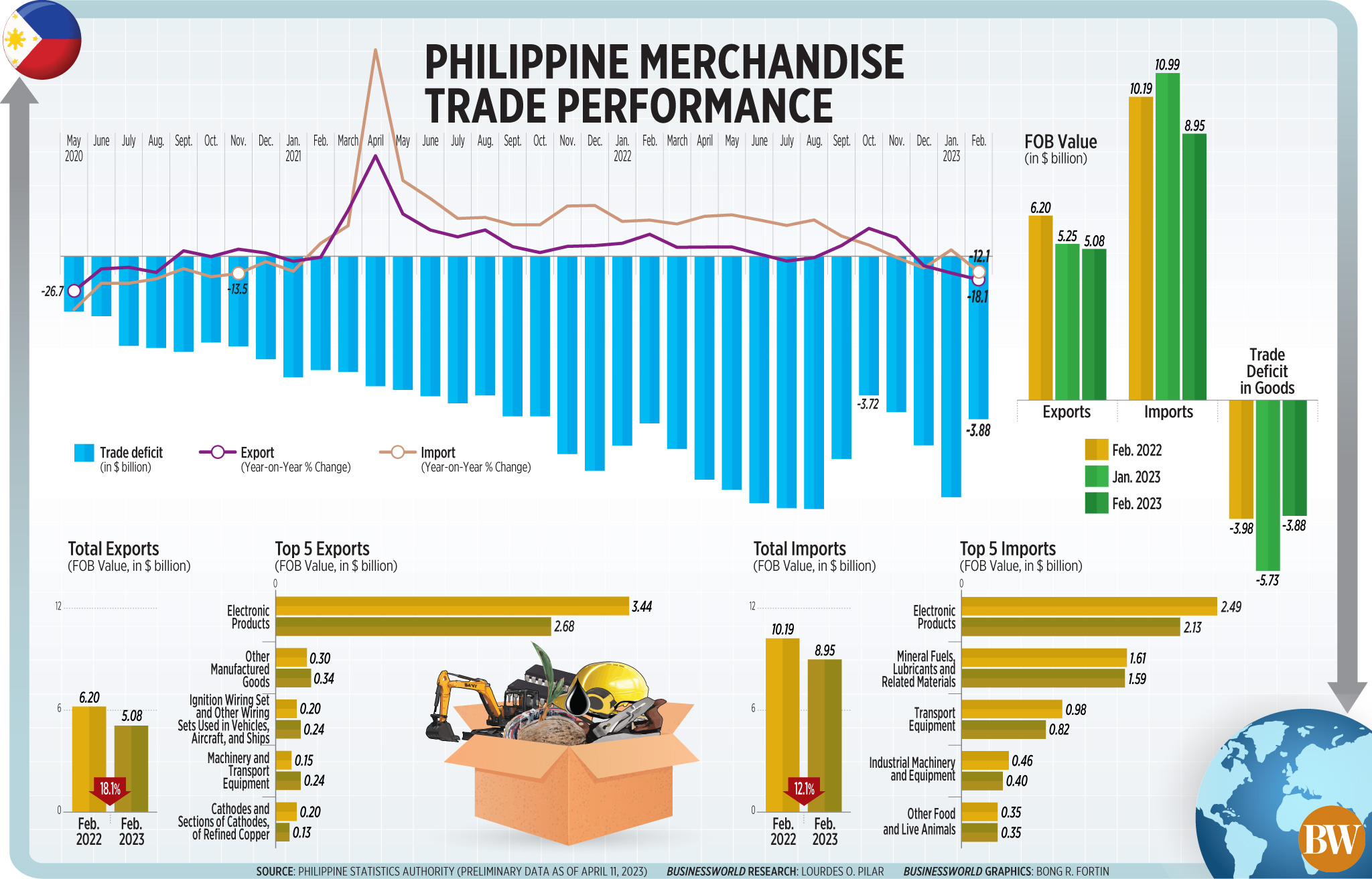
Preliminary data from the Philippine Statistics Authority (PSA) showed the trade gap shrank to $3.88 billion in February, from the $5.73 billion gap in January and the $3.98 billion deficit in February last year.

February saw the slimmest trade gap since the $3.72 billion deficit in November 2022.

Philippine merchandise trade performance

The country has recorded a trade-in-goods deficit for almost eight years or since the trade surplus of $64.95 million in May 2015.

Merchandise exports fell 18.1% annually to $5.08 billion, faster than the revised 13.1% drop in January and a reversal of the 15.7% growth in February last year.

The export decline in February was the steepest in 33 months or since the 26.7% fall in May 2020. Export receipts also fell to the lowest level since $4.54 billion in May 2020.

Meanwhile, imports returned to negative territory, as it slipped 12.1% to $8.95 billion from a year earlier. This was a reversal of the 4.1% uptick in January and 26.3% growth in February 2022.

The drop in imports was the sharpest in 27 months or since the 13.5% decline in November 2020. By value, it was the smallest import bill in 22 months or since $8.88 billion in April 2021.

In the first two months, the trade deficit widened to $9.61 billion from $8.50 billion gap a year ago.

Year to date, exports slid 15.6% to $10.33 billion, while imports dropped 3.9% to $19.94 billion.

The Development Budget and Coordination Committee is projecting a 3% growth for exports and a 4% increase for imports this year.

Philippine Merchandise Trade

“We can expect exports to revert to modest expansion as shipments to China resume after a holiday. Meanwhile, imports can be expected to rise but by single digits,” ING Bank N.V. Manila Senior Economist Nicholas Antonio T. Mapa said in an e-mail.

“The overall trade balance will stay in deficit of roughly $5 billion, which means the current account will also remain deficit. This should mean that the peso will lag any regional rally as outflows of foreign currency continue to outpace inflows at least for the real sector,” Mr. Mapa added.

In February, outbound shipments of manufactured goods, which accounted for 83.2% of total exports, dropped by 14.5% year on year to $4.22 billion.

Electronic products, which made up 63.4% of manufactured goods and more than half of total exports that month, declined by 22.2% to $2.68 billion. Almost three-fourths of electronic product sales came from semiconductors, which also fell by 23.2% to $1.99 billion.

Meanwhile, orders of raw materials and intermediate goods went down by 20.9% to $3.11 billion in February. These accounted for more than a third of the total February import bill.

Imports of capital and consumer goods were valued at $2.62 billion (down 11.9%) and $1.60 billion (up by 0.7%), respectively.

Mineral fuels, lubricants and related materials dipped to $1.59 billion from $1.61 billion last year.

Philippine Exporters Confederation, Inc. President Sergio R. Ortiz-Luis, Jr. said in a Viber interview that the “usual global problems” affected the trade performance in February.

“It is the usual international problems in trade. Problems in shipping lines, effects of sanctions, disrupted supply chain. These problems were out of control,” he said.

Japan, which accounted for 16.2% ($822.65 million) of the total receipts, was the top destination of locally made products in February. It was followed by the United States (14.9% or $756 million) and China (12% or $611.59 million).

Meanwhile, China was the country’s main source of foreign goods, with a 21.6% share ($1.93 billion) of the total bill, followed by Indonesia (10.2% or $917.76 million) and Japan (8.8% or $788.35 million).

“If the situation in the global markets normalized, and local inflation as well, negative results will be lessened,” added Mr. Ortiz-Luis.

Electricity rates down in April, Meralco says

BW FILE PHOTO

RESIDENTIAL customers in areas served by Manila Electric Co. (Meralco) will see lower electricity bills this month by around P24, thanks to the decrease in generation charge and spot market prices.

The overall rate for a typical household fell by P0.1180 per kilowatt-hour (kWh) to P11.3168 per kWh in April from P11.4348 per kWh in March, Meralco said in a statement on Tuesday.

Households that consume 200 kWh of electricity will see a decrease of about P24 in their monthly power bills, while those that consume 300 kWh, 400 kWh, and 500 kWh will have reductions of P35, P47, and P59, respectively.

Meralco said that April power rates are lower because of the reduced generation charge of P7.3295 per kWh, compared to last month’s P7.3790 per kWh, even after collecting the deferred generation cost of P0.20 per kWh.

Last month, the Energy Regulatory Commission said that Meralco had proposed to stagger the collection of an estimated P1.1 billion in generation charges over the next two months to “cushion its impact” on consumers.

The collection of deferred generation cost was offset by lower spot market prices and power supply agreements (PSAs), Joe R. Zaldarriaga, Meralco’s spokesperson and vice president for corporate communications, said during a virtual briefing on Tuesday.

For this month, Meralco sourced more of its supply from the Wholesale Electricity Spot Market (WESM), accounting for 32% of its total requirement.

WESM charges declined by P1.0462 per kWh to P7.1817 per kWh as the supply situation in the Luzon power grid improves, Meralco said.

Charges from PSAs, which account for 41% of Meralco’s supply, also declined by P0.0741 per kWh to P6.2037 per kWh.

Peso appreciation impacted 43% of dollar-denominated PSA costs, causing a drop in power deal rates.

The peso closed at P54.36 against US dollar on March 31, gaining 97 centavos from its close of P55.33 on Feb. 28.

“Also contributing to the reduction were higher share of excess energy deliveries of some PSAs, which are priced at a discount, and higher average plant dispatch, as First NatGas-San Gabriel returned to normal operations following its planned outage during the 15-day shutdown of the Malampaya facility last February,” Meralco said.

To recall, the Malampaya gas-to-power facilities went on maintenance shutdown from Feb. 4 to 18. Power plants being supplied by Malampaya ran on alternative fuel during the period such as the 420-megawatt San Gabriel plant of First Gen Corp.

Charges from the independent power producers (IPPs) increased by P0.6710 per kWh to P9.0266 per kWh. IPPs supplied 27% of Meralco’s energy requirement.

Mr. Zaldarriaga said that it is too soon to determine if electricity prices will rise next month. However, he acknowledged that historically, there is a spike in electricity usage in May because of warmer temperatures.

“For the record we’d rather wait for all the billings from all our suppliers before we come up with a definite scenario as far as rates are concerned but consumption usually increases and given that situation it is very obvious when demand rises, consumption rises,” he said.

“Part of the seasonality is that when demand goes up especially in the spot market there’s pressure for prices to go up. In the Luzon grid, historically, demand rises in May and June,” said Lawrence S. Fernandez, vice-president and head of utility economics of Meralco.

Meralco will ensure the least cost power for the consumers even after the Department of Energy announced that it will no longer issue a certificate of exemption on the competitive selection process, he said.

“The mandate for DUs (distribution utilities) to supply our captive market in a least cost manner remains, so given the current tools and sources we have, we will continue to optimize them to the benefit of our customers,” he added.

Meralco’s controlling stakeholder, Beacon Electric Asset Holdings, Inc., is partly owned by PLDT, Inc. Hastings Holdings, Inc., a unit of PLDT Beneficial Trust Fund subsidiary MediaQuest Holdings, Inc., has interest in BusinessWorld through the Philippine Star Group, which it controls. — Ashley Erika O. Jose

Ai Weiwei goes big for design-focused London exhibition

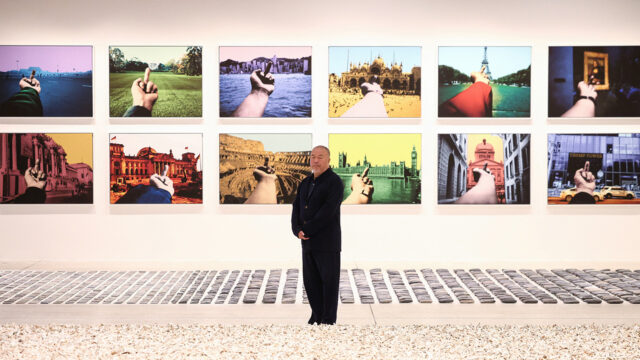
CHINESE artist Ai Weiwei poses during a photocall, amongst art pieces displayed in his exhibition ‘Ai Weiwei: Making Sense’ at the Design Museum in London, Britain, April 4. —REUTERS/HENRY NICHOLLS

LONDON —  Chinese artist and activist Ai Weiwei unveiled his latest large-scale project in London on Wednesday, a 15-meter-long recreation of Claude Monet’s Water Lilies made with nearly 650,000 Lego pieces, in a tribute to his late father.

Titled Water Lilies #1, the artwork is one of the centerpieces of Ai’s new “Making Sense” exhibition at London’s Design Museum — his biggest UK show in eight years.

Re-imagining Monet’s famed landscape, Mr. Ai, a critic of the Chinese Communist Party who was briefly detained by police and lived under house arrest, is honoring his father.

Mr. Ai added a dark spot on the artwork to depict the door to the underground dwellings in China’s Xinjiang province where his family lived in forced exile after his father, the poet Ai Qing, was labeled an enemy of the state.

“He studied in Paris as an artist in the 1920s and later I and him were exiled. There’s a black door I integrated into this Monet’s Water Lilies because Monet is an artist my father liked. So, this is really a memory piece,” he told Reuters at a press preview.

The piece is Mr. Ai’s largest Lego creation but the artist is no stranger to the medium. His 2014 installation Trace comprised 176 Lego portraits of political prisoners from around the world.

“Making Sense” also includes another new Lego artwork, Untitled (Lego Incident), one of five vast “fields” featuring hundreds of thousands of objects laid out on the gallery floor. The toy bricks in the piece were donated by members of the public after Lego briefly refused to sell their products to Mr. Ai in 2014.

Also on display are some 200,000 porcelain spouts from Song dynasty tea pots, thousands of fragments of Mr. Ai’s porcelain sculptures which were destroyed when his Beijing studio was demolished in 2018, as well as around 1,600 tools dating from the late Stone Age.

It contains 42 new works, never before seen in London and many works on public display for the first time because the art is quite a scale in terms of numbers or quantity, Mr. Ai, 65, said.

“Ai Weiwei: Making Sense” runs at the Design Museum from April 7 to July 30. —  Reuters

Phinma earmarks P3 billion for capital expenditures

LISTED holding company Phinma Corp. announced on Tuesday that it had allocated around P3 billion for capital expenditures (capex) this year, with plans to use the funds for expanding its subsidiaries.

“Capex will be used [mainly] for schools and constructions, one of which is actually for [the new insulated panel business],” Phinma Construction and Material Group (CMG) President and Chief Executive Officer Eduardo A. Sahagun said during a briefing.

The new subsidiary, called Union Insulated Panel Corp., will specialize in producing insulated paneling and construction materials, according to the company.

The company plans to spend around P500 million to construct a new facility. It also aims to produce approximately one million square meters of insulated paneling materials every year.

“We will be providing effective thermal insulation and structurally efficient building materials that can reduce energy consumption,” Phinma CMG Vice-President for Insulated Panels Division Danielle del Rosario said.

She also said the company intends to commence the construction of the new facility this year, with the goal of starting operations at the end of 2024 or in early 2025.

At the same time, the company said that its subsidiary, Phinma Education Holdings, Inc., will prioritize the increasing number of student enrollments in its schools and universities.

“So, all of our schools from Dagupan all the way to Cagayan de Oro actually have projects as we speak,” Phinma Educations Philippine Country Chief Christopher Tan said.

Mr. Tan also said that Phinma Education has also expanded to other countries with two colleges in Karawang, Indonesia.

“We are now working with regulators to convert those into universities, that will allow us to acquire additional properties,” he added.

Mr. Tan also said that the company was working on expanding in Surabaya and Bogor.

The company recently announced a 30% surge in student enrollments for the academic year 2022-2023, reaching a total of 124,501 enrollments. It currently operates nine colleges and universities across the country.

Some of the capex for this year will be allocated to other units of the company, namely Phinma Property Holdings Corp. and Phinma Hospitality, Inc.

Shares closed unchanged at P19.00 apiece on Tuesday. — Adrian H. Halili

LT Group, Inc. to conduct annual stockholders’ meeting through remote communication on May 3


Spotlight is BusinessWorld’s sponsored section that allows advertisers to amplify their brand and connect with BusinessWorld’s audience by enabling them to publish their stories directly on the BusinessWorld Web site. For more information, send an email to online@bworldonline.com.

Join us on Viber at https://bit.ly/3hv6bLA to get more updates and subscribe to BusinessWorld’s titles and get exclusive content through www.bworld-x.com.

Art mirrors luxury: NFTs are out, Warhols is in

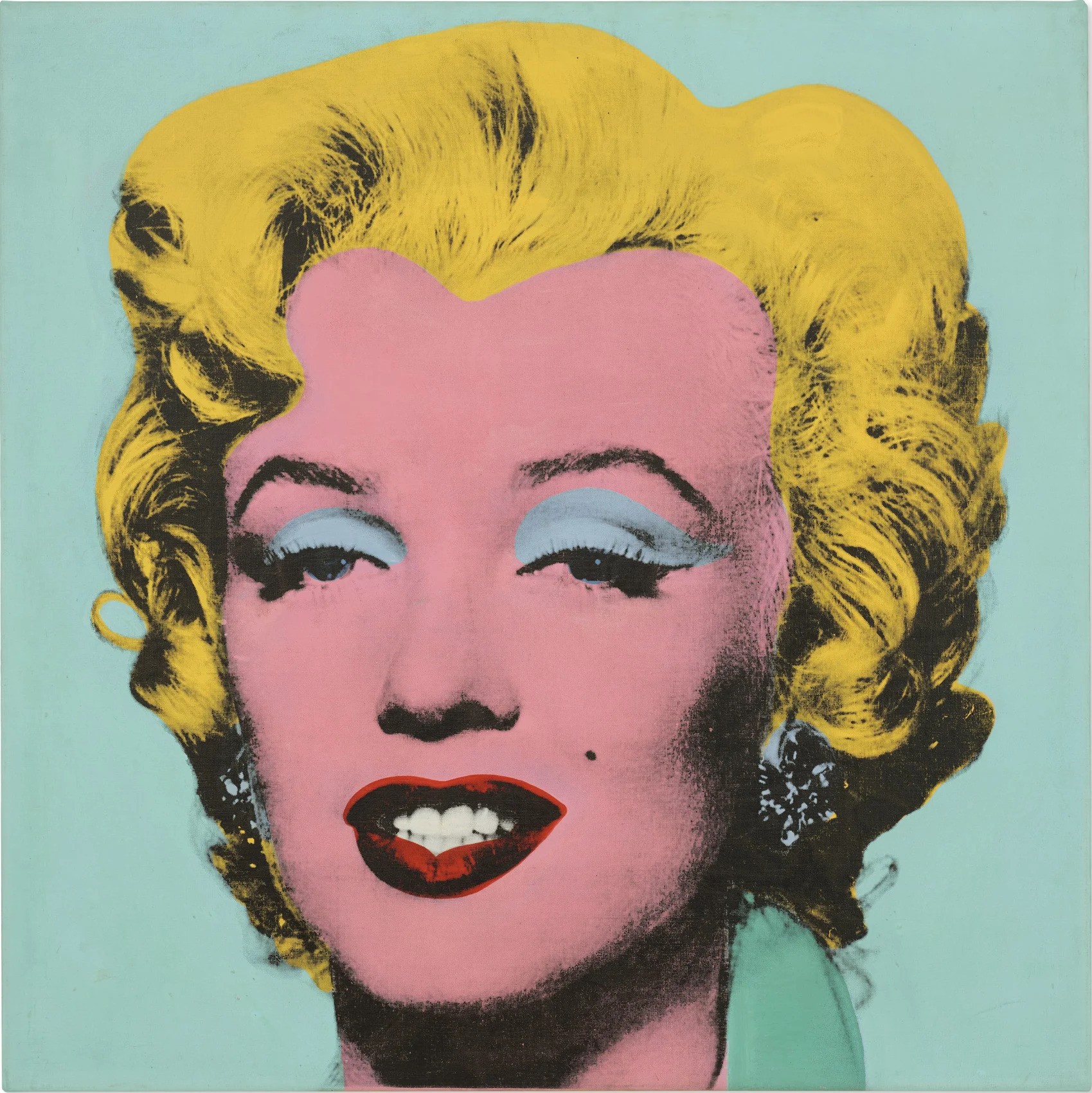
ANDY WARHOL’s Shot Sage Blue Marilyn, which sold for $195 million in New York in May 2022, became the second most expensive work ever to sell at auction behind Leonardo Da Vinci’s Salvator Mundi, which sold for $450 million in New York in 2017. —CHRISTIES.COM

By Andrea Felsted

THE RICH are living in a different economic world. You can see that from all the Dior handbags and Cartier watches they’re buying — but it becomes even clearer when you look at all the art they’re collecting.

Global art sales rose to $67.8 billion in 2022, according to art economist Clare McAndrew’s latest state-of-the-industry report for Art Basel and UBS Group AG. That marked a 3% increase from 2021, which saw a 31% rebound in sales from the pandemic-induced low point in 2020.

ANDY WARHOL’s Shot Sage Blue Marilyn, which sold for $195 million in New York in May 2022, became the second most expensive work ever to sell at auction behind Leonardo Da Vinci’s Salvator Mundi, which sold for $450 million in New York in 2017. —CHRISTIES.COM

As in the global luxury sector, it was the US market that drove the art industry last year. Andy Warhol’s Shot Sage Blue Marilyn, which sold for $195 million in New York in May, became the second most expensive work ever to sell at auction behind Leonardo Da Vinci’s Salvator Mundi, which sold for $450 million in New York in 2017.

Although the US retained its premier position in the global ranks, it’s notable that the UK also strengthened. The British art market hasn’t quite recovered to pre-pandemic levels, but it is still attracting international buyers post-Brexit. The slump in sterling last autumn didn’t hurt either.

Across all regions, the most expensive artworks were the strongest sellers, according to McAndrew’s Arts Economics. Pieces selling for more than $10 million were the only segment to increase the value of sales last year. This category includes Georges Seurat’s Les Poseuses, Ensemble (Petite Version), which sold for $149.2 million, and Paul Cezanne’s La Montagne Sainte-Victoire, which fetched $137.8 million. This top-end surge reflects increasing stores of wealth among the very richest collectors.

In contrast, stalled demand for lower-end works suggests that fear of recession, sky-high inflation, and rising interest rates crimped the style of those merely affluent. The market began to cool in the final quarter of 2022.

What’s happening in art echoes what’s happening in the luxury sector more broadly.

After soaring stock markets and cryptocurrencies boosted wealth in 2021, more people, particularly in the US, discovered the joys of upmarket shopping. But with the slump in tech stocks and Bitcoin, as well as higher borrowing costs, luxury companies including Britain’s Burberry Group Plc and Gucci-owner Kering SA have noted that some younger, more aspirational buyers, are reining in their extravagant purchases.

In art, this is glaringly evident when it comes to non-fungible tokens (NFTs), digital certificates of authenticity that run on blockchain technology. With crypto bros spending their gains on NFTs alongside Audemars Piguet watches, sales of art-related tokens surged to $2.9 billion in 2021, from $20 million in the year earlier, according to Arts Economics, with data from Nonfungible.com. The boom was best exemplified by Beeple’s Everydays: the First 5000 Days, which sold for $69.3 million two years ago.

After peaking in Aug. 2021, demand for art-related NFTs cooled as the price of Ethereum — the cryptocurrency of choice for trading the tokens — fell. Art-related NFT sales roughly halved in 2022 from the year earlier, though sales of collectibles NFTs have continued to expand.

Some young people are buying art as much as ever, but a separate report from McAndrew for Art Basel and UBS found that they were high-net-worth individuals, with more than $1 million of assets excluding real estate and private businesses, and they had spent at least $10,000 on art in each of the past three years. So these millennial and Gen Z buyers look a bit different from the crypto bros.

The question now is: How will the recent banking turmoil affect the art market? In troubled times, art can be seen as a tangible store of value. But stock market volatility and layoffs in the tech sector and beyond can hurt demand. External crises can also deter sellers of valuable works from bringing them to market, another important factor in determining the strength of art sales.

Either way, with the US cooling, China now holds the key to transforming both art and luxury.

Arts Economics notes that after the 2008 crisis, a booming market in China was one of the key factors behind the recovery, with sales rebounding in 2010. Already the signs there are promising. Art Basel Hong Kong last month was busy, indicating that there is significant pent-up demand for art. This adds to positive signals from brands including Prada and Moncler that luxury shoppers are back in force too. Analysts at Bernstein even noted that some Chinese fashionistas had begun to travel abroad again.

For sellers of creations by Balenciaga and Basquiat, Chinese shoppers unleashing another wave of revenge spending can’t come too soon. — Bloomberg