Home Blog Page 5050

Eala-Palicova tandem exit early in Switzerland tourney

ALEX Eala and Czech partner Barbora Palicova stood their ground over favored counterparts but still ran out of steam in a tough 3-6, 6-4, 11-13 first-round loss in the W60 Chiasso doubles tilt in Switzerland.

Up against the fourth-seeded duo of Indonesian Beatrice Gumulya and another Czech bet Anna Siskova, the unranked tandem did not shy away from the challenge by dragging their opponents to an extended tiebreaker.

The match lasted almost two hours with Mmess. Eala and Palicova even snatching the driver seat at 11-10 only to surrender the last three games en route to an unfortunate exit in the Round of 16.

Mmess. Gumulya and Siskova will face off against either the Swiss duo of Xenia Koll and Celina Naef or the tandem of France’s Carole Monnet and Switzerland’s Jenny Duerst.

Good thing for the 17-year-old Filipina tennis sensation, she’s still in the running in the singles tournament starting with a first-round duel against Romania’s Alexandra Ignatik.

Ms. Eala’s Switzerland tourney is part of her preparations to qualify in the Roland Garros next month.

A scholar of the Rafael Nadal Academy in Spain, Eala is currently No. 215 in the Women’s Tennis Association (WTA) rankings with hopes of a return to the French Open, where she previously won a junior doubles Grand Slam.

Ms. Eala is coming off a brief stint in the Miami Open last month after winning the US Open junior championships to become the first Filipina junior singles Grand Slam champion. — John Bryan Ulanday

China records world’s first human death from H3N8 bird flu — WHO

A TEST TUBE labeled ‘bird flu,’ eggs, and a piece of paper in the colors of the Chinese national flag are seen in this picture, Jan. 14, 2023. — REUTERS

BEIJING — A Chinese woman has become the first person to die from a type of bird flu that is rare in humans, the World Health Organization (WHO) said, but the strain does not appear to spread between people.

The 56-year-old woman from the southern province of Guangdong was the third person known to have been infected with the H3N8 subtype of avian influenza, the WHO said in a statement late on Tuesday.

All of the cases have been in China, with the first two cases reported last year.

The Guangdong Provincial Center for Disease Control and Prevention reported the third infection late last month but did not provide details of the woman’s death.

The patient had multiple underlying conditions, said the WHO, and a history of exposure to live poultry.

Sporadic infections in people with bird flu are common in China where avian flu viruses constantly circulate in huge poultry and wild bird populations.

Samples collected from a wet market visited by the woman before she became ill were positive for influenza A(H3), said the WHO, suggesting this may have been the source of infection.

Though rare in people, H3N8 is common in birds in which it causes little to no sign of disease. It has also infected other mammals.

There were no other cases found among close contacts of the infected woman, the WHO said.

“Based on available information, it appears that this virus does not have the ability to spread easily from person to person, and therefore the risk of it spreading among humans at the national, regional, and international levels is considered to be low,” the WHO said in the statement.

Monitoring of all avian influenza viruses is considered important given their ability to evolve and cause a pandemic. — Reuters

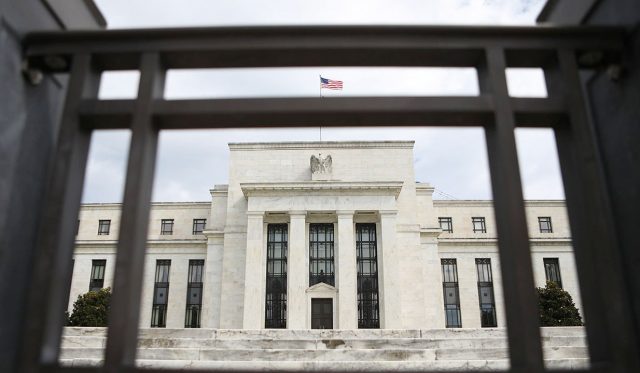
Federal Reserve’s Kashkari says recession possible, but high inflation would be worse for the labor market

REUTERS

MINNEAPOLIS Federal Reserve Bank President Neel Kashkari on Tuesday said the Fed’s interest-rate hikes and a possible pullback in lending after two bank failures last month could trigger a recession, but allowing inflation to stay high would be even worse for the labor market.

“It could be that our monetary policy actions and the tightening of credit conditions because of this banking stress leads to an economic downturn. That might even lead to a recession,” Mr. Kashkari said in a town hall at Montana State University, in answer to a student question about job prospects.

But, Mr. Kashkari said, “We need to get inflation down. … If we were to fail to do that, then your job prospects would be really hard.”

Yields on long-term bonds are lower than those on shorter-term bonds, known as the “yield-curve inversion” and which is often a harbinger of a recession.

Mr. Kashkari said he reads the pricing in bond markets as reflecting an expectation that inflation will fall quickly, allowing the Fed to cut rates. But Mr. Kashkari said he is not that optimistic, and believes inflation, now at 5% by the Fed’s preferred measure, will get to “the mid threes” by the end of this year, still far above the Fed’s 2% target.

Most Fed policymakers see inflation falling to somewhere in the 3%-3.8% range by year-end, projections show, with the median projection at 3.3%. — Reuters

Macron’s aim of EU unity on China undone by trip fallout

FRENCH PRESIDENT EMMANUEL MACRON — REUTERS

PARIS — French officials were in damage control mode on Tuesday as they tried to contain anger, division and confusion sparked by President Emmanuel Macron’s comments on Europe’s dependence on the United States and its relations with China and Taiwan.

Mr. Macron’s comments came in an interview on a trip to China that was meant to showcase European unity on China policy, with European Commission President Ursula von der Leyen also taking part, but highlighted differences within the European Union (EU).

In the interview with French daily Les Echos and news portal Politico published on Sunday, Mr. Macron called for the EU to reduce its dependence on the US and to become a “third pole” in world affairs alongside Washington and Beijing.

As European politicians and diplomats returned to work after the long Easter holiday weekend, they were still struggling to digest Macron’s comments, in which he also cautioned against being drawn into a crisis over Taiwan driven by an “American rhythm and a Chinese overreaction”.

While many of the remarks were not new, the timing of their publication — at the end of a high-profile trip to China, as Beijing carried out military exercises near Taiwan — and their bluntness annoyed countries in eastern Europe.

Many governments in that region see ties with the United States as sacrosanct, particularly given Washington’s key role in helping Ukraine defend against Russia’s invasion.

“The return of geopolitics means that we have to see more clearly who is our ally and who is not. Strong transatlantic relations between Europe and the US are the foundation of our security,” Czech Foreign Minister Jan Lipavsky told Reuters.

“Europe must invest more in its own security, but I do not see that as an obstacle or a limit for cooperation with the USA,” he said via a spokesman.

A senior diplomat from Central and Eastern Europe, speaking on condition of anonymity, said: “President Macron is not speaking for Europe or the European Union. He is unwittingly helping Beijing to dismantle transatlantic unity at the time of war in Europe, when it is most needed.”

Marcin Przydacz, a foreign policy adviser to Polish President Andrzej Duda, made clear Warsaw was not in favor of any shift away from Washington.

“We believe that more America is needed in Europe,” he told Polish broadcaster Radio Zet. He added pointedly: “Today the United States is more of a guarantee of safety in Europe than France.”

Such criticism prompted French officials and diplomats to stress that Mr. Macron did not suggest Europe should be equidistant geopolitically from Washington and Beijing, simply that Europe’s interests will sometimes differ from those of the United States.

The French foreign ministry canceled a planned debrief on the trip for foreign diplomats in Paris on Tuesday as officials scrambled to make sure they had a consistent message and to limit any fallout with Washington.

The initial response from Washington was measured. Without directly addressing Macron’s comments, the US State Department spokesperson and the White House lauded the bilateral relationship with Paris and its role in the Indo-Pacific region and Ukraine. But there was broader unease.

If Europe doesn’t “pick sides between the US and China over Taiwan, then maybe we shouldn’t be picking sides either [on Ukraine],” US Republican Senator Marco Rubio said in a video drawing parallels with the conflict in Ukraine.

SYMPATHY AND FRUSTRATION
Even some of the president’s closest allies in France recognized Mr. Macron had misspoke. “There’s a problem with the president’s communication. It’s a disaster,” one Macron ally said on condition of anonymity, saying the timing and location of what he said, although right on substance, were problematic.

“The idea now is to reassure the Americans and tell them there is nothing new and that on Taiwan we have the same position as before,” said a senior French diplomat.

“The difficulty I think will ultimately not be with the Americans. I think it will be more complicated with the Europeans, notably the Baltics, Nordics, Eastern Europeans.”

Other governments in Europe, however, are at least more sympathetic to Macron’s push for “strategic autonomy” — making Europe less dependent on others when it comes to defence, technology and supplies of critical raw materials.

Countries such as Germany, Italy and Spain have also backed strong EU engagement with China, even as Washington takes a harder line with what it sees as an increasingly belligerent Beijing.

“I think we cannot just turn our back to China and try to ignore it. It is a key trading partner, a very large player,” Spanish Economy Minister Nadia Calvino said in discussion hosted by the Brookings Institution think tank in Washington.

“We have a shared interest, I think, in ensuring that they engage constructively to put an end to the war in Ukraine as soon as possible and to avoid global market fragmentation, which is going to be lose-lose for everyone.”

But even some of those broadly supportive of Mr. Macron’s agenda lamented the handling of the China trip, in which Ms. Von der Leyen received a much more muted welcome than the French president.

Nils Schmid, a foreign policy expert and member of parliament for German Chancellor Olaf Scholz’s Social Democrats, said both Mr. Scholz and Mr. Macron had long favoured the idea of “European sovereignty”.

But, he added: “The problematic thing about Mr. Macron’s visit is that he deliberately pulled out the European card and took … von der Leyen with him. But then he allowed her to be put in the second row. This has destroyed the hoped-for impetus for a common European policy on China.”

He added: “China is playing the card of dividing Europe. We must prevent that.” — Reuters

Australia tells exporters to diversify from top trade partner China

REUTERS

SYDNEY — Australia wants exporters to diversify markets and become less reliant on China, because it cannot separate economic and strategic relationships, Foreign Minister Penny Wong said a day after the trade partners unveiled a path to ending a dispute.

Both nations have reached consensus to end their dispute over barley, they said on Tuesday, with Australia suspending a case at the World Trade Organization, while China hastens a review of tariffs on Australian exports.

“Making sure we do diversify our export markets is an important part of our national resilience,” Ms. Wong told Sky News in a television interview on Wednesday.

“And the government will continue to encourage that because we want to make sure we have diversified export markets.”

Trade worth A$285 billion a year continues with Australia’s major two-way trading partner, while thawing ties see Beijing wind back impediments placed on a raft of Australian commodity exports in 2020 amid a diplomatic dispute.

However, it was important to recognize the relationship between the two nations was “not going back to where we were 15 years ago,” Ms. Wong said in media interviews.

“We know that we want a more stable relationship with China, but we know we’re not going to be able to continue to separate our economic and our strategic relationship,” she told Nine’s Today Show.

As China operates as a “great power in the world”, it was inevitable there would be areas where Australia and China did not have the same interests, she added.

Ms. Wong called China’s recent military drills around Taiwan “destabilizing,” adding, “We would urge de-escalation.”

“Australia’s position is, very clearly, no unilateral change to the status quo,” she told Sky News in the interview. — Reuters

Why reading books is good for society, wellbeing and your career

SOURCE: THE CONVERSATION

TikTok allows video up to 10 minutes, but surveys show almost half its users are stressed by anything longer than a minute. An Instagram video can be up to 90 seconds, but experts reckon the ideal time to maximise engagement is less than 15 seconds. Twitter doubled the length of tweets in 2017 to 280 characters, but the typical length is more like 33 characters.

It’s easy to get sucked into short and sensational content. But if you’re worried this may be harming your attention span, you should be. There’s solid evidence that so many demands on our attention make us more stressed, and that the endless social comparison makes us feel worse about ourselves.

For better mental health, read a book.

Studies show a range of psychological benefits from book-reading. Reading fiction can increase your capacity for empathy, through the process of seeing the world through a relatable character. Reading has been found to reduce stress as effectively as yoga. It is being prescribed for depression – a treatment known as bibliotherapy.

Book-reading is also a strong marker of curiosity – a quality prized by employers such as Google. Our research shows reading is as strongly associated with curiosity as interest in science, and more strongly than mathematical ability.

And it’s not just that curious minds are more likely to read because of a thirst for knowledge and understanding. That happens too, but our research has specifically been to investigate the role of reading in the development of curious minds.

Our findings come from analysing data from the Longitudinal Surveys of Australian Youth, which tracks the progress of young Australians from the age of 15 till 25.

Longitudinal surveys provide valuable insights by surveying the same people – in this case a group of about 10,000 young people. Every year for ten years they are asked about their achievements, aspirations, education, employment and life satisfaction.

There have been five survey cohorts since 1998, the most recent starting in 2016. We analysed three of them – those beginning in 2003, 2006 and 2009, looking at the data up to age 20, at which age most have a job or are looking for one.

The survey data is rich enough to develop proxy measures of reading and curiosity levels. It includes participants’ scores in the OECD Programme for International Student Assessment tests for reading, mathematics and science ability. There are survey questions about time spent reading for pleasure, time reading newspapers or magazines, and library use.

To measure curiosity, we used respondents’ answers to questions about their interest in the following:

  • learning new things
  • thinking about why the world is in the state it is
  • finding out more about things you don’t understand
  • finding out about a new idea
  • finding out how something works.

We used statistical modelling to control for environmental and demographic variables and distinguish the effect of reading activity as a teenager on greater curiosity as a young adult. This modelling gives us confidence that reading is not just correlated with curiosity. Reading books helps build curiosity.

Does this mean if you’re older that it’s too late to start reading? No. Our results relate to young people because the data was available. No matter what your age, deep reading has benefits over social-media scrolling.

The short-term dopamine rush of scrolling on a device is an elusive promise. It depletes rather than uplifts us. Our limbic brain – the part of the brain associated with our emotional and behavioural responses – remains trapped in a spiral of pleasure-seeking.

Studies show a high correlation between media multitasking and attention problems due to cognitive overload.

The effect is most evident among young people, who have grown up with social media overexposure.

US social psychologist Jonathan Haidt is among the researchers warning that high social media use is a major contributor to declining mental health for teenage girls:

Boys are doing badly too, but their rates of depression and anxiety are not as high, and their increases since 2011 are smaller.

Why this “giant, obvious, international, and gendered cause”? Haidt writes:

Instagram was founded in 2010. The iPhone 4 was released then too — the first smartphone with a front-facing camera. In 2012 Facebook bought Instagram, and that’s the year that its user base exploded. By 2015, it was becoming normal for 12-year-old girls to spend hours each day taking selfies, editing selfies, and posting them for friends, enemies, and strangers to comment on, while also spending hours each day scrolling through photos of other girls and fabulously wealthy female celebrities with (seemingly) vastly superior bodies and lives.

In 2020 Haidt published research showing girls are more vulnerable to “fear of missing out” and the aggression that social media tends to amplify. Since then he’s become even more convinced of the correlation.

Social media, by design, is addictive.

With TikTok, for example, videos start automatically, based on what the algorithm already knows about you. But it doesn’t just validate your preferences and feed you opinions that confirm your biases. It also varies the content so you don’t know what is coming next. This is the same trick that keeps gamblers addicted.

If you are having difficulty choosing between your phone and a book, here’s a simple tip proven by behavioural science. To change behaviour it also helps to change your environment.

Try the following:

  • Carry a book at all times, or leave books around the house in convenient places.
  • Schedule reading time into your day. 20 minutes is enough. This reinforces the habit and ensures regular immersion in the book world.
  • If you’re not enjoying a book, try another. Don’t force yourself.

You’ll feel better for it – and be prepared for a future employer asking you what books you’re reading. – Reuters

IMF flashes financial risk warnings but urges continued inflation fight

A participant stands near a logo of the International Monetary Fund at the annual meeting in Nusa Dua, Bali, Indonesia, Oct. 12, 2018. — REUTERS/JOHANNES P. CHRISTO/FILE PHOTO

WASHINGTON – The International Monetary Fund warned on Tuesday that lurking financial system vulnerabilities could erupt into a new crisis and slam global growth this year, but urged member countries to keep tightening monetary policy to fight persistently high inflation.

The warnings set an ominous tone for the IMF and World Bank spring meetings in Washington this week, with conflicting economic and market forces clouding the policy path as growth slows in response to rapid central bank interest rate hikes.

The IMF on Tuesday edged its 2023 global growth forecasts lower, its baseline assumptions excluding, for now, a major new flare-up of financial system turmoil after the failures in March of U.S. lenders Silicon Valley Bank and Signature Bank and Switzerland’s forced sale of Credit Suisse.

The Fund’s World Economic Outlook forecast real GDP growth of 2.8% in 2023 and 3.0% in 2024 – one-tenth of a percentage point lower than what it predicted in January for each year. The global economy grew 3.4% in 2022.

The downgrades reflected weaker performances in some larger economies, such as Japan, Germany, India and Brazil, offsetting a stronger performance in the United States and a shallower contraction in Britain. The IMF also cited expectations of tighter financial conditions this year.

But its forecast was dominated by downside risks, including even higher inflation, an escalation of the war in Ukraine and a severe adverse scenario of a new financial crisis that could prompt sharp pull-backs in lending and household spending and a rush into safe-haven assets. The latter could slam global growth back to about 1% this year, effectively a recession on a per-capita GDP basis.

‘PERILOUS’ RISKS

The IMF’s Global Financial Stability Report warned of a “perilous combination of vulnerabilities” in financial markets, saying that some participants had failed to adequately prepare for the impact of interest rate increases.

Such risks had increased rapidly in the wake of last month’s turmoil in the global financial system, with investors remaining on edge and some looking for the next weakest link that could spread contagion, IMF officials said.

“Even if you think that on average, banks have a lot of capital and liquidity, there could be these weak institutions that then spill back into the system as a whole,” Tobias Adrian, the director of the IMF’s Monetary and Capital Markets Department, told Reuters.

Despite the warnings, the IMF’s chief economist, Pierre-Olivier Gourinchas, said inflation is still the bigger problem and that price stability should take precedence over financial stability risks for central banks’ monetary policy. Only in the event of a very severe financial crisis should those priorities be reversed, he said in a news conference.

YELLEN PUSHBACK

U.S. Treasury Secretary Janet Yellen pushed back on the IMF’s outlook, telling a separate news conference that the outlook was “reasonably bright” though she said she was staying “vigilant” to downside risks including banking pressures and the war in Ukraine.

“I wouldn’t overdo the negativism about the global economy,” Yellen said, adding that a number of economies, including the United States, were proving resilient with strong labor markets, easing supply chain problems and lower energy costs.

Yellen said she had not seen evidence of a squeeze in credit after the SVB and Signature Bank failures, and that the U.S. banking system was sound, with strong capital and liquidity positions. She added that the global financial system was also resilient due to reforms enacted after the 2008 financial crisis. — Reuters

Credit Suisse rescue receives initial snub from Swiss parliament

REUTERS

BERN – Switzerland’s parliament on Tuesday failed to approve the 109 billion Swiss francs ($120.5 billion) of financial guarantees used to rescue Credit Suisse last month, in a first-round vote that was largely symbolic given the state had committed the funds.

The lower house retrospectively rejected the rescue near midnight, with heated debates continuing into the early hours of Wednesday morning as members discussed other measures related to Credit Suisse.

Earlier on Tuesday, Switzerland’s upper house had approved the rescue, meaning the two chambers of the legislative body will vote again on Wednesday.

Lawmakers were recalled for a rare extraordinary session to discuss the rapid rescue of Credit Suisse and the Swiss government’s open checkbook response to a collapse that many in the country have blamed on top management.

A shotgun marriage which saw Credit Suisse taken over by Zurich-based rival UBS for 3 billion Swiss francs and propped up with more than 250 billion Swiss francs in guarantees and support has been the subject of widespread criticism.

While earlier in the day, 29 of Switzerland’s 46-member Council of States upper house approved the measure, it was later rejected with 102 of the 200-Member National Council voting against it.

The votes are, however, largely symbolic because the state committed the funds and lawmakers cannot overturn that decision.

In the lead-up to the merger last month, Swiss emergency law was used so that a sub-group of six members of parliament approved the financial commitment on behalf of the legislative body, to the ire of the almost 250 lawmakers left without a say.

“The use of emergency law has reached a level in the last three years that is beginning to annoy me,” Hansjoerg Knecht, a member of Parliament’s upper house, said.

Calling the situation where the legislative body can only approve the already committed credits “unsatisfactory”, Knecht said if Credit Suisse was to require more cash, there should be no use of emergency law to bypass parliament.

‘LOTS OF QUESTIONS’

Switzerland’s finance minister had addressed the Council of States before the vote and acknowledged the ire being voiced.

“I heard anger, I heard frustration, sometimes I also heard a bit of helplessness,” Karin Keller-Sutter said, adding that the merger between historic cross-town rivals Credit Suisse and UBS was not a forced marriage, but one of convenience.

She also said there needed to be a discussion around the kind of financial centre Switzerland wanted to be and whether it wanted to continue playing in the top league globally.

“What kind of consequences does this have for the financial regulator? For politics? These discussions need to be had. What do we really want and if we want that, we won’t get there without carrying certain risk in future as well,” she said.

A poll of Swiss economists found that nearly half thought the takeover of Credit Suisse by UBS was not the best solution, warning the saga had dented Switzerland’s reputation.

Celine Widmer, a Swiss National Council member for the left-leaning Social Democrats told Reuters ahead of the vote that “lots of questions” needed to be answered.

Politicians also questioned why the Swiss financial regulator was unable to prevent Credit Suisse’s failure.

“Does FINMA need stronger instruments or have they done a bad job?” Eva Herzog asked during a speech to the upper house.

Ms. Herzog is one of the six members of parliament who approved the rescue deal on behalf of the legislative body.

As part of the unusual event, the third such session in more than 20 years, the Swiss parliament had a chance to challenge the rushed rescue package and to discuss whether conditions could be imposed on Credit Suisse.

Last week, Switzerland announced it was cutting bonus payments for Credit Suisse’s top management.

Credit Suisse’s rescue angered not only politicians but many in Switzerland. A survey by political research firm gfs.bern found a majority of Swiss did not support the deal.

There are also growing worries about jobs and in an open letter to parliament, the Swiss Bank Employees’ Association said that Credit Suisse and UBS must freeze any cuts. – Reuters

US, Philippines agree to complete road map for security assistance for next 5-10 years

AMERICAN and Filipino troops attend the opening of the annual joint military exercises called Balikatan on March 28, 2022 at the Philippine military’s headquarters in Quezon City. — PHILIPPINE STAR/ WALTER BOLLOZOS

WASHINGTON, April 11 (Reuters) – The top defense and diplomatic officials from the United States and Philippines agreed on Tuesday to complete a road map in coming months to cover the delivery of U.S. defense assistance to the Philippines over the next five to 10 years.

US Defense Secretary Lloyd Austin said the long-time allies, which share concerns about an increasingly assertive China, discussed delivery of “priority defense platforms” including radars, drones, military transport aircraft and coastal and air defense systems at a so-called 2+2 meeting in Washington that also involved US Secretary of State Antony Blinken and Philippine counterparts.

A joint statement said “adoption of a Security Sector Assistance Roadmap in the coming months will guide shared defense modernization investments and inform the delivery of priority platforms over the next 5 to 10 years.”

Philippines Foreign Minister Enrique Manalo told the same news conference the two sides “redoubled” their commitment to modernizing the Philippines-US alliance in recognition that “our partnership will need to play a stronger role in preserving an international law-based international order.”

Experts say the United States sees the Philippines as a potential location for rockets, missiles and artillery systems to counter a Chinese amphibious invasion of Taiwan, which China claims as its own.

Mr. Austin said that it was “too early” to discuss what assets the United States would like to station at Philippine military bases under a recently expanded Enhanced Defense Cooperation Agreement (EDCA).

Mr. Manalo said the EDCA sites were mainly aimed at improving military interoperability, addressing potential humanitarian disasters “and perhaps respond to other types of security challenges,” but did not elaborate.

The Pentagon has not specifically said what the additional sites will be used for, except that work would include airport expansion and training involving naval assets.

Mr. Manalo said on Monday Washington and Manila will need to discuss what the US may do with its access to the EDCA sites.

EDCA allows US access to Philippine bases for joint training, pre-positioning of equipment and building of facilities such as runways, fuel storage and military housing, but not a permanent presence.

The joint statement said the United States expects to boost its allocated spending for EDCA sites to over $100 million by the end of 2023, against a previously announced $80 million.

The two sides also agreed to fast track new bilateral defense guidelines.

Southeast Asia expert Greg Poling at Washington’s Center for Strategic and International Studies said such guidelines were aimed at providing strategic direction and to lay out each side’s responsibilities.

“The US and Japan negotiated defense guidelines in 1978 for the Cold War, 1998 focused on North Korea, and 2015 focused on China, whereas the US and Philippines have never done so,” he said.

The Washington meeting came after more than 17,000 Philippine and US soldiers began their largest ever joint military drills on Tuesday, highlighting their shared concern about China, which has rival territorial claims to the Philippines in the disputed South China Sea.

US-Philippines relations have warmed considerably under Philippines President Ferdinand Marcos Jr, and the 2+2 meeting underlined that as the first of its kind in seven years. But Manila treads a delicate path with China, the region’s economic powerhouse.

Mr. Marcos assured China on Monday that military bases accessible to the US would not be used in offensive action, stressing that the arrangement with Washington was designed to boost his country’s defenses. – Reuters

World Bank chief says Western European countries need to help fund Ukraine reconstruction

REUTERS

WASHINGTON – The World Bank is ready to do its part in rebuilding Ukraine after the devastation of Russia’s invasion, but international financial institutions cannot shoulder the sums involved alone and Western European countries will have to chip in, World Bank President David Malpass said on Tuesday.

Mr. Malpass, speaking at the spring meetings of the International Monetary Fund and World Bank, noted that the World Bank had played a big role in rebuilding Europe’s steel industry after World War Two and could play a similar role in Ukraine.

“But the size is daunting,” he said, citing a recent estimate that it would cost $411 billion to rebuild Ukraine’s economy, or 2.6 times its expected 2022 gross domestic product. The number, calculated by the World Bank, United Nations, European Commission and Ukraine, was up sharply from an estimate of $349 billion released last September.

The World Bank’s total commitments in 2022 totaled $75 billion, a 50% increase from the average.

The European Union had large funding sums that could be brought to bear, Mr. Malpass said.

“The bank is prepared to play its role in the reconstruction, but I do need to set the expectations for the world that the amount to rebuild the electricity sector, the road sector, a railroad sector are way bigger relative to the size of the balance sheets of the international financial institutions,” he said.

Ukrainian President Volodymyr Zelenskiy will call for continued support for the war-torn country in a virtual speech on Wednesday to top finance officials, joined by Prime Minister Denys Shmyhal and Finance Minister Serhiy Marchenko, who are attending the meetings in person.

US Treasury Secretary Janet Yellen on Tuesday repeated Washington’s commitment to support Ukraine for as long as needed. She said support from the United States and the European Union would take Ukraine through the end of the year, but if the war continued, Washington would have to work with partners to provide the support needed.

She noted that a multi-donor platform has been set up to coordinate a longer-term plan for reconstruction. Washington has also allocated some money for immediate short-term reconstruction needs, including rebuilding its electricity grid. — Reuters

Be an Aura Portrait Master and win exciting prizes from vivo

Customers who will buy any of the vivo V27 Series variants will get a chance to win a vivo V27e smartphone plus more fantastic prizes!

The series of exciting surprises from vivo are far from over as  one of the leading smartphone brands in the country announces the vivo Be an Aura Portrait Master promo, giving Filipino fans a chance to score a vivo V27e and more. Customers who will purchase any variant of the vivo V27 Series from April 15 to April 30 in select concept stores and kiosks nationwide are eligible to play a game of roulette, earn a raffle entry and win amazing prizes.

For every purchase of a vivo V27e or vivo V27 5G smartphone, customers will have a one-time shot to play the vivo roulette. Bring on your lucky charms as a Voguard Fitness Tracker or a vivo backpack is up for grabs!

Wait, there’s more! Customers are in for another surprise as their purchase also qualifies them for an online raffle entry and a chance to be one of the lucky winners:

  • Three (3) winners of a vivo V27e smartphone;
  • Five (5) winners of a vivo Y02 smartphone; and
  • Twenty (20) winners of a Homefun Garment Steamer.

To join this raffle, customers only need to complete an online form with their complete name and address, mobile number, and email address. All entries must be submitted by April 30 not later than 10:00 PM. Lucky winners will be announced on May 12, 3:00 PM via vivo’s Facebook page.

Those who won should present any valid ID, proof of purchase with the correct date, and email and text notification from vivo Philippines to the nearest vivo concept store. Keep in mind that claiming of prizes is only applicable 60 days from receipt of notification and claims later than that will not be entertained.

Head to any participating vivo concept store and kiosk in the following malls to join the vivo Be an Aura Portrait Master promo:

Participating vivo Concept Stores and Kiosks
Ayala Center Cebu Robinsons Place Ormoc SM City Grand Central SM City Tanza
Ayala Malls Feliz Robinsons Place Tacloban SM City Iloilo SM City Tarlac
Baguio Center Mall SM Araneta City SM City Legazpi SM City Taytay
Festival Mall SM CDO Downtown Premier SM City Lipa SM City Telabastagan
Fisher Mall Quezon Ave SM Center Downtown Tuguegarao SM City Manila SM City Trece Martires
Gaisano Capital San Carlos SM Center Lemery SM City Manila Service Center SM City Tuguegarao
Gaisano Grand Mall Calinan SM Center Sangandaan SM City Marikina SM City Urdaneta Central
Gaisano Grand Mall Mactan SM City Bacolod SM City Marilao SM City Valenzuela
Gaisano Grand Mall Polomolok SM City Bacoor SM City Masinag SM Hypermarket FTI, Taguig
Gaisano Mall of Davao SM City Baguio SM City Molino SM Lanang Premier
Gaisano Mall of Digos SM City Baliwag SM City Naga SM Mall Of Asia
Gaisano Mall of Tagum SM City Batangas SM City North Edsa – Annex SM Megacenter Cabanatuan
Glorietta 1 SM City BF Parañaque SM City North Edsa – Annex Service Center SM Megamall
KCC Mall de Zamboanga SM City Bicutan SM City Novaliches SM Savemore Tacloban
KCC Mall of Marbel SM City Butuan SM City Olongapo Central SM Southmall
Market! Market! SM City Cabanatuan SM City Pampanga TriNoma
MarQuee Mall SM City Calamba SM City Puerto Princesa Tutuban Center Mall
Pacific Mall Mandaue SM City Cauayan SM City Pulilan Victory Pasay Mall
Riverbanks Center SM City Cebu SM City Rosales Victory Tanauan
Robinsons Galleria Ortigas SM City Clark SM City San Jose Vista Mall Bataan
Robinsons Galleria South SM City Consolacion SM City San Lazaro Vista Mall Taguig
Robinsons Place Antipolo SM City Dasmariñas SM City San Mateo Vita Mall Greenhills
Robinsons Place Lipa SM City Davao SM City Sta Mesa WalterMart Dasmariñas
Robinsons Place Malolos SM City East Ortigas SM City Sta. Rosa WalterMart North Edsa
Robinsons Place Manila SM City Fairview SM City Sucat


A must-have smartphone to elevate your lifestyle

Known as #TheAuraPortraitMaster, the vivo V27 Series features the groundbreaking Aura Portrait Algorithm with the Sony IMX766V sensor that promises to upgrade the mobile photography experience of users with a studio-quality output. This innovation will surely give justice to each of your stylish OOTDs when you take photos anytime and anywhere.

Apart from the Aura Portrait Algorithm, this smartphone also carries the EIS+OIS Dual-Ultra Stabilization feature. This keeps any videos clear and steady, perfect for Instagram reels, TikTok or vlogs. Additionally, the V27 Series boasts a 50MP Eye AF Vlogging camera that can capture everything in vivid and accurate detail.

The vivo V27 Series is just as premium when it comes to performance. Powered by up to 12GB+8GB Extended RAM and 256GB internal storage, not only do you get to take as many pictures and videos as possible, you also won’t need to delete apps or files just to free up space and keep your phone running smoothly.

Don’t miss the chance to have a dependable and high-end smartphone like the vivo V27 Series. The vivo V27 5G is priced at PHP24,999 while the vivo V27e sells for PHP16,999. Get your own “Pocket Studio” smartphone now at vivo concept stores and kiosks near you and seize the opportunity to win exciting prizes!

To learn more about the vivo V27 Series and other vivo products and offers, visit vivo Philippines’ official website, Facebook, Twitter, TikTok and YouTube pages.


Spotlight is BusinessWorld’s sponsored section that allows advertisers to amplify their brand and connect with BusinessWorld’s audience by enabling them to publish their stories directly on the BusinessWorld Web site. For more information, send an email to online@bworldonline.com.

Join us on Viber at https://bit.ly/3hv6bLA to get more updates and subscribe to BusinessWorld’s titles and get exclusive content through www.bworld-x.com.

Wind and solar hit record 12% of global power generation last year

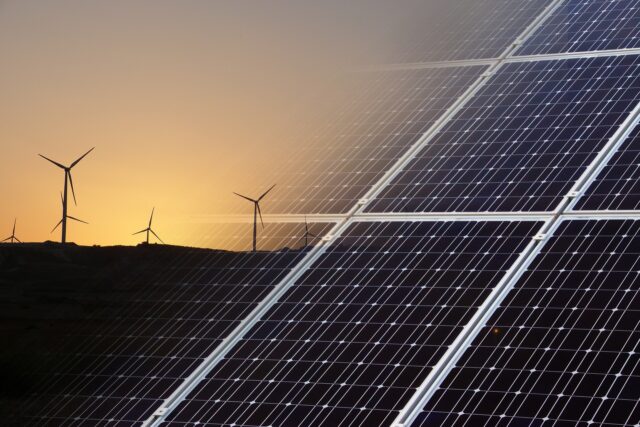
LONDON – Wind and solar energy represented a record 12% of global electricity generation last year, up from 10% in 2021, a report on Wednesday found.

The report by climate and energy independent think tank Ember said last year could have marked peak emissions from the power sector, which is the largest source of planet-warming carbon dioxide (CO2) worldwide.

Ember studied power sector data from 78 countries in its annual global electricity review, representing 93% of global power demand.

It concluded that all renewable energy sources and nuclear power combined represented a 39% share of global generation last year, with solar’s share rising by 24% and wind by 17% from the previous year.

The growth in wind and solar in 2022 met 80% of the rise in global electricity demand.

In spite of a global gas crisis and some countries firing back up old coal-fired power stations to meet demand, coal generation grew by 1.1%, while gas-fired power generation declined by 0.2% as high prices made it more expensive to use the fuel.

While CO2 emissions from the power sector rose by 1.3% last year, the growth of wind and solar slowed that rise. If all electricity from wind and solar generation came instead from fossil fuels, power sector emissions would have been 20% higher in 2022, the report said.

Assuming average growth in electricity demand and in clean power, Ember forecasts fossil fuel generation will decline 0.3% this year, followed by bigger falls in subsequent years as more wind and solar comes online.

As the power sector is the leading source of CO2 emissions, the International Energy Agency says it needs to become the first sector to reach net zero emissions by 2040 and this would mean wind and solar would have to reach 41% of global electricity generation by 2030. – Reuters