Home Blog Page 5038

TDF yields slip as inflation eases in March 

YIELDS on the central bank’s term deposits inched down on Wednesday after headline inflation eased to a six-month low. 

The term deposit facility (TDF) of the Bangko Sentral ng Pilipinas (BSP) attracted bids amounting to P364.717 billion on Wednesday, well above the P230 billion on the auction block as well as the P299.538 billion seen a week ago for a P240-billion offer. 

Broken down, tenders for the seven-day papers reached P213.053 billion, higher than the P130 billion auctioned off by the central bank and the P173.232 billion in bids for a P140-billion offer seen the previous week. 

Banks asked for yields ranging from 6.5% to 6.6655%, lower than the 6.55% to 6.7124% band seen a week ago. This caused the average rate of the one-week deposits to decrease by 2.04 basis points (bps) to 6.6359% from 6.6563% previously. 

Meanwhile, bids for the 14-day term deposits amounted to P151.664 billion, above the P100-billion offering and the P126.306 billion in tenders seen on March 29. 

Accepted rates were from 6.5% to 6.6772%, lower than the 6.572% to 6.6985% margin recorded a week ago. With this, the average rate for the two-week deposits inched down by 1.09 bps to 6.6465% from 6.6574% logged in the prior auction. 

The BSP bank has not auctioned off 28-day term deposits for more than two years to give way to its weekly offerings of securities with the same tenor. 

The term deposits and the 28-day bills are used by the BSP to mop up excess liquidity in the financial system and to better guide market rates. 

Term deposit yields went down as inflation eased in March, Rizal Commercial Banking Corp. Chief Economist Michael L. Ricafort said in a Viber message. 

Preliminary data from the Philippine Statistics Authority (PSA) released on Wednesday showed headline inflation eased to 7.6% from 8.6% in February. Still, this was significantly higher than the 4% print a year ago. 

March inflation was the slowest since the 6.9% print in September 2022. This was below the 8.1% median in a BusinessWorld poll conducted last week and near the lower end of the 7.4-8.2% forecast of the BSP for March. 

However, price pressures remained high as core inflation climbed to 8% from 7.8% in February. This is its highest clip since 8.2% in December 2000. 

For the first quarter, the consumer price index settled at 8.3%, higher than the central bank’s full-year forecast of 6% and the 2-4% target band. 

BSP Governor Felipe M. Medalla last month said if inflation comes out better than expected in March and April, the Monetary Board may consider pausing its rate hike cycle at its May 18 meeting. 

The BSP has raised benchmark interest rates by 425 bps since May last year, bringing its key rate to a near 16-year high of 6.25%. 

Mr. Ricafort said expectations of a 25-bp hike or pause from the US Federal Reserve in its next meeting on May 2-3 were also priced in by investors. 

The US central bank increased the fed funds rate by 25 bps to 4.75-5% last month. The Fed has now raised 475 bps since March 2022. — Keisha B. Ta-asan 

Peso strengthens on PHL CPI, US jobs data    

BW FILE PHOTO

THE PESO rose against the dollar on Wednesday as Philippine headline inflation slowed in March and following the release of weaker US jobs data. 

The local currency closed at P54.40 versus the dollar on Wednesday, appreciating by 9.5 centavos from Tuesday’s P54.495 finish, data from the Bankers Association of the Philippines’ website showed. 

The peso opened Wednesday session at P54.45 per dollar. Its intraday best was at P54.31, while its worst showing was at P54.54 versus the greenback. 

Dollars traded climbed to $1.24 billion on Wednesday from the $889.7 million recorded on Tuesday. 

Philippine financial markets will be closed from April 6-11 for non-working days in commemoration of Holy Week and the Day of Valor. 

The peso climbed against the dollar as inflation eased further in March, Rizal Commercial Banking Corp. Chief Economist Michael L. Ricafort said in a Viber message. 

“The peso appreciated after the March local headline inflation level was recorded lower at 7.6%, below market expectations of 8%,” a trader likewise said in an e-mail. 

Headline inflation eased to 7.6% from 8.6% in February, preliminary data released by the Philippine Statistics Authority on Wednesday showed. Still, this was faster than the 4% print in the same month last. 

The March consumer price index (CPI) was the slowest since the 6.9% recorded in September 2022. 

For the first three months, headline inflation averaged 8.3%, higher than the Bangko Sentral ng Pilipinas’ (BSP) forecast of 6% and the 2-4% target for the year. 

A second trader said the peso was supported by a weaker dollar following weaker US jobs data. 

The US dollar was stuck near two-month lows on Wednesday as weak economic data bolstered views that the Federal Reserve is near the end of its tightening cycle, Reuters reported. 

The dollar index, which measures the currency against six peers, eased to a fresh two-month low of 101.43, after dropping 0.5% overnight. It was last at 101.57. 

Data showed US job openings dropped to their lowest level in nearly two years in February, suggesting that labor market conditions were finally easing. 

Job openings, a measure of labor demand, were down 632,000 to 9.9 million on the last day of February, the monthly Job Openings and Labor Turnover Survey, or JOLTS report, showed.  

The peso appreciated as “markets priced in lower odds of another 25-basis-point (bp) Fed rate hike on May 3, 2023 at about 50% chance … that could be matched locally to maintain comfortable interest rate differentials to help stabilize the peso exchange rate and overall inflation,” Mr. Ricafort added. 

The US Federal Reserve hiked its target interest rate by 25 bps at its March 21-22 meeting to a range between 4.75% and 5%. 

Since March 2022, the Fed has raised rates by a total of 475 bps. 

For its part, the BSP hiked benchmark interest rates by 25 bps in its March 23 review, bringing its key rate to 6.25%. 

The Philippine central bank has raised rates by a cumulative 425 bps since May 2022.  

PESO SEEN RISING
Meanwhile, MUFG Global Markets Research expects the peso to start strengthening against the dollar in the second half on expectations of a narrower current account deficit. 

“Overall, we think the peso will be more resilient in 2023 compared with last year, but will not outperform regional Asian currencies,” MUFG Global Markets Research said in a report on Tuesday. 

“Key for the peso’s outlook is our expectation for a narrower current account deficit in 2023, driven by lower oil prices, slower domestic demand, coupled with resilient business process outsourcing services exports and remittances,” it said. 

It sees the peso closing the second quarter at P55 per dollar, weaker than its P54.36 finish in the first quarter. 

The local unit could then strengthen to P54 against the greenback in the third quarter and end the year at P53.50 a dollar. 

For the first quarter of 2024, the peso could end at P53 a dollar. 

MUFG Global Markets Research said it expects Philippine gross domestic product (GDP) to expand by 6% this year as pent-up demand from the economy’s reopening after the pandemic begin to fade, with elevated inflation and higher interest rates also expected to affect consumption. 

“We view this development as good from a macro stability perspective, as the economy was running a little too hot last year,” it said. 

Philippine GDP grew by 7.6% in 2022. 

MUFG Global Markets Research also expects the central bank to hike borrowing costs by another 25 bps in its May 18 meeting to bring its key rate to 6.50% and then keep its policy settings steady thereafter. — AMCS with Reuters 

Lawmaker files bill seeking to prohibit fees, charges on dormant accounts 

A LAWMAKER has filed a bill seeking to prohibit the imposition of fees and charges on dormant accounts, saying these are an additional financial burden for depositors. 

House Bill No. 7664 filed by Cagayan De Oro Rep. Rufus B. Rodriguez proposes to stop banks from charging service, maintenance or any other fees on dormant accounts. 

The bill defines dormant accounts as current or checking accounts that have no deposit or withdrawal activity for three years or savings accounts left untouched for five years. 

The Bangko Sentral ng Pilipinas’ Manual of Regulations for Banks tags as dormant current or checking accounts showing no activity for one year and savings accounts with no deposits or withdrawals for two years. 

“The practice of these banks, as authorized by the Bangko Sentral ng Pilipinas is to charge fees on these dormant accounts, usually in an amount ranging from P300 to P500 per month,” Mr. Rodriguez said in the bill’s explanatory note. 

“One explanation as to why banks charged dormancy fees is that banks may have anticipated a certain amount of activity on each account, which can generate fee income for them. And because of the inactivity, they see these dormant fees as a way to replace the expected income that they lost to the detriment of the depositor,” he said. 

Mr. Rodriguez said these charges and fees must not be imposed on depositors as banks already earn interest when they use deposits to fund their loans. 

Under the bill, banks are required to review and segregate dormant accounts at least once every semester. 

“As a matter of policy, banks shall exert all efforts to prevent checking and savings accounts from becoming dormant. When it becomes apparent that an account is inactive, a short letter should be sent to the depositor encouraging him to use his account. In case of checking accounts, the banks shall ensure that the monthly statement of accounts reach the depositors,” it said. 

The bill also proposes to turn over unclaimed deposit balances in dormant accounts to the National Treasury. 

“After one year has lapsed without any activity on any account, the bank shall send a notice to the depositor informing him of said inactivity. Thereafter, banks shall regularly send notices to the depositor every six months,” it said. 

“Three months prior to the expiration of the periods as stated in Section 1 of this Act, the bank shall send a final notice to the depositor informing him of the impending deposit of his account to the National Treasury,” it added. 

The bill is pending with the House committee on banks and financial intermediaries. — B.M.D. Cruz 

Shares rise as inflation eases further in March 

BW FILE PHOTO

PHILIPPINE STOCKS climbed on Wednesday following the release of data showing that headline inflation eased further in March. 

The bellwether Philippine Stock Exchange index rose by 16.47 points or 0.25% to close at 6,488.51 on Wednesday, while the broader all shares index went up by 4.78 points or 0.13% to end at 3,486.74. 

“The local bourse gained as March’s inflation rate eased compared to February’s figure. However, investors remained cautious as the core inflation in March was at 8.00%, higher than February’s 7.8%,” Philstocks Financial, Inc. Research Analyst Claire T. Alviar said in a Viber message. 

“Philippine shares outperformed the region as headline inflation for March came in better than expected at 7.6%,” Regina Capital Development Corp. Head of Sales Luis A. Limlingan said in a Viber message. 

Headline inflation eased to 7.6% from 8.6% in February, preliminary data released by the Philippine Statistics Authority on Wednesday showed. Still, this was faster than the 4% print in the same month last. 

March inflation was the slowest since the 6.9% recorded in September 2022 and was near the lower end of the 7.4-8.2% forecast of the Bangko Sentral ng Pilipinas (BSP) for the month. 

However, core inflation climbed to 8% from 7.8% in February, the highest since 8.2% in December 2000. 

For the first quarter, headline inflation settled at 8.3%, higher than the BSP’s forecast of 6% and the 2-4% target for the year. 

“Meanwhile, US equities slumped, ending the fourth successive streak, amid concerns on the broader economy. The OPEC+ (Organization of the Petroleum Exporting Countries and their allies including Russia) production cut likewise adds up to the uncertainty and the current sentiment of investors,” Mr. Limlingan added. 

On Tuesday, the S&P 500 declined by 0.58% to end at 4,100.68 points; the Nasdaq dropped by 0.52% to 12,126.33 points; and the Dow Jones Industrial Average went down by 0.59% to 33,403.04 points. 

Back home, almost all sectoral indices went up on Wednesday except for mining and oil, which decreased by 231.65 points or 2.12% to 10,674.15. 

Meanwhile, holding firms climbed by 50.97 points or 0.80% to 6,350.39; financials rose by 6.90 points or 0.38% to 1,781.03; services increased by 2.32 points or 0.14% to 1,612.66; industrials went up by 1.90 points or 0.02% to 9,290.89; and property increased by 0.65 point or 0.02% to 2,743.97. 

Value turnover went down to P3.38 billion on Wednesday with 1.08 billion shares changing hands from the P3.99 billion with 2.40 billion issues traded on Tuesday. 

Advancers outnumbered decliners, 93 versus 71, while 59 names closed unchanged. 

Net foreign buying stood at P43.80 million on Wednesday versus the P238.40 million in net selling recorded on Tuesday. — A.H. Halili 

Marine scientists see slick near world-famous Coron 

IMAGE BY GIULIANO GABELLA VIA UNSPLASH

MARINE researchers from the University of the Philippines (UP) have detected a potential oil slick near Coron, Palawan province southwest of the capital, more than a month after a fuel tanker sank off the waters of Oriental Mindoro and caused an oil spill. 

There were possible oil slicks 12 kilometers off Coron, the UP Marine Science Institute said in an April 3 bulletin, citing a satellite image from the United States National Oceanic and Atmospheric Administration taken on April 2. 

“The slicks seen measured at about 19 kilometers in length and about 3 km in width,” it said, noting that winds were weak when the image was taken,” making it highly possible for thicker slicks to form due to less breakage from calmer waves.” 

It was not known whether the slicks had come from the sunken tanker, MT Princess Empress in Mindoro, the institute said. 

On Wednesday, Coron Municipal Disaster Risk Reduction and Management Office chief Fernando Lopez said local authorities had not monitored any traces of oil in their waters. 

“We have not seen any oil spill or oil slick here in Coron,” he told ABS-CBN Teleradyo in Filipino. “We went to the area suspected of having an oil spill, which is about 12 kilometers away from the shoreline, but the sea was good.” 

He said rough waves could have made it difficult for them to spot the oil slick. 

The local government had sought an aerial survey of the area to validate the report, he said, adding that Coron authorities have prepared spill booms in case the oil spill reaches their town. 

Coron, one of the country’s top tourist destinations, is known for World War II-era wrecks that are popular with divers, and its limestone karst landscape. 

The tanker was carrying 800,000 liters of industrial oil when it sank off Naujan, Oriental Mindoro on Feb. 28. The Philippine Coast Guard with the help of international experts was still conducting clean-up operations. 

On Wednesday morning, a Korean ship arrived at the port of Manila, unloading 20 tons of sorbent pads and snares, 1,000 meters of solid flotation curtain boom and 2,000 sets of personal protective equipment. 

“The supplies will be sent to the affected region promptly,” the South Korean Embassy in Manila said in a statement. 

Four experts from the Korea Coast Guard’s emergency response team and consul and staff members of the Korean Embassy had joined forces on March 28 by providing technical support for operating response equipment in coordination with the Philippine and US coast guards. 

“During their five-day operation in affected areas in Mindoro, the Korean team shared their expertise to address the oil spill, as well as assisted the affected residents with aid supplies including drinking water and safety guidelines,” the embassy said. – Kyle Aristophere T. Atienza 

DoJ indicts main suspect in Philippine governor’s murder 

@HOUSEOFREPSPH

GOVERNMENT prosecutors have indicted the main suspect in the murder of the governor of Negros Oriental in central Philippines and 26 other victims, according to the Department of Justice (DoJ) 

The bodyguard of Arnolfo T. Teves, Jr., a congressman of the province, was charged with nine counts of murder for the death of the governor and eight others; 13 counts of frustrated murder; and four counts of attempted murder, DoJ said in a statement on Wednesday. 

The Office of the Provincial Prosecutor of Negros Oriental will handle the cases in connection with the murder of Governor Roel R. Degamo, it added. 

Law enforcers arrested the suspect, who underwent inquest proceedings at DoJ on Monday, during a National Bureau of Investigation (NBI) operation on March 27 in the village of Madlad in nearby Antique province. 

Prosecutors would amend the charge sheet, which indicted other suspects in the killing, to include the supposed mastermind, the agency said. 

“The case is 99% finished,” Justice Secretary Jesus Crispin C. Remulla said in the statement. “It is only a matter of time before we can put this to bed.” 

Authorities had 12 suspects in custody and the case was close to being solved, Interior and Local Government Secretary Benjamin C. Abalos, Jr. told a news briefing on Monday. 

Justice Secretary Jesus Crispin C. Remulla earlier said Mr. Teves could be one of the masterminds, being a political rival. The congressman, who is overseas and has refused to come home because of supposed threats, had denied involvement in the crime. He has been slapped with a 60-day suspension by the House of Representatives for failing to report back to work after his travel authority expired on March 9. 

Mr. Degamo and eight others, including two village leaders, were killed while 15 were wounded when armed men opened fire at his residential compound, where cash aid was being distributed on March 4.  

TASK FORCE DEGAMO
More than 30 cases related to the killing have been filed before a Bayawan City regional trial court, Mr. Abalos earlier said. 

The Supreme Court had transferred the cases related to the murder after Mr. Remulla’s request to move them to Manila, citing the risk of a hostile environment in the province for those involved. 

Meanwhile, President Ferdinand R. Marcos, Jr. has formed a task force that will keep order in the province Negros a month after Mr. Degamo was killed in his house. 

The task force, named after late governor, would “prevent the spread and escalation of violence elsewhere in the Philippines and to maintain peace and order on Negros Island, with due regard to the fundamental civil and political rights of the people,” the presidential palace said in a statement. 

It will be headed by Interior and Local Government Secretary Benjamin de Castro Abalos, Jr. and co-headed by Mr. Remulla and Defense Secretary Carlito G. Galvez, Jr., the Presidential Communications Office said. The task force commanders are the chiefs of the national police, Armed Forces of the Philippines and National Bureau of Investigation. 

The task force will also intensify campaigns against private armed groups and loose firearms. Under Administrative Order No. 6, the body will rationalize efforts of various agencies to “ensure a whole-of-government approach in the prevention, investigation, prosecution and punishment of violence on Negros Island.” 

The palace said the Department of Social Welfare and Development would extend relief assistance to the families of the victims, while the Department of Health will provide psychological rehabilitation to affected people. The presidential assistant for the Visayas will coordinate with the task force to enlist the full support of all stakeholders. – John Victor D. Ordonez and Kyle Aristophere T. Atienza 

Senate pressed to pass bill on seafarers after EU decision

MARINA FACEBOOK PAGE

A SENATOR on Wednesday emphasized the need to pass a bill on the protection and sustained education of Filipino mariners after the European Commission (EC) decided to continue recognizing seafarer certificates issued by the Philippines.  

The challenge remains for the Philippines to ensure that our seafarers are globally competitive given their critical role and contribution to the economic growth of the country,Senator Sherwin T. Gatchalian said in statement on Wednesday.  

The European Maritime Safety Agency flagged the Philippinesstandards on seafarer training and certification after an inspection in March 2022.   

The EC then said about 50,000 Filipino seafarers working in European vessels could lose their jobs if the Philippines does not address its deficiencies.  

Mr. Gatchalian noted that remittances from sea-based workers reached $6.54 billion in 2021, representing at least 21% of the total money sent home by Filipinos overseas.   

Under Senate Bill No. 822 or An Act Instituting the Magna Carta of Filipino Seafarers authored by Mr. Gatchalian, seafarers are entitled to affordable education and training, among other rights.   

The proposed law seeks topromote quality maritime education and training that respond to the needs of the industry and in accordance with minimum international maritime standards of competency.”  

The government should grant scholarships, subsidies and loan assistance.  

Seafarers must also have access to a safe and secure workplace that complies with international standards as well as decent working and living conditions onboard a ship.” 

They must also receive salary appropriate to their rank, sickness benefits, and defined work hours consistent with Philippine laws and international maritime conventions. 

The bill is pending at the committee level, while House lawmakers approved on third reading its counterpart measure on March 6.  

Migrant Workers Secretary Maria Susana V. Ople said on Monday that her department is working with the Commission on Higher Education and the Maritime Industry Authority to address deficiencies in seaman training. Beatriz Marie D. Cruz

Davao Light says Mindanao power supply enough for summer demand

BW FILE PHOTO/

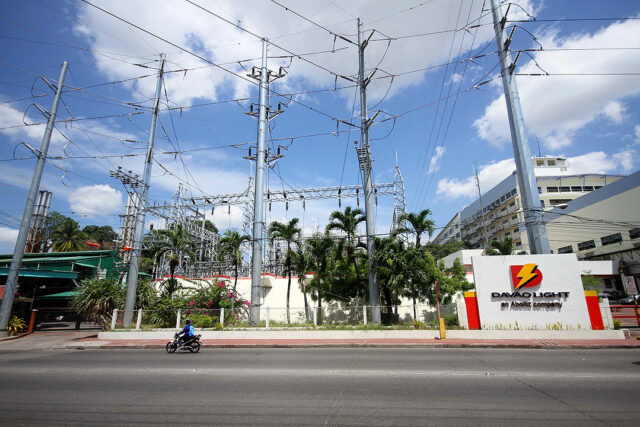
DAVAO Light and Power Company (DLPC), the third biggest private electric utility in the country, said there is more than enough supply in the southern Philippine mainland to meet higher demand during the hot, dry months until May.   

The Aboitiz Power Corp. subsidiary said its franchise area covering Davao City and parts of neighboring Davao del Norte province will not experience supply cuts due to power shortage.  

Davao City will not experience any shortages in the coming months, especially summer months. We are safe,DLPC President and Chief Operating Officer Rodger S. Velasco said during the Kapihan sa PIA media forum.  

He assured that brownouts will only be due to unforeseen incidents.   

Those are emergency interruptions that are beyond our control, (like) a toppled post, foreign objects perching our lines,he said.  

Mr. Velasco said the opening of the Wholesale Electricity Spot Market (WESM) in Mindanao has further allowed for sufficient as well as cheaper supply.   

The Mindanao WESM was formally launched in February. The electricity trading platform will eventually be merged with the national WESM once the Mindanao-Visayas grid interconnection is completed.   

DLPC started buying power through WESM in January, which now accounts for 30% of its supply, according to Mr. Velasco.   

Current situation in WESM is much cheaper versus fossil-based fuel plants so we are buying more from WESM,he said.  

The DLPC official also noted that the Mindanao grid has a capacity of about 3,000 megwatts (MW) while peak demand is 2,000 MW, leaving an average daily surplus of 1,000 MW.   

Arturo M. Milan, adviser for Mindanao of Aboitiz Equity Ventures, Inc., said other parts of southern Philippines continue to experience rotational brownouts as distributors, which are mostly electric cooperatives, depend on their contracted supply.   

What really happens now is that amid the excess supply, there are areas with rotating brownouts, especially among the electric cooperatives This is a problem of contracting. Also a problem on reliability of their service,Mr. Milan said in mixed Visayan and English.  

DLPC covers an area with a population of about 2.2 million.  

The company said it had 470,868 customers as of December 2022, with  recorded peak demand of 472 MW. Maya M. Padillo 

CTA affirms Manulife Data Services’ partial VAT refund 

CTA.JUDICIARY.GOV.PH

THE Court of Tax Appeals (CTA) has affirmed its ruling partially granting Manulife Data Services Inc. P1.31 million in excess value-added tax (VAT) traced to zero-rated sales for the calendar year 2013.  

In a decision dated March 31 and made public on April 3, the CTA full court said the company sufficiently proved that the refunded amount was not applied against any output tax for the quarters after 2013. 

“Although the claimed input VAT was carried over by the firm in its succeeding quarter VAT returns, the same remained unutilized until it was deducted as VAT refund in its quarter return for the first quarter of 2015,” according to the ruling penned by Associate Justice Lanee S. Cui-David.  

The firm initially claimed P60.48 million excess VAT for the year 2013.  

Manulife Data Services is engaged in corporate finance advisory services, training and personnel management. 

Under the countrys tax code, zero-rated sales are transactions made by VAT-registered taxpayers with foreign clients not doing business in the Philippines. These sales do not translate to output tax.  

The court denied the companys motion for reconsideration for a full refund, citing the companys failure to submit a Securities and Exchange Commission (SEC) certificate of non-registration of its client Manufacturers Life Insurance Company (MLIC), which would have proven that it did business outside the Philippines.   

“The said basic documents are necessary because the Philippine SEC’s negative certification establishes that the recipient of the service has no registered business in the Philippines,” it said. 

The petitioner argued that MLIC had filed with the Insurance Commission for the authority to close its Philippine business and withdraw its license in 2013. The CTA disagreed saying it did not submit proof to support the claim.  

“We find that MDSI failed to raise any new or substantial matter persuasive enough to disturb the Court in Division’s findings in the assailed decision and resolution,” the tax tribunal said. John Victor D. Ordonez

Bar 2022 results out on April 14 

PHILIPPINE STAR/RUSSELL PALMA

THE Supreme Court (SC) will release the results of the 2021/2022 bar examinations on April 14. 

In an advisory on Wednesday, Associate Justice and chairperson of the bar exams Alfredo Benjamin S. Caguioa said the results will also include examinees with the 30 highest total averages and the top five law schools with the highest percentage of bar passers.  

He said bar passers should wait for more announcements on getting clearance for the oath-taking and roll-signing on May 2. 

In the 202/21 exams, 8,241 takers passed, representing a 72.8% passing rate.  

The 2020/21 bar was the first to be administered digitally and with multiple testing sites.  

For this year, the tribunal has raised the bar admission fee to P5,000 from P3,750 to cover the operating costs of the oath-taking ceremonies for bar passers.  

It scheduled this year’s exams in September, earlier than the usual November to allow for an earlier release of results.  

Associate Justice and 2023 bar exams chairperson Ramon Paul L. Hernando said holding the exams in September would allow passers to seek employment earlier.  

The court had also condensed the coverage of the exams to combine similar topics.  

Chief Justice Alexander G. Gesmundo had said the bar exams would continue the digital format to take full advantage of new technology. John Victor D. Ordonez

Japan plans to fund defense projects of friendly nations such as Philippines 

A person holds Japan’s national flag at the Imperial Palace in Tokyo, Japan, Jan. 2, 2020. — REUTERS

TOKYO — Japan on Wednesday said it plans to offer friendly nations financial assistance to help them bolster their defenses, marking Tokyo’s first unambiguous departure from rules that forbid using international aid for military purposes. 

Japan’s Overseas Security Assistance (OSA) will be operated separately from the Overseas Development Assistance (ODA) program that for decades has funded roads, dams and other civilian infrastructure projects, Chief Cabinet Secretary Hirokazu Matsuno said at a regular news conference. 

“By enhancing their security and deterrence capabilities, OSA aims to deepen our security cooperation with the countries, to create a desirable security environment for Japan,” a statement released by the Ministry of Foreign Affairs on Wednesday said.  

The aid will not be used to buy lethal weapons that recipient countries could use in conflicts with other nations in accordance with the three principles that govern arms exports, according to the statement. 

Specific projects are expected to include satellite communication and radio systems for maritime surveillance, and preparations are underway for the first aid to be finalized within this fiscal year, the foreign ministry said. 

The Philippines and Bangladesh are likely to be included as the first recipients of the aid, a government source involved in talks said to Reuters. 

Japan is considering providing radars to the Philippines to help it monitor Chinese activity in the contested South China Sea, and also weighing Fiji and Malaysia as potential recipients of the aid, the Yomiuri newspaper reported on Monday.  

In principle, only developing countries will be eligible to receive the aid given it will be provided as grants, according to the foreign ministry. 

The decision to expand the scope of international aid to military-related projects follows Japan’s announcement in December of a military buildup that will double defence spending within five years as it looks to counter China’s growing military might in Asia.  

Following on from the overhaul of its military strategy, there is growing momentum over the easing of Japan’s arms export ban. The ruling coalition is looking to start working-level discussions in late April over loosening the current arms export restrictions, according to broadcaster TBS, in line with similar suggestions made in the new strategy. 

Japan has also been ramping up its outreach to developing nations in an effort to counter China. Prime Minister Fumio Kishida announced a $75 billion investment across the Indo-Pacific in March as he seeks to forge stronger ties with countries in South and Southeast Asia. — Reuters

Foodpanda partners with online vendors cooperative to support MSMEs 

ONLINE delivery platform foodpanda Philippines has partnered with the Online Food Vendors Marketing Cooperative (OFVMC) as part of its efforts to boost its assistance for local businesses.   

The company said the collaboration seeks to increase the assistance given to local entrepreneurs by expanding their market and establishing a name in the online marketplace.   

“Even beyond the new normal, there are still plenty of benefits that micro, small, and medium enterprises (MSMEs) can enjoy by getting access to digital platforms, including increased productivity, improved profitability, and reduced operational costs,” foodpanda Philippines Finance Director Leopoldo De Castro, Jr. said in a statement on Tuesday.   

“However, transitioning to digital platforms might be challenging for them. But with the combined assistance between us and OFVMC, they can navigate through this transition,” he added.   

OFVMC aims to help micro and small entrepreneurs in reaching a wider market. The cooperative also provides seminars in business operations.   

“For businesses which are just start-ups, joining the OFVMC will encourage member contribution and shared responsibility, not to mention the opportunity to earn interest in their share capital and expand their network in the industry as businesses,” Mr. De Castro said.   

foodpanda Philippines said the digital transformation of MSMEs is important to boosting economic growth.   

“Several factors can hold them back, which can make them more risk-averse in scaling up and officially start onboarding with an online food delivery digital platform,” Mr. De Castro said.   

“While challenges are ever-present, partnering with us also brings numerous benefits. The fees they pay to be on the platform are commensurate with the benefits they receive, including promotional programs, delivery subsidies, and platform development, which aims to help MSMEs increase their revenue or boost their sales,” he added.   

foodpanda Philippines operates across 150 cities and municipalities in the country. — R.M.D. Ochave