Home Blog Page 5036

Big US intelligence leak was by gun enthusiast in 20s — Washington Post

TOWFIQU BARBHUIYA-UNSPLASH

THE PERSON who leaked US classified documents prompting a national security investigation is a gun enthusiast in his 20s who worked at a military base, the Washington Post reported on Wednesday, citing fellow members of an online chat group.

The person shared classified information to a group on the instant messaging platform Discord of about two dozen men and young boys who shared a “mutual love of guns, military gear and God,” the Post said.

The Post based its report, which did not name the person, on interviews with two members of the Discord chat group.

Reuters was unable to verify details of the report.

Discord said in a statement earlier on Wednesday that it was cooperating with law enforcers.

The Department of Defense and Department of Justice did not immediately respond to a Reuters request for comment.

The Justice department opened a formal criminal probe last week after the matter was referred by the Pentagon, which is assessing the damage done by what may be the most damaging release of classified US information in years.

The person went by the handle OG, slang for Original Gangster, or an old school traditionalist. The person was described by one of the Post’s sources as being in his early to mid-20s, and was looked up to by members of the group.

“He’s fit. He’s strong. He’s armed. He’s trained. Just about everything you can expect out of some sort of crazy movie,” said one member of the chat group, who was under 18 and spoke on the condition of anonymity with the permission of his mother, the Washington Post reported.

In what appears to be the gravest leak of US secrets in years, pictures of sensitive documents were posted on Discord and other platforms including the online messaging board 4Chan, the encrypted Telegram global messaging app and Twitter.

US national security agencies and the Justice Department are investigating the release to assess the damage to national security and relations with allies and other countries, including Ukraine. — Reuters

Cebu Landmasters net income soars to P3.17 billion in 2022, eyes Luzon expansion

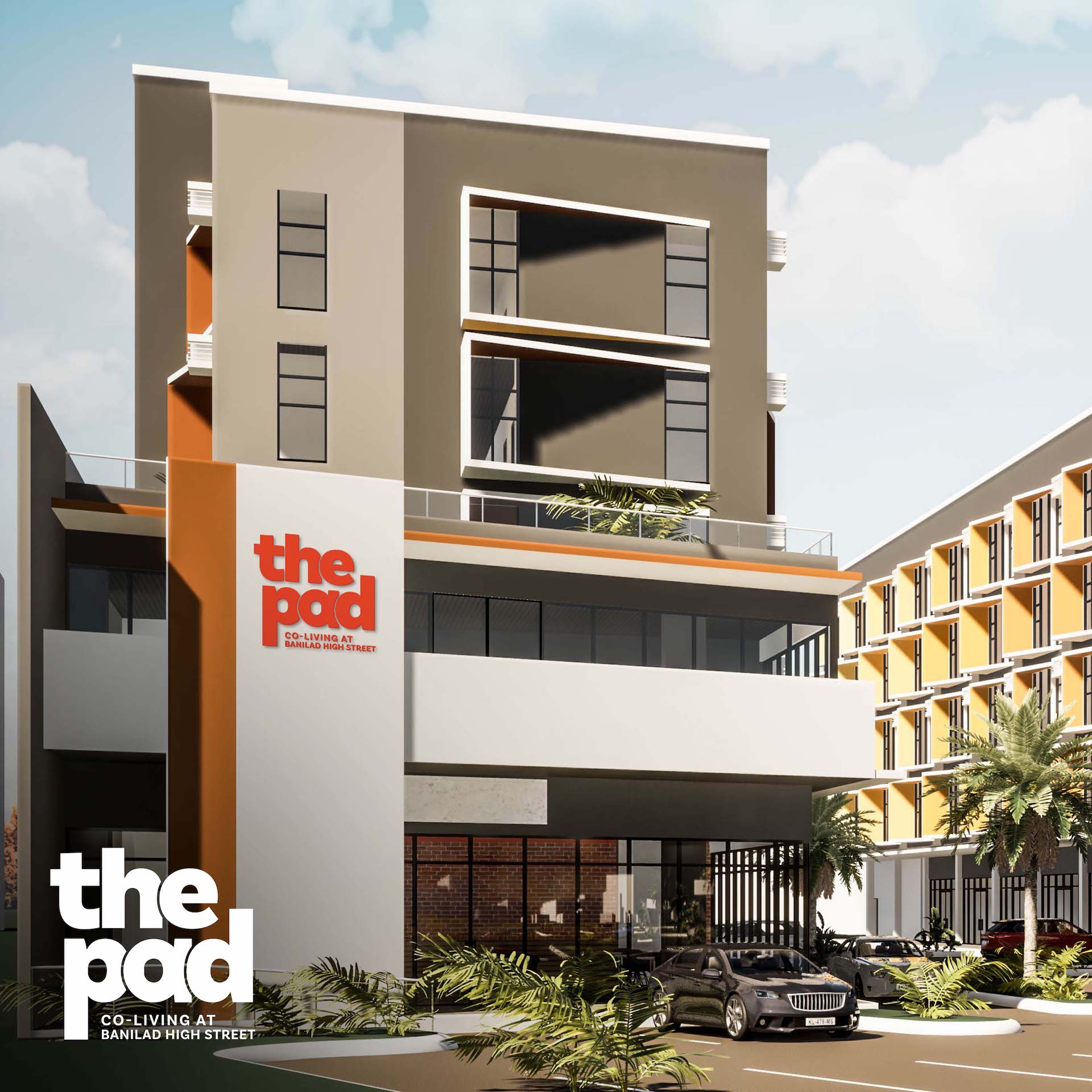
CLI’s flagship economic brand Casa Mira accounted for the largest share at 47% of 2022 revenues. The photo above is an architect’s perspective of the P3-billion seven-tower Casa Mira Towers Palawan, the company’s first project in Puerto Princesa whose first two towers with 480 units were 85% sold out in less than a week.

Leading developer in VisMin Cebu Landmasters, Inc. (CLI) reported another record year-end performance with a 32%-growth to Php 3.171 billion in normalized net income to parent shareholders in 2022. The normalized net income took out a one-time tax adjustment due to the CREATE law.

The listed company also registered a double-digit profit growth of 21% from its 2021 NIAT of Php 2.6 billion, even after the adjustment.

Significant milestones, strong sales, and outstanding collections pushed CLI’s topline to grow by 40% to Php 15.657 billion in 2022, up from Php 11.162 billion in the previous year. Despite the surge in CLI’s topline, its unrecognized revenue for future recognition still stood at Php 29 billion.

“Our robust 2022 performance is a testament to our growing commitment and leadership in the Vismin region. We have been recording double-digit growth across all segments since our 2017 IPO. We are finally setting our sights on Luzon in the next 2 years,” CLI chairman and CEO Jose R. Soberano III said.

Cebu Landmasters’ five-storey The Pad Co-Living at Banilad High Street is set to open in Q3 2023. The 256-room property that can accommodate up to 440 persons is a walk away from Cebu IT Park and strategically close to universities around Cebu City.

Real estate sales revenue recorded a 40% year-on-year (YoY) growth to Php 15.439 billion in 2022 from Php 10.996 billion in the previous year. This was mainly driven by significant construction progress, as construction hit full swing across all CLI project sites in 16 key cities in VisMin by end-2022.

CLI launched close to 5,000 units across 16 projects, worth Php 19.36 billion collectively, which was 74%-sold by the end of 2022. Sales velocity of these launches hit peak levels with most developments fully taken up within days. CLI’s first project in a new area, Puerto Princesa, for instance, was 85%-sold out in less than a week.

The listed company also posted a 71% growth in hotel revenues to Php 83 million in 2022, while revenues from rental units also improved with a 7%-growth to Php 79.28 million from Php 74.27 million in 2021 on increased lease contracts and new tenants from the recently-completed Latitude Corporate Center.

CLI’s flagship economic brand Casa Mira accounted for the largest share of revenues at 47%, followed by the mid-market Garden Series contributing 27%, and the high-end Premier Masters at 24%. The mix of revenue recorded during the year was brought about by the strong Casa Mira sales during the height of the pandemic in 2020.

After a strong end-2022 performance, CLI has its eyes set on continued expansion for 2023 on the back of optimism for strong economic growth and property demand in the VisMin region. In CLI’s pipeline are Php 29.75 billion worth of projects expected to drive reservations sales during the year. The company is also setting its sights on a Luzon entry with a landbank build up that will begin this year.

CLI will also open three hospitality projects this year: The Pad, lyf Cebu City at Base Line Center, and Citadines Bacolod City. The listed company also targets a substantial growth in its leasing business, with an addition of 4,000 sqm worth of gross leasable area (GLA) largely from Davao Global Township retail pads and convention center.

With a robust performance and bright prospects ahead, the CLI Board earlier declared regular and special cash dividends of Php 0.15 and Php 0.03 per share at a total estimated amount of Php 624 million, up 20%-increase from the Php 520 million paid to stockholders last year. The recently declared dividends have a record date of April 18, 2023 and will be paid on April 28, 2023.


Spotlight is BusinessWorld’s sponsored section that allows advertisers to amplify their brand and connect with BusinessWorld’s audience by enabling them to publish their stories directly on the BusinessWorld Web site. For more information, send an email to online@bworldonline.com.

Join us on Viber at https://bit.ly/3hv6bLA to get more updates and subscribe to BusinessWorld’s titles and get exclusive content through www.bworld-x.com.

World Bank steering committee, Yellen urge more reforms at lender this year

REUTERS

– The World Bank‘s steering committee and US Treasury Secretary Janet Yellen on Wednesday called for further reforms this year to expand the bank‘s ability to respond to climate change, pandemics and other crises that are reversing development gains.

Ms. Yellen hosted talks with global finance officials to discuss an initial spate of balance sheet changes that will allow the World Bank to lend an additional $50 billion over 10 years while maintaining its top-tier AAA credit rating, and how to deepen those efforts with it and other multilateral development banks.

Ms. Yellen said the changes already approved had sharpened the mission of the World Bank, but more “bold action” was needed to ensure it could work to end extreme poverty, boost shared prosperity and better meet 21st century challenges like climate change, fragility and pandemics.

“We should use the rest of the year to undertake additional reforms through a staged implementation approach that can be agreed upon by the Board and implemented on a rolling basis.”

The bank‘s steering committee – officially known as the Development Committee – met later in the day, where members welcomed the bank‘s “Evolution Roadmap” and said they looked forward to additional efforts aimed at achieving “major milestones” by the October annual meetings of the World Bank and International Monetary Fund.

“They expect the Board of Executive Directors and World Bank Group management to finalize a work plan with detailed actions to be taken,” the committee‘s chair said in a statement.

Members underscored their commitment to “ensuring that the World Bank Group has adequate financial capacity to respond to development challenges and support its expanded mission.” They called for ambitious approaches to increasing private capital, facilitating investment and leveraging the public sector.

The members also looked forward to exploring additional recommendations made by an independent panel last year, including making the bank‘s emerging markets database more accessible to private investors, optimizing the balance sheet for the low-income lending arm, and exploring a voluntary channeling of IMF Special Drawing Rights.

Zambian women she met during her visit in January understood how climate change reduced agricultural yields, Ms. Yellen said. “We’ve all seen how threats to global health can disrupt entire societies and economies, and how fragility and conflict can lead to significant displacement and migrant flows,” she said.

Ms. Yellen said upcoming events could be leveraged to keep momentum strong for the evolution of the World Bank. Those included the Summit for a New Global Financial Pact to be hosted by France in June, the Group of 20 Leaders’ Summit in India in September, the annual meetings of the World Bank and IMF in Morocco in October, and the United Nations COP28 climate conference to be held in Dubai in November and December.

She said Ajay Banga, the US nominee to replace World Bank President David Malpass, who will step down on June 1, was “the right leader to take the baton from President Mr. Malpass and accelerate our work to evolve this institution.”

Mr. Malpass told the committee he felt the bank had responded with “vigor and speed” to Ms. Yellen‘s call for reforms.

“There was … wide recognition that progress toward these goals requires a sharper focus on sustainability, resilience, and inclusiveness as part of our mission,” he said.

Development Committee members thanked Mr. Malpass for his leadership of the WBG during a historically challenging period, including an unprecedented surge in financing in response to multiple crises. – Reuters

South Koreans fighting drug addiction find few rehab options

STOCK PHOTO | Image by Kleiton Santos from Pixabay

 – Every Saturday a group of young South Koreans gathers in Incheon just west of Seoul to talk about their battles with drug abuse, seeking sympathy and support in often emotional exchanges.

The free midday therapy sessions are organized by Choi Jin-mook, who fought addiction for more than 20 years before becoming a counsellor and advocating for a shift in South Korea’s drugs policy towards treatment and away from punishment.

Choi, 48, began taking nonprescription cough medicines at age 17 and was jailed for marijuana in his 20s. In and out of prison for 15 years, he turned to meth and stronger drugs before another addict-turned-counsellor led him to an “awakening”.

“I thought I would be a normal person when I got out of prison, but there I learned more about drugs instead of getting treatment,” Choi said.

“I just couldn’t break away from the fetters.”

South Korea has only six drug rehabilitation centers, according to Choi, including just two run by the food and drug safety ministry. In comparison, Japan – with 126 million people to South Korea’s 52 million – has about 90 rehab centers.

The center Choi heads is one of three set up 10 years ago with funding from Japan. The centers run on a Japanese model and hire only former addicts to provide care and counselling.

Choi and other counsellors have been trying to build more rehab centers and make them more accessible, but Choi said he has failed to get government funding because of a general lack of awareness of the need for more facilities.


PRISON NOT REHAB

One of the biggest problems is that South Korea’s corrections system focuses mostly on punitive detention and lacks rehabilitation support, Choi said.

In recent months, the arrests of chaebol heirs and celebrities such as award-winning actor Yoo Ah-in on illegal drugs charges have prompted authorities to crack down on narcotics and bolster customs enforcement.

Drug crimes are typically punishable by at least six months in prison or up to 14 years for repeat offenders and dealers. Some drug crimes are also punishable by death although South Korea has not carried out any executions since 1997.

While most first- and second-time offenders usually get suspended sentences and 30 to 40 hours of mandatory drug education, Choi said this does little to get them off drugs.

“The golden time for addiction treatment is when you get caught for the first time, but thinking that addicts would quit after attending those classes for several hours is hoping for a miracle,” he said.

“The system needs proper treatment and rehabilitation to help addicts start a new life when they go back to society.”

The government created special intra-agency squads last week to clamp down on drugmakers and distributors, and Justice Minister Han Dong-hoon unveiled plans last year to expand state rehab facilities, vowing to fight drugs “as if we are at war”.

The justice ministry did not respond to requests for information on any plans for more state rehab centers. And the food and drug safety ministry said it would add only one this year due to budget constraints, without elaborating.


DRUG-FREE NO MORE

Drugs have become cheaper and more accessible because of social media and an increase in overseas travel, Choi said.

“In Seoul, you can get exactly what you want within 30 minutes via social media.”

The number of people convicted of drug crimes shot up to more than 16,000 in 2021, from around 12,000 in 2015, according to the Supreme Prosecutors’ Office. Almost 60% of those convicted of drug crimes in 2021 were 39 or younger, while the number of teen offenders jumped 44% in 2021 from 2020.

The volume of confiscated illicit drugs more than tripled to a record 1.3 tons (2,870 lb) in 2021, due partly to multinational investigations into smuggling rings, data from the prosecutors’ office also showed.

Meth, cocaine and marijuana made up around 85% of the seizures. Authorities are as well seeing more synthetic cannabinoids and opioids like fentanyl, which is up to 100 times more powerful than morphine.

“A higher volume and a greater variety of drugs are being smuggled in many different forms,” said Lee Kyoung-ran, a customs officer at South Korea’s largest airport in Incheon.

President Yoon Suk Yeol, who has lamented that the country is no longer “drug-free”, last week ordered tougher measures to root out traffickers and confiscate drug profits.

Meanwhile, addicts trying to quit are left looking for help.

Desperate to get off meth, Lee Dong-jae, 23, managed to find Choi last year. Choi offered free counselling and housing at his rehab center and also gave Lee a job at his wife’s restaurant.

“I’ve never had a job or daily life like this since taking drugs, but now feel I’m slowly recovering the lively and positive side of me,” Lee said. – Reuters

G7 finance leaders pledge financial stability, supply chain diversity

 – Group of Seven (G7) finance leaders pledged on Wednesday to take action to maintain the stability of the global financial system after recent banking turmoil and to give low- and middle-income countries a bigger role in diversifying supply chains to make them more resilient.

Their communique did not mention China by name, but the supply chain language fit in with “friend-shoring” efforts by industrial democracies to work with each other to become less reliant on the Asian manufacturing powerhouse for battery minerals, semiconductors and other strategic goods.

“We commit to jointly empowering low- and middle-income countries to play bigger roles in supply chains through mutually beneficial cooperation by combining finance, knowledge, and partnership, which will help contribute to sustainable development and enhance supply chain resilience globally,” the G7 finance ministers and central bank governors said in the statement.

The finance chiefs, meeting on the sidelines of International Monetary Fund and World Bank meetings in Washington, said they had discussed recent financial sector developments after the failure of two US banks and the forced sale of troubled global lender Credit Suisse.

Shunichi Suzuki, the finance minister of G7 host Japan, said that stability had returned to the financial system after strong action by policymakers

We will continue to closely monitor financial sector developments and stand ready to take appropriate actions to maintain the stability and resilience of the global financial system,” the G7 finance leaders said.


‘SHARED VALUES’

The ministers said that supply chains needed to achieve both efficiency and resilience, helping to maintain macroeconomic stability and make economies more sustainable. The statement cited the need to diversify the “highly concentrated” supply chains for clean energy technologies.

“In this endeavor, we will stand firm to protect our shared values, while preserving economic efficiency by upholding the free, fair and rules-based multilateral system and international cooperation,” the G7 finance leaders said, using language often used to exclude China and other autocratic regimes.

Suzuki said the language was not specifically aimed at China, but added that the G7 group views a high concentration of supply chains in a single country was not desirable, noting that many supply chains were highly concentrated in China.

The G7 is made up of the United States, Canada, Britain, France, Germany, Italy and Japan.

The International Monetary Fund has warned in its latest economic forecasts that fragmentation of the global economy into geopolitical blocs is a significant factor in reducing longer-term growth potential, with only 3% growth expected in 2028. That’s the lowest five-year projection since the IMF started issuing such forecasts in 1990.

But French Finance Minister Bruno Le Maire, who participated in the G7 meeting, said such diversification away from China and alliances with allies were necessary.

“As far as the production of green hydrogen is concerned, or artificial intelligence or semiconductor chips, or electric batteries, or other strategic goods, we need to be more independent,” Le Maire told reporters.


JOINT RESEARCH

In addition to working more closely with developing countries on supply chains, the G7 finance officials pledged to encourage joint research and development efforts among G7 members and other “interested parties.”

They said they would empower the private sectors in their own countries to diversify their supply chains, through transparent and predictable use of public finance tools that can catalyze private resources.

The ministers also pledged to support education, training and skills development, “underpinned by good governance and compliance with human rights” and to reduce greenhouse gas emissions and enhance environmental protections in their supply chains. – Reuters

Japan to channel 40% of IMF SDR allocation to needier countries, doubling pledge

 – Japan has pledged to double the percentage of International Monetary Fund Special Drawing Rights monetary reserves that it will reallocate to poorer countries to 40%, Japanese Finance Minister Shunichi Suzuki said on Wednesday.

Mr. Suzuki told a news conference that he made the pledge to a meeting of G7 finance ministers and central bank governors on Wednesday. Previously, Japan had said it would channel 20% of the SDRs it received in a 2021 general allocation to needier countries via IMF trust funds.

In the $650 billion allocation aimed at helping IMF member countries cope with the COVID-19 pandemic, Japan – the second-largest IMF shareholder – received 29.5 billion SDRs, worth about $39.7 billion at current exchange rates. A 40% allocation would be valued at about $15.9 billion.

France had previously pledged the highest percentage of its $26 billion SDR allocation, at 30%, to IMF trust funds, including the new Resilience and Sustainability Trust.

IMF Managing Director Kristalina Georgieva said on Monday the new trust has about $40 billion in assets and there were 44 countries interested in borrowing from this trust for climate and other needs. – Reuters

The Fed raises interest rates despite ongoing banking crisis: What’s next?

REUTERS/KEVIN LAMARQUE/FILE PHOTO

On Wednesday, 22 March 2023, the Federal Reserve continued its fight against inflation and once again raised interest rates by 0.25%. This move causes concern because the present banking crisis has developed precisely because of rising interest rates.

So far, the Federal Reserve’s (Fed) successful strategy for fighting inflation has been to raise the key rate and reduce the balance sheet. This negatively impacted the value of U.S. Treasury bonds and other securities, which are an important source of capital for most U.S. banks. Silicon Valley Bank was the first to fail—it was forced to quickly sell the cheaper bonds at a significant loss, leading to a liquidity crisis and eventual collapse. This was followed by Signature Bank and Credit Suisse, which had to sell-off, and First Republic, which received a lifeline.

The U.S. Federal Reserve recognised its mistake and took emergency measures to support the banking system. It provided $303 billion of liquidity to banks through the Discount Window and Bank Term Funding Program (BFTP), thereby curbing the banking crisis locally.

The crisis also spread to the eurozone, with Credit Suisse failing after a 166-year run. To prevent a complete collapse, the Swiss National Bank (SNB) opened a credit line for Credit Suisse, which enabled it to take a $53.7 billion loan and stay afloat. However, it ultimately failed.

Just hours after opening the credit line, the European Central Bank (ECB) President Christine Lagarde announced a rate hike, doubling it by 50 basis points at a scheduled meeting. While investors viewed this as a positive signal for European economic stability, the rate hike decision appeared hasty and could potentially lead to an aggressive rate hike by the Fed.

At Wednesday’s meeting, the Fed showed great restraint by adhering to its baseline and raising the key rate by 25 bps, while looking to reduce the balance sheet further.  The press release on the situation with the banks stated the following:

‘The U.S. banking system is sound and resilient. Recent developments are likely to result in tighter credit conditions for households and businesses and to weigh on economic activity, hiring, and inflation. The extent of these effects is uncertain. The Committee remains highly attentive to inflation risks.’

Jerome Powell reported the need for continued balance sheet cuts. Commenting on the issue, the OctaFX financial market analyst Kar Yong Ang said: ‘It is commendable that the Fed did not cave to market pressure and maintained the course to suppress inflation. This is a crucial step that will help them curb inflation and perhaps even avoid a recession.’

However, there were dovish signals in the Fed’s dot plot, including a rate cut of 75 bps next year. Seeing only the growing liquidity flow, the market interpreted it as the end of the tightening monetary policy cycle, with swap markets betting that the U.S. interest rate will fall to 4.19% at the end of this year.

The banking sector is facing great risks, and the regulators’ fight against inflation could make it more unstable, ultimately dragging the rest of the economy down the chain and potentially causing a global recession. Only time will tell whether this happens.


OctaFX is an international broker that has been providing online trading services worldwide since 2011. It offers commission-free access to financial markets and a variety of services already utilised by clients from 180 countries with more than 21 million trading accounts. Free educational webinars, articles, and analytical tools they provide help clients reach their investment goals.

The company is involved in a comprehensive network of charitable and humanitarian initiatives, including the improvement of educational infrastructure and short-notice relief projects supporting local communities.

OctaFX has also won more than 60 awards since its foundation, including the ‘Best Online Broker Global 2022’ award from World Business Outlook and the ‘Best Global Broker Asia 2022’ award from International Business Magazine.


Spotlight is BusinessWorld’s sponsored section that allows advertisers to amplify their brand and connect with BusinessWorld’s audience by enabling them to publish their stories directly on the BusinessWorld Web site. For more information, send an email to online@bworldonline.com.

Join us on Viber at https://bit.ly/3hv6bLA to get more updates and subscribe to BusinessWorld’s titles and get exclusive content through www.bworld-x.com.

Getting the country’s grandest auto show back on the road

Photo from www.facebook.com/ManilaInternationalAutoShow

After a brief speedbump at the start of the decade, the evolution of the Philippine auto industry is now back to full throttle, fueled by the never-ending drive of the country’s automakers and manufacturers to deliver the best and most sophisticated vehicles for the Filipino market.

Nowhere is this more at display than this year’s Manila International Auto Show (MIAS). Widely hailed as the most anticipated motoring and driving event in the country, MIAS has been providing car enthusiasts and industry professionals the most dynamic and extensive automotive events and exhibitions since the event debuted in April 2005.

Held today until April 16 at the World Trade Center Metro Manila, MIAS 2023 will be co-presented by Petron, and will feature the MIAS Petron Custom and Classic Car Competition as a highlight, where vintage, classic, and contemporary cars are showcased and vie for awards for best of the show, best in the category, and other awards. This competition rewards car and shop owners who value craftsmanship and attention to detail, showcasing the best of Filipino ingenuity and artisanal workmanship.

There will also be featured discussions about cutting-edge developments and emerging trends in the automobile industry, such as continued conversations about sustainability and the rise of electric vehicles.

The Die-Cast Automobile Collection will also be on display at MIAS 2023, with models ranging in size from 1:18 to 1:64 on display by members of the Die-Cast Car Club PH.

Fifteen different brands, including several different truck manufacturers, have confirmed attendance and will be showcasing their latest offerings on the World Trade Center front lot. The list of brands includes big names such as Ford, Mitsubishi, Nissan, and Hyundai.

Visitors can expect brand new vehicles and the latest models to arrive in the Philippines to be on display, alongside everything from electric and hybrid cars to historic cars and custom build competitions. There will also be opportunities for test drives, truck zones, and club exhibits.

Ford has announced that its next-generation Ford Territory will be making its way to the Philippines and will be making its debut alongside other brands presenting at the event. This means that just six months after its debut in Vietnam, and three years after its introduction to the Philippines, the all-new Territory will hit the market for Filipino fans.

Changan Philippines will showcase its whole vehicle lineup, which includes the Alsvin, CS35 Plus, CS55 Plus, UNI-T, and UNI-K. The UNI-T and UNI-K, both of which debuted to the public earlier this year, will be significant highlights as both models will be unveiled for the first time.

Furthering the discussion on EVs on the Filipino auto market, Chery Philippines has announced that it will release an all-new electric Tiggo 5X model.

Peugeot has also announced that the e-2008 will debut at the next auto show, the brand’s first all-electric vehicle for the Filipino market.

GAC Motor will feature not one, but two vehicles at its stand. The company announced that its GAC Empow in the high-end GE trim level is now available for purchase.

Meanwhile, the Foton Thunder pickup truck is getting a refresh for the market.

Rumor has it that Geely will also unveil its new Monjaro model at the MIAS 2023, alongside every model in its lineup.

As a new entrant to the market, Jetour’s future-forward crossover portfolio for the Philippines will be on display at the show this year. The lineup features automobiles such the Ice Cream EV, X70, and Dashing.

GWM, also a new brand, will debut its finest offerings for the Philippine market, which likely include hybrid and conventional SUVs like its H6 HEV and Jolion HEV.

Hyundai Motor Philippines’ new Stargazer and the Staria models will likely make an appearance, but the company likely has something else up its sleeve to surprise guests.

The MG GT, with its eye-catching yellow exterior and high-end fittings, will be on display at the MG booth. The MG HS and ZS T are also rumored to make an appearance.

Subaru Philippines is reported to introduce a small crossover version of the Forester, complete with cosmetic upgrades and other conveniences that might pique consumers’ interest. In addition, the current generation of Evoltis will likely receive a makeover or a small update.

Other brands, such as Mitsubishi and Nissan, are being more secretive about their plans, but it is highly likely that a lineup refresh can be expected.

BPI will also have a booth during the event to act as an auto loan provider for those in the market for a new car. That means you can stop by the BPI booth for some exclusive offers for visitors who have tried out the latest models from the various participating brands in the massive test drive area.

This year’s Manila International Auto Show aims to not only have the most impressive and comprehensive automotive display ever seen in the country, but also to host the most exciting automotive events which can impress and excite auto enthusiasts and industry professionals all over the country. — Bjorn Biel M. Beltran


Vehicle sales jump 24% in March

Vehicles enter Manila from the South Luzon Expressway. — PHILIPPINE STAR/EDD GUMBAN

NEW VEHICLE SALES rose by an annual 24% in March, fueled by strong consumer demand, an industry group reported.

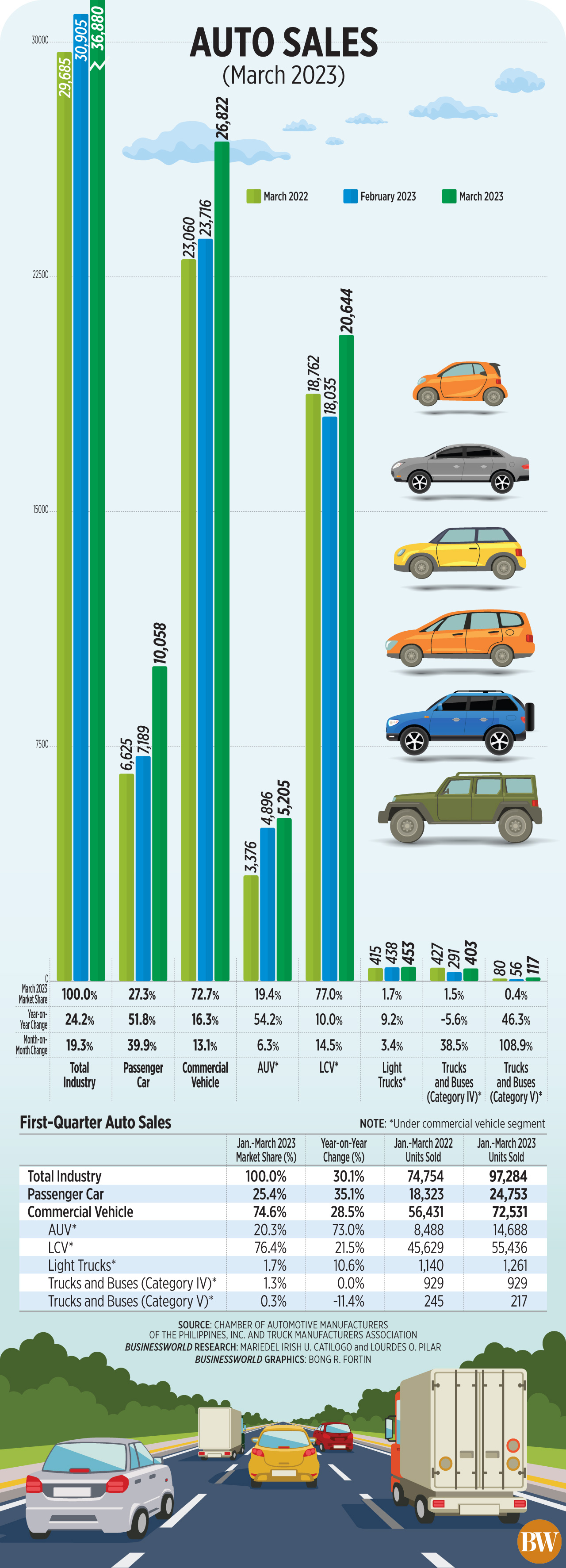
A joint report by the Chamber of Automotive Manufacturers of the Philippines, Inc. (CAMPI) and Truck Manufacturers Association (TMA) showed vehicle sales reached 36,880 units in March, nearly a fourth higher than the 29,685 units sold in the same month a year ago.

Month on month, March vehicle sales increased by 19.3% from the 30,905 units sold in February.

Auto sales“It is worth noting that the March 2023 sales performance is the second-highest monthly performance in this post-pandemic time, after the more than 37,000-unit sales level recorded in December last year,” CAMPI President Rommel R. Gutierrez said in a statement.

In March, 73% of the industry’s total sales came from the commercial vehicle segment.

Commercial vehicle sales rose by 16.3% to 26,822 units in March. Broken down, sales of light commercial vehicles (LCVs) increased by 10% to 20,644, while sales of Asian utility vehicles (AUVs) increased by 54.2% to 5,205. Light truck sales rose by 9.2% to 453.

On the other hand, sales of passenger vehicles surged by 51.8% to 10,058 units. The segment accounted for 27.27% of the month’s overall sales.

For the first quarter, vehicle sales of CAMPI-TMA members jumped by 30% to 97,284 from 74,754 in the same period in 2022.

Commercial vehicle sales increased by 28.5% to 72,531 in the January-to-March period. Sales of LCVs went up by 21.5% to 55,436, while AUV sales climbed by 73% to 14,688 units.

Passenger car sales rose by 35.1% to 24,753 units in the January-to-March period.

Mr. Gutierrez said the auto industry is hopeful consumer demand for new vehicles will continue to increase in the next few months.

“In the same way, favorable economic conditions are also an important driving factor for sustained growth,” he added.

Toyota Motor Philippines Corp. led all manufacturers in terms of sales during the January-to-March period with a 46.47% market share as it sold 45,205 units.

Mitsubishi Motors Philippines Corp. had the second-biggest market share with 18.26% after selling 17,765 units in the first quarter.

Nissan Philippines, Inc. ranked third with a market share of 6.57% (6,396 units sold), followed by Ford Motor Co. Phils, Inc. with a 6.06% market share (5,893 units sold), and Honda Cars Philippines, Inc. with a 4.79% market share (4,661 units sold).

CAMPI-TMA is aiming to sell 395,000 units this year, 12% higher than the 352,596 units sold last year.

The entire local vehicle industry, including sales from the Association of Vehicle Importers and Distributors exclusive members and MG Motors Phils., is targeting 408,300 sales this year, 10.4% higher than the 369,981 units sold in 2022. — Revin Mikhael D. Ochave

BSP sees no need to tap IMF lending programs

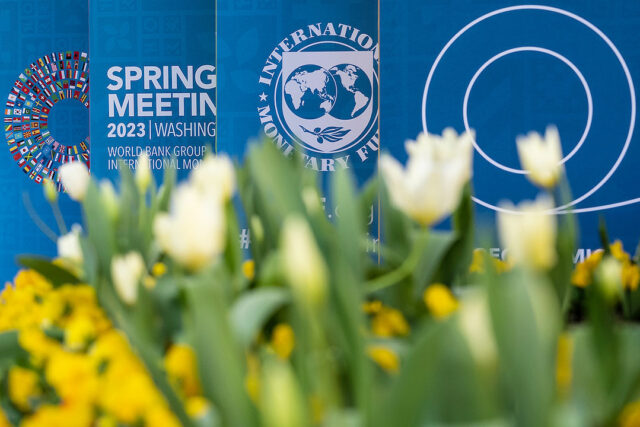
Signs for the spring meetings 2023 at the International Monetary Fund in Washington, April 3, 2023. — IMF PHOTO/JOSHUA ROBERTS

By Keisha B. Ta-asan, Reporter

WASHINGTON — There is no need for the Philippines to tap the International Monetary Fund’s (IMF) lending programs, the Bangko Sentral ng Pilipinas (BSP) chief said on Wednesday.   

BSP Governor Felipe M. Medalla said the country needs more official development assistance (ODA) from multilateral lending institutions. 

Asked if there is a need to tap the IMF lending program, he replied: “Right now, I don’t think so.”

“We’re relying very heavily on ODA from the World Bank and ADB (Asian Development Bank), and direct commercial borrowing from abroad,” Mr. Medalla said on the sidelines of the IMF and World Bank spring meetings here.

The IMF provides financial support to countries hit by crises to stabilize their respective economies. Countries often come to the IMF when they have no other lending options.   

The IMF does not lend for specific projects in countries unlike development banks.   

For 2023, the National Government expects to obtain around $19.1 billion worth of ODA — $9.2 billion worth of loans from multilateral development partners and $9.8 billion in loans from bilateral lenders. 

Also, Mr. Medalla said the country needs more capacity development from the IMF on monetary and fiscal operations.

“The last thing our central bank wants to do is to reinvent the wheel. So, we ask what other central banks are doing, how do (they) make monetary policy more effective,” he said.   

Whenever the Philippine central bank is set to do what it has not done before, Mr. Medalla said it is important to look at how other countries responded to the issue and see what exact tools were used.   

The IMF offers capacity development, which includes technical assistance and training, to its members upon request. Capacity development accounts for around a third of the IMF’s annual spending.

In 2021, the Philippines received $2.8 billion worth of Special Drawing Rights (SDRs) from the IMF, as part of the latter’s efforts to help countries recover from the coronavirus pandemic. 

Member countries were allocated SDRs — the fund’s unit of exchange backed by dollars, euros, yen, sterling and yuan — in proportion to their quota shares in the IMF.

The IMF’s last SDR distribution came in 2009 when member countries received $250 billion in SDR reserves to help ease the global financial crisis.

Regulators, banks grapple with risks arising from social media, digitalization

Social media logos are seen in this illustration taken on May 25, 2021. — REUTERS/DADO RUVIC/ILLUSTRATION

REGULATORS and banks in the Philippines need to develop a system on how to immediately respond to issues on social media that may affect public confidence, in order to prevent social media-driven bank runs as seen in the United States, experts said.

Fitch Asia-Pacific Financial Institutions Director Tamma Febrian said that social media has allowed information “to flow at a speed that was unthinkable a decade or two ago,” and has helped lenders market financial products to customers quickly.   

“On the other hand, both social media and digitalization could also increase contagion risks by compounding the effect at which a negative news could have on a bank with seemingly weak fundamentals, as demonstrated by the rapid demise of SVB (Silicon Valley Bank),” Mr. Febrian said in an e-mail interview with BusinessWorld.

The sudden collapse of SVB highlighted the risks arising from social media and digitalization. Last month, social media reports fueled panic among SVB customers, prompting massive withdrawals that ultimately led to the bank’s collapse.

While social media may have played a part in causing the bank runs, Mr. Febrian said the banks’ vulnerabilities and weaknesses ultimately caused their collapse.

“We do not think that the leading Philippine banks that Fitch rates suffer from the same issues that affected these failed institutions, helped by prudential liquidity requirements that BSP has instituted over the years,” he said.

Bangko Sentral ng Pilipinas (BSP) Governor Felipe M. Medalla earlier said Philippine banks have no reported exposure in SVB. He also said Philippine banks are strong and are well-capitalized to weather any risks stemming from the collapse of the two US banks.

“The unexpected failures of two specialized regional banks (SVB and Signature Bank) in the United States in mid-March 2023 and the collapse of confidence in Credit Suisse — a globally significant bank — have roiled financial markets, with bank depositors and investors reevaluating the safety of their holdings and shifting away from institutions and investments perceived as vulnerable,” the International Monetary Fund (IMF) said in its latest World Economic Outlook (WEO).

Meanwhile, Swarup Gupta, industry manager of the Economist Intelligence Unit, said banks in general, including lenders in the US and the Philippines, are not prepared to deal with social media-fueled bank runs.   

“The collapse of Silicon Valley Bank represents the most important cautionary tale of an era characterized by the proliferation of social media on one hand and the ubiquitousness of online banking on the other,” Mr. Gupta said.   

“Both of these phenomena have combined to transform bank runs into veritable bank sprints where deposit withdrawals mount within minutes leading to a quick and complete collapse,” he said.   

In SVB’s case, Mr. Gupta said social media posts on the bank’s troubles were spread by influencers online — some of which were later taken down. In the absence of any response from the bank, panic swirled among depositors.

“Most banks lack a preemptive crisis communications strategy which needs to be employed at the slightest hint of trouble. And most regulators employ an approach which is nearly a century-old which banks on periodic sanity checks, notably stress tests, to ensure that all is well with the banking system,” Mr. Gupta said.   

Contagion risks could spread rapidly in the digital era. He noted this would trigger a domino effect of bank runs even before authorities can help address the issues.   

This is why banks and regulators should closely monitor social media and develop a system to preemptively address any concerns raised on various platforms. There should also be protocols in place to minimize risks before they become a significant threat to the banking system, Mr. Gupta added.

Mr. Febrian said there is a need for banks and regulators to update their crisis scenario playbook.

“Systems and processes are likely to evolve in a way that would allow banks to monitor and respond to issues in real-time manner which could help to stem a loss in confidence during a crisis,” he added. — Keisha B. Ta-asan

Marcos OK’s creation of single operating system for gov’t transactions

PHILIPPINE STAR/ MICHAEL VARCAS

PRESIDENT Ferdinand R. Marcos, Jr. has approved the creation of a single operating system for government transactions, as part of efforts to improve the ease of doing business in the country, the Palace said on Wednesday.

The Presidential Communications Office said officials from the Department of Information and Communications Technology (DICT) and the Anti-Red Tape Authority (ARTA) told the President that they were working on a single system that would streamline the processes and transactions of all government agencies.

During the meeting, Mr. Marcos said the agencies should also consider how the single system would be implemented in local government units (LGUs).

“I think it may help when you’re writing the code or when you’re putting the system together, you’re going to have to think about the differences between the national bureaucracy and the different LGUs,” he said.

Officials from DICT and ARTA told the President they are now looking at the processes of different agencies in order to put them under a single system.

LGUs are also covered by the Ease of Doing Business law, which requires them to set up electronic business one-stop shops.

Mr. Marcos also ordered the DICT and ARTA to help LGUs in adopting simpler business permits and licensing systems in all cities and municipalities.

DICT and ARTA officials said they also plan to implement the system for processes involving migrant workers, maritime personnel, and shipping industries.

The Palace said ARTA also requested the approval of revisions to Executive Order No. 482 issued in 2005, which established a single system processing of trade documents. ARTA said the system needed to be updated in line with the agency’s other digitalization and streamlining initiatives. — J.V.D.Ordoñez