NICARAGUAN police said on Saturday they are investigating several dioceses of the Catholic Church for money laundering, a day after local media reported that the bank accounts of parishes in the Central American country had been frozen.
The police, loyal to the government of President Daniel Ortega which has clashed fiercely with Nicaragua’s bishops, said that since May 19 they found “hundreds of thousands of dollars” in Church facilities in various parts of the country.
Investigations “confirmed the unlawful removal of resources from bank accounts that had been ordered by law to be frozen,” the police said in a statement.
Mr. Ortega’s government has intensified attacks against the Catholic Church in the wake of 2018 anti-government protests in which some 360 people died after what human rights groups call police repression. The government accused the bishops, who mediated talks between the government and protesters, of attempting a coup.
The police statement said the bank accounts were linked to religious figures convicted of treason and other crimes, and that the investigations confirmed the funds entered the country irregularly.
The police said the investigation also confirmed “other illicit activities, which are still being investigated as part of a money laundering network that has been discovered in the dioceses in different departments.”
“People have their bank accounts here, this is how they carried out their work,” Cardinal Leopoldo Brenes said in an article posted on news website despacho505.com.
“We are analyzing the situation,” he said, adding that the bishops would meet and later provide more information.
Since the anti-government protests, Mr. Ortega has imprisoned and expelled priests and nuns, banned pilgrimages and religious processions and shut nursing homes and soup kitchens that had been run by nuns.
Last February, a Nicaraguan court sentenced high-profile government critic Bishop Rolando Alvarez to 26 years in prison for treason and cybercrimes, after he refused to board a plane amid the expulsion of 222 other political prisoners.
The expelled prisoners were promptly stripped of their nationality, including six priests from Alvarez’ diocese who had previously been convicted of the same crimes.
Mr. Ortega also suspended ties with the Vatican in March, shortly after Pope Francis compared his administration to the Nazi dictatorship of Adolf Hitler. — Reuters
Standing firm against hunger, Globe launches the Longest Hapag— a five-month nationwide food festival series. The campaign kicks off in time for the commemoration of World Hunger Day this May 28, amplifying the global call to eradicate chronic hunger.
This initiative is part of the Globe-led Hapag Movement, which aims to help address the staggering problem of involuntary hunger among 13.5 million Filipinos. The advocacy raises funds and spreads awareness about the problem while empowering communities to create sustainable livelihood.
“Involuntary hunger is one of the critical societal challenges of our time. With the Longest Hapag, we are leveraging strategic partnerships and collective effort to confront the hunger problem that continues to affect our nation,” said Yoly Crisanto, Globe Group Chief Sustainability and Corporate Communications Officer.
The campaign calls on restaurants, food chains, chefs, commercial centers, brands and civic organizations to mount fundraising efforts through their food offerings to support the Hapag Movement. This united front will create a ripple effect of change, reflecting the campaign’s core message: Be part of the Longest Hapag and help make a difference.
The Longest Hapag will also align with local food festivals across the country, ultimately culminating on World Food Day on October 16, 2023.
Chef Jessie Sincioco is the first culinary expert turned advocate who supported the Hapag Movement. She launched a special Hapag menu where half of proceeds go to the implementing partners and their family beneficiaries. The Longest Hapag campaign was inspired by Sincioco’s project Chefs Unite, which seeks to encourage chefs from around the world to support the Hapag Movement. Chefs Sau del Rosario and Kay Carreon have signed up to support the movement.
With successful fundraising activities such as the recent Hapag ni LuzViMinda fund-raising dinner, and Chef Kay’s generous contribution of her book proceeds, Chefs Unite exemplifies the profound impact that the culinary industry can have on the cause.
Despite a slight decrease in food insecurity to 9.8%, hunger remains higher than pre-pandemic levels in the Philippines. It ranks 67th out of 113 countries in the 2022 Global Food Security Index, falling below the global average. As such, Globe’s efforts aim not just to alleviate immediate hunger but also to address these long-term challenges.
“We invite everyone to be a part of the Longest Hapag and make a tangible difference. By working together, we can help families conquer the problem of involuntary hunger and help uplift the lives of our fellow Filipinos,” Crisanto added.
The Hapag Movement brings life-enabling support through supplemental feeding and livelihood opportunities to hunger-afflicted communities through its mobilization partners Ayala Foundation Inc., Caritas Philippines, Scholar of Sustenance, Tzu Chi Foundation and World Vision.
Spotlight is BusinessWorld’s sponsored section that allows advertisers to amplify their brand and connect with BusinessWorld’s audience by enabling them to publish their stories directly on the BusinessWorld Web site. For more information, send an email to online@bworldonline.com.
Join us on Viber at https://bit.ly/3hv6bLA to get more updates and subscribe to BusinessWorld’s titles and get exclusive content through www.bworld-x.com.
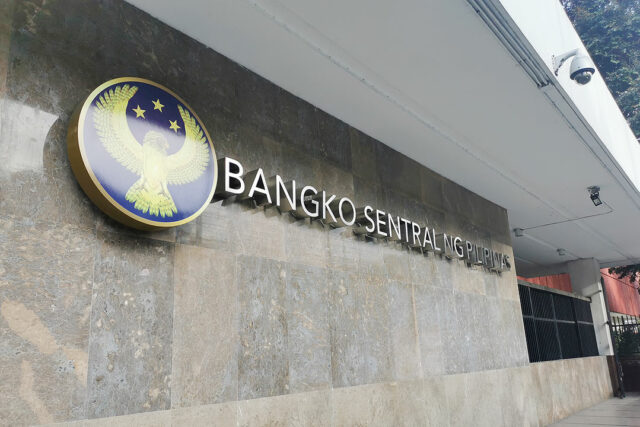
Bangko Sentral ng Pilipinas main office in Manila. — BW FILE PHOTO
Investors are bracing for Philippine President Ferdinand Marcos Jr.’s choice on who will head the central bank in the next six years, with analysts seeking policy continuity.
Mr. Marcos will determine the Bangko Sentral ng Pilipinas’ leadership in the coming weeks, as Governor Felipe Medalla’s term is set to end by July 3. The president’s choice will steer the central bank after an aggressive monetary tightening campaign to quell inflation that remains elevated.
“Someone who could uphold the tenets of an independent central bank and who has the appropriate experience in the conduct of monetary policy, financial supervision and financial stability would be a good fit for the role,” said Domini Velasquez, chief economist at China Banking Corp.
The 73-year-old governor was appointed by Mr. Marcos last year to finish the term of Benjamin Diokno, who moved from the central bank to head the Finance Department.
Mr. Medalla has led the BSP in raising its policy rate to a 16-year high in the past year, as domestic and global headwinds pushed inflation way beyond the central bank’s 2%-4% goal. His latest signals point to an extended pause on policy moves as price pressures ease, propping up the Philippine peso.
“A change of BSP leadership after just a year would be disruptive, particularly after Medalla’s forward guidance has helped guide market expectations about near-term BSP policy direction,” said Alvin Tan, head of Asia FX strategy at RBC Capital Markets in Singapore.
STABLE PESO
Under Mr. Medalla’s watch, the central bank has managed to keep stability in the local currency market after the peso briefly slumped to a record-low P59 against the dollar in October 2022. He also advocated for sustainable finance and broader use of digital payments. He was among the leading voices that opposed an initial sovereign wealth fund plan, which he backed after changes.
During an interview with Bloomberg TV on May 19, Mr. Medalla said he hasn’t heard anything about a possible reappointment, while adding that “it’s a pleasure to serve.”
Appointing Mr. Medalla or anyone who will continue his policy stance will help preserve the BSP’s credibility, said Galvin Chia, currency strategist at NatWest Markets in Singapore. This credibility “will be easy to lose if markets suspect that a new governor will be less hawkish on inflation and the disinflationary process,” he said.
Still, a change in the central bank’s leadership may suit the Philippines in the long term amid subdued economic prospects, said Miguel Chanco, chief emerging Asia economist at Pantheon Macroeconomics Ltd. The Philippine economy’s growth slowed last quarter, but still beat expectations.
“We’ve been arguing since late last year that the BSP’s aggressive rate hiking cycle is overkill, given that most of the inflationary pressure has been a supply-side issue,” said Mr. Chanco, adding that monetary tightening was “relatively ineffectual.”
Mr.Marcos will also fill three other vacancies in the BSP’s seven-member monetary board, with the terms of Peter Favila, Antonio Abacan Jr. and Eli Remolona set to end. — Bloomberg
Pag-IBIG Fund signed partnerships with the country’s top transport network & app-based courier companies in efforts to bring its membership to delivery riders on May 25.
The agency also launched its ‘Pag-IBIG Asenso Rider Raffle Promo’ to encourage Pag-IBIG Fund membership among the estimated 420,000 delivery riders in the country today.
“We are very happy to welcome delivery riders as part of Pag-IBIG Fund’s growing membership. More importantly, by being Pag-IBIG members, they may be able to avail of affordable home financing under the Pambansang Pabahay para sa Pilipino Housing or 4PH Program of President Ferdinand R. Marcos, Jr., which aims to make available 6 million housing units to underserved Filipino families by 2028. These are among our many efforts to solve the country’s housing backlog and enable more Filipinos and their families to secure homes of their own,” said Secretary Jose Rizalino L. Acuzar, who leads the Department of Human Settlements and Urban Development (DHSUD) and the 11-member Pag-IBIG Fund Board of Trustees.
Pag-IBIG Fund inked agreements with transport network & app-based courier companies Angkas, Food Panda, Grab, Lalamove and Pick A Roo. With the agreements, the delivery riders of the said companies shall have better access to the Pag-IBIG Fund benefits that include its Regular and MP2 Savings programs which provide competitive returns, and its affordable home loan programs to enable them to purchase homes of their own.
Pag-IBIG Fund Chief Executive Officer Marilene C. Acosta, meanwhile, expressed optimism that Pag-IBIG Fund’s membership shall continue to grow, especially with the agency’s special raffle promo for delivery riders.
“There are now 15.25 million Filipino workers who are active Pag-IBIG members, which is the highest since the pandemic. And, with the Pag-IBIG Asenso Rider Raffle Promo, we hope to encourage more delivery riders to become members so that we can provide even more Filipino workers a secure savings program and affordable home financing. We believe that our delivery riders, whose service and perseverance have been vital in our daily lives, particularly during the pandemic, deserve the best that Pag-IBIG Fund can offer,” Ms. Acosta added.
Spotlight is BusinessWorld’s sponsored section that allows advertisers to amplify their brand and connect with BusinessWorld’s audience by enabling them to publish their stories directly on the BusinessWorld Web site. For more information, send an email to online@bworldonline.com.
Join us on Viber at https://bit.ly/3hv6bLA to get more updates and subscribe to BusinessWorld’s titles and get exclusive content through www.bworld-x.com.
Hedcor control engineers (L-R) Jezreel John P. Sannadan, Dwight A. Oide, and Rhyan Jason G. Delizo are some of the young professionals recruited by AboitizPower to operate, monitor, and control in one location over 20 renewable energy facilities spread across the country.
Despite having their own unique sets of skills and experiences, the control engineers of Hedcor’s new National Operations Control Center (NOCC) are all equally on a learning curve, having been given the huge responsibility of operating a control center that is the first of its kind in the Philippine power generation sector.
“Every plant and unit of our assets are unique and I find it difficult to commit to memory all of their intricacies and quirks when it comes to operation,” shared NOCC Engineer King Joshua D. Arzadon. “Nonetheless, my colleagues continuously guide me through such and I, definitely, will learn all of those by heart through time and experience.”
King placed second in the September 2022 Registered Electrical Engineer Licensure Examination. Like most of his colleagues at the control center, being an NOCC Engineer is his first job.
“We oversee the efficient operation and dispatch of all generation assets to secure maximum energy generation and minimize resource losses while keeping up with regulatory compliance and requirements,” he explained. “Centralized and continual monitoring of the plants allows better management of resources leading to higher generation and faster communication of detected plant anomalies.”
Centralization of controls and data
Inaugurated in August 2022, the NOCC allows for the remote operation, monitoring, and controlling of 21 Hedcor run-of-river hydropower facilities in Luzon and Mindanao, as well as one solar farm in the Visayas, all in one location.
AboitizPower’s NOCC centralizes data from all assets making it a game changer in Hedcor’s operation.
Despite most of the plants being in faraway, mountainous areas — the farthest of which is 1,181 kilometers away — observing and controlling them is now possible just with the clicks of a mouse and some keyboard strokes. Data from all assets are also centralized, making it easier to consolidate such for regulatory requirements asked by government bodies.
“Centralization of controls and the data coming from the plants is a real game changer in Hedcor’s operations. It streamlined operations and monitoring of Hedcor’s plants across the Philippines and opened up avenues to incorporate improvements such as data analytics, data science, and even artificial intelligence in our operations,” said NOCC Engineer Jezreel John P. Sannadan, who finished eight in the August 2021 Mechanical Engineer Licensure Examination.
“Operation of a plant, coordination of its activities, along with numerous regulatory requirements can already get your hands full. Imagine multiplying that by more than 20 times,” remarked NOCC Engineer Nathaniel Beaver Mendoza, who placed first in the August 2021 Mechanical Engineer Licensure Examination. “We are the first to implement this kind of system in the Philippines so it’s a daily experiment for us to see if we are effective or not. Though our system is new, we are constantly learning and growing with it.”
Months into the job, Jezreel realized that simultaneously operating many plants of different characteristics “requires excellent multi-tasking skills, great attention to detail, and the ability to make quick but correct decisions especially in critical situations.”
The young NOCC Engineers also shared how they see the potential significance of the NOCC in being an enhancer to the growth and development of Philippine society.
“The NOCC can lessen the complicated operation and disordered communication within its regulated ecosystem, helping companies maximize generation, as well as lessen downtime and losses of its power plants. This can help bring us out of the concurrent issue of energy supply struggling to keep up with demand,” shared NOCC Engineer Rhyan Jason G. Delizo, who ranked ninth in the September 2021 Registered Electrical Engineer Licensure Examination.
“Energy is one of the major factors in the development of a society. It may leapfrog or stunt the economy by stopping business operations with power outages,” Nathaniel added. “With systems like the NOCC, generation companies can run a power plant with lower costs. Mostly, it would just be a matter of plugging it in and adding another screen at the NOCC.”
Kaizen, or continuous improvement
Rounding up the NOCC team, which is mostly made up of young professionals who are new in the industry, are young veterans, namely, NOCC Engineers Dwight A. Oide and Arnold John C. De Leon.
“Working abroad prior to working at Hedcor helped me gain insights into company practices, management styles, and decision-making processes,” Dwight said. “For example, Japanese business culture emphasizes continuous improvement, known as ‘Kaizen.’ Having this kind of mindset as an NOCC engineer encourages me to seek ways to take a proactive approach to personal and professional development.”
Kaizen adheres to the values of making the work environment more efficient, team-oriented, fulfilling, and safe. It treats improvement as a gradual day-to-day process that involves the participation of each individual team member to combine for a bigger and better impact.
“I have gained from my previous employment valuable experience in hydro construction, electromechanical installations, and solar installations. I have also obtained a deep understanding of the equipment used in various parts of the energy system, including power generation, transmission, and distribution,” Arnold elaborated. “This understanding allows me to effectively assist maintenance and support teams to proactively identify and resolve issues that may arise.”
The NOCC Engineers identified several challenges faced by the NOCC, including connection losses resulting from severe tropical storms, the challenging geography of the plants, and even the hiccups brought on by the transition from analog systems into digital ones.
“Digital transformation can be challenging, but with proper training and adaptability, we can harness these technologies to optimize plant operations at NOCC,” said NOCC Engineer Jayshey Baguidudol, who placed third in the August 2021 Mechanical Engineer Licensure Examination.
Still, the NOCC Engineers are also aided by multiple backup systems and other engineering methods made possible by supporting information technology (IT) and maintenance teams.
With the important task entrusted to them, the NOCC Engineers are aware of how they are playing a role in pioneering digital transformation in the renewable energy sector.
“The NOCC sets the path for upcoming developments in the energy sector by encouraging the adoption of new practices and technologies through the use of sophisticated monitoring systems and data analytics. This promotes collaboration in innovative research and development,” Dwight pondered.
“It is an aggregation of the advancements and technologies of the 21st century. As such, it is a testament to how Hedcor is equipped to transform energy that can cater to society’s demands whilst upholding sustainability and good resource management,” King added.
“In line with the Aboitiz Group’s vision of becoming the Philippines’ first Techglomerate, Hedcor rallies around a shared goal of pioneering the NOCC in the country to promote digital transformation, productive use of technology, and further the nation’s economic growth and development,” said Hedcor President and Chief Operating Officer Rolando Pacquiao. “The success of this world-class facility is driven by the collective talents, skills, and dedication of our Engineers, as well as Hedcor team members as a whole.”
Spotlight is BusinessWorld’s sponsored section that allows advertisers to amplify their brand and connect with BusinessWorld’s audience by enabling them to publish their stories directly on the BusinessWorld Web site. For more information, send an email to online@bworldonline.com.
Join us on Viber at https://bit.ly/3hv6bLA to get more updates and subscribe to BusinessWorld’s titles and get exclusive content through www.bworld-x.com.
Progress is only possible because as a society, we all stand on the shoulders of giants. As the world continues to evolve and change, the more it becomes indebted to the efforts of those who have gone before to bring it to where it is today.
The Philippine business community recently lost Oscar Moreno Lopez. At age 93, Mr. Lopez will be remembered as a tycoon, social justice and environmental advocate, and head of the Lopez Group and conglomerate First Philippine Holdings Corp. (FPHC).
Throughout its history and even today, the Lopez Group continues to be a powerhouse in Philippine business, holding stakes in major development sectors such as broadcasting and cable; telecommunications; power generation and distribution; manufacturing; and property development. In the past, it even had investments in healthcare, information technology, banking, and public infrastructure.
Given the level of contribution companies like ABS-CBN Corp., First Gen Corp., and Rockwell Land Corp. had brought to the country, it would not be an overstatement to say that Mr. Lopez had been instrumental in the development of the Philippines.
Indeed, FPHC, which holds principal interests in clean and renewable energy, is leading the way to create a decarbonized and renewable energy future for the country.
“He (Oscar) was our North Star, the inspiration and guide for succeeding generations of Lopez Group executives and employees who learned to treasure and practice with him the Group’s distinct core values: a pioneering entrepreneurial spirit, business excellence, unity, nationalism and social justice,” FPHC said in a statement.
The history of the Lopez Group of companies is marred with conflict and adversity.
Mr. Lopez took over the reins of the conglomerate when his brother Eugenio “Geny” Lopez, Jr. passed away in 1999. Both of them inherited the leadership from Don Eugenio “Eing” Lopez, Sr., a Harvard-educated lawyer and entrepreneur.
Mr. Lopez, Sr. is a famous critic of the then-President Ferdinand Marcos, Sr. The Lopez businesses at the time, which included Manila Electric Co. (Meralco), ABS-CBN, PCIBank, and the Manila Chronicle were confiscated after the declaration of martial law in 1972.
Around the same time, Mr. Eugenio Lopez, Jr. was imprisoned until his escape on Sept. 30, 1977.
Meralco, ABS-CBN, PCIBank, and the remainder of the conglomerate were returned to the Lopez family after People Power in February 1986. The company, now called First Philippine Holdings, grew even larger, more powerful, and more profitable under the leadership of the two brothers.
But the challenges of both business and politics continued to hound the company, which led to the loss of control of Meralco (now under Manuel V. Pangilinan of the Salim Group), the tollways business (now under Metro Pacific Investments Corp. or MPIC of PLDT Group), and the water business (also now under MPIC).
Most recently, the ABS-CBN franchise was denied a renewal by Congress in June 2020 after the network angered the then-presidential candidate Rodrigo Duterte.
Since then, Mr. Lopez endeavored to keep the family business out of politically-involved commercial ventures. He invested heavily in renewable energy (85% of the P177-billion industry, up 36% in 2022) and other premium real estate (including homes, shopping centers, and industrial estates), as well as building and energy solutions.
Mr. Lopez’s advocacies were already well-known at the time, being honored in 2001 by the Management Association of the Philippines (MAP) with the Management Man of the Year award for his strategy of implementing profit alongside other two components of his triple bottom line: people (society) and location (environment).
Mr. Lopez is a pioneering champion for businesses’ roles in tackling climate change due to his lifelong interest in nature, science, and the environment.
Beginning his career at the Manila Chronicle, a newspaper owned by his family, he launched the Philippines’ first science beat and published the country’s first gardening magazine, Philippine Farms and Gardens.
When he was tasked with rescuing First Philippine Holdings in 1986, he not only helped the company pay off its debt; he also provided funding for an investment in reforesting 1,000 acres of degraded land in Tarlac.
When FPHC bought the Energy Development Corp. (EDC), it also took over responsibility for the watersheds that supplied the geothermal plants, making it financially prudent to restore and conserve the forests. BINHI, EDC’s environmental legacy, was born. The plan called for reforesting one thousand hectares annually for a decade.
At the 2007 First Gen Stockholders’ Meeting, he warned that “the pressure to switch to cleaner fuels and sources of energy that produce less carbon as a byproduct” is occurring against the backdrop of “the growing threat of global warming.”
To combat the climate issue and assist in the development of climate-resilient communities in the Philippines, Mr. Lopez established the nonprofit Oscar M. Lopez Center for Climate Change Adaptation and Disaster Risk Management Foundation, Inc. in 2012. More known as OML Center, the organization has a goal of equipping Filipinos with the tools they need to overcome adversity on their own.
“It is our responsibility, each and every one of us, to protect our environment from further harm — and also to protect ourselves from the harm that we have already wrought upon our environment. For in abusing our environment, we have made ourselves vulnerable to the undesirable effects of that abuse,” Mr. Lopez was quoted as saying.
Today, the center works toward this objective by spreading relevant climate-related scientific knowledge to multiple sectors of society, and collaborating closely with corporate and governmental decision-makers, who are in the best position to take long-term climate action.
The center also aims to equip industries and communities with the knowledge and resources necessary for effective risk management in a changing climate.
The core principle upon which the center is based is that no Filipino should have to tackle climate issues unprepared. By providing them with cutting-edge scientific knowledge and technological tools, the organization hopes to forestall impending climatic catastrophes in the country.
Mr. Lopez attended Harvard University, where he received his Bachelor of Arts in 1951 and his Master of Public Administration in 1955.
In 2010, both De La Salle University and Ateneo de Manila University awarded him an honorary Doctor of Humanities degree. — Bjorn Biel M. Beltran
An icon in the country’s business scene, it is no doubt that Oscar M. Lopez already has his name secured in the minds of the business community. But for the companies he led and his family, they remember “OML” or “Oskie” more than a business leader.
Mr. Lopez, who passed away a few days after his 93rd birthday last April, was the patriarch of the Lopez family and known for rebuilding the First Philippine Holdings Corp. (FPHC), which has interests in renewable energy, manufacturing, real estate, construction, healthcare, and education. Mr. Lopez is also remembered for his steadfast advocacy for the environment and social justice as well as for being an inspiration.
During the funeral vigil for Mr. Lopez, his granddaughter Marianna Lopez Vargas shared in a eulogy how she recognized her grandfather’s — or “Tata”, as she called him — environmental advocacy and belief in social justice at the Oscar M. Lopez Center for Climate Change Adaptation and Disaster Risk Management Foundation, Inc. (OML Center).
“On the surface, the foundation seemed like a manifestation of my Tata’s staunch environmental advocacy, but in my years working there, I came to discover it to be so much more. At its core, it stemmed from my Tata’s unwavering belief in social justice,” Ms. Vargas said.
“His belief in social justice was not a self-righteous one, but rather one of a genuine desire to take people out of harm’s way and narrow the gap between those with very little receiving even less and those with so much getting even more,” she continued.
Looking at the impact of the OML Center on people’s lives was also significant for Mr. Lopez.
“Something my Tata would always ask the foundation is, how many lives have we saved? When you are in the work of scientific research, measuring and attributing such impact is extremely difficult, and yet that seemed to be the only metric that truly mattered to him,” Ms. Vargas said.
The OML Center also remembered Mr. Lopez for his “lifelong love” for the environment, nature, and science, making him an advocate for the part of businesses in dealing with climate change.
“He held a longstanding belief that the resilience of society is inextricably linked to the sustainability of the environment and the dignity of communities on which environmental integrity depends,” the foundation said.
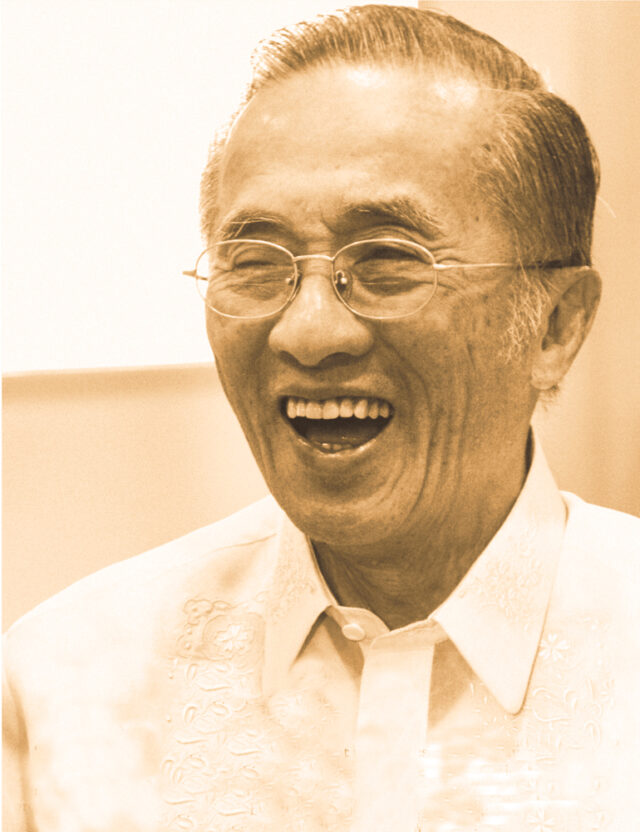
Photo from www.omlopezcenter.org
The OML Center said it was “deeply blessed” for the “unwavering support and guidance” it received from Mr. Lopez, and looks to carry on honoring the ethos and vision of its founder.
Mr. Lopez’s belief that the environmental and societal impact of a business should be considered was also remembered by FPHC, apart from being its chairman emeritus as well as his guidance for the people at the Lopez Group.
“OML, as he was known to us, led FPH through its expansion into power generation, industrial estates, construction, and other fields. But his conviction that business must look beyond just the bottom line and consider its impact on society and the environment was years ahead of his time and will be his enduring legacy,” the holding corporation said in a Facebook post.
“He was our North Star, the inspiration, and guide for succeeding generations of Lopez Group executives and employees who learned to treasure and practice with him the Group’s distinct core values: a pioneering entrepreneurial spirit, business excellence, unity, nationalism, and social justice,” it added.
His care for the nation’s progress and people’s welfare was also remembered.
“We honor OML for his inspiring and principled leadership of the Lopez companies. A staunch advocate of national development and social justice, OML was genuinely concerned with the progress of the country and the welfare of its people,” First Gen Corp., a subsidiary of FPHC, said in a LinkedIn post.
“He was deeply admired and loved, and his legacy lives on in the work that we do each day,” the renewable energy provider expressed.
Mr. Lopez’s business leadership also involved putting the welfare of the people in the company as a priority, which was among the things that construction firm First Balfour remembered about him.
“His unwavering commitment to social justice and environmental advocacy, as well as his prioritization of the welfare of his employees, made him an exceptional leader and an inspiration to everyone of us in First Balfour,” the company posted on LinkedIn. “Your legacy will forever be remembered and celebrated, OML.” — Chelsey Keith P. Ignacio
Oscar Moreno Lopez, a renowned businessman and president and chairman of First Philippine Holdings Corp. (FPHC) has made a name in the Philippine business community. More than the successes for which FPHC has attained, however, Mr. Lopez also endeavored in helping address the country’s social concerns, as seen in his leadership of foundations that sought to respond to the needs of communities, as well as preserve and enrich the country’s art and culture.
The Eugenio Lopez Foundation, where Mr. Lopez served as chairman and president, houses the Lopez Museum and Library. The museum consists of local collections including items belonging to Jose Rizal and artworks from Juan Luna and Felix Hidalgo, and thousands of art collections as well. As an honor to continue the legacy of its founder Don Eugenio Lopez, Sr., the foundation was established to support, promote, and improve Filipino art and culture.
The foundation also has programs that focus on helping individuals understand and appreciate local art, namely the Culture and Art Education Program, which provides diverse workshops and discussions on art and culture, and the Conversation Program, which carries out conservation research and analysis of artworks and digitization of art resources.
Another social and charitable organization where Mr. Lopez served is the Lopez Group Foundation, Inc. (LFGI). As the corporate social responsibility arm of the Lopez Group of companies, LFGI supervises the group’s CSR programs, which involved addressing issues from the energy, real estate, communication, and manufacturing industry.
According to the Philippine Council for NGO Certification (PCNC), the foundation accomplishes its goals through partnership and CSR initiatives in order to promote and preserve cultural heritage.
Recently, LGFI is putting these into action by incorporating volunteerism and scholarships. For instance, the foundation’s programs include livelihood assistance, scholarships, training of families and persons with disabilities, and donations for facilities. Moreover, the establishment of LGFI aligns with the principle and ideals of the Lopez family, which values nationalism and public service.
Perhaps his most notable social contribution is the Oscar M. Lopez Center for Climate Change Adaptation and Disaster Risk Management Foundation, Inc., more known as the OML Center, in 2012. He envisioned this organization as “an institution that would support the generation of the science and technology needed for building resilient communities.”
Among the center’s programs include Project Upturn, which intends to create an inventory of local climate adaptation practices in the country; Sea Level Rise Project, which aims to equip decision-makers in coastal cities with practical information to help their communities adapt to climate change’s impact on rising sea levels; and the Climate Resilience Challenge, a regular search for solutions that build and enhance the country’s climate resilience.
In a speech on “Professional Ethics for Strategic Leaders” delivered in 2012, which can be accessed via lopez-holdings.ph, Mr. Lopez stressed how crucial it is for companies to uphold social responsibility and help solve social and environmental issues.
“Any business, can only survive for as long as it is able to serve the needs of society in a manner that is accepted by society as legitimate and valuable,” he said.
“For the Lopez Family, it has never been about the wealth or the money. Rather, it has been about having businesses that will endure and outlast us, businesses able to serve the needs of society in an honest and legitimate way. This is why we are so particular about our value system, our so-called Lopez Way,” he added.
“Without that anchor, without the stabilizing influence of a value system that embodies our history and the legacy of those who have preceded us, we would not be able to think long-term; we would not be able to think strategically. This, ultimately, is the value of ethical principles, in strategic leadership.” — Angela Kiara S. Brillantes
United States one-dollar bills are seen in this Nov. 14, 2014 file photo — REUTERS
MORE SHORT-TERM foreign capital exited the Philippines for a third straight month in April, as investors worried over elevated inflation and high interest rates.
Foreign portfolio investments (FPI) — also known as “hot money” because of the ease by which these funds enter and exit the economy — yielded a net outflow of $351.87 million in April, data from the Bangko Sentral ng Pilipinas (BSP) showed. This was a reversal of the $1.41-billion net inflow in April 2022.
The net outflows in April also increased fivefold from the $70.26-million outflows in March. It was also the highest in two months or since the $549.28-million outflows in February.
The higher net outflow of short-term foreign investments reflected worsening investor sentiment in the Philippines, Security Bank Corp. Chief Economist Robert Dan J. Roces said in a Viber message.
“Elevated inflation and higher interest rates have raised concerns among investors about the country’s economic outlook, especially in private consumption which is substantial in GDP (gross domestic product),” he said.
The Philippine economic growth eased to 6.4% in the first quarter from 8% a year ago, reflecting slower consumer spending amid elevated inflation and rising rates.
Household final consumption, which contributes around three-fourths to gross domestic product, rose by 6.3% in the first quarter. However, this was slower than 10% growth a year earlier.
For the first four months of the year, inflation accelerated to 7.9%, from 3.7% a year ago. This is still above the central bank’s 5.5% forecast for the year.
Interest rates are at a 16-year high of 6.25% as the BSP raised its key rate by 425 basis points (bps) since May 2022.
“This has made the Philippines less attractive to investors who are looking for higher yields,” Mr. Roces said.
BSP data showed gross inflows in April fell by 68% to $712.83 million from the $2.23 billion a year prior.
The top five investor countries are the United Kingdom, the United States, Singapore, Luxembourg, and Norway, which accounted for 84.1% of FPI inflows.
Majority of investments (57.3%) went to Philippine Stock Exchange-listed securities of banks, holding firms, property, food, and transportation services. The rest were invested in peso government securities.
“Lower inflows in April may have been driven by some risk-off sentiment amid persisting banking woes and recessionary fears in the US,” China Banking Corp. Chief Economist Domini S. Velasquez said in a Viber message.
Market expectations of another rate hike from the US Federal Reserve in April may have caused investors to shift their investments from the Philippines to the US, she added.
Meanwhile, gross outflows of hot money climbed by 29.3% to $1.06 billion in April from $823.32 million in the same month a year ago.
The BSP said that 70.9% of total outward remittances went to the United States.
Year to date, the BSP-registered FPIs yielded net outflows of $680.07 million, a reversal of the $1.39-billion net inflows in the same period in 2022.
“A turn in investor sentiment for the better will bring inflows, and this may be the case as inflation may be on a downtrend while the BSP has signaled a pause,” Mr. Roces said.
The BSP paused monetary policy tightening cycle on May 18 and signaled the policy rate may remain unchanged until the third quarter as inflation continues to ease.
BSP Governor Felipe M. Medalla also said inflation may return to the 2-4% target range by September or October if no supply shocks occur.
The BSP lowered its average inflation forecast for 2023 to 5.5% from the 6% it gave in March. For 2024, the BSP trimmed its projection to 2.8% from 2.9% previously.
The BSP expects FPI to end the year at a $2.5-billion net inflow. — Keisha B. Ta-asan
Infrastructure spending dropped by 16.5% in March, the Budget department reported. — PHILIPPINE STAR/WALTER BOLLOZOS
By Luisa Maria Jacinta C.Jocson, Reporter
INFRASTRUCTURE SPENDING dropped by 16.5% in March, as some releases for the Defense and Education departments are expected in the second and third quarters, the Department of Budget and Management (DBM) said.
In its National Government (NG) disbursement report, the DBM said expenditures for infrastructure and other capital outlays fell to P83.7 billion in March from P100.2 billion in the same month a year ago.
However, the March figure was 33.5% higher than the P62.7 billion spent in February.
“This was mainly attributed to the timing of releases for the Revised Armed Forces of the Philippines Modernization Program (RAFPMP) of the Department of National Defense (DND), as well as payments for completed capital outlay projects of the Department of Education (DepEd),” the DBM said in a press release.
The DBM said that most of the releases under the RAFPMP were already taken up in January and the succeeding releases are mostly programmed in the second to third quarters.
“In the case of the DepEd, big-ticket payables for their capital outlay projects are expected starting this third quarter,” it added.
In the first quarter, infrastructure spending was up by 7.3% to P196.7 billion from P183.2 billion a year ago.
Infrastructure spending in the first quarter was also a tad higher than the P195.8-billion program for the period.
The DBM attributed the higher spending to the implementation of road infrastructure projects of the Department of Public Works and Highways (DPWH) and rail transport foreign-assisted projects of the Department of Transportation (DoTr).
ING Bank N.V. Manila Senior Economist Nicholas Antonio T. Mapa said that the slower infrastructure spending in March could reflect challenges for the government in sustaining support for the economy.
“For first-quarter growth numbers, overall construction delivered economic expansion; however, public construction largely lagged the strength of private sector outlays,” he said in an e-mail.
The Philippine economy grew by 6.4% in the first quarter, slower than the 8% in the same quarter a year ago.
Construction expanded by 10.8% in the first quarter, easing from the 13.1% growth a year ago. Itcontributed 0.59 percentage point to gross domestic product (GDP) in the first quarter, lower than the 0.69 point in the same quarter a year ago.
Rizal Commercial Banking Corp. Chief Economist Michael L. Ricafort said elevated inflation also dented infrastructure spending as prices of construction materials rose.
“Higher prices and interest rates that increased borrowing costs for the government and also increased the overall costs of various infrastructure projects could have also somewhat slowed down the growth of infrastructure projects in the first quarter,” he said in a Viber message.
Headline inflation averaged 8.3% in the first quarter, still well above the central bank’s 2-4% target and revised 5.5% full-year forecast.
In the months ahead, Mr. Mapa said that the government should continue its aggressive infrastructure push.
“Public construction can help boost growth both in the short term, by way of job creation and purchase of raw materials, and in the medium term via improved production capability and or delivering efficiency gains,” he added.
Easing inflation would support infrastructure growth in the next months, Mr. Ricafort said.
“Infrastructure would remain a bright spot and a major growth driver for the Philippine economy as seen in recent years especially since the pandemic started in 2020,” he said.
This year, the government plans to spend 5.3% of GDP on infrastructure, equivalent to P1.29 trillion.
The logos of Microsoft Corp. and OpenAI, as well as the ChatGPT 4 name, are seen in this photo illustration. — PHOTO ILLUSTRATION BY JONATHAN RAA/NURPHOTO VIA REUTERS CONNECT
THE PHILIPPINES should take advantage of the opportunities presented by artificial intelligence (AI), which has the potential to contribute as much as $90 billion to the economy in the next seven years, a Microsoft Corp. executive said.
“The possibilities that AI present the Philippines are many and exciting. According to the Department of Trade and Industry’s (DTI) predictions, it will be contributing as much as $90 billion to the country’s economy by 2030,” Peter Maquera, Microsoft Asia Pacific chief executive officer for Philippines, said during the BusinessWorld Economic Forum 2023 at the Grand Hyatt Manila in Taguig City on Thursday.
Microsoft invested in OpenAI, which developed ChatGPT — a generative AI technology.
Mr. Maquera said the tech giant will release a study on AI’s impact on the Philippines next week.
“The spoiler for you is we think it’s a 20% uplift on our economy if we are all going to work together and leverage this capability,” he added.
Mr. Maquera said some of the potential business involving AI includes content generation, summarization, code generation, and semantic research.
“This technology is alive today and so too are the potential benefits we can already attain. Microsoft is committed to helping the Philippines realize this potential for organizations and individuals to drive greater and more inclusive economic prosperity for all,” he said.
Information and Communications Technology Secretary Ivan John E. Uy said the evolving technology is shaping the way companies do business, adding that organizations should be open to using information technology (IT) in their operations.
“Technology is here to stay no matter what, and it will keep on improving. This is why organizations would have to embrace and include IT in their operations and planning, or they will risk getting left behind by their competitors,” Mr. Uy said in his keynote speech at the forum.
Riccardo Puliti, International Finance Corp. regional vice-president for Asia and the Pacific, said the Philippines is on the right track in terms of its digitalization efforts.
“The government has prioritized digitalization and financial inclusion in its policy agenda. Digital payments are widely encouraged and are now mandatory for vendors to government agencies,” Mr. Puliti said in a recorded speech.
“The pandemic underscored how digital connectivity can be essential for access to good quality education, healthcare, daily work, and essential public services,” he added.
Meanwhile, McDonald’s Philippines Managing Director Margot Torres said companies’ digitalization efforts should focus on improving the customer experience.
“No matter how groundbreaking your technology is, if your employees and consumers cannot adopt it, it will only remain an idea,” she said.
Bain & Company Partner Yukiko Tsukamoto said companies should know their customers by collecting the right data.
“You need to know about your customer. Then you change how your organization works. A lot of conventional companies work up to the fact that the way they were doing things wasn’t working anymore,” Ms. Tsukamoto said.
“Change is really difficult, but I’ve seen companies do it well,” she added.
In his welcome remarks, BusinessWorld President and Chief Executive Officer Miguel G. Belmonte said digital technology could help improve struggling sectors and address key issues hampering the country’s development.
“Digital technology can play a role in revitalizing long struggling industries such as agriculture and address critical concerns such as food security, transportation, and logistics. The potential is there for the Philippines to utilize these technologies to not only drive business but make Filipino lives better,” he said.
Integrating sustainability with digital transformation strategies is now the “name of the game” for companies, he added.
“Digital technologies are increasingly crucial in creating a more efficient, productive, and sustainable future due to their capacity to help companies accomplish and meet demands while also reducing energy costs and the company’s carbon footprint,” he added. — R.M.D.Ochave
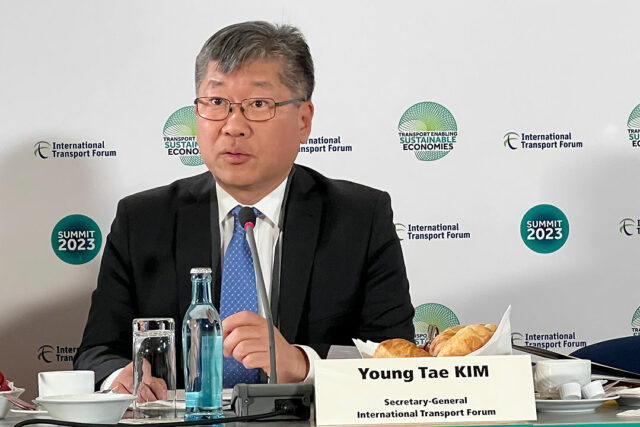
International Transport Forum Secretary-General Young Tae Kim answers media questions at the ITF Summit in Leipzig, Germany on May 24.
By Arjay L. Balinbin, Multimedia Editor
LEIPZIG, Germany — The Philippines can reduce the cost of investment required for its core infrastructure to shift towards low- and zero-emission transportation if it starts to implement more ambitious policies, according to experts from the International Transport Forum (ITF).
“[This will] require a combination of complementary policies that successfully avoid unnecessary transport activity, shift more trips from fuel-burning to no-carbon transport, and improve the efficiency of transport generally,” said ITF Secretary-General Young Tae Kim during a briefing on Wednesday.
The core transport infrastructure, such as rail lines, roads, and ports, are needed to cater to future demand, according to the ITF’s latest global outlook report.
Implementing more ambitious policies now would lead to a decrease in average core infrastructure investment as a percentage of gross domestic product for Southeast Asian countries, including the Philippines, to around 1.7% from 1.8% between 2019 and 2050, the report said.
The ITF serves as a policy think tank for all modes of transport. It is an arm of the Organisation for Economic Co-operation and Development.
Measures in the current ambition scenario, according to the ITF, include policies or technological developments aimed at replacing internal combustion engine (ICE) vehicles, demand management and encouraging mode shift, investing in attractive and sustainable alternatives to private cars, and improving efficiency and operations to reduce carbon intensity.
“All transport decarbonization measures currently in place and already committed to will reduce global transport CO2 by only 3% by 2050,” the organization said in its report. “The transport sector would miss by a wide margin the reduction needed to keep climate change in check.”
If action to decarbonize transport is ratcheted up and accelerated, ITF said the transport sector can still reduce its carbon emissions by about 80% over the next 25 years compared to 2019.
“This drop would put transport on the right path for limiting the global temperature increase to ‘well below’ 2 degrees Celsius above pre-industrial levels, the goal of the Paris Climate Agreement,” it added.
The high-ambition scenario model proposed by the ITF includes targets to cease the sale of ICE vehicles for both passenger and freight road fleet, as well as the implementation of sustainable aviation fuel and the adoption of zero-emission fuel for maritime shipping.
“It will be absolutely essential to quickly scale up cost-competitive technologies and fuels to move people and goods with far, far fewer emissions. We can do all this if we take more decisive action now,” the ITF’s Mr. Kim said.
FREIGHT TRANSPORT STUDY An ITF study on decarbonizing pathways for freight transport in the Philippines is set to be released in June, ITF Data and Policy Analytics team leader Guineng Chen told BusinessWorld.
He said that the study was conducted in response to the pandemic, which severely impacted global logistics, with the goal of providing policy recommendations to ensure the resilience of the Philippine freight transport sector in the future.
Sought for comment, transport expert Rene S. Santiago said in a Viber message: “Banning the sale of ICE vehicles will promote industries of the global north and make us import-dependent.”
“With our power supply heavily coal-dependent, that would give the facade of green — but in reality not be carbon neutral,” he added.
Mr. Santiago also noted that the Philippines is “many years away in realizing its public utility vehicle (PUV) modernization program, which is less ambitious than full transition to electric vehicles (EVs).”
For his part, Infrawatch PH convenor Terry L. Ridon said that while the country has a role in climate action, it does not have the same responsibility as developed economies to immediately implement measures to stem the warming of the planet.
“However, we should be able to implement climate strategies that can realistically be implemented today given the limitations of current Philippine economic growth,” he said in a Viber message.
He noted that EV adoption remains in its nascent stages, as the economic justification for the public to opt for such vehicles “does not yet exist, despite new government incentives to expedite the purchase of EVs.”
“There is also no certainty of a continuing supply of EVs into the country if ICE vehicle sales are ended, due to the fact that, unlike major economies, we do not produce our own electric vehicles,” he added.
He said that there may be broader prospects for EV adoption for PUVs, as the government may provide significant subsidies to help PUV operators to acquire new EVs.
“This is particularly relevant if the government includes emissions-free buses as part of its EDSA busway requirements,” Mr. Ridon added.
The Philippine government should also continuously engage with its foreign partners to study emerging technologies and practices in various sectors, he said.
According to the ITF, Transport Secretary Jaime J. Bautista has expressed interest in joining the organization, which will enable the Philippines to benefit from the policies and best practices of other member nations.
Only eight out of its 64 member countries are from Asia, including Cambodia, China, Japan, South Korea, and India. Last year, Cambodia became the first Southeast Asian country to join the ITF.