Home Blog Page 415

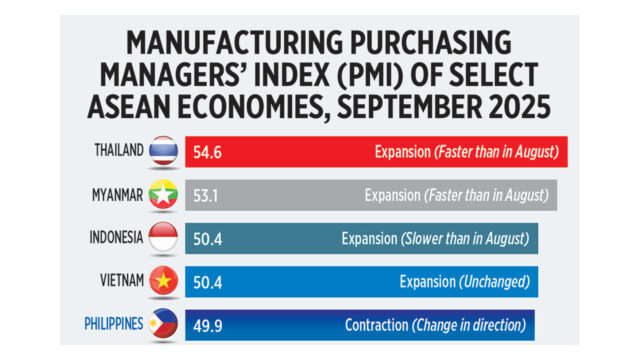
Manufacturing Purchasing Managers’ Index (PMI) of Select ASEAN Economies, September 2025

FACTORY ACTIVITY in the Philippines contracted for the first time in six months in September, as manufacturers saw a drop in output and new orders, S&P Global said on Wednesday. Read the full story.

Manufacturing Purchasing Managers’ Index (PMI) of Select ASEAN Economies, September 2025

How PSEi member stocks performed — October 1, 2025

Here’s a quick glance at how PSEi stocks fared on Wednesday, October 1, 2025.


Powerful earthquake rocks central Philippines, killing at least 69 people

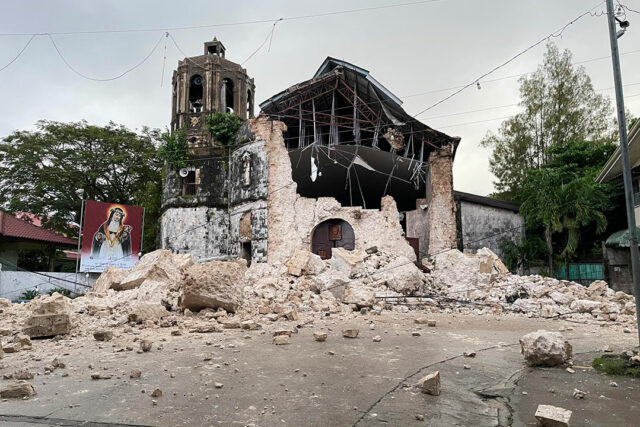
THE Archdiocesan Shrine of Santa Rosa de Lima in Daanbantayan, Cebu sustained heavy damage from the Sept. 30 quake. — ARCHDIOCESAN SHRINE OF SANTA ROSA DE LIMA FACEBOOK PAGE

A 6.9-MAGNITUDE earthquake struck the central Philippine province of Cebu on Tuesday night, leaving at least 69 people dead, according to the local disaster agency.

Most of the deaths were caused by fallen debris and occurred mostly in Bogo City, which was closest to the epicenter of the earthquake, and nearby municipalities including San Remigio, Office of Civil Defense (OCD) officer-in-charge Bernardo Rafaelito R. Alejandro IV told a news briefing on Wednesday.

He said authorities were focused on rescuing as many people as possible during the “golden hour” period — the first 24 hours after a quake when survival is more likely.

“We have already mobilized and deployed responding units from our uniformed personnel like the Armed Forces, Coast Guard, Philippine National Police and Bureau of Fire Protection,” he added.

At least 147 people were injured, according to the National Disaster Risk Reduction and Management Council.

President Ferdinand R. Marcos Jr. pledged swift aid for survivors, saying Cabinet secretaries were on the ground leading relief operations, as he offered condolences to families who lost loved ones.

Cebu, a province of 3.4 million and one of the country’s top tourist hubs, sustained heavy damage, including on heritage churches, residential houses and schools, though Mactan-Cebu International Airport — the Philippines’ second-busiest gateway — remained open.

All ports and airports in the Visayas were fully operational, the Department of Transportation (DoTr) said in a statement.

“The Civil Aviation Authority of the Philippines and Philippine Ports Authority (PPA) immediately inspected our airports and ports in the Visayas after the earthquake,” Acting Transportation Secretary Giovanni Z. Lopez said.

A yellow alert was declared over the Visayas grid after 27 power plants tripped because of the quake.

In an 8 a.m. advisory on Wednesday, the National Grid Corp. of the Philippines (NGCP) said the grid lost 1,444 megawatts (MW) after the plants tripped.

This was on top of 16 plants that have been unavailable before the quake, while one plant was running on derated capacity, bringing the total unavailable capacity to 1,654.7 MW, the agency said.

A yellow alert is issued when the operating margin is insufficient to meet the transmission grid’s contingency requirement. The NGCP said the Luzon and Mindanao grids were operating normally.

PRICE FREEZE
In a statement, the Department of Energy (DoE) said it was coordinating with power generation, transmission and distribution companies to ensure continued electricity supply in affected communities.

It ordered a 60-day price freeze on basic petroleum products in the province, including on liquefied petroleum gas (LPG) and kerosene.

“Stability of fuel prices and availability of supply are vital in times of disaster,” Energy Secretary Sharon S. Garin said in the statement. “The department is working closely with all partners to make sure that families and frontliners have access to essential energy resources they need during relief and recovery operations.”

As of 1 p.m., NGCP reported power failures at four transmission lines, including the Daanbantayan-Tabango 230-kV Line 1 and Line 2, Daanbantayan-Compostela 230-kV Line 1 and Line 2, Tabango-Kananga 230-kV Line 1 and Line 2 and Leyte-Luzon 350-kV HVDC Line.

Five generating units had come back online, it added.

Ms. Garin separately told lawmakers at her confirmation hearing that she would send a task force to the province to help restore power.

“They have to prepare, they have to create a team,” she said. “All their equipment will be transported. It will take them a day or two just to get to the area.”

Separately, Health Secretary Teodoro J. Herbosa said they would use the agency’s quick-response fund to send out a team to quake-affected areas.

The Health department’s medical teams in Tacloban and the Philippine Emergency Medical Assistance Team were on standby, he told a Senate budget hearing.

The Philippine Coast Guard in a statement said it had deployed 36 doctors, nurses and first responders along with thousands of food packs to Bogo City.

Meanwhile, the Trade department said it had ordered a 60-day price freeze on basic goods across the entire province of Cebu.

This is in line with the President’s order to fully mobilize state assets for the relief and rescue of affected residents, it said in a statement.

The agency sent teams to inspect markets, verify prices and guarantee adequate and continuous supply of basic goods in affected communities, it added.

Cultural agencies were coordinating with the Cebu Archdiocese and affected local government units to assess the damage on churches and heritage structures, the National Commission for Culture and the Arts said in a statement.

“While full attention remains focused on relief and rescue operations, we encourage our local partners to take initial protective measures such as safeguarding movable heritage, retrieving significant fragments and documenting the extent of the damage for future reference,” National Historical Commission of the Philippines Chairman Regalado Trota Jose, Jr. said in a separate statement.

The Philippines lies in the so-called Pacific Ring of Fire, a belt of volcanoes around the Pacific Ocean where most of the world’s earthquakes strike. — Edg Adrian A. Eva, Sheldeen Joy Talavera, Ashley Erika O. Jose, Adrian H. Halili, and Brontë Lacsamana


Philippine priority bills may risk missing structural fixes

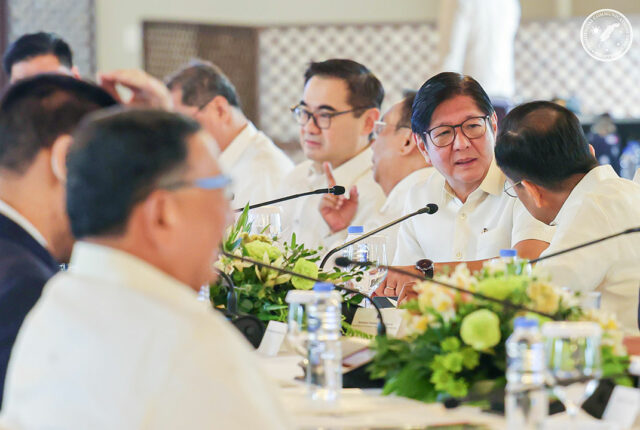
President Ferdinand R. Marcos, Jr. led the first meeting of the Legislative-Executive Development Advisory Council for the 20th Congress in Malacañang on Tuesday. — PCO

By Chloe Mari A. Hufana, Reporter

PRESIDENT Ferdinand R. Marcos, Jr.’s administration has set 44 priority measures for Congress, but critics say the package risks falling short of addressing the Philippines’ deep economic weaknesses despite promises of stronger governance, wider social services and energy security.

The Legislative-Executive Development Advisory Council (LEDAC) outlined the bills late Tuesday, framing them as a roadmap to attract investment and modernize state institutions.

The list includes a proposed general tax amnesty, amendments to the Bank Deposit Secrecy Law and Anti-Money Laundering Act and fresh levies such as an excise tax on single-use plastics.

Also on the agenda are the proposed Cybersecurity Act, National Land Use Act, Blue Economy Act and fiscal reforms requiring civil servants to waive bank secrecy rights. The palace said the measures would “modernize institutions, strengthen fiscal discipline and ensure energy security.”

But Jose Enrique A. Africa, executive director of the research group Ibon Foundation, said the package leaned heavily on investor-friendly reforms while offering little for agriculture, redistribution or industrial development.

“The agenda lacks a coherent development framework to promote redistribution, agricultural growth and Filipino industrialization,” he said in a Viber message on Wednesday. “Tax amnesties are deeply problematic policy instruments that encourage tax avoidance and impunity rather than compliance.”

Mr. Africa added that while proposals to ease bank secrecy rules and tighten anti-money laundering standards are welcome, questions remain about whether they will be applied consistently.

“The current selectivity of the administration’s anti-corruption drive does not give confidence that there is really an intent to institutionalize effective anti-corruption measures,” he said.

The Marcos government has highlighted governance reforms as central to the agenda, citing bills that would compel civil servants to disclose bank accounts, a Progressive Budgeting law to tighten fiscal discipline, and a Magna Carta for villages.

The palace said such measures are needed as the Philippines contends with a widening corruption scandal in infrastructure spending.

Other legislative items target the fast-growing digital economy. These include proposals on digital payments, regulation of online gambling and the use of artificial intelligence in elections.

The palace said the bills would “secure online transactions, promote innovation and ensure the safe and responsible use of digital platforms in governance and public life.”

In a Viber message, Finance Secretary Ralph G. Recto said the gambling bill would prioritize regulation over taxation.

Energy and climate resilience also feature in the list, with bills promoting biofuels, waste-to-energy projects and amendments to the Electric Power Industry Reform Act.

A proposed excise tax on single-use plastics seeks to curb waste and raise revenue, while the proposed National Land Use Act and Blue Economy Act are positioned as frameworks for balancing growth with environmental protection.

Other measures include a master plan for infrastructure and national development, reforms to strengthen the Bases Conversion and Development Authority and changes to the Magna Carta for micro, small and medium enterprises. These are meant to bolster competitiveness, create jobs and broaden access to credit.

Still, Mr. Africa warned that without stronger redistributive reforms, the legislative program risks reinforcing elite and corporate control over key sectors such as water, healthcare and energy.

On the other hand, Michael L. Ricafort, chief economist at Rizal Commercial Banking Corp., said the priority bills could help boost the Philippines’ investment climate and bolster fiscal management.

“These are important reform measures that would provide a more conducive environment for further economic growth and development,” he said in a Facebook Messenger chat.

He said the bills are meant to draw in foreign investment, create jobs and boost economic activity. He added that the measures could also strengthen fiscal discipline and debt management, supporting the nation’s economic fundamentals. — with ARAI

Tropical Depression Paolo forms, may hit Luzon by Friday — state weather bureau

PAGASA.DOST.GOV.PH

By Edg Adrian A. Eva, Reporter

TROPICAL Depression Paolo has developed from a low-pressure area east of Catanduanes in the Bicol region and was expected to make landfall over Isabela or northern Aurora on Friday, the state weather bureau said on Wednesday.

As of 2 p.m., Paolo was spotted 695 kilometers east of southeastern Luzon with maximum sustained winds of 55 kilometers per hour (kph) near the center and gusts of up to 70 kph, the Philippine Atmospheric, Geophysical and Astronomical Services Administration (PAGASA) said. It was moving westward at 25 kph.

PAGASA weather specialist John A. Manalo said the country’s 16th cyclone this year was projected to strengthen into a severe tropical storm as it nears the country and could further intensify into a typhoon.

“As it approaches our country, our analysis shows that it will continue to strengthen and intensify into a severe tropical storm,” he told a news briefing.

There was a possibility of raising Tropical Cyclone Wind Signal No. 1 over the eastern portions of Northern and Central Luzon by Wednesday afternoon or evening, which could escalate to Signal No. 3 or even No. 4 as Paolo crosses land, he added.

While the cyclone was unlikely to directly affect the country within 24 hours, rains were expected in Northern and parts of Central Luzon starting Friday morning. Authorities also warned of possible flooding and landslides in areas along the storm’s path.

PAGASA issued Storm Surge Warning No. 1 over Aurora, Cagayan and Isabela, warning of a minimal to moderate risk of storm surges between one and two meters over the next 48 hours.

Residents in coastal areas were advised to stay away from beaches and suspend sea activities. Local governments were urged to prepare evacuation centers and pre-position relief goods as the storm approaches.

PHL urged to boost media literacy in schools to fight disinformation spread

From L-R: Ramon R. Isberto, MediaQuest Corporate Communications Consultant; Nikko Galvez, MediaQuest Chief of Staff; Menchie Silvestre, Alagang Kapatid Foundation Executive Director; Ana Lomtadze, UNESCO Jakarta Programme Specialist; Jane Jimenez-Basas, MediaQuest and Cignal President and Chief Executive Officer; Maki Katsuno-Hayashikawa, UNESCO Jakarta Director; Joy Sanchez, MediaQuest Special Projects Consultant; Charles Lejano, MediaQuest Head of Corporate Affairs and Communications, Red Redrico, Media5 Marketing, Head of Integrated Creatives

THE PHILIPPINES should prioritize media and information literacy in schools as artificial intelligence (AI) accelerates the spread of disinformation, the United Nations Educational, Scientific and Cultural Organization (UNESCO) said.

“We must try to mainstream and integrate media and information literacy into the curriculum for young children,” Maki Katsuno-Hayashikawa, UNESCO regional director for Brunei, Indonesia, Malaysia, the Philippines and Timor-Leste, told a media roundtable on Tuesday.

“At the same time, we need to train teachers how to deliver [it] as a subject or as part of the curriculum,” said added.

She noted that while access to education in the Philippines is broad, quality and content remain uneven, particularly in rural areas.

With younger Filipinos relying heavily on social media as their main source of news, Ms. Katsuno-Hayashikawa said media and information literacy has become more complex in the age of AI.

UNESCO Program Officer Ana Lomtadze cited the importance of including data privacy in media and information literacy.

“Every time we interact with an algorithmic-driven product, it collects data about us that we may not be aware of,” she said, adding that such information could later be resold to companies for profit.

UNESCO has teamed up with THINKaMuna Pilipinas, the media literacy program of MediaQuest Holdings, Inc., to promote critical thinking and digital literacy. The collaboration has produced information videos on cognitive biases, critical thinking and technology addiction.

The two groups will also co-host the Philippine Media and Information Literacy Conference 2025 in November, with the theme “empowering critical thinking in the age of AI.”

Hastings Holdings, Inc., a unit of the PLDT Beneficial Trust Fund subsidiary MediaQuest, has a majority stake in BusinessWorld through the Philippine Star Group, which it controls. — Beatriz Marie D. Cruz

House seeks calendar extension 

PHILSTAR FILE PHOTO

CONGRESSMEN on Wednesday asked the Senate to extend the legislative calendar until Oct. 13 to give the House of Representatives time to approve on final reading next year’s spending plan ahead of the congressional recess.

The House floor approved House Resolution No. 320 via voice vote, seeking the Senate’s consent to extend its plenary session by one day beyond the scheduled Oct. 10 break. Lawmakers immediately transmitted the proposal to the Senate for consideration.

“Following the expected approval of the General Appropriations Bill FY 2026 on second reading on Oct. 10, 2025, members of the House will require the constitutionally mandated period of three days to study and review the final version of the bill prior to nominal voting on third and final reading,” according to the resolution, authored by Speaker Faustino “Bojie” G. Dy III, Majority Leader Ferdinand Alexander “Sandro” A. Marcos III, Minority Leader Marcelino C. Libanan and Nueva Ecija Rep. Mikaela Angela B. Suansing.

Congressmen last week opened floor debates on the record P6.793-trillion spending bill following 37 days of scrutiny at the House Appropriations Committee.

The lower chamber is set to tackle the proposed budgets of Congress and the Department of the Interior and Local Government, among others, alongside opposition speeches from minority lawmakers on Oct. 2, Thursday, according to a copy of the budget scheduled shared to reporters. Budgetary tweaks were scheduled until Oct. 10.

This year’s budget process underwent major reforms after Ms. Suansing, who heads the House appropriations panel, pushed for greater transparency following last year’s controversy over alleged insertions in the spending plan. 

Amendments to the budget bill were previously managed by a closed-door “small committee” of select lawmakers, with the measure swiftly approved on second and third reading on the same day.

“This extension is hereby sought in faithful compliance with the requirements of the 1987 Constitution,” the resolution stated.

The fast-tracked process was made possible by President Ferdinand R. Marcos, Jr.’s certification of the budget bill as urgent, waiving the required three-day interval between second and third readings. Kenneth Christiane L. Basilio

PCG deploys ship to quake-hit Cebu

THE Philippine Coast Guard deployed BRP Teresa Magbanua to transport doctors, nurses, and other medical personnel, along with emergency equipment, to assist communities in Cebu on Wednesday after it was hit by a deadly 6.9-magnitude earthquake. — PHILIPPINE STAR/RYAN BALDEMOR

THE Philippine Coast Guard (PCG) on Wednesday deployed its largest vessel to the central Philippines to support medical operations following a 6.9-magnitude earthquake that struck a densely populated island in the region.

Ten medical teams consisting of doctors, nurses and medics, alongside medical equipment were aboard the 96.6-meter BRP Teresa Magbanua, the PCG’s largest multi-role response vessel, which departed Manila at noon en route to Cebu, coast guard spokeswoman Captain Noemie Guirai-Cayabyab said.

“Our deployment is in accordance with the directive of our president… to respond promptly to what happened [on Tuesday],” she told reporters in Filipino.

Cebu is a densely populated island located in the central Philippines and is one of the country’s most popular tourist destinations. It is home to roughly 3.32 million Filipinos, according to government data.

A 6.9-magnitude earthquake struck the island just before 10 p.m. on Tuesday, severely impacting Bogo City in northern Cebu, which sits near the epicenter of the shallow tremor.

The PCG also deployed nine teams of tracker dogs to help support search and rescue operations, Ms. Cayabyab said. They were aboard a Philippine Air Force (PAF) C-130 cargo plane.

In a separate statement, the PAF said it activated a disaster response task force to support rescue operations in Cebu, deploying transport planes to carry personnel to the island and helicopters to assess damage while airlifting medical teams, equipment and goods to hardest-hit areas. Meanwhile, the Department of Budget and Management (DBM) has urged agencies to tap P8-billion calamity funds for rehabilitation and relief of those affected by the recent 6.9-magnitude earthquake in Cebu.

In a statement on Wednesday, the DBM said the National Disaster Risk Reduction and Management Fund (NDRRM) fund has a balance of P8.01 billion, which can be used for emergency relief and rehabilitation programs for disaster-affected areas.

“We also have the NDRRM on standby for larger-scale needs, including the repair of damaged facilities and heritage sites, to help ensure that our communities can rise again as quickly as possible,” Budget Secretary Amenah F. Pangandaman said.

The Cebu earthquake, which resulted in widespread destruction in residential and commercial infrastructure, left at least 60 dead, according to the disaster agency.

She also said government agencies such as the Department of Social Welfare and Development, the Department of Public Works and Highways, and the Office of Civil Defense have Quick Response Funds (QRF) to use for delivering assistance.

The QRF is an emergency standby facility that finances urgent relief and recovery initiatives in the time of disasters such as earthquakes and typhoons.

The DBM noted that agencies can ask replenishment from the DBM once their QRF balance has been reduced to at least 50%. — Kenneth Christiane L. Basilio and Aubrey Rose A. Inosante

SC declares BARMM redistricting unconstitutional

PHILSTAR FILE PHOTO

THE SUPREME COURT (SC) on Wednesday struck down two Bangsamoro parliamentary redistricting laws, effectively canceling the Oct. 13 elections in the Bangsamoro Autonomous Region in Muslim Mindanao (BARMM).

In a decision dated Sept. 30, SC spokesperson Camille Sue Mae L. Ting announced that the Court en banc granted two consolidated petitions.

The tribunal voted 11-3-1 to declare Bangsamoro Autonomy Act (BAA) No. 77, the Bangsamoro Parliamentary Redistricting Act of 2025, unconstitutional for violating Section 5 of the Voter’s Registration Act, which bars altering precincts after the election period has begun.

The law, passed on Aug. 19 and signed into law on Aug. 28, was enacted days after the Aug. 14 start of the election period.

The Court likewise struck down BAA No. 58, the Bangsamoro Parliamentary Districts Act of 2024, saying it cannot be revived since it was based on an outdated framework that still included Sulu as part of BARMM.

“There can be no BARMM parliamentary elections on Oct. 13, 2025 because of the lack of a valid districting law,” the Court said.

Instead, it ordered the Bangsamoro Transition Authority to determine new parliamentary districts by Oct. 30 in line with the Bangsamoro Organic Law and the Constitution.

The Commission on Elections (Comelec) was then directed to hold elections no later than March 31, 2026.

“It is very clear that we have no law to enforce. It’s back to zero for Comelec,” Comelec Chairman George Erwin M. Garcia told reporters in a Viber message.

“In the meantime, the ball is in the hands of the Bangsamoro Parliament, and we shall be waiting for their action and compliance,” he added.

The ruling also noted logistical hurdles raised by Comelec, including the incomplete poll worker training, need for sectoral assemblies, and installation of Starlink connectivity across BARMM.

With less than a month before the scheduled vote, the poll body said enforcing BAA No. 77 “would cause massive confusion among the more than 2.25 million registered voters.” — Erika Mae P. Sinaking

Masbate to get P100-M typhoon aid

PRESIDENT Ferdinand R. Marcos, Jr. led the distribution of cash aid and food packs to families hit by Typhoon Opon in Masbate, Oct. 1. — PCO

PHILIPPINE President Ferdinand R. Marcos, Jr. asked the Department of Budget and Management (DBM) to release P100 million in Local Government Support Fund (LGSF) to the province of Masbate for rehabilitation efforts after Typhoon Bualoi (Opong) devastated the area.

“I also gave instructions, upon the request of Governor [Richard T.] Kho, for the DBM to release P100 million from the LGSF before I left Manila, so that you will have immediate funds for rehabilitation,” he said in Filipino during the distribution of assistance to typhoon-affected families in Masbate, according to a transcript from his office.

In a separate statement, the DBM announced it released P100-million rehabilitation fund to Masbate residents struck by multiple storms.   

“The process is now underway to expedite the release of funds for the urgent recovery of the province severely hit by three consecutive typhoons, where the President himself witnessed the situation of over 6,000 families — or 25,565 individuals — currently staying in evacuation centers,” Budget Secretary Amenah F. Pangandaman said.

The P100-million fund is expected to be allocated for food, shelter, medicine, and other essential needs of families whose homes and livelihoods were destroyed.

The Department of Labor and Employment has also disbursed P28 million through its emergency employment and livelihood programs, while the Department of Social Welfare and Development distributed food packs and hygiene kits.

Families in evacuation centers also received P10,000 in cash aid.

The provincial government on Tuesday reported 18 deaths following Opong, while infrastructure damage reached P31.4 million, according to Mr. Kho. — Chloe Mari A. Hufana and Aubrey Rose A. Inosante

RTC closes De Lima drug case

PHILIPPINE STAR/MIGUEL DE GUZMAN

THE Muntinlupa Regional Trial Court (RTC) Branch 204 has officially closed the criminal case against Party-list Rep. Leila M. de Lima and her co-accused Ronnie Palisoc Dayan after the prosecution withdrew its motion for reconsideration.

In an order dated Sept. 30, the regional court granted the panel of public prosecutors’ request to withdraw the motion, which had been filed on July 14, following instructions from the Office of the Prosecutor General.

The motion sought to revisit Ms. De Lima’s acquittal in a criminal case filed under the Comprehensive Dangerous Drugs Act of 2002 (Republic Act No. 9165).

The order stressed that “every acquittal becomes final immediately upon promulgation and cannot be recalled for correction or amendment.”

It added that granting the motion for reconsideration would violate the constitutional protection against double jeopardy, effectively reopening prosecution despite an acquittal.

“With the withdrawal of the motion for reconsideration, this case is hereby deemed closed and terminated,” the order read.

Ms. De Lima, a former senator and long-time critic of the Duterte administration, was charged with illegal drug trading in connection with alleged drug activities inside the New Bilibid Prison during her tenure as Justice secretary. — Erika Mae P. Sinaking

DoJ to probe Villar family over P18-B flood control projects

JESUS CRISPIN C. REMULLA — PHILIPPINE STAR/JOHN RYAN BALDEMOR

THE Department of Justice (DoJ) has expanded its investigation into alleged irregularities in flood control projects in Las Piñas involving lawmakers.

Justice Secretary Jesus Crispin C. Remulla on Wednesday said that the flood-control inquiry now covers former senator Cynthia A. Villar, Sen. Mark A. Villar, and Sen. Camille A. Villar over possible conflicts of interest.

Mr. Villar, who served as secretary of the Department of Public Works and Highways (DPWH) from 2016 to 2021, is being investigated for allegedly favoring a contractor said to be his first cousin.

“The contractor reportedly secured projects amounting to over P18 billion in Las Piñas alone. That raises questions that we need to examine,” Mr. Remulla told reporters.

The DoJ chief added that the senator will be given an opportunity to present his side and respond to the allegations.

He noted the case is among 67 flagged by Congress, with formal summons to Senator Mark Villar and others to follow once investigators firm up the records.

Mr. Remulla explained that the justice department’s review extends to relatives up to the fourth degree of consanguinity, a scope that includes former senator Cynthia A. Villar, described as a third-degree relation to the contractor, and Senator Camille A. Villar.

The Villars, among the most prominent political families in the country, have yet to issue a statement on the matter. — Erika Mae P. Sinaking