Home Blog Page 403

Coal dev’t contract process set for streamlining

REUTERS

THE Department of Energy (DoE) said it plans to introduce a new type of contract that will accelerate the development of confirmed coal deposits.

In a draft circular, the DoE proposes awarding coal operating contracts structured to allow miners to start production faster.

“Aside from proclaimed coal mining reservation areas, there are other areas in the country with existing data that confirms the existence of mineable coal reserves of commercial quantity that may already be developed and produced thereby reducing the period required to utilize coal resources,” the DoE said.

Contracting for coal operations is currently governed by DC2017-09-0010, which covers the full lifecycle of activities, including exploration, within proclaimed coal mining reservation areas.

The DoE seeks to accelerate the utilization of the country’s coal resources by setting clear guidelines to allow companies to start mining directly.

Under the proposed rules, the DoE may grant development and production coal operating contracts based on applicants’ nominated areas of interest and the DoE’s publication of coal areas open for application.

The contract area may cover up to 15 coal land blocks within a single coal region and must include areas where the DoE has confirmed there is enough coal to mine. These areas should have verified coal data, so no further exploration is needed before mining.

Each contract may last for 10 to 20 years, depending on how much time is needed to develop and mine the coal. Upon expiration of the initial term, the contract may be renewed three consecutive times, for a total renewable period not exceeding 12 years.

The Philippines imports most of its coal requirements, which is responsible for around 60% of power generation. It, however, seeks to reduce dependence on fossil fuels and attain a renewable energy share of 35% by 2030. — Sheldeen Joy Talavera

Why boards must rethink risk and resilience

IN BRIEF:

• Boards face an increasingly interconnected risk environment requiring closer integration of governance, risk, and compliance functions.

• Technology, cybersecurity, sustainability and workforce changes must be aligned with clear business objectives and supported by measurable risk assessment.

• Effective enterprise resilience depends on strong governance culture, qualified decision-making, and open collaboration between boards and management.

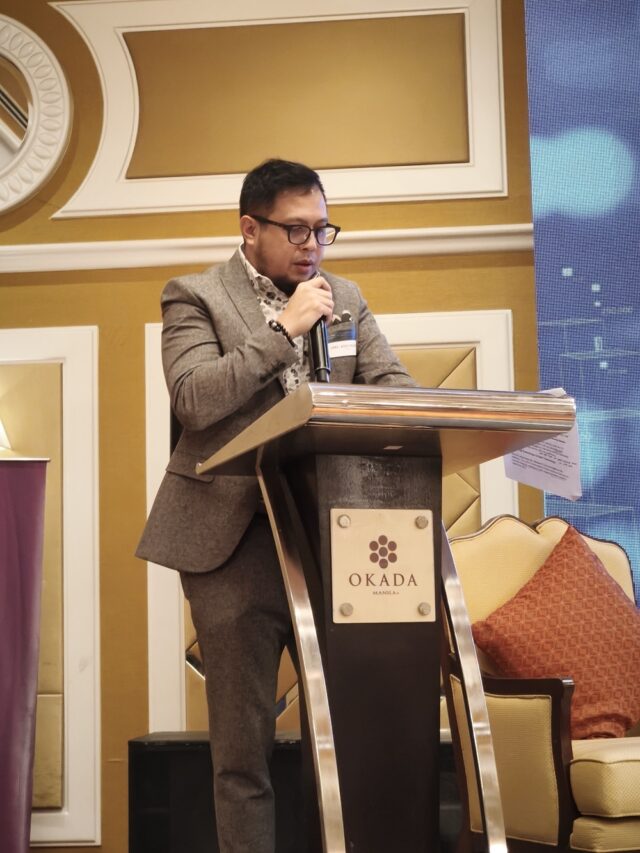
Risk has become a constant presence in boardroom discussions. That was evident at the 2025 SGV Knowledge Institute and SGV Consulting forum held in November, titled “Harmony in Action: Navigating Enterprise Resilience through Governance, Risk, and Compliance Synergy.” The discussions reflected how governance, risk, and compliance (GRC), while viewed as separate functions, are also seen as interconnected mechanisms for enterprise resilience.

CHANGING RISK ENVIRONMENT
Boards today are operating in a risk environment that is increasingly non-linear, accelerated, volatile and interconnected. The nature of risk has shifted since the pandemic, when companies and organizations focused mainly on reporting financial risks. Today, boards face multiple, overlapping crises rather than isolated incidents. These crises have implications across supply chains, energy prices, regulatory compliance and geopolitical exposure. As a result, risk, compliance, and internal audit functions are expected to manage several issues simultaneously, often with limited resources.

During the session, a reference was made to a recent study by the EY Center for Board Matters, which identified five agenda items currently top of mind for boards in the Asia-Pacific region: geopolitical volatility and resilience; shaping tomorrow’s workforce; artificial intelligence, cyber security, and digital transformation; sustainability integration into business models; and rethinking the board of the future. The panelists said these themes also strongly resonate with Philippine boards.

Geopolitical volatility was highlighted as a significant concern. Although the Philippines is generally described as a consumption-driven economy, companies here are often deeply connected to global markets. Medel Nera, a director at various Publicly Listed Entities and also either Chairman or a Member of various Audit Committees, cited the example of a Philippine manufacturing-exporting company that sources materials from nearly 60 countries and serves customers in 120 countries. Such companies are directly affected by developments in other parts of the world, including geopolitical tensions, sanctions, and trade disruptions. Boards, therefore, need to recognize geopolitical risk as material and prepare for its potential impact.

Workforce-related risks were also discussed, where fewer professionals and more alternative work arrangements have made the workforce more selective. New generations of employees are more likely to ask for remote work and a better work-life balance. Practices that were effective in the past may no longer be suitable. Organizations need to rethink how they attract, retain, and manage talent as a resilience strategy.

Technology, particularly artificial intelligence (AI) and big data, was featured prominently in panel. There is high interest in AI tools, but daily adoption in operations and production is still low. One reason cited was concern over potential job losses resulting from automation. There are also risks in cybersecurity, data protection and privacy, and technology misuse.

The panelists emphasized that technology initiatives should be aligned with business objectives. Boards and management should first clarify organizational goals, such as revenue growth, brand strength, profitability, or operational efficiency. Then, determine which technology strategies support those goals.

Security controls should be designed around these business-driven technology requirements, rather than implemented as isolated initiatives.

Cybersecurity was described using an analogy: attackers tend to avoid difficult targets and focus on easier ones. Organizations need balanced security measures. Controls cannot be so restrictive or costly else they hinder operations, but at the same time, they must be strong enough to deter intrusion. The aim is to establish security measures appropriate to the organization’s risk exposure and operational needs.

Responsible adoption of AI was also stressed. Panelists noted that employees have to use AI productively, while stopping misuse like plagiarism or security gaps. Clear policies on acceptable use and approved platforms were cited as necessary measures to manage these risks while maximizing potential benefits.

From the public sector perspective, Solicitor General Darlene Berberabe said that the Department of Information and Communications Technology (DICT) has implemented reforms focused on digitalization. These include developing digital infrastructure, with a push to explore blockchain technology, and online portals for government procurement to promote transparency.

SUSTAINABILITY AND ESG INTEGRATION
Sustainability was discussed as an integral component of enterprise resilience. Many companies are implementing sustainability programs in response to requirements set by global parent organizations. These initiatives contribute to environmental stewardship, corporate reputation and long-term economic viability.

Chaye Cabal-Revilla, Executive Director and Chief Finance, Risk, and Sustainability Officer of Metro Pacific Investments Corp. (MPIC) and President and CEO of mWell, said sustainability is embedded across MPIC’s operations. Performance indicators and incentives now include not only financial targets but also environmental, social, and governance (ESG) outcomes. Major investments are mapped against the United Nations Sustainable Development Goals. Responsibility for sustainability initiatives has expanded beyond a dedicated team to include finance, risk officers, and internal auditors, supporting a more integrated approach.

THE BOARD OF THE FUTURE
Though board effectiveness needs improvement, urgent priorities like profitability, compliance, and operations often push long-term development aside. Some organizations have included younger board members and provided board-level training on sustainability, AI, and technology. According to the panelists, a mix of experiences creates balance and supports organizational resilience.

Achieving synergized risk management remains a challenge. Collaboration among governance, risk, compliance and internal audit is widely supported but at times difficult to implement. Organizational culture plays a significant role. In some companies, compliance and internal audit are seen as obligations rather than value-adding functions. Sometimes, board directives are diluted as they pass through management layers, or communication between the board and management is limited.

Ms. Cabal-Revilla noted that one way to enable GRC initiatives is to quantify risks. By assigning financial value to potential risks and losses, organizations can offer clearer business cases to senior management and boards. Tangible, data-driven proposals are more likely to gain approval and support.

From Ms. Berberabe’s experience in the private sector, governance was described as essential to achieving long-term profitability. Organizations that view GRC as strategic assets, rather than regulatory requirements, are better positioned for sustained performance.

All panelists stressed the importance of communication and collaboration between boards and management. Mr. Nera encouraged management not to be intimidated by board members and highlighted the value of upfront communication in areas for improvement. Clear roles, open dialogue and a strong tone from the top were identified as critical factors in building resilient organizations.

THRIVING IN A RAPIDLY CHANGING BUSINESS LANDSCAPE
As organizations navigate overlapping crises and shifting workforce dynamics, the integration of sustainability and technology into strategic planning becomes essential for long-term resilience. The emphasis on clear communication and collaboration between boards and management is also crucial for fostering a culture that views GRC as a strategic asset instead of just an obligation for compliance. By quantifying risks and aligning technology initiatives with business objectives, organizations can better prepare for any challenges ahead.

Ultimately, the future of effective governance lies in the ability to adapt, innovate, and work synergistically across functions, ensuring that enterprises not only survive but thrive in a rapidly changing business landscape.

This article is for general information only and is not a substitute for professional advice where the facts and circumstances warrant. The views and opinions expressed above are those of the authors and do not necessarily represent the views of SGV & Co.


Ryan Gilbert K. Chua is the consulting leader and Warren R. Bituin is the technology consulting leader of SGV & Co.


Eala faces Sonmez of Turkey in Round 1 of Abu Dhabi Open

ALEX EALA — FACEBOOK.COM/MUBADALAABUDHABIOPEN

ALEXANDRA “ALEX” EALA resumes her campaign in the WTA Tour against Turkey’s Zeynep Sonmez in Round 1 of the stacked WTA 500 Mubadala Abu Dhabi Open starting on Monday at the Zayed Sports City International Tennis Centre.

It will be the third duel between two good pals with the 20-year-old Filipina holding a 2-0 head-to-head advantage after wins in the 2023 W60 Nantes in France and the 2025 Eastbourne Open in England.

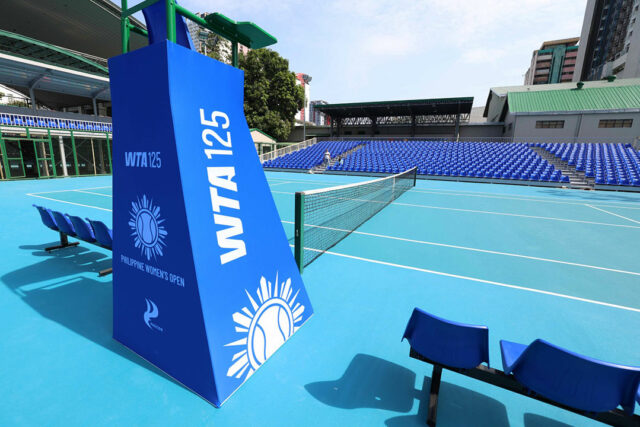
Ms. Eala, WTA No. 49, plunges into action with an all-time high morale after bringing the first-ever WTA tournament at home, the WTA 125 Philippine Women’s Open where she reached the quarterfinals after a 6-4, 6-4 defeat to eventual champion Camila Osorio of Colombia (WTA No. 84).

Game time is still to be determined after the ongoing qualifiers but hopes are high for Ms. Eala to go deep in the rich Middle East city despite going up against a stacked squad led by reigning champion, No. 1 seed and WTA No. 10 Belinda Bencic of Switzerland.

Also in the fray are world No. 11 Ekaterina Alexandrova of Russia (No. 2 seed), No. 14 Clara Tauson of Denmark (No. 3 seed) and No. 15 Emma Navarro of the United States (No. 4 seed).

Ms. Tauson is a familiar foe whom Ms. Eala beat in the Round 1 of the US Open, 6-3, 2-6, 7-6 (13-11), to become the first Filipina winner in any Grand Slam main draw.

Former Grand Slam champion Jelena Ostapenko of Latvia (No. 24), whom Ms. Eala drubbed in the 2025 Miami Open that ignited her entry to the Top 100 and later on Top 50 as the first Filipina to do so, is also among the top seeds along with No. 18 Liudmila Samsonova of Russia, Filipina-Canadian Leylah Fernandez (No. 23) and Paula Badosa (No. 26) of Spain.

“Practice day,” said the weary Ms. Eala, who wasted no time refining her bearings upon landing in the bustling city. She left Manila on Friday night.

Ms. Eala will also strut her stuff in the doubles, teaming up with Southeast Asian (SEA) pal Janice Tjen of Indonesia, WTA No. 59.

The 23-year-old Ms. Tjen beat her junior rival Ms. Eala, 6-4, 6-1, in the WTA 250 Sao Paulo Open quarterfinals last year but they’re now joining forces for SEA tennis against Ms. Fernandez (doubles No. 68) and Kristina Mladenovic of France (doubles No. 49).

Leading to Abu Dhabi, Ms. Eala is having a roaring start to her 2026 season so far following a semifinal finish at the ASB Classic in Auckland, an exhibition championship in the Kooyong Classic in Melbourne and a Last 8 stint in Manila.

Ms. Eala also came off a historic main draw debut in the Australian Open, the first Pinay to do so as well, albeit she bowed to WTA No. 99 Alycia Parks — the fastest serve in women’s tennis history — 6-0, 3-6, 2-6 in Round 1 before a jampacked crowd in Melbourne as one of the world’s rising stars. — John Bryan Ulanday

Philippines has bigger chance of staging higher-level tournaments

RIZAL MEMORIAL TENNIS CENTER — PHILIPPINE STAR/RUSSELL PALMA

IT’S AN A+ grade for the Philippines in serving as host of a Women’s Tennis Association (WTA) tournament for the first time in history at the new-look Rizal Memorial Tennis Center.

From players to coaches, WTA officials and fans, the country passed the test across the board with flying colors for now a bigger chance of staging higher-level tournaments in the coming years.

“It’s a smashing success. We’ve talked to some of the coaches and players; and all of their reviews were very good. There are minimum standards (court, venue, hotel) that were supervised by the WTA but I think we went beyond that, including the exceptional hospitality of the Filipino people. Everyone is happy and want to be part of something great,” beamed Philippine Tennis Association (PHILTA) Secretary General and Navotas City Mayor John Rey Tiangco, a former tennis player himself.

“Well, to tell you the truth, it’s an excellent turnout… If you’re asking me if the Philippines would be ready to do a tournament of a higher caliber, then they’re ready,” said WTA supervisor Cristina Romero Contla from Mexico.

The Philippines never had a tennis tournament of international standards as the WTA until this year with the Philippine Sports Commission led by Chairman Patrick “Pato” Gregorio and the PHILTA teaming up to make it happen, thanks to an inspiration from world sensation Alexandra Eala.

Although Ms. Eala failed to reach the final of her first professional home tournament, the bigger picture of trying to impress the world with the country’s capability to stage international events was achieved, not to add a thrilling finale that was supported by the Filipinos nonetheless.

Tickets, in fact, were sold out from Day 1 to the final with or without Ms. Eala as crowd darling Donna Vekic of Croatia and eventual champion Camila Osorio of Colombia were showered by an equally warm love from the home fans.

For the WTA, that exceptional Filipino hospitality — marked by the nail salons, spas and other wellness service inside the venue atop the standardized gyms, hotels and courts — was the X Factor, putting the Philippines in a league of its own compared to other countries as a host.

“Well, I have to say that I have done several 125s and I have to say this has a very high standard for it. Actually, it competes with 250s in different categories. And I think that the most important part is that we all felt very welcome here in the Philippines,” added Ms. Contla.

The distinguished players, who have been all over every city for the year-round WTA Tour, agreed.

“I think aside from Colombia, this is No. 1 for me,” said Ms. Osorio, whose magical run in Manila included a 6-4, 6-4 win over local star Ms. Eala and punctuated by a 2-6, 6-3, 7-5 win over Paris Olympics silver medalist Ms. Vekic. “I’ve never seen many people in my match away from home. It’s a pleasure to play for you. I hope I can come back.”

“It was really a pleasure playing in front of you. This city deserves a bigger tournament in the future so I hope to come back. I don’t know much Filipino but maraming salamat,” added Ms. Vekic, dubbed as “adopted Filipina” after being a good sport to Ms. Eala despite losing in their last two overseas matches leading to Manila.

“It is super nice. I think that everybody agrees with me that the tournament seems to have existed for years. It is so well-organized,” added German legend Tatjana Maria, the No. 1 seed in the trailblazing tourney. “It is super, super good here. Everyone is super kind.”

All of these signs lead to a WTA 250 next year, most if not everyone expects.

But while the country checked all the boxes in its first WTA foray as part of a three-year contract with the WTA and as much as Filipino fans wanted it, there’s more to it than hosting a 250 or higher level.

Compared to the 125 level which WTA owns and offers for franchise in up to 60 cities each year, the 250s, 500s and 1000s are already set annually with ownership from private entities.

“Of course, people want bigger and better ones, that’s expected. But it’s a different process,” Mr. Tiangco clarified. “We’ll have to deal with them. It’s either you lease or buy it so we have to negotiate. It’s not a sure thing.”

For now while trying to pull all the stops for 250s and higher tournaments, the Philippines will make the most out of its WTA franchise even with the base 125 levels along with the planned hosting of Asian junior and ITF tournaments. — John Bryan Ulanday

Rybakina joins tennis elite

Elena Rybakina’s victory on the blue-green courts of Melbourne Park, a 6-4, 4-6, 6-4 triumph over World Number One Aryna Sabalenka to claim her first Australian Open title, was, for all intents, a measure of growth, patience, precision, and fortitude transformed into poise under pressure. Four years after the heartbreak of the 2023 final, when she won the first set only to see her foil rally and join an exclusive roster of major winners, the development was redemption writ large.

Significantly, Rybakina’s nerve held when it mattered most: down 0-3 in the third set, she won five of the next six games and closed out the championship with an ace. If nothing else, the turnaround reflects her evolution from a power player exhibiting flashes of skill to a contender capable of wading through the ebbs and flows of tennis at the highest level and, ultimately, living up to outsized expectations. Historically, she encounters success when she strikes early and brandishes her booming serves with accuracy. This time around, her calm under duress enabled her to finish strong.

For Sabalenka, the loss will sting for a while. She headed into the final seeking what would have been her fifth Grand Slam and a third straight Australian Open crown, a testament to her hard-court dominance off fierce baseline artillery. Against Rybakina the other night, however, her usual aggression seemed to give way to tentativeness. Instead of dictating, she often found herself reacting, hunting balls instead of painting corners. To argue that it was an uncharacteristic turn for her would be to understate the obvious.

In any case, Rybakina has proven herself comfortable in the crucible of a three-set thriller. With the hardware on the line, Rod Laver Arena belonged to her. And, if nothing else, the result was a reminder that the sport at its finest goes far beyond brute athleticism. It is a conversation between minds leading to a sequence of exchanges that rewards the protagonist who can best navigate chaos with conviction. In claiming her second major, she has recast her standing as a bona fide member of the established elite, equally serene and unyielding in her quest for greatness.


Anthony L. Cuaycong has been writing Courtside since BusinessWorld introduced a Sports section in 1994. He is a consultant on strategic planning, operations and human resources management, corporate communications, and business development.

India budget makes fresh bet on manufacturing as it seeks to sustain growth

STOCK PHOTO | Image by jorono from Pixabay

NEW DELHI — India’s annual budget made a fresh bet on the country’s manufacturing sector as it sought to accelerate and sustain strong economic growth, amid a volatile global environment, Finance Minister Nirmala Sitharaman said as she laid out priorities for Asia’s third-biggest economy.

The budget for the next fiscal year will focus on structural reforms particularly in the manufacturing sector, building a robust financial sector and stepping up investments in cutting-edge technologies, including artificial intelligence, she said.

The Modi government has been struggling to raise manufacturing from the current level of under 20% of GDP to 25% to generate jobs for the millions entering the nation’s workforce each year.

The Indian economy is seen growing at 7.4% in the current financial year, with inflation expected at near 2%. The government’s fiscal deficit for the year is expected at 4.4% of GDP.

To spur private investment and demand, New Delhi has rolled out a series of reforms in recent months, including consumption and income tax cuts, overhaul of labor laws and steps to open up the tightly controlled nuclear-power sector. More policy changes are expected in the budget.

The budget will prioritize scaling up manufacturing across seven sectors, Mr. Sitharaman said. They include pharmaceuticals, semiconductors, rare earth magnets, chemicals, capital goods, textiles, and sports goods.

The government will also revive 200 legacy industrial clusters.

“The nation is moving away from long-term problems to tread the path of long-term solutions. Long term solutions provide predictability that fosters trust in the world,” Prime Minister Narendra Modi said on Thursday before the government’s economic survey forecast growth of between 6.8% and 7.2% for the fiscal year starting in April.

India will continue with “next-generation reforms”, as the next 25 years will be key to meeting the goal of making the South Asian nation a developed economy, he said.

India is also striking deals such as a landmark trade agreement with the European Union to offset the hit from the 50% tariffs President Donald Trump has imposed on some Indian goods shipped to the US.

To keep economic growth strong, the government will also spend 12.2 trillion Indian rupees ($133.08 billion) on infrastructure in the new year, compared to 11.2 trillion rupees last year. — Reuters

Malaysia seizes $129.9 million in crude oil from tankers suspected of illegally transferring oil

MODELS of oil barrels and a pump jack are displayed in this illustration photo taken on Feb. 24, 2022. — REUTERS

SINGAPORE — Two tankers suspected of illegal ship-to-ship oil transfers were detained and more than 512 million ringgit ($129.9 million) worth of crude oil seized 24 nautical miles west of Muka Head, Penang last week, the Malaysian Maritime Enforcement Agency said on Saturday.

The agency did not specify the origin of the oil being transferred.

The waters off Malaysia are known as a regular site for illegal ship-to-ship transfers, where oil is shifted between tankers at sea to obscure its origin. Malaysian authorities said in July last year they would more tightly enforce rules around the practice.

The seized tankers, worth 718 million ringgit ($182.2 million), were carrying 53 Chinese, Burmese, Iranian, Pakistani and Indian crew members. The two captains of the ships were arrested and handed over to Penang state maritime investigation officials, the agency said.

Maritime Captain Muhammad Suffi Mohd Ramli said the tankers at anchor were inspected after a patrol boat received a complaint at about 1 a.m. local time on Thursday. The ships were found in a coupled position and suspected of carrying out transfer activities.

The captain added that the tankers are being investigated for anchoring without permission, which carries a penalty of 100,000 ringgit, and carrying out illegal ship-to-ship transfer activities, which carries a penalty of 200,000 ringgit per vessel. ($1 = 3.94 ringgit) — Reuters

US special envoy for Iraq Mark Savaya no longer in the post, sources say

A US flag is draped at Union Station with the US Capitol dome in the background on Capitol Hill in Washington, DC, June 28, 2025. — REUTERS/KEN CEDENO

WASHINGTON/RIYADH — Mark Savaya, named by US President Donald Trump as special envoy for Iraq in October, is no longer in that role, sources familiar with the move said.

The move comes amid growing tensions between Washington and Baghdad over Washington’s push to curb Iranian influence in Iraqi politics.

Mr. Savaya, a Christian Iraqi-American entrepreneur, was among a handful of Arab Americans named to senior posts by Mr. Trump, who campaigned heavily during the 2024 presidential election to win the Arab and Muslim vote in Detroit and around the country.

It was not immediately clear what prompted Mr. Savaya’s departure or whether a replacement would be appointed.

One of the sources pointed to Mr. Savaya’s “mishandling” of key situations, including his failure to prevent the nomination of former Iraqi prime minister Nouri al-Maliki to be the country’s next premier, a move Mr. Trump openly warned Baghdad against.

US ambassador to Turkey and special envoy to Syria Tom Barrack, who traveled to Erbil earlier this week to meet with Kurdish-led Syrian Democratic Forces, is believed to be taking over the State Department’s Iraq portfolio, according to the source and a senior Iraqi official.

A spokesperson for Mr. Barrack declined to comment.

The State Department referred queries to the White House, which declined to comment on Mr. Savaya’s status or any replacement.

Reached by Reuters on Thursday, Mr. Savaya denied any change in his role, saying that he was still working on administrative procedures required for him to officially assume the role, but a source familiar with the matter said Mr. Savaya never became an employee of the State Department.

Mr. Savaya’s X account, which was active until recently, has not been available since Thursday.

He did not respond to follow-up messages on Friday and Saturday asking him to clarify whether he was still in his appointed role and explain why his X account was taken down.

Mr. Savaya, who ran a cannabis business in Detroit and has close ties to Mr. Trump, was a surprising choice for envoy because he has no diplomatic experience. He has not traveled to Iraq officially since being named to the role, two of the sources said.

He was set to visit Iraq and hold meetings with senior officials last Friday, but abruptly canceled them, two Iraqi officials said.

The personnel move comes days after Mr. Trump warned Iraq that if it again chose Mr. Maliki as its prime minister, Washington would no longer help the major oil producer and close US ally.  Mr. Maliki, accused by the US of stoking sectarian strife and allowing the rise of the Islamic State during his time in office, had been tapped for the role by Iraq’s largest parliamentary bloc days earlier.

Mr. Trump’s comments were the starkest example yet of his campaign to curb the influence of Iran-linked groups in Iraq, which has long walked a tightrope between its two closest allies, Washington and Tehran. — Reuters

Japan PM talks up weak yen even as her government works to counter currency decline

REUTERS

TOKYO — Japanese Prime Minister Sanae Takaichi has talked up the benefits of a weaker yen in a campaign speech, adopting a tone at odds with her finance ministry which has refused to rule out any options to counter excessive foreign exchange volatility.

Ms. Takaichi later softened her stance, saying she did not have a preference for the yen’s direction.

“People say the weak yen is bad right now, but for export industries, it’s a major opportunity,” Ms. Takaichi said on Saturday ahead of a snap election on February 8.

“Whether it’s selling food or automobiles, even though there were US tariffs, the weaker yen has served as a buffer. That has helped us tremendously.”

Ms. Takaichi also expressed a desire to build an economic structure resilient to currency fluctuation by boosting domestic investment.

The yen has hovered at 18 month lows against the US dollar, contributing to inflation that has raised the prospect of interest rate hikes by the central bank. Minister of Finance Satsuki Katayama has repeatedly said her ministry will take action to support the currency when necessary, which analysts and traders have widely interpreted as market intervention.

In an X post on Sunday, Ms. Takaichi said she did not favor a specific yen direction.

“I did not say which is better or worse – a strong yen or a weak yen,” Ms. Takaichi said in the post. She said the government is monitoring financial markets and, as prime minister, she will refrain from commenting specifically on the matter.

“My intention was solely to state that we aim to build an economic structure that is resilient to exchange-rate fluctuation, and not, as some reports have suggested, to emphasize the benefits of a weak yen.”

Former prime minister and finance minister Yoshihiko Noda, who co-heads the largest – and newly created – opposition party, the Centrist Reform Alliance, said a weak yen hurts households, Nikkei reported on Sunday.

“No one feels pleased while looking at their household budget amid an excessive weakening of the yen,” Nikkei quoted Mr. Noda as saying. “The perspective of ordinary people is missing, which has made me concerned once again.”

The yen spiked after reports that the New York Federal Reserve had joined the Japanese authorities in asking banks about exchange rates for yen purchases – queries that market participants often interpret as readiness to intervene.

The yen’s protracted decline and a recent surge in Japanese government bond yields to record highs reflect investor concern about Japan’s strained finances.

Ms. Takaichi is seeking a mandate for her mission to reflate the economy. — Reuters

CICC warns against cybercrimes targeting consumers

CICC Acting Executive Director Renato A. Paraiso speaking at the BusinessWorld Insights Cybersecurity forum, Jan. 29, 2026.— ED G. GERONIA
Consumers were warned against websites that sell products at “exorbitant” discounts and promotions, as these may be phishing sites or a form of consumer fraud — the most prevalent cybercrime incident in 2025, according to the Cybercrime Investigation and Coordinating Center (CICC) on Thursday.

CICC Acting Executive Director Renato “Aboy” A. Paraiso told BusinessWorld that consumer fraud usually involves website links mimicking official brand pages that offer items at “exorbitant” discounts and promotions. He warned that these websites may be phishing sites or, worse, financial fraud pages that can steal money.

“It’s actually illegal. So the number one red flag there is if you are redirected to a site instead of using the official applications of online marketplaces,” Mr. Paraiso said in an interview on the sidelines of the BusinessWorld Insights Cybersecurity Series forum.

“It is the most prevalent type of fraud because it is a passive kind of fraud, as most scammers right now are advertising these schemes,” he added.

In a report released last week, the CICC said it recorded a total of 6,453 cases of consumer fraud, accounting for 38% of reported cybercrimes in 2025.

This was followed by online fraud with 4,243 cases (23%), online harassment with 2,160 cases (11%), and identity theft with 1,626 cases (9%).

The report also showed that victims lost a total of nearly ₱418.2 million to consumer fraud, online fraud, hacking, and phishing during the same year.

To combat these cybercrimes, Mr. Paraiso said the CICC’s efforts are ongoing and will be further expanded in 2026.

He said the agency continues its information dissemination initiatives by partnering with various organizations, with plans to broaden these efforts next year.

“The number one weapon that we can rely on is really an informed and educated citizenry,” he said.

In recent weeks, the CICC partnered with digital service platform Maya and online lending application JuanHand for its “Scam Safe” initiative, which aims to protect Filipinos from the growing threat of online scams and cyber fraud.

Mr. Paraiso said that by 2026, the agency plans to partner with more private sector groups, including the Bankers Association of the Philippines and the Online Lending Association, to combat consumer fraud and address other concerns such as online gambling and child exploitation.

CICC’s Hotline 1326, a 24/7 action center, remains open for the public to lodge cybercrime-related complaints.

He assured that complainants would receive feedback on the status of their cases within 24 hours of filing, noting that this helps build public trust.

The CICC is an attached agency of the Department of Information and Communications Technology, the government’s main body tasked with combating and preventing cybercrime.— Edg Adrian A. Eva

Toyota eyes to keep market leadership in 2026

TOYOTA MOTOR PHILIPPINES

Toyota Motor Philippines (TMP) Corp. is aiming to maintain its 46% market share in 2026, with plans to introduce five more models in the same year.

“We are so happy to have hit 46% market share last year. And we want to keep that momentum as big as possible this year too,” said TMP President Masando Hashimoto in a press conference on Thursday.

To maintain this, he said that the company will be leveraging its connection with the car owners by “pursuing lifetime value even after the car purchase.”

“We will ensure that Toyota and Lexus are always there … That is what we have to do to keep our brand high,” he added.

Last year, TMP remained the industry leader after selling 229,447 Toyota and Lexus units. This is 5.2% higher compared to last year and accounted for 46% of the market share.

The top-selling Toyota models in 2025 were Vios (27,811 units), Avanza (24,704 units), and Hilux (23,735 units).

Meanwhile, the top-selling Lexus models were NXh (735 units), RXh (312 units), and LMh (296 units).

Across Toyota’s markets, sales-wise the country ranked 10th in 2025, while it ranked 23rd in terms of market.

Meanwhile, the Philippine automotive industry expects the market to grow between 491,000 to 510,000 this year, said Mr. Hashimoto.

“This number is actually the fourth biggest volume among Association of Southeast Asian Nations (ASEAN) countries, ahead of Vietnam, following Thailand’s 600,000,” he said.

“We are quite sure that this momentum of growth will be kept the same for the coming years. And we are again aiming for 46% of market share,” he added.

Despite cautious optimism, he said that the company will be introducing five more models this year.

“We have five exciting major models lined up and a lot of other improvements coming your way,” he said.

In particular, TMP plans to launch three new electrified models in the first half, which are the Urban Cruiser battery electric vehicle (EV), the RAV4 hybrid EV, and the Land Cruiser 300 hybrid EV.

These will be followed by the launches of the Land Cruiser FJ and the all-new Hilux.

Last year, TMP saw a 40% increase in the sale of its electrified models to 19,516 units.

This accounted for 9% of the total units sold by the company in 2025. 

Since 2009, TMP has sold 44,228 electrified units as part of its continuing efforts toward carbon neutrality. —Justine Irish D. Tabile

Myanmar election delivers victory for military-backed party amid civil war

MYANMAR’s former leader Aung San Suu Kyi — REUTERS

MYANMAR’S military-backed party has completed a sweeping victory in the country’s three-phase general election, state media said, cementing an outcome long expected after a tightly controlled political process held during civil war and widespread repression.

The Union and Solidarity Party (USDP) dominated all phases of the vote, winning an overwhelming majority in Myanmar’s two legislative chambers. It secured 232 of the 263 seats up for grabs in the lower Pyithu Hluttaw house and 109 of the 157 seats announced so far in the Amyotha Hluttaw upper chamber, according to results released on Thursday and Friday.

Myanmar’s parliament is expected to convene in March to elect a president, with a new government set to take over in April, pro-military Eleven Media Group reported earlier this month, citing junta spokesman Zaw Min Tun.

The final round of voting in late January brought an end to an election that began on December 28, more than four years after the military seized power in a coup that overturned the elected government of Nobel Peace Prize laureate Aung San Suu Kyi.

Myanmar has been in political turmoil since the coup, with the crushing of pro-democracy protests sparking a nationwide rebellion. Around 3.6 million people have been displaced, according to United Nations.

CRITICS SAY MILITARY STILL IN CHARGE
The 11-member Association of Southeast Asian Nations has said it would not endorse the process, and human rights groups and some western countries have also denounced the election as a sham.

Myanmar’s military government insists the polls were free and fair, and supported by the public.

Ms. Suu Kyi’s National League for Democracy was dissolved along with dozens of other parties, and some others declined to take part, drawing condemnation from critics who say the process was designed to entrench military rule.

Under Myanmar’s political system, the military is also guaranteed 25% of parliamentary seats, ensuring continued control even after power is formally transferred to a civilian-led administration.

PROXY FOR THE ARMED FORCES
The USDP was founded in 2010 after decades of military-led rule in the southeast Asian country, with the aim of serving as a proxy for the armed forces, also known as the Tatmadaw.

The party is chaired by a retired brigadier general and packed with other former high-ranking officers. It contested the poll with 1,018 candidates, a fifth of the total registered.

Junta chief Min Aung Hlaing is also expected to play a central role in the next administration.

He has defended the polls as a step toward stability, rejecting criticism from opponents and foreign governments and affirming that state responsibilities will be transferred to the elected government.

“Regardless of any changes among political parties or organizations in the country, Tatmadaw continues to carry out its responsibilities for national defense and security faithfully and without neglect up to the present day,” he was quoted by state media as saying on Monday.

TURNOUT DOWN AS FIGHTING HALTS VOTES
Turnout reached around 55% over all three phases, lower than the figure of around 70% in previous elections, including a 2015 vote that brought Ms. Suu Kyi to power, as well as the ill-fated 2020 poll, the results of which were cancelled by the junta before staging the coup.

Voting took place in 263 of Myanmar’s 330 townships, some of which are not under the complete control of the junta.

It was cancelled in many areas due to ongoing fighting between the military and armed ethnic groups, as well as local resistance forces that emerged after the 2021 coup.— Reuters