Home Blog Page 373

Gilas started integrating QMB ahead of World Cup Qualifiers

GILAS Pilipinas has started integrating new addition Quentin Millora-Brown in preparation for his targeted debut in the FIBA World Cup Qualifiers in November.

“We have to try to mix QMB into the lineup. He’s a young guy, doesn’t know the system yet. And we have to make sure we have realistic expectations for him,” Gilas coach Tim Cone said.

While the Nationals are on a break, the multi-titled mentor said efforts to help get the 6-foot-10 Fil-Am initiated in the system even while he’s in Japan are already ongoing.

“We’ve been communicating with him and he’s working with Patrick Partosa, our analytics and video guy. They’re sending videos back and forth, triangle stuff, so he can probably get a head start,” he shared.

“I don’t know if he’s actually playing with a team yet or if he’s signed a contract with anybody over there. But he is apparently very excited about playing in November,” he added.

Gilas is set to open its bid in the WCQ with a pair of matches against Guam, the lowest-ranked team in Group A, on Nov. 28 away and Dec. 1 at home.

For now, Mr. Cone said Mr. Millora-Brown’s entry will be the only change they will make in his handpicked pool.

“The Guam window will be a time where QMB can really try to integrate into the team,” he said. “And then we’ll look yearend and reassess the team going into the next year and see if there’s any more changes beyond Quintin Brown that we might do.”

The hope is also for Kai Sotto, who is recovering from an ACL injury, to be fully back in time for the second window early next year for back-to-back home duels against powerhouses New Zealand (Feb. 26) and Australia (Mar. 1). — Olmin Leyba

Eala shifts focus on Suzhou Open, faces Kawa in Round 1

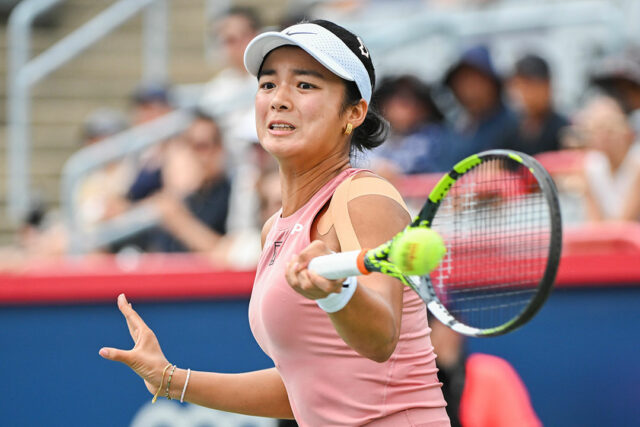
ALEX EALA — REUTERS/GRAHAM HUGHES/THE CANADIAN PRESS VIA ZUMA PRESS

ALEXANDRA “ALEX” EALA braves on to her multi-city Asian swing, shifting her focus to the WTA125 Suzhou Open still in China as in a quick turnaround following a semifinal exit in the Jingshan open.

Ranked No. 58 in the Women’s Tennis Association (WTA), Ms. Eala is among the title favorites once again as the No. 4 seed just behind USA’s Iva Jovic (No. 37), Tatjana Maria (No. 44) of Germany and Suzan Lamens (No. 57) of the Netherlands.

The 20-year-old Filipina has drawn Poland’s Katarzyna Kawa, WTA No. 124, in Round 1 at still-to-be-determined gametime pending the completion of the ongoing qualifying round.

Ms. Eala will have some ax to grind in Suzhou after failing to live up to her lofty billing as the No. 1 seed in the WTA125 Jingshan Open over the weekend despite spotless campaign in the first three rounds against Chinese Jia-Jing Lu (No. 349), Japanese Mei Yamaguchi (No. 268) and Belarusian Aliona Falei (No. 322).

Up against the third-seeded and  WTA No. 146 Lulu Sun of New Zealand who ultimately won the title with a sweep of home bet Ye-Xin Ma, Ms. Eala fumbled a strong start and had a deep 0-4 hole in the third set for a 6-3, 4-6, 2-6 defeat to miss out on a potential second final in the last three stops of the WTA Tour.

Ms. Eala captured a breakthrough WTA title for the Philippines in the WTA125 Guadalajara Open and had a quarterfinal stint in the WTA250 Sao Paulo Open in Brazil.

After Suzhou, Ms. Eala is also slated to play in the Hong Kong Open on Oct. 27 to Nov. 2 albeit more tournaments are expected to be announced in between and after ahead of her expected Philippine team return in the 33rd Southeast Asian Games this December in Thailand. — John Bryan Ulanday

Mercury beat Lynx

Cheryl Reeve spewed fire in the postgame press conference, and, from her vantage point, with ample reason. The Lynx lost for the second straight time, putting them on the brink of elimination in their semifinal round series against the Mercury. “It’s f—ing malpractice,” she contended, eviscerating the officiating crew for what she deemed a reckless abdication of responsibility. So “f—ing awful” were the Game Three arbiters that she called for a change in league leadership.

To be sure, Reeve’s rant was not merely the offshoot of an 84-76 setback to the Mercury. It was the culmination of a series of slights that she believed robbed the Lynx of any chance of victory. The game had been close for the most part, with her charges holding a narrow lead heading into the fourth quarter. Unfortunately, the offense stagnated anew even as the hosts surged behind All-Stars Alyssa Thomas and Satou Sabally. The latter, in particular, proved decisive, scoring 15 to spearhead a 20-9 run in the payoff period.

For Reeve, the collapse, while stark, might have been easier to accept had it been only about missed shots and execution. Instead, it was capped by an injury to Lynx stalwart Napheesa Collier due to contact with Thomas 23 seconds removed from the final buzzer. When no whistle followed, she stormed the court to confront an official, and then off it following her ejection. And, clearly, she was still seething as she met members of the media in the aftermath. She had warned about the unchecked physicality even before the series began, and the perceived assault on her best player was the last straw.

That the Lynx now need to claim the next two matches in order to advance to the finals no doubt weighed heavily on Reeve as she lashed out in her post-mortem. In forging the best record by far in the regular season, they were molded by resilience. Moving forward, the same determination will need to separate them from the Mercury. They cannot but move to keep their composure, rediscover their rhythm, and navigate the distractions resulting from their coach’s public indictment of the WNBA. Most importantly, they have to overcome their lingering distrust of the referees and, well, just play.

Needless to say, Reeve’s tirade will not fade quickly. Raw anger similar to hers is rarely about one play or one contest; it speaks to the integrity of the sport itself. Her demand for accountability goes beyond defending Collier or explaining away a poor fourth quarter. It insists that players be protected and that competition not be decided by what is overlooked. Whether the league responds beyond suspending her remains to be seen, but for the Lynx, the road ahead is unavoidably lined with obstacles. And more than the scoreboard, they have to look continually at the burden they have placed on themselves.


Anthony L. Cuaycong has been writing Courtside since BusinessWorld introduced a Sports section in 1994. He is a consultant on strategic planning, operations and human resources management, corporate communications, and business development.

UN sanctions on Iran restored

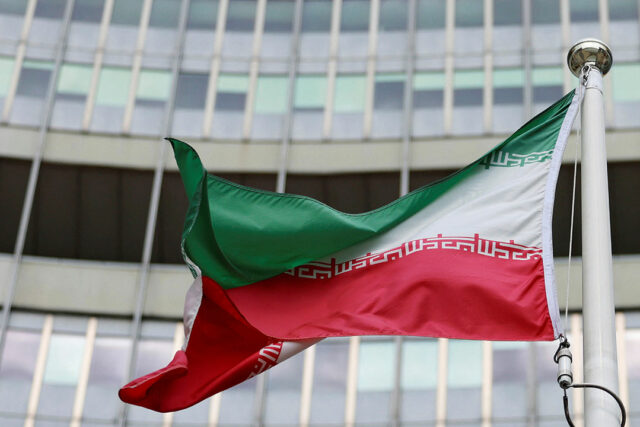
THE Iranian flag flutters outside the IAEA headquarters in Vienna, Austria, June 9. — REUTERS/LISA LEUTNER

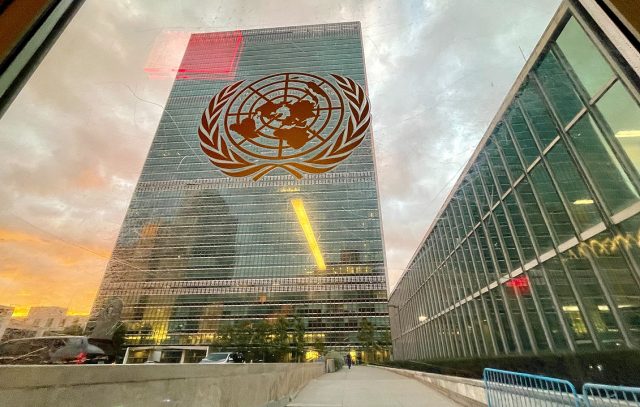
UNITED NATIONS — The United Nations (UN) reinstated an arms embargo and other sanctions on Iran on Saturday following a process triggered by key European powers that Tehran has warned will be met with a harsh response.

Britain, France and Germany triggered the return of sanctions on Iran at the UN Security Council over accusations the country has violated a 2015 deal that aimed to stop it developing a nuclear bomb. Iran denies seeking nuclear weapons.

The end of the decade-long nuclear deal originally agreed by Iran, Britain, Germany, France, the United States, Russia and China is likely to exacerbate tensions in the Middle East, just months after Israel and the US bombed Iranian nuclear sites.

UN sanctions imposed by the Security Council in resolutions adopted between 2006 and 2010 were reinstated at 8 p.m. EDT Saturday (0000 GMT). Attempts to delay the return of all sanctions on Iran failed on the sidelines of the annual gathering of world leaders at the UN this week.

“We urge Iran and all states to abide fully by these resolutions,” the foreign ministers of France, Britain and Germany said in a joint statement after the deadline passed.

Tehran has warned of a harsh response. But Iranian President Masoud Pezeshkian said on Friday that Iran had no intention of leaving the Non-Proliferation Treaty. Iran said on Saturday it was recalling its ambassadors to Britain, France and Germany for consultations.

Russia has disputed the return of UN sanctions on Iran.

“It is unlawful, and it cannot be implemented,” Russian Foreign Minister Sergei Lavrov told reporters at the UN earlier on Saturday, adding that he had written to UN Secretary-General Antonio Guterres warning that it would be “a major mistake” for him to acknowledge a return of UN sanctions on Iran.

The UN Security Council website was swiftly updated on Saturday evening to reflect the return to sanctions.

DIPLOMACY STILL AN OPTION
The European powers had offered to delay reinstating sanctions for up to six months to allow space for talks on a long-term deal if Iran restored access for UN nuclear inspectors, addressed concerns about its stock of enriched uranium, and engaged in talks with the United States.

“Our countries will continue to pursue diplomatic routes and negotiations. The reimposition of UN sanctions is not the end of diplomacy,” the foreign ministers of Britain, France and Germany said. “We urge Iran to refrain from any escalatory action and to return to compliance with its legally binding safeguards obligations.”

US President Donald J. Trump has been clear that diplomacy is still an option for Iran and a deal remains the best outcome for the Iranian people and the world, US Secretary of State Marco Rubio said in a statement after the UN sanctions were reimposed.

“For that to happen, Iran must accept direct talks, held in good faith, without stalling or obfuscation,” he said, stressing that until there was a new deal it was important that countries implemented sanctions “immediately in order to pressure Iran’s leaders to do what is right for their nation, and best for the safety of the world.”

Iran’s economy is already struggling with crippling US sanctions reimposed since 2018 after Mr. Trump ditched the pact during his first term.

Iran’s rial currency continued to decline over fears of new sanctions. The rial fell to 1,123,000 per US dollar, a new record low, on Saturday, from about 1,085,000 on Friday, according to foreign exchange websites, including Bon-bast.com.

With the return of UN sanctions, Iran will again be subjected to an arms embargo and a ban on all uranium enrichment and reprocessing activities and any activity related to ballistic missiles capable of delivering nuclear weapons, including launches.

Other sanctions to be reimposed include a travel ban on dozens of Iranian individuals, an asset freeze on dozens of Iranian individuals and entities and a ban on the supply of anything that could be used in Iran’s nuclear program.

All countries are authorized to seize and dispose of any items banned under UN sanctions and Iran will be prohibited from acquiring an interest in any commercial activity in another country involving uranium mining, production or use of nuclear materials and technology. — Reuters

Singapore races to shield pharma exports from US tariffs

A PHARMACIST counts prescription drugs at the at the CentreTown Pharmacy in Ottawa, Ontario, Canada, June 12, 2019. — REUTERS

SINGAPORE — Pharmaceutical companies in Singapore are seeking clarification on whether they would qualify for an exemption from steep tariffs imposed by the United States on their goods, Singapore’s Deputy Prime Minister Gan Kim Yong said on Saturday.

Singapore exports about S$4 billion ($3.1 billion) of pharmaceutical products to the US and most of these exports are branded drugs, Gan, who is also trade minister, told reporters.

US President Donald J. Trump announced on Thursday 100% duties on imports of branded drugs that would apply to firms unless they build a manufacturing presence in the US

This is a concern for Singapore as pharmaceuticals form around 13% of all Singapore exports to the US, said Mr. Gan.

He said that many of the pharmaceutical firms in Singapore have existing plans to expand or build their business footprint in the US, which may qualify them for a tariff exemption.

Mr. Gan, who met US Commerce Secretary Howard Lutnick in August, said trade talks with the US are ongoing, with officials on both sides working on details of possible deals for the pharmaceutical and semiconductor sectors.

“Ultimately, we hope to be able to have an arrangement with the US to allow us to continue to be competitive in the US market, to allow our pharmaceutical companies to be able to continue to export to the US market. As to whether the tariff rate will be 15% or any other tariff is something that is part and parcel of the negotiation, but we do look forward to having some preferential treatment versus the current top-line tariff the US has imposed,” said Mr. Gan.

Singapore’s exports to the US are subject to a 10% baseline tariff despite a free trade agreement in place with the island nation since 2004.

Broader sectoral tariffs could hurt demand for Singaporean products, including semiconductors, consumer electronics and pharmaceutical goods, which the central bank in July said account for about 40% of exports to the United States.

The effective US tariff rate on Singapore’s exports rose to 7.8% in July from 6.8% in April on the back of steel and aluminium tariff hikes. — Reuters

US agrees South Korea not a currency manipulator, Seoul says

A South Korea won note is seen in this illustration photo, May 31, 2017. — REUTERS

SEOUL — The United States has agreed that South Korea is not manipulating its currency for trade advantage, a spokesperson for President Lee Jae Myung said on Sunday.

The two allies agreed that Seoul does not fall under the manipulator designation that the US Treasury Department announces in reports twice a year, Kang Yu-jung told a press conference.

Officials at the US embassy in Seoul could not be reached for comment outside business hours.

The administration of President Joseph R. Biden added South Korea to a manipulation monitoring list in November due to its large current account surplus and its sizable trade surplus with the US The government of Donald J. Trump kept Seoul on the list in June.

Under a 2015 US law, Washington can take “remedial action” against countries that do not “correct the undervaluation of their currency and trade surplus with the United States.”

The South Korea-US deal is not related to talks on a currency swap as part of bilateral negotiations over Mr. Trump’s tariffs on South Korean goods, South Korean officials said.

President Lee told Treasury Secretary Scott Bessent on Wednesday in New York that the Asian country needs a foreign exchange swap in order to make the $350-billion investment it has pledged in the tariff talks, Finance Minister Koo Yun-cheol said on Saturday.

Mr. Koo quoted Bessent as saying he would discuss the issue with other US officials and get back to South Korea.

South Korean National Security Adviser Wi Sung-lac reiterated on Saturday that Seoul cannot pay the $350 billion “upfront,” as Mr. Trump has suggested in recent days. President Lee told Reuters this month that South Korea’s economy could fall into crisis rivalling its 1997 meltdown if the government accepted the US demands without safeguards.

Mr. Koo said he had not heard anything about a Wall Street Journal report that Commerce Secretary Howard Lutnick had discussed raising the $350-billion investment. — Reuters

Russia tells West: Any aggression will be met with ‘decisive response’

A RUSSIAN FLAG flies with the Spasskaya Tower of the Kremlin in the background in Moscow, Russia, Feb. 27, 2019. — REUTERS

UNITED NATIONS — Russian Foreign Minister Sergei Lavrov told the West on Saturday that any aggression against Moscow would face a “decisive response,” warning against attempts to down aircraft in Russian airspace and accusing Germany of militaristic rhetoric.

As Russia’s war rages in Ukraine, tensions have mounted along NATO’s eastern flank in recent weeks as Estonia said Moscow sent three fighter jets into its airspace and the North Atlantic Treaty Organization (NATO) warplanes shot down Russian drones over Poland.

“Any aggression against my country will be met with a decisive response. There should be no doubt about this among those in NATO and the EU (European Union) who… are telling their voters that war with Russia is inevitable,” he told the United Nations General Assembly.

The spate of airspace incursions linked to Russia has unnerved countries in eastern Europe where Russia is seen as the biggest threat since the end of the Cold War. Hopes have dimmed of any imminent end to Moscow’s war in Ukraine.

US President Donald J. Trump said this week that he endorsed the idea of shooting down Russian jets that violate NATO airspace, part of a rhetorical shift that saw him mock Russia’s military performance in Ukraine and call it a paper tiger.

Mr. Lavrov brushed off Mr. Trump’s most recent remarks during a press conference that followed his General Assembly speech, but issued a warning about any moves against aircraft inside Russia.

“If there are attempts to down any flying object, any object… in our airspace, then I think people will very much regret undertaking such an egregious violation of our territorial integrity and sovereignty,” he said.

He told the UN General Assembly that Russia had never targeted EU or NATO countries with drones or missiles, and that it had no plans to do so in the future.

He said that only the “politically blind” would expect Ukraine to one day return to the borders it had before Russia invaded in February 2022, an indirect response to Mr. Trump’s assertion that Kyiv could retake all its occupied land from Russia.

Mr. Lavrov also singled out German Chancellor Friedrich Merz, referring to what he said was “militaristic rhetoric” and said Moscow was alarmed by remarks by politicians in EU and NATO capitals of a looming World War III as a “likely scenario.”

RUSSIA HOPES FOR ‘FRANK DIALOGUE’
Despite taking aim at NATO and the European Union, Lavrov made clear Moscow remained hopeful of “frank dialogue” with the US under Mr. Trump despite the US president’s recent shifting stance.

The US and Russia, he said, will hold a third round of talks in the coming months aimed at improving each other’s embassy operations, which have been severely curtailed by a decade of tit-for-tat diplomatic expulsions and other curbs.

Mr. Lavrov met US Secretary of State Marco Rubio on Wednesday on the sidelines of the annual gathering of world leaders at the UN General Assembly.

Mr. Lavrov said he did not see economic relations between Russia and India as under threat, as Mr. Trump has placed tariffs on products from India, calling on it – and China – to stop purchasing Russian oil.

RUSSIA CONCERNED OVER US BUILDUP NEAR VENEZUELA
Despite his cautious tone on Mr. Trump, Mr. Lavrov voiced alarm over a US naval build-up and military action in international waters around Venezuela to combat drug cartels, describing the situation as “very serious.”

Without naming the US, Mr. Lavrov questioned whether “certain creative actors” could try to use a proposed draft UN Security Council resolution to create a larger international force to fight gangs in Haiti to justify an attack within Venezuela.

The draft text being considered by the 15-member body has been put forward by the US and Panama. It needs at least nine votes and no vetoes by Russia, China, the US, France or Britain to pass.

“I cannot rule out that certain creative actors could think of getting a mandate at the Security Council and later say that there are gangs from Haiti harbored in Venezuela. I cannot rule that out,” said Lavrov. — Reuters

Solid US consumer spending in August underscores economy’s resilience

EDUARDO SOARES-UNSPLASH

WASHINGTON — US consumer spending increased slightly more than expected in August as households went on vacation and dined out, keeping the economy on solid ground as the third quarter progressed, while inflation continued to steadily pick up.

The report from the Commerce Department on Friday suggested the economy has so far retained most of its momentum from the April-June quarter. Signs of the economy’s resilience evident in other data this week showing low layoffs and strong demand by businesses for equipment would argue against the Federal Reserve cutting interest rates again this year after the US central bank resumed policy easing last week.

But the hiring side of the labor market is struggling, with job growth almost stalling in the last three months amid a lingering drag from trade policy uncertainty as well as an immigration crackdown that has reduced the supply of workers.

“There is no support in this report for (Fed Governor) Stephen Miran’s suggestions that policy interest rates have to be cut right away, and by a lot,” said Carl Weinberg, chief economist at High Frequency Economics. “Indeed, there is no recommendation in these numbers for any easing of monetary conditions at all.”

Consumer spending, which accounts for more than two-thirds of economic activity, rose 0.6% last month after an unrevised 0.5% advance in July, the Commerce Department’s Bureau of Economic Analysis said. Economists polled by Reuters had forecast consumer spending increasing 0.5%.

Spending was boosted by outlays on services like transportation, which includes airline travel. Consumers frequented restaurants and bars, and also stayed at hotels and motels. They raised spending on recreation services.

Outlays on financial services and insurance rose as did those on healthcare, housing and utilities. Spending on services advanced 0.5%, matching July’s gain.

Households also bought recreational goods and vehicles, clothing and footwear, and spent more on gasoline and other energy goods as well as food and beverages. Goods outlays shot up 0.8% after rising 0.6% in July.

Spending has marched ahead despite the significant slowdown in the labor market. Consumption is being driven by high-income households as a robust stock market and still-elevated home prices boost their wealth. Fed data this month showed household wealth jumped to a record $176.3 trillion in the second quarter.

Benchmark revisions to the national accounts data showed stronger income growth in 2024 and in some months this year than previously estimated, which economists said was tied to equities and house prices, and accrued by higher-income households.

Consumers also saved more than had been previously reported, with the saving rate hitting 5.7% in April.

But lower-income households are struggling, and bearing a large share of the burden from higher prices on goods from President Donald Trump’s import tariffs. More pain lies ahead when cuts to the federal government’s Supplemental Nutrition Assistance Program, commonly known as food stamps, take effect.

“America’s ‘haves’ have done much better than previously understood in recent years,” said Bill Adams, chief economist at Comerica Bank. “Revisions to categories of incomes that go to the ‘have nots’ were much smaller.”

The Fed last week cut its benchmark overnight interest rate by 25 basis points to the 4.00%-4.25% range. Financial markets continued to expect two more rate reductions this year. Stocks on Wall Street were trading higher. The dollar slipped against a basket of currencies. US Treasury yields were mostly flat.

ECONOMISTS EXPECT SPENDING WILL SLOW
Personal income rose 0.4% in August after a similar gain in July. A 0.6% increase in government transfers, mostly Social Security benefits, accounted for much of the rise in income. Wages gained only 0.3%, in line with a softening labor market, resulting in consumers tapping their saving to fund spending.

The saving rate fell to an eight-month low of 4.6% from 4.8% in July. Strong consumer spending contributed to gross domestic product growing at a 3.8% annualized rate in the second quarter.

The Atlanta Fed upgraded its third-quarter GDP growth estimate to a 3.9% rate from a 3.3% pace earlier.

Economists expected spending to slow by the end of the year, undercut by higher prices, and anticipated that labor market sluggishness would encourage precautionary saving.

Though there has not been a broad rise in inflation, there has been a surge in prices of some goods exposed to tariffs. Businesses have been selling inventory accumulated before the tariffs kicked in, preventing inflation from spiraling.

Producers have also been absorbing some of the duties. Economists, however, do not expect this trend to continue indefinitely and expect businesses will at some point pass on the tariffs to consumers on a wider scale. Inventories were drawn down in the second quarter.

Trump on Friday announced new tariffs, including a 100% duty on branded medication and 25% levy on heavy-duty trucks.

The Personal Consumption Expenditures (PCE) Price Index increased 0.3% in August after gaining 0.2% in July, the BEA said. PCE inflation was lifted by a 0.3% rise in services, reflecting airline fares, hotel and motel rooms as well as financial services and insurance, housing and utilities.

Goods prices edged up 0.1% as a 1.7% decline in the cost of recreational goods and vehicles offset more expensive other long-lasting manufactured goods and gasoline.

In the 12 months through August, the PCE Price Index advanced 2.7%. That was the biggest year-on-year increase since February and followed a 2.6% rise in July.

Excluding the volatile food and energy components, the PCE Price Index rose 0.2% last month after increasing 0.2% in July.

In the 12 months through August, the so-called core inflation index increased 2.9% after rising 2.9% in July. The Fed tracks the PCE price measures for its 2% inflation target.

“The delayed implementation of tariffs and behavioral shifts that led businesses to stock up inventory suggest the consumer inflation impact has not yet been fully realized,” said Shannon Grein, an economist at Wells Fargo.

“Still-high uncertainty, rising prices and sour jobs market sentiment are a worrying mix for spending.” — Reuters


Trump mulls tariffs on foreign electronics based on number of chips, sources say

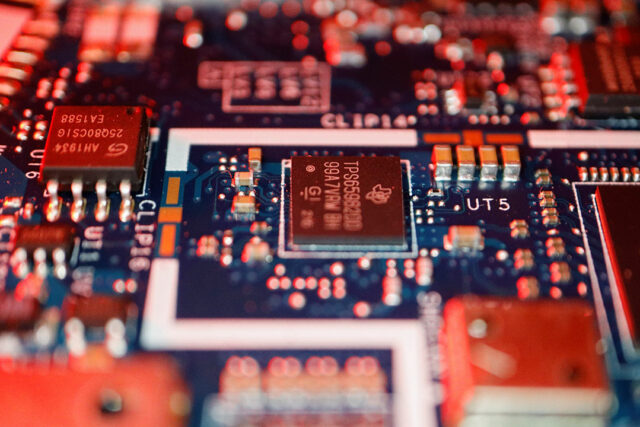
Semiconductor chips are seen on a circuit board of a computer in this illustration picture taken on Feb. 25, 2022. — REUTERS/FLORENCE LO/ILLUSTRATION

WASHINGTON — The Trump administration is considering imposing tariffs on foreign electronic devices based on the number of chips in each one, according to three people familiar with the matter, as it seeks to drive companies to shift manufacturing to the United States.

According to the plan, which has not previously been reported and could change, the Commerce Department would impose a tariff equal to a percentage of the estimated value of the product’s chip content.

The Commerce Department did not immediately respond to requests for comment.

“America cannot be reliant on foreign imports for the semiconductor products that are essential for our national and economic security,” White House spokesperson Kush Desai responded when asked about the details.

“The Trump administration is implementing a nuanced, multi-faceted approach to reshoring critical manufacturing back to the United States with tariffs, tax cuts, deregulation, and energy abundance.”

If implemented, the plan would show the Trump administration is seeking to hit a wide range of consumer products, from toothbrushes to laptops, potentially driving up inflation as it seeks to ramp up US manufacturing.

The plan could push up the cost of consumer goods “at a time when the US has an inflationary problem, with inflation clearly above the Fed’s target and accelerating,” said Michael Strain, an economist with the conservative American Enterprise Institute. The Federal Reserve’s target inflation rate is 2%.

Even domestically produced items would likely become more expensive, thanks to new tariffs on key inputs needed to make those goods, Strain added. 

US President Donald Trump has deployed an array of tariffs aimed at bolstering American manufacturing, announcing on Thursday sweeping new import tariffs, including 100% duties on branded drugs and 25% levies on heavy-duty trucks, triggering fresh trade uncertainty after a period of relative calm.

In April, the Trump administration announced probes into imports of pharmaceuticals and semiconductors as part of a bid to impose tariffs on them, arguing that extensive reliance on their foreign production poses a national security threat. 

But questions have swirled about the universe of products containing chips that would be hit by the tariffs, the tariff rates, and whether any countries, products, or companies would be exempt.

Trump said in August the United States would impose a tariff of about 100% on imports of semiconductors but exempted companies that are manufacturing in the US or have committed to do so.

The biggest chipmakers outside the US include Taiwan Semiconductor Manufacturing Co and South Korea’s Samsung Electronics.

One of the sources consulted by Reuters said the Commerce Department was considering a 25% tariff rate for chip-related content in imported devices, with 15% rates for electronics from Japan and the European Union, stressing the figures were preliminary.

The sources added that the Commerce Department has also eyed a dollar-for-dollar exemption based on investment in US-based manufacturing only if a company moves half its production to the US, but it was unclear how it would work or whether it would move forward. The investment exemption was previously reported by the Wall Street Journal.

The Commerce Department had previously proposed to exempt chipmaking tools from the tariffs, three sources said, to avoid raising the cost of producing semiconductors in the United States and undermining Trump’s reshoring goals.

But the people said the White House was displeased by the carve-out, citing Trump’s general distaste for exemptions. — Reuters

Philippines to extend 60-day ban on rice imports

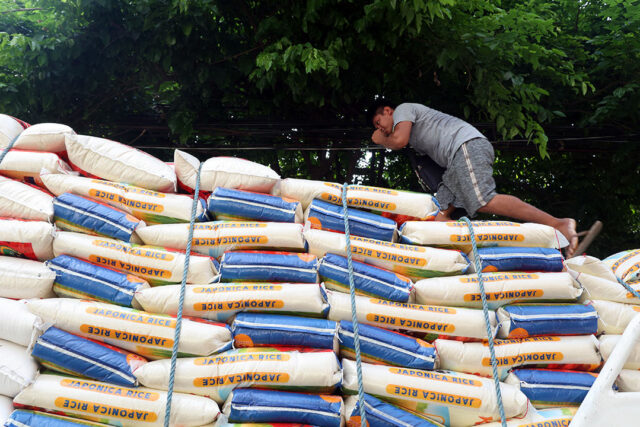
PHILIPPINE STAR/KJ ROSALES

MANILA — Philippine President Ferdinand Marcos Jr has ordered to extend the country’s ban on rice imports beyond 60 days, his office said on Friday, but it did not specify how long the extension would last.

Mr. Marcos had earlier ordered a 60-day suspension of rice imports starting from September 1 in an effort to protect farmers during the local harvest and keep rice prices in check. The order covers the import of regular milled and well-milled rice and excludes varieties not commonly produced locally.

“Under the President’s directive, the two-month import suspension will be extended,” the Presidential Communications Office Undersecretary Claire Castro told a press briefing.

The Philippines, one of the world’s largest rice importers, shipped in 4.8 million metric tons of rice last year, mostly from Vietnam and Thailand.

Agriculture Secretary Francisco Tiu Laurel has said he plans to recommend to the president that the moratorium should be extended by another 15 to 30 days, and that the ministry was also looking at increasing tariffs on imported rice.

The annual rate of increase in rice prices in the Philippines hit a 15-year high of 24.4% in March last year, but has since reversed course and declined by 17% in August. It helped to tame inflation, which averaged 1.7% in the eight-month period, below the government’s 2.0% to 4.0% target.

The Philippines has lowered tariffs on rice and extended existing tariff cuts on some other commodities to combat inflation and ensure supplies are ample. — Reuters

Calls grow for first female UN chief in 80 years

REUTERS

NEW YORK — In its 80-year history, the United Nations has never had a woman serve as secretary-general — a fact that some world leaders now view as a glaring symbol of gender inequality at the highest level of global diplomacy.

With Secretary-General Antonio Guterres due to complete his second five-year term at the end of 2026, some at this week’s annual UN General Assembly were vocal in their call for a woman to assume the role.

“It is high time for a woman to be chosen as UN Secretary-General,” said Estonia’s President Alar Karis.

“We need to put forward ambitious selection criteria, a clear timeline and assure greater role of the General Assembly in this process. Given the current credibility crisis of the UN, we cannot afford to fall short in the selection process.”

All nine of those to hold the top job have been men.

‘LET’S MAKE HISTORY,’ SAYS SLOVENIA’S PRESIDENT
Slovenia’s President Nataša Pirc Musar lamented that only five women have held the year-long presidency of the now 193-member General Assembly, including this year.

“By the end of this session, she should be joined by a Madam Secretary-General-elect,” Pirc Musar said. “Let’s make history,” she added.

The 15-member Security Council, including permanent veto powers Britain, China, France, Russia and the United States considers an undisclosed list behind closed doors and recommends a candidate to be elected by the General Assembly.

To boost transparency, the General Assembly in 2015 asked its president and that of the Security Council to invite UN members to nominate candidates. It also called for regular circulation of candidates’ names and CVs to member states.

Mongolia’s President Ukhnaagiin Khürelsükh said: “Ensuring gender equality in senior leadership positions within the United Nations will undoubtedly have a positive impact on fostering more transparent, balanced and inclusive decision-making processes.”

The next UN Secretary-General will be chosen in 2026 to begin their term on January 1, 2027.

GEOGRAPHICAL DIVERSITY A KEY TO THE APPOINTMENT
Although the job traditionally rotates among regions, when Guterres, who is from Portugal, was elected in 2016, it was supposed to be Eastern Europe’s turn. Next on the list is Latin America, but some diplomats expect candidates from other regions.

“Our region has the diversity, capacity and experience to be able to raise a strong voice for peace, climate justice, human rights, and sustainable development,” said Dominican Republic President Luis Abinader.

“I am fully convinced that the time has come for a woman to take up the post,” said the president of the Spanish-speaking Caribbean nation.

Chilean President Gabriel Boric said that regional balance must be respected in the appointment process and recommended former Chilean President Michelle Bachelet to the role.

“I firmly believe, and I know that this conviction is shared by my nation, that Michelle Bachelet is someone able to build bridges between the North and the South, between the East and the West,” Boric said as Bachelet watched on from the audience.

Bachelet was Chile’s first female head of state and served as president of the South American nation twice. She was also Chile’s minister for health and defense. Bachelet has also been the executive director of UN Women and UN High Commissioner for Human Rights.

“It’s time for Latin America and the Caribbean to have their moment,” he said, adding that the region is free of war and rich in diplomatic tradition.

International Atomic Energy Agency chief Rafael Grossi, who is Argentinian, has said he plans to seek the job. — Reuters

BoI hopes to release updated SIPP before yearend

STOCK PHOTO | Image from Freepik

By Justine Irish D. Tabile, Reporter

The Board of Investments (BoI) said that the government is already fine-tuning the details of the updated Strategic Investment Priority Plan (SIPP) 2025-2028, with hopes of releasing within the year the updated list of projects that will qualify for incentives.

At the Arangkada Forum on Friday, BoI Investment Promotions Services Executive Director Evariste M. Cagatan said that the goal is to release the new SIPP within the year.

“It is being finalized … The target is to submit to the Office of the President in the fourth quarter,” she added.

On Friday, Ms. Cagatan presented the proposed list of projects that will be included in the new SIPP.

“So, under Tier 1, we see industries that address modern basic needs. It also covers sustainability-driven industries, export activities, and those covered by special laws,” said Ms. Cagatan.

“Meanwhile, Tier 2 includes goods and services not locally produced and import-substituting activities, while Tier 3 covers highly strategic and innovation-driven activities,” she added.

Under modern basic needs, the list includes agriculture, fishery and forestry, manufacturing, halal, kosher, and organic-related activities, services, healthcare and disaster risk reduction management services, infrastructure and logistics, and energy.

Meanwhile, sustainability-driven industries include industrial and hazardous waste treatment, bulk water treatment and supply, wastewater treatment, and environment- or climate change-related projects.

Ms. Cagatan said that the focus of the BoI is to ensure that the investment gains translate into long-term economic resilience.

“This means not only attracting capital but also creating an enabling environment where innovation thrives, industries move up the value chain, and opportunities are inclusive and sustainable,” she said.

Citing the Foreign Investment Promotion and Marketing Plan (FIPMP), Ms. Cagatan said that the BoI has identified key growth sectors to drive long-term growth.

These are green metals and mineral processing, smart manufacturing, smart agro-industries, renewable energy (RE) value chain, electric vehicle ecosystem, semiconductors and electronics, digital and telco infrastructure, information technology and business process management (IT-BPM), and creatives.

Under the FIPMP, the government hopes to increase foreign direct investment by 5%, with an additional percentage point of growth expected annually until 2028.

“With our geostrategic location in the Indo-Pacific, an abundance of critical natural minerals and agricultural resources, and a young, adaptable, and tech-savvy workforce and a large consumer base fueled by a rising middle class, the Philippines is well-positioned to be the location of choice for these high-value industries,” she said.

Over the last three years, the official said that the Philippines’ FDI performance has remained steady, with FDI net inflows reaching about $9 billion in 2024.

“In 2024, FDIs were from foreigners such as Japan, the UK, Singapore, and the United States. And for the first semester of 2025, total net inflows reached $3.4 billion, reflecting sustained investor confidence despite global headwinds,” she said.

She also mentioned that the investment promotion agencies reported a very healthy pipeline of incoming investments, which reached P1.95 trillion last year, marking a 32.7% increase from 2023.

“This year looks promising as well, with the first half of 2025 investment approvals reaching more than P480 billion for projects in RE, manufacturing, real estate, transport, and IT-BPM,” she said.

“These projects are expected to generate about 70,000 jobs. And foreign investments made up 20% with inflows from Singapore, South Korea, the US, China, and Japan,” she added.