Home Blog Page 3632

Philippines falls to 35th rank in Global Economic Diversification Index

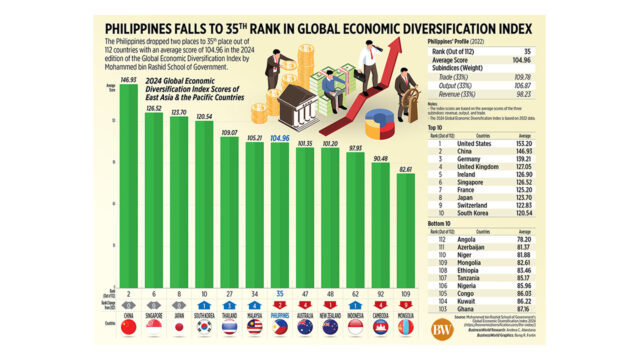
The Philippines dropped two places to 35th place out of 112 countries with an average score of 104.96 in the 2024 edition of the Global Economic Diversification Index by Mohammed bin Rashid School of Government.


Philippines falls to 35<sup>th</sup> rank in Global Economic Diversification Index

Lockbit hackers’ swagger on display after police leak identities online

REUTERS

WASHINGTON/LONDON — One of the world’s biggest criminal hacking gangs woke up on Tuesday to a startling discovery: Law enforcement, after taking over their main website on Monday, were now threatening to reveal their personal details and data about their cybercrime organization.

The group, Lockbit, had become notorious in cybercrime circles for using malicious software called ransomware to digitally extort victims, relying on underground marketing campaigns to boost its profile. At one point, LockBit had promised $1,000 to anyone who tattooed their logo on themselves, according to cybersecurity researchers.

The group’s ringleader, known by the online moniker “LockbitSupp,” had also become so confident in their own anonymity that, according to Britain’s National Crime Agency (NCA), they had promised $10 million to the first person who could find and unmask them.

The international law enforcement operation, which had posted on the extortion website on Monday that it had taken control, on Tuesday announced it had re-engineered LockBit’s core online system — mimicking the countdown clock that LockBit used in extortion attempts and posing its own $10 million challenge, according to a review of LockBit’s darkweb site.

The core online system was reengineered to target the hackers in the same way they had terrorized victims: with an advent calendar-like series of tiles, each marked with a countdown timer that, upon reaching zero, published stolen data.

Across the website’s front page, where victim names once stood, law enforcement agencies replaced the text and links with internal data obtained by hacking the hackers themselves.

The resulting display was a smorgasbord of law enforcement action against LockBit which included indictments, sanctions, a tool with which victims can decrypt their data, and a new countdown with two days left on the clock which asked: “Who is LockbitSupp? The $10 million question.”

Before it was taken down, LockBit’s website had displayed an ever-growing gallery of victim organizations that was updated nearly daily. Next to the names were digital clocks showing the number of days left to the deadline given to each organization to provide ransom payment.

The unique law enforcement operation was the result of a years-long investigation by international police agencies and was designed to undermine the group’s credibility in the criminal underground, officials said.

“LockBit’s affiliates should be very concerned right now, especially as law enforcement continues to make decryptors available to victims,” said Charles Carmakal, Mandiant Consulting’s chief technology officer.

The United States has charged two Russian nationals with deploying LockBit ransomware against companies and groups around the world. Police in Poland and Ukraine made two arrests.

Before it was seized by police, LockBit was able to extort multiple hacking victims at the same time through its website, which listed breached companies next to the countdown timer.

Once the counter expired, the cybercriminals would often publish caches of stolen data from the victimized company — historically, these exposures included personal private information of customers, medical records, internal billing data, and the communications of internal staff, among other things.

These leaks were intended to harm the reputation of victims and put them in legal jeopardy, experts told Reuters, netting Lockbit over $120 million in ransom payments.

On Tuesday, Graeme Biggar, director general of the NCA, told journalists that the true cost, including money spent by organizations and corporations scrambling to regain access to their networks and the impact on business, could have amounted to losses totalling billions. — Reuters

Atome partners with Mastercard for game credits offer

ATOME Philippines has partnered with Mastercard to allow its cardholders to convert their rewards points into gaming credits via the Mastercard Gamer Xchange (MGX) platform.

“We’ve seen a very strong take-up for the Atome Card, especially among digital-native Gen Z and millennial users in the Philippines, with one of the top use cases for the Atome Card being online purchases. We see a strong synergy in this partnership with Mastercard’s MGX platform as it provides Atome Card holders and gamers access to a wide range of gaming credit options,” Atome Cards Business Head Magic Tang said in a statement on Tuesday.

As part of the offer, gamers in the Philippines can convert their Atome Card rewards points into gaming credits across nearly 4,000 game titles via turnkey solution MGX.

Atome cardholders can obtain up to P2,000 worth of gaming credits when they shop using the recently upgraded Atome Card. The offer is available until March.

“MGX bridges the world of rewards to the thriving global gaming community, offering an innovative and seamless redemption solution in a new category. From eSports viewers to console and smartphone gaming enthusiasts across a range of demographics, it opens new connections to the world’s fastest expanding entertainment market,” Mastercard Consumer Marketing & Sponsorships Senior Vice-President Kaveri Khullar said.

“As the Philippines gaming market anticipates further growth in the next few years, this partnership with Atome is a fantastic example of how innovative payment experiences are evolving to connect consumers to their passions,” she added.

The new Atome Card allows users to shop using buy now, pay later anywhere a Mastercard card is accepted. Cardholders may pay in three or six months.

The Digital 2024 report of consumer intelligence firm Meltwater and creative agency We Are Social showed the Philippines placed second (95.9%) to Indonesia (96.5%) when it comes to video game consumption on any device. — AMCS

A mixed bag: great meat and cocktails make up for low notes  

UMA NOTA MANILA displays multicultural glamor and lots of visual appeal, occupying a very interesting space at the lower ground floor of Shangri-La at the Fort (the entrance is at street level; we had to go downstairs, very exciting).

Still, we found the appetizers mushy. When we sat down to dinner and drinks during  a tasting on Feb. 16, the Coxinhas de Frango (chicken and okra croquettes with chili sauce) and the Dadinhos de Tapioca (Brazilian tapioca and cheese dice with sweet chili sauce) left us feeling a bit old as we chewed and chewed, unfortunate in the surrounding South American mid-century glamor-infused interiors designed by Asmaa Said, founder of The Odd Duck Studio in Dubai.

Never mind, we had other courses to consume: we really liked the Tataki de Carne de Sol, lightly cured beef tenderloin with smoked ponzu sauce, black garlic mayonnaise, and crispy shallots. That was a lovely balancing act between lacy, delicate textures and bold flavors. That’s not something we could say for the forgettable asparagus and avocado roll, nor for the Salmon Roll with cucumber, wasabi cream cheese, avocado, sweet soy, and salmon roe (which if we’re being perfectly honest, tasted like it came from the American Midwest).

Beef, however, is definitely a draw here, and we look back with delight at the A4 Kumo-Oh Japanese Wagyu Striploin. Perfectly tender and perfectly juicy, all 180 grams of it was consumed with a smile (especially when we realized that it cost P8,500, according to the menu outside).

The dessert with roasted pineapple and coconut ice cream made us think how well the roasted pineapple would have matched with a savory dish.

In keeping with the visual spectacle that comes with the real estate, the Matcha Layer Cake with Hokkaido Milk ice cream was stunning, veiled as it was in a thick cloud of cotton candy, which the server torches away. We stared long and hard at the tiny cake, thinking about the size of the cloud that had earlier enveloped it. We think about the origins of the word “glamor,” which we use profusely in this article: it had originated as the word for a witch’s disguise of beauty, until it had become associated with the spurious beauty itself.

As for the cocktails: well, that’s definitely a bright spot. We had the Red Flag, with Arette tequila, Mancino Rosso Amaranto, Mezcal Durango, and raspberry chili syrup; the glass rimmed in spicy togarashi. This drink tasted devilishly delicious, and if you drink too much of it, you’ll probably turn into a red flag yourself.

Uma Nota Manila is the third in the chain, with its two other locations in Paris and Hong Kong (we told you it was glamorous). Co-founder Alexis Offe, who had grown up in Hong Kong, told us that he started the concept in 2017 after a trip to Brazil (which their executive chef Gustavo Vargas calls home). Uma Nota is supposed to serve Japanese-Brazilian cuisine, a cuisine born from the huge Japanese migrant population there.

There are a lot of chance encounters in this story: their Managing Partner in the Philippines, Michael Needham, said that he came across the restaurant after dining at a highly recommended Mediterranean place also owned by Mr. Offe, only for Mr. Offe’s father, a former chef who happened to be in his son’s restaurant, told him to check out his son’s other place. As a multicultural individual himself (of mixed parentage and a life spread across four countries), the concept appealed to Mr. Needham: “I was always fascinated, and I just loved this idea that it’s not fusion… it’s subculture cuisine.”

As for opening in the Philippines, Mr. Offe said, “The more time passed, the more I wanted to approach emerging cities and markets, more than the bigger cities. There are a lot more opportunities, it’s a very exciting city in a very exciting region.

“There’s a big interest in Japanese cuisine; there’s a big interest and similarity in terms of what Filipinos love to eat, and what Brazilians like to eat.”

Uma Nota Manila is in Shangri-La at the Fort in Bonifacio Global City, and is open from Sunday to Tuesday at 6 p.m. to midnight for dinner, while the bar hops from 6 p.m. to 2 a.m. from Sunday to Tuesday, and from 6 p.m. to 4 a.m. on Wednesday to Saturday. — Joseph L. Garcia

Corporate culture

PIKISUPERSTAR-FREEPIK

CULTURE often applies to countries. It defines a set of shared values, norms, and beliefs for a particular society. Sociologists refer to culture as the way a tribe “lives its life.” Thus are Filipinos known for their hospitality culture (they give up the best room in the house for a guest) that sets them apart as outstanding caregivers and service workers.

Corporate culture is also a shared set of values and beliefs limited to an organization, especially as it deals with outside parties like customers and competitors.

Are there common traits and beliefs that distinguish one set of corporate employees from other groups? The belief and value systems are not always written down and, even when they are, they are filed away along with the mission statement and the company motto — “Our most valuable asset is our people.”

It is practice and behavior that more accurately define corporate culture. And unfortunately, it is improper behavior that distinguishes one organization from another. The behavior and conduct of individuals in an organization, condoned by its leadership, determine the prevailing corporate culture.

The customer is not always right. He can be a pest with his complaints about the service. Are such complaints attended to with a sense of urgency? (Please stay on the line until you are rescued by ennui.) Complaints are dysfunctional and they eventually sort themselves out in a year or two. Let the other company get the pest.

Getting ahead is based on political maneuvering. Pleasing the boss, and those who please him, is important in order to be noticed. So, try and see who is important to the boss and get his slippers when he needs them. Never mind meeting targets and addressing service reliability.

What about teamwork? It’s not important what gets accomplished when employees are focused on the task. The key to every success is who gets the credit. It is best to be the first to report a win, without alluding to the one responsible for it. The other side of this pursuit for credit is finding the scapegoat to blame in case of a fiasco.

How does the company handle the emergency needs of employees? When an employee or her mother gets sick and requires expensive medical treatment, is the item just posted in the digital hub with prayers and donations solicited? (Please pass the hat.)

Corporate culture is defined by actual behavior, not by a written document. It follows child-rearing practices of what deeds and attitudes are rewarded or punished. The compensation system (especially variable pay and merit increases) has a big impact on defining corporate culture. The value system is enhanced or compromised by the carrot and the stick, and how these are dispensed.

Corporate culture is associated with the incumbent CEO whose attitudes and behavior define what is acceptable or not. His own conduct serves as a model for the rest. (Is he a bully or a nurturer?)

So, a new CEO or even one appointed in transition (until a new CEO is found) must find out what the set of beliefs and values currently are, and whether to preserve or overhaul them.

A survey is one way to capture the opinions of different stakeholders in the organization to be converted to charts and statistics. Do the lower levels feel they can influence decisions at the top? The survey provides what consultants call a “base line,” or the present situation, preferably dire and in need of intervention. This is like a medical diagnosis of a very sick patient. Why else does one need a cure, or a doctor for that matter? The survey is the starting point for any transformation. (This is always the prescription.)

The process of defining the corporate culture does not mean abandoning other critical activities like selling products, attending to customers, reducing headcount, and taking care of the bottom line. These are ongoing, even with the many meetings that the definition of the corporate culture will entail. Is the process of transformation disruptive? Do earthquakes cause buildings to shake?

In the end, “modeling” is what defines corporate culture. The behavior of the CEO (or the actual leader, if the CEO is merely titular) determines the values of his direct reports and those who report to them. Corporate culture starts at the top… and ends at the bottom.


Tony Samson is chairman and CEO of TOUCH xda

ar.samson@yahoo.com

KMC Savills sees resilient office demand in PHL 

CHRIS ANDERSON-UNSPLASH

REAL ESTATE brokerage and consultancy firm KMC Savills on Tuesday expressed “cautious” optimism about the Philippines’ property sector this year.

“We’re cautiously optimistic. I think there’s no point in getting too far ahead of ourselves or too overly bullish or overly optimistic,” said KMC Savills Chief Executive Officer Joe Curran during a media briefing.

Among sectors, KMC said it is optimistic for office, retail, and tourism and hospitality, but uncertain about residential as well as industrial and logistics.

Mr. Curran said that office demand is expected to sustain while an increase in vacancy rates is anticipated due to multiple office building completions in 2024.

He added that Bonifacio Global City (BGC) in Taguig City is still the “favorable location” for prime buildings, which boasts over two million square meters (sq.m.) of office space.

“We do see some new supply coming online in 2024 and 2025 that should have an impact on rates and vacancy. There’s about another 180,000 sq.m. of completions in BGC,” Mr. Curran said.

Some of the expected completions include Uptown Eastgate (105,000 sq.m.), International Finance Center (63,000 sq.m.), MJ Fort Tower (8,000 sq.m.), and Sennett Corporate Center (5,000 sq.m.).

In 2023, BGC’s office vacancy rate hit 14.3%, higher than the Makati central business district (CBD) at 10.9%. However, other areas logged higher office vacancy rates such as Bay Area (32.6%), Ortigas Center (25.7%), and Alabang CBD (35.5%).

Mr. Curran said the average post-pandemic Metro Manila office lease rates have declined 6.7% to P858 pesos per sq.m.

KMC data showed that the average office rate in BGC is P1,054 per sq.m., higher than Makati CBD (P1,021.2/sq.m.), Bay Area (P737.9/sq.m.), Ortigas Center (P695.8/sq.m.), and Alabang CBD (P603.3/sq.m.).

“Post pandemic, we’re still in a period of price discovery in terms of where our rental rates are going to fall for the next three to five years. BGC still has the highest headline rates across the metro,” Mr. Curran said.

“Higher vacancy rates and potentially with 180,000 sq.m. of new supply coming online over the next two years, you might actually see some downward pressure on rents in BGC and Makati might move back into top spot in terms of being to command the highest rents across the metro,” Mr. Curran said.

For the industrial sector, KMC Savills Chief Operating Officer Cha Carbonell said that elevated vacancies will put pressure on warehouse rent rates.

KMC data showed that rental rates in Bulacan and Pampanga fell by 42% and 21%, respectively.

“Empty warehouses stand as stark reminders of the economic slowdown, pushing industrial rental rates down. Particularly noteworthy are the significant decreases in Bulacan (42%) and Pampanga (21%),” she said.

“Manufacturing companies lead the demand for industrial warehouse space at 41%, followed by third-party logistics and fast-moving consumer goods,” she added.

In the residential sector, KMC Savills Associate Director for Research Joshua De las Alas said that property developers are now focusing on high-end and luxury developments.

KMC data said the Metro Manila market has only sold 65% of the 113,000 units floated, both for pre-selling and ready-for-occupancy units, with 40,000 units still left unsold, half of which are from mid-market developments.

He added that sales of mid-market condominiums have declined as a result of rising interest rates as well as lesser need for employees to live near their workplaces.

“A dip in the take-up rate for low-middle segments serves as evidence of a shifting market, reflecting a general lack of appetite and decrease in purchasing power. Furthermore, the significant number of withdrawals from the mid-end segments contributed to the slow take-up rate,” Mr. De las Alas said.

In the retail sector, KMC said it is optimistic since occupancy rates and foot traffic are slowly getting back to pre-pandemic levels amid the normalization of business operations across the country.

It added that the tourism and hospitality sector has a bright outlook as international tourist arrivals increased by 105% to 5.45 million international visitors in 2023. — Revin Mikhael D. Ochave


Coin machine collections reach P493M

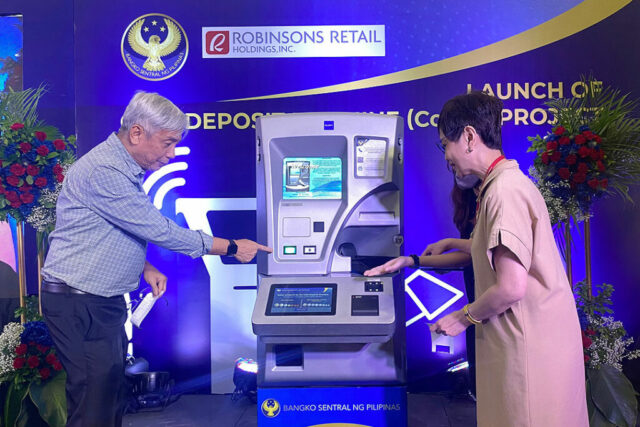
MORE FILIPINOS are using the Bangko Sentral ng Pilipinas’ (BSP) coin deposit machines, data from the regulator showed.

Based on latest central bank data, its coin deposit machines (CoDMs) have collected 141.07 million pieces of coins worth P492.58 million as of Feb. 15.

The machines have recorded 130,583 completed transactions since their deployment in June last year, the BSP said.

The central bank deployed the deposit machines to encourage the public to deposit their idle coins for recirculation.

All denominations of the BSP Coin Series and New Generation Currency Coins Series are accepted by the CoDMs. Unfit and demonetized coins, foreign currency, and foreign objects are rejected by the machine.

The value of coins deposited in CoDMs may be credited to the depositor’s e-wallet account or converted into a shopping voucher for over-the-counter transactions.

BSP Deputy Governor Bernadette Romulo-Puyat earlier said the central bank is looking to roll out more machines across the country. It has already deployed a total of 25 units in malls across the Greater Manila area.

However, the BSP and its partner provider are assessing how to improve the machines as they have observed that the current units get jammed if coins deposited are taped or bundled, or if foreign objects like nails, tokens, and screws are inserted, she said.

The rollout of the coin deposit machines in select retail establishments of the SM Store, Robinsons Supermarket, and Festival Mall is part of the first phase of the project’s implementation.

The BSP will determine if the project will be expanded to other regions and if the number of machines will be increased a year after the launch. — Keisha B. Ta-asan

Auto Sales (January 2024)

NEW VEHICLE SALES jumped by an annual 15.5% in January amid the launch of new models and the expansion of electric vehicles (EVs) in the Philippines, an industry report showed. Read the full story.


Auto Sales (January 2024)

How PSEi member stocks performed — February 21, 2024

Here’s a quick glance at how PSEi stocks fared on Wednesday, February 21, 2024.


DBM bats for direct procurement from suppliers deemed ‘reliable’

BW FILE PHOTO

THE Department of Budget and Management’s (DBM) Procurement Service (PS) is proposing two new methods to streamline government procurement, including the direct purchase of goods from suppliers with acceptable track records and the direct purchase of goods used in research and development.

Dennis S. Santiago, executive director of the PS, proposed the two methods in a letter to Senator Juan Edgardo M. Angara, who heads the Senate Finance Committee. The letter had been provided by Mr. Angara’s staff.

“We have really introduced a lot of measures that would open up and (inject) more flexibility on government contracting… especially with the use of fit-for-purpose procurement or proportionality,” he told a committee hearing on Wednesday.

“We will be using modalities that are most useful to the government.”

The committee is considering amendments to the Government Procurement Reform Law to minimize delays to government projects and the resulting impact of underspending on the economy.

In his letter, Mr. Santiago described the proposed direct-purchase mode as applicable to suppliers that have “satisfactorily delivered goods or services to another government agency under a contract.”

This can only be pursued if a previous contract has been awarded through competitive bidding and if the supplier agrees to the terms of the procurement contract, according to Mr. Santiago’s letter, dated Feb. 12 and sent to BusinessWorld on Wednesday.

The PS is also proposing easier procurement rules for products used in innovation projects and research and development, including raw materials, substances, chemicals, and animals.

Mr. Santiago noted that competitive bidding is the primary method of procurement of government agencies under the law, noting that alternative methods of procurement often flagged when transactions come under scrutiny.

Senate Bill No. 2466, which was filed by Mr. Angara, aims to analyze current procurement modes, manage their risks, and establish a single electronic procurement portal. The measure would also make procurement from an electronic marketplace an option.

The committee also tackled Senate Bill No. 1123, filed by Senator Maria Imelda Josefa Remedios R. Marcos, which seeks to abolish the PS, who alleged that funds are often stalled at the procurement stage.

The DBM has been pushing to amend the procurement law, seeking the adoption of a single electronic portal known as the Philippine Government System for all procurement activities.

The cash utilization rate of government agencies at the end of 2023 was 98%, it said earlier this month.

Mr. Angara cited the need to improve procurement since many agencies tend to go for the lowest bidder, risking delivery of subpar goods.

“We’re forced to buy those given the inflexibility in the law, which is obviously unintended,” he said at the committee hearing. — John Victor D. Ordoñez 

Recto calls on dev’t banks to keep poor countries from lagging further

FINANCE SECRETARY RALPH G. RECTO — DEPARTMENT OF FINANCE FACEBOOK PAGE

DEVELOPMENT BANKS and institutions must ramp up their assistance to poor countries, calling current programs “no longer sufficient,” Finance Secretary Ralph G. Recto said.

“We have now reached a critical threshold. Without decisive and major corrective action to protect our hard-won gains, the developing world is at the risk of falling even further behind,” Mr. Recto was quoted saying in a speech during the Intergovernmental Group of Twenty-Four (G-24) Board of Governors meeting on Wednesday.

“This particular moment calls for more responsive and strong-willed international financial institutions,” he added.

Mr. Recto called on the Asian Development Bank, the World Bank, the International Monetary Fund, and other institutions to “redouble their efforts in helping developing countries mitigate and reverse these factors that threaten our growth prospects.”

“Traditional interventions are no longer sufficient. We need bold and innovative solutions to help developing economies sustain productivity, boost long-term growth prospects, and increase resilience to economic shocks,” he added.

Mr. Recto also said that the government is open to forging “stronger collaboration” with lenders and member countries to “build up their respective capacities to weather global challenges.”

“We must develop strategies to efficiently mobilize fiscal resources and prevent leakages as much as we can, not only to manage debt but to provide protection to our people in these difficult times,” he added.

In 2022, the Philippines’ active portfolio of official development assistance loans and grants stood at $32.4 billion, composed of 106 loans and 320 grants provided by 20 development partners. — Luisa Maria Jacinta C. Jocson

Maharlika studying foreign JVs to build rural telecom towers

BW FILE PHOTO

THE Maharlika Investment Corp. (MIC) said it is studying the potential of joint ventures (JVs) with foreign investors to build telecommunications towers in rural areas.

Maharlika Chief Executive Officer and President Rafael D. Consing told reporters on the sidelines of an event on Wednesday that the rural segment is difficult for incumbent telecom firms to invest in because they are reluctant to risk their own capital, opening the door for Maharlika to step into the gap.

“One of the strategies that we’re looking at is to help rollout and support the rollout of telecom towers in rural areas,” he said.

“Today, incumbent telecom companies won’t do it on their own, because it’s going to be their capital expenditure (capex). Here, it will be our capex. We will create towers that can accommodate both satellite and telecom equipment,” he added.

He said the joint ventures with foreign investors will seek to sign up telecom firms as clients for the towers.

“The incumbent telecom companies can then go and lease space in those telecom towers, to reduce their capex, right? So we’re basically helping them convert their capex into opex (operating expense) and bringing their equipment to start serving rural areas,” he added.

Mr. Consing said that these proposals are undergoing study, though he has held initial meetings with potential foreign investors.

He did not disclose details on the foreign investors, joint venture agreements, or the scope of the telecom tower building program.

The MIC’s first commitment this year will likely be an energy-related project, Mr. Consing has said, which will be announced in the latter half of the year. The energy sector is also expected take up the bulk of the fund’s initial investments.

The MIC has initial capital of P125 billion and authorized capital stock of P500 billion. — Luisa Maria Jacinta C. Jocson