Home Blog Page 351

Basilan ferry sinking probe pushed

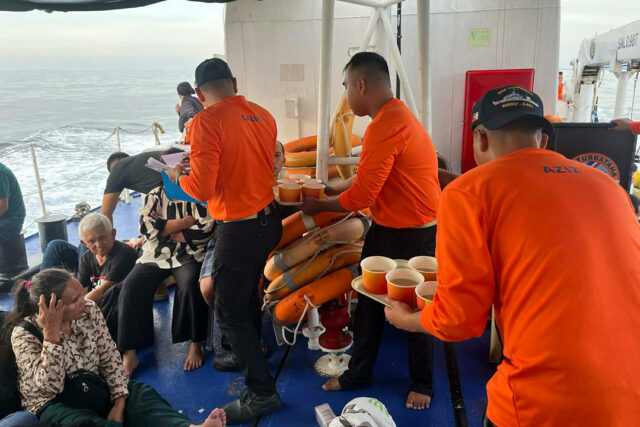
PHILIPPINE Coast Guard personnel help survivors who were aboard the M/V Trisha Kerstin 3, which capsized around the waters of Baluk-baluk Island, Basilan, Philippines on Jan. 26. — PHILIPPINE COAST GUARD

A RESOLUTION seeking to probe the sinking of the M/V Trisha Kerstin 3 off the coast of Basilan province has been filed in the Senate, aiming to strengthen maritime safety laws and prevent future disasters.

Senate Resolution No. 266, filed by Senator Robinhood “Robin” C. Padilla, directs the chamber to investigate the sinking of the passenger ferry which led to the deaths of at least 33 individuals.

“An inquiry in aid of legislation is necessary to identify policy gaps, strengthen maritime safety standards, enhance passenger protection, and prevent similar tragedies in the future,” the resolution stated.

It added that there is a need to examine whether issues such as technical maintenance, vessel age and condition, loading capacity, weather advisories, crew competence, and regulatory supervision contributed to the sinking of the ferry.

The passenger ferry sank about five kilometers northeast of Baluk-Baluk Island, Basilan while en route to Zamboanga City to Jolo, Sulu. It was carrying 332 passengers and 27 crew members.

According to initial reports from the Philippine Coast Guard, the vessel was not overloaded by passengers or cargo at the time of departure and was operating within its authorized capacity. — Adrian H. Halili

NBI told to send team to Interpol

PHILSTAR FILE PHOTO

A CONGRESSMAN on Sunday urged the National Bureau of Investigation (NBI) to send a Philippine delegation to meet with International Criminal Police Organization (Interpol) and follow up on its red notice request for a resigned lawmaker tagged in a multibillion-peso graft scandal.

Navotas Rep. Tobias Reynald M. Tiangco said requests for a global alert for law enforcement to arrest individuals based on a warrant of arrest issued by a country typically take weeks. The NBI had asked for a red notice on former Party-list Rep. Elizaldy M. Co in November, he said.

“It usually takes only three to four weeks to get a response from Interpol,” he said in a statement. “Perhaps it’s time for the NBI to send a high-level team to Interpol headquarters to find out why, until now, we still haven’t received a reply to our request.”

Ruy Alberto S. Rondain, Mr. Co’s legal counsel, did not immediately reply to a Viber message seeking comment.

The resigned lawmaker, who previously chaired the House Appropriations Committee, simultaneously owned a construction firm that has bagged several infrastructure projects under the Marcos administration. — Kenneth Christiane L. Basilio

Groups flag growing vulnerability of low-income workers

LEADERS from the Catholic Church and the Philippine labor sector said governance, economic policy, and environmental management are deeply interconnected, warning that systemic corruption and precarious labor conditions continue to undermine public welfare and economic development.

Gerardo A. Alminaza, Bishop of the Diocese of San Carlos and president of Caritas Philippines, said that disasters, compounded by corruption in infrastructure projects, disproportionately affect low-income workers, including agricultural laborers, fisherfolk, and informal employees.

“The environment, the economy, and governance are deeply interconnected,” Mr. Alminaza told BusinessWorld on the sidelines of the Labor Consultative Assembly on Saturday.

“When the environment is destroyed, calamities follow — and those who suffer most are the working class,” he added.

He framed the issue within Catholic social teaching, citing the principle that human dignity and labor must take precedence over capital.

Labor leaders echoed this assessment, stressing that stagnant wages, insecure contracts, and limited union protections have left workers vulnerable amid rising costs and ongoing ecological and economic pressures.

Julius H. Cainglet, vice-president of the Federation of Free Workers, told BusinessWorld that labor conditions should be treated as a key indicator of national economic and governance performance.

“The Filipino workforce is the primary driver of the economy,” Mr. Cainglet said.

“Without them, production halts. Workers must therefore be at the center of policy decisions, not just capital owners or entrenched political dynasties.”

“The working class has a major role in societal change. Collective action and solidarity are essential to address corruption, improve governance, and ensure the economy serves the people, not just a few,” added Leodegario “Ka Leody” de Guzman, chairperson of the Partido Lakas ng Masa.

IBON Foundation Executive Director Jose Enrique “Sonny” A. Africa said corruption has wide-ranging effects on public services.

“Reducing corruption understood as spending better will definitely improve public social and economic services that workers, like every Filipino, use. But this is only up to a point — providing all public services at the scale needed will take much more than fixing corruption,” Mr. Africa told BusinessWorld in a Viber chat.

Mr. Alminaza said that failing to provide fair wages, safe working conditions, and secure employment within Church institutions undermines the credibility of its broader moral claims.

Labor representatives called for concrete reforms, including legislated wage increases, an end to contractualization, strengthened union rights, and accountability for extrajudicial actions against workers.

They added the need for ecological programs aligned with labor protections, pointing to climate-related disasters and mismanaged infrastructure as areas where systemic change is critical.

While acknowledging some initiatives by the current administration, such as investigations into flood control projects, both Church and labor leaders said these efforts remain insufficient. They pointed to entrenched political dynasties, longstanding corruption, and policy inconsistencies as structural barriers to sustainable economic and social development.

“The challenges are systemic, spanning multiple administrations,” Mr. Cainglet said. “Workers are increasingly aware that issues like corruption, climate risk, and governance directly affect their livelihoods. Only a unified approach across sectors can achieve meaningful reform.” — Erika Mae P. Sinaking


Security Bank partners with PRA to offer retirees priority banking

SECURITY BANK/BW FILE PHOTO

SECURITY BANK Corp. has partnered with the Philippine Retirement Authority (PRA) to provide foreign and returning Filipino retirees priority banking privileges and special deposit rates.

In a statement on Sunday, the bank said under the partnership, retirees applying for the Special Resident Retiree’s Visa (SRRV) may open Security Bank accounts as part of the application process and with an exclusive Time Deposit rate, premium onboarding support, and priority relationship management.

Account opening and servicing are handled at the Reposo-J.P. Rizal Branch in Makati City, the bank’s dedicated hub for SRRV retirees.

Eligible clients may also be offered enrollment in Security Bank’s VIP Gold Circle Membership program.

Privileges under the program include priority queuing across branches, waived fees for certificates, statements, and over-the-counter transactions, complimentary annual checkbook, an optional Platinum Mastercard, unlimited free InstaPay and PESONet transfers, and unlimited free BancNet ATM withdrawals nationwide.

Spouses and dependents may also enjoy SRRV banking benefits.

Simple Time Deposit placement with automatic renewal for retirees are likewise aligned to SRRV visa terms. — Aaron Michael C. Sy

DoTr directs CAAP to allocate up to P300M to fix transmission line issues

CAAP

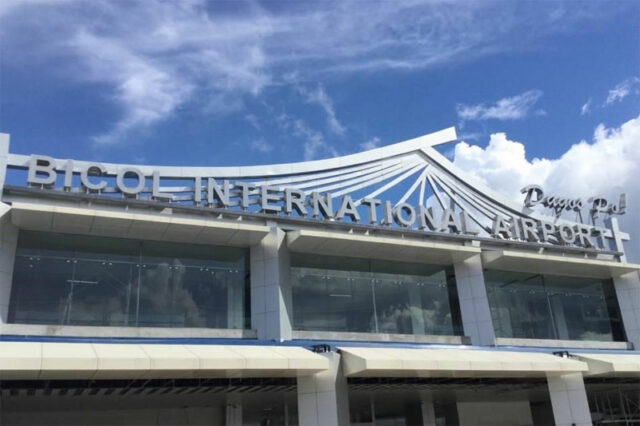
THE Department of Transportation (DoTr) has directed the Civil Aviation Authority of the Philippines (CAAP) to allocate between P200 million and P300 million to address transmission line issues that have limited operations at the Bicol International Airport.

This came as the agency works to maximize the operations of the Bicol International Airport to enable it to accommodate international flights.

Transportation Acting Secretary Giovanni Z. Lopez said that the entire stretch of Bicol International Airport is about 2,500 meters, allowing it to accommodate jet operations.

“[However] the problem is funding. I talked to CAAP to allocate between P200 million to P300 million to fund these transmission line issues to optimize the runway. Hopefully, we can do it within the year,” Mr. Lopez said in a statement.

The DoTr said that it signed a memorandum of agreement with the National Grid Corp. of the Philippines to resolve the transmission line issue, which it said obstructed the runway.

Once the issue is fixed, the airport can utilize its runway length and can service jet operations and international flights, the Transportation department said. — Ashley Erika O. Jose

DPWH plans to rebid Malabog flyover project within February 

THE Department of Public Works and Highways (DPWH) plans to initiate a new bidding for the long-delayed Malabog flyover in Daraga, Albay in February, with plans to complete the project within two years.

“This is a project by the Discaya-owned Alpha & Omega (Alpha & Omega Gen. Contractor & Development Corp.). We are now terminating it. So, this February, we will conduct the bidding of the project once it is formally terminated. We are targeting to complete this by around one to one and a half years,” Public Works Secretary Vivencio B. Dizon said in a media release on Sunday.

Mr. Dizon said the project, which began in 2021, has faced delays that have caused traffic congestion in the province, particularly from the Bicol International Airport to the Maharlika Highway.

Data from the DPWH showed that the P58.63-million contract for the project was formally signed in 2024 between the DPWH and the joint venture of Alpha & Omega and Next Generation Construction and Supply Corp., while funding for the project came from the 2021 General Appropriations Act.

According to the contract, the project must be completed within 220 calendar days or more than seven months.

Companies owned by former Pasig mayoral candidate Cezarah Rowena C. Discaya, such as Alpha & Omega Gen. and St. Timothy Construction, were among the top 15 flood control contractors that cornered a bulk of projects since 2022. — Ashley Erika O. Jose

Negotiations start for 3 bundled regional airports

DOTR

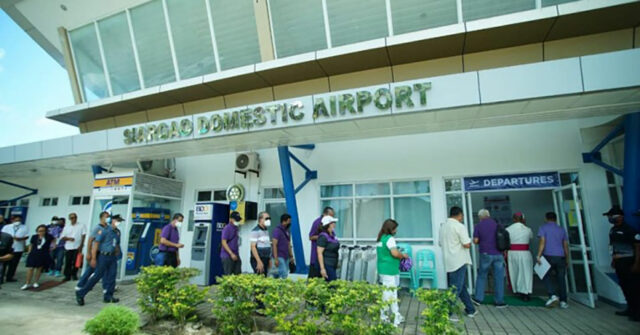
THE Department of Transportation said it entered the negotiation phase for the P16.05-billion bundled development project for airports in Davao, Siargao, and Bicol.

Transportation Undersecretary for Aviation and Airports Jim C. Sydiongco told reporters that the government panel is negotiating with the proponents on the terms, scope and coverage of the unsolicited proposal.

The unsolicited proposal was submitted by the Philippine Regional Airports Consortium of Filinvest Infra-Solutions Ventures, Inc., JG Summit Infrastructure Holding Corp., and Asian Infrastructure and Management Corp.

He said the review panel is currently assessing the proposal, with approval hinging on responsiveness to passenger forecasts, stakeholder demand, and plans to modernize and develop air navigation and aerodrome facilities.

Mr. Sydiongco said the primary consideration for the panel remains the consortium’s financial offer.

Once the government and the proponent conclude the negotiation phase, the government will formalize the Original Proponent Status and initiate the Swiss Challenge process, under which another party can put forward its own offer, which the consortium will have the option to match.

According to the Public-Private Partnership (PPP) Center, the P16.05-billion bundled airport project includes the development, operation, and maintenance of the Davao International Airport and Bicol International Airport over a 30-year concession period, and Siargao over a 15-year concession period.

The Davao Airport project is divided into two phases, the PPP Center said, with phase one including the modernization and expansion of passenger terminal building. The second phase covers the construction of a new cargo terminal.

The Bicol Airport is also divided into two phases and has a completion timeline of 2056. This project involved the renovation of the existing international area of the passenger terminal building and capacity augmentation.

The Siargao Airport project aims to expand and renovate the airport to comply with International Air Transport Association Level of Service Optimum Standards. — Ashley Erika O. Jose

Exporters wary of BoC service fee hikes

ICTSI.COM

THE Philippine Exporters Confederation, Inc. (Philexport) said Customs service fees could increase significantly with the introduction of a new processing system.

In a statement over the weekend, the group said that “while it supports the streamlining and digitalization of government processes, it opposes the proposed fee hike relating to the use of the new customs processing system.”

“We understand that the fee involved is about P300, information that we cannot validate at the moment because we were not provided a copy of this proposal,” it said.

“Based on this initial information, may we register our strong opposition to the said proposal because of the huge jump in fees,” it added.

The current fee schedule involves a P45 per entry charge for cargo data exchange center e-trade lodgement, a P40 per container charge on the Go Fast platform for managing container returns, and a P55 E-Konek import permit and lodgement fee.

Exporters also pay a P18 fee for an e-trade manifest via sea and a P23 fee for an e-trade manifest via air.

“Fee increases such as this will directly impact the costs of products and services and will negatively impact the competitiveness of our exports and importers,” the group said.

The proposed new system, Philexport said, should first undergo a regulatory impact assessment (RIA) by the Anti-Red Tape Authority.

“The result of the RIA should help guide the Bureau of Customs (BoC) in assessing the viability of implementing the customs processing system in the context of trade and economic development,” it said.

“Further, the BoC should bear or subsidize the cost of developing and deploying the new system since modernization initiatives are public investments intended to benefit the trading community and enhance national competitiveness,” it added.

Philexport President Sergio R. Ortiz-Luis, Jr. also called for another public consultation once the service provider has been determined and to get a breakdown of the cost components of the fee to determine any duplicate or unnecessary charges.

The BoC organized a consultation last month, which Philexport participated in.

Set to replace the BoC’s E2M (electronic-to-mobile) system, the proposed customs processing system seeks to address a number of issues raised by stakeholders.

These include delays in system response, failure to receive notifications, encoding and format errors, integration gaps with other systems, and system limitations in supporting document attachments. — Justine Irish D. Tabile

Cyber-literacy shortcomings hindering economy’s growth potential — analysts

STOCK PHOTO | Image by Vectorjuice from Freepik

CYBER-LITERACY skills deficiencies are holding back the economy’s potential because they delay the transition to the digital economy, analysts said.

Angel T. Redoble, chairman and founding president of the Philippine Institute of Cyber Security Professionals, said the lack of skills in the general population, as opposed to the highly trained teams responsible for cybersecurity functions, make the overall system vulnerable to cyberattack.

“No matter how expensive your cybersecurity implementations are, or how well-trained your cybersecurity team is, they don’t attack you directly — they’re going to attack ordinary users,” he said on the sidelines of the BusinessWorld Cybersecurity Insights Forum last week. 

A cyber-literate person is deemed capable of protecting personal data, practicing digital etiquette, and assessing information online, analysts said.

A 2025 report by Cisco Systems, Inc. found that only 6% of organizations in the Philippines have “mature” cybersecurity systems that can handle cyberthreats.

Samuel V. Jacoba, founding president of the National Association of Data Protection Officers, said the growing demand for CISO (chief information security officer)-as-a-service is an opportunity for the digital economy.

“To be competitive in the global economy, we’ll keep on producing world-class cyber professionals in all fields,” he said on the sidelines of the event.

The Philippines ranked 27th in cybersecurity literacy skills, according to a 2023 report cybersecurity company and VPN service provider NordVPN.

“Cyber-literacy is definitely at the core of our aspiration to be a digital economy,” Angelito M. Villanueva, FinTech Alliance.PH chairman and Rizal Commercial Banking Corp. executive vice-president and chief innovation and inclusion officer, said on the sidelines of the event.

He cited the need to invest in improving basic reading and writing skills to help make them more cyber-literate.

The digital economy’s contribution to the Philippine economy was 8.5% in 2024, against 8.6% a year earlier, according to the Philippine Statistics Authority. — Beatriz Marie D. Cruz

PEZA to push for increased powers, faster proclamations of ecozones

ABOITIZINFRACAPITAL.COM

By Justine Irish D. Tabile, Senior Reporter

THE Philippine Economic Zone Authority (PEZA) is seeking amendments to the PEZA law and studying ways to speed up the proclamation of economic zones (ecozones).

PEZA Director General Tereso O. Panga added that the target for ecozone proclamations this year is 30.

“We are hoping that the process will be a lot faster in terms of proclamation, because we really need to accelerate the entry of investments. Maybe that is something we need to work on with Executive Secretary Ralph G. Recto,” he told reporters last week.

“I am sure he will be pro-ecozone development. I am sure he will help us speed up the process,” he added.

So far, two ecozones have been proclaimed by President Ferdinand R. Marcos, Jr. in 2026. These are the expansion of the First Industrial Township-Special Economic Zone in Tanauan City, Batangas and a new information technology park in Iloilo City.

This year, Mr. Panga said 15 more ecozones are in the pipeline for proclamation by the President.

Meanwhile, he said PEZA is looking to restore authority and powers previously exercised by PEZA by amending the PEZA law.

“These are the things that we need to reinstate for a more empowered authority,” he said.

In particular, PEZA wants to restore its power to issue fire safety inspection certificates and certificates of origin, create a mechanism that can expedite the proclamation process, and gain the power to venture into various types of economic zones.

PEZA is also looking to strengthen the organization by adding more deputy directors-general.

“It is a 30-year-old law, so it is high time that we revisit the provisions, align it with global standards, and modernize the way we do business in the PEZA zones so that we can accelerate the entry of more investors in the Philippines,” he said.

For 2026, PEZA is hoping to approve P300 billion worth of investment pledges, which if borne out would be 15% higher than its approvals in 2025, a growth projection it described as “conservative.”

“P300 billion is the fighting target. We have made some adjustments because if you look at our average growth rates, it is about 23% yearly,” he said.

“That P300 billion is just 15% growth, so we are also being conservative, although we are trying to maintain positive growth trajectory,” he added.

He said PEZA is expecting to register Tier-1 suppliers to NVIDIA, as well as a P6-7 billion investment from UK pharmaceutical company AstraZeneca.’

“’Yung AstraZeneca, supposedly last year pa yon (The AstraZeneca investment should have come in last year), so we are hoping that this year, they will apply with us,” he added.

Port cargo volume exceeds 2025 target

ICTSI

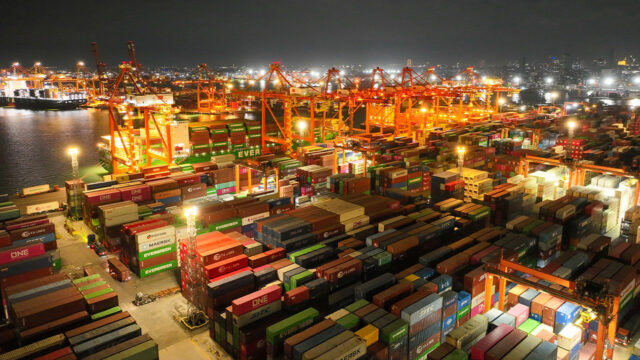
THE Philippine Ports Authority (PPA) said it exceeded its 2025 target with 307.64 million metric tons (MMT) of cargo throughput for the year, up 6.3%.

Citing preliminary data, foreign cargo volume rose 4.62% to 193.10 MMT, while domestic cargo rose 9.27% to 114.55 MMT.

Last year, PPA container ports served 8.57 million twenty-foot equivalent units (TEUs), up 9.31%.

PPA fell short of its 2025 passenger traffic target of 85.41 million, recording 82.42 million passengers, up 4.58%.

In the fourth quarter, PPA logged cargo throughput of 74.43 MMT, up 4.36% from a year earlier.

The port regulator logged container throughput of 2.18 million TEUs, up 3.31%. Passenger traffic in the fourth quarter was 19.32 million, up 5.46%.

For 2026, the PPA said it is expecting cargo volume to grow 4.03% to 320.94 MMT, driven mainly by foreign cargo.

The PPA said foreign cargo volume is expected to rise 4.28% to 202.73 MMT. Domestic cargo volume is seen rising 3.61% to 118.22 MMT.

Container throughput is forecast to increase 3.94% to 8.88 million TEUs. For this year, passenger traffic is expected to grow 5.78% to 87.26 million. 

The PPA said it remains optimistic about cargo and passenger traffic growth due to continued investment in port upgrades. — Ashley Erika O. Jose

Multi-year rule eased for routine service renewals

BW FILE PHOTO

THE Department of Budget and Management (DBM) said government agencies no longer need to obtain a multi-year contractual authority (MYCA) to renew routine services repeatedly procured over the past three years.

In a Jan. 29 circular, Acting Budget Secretary Rolando U. Toledo said amendments to the MYCA rules now exempt “regular and recurring services” such as janitorial, security, and maintenance contracts.

It said the eased rules are aligned with Section 18 of Republic Act No. 12009, the National Government Procurement Act, and its implementing rules and regulations.

However, he noted that the DBM may still issue a MYCA for regular and recurring contracts under “justifiable circumstances” on case-by-case basis with sufficient justification.

Services covered by the MYCA exemption include janitorial, security, telecommunications, drinking water supply, office space rentals, venue and equipment leases, as well as fuel fleet cards, water distribution, and electricity services.

In addition, Mr. Toledo said agencies are required to conduct annual reviews to assess market conditions and renegotiate contract prices if costs fall.

Renewals must also be backed by performance evaluations to ensure service providers deliver satisfactorily, instead of undertaking another procurement process.

“NGAs (National Government agencies) shall also ensure that the annual funding requirements for regular and recurring services intended for renewal are appropriately reflected in their budget proposals to be submitted to DBM for the applicable fiscal years,” it said. — Aubrey Rose A. Inosante

ADVERTISEMENT
ADVERTISEMENT