Home Blog Page 2376

Premium Leisure Corp. to hold Special Stockholders’ Meeting on Dec. 20 via Zoom


Spotlight is BusinessWorld’s sponsored section that allows advertisers to amplify their brand and connect with BusinessWorld’s audience by publishing their stories on the BusinessWorld Web site. For more information, send an email to online@bworldonline.com.

Join us on Viber at https://bit.ly/3hv6bLA to get more updates and subscribe to BusinessWorld’s titles and get exclusive content through www.bworld-x.com.

NG swings to budget surplus in Oct.

Construction of a depot for the North-South Commuter Railway Extension Project is underway at the Clark FreePort Zone in Mabalacat, Pampanga, Aug. 12, 2024. — PHILIPPINE STAR/MIGUEL DE GUZMAN

By Aubrey Rose A. Inosante, Reporter

THE NATIONAL Government’s (NG) fiscal position swung to a surplus in October, driven by a 23% jump in revenues, the Bureau of the Treasury (BTr) said on Wednesday.   

The NG posted a P6.3-billion budget surplus in October, a turnaround from the P34.4-billion deficit in the same month a year ago.

This was the first budget surplus since the P42.7-billion surplus posted in April.

National Government fiscal performanceMonth on month, the budget balance swung to a surplus from the P273.3 billion deficit in September.

Data from the BTr showed government revenues increased by 22.63% to P473.1 billion in October from P385.8 billion a year ago, as tax revenues jumped by 16.94% to P414.9 billion.

The bulk of tax revenues came from the Bureau of Internal Revenue (BIR), which collected P325.5 billion in October, up 18.62% year on year.

“The double-digit growth in October can be attributed to higher collections on value-added tax (VAT), personal income tax (PIT), documentary stamp tax (DST), corporate income tax (CIT), excise tax on tobacco products, and percentage taxes,” BTr said.

Collections by the Bureau of Customs jumped by an annual 11.5% to P86.9 billion in October, while collections by other offices were flat at P2.4 billion.

On the other hand, nontax revenues also went up by 87.65% year on year to P58.3 billion in October. Treasury revenues declined by 13.5% to P14.5 billion, due to “the base effect of early remittances of dividends from government-owned and -controlled corporations last year.”

Collections by other offices surged by 206.72% to P43.7 billion.

Meanwhile, expenditures rose by 11.08% to P466.8 billion in October from P420.2 billion a year ago.

“This was mainly attributed to higher personnel services expenses due to the first tranche of the salary adjustments of qualified civilian government employees and the release of FY 2022 Performance-Based Bonus of the Department of Education,” it said.

Spending also got a boost from the implementation of infrastructure projects of the Department of Public Works and Highways and foreign-assisted rail projects of the Department of Transportation, as well as social protection and health programs.

Interest payments slipped by 6% to P55.4 billion, while other expenditures jumped by 13.89% to P411.4 billion.

“Budget surplus (in October) may stem from low budget utilization rate of several agencies due to various factors such as procurement and disbursement issue,” John Paolo R. Rivera, a senior research fellow at the Philippine Institute for Development Studies, said in a Viber message.

10-MONTH DEFICIT
In the first 10 months, the budget deficit narrowed to P963.9 billion from P1.02 trillion in 2023.

As of end-October, the shortfall represents only 64.94% of the P1.48-trillion deficit ceiling for the year.

Revenue collections jumped by 16.83% to P3.77 trillion in the January-to-October period. This accounted for 88.2% of the revised P4.27-trillion revenue program for this year.

Taxes, which made up 86% of the total revenues, increased by 11.4% to P3.23 trillion.

Revenues generated by the BIR rose by 13.49% to P2.42 trillion as of end-October, making up 84.95% of the P2.85-trillion revised full-year program.

“The 10-month year-on-year growth is due to higher VAT, a total of 12 months’ worth of VAT was already collected with the change of filing schedule from monthly to quarterly. The other sources of higher BIR collection are PIT, CIT, combined taxes on bank deposits and government securities, DST, and percentage taxes,” the Treasury said.

Customs collections went up by 5.32% to P777.6 billion, representing 82.75% of the revised P939.7-billion program.

Nontax revenues, which accounted for 14.32% of the total revenues, jumped by 64.93% to P539.4 billion.

On the other hand, expenditures increased by 11.52% to P4.73 trillion in the first 10 months from P4.24 trillion in the comparable period last year.

Interest payments rose by 23.03% to P638.7 billion from P519.1 billion a year ago.

“The better budget balance data for the month of October 2024 and for the first 10 months of the year may be attributed to faster growth in recurring tax revenues especially from the BIR as the economy reopened further,” Rizal Commercial Banking Corp. Chief Economist Michael L. Ricafort said in a Viber message.

He said many businesses reported improved sales, which resulted in higher tax revenue collections.

“Going forward, the CREATE MORE (Corporate Recovery and Tax Incentives for Enterprises to Maximize Opportunities for Reinvigorating the Economy) would lead to some foregone tax revenue collections,” he said.

But this could be offset “by increased foreign direct investments, more jobs, and increased business/economic activities in the country that would result in more recurring tax revenue collections,” Mr. Ricafort said.

The Treasury said revenue effort for the first three quarters improved to 17.5% of gross domestic product (GDP), slightly higher than 16.4% a year ago and exceeded the 16.1% target for 2024.

Tax effort also went up to 14.91% in the first three quarters versus 14.72% in 2023, and above the 14.42% full-year target.

Expenditure effort rose to 22.6%, up from 22.13% a year ago and surpassed the full-year target of 21.72%.

“The fiscal deficit-to-GDP ratio stands at a manageable 5.14% of GDP for the first three quarters of 2024. This is lower than the 5.7% level during the same period last year and well below the 5.6% target for 2024,” the Treasury said.


Trump policies may hurt BPOs in Philippines

BW FILE PHOTO

US PRESIDENT-ELECT Donald J. Trump’s protectionist policies could spell trouble for the Philippines’ business process outsourcing (BPO) sector, economists warned.

GlobalSource Country Analysts Diwa C. Guinigundo and Wilhelmina C. Mañalac said Mr. Trump has repeatedly claimed Americans have lost jobs to other countries and vowed to “punish” American firms that manufacture outside of the United States.

“This policy stance could negatively impact the Philippines’ business process outsourcing (BPO) industry, especially since it has been reported that around 70% of its earnings come from the US,” they said in a commentary.

Mr. Guinigundo and Ms. Mañalac said the BPO industry has been one of the Philippine economy’s fastest-growing sectors, generating much-needed foreign exchange revenues and jobs.

“The BPO industry has in fact been comparable to foreign exchange revenues sourced from overseas Filipino workers’ remittances. Thus, executing these (protectionist) policies may have a stifling effect on the growth of the BPO industry,” they said.

The information technology and business process management (IT-BPM) industry is expected to book between $38 billion and $40 billion in revenue this year. It also aimed to increase staffing to between 1.82 million and 1.84 million by yearend.

The industry caters to the banking, financial services and insurance, healthcare, retail and IT sectors.

“Given the size of business in the BPO sector and the high attrition rate in the industry at 40% due to limited career progression, low pay and an unhealthy work-life balance, the uncertainty of the Trump policy on the business contracting industry could therefore have non-trivial effects on the Philippines’ output growth and employment,” the GlobalSource analysts said.

The Philippines is one of the top destinations for US firms seeking to outsource services.

An earlier report by the Center for Strategic and International Studies showed 395 US firms have invested $22.4 billion in the Philippines between 2003 and 2021, of which $7.8 billion or 35% went to IT-BPM.

Mr. Trump, who had pushed for an “America First” policy during his first term, is expected to continue his protectionist stance when he assumes office in January.

“On the basis of Trump’s ‘America First’ policy under his mantra ‘Make America Great Again,’ a reduction in foreign assistance extended by the US globally, including the Philippines, may also be expected,” the GlobalSource analysts said.

During his election campaign, Mr. Trump has also vowed to deport millions of immigrants living in the United States illegally.

“Stricter immigration policies may make it more difficult for overseas Filipino workers to find job opportunities in the US, even the highly skilled ones,” Mr. Guinigundo and Ms. Mañalac said.

“Considering that an average of 40.9% of total cash remittances from 2021 to 2023 came from the US, the implementation of more stringent immigration policies may result in lower remittances, without consideration of other foreign job markets.”

Cash remittances increased 3% to $28.07 billion in the January-to-September period from $27.24 billion a year ago.

The US accounted for the biggest share (41.3%) of cash remittances in the first nine months.

Mr. Guinigundo and Ms. Mañalac also flagged the possible negative impact of Mr. Trump’s trade policy.

Mr. Trump on Monday said he will slap a 25% tariff on all products from Mexico and Canada, and will charge goods from China an additional 10% tariff on his first day in office. He had earlier threatened to impose tariffs of up to 20% on imports from other countries.

“The US is a major destination for Philippine exports, making up an average of about 16% of total export trade for the last five years. While the share-to-total has slightly declined due to the trade diversification policy of the Philippine government in recent years, a further drop in exports to the US definitely does not bode well for the country,” the GlobalSource analysts said. — ARAI

PHL retailers urged to adapt to consumer preferences, AI

People walk around a mall in Quezon City, Nov. 21, 2024. — PHILIPPINE STAR/MIGUEL DE GUZMAN

By Revin Mikhael D. Ochave, Reporter

LOCAL RETAILERS should adapt to rapid digitalization, the growing use of artificial intelligence (AI), and changing consumer preferences to ensure sustained growth, industry players said.

“Digitalization is here to stay. The use of artificial intelligence is really picking up. It really says a lot about how digitally fluent the Filipinos are,” Metro Retail Stores Group, Inc. Chairperson Sherisa P. Nuesa said during a panel discussion at the BusinessWorld Forecast 2025 forum on Tuesday.

The e-commerce sector saw significant growth in the country during the pandemic as consumers turned to online shopping. This prompted many businesses to continue expanding in the e-commerce space.

Ms. Nuesa said Filipino consumers have become smarter when it comes to spending.

“They choose and are ready to switch to cheaper alternatives. What has happened is that digitalization has empowered customers with many choices,” she added.

Household consumption accounts for over 70% of the Philippine economy.

“Consumption has always been a strong component of the Philippine economy. We have a young population and they still need a lot of consumer goods,” Ms. Nuesa said.

Vicky V. Abad, country manager for global research company Ipsos in the Philippines, said that AI is poised to transform the retail industry.

“AI is going to change the way retailers will adapt to how consumers are utilizing this technology. There’s a lot that retailers can learn about the consumers like offering these things that they’re going to look for,” she said.

“We’ve already seen examples in omnichannel strategies wherein technology has been used to create a seamless process for consumers to navigate from identifying a need they’re looking, to their journey and search, and to the actual fulfillment of their needs and wants in the retail store,” she added.

Ms. Abad said local retailers should focus on retaining the trust of consumers amid rapid digitalization.

“In the age of digitalization, we need to be able to trust companies we work with that they will protect our data, that they will protect our money. The importance of trust as a currency amongst brands and consumers will be paramount,” she said.

“Retailers should remain authentic to who they are, what they stand for, and what they believe in. They must not lose those as they adapt to the different kinds of consumers,” she added.

Jennifer Jane G. Echevarria, Globe Telecom, Inc. Vice-president for enterprise data and strategic services, said retailers should cultivate customer trust.

“Offering the lowest price will not guarantee any retailer success because at the end of the day, trust has become the new currency for Filipinos,” she said.

“What we can bank on as companies and brands is knowing that there will always be a budget for our customers. If we are able to make them feel that it is worth spending and trusting their money with us, we just need to be able to deliver,” she added.

Ms. Echevarria said retailers should give customers an array of options, instead of only focusing on setting the lowest price.

“Since most Filipinos have irregular sources of income, what’s important for retail today is to make sure there’s always flexibility by offering flexible deals and customizable options,” she said.

“It is up to us (retailers) to understand our customer base and make sure that we’re not leaving money on the table and that we offer what is best for them. If the customer is at the center of everything that you do, you could never go wrong,” she added.

Meanwhile, Ms. Nuesa said that retailers should recalibrate their strategies in order to keep up with changing consumer preferences.

“We in business should also be daring enough to experiment, respond, and adapt our strategies to changing behavior and environment. There’s no such thing as brand loyalty because the younger generation try new things,” she said.

“Consumers today really focus a lot on their individuality. There is a lot more promise in helping them express themselves,” she added.

Celebrate Clean Air Month: Time to breath clean and easy

As we celebrate National Clean Air Month, it’s a timely reminder to think about the air we breathe indoors. In the Philippines, the Clean Air Act was declared to educate the public and create awareness about air pollution, the impact and importance of clean air, the relationship between air quality and respiratory health and how to improve air quality. While much attention is given to outdoor pollution, our indoor environments also need attention. Our homes can accumulate pollutants that affect our well-being. The good news? With the right tools and practices, we can make a significant difference in the air quality inside our homes.

1. Use Efficient Appliances for Cleaner Air

Your kitchen is a magnet for indoor pollutants. Cooking releases smoke, grease, and gasses that can linger in your home, especially if ventilation is poor. Amidst these concerns, there’s a glimmer of hope in the form of innovative solutions such as range hoods. These devices capture and remove pollutants, making the air in your home much cleaner. The range hood above your stove guarantees that cooking doesn’t leave an invisible cloud of contaminants behind.

For added comfort, the air-conditioner is another great choice. Investing in a high-quality air-conditioner is a smart step. It not only cools the air but also acts as a filter agent. It captures dust, allergens, and even bacteria. Take your chance with Kaze.

This air-conditioner offers a range of advanced features designed for convenience and productivity. It includes an LED display and a user-friendly control panel with multiple functions, making it easy to adjust settings. The unit boasts 3D airflow, allowing for both vertical and horizontal adjustments. It is easy-to-remove, washable filter simplifies cleaning, while the high-quality inner-grooved copper pipe and titanium fin evaporator and condenser ensure long-lasting performance. And it is equipped with a globally renowned compressor brand and electronic control with a remote.

It’s also important to know that it’s best to keep the filters of airconditioning units clean to maximize efficiency and keep your air as fresh as possible. Regular maintenance can go a long way in improving both performance and indoor air quality.

2. Maintain Your Appliances for Optimal Airflow

Proper care and maintenance of appliances can make a big difference in indoor air quality. Clogged dryer vents or poorly sealed refrigerators can release pollutants into your home. Scheduling regular cleanings with environmentally safe products ensures that your appliances are not only functioning well but also reducing their negative impact on your air. Take your dryer, for instance. When its vents are clogged, it struggles to function efficiently, releasing more particles into the air. Simple fixes like cleaning and sealing can prevent unnecessary emissions.

3. Ventilate to Let Fresh Air In

A good ventilation system is one of the most effective ways to improve air quality. Wilcon’s exhaust fans provide an excellent solution for spaces where air circulation is limited, such as bathrooms and kitchens. They work adeptly to remove stale air and introduce fresh air, reducing the concentration of indoor pollutants. Additionally, make it a habit to open windows when using appliances like dishwashers or dryers to allow proper ventilation and keep your air fresh.

4. Balance Indoor and Outdoor Air Exchange

Another effective method for reducing indoor pollutants is increasing outdoor air circulation. Whether through your windows or with mechanical systems like central air solutions, bringing fresh air indoors helps dilute harmful particles. Central air systems filter and circulate air throughout your home. It offers consistent airflow and improves overall air quality.
What can we do as our contribution to the Philippine Clean Air Act of 1999?

The Philippine Clean Air Act of 1999 is a reminder that we all have a role in protecting the air we breathe. Small yet impactful changes in our daily routines contribute to this collective effort. Shifting to public transportation or carpooling reduces emissions. Using energy-efficient appliances cuts household pollution, while simple habits like proper waste disposal prevent harmful chemicals from reaching the atmosphere. Opting for renewable energy sources like solar panels or supporting eco-friendly brands adds momentum to cleaner air initiatives. As individuals, these steps are part of the broader push for a healthier environment, directly affecting our quality of life.

This is a perfect opportunity to advocate for healthier, cleaner air — indoors and out. Celebrate the National Clean Air Month with Wilcon!

For more information about Wilcon, visit www.wilcon.com.ph or follow their social media accounts on Facebook, Instagram, and TikTok, or subscribe and connect with them on Viber Community, LinkedIn, and YouTube. Or you may contact Wilcon Depot Hotline at 88-WILCON (88-945266) for inquiries.


Spotlight is BusinessWorld’s sponsored section that allows advertisers to amplify their brand and connect with BusinessWorld’s audience by publishing their stories on the BusinessWorld Web site. For more information, send an email to online@bworldonline.com.

Join us on Viber at https://bit.ly/3hv6bLA to get more updates and subscribe to BusinessWorld’s titles and get exclusive content through www.bworld-x.com.


ACEN boosts presence in Vietnam with $70.5-M investment

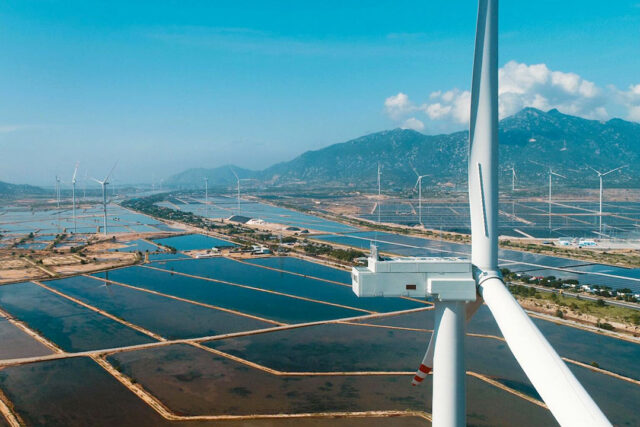
ACEN, the energy platform of the conglomerate Ayala group, holds about 6.8 gigawatts of attributable renewables capacity in operation, under construction, and committed projects. — ACENRENEWABLES.COM

ACEN Vietnam Investment Pte. Ltd., an affiliate of ACEN Corp., has acquired a 49% stake in the Vietnamese renewable energy firm BIM Energy Holding Corp. (BIMEH) for $70.5 million (P4.15 billion) to expand its project portfolio in the country.

ACEN Vietnam recently signed a share purchase agreement with Huntington Renewable Investments Ltd., a company specializing in renewable energy investments, to acquire a stake in BIMEH, ACEN said in a regulatory filing on Wednesday.

“The acquisition will allow ACEN to increase its pipeline projects in Vietnam,” the local energy company said.

ACEN and BIMEH, the renewable energy platform for BIM Group, have joint venture developments in the 405-megawatt (MW) Ninh Thuan Solar and the 88-MW Ninh Thuan Wind.

Ninh Thuan Solar started its commercial operations in 2019, while Ninh Thuan Wind began injecting power into Vietnam’s grid in 2021. Together, the power projects are generating around 900 million kilowatt-hours of renewable energy per year.

BIM Group is a multi-sector corporation in Vietnam with interests in real estate, agriculture and food, renewable energy, and consumer services.

ACEN, the energy platform of the conglomerate Ayala group, holds about 6.8 gigawatts of attributable renewables capacity in operation, under construction, and committed projects.

The company operates across a diverse range of markets, including the Philippines, Australia, Vietnam, India, Indonesia, Laos, and the United States.

ACEN’s new renewable energy plants that were operationalized earlier in 2024 continued to contribute significantly to generation output and, in turn, financial performance, according to the company.

For the nine months ending in September, the company registered an attributable net income of P8.14 billion, higher by 23.9% from last year’s P6.57 billion.

At the local bourse on Wednesday, ACEN shares fell 2.82% to close at P4.13 each. — Sheldeen Joy Talavera

Vegans can now dine at Burger King

BURGERKING.COM.PH

Even the Plant-based Whopper’s mayo is animal product-free

BURGER KING is riding on the plant-based bandwagon with a new version of its 2020 Plant-based Whopper.

The burger was launched through a party in its Shaw Boulevard branch on Nov. 14. Accordingly, guests were told to show up in green.

Two guests were asked to blind-taste the burgers, without revealing which one was made of beef and which one was plant-based — one of them guessed which one was plant-based correctly. As for us, while we could tell which one was which through the mouthfeel (the plant-based burger’s texture was a little finer and more consistent than if it had been beef), the flame-grilled charred flavor is mostly the same.

This new release is vegan, with the sauces (even the mayo) and the other toppings free of animal-derived products.

Kristine Wong, Burger King’s assistant vice-president and head of marketing in the Philippines said about the relaunch, “We’re always looking for ways to improve our bestselling products, making sure that we elevate it every time.”

As for offering plant-based options, it’s a matter of inclusivity: “We’re making sure that there’s options for everyone. Globally, it’s ‘Have it your way,’” she said, quoting the brand’s tagline. “You want to make sure that you also cater to those embracing the plant-based lifestyle.”

The burger is toe-to-toe and then some when compared with the beef burger, with 17 grams of protein in each patty. Ms. Wong declined to comment on other nutritional information, but she did say that it’s made of soy and gluten, which are declared on their allergen information.

Their partner for creating the patty is Unilever Food Solutions’ Vegetarian Butcher. According to their “chef-fluencer” Kenneth Cacho, while they are currently concentrating on big corporate clients like Burger King, worldwide, they have about 60 varieties of plant-based “meat” products. He also told us that the Plant-based Whopper has a Halal certification.

Ms. Wong said that Burger King isn’t stopping with just one plant-based burger. “The Plant-based offer is just one of it. As the plant-based demand also comes in, we’re looking at other favorites as well to have plant-based options.”

Going plant-based is a step towards sustainability, but Burger King, as part of Jollibee Foods Corp. in the Philippines, is already on track on the conglomerate’s own sustainability program. Globally, meanwhile, they’re also following Burger King’s responsibly sourced palm oil initiative (due to the environmental impacts of palm oil plantations worldwide).

Under Jollibee’s leadership, Burger King in the Philippines now has 127 stores, according to Ms. Wong’s count. “We’re always looking for opportunities on where we can tap the market. Nothing specific at this point.” — Joseph L. Garcia

PHINMA Corp. completes P1-B stock rights offering

(L-R) PHINMA Chief Financial Officer EJ A. Qua Hiansen; Group Controller Regina B. Alvarez; Executive Vice-President - Construction Materials Eduardo A. Sahagun; Chairman & Chief Executive Officer Ramon R. del Rosario, Jr.; and Chairman Emeritus Oscar J. Hilado.

PHINMA Corp. has completed its P1-billion stock rights offering (SRO) with the shares listed on the Philippine Stock Exchange on Wednesday.

The SRO comprised 50 million shares priced at P20 each, which were offered from Nov. 13 to 19, the conglomerate said in a regulatory filing.

Of the total, PHINMA will allocate P250 million for the establishment of PHINMA Hospitality’s TRYP by Wyndham hotel in its 21-hectare Saludad township in Bacolod City, while P210 million will go to the development of Union Insulated Panel Corp.’s new facility in Pampanga with an annual capacity of one million square meters.

Some P200 million will be for PHINMA Property Holdings Corp.’s projects in Bacolod, Cebu, and Davao.

“These projects will allow us to fulfill the housing aspirations of low- to mid-income Filipinos,” PHINMA Chairman and Chief Executive Officer Ramon R. del Rosario, Jr. said during the SRO’s listing ceremony.

PHINMA will use P170 million for the 58 projects secured by PHINMA Solar Energy Corp. in the government’s Green Energy Auction Program, while P114 million will go to the establishment of Philcement Corp.’s cement manufacturing facility in Davao del Norte with a yearly capacity of two million metric tons.

The conglomerate will allot P239.56 million for investments in socialized housing, food security, healthcare, and the green industry, along with general corporate purposes.

“The offering provides existing eligible shareholders and new ones in the form of institutional investors with an opportunity to deepen their investment in PHINMA’s mission to help build our nation through competitive and well-managed business enterprises that enable Filipinos to attain a better quality of life,” Securities and Exchange Commission Commissioner McJill Bryant T. Fernandez said.

“PHINMA has successfully forayed into various industries and established its mark in these sectors through the years. Its diverse interests are also a reflection of its commitment to pursuing businesses that will uplift the lives of Filipinos,” Philippine Stock Exchange President and Chief Executive Officer Ramon S. Monzon said.

On Wednesday, PHINMA shares rose by 1.03% or 20 centavos to P19.70 per share. — Revin Mikhael D. Ochave

A Carmelo’s Christmas

From turkey, to roast beef, to cheesecake

CRISTINA SANTIAGO, daughter of Melo’s founder Carmelo Santiago, recalled fond holiday memories with her father during a tasting at her Proscenium restaurant in Rockwell on Nov. 12. “We normally meet at 10 p.m., and we eat nonstop,” she said.

The spread on the holiday table of the Santiago family — whose patriarch popularized Angus beef in the country (thus changing the restaurant scene) with his restaurant Melo’s in 1987 — included roast beef, turkey, ham, ensaymadas, empanadas, paella, pasta for the kids, and Ms. Santiago’s cheesecake. “The cheesecake was his favorite,” she said of her father.

Some of the items from these holiday tables are making it to the restaurant’s menu, and also on those for catering and take-out.

The tasting on Nov. 12 started with Mushroom Vol Au Vents encased in flaky puff pastry. Roast Beef came out next, with a recipe almost 40 years old and made with secret ingredients passed down through the family. It was butter-tender and needed little prodding with a knife and fork, and was served with a beef jus. While a personal favorite of Ms. Santiago, she told us that she doesn’t really like steak, despite being a daughter of the steak guy. “I can taste a good steak and a bad steak. It’s just that I get full,” she confessed.

The turkey came out with some spectacle: the bird was sourced from the US (for those celebrating: American Thanksgiving falls today, on Nov. 28), and came out to be carved all brown and shiny like on greeting cards. It was surprisingly moist — roast turkey is often accompanied by the complaint of dryness. It was served with a bread stuffing, gravy, and cranberry sauce — and all this accompanied by their family’s paella, and more than a few versions of her eggnog (called the Nutcracker, it’s the spiced egg cocktail but flavored with nuts).

Ms. Santiago’s secret for keeping the turkey moist is, “Slow-cooking lang talaga (just slow-cooking really),” and the same could be said for the roast beef, which to her memory is cooked slowly for 10 hours. “I’m confident with my chefs. It’s very juicy.”

The meal ended with her L’Amour Cheesecake, creamy and so delicate it was almost a semi-solid.

Uniformly, the meal was hearty and comforting, and quite hefty and heavy.

The dishes are not (yet) available for plate service: when you order either the roast turkey or the roast beef, it will always be for 10 to 15 persons. If it’s to be taken to a party, the roast beef comes in a nice little crate, with a tray, all-covered up with foil. “They end up ordering more to give away,” said Ms. Santiago of customers.

There’s one thing missing from her holiday spread, which she will be attempting next year: her father’s Chinese Ham with Honey Sauce. “It’s my dad who ma(de) it. That’s the thing I’m going to try to do next year.”

Ms. Santiago is also releasing a line of Holiday Hampers, which include the signature Carmelo’s Paté, her dessert line Sweet Bella’s Hot Chocolat, as well as a box of her Queso de Bola Ensaymada and Cheese Roll. For more chocolate-y pastry options, there’s the Nutella Croissant and Pain Au Chocolat.

For inquiries, contact 0915-903-8005 or @carmelossteakhouse on Instagram. — Joseph L. Garcia

Over 70% of Filipinos think account security risks are increasing — GSMA

PEOPLE are seen using their mobile phones along Claro M. Recto Avenue in Divisoria, Manila, Dec. 27, 2022. — PHILIPPINE STAR/EDD GUMBAN

SOME 71.4% of Filipinos think risks involving account security are increasing, with financial fraud being among their top concerns, according to a survey by GSMA, a global group of mobile operators and organizations across the mobile ecosystem and related industries.

“More than a quarter of respondents from across Indonesia, Malaysia, the Philippines, Singapore, and Thailand have been victims of financial crimes, such as online hacking, identity theft and bank card theft,” GSMA said in a report titled “Consumer Attitudes Toward Fraud and Opportunities for Mobile Network Operators (MNOs) in Southeast Asia” released on Tuesday.

The report looks into consumer attitudes towards fraud in five Southeast Asian markets, namely the Philippines, Thailand, Singapore, Malaysia, and Indonesia.

According to the study, fraud is a growing concern among consumers, especially involving financial transactions.

The study showed that 82.8% of Filipino respondents said they would change their financial provider for better security. It also said that 28.6% of Filipino respondents have encountered financial fraud at least once, and 26.4% are “very worried” about becoming a victim of fraud.

Several markets also showed concern over SIM (Subscriber Identification Module)-swap fraud, GSMA said. This occurs when a hacker gains control of a mobile number by transferring it to a new SIM card.

It said 71% of Filipino consumers reported the “highest levels of concern” SIM-swap fraud. Consumers in Indonesia (78%) and Singapore (50%) also showed concern over cases of SIM-swap fraud.

“In markets like Indonesia and the Philippines, where SIM-swap fraud is a major concern, MNOs can develop APIs (Application Programmable Interfaces) that provide real-time monitoring and alerts for SIM changes,” GSMA said. “These APIs would notify fintech platforms if a user’s SIM card has been swapped, allowing them to take preventive actions, such as temporarily locking accounts or requiring additional authentication steps.

It added that more than 60% of respondents in Malaysia, Indonesia, and the Philippines are “very worried” about the misuse or theft of Personally Identifiable Information and financial data, GSMA said.

“These concerns are rooted in the growing number of high-profile data breaches across the region,” it added.

Asked who is the most responsible for preventing fraud and ensuring security, respondents in the region said this should be account custodians, or banks and e-wallet providers, among others.

“Between 43% (Malaysia) and 62% (Indonesia) of respondents assigned primary responsibility to the companies operating the services. This places fintech companies, banks, and other financial institutions at the forefront of fraud prevention efforts,” GSMA said.

“However, consumers also expect device manufacturers (such as Apple, Google, and Samsung) to play a key role in protecting their accounts. This expectation is higher in markets like the Philippines, where 29% of respondents believe that device manufacturers bear some responsibility, compared to 15% in Indonesia,” it added.

About 10-13% of respondents across all five markets covered in the survey said they also expect MNOs and their governments to bear responsibility for the prevention of fraud, it said.

“MNOs in Southeast Asia are uniquely positioned to address the growing concerns about fraud. By developing APIs that integrate with fintech platforms, banks, and digital commerce providers, MNOs can offer enhanced security features, real-time fraud detection, and data-sharing tools that can help protect consumers from various forms of fraud,” GSMA said.

“One of the most significant opportunities for MNOs lies in the development of APIs that strengthen account security and prevent fraudulent activities like SIM-swap attacks. The high level of concern surrounding these attacks, particularly in markets like Indonesia and the Philippines, makes this an area of urgent need.”

Two-factor authentication and SIM-swap prevention APIs that provide real-time monitoring and alerts for SIM changes can help financial institutions, payment firms and online retailers strengthen account security, GSMA added.

“Given the high penetration of mobile devices across Southeast Asia, with 91% of respondents in Indonesia and 80% in the Philippines accessing their financial accounts via mobile, MNOs are well-positioned to develop APIs that enhance the convenience and security of mobile-first financial services,” it said.

“The widespread use of e-wallets in markets like Indonesia and the Philippines presents a significant opportunity for MNOs to develop APIs that integrate mobile services with e-wallet platforms. These APIs would provide fintech and other industries seamless identity verification, transaction monitoring, and secure fund transfers.” — B.M.D. Cruz

Cemex Holdings PHL sells stake in Swiss-based unit

CEMEX

CEMEX Holdings Philippines, Inc. (CHP) sold its entire stake in Swiss-based Cemex Asia Research AG (CAR) to Cemex Innovation Holding AG for $900,459 (P53 million) to streamline its business.

CHP signed a share purchase agreement with Cemex Innovation on Nov. 26 involving the sale of 118,849 shares.

“CHP and its subsidiaries have secured access to trademarks and intangible assets sublicensed by CAR necessary for their operations independently from CAR,” CHP said in a regulatory filing on Wednesday.

“CAR’s functions as a subsidiary of CHP are no longer required by CHP and its subsidiaries,” it added.

Established in Switzerland, CAR is a foreign subsidiary of CHP.

The company is the licensee under certain license agreements with Cemex and its subsidiaries for certain trademarks and intangible assets, which it sublicensed to CHP and its domestic subsidiaries.

Cemex Innovation is an affiliate of Mexican operating and holding company Cemex S.A.B. de C.V.

For the first nine months, CHP expanded its net loss by 131% to P2.87 billion on lower cement prices, higher financial expenses, and higher income tax expenses year over year.

Revenue fell by 9.4% to P12.21 billion as a result of intense industry competition and lower cement prices.

CHP shares dropped by 2.96%, or five centavos, to P1.64 per share on Wednesday. — Revin Mikhael D. Ochave

Popular restaurateur and former paparazzi Roberto Bellini, 84

FACEBOOK.COM/FREDSREVOLUCION

ROBERTO BELLINI, founder of Cubao’s once-secret, mural-covered Italian restaurant, passed away on Nov. 24 at the age of 84.

His passing was confirmed in a Facebook post by one of his daughters, Joy Bellini.

Most fans of the restaurant learned of his death when chef Waya Araos-Wijangco said in a Facebook post, “330. Godspeed Roberto Bellini! Your little shop in Cubao was home to many memories for our family. We learned about Italian food from you, in the accessible, friendly and unpretentious space you made. I will always remember our run-ins and friendly banter at Farmers Market. You are a legend. Salute!”

The restaurant, founded in 1999, used to be a well-kept society secret, entertaining celebrities, politicians, and bohemians (thanks to its relatively accessible prices) alike. It stopped being a secret in its Cubao Expo location with the release of the 2007 film One More Chance, which had scenes set there. One of the film’s stars, John Lloyd Cruz, had kept in touch with Mr. Bellini through the years, greeting him on his birthday in January, recalling that the restaurateur told him, “You have to work, John Lloyd.” An earlier post in 2018, shows the actor with Mr. Bellini, “the only paparazzi I love.”

Being behind the camera was Mr. Bellini’s life prior to settling in the Philippines with his wife and three children.

According to a profile on Esquire by the late journalist Regina Abuyuan, Mr. Bellini had photographed Diana, Princess of Wales, Frank Sinatra, Ella Fitzgerald, Julio Iglesias, and Tom Cruise, among others. Remnants of this past life can be seen on a wall of his restaurant which is nearly papered in his celebrity shots.

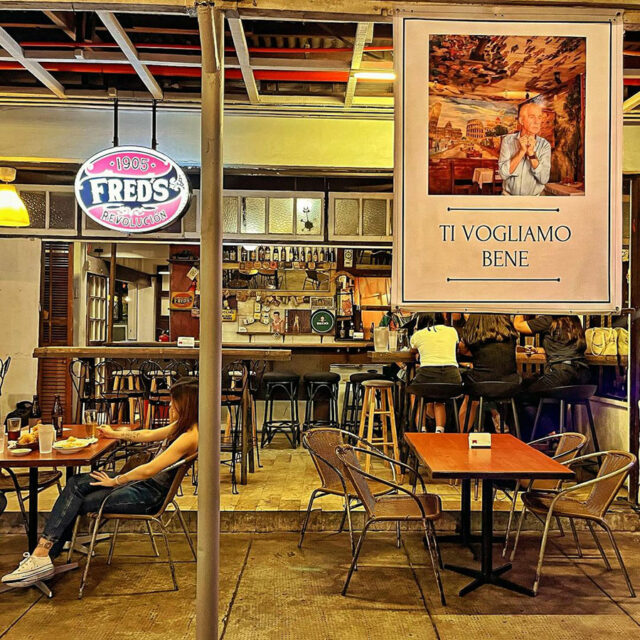
Ms. Abuyuan happened to be the co-founder of Fred’s Revolucion, Bellini’s Cubao Expo neighbor. Accordingly, the bar posted a tribute to Mr. Bellini on their Facebook page: “Buonanotte, nostro Principe” (Good night, our prince), accompanied by a photograph of their bar with a sign for Mr. Bellini, reading “Ti Vogliamo Bene” — a phrase that expresses love in Italian, literally meaning “We want the best for you.”

Hailing from Pisa and born on Jan. 3, 1940 to a family in the restaurant and hotel industry, Mr. Bellini trained to be a paratrooper and entered military service, before turning to the film camera.

To patrons of Cubao Expo, he will always be the friendly man sending free drinks to first-timers (and, if he remembered your face, on the next visit), in a pastel shirt with a few buttons open, exposing a gold chain. He would be out in the last few hours of daylight, supervising things before his restaurant opened. — J. L. Garcia