Home Blog Page 2360

SM group keen on more projects with gov’t

BW FILE PHOTO

THE SM group is keen to expand its involvement in government-led infrastructure projects, SM Engineering Design & Development Corp. President Hans T. Sy, Jr. said.

“We’d love to do more (projects) with the government because we’re at the point where it’s really partnership with the government that will truly help the country move forward,” Mr. Sy, Jr. told reporters on the sidelines of an event last week. 

In April, the Department of Transportation (DoTr) began construction on the EDSA Busway Concourse, a key infrastructure project designed to improve commuter access and efficiency.

This initiative is being developed in partnership with SM Prime Holdings, Inc., the property development arm of SM Investments Corp., which has interests in retail, property, banking, and tourism.

The SM group and the DoTr partnered to develop concourses along Epifanio de los Santos Avenue at three locations: SM Mall of Asia in Pasay, SM North EDSA in Quezon City, and SM Megamall in Mandaluyong.

SM Prime is involved in managing and developing various real estate projects, including shopping malls, residential, and commercial properties.

The project will feature a ticketing booth, automatic fare collection turnstiles, ramps, and elevators. Once finished, the project is expected to accommodate around 300,000 commuters daily.

“That is something to be excited about. That is a public-private partnership project with the DoTr,” Mr. Sy noted.

“We plan to showcase exactly what we mean by sustainable transport. So, what we hope to showcase with the North EDSA bus station is an example of how it can be if done properly. So, look out for that. We should be finishing that by the end of this year,” he said.

He added that the station at SM North EDSA is expected to be completed by the end of this year, while the SM Megamall station is scheduled for completion by mid-2025.

The SM group originally intended to complete the stations simultaneously. However, due to right-of-way issues, the completion will now be done in phases.

“Like a lot of government infra projects, (there are) some right-of-way issues. But, you know, that takes a while. Some things don’t generally always pan out the way you want them to pan out,” Mr. Sy said. — A.E.O. Jose

[B-SIDE Podcast] Is it timely to amend and revise the 1987 Constitution?

Follow us on Spotify BusinessWorld B-Side

Since 1997, there have been multiple attempts to amend and revise the 1987 Constitution in response to various challenges the country has faced over the years. Recently, an economic charter change was approved on the third and final reading by Congress, which seeks to amend the 1987 constitution to lift foreign ownership to some vital industries in the country.

To address this concern, Mr. Jemy Gatdula, the Dean of the Institute of Law at the University of Asia and Pacific, and opinions columnist for BusinessWorld shared his insights on the initiative to amend and revise the 1987 Constitution, particularly its economic provisions.

Interview by Edg Adrian A. Eva
Audio editing by Jayson John D. Mariñas

Follow us on Spotify BusinessWorld B-Side

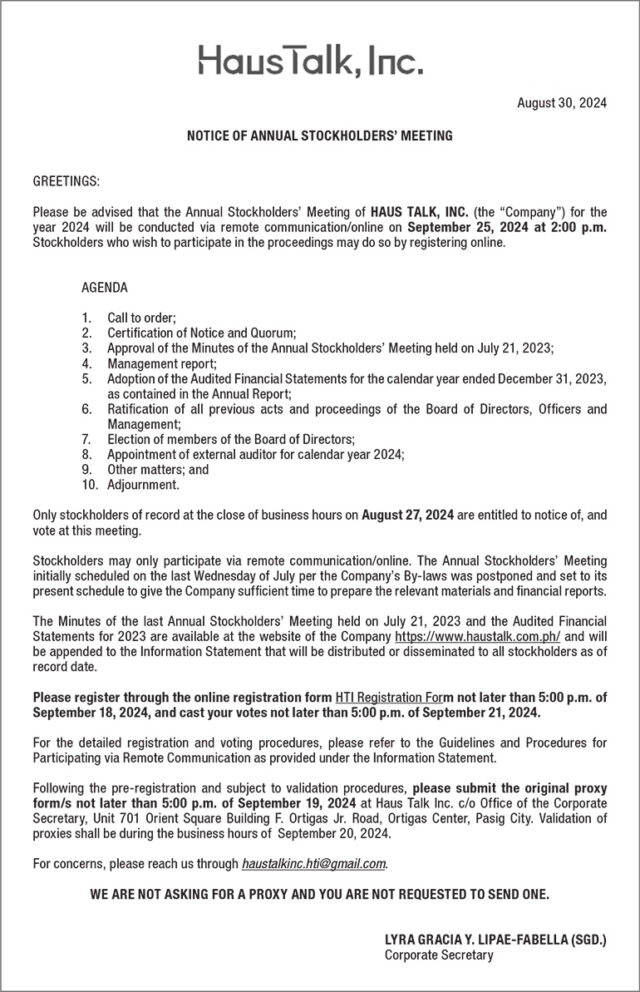
Haus Talk, Inc. to hold Annual Stockholders’ Meeting on Sept. 25 via remote communication


Spotlight is BusinessWorld’s sponsored section that allows advertisers to amplify their brand and connect with BusinessWorld’s audience by publishing their stories on the BusinessWorld Web site. For more information, send an email to online@bworldonline.com.

Join us on Viber at https://bit.ly/3hv6bLA to get more updates and subscribe to BusinessWorld’s titles and get exclusive content through www.bworld-x.com.

Venice Film Festival: The Brutalist epic close to home for its star Adrien Brody

ADRIEN BRODY and Felicity Jones in a scene from The Brutalist. — IMDB

VENICE — The Brutalist, the epic tale of a Hungarian immigrant who flees the horrors of World War II to rebuild his life in the United States, proved a perfect fit for its star Adrien Brody.

Speaking ahead of the movie’s premiere at the Venice Film Festival on Sunday, Mr. Brody said his mother escaped from Hungary and moved across the Atlantic, echoing the journey of the character he plays, a modernist architect named Laszlo Toth.

“Much like Laszlo, (my mother) started again and lost her home and pursued a dream of being an artist,” said Mr. Brody, who won an Oscar for Best Actor for his role in the 2002 Holocaust film The Pianist.

“I understand a great deal about the repercussions of that on her life and her work as an artist,” he told reporters.

Directed by Brady Corbet, The Brutalist shows the Jewish Lazlo struggling to survive in the United States, where a wealthy, arrogant industrialist hires him to create a monumental project that takes over both their lives.

After years of being stuck in her native Hungary, Mr. Brody’s wife Erzsebet, played by British actress Felicity Jones, manages to join him as he threatens to go off the rails.

“Underpinning the story, and particularly for Erzsebet and Laszlo, is this idea of love and the greatest love stories always come with urgency,” Ms. Jones said.

The film, which delivers a sweeping vision of post-war trauma and creative torment, runs at 215 minutes, a challenge for some as attention spans dwindle and cinemas struggle to attract audiences.

But Mr. Corbet said filmmakers needed scope.

“This film does everything that we are told we are not allowed to do. I think it’s quite silly actually to have a conversation about runtime because that’s like criticizing a book for being 700 pages versus 100 pages,” he said.

To re-create the look of films from the last century, Mr. Corbet shot the movie on 70 mm celluloid, eschewing the tricks of digital cinema.

“We did our best to try and evoke a bygone style of filmmaking by not falling back on a lot of those (modern) crutches,” Mr. Corbet said, adding that the film had taken seven years to complete.

It feels like a biopic of someone who existed, but Mr. Corbet said in reality not a single modernist architect from a war-ravaged Europe managed to make the sort of mark in the United States that Mr. Brody’s character achieves.

“The film, it’s dedicated to them, the artists that didn’t get to realize their visions,” he said.

The Brutalist is one of 21 movies competing for the prestigious Golden Lion award at the Venice Film Festival, which will be awarded on Sept. 7. — Reuters

Does Filipino culture hinder economic development?

PHILIPPINE STAR/WALTER BOLLOZOS

With the relatively lackluster performance of the Philippine economy since the country gained independence from the United States 78 years ago, it is often said by many that Filipino culture is to blame. That the Filipinos have a “damaged” culture that tends to inhibit economic growth.

Having heard that statement every now, this led me to give more thought to the worthiness and validity of that statement.

Of course, I needed to first clearly understand what “culture” is and break it down into chewable chunks. The Merriam-Webster’s Collegiate Dictionary that I have shows several senses for the meaning of “culture.” The sense that first appeals to me is: “the customary beliefs, social forms, and material traits of a racial, religious, or social group.” But it looks somewhat broad. So, I thought of referring to another sense to make things easier to handle: “a set of shared attitudes, values, goals and practices that characterize an institution or organization.”

By combining these two senses, I will describe Filipino culture as “shared beliefs, attitudes, values, behavior, practices, and goals of the Filipino nation.” Moreover, I will describe Filipino cultural characterizations collectively as Filipino “cultural traits,” for short. I also interpret the word “shared” not to mean as shared by all Filipinos, but by most. There are always outliers within a whole.

I will limit the identification of Filipino cultural traits to those I consider as having some direct effects on economic development. However, I will also include a cultural trait that I consider as having both direct and indirect effects on economic growth.

Let me now summarize these cultural traits that I have identified.

ATTITUDES AND BEHAVIORS RESULTING FROM RELIGIOUS BELIEFS
These are attitudes and behaviors that are seen to have developed as a result of Christian religious beliefs, like the idea that “God will provide,” predestination, self-sacrifice, the Apocalypse, and similar others. These attitudes and behaviors tend to make people not do much for themselves in relation to economic challenges but instead they tend to wait for sustenance or help seemingly brought through the help and mercy of God. As a result, the economy does not flourish as it otherwise would if the people relied on themselves by working much harder and employing their own ingenuity and creativity in seeking solutions to their economic predicament.

While this inclination might have some truths in the distant past, is it still true today?

This observation has an antecedent, which was expressed by the historian Edward Gibbon in his book, The Decline and Fall of the Roman Empire, where he considered the rise of Christianity as an important cause of the decline and fall of the Roman Empire. The same may be said of the apparent slow economic development during the Middle Ages, commonly referred to before as the Dark Ages, when the influence of Christianity was at its highest point in Europe, the apparent center of world civilization at that time.

However, if such assertion is true, considering the economic development of modern Europe during the past five or so centuries, such attitudes and behaviors might have been transformed for the better over time, especially through influences of such epochal events as: the Renaissance that started in the late 15th Century; the Reformation in the 16th Century, and the consequent Counter Reformation; and the Enlightenment in the 18th Century.

Catholic Philippines, being then a part of Spain, would have been similarly influenced. In addition, the Philippines was subsequently occupied by the US for about 50 years, during which time the local population would have been influenced to some extent by America’s then predominant Protestant ethics of hard work and self-reliance.

Considering the foregoing, I would think that whatever behaviors induced earlier by religious beliefs that tended to lead to economic stagnation or slow growth have been substantially overridden in the Philippines as these had been in Europe. As such, I conclude that current Filipino religious beliefs are not a factor in hindering Philippine economic development.

‘LONG TOWEL’ PRACTICE
This cultural trait relates to the tendency of Filipinos to give financial help, solicited or unsolicited, to relatives and close friends who are in great need of such help. At the outset, this practice has a neutral economic effect as the resulting increased consumption of the receiver merely replaces the equivalent forgone consumption or saving of the provider.

Had the receiver been earning his own income to cover adequately his own consumption and therefore avoiding financial assistance from others, there would have been an incremental economic output that would have led to economic growth. This suggests, though, that the receiver had the option to get work that provides him with sufficient income to meet his own needs. However, my observations of this cultural practice indicate that the receiver cannot in fact find adequate work to provide him with enough income under prevailing circumstances. The receiver is handicapped, quite likely by lack of adequate education and training, and is not able to contribute to increasing the economic output.

PUWEDE NA
This phrase, “puwede na,” is commonly heard in Filipino circles and it means not striving to produce output that bears the best quality possible. It is the opposite of “pulido” which means producing an output of the best possible quality.

I think this work attitude is prevalent among Filipino workers, especially among those not adequately supervised. Such an attitude leads to low-quality products, resulting in low demand for such products and therefore low productive output. Of course, there are business and non-business organizations that adopt a policy of producing work of the highest quality and standards, and accordingly develop adequate and effective control procedures to attain the achievement of such laudable policy. But these are the exceptions, such that the main nationwide endeavors may have been permeated by this attitude of “puwede na,” not only on the part of the workers but also on the part of the entrepreneurs themselves.

As a result, Philippine economic output may have become less competitive, especially when exported abroad. Then clearly, this prevalent attitude of “puwede na” could not lead to higher production and therefore restrains the country’s economic growth.

TARDINESS
Tardiness is a frequent topic in conversations. It is so socially prevalent that it has acquired a metonym in Philippine English: “Filipino Time” or “Philippine Time.”

For employees who are in a controlled time-keeping environment, this cultural tendency may have been suppressed. However, for other situations, especially in various types of meetings and social activities, it is prevalent. To the extent that tardiness results in the loss of productive time of one or more parties in a scheduled meeting or gathering, clearly it reduces economic output.

HIGH RISK AVERSION TO ENTREPRENEURSHIP
There is a clear low incidence of entrepreneurship among native Filipinos. This is evident in the presence, currently and in the past, of only a very few numbers of successful nationwide entrepreneurs of native Filipino ethnicity.

I attribute this condition to the high-risk aversion of native Filipinos to entrepreneurship. This risk aversion could have been handed down unwittingly by generations of native Filipino parents who predominantly encourage their children to study well in school to acquire a good job employment, but very rarely encourage them to get into business where the rewards are potentially much greater.

Many may disagree with me and argue that the reason for this condition is lack of obtainable sources of capital and not high-risk aversion. But this may not be a valid reason when one considers that most non-native first-generation startup entrepreneurs face the same conditions. Or, some may express an alternative reason. That we are not hardworking as compared to non-native entrepreneurs. I don’t think so. My own experience and observation are that native Filipinos work very hard under most conditions, but for someone else and not for themselves.

This attitude of high risk-aversion is, in my view, a significant factor in hindering economic growth.

ELECTION VOTE BUYING AND SELLING
My own observation is that vote buying and selling is universal in the Philippine archipelago. It makes one wonder why our society turns a blind eye to this prevalent practice.

Vote selling, at first sight, may appear to have an immediate, although short term, favorable economic effect. It increases the consumption of the vote sellers. However, we need to consider how the purchase money was sourced. If the purchase money came or would be recovered from public funds, the overall effect is at best neutral. The overall effect would be negative had the purchase money coming from public funds been invested in infrastructure projects and spent on education and training, which expenditures clearly provide long-term benefits.

More importantly, however, vote buying and selling may lead indirectly to significant unfavorable economic effects if those elected under this condition of coerced choice make wrong economic policy decisions, resulting in missed economic growth. And, unfortunately, this is the likely outcome of the result of such vote trading for obvious reasons.

CONCLUSION
It is clear that some Filipino cultural traits hinder economic growth. But these cultural traits are not some dark or evil attitudes and behaviors that the term “damaged culture” implies.

In my view, the ones that result in large negative economic effects are the high-risk aversion to entrepreneurship of ethnic Filipinos and the prevalent practice of vote trading.

Puwede na” and tardiness do lead to unrecoverable lost productive opportunities. On the other hand, I consider “long towel” as more of a consequence of inadequate education and training that makes the receivers of financial assistance unable to contribute more to nationwide economic growth.

I believe that these identified cultural traits can be changed over time such that they do not hinder economic growth through intervention by a strong national leadership who is seriously dedicated to the upliftment of the general welfare. That to me, we, the citizens, must seek. n

(This article reflects the personal opinion of the author and does not reflect the official stand of the Management Association of the Philippines or MAP.)


Benjamin “Ben” R. Punongbayan is currently a member of the MAP Board of Governors. He is the founder of Punongbayan & Araullo/ P&A Grant Thornton.

map@map.org.ph

ben.punongbayan@ph.gt.com

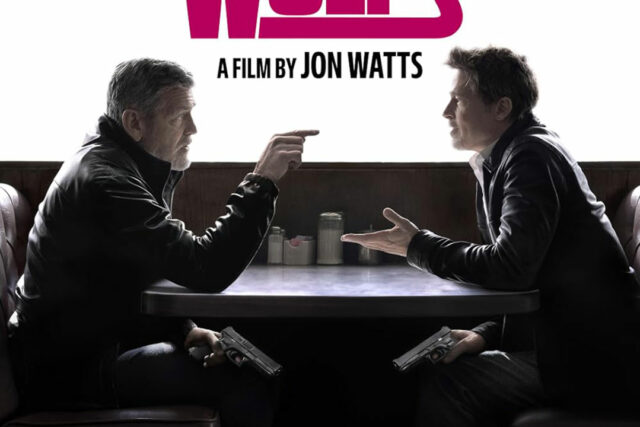
Venice Film Festival: George Clooney, Brad Pitt disappointed their new film skips cinemas

IMDB

VENICE — Hollywood heavyweights George Clooney and Brad Pitt admit they are disappointed their latest comedy Wolfs is not getting a broad cinema release and instead heading almost straight onto Apple TV.

“It is a bummer,” Mr. Clooney said on Sunday, adding that television streamers, such as Apple, were nevertheless vital to the future of filmmaking, presenting actors with opportunities and generating bigger audiences for their work.

“Streaming, we need it, our industry needs this,” he said.

Written and directed by Jon Watts, Wolfs is an old-fashioned crime caper with Mr. Clooney and Mr. Pitt playing lone-wolf professional fixers who are forced to work together with comically unfortunate consequences.

Apple originally signaled it would place the film in a large number of cinemas before the TV release, but instead opted to show it briefly in a restricted number of United States movie theaters and then run it on its global TV service.

“We’ll always be romantic about the theatrical experience. At the same time, I love the existence of the streamers because we get to see more story, we get to see more talent, it gets more eyes,” said Mr. Pitt. “It’s a delicate balance right now and it’ll right itself.”

Asked what it meant if two of the biggest names in the business could not get a broad cinema release, as they had requested, Mr. Clooney quipped: “Clearly we’re declining.”

Sixteen years after last appearing together in 2008’s Coen brothers’ comedy Burn After Reading, Mr. Pitt and Mr. Clooney said they jumped at the chance to reunite when they read Mr. Watts’ script for Wolfs.

“I got to say, just as I get older, just working with the people that I just really enjoy spending time with has really become important to me,” said Mr. Pitt, who turned 60 last year.

In a news conference full of light-hearted banter, Mr. Clooney, said Mr. Pitt, was fortunate still to be offered parts. “He’s 74 years-old and he’s very lucky at this age to still be working.”

On a more serious note, he denied a New York Times story in August that said both he and Mr. Pitt had been paid more than $35 million each to appear in the film.

“I’m only saying that because I think it’s bad for our industry if that’s what people think is the standard bearer for salaries. I think that’s a terrible thing. It will make it impossible to make a film,” he said.

Wolfs is showing out of competition at the Venice Film Festival, which runs until Sept. 7. — Reuters

Converge says Bifrost cable system finished by Q1 2025

CONVERGE ICT Solutions, Inc. is on track to complete the construction of its international subsea fiber cable networks by next year, its chief operations officer (COO) said.

“We are on track for the Bifrost cable system; we’ll have it by next year,” Converge COO Jesus C. Romero told BusinessWorld on the sidelines of the National Retail Conference and Expo in Pasay City last week.

The Bifrost cable system is expected to be completed by the first quarter (Q1) of next year, and the Asia-Hainan-Hong Kong Express (SEA-H2X) Submarine Cable System is set for completion by the second quarter of 2025, Mr. Romero said.

In April, the listed fiber internet service provider said it was delaying the completion of its international subsea cable project to 2025, compared with the initial target of completing the project this year.

The company attributed this delay to permitting issues, especially since some of the project area will pass through international waters, the company previously said.

Bifrost is a transpacific cable system linking Singapore, Indonesia, the Philippines, Guam, and the west coast of the United States. It stretches 15,000 kilometers and boasts a design capacity of up to 15 terabits per second (Tbps).

The SEA-H2X is a 5,000-kilometer submarine cable system connecting Hong Kong SAR China, Hainan China, the Philippines, Thailand, Malaysia, and Singapore. It features a design capacity of 160 Tbps.

Converge said it is allocating the bulk of its P17 billion to P19 billion capital expenditure budget in 2024 for its subsea cable projects and data center development.

For the second quarter, Converge posted an attributable net income of P2.74 billion, climbing by 29.8% from the P2.11 billion in the same period last year.

Despite posting increased gross expenses for the April-to-June period at P6.18 billion, 15.1% higher than the P5.37 billion previously, the company managed to register higher earnings on elevated revenues.

At the stock exchange on Monday, shares in the company closed ten centavos or 0.67% higher to end at P15.10 apiece. — Ashley Erika O. Jose

T-bill yields mostly steady ahead of CPI

BW FILE PHOTO

THE GOVERNMENT hiked the volume of Treasury bills (T-bills) it awarded on Monday as average yields were mostly steady amid strong investor demand and ahead of the release of August inflation data.

The Bureau of the Treasury (BTr) raised P22.6 billion from the T-bills it auctioned off on Monday, higher than the planned P20 billion, as total bids reached P53.105 billion or more than twice the amount on offer, and just a tad lower than the P53.4 billion in tenders recorded at the Aug. 27 auction.

“The auction was 2.7 times oversubscribed …, prompting the committee to increase the accepted non-competitive bids for the 182-day securities,” the Treasury said in a statement.

Broken down, the BTr borrowed P6.5 billion as programmed from the 91-day T-bills as tenders for the tenor reached P18.01 billion. The three-month papers were quoted at an average rate of 5.947%, 1.9 basis points (bps) lower than 5.966% recorded last week. Accepted rates ranged from 5.94% to 5.96%.

Meanwhile, the government hiked its award of 182-day securities to P9.1 billion versus the original P6.5-billion plan as bids for the tenor reached P19.26 billion. The average rate of the six-month T-bill stood at 6.002%, up by 0.6 bp from the 5.996% fetched last week, with accepted rates at 5.98% to 6.02%.

Lastly, the Treasury raised P7 billion as planned via the 364-day debt papers as demand for the tenor totaled P15.835 billion. The average rate of the one-year debt inched up by 1.8 bps to 6.04% from the 6.022% quoted last week, with accepted rates at 6% to 6.055%.

At the secondary market before the auction, the 91-, 182-, and 364-day T-bills were quoted at 5.9154%, 5.9986%, and 6.0825%, respectively, based on PHP Bloomberg Valuation Service (BVAL) Reference Rates data provided by the Treasury.

The government upsized its T-bill award as the offer was met with strong demand, a trader said in an e-mail.

“The substantial auction volumes this week reflected strong investor demand for shorter-term issuances. Likewise, the mixed movement in yields is likely from uncertainty ahead of the Philippine inflation report this week,” the trader said.

Headline inflation likely eased in August and returned within the central bank’s 2-4% target band amid a drop in prices of rice and fuel, analysts said.

A BusinessWorld poll of 15 analysts conducted last week yielded a median estimate of 3.7% for the August consumer price index (CPI). This is within the 3.2-4% forecast of the Bangko Sentral ng Pilipinas (BSP) for the month.

If realized, this would be slower than the nine-month high of 4.4% in July and the 5.3% print in the same month a year ago.

The Philippine Statistics Authority will release August inflation data on Thursday (Sept. 5).

“Treasury average auction yields were again mostly slightly higher, similar to the week-on-week rise in the comparable short-term PHP BVAL yields, after the latest $2.5-billion Philippine government global bond issuance siphoned off some of the excess liquidity from the financial system… Nevertheless, most T-bill average auctions yields were still slightly below the comparable short-term PHP BVAL yields,” Rizal Commercial Banking Corp. Chief Economist Michael L. Ricafort said in a Viber message.

The government last week raised $2.5 billion from its sale of triple-tranche dollar-denominated global bonds, which marked its second foray into the international debt market this year. IFR reported that the government raised $500 million from 5.5-year bonds, $1.1 billion from 10.5-year notes, and $900 million from 25-year sustainability bonds.

Some investors are also locking in high returns on expectations of monetary easing here and abroad, Mr. Ricafort added.

Markets widely expect a rate cut at the US central bank’s Sept. 17-18 meeting following Fed Chair Jerome H. Powell’s dovish speech at the Jackson Hole Symposium last month. Futures are 100% priced for a cut of 25 bps this month, and imply a 33% probability of 50 bps, Reuters reported. They also have 100 bps of cuts priced in by December, and 120 bps for 2025.

Crucial for the Fed will be the payrolls report on Friday, where analysts look for a rise of 165,000 in jobs and a dip in the unemployment rate to 4.2%.

Meanwhile, the BSP last month cut benchmark interest rates for the first time in almost four years amid an improving inflation and economic outlook, with its governor signaling at least one more reduction before the end of the year.

The Monetary Board on Aug. 15 reduced its policy rate by 25 bps to 6.25%.

BSP Governor Eli M. Remolona, Jr. said they could cut rates by another 25 bps within the year. The Monetary Board’s remaining policy-setting meetings this year are on Oct. 17 and Dec. 19.

On Tuesday, the BTr will offer P30 billion in reissued 20-year Treasury bonds (T-bonds) with a remaining life of three years and one day.

The Treasury wants to raise P195 billion from the domestic market this month, or P80 billion through T-bills and P115 billion via T-bonds.

The government borrows from local and foreign sources to help fund its budget deficit, which is capped at P1.48 trillion or 5.6% of gross domestic product for this year. — AMCS with Reuters

Development in the 21st century: Waiting for Godot

PHILIPPINE STAR/EDD GUMBAN

THE Irish writer Samuel Beckett received the Nobel Prize in Literature in 1969. Waiting for Godot is his famous 1953 surrealistic tragicomedy, where the two main characters, Vladimir and Estragon, are engaged in a variety of discussions, while they wait for someone named Godot. They are not certain if they have ever met Godot, nor if he will even arrive.

A quarter of the 21st century is gone. Today, countries like India, Indonesia, Saudi Arabia, or the Philippines, feel an immense pressure to move up in the income ladder. This has prompted them to create development plans that assume they will grow by about 7% per year, like the East Asian Tigers did several decades ago. Will this become a reality, or will it be like Waiting for Godot?

The problem is that the East Asian super-fast growth miracle has not been the historical development norm. It took today’s advanced countries about 100 years on average (almost 150 in the case of the Netherlands) to traverse the middle-income segment, that is, from the time they graduated from being low-income to the moment they became high-income economies (https://jesusfelipe.net/wp-content/uploads/2022/07/Middle-Income-Trap.pdf). The reality of development is that it has been a very slow journey, at low growth rates. Very fast growth and sustained growth is a recent phenomenon that has occurred only in the second half of the 20th century in a few countries. This means that countries like the Philippines, with an income per capita of just above $4,000 today, must have grown very slowly for a very long time.

We looked at a much richer nation today, the Netherlands, and obtained its long-run annual income per capita growth profile: 0.09% between year 1AD and 1826, 1% between 1827 and 1955, 3.3% between 1956 and 1970, and about 1.6% afterward. The figures we obtained for the last 224 years give an average annual growth rate of 1.19%. My guess is that Filipino and Dutch per capita income growth rates were not significantly different until the last decades. This means that the Philippines’ starting point must have been much lower.

We have an estimated (an admittedly rough guess) Philippine income per capita in 1800, 224 years ago. We know that income per capita today is $4,200. Applying the Dutch income per capita growth rate of 1.19% implies that Philippine income per capita in 1800 was about $300. In the case of the Netherlands, its income per capita in 1800 must have been about $4,550 (slightly above Philippine income per capita today!), which, at an annual growth rate of 1.19% over the next 224 years became the current $65,000. This implies that the large gap between today’s advanced nations and the rest of the world was established long ago. It has been impossible to close it.

Recent estimates from Oxford economist Lant Pritchett (“Keeping the Gold in the Golden Rule: Economic growth and the basics of human material wellbeing,” https://lantpritchett.org/) indicate that today, there are 29 countries with a per capita income below that of the world leaders in 1700; 19 countries with a per capita income below that of the world leaders in 1870; 17 countries with a per capita income below that of the world leaders in 1918 (the Philippines is in this group); 24 countries with a per capita income below that of the world leaders in 1950; and 23 countries with a per capita income below that of the world leaders in 1968.

The East Asian economies understood that the fast track upwards was the result of getting into manufacturing and exporting. They understood that not all products have the same consequences for development. Entering manufacturing and leaving behind basic products (compare the export basket of South Korea in 1970 with today’s) meant understanding how income is generated in a modern economy. Exports forced competition in world markets, not just at home. This also implied improving what was produced (higher quality) to be able to continue competing.

While the leaders of the East Asian economies recognized the power of this recipe very well decades ago, many of their peers in today’s developing countries have not grasped it yet. Vietnam may be an exception. Reading the programs of many developing countries leaves you bewildered. These programs are a salad of dozens, even hundreds, of objectives, without a clear prioritization (there are over 350 in the latest Philippine Development Plan 2023-2028; https://pdp.neda.gov.ph/wp-content/uploads/2023/01/PDP-2023-2028.pdf).

Although there has been progress during the last decades, this has occurred at a slow pace for most countries, and overall, the world has not experienced income convergence. Why? For one, although developing economies have grown faster than advanced ones, the former fall by more than advanced countries when they fall prey to a crisis. Second, the “base effect” is a great burden. Imagine an advanced country with a per capita income of $50,000. This country’s income per capita grows by just 1%. The following year, its per capita income will be 50,500 dollars. Now let’s think of a country with an income per capita of $4,000 that grows by an amazing 10%. This country will reach $4,400 the following year. Despite growing 10 times faster than the advanced country, the absolute gap between the two has increased by $100. This is what happens in reality, namely the growth of developing countries, despite being higher than that of advanced countries, is not enough to close the gap due to the low starting point.

Overly ambitious development plans will not be fulfilled because most developing countries tend to see “boom and bust” growth, that is, periods of growth acceleration followed by periods of growth deceleration. Circumstances or policies that produce 10 years of rapid economic growth appear easily reversed, often leaving countries no better off than they were prior to the expansion.

Excelling in manufacturing is not easy, but it is the only way up. There are niches that can be exploited in virtually all manufacturing segments: glasses (chemicals), cutlery (metals), tables and chairs (furniture), table napkins, bedsheets (textile), shoes, or furniture; and in the sophisticated machines that make these products. It is in the latter where the value-added hides and what makes rich countries rich. The products we mention are the ones that “make a nation” and which most developing countries should be able to manufacture for home consumption and to compete in export markets. No developing country should say “we do not have comparative advantage in the manufacture of glasses or chairs” and then think of automobiles and other complex products. We cannot help but paraphrase Donald Trump’s famous statement about steel: “If you don’t have steel, you don’t have a country.” This is even more obvious in the case of the products we mentioned.

What developing countries need is modern capitalist firms with the necessary capabilities to make such products — these firms are the missing link. These capabilities are tacit knowledge to organize work and operate machines efficiently, both required to make high-quality products. Enhancing these capabilities should be the focus of economic policy. Given the weight of history, the governments of developing countries are not to be blamed for the fact that their countries are “poor” today. Yet, they are to be blamed for implementing wrong economic paths and for promising the arrival of Godot. In Beckett’s play, a boy shows up in the middle of it and explains to Vladimir and Estragon that he is a messenger from Godot, and that Godot will not be arriving tonight, but surely tomorrow. Yet, Godot had not arrived by the end of the play.

Unless policy makers understand the reality, their (developing) economies will not be able to close the breach with respect to the advanced nations (which are marching forward too) during the rest of this century. By the year 2050, the Philippines will be a richer economy than it is today, closer to the World Bank’s high-income threshold; but it will not be a rich, high-income, country as we understand the term, that is, as what the European countries, Japan, the US, Canada, or Australia, “look like.” True convergence with them may happen toward the year 2100 or in the 22nd century, barring economic or health crises, and wars, and only if we make significant efforts toward having an economy that resembles theirs.

This applies to many other Asian countries. While it is true that Asia’s weight in the global economy will increase further, most countries (think of Afghanistan, Nepal, Cambodia, Myanmar, and even of Bangladesh, Pakistan, or Sri Lanka) will remain far behind the advanced nations in per capita income because companies in the former make poor-quality and simple products that fetch low prices in international markets. They will still have cities with poor infrastructure, transportation, and waste management, and they will not have universities among the top 25 in the world. To say otherwise is to lie.


Jesus Felipe is a distinguished professor of Economics and a research fellow at De La Salle University. Beatriz Elaine Banzon is an Economics student at De La Salle University.

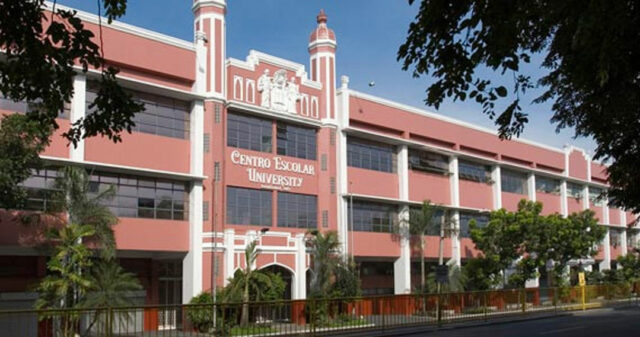
CEU board approves increase in number of directors

CEU.EDU.PH

LISTED educational institution Centro Escolar University (CEU) has approved a plan to increase the number of its board of directors to strengthen corporate leadership.

Under the proposal, CEU’s board will consist of ten directors from the previous nine, which in turn will increase the number of independent directors to three from two.

The proposal was approved during a meeting on Aug. 30.

“This proposal to change is related to the proposal to amend the bylaws. The purpose is to increase number of directors from nine to ten, so that the number of independent directors will be increased from two to three,” CEU said in a regulatory filing on Monday.

“No foreseen adverse effect. As a matter of fact, the increase in number of independent directors (the ultimate goal for the amendment) is seen as favorable for corporate governance purposes,” it added.

CEU said the proposal will be up for stockholders’ approval during the annual stockholders’ meeting on Oct. 25.

CEU offers training and development through its college and graduate courses, with specialization in the fields of dentistry, medical technology, nursing, education, optometry, nutrition, pharmacy, and business education.

The university’s programs are offered across its campuses in Mendiola, Manila; Malolos, Bulacan; and Makati City.

On Monday, CEU stocks fell by 2.22% or 30 centavos, closing at P13.20 per share. — Revin Mikhael D. Ochave

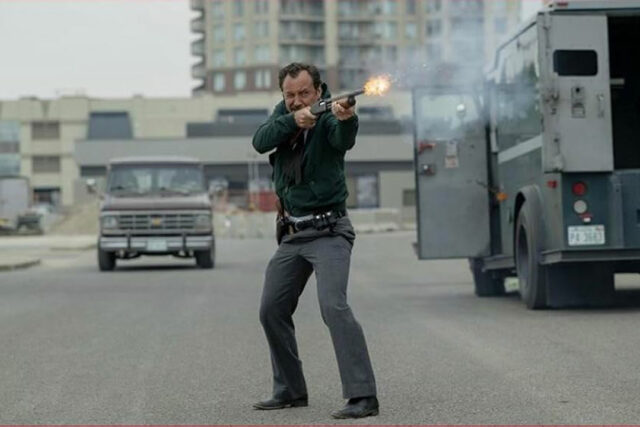
Venice Film Festival: White supremacism finds fertile ground in Venice film The Order

JUDE LAW in a scene from The Order. — IMDB

VENICE — The Order, a movie about a violent, white supremacist movement in 1980s America is worryingly relevant today and shows the need to be on constant guard against bigotry, the film’s star Jude Law said on Saturday.

The movie, making its world premiere at the Venice Film Festival, is based on true events, depicting the charismatic, radical-right leader, Bob Mathews, who wanted to create a homeland for whites by sowing terror in the United States.

Mr. Law plays a veteran FBI agent who moves to the US Pacific Northwest hoping for some peace and quiet after a troubled past battling the Mafia, only to stumble on Mathews’ gang as it staged bank heists to build its war chest.

“Sadly the relevance I think speaks for itself … It felt like a piece of work that needed to be made now,” said Mr. Law, a prolific British actor who also serves as a producer on the film, which was directed by Australian Justin Kurzel.

“The film is about an ideology that’s incredibly dangerous and how it can quickly take seed,” Mr. Kurzel told a press conference. “What was shocking to me, and I think to all of us, was that there were so many comparisons (with today).”

The ideology that motivated Mathews was similar to that of the extremist Proud Boys group, which led the storming of Congress on Jan. 6, 2021 in an effort to overturn the 2020 electoral defeat of former US President Donald Trump.

Mathews, who is played by British actor Nicholas Hoult, attracted misfits and dropouts to his cause, creating a dedicated family of followers who bought into his vision of racial division and hate.

Mr. Hoult said what was worrying as he studied for the role, was that he could not find any specific trigger for Mathews’ bigotry, such as a violent childhood.

“The scary thing about him … was that he could be quite disarming … and could probably put you under his spell.”

As preparation for the film, director Kurzel asked Mr. Law to trail Mr. Hoult for a day, like his FBI character might have done. Mr. Hoult said he never realized he had been followed and was only told in Venice.

“I just found out on the boat here,” he said, adding that he did not speak or meet with Mr. Law for the first four weeks of the shoot to help create division and tension between them.

Black actor Jurnee Smollett, who plays one of the FBI team tracking Mathews, said it was important that filmmakers continued to shine a light on deep-rooted US racism.

“We get to explore the very complex sides of humanity, the ugliness, the darkness, in order for us to learn from it, and hopefully, to not repeat it,” she said.

The Order is one of 21 movies competing for the prestigious Golden Lion award at the Venice Film Festival, which will be awarded on Sept. 7. — Reuters

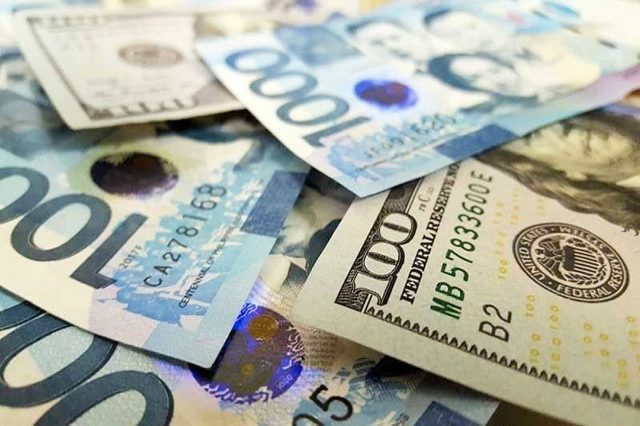
Peso weakens vs the dollar

BW FILE PHOTO

THE PESO dropped against the dollar on Monday as the market consolidated after the local currency hit a five-month high on Friday.

The local unit closed at P56.38 per dollar on Monday, weakening by 26.9 centavos from its P56.111 finish on Friday, Bankers Association of the Philippines data showed. Friday’s close was the peso’s best showing in more than five months or since its P56.03-a-dollar finish on March 21.

The peso opened Monday’s session at P56.22 against the dollar, which was already its intraday best. Its weakest showing was at P56.40 versus the greenback.

Dollars exchanged fell to $604.9 million on Monday from $1.24 billion on Friday.

Only interbank foreign exchange trading pushed through on Monday after the suspension of government work due to inclement weather caused by Tropical Storm Enteng.

“The peso weakened from bargain hunting by market participants after the local currency reached near the P56 level last Friday,” a trader said in an e-mail.

The market also reacted to the release of July US personal consumption expenditures (PCE) price index data over the weekend, which affirmed expectations of a rate cut by the Federal Reserve this month, Rizal Commercial Banking Corp. Chief Economist Michael L. Ricafort said in a Viber message.

The US PCE price index rose 0.2% in July after an unrevised 0.1% gain in June, the Commerce department said on Friday, matching economists’ forecasts, Reuters reported.

The data look unlikely to divert the Fed, which tracks the PCE price measures as an inflation gauge for monetary policy, from lowering interest rates by at least 25 basis points (bps) this month.

In the 12 months through July, the PCE price index increased 2.5%, matching June’s gain and beating the 2.6% gain expected by economists polled by Reuters.

The Fed has maintained its policy rate in the current 5.25%-5.5% range for more than a year, having raised it by 525 bps in 2022 and 2023.

For Tuesday, the trader said the peso could weaken ahead of a likely a likely robust US manufacturing report.

The trader sees the peso moving between P56.30 and P56.55 per dollar, while Mr. Ricafort expects it to range from P56.25 to P56.45.

Meanwhile, the dollar edged down on Monday but remained within striking distance of its highest level in almost two weeks, as investors’ focus moved to a US jobs report due at the end of this week, Reuters reported.

The dollar index weakened by 0.10% to 101.65, after hitting 101.79, a level not seen since Aug. 20.

US payrolls, due on Friday, will be crucial after Fed Chair Jerome H. Powell pivoted from a battle against inflation to a readiness to protect against job losses.

Economists surveyed by Reuters expect the addition of 165,000 US jobs in August, up from an increase of 114,000 in the previous month, and the unemployment rate ticking lower to 4.2%.

Analysts say the job figures will determine the magnitude of the Federal Reserve’s expected rate cut. Markets have already priced in for weeks a cut of 25 bps.

Traders currently lay 33% odds of a 50-bp Fed rate cut this month, while fully pricing in a quarter-point cut. A week earlier, expectations were 36% for the larger reduction. — A.M.C. Sy with Reuters