Home Blog Page 23

A Minute With: Hijack star Idris Elba on hostage thriller return

LONDON — Actor Idris Elba faces another crisis in season two of thriller series Hijack, when passengers on a Berlin underground train are taken hostage during the morning rush hour.

Two years after his character, Sam Nelson, survived a plane hijacking in the Apple TV+ show’s first season, the corporate negotiator finds himself at the center of a new ordeal.

Like its predecessor, the eight-part season, which premieres on Jan. 14, is set in real time.

In an interview with Reuters, the British star and Jim Field Smith — the show’s co-creator and director — spoke about the season’s setting and coming up with new twists.

Below are excerpts edited for length and clarity.

Q: What was important for you in taking the story forward?

Elba: There’s a level of dissatisfaction (at the end of season one) with not knowing all the layers of how, why, what, when, and who. And that was, I think, for us, maybe sort of the beginning of why we would come back, because there’s lots of things we don’t know about Sam, about the hijacking … what happens next … So, it was important that if we are going to come back, A, we could … widen the lens, so to speak. But secondly, be smarter.

Field Smith: The benefit of season two is a little bit of time has passed and the Sam Nelson you meet in frame one of season two is not the Sam Nelson we left behind at the end of season one. And you’re able to go, “What the hell has happened to this guy?” And you are able to take him to a way darker place than we ever could in season one.

Q: What personal journey does Sam go on?

Elba: There’s a lot of determination with Sam in this season and the audience are asking themselves why … it’s sort of like trying to heal … It really does examine trauma. It examines what would you do for your family.

Q: With all the plot twists in season one, what pressure was there to deliver in season two?

Field Smith: We wanted people to start watching this season and be like, “Okay, okay, I think I know this show … There’s going to be some bad stuff happening around him. He’s going to key into it and he’s going to save the day.” And actually, we took it as an inspiration and we leaned into that and I think the twists and the way we’ve taken the character are, to a certain extent, exploiting the audience’s expectations of what we’re going to do.

Q: How did the train setting compare with the plane setting?

Elba: Comparatively … the constraint of claustrophobia is baked into how we make it, how we shoot it … we don’t make sets bigger, we go to scale … On the train … the claustrophobia to me was higher because you’re moving, you’re feeling that movement and you are standing in a mass of bodies. — Reuters

Systemic shocks call for better credit access, targeted support

PHILIPPINE STAR/MIGUEL DE GUZMAN

PHILIPPINE COMPANIES need targeted liquidity support, wage subsidies and better credit access to cushion the negative impacts of global shocks such as the coronavirus pandemic, a study showed, with some firms yet to fully recover years after the crisis.

A discussion paper by researchers from the Bangko Sentral ng Pilipinas (BSP) Research academy and the Philippine Institute for Development Studies (PIDS) showed that the pandemic affected companies in varying degrees, highlighting the need for tailored support and recovery strategies during systemic crises.

“In the Philippine corporate sector, resilience manifested in large firms’ ample short‑term liquidity, relatively stable asset levels, and the resumption of revenue generation even after prolonged periods of mandatory closures and operational restrictions,” the researchers said.

“However, our empirical results also indicate that the recovery in revenues did not translate into a full recovery in profitability or employment.”

Based on the paper, financially constrained businesses were more vulnerable to shocks across both real and financial metrics.

“Liquid asset buffers played a positive role in supporting firm resilience, especially among unconstrained firms in both tradable and nontradable sectors,” the researchers said.

They also noted that several businesses in the country failed to generate ample profit to allow them to rehire or employ new workers despite resuming operations.

According to the study, businesses that were forced to close during the pandemic-driven lockdowns lost about 65% of their annual earnings, or about 5.4% monthly.

“For liquidity‑constrained firms, the decline is larger in magnitude, suggesting that the lack of liquidity impairs a firm’s ability to cope with the crisis and withstand business closures,” the researchers added.

These show the need for more precise liquidity and wage support or conditional grants for the hardest-hit sectors, instead of “blanket interventions” that tend to benefit less-affected firms, they said.

Financially constrained companies also need better credit access to address their liquidity gaps and similar vulnerabilities, they added.

“Given the heightened vulnerability of these firms, liquidity support may be enhanced through temporary and targeted loan moratoria and tax relief, reductions in policy interest rates and reserve requirements, the creation of emergency lending facilities, and the expansion of collateral frameworks to improve access to financing,” they said. “Broader access to working capital and supplier finance can also bridge liquidity gaps during future downturns.”

Affected sectors must likewise invest in training and reskilling initiatives as well as digitalization incentives, such as grants and tax credits, to create safety nets for their workers, the researchers said, as these crises’ impact on employment are usually sector-specific.

“Policies that facilitate productivity-enhancing reallocation can help firms pivot and respond quickly to future pandemic-like crises.” — Katherine K. Chan

Developers set sights on expansion in 2026

STOCK PHOTO | Image by Pvproductions from Freepik

By Beatriz Marie D. Cruz, Reporter

PHILIPPINE PROPERTY developers are pressing ahead with expansion plans for 2026, guided by long-term demand and urbanization trends, while adopting cautious, phased strategies amid slower infrastructure spending and broader economic uncertainties.

“Sentiment may remain cautious because of global and local uncertainties, but the Philippine property sector’s long-term fundamentals remain strong because of a young population, a growing middle class and continued urbanization,” SM Prime Holdings, Inc. President Jeffrey C. Lim told BusinessWorld in an e-mail.

To capture consumer demand, the Sy-led property developer is banking on its differentiated product offerings, pricing strategy, and accessible locations across its residential and commercial developments, he said.

“We expect the upscale segment to stay resilient, but overall residential take-up will likely be subdued given weak sentiment and lingering uncertainties in the market,” he added.

Gokongwei-led Robinsons Land Corp. (RLC), meanwhile, said it is prioritizing prudent capital allocation, flexible project phasing, and strong tenant and partner relationships amid external uncertainties.

“Despite a more tempered macroeconomic backdrop, we expect steady and resilient demand across our core businesses,” RLC Chief Strategy Officer Ramon S. Rivero said in an e-mailed reply to questions.

The developer’s core segments — residential, leasing, logistics, and hospitality — continue to show structural strength, supported by business process outsourcing expansion, remittances from overseas Filipino workers, and the recovery in tourism, he said.

In response, RLC will continue to “strategically expand our mall and office portfolio by tapping underserved catchments, upgrading existing assets, and integrating new formats that cater to evolving tenant and consumer needs,” Mr. Rivero said.

Mindanao-based developer Damosa Land, Inc. (DLI) expects real estate demand in the region to remain stable, particularly in its residential, industrial, and tourism-oriented developments.

“We also continue to see strong end-user demand in suburban locations, where buyers prioritize space, nature, and long-term value,” DLI President and Chief Executive Officer Ricardo F. Lagdameo said in an interview with BusinessWorld.

The company anticipates “moderate but steady” growth, supported by its diversified portfolio and the expanding regional economy, he added.

Developers have long cited the government’s infrastructure program as a key driver of real estate activity, boosting land values and commercial developments in surrounding areas. However, a corruption scandal involving anomalous flood control projects has slowed public infrastructure spending and weighed on business sentiment.

Data from the Department of Budget and Management showed that infrastructure spending declined by 10.7% to P887.1 billion in the first nine months of 2025, from P982.4 billion a year earlier, as tighter validation of projects followed the controversy.

“Without the collateral damage of the flood control anomalies on the macroeconomy, business activities would have been sustained,” former Bangko Sentral ng Pilipinas Deputy Governor Diwa C. Guinigundo said in a Viber message.

“Public expenditure on infrastructure like new roads and bridges connect communities and urban centers, and therefore encourage business activities, including real estate development,” he added.

Tempered public spending may also slow landbanking outside Metro Manila, according to Colliers Philippines.

“The government’s infrastructure projects are crucial, especially in guiding property firms where to develop next, so delayed infrastructure implementation is likely to impede real estate firms’ development initiatives,” Joey Roi H. Bondoc, director and head of research at Colliers Philippines, said in an e-mailed reply to questions.

For Santos Knight Frank Philippines, the controversy highlights the need for stronger safeguards to improve transparency.

“It’s a great opportunity to have third-party groups come in, whether it’s quantity surveyors, appraisers, or independent groups, to validate where investments go into,” Santos Knight Frank Chairman and Chief Executive Officer Rick M. Santos told BusinessWorld in an interview.

Still, developers said slower public spending is unlikely to derail their long-term expansion plans.

“Our expansion timelines are not tied to short-term movements in public spending, so we do not expect the slowdown in government spending to materially affect the growth plans of our business segments,” Mr. Lim said, citing SM Prime’s long-term pipeline of retail, residential, and hospitality projects.

“We also believe in the Philippines’ long-term growth trajectory, and we will continue developing our projects in line with our long-term plans,” he added.

While monitoring the rollout of infrastructure projects, RLC said its expansion timelines remain intact.

“RLC has historically positioned its developments in strategic growth corridors that already benefit from completed infrastructure, such as improved road networks, airports, and district developments,” Mr. Rivero said.

The company follows a phased expansion strategy that allows flexibility in launch timing amid political and economic uncertainties, he added.

Havitas Properties, Inc., which develops vacation homes and residential projects across the Luzon countryside, said its projects are less exposed to delays in public infrastructure spending.

“Our projects are located within identified infrastructure growth areas which are mostly private sector-led. This has mitigated the risks imposed by public sector-led infrastructure projects which unfortunately are currently in the limelight,” Havitas Properties President and CEO Jonathan F. Caro told BusinessWorld.

In Mindanao, DLI said several infrastructure projects linked to its developments are already in advanced stages.

“National infrastructure spending may slow, but in Mindanao, many catalytic projects are already in advanced stages, which helps cushion the impact,” Mr. Lagdameo said.

These include the Davao Coastal Bypass Road, which was partially opened in December, and the proposed upgrade of the Davao International Airport, slated for completion by end-2026.

By segment, RLC expects stable residential take-up, supported by demand for value-driven and well-located units, particularly green-certified developments in economic hubs.

“We expect a softer residential market but steadier performance across our commercial portfolio next year,” Mr. Lim said, noting that mall leasing remains supported by regional expansion and experiential offerings.

Developers also expect the IT-BPM (Information Technology and Business Process Management) sector to continue driving office leasing demand, while hospitality and wellness tourism remain in bright spots as travel and leisure activity recovers.

“We operate with caution but confidence, prioritizing phased development and data-driven planning to ensure long-term growth despite macro uncertainties,” Mr. Lagdameo said.

10 developments in WESM and renewables in 2025

Here is my quick list of developments during 2025 in two areas of the Philippines electricity sector — the Wholesale Electricity Spot Market (WESM) and renewables.

1. Peak power demand declined in 2025 to 19,000 megawatts (MW) after a considerable increase in 2024. This can be due to the strong El Niño in 2024 that spiked consumers’ electricity demand, followed by La Niña in 2025 that lowered electricity demand.

2. Power generation was flat in 2025 (compared with 2024’s level) at 118 terawatt-hours (TWh). The share of coal and gas in power generation declined from 77% in 2023, to 74% in 2025. Hydro generation was high during La Niña in 2025.

3. There was a continued decline in Wholesale Electricity Spot Market (WESM) prices. The load-weighted average price (LWAP) went down from P6.07/ kilowatt-hour (kWh) in 2023 to P3.98/kWh in 2025. This data comes from the Independent Electricity Market Operator of the Philippines (IEMOP).

4. The feed-in tariff allowance (FIT-All) was higher in 2025 — from zero in 2023 to P0.13/kWh in 2025. It was P0.20/kWh in late 2025. FIT — or the guaranteed price for 20 years for intermittent renewables, namely solar and wind power — is high, up to P9/kWh. The higher the difference between the WESM price and the guaranteed price of FIT, the higher the FIT-All that will be collected from consumers (see Table 1).

5. Starting this month, a new subsidy for renewables, called the Green Energy Auction Allowance (GEA-All), will be collected on top of FIT-All. It will start at P0.037/kWh, then will keep rising in the coming years.

This is the result of the Department of Energy’s GEA program. The effective Green Energy Tariff (GET, in Pesos/kWh) are as follows: GEA1 (mostly solar) is P4, GEA2 is P5, GEA4 (mostly onshore wind) is P5.34, and GEA5 (offshore wind) is P12.

The administrator of FIT-All, the National Transmission Corp. (Transco), will also administer the GEA-All. Late last year they released their estimates of the price impact of the GEA program under varying Congestion Revenue Rights (CRR) at P1/kWh to P5/kWh.

I also made my own computations of GEA-All, mainly from expensive wind power. I made two computations for GEA5, 5a with 1,500 MW of offshore wind (OSW) and 5b with 3,300 MW of OSW. The results of my computations can be found in Table 2.

6. Transco estimates show that GEA-All will exceed P1/kWh starting 2030 at CRR P1/kWh. The projected delivery of expensive OSW is by 2030.

7. GEA-All would decline slightly by 2033 as the share of OSW to total power generation is expected to decline as more gas and, hopefully, coal — a lot cheaper than wind whether onshore or offshore — will come in.

8. My estimates, found in Table 2, show that GEA5b will quickly contribute P0.53/kWh in 2030 to the GEA-All. This is consistent with the big jump in GEA-All in 2030 from the Transco estimates.

9. GEA5b would flatline at P0.30/kWh from 2033 onwards (see Table 2).

10. We need a baseload energy auction (BEA) and not just GEA. A BEA from coal, gas, and nuclear would be a lot cheaper than the “green” energy that actually kills millions of trees (solar hates shade from trees, clouds, and rain).

SPNEC IS NOT SPBC
Meanwhile, I saw a press release from the Meralco PowerGen Corp. (MGEN) the other day clarifying that SP New Energy Corp. (SPNEC) is a separate and distinct corporate entity from Solar Para Sa Bayan Corp. (SPBC). It said that MGEN did not acquire any share in SPBC — which was awarded a congressional franchise through RA 11357 to install and operate microgrids in remote areas in Mindoro — and that MGEN is not privy to any transactions of SPBC nor to any circumstances that may relate to its compliance with its franchise.

I have written about SPBC before. I called it “Solar Para sa Politika Corp.” because, unlike all other solar companies, it was the only one that secured its own franchise.

It is good that MGEN invested only in SPNEC which did not violate any law or regulation, and is not dependent on any political and congressional franchise. Christer Gaudiano, MGEN Head for Sustainability, Corporate Communications & External Affairs, said “We hope this clarifies the issue and lays to rest the disinformation coming out especially in social media.”


Bienvenido S. Oplas, Jr. is the president of Bienvenido S. Oplas, Jr. Research Consultancy Services, and Minimal Government Thinkers. He is an international fellow of the Tholos Foundation.

minimalgovernment@gmail.com

Monzon eyes stock investment loan restoration

PSE President and Chief Executive Officer (CEO) Ramon S. Monzon — PRESIDENTIAL PHOTOJOURNALISTS ASSOCIATION (PPA) POOL YUMMIE DINGDING

PHILIPPINE Stock Exchange (PSE) President and Chief Executive Officer (CEO) Ramon S. Monzon said he is in talks with the country’s primary social insurance providers to revive the stock investment loan program, potentially linking it to the personal equity and retirement account (PERA) to increase participation in the market.

“I talked to the SSS (Social Security System) and GSIS (Government Service Insurance System). I’m trying to convince them to restore the stock investment loan,” he told reporters on Friday last week.

“The way it was structured before was if you bought shares, you had to buy them in the name of SSS,” he said.

Mr. Monzon was referring to the SSS past program called the Stock Investment Loan Program (SILP), where members borrowed funds to buy company stocks. Today, SILP mainly involves the Option to Sell Shares of Stocks Program, where members with unpaid SILP or Privatization Fund Loan Program (PFLP) balances sell shares through SSS-accredited brokers to clear debts.

“We’re trying to see what’s good. We’re trying to see if we can tie this up with PERA, right? You take out a stock loan and put it in PERA,” he added.

PERA is a voluntary retirement savings program that supplements benefits from the SSS, GSIS, and employer-provided plans.

Mr. Monzon described it as beneficial for workers. “We should be pushing all companies to institute PERA for their employees,” he said. “We will be doing that in our next board meeting — I’ll try to get approval for that. It’s good for the employees,” he added.

PERA contributions in the country surged 24% year on year to P491.4 million by end-2024, up from P396.3 million in 2023, according to Bangko Sentral ng Pilipinas (BSP) data.

The number of contributors grew 6.4% to 5,912, with employee contributions dominating at 69.5%, followed by overseas Filipino workers (OFWs) and the self-employed.

In September 2023, the Securities and Exchange Commission (SEC) issued Memorandum Circular No. 14, expanding eligible PERA administrators to include securities brokers, investment houses, and fund managers. DragonFi became the first PERA administrator accredited under this framework in January last year.

Mr. Monzon noted that the program could benefit both employers and employees, particularly under the Capital Markets Efficiency Promotion Act (CMEPA). “CMEPA has made it a game changer. Actually, PERA is very good for companies that have 200 or 300 employees because it is affordable,” he said.

He also cited DragonFi’s co-founder and CEO’s presentation on PERA growth compounding at 6%, matching yields from real estate investment trusts (REITs) and preferred stocks, as a compelling reason for employees. “It became very attractive to us because of that CMEPA,” he said.

“PERA is good for the employees. It is a retention tool and also beneficial for the market,” Mr. Monzon added.

According to DragonFi, a PERA investor contributing P50,000 annually over 30 years could potentially earn P356,000 per year from dividends, assuming an average dividend yield of 5% per year and annual capital appreciation of 3%.

With PERA, DragonFi said Filipinos could invest in a variety of financial products, including stocks, REITs, and unit investment trust funds (UITFs). — Alexandria Grace C. Magno

Erich von Däniken, Swiss author who popularized ancient alien theories, 90

ZURICH — Best-selling Swiss author Erich von Däniken, who built a lucrative career on his argument, rubbished by scientists and archaeologists, that humanity owes much of its development to the intervention of extraterrestrials, has died aged 90.

Swiss media including national broadcaster SRF reported his death, and a note on his website said it occurred on Saturday.

Chariots of the Gods?, published in 1968, sold millions of copies with its thesis that advanced aliens had repeatedly visited Earth, leaving their mark in the form of Inca and Egyptian ruins, cave drawings and other physical monuments.

“It took courage to write this book, and it will take courage to read it,” the work begins.

It acknowledged that scholars would dismiss it as nonsense, but insisted that “the past teemed with unknown gods who visited the primeval earth in manned spaceships.”

SCHOLARS DISMISS THEORIES AS PSEUDOSCIENCE
Academics wrote books refuting his theories, criticizing him as a purveyor of some of the more fantastical notions of pseudoscience. German news magazine Der Spiegel even had a 1973 cover story titled “The Däniken Hoax.”

Nevertheless, legions of fans snapped up his more than 40 books and watched his television specials and documentary films. The over 70 million books that he sold were translated into more than 30 languages.

Mr. Von Däniken spent the early part of his working life managing a hotel in eastern Switzerland, where a fraud conviction landed him in jail for 18 months.

But as his book took off, he emerged from prison as a best-selling author.

Still, he never presented the smoking gun to fulfill astronomer Carl Sagan’s famous adage that “extraordinary claims require extraordinary evidence.”

“He … says that the astonishing astronomical information ancient civilizations, such as the Mayan, had is proof that there were some space travelers around to teach it to them. This fits in with his general questioning of the ability of the Egyptians to build the pyramids, or the Easter Islanders to erect those massive stone heads,” the New York Times wrote in 1974.

“His method is to use a negative — ancient peoples couldn’t have done or thought all the things they did — to prove a positive — that the ancient people were the beneficiaries of some kind of cosmological Point 4 (development assistance) program.”

Such criticism never knocked Mr. Von Däniken off his stride.

“We owe it to our self-respect to be rational and objective,” he wrote. “At some time or other every daring theory seemed to be a Utopia. How many Utopias have long since become everyday realities!”

Television specials about his books made him a well-known figure in Europe and the United States. In 2003 he opened a Mysteries of the World theme park in Interlaken — although it went bust after three years.

PREDICTED ALIEN RETURN
In a treatise on his website, Mr. Von Däniken said he was not an esoteric, and that his work served to debunk “a world of religious and unfortunately often scientific humbugs.”

“From countless old written records I know that these ‘gods’ promised to return. Then we will experience the god shock, a total catastrophe in religion and science. And everything would have been so easy to understand — without this god shock. The evidence speaks a clear language. That is what drives me.”

The release in July 2021 of a watershed US government UFO report that did not rule out extraterrestrial origins gave him hope.

“In the future, anyone who talks about UFOs and extraterrestrials can no longer simply be ridiculed. People will slowly realize that many things are possible that they previously considered impossible,” he told the Neue Zürcher Zeitung newspaper.

“As soon as we are prepared and get used to the idea that we are not alone in the universe, the extraterrestrials will come to us. I expect that to be the case within the next 10 years.” — Reuters

Peso slips vs dollar as markets eye Fed policy path

BW FILE PHOTO

THE PESO slipped against the dollar on Monday as markets keep a close eye on the US Federal Reserve, with data showing it could keep rates steady but with fresh attacks by US President Donald J. Trump on Fed Chair Jerome H. Powell threatening its independence.

The local unit closed at P59.26 versus the greenback, declining by 1.5 centavos from its P59.245 finish on Friday, data from the Bankers Association of the Philippines data showed.

The peso opened Monday’s trading session slightly stronger at P59.22 versus the dollar. Its intraday best was at P59.17, while its weakest showing was at P59.28 against the greenback.

Dollars traded fell to $887.3 million from $1.23 billion on Friday.

“The local currency continued to weaken after the latest US labor reports broadly narrowed the probability of a US rate cut,” a trader said in an e-mail.

The Bureau of Labor Statistics monthly report showed 50,000 workers were added to nonfarm payrolls in December, compared with expectations in a Reuters poll for a rise of 60,000, just above November’s downwardly revised increase of 56,000. The unemployment rate eased, as expected, to 4.4%.

Threats to the Fed’s independence and geopolitical concerns also affected foreign exchange markets, Rizal Commercial Banking Corp. Chief Economist Michael L. Ricafort said in a Viber message.

For Tuesday, the trader said the peso could depreciate further as US consumer inflation is expected to remain steady for December, which could solidify views that the Fed will hold borrowing costs steady this month.

The trader sees the peso moving between P59.10 and P59.35 per dollar on Tuesday, while Mr. Ricafort expects it to range from P59.15 to P59.35.

The dollar on Monday fell sharply against the euro and the Swiss franc while edging lower versus the Japanese yen after the Trump administration threatened Mr. Powell with a criminal indictment, a move that could endanger the greenback’s safe-haven status.

The dollar index, which measures the greenback’s strength against a basket of six currencies, was recently 0.37% lower at 98.759, snapping a five-day winning streak.

Some analysts said markets had not yet panicked because they expect Mr. Trump to appoint a credible successor to Mr. Powell and let that person steer policy.

The Swiss franc was the best performer on Monday, rising 0.52% to 0.7968 against the dollar, while the euro continued to benefit as US politics triggered a sell-off in American assets. The single currency rose 0.44% to 1.1688 in its biggest daily rise since Dec. 10.

The dollar advanced in early Asian trade to a one-month high after Friday’s jobs report bolstered expectations that the Federal Reserve will hold interest rates steady later this month, while reports of hundreds of deaths during protests in Iran heightened geopolitical tensions and stoked demand for safe-haven assets.

Against the yen, the US dollar was recently 0.1% weaker at 157.80 yen, not far from its highest point in a year.

Geopolitical tensions in Iran “should be positive for the US dollar but we haven’t seen any upside there yet,” said Kyle Rodda, senior market analyst at Capital.com in Melbourne. “The question from here is whether the momentum behind the protest movement continues and whether the regime cracks down even harder, opening the door to some US involvement.”

Mr. Trump said the US might meet Iranian officials and was in contact with the opposition, as he weighed a range of responses including military options.

Financial markets are preparing for a busy data calendar this week, with Tuesday’s release of the US consumer price index for December providing one of the last key economic releases before the Fed’s next monetary policy meeting at the end of January.

A ruling from the US Supreme Court on the legality of Mr. Trump’s emergency tariffs could also be released as soon as Wednesday. The US Treasury has more than adequate funds to pay any tariff refunds ordered if the Supreme Court rules against Trump’s emergency tariffs, US Treasury Secretary Scott Bessent said on Friday. — A.M.C. Sy with Reuters

Masterplanned golf course communities: Landscapes of play, stewardship, and community

STOCK PHOTO | Image by Bedneyimages from Freepik

GOLF is a sport on which the sun never sets. There are more than 38,000 golf courses across the world, and as such, the sport is played on six continents; with 82% of countries having golf courses, the majority of which are in the United States, followed by Japan, and then the United Kingdom.

The Philippines is home to 111 golf courses, the bulk of which are located in and around Metro Manila. The fringes of Metro Manila are home to numerous communities built around, and anchored by, golf courses.

Golf courses are more than places of sport. They are also living landscapes, carefully shaped terrains where nature, design, and human experience converge. In the Philippines, golf course development has played a quiet but influential role in shaping communities, land use patterns, creating value, and even our understanding of leisure as an essential component of a balanced life.

My experience in 18 golf course planning and development projects has been guided by the belief that these spaces should respond to their climate, topography, hydrology, and culture — not impose itself upon them. This thought process has informed my collaborations with some of the world’s leading golf course designers and has shaped landmark projects such as The Country Club, Sta. Elena Golf & Country Estate, Splendido Taal, Manila Southwoods, and Forest Hills.

COLLABORATION ACROSS DISCIPLINES AND BORDERS
Golf course design is inherently collaborative. While the golf architect shapes strategy, playability, and challenge, the planner and architect must ensure that the course sits harmoniously within a broader vision which considers accessibility, environmental systems, residential integration, and long-term sustainability.

In projects like The Country Club — which was designed in collaboration with Tom Weiskopf — the emphasis was on restraint and purity. The course is situated on rolling terrain with an L-shaped configuration and has fairways peppered with palm trees, with two rivers flanking the whole course, offering a challenging experience for the golfer.

At Sta. Elena — designed in collaboration with Robert Trent Jones, Jr. — the challenge was different. Here, the goal was to create a world-class golf experience that could stand alongside the best in the world, while also serving as an anchor for a low-density residential estate. Many seasoned golfers will note how the course follows the natural contours of the land, with several dogleg holes posing a challenge for the golfer. Hole No. 12 is noted to be a long Par 4, with an elevated green, encouraging golfers to approach it analytically. The course was conceived not merely as an amenity to the community, but as the organizing spine of the community. Homes were oriented to views, breezes, and open space, rather than maximizing frontage. The course is now known to be one of the finest, if not the finest golf club outside of Metro Manila.

GOLF AS A FRAMEWORK FOR COMMUNITY
One of the most misunderstood aspects of golf course development is the assumption that it is an inefficient use of land. In reality, when properly planned, golf courses may function as green infrastructure, providing flood control, groundwater recharge, urban cooling, and biodiversity corridors.

Manila Southwoods was done in collaboration with Jack Nicklaus, and had been developed during a time when large-scale master planning was still finding its footing in the Philippines. The development of golf courses helped preserve vast tracts of open space along the increasingly urbanizing southern corridor of the Calabarzon region. Working alongside foreign designers, we ensured that the courses were woven into a larger framework of roads, villages, and landscape systems. Southwoods demonstrated that leisure-driven development could coexist with environmental responsibility and long-term land value.

Similarly, Splendido Taal, designed alongside Greg Norman, offered a dramatic natural setting, views of Taal Lake, sloping terrain, and cooler climate. The design of the course had to respond to its natural environment, not detract from it — creating a leisure-oriented estate that appealed not only to golfers, but to families seeking respite from the city. In this sense, golf became a gateway to countryside living, instead of an exclusive enclave.

At Forest Hills, the developer brought golf to the eastern fringes of Metro Manila in Antipolo, Rizal. The course was a collaboration between myself and Jack Nicklaus, Jr., and stands out as a fairly large golf course, with 36 holes, rare for the time it was built. The residential community that is built around it is supported not only by golfing facilities, but other sports and recreation amenities for the non-golfing resident.

CLIMATE, CULTURE, AND THE PHILIPPINE CONTEXT
Designing golf courses in the Philippines demands a deep understanding of climate. Heavy rains, intense sun, and rapidly shifting weather patterns require courses that are resilient and adaptable. Drainage, turf selection, and stormwater management are integral to the development of golf courses around the country.

Golf in the Philippines is not only about sport; it is a social, intergenerational, and increasingly inclusive function. Courses must support this by being walkable, welcoming, and integrated with clubhouses and community facilities that encourage interaction rather than exclusivity. Residential neighborhoods situated within golf courses thus offer a perfect backdrop for creating lasting friendships with family and neighbors, with its picturesque sceneries, amenities, and shared love of the sport of golf.

A friend of mine living in one of these communities recounted to me his experience living in one of these communities with his family. He says that as a longtime retiree, he is able to play 18 holes twice a week, on Wednesdays and on weekends with his children and grandchildren — the latter of whom grew up on the sport as a result of repeated visits to his home situated along the fairway, providing his grandchildren access to great golf instructors at the nearby club.

LOOKING FORWARD: GOLF AND SUSTAINABLE DEVELOPMENT
As our cities grow denser and our open spaces shrink, the role of golf courses will continue to evolve. Critics are bound to scrutinize golf courses and seek justification for their role as recreational facilities, and as contributors (positively or negatively) to environmental health and community well-being.

I firmly believe that the future of golf course development lies in multi-functional landscapes — courses that manage water, preserve ecosystems, support active lifestyles, and anchor thoughtfully planned communities. When done right, golf courses can protect land from speculative overdevelopment while creating enduring value to last generations.

The role of public golf courses is also integral to the future of the sport. The Intramuros Golf Course was recently opened to serve as a public park on Sundays, while proposals to convert the entire golf course into a permanent public park has been met with ire from golfers and historic conservation groups. The latter would be a more preferable land use for the course, however barring that, allowing for the course to serve as a multi-functional landscape permits Intramuros Golf Course to meet different needs required by the residents of the city.

In reflecting on projects such as The Country Club, Sta. Elena, Splendido, and Manila Southwoods, I am reminded that good design is ultimately about stewardship. To quote Chief Seattle: we do not inherit the earth from our ancestors, we borrow it from our children. Golf clubs may have many critics and detractors, but I believe that the benefits of having them outweigh the costs — especially in a country like ours, where open spaces and green lungs are taken for granted and almost nonexistent, the golf course fills this gap.

Golf is, after all, a game that requires a strong will to succeed and amazing precision, all while encouraging deep thought. The same can be said of planning, designing, and maintaining our built environment.


Architect Felino “Jun” Palafox, Jr., founder – Palafox Associates and Palafox Architecture Group, Inc. He has 53 years of experience in architecture and 51 years in planning. He was educated at Christ the King Seminary, the University of Santo Tomas, the University of the Philippines, and Harvard University. He founded Palafox Associates and Palafox Architecture and has completed more than 2,000 projects in 41 countries. He has received over 200 awards, including the UAP Dubai Awards First Lifetime Achievement Award in 2023.

A new way to think about power

STOCK PHOTO | Image by Www.Slon.Pics from Freepik

While many are still busy making resolutions for 2026, how about we take a step back and instead do a rethinking for the new year? In particular, perhaps we can revisit how we think about one of the most common, mundane items we often take for granted in today’s modern life: electricity.

For the most part, as ordinary Filipino consumers, we consider ourselves passive, resigned or helpless when it comes to matters concerning electric power. As long our gadgets get charged when we plug them in, or the light turns on when we flip the switch, or the machine starts working when we push the button, we do not really bother ourselves with how everything works behind the plug, switch or button.

Many of us are not even conscious of when and how much we consume in terms of Pesos or kilowatt-hours (kWh)! That is, until the power bill comes a few days after the end of the month — then, for some of us, reality bites. We are then surprised to see the increase in the amounts due compared to last month’s or last year’s bill. A few may get curious (“What goes into my power bill that causes these price movements monthly? How come the power bill in our house in the province is lower [or higher]?”), while some get enraged (“We suffered in the heat because we did not use air-conditioning, and we still get this bill increase! More than half of my monthly income just goes to pay for electricity, there is nothing left for the family’s needs!”).

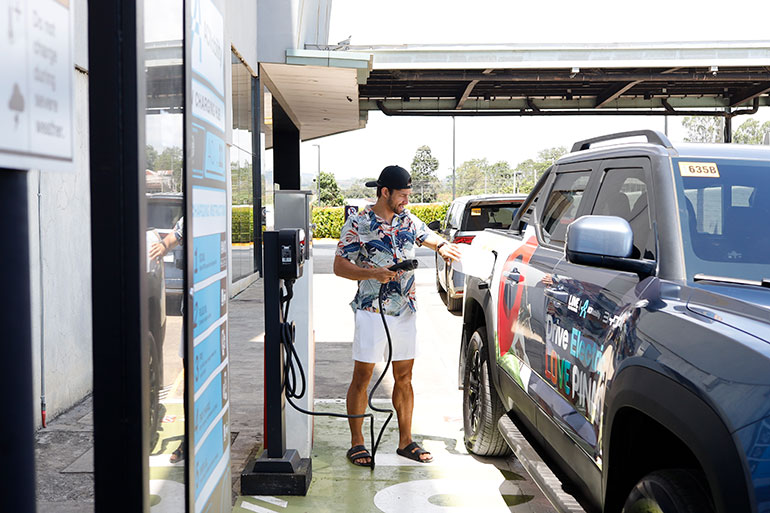
Let us take a pause here and consider: would you believe that customers today can actually have more control over electricity spending than many realize? This is not about taking to heart those energy saving tips, although that is definitely a good start. No, this is taking control in a more deliberate and long-term measure, one that allows consumers — individuals, business, and organizations alike — greater agency over their energy destiny.

Almost 25 years ago, in June 2001, the Electric Power Industry Reform Act (EPIRA) was passed to restructure, reshape, and re-design the Philippine power sector. Standing on the three pillars of restructuring, privatization, and deregulation, its main goal was to allow consumers the ability to control how they source and spend for their electricity supply under the Retail Competition and Open Access (RCOA) program. Retail Competition paved the way for consumers to contract for and buy electricity on a retail basis, at a price and under terms acceptable to both the consumer and the retail supplier. It is up to the parties to agree, for instance, if they want a fixed price contract, a discounted one, moving or pegged to an index, or any pricing formula. It is not subject to the approval of the distribution utility (DU) or the regulator. Open Access, on the other hand, requires DUs (private DUs and electric cooperatives) to allow the use of their wires and network, subject to the same delivery rate, whether or not it is the DU or the consumer that contracted for the supply.

Meanwhile, seven years after EPIRA, in December 2008, the Renewable Energy Act (RE Act) was enacted to accelerate the use of renewable energy (RE) in our power system. The law is important not just because it granted incentives to attract investors to a sector that, since EPIRA, has been entirely dependent on private funding, but also because it recognized and required regulations for the entry of new, emerging, or smaller RE technologies, such as solar panels or wind turbines, to contribute to the system.

These two laws — EPIRA and the RE Act — are symbiotic in ushering in this new era in the Philippine power sector where consumers have genuine options that allow more control over their power bills as well as the future of the power industry. Let us explore some of these options, from the least disruptive to the most radical, from a consumer’s vantage point:

1. Do you know that electricity costs vary depending on the time of use? For Meralco customers, for example, power consumed from 8 a.m. to 9 p.m. on Mondays to Saturdays — known as the peak hours — is about P2.14/kWh* more expensive than any other hour (off-peak hours) during those days. On Sundays, the peak hours are only from 6 to 8 p.m. In other words, if one can move around their power-consuming activities to the off-peak hours, savings can immediately be realized without any capital investment. Consumers of most private DUs and electric cooperatives can avail of the peak/off-peak pricing programs, subject to prior registration and meter readiness.

2. Consumers who want more savings regardless of the hour of use and are not particular about the generation source (RE or non-RE), as long as it is cheaper than the power supplied by the DU, can source from more than 50 registered retail suppliers operating in Luzon, Visayas, and Mindanao under the RCOA program. Consumers, however, who are intentional in sourcing only from RE supply can be served by more than 20 Green Energy Option Program (GEOP) Suppliers providing RE-only supply on a 24/7 basis. Data from the Philippine Electricity Market Corp. (PEMC), as of September 2025, show significant spikes in the number of RCOA participants in January and August of last year. This could be attributed to the lower average generation rates for RCOA and GEOP customers offered by suppliers, as well as the implementation of the enhanced Retail Aggregation Program (RAP) which practically made RCOA available to all consumers regardless of size or average consumption level. Overall, according to the latest PEMC data, RCOA customers realized P19.25 billion estimated savings in power bills for the first three quarters of 2025, while sales to GEOP customers enabled the avoidance of 65,642.77 metric tCO2 (total carbon dioxide) in greenhouse gas (GHG) emissions for the same period.

3. For those, on the other hand, who want to level things up and be more self-reliant by producing their own power from clean sources, solar panel installations are increasingly more viable, especially if enrolled under the net metering program of the Energy Regulatory Commission (ERC). After the surge in electricity rates in 2022 resulting from higher coal and oil prices given global supply disruptions, the ERC recorded an unprecedented 121% increase in net-metering participants from 2022 to 2023. This is tangible proof that more consumers are realizing the value proposition of being prosumers — consumers who are also producers. Today, solar home system providers are already providing panels, with or without battery systems, at competitive prices as well as deferred payment schemes that make this option progressively more viable for consumers.

4. A variant or subset of large prosumers is also emerging in the country, with the recent inauguration of the 4.1MWp (megawatt peak) solar project with 5.5MWh (megawatt-hour) battery storage solution in Balesin, Quezon now supplying 60% of the island’s power requirements, as well as the 6.55MWp solar rooftop-socialized housing project in Cavite. It illustrates one of the innovative solutions still at nascent stages in the Philippines but already with mature and established models seen in micro-grid and community RE projects in Japan and other areas. Proponents argue that decentralized solutions are in fact a better fit for many areas in the country where grid or DU connection is not viable or is rendered unreliable due to frequent typhoons or man-made disasters.

5. Finally, there is also room for those in the extremes: those who want to be directly involved in the sector and those who do not want to be bothered thinking about any of the options above since they do not really mind paying the amounts charged by their DUs every month. What perhaps would appeal to both sets is investing in stocks of power companies (grid operator, DUs, owners of generation plants, retail suppliers). While public participation, in general, remains limited for ownership of these stocks given the EPIRA mandate of listing only a minimum 15% of the shares of DUs and generation companies and 20% of the grid concessionaire, RE companies Alternergy (ALT) and Citicore (CREC) offered and were able to get subscription to around 30% of their respective common shares during their initial public offering (IPOs).

Admittedly, there are more variants and nuances among the options identified above (price hedging, for instance, and direct participation in the wholesale electricity spot market) as well as within each option (e.g., prepaid metering options available already in some areas improving viability of micro-grid set-ups). There are also issues that will take time and discussion to be fully addressed, particularly given the legacy contracts of DUs.

While we continue to challenge premises and push the envelope to make the Philippine energy system become more accessible, inclusive and reliable, today’s consumers can already explore many options available to shape and reshape their energy destiny.

*Based on Meralco’s website, as of Jan. 2, 2026.


Monalisa C. Dimalanta is a senior partner at Puyat Jacinto & Santos Law (PJS Law). She was the chairperson and CEO of the Energy Regulatory Commission from 2022 to 2025, and chairperson of the National Renewable Energy Board from 2019 to 2021.

Philippines’ 20 most profitable parent/standalone companies in 2024

How PSEi member stocks performed — January 12, 2026

Here’s a quick glance at how PSEi stocks fared on Monday, January 12, 2026.


PSEi soars to 6,400 level on BSP rate cut hopes

BW FILE PHOTO

THE MAIN INDEX soared to the 6,400 level on Monday to hit a near six-month high amid growing hopes for another rate cut from the Bangko Sentral ng Pilipinas (BSP) next month.

The Philippine Stock Exchange index (PSEi) surged by 1.13% or 71.82 points to end at 6,419.96, while the broader all shares index increased by 0.94% or 34.13 points to 3,641.13.

This was the PSEi’s best finish in nearly six months or since it closed at 6,444.16 on July 24.

“Philippine equities have officially risen back to index levels seen prior to the flood control fiasco, driven by the dovish tone sung by the BSP chief, hinting at a high chance of a 25-basis-point (bp) cut this upcoming February meeting,” AP Securities, Inc. said in a market note.

Last week, BSP Governor Eli M. Remolona, Jr. said a cut remains on the table at the Monetary Board’s Feb. 19 meeting, even as he noted that the policy rate is already “very close” to where they want it to be, signaling an imminent end to their easing cycle.

The Monetary Board has lowered benchmark borrowing costs by a total of 200 bps since its rate cut cycle began in August 2024. In 2025 alone, it delivered a cumulative 125 bps in cuts for five straight meetings to bring the key rate to an over three-year low of 4.5%.

“The PSEi ended in the green, supported by sustained buying momentum throughout the session. Market sentiment further improved following Nomura’s forecast that the BSP could possibly deliver 25-bp rate cuts in both February and April,” Regina Capital Development Corp. Head of Sales Luis A. Limlingan said in a Viber message.

“Expectations of a more accommodative policy stance further encouraged risk-taking among investors,” he said.

Nomura Global Markets Research said in a Jan. 9 report that the BSP may ease its policy stance further this year as the corruption scandal may continue to dampen government spending and economic growth.

Nomura Chief ASEAN (Association of Southeast Asian Nations) Economist Euben Paracuelles and Macroeconomic Research Analyst Yiru Chen said the BSP could deliver one 25-bp cut each at its February and April meetings.

All sectoral indices closed higher on Monday. Mining and oil surged by 5% or 815.87 points to 17,116.43; financials increased by 2.13% or 45.62 points to 2,179.17; property went up by 1.87% or 43.28 points to 2,347.21; industrials climbed by 0.81% or 73.53 points to 9,139.77; holding firms jumped by 0.7% or 34.99 points to 5,026.91; and services increased by 0.33% or 8.53 points to 2,563.17.

Advancers outnumbered decliners, 142 to 80, while 53 names closed unchanged.

Value turnover went up to P6.64 billion on Monday with 1.02 billion shares traded from the P6.11 billion with 1.57 billion issues that changed hands on Friday.

Net foreign buying increased to P534.17 million from P320.68 million. — Alexandria Grace C. Magno