Home Blog Page 1987

Manila to put forth ‘requests’ to US under Trump; advanced plans urged
RAWPIXEL.COM

By Kyle Aristophere T. Atienza and John Victor D. Ordoñez, Reporters

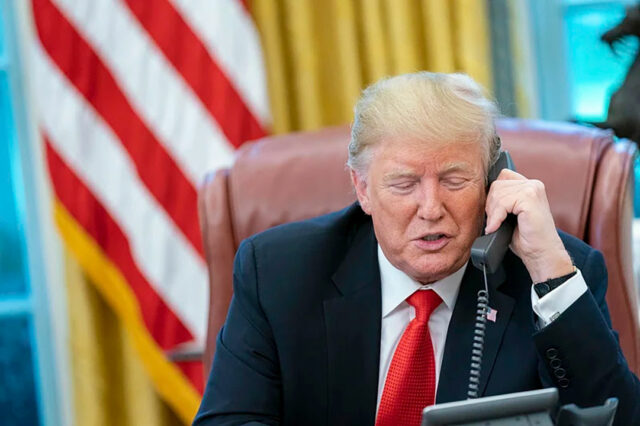
THE PHILIPPINE government will propose trade agreements to the US government under President Donald J. Trump, a key economic official said, as the Southeast Asian nation remains hopeful about the future of its trilateral ties with America and Japan.

“We certainly want to bring forward to the new Trump administration our various requests,” Frederick D. Go, head of the Office of the Special Assistant to the President for Investment and Economic Affairs, said on the sidelines of a signing ceremony for a new Philippine tax law.

“We have of course a few trade agreement requests that the Philippines would like to push that will enhance trade between the Philippines and the US. The Board of Investments and the Department of Trade and Industry are compiling these matters that we would like to bring to the Trump administration,” he added.

Mr. Go said the proposed Luzon Economic Corridor, which was announced after Mr. Marcos’ meeting with outgoing US President Joseph R. Biden and then Japanese Prime Minister Fumio Kishida in July, would proceed.

“It’s all systems go. Right now, it’s for the Subic-Clark-Manila-Batangas rail,” he said when asked to give an update on the proposed economic corridor.

The project seeks to focus on “high-impact” infrastructure such as rails and ports and strategic investments involving semiconductors, clean energy and supply chains.

“The Asian Development Bank (ADB) is finalizing the terms of the study. They also have identified specific projects within the corridor that I think I’m not at liberty right now to discuss,” he said, noting that the Philippine side and the ADB recently finished their second steering committee meeting.

“We already had our second steering committee and we have our third one coming up,” he said. “We have another steering committee meeting on Nov. 21.”

Asked whether the proposed corridor has a high chance of being pursued under the Trump administration, Mr. Go said: “Well, that’s what the trilateral partners are telling us. This is a trilateral G7, which includes the US and Japan and there are other countries who want to join the corridor project.”

The US has consistently cited its “ironclad commitment” to the Philippines amid China’s intrusions into its exclusive economic zone in the South China Sea, which has become one of the major geopolitical hotspots in recent years.

It was Mr. Trump, who is leading the US presidential race, who promoted the concept of a “free and open Indo-Pacific,” mentioning it during the Asia-Pacific Economic Forum in the Philippines in 2017.

Mr. Biden has widely supported the concept, launching Indo-Pacific Economic Framework in 2022 with a dozen initial partners. Manila joined the informal economic grouping in the same year and signed a supply chain agreement along with other members in 2023.

Mr. Trump has vowed to impose 60% or higher tariffs on all Chinese goods and a 10% universal tariff.

Amid the possibility of increased US-China competition under the Trump presidency, Finance Secretary Ralph G. Recto said on the sidelines of the same event that the Philippines could leverage the new law further cutting corporate income tax to 20% from 25% to attract Chinese investors who want to sell to the US.

“It’s very timely, incidentally, under a new Trump administration,” he said, referring to the Corporate Recovery and Tax Incentives for Enterprises to Maximize Opportunities for Reinvigorating the Economy (CREATE MORE) Act, which President Ferdinand R. Marcos, Jr. signed on Monday.

“So you want to invite more investments to the Philippines, maybe coming from China, coming from Taiwan, that can locate in the Philippines so that they can sell to the United States, among others. That’s a possibility.”

Mr. Recto said the Philippines wants to improve ties with the US on the economic front under the Trump presidency since the two nations are security allies.

“We hope we can improve that. We are a national security ally of the United States,” he said. “I’m sure they’re well aware that our economic security, if our economy does better, then we can be a more dependable ally.”

During his presidency, Mr. Trump withdrew from various global institutions including the Paris Climate Agreement and the Trans-Pacific Partnership.

Mr. Marcos on Tuesday said he looks forward to working with Mr. Trump on a wide range of issues that “will yield mutual benefits to two nations with deep ties, shared beliefs, a common vision and a long history of working together.”

PLANNING AHEAD
Meanwhile, Philippine senators said the Philippines should boost its own defense sector and cut reliance on its foreign allies for equipment ahead of a Trump presidency, citing the need to brace for a shift in US policies.

In a statement, Senate President Francis “Chiz” G. Escudero said the government should start drawing up plans on trade, defense and other scenarios. “Donald Trump is a major macroeconomic assumption,” he said.

“From trade to security to immigration, what he said he plans to do, some on day one of his administration, would certainly impact us.”

The Senate president also cited the need for the government to look into how these high tariff walls would affect the Philippine economy.

Senator Maria Imelda “Imee” R. Marcos in a separate statement said the government could not solely rely on the US and other foreign allies to beef up its defense sector, citing the need for more local manufacturers.

“In the end, no matter how many and how strong our allies are, we can only depend on ourselves, the Filipinos, to defend the Philippines,”

Mr. Marcos last month signed into law a bill requiring the government to pursue a defense posture reliant on local manufacturers.

“The Philippines must act now to secure our people, strengthen our defenses and ensure we’re prepared for any shifts in global dynamics,” Ms. Marcos, the President’s sister, said. “The world is changing fast, and we can’t afford to be caught unprepared.”

The Philippines, one of the weakest in the world in terms of military capability, is important to Washington’s efforts to push back against China, which claims the South China Sea almost in its entirety.

Ms. Marcos also urged the government to ensure the protection of more than 200,000 undocumented Filipinos who may face deportation under Mr. Trump. “We need a plan for these families who may be forced to come home.”

There are about 310,000 undocumented Filipinos in the US, based on US Census Bureau data.

“There is no reason for the Philippine government to be caught flatfooted and stand helpless as the ground beneath it caves in,” Mr. Escudero said.
Toraji makes landfall in Aurora

PAGASA.DOST.GOV.PH

By Adrian H. Halili and Sheldeen Joy Talavera, Reporters

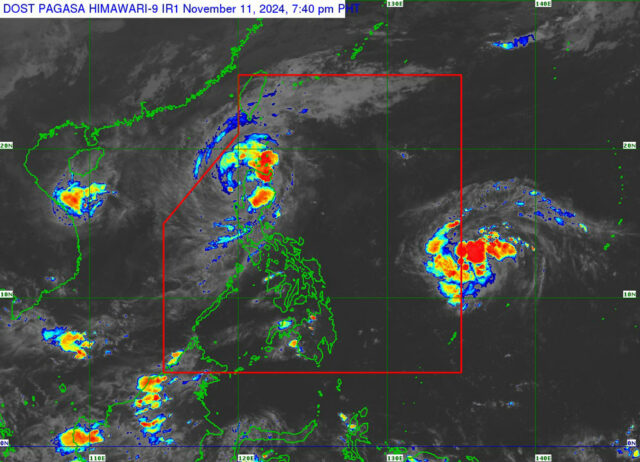
TORAJI, locally named Nika, has intensified into a typhoon as it made landfall over Dilasag, Aurora province early Monday, according to the Philippines’ weather bureau.

“Regardless of the position of the center in the next several hours, it must be emphasized that hazards on land and coastal waters may still be experienced in areas outside the forecast confidence cone,” the Philippine Atmospheric, Geophysical and Astronomical Services Administration (PAGASA) said in a 5 p.m. bulletin.

Toraji was last spotted near Besao, Mountain Province and was moving west-northeastward at 25 kilometers per hour (kph). It was packing maximum sustained winds of 120 kph near the center and gustiness of up to 200 kph.

It was set to traverse mainland Luzon and emerge over the sea west of Ilocos Sur province.

PAGASA raised tropical wind signal No. 4 over Kalinga, Mountain Province, the northern portion of Ifugao, the central and southern portion of Abra and the northern a central portions of Ilocos Sur

Signal No. 3 was hoisted over the northern portion of Quirino, the northeastern portion of Nueva Vizcaya, the central portion of Isabela, the southwestern portion of Cagayan, the southern portion of Apayao, the rest of Abra, the rest of Ifugao, the northern portion of Benguet, the southern portion of Ilocos Norte and the rest of Ilocos Sur.

The northwestern and eastern portions of Cagayan, the rest of Isabela, the rest of Nueva Vizcaya, the rest of Quirino, the rest of Apayao, the rest of Benguet, the rest of Ilocos Norte, La Union, the northeastern portion of Pangasinan, the northern and central parts of Aurora and the northern portion of Nueva Ecija were under Signal No. 2.

Signal No. 1 was hoisted over the Babuyan Islands, the rest of mainland Cagayan, the rest of Pangasinan, the rest of Aurora, the rest of Nueva Ecija, Bulacan, Pampanga, Tarlac, the northern and central portions of Zambales and the northeastern part of Quezon including Polillo Islands.

The weather bureau said it was monitoring a tropical depression outside the Philippine Area of Responsibility.

PAGASA said the tropical depression closest to the Philippines was last seen 780 km east of Guiuan, Eastern Samar and was moving west-northwestward at 20 kph as of 2 p.m. Once in the Philippines, it will be named Ofel.

It had maximum sustained winds of 55 kph near the center, with gustiness of up to 70 kph.

The tropical depression is forecast to move toward the eastern side of the Visayas and Luzon and enter the Philippines by Nov. 12.

PAGASA was also monitoring Tropical Storm Man-Yi, which was located 3,385 km east of Southeastern Luzon and was moving south-southwestward at 10 kph, as of 2 p.m. Once the storm enters the Philippines, it will be named Pepito.

Man-Yi had maximum sustained winds of 85 kph near the center with gustiness reaching up to 105 kph.

Meanwhile, Manila Electric Co. (Meralco) on Wednesday said its workers were ready to respond to electricity service concerns that may arise amid Typhoon Toraji.

“Meralco’s crews and personnel are on standby 24/7, ready to respond to any possible electricity service concern as we continue to monitor the movements of the typhoon,” Meralco Vice-President and head of Corporate Communications Joe R. Zaldarriaga said in a statement.

The power distributor said it was monitoring the weather situation as parts of its franchise area have been placed under Signal No. 1.

Mr. Zaldarriaga called on the public to observe electrical safety measures, especially when there is flooding.

All communication channels should be open and ready, and communication devices such as mobile phones, laptops and radios should be charged.

Meanwhile, the National Grid Corp. of the Philippines (NGCP) said in an advisory at 1 p.m. that four 69-kilovolt transmission lines in Luzon had been unavailable.

Customers served by Isabela I Electric Cooperative, Inc. and Quirino Electric Cooperative, Inc. and Ifugao Electric Cooperative, Inc. have been affected, NGCP said.

“Inspection and restoration of lines in the affected area will be in full swing as soon as the weather allows,” the grid operator said.

The NGCP noted that the update pertained only to the status of the transmission network. “Localized disturbances may be better addressed by your distribution utility. This also does not include lines exclusively serving directly connected industrial customers.”

House OKs bill regulating remittance fees

PHILIPPINE STAR/MIGUEL DE GUZMAN

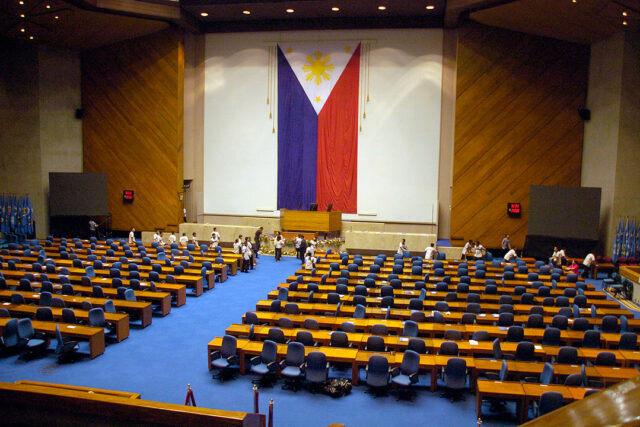
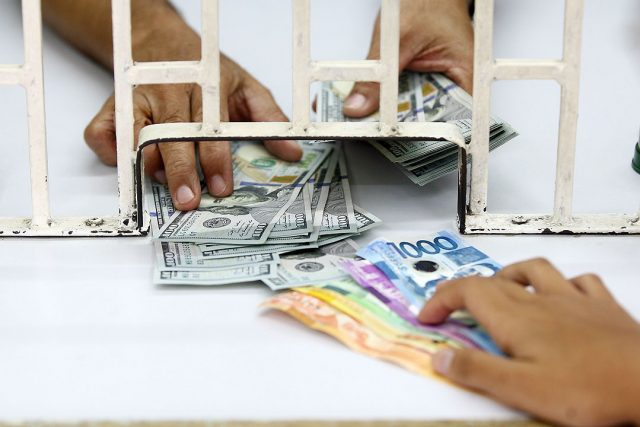
THE House of Representatives on Tuesday approved on second reading a bill that seeks to protect foreign remittances from excessive charges levied by financial institutions on overseas Filipino workers (OFW).

House Bill No. 10959 will give OFWs and their families a 50% discount on fees and charges imposed on remittances by banks and other financial intermediaries, while allowing them to claim the discount as a tax deduction.

“The bill also prohibits these financial intermediaries from raising their current remittance fees without prior consultation with the Department of Finance, Bangko Sentral ng Pilipinas and the Department of Migrant Workers,” Party-list Rep. Jude A. Acidre, who sponsored the measure in plenary, said.

The House also approved on second reading a measure updating the Philippine Tax Code on distilled alcohol, which was “still anchored to the old system of taxing alcohol as an ingredient,” according to House Bill No. 10328.

The bill proposes that all manufactured alcohol be excluded from excise taxes, which only apply to locally produced spirits. It will allow Philippine distillers to denature alcohol regardless of whether it is produced locally or imported.

“This measure seeks to rectify the taxation policy on the nature of alcohol, which limits denaturing to domestic alcohol produced by local distilleries,” Bulacan Rep. Ambrosio C. Cruz, Jr., who sponsored the bill, told lawmakers. — KCLB

SC drafts framework for AI integration

WIKIMEDIA/PATRICKROQUE01

THE Supreme Court (SC) on Monday said it will establish an artificial intelligence (AI) governance framework to integrate AI technologies into judicial operations as part of its efforts to modernize court processes and enhance judicial efficiency in an increasingly digital age.

Aligned with its Strategic Plan for Judicial Innovations 2022-2027 (SPJI), the AI Governance Framework will establish standards for integrating AI technology in court administration functions like human resources, finance, and security, and in areas such as legal research, document analysis, courtroom operations, and case management.

Senior Associate Justice Marvic M.V.F. Leonen maintained the Judiciary plays a key role in interpreting laws to ensure responsible and ethical AI use.

“We are prepared and continuously preparing for that eventuality,” he said in a statement.

The high court already started pilot testing of AI software, including voice-to-text transcriptions for court stenographers in the Sandiganbayan and select first and second-level courts.

Mr. Leonen told reporters last week the high court has not yet fully implemented any AI systems as the judiciary is still digitalizing procedures, mapping processes, and carefully evaluating which AI applications will be scalable for a broader rollout.

“While the Court is aware of advanced AI tools such as GPT, it has yet to adopt these technologies,” the SC said. “The Court has not yet fully implemented any AI systems.” 

Mr. Leonen noted the developments in the Judiciary’s eCourt System Version 2.0, which aims to digitalize adjudication processes, including eFiling and eService in courts, digital case management tools for trial courts, appellate and SC management applications, and digital appeals for civil cases.

The top court added that the incoming framework will have ethical guidelines for AI use.

“[It will focus] on core principles such as reliability, transparency, accountability, fairness and non-discrimination, privacy and data protection, human agency and oversight, security and safety, societal benefit, sustainability (resources and ecology), and continuous monitoring.”

In August, Mr. Leonen noted that the way to immerse the legal profession in AI use is to “test its limits while revising as we go along to keep up.”

The Philippines ranked 67th out of 83 countries in Tortoise Media’s The Global AI Index 2024. The pilot index ranked countries based on their capacity for AI, using 122 indicators, under three pillars: implementation, innovation, and investment. — Chloe Mari A. Hufana

Rehabilitative drug policy pushed

BW FILE PHOTO

A CONGRESSMAN on Monday pushed to urgently pass a measure institutionalizing a health- and human rights-based anti-drug policy to prevent the state from undertaking another deadly drug war, as seen at the time of former President Rodrigo R. Duterte.

In a statement, Party-list Rep. Percival V. Cendaña said passing the bill would help protect civilians from “state-sanctioned violence” to curb the drug trade.

“We need this ‘Kian Bill’ so that innocents won’t be victimized. We need to ban Tokhang-style operations, illegal police operations, unlawful raids, and other terror-inducing and cruel methods [in addressing the drug problem],” he said in mixed English and Filipino, referring to House Bill No. 11004.

Mr. Cendaña named the measure after Kian Loyd de los Santos, a teenager murdered during an anti-drug sting in 2017.

The Philippine government estimated that more than 6,000 people died under Mr. Duterte’s anti-drug campaign, according to a Facebook infographic published in June 2022 by RealNumbersPH, which is operated by the inter-agency Committee on Anti-Illegal Drugs. Human rights groups, however, claim that the death toll could be as high as 30,000.

Mr. Duterte’s anti-drug campaign was marred by alleged gross human rights abuses due to the spate of vigilante-style extrajudicial killings (EJKs) of drug users and peddlers, reportedly carried out by the police and unknown assailants. 

In 2021, the International Criminal Court (ICC) launched an investigation into the campaign after criticisms that Mr. Duterte’s government had systematically murdered drug suspects in police raids.

The Philippines withdrew from the ICC in 2018, which took effect a year later.

In the same statement, human rights lawyer Jose Manuel “Chel” I. Diokno urged the Justice department to investigate Senator Ronald “Bato” M. dela Rosa’s role as police chief during the first two years of the drug war.

“The DoJ (Department of Justice) must carefully scrutinize Senator Bato’s role in this dark chapter of our history,” he said. “As the chief architect of Tokhang, his issuance of CMC 16-2016, calling for the neutralization of drug suspects, reflects his complicity, further reinforced by Duterte’s public admission of sanctioning these killings.”

The office of Mr. Dela Rosa did not immediately respond to a Viber message seeking comment.

The DoJ created a task force last week to investigate alleged EJKs under the previous administration. — Kenneth Christiane L. Basilio

UN envoy cites key to safer road

NOEL B. PABALATE/PPA POOL

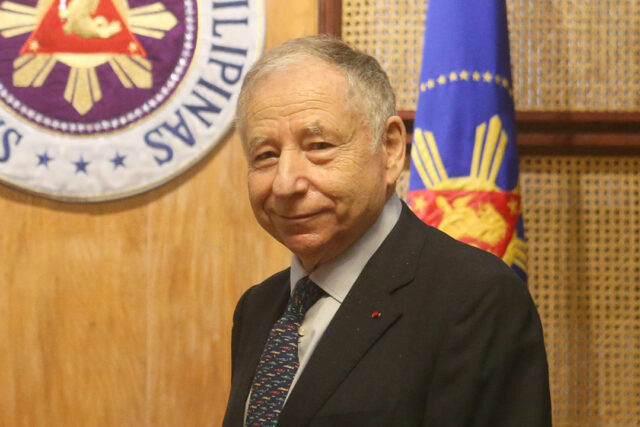
THE United Nations Secretary-General’s Special Envoy for Road Safety on Monday said education and law enforcement are crucial in lessening road accidents in the Philippines as accidents in the country remain deadly.

Jean Todt said the Philippines should prioritize educating people about road safety and strengthening law enforcement to lessen such accidents.

According to the World Health Organization, road traffic deaths in the country increased to 11,096 in 2021, compared to 8,746 in 2020.

“You need to educate young people… it is very important to improve the present and to build the future,” the former president of the Fédération Internationale de l’Automobile (FIA) said at a news briefing.

“[Motorbike accidents are] worse in countries like Thailand, Bangladesh, Nepal, and India, but that doesn’t mean that it’s good enough here,” he added. 

The former Formula 1 chief suggested that every new motorbike sold should come with two UN-standard helmets to help save lives as motorbikes often have a driver and a passenger.

“I’ve faced situations where I see four or five people on one motorbike because of poor public transportation and you have the four or five people that have a mask and no helmet,” he said.

“The private sector, car manufacturers, motorbike manufacturers, they can help by applying better vehicle regulation standards [and] by supplying helmets when you sell a motorbike helmet with the proper UN standard,” he told BusinessWorld on the sidelines of the news briefing.

Transportation Secretary Jaime J. Bautista said the government plans to organize a task force with other cabinet secretaries to implement and monitor the Road Safety Action Plan 2023 to 2028, launched in May 2023.

“Law enforcement is the harder part. That’s more of a problem,” Mr. Bautista told reporters on the sidelines of the briefing in mixed English and Filipino.

“We know what to do, but sometimes we are not able to implement this, so perhaps we really need to constantly remind our enforcers to implement the rules and regulations, especially in traffic,” he added.

He noted that while helmets are required when riding a motorbike, many areas in the provinces opt not to use them as law enforcement is not strict in apprehending lawbreakers. — Chloe Mari A. Hufana

Stronger fintech regulation urged

GCASH X (FORMERLY TWITTER) OFFICIAL ACCOUNT

LAWMAKERS on Monday filed a resolution urging the House of Representatives to investigate electronic wallet giant GCash over reports of unauthorized transactions that led to missing funds for some of its users.

Filed by Party-list Reps. Arlene D. Brosas, France L. Castro and Raoul Danniel A. Manuel, the resolution asked the House banks and financial intermediaries, and information and communications technology committees to conduct an inquiry in pursuit of stronger regulations governing digital payment platforms.

GCash did not immediately respond to an e-mail and Viber message seeking comment.

Over the weekend, GCash explained the issue was due to a “system reconciliation process,” noting it has since been resolved by performing “necessary wallet adjustments” to affected users.

“While GCash has acknowledged these incidents as ‘errors in an ongoing system reconciliation process,’ these unauthorized transactions raise serious concerns about the platform’s security measures and consumer protection protocols,” part of House Resolution No. 2068 read.

GCash is registered with the Philippine central bank as a non-bank financial institution. The electronic wallet has about 94-million users and is considered as the largest financial technology (fintech) company in the Philippines, with a valuation of about $5 billion.

In a separate statement, Ms. Castro said there’s a need to formulate “stronger regulatory frameworks” for digital payment services, citing the need to protect the hard-earned money of its users. “These platforms handle people’s hard-earned money, and they must be held to the highest standards of accountability and transparency.” — Kenneth Christiane L. Basilio

4 OVP officials cited in contempt

A House of Representatives committee on Monday cited in contempt four officials of the Office of the Vice President (OVP) for snubbing an inquiry into Vice-President Sara Z. Duterte-Carpio’s secret fund spending since 2022.

The House good government and public accountability panel on Monday ordered their arrest and detention at the Batasang Pambansa Complex in Quezon City after they had repeatedly ignored the committee’s previous invitations to attend.

The officials were believed to have overseen the disbursements of confidential and intelligence funds (CIF) by Ms. Carpio under the OVP’s budget in 2022 and the Education department in 2023, when she sat as its secretary.

“I move that we cite in contempt these individuals for their continuous defiance to attend the committee hearings,” Deputy Speaker and Quezon Rep. David C. Suarez said during the hearing.

“Given that the committee has already exercised patience and understanding to these resource persons… it’s their job to attend so they could explain how they spent the funds being discussed here,” he added in mixed English and Filipino. — Kenneth Christiane L. Basilio

Over 50% back POGO ban — survey

PHILIPPINE STAR/RYAN BALDEMOR

A RECENT survey revealed that over half of Filipinos support a total ban on Internet Gaming Licensees (IGLs), formerly known as Philippine Offshore Gaming Operators (POGOs), citing concerns over crime associated with these operations.

In a September survey, WR Numero found that 6 out of 10 Filipinos support the total ban imposed by President Ferdinand R. Marcos, Jr. last July. While 4 out of 10 said they support the closure of select IGLs.

Across regions, the strongest support for banning IGLs comes from respondents from the rest of Luzon (65%), followed by Metro Manila (64%), the Visayas (56%), and Mindanao (51%).

The findings form part of WR Numero’s Philippine Public Opinion Monitor which conducted a nationwide face-to-face survey among 1,765 Filipino adults between Sept. 5 and Sept. 23.

Most respondents (39%) credited the administration’s policy shift to Senator Ana Theresia N. Hontiveros-Baraquel who led investigations into IGL operators in the upper chamber.

Mr. Marcos was credited by 33% of respondents, followed by Senator Sherwin T. Gatchalian (9%).

About 38% of respondents expressed concern over the potential economic impacts of the total ban, while 37% disagreed and 26% remained uncertain.

Concern was most evident in Visayas (47%) and Metro Manila (43%), with lower concern levels in Mindanao (35%) and Luzon outside Metro Manila (33%).

The Department of Finance (DoF) estimated that the reputational risk from IGL cost the government P55.36 billion in investments, while the Philippine Amusement and Gaming Corporation estimated the foregone revenues if POGOs are shut down to be at P20 billion a year.

Business group Philippine Chamber of Commerce and Industry earlier warned that the sudden closure of IGLs in the country could cause “massive” job losses and adversely impact the property and financial sectors.

Various crimes have been linked with illegal IGL operations, including human trafficking and abuse, scamming, and tax evasion. — Chloe Mari A. Hufana

NEDA highlights need for policies crucial to middle-class society goals 

PHILIPPINE STAR/ MIGUEL ANTONIO DE GUZMAN

THE National Economic and Development Authority (NEDA) sees policies that support the transition of Filipinos into the middle class and protection from economic shocks as crucial.

“Our first and important step is to address the poverty in the country,” NEDA Secretary Arsenio M. Balisacan said in a statement on Monday.

After the lift from poverty, the government should focus “on mitigating their vulnerabilities to risks by enhancing the resiliency of our jobs and other income opportunities to prevent them from falling back into poverty,” Mr. Balisacan said.

“To sustain a middle-class living standard, Filipinos need adequate income and substantial savings,” NEDA Undersecretary for Policy and Planning Group Rosemarie G. Edillon said.

Additionally, she added that the government must keep commodity prices low and stable, spur employment opportunities, and enhance the employability of Filipinos, build resilience by strengthening social protection.

“The Philippines needs to create capabilities by establishing strong human capital and equipping workers with the skills of the future, integrating approaches to fix foundational challenges, and preparing for technological disruptions,” World Bank Lead Economist Gonzalo Varela said. – Aubrey Rose A. Inosante

Rice Tariffication law amendment eyed anew

PHILIPPINE STAR/EDD GUMBAN

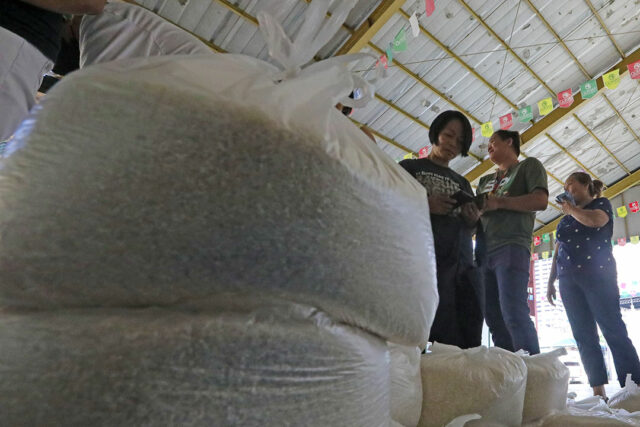
A CONGRESSMAN on Monday proposed amending a 2019 law to allow the government to sell imported rice through Kadiwa outlets nationwide, enabling it to compete with private rice importers.

In his privilege speech to the House of Representatives plenary, Party-list Rep. Erwin T. Tulfo said the Rice Tariffication Act needed to be amended to reduce the retail price of the staple food.

Imported rice remains expensive despite an executive order slashing tariffs on rice imports to 15% from 35%, he said, noting that prices continue to hover at P50 to P60 per kilo despite its purpose to make “rice affordable at P42 to P45 per kilo.”

“The amendment I propose would allow government importation of rice to compete with the existing private imports, like the National Food Authority before, only this time the government imported rice will be distributed through licensed Kadiwa outlets nationwide,” Mr. Tulfo said, referring to a marketing initiative by the Agriculture department allowing direct farm-to-consumer access.

“By empowering the Department of Agriculture (DA) to import rice, we can create a balanced market where prices reflect the needs of consumers and limit undue price increases,” he said.

“It will provide the government with a stronger hand to stabilize prices, competing with the private sector while ensuring that ordinary citizens, the ones in the areas of our countries, are not left vulnerable to market fluctuations, hoarding and profiteering by some,” he added.

The Philippine Congress on Nov. 7 has transmitted to President Ferdinand R. Marcos, Jr. a measure seeking to amend the Rice Tariffication Act, which the House fast-tracked earlier this year amid pressure to reduce the prices of the staple food. — Kenneth Christiane L. Basilio

At least 700 families affected by Toraji

BAGUIO CITY — At least 708 families or 2,177 individuals have been affected by Typhoon Toraji (Nika), according to the Department of Social Welfare and Development (DSWD) in region 2.

In particular, Toraji hit 58 barangays from Cagayan, Isabela, Nueva Vizcaya and Quirino provinces.

Initial reports by DSWD-Region II showed that at least 635 families (1,949 individuals) took temporary refuge in 58 evacuation centers in the Cagayan Valley region. Of this, 17 families (37 persons) are in 2 evacuation centers in Cagayan province; 478 families (1,492 persons) in 37 evacuation centers in Isabela province; 25 families (79 persons) in 4 evacuation centers in Nueva Vizcaya; and 115 families (341 persons) in 15 evacuation centers in Quirino.

According also to the DSWD’s Disaster Response Management reports, at least 29 families (88 persons) sought temporary shelter with their relatives and friends in the Cagayan Valley region as of Monday morning.

Moreover, the department reported at least 8,995 additional family food packs had already reached Batanes on Sunday via the BRP Gabriela Silang of the Philippine Coast Guard and C-130 aircraft of the Philippine Air Force.

These were for the victims of Typhoon Yinxing (Marce) that disastrously hit the northernmost province last week. The supplies also form part of the preparations on possible devastation response to Typhoon Nika until Friday.

DSWD-Disaster Response Management Group Assistant Secretary Irene B. Dumlao further added that 10,000 family food packs are now being loaded by DSWD-Region III in satellite warehouses in Baler, Aurora as additional prepositioned goods that may be needed.

These are on top of the 1,000 family food packs being prepared to be sent to Dilasag, Aurora meant for prepositioning efforts of the department, she explained. — Artemio A. Dumlao