Home Blog Page 1958

BSP’s end-August income quadruples

BW FILE PHOTO

THE PHILIPPINE central bank’s net income rose 3.6 times to P105.6 billion in January to August from a year earlier due to higher interest earnings, according to data posted on its website.

Interest income, which rose by 24.9% to P159.3 billion, accounted for the bulk of revenue that increased by 57.6% to P220.2 billion.

Miscellaneous income, which includes fees, penalties and other operating income, rose  fivefold to P60.9 billion.

Meanwhile, the Bangko Sentral ng Pilipinas’ (BSP) expenses declined by 10.8% to P143.2 billion in the eight months to August from a year earlier. Other expenses, which include net trading losses, fell by 38.8% to P31.1 billion.

On the other hand, interest expenses went up by 2.2% to P112.1 billion.

This brought the BSP’s net income before foreign exchange (FX) gains, tax and capital reserves to P77 billion, a turnaround from the P20.7-billion loss a year ago.

The central bank also posted a P28.6-billion net FX gain from its foreign currency-denominated transactions, though this was down by 34.6% year on year.

Separate BSP data showed its total assets stood at P7.77 trillion as of August, 4.6% higher than a year earlier. International reserves made up the bulk of its assets at P6.02 trillion, up by 7.6%.

Meanwhile, the central bank’s liabilities increased by 3.2% to P7.52 trillion.

BSP data showed currency in circulation stood at P2.31 trillion as of June, while deposits with the central bank were at P2.9 trillion.

The central bank’s net worth rose to P246.2 billion from P137.5 billion from a year ago. — Luisa Maria Jacinta C. Jocson

Inchcape PHL unveils tech-driven parts hub

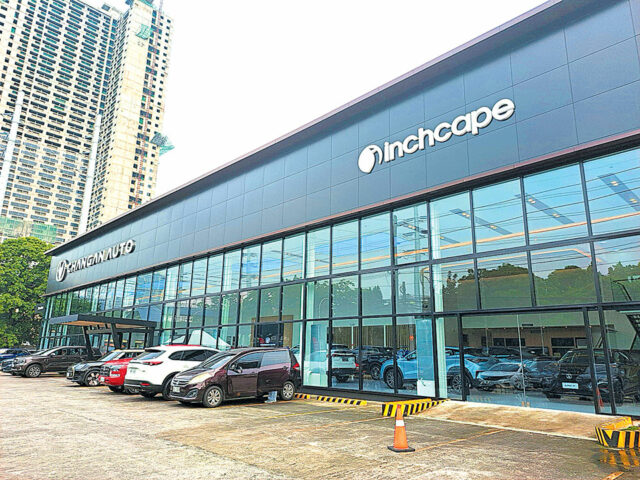
The Inchcape Philippines Distribution Complex also houses the biggest Changan Auto dealership in the country. — PHOTO BY HAZEL NICOLE CARREON

The distributor giant ups its after-sales game in the country

By Hazel Nicole Carreon

MOTIVATED BY its goal to provide superior after-sales service to customers across the country, Inchcape Philippines recently inaugurated its new state-of-the-art parts distribution center.

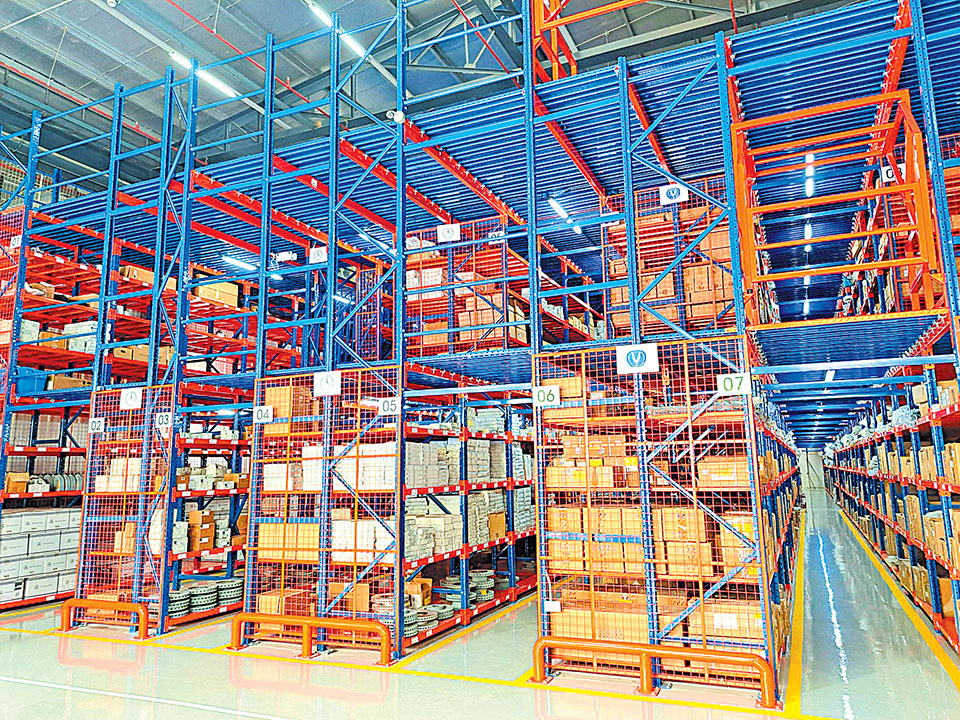
Located at the Inchcape Philippines Distribution Complex on C5 in Pasig, the new facility boasts a spacious warehouse designed to accommodate a wide range of automotive parts for the company’s partner brands which include Mercedes-Benz, Chrysler, Dodge, Jeep, Ram, Jaguar, Land Rover, and Changan.

By centralizing its parts distribution operations, Inchcape aims to significantly reduce lead times for parts delivery, ensuring a seamless and timely experience for customers. With the new parts hub, the company vows that 95% of vehicle parts will be readily available upon customer inquiry.

The facility uses a warehouse management system that enhances overall operations by optimizing layout, providing real-time inventory data, and tracking product movement.

“If you look at the warehouse, it is so big; we have more than 20,000 items inside. It is impossible to manually track which is moving fast, which is moving slow. So that’s why the warehouse management system that we rolled out is critical,” Inchcape Philippines Country Head Alex Yap told “Velocity” in an exclusive interview.

The system is one of the Enterprise Resourcing Planning platform solutions that the company developed to deliver intelligent automation and boost efficiency across the business.

Inchcape has always acknowledged the significance of digitalization in the automotive industry. “Today’s vehicle buyers want to engage with brands across various channels. They want increased personalization, digital tools for self-servicing, and vehicles made with sustainability in mind,” the company stated in a release.

The automotive distributor has established so-called digital delivery centers (DDC) in the Philippines and Colombia, employing over 1,400 digital specialists who are in charge of developing the world-class digital solutions that Inchcape uses in its operations. “Our continued investments in digital solutions symbolize our focus on being the best distribution partner for OEM brands. The range of proprietary digital solutions deployed at pace by our DDCs in partnership with our businesses showcase our vision, scale, and ability to drive operational excellence that translates into better experiences for consumers in this rapidly changing mobility landscape,” joined Inchcape Managing Director for South Asia and Pacific Alex Hammett.

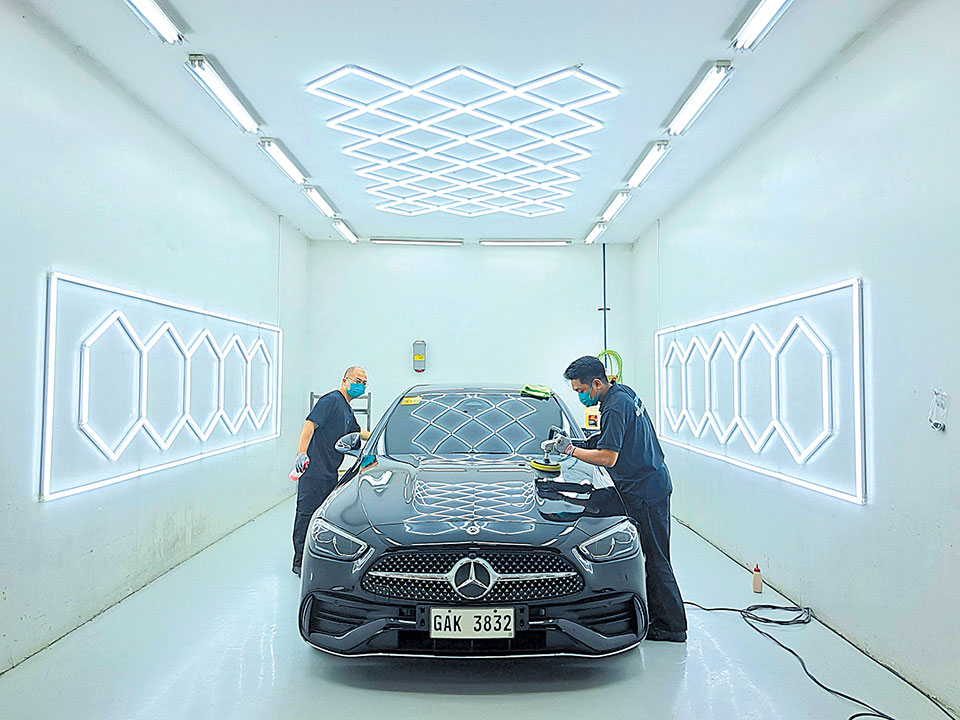
Aside from the newly built parts distribution center, the 1.2-hectare Inchcape Philippines Distribution Complex also houses Changan and Mazda showrooms, a service area, a multi-brand body and paint workshop, and a corporate office.

The company also built a training academy inside the complex, providing a venue for its technicians to further hone their skills and familiarize themselves with the technologies used in the facility. “We want to make sure that we contribute to the Philippine automotive industry using technology and, of course, by upskilling our people,” Mr. Yap said. “Our people need to understand how to use the technology to make the process more effective and efficient.”

Inchcape made its entry into the Philippine automotive industry in 2023 through a joint venture with luxury vehicle distributor CATS Group of Companies. This partnership aims to elevate the automotive landscape by combining Inchcape’s global expertise with CATS’ strong local market knowledge.

A messier Middle East awaits Trump’s second coming

RAWPIXEL.COM

IT DIDN’T TAKE LONG. Within days of Donald Trump’s election victory, Israel’s leaders up to Prime Minister Benjamin Netanyahu became more open about their intentions for the Palestinian territories: permanent occupation, combined with the annexation of illegally settled parts of the West Bank. Or in the tweeted words of Israel’s ultra-right National Security Minister Itamar Ben Gvir: “Yesssss.”

It also isn’t hard to understand the jubilation. For many Israelis, not just Ben Gvir, memories of Trump’s first term are fond ones. He collapsed the nuclear deal with Iran that many profoundly distrusted. He also recognized both Jerusalem as Israel’s capital and the occupied Golan Heights as part of its territory.

But more important to hopes in Israel’s government than even these happy recollections is the fact that every appointment the soon-to-be second-term US president has made to his foreign policy team so far is either an Iran hawk, a fierce supporter of Israel (or indeed a greater Israel), or both.

Even so, it would be foolish to say we know exactly what Trump will do over the next four years. Ultimately, he is the decider-in-chief. Events, together with his perception of interests — his own followed by those of the US — will determine his choices. And it’s unlikely those decisions will be simple.

For one thing, Trump is likely to find it much more difficult this time around to keep his friends in both Israel and the Gulf States happy. For another, his goals of ending wars and cutting deals may not always align with Israel’s. That’s less a problem with Lebanon, where the question on an Israeli withdrawal was always “when,” not “if.” Assuming Wednesday’s New York Times report is correct that Israel is already rushing through a ceasefire deal as a pre-inauguration gift to Trump, that will be soon.

Yet the world has changed substantially since 2020 — before the Russian invasion of Ukraine, before Hamas’ Oct. 7, 2023, attack on Israel, and before the Houthis demonstrated their power to disrupt global shipping from a perch on the Yemeni coast. Iran is also no longer internationally isolated. Today it has deep military ties with Russia, which in turn works in a growing alliance with North Korea and China. Moscow has reportedly sent air defenses to the Houthis. Foreign policy was always a complicated game of chess. But with the more major parties involved, it will have to be played against more opponents, across multiple boards.

That’s especially true in the Middle East, where popular fury over the plight of Palestinians in Gaza has created genuine constraints on Arab leaders. At the same time, Israel’s military success in Gaza, Lebanon, and Iran have altered threat perceptions. Iran and its so-called axis of resistance have been materially weakened; the Israel Defense Forces are rampant.

So Arab and Turkish leaders have clarified their public positions since the US election, too. On Monday, Saudi Arabia’s Crown Prince Mohammed bin Salman, also known as MBS, called Israel’s military operations in Gaza “collective genocide,” a term he previously avoided. He also warned against any further attacks on Iran.

This is the same Islamic Republic of Iran that, in 2017, MBS compared to Hitler’s Germany. At the time, Saudi Arabia was engaged in a brutal proxy war against the Iran-backed Houthi militia in Yemen. Two years later, Iranian drones proved their ability to destroy Saudi oil assets with ease. But MBS has since wound down the kingdom’s military intervention in Yemen and restored diplomatic relations with Tehran.

On Wednesday, Turkey’s President Recep Tayyip Erdogan said his country had cut all relations with Israel. Erdogan never misses a chance to grandstand on Muslim resentment toward the Jewish state, yet he had until now avoided breaking ties. These are all clear signals from leaders friendly to Trump that they’re unwilling to be part of maximalist Israeli policies.

Of course, what politicians say on the public stage is often a poor guide to their actual plans. Arab leaders may have condemned Israel over Gaza, for example, but they were happy to see Hamas and Hezbollah damaged and, notably, haven’t terminated the Abraham Accords normalizing relations with Israel, signed during Trump’s previous term. They even quietly helped Israel defend itself against Iranian missile attacks.

“There is a whole element of theater to this,” said Fleur Hassan-Nahoum, Jerusalem’s deputy mayor and a special envoy for innovation in the Israeli foreign ministry, reminding me of the origins of the accords.

It was 2019. Netanyahu had — note the current echo — announced plans to annex the Jordan Valley, an area accounting for about 22% of the West Bank. He said he had US backing for the move, but faced with an international outcry the Trump administration persuaded Israel to give up on the plan. In exchange, Netanyahu got an agreement from the United Arab Emirates (UAE) to formally normalize relations with his country. The UAE was later joined by Bahrain, Sudan, and Morocco. Saudi Arabia had been set to sign a still more consequential deal until Hamas iced that possibility with its Oct. 7 attack, and the inevitable Israeli response that followed.

Saudi Arabia will ultimately play ball with Trump on Israel, says Hassan-Nahoum, because the kingdom “is interested in one thing: a defense pact with the US so they are protected from Iran.” I’m not so sure. That was true in 2020, but I don’t think it’s as binary a choice anymore. MBS’ guiding focus is now the stability he needs for his Vision 2030 plan to diversify the Saudi economy and create jobs. Iran, meanwhile, has become less scary to the kingdom, though that could of course change if it breaks out to build nuclear weapons.

A major attack on Iran’s oil infrastructure or nuclear program — and the retaliation against Saudi assets and tanker shipping lanes it would likely prompt — would put MBS’ new top priority at risk. And though he may not care much about the Palestinians, his father King Salman bin Abdulaziz does. So do most other Saudis. That could limit cooperation with Israel.

Trump may again be able to square all these circles with the kind of transactional deal-making that proved so successful in the case of the Abraham Accords. But if so, Netanyahu again won’t be able to have it all: annexation and occupation for the Palestinian territories, support for a decisive attack on Iran, and integration with the Arab world.

Sacrificing the last of these for the former would be a poor long-term choice for Israel, as well as a human tragedy for ordinary Palestinians. It’s worth remembering that Oct. 7 revealed a serious flaw in the Abraham Accords: They pretended the Palestinian question didn’t exist.

BLOOMBERG OPINION

Russian farmers rush to sell grain to profit from high interest rates

FREEPIK

MOSCOW — Russian farmers appear to be changing their habit of withholding excess grain for better times amid low global prices, as high interest rates make it attractive to cash in and deposit money in banks at home, analysts said.

The Russian central bank hiked its key interest rate to 21% last month, the highest level in more than 20 years, as it fights inflation in the overheated economy. Many banks are now offering short-term deposits with interest rates of up to 25%.

“It is easier to sell grain right away, put it in a bank at over 20%, and forget about it,” Dmitry Rylko, head of the IKAR agriculture consultancy, said.

“No one is holding anything back here, quite the opposite. This year, we have no incentives to hold on to it, which is why we had such a large export,” he added.

In analysts’ view, the possibility of further hikes in wheat export duty in recent weeks, on top of recent sharp rises, also outweighed the benefits of holding back stocks.

While in many regions of the world, farmers are reluctant to sell grain at current prices, Russian sales are proceeding at a near-record pace, with domestic stocks falling and firms turning to state auctions to buy more grain for exports.

According to Sovecon consultancy, Russian wheat stocks were down 14% to 38.7 million metric tons as of Oct. 1, compared with last year. The stocks were up 21% year on year in the second quarter.

“The wheat reserves have sharply decreased compared to the previous quarter due to low production levels of Russian wheat and active exports,” the consultancy said.

Russia’s seaborne grain exports rose 11% year on year in October to 6.3 million metric tons, and so far this year are up 2.1% on the same period of 2023, according to shipping data obtained by Reuters.

Analysts estimate that Russia has already shipped about 45% of its grain export potential for the current season, which is estimated officially at 55-57 million tons.

The agriculture ministry forecasts this year’s grain harvest at 130 million tons, following months of bad weather. This figure represents a 12% decrease from 148 million in 2023 and an 18% reduction from a record 158 million tons in 2022.

Earlier this year, when early spring frosts and then drought inflicted heavy losses on the Russian harvest, some farmers considered holding back sales until global prices rebound.

“Poor harvest years in agriculture occur periodically, so to get through them, a rise in prices is needed. We are waiting,” Konstantin Yurov, a farmer from the Krasnodar region, said in August. — Reuters

Converge ICT shares dip despite strong earnings

CONVERGE ICT SOLUTIONS INC./YOUTUBE

SHARES in Converge ICT Solutions, Inc. fell last week despite the company’s positive earnings results.

Data from the Philippine Stock Exchange (PSE) showed the listed fiber internet provider ranking 18th in value turnover, with P323.58 million worth of 20.02 million shares exchanging hands from Nov. 11 to 15.

Converge’s shares closed at P15.88 apiece on Friday, dipping by 0.7% from its P16 close a week earlier.

Year to date, the stock jumped by 89.5%.

Stephen Gabriel Y. Oliveros, research associate at China Bank Securities Corp., attributed the stock’s volatility to a soft general market sentiment, as investors continue to assess the potential impact of recent offshore geopolitical developments on the domestic economy’s outlook.

However, Mr. Oliveros noted that strong price movement last Wednesday — which bucked the PSEi’s downtick — was likely reflective of investor optimism over the company’s favorable earnings result, fueled by sustained growth in subscriber numbers and improving margins.

For the third quarter, the listed fiber internet provider saw its attributable net income climb by 40.1% to P2.92 billion from P2.08 billion in the same period in 2023. Meanwhile, consolidated revenues grew by 17.2%, reaching P10.42 billion from P8.89 billion in the same period last year.

For the January to September period, its attributable net income reached P8.21 billion from P6.37 billion previously, while consolidated revenues for the period increased by 14.1% to P29.94 billion from P26.25 billion.

In a press release, Converge said that these results were driven by strong performance across its residential, enterprise, and wholesale segments.

Converge gained over 330,000 net additional residential subscribers in the first nine months, including more than 108,000 in the third quarter, it said.

For the period, FiberX saw its highest gross additions in the past 10 quarters, maintaining a churn rate of around 2%.

Additionally, the Surf2Sawa plan also recorded its highest quarterly gross and net additions, reflecting continuous demand from the underserved market.

Converge ended the period with a total of 2.46 million subscribers, achieving a 13.2% growth in residential revenues to P25.4 billion.

Recently, Converge announced a collaboration with streaming giant Netflix to offer its latest residential subscription plan, the Converge Netflix Bundles. Additionally, for the nine months ending in September, total cash capital expenditure reached P7.5 billion.

Jeff Radley C. See, head trader at Mercantile Securities Corp., said that the listed stock rallied strongly due to its strong net income results, which exceeded market expectations.

“In the telco sector, Converge is the only stock that outperformed, which is up 90% year to date,” Mr. See said in a Viber message.

For Mr. Oliveros, given these earnings results, efforts by the company to provide targeted offerings bode well for profitability prospects. This would allow the internet provider to cast a wider net for its captive market, he added.

“Having a more diversified customer profile would also provide Converge better insights on how to add more value to its offerings down the line,” he said in an e-mail.

For the year, he sees its earnings before interest, taxes, depreciation, and amortization reaching P23.5 billion.

“We think Converge prospects remain upbeat over the near term considering nascent growth opportunities in the prepaid market space, possible earnings windfall from its Singapore expansion, and revenue accretion from its continued efforts to scale its enterprise business,” Mr. Oliveros said.

He pegged support at P15.30 while resistance at P17.50.

For Mr. See, he sees the stock’s resistance at P17.40, while the support level is at P15.

“The stock will move sideways between P15 and P17.40,” he added. — Abigail Marie P. Yraola

Luxury shoemaker Manolo Blahnik enters China market after 22-year legal tussle

MANOLOBLAHNIK.COM

SHANGHAI — Manolo Blahnik, the high-end shoe brand with many celebrity fans and often worn in the TV hit Sex and the City, has opened its first store in mainland China after a 22-year battle over the legal right to use its name.

In addition to the new boutique in Shanghai’s Plaza 66 luxury mall, the company expects to open a store a year in China for the next five years, with Beijing and Chengdu the next likely locations.

The shoemaker, named after its Spanish founder, had been limited in its ability to trade under its name in China after a local businessman filed trademarks related to “Manolo Blahnik” in 1999.

China is a “first to file” jurisdiction which doesn’t require companies to prove prior use to claim a trademark, but a ruling two years ago from the Supreme People’s Court of China found in favor of the company.

“We were very, very grateful to reclaim our trademark. Before that point, we were just focused on getting it back. (Since then) we very much turned our head towards Asia,” Chief Executive Officer Kristina Blahnik, who is the founder’s niece, said in an interview.

The brand also opened two new stores in Hong Kong in October.

Its long-awaited mainland China debut comes as high-end brands such as LVMH have seen sales slide in the world’s second-largest luxury market, hurt by tepid economic growth and weak consumer confidence. But Ms. Blahnik said she was unconcerned as the company is just getting started in China.

China’s luxury footwear market is valued at about $5 billion this year and is projected to grow 7.6% a year through 2029, according to research firm Statista. Manolo Blahnik will compete with foreign brands such as Jimmy Choo and Christian Louboutin, which have the advantage of having been in China for more than a decade. — Reuters

Gov’t debt yields rise amid US policy risks

YIELDS on government securities rose across all tenors last week as Philippine markets worried about US fiscal policies under President-elect Donald J. Trump.

Yields, which move opposite prices, increased by an average of 9.37 basis points (bps) week on week, according to PHP Bloomberg Valuation Service Reference Rates data posted on the Philippine Dealing System website as of Nov. 15.

Ninety-one, 182- and 364-day Treasury bill (T-bill) rates all increased week on week, as well as two-, three-, four, five- and seven-year Treasury bonds (T-bonds). Ten, 20- and 25-year debt likewise increased.

Volume fell to P16.13 billion on Friday from P45.8 billion a week earlier.

“This week’s trading was primarily influenced by how Trump’s planned policies will affect the rest of the world,” Noel S. Reyes, chief investment officer for Trust and Asset Management Group at Security Bank Corp., said in a Viber message.

During the campaign, Mr. Trump vowed to impose a 60% tariff on Chinese imports and 20% for the rest of the world.

The US was the Philippines’ top export market in September, with shipments worth $1.08 billion, or 17.3% of the Southeast Asian nation’s exports.

“Regarded as expansionary and purely America-focused, the immediate effect of his tax cuts, tariff implementation, reshoring of businesses back home and deportation of illegal immigrants are seen to be inflationary, slowing down the Fed’s rate-cutting bias, hence the statement of Powell,” Mr. Reyes said.

The selling momentum was apparent for most of the week given the recent strength of the US dollar and so-called Trump trades regaining lost ground, Alessandra P. Araullo, chief investment officer at ATRAM Trust Corp.

Hedge funds piled into bets on financial stocks, Tesla shares and a prison operator in the third quarter ahead of a rally that followed Mr. Trump’s victory, Reuters reported, citing filings. Many of the bets have become known as Trump trades, corners of the market that at times were swayed by the Republican candidate’s fortunes before the election and notched gains after his victory.

On Tuesday, the Philippine peso sank to a four-month low against the dollar, losing 23.6 centavos to P58.831 amid market concerns that Mr. Trump’s proposed tariff increases could trigger inflationary pressures in the US.

Bond yields and the dollar have surged on growth prospects and concerns that Mr. Trump’s policies might rekindle inflation after a long battle against price pressures after the pandemic. The dollar index, which tracks the US currency against peers including the euro and Japan’s yen, was 0.12% lower on Friday to 106.75. The greenback had risen for five straight sessions and was poised for its biggest weekly percentage gain since early October, according to Reuters.

“Players continued to be averse to the local bond market as uncertainties mount on President-elect Trump’s economic policies,” Ms. Araullo said.

“The selling pressure for the week has caused yields to increase by 5-20 bps. With the yields in the five-year, 10-year and 20-year (bonds) increasing by 15 bps, 17 bps and 5 bps respectively.”

Mr. Reyes said yields have moved up by as much as 80 bps for 10-year bonds, while yields on its local counterpart have climbed back above 6%. “Support at 6% succumbed to externally driven pressure as execution of Trump’s planned policies are being awaited and still provides uncertainty.”

Ms. Araullo said local markets would likely monitor US Treasury movements and await specific details of Mr. Trump’s economic agenda in the coming week. “Given the lack of any compelling catalyst, we expect that yields to trade sideways, with an upward bias for next week.” — Pierce Oel A. Montalvo

Global effort to combat antimicrobial resistance

LN-UNSPLASH

Antimicrobial resistance (AMR) occurs when bacteria, viruses, fungi, and parasites no longer respond to antimicrobial agents. The misuse and overuse of antimicrobials in humans, animals, and plants are the main drivers in the development of drug-resistant pathogens, according to the World Health Organization (WHO). As a result of drug resistance, antibiotics and other antimicrobial agents become ineffective and infections become difficult or impossible to treat, increasing the risk of disease spread, severe illness and death.

AMR is one of the top global public health and development threats identified by the WHO. The agency estimated that bacterial AMR was directly responsible for 1.27 million global deaths in 2019 and contributed to 4.95 million deaths. AMR affects countries in all regions and at all income levels. Its drivers and consequences are exacerbated by poverty and inequality, and low- and middle-income countries (LMICs) including the Philippines are most affected.

AMR puts many of the gains of modern medicine at risk. It makes infections harder to treat and makes other medical procedures and treatments —such as surgery, caesarean sections, and cancer chemotherapy — much riskier, warns the WHO. In addition to death and disability, AMR has significant economic costs. The World Bank estimates that AMR could result in $1 trillion additional healthcare costs by 2050, and $1 trillion to $3.4 trillion gross domestic product (GDP) losses per year by 2030.

AMR is a pressing global health and socioeconomic crisis, with significant impacts on human and animal health, food production, and the environment. Drug-resistant-pathogens pose a threat to everyone, everywhere. Yet, much more can be done to raise public and stakeholder awareness, stressed the WHO.

World AMR Awareness Week (WAAW) is celebrated from Nov. 18 to 24 every year to raise awareness and understanding of AMR and promote best practices. This year’s WAAW theme is “Educate. Advocate. Act now.” — an urgent call to action for the global community to educate stakeholders on AMR, advocate for bold commitments, and take concrete actions in response to AMR.

The research-based pharmaceutical industry was among the stakeholders that heard the call to action at the first Global High-Level Ministerial Conference on AMR held in 2016. In 2017 the industry established the AMR Industry Alliance (AMRIA), one of the largest coalitions to provide sustainable solutions against AMR. The AMRIA is composed of over 100 biopharmaceutical, biotechnology, diagnostic, generic companies, and industry associations established to address AMR-related issues. It is a framework that unites efforts to reduce the development of AMR, invest in R&D, and improve access to the AMR-related technologies. Ten member companies of the Pharmaceutical and Healthcare Association of the Philippines (PHAP) are part of the AMRIA.

In 2020, more than 20 leading pharmaceutical companies stepped up and created the AMR Action Fund to invest nearly $1 billion in antibiotic R&D and support the pipeline for the next few years. Currently the world’s largest public-private partnership supporting the development of new antibiotics, the AMR Action Fund invests in companies that are developing urgently needed therapeutics for priority pathogens and advocate for market reforms to change how society values these lifesaving drugs. It aims to help launch two to four new antimicrobials within the next decade and create a sustainable ecosystem of investment and innovation to take on one of the biggest global health challenges of our generation.

In September 2024 at the fourth High-Level Meeting on AMR, the pharmaceutical industry bared current challenges and reiterated its firm commitment to tackling AMR. The industry’s arsenal of treatments to address resistant infections remains insufficient. Recent analysis published by the International Federation of Pharmaceutical Manufacturers and Associations (IFPMA) suggests that without additional investment, the decline in the antibiotic pipeline is expected to continue, and contain just 26 treatments — of which only six are in late stages of development — in 10 years’ time.

This is compounded by an “AMR brain drain,” where researchers are leaving the field, with an estimated 50% reduction in the workforce since the mid-1990s. This threatens every part of the drug development process, from basic discovery research through clinical testing all the way to regulatory approval and life-cycle management.

What could work to address this is, first, the introduction of effective pull incentives to bring about renewed investment and innovation. Analysis shows that, should this happen, the dwindling pipeline could be boosted to consist of 72 treatments in different stages of clinical research, and 19 new antibiotics approved in 10 years’ time.

Second, alongside these measures, ensuring responsible access to new and existing antibiotics is key. This includes solutions for lower-income settings such as appropriate procurement models and considering the potential of holistic partnership agreements between developers, global health agencies, and appropriate commercial partners.

At the next high-level meeting in five years’ time, the test will be to determine whether we have made meaningful progress on the ambitions set out by global stakeholders. Stronger commitment, advocacy and accountability are needed at all levels, and the time to act is now.


Teodoro B. Padilla is the executive director of Pharmaceutical and Healthcare Association of the Philippines, which represents the biopharmaceutical medicines and vaccines industry in the country. Its members are in the forefront of research and development efforts for COVID-19 and other diseases that affect Filipinos.

Q&A: ‘I hope Honda gets more’

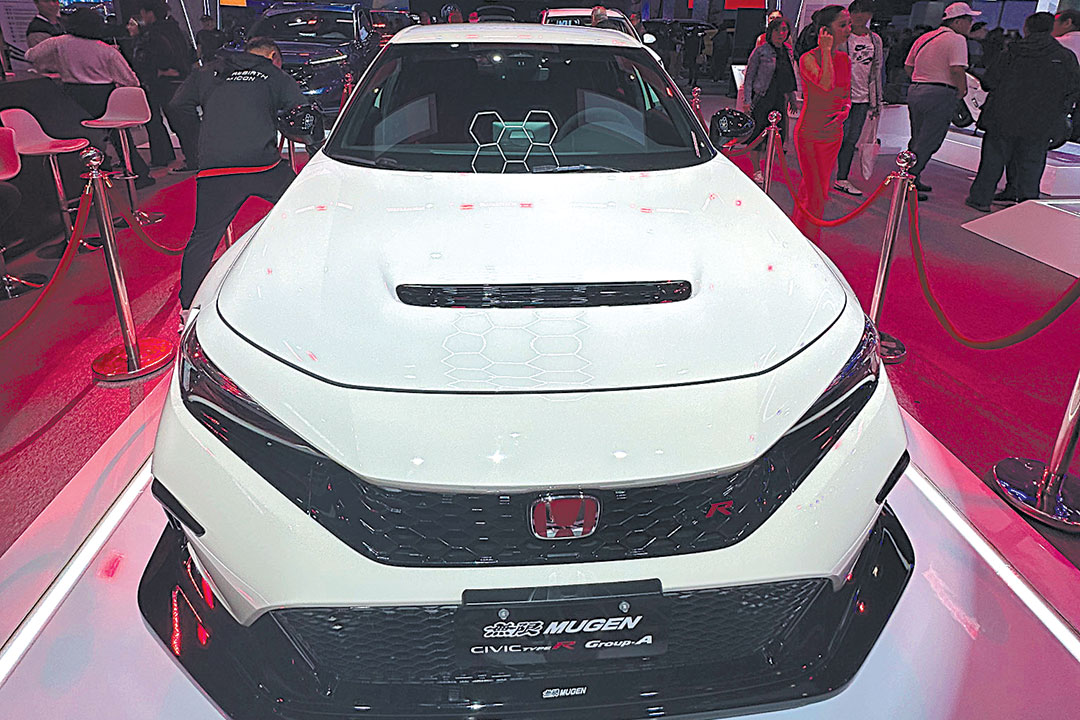
A Mugen Civic Type R Group A unit on display at the Philippine International Motor Show. All five allocated to our country are reportedly spoken for already. — PHOTO BY KAP MACEDA AGUILA

We speak with a Mugen official, who was in town for the reveal of the exclusive Mugen Civic Type R Group A

Interview by Kap Maceda Aguila

NO DOUBT, one of the big attractions at the 9th edition of the Philippine International Motor Show was an exclusive and rare iteration of the Honda Civic Type R on display — one of only five up for sale in the country. The Mugen Civic Type R Group A (we’ll get to the explanation for the moniker during the Q&A portion below) was unveiled to the public by Honda Cars Philippines, Inc. In town for the show was M-Tec Company (which does business as Mugen Motorsports) official Nori Onuma, and “Velocity” got a chance to exclusively talk to him. Established in 1973 by Hirotoshi Honda, son of Honda Motor Company Founder Soichiro Honda, and Masao Kimura, Mugen makes body kits, sports exhausts, and the sort for Honda. To be clear though, the firm has never been owned by Honda Motor Company.

Here are excerpts from our interview.

VELOCITY: What’s the difference between the Mugen Civic Type R and the regular Civic Type R?

NORI ONUMA: We put in aerodynamic parts for the side spoiler, front bumper, rear spoiler and the rear wing. We also manufacture the muffler for it, along with the forged wheels.

In terms of power output and torque output, is it the same?

Basically, we don’t touch the engine at all.

How about in the cabin? Is there anything different there?

In case of the Group A model in the Philippines, We provide a different shift knob.

If I may ask, why is it called Group A?

The reason we call it Group A is because we also have Group B.

What is the difference between Group A and Group B?

Actually, we haven’t finished development of Group B yet. But the biggest difference would be if we decide to use carbon fiber parts or not. Group B is expected to be displayed in the coming Tokyo Auto Salon.

Honda Cars Philippines will be making only five Mugen Civic Type R Group A units available in the Philippines. How many are available globally?

I’m sorry but I cannot say.

Can we get more than the five initially allocated to our country?

That’s something that Honda Cars Philippines is in charge of, but I hope they get more.

Seaweed farming brings hope to Kenyan villagers hit by climate change

KIBUYUNI SEAWEED FARMERS

KWALE COUNTY — The people of Kenya’s coastal village of Mwazaro used to earn their living mainly growing cassava and maize, until the ravages of drought forced them to try a new crop — seaweed.

They plant it on the beachfront and lay it out to dry inland, joining scores of other communities feeding a growing demand at home and abroad for associated products including soap, shampoo and seaweed powder, used in food.

Seaweed farming was first introduced in Kenya in 2008 and has expanded rapidly to cover 20 villages, David Mirera, a scientist at the Kenya Marine and Fisheries Research Institute (KMFRI), said.

Higher temperatures, rising sea levels and poor rains have all played their part in the shift.

Along the coast in the village of Kibuyuni, investments in seaweed farming have led to improvements in infrastructure and electricity, said Kassim Ramtu Bakari, who does marketing for the Seaweed Farmers’ Cooperative there, which employs more than 100 households.

Tima Jasho, a mother of seven in Kibuyuni, said she was now able to pay her children’s school fees and move her family from a mud home to a brick house.

“If you grow seaweed, you don’t have to depend on a man,” she told Reuters. “I can earn my own money.”

In 2022, the industry produced almost 100 tons of seaweed worth more than $30,000, according to KMFRI data. Farmers export dry seaweed to China, France, the United States and other countries.

The global market for seaweed has tripled in size in the last two decades, according to a 2024 United Nations Report, growing from $5 billion in 2000 to $17 billion in 2021.

It is Tanzania’s third largest export and employs over 26,000 farmers, said George Maina, a scientist at The Nature Conservancy, an environmental nonprofit which supports seaweed farmers in Kenya and Tanzania.

Kenya has a long way to go before it becomes a global industry leader like its neighbor, Mr. Maina said.

“It’s still lagging in terms of production,” he said. “But it’s a sector that is growing.” — Reuters

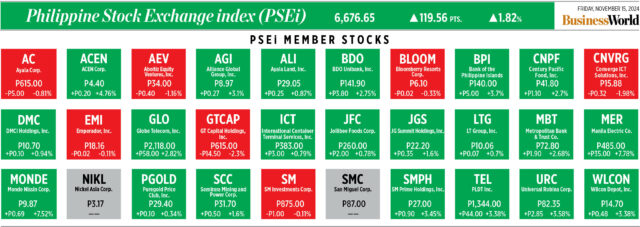
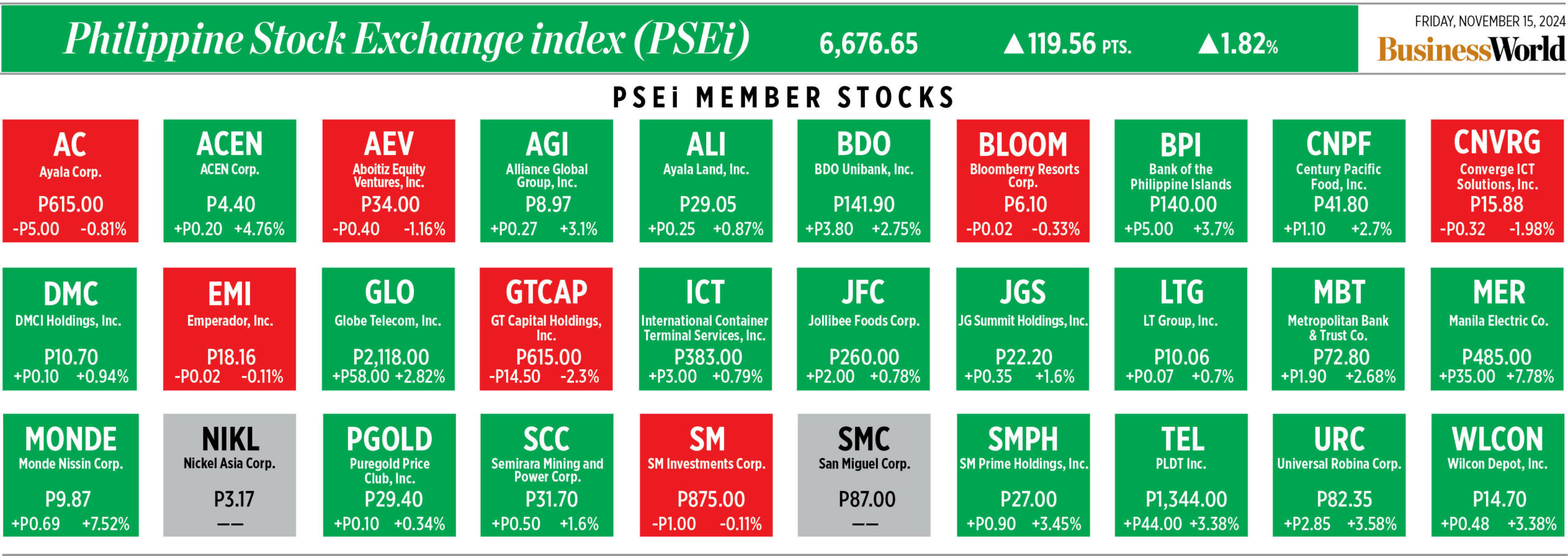
How PSEi member stocks performed — November 15, 2024

Here’s a quick glance at how PSEi stocks fared on Friday, November 15, 2024.


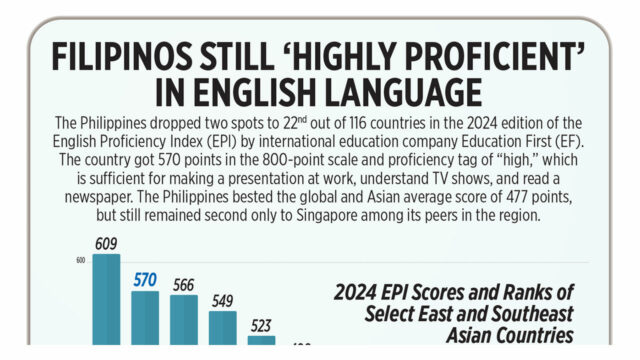
Filipinos still ‘highly proficient’ in English language

The Philippines dropped two spots to 22nd out of 116 countries in the 2024 edition of the English Proficiency Index (EPI) by international education company Education First (EF). The country got 570 points in the 800-point scale and proficiency tag of “high,” which is sufficient for making a presentation at work, understand TV shows, and read a newspaper. The Philippines bested the global and Asian average score of 477 points, but still remained second only to Singapore among its peers in the region.

Filipinos still 'highly proficient' in English language