Home Blog Page 1857

Sotto ‘good to go’ vs NZ after concussion

KAI SOTTO — FIBA

SEVEN-FOOT-THREE Kai Sotto has been cleared to play for Gilas Pilipinas, raising the prospect of a twin-tower combo with June Mar Fajardo which has coach Tim Cone excited.

Mr. Sotto, according to team manager Richard del Rosario, is “good to go” for the FIBA Asia Cup Qualifiers games against New Zealand on Thursday and Hong Kong on Sunday after clearing the concussion protocol.

The big man was placed on concussion watch by the Japan B.League after being hit in the head during the Koshigaya Alphas’ 80-72 win over Yokohama last week.

However, 6-foot-10 AJ Edu remains doubtful as he continues to undergo treatment for his right knee, which he hurt recently in the Nagasaki Velca’s 71-68 defeat to the Akita Northern Happinets.

Mr. Sotto’s presence is a big boost for Gilas as the Tall Blacks are coming in with a seven-footer and a couple of 6-foot-10 bigs in tow.

“They bring in a lot more size than they have in the past,” Mr. Cone said of New Zealand.

Mr. Cone, meanwhile, is thrilled to have both Mr. Fajardo and Mr. Sotto in the fold.

“The nice thing is that Kai and June Mar are developing a chemistry in which they can play together. And that’s really unusual to get two fives (centers) and allow them to play together,” he noted.

He credited this to Mr. Sotto’s versatility and willingness to sacrifice, describing his attitude as “I’m comfortable with the five but I will go play the four (power forward) and be uncomfortable so that June Mar can stay at the five.”

“It’s a really good rotation. We have the two of them that can play together. And then when June Mar rests, Kai can swing to the five. And when June Mar comes back, Kai can swing back to the four. And so we have a constant.

“And that was what was missing when we played (and lost to) Brazil in the semifinals of the OQT (Olympic Qualifying Tournament in Latvia) when Kai got injured. We didn’t have that ability to do that. It was a tough road for June Mar. Kai’s presence makes it a lot easier,” he added. — Olmin Leyba

Old Gilas foe to lead Tall Blacks vs PHL in Asia Cup qualifiers

THERE’S a bit of nostalgia for New Zealand skipper Corey Webster as the Tall Blacks face Gilas Pilipinas on Thursday at the SM Mall of Asia (MOA) Arena in the FIBA Asia Cup Qualifiers (ACQ).

Mr. Webster previously featured for the Tall Blacks when they played the Nationals and other NBA-bannered rivals back in 2016 in the FIBA World Olympic Qualifying Tournament.

And the 35-year-old shooting guard averaged 21.7 points a game in that past stint as New Zealand gave Tony Parker and France and Tristan Thompson and Canada a run for their money before absorbing close defeats in the group stage (59-66) and semifinals (72-78), respectively.

In their group game against the hosts then, Mr. Webster banged in 23 markers as the Kiwis defeated the Andre Blatche-led Filipinos before a 13,000-strong home crowd, 89-80.

Eight years later, Mr. Webster looks forward to playing the home squad in front of their passionate “sixth man” again.

“They turn out in their tens of thousands and pack their arenas and love their national team,” the seasoned 6-foot-2 gunner said on the website of Basketball New Zealand.

“Playing in Manila is something that not too many players get to experience. It is always amazing and to have a game over there in this window is a great experience for any player. I know it will be electric.”

Mr. Webster, who has won four championships in New Zealand, three in Australia and one in Africa, is among the biggest thorns Gilas is bracing for in the squad assembled by new coach Judd Flavell.

“He’s going to be a guy that we’re going to have to be attentive to,” said Philippine coach Tim Cone. “He can change a game. You know he gets hot, he gets rolling, he can really change the game.”

With Mr. Flavell and his crew on the first step of their journey, Mr. Cone expects the visiting team to play with high energy.

“I think this is their first game together, as a group. And I remember our first game when we played in Hong Kong (first window of the ACQ in February) and when we first got together. And there was a lot of excitement, a lot of energy, and we were raring to play. So we expect that from them as well,” said the Gilas mentor, who has been whipping the Nationals into fighting shape since Friday at their training camp in Laguna. — Olmin Leyba

Ateneo places 5th in Super League after beating Benilde in four sets

Game on Friday
(Rizal Memorial Coliseum)
6:30 p.m. – La Salle vs NU (championship)

ATENEO drubbed NCAA champion St. Benilde, 26-24, 25-16, 21-25, 25-23, to salvage fifth place in the Shakey’s Super League Collegiate Pre-season Championship over the weekend at the Rizal Memorial Coliseum.

Seasoned spiker Lyann de Guzman fired 20 points on 19 hits and an ace to lead the Blue Eagles, who are seeking redemption in UAAP Season 87 volleyball early next year.

She drew ample support from AC Miner and Geezel Tsunashima with 13 and nine points, respectively. Ms. Tsunashima scored two in the fourth set with back-to-back kills to fend off the Lady Blazers’ attempt to force a deciding fifth set.

Sabi ko sa kanila ‘wag masyadong relax kasi nakikita ko na hindi ito ‘yung laro namin kapag nagti-training kami. Sabi ko lang ilaban lang nila, nandito kami magtutulungan para sa isa’t isa,” said Ms. De Guzman.

Ateneo, which swept the University of the East (UE) in the first phase of the classification rounds, replicated its best finish in the SSL in the inaugural edition in 2022.

Clydel Catarig (14), Zamantha Nolasco (11) and Mary Grace Borromeo (10) showed the way for St. Benilde en route to a gallant sixth-place finish as the only NCAA team in the SSL playoffs.

Meanwhile, UE secured the seventh spot with a 25-20, 25-22, 26-24 win over the University of the Philippines behind the potent trio of Jelai Gajero, Casiey Dongallo and KC Cepada.

Ms. Gajero had 17 points while Mses. Dongallo and Cepada added 16 and 14 points, respectively, to best the Maroons, who placed eight, led by Niña Ytang with nine points as well as Kassandra Doering and Kyrzten Cabasac with eight points each.

With the rankings below already settled, all eyes will now be on fierce rivals National U, the back-to-back champion, and unbeaten La Salle in the best-of-three finals starting Friday. — John Bryan Ulanday

Four teams still in contention for three NCAA chess semis slots

UNSPLASH/DANIEL STIEL

A DOGFIGHT among Lyceum of the Philippines University (LPU), Jose Rizal University (JRU), University of Perpetual Help (UPHSD) and College of St. Benilde for the last three Final Four slots (CSB) is looming in today’s ninth and final round in NCAA Season 100 Chess at the Ayala Malls Manila Bay.

LPU and JRU are currently Nos. 2 and 3 with 21.5 and 20 points, respectively, while UPHSD and CSB are at joint No. 4 with 19.5 points apiece.

But only three will advance after San Beda booked the first semis seat and the twice-to-beat incentive that went with it.

LPU is paired with Mapua, JRU with Arellano University, UPHSD with San Sebastian and CSB with San Beda.

The final elimination round was supposed to be played yesterday but was rescheduled due to Typhoon Pepito.

“We’re hoping to make it to the Final Four for the second time under my watch,” said JRU coach and FIDE Master Nelson Mariano III.

The Final Four is set tomorrow while an extra semis game, if necessary, is slated for Wednesday.

If not, the one-game finals will be played that day. — Joey Villar

Centeno dethroned in 10-Ball Worlds

CHEZKA CENTENO — PHILSTAR FILE PHOTO

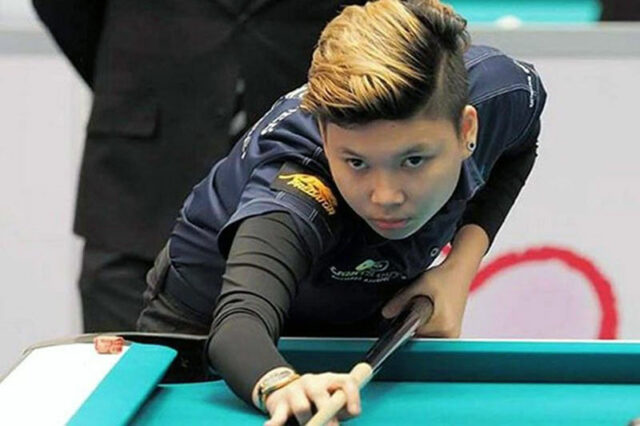
CHEZKA CENTENO’S reign as world champion ended Saturday night when she fell to South Korean Seoa Seo, 4-1, 4-1, 1-4, 4-1, in the semis of the World Pool-Billiard Association 10-Ball Women’s Championships in San Juan, Puerto Rico.

It was a heartbreaking ending for the 25-year-old Filipino, who was seeking to achieve what no others before her have done — win the annual tournament back to back.

“Finishing in the top four is more than I expected and for that, I am truly grateful,” said Ms. Centeno, who reigned supreme in this same meet last year in Klagenfurt, Austria.

Ms. Seo eventually settled for second after succumbing to eventual champion Kristina Tkach of Russia, 1-4, 4-3, 3-4, 4-3, 4-0. — Joey Villar

Alcaraz relishing role in Nadal’s career farewell in Davis Cup

CARLOS ALCARAZ OF SPAIN — REUTERS

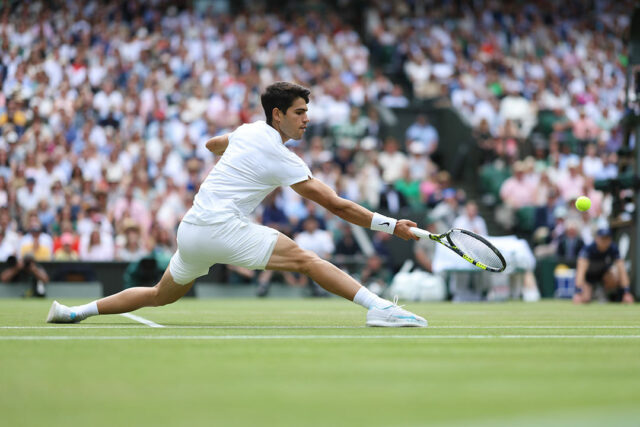
SPAIN’S Carlos Alcaraz said playing in Rafa Nadal’s career farewell in the Davis Cup Final Eight will be the most special event he will play in his career.

Mr. Nadal, who captured 22 Grand Slam titles in a glittering career, will make his final bow in the team event being staged in Malaga starting next week.

Spain will face the Netherlands in their opening match in what is likely to be a momentous occasion.

“It’s probably the most special tournament I’ll play in my career, because of what’s happening, because of the circumstances,” Mr. Alcaraz was quoted by the ATP website after arriving in Spain following his ATP Finals exit.

“The Davis Cup has always been a tournament that I’d love to win one day, I’m passionate about representing Spain. Having Rafa by my side, knowing it’s his last tournament, will make it much more special.”

The 21-year-old Mr. Alcaraz, who already owns four Grand Slam titles, played with Mr. Nadal at this year’s Paris Olympics, the pair losing in the quarterfinals.

“I’ll try to contribute and help the team any way I can — for me, for Spain and especially for Rafa,” Mr. Alcaraz said. “No player deserves more to finish the incredible career he had with a title, and I know how special the Davis Cup is for him. It will be a difficult challenge but winning it for Rafa is a huge motivation.”

Spain has won the Davis Cup six times, the last occasion in 2019 when Mr. Nadal inspired the hosts to the trophy in Madrid.

“Rafa’s farewell is much more important, at least for me,” Mr. Alcaraz said. “The Davis Cup is every year. Rafa’s farewell, saying goodbye to a legend of the sport, unfortunately only happens once. Personally I’m very excited to be by Rafa’s side for his farewell. And the fact that it’s in the Davis, which is a very important tournament for him, virtually where he started his career with that victory against (Andy) Roddick (in 2004).

“It will be an incredible event because of the occasion and hopefully it will end with the title.”

Davis Cup Final Eight action takes place in Malaga between Nov. 19 and Nov. 24. — Reuters

Bench depth saves the Lakers

Considering that the Lakers were burning rubber on the second night of a back-to-back set, it was fair to expect them to have less energy yesterday. Yet, it was evident from the get-go that they weren’t just physically handicapped. For some reason, they appeared to be mentally drained as well. To contend that it was inexcusable despite their fatigue would be an understatement. After all, the Pelicans likewise suffered from a quick turnaround following a hard-fought contest, and were further hampered by the absence of no less than six vital cogs.

In short, the Lakers were up against supposed patsies featuring overmatched players. As the set-to progressed, however, it was is if they had lead feet; they were routinely beaten off the boards and on so-called 50-50 balls, not to mention predisposed to committing inexplicable mistakes. They found themselves down early, and — with 39-year-old LeBron James looking sluggish with little rest — in danger of giving up an eminently winnable outing. And even when they managed to build a double-digit lead in the final quarter, they gave off a bad vibe.

Which, in a nutshell, was why the Lakers struggled to put the game away. Certainly, the Pelicans deserved no small measure of credit for plodding on regardless of the score, for taking the match a moment at a time, for utterly refusing to consider that a setback was preordained. In fact, they managed to take the lead with a little over two minutes left in the payoff period. The 18,761-strong crowd at the Smoothie King Center was on its feet and rejoicing; through sheer grit and determination, success was at hand.

In the final analysis, the Lakers walked away with victory only because they had depth. Even as they missed the services of Rui Hachimura, Jaxson Hayes, Christian Wood, and Jared Vanderbilt, they coaxed solid contributions out of such notables as Dalton Knecht, Max Christie, and Christian Koloko. And, of course, they had James, who made up for costly miscues and an uneven showing with timely baskets under pressure.

There will, of course, come a time when the Lakers get burned for playing with fire all too often. For now, though, they get to bask in the glory of five straight triumphs and nine overall in 13 encounters. Clearly bent on defending their In-Season Tournament title, they know well enough to ride the wave. All the same, they need to clean up their act, and fast. Else, their fourth-place standing in the highly competitive Western Conference will be exposed as nothing but a mirage.


Anthony L. Cuaycong has been writing Courtside since BusinessWorld introduced a Sports section in 1994. He is a consultant on strategic planning, oprerations and human resources management, corporate communications, and business development.

Xi vows to work with Trump team as he meets Biden in Peru

U.S. President Joe Biden shakes hands with Chinese President Xi Jinping at Filoli estate on the sidelines of the Asia-Pacific Economic Cooperation (APEC) summit, in Woodside, California, U.S., Nov. 15, 2023. — REUTERS

LIMA — Chinese President Xi Jinping vowed on Saturday to work with the incoming US administration of Donald J. Trump as he held his final talks with outgoing President Joseph R. Biden on conflicts from cyber crime to trade, Taiwan, the South China Sea and Russia.

Mr. Biden met Mr. Xi for about two hours at a hotel where the Chinese leader was staying, on the sidelines of the Asia-Pacific Economic Cooperation (APEC) forum in Lima, Peru, for their first talks in seven months.

“China’s goal of a stable, healthy and sustainable China-US relationship remains unchanged” after Mr. Trump’s election, Mr. Xi said as he met Mr. Biden, acknowledging “ups and downs” between the countries. “China is ready to work with the new US administration to maintain communication, expand cooperation and manage differences.”

Mr. Biden told Mr. Xi that the two leaders have not always agreed but their discussions have been “frank” and “candid.”

Two months before Mr. Trump returns to the White House, US officials see magnified risks of conflict during the transition. Mr. Biden told Mr. Xi that maintaining leader-to-leader talks would be vital even after he left office, said Biden national security adviser Jake Sullivan.

The president-elect has vowed to adopt blanket 60% tariffs on US imports of Chinese goods as part of a package of America First trade measures. Beijing opposes those steps. The Republican also plans to hire several hawkish voices on China in senior roles, including US Senator Marco Rubio as secretary of state and Representative Mike Waltz as national security adviser.

Mr. Biden has aimed to lower tensions with China, and there were few signs of a breakthrough on the major issues.

But Mr. Biden and Mr. Xi did agree that human beings, not artificial intelligence, should make decisions over the use of nuclear weapons, according to the White House, the first time the countries are known to have raised the issue.

The US and Chinese presidents also talked about North Korea, an ally of China whose deepening ties with Russia and deployment of troops in Moscow’s war with Ukraine have raised concerns in Washington, Beijing and European capitals.

“President Biden pointed out that the (People’s Republic of China’s or PRC) publicly stated position with respect to the war in Ukraine is there should be no escalation, no broadening the conflict, and the introduction of (Democratic People’s Republic of Korea or DPRK) troops runs foursquare against that,” said Mr.  Sullivan.

“He also pointed out that the PRC does have influence and capacity, and should use it to try to prevent a further escalation or further expansion of the conflict with the introduction of even more DPRK forces.”

MAJOR ISSUES
Other major issues raised at the meeting included a recent China-linked hack of the telephone communications of US government and presidential campaign officials, stepped-up pressure by Beijing on Taiwan and in the South China Sea, as well as Chinese support for Russia. Mr. Biden also raised the cases of Americans he believes are wrongly detained in China.

On Taiwan, the leaders appear to have had a sharp exchange. Mr. Biden called for an end to Beijing’s “destabilizing” military activity around the island, the White House said.

Mr. Xi said the “‘Taiwan independence’ separatist activities” of Taiwanese President Lai Ching-te were incompatible with peace and stability there, according to the Chinese foreign ministry. Mr. Lai plans to stop in the US state of Hawaii and maybe Guam on a sensitive visit that is sure to anger Beijing in the coming weeks, Reuters reported on Friday.

Taiwan’s foreign ministry thanked Mr. Biden for his comments, and said China was the troublemaker.

“China’s persistent military provocations around Taiwan are the greatest source of damage to regional peace and stability and a major threat to global economic prosperity,” it said in a statement.

Taiwan’s former Economy Minister Lin Hsin-i met Mr. Biden at the summit on Friday and invited him to visit Taiwan in the near future.

China views democratically governed Taiwan as its own territory. The US is Taiwan’s most important international backer and arms supplier, despite the lack of formal diplomatic recognition. Taiwan rejects China’s sovereignty claims.

At the same time, Beijing’s economy is taking a stiff hit from Mr. Biden’s steps on trade, including a plan to restrict US investment in Chinese artificial intelligence, quantum computing and semiconductors, and export restrictions on high-end computer chips. Mr. Biden has described those steps as necessary for US national security reasons and said they do not impede most trade.

During the meeting, Mr. Xi said no evidence supported the claim of Chinese involvement in cyber attacks, according to Chinese state media. He also told Mr. Biden that Washington should not get involved in disputes in the Spratly Islands, the subject of a dispute between China and the US-allied Philippines.

Beijing has rejected a 2016 ruling by The Hague-based Permanent Court of Arbitration, which said its expansive maritime claims over the South China Sea had no legal basis, in a case that was brought by Manila.

“When the two countries treat each other as partner and friend, seek common ground while shelving differences and help each other succeed, our relationship would make considerable progress,” Mr. Xi told Mr. Biden through an interpreter. “But if we take each other as rivals or adversary, pursue vicious competition, and seek to hurt each other, we would roil the relationship or even set it back.”

The two leaders also privately reflected back on the blunt-spoken dynamics of their long relationship, said Sullivan, the US national security adviser.

Shen Dingli, a Shanghai-based international relations scholar, said China wants to ease tensions during the transition period. “China definitely does not want relations with the United States to be thrown into turmoil before Trump formally takes office,” said Mr. Shen.

Pacific Rim leaders gathered at the APEC summit are assessing the implications of Mr. Trump’s return to power on Jan. 20. The South American summit offers new signs of the challenges to the United States’ power in its own backyard, where China is on a charm offensive.

Mr. Xi, who arrived in Lima on Thursday, plans a week-long diplomatic blitz in Latin America that includes a refurbished free-trade agreement with Peru, inaugurating the massive Chancay deep-water port there and being welcomed in Brazil’s capital next week for a state visit. China also announced plans to host the APEC summit in 2026.

China is seeking Latin America’s metal ores, soybeans and other commodities, but US officials worry they may also be looking for new US-adjacent military and intelligence outposts. Chinese state-backed media has called those accusations a smear. — Reuters


Japan’s Mount Fuji eyes China-made tram to transport hikers, source says

GENERAL VIEW of cherry blossom trees with Mount Fuji in the background at Lake Kawaguchiko, Fujikawaguchiko, Japan, April 14, 2024. — REUTERS

TOKYO — Japanese authorities seeking to reduce the carbon footprint and overcrowding at Mount Fuji will propose a trackless, rubber-tired tram system made by China’s CRRC to transport climbers, a person with direct knowledge of the plan said.

The new proposal, which has not been previously reported, would replace the original plan to build a light-rail system connecting the base to the fifth hiking station of the popular Yoshida Trail, which goes to the top, after a local city and other parties, voiced concern over its environmental and cost impact.

Yamanashi Prefecture, home of the most popular route used by climbers of the 3,776-meter (12,3388-foot) volcano, is set to announce the plan soon, the person told Reuters, asking for anonymity because the information is not yet public.

Mount Fuji, which straddles Yamanashi and Shizuoka Prefectures, is one of the most popular tourist destinations in Japan, whose numbers have surged in recent years.

Pollution from the constant stream of tourist buses and cars arriving at the fifth station, as well as overcrowding on the trails, have become headaches for authorities seeking to clean up the site, which Japanese people hold sacred.

Mount Fuji was listed as a UNESCO World Heritage site in 2013, further boosting its appeal. But the distinction came on the condition that Japan reduce overcrowding, environmental harm from visitors, and fix the artificial landscape, such as the large parking lots constructed to accommodate tourists.

Shanghai-listed CRRC’s Autonomous Rapid Transit is a new-generation tram that uses magnetic road markings and can be operated unmanned.

Yamanashi Prefecture plans to use locally produced hydrogen to power the tram, the source said. The transit system is expected to slash the project’s cost by as much as 40% from the roughly 140 billion yen ($895 million) estimated for the rail system, said the source.

The new plan would allow the prefecture to use the existing Fuji Subaru Line toll road and prohibit the entry of all private vehicles and sightseeing buses, the person said. The prefecture hopes to conduct a pilot run as early as the next fiscal year starting in April.

Yamanashi is also aiming to build a tram network that would extend to local municipalities and connect to a magnetic levitation rail system planned by Central Japan Railway in the 2030s, the person said.

Yamanashi Prefecture declined to comment on the plan.

During the summer climbing season between July to September this year, the mountain hosted 204,316 climbers. Authorities have said they hoped to control the number of visitors through a public transit system. — Reuters

Tropical wetlands are releasing a methane bomb, threatening climate plans

BAKU — The world’s warming tropical wetlands are releasing more methane than ever before, research shows — an alarming sign that the world’s climate goals are slipping further out of reach.

A massive surge in wetlands methane — unaccounted for by national emissions plans and undercounted in scientific models — could raise the pressure on governments to make deeper cuts from their fossil fuel and agriculture industries, according to researchers.

Wetlands hold huge stores of carbon in the form of dead plant matter that is slowly broken down by soil microbes. Rising temperatures are like hitting the accelerator on that process, speeding up the biological interactions that produce methane. Heavy rains, meanwhile, trigger flooding that causes wetlands to expand.

Scientists had long projected wetland methane emissions would rise as the climate warmed, but from 2020 to 2022, air samples showed the highest methane concentrations in the atmosphere since reliable measurements began in the 1980s.

Four studies published in recent months say that tropical wetlands are the likeliest culprit for the spike, with tropical regions contributing more than 7 million tonnes to the methane surge over the last few years.

“Methane concentrations are not just rising, but rising faster in the last five years than any time in the instrument record,” said Stanford University environmental scientist Rob Jackson, who chairs the group that publishes the five-year Global Methane Budget, last released in September.

Satellite instruments revealed the tropics as the source of a large increase. Scientists further analyzed distinct chemical signatures in the methane to determine whether it came from fossil fuels or a natural source — in this case, wetlands.

The Congo, Southeast Asia and the Amazon and southern Brazil contributed the most to the spike in the tropics, researchers found.

Data published in March 2023 in Nature Climate Change shows that annual wetland emissions over the past two decades were about 500,000 tonnes per year higher than what scientists had projected under worst-case climate scenarios.

Capturing emissions from wetlands is challenging with current technologies.

“We should probably be a bit more worried than we are,” said climate scientist Drew Shindell at Duke University,

The La Niña climate pattern that delivers heavier rains to parts of the tropics appeared somewhat to blame for the surge, according to one study published in September in the journal Proceedings of the National Academy of Sciences.

But La Niña alone, which last ended in 2023, cannot explain record-high emissions, Mr. Shindell said.

For countries trying to tackle climate change, “this has major implications when planning for methane and carbon dioxide emissions cuts,” said Zhen Qu, an atmospheric chemist at North Carolina State University who led the study on La Niña impacts.

If wetland methane emissions continue to rise, scientists say governments will need to take stronger action to hold warming at 1.5°C (2.7°F), as agreed in the United Nations (UN) Paris climate accord.

WATER WORLD
Methane is 80 times more powerful than carbon dioxide (CO2) at trapping heat over a timespan of 20 years, and accounts for about one-third of the 1.3°C (2.3°F) in warming that the world has registered since 1850. Unlike CO2, however, methane washes out of the atmosphere after about a decade, so it has less of a long-term impact.

More than 150 countries have pledged to deliver 30% cuts from 2020 levels by 2030, tackling leaky oil and gas infrastructure.

But scientists have not yet observed a slowdown, even as technologies to detect methane leaks have improved. Methane emissions from fossil fuels have remained around a record high of 120 million tonnes since 2019, according to the International Energy Agency’s 2024 Global Methane Tracker report.

Satellites have also picked up more than 1,000 large methane plumes from oil and gas operations over the past two years, according to a UN Environment Programme report published on Friday, but the countries notified responded to just 12 leaks.

Some countries have announced ambitious plans for cutting methane.

China last year said it would strive to curb flaring, or burning off emissions at oil and gas wells.

President Joe Biden’s administration finalized a methane fee for big oil and gas producers last week, but it is likely to be scrapped by the incoming presidency of Donald Trump.

The Democratic Republic of Congo’s environment minister Eve Bazaiba told Reuters on the sidelines of the UN climate summit Conference of the Parties (COP29) that the country was working to assess the methane surging from the Congo Basin’s swampy forests and wetlands. Congo was the largest hotspot of methane emissions in the tropics in the 2024 methane budget report.

“We don’t know how much [methane is coming off our wetlands],” she said. “That’s why we bring in those who can invest in this way, also to do the monitoring to do the inventory, how much we have, how we can also exploit them.” — Reuters

Brazil’s first lady insults Elon Musk at G20 social event

TWITTER.COM/ELONMUSK

RIO DE JANEIRO — Brazil’s first lady, Janja Lula da Silva, swore at billionaire Elon Musk during a Group of 20 (G20) social event on Saturday at which she spoke about the need to regulate social media to rein in misinformation.

A ship’s horn sounded as she spoke and she joked, “I think it’s Elon Musk,” before adding, “I’m not afraid of you, fuck you, Elon Musk.”

Musk, owner of social network X, reacted to a video of her remarks by posting a laughing out loud emoji graphic. In another post, he added, “They are going to lose the next election,” in a reference to President Luiz Inacio Lula da Silva.

The president’s wife spoke at an event ahead of the Rio de Janeiro summit of the G20 group of largest nations set for Monday and Tuesday.

Musk’s social messaging network was suspended in Brazil for a month this year for failing to name a legal representative in the country and ignoring court orders to block accounts accused of spreading “fake news” and hate messages. — Reuters

After missing school due to extreme heat, African children push for climate action

PIXABAY

BAKU — Children from East Africa, where heatwaves and floods have shuttered schools in recent months, are pushing for world leaders to protect their education – and their future – at the United Nations Conference of the Parties (COP29) climate summit in Azerbaijan.

Siama, 17, from South Sudan, missed two weeks of school in April when temperatures surged to 45°C (113°F).

“Our country is a developing country so we do not have climate-resilient buildings… and do not have ACs in school,” she said.

More than 40 million children were kept out of classrooms this year, from Asia to Africa, due to extreme heat, which scientists say has been made worse and more frequent by climate change.

Naomi, 14, also struggled with South Sudan’s school closures.

“This really affected me because this year I am sitting for my national exams,” she said.

At home, “we were not able to concentrate because it was hot, the temperatures were really high, you have to focus more on reducing the temperature of your body by going to bathe every two hours.”

In Somalia, Nafiso, 16, often can’t sleep at night, thinking about her future under climate change.

“My father — he is a farmer. When there is a lot of heat, it becomes a lot of drought. When there is a lot of rain, it is difficult to get the food.”

Sometimes she does not have enough food to eat three times a day.

Floods, too, have at times prevented her from getting to school.

“This is really making us worried how will the future be if there is no action being taken, if there is no climate finance to create climate-resilient schools in the country,” Naomi said. — Reuters