Home Blog Page 1745

POGO shutdown on track for end of year
PHILSTAR FILE PHOTO

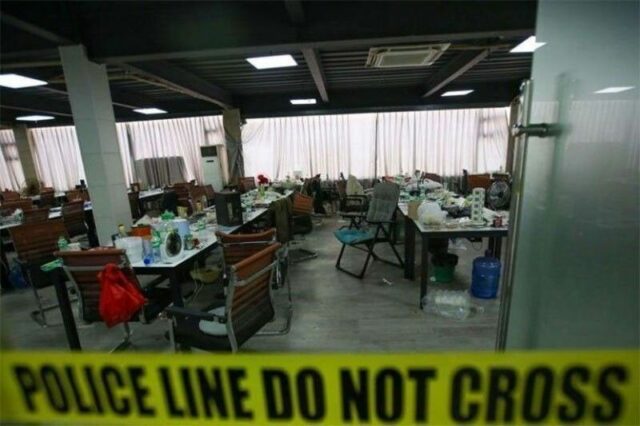
THE Philippine Amusement and Gaming Corp. (PAGCOR) said it is on track to shut down all Philippine Offshore Gaming Operators (POGO) by the end of the year.

“You can expect that there will be no more licensed POGOs operating by the end of this year,” PAGCOR Chairman and Chief Executive Officer Alejandro H. Tengco said on Tuesday.

In 2019, there were a total of 298 licensed POGOs. The regulator brought it down to 48 earlier this year.

“Today, we are proud to announce that only 17 POGOs remain in operation,” Mr. Tengco said.

During his State of the Nation Address in July, President Ferdinand R. Marcos, Jr. banned all offshore gaming operations, citing POGO links to illegal activities such as money laundering and financial scams.

“By Jan. 1, 2025, all these operators that will still continue to operate… will be deemed illegal. All their licenses will be canceled,” Mr. Tengco said.

He expects some companies continuing to operate “guerilla” style, he said.

“They will go to different provinces. In fact, a few months back, or even two weeks ago, we saw some renting resorts and hotels outside Manila, offering one-year advance rentals.”

“These are the problems that I believe will be the challenge for law enforcement agencies.  We really have to be vigilant,” he added.

Mr. Tengco also clarified that all licenses will be canceled, be they for POGOs or Internet Gaming Licensees.

Meanwhile, Mr. Tengco said the POGO ban will have no effect on the gaming industry’s revenue.

He expects gross gaming revenue (GGR) to rise  this year, primarily driven by electronic gaming.

GGR could top P350 billion this year, he said, which would be a record.

Meanwhile, PAGCOR revenue could double this year. “I think the net income of PAGCOR this year will be between P12 billion to P15 billion. I have a feeling it will almost double,” Mr. Tengco added.

Last year, the gaming regulator booked a net profit of P6.81 billion. — Luisa Maria Jacinta C. Jocson


House approves electric vehicle zero-tariff measure

Image via Ivan Radic/CC BY 2.0

THE House of Representatives has approved on final reading a bill providing tax and duty exemptions on imported electric vehicles (EVs).

House Bill No. 10960 received approval from 196 lawmakers, with three against its passage and one abstention.

The tariff waiver covers imported two-, three- or four-wheeled EVs and their charging equipment from 2025 to 2030, bringing President Ferdinand R. Marcos, Jr.’s order removing tariffs on EVs closer to becoming law.

The exemption is designed to boost EV adoption, while also helping the Philippines make its transportation greener.

The measure also calls for a review on the import of capital equipment used for the manufacture and assembly of EVs for possible inclusion in the strategic investment priority plan.

Last year, Mr. Marcos issued an executive order that removed import duties on EVs until 2028. It was expanded by the National Economic and Development Authority Board in May to include electric motorcycles, tricycles, and hybrid EVs.

The Philippines is moving to decarbonize its transportation system, amid a target to reduce greenhouse gas emissions by 75% by 2030, in line with commitments made under the 2021 Paris Agreement.

The Department of Energy’s (DoE) roadmap for the wider adoption of EVs sets “specific targets and activities” to guide the transition towards electrified transportation.

An electric vehicle incentives scheme will likely be endorsed to Mr. Marcos by year’s end, giving the EV adoption campaign more impetus. The scheme is expected to result in the domestic manufacture of about four million EVs in the coming decade.

The proposed policy will likely contain incentives for consumers, such as purchase subsidies through financial rebates, discounts, tax credits, or value-added tax exemptions, the DoE has said. — Kenneth Christiane L. Basilio

Kanlaon eruption raises sugarcane yield concerns

PHILSTAR FILE PHOTO/ROB ILUMBA UGBINADA

THE Sugar Regulatory Administration (SRA) said the eruption of Mount Kanlaon on Negros Island has raised concerns about sugarcane yields in the current crop year.

“If the farmers cannot push (the ash) away from their sugarcane, it will have a burning effect… that will lower yields,” SRA Administrator Pablo Luis S. Azcona said in a briefing on Tuesday.

Kanlaon erupted on Monday, emitting a column up to 3,000 meters high, according to the Philippine Institute of Volcanology and Seismology (Phivolcs).

The volcano is located in Negros Occidental near the Negros Oriental border. Negros Island produces most of the country’s sugarcane.

The regulator is already projecting a 7.2% drop in sugar production from the 1.92 million metric tons reported during the previous crop year, citing crop damage sustained earlier during the dry conditions brought about by El Niño.

He said that the ashfall from the eruption could raise acidity levels in the areas planted to cane.

“So that’s the scary part… our buffer stock will be affected in the end,” Mr. Azcona added.

According to a report by the SRA’s research and development arm, the immediate impact of volcanic ash is physical damage to the leaves, reducing their capacity for photosynthesis, as well as disruption to the chemical makeup of the soil, which can both lead to reduced yields.

The SRA added that the long-term effects on crops could include nutrient imbalances in the soil, compaction, erosion and chemical leaching.

Phivolcs had raised Alert Level three in the immediate vicinity of the volcano, signifying a magmatic eruption in progress and the possibility of further explosive eruptions.

“We will try our best to save the affected sugarcane because we need every ton of it for this year,” he said.

The SRA said that during the June eruption of Kanlaon, constant rains washed away the ashfall which had blanketed the sugarcane farms in the area.

“We were very concerned for the first two or three days (of the June eruption) because we found out the ash was acidic. However, there were non-stop rains. So after about a week or less than two weeks, it was gone and the pH levels of the soil normalized,” he said.

Kanlaon’s eruption on June 3 displaced more than 9,000 families in Bago, La Carlota, La Castellana, Moises Padilla and Pontevedra, Negros Occidental. — Adrian H. Halili

SRA backs probe into sugar millgate price drop

FACEBOOK.COM/VICTORIASMILLINGCOMPANY

THE Sugar Regulatory Administration (SRA) said on Tuesday that it supports an investigation after sugar producers reported that millers are offering them lower prices for their cane.

SRA Administrator Pablo Luis S. Azcona said sugar farmers are being offered millgate prices of as little as P2,400 per 50 kilograms. “So that amounts to about less than P50 per kilo.”

“If you look at the numbers, our wholesale price is constant, our retail price is constant. Only the farmgate price has fallen,” he said.

On Monday, a legislator urged the House of Representatives to investigate the drop in sugar millgate prices.

“Despite the low supply and the steady demand for sugar, the industry faces low and declining sugar millgate prices,” Negros Occidental Rep. Emilio Bernardino L. Yulo said in his privilege speech late Monday.

“This defies any logical explanation and contradicts the fundamental principle of supply and demand,” he added.

Mr. Yulo also raised the potential of price manipulation.

“Let us investigate the factors behind this price instability and hold accountable those who are tasked to protect the sugar farmers and those who take advantage of the situation for an unimaginable profit,” he said.

According to Mr. Azcona, at the current millgate price farmers are breaking even or cannot recover their cost of production.

“We have to remember 85% to 90% of our farmers are small farmers of one to two hectares. Most of them, if not all, are land reform beneficiaries,” he said.

He added that the ideal range for millgate price should be between P2,650 to P2,728. “Then at least farmers could break even.”

He added that the cost of production is “very high for this year” mainly due to the effects of El Niño and La Niña.

On the other hand, the yield per hectare of sugarcane has also fallen.

The yield for sugarcane declined 16% to an average of 1.47 LKGTC (50-kg bag raw sugar per ton of cane) from 1.75 LKGTC a year earlier.

Mr. Azcona said that millgate prices have remained low despite drop in supply and the expected increased demand for sugar.

According to the SRA, as of Dec. 1, the raw sugar inventory was 171,736 metric tons (MT), while refined sugar stocks totaled 308,554 MT. — Adrian H. Halili

Consumers leaning on credit due to financial pressures, TransUnion says

A credit card is used on a payment terminal in this illustration picture. — REUTERS

THE increased use of credit is pointing to sustained financial strain on consumers, according to a study by TransUnion.

“In the face of sustained financial pressure, consumers in the Philippines have increasingly adjusted spending and saving behaviors. While more are shifting away from long-term savings, reliance on credit rose as almost one in five (17%) increased credit usage in Q4 during the holiday season,” TransUnion Principal of Research and Consulting for Asia Pacific Weihan Sun said in a statement on Tuesday.

TransUnion surveyed 938 adult consumers between Sept. 25 and Oct. 17.

A larger share of consumers is expecting rising bills and loan repayments (49%, up from 43% a year earlier) in the coming months, the study found.

In the fourth quarter, 42% of respondents cited difficulty paying bills and loans in full, little changed from 43% a year earlier.

“This consistent trend underscores sustained financial strain across many of the population,” TransUnion said.

Some 44% of respondents said their income grew in the past three months, while 40% said income was unchanged.

Some 80% of respondents said the higher cost of everyday goods is the most pressing concern affecting their household finances in the next six months.

This was followed by worries over job security (59%) and interest rates (41%).

“These findings underscored the caution of consumers regarding financial resilience — possibly suggesting broader implications for household spending and debt management in the coming year,” TransUnion said.

The study also found an increasing reliance on credit, with 64% calling access to credit highly important to achieving their financial goals — up from 58% last year.

Some 53% also said they were planning to apply for new credit facilities or refinancing existing credit in the next year.

“These behaviors reflect a tendency to prioritize immediate financial flexibility over long-term security as households attempt to bridge short-term financial needs in a high-cost environment. This might elevate default risks in certain debt categories which lenders should be cautious of. Additionally, these financial behaviors highlight the need for further credit education among a population where most consumers are relatively new to credit,” Mr. Sun said. — Aaron Michael C. Sy

Full commercial operations of RE market targeted for Dec. 26

THE Department of Energy (DoE) said its target date to begin full commercial operations of the renewable energy market (REM) is Dec. 26.

In a circular dated Dec. 6, the DoE said that the RE market covers mandatory REM trading participants and REM generators, as well as voluntary REM generators.

Republic Act No. 9513 or the Renewable Energy Act of 2008 tasks the DoE with establishing the REM for the trading of RE Certificates (RECs), each of which is equivalent to one-megawatt-hour of RE, in compliance with the Renewable Portfolio Standards (RPS) Rules.

The market serves as the venue for trading RECs allowing mandatory participants to comply with their RPS obligations.

RPS requires distribution utilities, electric cooperatives, and retail electricity suppliers to source an agreed portion of their energy supply from eligible RE resources, contributing to the growth of the RE industry.

In 2022, the DoE required on-grid power suppliers to expand the share of RE in their output to 2.52% by 2023 from 1% previously.

The RE market launched interim commercial operations in 2022 with the Philippine Electricity Market Corp. as registrar.

Upon full commercial operations, its functions as registrar will be transferred to the Independent Electricity Market Operator of the Philippines, which operates the Wholesale Electricity Spot Market. — Sheldeen Joy Talavera

Regulatory bottlenecks weigh on PHL chip industry growth — OECD

A worker operates the die attach machine at a semiconductor manufacturing plant in Manila, Dec. 10, 2008. — REUTERS

THE Philippine semiconductor industry has established itself as a key global player but remains weighed down by regulatory bottlenecks, the Organisation for Economic Cooperation and Development (OECD) said in a report.

Government-led strategy and investment incentives for tapping renewable energy can spur more growth, it added.

“Nevertheless, the OECD analysis suggests that there is room to improve labor productivity and address infrastructural and regulatory bottlenecks,” the OECD said in a report, “Promoting the growth of the Semiconductor Ecosystem in the Philippines,” issued on Dec. 9.

OECD said the Philippines “has a vibrant and diverse semiconductor industry,” coupled with a young English-speaking workforce and strong links between the industry and academia.

“With these advantages, the Philippines should be well-positioned to benefit from investments in the semiconductor industry deployed in the near future,” it said.

Notwithstanding the passage of the Ease of Doing Business and Efficient Government Service Delivery Act in 2018 and new efforts to cut red tape, the OECD said, “some concerns about the regulatory climate remain, affecting investor confidence,” chief among them the onerous procedures for obtaining local business permits.

The OECD also noted the slow permit process for acquiring controlled chemicals used in semiconductor manufacturing.

“Government agencies should be incentivized to co-ordinate, ensure consistent, streamlined regulatory application and minimize burdens on relevant firms,” the report added.

The OECD proposed more digitalization of government processes and data-sharing agreements, such as those already in place between the Bureau of Customs and the Philippine Economic Zone Authority.

The report noted that energy costs were one of the highest in Southeast Asia and outages occur often.

The report said extending fiscal incentives to firms that invest in energy efficiency projects under the Renewable Energy Act of 2009 and the Corporate Recovery and Tax Incentives for Enterprises Act is a crucial step, as are concurrent efforts enabling foreign investment in the industry.

“However, the Philippines could learn from lessons abroad when considering instruments designed to encourage investment in renewable energy,” it said, noting production grants are a common mechanism to support the renewable energy ecosystem.

The report also highlighted the need to equip people with the necessary skills for the industry to meet projected demand.

“Provide a concrete work plan and timeline to reach the goal of 128,000 semiconductor engineers and technicians by 2028,” it said. — Aubrey Rose A. Inosante

Philippine stocks rebound on last-minute buying

BW FILE PHOTO

PHILIPPINE SHARES rose on Tuesday on last-minute buying following a volatile session as the market remained cautious while awaiting fresh leads.

The Philippine Stock Exchange index (PSEi) increased by 0.66% or 44.25 points to close at 6,724.82 on Tuesday, while the broader all shares index went up by 0.23% or 8.69 points to end at 3,785.80.

The index opened the session at 6,729.05, higher than Monday’s close of 6,680.57. It hit an intraday low of 6,648.24 and a high of 6,742.01.

“The PSEi saw elevated volatility today as initial strength in the morning session gave way in the afternoon. Fortunately, a surge of market-on-close buying led the index higher to eke out a gain for the day,” Chinabank Securities Corp. Research Director Rastine Mackie D. Mercado said in an e-mail on Tuesday.

“Overall, the market seems somewhat cautious. On the positive side, we’re seeing selective buying, particularly in beaten-down blue chips as some investors aim to position themselves for next year. However, sentiment still appears dampened by concerns over persistent inflation and the possibility of higher interest rates lingering longer than initially anticipated,” Jayniel Carl S. Manuel, an equity trader at Seedbox Securities, Inc., said in an e-mail.

Philippine headline inflation quickened to 2.5% in November from 2.3% in October. Still, this was slower than 4.1% in the same month a year ago and was within the Bangko Sentral ng Pilipinas’ (BSP) 2.2%-3% forecast for the month.

Some analysts have said that the faster November inflation print could cause the BSP to pause its easing cycle at their Dec. 19 meeting.

“Philippine shares once again crossed over the 6,700 level to close in the green as the peso strengthened to close below P58,” Regina Capital Development Corp. Head of Sales Luis A. Limlingan said in a Viber message.

The peso closed flat at P58.01 per dollar on Tuesday, Bankers Association of the Philippines data showed. After closing at its record low of P59 per dollar on Nov. 21 and 26, the local unit has since rebounded, even returning to the P57 level last week, partly boosted by seasonal remittance inflows.

Majority of sectoral indices rose on Tuesday. Mining and oil increased by 1.31% or 98.55 points to 7,587.52; holding firms climbed 1.07% or 61.16 points to 5,730.75; services went up by 0.77% or 16.23 to 2,120.86; industrials added 0.58% or 53.34 points to end at 9,206.43; and property inched up by 0.46% or 11.66 points to 2,497.42.

Financials went down by 0.4% or 9.09 points to 2,249.28.

Value turnover was broadly steady at P8.541 billion on Tuesday with 783.54 million shares traded from the P8.54 billion with 3.32 billion issues that changed hands on Monday.

Decliners outnumbered advancers, 97 versus 88, while 59 names closed unchanged.

Net foreign buying stood at P1.34 billion on Tuesday, a turnaround from the P122.5 million in net selling recorded on Monday.  Ashley Erika O. Jose

Peso ends unchanged as market awaits US consumer inflation report

BW FILE PHOTO

THE PESO ended flat against the dollar on Tuesday as the market stayed cautious before the release of US consumer inflation data.

The local unit closed at P58.01 per dollar on Tuesday, unchanged from Monday’s finish, Bankers Association of the Philippines data showed.

The peso opened Tuesday’s session slightly stronger at P57.97 against the dollar. Its intraday best was at P57.90, while its worst showing was at P58.03 versus the greenback.

Dollars exchanged went down to $1.17 billion on Tuesday from $1.33 billion on Monday.

The peso-dollar pair “traded cautiously due to the lack of catalysts ahead of the US inflation data,” a trader said by phone.

The local unit continued to get support from the seasonal increase in remittances from overseas Filipinos ahead of the holidays, Rizal Commercial Banking Corp. Chief Economist Michael L. Ricafort said in a Viber message.

For Wednesday, the trader sees the peso moving between P57.70 and P58.10 per dollar, while Mr. Ricafort expects the local unit to range from P57.90 to P58.10.

The US dollar was steady against its major rivals and edged to its strongest this month versus the yen as traders looked ahead to a US inflation reading on Wednesday for further clues on the pace of US Federal Reserve easing, Reuters reported.

The dollar index, which measures the currency against the yen and five other major peers, rose 0.1% to 106.28.

It had climbed to a two-year peak of 108.09 on Nov. 22, lifted by expectations that Donald J. Trump’s election victory would drive US growth and stoke inflation, potentially slowing Fed rate cuts.

While markets have priced in a quarter-point Fed rate cut on Dec. 18 as a near certainty, the consumer price index due on Wednesday could shine light on how much room policy makers have for easing next year.

Market participants see little action before a busy second half of the week with the US data and the European Central Bank policy meeting. — Aaron Michael C. Sy with Reuters

La Salle fights for its life in Game 2 of UAAP S87 finals

DE LA SALLE UNIVERSITY GREEN ARCHERS — UAAP/NICOLE HERNANDEZ

Games on Wednesday
(Mall of Asia Arena)
10 a.m. – UE vs UST (JHS Finals Game 1)
1 p.m. – UST vs NU (Women’s Finals Game 2)
5:30 p.m. – UP vs DLSU (Men’s  Finals Game 2)

HOST University of the Philippines (UP) goes for the jugular while reigning champion De La Salle University fights for its dear life in the closeout Game 2 of the UAAP Season 87 men’s basketball finals on Wednesday at the Mall of Asia Arena.

The Maroons, who had back-to-back bridesmaid finishes in four straight finals appearances, moved closer to a triumphant redemption bid by eking out a 73-65 win in Game 1 for a running start in a quick best-of-three race.

And that handsome opportunity is here for the taking at 5:30 p.m. right after National University’s (NU) similar bid in the women’s basketball finals against champion University of Santo Tomas at 1 p.m. 

Like UP, former seven-peat champion NU scored a 72-71 escape act in Game 1 to boost its aspirations of reclaiming the throne it held for seven straight seasons until last year.

But the biggest pressure is on the Maroons, who stare at a similar but scary situation for the third straight season — with an expected fiery vengeance from the Archers.

UP, under then prized high school mentor Goldwin Monteverde, snapped a 36-year title drought by ending Ateneo de Manila University’s three-peat reign in Season 84 on JD Cagulangan’s iconic game-winning trey.

The Maroons went on to settle for second place against Ateneo and La Salle in Seasons 85 and 86, respectively, despite winning Game 1 — making it a perfect chance to dodge history and make its own for Diliman at last.

“We never dwell on the past so right now, as I said, part of the process of winning a championship is winning Game 1,” said Mr. Monteverde, banking on an array of heroes led by Game 1 star Quentin Millora-Brown.

“We got Game 1 now so we’re gonna do our best in Game 2. Whatever comes our way, we’re gonna face the challenge there.”

La Salle, indeed, is very much capable of giving that challenge with a familiarity to the adversity after losing by 30 points in Game 1 last season only to win the next two games to stun UP and hoist its first title in eight years.

And the Archers are ready to do it one more time.

“We just need to get back in Game 2. There’s a reason why this is a series. You don’t win a championship by winning one game, you need two games. So we still have a chance as we’ve been in this situation before,” he vowed.

“We just have to keep on being positive and try to learn from this experience. Again that’s a tough team we played, we just have to slug it out in the end.”

To do that though, the Archers would need a massive rebound from presumptive MVP Kevin Quiambao, who bled for a single point without a field goal in the second half of Game 1, where the Maroons ran away unopposed. — John Bryan Ulanday

Aryna Sabalenka named WTA Player of the Year

ARYNA SABALENKA — REUTERS

ARYNA SABALENKA has been voted the WTA Player of the Year for the first time after the Belarusian won two Grand Slam titles and secured the year-end world number one ranking, the governing body of women’s tennis said.

After successfully defending her Australian Open trophy in January, Sabalenka won the US Open crown in September for her third Grand Slam title and leapfrogged Iga Swiatek to top the world rankings a month later.

She also won tournaments in Cincinnati and Wuhan to end her 2024 campaign with four titles.

International tennis media also voted for Paris Olympics gold medallists Sara Errani and Jasmine Paolini as the year’s top doubles team, while American Emma Navarro was named the season’s most improved player.

Ranked 38th at the end of 2023, Navarro broke into the top 10 in September after winning her first title in Hobart and making six semi-final appearances, including at Flushing Meadows, during the season.

Lulu Sun won the Newcomer of the Year award following the New Zealander’s run to the quarter-finals at Wimbledon as a qualifier, which helped her climb to 40th in the world after being ranked outside the top 200 in January.

Former world number two Paula Badosa, who ended her 2023 season early due to a back problem that cast doubt about her future in the game, was named Comeback Player of the Year.

After returning to the tour this season, the Spaniard won the Washington title and also matched her best Grand Slam performance by reaching the US Open quarters to finish the year ranked 12th. — Reuters

Lionel Messi excluded as Jude Bellingham and Real Madrid players dominate FIFPRO honors

SIX players from Champions League winners Real Madrid and four from Manchester City feature in this year’s FIFPRO World 11 announced on Monday by the global players’ association, with Lionel Messi absent for the first time in almost 20 years.

The 2024 FIFPRO World 11 is the first edition since 2006 to exclude Messi. The Argentinian, who holds the all-time record with 17 selections, was replaced in the front row by Erling Haaland, Kylian Mbappe and Vinicius Jr.

Jude Bellingham topped the men’s overall voting, with the Real Madrid and England midfielder receiving 11,176 selections from his peers.

Liverpool defender Virgil van Dijk was the sole player outside of Real and City included in the men’s team of the year.

English players led the 2024 Women’s World 11 with five selected: Lucy Bronze, Mary Earps, Alex Greenwood, Lauren James, and Keira Walsh.

Bronze’s seventh selection tied her with Wendie Renard for the women’s appearance record. Zambian Barbra Banda became the first African player in the Women’s World 11.

MEN’S WORLD 11
Goalkeeper: Ederson (Manchester City, Brazil)

Defenders: Dani Carvajal (Real Madrid, Spain), Virgil van Dijk (Liverpool, Netherlands), Antonio Rudiger (Real Madrid, Germany)

Midfielders: Jude Bellingham (Real Madrid , England), Kevin De Bruyne (City, Belgium), Toni Kroos (Real Madrid, Germany), Rodri (City, Spain)

Forwards: Erling Haaland (City, Norway), Kylian Mbappe(Paris St-Germain/Real Madrid, France), Vinicius Jr (Real Madrid, Brazil)

WOMEN’S WORLD 11
Goalkeeper: Mary Earps (Manchester United/Paris St-Germain, England)

Defenders: Lucy Bronze (Barcelona/Chelsea, England), Olga Carmona (Real Madrid, Spain), Alex Greenwood (City, England)

Midfielders: Aitana Bonmati (Barcelona, Spain), Alexia Putellas (Barcelona, Spain), Keira Walsh (Barcelona, England)

Forwards: Barbra Banda (Shanghai Shengli/Orlando Pride, Zambia), Linda Caicedo (Real Madrid, Colombia),Lauren James (Chelsea, England), Marta (Orlando Pride, Brazil) — Reuters