Home Blog Page 1744

Congress urged to restore PhilHealth budget
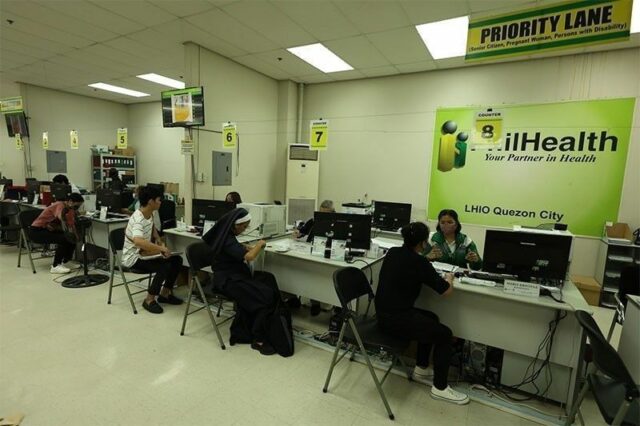
PHILIPPINE STAR/MICHAEL VARCAS

A GROUP has urged Congress to restore the funding it cut from the Philippine Health Insurance Corp.’s (PhilHealth) budget next year as lawmakers finalize this next year’s national spending plan, citing the need for the agency to cover the premiums of its contributors.

PhilHealth had requested a budget of P150.92 billion for 2025, covering the premiums of 25.28 million indirect contributors, the group, led by Senate Minority Leader Aquilino Martin L. Pimentel, said in a statement, dated Dec. 9.

The National Expenditure Program (NEP), however, slashed the agency’s budget to P53.13 billion, while the Senate approved General Appropriations Bill (GAB) for 2025 provided an even lower funding of P47 billion for indirect contributors.

“It harms the whole membership; not only does this degrade the membership of indirect contributors, but it also makes the direct contributors, majority of whom are from the working class, bear a much heavier burden of providing the financial risk protection of all,” the statement read.

It was signed by Mr. Pimentel, former Finance Undersecretary Secretary Cielo D. Magno, Sentro ng mga Nagkakaisa at Progresibong Manggagawa, Philippine Medical Association, and Public Services Labor Independent Confederation Foundation, Inc. among others.

The group consists of the same petitioners that asked the Supreme Court to declare the transfer of P90-billion PhilHealth funds to the national government unconstitutional.

They argued that defunding PhilHealth would worsen its financial crisis, citing the agency’s financial statement which revealed it does not have “excess” funds. This means it has limited sources to fund future liabilities, which include new benefits and programs such as the Konsulta program.

The group said it would file a case before the Supreme Court challenging the budget cut if lawmakers decide not to restore the funding since it is illegal.

Senators Joseph Victor G. Ejercito and Ana Theresia N. Hontiveros-Baraquel did not immediately reply to separate Viber messages seeking comment.

The Senate’s final version of the 2025 spending plan cut PhilHealth’s budget to P64.42 billion from P74.43 billion as proposed in the counterpart House bill, based on a copy sent to reporters on Wednesday.

Lawmakers are set to finalize and ratify the Bicameral Conference Committee Report of the 2025 P6.352-trillion national budget this week.

The Department of Health is allocated a budget of P285.51 billion next year, higher than the P217.38 billion under the NEP proposed by the Budget department.

By slashing budgetary support for premiums of indirect contributors, the government is neglecting its duty under the Universal Health Act to cover the premiums of poor Filipinos.

Under the Sin Tax Law, 80% of half of the total revenue from tobacco and sweetened shall be earmarked to PhilHealth to implement the Universal Healthcare (UHC) Act.

For 2025, the Sin Tax Law earmarks funds for PhilHealth worth P69.81 billion next year.

The group noted that the P53.13-billion and P47-billion proposed funding, under the NEP and the Senate’s GAB not only “fall way below the budget of P150.92 billion that PhilHealth requested, they also violate what PhilHealth should be getting from the Sin Tax Law earmarking.”

Moreover, the group flagged the insertion of a provision that would bypass health technology assessment, which it considered “unconstitutional.”

“We oppose any attempt to insert a Special Provision in the Medical Assistance to Indigent and Financially-Incapacitated Patients (MAIFIP) budget that will allow the purchase of medicines not approved by HTAC and not included in the Philippine National Drug Formulary,” the group said, noting it violates Section 34 of the UHC Act, which mandates the determination of entitlements to undergo the HTAC process.

“We believe that it is unconstitutional for Congress to use the appropriations law as a vehicle for changing the Sin Tax Laws and Universal Healthcare Act. Congress is inserting these riders, amending, and weakening laws that guarantee our health, and doing so through the backdoor.” — John Victor D. Ordoñez

P13.3-B foregone revenues seen

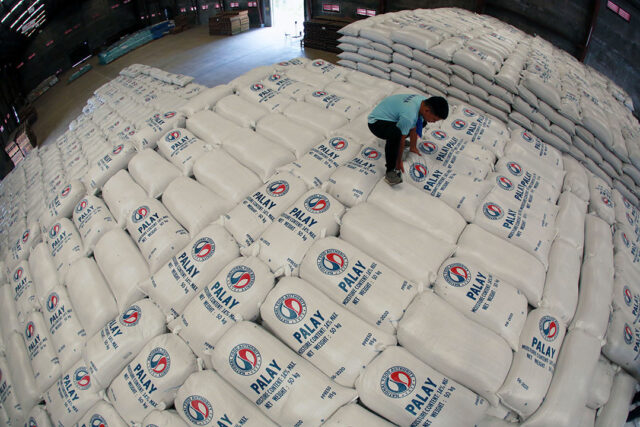
PHILIPPINE STAR/MIGUEL DE GUZMAN

THE PHILIPPINE government’s decision to cut tariffs on rice amid low supply and soaring prices has resulted in P13.3 billion in foregone revenues to date, according to the Bureau of Customs’ (BoC) data submitted to the House of Representatives.

The state collected only P9.3 billion in rice duties from July to Dec. 6, 59% lower than the supposed P22.6-billion collection if the government did not cut rice tariffs earlier in the year.

In June, President Ferdinand R. Marcos, Jr. issued Executive Order (EO) No. 62, which reduced rice import tariffs to 15% from 35% to address soaring prices of rice products in mid-2024.

“While this may be the cost of EO No. 62, its benefit to the public outweighs the potential collected revenue by the Bureau of Customs,” Customs Commissioner Bienvenido Y. Rubio told congressmen.

Philippine authorities were hard-pressed to reduce the retail costs of the staple food in early 2024, when prices averaged between P50 to P65 per kilogram and rice inflation hit 24.4%, the fastest since February 2009.

The tariff cut order reduced the landed cost of imported rice to P33.93 per kilo from P40.26, said Mr. Rubio. He explained that landed costs of goods are composed of freighting fees, buying price of the product and its declared value, and their collected duties and taxes.

However, lawmakers during the House hearing raised concerns over the possible existence of a rice cartel, accusing rice importers and traders of collusion to keep the prices of the staple food artificially high despite reduced import tariffs.

Party-list Rep. Erwin T. Tulfo said there is a disparity between the landed costs of imported rice and its retail prices. “The customs said [the costs] are P33… why is it being sold at the markets at P50?” he asked in Filipino.

November data from the Philippine Statistics Authority showed that the average price of regular milled rice is P49.24 per kilo, with well-milled rice being sold at P54.64 per kilo. The average per kilo of special rice stood at P63.

Marikina Rep. Stella Luz A. Quimbo stated that rice importers and traders could have amassed profits of around P13 billion by hoarding rice stocks and keeping prices high, despite a June order to reduce rice tariffs.

“It’s in the hands of the importers and traders who have profited by P13 billion due to the tariff reduction,” she said in Filipino — Kenneth Christiane L. Basilio

Worker protection in PHL lacking

REUTERS

LEGAL FRAMEWORKS are missing to protect workers in the Philippines from emerging problems, such as job loss due to digitization, an academic said, citing that government structures are not effectively responding to such problems.

University of the Philippines (UP) School of Labor and Industrial Relations Dean Melissa R. Serrano cited five continuing problems for workers across Asia and the Pacific during the International Labour Organization’s (ILO) conference to reflect on how to shape the design and implementation of the new social contract at the national and regional levels.

Specifically, the UP academic cited digitization and automation provoking job loss; expansion of precarious work, including digital platform work; measures related to just transition but are realistically becoming unjust transition, leading to job loss; erosion of workers’ wages and job security; and continuing labor repression and curtailment of workers’ rights.

“My general observation is that in Asia, the responses appear uneven, contradictory, and incoherent, insofar as the interests of the people and the environment are concerned,” she added. “Thus, for many countries in Asia, the government’s tactics, including public policy, are not effectively responding to these changes and continuing challenges and problems.”

The conference seeks to create a platform for regional dialogue on the evolving social contract amid shifting economic, social, and environmental dynamics. It will focus on macroeconomic policies for sustainable economic development and the promotion of fundamental principles and rights at work, including collective bargaining and freedom of association.

“Trade unions have a crucial role to play in shaping the new social contract. However, to effectively play this role, trade unions need to adapt to the changing world of work and to strengthen their capacity to represent and protect workers in non-standard forms of employment,” said Maria Helena Andre, director of ILO’s Bureau for Workers’ Activities. — Chloe Mari A. Hufana

10 agri-traders blacklisted for alleged smuggling

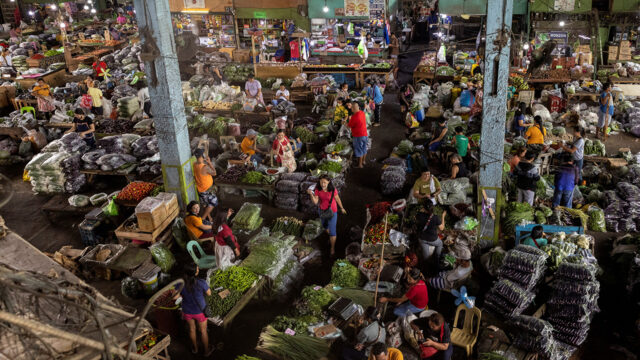
GENERAL view of a public market in Quezon City, Metro Manila, Philippines, Feb. 9, 2023. — REUTERS

THE Department of Agriculture on Tuesday said that it has blacklisted a total of 10 traders in the past six months for engaging in illegal agricultural activities.

“We have blacklisted more companies in the past six months than in the past six years combined.” Agriculture Secretary Francisco P. Tiu Laurel, Jr. said in a statement.

“This should serve as a clear warning to those who attempt to challenge our resolve in going after smugglers and unscrupulous traders whose illegal activities harm our farmers, fisherfolk, and consumers,” he added.

Bureau of Plant Industry (BPI) Director Gerald Glenn F. Panganiban said the licenses of the blacklisted firms have been revoked, and those without licenses were banned based on derogatory findings by the BPI.

The agency said that it is intensifying its efforts to combat agricultural smuggling, profiteering, hoarding, and cartel activities that drive up food prices and destabilize the local market.

“With the recent passage of the Anti-Agricultural Smuggling Act, (the) government is prepared to take more decisive actions against violators,” Mr. Tiu Laurel said.

Republic Act No. 12022 classified agricultural smuggling, hoarding, profiteering, and its financing as economic sabotage.

The law also imposed fines equivalent to five times the value of any smuggled or hoarded agricultural products, with violators also facing the prospect of life imprisonment.

“Government will continue to hold violators accountable and take further measures to ensure the integrity of the country’s agricultural trade system,” Mr. Tiu Laurel said.

The agency said that blacklisted firms had been importing vegetables, fruits, and other food products without the necessary sanitary and phytosanitary import clearances from BPI.

Companies found to be involved in anti-competitive practices, such as price manipulation and collusion, have also been blacklisted.

Traders are yet to respond to messages seeking comment as of press time. — Adrian H. Halili

PNP speeds up emergency response

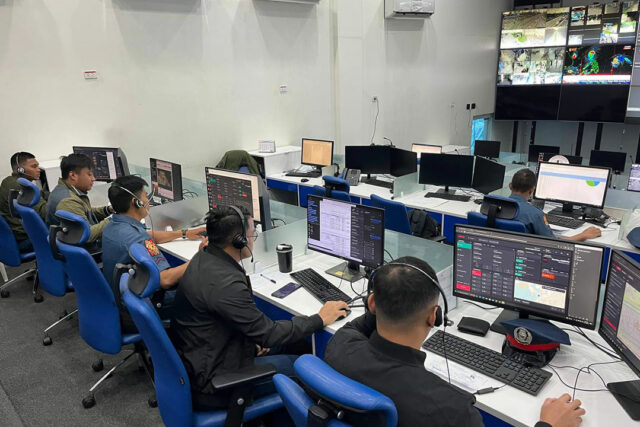
PNP 911 Command Center

THE Philippine National Police (PNP) now responds to emergency calls within three to five minutes, bolstered by the Department of the Interior and Local Government’s (DILG) Revitalized Emergency 911 initiative.

Brigadier General Warren Gaspar A. Tolito, head of the PNP Communications and Electronics Service, said over 90% of calls to Police 911 are answered within the target response time, a marked improvement driven by upgraded systems and protocols.

He said most common cases involve traffic accidents, domestic violence, disturbances, theft and robbery.

The enhanced system, powered by NGA 911 Philippines, enables responders to be dispatched in as little as 40 seconds after a call is received. The technology aligns with US and European standards, said Robert Andrew Llaguno, NGA 911 Philippines’ country head.

PNP Chief Police General Rommel Francisco D. Marbil directed police to maintain the three-to-five-minute standard, aligning with President Ferdinand R. Marcos, Jr.’s vision of world-class emergency services.

The DILG’s E911 National Office signed a memorandum with NGA 911 in August, adopting Next Generation 911 technology to further enhance emergency capabilities. Supported by PLDT’s network, the partnership aims to elevate the Philippines’ emergency response to global standards. — Chloe Mari A. Hufana

OFWs to get cancer treatment access

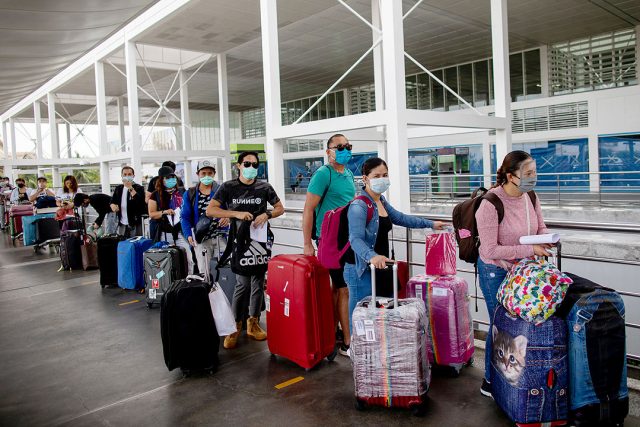
REUTERS

OVERSEAS Filipino workers (OFWs) and their families will soon have access to specialized cancer treatment with the establishment of the Bagong Pilipinas Cancer Care Center, part of the OFW Hospital in Pampanga.

President Ferdinand R. Marcos, Jr. and Department of Migrant Workers (DMW) Secretary Hans Leo J. Cacdac on Tuesday led the groundbreaking ceremony for the facility.

Mr. Cacdac said all services at the new facility will be free for OFWs, whether working abroad, preparing for deployment, or retired, and their dependents.

The P80-million facility, scheduled for completion in November 2025, will feature chemotherapy services. It will be operational by 2026.

The DMW is also eyeing to introduce radiotherapy and advanced diagnostic imaging, in partnership with other institutions.

“Everything is free, whether you are an OFW now, just going abroad, or retired from the service, you and your loved ones will be welcomed here at the OFW Hospital and we will strive to meet all your medical needs under our New Philippines,” he said in Filipino.

It will also help lessen overcrowding in the hospital’s Outpatient Department (OPD), which currently serves more than 160 patients every day.

The OPD will relocate to the new site once operational, allowing the current OPD space to be repurposed for pre-departure and post-arrival medical examinations for OFWs. — Chloe Mari A. Hufana

Bill postponing BARMM polls passed on second reading

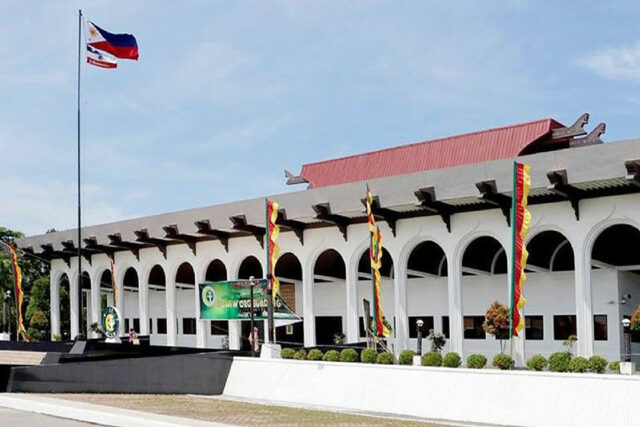
PHILSTAR FILE PHOTO

THE House of Representatives on Monday approved on second reading a measure postponing the first general elections of the Bangsamoro Autonomous Region in Muslim Mindanao (BARMM) by a year to 2026.

House Bill (HB) No. 11144 proposed to hold the general elections of BARMM on the second Monday of May 2026, and to be subsequently held every three years after.

Lawmakers sought to defer BARMM’s elections after the Philippine Supreme Court decided to exclude Sulu from the autonomous region after its constituents rejected the Bangsamoro Organic Law during a 2019 plebiscite.

The House floor adopted amendments introduced by Basilan Rep. Mujiv S. Hataman, which included mandating automated elections for BARMM.

He also introduced a new section requiring the Bangsamoro government to allocate to Sulu province its share of the annual block grant from the National Government, providing the segregated region a funding source for its 2025 programs.

It also authorized President Ferdinand R. Marcos, Jr. to appoint 80 interim members of the Bangsamoro Transition Authority, while no successors have been elected, according to the proposed law. — Kenneth Christiane L. Basilio

Lack of policy vs bullying flagged

BW FILE PHOTO

THE newly signed Republic Act (RA) No. 12080, the Basic Education Mental Health and Well-Being Promotion Act, highlighted the lack of localized anti-bullying policies in more than 10,000 schools, the Senate said on Monday.

In November, the Second Congressional Commission on Education reported 10,018 schools with no regulations to safeguard children against bullying despite being required by the Anti-Bullying Act of 2013, under RA 10627.

“This absence has contributed to the Philippines recording the highest rates of bullying among students in the Program for International Student Assessment (PISA) 2018,” the Senate said in a statement.

In the 2018 PISA report, 65% of Filipino students reported being bullied a few times in a month, much higher than the average 23% of the Organization for Economic Cooperation and Development countries.

The Department of Education Learner Rights and Protection Office noted that since the legislation of the Anti-Bullying Law in 2013, the number of reported incidents from 2018 to 2019 reached 20,172, the highest among reported incidents from 2013 to 2023.

Meanwhile, the 2022 PISA report revealed that 43% of girls and 53% of boys experience bullying multiple times a month.

Through RA 12080, Senator Sherwin T. Gatchalian, who co-authored the law, hopes to address these alarming issues of bullying and support the mental health of students.

“This law seeks to address gaps in the education system’s ability to support student mental health, especially since the Philippines has the highest reported cases of bullying among students in the world,” Mr. Gatchalian said in a statement.

“We hope to ensure a safer, more supportive environment for Filipino learners,” he added.

The newly signed law mandates a school-based mental health program for all public and private basic education institutions to promote mental health awareness and provide services such as screening, evaluation, monitoring of students’ mental well-being, mental health first aid, crisis response, and referral systems.

New plantilla positions will also be created for school counselors, counselor associates, and school division counselors to address the “alarmingly low” ratio of guidance counselors to students in many public schools and give adequate support to students in need.

In addition, a mental health and well-being office in every school division is also required by the law to monitor, train, and provide the framework for school-based mental health programs.

“When our learners and school personnel are mentally healthy, academic performance improves, absenteeism decreases, and a culture of compassion and understanding flourishes,” President Ferdinand “Bongbong” R. Marcos, Jr. said in a statement. — Almira Louise S. Martinez

2 Moro farmers killed in Maguindanao ambush

COTABATO CITY — Gunmen killed two Moro farmers in an ambush in Datu Paglas town in Maguindanao del Sur on Monday.

The fatalities, Kamaro G. Balulao and Kasan M. Sulayman, were riding a motorcycle together and were about to pull over to buy something from a store along a highway in Datu Paglas when they were shot with pistols by men positioned along the route, killing them both on the spot.

Brig. Gen. Romeo J. Macapaz, director of the Police Regional Office-Bangsamoro Autonomous Region, said on Tuesday that the victims were on their way to Lutayan town in Sultan Kudarat when they were attacked by gunmen who had immediately escaped before responding volunteer community watchmen and barangay officials could reach the crime scene.

Mr. Macapaz said investigators in the Datu Paglas Municipal Police Station and local officials are cooperating in identifying the killers for prosecution. — John Felix M. Unson

30 tons of giant clam shells seized in Sulu

COTABATO CITY — Policemen and personnel of the Bangsamoro agriculture and fisheries ministry seized 30 tons of giant sea clam shells in a joint operation in Barangay Taglibi in Patikul, Sulu on Sunday.

Officials of the Ministry of Agriculture, Fisheries and Aquatic Resources-Bangsamoro Autonomous Region in Muslim Mindanao (MAFAR-BARMM) and the Sulu Maritime Police Station estimated the giant clams (Taklobo) to be valued at P45 million.

Brig. Gen. Romeo J. Macapaz, director of the Police Regional Office-Bangsamoro Autonomous Region, told reporters on Tuesday that the giant clams are now in the custody of the MAFAR-BARMM.

MAFAR-BARMM officials said the giant clams (Tridacna gigas) are considered as endangered species.

Mr. Macapaz said officials will intensify their common campaign against poaching of giant clams in the territorial seas of Sulu and Tawi-Tawi.

He said their intelligence agents in Sulu are now trying to identify the poachers who had stockpiled the giant clam shells found in Barangay Taglibi in Patikul, apparently to be sold to a buyer in mainland Mindanao. — John Felix M. Unson

Mt. Province twin raids yield drugs, guns

BAGUIO CITY — Drugs and illegal guns were seized by authorities during simultaneous raids in Barangay Otucan, Bauko town and in Sitio Tam-awan, Barangay Guinzadan Sur, Bauko town, both in Mountain Province on Monday.

Operatives from the Philippine National Police Provincial Drug Enforcement Group-Special Operations Unit Cordillera (PNP-PDEG SOU CAR), Mt. Province Provincial Police together with the Philippine Drug Enforcement Agency-Cordillera (PDEA-CAR), caught the owner of the house where eight sachets of crystal meth (shabu), weighing around 10 grams, were confiscated. It was valued at P50,000.

Other drug paraphernalia, firearms, and ammunition were also discovered, said PDEA-CAR Regional Director Derrick Arnold C. Carreon, prompting authorities to sue the suspect, whose name had been withheld.

A composite team of PDEA-Mt. Province agents together with policemen also raided a house in Sitio Tam-awan and seized six sachets of shabu, weighing an estimated 22.5 grams with a value reaching P112,000, along with various drug paraphernalia.

The suspect, a 36-year-old mechanic will be facing illegal drug charges while the caught drug suspect from Otucan, Bauko will be facing drug charges and illegal firearms cases. — Artemio A. Dumlao

Clark food hub private partner to be selected by end of 2025

BFCT BAGSAKAN FACEBOOK PAGE

By Justine Irish D. Tabile, Reporter

THE Clark International Airport Corp. (CIAC) said it hopes to award the National Food Hub project to a private partner by the end of 2025, keeping it on track for first-phase completion before the Marcos administration steps down.

CIAC President Joseph P. Alcazar said that the feasibility study being conducted by the Asian Development Bank is due for completion by March.

“After we get that, then we will steam ahead with the development and invite investors. The feasibility study is important for us to be able to do a proper tender for the food hub,” Mr. Alcazar told reporters on Tuesday.

“After the feasibility study we will be entertaining public-private partnership proposals,” he added.

He said the project has received inquiries from foreign firms with local partners.

“Nothing is official… there are no letters of intent yet. But there are two or three groups trying to explore what needs to be done,” he said.

“There are foreign firms, and most of the foreign firms have local partners. I think with the amount of investment that is needed, there will definitely be foreign components,” he added.

He said studying the proposals takes around three to six months, including the Swiss challenges.

“Hopefully before 2025 ends, we have a partner already. That’s our timeline,” he said.

“The ultimate objective is to be able to launch at least a phase of it within the term of the President. But of course, we will push for as much infrastructure to be built. But at least the first phase should be there by that time,” he added.

He said that the food hub needs infrastructure like roads and access.

He said the CIAC is also batting for the passage of the Clark National Food Hub Act to establish a comprehensive program for the management and operation of the food hub and its strategic nationwide trading network.

“Part of (the bill) is the allocation of budget for the National Food Hub and the additional incentives over and above CREATE MORE for the investors and the locators of the food hub,” he added.

Signed into law by President Ferdinand R. Marcos, Jr., CREATE MORE, or the Corporate Recovery and Tax Incentives for Enterprises to Maximize Opportunities for Reinvigorating the Economy Act, aims to attract more investment by lowering the corporate income tax to 20%, among others.

Written by Representatives Rufus B. Rodriguez, Maria Angela S. Garcia, and Anna Victoria Veloso-Tuazon, the food hub act, or House Bill 10678, is currently with the House Committee on Trade and Industry.