Home Blog Page 1738

PHL stocks extend decline as tariff worries linger
BW FILE PHOTO

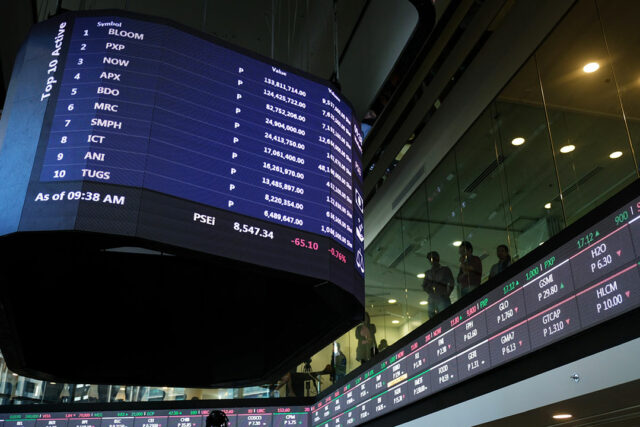
PHILIPPINE STOCKS closed lower for the third consecutive day on Tuesday as concerns over the economic impact of the Trump administration’s planned tariffs continued to dampen the market’s mood.

The benchmark Philippine Stock Exchange index (PSEi) fell by 0.52% or 32.17 points to end at 6,159.85, while the broader all shares index dropped by 0.92% or 34.13 points to 3,657.18.

“The local market declined for a third straight day as US President Donald J. Trump warned of more tariffs to come, this time on cars, pharmaceuticals, lumber, and semiconductors. The US president also warned of tariffs against those buying oil from Venezuela,” Philstocks Financial, Inc. Senior Research Analyst Japhet Louis O. Tantiangco said in a Viber message. “The mounting tariff threats are weighing on the global economy’s outlook.”

“Philippine shares fell once again as uncertainty over Trump’s tariff plans weighed on sentiment,” Regina Capital Development Corp. Head of Sales Luis A. Limlingan likewise said in a Viber message.

Mr. Trump said on Monday automobile tariffs are coming soon even as he indicated that not all of his threatened levies would be imposed on April 2 and some countries may get breaks, a move Wall Street took as a sign of flexibility on a matter that has roiled markets for weeks, Reuters reported.

At the same time, Mr. Trump opened another front in a global trade war by slapping 25% secondary tariffs on any country that buys oil or gas from Venezuela, a directive that sent oil prices climbing.

US stocks ended Monday broadly higher on optimism that the tariffs set to be detailed next week may not be as extensive as expected. The S&P 500 index gained nearly 1.8% to close at its highest in more than two weeks.

Asian stock bourses initially joined in on Tuesday morning but by mid-afternoon the relief rally looked set to fizzle out. MSCI’s broadest index of Asia-Pacific shares outside Japan was 0.35% lower ahead of the European open.

At home, majority of sectoral indices closed lower on Tuesday. Mining and oil declined by 3.02% or 285.32 points to 9,161.31; holding firms sank by 1.42% or 72.99 points to 5,055.88; industrials dropped by 0.74% or 65.18 points to 8,727.29; and financials went down by 0.55% or 13.42 points to 2,388.83.

Meanwhile, property rose by 0.45% or 9.95 points to 2,209.66 and services increased by 0.02% or 0.43 points to 1,997.98.

“Universal Robina Corp. was the top index gainer, climbing 1.93% to P76.45. Semirara Mining and Power Corp. was the main index laggard, falling 4.59% to P35.30,” Mr. Tantiangco said.

Value turnover went up to P4.75 billion on Tuesday with 520.59 million shares exchanged from the P4.63 billion with 630.53 million issues traded on Monday.

Decliners outnumbered advancers, 107 versus 84, while 56 issues were unchanged.

Net foreign selling climbed to P604.51 million on Tuesday from P240.83 million on Monday. — Revin Mikhael D. Ochave with Reuters

Peso sinks on tariff, Fed easing concerns

BW FILE PHOTO

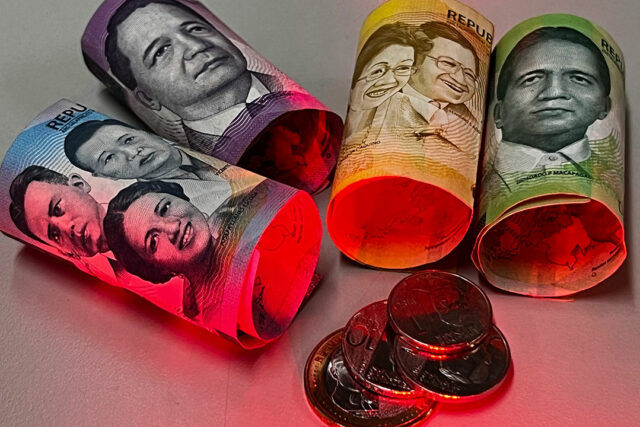
THE PESO dropped sharply against the dollar on Tuesday amid lingering uncertainty over the Trump administration’s tariff plans and following hawkish comments from a US Federal Reserve official.

The local unit closed at P57.60 per dollar on Tuesday, sinking by 28 centavos from its P57.32 finish on Monday, Bankers Association of the Philippines data showed.

The peso opened Tuesday’s session slightly stronger at P57.31 against the dollar. Its worst showing was at P57.61, while its intraday best was at P57.30 versus the greenback.

Dollars exchanged went up to $1.54 billion from $1.098 billion on Monday.

“The dollar-peso traded lower on risk-off sentiment amid trade uncertainty and prospects of a narrowing interest rate differential after Bostic signaled last night the possibility of just one rate cut versus the BSP’s (Bangko Sentral ng Pilipinas) signal of 75 bps (basis points),” a trader said in a phone interview.

Federal Reserve Bank of Atlanta President Raphael Bostic said he now sees just one interest rate cut as likely this year, rather than two, with tariff hikes impeding progress on disinflation, Bloomberg reported.

“I moved to one mainly because I think we’re going to see inflation be very bumpy and not move dramatically and in a clear way to the 2% target,” Mr. Bostic said on Monday in an interview with Bloomberg Television in Atlanta. “Because that’s being pushed back, I think the appropriate path for policy is also going to have to be pushed back.”

In a discussion with Bloomberg journalists after his television appearance, the Atlanta Fed chief emphasized that uncertainty caused by President Donald J. Trump’s frequent policy changes are making economic forecasting more difficult.

Mr. Bostic said the introduction of more tariffs added upside risk to inflation, and a decline in sentiment or a rise in layoffs would present downside risks to employment. Yet he also emphasized he’s waiting until policy changes are implemented before further adjusting his forecasts.

“Given how rapidly policy changes from week to week and month to month, it’d be very difficult for me to, with any confidence, take on board things until we’ve actually seen them put in place and sticking,” he said.

Fed Chair Jerome H. Powell, speaking last week ofter the Fed left rates unchanged, reiterated that officials are in no hurry to adjust rates, saying the US economy is on solid footing despite sagging consumer sentiment.

Mr. Powell said he expects the inflationary impact of tariffs will be transitory, signaling officials can look through the price effects of tariffs and lower rates if the labor market weakens substantially — so long as long-term inflation expectations remain stable.

Meanwhile, the Philippine central bank appears on track to resume rate cuts in April, BSP Governor Eli M. Remolona, Jr. said on Tuesday.

“We are on an easing cycle. There is a good chance we will cut by 25 basis points,” the Bangko Sentral ng Pilipinas chief said in an interview with Bloomberg Television’s David Ingles on the sidelines of the HSBC Global Investment Summit in Hong Kong.

Cumulative rate cuts could reach as much as 75 basis points for the year depending on data, said Mr. Remolona, flagging “somewhat more upside risk than downside risk” for inflation in 2025 and 2026. The Philippines last lowered borrowing costs in December and unexpectedly paused its easing in February.

The dollar was also supported by the continued increase in global crude oil prices, Rizal Commercial Banking Corp. Chief Economist Michael L. Ricafort added in a Viber message.

For Wednesday, the trader expects the peso to move between P57.30 and P57.80 per dollar, while Mr. Ricafort said the exchange rate could range from P57.50 to P57.70. — A.M.C. Sy with Bloomberg

MPIC unit opens 3.5-hectare Bulacan greenhouse complex

PHILSTAR FILE PHOTO

METRO PACIFIC Agro Ventures (MPAV), a unit of Metro Pacific Investments Corp. (MPIC), opened a 3.5-hectare vegetable greenhouse complex on Tuesday in San Rafael, Bulacan.

Metro Pacific Fresh Farms (MPFF) is planned for eventual expansion to seven hectares, MPAV CEO and President Jovy I. Hernandez told reporters.

The first phase of MPFF, consisting of six greenhouses, promises yields equivalent to five times those of traditional farms, promising up to 500 metric tons of fresh vegetables annually.

The farm can produce around 60,000 heads of lettuce each month.

Aside from leafy vegetables, the greenhouses also produce melons and tomatoes, among others, which will be sold under the brand name More Veggies Please.

“The vision behind these investments is an agriculturally independent Philippines,” MPIC Chairman, President, and CEO Manuel V. Pangilinan said.

“We want to help build a nation that’s capable of feeding all of its people.”

The greenhouse is equipped with technology developed by the LR Group, an Israeli agribusiness company.

The technology includes a nutrient film technique for leafy greens and drip irrigation systems for other types of vegetable, enabling efficient growing with less resources than in conventional agriculture. 

This allows vegetables to be grown using 90% less water and land, it said.

The greenhouses are designed to withstand typhoons as strong as Signal No. 4 in the Philippine storm warning classification, indicating winds exceeding 185 kph.

The MPFF facilities require less chemical pesticides and fertilizer, cutting exposure to contaminants by 90-99%.

Mr. Hernandez said MPFF removes middlemen from the value chain, with the produce — harvested every 27 days — directly delivered to its clients such as hypermarkets, hotels, restaurants, and food processors right after packaging.

Businesses can partner with MPFF in customizing their supply based on demand trends and customer preferences.

The company seeks to put up 10 satellite sites across the country in 10 years, according to Mr. Hernandez.

The Board of Investments granted the vegetable farm project green lane status in 2023 in recognition of its status as a strategic investment. — Kyle Aristophere T. Atienza

Israeli firms working on at least two PHL agricultural projects

REUTERS

By Kyle Aristophere T. Atienza, Reporter

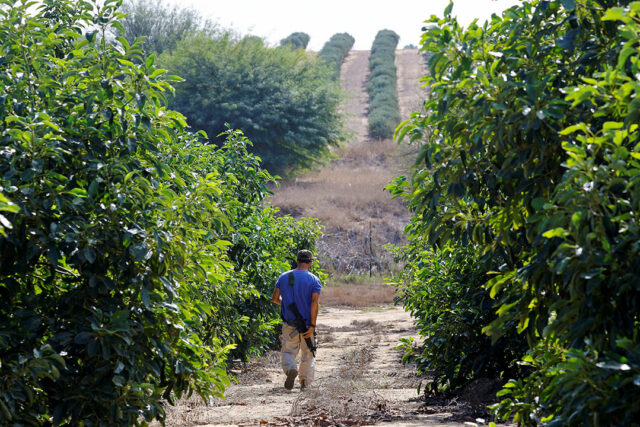
ISRAELI companies are working on poultry and cacao projects in the Philippines, Israel’s ambassador to Manila Ilan Fluss told BusinessWorld on the sidelines of a greenhouse launch in Bulacan province.

He said Israeli companies are also exploring investments in healthcare, software, and telecommunications.

Israeli investors need to branch out overseas because of the small domestic market, Mr. Fluss said.

“The mindset of an Israeli businessman is international because the domestic market is not so big,” he said. “So, we always look at the international market when we need to grow,” he added.

“Israeli companies realize that the Philippines is a major market, and it’s a country where there are so many opportunities,” he added.

Mr. Fluss said one of the major challenges for Israeli companies seeking to do business in the Philippines is identifying a “solid” partner.

Seven Israeli business delegations visited the Philippines in 2024, representing the agriculture, water, cosmetics, and wine industries, as well as companies specializing in cybersecurity and disaster preparedness, he noted.

Israeli Foreign Minister Eli Cohen in 2023 told President Ferdinand R. Marcos, Jr. that the Philippines and Israel can collaborate in water management, given Israel’s expertise.

“We would like to do more sharing of best practices (via) government-to-government (negotiations),” Mr. Fluss said.

The two countries’ bilateral trade hit $532 million in 2023, against $534 million a year earlier.

Israeli exports to the Philippines in 2023 were valued at $349 million and included integrated circuits, vessels, and armored vehicles.

Masungi developer appeals DENR eviction order

PHILIPPINE STAR/ MICHAEL VARCAS

MASUNGI GEORESERVE operator Blue Star Construction & Development Corp. urged the Department of Environment and Natural Resources (DENR) on Tuesday to reconsider its eviction order and resolve matters via dialogue, asserting that its 2002 contract with the government complies with procurement law.

In a statement, Blue Star added that it is not responsible for failing to build 5,000 housing units, citing an unresolved squatter problem.

“To date, the contractual project timeline has not commenced due to the DENR’s inability to clear the site of illegal occupants and claimants,” it said.

The DENR on March 7 canceled its 2002 supplemental agreement with Blue Star, citing the company’s alleged failure to execute the housing project and calling the deal illegal. It also ordered the company to vacate its 300-hectare site within the georeserve.

Blue Star said it formally received the notice of cancellation and eviction on March 17.

Blue Star said the 2002 contract explicitly states that the project will begin 15 days from DENR’s delivery of land free from encumbrances and adverse claims, “conditions essential for peaceful, safe and lawful project implementation.”

“These safeguards were specifically designed to prevent the setbacks encountered in the previous, similarly encumbered site.”

Blue Star signed a joint venture agreement with the DENR in 1997 for the survey, design construction, development and marketing of a project called “Garden Cottages” on a 130-hectare government property in Tanay, Rizal, according to a DENR statement.

The DENR said Blue Star obtained a supplemental agreement in 2002 that increased its project area by an additional 300 hectares “despite no substantial housing units built on the original 130 hectares awarded.”

Blue Star reiterated that its Supplemental Joint Venture Agreement with the DENR in 2002 adhered to applicable government procurement laws. 

“Public bidding is not required for repeat orders or supplemental agreements within the original contract cost, as provided under Presidential Decree 1594, which governed procurement rules at the time,” it said.

“The reference to an expansion area of 300 hectares — compared to the original 130 hectares — is largely due to the presence of unbuildable karst terrain,” it added. “The contract value, not the land area, is the relevant benchmark.”

DENR Assistant Secretary for Legal Affairs Norlito Eneran has said the 2002 supplemental agreement is “now without basis” since the original joint venture agreement for the housing project was “never executed, and no bidding process occurred despite the five-year timeline.”

Blue Star said the 2002 deal is valid and enforceable, and “does not require the prior issuance of a Presidential Proclamation alienating Lot 10 at the time of contract execution.”

“The agreement reflects DENR’s express undertaking to enable such alienation. Any absence of such proclamation is not attributable to Blue Star but rather falls under the DENR’s purview,” the company said.

In 2008, Blue Star negotiated to exchange the unbuilt 5,000 housing units in the 130-hectare project site for only 145 housing units in a 1.5-hectare site in Dasmariñas, Cavite.

The Masungi Georeserve Foundation recently said the eviction order threatens not only years of forest restoration, wildlife protection, and geotourism but also the livelihoods of up to 100 rangers and their families. — Kyle Aristophere T. Atienza

BoI targets Japan industrial estate, tourism developers 

BW FILE PHOTO

THE Board of Investments (BoI) said it is targeting Japanese developers for industrial and tourism-related land development activities in the Philippines.

“We told them, and as validated by (consultancy) Colliers, development of industrial areas will be a good segment to consider,” BoI Industry Development Services Executive Director Ma. Corazon Halili-Dichosa said via Viber. 

“As we get investment queries requiring large areas for manufacturing plants, power generation, or data centers, land development for industrial purposes is a good opportunity,” she added.

She said Japanese developers were also invited to look into tourism-related activities.

The BoI held exploratory discussions on potential opportunities in real estate in the Philippines with Japan’s Ministry of Land, Infrastructure, and Transport and Tourism (MLIT). 

“They will bring home the information to their private sector groups and meet with us again,” said Ms. Halili-Dichosa.

She said that the next meeting has no set date, but noted that the MLIT requested copies of the presentations.

According to BoI, the Philippines is an emerging destination for Japanese developers, featuring increasing demand for residential and commercial property.

“The BoI remains steadfast in its commitment to promoting real estate investment, striving to create a more business-friendly environment for investors,” Ms. Halili-Dichosa said.

The MLIT, through its Joint Network for Overseas Real Estate Business program, “is exploring ways to facilitate the expansion of Japanese firms by collaborating with local governments and addressing institutional issues related to the overseas real estate industry.” 

Asked to comment, Colliers Research Director Joey Roi H. Bondoc said demand is growing for industrial space in South and Central Luzon as more heavy industry investments come in.

“Previously, industrial locators in Central Luzon were in light to medium manufacturing,” he said.

He said that the more the country attracts high-value investment, the greater the demand for industrial land development.

“Since they are labor and capital-intensive, they will be requiring bigger parcels of industrial parks, not just industrial land but even industrial facilities, like the warehouses, for example,” he added. — Justine Irish D. Tabile

Ongoing spending capped at P3.864T in 2026

BW FILE PHOTO

THE Department of Budget and Management (DBM) said it set a ceiling of P3.864 trillion for ongoing spending in 2026, as the deadline looms for agencies to prepare funding proposals for more discretionary items, which are subject to available fiscal space.

According to National Budget Memorandum No. 154 issued on Tuesday, the DBM said the deadline for filing proposals to fund items subject to available space, which it calls Tier-2 spending, is April 30.

The budget ceiling for ongoing spending, or Tier-1, was set at P3.760 trillion in 2027. The DBM’s forward estimate for departments’ and agencies’ Tier-1 spending is P3.646 trillion for 2028.

Budget Secretary Amenah F. Pangandaman said on March 13 that the DBM is finalizing the Tier-1 budget.

The Tier-1 submissions notify the DBM of agencies’ spending requirements in ongoing activities in the next three fiscal years.

In the memorandum, the DBM said Tier-2 spending approvals will conform to the priorities identified by the Philippine Development Report 2024.

“These include flagship infrastructure programs, human capital development initiatives, food and water security measures, and digitalization efforts, among others,” the DBM said. 

In 2026, the overall National Expenditure Program will hit a record P6.793 trillion, up 7.38% from the P6.326-trillion budget signed in 2025. — Aubrey Rose A. Inosante

Bataan shipmaker Herma sees new tanker servicing growing petroleum logistics demand

HERMA

HERMA SHIPYARD, INC. (HSI) said it launched a petroleum tanker with capacity of 18 mega barrels (MB) from its Bataan facility, saying it is well-positioned to service growing demand for modern petroleum transport. 

In a statement on Tuesday, Herma said the tanker Malawig is set to be operated by Herma Shipping and Transport Corp.

Herma Shipyard is also set to launch another 18-MB tanker in July.

Herma Shipyard and Herma Shipping are part of the Herma Group, established in 1985. Its businesses also include petroleum supply chain services, environmental management services, agribusiness, shared corporate services, and property development. — Ashley Erika O. Jose

NAIA T3 lease payment rises to P489M

PHILIPPINE STAR/AJ BOLANDO

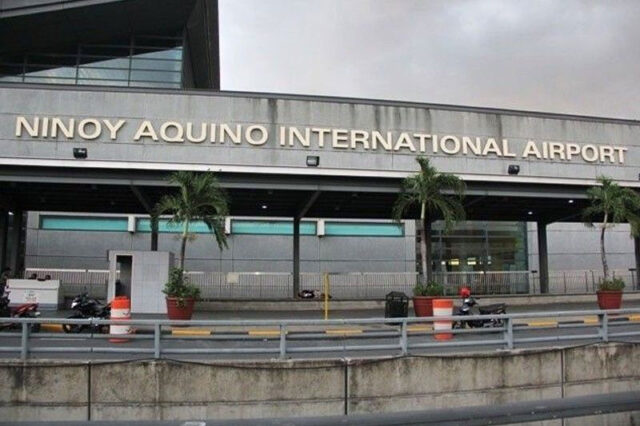
THE Bases Conversion and Development Authority (BCDA) has signed a new memorandum of agreement (MoA) featuring higher annual lease payment for the Ninoy Aquino International Airport (NAIA) Terminal 3 (T3) site.

The BCDA signed the new agreement with the Manila International Airport Authority (MIAA) on Tuesday.

“This new agreement follows the expiration of the 25-year lease in 2023,” the BCDA said in a Facebook post late Tuesday.

“Under the revised terms, BCDA secured a higher annual lease payment of P489 million, a significant increase from the previous P180 million,” it added.

According to BCDA, the MoA also grants MIAA a three-year option to either purchase the property for P48.89 billion, which is the property’s zonal value, or continue leasing from the BCDA.

“Acquiring the property would enable MIAA to gain full ownership of the land and infrastructure, allowing for substantial investments in the airport’s development, modernization, and expansion,” the BCDA said.

“This would ultimately enhance its capacity to accommodate the growing demands of both domestic and international air travel,” it added.

The MIAA in January said that NAIA posted passenger throughput of 50.26 million in 2024, up 10.9%.

This year, the MIAA is targeting a 20-30% increase in passenger numbers.

The signing ceremony, which took place at the MIAA office, was attended by BCDA Chairperson Hilario B. Paredes, BCDA President and Chief Executive Officer Joshua M. Bingcang, and MIAA General Manager Eric Jose Castro Ines.

Earlier this year, the BCDA reported a 3% increase in revenue to P11.3 billion in 2024, boosted by a joint venture deal for a mixed-use development in Taguig City.

It also cited a 39% increase in toll and airport concession revenue to P3.2 billion and a 48% increase in dividends from affiliates to P1 billion.

In April 2024, the BCDA said that it remitted P1.1 billion in dividends to the Bureau of the Treasury in 2023, which is double the P527 million it remitted in 2022.

Since its creation, BCDA’s dividends have amounted to P9.6 billion. — Justine Irish D. Tabile

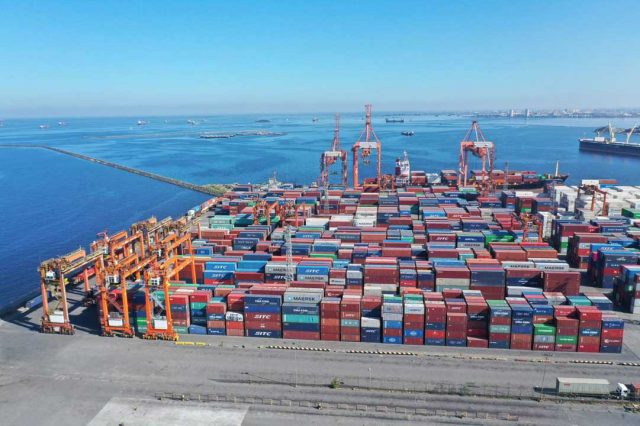
PHL a top climber in trade facilitation rankings

THE PHILIPPINES was among the “lead reformers” in the Asia-Pacific region on trade facilitation, the Organisation for Economic Cooperation and Development (OECD) said in a report.

Trade facilitation refers to measures that streamline and simplify technical and legal procedures for products at the border.

According to the OECD’s 2025 Trade Facilitation Indicators, the Philippines scored 14.97 across 11 indicators, putting it among the “leading reformers” like Laos, Kiribati, Cambodia, Maldives, Tonga, Vanuatu, Thailand, Indonesia, Myanmar and Vietnam.

The “lead reformers” refer to countries that had the highest percentage change between their average trade facilitation performance in 2022-2024 from 2020-2022.

The Philippines ranked 15th out of 33 Asia-Pacific countries.

“Being one of the fastest nations to adopt positive reforms on trade facilitation is a welcome sign that the country is catching up with its neighboring countries,” Oikonomia Advisory and Research, Inc. economist Reinielle Matt M. Erece told BusinessWorld via Viber.

However, Mr. Erece emphasized that the Philippines must cut red tape and embrace digital integration to sustain its progress.

“Improvements in these areas will ensure faster trade activity while improving security and transparency on the borders,” he added.

The leading performers in the region in 2024 were Hong Kong, Japan, Singapore, South Korea, Australia; New Zealand, China, Malaysia, Thailand, and India, the OECD said.

Overall, South Korea was the best performer in the Asia-Pacific region with a 20.83 score, while the Federal States of Micronesia was last with a 3.41 score.

The OECD said nearly one in two economies in the Asia-Pacific improved their performance in areas of domestic border agency co-operation and information availability.

“The report shows that border bottlenecks and red tape, as measured by the OECD, were reduced on average by 3%-7% since 2022 across the 163 countries and regions covered,” it said.

The OECD also added that this resulted in trade facilitation reforms that reduced trade costs by up to 5% over the last decade. — Aubrey Rose A. Inosante

BIR wins P5.7-B tax evasion case

BW FILE PHOTO

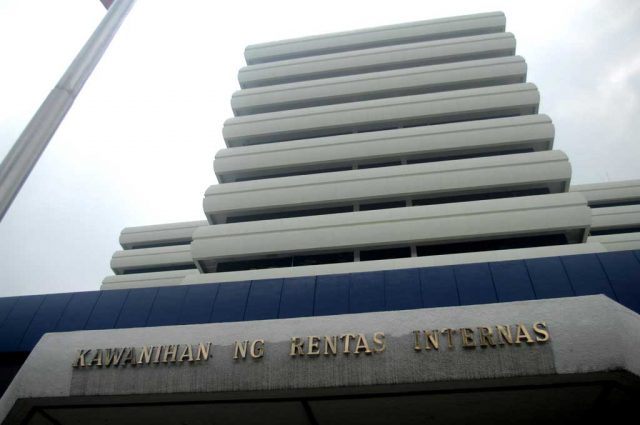
THE Bureau of Internal Revenue (BIR) won a P5.7-billion tax evasion case against a Chinese-run illicit cigarette business.

In a statement on Tuesday, BIR Commissioner Romeo D. Lumagui, Jr. said the tax evasion case against five Chinese nationals linked to the cigarette operations emerged after its largest raid against illicit cigarettes in 2024.

The Department of Justice (DoJ) ruled in favor of the BIR after the case was filed by the BIR on Feb. 7. The DoJ then forwarded the complaint to the Court of Tax Appeals on March 13.

“The case filed by the BIR with the DoJ came after a multi-city raid executed by the BIR and the Criminal Investigation and Detection Group on Nov. 6 and 7 in Valenzuela and Bulacan,” the BIR said.

The BIR said the total tax liability in the case amounted to P5.76 billion after 21,000 master cases of illicit cigarettes were seized during the operation. — Aubrey Rose A. Inosante

Top US defense official’s visit shows ‘ironclad’ commitment to Philippines

PHILIPPINE STAR/KRIZ JOHN ROSALES

By Kenneth Christiane L. Basilio, Reporter

THE Armed Forces of the Philippines (AFP) on Tuesday said US Defense Secretary Peter Brian Hegseth’s visit to Manila reaffirms the US’ “ironclad” commitment to its oldest treaty ally in Asia.

“This visit reaffirms what our ally, the US, has long been saying — that their commitment to supporting us and strengthening our alliances with them is ironclad,” military spokesperson Francel Margareth Padilla-Taborlupa told a news briefing in Filipino.

The Philippine military did not say whether Mr. Hegseth would visit military camps, including joint Philippine-US military sites, during his engagement.

“These items will be discussed further with the Defense department as they coordinate for the particular visit of the US secretary of Defense,” Xerxes A. Trinidad, chief of the AFP’s Public Affairs Office, told the same briefing.

Mr. Hegseth will visit the Philippines on March 28 to 29 for a meeting with Philippine President Ferdinand R. Marcos, Jr. and Defense Secretary Gilberto C. Teodoro, Jr., with talks expected to center on advancing Manila and Washington’s defense ties, the US Embassy in Manila said in a statement last week.

The US Defense chief’s trip to the Philippines comes on the heels of his tour to Hawaii and Guam, where he would meet military leaders overseeing the Pacific region. He will also visit Japan, another Asian ally of the US that has been at odds with China over Senkaku Islands.

China claims more than 80% of the South China Sea based on a 1940s map, which a United Nations-backed arbitration court voided in 2016 for being illegal.

The Philippines and China have repeatedly clashed in the South China Sea, one of the world’s busiest shipping lanes, due to overlapping claims over disputed maritime features.

Manila has been at the forefront of efforts to contest Beijing’s expansive sea claim, forging deeper security ties with western countries and regional allies like Japan and Australia.

Meanwhile, the AFP said it would welcome the deployment of another American-made Typhon missile launcher in the Philippines should the US send another one.

“The more, the merrier,” Ms. Taborlupa said, reacting to speculations that the US had shipped a second unit of the midrange missile system to the Philippines. A March 18 report by Defense News said the US Army is preparing the deployment of another Typhon battery in the Pacific region.

The Typhon system can launch missiles, including SM-6 missiles and Tomahawks with a range exceeding 1,600 kilometers, capable of reaching the Chinese mainland. It was flown to the Philippines in April last year and has since drawn sharp criticism from Beijing.

The People’s Daily, the newspaper of the governing Communist Party, has urged the Philippines to give up the Typhon missile system, which was deployed by US forces to the Philippines as part of joint military exercises to keep the peace in the region.

Deploying another Typhon missile battery in the Philippines is not intended to escalate tensions in the region, Philippine Navy Rear Admiral Roy Vincent T. Trinidad said.

“The defense posture of the Republic of the Philippines is not designed against any other country,” he said at the Tuesday’s briefing. “We have been abiding by the rules-based international order.”

FA-50 GREENLIGHT
Also on Tuesday, the Philippine Air Force said it might lift an order that grounded its FA-50 fleet, allowing it again to conduct patrols in the South China Sea, air force spokesperson Ma. Consuelo N. Castillo told the same news briefing.

“We are committed to bringing this fleet back to full operational status very soon, hopefully within this week so they can get back to their essential missions of maritime patrol and airspace security,” she said.

The air force grounded its 11 FA-50 jets, the most advanced fighter plane in its arsenal, after one crashed in southern Philippines early this month.

The Philippines bought 12 Korean-made FA-50 light fighter jets for a total of P18.9 billion in 2014 as part of efforts to modernize its aging military arsenal amid sea tensions with China.

Ms. Castillo said the air force is waiting for the findings of the crashed jet’s data analysis before giving the fleet the greenlight to fly again.

Philippine airmen would also be sent as observers to a joint military exercise between Australian and US forces in late March, she said.

“The Philippine Air Force will participate in the Talisman Sabre 2025, which is a biennial joint military exercise hosted by Australia, in partnership with the United States,” Ms. Castillo said. “Nineteen Philippine Air Force officers and enlisted personnel will be present as spectators, allowing them to observe and gain valuable insights into large-scale multinational operations.”

Exercise Talisman Sabre is the largest military exercise between Australia and the US, comparable to the Balikatan (shoulder-to-shoulder) exercise between Philippine and US forces.

The Australian war games will take place on March 29 to April 5, Ms. Consuelo said.