TWO-TIME Olympian Elreen Ando will spearhead the five-strong Philippine team seeing action in the Asian Weightlifting Championships unfurling on Saturday until May 15 in Jiangshan, China.
Ms. Ando is plunging into action in the women’s 64-kilogram division where she hopes to eventually secure a spot in the 2028 Los Angeles Olympics.
Also part of the squad are Kristel Macrohon (women’s 71kg), Fernando Agad, Jr. (men’s 55kg) and fast-rising sister tandem Rose Jean (W45kg) and Rosegie Ramos (W49kg).
Samahang Weightlifting ng Pilipinas(SWP) President Monico Puentevella on Thursday told The STAR that both Vanessa Sarno and John Ceniza, who competed in last year’s Paris Games with Ms. Ando, will not be around the national time possibly for a long time.
“Out indefinitely. They’re recuperating from injuries,” said Mr. Puentevella of Mmess. Sarno and Ceniza.
Mr. Puentevella did not elaborate.
Aside from the five waging war in Jiangshan, he said the country is putting its faith on their young guns that included Jhodie Peralta, who accounted for three of the 10 gold medals the country scooped up in the World Youth and Juniors Championships in Lima, Peru just a week ago.
“For the last five consecutive Olympics, the SWP always qualified and garnered the first Olympic gold for this country,” said Mr. Puentevella referring to Hidilyn Diaz-Naranjo’s historic mint.
“In three years time, a new group will try to grab a medal again in 2028 in LA,” he added. — Joey Villar
FILIPINA tennis ace Alex Eala — ALEX EALA FACEBOOK PAGE
ALEX EALA absorbed a near shutout against world No. 27 Marta Kostyuk of Ukraine, 6-0, 6-1, to bow out early in Round 1 of the Italian Open on Thursday.
Ms. Eala bled for just a game in the second set after being wiped out in the first, crashing out of Rome tourney in just a little over an hour of play.
The Italian Open serves as Ms. Eala’s final tourney before a much-awaited Grand Slam main draw debut in the French Open on May 25 to June 8 in Paris.
Ms. Kostyuk, 22, will face WTA No. 15and Italian Open No. 14 seed Daria Kasatkina of Australia in the Round of 64.
Still, there’s a silver lining for the 19-year-old Filipina pride, who will have a chance in the doubles with world No. 3 Coco Gauff of the United States.
The Filipina-American tandem will slug it out against Alexandra Panova of Russia and Fanny Stollar of Hungary in the Round of 64 on Friday.
Ms. Gauff is playing in the doubles first after gaining a bye in the singles of the Italian Open.
The 21-year old Ms. Gauff is a doubles champion in the 2024 French Open with Kateřina Siniaková of the Czech Republic, making it a strong chance for her and Ms. Eala in Rome.
Ms. Eala, for her part, won the girls’ doubles in the 2020 Australian Open with Priska Madelyn Nugroho of Indonesia and the 2021 French Open with Russian partner Oksana Selekhmeteva. — John Bryan Ulanday
SHAI GILGEOUS-ALEXANDER scored 34 points to lead the Oklahoma City Thunder to a 149-106 home blowout of the Denver Nuggets in Game 2 of their Western Conference semifinal series on Wednesday.
The Thunder, who set a franchise single-game playoff scoring record, tied the best-of-seven series 1-1 ahead of Game 3 in Denver on Friday.
After losing on a 3-pointer in the closing seconds of Game 1, the Thunder made sure the Nuggets wouldn’t have a chance to pull off another late shocker. Oklahoma City poured it on early, scoring 45 first-quarter points and stretching the lead to 24 just more than 10 minutes into the game.
The Thunder tied the NBA playoff record for points in a half with 87, leading by as many as 35 before intermission. The only other team to score 87 points in a half during the postseason was the Milwaukee Bucks in the second half of a second-round game in 1978 against the Nuggets.
Oklahoma City didn’t let up in the third quarter, stretching the advantage to 48 points heading into the fourth.
By that time, Denver star Nikola Jokic had fouled out, and the only question was how big the margin would be.
With Denver trailing by 41 points and just more than a minute remaining in the third quarter, Jokic was called for his second offensive foul in less than a minute to end his night.
After his 42-point, 22-rebound performance in Game 1, Jokic had just 17 points and eight rebounds in Game 2. He shot 6 of 16 from the field.
Gilgeous-Alexander had his night end soon after for another reason.
The Most Valuable Player favorite hit two free throws in the last second of the quarter before heading to the bench to watch the Thunder bench handle the fourth.
Gilgeous-Alexander finished 11 of 13 from the floor and hit all 11 of his free throws. He added eight assists and finished plus-51 in plus/minus.
Oklahoma City’s Jalen Williams added 17 points and Chet Holmgren, who missed a pair of critical free throws just before Aaron Gordon’s Game 1 winner, finished with 15 points and 11 rebounds. Holmgren was 7 of 7 from the free-throw line.
Russell Westbrook led the Nuggets with 19 points, and Jamal Murray contributed 14. Gordon, who had 22 points and 14 rebounds in the series opener, finished with just 10 points (on 3-of-12 shooting) and five boards. — Reuters
Two weeks ago, not a few Pacers fans were beside themselves in anger after The Athletic published an anonymous poll that pointed to Tyrese Haliburton as the most “overrated” player in the National Basketball Association. Not that the numbers were conclusive; only 90 of his so-called peers participated, and he topped the list with a 14.4% plurality. Neither was the methodology sound; after all, such multiple Most Valuable Player award winners as Giannis Antetokounmpo and LeBron James were named as well.
To be sure, Haliburton saw fit to view the news as a positive. “I must be doing something right if that’s the case,” he noted, rightly indicating the interplay of ego and jealousy for those who were counted in the survey. “I know who I am. I’m confident in my own skin and not worried what anybody thinks.” And why should he have been, really? He’s a two-time All-Star and reigning All-NBA selection that just earned a gold medal in the 2024 Paris Olympics as a bona fide member of Team USA.
That said, Haliburton was most definitely spurred to prove his worth in the aftermath. On the same day The Athletic’s piece went live, he put up 21 points and 12 assists to lead the Pacers to a second-straight victory over the Bucks. Since then, he has normed a remarkable 19.8 markers (on 51% shooting from the field, a good 400 basis points above his regular season average), 10.5 dimes, and 6.2 caroms. And, most importantly, he has steered the blue and gold to a 2-0 advantage versus the top-seed Cavaliers in the East semifinals.
To argue that Haliburton has given the lie to his “overrated” tag would be to understate how influential he has been to the Pacers’ playoff success to date. For good measure, he has been responsible for two game winners that all but underscored his capacity to deliver under pressure; one, a running lay-in over the outstretched arms of Antetokounmpo, sent the Bucks packing, and the other, a trey after a rebound off his own missed free throw, clinched yesterday’s set-to against the vaunted Cavaliers.
Bottom line, Haliburton is clutch. In the play-by-play era dating back to 1977, he and all-time-great LeBron James are the only players to have multiple go-ahead baskets in the last two seconds of a contest over a single playoff run. And, given the benefit of hindsight, the same fans who railed against The Athletic’s article are now thankful for it. Clearly, there’s no better Hali than a wronged Hali.
Anthony L. Cuaycong has been writing Courtside since BusinessWorld introduced a Sports section in 1994. He is a consultant on strategic planning, operations and human resources management, corporate communications, and business development.
HARIPHIL Asia Resources, Inc. (HARI), the Philippine distributor of Hyundai commercial vehicles (CV), has been one of the main drivers of the Philippine automotive industry, contributing to several sectors with their trucks and buses for the past 10 years. With the government aiming for 50% of all vehicle fleets to be electric by 2040 under a clean energy scenario, Hyundai Truck and Bus, one of several internationally acclaimed brands under HARI’s portfolio, takes the spotlight with its fleet of innovative electric vehicles (EVs) designed to support the country’s transition to sustainable mobility, including e-trucks, e-buses, and passenger models.
HARI showcased Hyundai’s latest innovations in commercial and public mobility at the Hyundai Truck and Bus EVolution expo last May 2 at Filinvest Alabang. During the event, the company launched three new vehicles to show its strong commitment to mobility and innovation: the Hyundai Mighty Electric, a light-duty electric truck; the Hyundai County Electric, Hyundai’s first electric minibus; and the HARI Cab, a locally assembled light-duty truck.
Mobility EVolution also served as a platform to connect and recognize exceptional transport cooperatives, fleet operators, and potential entrepreneurs. For the first time ever, Hyundai gave the first “Biyahenyo” award to the Magnificat Transport Cooperative, which displayed outstanding operational excellence in 2025. Similarly, the company honored the Tayug Pangasinan Transport Cooperative with a “Biyahero Award” for their compelling display of discipline, dedication, and heart.
“’Biyahenyo‘ embodies the heart of HARI CV’s advocacy,” HARI Vice-Chair, President and CEO Maria Fe Perez-Agudo said in a statement. “We want to reach out to all the entrepreneurs and so generate a wave of ‘Biyahenyos,’ empowered to uplift lives and to transform the transport industry with passion and purpose. And from this network of achievers, we hope to give rise to exceptional individuals whom we call Biyaheroes.”
In attendance at HARI’s grand launch of their future-forward commercial vehicles are (L-R) HARI Director, Treasurer, and Chief Finance Officer Ladislao Avila, Jr.; HARI Chair Richard L. Lee; HARI Vice-Chair, President, and CEO Maria Fe Perez-Agudo; and Hyundai Motor Company Asia-Pacific Vice-President Jun Heo.
Through its growing lineup of sustainable vehicles, strong after-sales service, and active engagement with key transport stakeholders, HARI is laying down the foundation for a cleaner, smarter, and more inclusive mobility future.
“Today marks an exhilarating milestone for HARI as we advance into a new era of our commercial vehicle business. Our enduring commitment to pioneering solutions has always centered on driving sustainable progress for enterprises,” Ms. Perez-Agudo said.
HARI’s CEO revealed to the media during the event that the company achieved a 27% growth rate last year compared to 2023, and it is aiming to sell 700 units for all the models that they have launched this year. She also underscored the role of mobility in the Philippines, highlighting its impact on major components of the country’s gross domestic product, such as consumption, investment, and net exports. In this regard, she shared that HARI’s business model for Hyundai CVs in the Philippines is designed for local conditions and the needs of the Filipino market.
“We emphasize affordability, easy maintenance, and nationwide after-sales support, including the availability of original parts and mobile service teams. By aligning with government programs and providing flexible financing, HARI ensures Hyundai vehicles are accessible and sustainable for micro, small, and medium enterprises (MSMEs) and transport cooperatives,” Ms. Perez-Agudo explained.
HARI’s CEO also delved into the efforts made by both the public and private sectors in pushing for electrification and a more sustainable transportation industry in the Philippines.
“Adopting EVs in the commercial vehicle industry will take time, yet the foundations for success are already being laid. A multi-sector approach is crucial to addressing concerns and hesitancy around electrification,” she said.
Some of the efforts by the government were lauded by Ms. Perez-Agudo, including tax incentives for consumers and manufacturers, efforts to reduce costs associated with EV adoptions, promoting local EV production to foster innovation and economic growth, as well as expanding a network of charging stations to support longer travel distances and wider accessibility.
“The infrastructure is low, so we will progress as the infrastructure improves faster. So that’s why the challenge for the private and public sector is to really improve the logistics and infrastructure development, which is through building more charging stations,” Ms. Perez-Agudo explained. “There should be some sense of balance between infrastructure development and the availability of electric vehicles.”
The HARI executive also acknowledged that the availability and sales of vehicles outpace the current infrastructure for EVs in the country for the time being. The government has its own infrastructure budget but is also encouraging private sector investment. While vehicle sales may currently be growing faster than infrastructure development, Ms. Perez-Agudo believes that infrastructure will eventually catch up. Hyundai and other stakeholders are already launching initiatives, and as these progress, they will also focus on building and developing their own infrastructure.
Lights On. The HARI Board and VIP guests herald HARI’s entry to the EV market with the symbolic lighting of the Hyundai Truck and Bus Mobility EVolution stage. (L-R) HARI Vice-Chairman, President, and CEO Maria Fe Perez-Agudo; DoTr Office of Transportation Cooperatives Chairman Reymundo D.J. de Guzman, Jr.; EVAP President Edmund Araga; Hyundai Motor Company Asia Pacific Vice-President Jun Heo; HARI Chairman Richard L. Lee; and HARI Director, Treasurer, and Chief Finance Officer, Ladislao Avila, Jr.
The future of electric vehicles in the Philippines, Ms. Perez-Agudo also stressed, may not be solely reliant on vehicle sales and infrastructure but also on the local manufacturing of key components, especially batteries.
“I think everybody needs to concentrate on the battery,” she said. “Because even if you manufacture these parts, if there’s no battery supply, then it will be challenging. I think it’s a whole ecosystem that we have to look at for this; but we’re not in a rush. The Philippines is at the best time right now to take advantage of some other issues that is happening around the world and capture the business from other parts of the world,” she said.
As for what lies ahead for HARI in the country, Ms. Perez-Agudo said HARI is focused on building brands under its portfolio, which includes the likes of Hyundai, Chevrolet, and Volvo. Car enthusiasts can expect more new models to come this year, as well as new dealerships to open across the archipelago.
“To achieve our goals, Team HARI and our dealership network continue to embrace and smartly invest in new technology to enhance operations while delivering customer satisfaction with ‘the heart’ that HARI is known for,” she said.
Spotlight is BusinessWorld’s sponsored section that allows advertisers to amplify their brand and connect with BusinessWorld’s audience by publishing their stories on the BusinessWorld Web site. For more information, send an email to online@bworldonline.com.
Join us on Viber at https://bit.ly/3hv6bLA to get more updates and subscribe to BusinessWorld’s titles and get exclusive content through www.bworld-x.com.
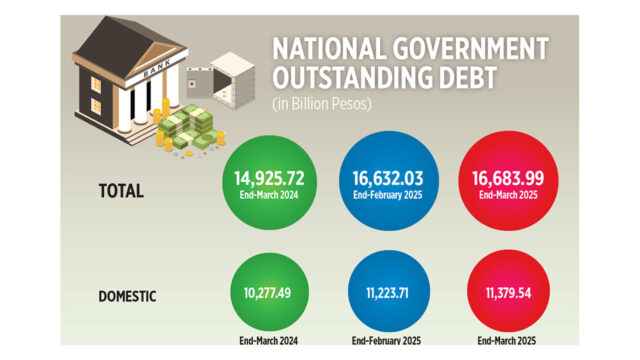
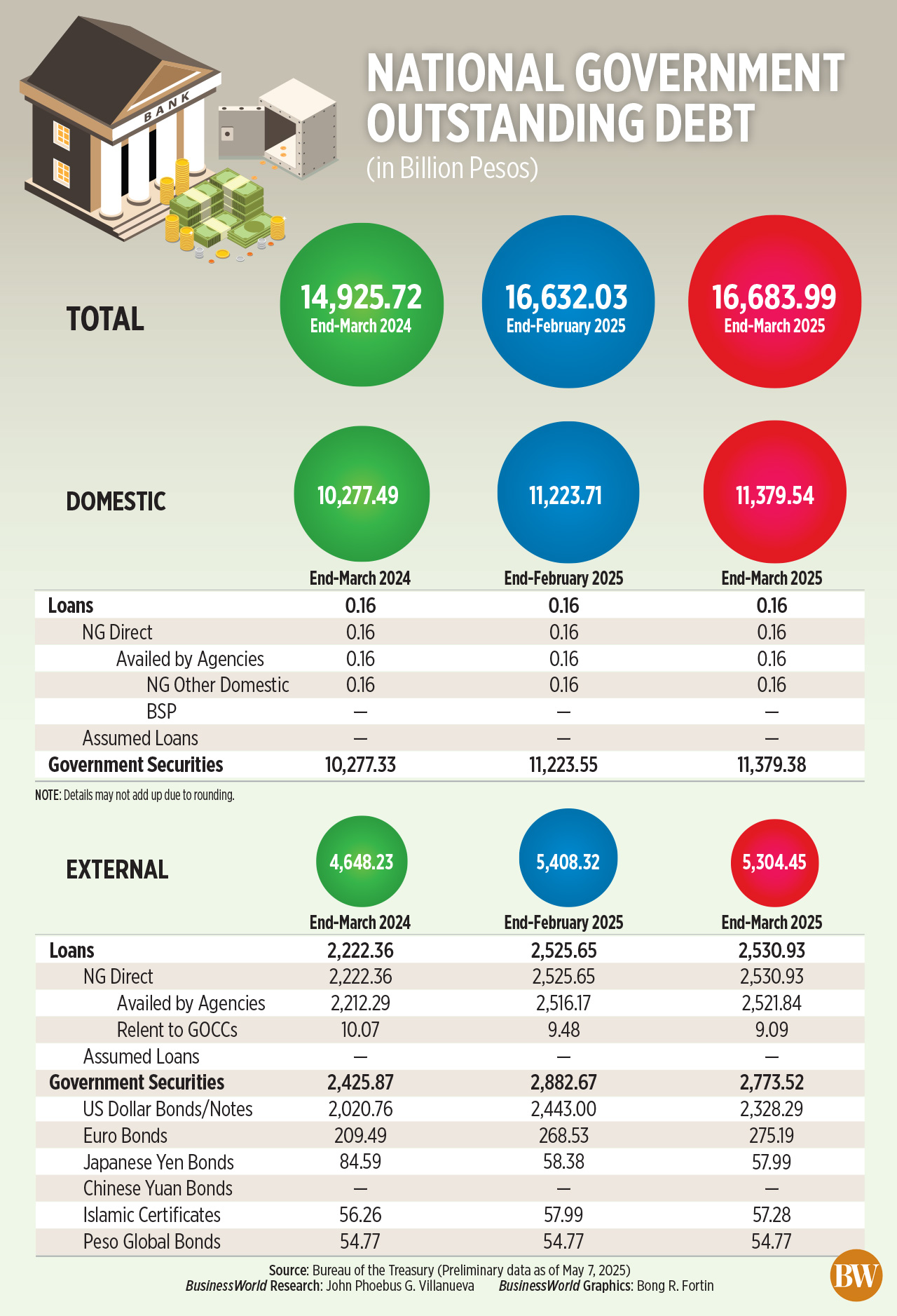
THE National Government’s (NG) outstanding debt edged up to a fresh high of P16.68 trillion as of end-March, the Bureau of the Treasury (BTr) said on Wednesday, adding that this debt “remains manageable.” Read the full story.
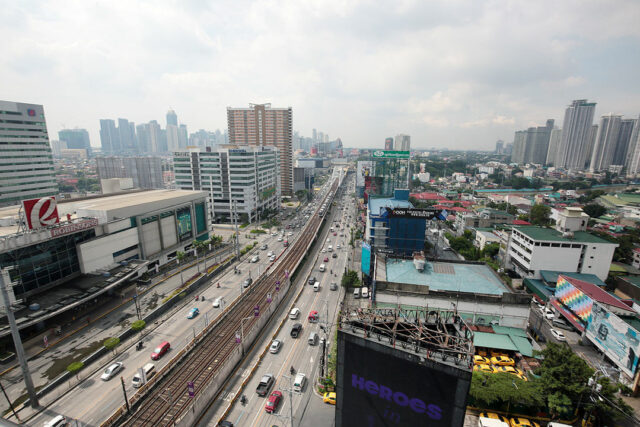
The midterm elections are set for May 12. — PHILIPPINE STAR/WALTER BOLLOZOS
By Ditas Lopez and Neil Jerome Morales, Bloomberg
The Philippines’ May 12 midterm election is putting investors on alert for any changes to government policies, as the global trade war exposes weaknesses in one of Asia’s fastest-growing economies.
The vote to pick 12 senators, more than 300 congressmen and nearly 18,000 local officials comes as policymakers seek to boost investment and consumption against the backdrop of a more challenging external environment. It will also be a crucial test for both President Ferdinand Marcos Jr. and his estranged Vice President Sara Duterte, who are backing competing candidates.
“Investors are watching whether the elections will result in continuity that will ensure economic reforms,” said Jonathan Ravelas, managing director at eManagement for Business and Marketing Services, a Manila-based consultancy. “The Philippines cannot afford to have political instability, especially during this time of global uncertainty.”
The economy expanded 5.4% in the first quarter from a year earlier, slower than the 5.7% expansion forecast by analysts but marginally faster than the pace seen in the last quarter of 2024, according to data released Thursday. The government aims for growth of at least 6% this year after a slower-than-projected 5.7% expansion in 2024, though the economy is still outpacing most of Asia.
A Philippine trade delegation wrapped up initial talks with US officials last week with more likely as Manila seeks to lower the Trump administration’s proposed 17% tariff. The planned levy is well below those threatened against most of Southeast Asia, including a 46% rate on Vietnam, and policymakers see the chance to win a competitive advantage — if they can continue domestic reforms.
“While the tariffs create opportunities to shift supply chains, EU investors remain cautious of long-term operational inefficiencies,” European Chamber of Commerce of the Philippines President Paulo Duarte said. “To seize this strategic window, the government must focus on lowering operational costs and improving ease of doing business.”
The country’s young, English-speaking workforce is a big asset for the economy, but challenges abound, said Ebb Hinchliffe, executive director at the American Chamber of Commerce of the Philippines. They include red tape, infrastructure and connectivity, energy costs and regulatory unpredictability, he said, echoing worries that have haunted Philippine businesses for decades.
While the Philippines has enacted legislation to attract investors — including a measure that cuts corporate taxes and the removal of foreign ownership limits in sectors including renewable energy — businesses want more reforms. But a shaky political situation after the midterms could keep the government’s focus off much-needed changes.
Finance Secretary Ralph Recto last month withdrew a proposal that sought to increase capital gains, donor and estate taxes to 10% from 6%, citing ample tax collection in the past three months. The bill would generate roughly P300 billion ($5.4 billion) in additional revenue over the next five years.
Winning lawmakers will have their work cut out for them when the new Congress convenes in July. Pending bills include a measure to ban raw mineral exports to spur the downstream mining industry, a plan heavily opposed by a local nickel industry association.
And awaiting Marcos’ signature is a bill reducing the stock transaction tax to 0.1% from 0.6% to make the country more attractive compared with Southeast Asian neighbors. But it will also subject foreign firms to a 25% tax on dollar-denominated bonds out of the Philippines.
The average return on local assets in a midterm election year has been negative 0.3%, based on polls running back to 1995, compared with 12% gains during presidential election years since then, according to Ritchie Ryan Teo, chief investment officer at Sun Life Investment Management and Trust Corp.
“Enflamed disagreements between parties have occurred in past elections that have not derailed the capability for Congress to pass laws and budgets,” Teo said. “We are cautiously optimistic, but this is definitely a space to watch.”
The outcome of the election is particularly critical for Duterte, as the 12 senators being elected will be among jurors for the vice president’s impeachment trial that starts in July.
“Businesses don’t seem to mind it as long as it does not spill over into their turf or their bottom line,” said Dereck Aw, a senior analyst at Control Risks. “If anything, some are even relieved that politicians are too busy feuding with each other to meddle in business, which the Philippine government has been known to do.”
Consumption, powered by remittances from Filipinos working abroad, who sent home a record $38.3 billion last year, accounts for about 70% of the country’s economic output. Manufacturing is less than 20%.
Amando Tetangco, a former central bank governor who now chairs top conglomerate SM Investments Corp., said a consumption-driven economy bodes well for the Philippines at a time of heightened global risks.
“This structure gives us a certain amount of protection. We are less vulnerable,” Tetangco said. “We may be less open than other countries (in terms of trade) but in this current environment it provides us some insulation from potential adverse effects of developments.”
The Philippines’ benchmark stock index has dropped 1% in the year through May 7, trailing the MSCI Asia Pacific index’s 5% gain. Local bonds have handed dollar-based investors a gain of 6.3%, while the peso is up around 4%.
“If you look at the last 20 years or so, we’ve had a lot of those political noises but the policy directions have remained largely the same,” Economic Planning Secretary Arsenio Balisacan said in an interview. “What matters is that the political noise will not cause a reversal of what is otherwise good policy,” he said.
For Teresita Sy-Coson, whose family leads SM that has interests in banking, property and retail, the way forward is to shrug off politics. “We just continue with the business, we are not listening to the noise,” she said. — Bloomberg
MANILA – The Philippine economy expanded slightly faster in the first quarter even as growth lagged expectations, with household consumption and public spending underpinning momentum as the country faces rising external headwinds from US tariffs.
Gross domestic product rose by an annual 5.4% in the January–March quarter, official data showed on Thursday, slightly ahead of the 5.3% pace in the fourth quarter of 2024. However, the figure fell short of the 5.7% growth projected in a Reuters poll.
“This performance underscores the relative resilience of our economy in the face of global volatility,” Economic Development Undersecretary Rosemarie Edillon said at a press briefing.
On a seasonally adjusted basis, the economy expanded 1.2% quarter-on-quarter, missing economists’ median forecast of 1.6%, according to the Reuters poll.
Growth in the first quarter was largely driven by a surge in public spending, which jumped 18.7%, the fastest pace since the second quarter 2020, as the government front-loaded infrastructure spending before a 45-day ban imposed ahead of the May 12 midterm election takes effect.
Household consumption also picked up, growing 5.3% from 4.7% in the previous quarter, buoyed by easing inflation, which Edillon said may give the Bangko Sentral ng Pilipinas more leeway to loosen monetary policy.
“There’s really room for more easing,” she said.
Annual inflation in April slowed to its lowest level in over five years to 1.4%, boosting expectations of a policy rate cut at the central bank’s next meeting on June 19. — Reuters
AN AERIAL photo of Philippine-occupied Thitu Island, locally known as Pag-asa, in the contested Spratly Islands. — REUTERS
MANILA/BEIJING – The Philippines and China gave conflicting versions on Thursday of a maritime confrontation around a contested shoal in the South China Sea, the latest incident in a longstanding dispute between the neighbours.
A Philippine Navy patrol near the disputed Scarborough Shoal encountered “aggressive and unsafe” movements by two Chinese Navy vessels earlier this week, the Philippine military said.
China’s military, meanwhile, accused the Philippine frigate of “attempting to invade” the waters around the feature and said that it had organised naval and air forces to track and expel the vessel, in a statement released by its Southern Theatre Command.
The Scarborough Shoal, named for a British ship grounded on the atoll nearly three centuries ago, is one of Asia’s most contested maritime features and a flashpoint for diplomatic flare-ups over sovereignty and fishing rights. “Such threatening and provocative conduct can lead to misunderstanding that may escalate tensions and impact regional stability,” the Armed Forces of the Philippines said in a statement.
China claims sovereignty over nearly all the South China Sea, including areas claimed by Brunei, Indonesia, Malaysia, the Philippines and Vietnam.
“(Scarborough Shoal) is China’s inherent territory. We urge the Philippine side to immediately cease its infringement, provocation and distorted speculation,” Tian Junli, a spokesman for China’s Southern Theatre said.
“Theatre troops are on high alert at all times, resolutely defending national sovereignty, maritime rights and interests, and resolutely maintaining peace and stability in the South China Sea region,” Tian added. — Reuters
In a significant move ahead of the 2025 national elections, the AMA Education System (AMAES) and the Parish Pastoral Council for Responsible Voting (PPCRV) officially launched the PPCRV Command Center at PLDT Sampaloc, reinforcing a long-standing partnership rooted in transparency, technology, and civic duty.
The command center, now housed in its new location, will serve as the central hub for election monitoring, reporting, and data verification. This launch follows the signing of a Memorandum of Agreement (MoA) between AMAES and PPCRV at AMA University in Quezon City earlier this year, where both institutions renewed their commitment to promoting clean and honest elections through education and digital infrastructure.
At the heart of the event was the keynote address by AMAES Chairman Emeritus Amb. Amable R. Aguiluz V, who emphasized the institution’s continuing role in nation-building.
“Corporate Social Responsibility is not just a checkbox for AMA Education System — it is the very heartbeat of our institution,” Dr. Aguiluz stated. “Empowering communities through education and technology is our core mission, and it is through meaningful engagements like this that we bring that mission to life.”
Amb. Aguiluz outlined AMAES’ decades-long history of involvement in the country’s electoral process, dating back to the 1986 snap presidential elections. Since then, AMA has played a role in 14 national and local polls, including five automated elections. For the upcoming 2025 elections, AMAES is once again providing critical IT support, computer equipment, audiovisual training materials, and volunteers from over 200 campuses across the Philippines.
The launch also celebrated the enduring partnership between AMAES and PPCRV, which began in 2010 during the country’s first automated elections. But beyond institutional collaboration, it also spotlighted a personal bond that has long supported this shared advocacy — that of AMAES Chairman Emeritus Amb. Aguiluz and Ambassador Henrietta “Tita” de Villa, PPCRV Founding Chair and former Philippine Ambassador to the Holy See.
Ambassador de Villa, who has been at the forefront of electoral reform and civic education, was warmly welcomed at the event. Known for her strong Catholic faith and her dedication to peaceful elections, her presence was a reminder of the heart and soul behind the PPCRV’s mission.
PPCRV officials, including National Chairperson Evelyn Singson and Trustee and Spokesperson Ana de Villa-Singson, also graced the occasion, underscoring the organization’s readiness for 2025 and their appreciation for AMAES’ continued support.
As part of the renewed collaboration, voter education materials — including the Tibok Pinoy e-book — will be integrated into AMAES’ online learning platforms and disseminated through its digital and social media channels. This effort aims to mold not just voters, but responsible and informed Filipino citizens.
The launch of the PPCRV Command Center marks more than just logistical readiness. It is a symbol of trust, commitment, and shared purpose — an embodiment of the values both institutions stand for. With technology and education at the forefront, and a legacy of civic engagement behind them, AMAES and PPCRV are once again stepping up to help protect the integrity of the Filipino vote.
Spotlight is BusinessWorld’s sponsored section that allows advertisers to amplify their brand and connect with BusinessWorld’s audience by publishing their stories on the BusinessWorld Web site. For more information, send an email to online@bworldonline.com.
Join us on Viber at https://bit.ly/3hv6bLA to get more updates and subscribe to BusinessWorld’s titles and get exclusive content through www.bworld-x.com.
U.S. President Donald Trump is expected to announce a trade deal between the United States and Britain on Thursday, the New York Times reported on Wednesday, citing three people familiar with the plans.
Mr. Trump posted on Truth Social earlier that he would hold an Oval Office news conference at 10 a.m. EDT (1400 GMT) on Thursday about a “major trade deal with representatives of a big, and highly respected, country,” using all capitalized letters.
He did not offer more details but said it would be the “first of many.”
A White House spokesperson declined to comment on the Times report.
A UK official said on Tuesday that the two countries had made good progress on a trade deal that would likely include lower tariff quotas on steel and autos.
Mr. Trump’s top officials have engaged in a flurry of meetings with trading partners since the president on April 2 imposed a 10% tariff on most countries, along with higher “reciprocal” tariff rates for many trading partners, though those rates were later suspended for 90 days.
Britain was not among the countries hit with additional tariffs, because it imports more from the U.S. than it exports there.
Mr. Trump has also imposed 25% tariffs on autos, steel and aluminum, 25% tariffs on Canada and Mexico, and 145% tariffs on China.
On Tuesday, Mr. Trump said that he and top administration officials would review potential trade deals over the next two weeks to decide which ones to accept.
Last week, he said that he has “potential” trade deals with India, South Korea and Japan. — Reuters
Apple’s plans to add AI-powered search options to its Safari browser are a big blow to Google, whose lucrative advertising business relies significantly on iPhone customers using its search engine.
The news slammed shares of Google-parent Alphabet, which closed down 7.3%, wiping off roughly $150 billion from its market value.
The iPhone maker was “actively looking at” reshaping Safari, a source familiar with the matter told Reuters, citing Apple AAPL.O executive Eddy Cue who was offering testimony at an antitrust case on Wednesday over Google’s dominance in online search.
Cue said searches on Safari fell for the first time last month due to users increasingly turning to AI, according to the source. Apple stock closed down 1.1%.
Google said that it continued to see growth in the overall number of search queries, including “total queries coming from Apple’s devices and platforms,” according to a statement posted on the company’s blog.
“People are seeing that Google Search is more useful for more of their queries — and they’re accessing it for new things and in new ways,” the company wrote.
Google cited voice and visual search features as contributors to total search volume growth. It was unclear whether Cue was using the same basis of comparison in his testimony when analyzing types of searches.
Still, the Apple executive’s comments suggests that a seismic shift in search is likely underway, threatening Google’s dominant search business – a go-to advertising destination for marketers that has now become a target for U.S. antitrust regulators, which filed two major lawsuits against the company.
Google is the default search engine on Apple’s browser, a coveted position for which it pays the iPhone maker roughly $20 billion a year, or about 36% of its search advertising revenue generated through the Safari browser, analysts have estimated.
Banning Google from paying companies to be the default search engine is among the remedies that the U.S. Justice Department has proposed to break up its dominance in online search.
“The loss of exclusivity at Apple should have very severe consequences for Google even if there are no further measures,” D.A. Davidson analyst Gil Luria said.
“Many advertisers have all of their search advertising with Google because it is practically a monopoly with almost 90% share. If there were other viable alternatives for search, many advertisers could move much of their ad budgets away from Google,” Mr. Luria said.
Google is not defenseless.
Written off as an also-ran in the AI race by critics after ChatGPT’s buzzy launch in late 2022, Google has reached into its deep pockets to fund its AI efforts and leverage its vast data trove.
The company introduced an “AI mode” on its search page earlier this year, looking to retain its millions of users from going away to other AI models.
It recently expanded AI Overviews – summaries that appear atop the traditional hyperlinks to relevant webpages on a search query – for users in more than 100 countries, and added advertisements to feature, boosting Search ad sales.
CEO Sundar Pichai said in a testimony at an antitrust trial last month that Google hopes to enter an agreement with Apple by the middle of this year to include its Gemini AI technology on new phones.
Apple’s Cue on Wednesday also said the company would add AI search providers, including OpenAI and Perplexity AI, as search options in the future, Bloomberg reported.
“(Apple’s plan) also shows how far generative search sites, such as ChatGPT and Perplexity have come,” said Yory Wurmser, principal analyst for advertising, media & technology at eMarketer.
That Google is willing to pay tens of billions of dollars to remain the default search engine shows how crucial the agreements are, Wurmser said.
For instance, ChatGPT in April reported seeing over 1 billion weekly web searches for its search feature. It has more than 400 million weekly active users, as of February. — Reuters











 Amb. Aguiluz outlined AMAES’ decades-long history of involvement in the country’s electoral process, dating back to the 1986 snap presidential elections. Since then, AMA has played a role in 14 national and local polls, including five automated elections. For the upcoming 2025 elections, AMAES is once again providing critical IT support, computer equipment, audiovisual training materials, and volunteers from over 200 campuses across the Philippines.
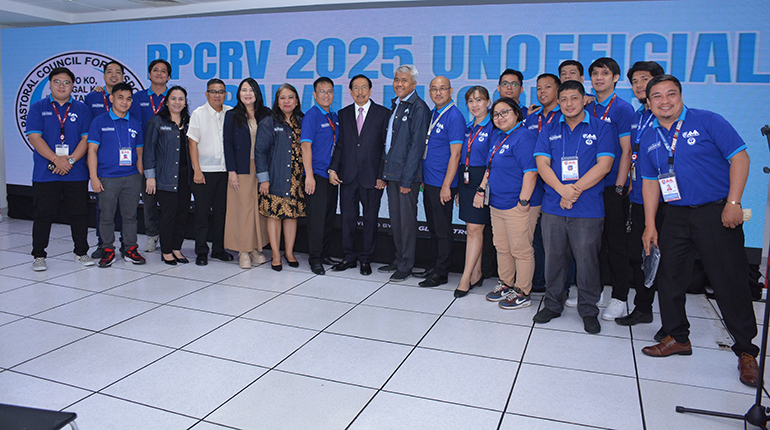 Ambassador de Villa, who has been at the forefront of electoral reform and civic education, was warmly welcomed at the event. Known for her strong Catholic faith and her dedication to peaceful elections, her presence was a reminder of the heart and soul behind the PPCRV’s mission.
 PPCRV officials, including National Chairperson Evelyn Singson and Trustee and Spokesperson Ana de Villa-Singson, also graced the occasion, underscoring the organization’s readiness for 2025 and their appreciation for AMAES’ continued support.
 The launch of the PPCRV Command Center marks more than just logistical readiness. It is a symbol of trust, commitment, and shared purpose — an embodiment of the values both institutions stand for. With technology and education at the forefront, and a legacy of civic engagement behind them, AMAES and PPCRV are once again stepping up to help protect the integrity of the Filipino vote.