Home Blog Page 1573

First vehicles procured via eMarketplace delivered

FACEBOOK.COM/TOYOTAOTISOFFICIAL

BUDGET Secretary Amenah F. Pangandaman said the eMarketplace online procurement portal has processed its first vehicle transactions, covering four units which were delivered in two weeks.

In a statement on Wednesday, Ms. Pangandaman announced that the Department of Budget and Management’s (DBM) Procurement Service witnessed the turnover of vehicles purchased via eMarketplace. The transaction involved four Toyota vehicles.

“Kicking off the first sale under the e-Marketplace, four motor vehicles worth P7.6 million were handed over to the Insurance Commission (IC) at Toyota Otis in Paco, Manila, on Feb. 17,” the DBM said.

IC Supervising Administrative Officer Mark Franklin M. Sanchez said the two-week transaction was much quicker than the four-month wait under the old system.

The following day, the National Tax Research Center took delivery of two motor vehicles valued at P3.3 million.

The DBM said government agencies can now begin ordering motor vehicles under a pilot program for common-use supplies and equipment.

It said more items are being added, including airline tickets, cloud computing services, and various software and licenses.

“We launched it in December, and now, two agencies have already benefited from faster, more efficient, and seamless procurement. ‘Add to cart’ has officially been activated for government procurement,” Ms. Pangandaman said.

The eMarketplace, a feature of the New Government Procurement Act, was signed into law by President Ferdinand R. Marcos, Jr. in July. — Aubrey Rose A. Inosante

CAAP in talks with Air India for direct flights

REUTERS

THE PHILIPPINES is advancing its discussions with India’s flag carrier, Air India, over possible direct air services between the countries, the Civil Aviation Authority of the Philippines (CAAP) said.

In a statement on Wednesday, CAAP said the necessary documentation, technical specifications and procedural framework are all in place to secure flight approvals, CAAP said, adding that the proposed routes and frequencies are now being assessed.

CAAP is committed to facilitating the flight approval process, Director-General Manuel Antonio L. Tamayo said.

CAAP said that Air India has also expressed its optimism on the possible economic and cultural impact of direct services. 

The Transportation department has said that it is looking at expanding flight networks and air talks between the Philippines and various destinations, with consultations ongoing with India, the US, Australia, Thailand, the UK, Uzbekistan, Qatar, Ethiopia, Oman and the Seychelles. — Ashley Erika O. Jose

Export slowdown looms as US signals 25% chip tariffs

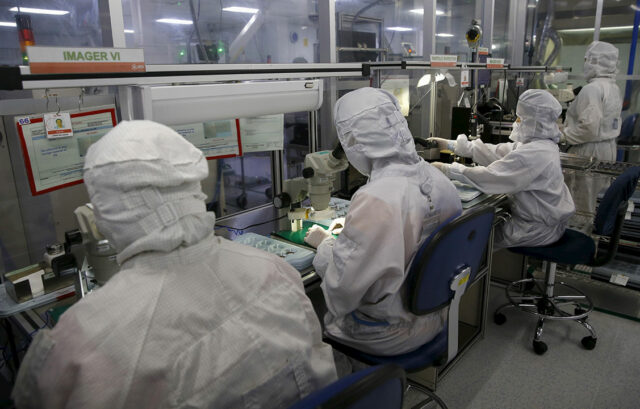
Workers are seen at an electronics manufacturing assembly plant in Biñan, Laguna, April 20, 2016 — REUTERS

By Justine Irish D. Tabile, Reporter

EXPORTS are expected to take a hit after US President Donald J. Trump announced a plan to impose 25% tariffs on semiconductors this year, analysts said.

“Higher US import tariffs, especially the reciprocal tariffs, could slow down Philippine exports,” Rizal Commercial Banking Corp. Chief Economist Michael L. Ricafort said via Viber.

“This could slow down international trade between the US and the Philippines, especially Philippine exports to the US,” he added.

Mr. Trump on Tuesday announced plans to impose 25% tariffs on automobile imports by April and similar duties on semiconductor and pharmaceutical imports this year, Reuters reported.

“He did not provide a date for announcing those duties and said he wanted to provide some time for drug and chip makers to set up US factories so that they can avoid tariffs,” the report said.

The Philippine Statistics Authority (PSA), citing preliminary data, reported that electronic products were the country’s top commodity export last year, accounting for $39.08 billion, or 53.38%, of total exports.

“This would adversely affect the biggest Philippine exports to the US (including) ignition wiring sets; other manufactured goods; coconut oil; machinery; and transport equipment, among others,” Mr. Ricafort said.

Foreign Buyers Association of the Philippines President Robert M. Young said the tariffs on semiconductors will be the most detrimental to the economy.

“The reason being is that we are really planning to expand this industry. I understand that they’re trying to reach $9-10 billion worth of exports to the US in another two or three years,” he said.

However, he said that imposing tariffs on semiconductor exports from the Philippines will run counter to US commitments set out in the US CHIPS and Science Act.

The Philippines is one of seven countries that the US is partnering with to diversify its semiconductor supply chain under the CHIPS law.

The US committed to provide $52.7 billion in subsidies to support chip manufacturing and persuade chipmakers with operations in China to relocate to the US or other friendly countries.

“I don’t know if the (CHIPS Act) will go on (because it will conflict with) the plan of President Trump to increase our tariffs,” he said.

He said that the export industry is still in wait-and-see mode and hoping that tariffs will not be as punitive because the Philippines is a smaller exporter to the US.

“China is, I think, shipping $50 billion (to the US), which is about 8 to 10 times more than the Philippines,” he added.

He said Philippine exports of auto parts and pharmaceuticals are small, but noted that the country will still have to prepare.

“For whatever it will be, we have to prepare. We have to look for other markets. There’s Japan and Taiwan, semiconductor producing countries, and they will be needing us also for their supply chains,” he said.

“This is the time for the government to intervene to explore other markets,” he added.

Meanwhile, the Philippine Pharmaceutical Manufacturers Association Higinio P. Porte, Jr. said the industry will not be affected by the proposed tariffs.

“This will not affect our pharmaceutical manufacturers as we are not exporting to the US,” Mr. Porte said via Viber.

“Most of our export destinations are in Asia, the Middle East and Australia,” he added.

According to PSA, the US was the Philippines’ top export destination last year, accounting for $12.12 billion or 16.6% of total exports.

Rules for new auto industry revival program due in March

REUTERS

THE Department of Trade and Industry (DTI) said that it expects to complete by mid-March a joint administrative order (JAO) that will implement a new auto industry revival program.

According to the department, the rules for the new program, known as Revitalizing the Automotive Industry for Competitiveness Enhancement (RACE), will be outlined in a JAO to be issued by the DTI and the departments of Finance and Budget and Management. 

“The program mechanics are contained in a program concept that was submitted to Congress for approval and consideration in the 2025 General Appropriations Act, which we got,” the DTI said.

“Hence, the drafting of the JAO to implement the program. We’re expecting to complete the JAO by mid-March and open the application period for participants by April or May this year,” it added.

The Office of the Special Assistant to the President for Investment and Economic Affairs had signaled earlier this week that the government would soon introduce RACE, a follow-on program to the Comprehensive Automotive Resurgence Strategy program, which focused on encouraging domestic manufacturing of mass-market economy sedans.

RACE is meant to “sustain the viability of the automotive sector, particularly the manufacture of ICE (internal combustion engine) vehicles during the transition to electric vehicles, through targeted investments and support,” according to a RACE briefing document.

The RACE program will involve the production of three specific models of four-wheeled ICE vehicles, with participants committing to manufacture 100,000 units.

Participating carmakers will be eligible for fiscal support of up to P3 billion each on capital expenditure for tooling and equipment.

Each participant is also entitled to fixed investment support of up to 40% of capital expenditure, subject to meeting requirements, which include new investment in manufacturing the enrolled model and the 100,000-unit commitment.

Other requirements for availing of fixed investment support include the launch of the model within two years.

The investment support will be credited in three equal tranches, with the first tranche given after the production of the first 1,000 units, the second after the first 10,000 units, and the third after the second 10,000 units.

“Both Toyota and Mitsubishi signified their intention to enroll under RACE. They are just waiting for the JAO and opening of the application period,” Ma. Corazon Halili-Dichosa, executive director at the Board of Investments, said. — Justine Irish D. Tabile

‘Special’ gaming BPOs to retain PAGCOR backing

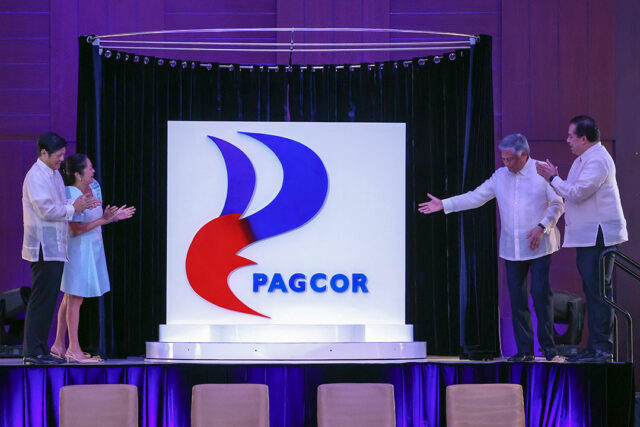
PHILIPPINE STAR/KRIZ JOHN ROSALES

THE Philippine Amusement and Gaming Corp. (PAGCOR) said it continues to support the expansion of gaming-focused Special-Class Business Process Outsourcing (SCBPO) in the face of a government crackdown on a now-banned category of gaming licensees.

In a statement on Wednesday, PAGCOR Chairman and Chief Executive Officer Alejandro H. Tengco assured foreign chambers of commerce that the regulator will continue to advocate for SCBPOs and their expanding operations in the Philippines.

“The only difference from regular BPOs is that SCBPOs support the operations of legitimate gaming companies overseas, many of which are listed firms, by providing human resource, marketing, graphic design, accounting, and other back-office work,” he said.

The SCBPOs are overseen by PAGCOR as they support gaming companies overseas.

In addition, he said that PAGCOR will ensure that SCBPOs are not directly engaged in gaming operations, such as taking or soliciting bets.

According to the SCBPO regulations, PAGCOR said these firms handle “purely product marketing and customer relations and are not servicing any of PAGCOR offshore gaming licensees.”

Senator Mark A. Villar, who chairs the Committee on Games and Amusements, said in September that SCBPOs are exempt from the ban on Philippine Offshore Gaming Operators.

President Ferdinand R. Marcos, Jr. announced the ban during his State of the Nation Address in July, later codified in Executive Order No. 74 issued in November.

Mr. Tengco noted the sector’s contribution to generating jobs and foreign investor interest in recognizing Philippine capabilities in outsourced services.

To date, the SCBPO sector employs nearly 5,000 workers in the Philippines, with plans to further expand operations and staffing.

SCBPOs are required to maintain at least 95% Filipino workforce “ensuring quality job opportunities for local workers who also receive above industry salaries.”

“This industry has so much potential, and we are fully committed to its growth and capability to generate more employment,” Mr. Tengco said. — Aubrey Rose A. Inosante

VAT zero-rating rules for exporters due soon

SCIENCEPARK.COM.PH

THE GOVERNMENT is finalizing the guidelines on certifying export-oriented enterprises (EOEs) for availing of value-added tax (VAT) zero-rating on local goods and services.

In an online public consultation on Wednesday, the Department of Trade and Industry’s Export Marketing Bureau (EMB), Bureau of Internal Revenue (BIR), Bureau of Customs (BoC), and Department of Finance (DoF) presented the draft guidelines for certifying EOEs.

Citing Sections 106 and 109 of the Tax Code, the draft allows EOEs with export sales of at least 70% of their total annual production in the preceding taxable year to the VAT zero-rating on goods and services directly attributable to the export activity and a VAT exemption on imported goods.

The prospective joint administrative order (JAO) tasks the EMB with deciding which EOEs are compliant with the threshold.

“The certification to be issued by EMB shall be a requirement in availing of the VAT zero-rating on local purchases or the VAT exemption on imports,” according to the draft.

“For this purpose, a copy of the certification shall be submitted by the EOE to its local supplier prior to the transaction and to the BoC in case of imports,” it added.

EOEs are required to submit an application form as prescribed by the EMB, certified true copies of the BIR Certificate of Registration, and proof of 70% export sales by the direct exporters.

According to the draft, the proof could take the form of financial statements, export documents, or bank certification of inward remittances.

The EOEs are also required to provide an affidavit executed by the owner or finance officer of the company testifying that export sales meet the threshold and other additional documents to be prescribed by the EMB.

As part of its role, the EMB is tasked with submitting to the DoF, BIR, and BoC a master list of all EOEs issued a certification, to be updated every 15th and 30th day of each month. — Justine Irish D. Tabile

New risk-based approach for VAT refund process

Filing a tax refund claim brings a sense of anticipation, as taxpayers aim to get back a portion of their hard-earned money. However, the process of obtaining a VAT refund in the Philippines is often one of the most challenging experiences taxpayers can go through. Considering the rigorous documentation requirements and thorough review process of the BIR, a comprehensive understanding of the VAT refund process is essential for successful recovery.

In 2024, the Ease of Paying Taxes (EoPT) Act introduced the new Risk-Based Approach in verifying and processing VAT refunds. As part of the verification process, the BIR now classifies applications into low-, medium-, or high-risk claims depending on the amount of the claim, tax compliance history, frequency of filing VAT refund claims, among others.

Such classifications determine the scope of the BIR’s verification process. Low-risk claims do not go through verification and are limited to going through the checklist for completeness of the documentary requirements. Once these are met, low-risk claims are automatically be recommended for refund. Meanwhile, medium-risk claims only require 50% verification.

In October, the BIR issued Revenue Memorandum Circular (RMC) 115-2024 to further clarify this new approach. Under the RMC, the processing of VAT refund claims will entail: (1) Checklisting based on the Checklist of Mandatory Requirements; (2) Cursory checking of completeness of supporting documents submitted for sales and purchases of goods and services after the application has been accepted; (3) Determination of the risk level of the claim; and (4) Processing and verification for medium- and high-risk claims.

The checklisting procedure is the first stage and is limited only to ensuring the completeness of the submitted documentary requirements; whereas in the verification procedure, the BIR ensures the correctness and accuracy of the documents through examination, evaluation, deep analysis and investigation.

In order for the VAT refund application to be accepted, the Checklist of Mandatory Requirements (regardless of the identified risk level) should be submitted. Otherwise, the application is rejected.

During cursory checking of the completeness of the document, if certain supporting documents indicated in the schedule of sales and purchases cannot be found in the physical documents submitted, the application will be tagged “no supporting documents” (NSD). Generally, this is not considered an incomplete submission, but it will result in the disallowance of the unsubstantiated portion of the sales and purchases. However, if the NSD exceeds at least 1% of total sales (for sales transactions) or total amount of claim (for purchase transactions), the application will be classified as high-risk, requiring 100% verification regardless of the initial risk classification.

Further, for any missing/incomplete information (e.g., no reference details, incomplete/no transactions details, etc.) in the schedule of sales and purchases, the application is automatically classified as high-risk, requiring 100% verification.

This new approach should help to expedite the VAT refund process for claims that are classified as low-risk since they are automatically recommended for refund, subject to the conditions mentioned above. However, in the guidelines, NSD tagged amounts of up to 1% of the transaction or claim, or if one item is missing from the schedules, the classification is automatically classified as high-risk. The RMC did not provide specific guidelines or details as to the information required. With this low threshold, I am curious whether we can expect any application to be tagged as low-risk.

Having said that, the BIR may consider issuing guidelines to specify and limit details regarding the information that should be seen in the schedules. In this way, taxpayers would be able to better prepare their VAT refund applications appropriately and anticipate their possible risk classification, allowing the revenue officers to process applications more efficiently and focus their efforts on cases that truly warrant closer scrutiny.

By providing clear guidelines, the BIR can help reduce the administrative burden on both taxpayers and revenue officers, minimize delays in processing VAT refund applications, and ensure that the risk classification system is applied consistently and fairly. This would not only improve compliance rates but also foster a more transparent and predictable tax environment, which could enhance taxpayer trust and cooperation with the tax authorities.

For taxpayers, the journey through this new refund system hinges on precise documentation and adherence to guidelines, paving the way for smoother interactions with tax authorities. As the BIR continues to refine and perfect this process, we can look forward to a VAT refund system that is not only fairer but also inspires greater trust and cooperation between taxpayers and the government. Ultimately, these improvements have the potential to create a more harmonious and effective tax administration, benefiting all stakeholders and contributing to a healthier economic environment.

The views or opinions expressed in this article are solely those of the author and do not necessarily represent those of Isla Lipana & Co. The content is for general information purposes only, and should not be used as a substitute for specific advice.


Rowelle Sheena J. Juarez-Ayson is an assistant manager at the Tax Services department of Isla Lipana & Co., the Philippine member firm of the PwC network.

+63 (2) 8845-2728

rowelle.sheena.juarez@pwc.com

Vietnam raises its economic growth target to at least 8% for 2025

A VIETNAM DONG note is seen in this illustration photo May 31, 2017. — REUTERS

HANOI — Vietnam’s National Assembly on Wednesday approved raising the economic growth target for this year and also voted in favor of major infrastructure projects, including the country’s first nuclear power plants and a rail link to China.

Lawmakers approved a new growth target for 2025 of at least 8% proposed by the government, an increase from the previous goal of 6.5% to 7.0%.

“With faster economic growth, macro stability must still be ensured while inflation must be kept under control,” the government said in a report to Parliament. The report said inflation would be kept between 4.5% and 5.0% this year.

Parliament also passed a resolution supporting construction of a new railway linking a major seaport in northern Vietnam with China. The project is expected to cost $8.3 billion, part of which to be funded by loans from the Chinese government.

Vietnam, a regional manufacturing hub heavily reliant on exports to drive its economy, has been seeking to ramp up infrastructure investment to boost growth.

Lawmakers approved policies to develop nuclear power plants, the first of which is set to be built by the end of 2031.

Under the policies, the government can appoint contractors to construct the plants without holding a tender process.

Parliament approved rules that would allow Elon Musk’s Starlink to provide satellite internet services in the country while maintaining full ownership of any local subsidiary. And a plan to offer financial support to local firms that enter the semiconductor industry was also supported.

On Tuesday, the assembly approved a bold bureaucratic reform plan that will slash up to a fifth of government bodies, as it tries to cut costs and improve administrative efficiency. — Reuters

Pope Francis has double pneumonia, complicating his treatment, Vatican says

POPE FRANCIS smells a rose that was given to him by a faithful during the weekly general audience inside the Paul VI Audience Hall at the Vatican, Feb. 12, 2025. — REUTERS

VATICAN CITY — Pope Francis has the onset of double pneumonia, the Vatican said on Tuesday, complicating treatment for the 88-year pontiff and indicating a further deterioration in his fragile health.

Pope Francis has been suffering from a respiratory infection for more than a week and was admitted to Rome’s Gemelli Hospital on Feb. 14.

The Vatican said in a statement that the pope had undergone a chest CAT scan on Tuesday afternoon which had revealed “the onset of bilateral pneumonia that requires further pharmacological therapy.”

Bilateral pneumonia is a serious infection that can inflame and scar both lungs, and makes breathing more difficult.

“Laboratory tests, chest X-ray, and the clinical condition of the Holy Father continue to present a complex picture,” the Vatican said.

It reiterated that the pope was suffering from a “polymicrobial infection,” saying this required corticosteroid and antibiotic therapy, which was “making treatment more challenging.”

“Nevertheless, Pope Francis remains in good spirits,” the Vatican statement added.

The pope is especially prone to lung infections because as a young adult he developed pleurisy and had part of one lung removed.

A Vatican official, who declined to be named because of the sensitivity of the issue, said earlier in the day that the pontiff had not been put on a ventilator and was breathing on his own.

Ahead of the latest statement, the Vatican announced that all public engagements on the pope’s calendar had been canceled through Sunday.

The pope had been due to lead several events over the weekend for the 2025 Catholic Holy Year, which runs through to next January.

The Vatican said on Monday that doctors had changed the pope’s drug therapy for the second time during his hospital stay to tackle a “complex clinical situation.”

Doctors say a polymicrobial infection occurs when two or more micro-organisms are involved, and can be caused by bacteria, viruses, or fungi.

The Vatican has said Pope Francis will stay in hospital for as long as necessary.

The pope has been plagued by ill health in recent years, including regular bouts of flu, sciatica nerve pain and an abdominal hernia that required surgery in 2023.

The Vatican statement on Tuesday said he was grateful for all the support he has received in recent days. “With a thankful heart, (he) asks for continued prayers on his behalf,” it added. — Reuters

Singapore offers support for consumers as elections and global tensions loom

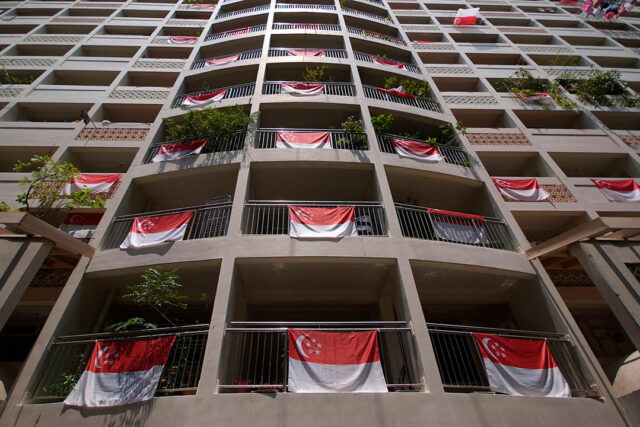
Singapore’s national flags are displayed from an apartment block during National Day in central Singapore. — REUTERS

SINGAPORE — Singapore offered broad support for workers and businesses, as well as assistance with living costs, with the economy bracing for a rise in global tensions and ahead of elections this year.

Prime Minister Lawrence Wong, also the Finance minister, announced S$1.06 billion ($790.2 million) in vouchers for households to offset grocery and food costs, and S$2.02 billion in “SG60” vouchers — marking Singapore’s 60th anniversary, with citizens receiving at least S$600 each for groceries and necessities.

Maybank economist Chua Hak Bin called it “a full-blown election budget” with vouchers, tax rebates and cash handouts.

OCBC economist Selena Ling said the goodies “cover all segments of Singaporeans from babies to seniors.”

The budget is Mr. Wong’s first as premier after taking the top post last year. It comes ahead of a general election that must be held by November and will be widely seen as a barometer of his popularity.

His People’s Action Party is almost certain to dominate and win most seats, as it has in every vote since independence in 1965, although its share of the popular vote will be closely watched after one of its worst ever electoral performances in the last contest in 2020.

Babies born this year will receive a special “SG60” gift, and the government plans to build more new public housing. He also announced personal income tax rebates.

Mr. Wong gave corporate tax rebates and pledged longer-term programmes aimed at boosting skills of workers, promoting Singapore equities and the semiconductor sector and protecting the island nation against climate change.

Mr. Wong put S$1 billion into semiconductor and biotech sectors including building a fabrication facility, and injected S$10 billion into funds to finance coastal and flood protection and clean energy initiatives.

Singapore accounts for about 11% of the global semiconductor market, with 20% of global semiconductor equipment manufactured in the country.

“This budget will help to mitigate the impact of rising costs, but in the longer term, the best way to adjust to higher prices is to grow the economy and increase productivity,” Mr. Wong said. 

DOWNSIDE RISK
The budget leaves the government with a projected surplus of S$6.81 billion or 0.9% of Gross Domestic Product (GDP).

Mr. Chua of Maybank said that gives the government dry powder they can tap on “in case the economy goes astray in a more uncertain world.”

Mr. Wong warned that Singapore’s economy would be impacted by global tensions as the US and China intensified their battle for global supremacy and were prepared to take more assertive actions to advance their interests.

“We can expect escalating attempts at containment and counter containment with ripple effects that will inevitably draw in other countries, including Singapore,” Mr. Wong said.

“All these pressures will reshape the global economy and dampen prospects for global growth. As a small and open economy, we will feel the impact.”

Singapore’s GDP accelerated to 4.4% in 2024 from a revised 1.8% in 2023, but the Trade ministry expects growth in 2025 to moderate to 1.0% to 3.0%, a forecast Mr. Wong reiterated on Tuesday.

Although inflation tapered to a three-year low in December, the population of about 6 million people is still dealing with higher costs, with consumption tax going up by two percentage points in 2023 and 2024. — Reuters

More than $50 billion needed to rebuild Gaza, WB joint assessment says

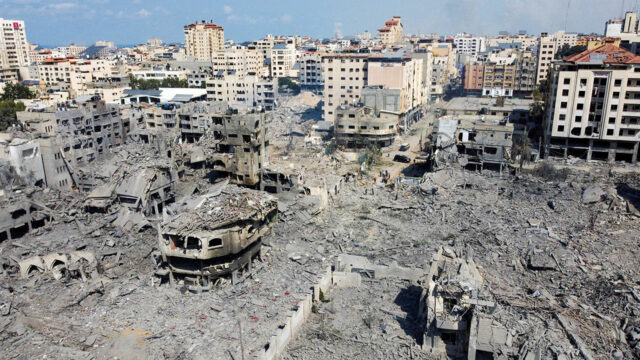
A view shows houses and buildings destroyed by Israeli strikes in Gaza City, Oct. 10, 2023. — REUTERS

GENEVA — More than $50 billion will be required to rebuild Gaza after the 15-month Israel-Hamas conflict in the Palestinian enclave, according to an assessment released by the United Nations, the European Union and the World Bank (WB) on Tuesday.

The Interim Rapid Damage and Needs Assessment (IRDNA) said that $53.2 billion is needed for recovery and reconstruction over the next 10 years, with $20 billion needed in the first three.

Israel’s campaign in Gaza was launched in response to the Hamas-led attack on Oct. 7, 2023 in which 1,200 people were killed and more than 250 were taken hostage, according to Israeli tallies. Israel’s operation has killed more than 48,000 people, according to Gaza health officials, and left the enclave in ruins.

Years of rebuilding work, including clearing unexploded ordinance and millions of tons of rubble lie ahead.

The report, issued amid a fragile ceasefire that began last month, warned that conditions were not yet in place for large-scale recovery and reconstruction work to begin given a lack of clarity about how the enclave would be run after the war and what security arrangements would be in place.

“The speed, scale, and scope of recovery will be shaped by these conditions,” it said.

The IRDNA said that more than 292,000 homes had been destroyed or damaged and 95% of hospitals were non-functional, while the local economy had contracted by 83%.

More than half the total estimated cost of rebuilding, or $29.9 billion, would be required to repair damage to buildings and other infrastructure, including housing, which would require around $15.2 billion to rebuild, it said.

Another $19.1 billion would be needed to make up for social and economic losses, including health, education, commerce and industry sectors devastated in the conflict, it said. — Reuters

Lady Bulldogs blast Blue Eagles for early UAAP 87 volleyball lead

NATIONAL UNIVERSITY LADY BULLDOGS — UAAP/JOAQUI FLORES

Games on Saturday
(Filoil EcoOil Centre)
9 a.m. – UST vs UE (men)
11 a.m. – UST vs UE (women)
3 p.m. – DLSU vs AdU (men)
5 p.m. – DLSU vs AdU (women)

DEFENDING champion National University (NU) clobbered Ateneo de Manila University, 25-23, 25-19, 25-15, and zoomed to an early lead in the UAAP Season 87 women’s volleyball on Wednesday at the Filoil EcoOil Centre in San Juan.

The Lady Bulldogs encountered fiery resistance in the first set but dominated the next two to bite their second straight win for a solo lead in the first round of their title retention bid.

NU has yet to yield a single set in a pristine campaign so far, having dismantled closest rival De La Salle University with a 25-23, 25-21, 25-18 in only 90 minutes in the opening weekend.

Against Ateneo that it had beaten for the seventh straight match since 2022 when they completed a sweet 16-0 sweep to end a 65-year title drought, the Lady Bulldogs needed only 79 minutes.

“It’s a total team effort hopefully, will improve during our next games,” said coach Sherwin Meneses, looking to weave his magic in the collegiate play as well while concurrently steering the ship for Creamline’s dynasty in the Philippine Volleball League.

A balanced attack indeed it was for the Jhocson spikers, with Alyssa Solomon, Season 86’s Finals MVP, taking the cudgels from reigning Season MVP Bella Belen this time around with 12 points on 10 hits.

Another seasoned spiker in Vange Alinsug backstopped Solomon with 10 points on eight hits laced by five digs as Ms. Belen scattered nine points, seven receptions and five digs.

NU nearly absorbed an upset in the first set as Ateneo, even without two key players due to injury, refused to go down without a fight by striking to within 22-23 only for Ms. Alinsug to take over with back-to-back hammers.

That proved to be the last stand for the Blue Eagles, being left in the dust with early eight-point deficits in the next two sets to drop their second straight match.

Lyann de Guzman, AC Miner and Alexia Montoro scored nine apiece as Ateneo, sans Geezel Tsunashima (broken left shin) and JLo Delos Santos (torn left ACL), stayed winless after a debut meltdown against Adamson 25-21, 25-20, 12-25, 15-25, 12-15.

In the men’s division, four-peat champion NU (2-0) staved off Ateneo (1-1), in a gritty 23-25, 26-24, 27-25, 29-27 win. It’s the Bulldogs’ 10th straight win over the Blue Eagles since 2018, behind a potent offense led by Leo Ordiales’ 14 points. — John Bryan Ulanday