Home Blog Page 1485

Investing in a growing REIT

RCR is currently present in 18 key locations, including Lipa City in Batangas.

For CY2024, RL Commercial REIT, Inc. (RCR) posted a 38% surge in its net income versus same period last year. RCR reported a P6.13-billion net income (excluding the effect of the change in fair market value of investment properties) primarily driven by its massive multi-asset infusion.

For the CY2024, cash dividends per share declared by RCR amounted to P0.4001 without the special cash dividends, and P0.4261 including the P0.0260 special cash dividends. Further, RCR declared a total of P5.71-billion cash dividend, higher than 90% of its distributable income for the year.

RCR also maintained its robust financial position. For the year ending Dec. 31, 2024, RCR’s assets totaled to P114.54 billion, which includes Investment Properties at P109.43 billion, while Shareholders’ Equity is P109.41 billion and RCR remains debt-free.

Market sentiment toward RCR remains optimistic, with the company’s market capitalization standing at P103.72 billion as of March 14, 2025, based on a share price of P6.60.

The company has also delivered solid returns to its investors since IPO on Sept. 14, 2021, with a total return of approximately 23%, including both share price appreciation and total cash dividend payouts. Share price appreciation was computed at P0.15 (P6.60 share price as of March 14, 2025, less P6.45 IPO share price) while the total cash dividends to date is P1.3602.

RCR’s investment model allows even smaller investors to participate in large-scale real estate ventures. Through REITs, individuals can generate passive income and grow their financial resources.

Stable and diversified portfolio

As of Dec. 31, 2024, the average occupancy rate of the RCR assets is 96%. In total, RCR’s tenant mix is primarily BPO which is 60%, followed by Retail Affiliates at 16%. 

The office segment has an average occupancy rate of 96% and 81% of tenants are BPOs. The mall segment also has an average occupancy rate of 96% and tenancy is anchored by Retail Affiliates, which is 44% of its tenants.

Many of RCR’s assets are situated in the country’s major business districts, near schools, transportation hubs, and commercial areas to ensure high foot traffic and strong demand. The company’s portfolio also ensures convenience for businesses and consumers that strengthens strong demand for its spaces.

RCR is currently present in 18 key locations. These are Quezon City, Pasig City, Mandaluyong City, Makati City, Taguig City, Tarlac City, Cabanatuan City, Cainta in Rizal, Imus City, Sta. Rosa City, Los Baños in Laguna, Lipa City, Puerto Princesa City, Naga City, Bacolod City, Cebu City, Ormoc City, and Davao City.

The diversified portfolio of RCR in terms of asset class and geographical location mitigate the concentration risks and provides stability to the company. The demand for BPO spaces in the office segment and the strong retail demand backed by high consumer spending for the malls segment provides a good mix for RCR portfolio. Not to mention that assets are not just present in Metro Manila but also in greater Luzon, Visayas, and Mindanao.

Sustainable and future-ready

The company’s portfolio consists of buildings designed to last for decades, constructed with high-quality materials that minimize environmental impact. Many of RCR’s properties have secured certifications such as Leadership in Energy and Environmental Design (LEED) and Excellence in Design for Greater Efficiencies (EDGE) to ensure their sustainability and efficiency.

By investing in durable structures, RCR reduces the need for frequent redevelopment to reinforce its long-term sustainability goals. This approach not only strengthens RCR’s value proposition to investors but also aligns with global ESG (Environmental, Social, and Governance) standards, which are increasingly becoming a priority for institutional and retail investors alike.

As of end-2024, RCR’s office assets in Bridgetowne Destination Estate are all LEED-certified. Exxa-Zeta Towers holds LEED Silver certification, while Tera Tower and Giga Tower have earned LEED Gold certification. In Ortigas Center, Cyberscape Alpha, Cyberscape Beta and Cyberscape Gamma are all EDGE-certified. Robinsons Summit Center, Cyber Sigma and Cybergate Delta 2 are EDGE-certified as well.

RCR’s sustainability initiatives extend beyond certifications as many of its properties are equipped with advanced Heating, Ventilation, and Air Conditioning (HVAC) systems that regulate indoor air quality to ensure a comfortable and productive work environment.

The use of double-glazed windows across several properties also helps reduce energy consumption by enhancing thermal insulation. Meanwhile, rainwater harvesting systems and low-flow water fixtures contribute to cost savings and environmental conservation.

RCR has Lingkod Pinoy Centers in some of its malls. Lingkod Pinoy Centers encourages people to go to our mall as these offer a convenient one-stop shop for various government services such as but not limited to NBI clearance, driver’s license renewal, and passport renewal. The goal is to make government offices more accessible to more Filipinos and allow them to process their government transactions with ease and convenience.

The malls are also using renewable energy source whenever possible. Aside from this, RCR in general employs various energy conservation measures such as the use of LED lighting and having an efficient and well-designed buildings.


Spotlight is BusinessWorld’s sponsored section that allows advertisers to amplify their brand and connect with BusinessWorld’s audience by publishing their stories on the BusinessWorld Web site. For more information, send an email to online@bworldonline.com.

Join us on Viber at https://bit.ly/3hv6bLA to get more updates and subscribe to BusinessWorld’s titles and get exclusive content through www.bworld-x.com.

Bill Gates warns White House he can’t fill shortfalls in US global health funding

PHILIPPINE STAR/ MICHAEL VARCAS

LONDON – Bill Gates is personally lobbying Trump administration officials to keep funding health programs worldwide, from childhood vaccination to HIV treatment, and warning that his foundation cannot step in to fill gaps, two sources familiar with the matter told Reuters.

Gates, the billionaire Microsoft MSFT.O co-founder turned global health philanthropist, met with the National Security Council as well as Republican and Democratic lawmakers in recent weeks to press that case, the sources said.

Soon after his January 20 inauguration, President Donald Trump moved to dismantle the US Agency for International Development, cutting more than 80% of contracts and freezing billions of dollars for everything from emergency food assistance to malaria prevention.

The Trump administration, led by the State Department, is reviewing what kinds of foreign aid will remain under its “America First” policy, with a list of around 30 global health projects for consideration, one of the sources said.

“Bill was recently in Washington D.C. meeting with decision makers to discuss the life-saving impact of US international assistance and the need for a strategic plan to protect the world’s most vulnerable while safeguarding America’s health and security,” said a spokesperson for the Gates Foundation, his charitable organization.

Gates told the officials he met with that his foundation cannot replace the role of the US government, the sources said. Gates Foundation directors have also said publicly that no foundation has that capability.

At the same time, many Gates Foundation top priorities like eradicating polio and fighting malaria will be hit by the US pullback. In such cases, the Foundation would need to decide if and how it can keep those programs on track, one source close to the organization said.

Gates’ discussions focused on organizations such as Gavi, the Vaccine Alliance, as well as the Global Fund to Fight AIDS, Tuberculosis and Malaria, among others. They are on the shortlist for review by Secretary of State Marco Rubio and Trump. The US gives around $300 million annually to Gavi, and more than $1 billion to the Global Fund.

Several projects under the President’s Emergency Plan for AIDS Relief (PEPFAR) are also on the review shortlist, the source said.

The Global Fund declined to comment for this story, and Gavi said only that it had not had a termination notice for its main US funding contract. The White House did not respond to requests for comment.

USAID terminated more than 5,200 grants and contracts, a State Department spokesperson said, adding that critical program awards remain active.

“USAID continues to support the US coordinated, interagency response to the Ebola outbreak in Uganda; to provide lifesaving HIV care and treatment services; to provide emergency assistance in conflict zones; and to support key American strategic partners,” the spokesperson said.

At the National Security Council, Gates also pushed for the US to continue to support the World Health Organization, which Trump moved to exit on day one of his administration, as well as efforts to eradicate polio.

Established in 2000, the Gates Foundation has an annual budget of more than $8 billion. Gates has met regularly with security officials in previous administrations on key areas like malaria or COVID-19. He met with Trump at a dinner in December, before the inauguration, and the White House in early February after the USAID cuts were first announced, according to an NBC report. — Reuters

Trump still intends for reciprocal tariffs to kick in on April 2, White House says

WASHINGTON – US President Donald Trump still intends for new reciprocal tariff rates to take effect on April 2, the White House said on Tuesday, despite earlier comments from Treasury Secretary Scott Bessent that indicated a possible delay in their activation.

“The intent is to enact tariffs on April 2,” the official said when asked to clarify Bessent’s comments that countries would get an opportunity to avoid higher tariffs by reducing their own trade barriers.

“Unless the tariff and non-tariff barriers are equalized, or the US has higher tariffs, the tariffs will go into effect,” the White House official said.

Bessent told Fox Business Network’s “Mornings with Maria” program that Trump on April 2 would give trading partner countries a reciprocal tariff number that reflects their own rates, non-tariff trade barriers, currency practice and other factors, but could negotiate to avoid a “tariff wall.”

“On April 2, each country will receive a number that we believe represents their tariffs,” Bessent said. “For some countries, it could be quite low, for some countries, it could be quite high.”

“We are going to go to them and say, ‘Look, here’s where we think the tariff levels are, non-tariff barriers, currency manipulation, unfair funding, labor suppression, and if you will stop this, we will not put up the tariff wall,'” Bessent said of trading partners.

“I’m optimistic that (on) April 2, some of the tariffs may not have to go on because a deal is pre-negotiated, or that once countries receive their reciprocal tariff number, that right after that they will come to us and want to negotiate it down,” Bessent said.

Countries that fail to reduce their trade barriers will face steeper tariffs aimed at protecting the US economy, its workers and industries, Bessent added.

His remarks were taken to mean that while the proposed duties would be announced on April 2, their implementation could be delayed to allow time for negotiations. But the White House official said any such deals would need to be negotiated in advance to avoid the new tariffs.

DETAILED WORK
The dueling comments illustrate the developing nature of Trump’s new reciprocal tariffs just two weeks out from the April 2 activation deadline.

Details of the plan are still being worked out, one White House official said, with much of the technical work on the expected tariffs being led by the US Trade Representative’s office, headed by Jamieson Greer, and his staff of some 200 people at USTR.

Vice President JD Vance has also played a more active role in the discussions in recent weeks, the official said.

A spokesperson for USTR did not immediately respond to a request for comment on the reciprocal tariff plan.

Greer and his staff have been wrestling with how to design the reciprocal tariffs given each of the 186 members of the World Customs Organization has different duty rates, sources familiar with the process said.

Calculating the tariff rates is complicated by Trump’s vow to reflect the impact of non-tariff barriers, including taxes and other measures that US officials argue give other countries’ firms an unfair advantage.

At the Commerce and Treasury departments, political appointees have also run into hiring delays linked to vetting, which has created some negotiating bottlenecks, the same sources familiar with the process said.

Financial markets have become increasingly nervous about the impact of Trump’s tariffs and retaliation from trading partners will have on inflation and economic growth. US stocks fell on Tuesday ahead of the Federal Reserve’s rate decision on Wednesday.

TRIGGERING TALKS
The Trump administration expects the tariff announcements to trigger offers by affected countries to reduce their own tariffs or non-tariff measures, the official said, noting that India, for one, was already trying to get ahead of the US moves.

After Indian Prime Minister Narendra Modi and Trump met last month, the two nations agreed to resolve tariff rows and work on the first segment of a deal by the fall of 2025, aiming to reach two-way trade of $500 billion by 2030.

Trump often singles out India as the country with the highest average tariff rates, among top trading partners, while European Union countries are criticized for their high 10% car tariff rate, which is four times the 2.5% US passenger car rate, but less than the 25% US tariff on pickup trucks.

Bessent said that the Trump administration is particularly focused on the 15% of countries that have the highest tariffs and large trading volumes with the US, which he referred to as the “Dirty 15.”

These countries also often have regulations governing domestic content or food safety that conspire to keep US products out of their markets, he said.

British business and trade minister Jonathan Reynolds came to Washington this week to meet in person with Lutnick and Greer, with both sides talking up the prospects of a bilateral trade deal focused on technology.  — Reuters

Samsung CEO says company will pursue deals as it struggles for growth

REUTERS

SUWON, South Korea – Samsung Electronics said on Wednesday it is looking at major deals to drive growth as it faced tough questions from shareholders after its failure to ride an artificial intelligence boom made it one of the worst-performing tech stocks last year.

The South Korean firm has been suffering from weak earnings and sagging share prices in recent quarters after falling behind rivals in advanced memory chips and contract chip manufacturing, which have enjoyed strong demand from AI projects.

Shareholders slammed management for poor stock performance and called for measures to revive stock prices at the meeting.

“First and foremost, I sincerely apologise for the recent stock performance not meeting your expectations. Over the past year, our company failed to adequately respond to the rapidly evolving AI semiconductor market,” Samsung co-CEO Han Jong-hee said at the meeting.

Samsung, which has introduced a stock-based performance system to executives last year, is considering expanding the scheme to employees next year, as part of efforts to review its stock prices, Han said.

Samsung shares were trading up 2.6%, compared with the benchmark KOSPI’s 1% rise as of 9:16 a.m. (0116 GMT).

“The stock performance has been disappointing,” a 65-year old shareholder who only gave his family name, Lee, told Reuters ahead of the meeting.

“Last year, the stock price was so bad that I even considered investing in U.S. stocks instead,” he said.

Shares in Samsung tumbled by nearly a third last year and hit a four-year low in November, while those of rival SK Hynix climbed 26%.

Samsung launched a share buyback plan worth 10 trillion won ($7.2 billion) in November and its shares have since gained 7%.

MAJOR DEALS
Han told investors that 2025 would be a difficult year because of uncertainties surrounding economic policies in major economies and that Samsung would pursue ìmeaningfulî mergers and acquisitions to drive growth.

“There are some difficulties in doing semiconductor M&As due to regulatory issues and various national interests, but we’re determined to produce some tangible results this year,” he said.

In internal meetings, Samsung has acknowledged it has lost ground. This is particularly true in semiconductors, where it lags SK Hynix in high bandwidth memory (HBM) chips that Nvidia and others rely on for AI graphic processing units.

“Our technological edge has been compromised across all our businesses,” said a transcript of a message from Chairman Jay Y. Lee given to an internal executive seminar that was seen by Reuters. “It’s hard to see that efforts are being made to drive big innovation or tackle new challenges. There are only efforts to maintain a status quo rather than shaking things up.”

In recent years, Samsung has also lost market share to TSMC in contract chip manufacturing and to Apple and Chinese rivals in smartphones.

Jun Young-hyun, Samsung co-CEO and head of its semiconductor business, acknowledged shareholder concerns about growth prospects for the division and pledged to shareholders that 2025 would be “the year when we recover our fundamental competitiveness”.

Still, Samsung faces bigger headwinds than rivals from further US restrictions on high-end chip exports to China, as the country has become Samsung’s most important market thanks to chip stockpiling by Chinese firms.

Han said Samsung will flexibly respond to U.S. President Donald Trumpís tariffs with its global supply chain and manufacturing footprints, while looking at options for U.S. investments.

The Trump administration is reviewing chip projects that received billions in subsidies under a 2022 law meant to boost domestic semiconductor output. Major award recipients include Samsung, Intel, TSMC, Micron and SK Hynix.

Samsung is South Korea’s most valuable company, with its market capitalisation of $235 billion accounting for 16% of the total value of the country’s main bourse. Nearly 40% of investors in South Korean stocks own Samsung shares, according to market data. — Reuters

BOJ keeps interest rates steady as Trump risks loom

BANK OF JAPAN Osaka Branch — COMMONS.WIKIMEDIA.ORG

TOKYO – The Bank of Japan kept interest rates unchanged on Wednesday, as policymakers chose to spend more time gauging how prospects of higher US tariffs would affect the export-reliant economy.

The widely expected decision came as fears of a global slowdown caused by US President Donald Trump’s tariff policy overshadow wage and price data showing Japan making progress in durably achieving the BOJ’s 2% inflation target.

Markets are focusing on Governor Kazuo Ueda’s post-meeting briefing for clues on how soon the bank could next raise rates, a decision complicated by the contrast between benign domestic data and uncertainty caused by Trump’s trade policy.

Having just raised interest rates in January, the board voted unanimously to maintain the bank’s short-term policy rate at 0.5% at a two-day meeting that ended on Wednesday.

The BOJ’s meeting came hours before that of the US Federal Reserve, which is also expected to keep interest rates steady to watch how Trump’s planned April tariff hikes unfold.

“Japan’s economy is recovering moderately, albeit with some weak signs,” the BOJ said in a statement announcing the rate decision, signaling its confidence that rising wages will underpin consumption and the broader economy.

Rising rice prices and the fading effect of subsidies aimed at curbing fuel costs will likely put upward pressure on core consumer inflation through fiscal 2025, the statement said on Japan’s price outlook.

“Japan’s economic and price outlook remains highly uncertain,” due in part to risks surrounding the fallout from trade policies of each country, the statement said.

Big Japanese firms last week offered bumper pay hikes in wage talks with unions for a third straight year, backing the BOJ’s view that sustained wage gains will keep inflation durably around its 2% target.

But Trump’s back-and-forth comments on tariffs have roiled markets and stoked fears of a US recession, which could hit Japan’s export-reliant economy, analysts say.

The United States raised tariffs on imports of steel and aluminum to 25%, effective last week, without exemptions. Washington is expected to announce auto tariffs on April 2, alongside a more sweeping agenda of reciprocal tariffs.

The uncertainty over Trump’s tariff plans is already taking a toll with a Reuters poll showing Japanese manufacturers’ business mood soured in March.

While exports rose 11.4% in February from a year earlier, core machinery orders – a leading indicator of capital expenditure – fell 3.5% in January, data showed on Wednesday.

The Organisation for Economic Cooperation and Development (OECD) on Monday projected global growth to slow slightly from 3.2% in 2024 to 3.1% in 2025 and 3.0% in 2026, due largely to the drag from Trump’s tariff hikes.

The BOJ will take into account such data in a quarterly review of its growth and price forecasts at a subsequent policy meeting on April 30-May 1, which will be crucial to the timing and pace of further rate hikes.

The BOJ raised short-term rates to 0.5% in January after ending a massive stimulus programme last year on the view Japan was on the cusp of meeting its long-term inflation objectives.

It has signaled readiness to raise rates further if economic and price developments move in line with projections. Over two-thirds of economists polled by Reuters expect the BOJ to hike rates to 0.75% in the third quarter, most likely in July. — Reuters

5 best mystery box websites to level up your surprise game

(This article is a paid content published on Spotlight, BusinessWorld’s sponsored section, and therefore does not reflect BusinessWorld’s views on the matter. The editorial staff is not involved in its creation. BusinessWorld does not have any legal liability on any decisions derived from reading advertisements published on its platforms. Readers are advised to thoroughly research and understand potential risks before availing products or services.)

Mystery boxes have become a thrilling trend for those seeking unexpected surprises and unique finds. Exploring the best mystery box websites can lead to exciting discoveries and great value. These platforms curate a variety of items, ranging from gaming gear to collectibles, appealing to diverse interests and budgets. Among the top options available, JemLit stands out as a favorite for gamers, offering a wide range of exciting merchandise that can elevate the gaming experience. Users can dive into the world of mystery boxes, where every unboxing holds the potential for delightful surprises and new treasures.

1) JemLit

JemLit is a fantastic choice for fishing enthusiasts. It offers a curated selection of baits, lures, and tackle items tailored for serious anglers. Each month, subscribers receive a box filled with high-quality gear suited for their fishing style.

The Pro box typically contains premium items from popular brands in the fishing industry. Subscribers can expect to find new products, seasonal essentials, and various lures that cater to different fishing environments. This makes it an exciting surprise each month.

JemLit also includes access to an online community and educational content. They provide tips, tutorials, and fishing challenges that can enhance skills. This interactive aspect keeps subscribers engaged and encourages them to improve their fishing techniques.

Additionally, subscribers benefit from exclusive discounts on full-size products. This allows them to restock their tackle boxes without breaking the bank. With a focus on quality and community, JemLit stands out among mystery box options for anglers.

Whether they fish freshwater or saltwater, there’s something for everyone. The anticipation of each month’s box makes it an exciting adventure for anyone passionate about fishing.

2) Loot Crate DX

Loot Crate DX offers a premium subscription experience for avid fans of pop culture and gaming. Each month, subscribers receive high-quality collectibles, apparel, and exclusive items tailored to various franchises. It stands out for its emphasis on delivering unique and hard-to-find treasures.

What sets Loot Crate DX apart is the variety of themes it covers. They range from iconic video games to beloved TV series and films. Fans can expect exclusive figures, art prints, and wearable merchandise that might not be available elsewhere.

The presentation is impressive, with items carefully curated to fit the theme of the month. Each crate emphasizes quality, making the subscription feel worthwhile. Gamers appreciate the attention to detail, as every item captures the essence of its source material.

Subscriptions can be adjusted based on the user’s preferences. This flexibility allows fans to receive crates that resonate most with their interests. The excitement of unboxing a new Loot Crate DX each month keeps subscribers returning for more.

Additionally, they often run exclusive collaborations with popular brands. This means subscribers have the chance to own items that others might miss out on. For gamers and collectors, Loot Crate DX remains a top choice in the mystery box realm.

3) Geek Fuel Box

Geek Fuel Box is a treasure trove for avid gamers and pop culture enthusiasts. Each month, subscribers receive a carefully curated selection of items that celebrate the gaming world.

From exclusive t-shirts to collectibles, every box brings a dose of excitement. The offerings often include items from popular franchises, ensuring there’s something for everyone.

One standout feature is the included magazine. This magazine dives into the latest gaming news and includes fun articles, puzzles, and behind-the-scenes looks at beloved titles.

The community surrounding Geek Fuel is another highlight. Fans share their unboxing experiences and discuss favorite items online, creating a vibrant culture of engagement.

Geek Fuel Box also has a commitment to quality. The items are often licensed and designed meticulously, appealing to the tastes of passionate gamers.

Shipping is straightforward, and the unboxing experience is designed to create anticipation. Upon opening the box, members are greeted with a colorful array of merchandise that captures the essence of gaming culture.

For those looking to spice up their gaming routine or surprise a fellow gamer, Geek Fuel Box offers a delightful monthly journey into the world of geekdom.

4) Bam! Horror Box

Bam! Horror Box is a thrilling option for fans of the horror genre. Each month, subscribers receive a carefully curated selection of horror-related items. This includes collectibles, apparel, and unique merchandise from popular horror franchises.

The anticipation of what will arrive is part of the excitement. From limited edition items to exclusive artworks, each box promises surprises that cater to horror enthusiasts.

Bam! Horror Box also emphasizes supporting indie creators. The box often features items from independent artists, making it a great way to discover new talent in the horror community. 

Fans appreciate the variety and quality of the products included. Each box typically contains around five to seven items, ensuring plenty of value for the price.

Additionally, Bam! often includes autographed memorabilia from horror celebrities. This adds an extra layer of excitement for collectors looking to enhance their memorabilia collections.

Overall, Bam! Horror Box delivers a unique experience for horror fans. The combination of exciting surprises, quality products, and support for creators makes it stand out in the mystery box market.

5) TokyoTreat Premium

TokyoTreat Premium is a fantastic option for those who crave authentic Japanese snacks. Each box offers a curated selection of treats that reflect Japan’s vibrant food culture. From classic candies to unique flavors, every item is a delightful surprise.

Subscribers receive a monthly selection of products, including popular snacks and seasonal goodies. This box typically features items like Mochi, Pocky, and Kit Kats in flavors exclusive to Japan. It’s an adventure in snacking that appeals to both seasoned fans of Japanese cuisine and newcomers alike.

In addition to snacks, TokyoTreat Premium includes a cultural booklet. This booklet provides insights into each snack, offering details about its origins and taste experience. Engaging with this material enhances the enjoyment of the treats.

The packaging is eye-catching and themed, making it a fun unboxing experience. The carefully designed design reflects the excitement of the products inside. It’s not just about the snacks; it’s about the journey.

For those who enjoy mystery and surprise, this box is a perfect fit. Each month brings new flavors and exciting discoveries, turning ordinary snack time into a mini adventure. It’s an ideal choice for anyone looking to elevate their snacking game.

Understanding Mystery Boxes

Mystery boxes offer an exciting experience for buyers, filled with surprises and the potential for unique finds. Shoppers explore the allure of chance while engaging with various themes and products, making each purchase an adventure.

The Thrill of the Unknown

Mystery boxes captivate consumers by introducing an element of surprise. Buyers never know exactly what they’ll receive, creating a sense of anticipation. This thrill can lead to a more engaging shopping experience.

Common items found in mystery boxes include gadgets, collectibles, clothes, or themed merchandise. The excitement often lies in the potential to uncover valuable or rare products not typically available in regular retail settings.

Furthermore, many enthusiasts enjoy the unboxing experience. Sharing these moments on social media can amplify the thrill, fostering a community of shoppers eager to see what others discover.

How Mystery Box Websites Work

Mystery box websites curate various packages that customers can purchase. Typically, shoppers select a box based on theme, price, or expected value. Each box contains a range of items, often with a promise of more value than the purchase price.

Ordering is generally simple. Customers browse the selection, place an order, and eagerly wait for delivery. Upon receipt, they unbox their surprises, sharing their experiences on social media platforms.

Many websites offer detailed descriptions of the types of items included in their boxes but maintain a level of mystery regarding exact contents. A well-designed website emphasizes transparency regarding the purchasing process, enhancing buyer trust while maintaining excitement.

Evaluating Mystery Box Value

When considering the value of mystery boxes, buyers should closely examine the contents and pricing strategies of the offerings. This ensures that the purchase meets their expectations and delivers true value.

Assessing Box Contents

To assess box contents, buyers can look for specific items that align with their interests. Understanding the types of products included is crucial. Many boxes contain limited-edition items, collectibles, or exclusive merchandise.

Buyers should check for:

  • Product Descriptions: Clear descriptions help gauge the value of included items.
  • Past Boxes: Reviewing previous boxes informs expectations for future purchases.
  • Reviews: User experiences often highlight the quality and relevance of items.

Tools like comparison charts can help track item values across different platforms.

Comparing Pricing Strategies

Pricing varies widely between mystery box vendors. Evaluating how prices stack up against the potential item value is essential.

Key aspects to consider include:

  • Base Price: What is the starting price of the box? Is it competitive?
  • Shipping Costs: These can impact overall value. Some sites offer free shipping.
  • Discounts or Promotions: Regular discounts can enhance perceived value.

Buyers should also factor in the expected average value of items inside, comparing that to the box price. This analysis helps in making informed purchasing decisions.


Spotlight is BusinessWorld’s sponsored section that allows advertisers to amplify their brand and connect with BusinessWorld’s audience by publishing their stories on the BusinessWorld Web site. For more information, send an email to online@bworldonline.com.

Join us on Viber at https://bit.ly/3hv6bLA to get more updates and subscribe to BusinessWorld’s titles and get exclusive content through www.bworld-x.com.
US homebuilding, manufacturing surge; tariffs cast pall over recovery

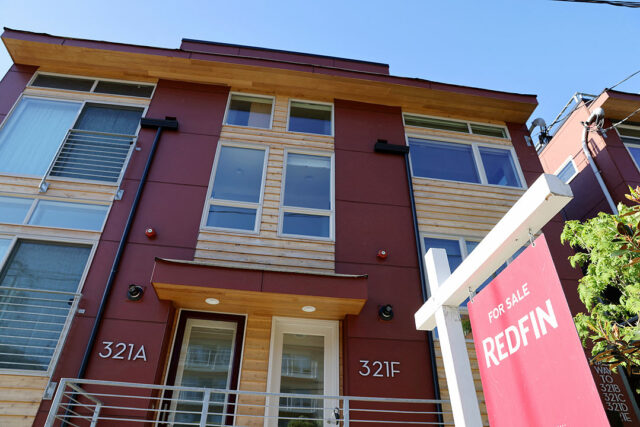
A “For Sale” sign is posted outside a residential home in the Queen Anne neighborhood of Seattle, Washington, U.S. May 14, 2021. — REUTERS/KAREN DUCEY

WASHINGTON – US single-family homebuilding rebounded sharply in February amid a thaw in winter weather while production at factories surged, but rising prices for raw materials because of tariffs threaten the nascent housing market and manufacturing recovery.

The reports on Tuesday did not change the sense that the economy has slowed in the first quarter as President Donald Trump’s on-again, off-again duties against the nation’s main trade partners and an unprecedented campaign to shrink the federal government through deep spending cuts and mass firings of public workers sour business and consumer sentiment.

“None of the economic reports today are tariff-free,” said Christopher Rupkey, chief economist at FWDBONDS. “The economy is swiftly losing momentum here and if Washington does not change course on many of its business-unfriendly proposals and initiatives, the odds of an economic recession could shift from a risk to a reality in a hurry.”

Single-family housing starts, which account for the bulk of homebuilding, surged 11.4% to a seasonally adjusted annual rate of 1.108 million units last month, the Commerce Department’s Census Bureau said. Homebuilding soared in the Northeast and densely populated South as disruptions caused by frigid temperatures eased. Housing starts also rose in the West, but plunged in the Midwest, likely dragged down by winter storms.

Starts fell 2.3% on a year-over-year basis in February. Trump this month imposed and later suspended a 25% tariff on most goods from Canada and Mexico, which would have pushed US duties on Canadian lumber to nearly 40%. But tariffs on Chinese goods were raised to 20% and levies on steel and aluminum went into effect this month.

The National Association of Home Builders estimated on Monday “a typical cost effect from recent tariff actions at $9,200 per home.” Sentiment among homebuilders plunged to a seven-month low in March.

There have been anecdotes of workers not reporting for duty at construction sites for fear of deportation as the Trump administration cracks down on illegal immigration.

Undocumented immigrants account for 23% of construction labor, the Center for American Progress estimated in 2021.

Though the average rate on the popular 30-year fixed-rate mortgage has declined from 7% at the start of the year, the economic uncertainty is likely to keep prospective buyers on the sidelines. With new housing inventory at levels last seen in December 2007, builders might have no incentive to break new ground on single-family housing projects.

Permits for future construction of single-family housing fell 0.2% to a rate of 992,000 units in February.

Stocks on Wall Street traded lower. The dollar advanced against a basket of currencies. Yields on longer-dated US Treasuries rose.

EYES ON FED
Federal Reserve officials meeting on Tuesday and Wednesday are expected to leave the US central bank’s benchmark overnight interest rate in the 4.25%-4.50% range, having reduced it by 100 basis points since September, and continue to assess the economic impact of the Trump administration’s policies, which are widely deemed as inflationary.

Those inflation concerns were reinforced by a separate report from the Labor Department’s Bureau of Labor Statistics showing import prices increased 0.4% in February, matching January’s gain and confounding economists’ expectations for a 0.1% decline. Import prices, which exclude tariffs, were boosted by higher costs for consumer goods.

Prices of Chinese imports in the US jumped 0.5%, the largest increase since March 2022, after climbing 0.2% in January. They rose 0.5% on a year-over-year basis, the biggest advance since December 2022.

Though consumer and producer price readings were better than expected in February, the details that go into the calculation of the Personal Consumption Expenditures (PCE) price indexes, the inflation measures tracked by the Fed for its 2% target were firmer.

Goldman Sachs now estimates the PCE Price Index excluding food and energy increased 0.34% in February, upgraded from 0.29% before the release of the import prices data. Core PCE inflation rose 0.3% in January. It was forecast to increase 2.75% on a year-over-year basis after advancing 2.6% in January.

“Import prices are measured before the imposition of any tariffs and if import prices do not fall sharply in the coming months, it will be clear evidence that the tariffs are being paid by US households and companies,” said Conrad DeQuadros, senior economic advisor at Brean Capital.

“Import prices from China are picking up even though the series in this report excludes tariffs. Chinese firms do not appear to be lowering their prices to absorb the 10% tariff,” he said.

Financial markets expect the Fed to resume lowering rates in June, after it paused its easing cycle in January. The policy rate was hiked by 5.25 percentage points in 2022 and 2023.

Growth estimates for the first quarter are currently below a 1.5% annualized rate. The economy grew at a 2.3% pace in the October-December quarter.

Starts for housing projects with five units or more increased 12.1% to a rate of 370,000 units.

Overall housing starts jumped 11.2% to a rate of 1.501 million units, more than reversing January’s decline. Economists polled by Reuters had forecast housing starts would rise to a rate of 1.380 million units.

Multi-family building permits fell 4.3% to a rate of 404,000 units. That contributed to lowering overall building permits by 1.2% to a pace of 1.456 million units last month.

A separate report from the Fed showed factory output jumped 0.9% in February amid an acceleration in motor vehicle production. That followed a 0.1% rise in January and beat economists’ expectations for a 0.3% advance. Economists said factory output was likely boosted by businesses rushing through orders ahead of the duties on imports.

“The threat of tariffs and the on-again, off-again implementation style is likely more damaging for manufacturers who are trying to operate in this environment,” said Shannon Grein, an economist at Wells Fargo. “Trying to navigate supply snarls and cost pressures is hard in normal times, adding the uncertainty of tariffs only exacerbates that challenge.” — Reuters

NG budget surplus narrows in Jan.

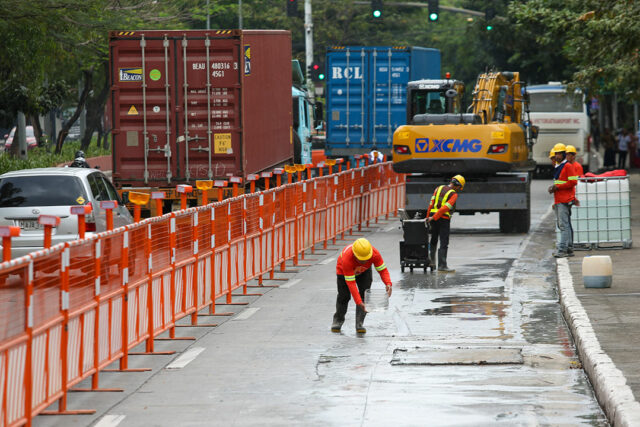
WORKERS of the Department of Public Works and Highways (DPWH) are undertaking the rehabilitation of a drainage system along the northbound lane of Bonifacio Drive in Manila, Feb. 8, 2025. — PHILIPPINE STAR/NOEL B. PABALATE

THE NATIONAL Government’s (NG) budget surplus narrowed in January, as state spending growth outpaced that of revenue collection, the Bureau of the Treasury (BTr) said.

In a statement, the Treasury said the NG posted a P68.4-billion budget surplus in January, 22.27% lower than the P88-billion surplus a year ago due to “sustained revenue growth alongside increased expenditures.

Month on month, the budget balance swung to a surplus from the P329.5-billion deficit in December last year.

National Government fiscal performanceThis was the first budget surplus posted since the P6.34-billion surplus in October 2024.

In January, revenues grew by 10.75% to P467.1 billion from P421.8 billion in the same month in 2024, amid higher tax collections.

Tax collections, which make up 93.66% of total revenues, rose by 13.6% to P437.5 billion in January from P385.2 billion in January 2024.

The bulk of tax revenues came from the Bureau of Internal Revenue (BIR) whose collections went up by 15.13% to P355.1 billion in January from P308.4 billion in the same month in 2024.

The growth in BIR collections was driven by the 18.62% or P21.4 billion increase in value-added tax (VAT) and a 14.23% or P18.1 billion rise in income taxes.

Other taxes went up by 22.2% or P3.7 billion, while percentage taxes jumped by 11.88% or P3.4 billion.

“The growth is also attributed to the bureau’s intensified collection efforts, aggressive illicit trade campaigns, and digital transformation projects,” the Treasury said.

Meanwhile, the Bureau of Customs (BoC) generated P79.3 billion in revenues in January, up 7.98% year on year, driven by the agency’s modernization program.

“Notably, VAT collections surged by 17.55% (P7.7 billion), while excise collections grew by 10.10% (P1.8 billion), helping to counterbalance the reduction in duty collections due to lower tariffs on rice imports under Executive Order (EO) No. 62,” the BTr said.

In July 2024, EO 62 reduced import tariffs on rice to 15% until 2028, as well as extended the lower tariff rates on pork, corn, and mechanically deboned poultry meat.

It also extended the zero-tariff policy on electric vehicles and their parts through 2028, as well as expanded the coverage to include other types of e-vehicles.

Collections by other offices slipped by 4.58% to P3.2 billion in January.

On the other hand, nontax revenues plunged by 19.16% to P29.6 billion, “largely due to the base effect of one-time gains recorded in the year prior.”

However, the BTr said the Treasury’s revenues “remained relatively strong” despite the 5.92% year-on-year decline to P15.7 billion in January.

The 34.62% year-on-year rise in the NG’s share in the Philippine Amusement and Gaming Corp.’s profits provided a “positive boost,” the Treasury added.

Collections by other offices also dropped by 30.3% to P13.9 billion.

Meanwhile, state spending rose by 19.45% to P398.8 billion in January from P333.9 billion in the same month last year.

“This robust spending performance resulted mainly from the disbursements attributed to progress billings of completed infrastructure and other capital outlay projects of the Department of Public Works and Highways (and) implementation of various health and social protection programs,” it said.

The BTr attributed the faster spending to expenses related to preparations for the May 12 national and local elections.

“Higher National Tax Allotment (NTA) releases and subsidies to government corporations also contributed to the significant growth of disbursements in January,” the Treasury said.

Primary spending — which refers to total expenditures minus interest payments — jumped by 13.37% to P294.4 billion in January from P259.6 billion a year ago. It accounted for 73.82% of disbursements during the month.

The BTr said that the rise in interest payments “merely reflects a shift in coupon payment timing due to the issuance strategy of multiple re-offerings of Treasury bonds originally issued in January last year to improve secondary market trading activity.”

Interest payments surged by 40.71% to P104.4 billion in January from P74.2 billion last year.

Rizal Commercial Banking Corp. Chief Economist Michael L. Ricafort said there has been a budget surplus in the month of January in recent years after “large deficits” seen in December.

However, he noted that the budget balance will likely revert to a deficit in February onwards.

Mr. Ricafort also attributed the faster government spending to preparations for the elections.

“One measure that would help reduce the NG’s budget deficit and also reduce additional borrowings/overall debt by the NG would be the increased remittance of dividends and surplus by some government-owned and -controlled corporations to the NG, if allowed under the law/respective charters,” he said. — Aubrey Rose A. Inosante

BSP sees GDP growth hitting the lower end of 6-8% target

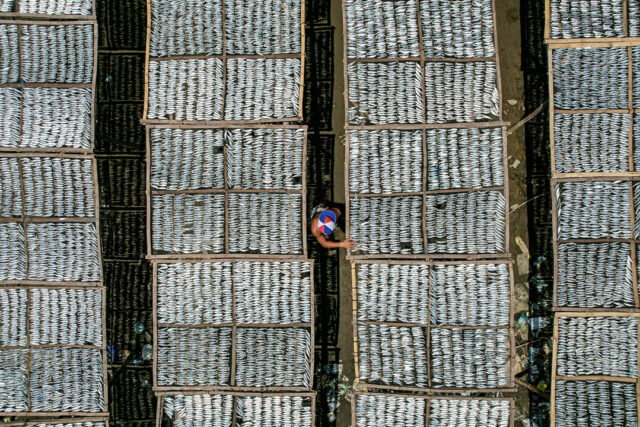
Fishermen took advantage of the warm weather on Sunday in Noveleta Cavite to dry fish for sale in the market. — PHILIPPINE STAR/RYAN BALDEMOR

By Luisa Maria Jacinta C. Jocson, Reporter

THE BANGKO SENTRAL ng Pilipinas (BSP) expects economic output to hit the lower end of the government’s target this year and 2026 as elevated global commodity prices and trade uncertainties could weigh on growth.

“The outlook for domestic economic activity remains firm, though growth is anticipated to moderate compared with previous assessments,” the BSP said in its latest Monetary Policy report.

The central bank said real gross domestic product (GDP) growth is projected to “settle near the lower bound” of the 6-8% target range for 2025 and 2026 set by the Development Budget Coordination Committee (DBCC).

The Philippine economy expanded by 5.6% in 2024, falling short of the DBCC’s revised 6-6.5% full-year target.

First-quarter GDP data will be released by the Philippine Statistics Authority (PSA) on May 8.

The BSP said the moderate outlook for growth this year comes after the lower-than-expected fourth-quarter GDP due to the “slowdown in services and contraction in agriculture.”

The economy grew by just 5.2% in the fourth quarter of 2024, slower than the 5.5% print in the same period in 2023.

The BSP also said higher global commodity prices are expected to “dampen economic activity.”

“These headwinds are partially offset by the BSP’s monetary policy easing. Nonetheless, uncertainty surrounding global economic policies, particularly the potential impact from proposed US tariffs, pose additional risks to domestic growth,” it added.

US President Donald J. Trump has made a series of tariff threats, ranging from a flat 25% tariff on steel and aluminum, which came into effect in February to reciprocal and sectoral tariffs that will be implemented on April 2.

“The overall balance of demand and supply conditions translates to a neutral output gap, suggesting limited demand-driven inflationary pressures,” the BSP said.

The neutral output gap is driven by slower consumption growth, as the holiday-driven demand was hampered by several storms that hit the country late last year.

Household spending, which accounts for over 70% of the economy, grew by 4.7% in the fourth quarter, slowing from 5.2% in the third quarter and 5.3% in the same quarter in 2023.

For the full year, private consumption slowed to 4.8% from 5.6% in 2023.

The central bank also cited “weaker investment demand amid subdued global economic activity and geopolitical tensions.”

‘MODEST BUT STABLE’
Meanwhile, the global economy will likewise experience “modest but stable growth,” the BSP said, citing the International Monetary Fund’s projections that the world’s GDP could expand by 2.9% this year and 2.7% in 2026.

“In the United States, emerging policies such as higher tariffs, lower domestic taxes, and expansionary fiscal measures could have far-reaching effects on both the US and major economies in 2025 and beyond.”

“The US economy faces upside risks, while other economies confront downside risks amidst elevated policy uncertainty and various challenges,” it added.

Markets are bracing for a possible economic slowdown that could follow as Mr. Trump implements his restrictive tariff policies.

Meanwhile, the BSP said the European region could “see gradual improvement in growth, though progress remains constrained by low consumer sentiment and ongoing geopolitical tensions.”

“Other advanced economies may benefit from recovering real incomes bolstering consumption, but trade restrictions could keep investment subdued.”

“Growth prospects in the Middle East and Central Asia may fall short of expectations, primarily due to the extension of OPEC+ (Organization of the Petroleum Exporting Countries and allies) production cuts,” it added.

POLICY IMPACT
Meanwhile, an analyst said holding policy rates steady for too long could have consequences on the economy amid weak private consumption.

“Keeping rates on hold has a cost. And the cost may be aggravated by the fact if other ASEAN (Association of Southeast Asian Nations) central banks are actually cutting interest rates,” HSBC economist for ASEAN Aris D. Dacanay said on Money Talks with Cathy Yang on One News.

The BSP unexpectedly delivered a pause at its policy meeting last month, opting to keep the key rate at 5.75%.

This after it delivered three straight 25-basis-point (bp) cuts at its last three meetings of the year in 2024.

“Private consumption, the bulwark of the Philippine economy, is down,” Mr. Dacanay said.

“If you look at Philippine history, it is the slowest pace of household consumption growth ever since the global financial crisis. That doesn’t really fare well and the reason being is high interest rates.”

Mr. Dacanay said Filipino consumers are holding back spending on big-ticket purchases because of elevated borrowing costs.

“Anything that involves taking out credit, such as buying a gadget, buying your next home, buying your next automobiles, all of these are down. With high interest rates, you could really see it feeding through these slow numbers.”

Despite starting its easing cycle, BSP Governor Eli M. Remolona, Jr. has said the current policy rate is still in a “restrictive territory.”

Mr. Dacanay also flagged the implications of prolonged easing on the currency.

“If the BSP decides to hold interest rates while others in ASEAN decide to cut, the peso will strengthen.”

“But if other currencies actually depreciate against the US dollar, what will happen is that foreigners will look at the Philippine peso as expensive compared with others that are cheap.”

For his part, Mr. Dacanay said they project the BSP to deliver a 25-bp cut at its meeting on April 10.

Trading Edge Co-Founder and Chief Investment Strategist Ron Acoba likewise said the central bank is expected to cut by 25 bps next month.

“At least locally, it is expected, or there’s a better than 50-50 chance that the BSP would cut again by at least 25 bps in its monetary policy meeting next month,” Mr. Acoba said on the same program.

For the rest of 2025, Mr. Dacanay expects the Monetary Board to slash rates by a total of 75 bps.

Mr. Remolona has signaled further easing this year. He said a rate cut is still “on the table” for April and noted there is still room for “a few more” rate cuts for the rest of the year.

Philippines now ‘moderately free’ in economic aspects — global index

A Philippine flag flutters in the wind at the National Shrine of Mary, Queen of Peace in Quezon City. — PHILIPPINE STAR/MIGUEL DE GUZMAN

By Justine Irish D. Tabile, Reporter

THE Philippines went up six notches to 82nd out of 176 countries and is now considered “moderately free,” according to a global index on economic freedom by The Heritage Foundation.

In the 2025 Index of Economic Freedom, the US-based conservative think tank said the Philippines’ score increased by 1.6 points to 60.6 from 59 in 2024. The Philippines ranked 88th in last year’s index.

The country’s latest ranking is now equivalent to an economic freedom status of “moderately free,” after being “mostly unfree” in 2024.

Philippines climbs in Economic Freedom Index

Singapore (84.1) topped this year’s index as the freest economy, followed by Switzerland (83.7), Ireland (83.1), Taiwan (79.7), and Luxembourg (79.5).

The bottom five countries include North Korea (176th), Cuba (175th), Venezuela (174th), Zimbabwe (173rd), and Sudan (172nd).

Among 39 Asia-Pacific countries, the Philippines ranked 16th, surpassing the 58.3 regional average and some of its Association of Southeast Asian Nations peers — Thailand (84th), Cambodia (98th), and Laos (140th).

However, the country lagged behind Malaysia (44th), Brunei Darussalam (46th), Indonesia (60th), and Vietnam (61st).

The index measures 12 aspects of economic freedom, which are grouped into four broad pillars — rule of law, government size, regulatory efficiency, and market openness.

Under the pillar of rule of law, the country scored 47.4 in property rights, 42.5 in judicial effectiveness, and 35.3 in government integrity.

“The overall rule of law is weak in the Philippines. The country’s property rights score is below the world average; its judicial effectiveness score is below the world average; and its government integrity score is below the world average,” said the Heritage Foundation.

Under the government size pillar, the country scored 79.1 in tax burden, 79.9 in government spending, and 47.7 in fiscal health.

According to the think tank, the country’s regulatory environment is “well institutionalized but lacks efficiency.”

This is reflected in its business freedom score of 69.1, labor freedom score of 57.7, and monetary freedom score of 69.8.

In terms of being an open market, the country scored 79.2 in trade freedom and 60 in investment and financial freedom.

“Foreign investment is generally welcome, and the investment code treats foreign investors the same as it treats domestic investors. The financial sector is dominated by banking and is relatively stable, but capital markets are underdeveloped,” the think tank said.

According to the think tank, the Philippine economy has been on a steady path of expansion despite the challenging global economic environment.

“The government has pursued legislative reforms to enhance the entrepreneurial environment and develop a stronger private sector to generate broader-based job growth,” the think tank said.

“Regulatory efficiency has been notably enhanced. The economy has expanded at an average annual rate of more than 6% over the past three years,” it added.

However, The Heritage Foundation said that institutional challenges continue to persist with corruption continuing to undermine long-term economic development in the Philippines.

Leonardo A. Lanzona, an economics professor at the Ateneo de Manila University, said the Philippines’ score reflects its “import dependent character which resulted in lower tariffs.”

“While this may be good news to consumers, it may not bode well to producers. While lower tariffs are not necessarily bad, it is still crucial to develop our production,” Mr. Lanzona said in a Facebook message.

“Monetary policies are also generally sensitive to market needs, but the country needs to focus on the real sector to enjoy these gains in economic freedom,” he added.

John Paolo R. Rivera, a senior research fellow at the Philippine Institute for Development Studies, said that the report showed the Philippines’ progress in the areas of fiscal health, monetary stability, and trade freedom.

“The government’s efforts to maintain macroeconomic stability despite global headwinds, improve tax collection efficiency, and advance infrastructure and digitalization have likely contributed to better scores,” Mr. Rivera said in a Viber message.

However, he said that the country remains challenged in the areas of regulatory efficiency, judicial effectiveness, and corruption control.

“To further improve, the country can focus on streamlining business regulations to reduce red tape and lower the cost of compliance for micro, small and medium enterprises,” he said.

He added that the country should strengthen the rule of law and contract enforcement which will help boost investor confidence.

Ateneo School of Government Dean and Economics Professor Philip Arnold P. Tuaño said that among the highlights of the report are the significant increases in the country’s scores in fiscal health, monetary freedom, and trade freedom.

“The Philippines stayed the same in terms of its public debt to gross domestic product ratio and was able to service its significant government debt; there is some movement in terms of the implementation of tax reform in the country,” said Mr. Tuaño in an e-mail.

Meanwhile, he attributed the slight increase in the country’s score on “property rights” to the increased digitalization efforts on land registration.

“There is also a slight increase in government integrity as a result of the legislation of the new procurement law, which will allow greater transparency and accountability, even if there is still weak enforcement,” Mr. Tuaño added.

For Filomeno S. Sta. Ana III, coordinator of Action for Economic Reforms, some indicators in the index do not necessarily lead to good outcomes.

“The proper use of tools is very contextual. It doesn’t mean, for example, that an open or liberal capital account is always good. It can likewise be problematic. A very open capital account can hurt the real economy,” said Mr. Sta. Ana in a Viber message.

Rizal Commercial Banking Corp. Chief Economist Michael L. Ricafort said that the country’s better ranking can be attributed to the passage of measures that eased foreign ownership restrictions, as well as economic reforms.

“All of these helped in the country’s economic freedom, especially from the point of view of international investors,” he added.

“Higher governance standards are also required to further improve economic freedom rankings… as corruption impedes further economic growth and development of the country.”

BoC says tariff cuts result in P35-B foregone revenues

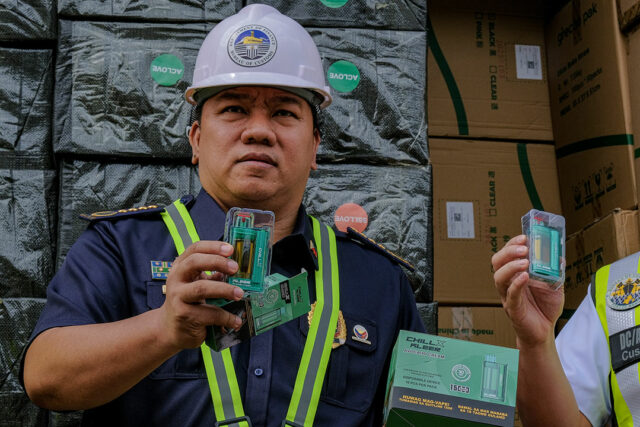
Bureau of Customs (BoC) Commissioner Bienvenido Y. Rubio shows off a vape product from a seized shipment of unregistered vape products worth P53 million at Warehouse 3, BoC Compound in South Harbor, Port of Manila, March 18, 2025. — PHILIPPINE STAR/BALDEMOR

By Aubrey Rose A. Inosante, Reporter

THE BUREAU of Customs (BoC) on Tuesday said Executive Order (EO) No. 62, which lowered tariffs on rice, electric vehicles and other commodities, resulted in around P35 billion in foregone revenues.

“If you add up the impact on rice, cars — electric vehicles, and Jet A-1 fuel, the impact was more or less around P35 billion,” Customs Commissioner Bienvenido Y. Rubio told BusinessWorld at the Port of Manila on Tuesday.

The tariff cuts impacted the agency’s ability to meet its revenue target of P939.6 billion last year, falling short by 0.92%.

EO 62, which took effect in July 2024, lowered import tariffs on rice to 15% until 2028 to tame inflation. It also extended the effectivity of lower rates on pork, corn, and mechanically deboned poultry meat.

The same order also extended the zero-tariff policy on electric vehicles (e-vehicles) and parts through 2028, as well as expanded the coverage to other types of e-vehicles.

“But for now, we just hope [to hit the target]. We can’t do anything. There are no tax measures increasing the rate of duties. We are always dependent on the arrival of goods,” he said.

This year, the BoC is targeting to collect P1.06 trillion, 14.28% higher than the actual collection of P931.05 billion in 2024.

Earlier, BoC Assistant Commissioner Vincent Philip C. Maronilla said the agency will focus on other nontraditional revenues to offset the tariff cuts.

“What we’re doing, we have an effective selectivity system. We will make sure that all high-value goods that come out will be taxed with that declaration,” Mr. Rubio said.

Meanwhile, the BoC said it has seized two containers with more than 46,000 vape units from China that were misdeclared as plastic wares.

“Based on information given by our foreign counterpart, two containers were examined by the Port of Manila, and it turned out that the two containers contain vape units. The declaration is plastic wares but when we opened the two containers, 46,600 units of vape were found,” Customs Deputy Commissioner for Enforcement Group Teddy Sandy S. Raval said.

The BoC said the containers had 233 boxes of assorted flavored vape products with a combined value of P53 million, including the unpaid tax and street value.

The Customs bureau will conduct an investigation, and file criminal and administrative cases related to the shipment of the misdeclared vape products.

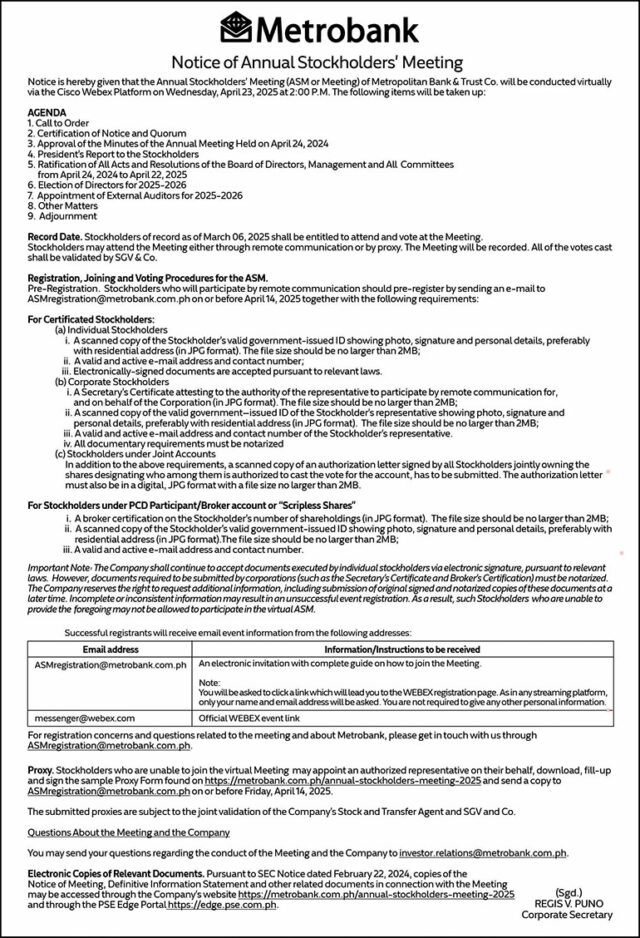
Metropolitan Bank & Trust Co. to hold virtual Annual Stockholders’ Meeting on April 23


Spotlight is BusinessWorld’s sponsored section that allows advertisers to amplify their brand and connect with BusinessWorld’s audience by publishing their stories on the BusinessWorld Web site. For more information, send an email to online@bworldonline.com.

Join us on Viber at https://bit.ly/3hv6bLA to get more updates and subscribe to BusinessWorld’s titles and get exclusive content through www.bworld-x.com.