Home Blog Page 1444

Digital infra, AI upskilling pushed
DPWH PHOTO

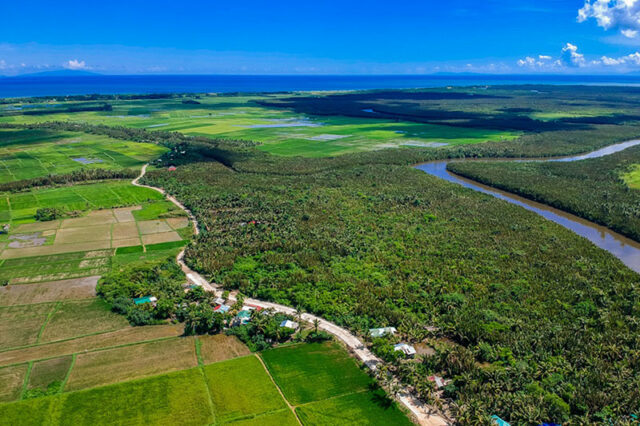
A GROUP of private sector leaders advising President Ferdinand R. Marcos, Jr. on economic concerns has pushed for the upgrade of digital infrastructure in far-flung areas and for more artificial intelligence (AI) upskilling programs to ensure Filipinos have reliable internet services and are able to keep up with new tech.

“The President’s direct engagement in refining policies into practical solutions underscores the urgent need to expand bandwidth for students and families in remote areas while keeping pace with artificial advancements.” Myla Crespo-Villanueva, who heads the Private Sector Advisory Council’s (PSAC) digital infrastructure section and MDI Group Holdings, Inc, chairperson, said in a statement on Tuesday.

PSAC met with the President in Malacañang on Feb. 14 to discuss state efforts to improve rural digital infrastructure this year, the council said in the same statement.

The council said it proposed rolling out a subsidized subscriber identity module (SIM) card program for poor Filipinos to ensure they can access phone services and internet connectivity.

Through the so-called JuanSim ng Bayan program, the council aims to deploy these cards to 510 areas by the end of the year.

It said the Department of Education (DepEd) will be overseeing the program with the help of the Department of Science and Technology’s (DoST) existing rural telecommunications system to support the subsidized SIM card program. 

Under this year’s P6.326-trillion national budget, the Department of Information and Communications Technology has earmarked P7.5 billion to roll out its free public wireless internet access program for far-flung areas this year and to ensure schools can conduct hybrid-learning setups.

A 2022 report by the World Bank showed that only 33% of Philippine households have access to fixed broadband, while 70% of the population have an active mobile broadband subscription.

The cost of broadband internet remains higher in the Philippines than in neighboring countries, with the annual charge for fixed broadband equivalent to 11% of per capita gross national income.

PSAC also called on the government to continue investing in AI infrastructure innovation, and skills development for the workforce.

DICT Secretary Ivan John E. Uy earlier said that the government is prioritizing a bill that seeks to boost Philippine cybersecurity Manila beefs up its defenses from hackers before midterm elections in May.

In 2022, the Philippines only had about 200 cybersecurity professionals compared with 2,000 in Singapore, Mr. Uy earlier said, noting that 80% of Filipino cyber experts work overseas.

The DICT chief has said the government is finding it hard to attract more cybersecurity experts due to lower pay at about P50,000 a month, compared with about P200,000 in the private sector. — John Victor D. Ordoñez

47% of required ballots printed

PHILIPPINE STAR/ MICHAEL VARCAS

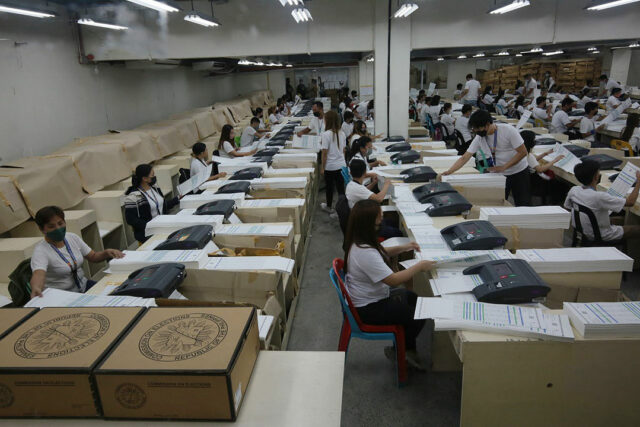
THE Commission on Elections (Comelec) had already printed 47.48% of ballots for the midterm elections on May 12, it reported on Tuesday.

In a Viber chat with reporters, Chairman George Erwin M. Garcia said 34.2 million ballots had already been printed as of Feb. 18.

This is a product of two National Printing Office printers, which produced a total of 1.67 million ballots on Feb. 17 alone.

Over 37 million is still yet to be printed, he noted.

The poll body aims to finish all ballot printing by mid-March, its chief earlier said.

The campaign period for senatorial and party-list candidates started on Feb. 11, while local bets will start their campaign on March 28.

Up for grabs in the May 12 elections are 317 congressional seats and thousands of local posts. The biggest battle will be for 12 spots in the 24-seat Senate, a chamber packed with political heavyweights and wielding outsized influence. — Chloe Mari A. Hufana

Comelec response to FOI case sought

THE Supreme Court (SC) on Tuesday ordered the Commission on Elections (Comelec) and its partner for the 2025 midterm election, Miru Systems Co., Ltd. (Miru) and others, to comment on a petition requesting information.

In a news briefing in Manila City, Spokesperson Camille Sue Mae L. Ting said the high court en banc required Comelec and Miru joint venture to comment on the petition filed by the Right to Know Right Now Coalition.

The joint venture is made up of Miru, Integrated Computer Systems, St. Timothy Construction Corporation (STCC) and Centerpoint Solutions Technologies, Inc. (Miru joint venture).

The plaintiffs urged the high court to direct Comelec and the joint venture to respond to their Freedom of Information (FOI) request, citing the public’s constitutional right to access information on matters of public interest.

They are also requesting the high tribunal to establish rules to address procedural gaps in enforcing this right under the Constitution. 

Comelec and the Miru joint venture signed an P18-billion contract to implement the automated election system for the 2025 national and local elections.

However, STCC later withdrew from the consortium, prompting the petitioners to seek information from Comelec and the joint venture regarding their continued compliance with the contract’s legal, financial, technical, and operational requirements.

“We will comply accordingly. On the part of Comelec, we provided them everything that they requested per our policy of complete transparency.  We have records to prove that and certainly, include these in our Comment,” Comelec Chairman George Erwin M. Garcia told reporters in a Viber chat. — Chloe Mari A. Hufana

DHSUD, Heart center to build 14 housing projects

DHSUD

THE Department of Human Settlements and Urban Development (DHSUD) has partnered with the Philippine Heart Center (PHC) to build 14 vertical housing projects in Quezon City.

The partnership aims to build a total of 14 buildings with about 3,360 units to address the housing needs of PHC employees and families, the DHSUD said in a statement posted on its Facebook page.

“DHSUD Undersecretary Garry V. De Guzman, representing Secretary Jose Rizalino Acuzar, signed a memorandum of understanding with PHC Executive Director Avenilo Aventura, Jr. for a planned housing project in Barangay Tumana, Marikina City under President Ferdinand R. Marcos, Jr.’s Pambansang Pabahay para sa Pilipino or 4PH Program, Feb. 13,” it said.

The 8.1-hectare community will be located in Barangay Tumana, Marikina City, DHSUD said.

Initial features of the project include a clubhouse, basketball court, pool area, wide open spaces and a commercial building inside the 8.1-hectare community.

The project forms part of the government’s 4PH Program, which seeks to address the country’s housing backlog.

The Marcos administration initially set an ambitious goal of constructing six million housing units by 2028 but has since been reduced to 3.2 million units.

The Philippines’ housing need is projected to jump to 22 million by 2040, according to a report by the United Nations Human Settlements Programme. — Beatriz Marie D. Cruz

Akbayan bet wants more educ budget

PHILIPPINE STAR/WALTER BOLLOZOS

A CONGRESSIONAL candidate on Tuesday urged the government to boost the education sector’s budget to be on par with the United Nations’ (UN) education spending recommendation and address issues plaguing the Philippines’ school system.

A 2020 UN document recommended countries to spend at least 4-6% of their gross domestic product (GDP) or at least 15-20% of total public spending on education.

The Philippines allocated 3.6% of its GDP on education in 2023, World Bank data showed, with the country spending an average of 3.2% of its GDP on the education sector in the past decade, a Second Congressional Commission on Education (EDCOM II) report stated.

“If we want to address this education crisis and improve the learning outcomes of our students, we must aim for the recommendation of the United Nations and make it at least six percent of our gross domestic product and ensure that our money goes where it is supposed to go,” Jose Manuel “Chel” I. Diokno, Akbayan party-list’s nominee for the midterm elections, said in a statement.

He also recommended structural reforms to the education sector, such as increasing public school teachers’ wages and providing “well-reviewed” textbooks for Filipino students.

“We need to provide all the necessary support to our teachers — from adequate salary and other benefits — to sufficient supplies and materials for teaching, so they can effectively fulfill their duties to our students,” he said.

The Education department should also hone students’ competencies by strengthening their “basic numeracy and literacy skills” and expand feeding programs to address chronic height stunting of Filipino youth, said Mr. Diokno. — Kenneth Christiane L. Basilio

One dead, 3 hurt in Maguindanao ambush

COTABATO CITY — An ethnic Maguindanaon villager was killed while three others, including a six-year-old child, were wounded in an ambush in Mamasapano, Maguindanao del Sur on Monday morning.

Hadji Nano Utap, 40, a resident of Rajah Buayan, was declared dead on arrival by physicians in a hospital where he was brought by companions for treatment.

Mr. Utap is the 14th fatality in gun attacks since the Commission on Elections imposed a nationwide gun ban on Jan. 12 ahead of the midterm elections in May.

Brig. Gen. Romeo J. Macapaz, regional director of the Bangsamoro police, told reporters on Tuesday that Mr. Utap and his relatives were in a minivan while others trailed behind on motorcycles, when they were attacked by gunmen at the secluded Paso area in Mamasapano.

Local executives and officials of the Mamasapano Municipal Police Station said the attack left three relatives of Mr. Utap, Tateks Kalunsiang, 45, Hadji Fahad Namo, 38, and a six-year-old boy, badly wounded.

Mr. Kalunsiang, who was riding a motorcycle, behind the minivan carrying his relatives, fell along the road due to gunshot wounds he sustained in the attack.

Their attackers immediately escaped using getaway motorcycles, according to barangay officials. — John Felix M. Unson

Seven arrested in NBI cockpit raid

BAGUIO CITY — A cockpit operator and 6 more, including his employees and bettors, were taken by the National Bureau of Investigation (NBI) in Alaminos District Office after they were found illegally holding cockfights at the Lafa Cockpit Arena in Barangay Seselangen in Sual, Pangasinan.

Ariel Rabara Borjal, cockpit operator and manager and Jordan F. Gopio; Gilbert DC Reyes; Dexter A. Gabrillo; brothers Ronelio and Rizalino F. Arboleda and Rashad M. Guliman reportedly held cockfights on Thursdays, which are banned by Section 5 of Presidential Decree 449 that only allows cockfights during Sundays and legal Holidays and ruing fiestas for not more than three days.

Tipsters reportedly told the NBI that though the Lafa Cockpit Arena is sanctioned by the Alaminos local government unit, it held cockfights even during weekdays, particularly on Thursdays.

With the help of confidential informants, the tips were validated by NBI agents on at least two Thursdays in January, prompting them to launch a raid Thursday last week, Feb. 13, where Mr. Borjal and his employees were caught. — Artemio A. Dumlao

PHL not yet on US radar for tariff action — S&P

REUTERS

THE Philippines’ trade position with the US should help insulate it from global trade uncertainties, S&P Global Ratings said.

“Fortunately for the Philippines, it is one of the major economies, perhaps the only major economy that we know of in the region, that actually has a trade surplus with the US,” YeeFarn Phua, director at S&P Global Ratings, said in a webinar on Tuesday.

The US is the top destination for Philippine-made goods. In 2024, exports to the US were valued at $12.12 billion or 16.6% of total export sales.

On the other hand, the value of imports from the US stood at $8.17 billion or 6.4% of total imports.

“For now, when it comes to talking about tariffs on certain countries in this region, I think the Philippines has not come up in the equation in the meantime,” Mr. Phua said.

US President Donald J. Trump has ordered a slew of tariffs on Chinese imports, is reviewing duties on Mexico and Canada, and announced a 25% tariff on all steel and aluminum imports from any source.

Mr. Trump also signaled reciprocal tariffs on all countries that charge duties on US imports.

Mr. Phua said there could be potential benefits to the Philippines from the second-round effects resulting from such tariffs, but it is too early to tell.

“Whether the Philippines gets to enjoy that, I think it really depends on what kind of sectors we’re talking about and what kind of tariffs are being imposed.”

Markets are still in wait-and-see mode on how exactly Mr. Trump plans to implement his tariff proposals.

“We can assume that if you’re talking about something more high-tech, very cutting-edge technology, perhaps the Philippines will not be in a position at this moment to benefit,” he said.

“But you’re talking about some of the products down the value chain, like assembly, packaging, and so on, of electronic goods. Perhaps there could be some advantages for the Philippines in the sense that it will see some of the production going to the Philippines.”

This could boost foreign direct investment as well as overall economic growth, he added.

However, Mr. Phua said the effects from these trade policies are unlikely to impact the Philippine credit rating.

“Having said that, these are largely not key factors for us to look for in terms of the upgrade for the Philippines,” Mr. Phua said.

“As we stated in our outlook statement for the Philippines, we are really looking at two factors here. First is the continued building of external buffers. The second is the continued consolidation of its fiscal position,” he added.

In November, S&P Global affirmed the Philippines’ investment-grade rating and raised its outlook to “positive” from “stable.”

The credit rater is monitoring the Philippine current account deficit, Mr. Phua said.

“We have seen the current account deficit start to widen, and that in turn has started to shave down some of the external buffers that the Philippines currently has.

“We are looking to see the Philippines maintain the current account deficits at a moderate level and to rebuild those external buffers before the ratings could then be upgraded,” he added.

This year, the central bank expects the current account deficit to widen to $12.1 billion, or 2.4% of GDP.

“At the same time, we think the slower pace of fiscal consolidation announced by the government over the medium-term fiscal framework last year is more realistic,” Mr. Phua said. — Luisa Maria Jacinta C. Jocson

Asia-Pacific SDG progress ‘stagnating’

UN.ORG

THE Asia-Pacific region is expected to miss most of its sustainable development goals (SDGs) by 2030, with progress stagnating and even regressing, especially for climate action, the Economic and Social Commission for Asia and the Pacific (ESCAP) said.

“Overall, progress on the 17 SDGs is off track. Most targets are either stagnating or advancing too slowly, meaning we’re not moving at the pace needed to achieve our 2030 goals,” ESCAP Statistics Division Director Rachael Joanne Beaven said in a virtual forum on Tuesday.

In the 2025 Asia and the Pacific SDG Progress Report, ESCAP said that among the 117 specific targets for which there is sufficient data, only 16 are on track to be achieved by 2030, while 18 targets show “a negative trend in need of urgent reversal,” with most of these related to climate-related challenges and disaster risk.

Ms. Beaven said the region is lagging the global pace on climate action (SDG 13), decent work and economic growth (SDG 8), life below water (SDG 14), and partnership for the goals (SDG 17).

“On climate action, goal 13, the region is not just slow, it’s regressing. Instead of moving forward, we’re seeing setbacks that threaten our collective efforts to combat climate change,” she said.

Other targets of the Asia-Pacific that regressed were the share of renewable energy in the total energy mix and sustainable tourism, the report said.

“The region is regressing on climate action, undermined by the impact of disasters and the continuing growth of greenhouse gas emissions. Fossil fuel subsidies and unsustainable production patterns hinder progress towards a sustainable economy,” ESCAP Deputy Executive Secretary Lin Yang said.

Out of the 17 SDGs, the region has made “significant progress” in industry, innovation and infrastructure (SDG 9) and good health and well-being (SDG 3).

In the Association of Southeast Asian Nations (ASEAN), ESCAP reported that the region has regressed on three SDGs 2015 — climate action, life below water, and responsible consumption and production.

ASEAN is likely to achieve 11 SDGs by 2030 if the pace of progress is maintained. Three SDGs cannot be evaluated due to insufficient data.

“Data gaps persist in critical areas, particularly in gender equality (SDG 5) and peace, justice, and strong institutions (SDG 16),” Ms. Lin said.

The sufficiency SDG data in the region rose to 54% in 2024 from 47% in 2021, she added.

The report said that out of 169 targets, 50 cannot be assessed, and only 16 targets are on track to be achieved by 2030, with data on disability, migration, and rural communities remaining limited. — Aubrey Rose A. Inosante

Pork industry agrees to review cost structure ahead of MSRP

PORK meat products are sold at the Murphy Market in Cubao, Quezon City, Feb. 11, 2021. — PHILIPPINE STAR/ MICHAEL VARCAS

THE Department of Agriculture (DA) said on Tuesday that pork producers, traders, and retailers have agreed to review their cost structures ahead of the imposition of a maximum suggested retail price (MSRP) for the commodity in March. 

“We all agreed that high pork prices are a short-term problem that should soon be resolved,” Secretary Francisco P. Tiu Laurel, Jr. said in a statement following a meeting with industry representatives.

He noted that viajeros or traders, who bring the commodity from farm to market, likely add P80 to the price of pork per kilo.

Assistant Secretary Arnel V. de Mesa said on Monday that given a farmgate price of P250 per kilo, a reasonable margin would be the retail price of pork to P380.

“We are trying to strike a balance between the interests of consumers and those involved in the pork industry,” Mr. Laurel said. “The clamor to bring the price of pork down is coming not just from consumers but from retailers as well; their sales are going down.”

Jason H. Cainglet, executive director of the agricultural group SINAG, advised the DA to temporarily refrain from imposing an MSRP, noting that farmgate prices for pork have already begun to decrease from P250 per kilo.

Imported frozen pork is currently priced around P250 per kilo, while domestic pork fetches over P400 per kilo, according to the DA.

Manny Pareja, a pork retailer from Las Piñas, told the consultative meeting that bigger customers such as restaurant and carinderia owners are already choosing imported meat over freshly slaughtered hogs.

He said that while many consumers still prefer fresh meat, the volume they buy has declined significantly because of high prices.

“High pork prices are considered a short-term issue that should be addressed in the near future, particularly after the commercial availability of the African Swine Fever (ASF) vaccine,” Mr. Laurel said.

The DA said the Bureau of Animal Industry is hoping that the “positive results” of the initial ASF vaccination rounds will convince the Food and Drug Administration to allow its commercial use.

The BAI said on Monday that about 30,000 hogs have been vaccinated against ASF. — Kyle Aristophere T. Atienza

PHL sardine species ruled exportable to Europe

PHILSTAR FILE PHOTO

THE PHILIPPINES said on Tuesday that the inclusion of Sardinella lemuru (tamban) on a global list of fishery products considered safe for trade and consumption will pave the way for the resumption of exports to Europe.

The decision, arrived at during the 47th Session of the Codex Alimentarius Commission (CAC), will “open new markets for one of the Philippines’ key fish exports,” the Department of Agriculture (DA) said in a statement.

“This is welcome news for the fishery industry, a major export earner for the Philippines. This should stimulate new investments in the sector and create new jobs,” Agriculture Secretary Francisco P. Tiu Laurel, Jr. said.

The Philippines had carried out six years of advocacy and technical discussions led by the Bureau of Fisheries and Aquatic Resources and the National Fisheries Research and Development Institute to make the species exportable.

The agencies allotted P17 million for a study that addressed the technical criteria necessary for the species’ inclusion in the Codex.

The DA said Sardinella lemuru’s exclusion from the European Union’s (EU) Codex Standard for Canned Sardines and Sardine-Type Products (CXS 94-1981) had prompted European countries to stop importing the variety from 2016 to 2017, resulting “in the loss of hundreds of metric tons in exports.”

The process to include tamban, which is native to the Eastern Indian Ocean and the Western Pacific, began in 2018 when the EU Fisheries Agency encouraged the Philippines to pursue adding Sardinella lemuru to the Codex Standard.

In its decision last year, the Codex committee on fish and fishery products noted the species’ comparability to other sardine species and the sustainability of its fish stocks, the DA said.

Sardines were the Philippines’ seventh-largest fish export in 2022, accounting for 2.7% of the 282,674-metric ton total.

Germany, the Netherlands, and Spain accounted for 12% of the country’s sardine exports, the DA said.

“With the new inclusion in the Codex, Philippine sardine products are expected to gain wider access to these markets, ensuring a sustainable future for fishermen and exporters while contributing to global sustainability goals,” it said.

Sardine export volume rose to 9,154.31 metric tons in 2024, valued at $19.5 million, against 6,095.77 metric tons and $14.7 million a year earlier. — Kyle Aristophere T. Atienza

Ayala Corp. says PHL ripe for US investment

AYALA CORP. Chairman Jaime Augusto Zobel de Ayala said US companies need to consider the Philippines for their expansion projects, citing the readiness of the Philippine business ecosystem to enter into potential partnerships.

“The country is certainly ready to accept high levels of partnership and investment from our friends around the region, most especially the US,” Mr. Zobel de Ayala said in his keynote speech during a US-Philippines Society board meeting on Feb. 10.

Despite global volatility, Mr. Zobel de Ayala said the Philippines is one of the “most promising” economies in Asia, supported by strong macroeconomic fundamentals and a young, fast-growing population.

“We in the Philippine business community remain hopeful at the country’s prospects for growth, which have not dimmed despite a volatile global environment,” he said.

Mr. Zobel de Ayala said Ayala Corp. is investing in various growth areas like renewable energy through ACEN Corp., in digital infrastructure via Globe Telecom, Inc., in healthcare via Ayala Healthcare Holdings, Inc., and in education through iPeople, Inc.

The Philippine economy grew 5.6% in 2024, topping the 5.5% posted in 2023, but fell short of the government’s 6-6.5% target.

For 2025, the government is hoping to achieve 6-8% economic growth.

“Consistent 6% growth is certainly a respectable achievement but imagine what more can be achieved if we hit a continuous growth rate of 8% or more over a sustained period, which economists feel is possible if we align the government and private sectors,” Mr. Zobel de Ayala said.

Launched in 2012, the US-Philippines Society is a Washington-based independent non-profit organization.

Mr. Zobel de Ayala serves as co-chair of the US-Philippines Society, along with former Ambassador to the Philippines John D. Negroponte.

The US-Philippines Society met in Manila on Feb. 10 and 11. — Revin Mikhael D. Ochave