Home Blog Page 1289

Stocks may drop on growing US-China trade war
REUTERS

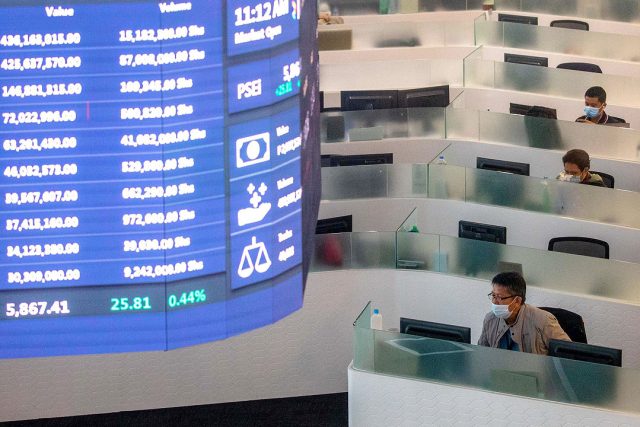
PHILIPPINE STOCKS could decline this week due to the growing trade war between the United States and China.

On Wednesday, the Philippine Stock Exchange index (PSEi) fell by 0.83% or 51.48 points to close at 6,134.62, while the broader all shares index rose by 0.28% or 10.34 points to 3,656.99.

Week on week, the PSEi went up by 0.86% or 52.18 points from its 6,082.44 finish on April 11.

The market was closed on April 17-18 in observance of Maundy Thursday and Good Friday.

“Steady movement above the 6,000 zone characterized the shortened trading week amid quiet activity ahead of the Lenten break,” online brokerage 2TradeAsia.com said in a market note.

For this week, First Metro Investment Corp. Head of Research Cristina S. Ulang said volatility may welcome back investors from the trading break following the latest developments in the US-China trade war.

“Downside risks lurk as the market digests the adverse trade and economic growth fallout for emerging markets following the fresh port container fees recently slapped by US President Donald J. Trump on Chinese exports,” Ms. Ulang said in a Viber message.

The Trump administration shielded on Thursday domestic exporters and vessel owners servicing the Great Lakes, the Caribbean and US territories from port fees to be levied on China-built vessels, aiming to revive US shipbuilding, Reuters reported.

The Federal Register notice posted by the US Trade Representative was watered down from a February proposal for fees on China-built ships of up to $1.5 million per port call that sent a chill through the global shipping industry.

Still, the fees on Chinese-built ships add another irritant to swiftly rising trade tensions between the world’s two largest economies as Mr. Trump seeks to draw China into talks on his new tariffs of 145% on many of its goods.

The revisions tackle major concerns voiced in a tsunami of opposition from the global maritime industry, including domestic port and vessel operators as well as US shippers of everything from coal and corn to bananas and cement.

Unicapital Securities, Inc. Research Head Wendy B. Estacio-Cruz said in a Viber message that the PSEi is expected to trade within the 5,800 to 6,300 range this week.

For his part, Rizal Commercial Banking Corp. Chief Economist Michael L. Ricafort said in an e-mail that the market’s support is pegged at 6,000, while resistance could be at 6,230-6,490.

2TradeAsia.com placed the PSEi’s support at 6,000 and resistance at 6,400.

“A global backdrop of rate path uncertainty, persistent push-pull forces in tariffs and trade policy, and sticky real yields continue to weigh on valuations despite a relatively benign domestic inflation setup,” it said. — Revin Mikhael D. Ochave with Reuters

Subway RoW purchases seen completed by Q1

PHILIPPINE STAR/ MICHAEL VARCAS

THE Department of Transportation (DoTr) is targeting to complete the acquisition of right of way (RoW) for the Metro Manila Subway project by the first quarter of 2026.

Transportation Secretary Vivencio B. Dizon said last week that the DoTr is now expediting the project by addressing RoW issues, which is estimated at 59.12% to date.

The DoTr said in a message to BusinessWorld, that it is hoping to acquire up to 80% of the needed RoW by end of 2025, with the remainder completed by the first quarter.

The DoTr is also hoping to award the three remaining contract packages of the Metro Manila Subway project within the year. The remaining contract packages are valued at between P10 billion and P15 billion each.

Contract package (CP) 105 covers the construction of the station in Kalayaan Avenue and Bonifacio Global City; CP 108 covers the Lawton and Senate-DepEd stations; and CP 109 is the Ninoy Aquino International Airport (NAIA) Terminal 3 station.

The DoTr has said that it is now expecting subway operations by 2032. It had initially targeted partial operations by 2030.

Nigel Paul C. Villarete, senior advisor at technical advisory group Libra Konsult, Inc., said the DoTr must set a realistic target, given the many obstacles in the way of completion.

“We do not have a good record of meeting deadlines as far as RoW acquisition is concerned… It is a better idea to set realistic timelines for project implementation, considering past performance levels, and attempt to drastically improve them and finish projects ahead of schedule, rather than promise a very early timeline which may be repeatedly delayed,” Mr. Villarete said via Viber.

Rene S. Santiago, former president of the Transportation Science Society of the Philippines, said: “2032 is a big aspiration, devoutly to be wished but iffy.”

The subway will ultimately link Valenzuela City to Parañaque City, with a spur line connecting to NAIA.

The subway is 33 kilometers long with 17 stations. The goal is to cut travel time between Quezon City and NAIA to 35 minutes from over an hour currently. It is expected to accommodate up to 370,000 passengers daily. — Ashley Erika O. Jose

PHL upper middle-income status by 2026 seen requiring 6% growth

A VIEW of residential condominium buildings in Mandaluyong, Metro Manila, Aug. 22, 2016 — REUTERS

THE PHILIPPINES needs to sustain 6% growth until next year to achieve upper middle-income status by 2026, according to National Economic and Development Authority (NEDA) Secretary Arsenio M. Balisacan.

“I think the upper middle-income status is challenging, but I think if we get 6% this year, 6% next year, we should achieve that upper middle-income status next year,” Mr. Balisacan told reporters during a briefing last week.

The Marcos administration is hoping to be reclassified as an upper middle-income economy this year or by 2026.

Growth of 6% matches the lower end of the government’s 6-8% growth target band for 2025-2028. It would exceed the 5.7% gross domestic product (GDP) posted in 2024, and the 5.5% in 2023.

The World Bank classifies countries by their gross national income (GNI). The four categories are low income, lower middle income, upper middle income and high income.

The Philippines is currently a lower middle-income country with GNI per capita of $4,230 in 2023, up from $3,950 in 2022.

Upper middle-income status is expected to require GNI per capita of between $4,516-$14,005.

Reinielle Matt M. Erece, economist at Oikonomia Advisory and Research, Inc. said upper middle-income status by next year is “still possible.”

“But it became more difficult as the economy takes a hit from heightened geopolitical risks especially in trade, remittances, and foreign investment,” he told BusinessWorld via Viber.

US President Donald J. Trump on April 9 paused his new reciprocal tariffs for 90 days, although the baseline 10% tariff on almost all US imports remains in effect.

The Philippines faced a 17% reciprocal tariff, the second lowest in Southeast Asia.

Mr. Erece said Philippine GDP must expand by 6-7% annually, though he expects growth to be at the lower end of the target.

Peter Lee U, dean of the University of Asia and the Pacific’s School of Economics, said should the tariffs cause a global recession, it could prevent the Philippines from moving up the income category.

Such a recession can “cause our GDP/gross national product to shrink and our GNI per capita to fall. It’s anybody’s guess whether that will happen. Also, if a global economic slowdown happens, it may take until 2026 before we feel the full effect,” he said via Viber.

JP Morgan estimates a 60% probability of the world economy going into recession by year’s end, up from 40% in March.

Jose Enrique A. Africa, executive director at think tank IBON Foundation said even if Mr. Trump backtracks on the tariffs, inflation is expected to slow growth this year and the next.

“The reputational damage to the US has been done and countries will start adjusting to a world of even more uncertain supply chains, fiscal austerity to accommodate security spending from the vacuum being left by the US, and more volatile finances from a shaken dollar,” he said via Viber.

“These make it unlikely for the Philippines to rise to upper middle income this year — the only question really being how long this reclassification is going to be delayed,” he added.

Before the tariff announcement, World Bank Country Director for the Philippines, Malaysia, and Brunei Zafer Mustafaoğlu said in February that the Philippines is likely to reach upper middle-income status by 2026.

However, Mr. Balisacan said instead of the fixation on income status, the more significant indicators are employment, poverty, literacy and hunger and living standards, rather than GDP or GNI.

Mr. Africa said the Marcos administration instead should prepare to cushion the economic disruption on the vulnerable members of society.

“It should expand public education, health, housing and social protection services, and give redoubled support to domestic food production to moderate prices. The backsliding on the sustainable development goals… risks getting even worse,” he said. — Aubrey Rose A. Inosante

FTI starts purchasing 500 pigs daily for slaughter

REUTERS

FOOD TERMINAL, INC. (FTI) has begun purchasing 500 pigs daily from large farms and delivering them directly to slaughterhouses.

“The move is intended to ensure consistent supply and reinforce compliance with the established maximum suggested retail prices (MSRPs),” the Department of Agriculture (DA) said in a statement.

The DA on March 10 started implementing an MSRP scheme for pork, with a price of P300 per kilo for fresh carcasses, P350 a kilo for kasim (shoulder) and pigue (rear leg), and P380 per kilo for liempo (belly).

The DA said pork industry representatives vowed to police their ranks in the face of “alarmingly low compliance” with the pork MSRP.

The DA said less than 10% of sellers were found to be observing the price ceilings.

There is a need to uphold the “gentleman’s agreement” reached in earlier consultations to avert “more disruptive market interventions,” the DA said, citing Agriculture Undersecretary for Livestock Dante Palabrica.

The MSRPs aim to balance the interests of producers, traders, retailers, and consumers “in light of continued inflationary pressures.”

On April 1, the DA said the level of compliance with the pork MSRP was low at 30% after monitoring 170 stalls.

The compliance rate was 20% during the first week of implementation. It rose to 25% as of March 22.

Meanwhile, the DA said it will roll out a P1-billion swine repopulation program.

It plans to distribute around 30,000 gilts (female pigs that have not produced litters) to large farms which, in turn, will supply reared pigs for distribution to backyard farmers. — Kyle Aristophere T. Atienza

Hong Kong garment company exploring expansion in PHL

Image via IndustriALL Global Union/Flickr/CC BY-NC-ND 2.0

THE Department of Trade and Industry is set to meet with a garment manufacturer from Hong Kong by the end of the month to discuss plans of expanding its production in the Philippines.

“They are already thinking of strengthening and adding more production in the Philippines because of the 17% US reciprocal tariffs,” Trade Secretary Ma. Cristina A. Roque told reporters last week.

“I will talk to them about their plans to grow here in the Philippines. They’re going to expand their production here,” she added.

She said that the Hong Kong manufacturer’s decision is based on the assumption that the US reciprocal tariff for Philippine products will stay at 17%, the second lowest tariff in the Association of Southeast Asian Nations (ASEAN).

ASEAN member countries are facing some of the highest duties. Cambodian goods must pay a 49% tariff, followed by Laos (48%), Vietnam (46%), Myanmar (44%), Thailand (36%), Indonesia (32%), Malaysia (24%), and Brunei (24%).

Singapore was assigned the baseline tariff of 10%.

Last week, US President Donald J. Trump announced a 90-day pause on the higher reciprocal tariffs on most of its trading partners.

While the 90-day pause is in place, most countries will be charged the 10% duty until July.

“(The Hong Kong manufacturer is) thinking that it will stay at 17%. But it’s hard to say; it is hard to speculate,” Mr. Roque said.

“The best thing to do is really to just wait. But now, (investors) are already talking to us,” she added.

Foreign Buyers Association of the Philippines President Robert M. Young said the Philippines should upgrade its capabilities and reduce the cost of doing business as more companies explore Philippine expansions to get around stiff US tariffs in their home countries.

“We have been telling people that we just have to invite investors to come in and open new factories, modernized factories, updated factories, and state-of-the-art factories that can stitch fashion items. We only have basic ones, and that is the problem,” he said by telephone.

“There are factories here, but they are dedicated to the companies’ own production; they do not have the capacity to accept additional orders,” he added.

He said that the Philippines lost a lot of investments to Vietnam due to the high cost of doing business here.

Meanwhile, Mr. Young said that he expects US reciprocal tariffs to disrupt trade activity globally as economies turn protectionist.

“There will be a policy shift towards protectionism,” he said.

He said that this could result in lower orders from US companies, with the Philippines raising prices due to higher prices of raw materials.

“As you know, the Philippines is just relying on imported materials, almost in all industries. Prices will definitely increase because the other countries that are supplying the Philippines will be affected as well by this tariff,” he added.

According to the World Trade Organization’s (WTO) Global Trade Outlook, world trade is expected to decline 0.2% in 2025 due to a surge in tariffs and trade policy uncertainty.

The WTO said that if the US imposes the currently suspended reciprocal tariffs, world merchandise trade growth will be reduced by an additional 0.6 percentage points. 

Earlier this year, the WTO projected Asia’s exports to register 3.3% growth in 2025, with imports expected to grow 3.2%. However, WTO economists revised these projections in April to 1.6%.

Meanwhile, Asia’s commercial services exports are expected to grow 4.4% this year based on April projections, from 5.5% previously.

Mr. Young said that he expects a significant decrease in Philippine exports compared to other ASEAN economies due to higher prices.

“Originally, we had higher prices than them. For instance, in denim jeans our price is at least 15% higher than that of Bangladesh or Vietnam, or sometimes even 20%. Philippine jeans will be the last to be picked up because they now have this perception that the Philippines is charging more,” he said.

“Definitely the demand for the Philippine exports will be less as compared to the other ASEAN countries,” he added.

He said the government should be aggressive in reducing the cost of doing business through subsidies for power costs and other such measures.

“We are now all in survival mode. Because all in all, the Trump tariff reduces global merchandise activity. International economic growth will definitely be stunted,” he said.

“Our buyers are suggesting cost-cutting to us to offset or somehow assist in the reduction of prices,” he added.

According to the WTO report, world gross domestic product growth is now projected at 2.2% in 2025, down from 2.8% previously.

Rizal Commercial Banking Corp. Chief Economist Michael L. Ricafort said that the US tariffs and other protectionist measures can slow global trade, investment, employment, and world economic growth.

“This would lead to slower Philippine exports, including supply chains and overall economic growth,” he said.

He said the Philippines should diversify export markets while leveraging its free trade agreements (FTA), adding that the US remains its biggest export market with a 17% share.

He added that the Philippines should also try to reduce US tariffs through an FTA and diversify beyond electronics. — Justine Irish D. Tabile

Clark food hub development to start with initial 12-hectare site

CIAC

THE Department of Agriculture (DA) said on Sunday that it has identified the 47-hectare site for a future food hub in Clark, of which 12 hectares are set for initial development.

The site was agreed with Clark International Airport Corp. (CIAC), the landowner, it said, with initial development costs estimated at about P2 billion, the DA said.

“Access to the entire area remains challenging,” Agriculture Secretary Francisco Tiu Laurel, Jr. said. “But a 12-hectare section could be sufficient for initial development, considering our current budget and timelines.”

The proposed Clark hub, which will be the main distribution center for produce from the north of Luzon, is modeled on a 50-hectare Thai agricultural distribution center.

Transportation Secretary Vivencio B. Dizon, who chairs the CIAC, said the food hub’s location is strategic, with access to Subic port via the Subic-Clark Expressway.

He also cited its proximity to the Clark International Airport.

The DA said the food hub concept was originally proposed by Semmaris of France, operator of the Rungis International Market near Paris.

It said the initial plan stalled when Semmaris’s local partner withdrew due to high relocation costs associated with the original site.

The DA is also looking to establish food hubs at other sites, with the aim of stabilizing food supply and prices, while increasing farmer incomes. 

The DA has said a food hub could rise on 20-30 hectares in Quezon province. — Kyle Aristophere T. Atienza

Kawasaki IT enterprise to locate in Cebu ecozone

OAKRIDGE.COM

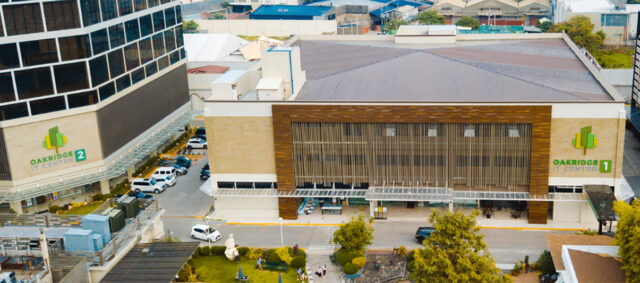
THE Philippine Economic Zone Authority (PEZA) said Kawasaki Motors Development Center Cebu, Inc. (KMDCI) has registered as an economic-zone information technology (IT) enterprise in Cebu.

In a social media post, PEZA said that KMDCI signed its registration agreement on April 15 to operate in Oakridge IT Center in Mandaue City.

“With the support of PEZA and its enabling business ecosystem, KMDCI is set to introduce advanced technological solutions, enhance local innovation, and contribute to a future-ready Philippine economy,” PEZA said.

PEZA Director General Tereso O. Panga said KMDCI’s operation will help boost Cebu’s standing as an IT and research and development (R&D) hub while promoting inclusive and sustainable economic development across the regions.

“It is also their way of testing the waters in preparation for the setting up of a manufacturing facility in the country,” he said via Viber.

Oakridge IT Center Towers currently hosts three locators generating 32 jobs and $884,345.66 in exports.

Aside from Kawasaki, the IT center is also expecting the entry of an US firm, DIS Tech Philippines.

According to Mr. Panga, the US company will offer knowledge-based and computer-based support services, including engineering and architectural design services, consultancy, and the design of printed circuit boards and substrate interfaces for the semiconductor industry.

In the first quarter, PEZA approved P58.947 billion worth of investment pledges, representing an almost four-fold increase from a year earlier.

It approved 66 new and expansion projects involving investment that was 294.3% higher year on year.

For this year, PEZA hopes to approve P250 billion worth of investment pledges. If realized, it would be a 16.7% increase from the P214.18-billion pledges approved in 2024. — Justine Irish D. Tabile

Subsidies for gov’t firms fall 40% in February

PHILIPPINE STAR/BOY SANTOS

SUBSIDIES provided to government-owned and -controlled corporations (GOCCs) dropped by more than 40% year on year in February, according to the Bureau of the Treasury (BTr).

The BTr reported that budgetary support to GOCCs declined 40.43% to P7.57 billion in February.

Month on month, GOCC subsidies rose 72.73% from P4.39 billion in January.

State-owned firms receive monthly subsidies from the National Government to support their daily operations if their revenue is insufficient.

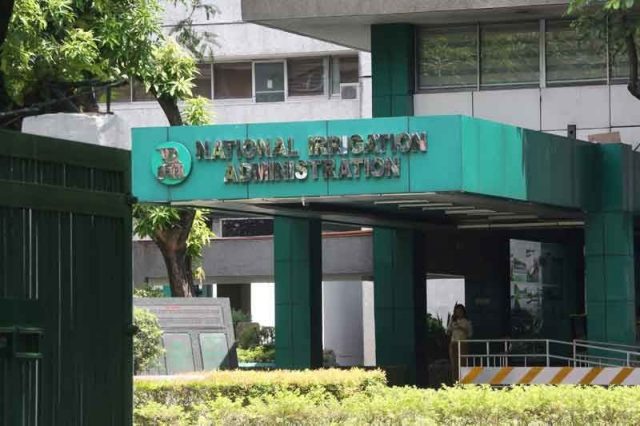
In February, the National Irrigation Administration received P3.16 billion in subsidies, which accounted for 41.66% of the total.

This was followed by the Bases Conversion Development Authority, which received P1.94 billion, and the Philippine Fisheries Development Authority with P975 million.

Also receiving subsidies were the National Kidney Transplant Institute (P316 million), Sugar Regulatory Administration (P231 million), Philippine Heart Center (P184 million), the Intercontinental Broadcasting Corp. (P127 million) and the Philippine Children’s Medical Center (P116 million). 

Receiving less than P100 million were the Light Rail Transit Administration (P74 million), Small Business Corp. (P63 million), Philippine Coconut Authority (P60 million), and the Lung Center of the Philippines (P59 million);

The Philippine Rubber Research Institute (P44 million), the National Dairy Authority (P42 million), the Cultural Center of the Philippines (P34 million), the Development Academy of the Philippines (P30 million), the Philippine Institute for Development Studies (P24 million), and the Center for International Trade Expositions and Missions (P20 million).

Those receiving P20 million or less were the People’s Television Network, Inc. (P18 million), the Philippine Institute of Traditional and Alternative Health Care (P17 million), the Metropolitan Waterworks and Sewerage System (P14 million), the Aurora Pacific Economic Zone and Freeport Authority (P11 million), and the Southern Philippines Development Authority (P7 million).

The Philippine Center for Economic Development and the Philippine Tax Academy received P5 million each, while the Zamboanga City Special Economic Zone Authority was given P4 million.

In February, no subsidies were provided to the National Food Authority. — Aubrey Rose A. Inosante

How AI is accelerating health transformation

IN BRIEF:

• According to the 2024 EY CEO Outlook Pulse Survey, artificial intelligence (AI) is expected to significantly reshape healthcare — 42% of health executives interviewed globally anticipate emerging technologies like AI to drive industry change, and more than 43% of CEOs surveyed have already established an AI task force to lead this transformation.

• AI is supercharging digital transformation in healthcare, accelerating the development of future care models that promise more efficient resource use and improved patient outcomes.

• Taking a human-centered approach can enable leaders to carefully balance opportunities with the challenges of utilizing AI tools and better understand implications for patient safety.

Health executives are cautiously optimistic about the potential impact of AI in healthcare. The EY CEO Outlook Pulse survey found that 42% of global healthcare CEO respondents believe that emerging technologies like AI and new regulations are likely to have the greatest influence on the industry in the coming years, followed by evolving patient needs and expectations.

While AI is not a panacea that can solve all problems, healthcare leaders recognize its transformative power. Around 55% of healthcare CEOs surveyed are already actively leveraging disruptive technology to capitalize on opportunities within the industry. The practical use of AI in healthcare can be explored across three categories: preventive care, efficiency in patient journey, and resource optimization.

ENHANCING PREVENTIVE CARE
Among its different practical use cases in healthcare, predictive capability is viewed as one of AI’s core strengths. With the rising availability of personal health data coming from the increased popularity of smart wearable devices, AI presents many interesting opportunities for preventive healthcare. AI can supercharge data analytics, which could drastically improve the ability of healthcare providers to accurately detect medical risk factors and allow for earlier interventions — ultimately improving patient outcomes and reducing healthcare costs.

Other AI applications in development include early disease detection and personalized medicine. AI algorithms can aid in the analysis of medical images to generate more accurate prognoses, which could help identify conditions early on and recommend tailored treatments based on individual genetic profiles and lifestyle factors.

STREAMLINING OF CARE PROCESS
Digital channels for self-care and self-service are becoming increasingly popular as they offer a convenient — and sometimes even more affordable — way to manage health concerns. Innovations such as AI-powered chatbots have enabled a more streamlined patient journey, allowing patients to get quick response and access to information, routing them to appropriate care professionals, and assisting them to book and manage schedules of appointments.

OPTIMIZING RESOURCE ALLOCATION
While AI developments around diagnostics and care delivery receive more limelight, a lucrative but often unnoticed area of AI application in healthcare is the automation of administrative tasks. AI can support care professionals by performing routine tasks like coding medical records and generating reports, freeing up their time so they can focus more on patient care.

For health organizations in the early stages of digital transformation, AI strategies employed in the back office are also perceived to be the quickest and safest ground to learn how to manage and govern the technology. As governance matures, health organizations can adopt more complex AI use cases and move closer to realizing the full potential of AI in health transformation.

HUMAN-CENTERED APPROACH
The transformative potential of AI in healthcare, despite its promise, is not without challenges. The adoption of AI across all industries is a complex endeavor and leaders need to carefully balance opportunities with various challenges including security, privacy, and integration. What makes the healthcare industry unique is its direct interface with patient safety and health outcomes, especially in the context of clinical services. Fortunately, healthcare teams have significant experience in building safeguards to mitigate risks associated in deploying clinical innovations.

The narrative around the role of AI has evolved in recent years. The initial hype of AI replacing healthcare professionals has shifted to a more collaborative posture between technology and humans. Today, the focus is on how AI can be used to augment human capabilities rather than replace. By combining human empathy and expertise with the power of AI, a human-centered approach can unlock sustainable transformation in healthcare — empowering organizations, professionals, and patients.

AI IN PHILIPPINE HEALTHCARE
Within the local context, there have been significant strides towards integration of AI in healthcare, with health organizations increasingly digitizing operations and various startups driving medical innovation. However, several hurdles still exist that hinder the full realization of AI application within the industry.

The lack of adequate infrastructure to support technological innovation remains a fundamental issue, particularly in rural regions where facilities typically lack reliable internet access, up-to-date equipment, and robust digital systems. According to the World Bank, the Philippines has lagged its regional and global peers in terms of broadband infrastructure investment, with funding dropping from $2.2 billion in 2018 to $1.8 billion in 2022. All things considered, the regulatory environment for AI applications, specifically in the healthcare setting, is still nascent and developing.

Clear guidance and standards are necessary to ensure that AI-powered solutions are safe, effective, and ethical. Addressing these challenges is crucial for maximizing the benefits of AI in the Philippine healthcare system.

This article is for general information only and is not a substitute for professional advice where the facts and circumstances warrant. The views and opinions expressed above are those of the authors and do not necessarily represent the views of SGV & Co.


Darren Garcia is a strategy and transactions (SaT) manager and Victoria Gatmaitan is an SaT associate, both of SGV & Co.

Lawmaker seeks military role in fight vs kidnappers; experts say it’s illegal

PHILIPPINE STAR/EDD GUMBAN

By Kenneth Christiane L. Basilio, Reporter

PHILIPPINE President Ferdinand R. Marcos, Jr. should deploy the military’s intelligence units to bolster police efforts against kidnapping syndicates, a congressman said on Sunday, after the abduction and killing of a businessman.

Mr. Marcos has the authority under the 1987 Constitution to deploy the Intelligence Service of the Armed Forces of the Philippines (ISAFP) to reinforce the operations of police anti-kidnapping units, Surigao del Sur Rep. Johnny T. Pimentel said in a statement.

“The President may lawfully deploy ISAFP, as well as the intelligence units of the army, air force and navy to assist the Philippine National Police (PNP) in countering kidnapping groups particularly when their activities pose threats to public safety or national security,” he said.

“This constitutional power enables the President to utilize military intelligence in support of the police, especially in cases involving grave threats like kidnapping gangs that may have links to transnational crimes,” he added.

A Filipino-Chinese businessman and his driver were found dead in Rizal province east of the Philippine capital early this month weeks after being reportedly abducted in March, according to local media.

Police and prosecutors have said they were looking into the possible involvement of Chinese nationals linked to Philippine Offshore Gaming Operators (POGO) in the kidnap-slay of Filipino-Chinese businessman Anson Tan and his driver Armanie Pabillo. His family has denied reports that he had dealings with a POGO.

Some business groups have condemned the killings as “a grotesque violation of humanity,” calling for justice and urging authorities to step up law enforcement efforts.

Mr. Pimentel said military intelligence units could be “activated when broader security concerns are at stake.” “Military assistance to civil authorities is a well-established component of internal security operations.”

But legal analysts said Mr. Pimentel’s proposal is legally unsound and should be opposed.

“Asking the Armed Forces of the Philippines through its intelligence unit to participate in a purely law enforcement concern is of doubtful validity,” Ephraim B. Cortez, president of the National Union of People’s Lawyers, said in a Viber message. “Deploying a unit of the AFP for this purpose is in the nature of a calling outside the military which is subject to certain constitutional requirements.”

Under the Constitution, the President has the power to deploy the military for operations involving civilian populations, but only to suppress rebellion or repel invasion.

“Mr. Marcos may do so only to prevent or suppress lawless violence, invasion or rebellion,” he said. “The situation has not erupted to such a situation that would authorize the President to exercise his calling-out powers.”

“The military’s mandate is to defend the country against threats,” Michael Henry Ll. Yusingco, a constitutionalist and senior research fellow at the Ateneo Policy Center, said in a Facebook Messenger chat. “Civil society should oppose any move to use the AFP in a police manner.”

“The Philippine police have the necessary personnel to go after kidnap-for-ransom groups,” he added.

The government should just enhance its intelligence and enforcement capabilities and address corruption within their ranks, Mr. Cortez said.

“Criminal syndicates proliferate and commit crimes without being held accountable because it appears that the police establishment is not competent to address this problem, both because of lack of competence to conduct honest-to-goodness investigations and because of corruption,” he added.

VP endorsement, trolls for Dutertes denounced

PEOPLE are seen using their mobile phones along Claro M. Recto Avenue in Divisoria, Manila, Dec. 27, 2022. — PHILIPPINE STAR/EDD GUMBAN

VICE-PRESIDENT (VP) Sara Duterte-Carpio’s endorsement of a senatorial candidate in the midterm elections signals her bid to shore up support in the Senate, which is set to convene as an impeachment court where she faces ouster, congressmen said on Sunday.

“It is no longer surprising that our Vice-President has changed her stance on endorsing Senate candidates,” House Deputy Majority Leader and La Union Rep. Francisco Paolo P. Ortega V said in a statement in Filipino. “We all know that the impeachment trial is approaching, so it’s only natural that she is seeking allies.”

The Office of the Vice-President did not immediately reply to an e-mail seeking comment.

The Vice-President, who had ruled out endorsing Senate candidates for this year’s elections, backtracked by backing Senator Maria Imelda “Imee” R. Marcos weeks after her withdrawal from the administration’s Senate ticket.

Ms. Duterte was also seen alongside Las Piñas Rep. Camille A. Villar, also a member of the administration’s Senate ticket, in a photo circulated on social media last week.

Her father, businessman and former Senate President Manuel B. Villar, Jr., has said he sees no reason to join the quarrel between President Ferdinand R. Marcos, Jr. and his predecessor Rodrigo R. Duterte, both of whom are his friends.

The House of Representatives impeached Ms. Duterte in February, alleging secret fund misuse, unexplained wealth, acts of destabilization and plotting the assassination of President Ferdinand R. Marcos, Jr. and his family. The Vice-President has denied any wrongdoing.

More than 200 congressmen signed the impeachment complaint, more than the one-third legal requirement before it could be sent to the Senate.

The Senate will convene as an impeachment court on July 30, once newly elected senators take their oath as impeachment judges, according to the chamber’s impeachment schedule. Senators will approve the trial rules on June 2, when Congress returns from a four-month break.

The Senate should remain impartial and maintain independence in Ms. Duterte’s impeachment trial, House Assistant Majority Leader and Lanao del Sur Rep. Zia Alonto Adiong said.

“We respect her prerogative,” he said in a separate statement, referring to the Vice-President. “But we cannot ignore the timing and the possible implications of these moves, especially when they shift from neutrality to active endorsement.”

“The credibility of our democratic institutions is on the line. The Senate must show that it can rise above political tides and deliver a verdict grounded in truth and constitutional duty,” he added.

Also on Sunday, House of Representatives Deputy Speakers Aurelio D. Gonzales, Jr. and David C. Suarez said online disinformation campaigns and trolls promoting the Dutertes could sway Filipino voters and undermine democratic processes.

“This is digital warfare, plain and simple,” Mr. Suarez said in a statement. “And the battlefield is not just the internet; it’s the hearts and minds of millions of Filipinos. Fake praise, fake news, fake accounts — this is how digital warfare is being waged today.”

“The most dangerous part is, ordinary people might not even know they’re being influenced,” he added.

Herminio “Harry” L. Roque, Jr. and Salvador S. Panelo, former spokesman and legal adviser of Mr. Duterte did not immediately reply to separate Viber messages seeking comment.

A Reuters report uncovered an organized network of fake social media accounts that praised Mr. Duterte after his arrest and transfer to the International Criminal Court, where he will be tried for crimes against humanity in connection with his bloody drug war.

About 62% of Filipinos get their news from social media, particularly on Facebook, putting them at risk of consuming false information, according to a 2024 survey by political consultancy firm Publicus Asia.

Mr. Gonzales said the Education department, Commission on Higher Education and Department of Information and Communications Technology should launch a nationwide digital literacy program to educate Filipinos about fake news.

“It’s not enough to fact-check after the damage is done,” he said. “We need to inoculate our people against lies and fake news, especially the youth who are most active online and most vulnerable to digital manipulation.”

He also urged candidates to shun online trolls and paid influencers in their campaigns. “Disinformation is not a campaign strategy. It is a threat to free elections and informed choice… If we truly believe in democracy, then we must all play fair.” — Kenneth Christiane L. Basilio

PHL’s skilled workers enough to meet demands of foreign firms dodging Trump tariffs — analyst

REUTERS

By Chloe Mari A. Hufana, Reporter

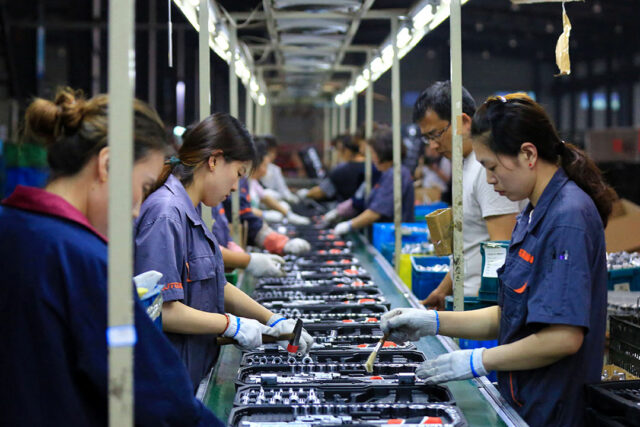
THE PHILIPPINES has enough skilled workers to meet the labor demand of foreign manufacturers that may be thinking of moving their operations to avoid sky-high reciprocal tariffs imposed by US President Donald J. Trump on certain nations including China, an analyst said.

The Philippines has been slapped a 17% reciprocal tariff earlier this month, one of the lowest in a trade war that used to be limited to two of the world’s economic giants.

The reciprocal tariffs have since been suspended for 90 days pending negotiations.

They are set to resume in mid-July.

Josue Raphael J. Cortez, diplomacy lecturer in De La Salle-College of St. Benilde, said the Philippines is well positioned to support global trade by serving as a gateway.

“The Philippines holds an integral role in the furthering of global trading,” he said in a Facebook Messenger chat. “This is because the Indo-Pacific region, particularly our region, is considered as the gateway which links our partners from the West with their Eastern counterparts.”

Despite not having the same extent of power and resources as economic superpowers, the Philippines can leverage its strategic location in negotiations, as more countries pursue their interests in the region with the Philippines as a top choice ally.

The country’s relation with the US also remains as among Washington’s most vibrant partnerships, Mr. Cortez said, noting that it ranked among the Philippines’ top trading partners. Similarly, Manila was ranked third after China and Japan as the US’ largest trading partner in the region in 2022.

“That being said, we cannot, of course, speculate if the US will concede with the tariffs as ‘transactional diplomacy’ is the name of the game today,” he said.

“Instead, what may serve as impetus for the US to lower — or eradicate — the reciprocal tariffs imposed is by showing to the Trump regime that we know how to maintain our alliances wisely, and that we are as committed as them in our longstanding formal ties.”

During his second term, Mr. Trump reinstated aggressive tariff policies.

These measures, aimed at addressing trade imbalances and protecting US industries, introduced substantial tariffs on imports from almost all its trading partners.

NO SPECIAL ORDER
Labor chief Bienvenido E. Laguesma said the Department of Labor and Employment has been implementing Philippine President Ferdinand R. Marcos, Jr.’s directive to intensify worker upskilling and reskilling even without any new or “special” order tied to recent shifts in global tariff policies.

“From the very start, the President instructed us to be proactive — to anticipate both internal and external developments that could impact our workers and employers,” he added in a Viber chat.

The Labor Secretary underscored that the government’s employment strategies have long been in place, anchored on the Labor and Employment Plan 2023–2028 and the National Technical Education and Skills Development Plan 2023–2028.

Both are aligned with the broader Philippine Development Plan and are designed to prepare the workforce for shifts in global trade, such as changes in tariff regimes or emerging trading rules, he noted.

Manufacturing has also been identified as a priority sector for job generation under these plans, with expectations for the creation of quality and sustainable employment.

“While we welcome favorable treatment, arrangement or policy that puts us in an advantageous position, we do not take comfort nor simply capitalize on the misfortunes of other countries,” he added, noting the steep tariff rates slapped on neighboring nations.

Officials had earlier noted the 17% tariff that will be imposed on the Philippines is lower than those imposed on other Southeast Asian nations.

It is the second lowest reciprocal tariff from Washington, following Singapore with 10%.

The Philippine Department of Trade and Industry said this as a chance to attract manufacturing investments diverted from countries with higher tariffs.

Special Assistant to the President for Investment and Economic Affairs Secretary Frederick D. Go is also preparing for a trip to the US in May to meet with the US Trade Representative to open a dialogue on the imposed tariffs, with an eye toward securing a potential free trade agreement.