Market research firm Kantar Media reported that households in socioeconomic classes D and E in rural Visayas and Mindanao see YouTube as the ‘new television’ (TV) to watch TV shows and segments.
The study revealed that one out of two Filipinos in these rural areas said streaming TV shows online is similar to watching traditional TV.
Among those who watch TV/online programs on the streaming platform, 76% said they use smartphones, while 54% use TVs. Media networks, like One Sports, were hailed as one of the top channels on the platform, with over 384 million video views and 41.8 million watch time hours.
“It’s just a different screen, a new way for them to experience their favorite programs,” Google Southeast Asia Data and Insights chief Nikki del Gallego said at an event.
She added that despite the ‘spotty’ mobile signals, 88% of the participants accessed YouTube in the last four weeks through “Piso WiFi”.
“This discovery made us believe that it truly has shifted the way their media habits are in the new era of media,” Ms. Del Gallego said. “It’s a shift we need to keep up with. It’s a new definition of how they see TV.”
The survey was conducted from January 24 to February 18, 2025.
Unskippable ads on TV networks’ channels
Google also announced its partnership with the media giants in the Philippines to run limited unskippable advertisements on their channels for $20,000/month per network pack.
The six network packs include entertainment, news, movies, food and cooking, sports, and music. The slots for each content pack are limited to only five each month.
“Non-skips are right now the strongest in driving effectiveness across all brand campaigns, across all channels,” said Ben Jern Loh, country video lead of YouTube Philippines and Malaysia at Google.
“The moment they upload their content on YouTube, whether it’s a livestream or whatever it may be, your brand will stand to own up to 100% share of voice (SOV) during those campaign period,” he added.
The Google executive noted that unskippable ads can reach up to 95% viewability among users and 2x ad recall, awareness, and consideration. – Almira Louise S. Martinez
As the Philippines transitions towards a green economy, the need to upskill its workforce to fill green jobs becomes even more important.
“High electricity costs this summer are re-opening the conversation of reviving the Bataan Nuclear Power Plant (BNPP). In this B-Side episode, the 2nd District Representative of Pangasinan and House Committee on Nuclear Energy Chairperson Mark O. Cojuangco share the challenges and benefits of rehabilitating the mothballed power plant.
Interview by Almira Martinez Edited by Jayson Mariñas
NEW DELHI – The hacker who leaked sensitive personal data held by Indian health insurer Star Health last year has taken responsibility for sending death threats and bullets to the company’s chief executive and finance head.
The hacker, who goes by the alias “xenZen”, described their reprisals against Star Health and Allied Insurance Company in a March 31 email to Reuters. The news agency is reporting them for the first time.
Star Health, India’s biggest health insurer, has faced criticism from customers and data security experts since Reuters reported last September that xenZen had leaked sensitive client data, including medical reports. At the time, xenZen told Reuters in an email they possessed 7.24 terabytes of data related to over 31 million Star Health customers and was speaking to potential buyers for the data.
The news agency hasn’t independently confirmed the identity or location of xenZen, the accuracy of the facts laid out in the March 31 email or the hacker’s motive for targeting Star Health and its executives, which the email ascribed to the company’s denial of medical claims to certain customers.
In response to questions from Reuters, Star Health’s chief legal officer said in a statement the company could not comment “due to an ongoing, highly sensitive criminal investigation” related to its data leak.
XenZen said they had concealed bullet cartridges in two packages sent to Star Health’s head office in the southern Indian city of Chennai, in Tamil Nadu state, in February.
The email included photographs that showed the packages addressed to Chief Executive Anand Roy and Chief Financial Officer Nilesh Kambli and a note inside which read: “next one will go in ur and ur peoples head. tik tik tik.”
Roy did not respond to a phone call requesting comment, while Kambli told Reuters Star Health’s public relations team would respond on his behalf. The company did not respond to further requests for comment.
The New Indian Express on Saturday reported that police in Tamil Nadu were investigating the threats and had linked them to xenZen.
Tamil Nadu police did not respond to Reuters queries.
Three Indian police sources confirmed an investigation was underway. They declined to be named as the matter is confidential.
One police source said a man from the neighboring state of Telangana, who the source did not name, has been arrested in recent days for allegedly helping courier the packages to Star Health on behalf of xenZen.
Reuters was unable to identify the individual or the status of his detention.
Globally, health care companies have been reassessing the risks for their top executives after UnitedHealthcare Chief Executive Brian Thompson was murdered in a targeted attack in December. The killing also called fresh attention to deepening patient anger over health insurance.
In the March 31 email to Reuters, xenZen referred to the killing of Thompson and said the death threats to the Star Health executives were sent after the hacker was contacted for help by customers of Star Health who had been denied claims on medical bills despite coverage plans with the company.
Star Health did not comment on what xenZen described as their motive, the claims of dissatisfied customers being denied or the police investigation into the threats.
Star Health launched internal investigations into last year’s data leak, which the company said followed a ransom demand of $68,000 from the hacker.
Star Health last September sued xenZen and messaging app Telegram for hosting the sensitive customer data on its chatbots, court papers show. The chatbots hosting the stolen data have since been deleted and the case is ongoing. – Reuters
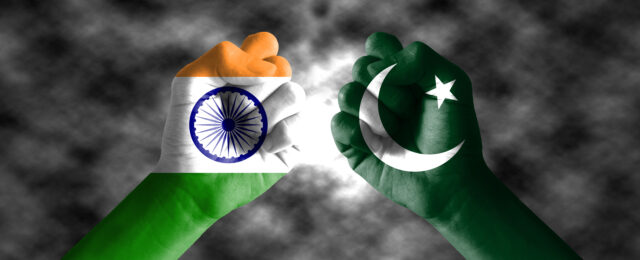
JAMMU/SRINAGAR, India – Pakistan’s armed forces launched “multiple attacks” using drones and other munitions along India’s entire western border on Thursday night and early Friday, the Indian army said, as conflict between the nuclear-armed neighbors intensified.
The old enemies have been clashing since India struck multiple locations in Pakistan on Wednesday that it said were “terrorist camps” in retaliation for a deadly attack in its restive region of Kashmir last month, in which it said Islamabad was involved.
Pakistan denied the accusation but both countries have exchanged cross-border firing and shelling and sent drones and missiles into each other’s airspace since then, with nearly four dozen people dying in the violence.
The army also said Pakistani troops had resorted to “numerous cease fire violations” along the countries’ de-facto border in Kashmir, a region that is divided between them but claimed in full by both.
“The drone attacks were effectively repulsed and befitting reply was given to the CFVs (ceasefire violations),” the army said, adding all “nefarious designs” would be responded to with “force”.
There was no immediate response from Pakistan to the Indian statement.
Islamabad had earlier denied attacking Pathankot city in India’s Punjab state, Srinagar in the Kashmir valley, and Rajasthan state’s Jaisalmer, saying the accusations were “unfounded” and “politically motivated”.
SIRENS IN AMRITSAR
A “major infiltration bid” was “foiled” in Kashmir’s Samba region on Thursday night, India’s Border Security Force said, and heavy artillery shelling persisted in the Uri area on Friday, according to a security official who did not want to be named.
“Several houses caught fire and were damaged in the shelling in the Uri sector…one woman was killed and another injured in overnight shelling,” the official said.
Sirens blared for more than two hours on Friday in India’s border city of Amritsar, which houses the Golden Temple revered by Sikhs, and residents were asked to remain indoors.
Ansab, a student at the Sher-e-Kashmir University of Agriculture, Science and Technology in Jammu city, which was among the places where blasts were heard overnight, said the explosions were “more violent and louder” around 4 a.m. (2230 GMT Thursday).
“For two to three minutes it became very loud, windows started shaking as if they will break,” she said, adding the air was “smoggy” later – a mixture of smoke and fog.
World powers from the U.S. to China have urged the two countries to calm tensions, and U.S. Vice President JD Vance on Thursday reiterated the call for de-escalation.
“We want this thing to de-escalate as quickly as possible. We can’t control these countries, though,” he said in an interview on Fox News show “The Story with Martha MacCallum.”
The relationship between Hindu-majority India and Islamic Pakistan has been fraught with tension since they became separate countries after attaining independence from colonial British rule in 1947.
Kashmir, a Muslim-majority region, has been at the heart of the hostility and they have fought two of their three wars over the region. – Reuters
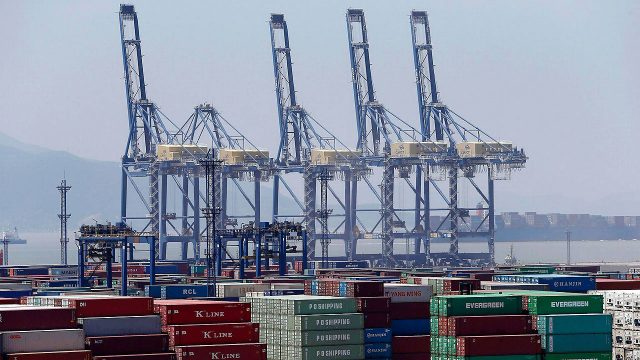
BEIJING – China’s exports rose faster than expected in April, while imports narrowed their declines, customs data showed on Friday, giving Beijing some relief ahead of ice-breaker tariff talks with the U.S. this weekend.
Outbound shipments from the world’s second-largest economy rose 8.1% year-on-year, beating the 1.9% growth expected in a Reuters poll of economists but slowing from the 12.4% jump in March, when exporters scrambled to get their shipments out before the 145% U.S. tariffs on Chinese goods took effect.
Imports slowed a slide that began at the start of 2025, falling 0.2%, from a 4.3% year-on-year drop in March and below the 5.9% drop expected by analysts.
The new trade data comes with China and the United States locked in a heated trade war, which saw both sides ratchet up tariffs on each other’s goods to over 100% in early April.
The Trump administration has since exempted items including smartphones and computers, imported largely from China, from the 145% tariffs. Beijing has also created a list of U.S.-made products that would be exempted from its 125% tariffs and is quietly notifying companies about the policy, Reuters previously reported.
Chinese and U.S. officials will meet this weekend in Switzerland to start trade negotiations.
But an immediate lowering of trade barriers seems a long shot, with Trump saying on Wednesday he was not willing to cut U.S. tariffs to get Beijing to negotiate, and China’s foreign ministry insisting that Washington should “stop threatening and pressuring” it.
The U.S. tariffs could deal a heavy blow to China’s economy, which has relied on exports to drive growth as it struggles to recover from the pandemic shocks and a protracted property market slump. Domestic demand remains weak and investor confidence fragile.
Beijing has in the past few months reiterated its confidence that China could achieve the “around 5%” growth target for the year, and rolled out measures to bolster consumption and support the country’s exporters.
A slew of monetary stimulus measures, including liquidity injections and cuts to policy rates, were announced on Wednesday in a bid to ease tariff hits on the economy.
China’s April surplus came in at $96.18 billion, down from the $102.64 billion the previous month. – Reuters
MALIPO, China – China has full confidence in its ability to manage U.S. trade issues, Vice Foreign Minister Hua Chunying said on Friday, a day before officials from both sides are set to meet in Switzerland to discuss the tariffs they have imposed on each other.
“We have no fear,” Ms. Hua told a small group of reporters at a middle school in a rural county in southwestern China, adding that the trade policy of the U.S. administration cannot be sustained.
The weekend talks involving top U.S. and Chinese economic and trade officials are widely seen as a first step towards resolving a trade war that has disrupted the global economy. President Donald Trump said on Thursday that the U.S. tariffs on Beijing of 145% would likely come down.
“We have full confidence,” Ms. Hua said during a Beijing-organized trip to Malipo county to showcase China’s efforts to build up rural economies.
“We do not want any kind of war with any country. But we have to face up to the reality. As you can see, people have full confidence in our capability to overcome all the difficulties.”
Mr. Trump’s tariffs on many of the United States’ trading partners, including China, are increasingly weighing on a world economy which for decades had benefited from predictable and relatively free trade.
Many economists are calling the Mr. Trump tariffs a “demand shock” to the world economy which, by making imports more expensive for American businesses and consumers, will sap activity elsewhere.
“What the United States is doing cannot be sustained,” Ms. Hua said. “Ordinary people in the U.S. already feel suffering from the tariff war.”
The U.S. administration will come back to “normal”, she said. – Reuters
by Joanne M. Pierce, Professor Emerita of Religious Studies, College of the Holy Cross
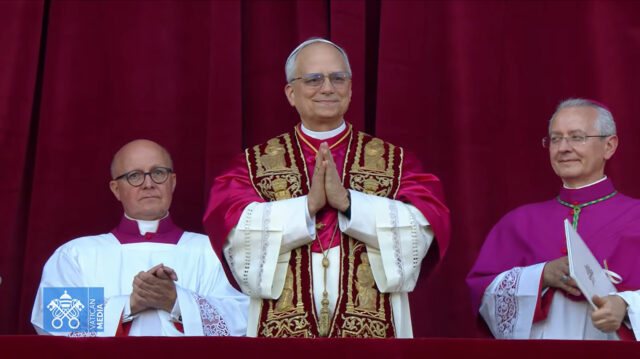
When the 69-year-old Cardinal Robert Francis Prevost on May 8, 2025, appeared on the main balcony of St. Peter’s Basilica for the first time as Pope Leo XIV, he was cheered loudly by the huge crowd of pilgrims, tourists, local Catholics and other onlookers, who had waited hours for the first sign of white smoke and the official announcement.
As a specialist in Catholic history and ritual, I know how important this moment was for Catholics and others all over the world. A new pope brings with him a sense of excitement often mixed with uncertainty.
But the choice of the College of Cardinals came as a surprise to some. Prevost is the first pope from the United States, and, traditionally, the European-dominated College of Cardinals has had reservations about choosing a cardinal from the U.S. for fear of too much American influence in the church.
So, who is Prevost and what might have influenced the cardinals’ vote?
Early experiences
Born in Chicago, Illinois, Prevost joined a Catholic religious order at the age of 20: the Order of St. Augustine, called Augustinians, founded in the 13th century. Instead of withdrawing from the world in isolated monasteries, members of this order traveled as mendicants to aid the poor as well as serve as missionaries and teachers.
Prevost studied theology both in the U.S. and in Rome and, as a newly ordained priest, spent a year in Peru. After a short return to the U.S. as an official of the Augustinian order in Illinois, he returned to Peru as a seminary professor to teach canon law, the legal structure of the Catholic Church. He would stay in Peru for the next 10 years.
In 1999, he became the prior – that is, the head – of the local Augustinian province in Chicago, and was later elected prior of the worldwide Augustinian order. This gave him a truly global experience, since the Augustinians had some 50 communities spread across every continent.
In 2015, Pope Francis appointed him bishop for the diocese of Chiclayo in Peru. In 2019, Francis appointed him a member of several important Vatican dicasteries, or departments, where he became very familiar with the central church administration. Most importantly, he served as prefect – or chairman – on the Dicastery for Bishops.
In fact, because of his lengthy pastoral experience in Peru and service at the Vatican, some commentators had noted before Prevost was chosen that, if the cardinals were to elect an American pope, it would be him. His service on the Dicastery for Bishops was considered especially important, since members play a key role in selecting new bishops.
Global church
During the 20th century, especially after the Second Vatican Council – a series of meetings of the world’s bishops to modernize the church, ending in 1965 – the popes began to name cardinals from other parts of the world that were previously considered to be on the periphery of the Catholic Church.
And this led to popes being chosen from outside of Italy for the first time in centuries. Pope St. John Paul II was Polish and the first non-Italian pope since the 16th century. Pope Benedict XVI was another non-Italian, born in Germany, who had served as a Vatican official. Pope Francis was born in South America to parents who were Italian-born immigrants to Argentina.
The College of Cardinals, which had few representatives from other continents until recently, is now much more international. Some 80% of the cardinal-electors were named by Francis, many from countries that had never before had a cardinal.
In reviewing his record, the cardinal-electors might have taken a number of factors into account. Prevost would be an effective administrator as head of the church, and was an expert in church canon law. He had decades of experience doing pastoral work in South America, as well as in North America. And as prior general of the entire Augustinian Order, he would likely have traveled widely to visit many of the communities he supervised.
Papacy under Leo
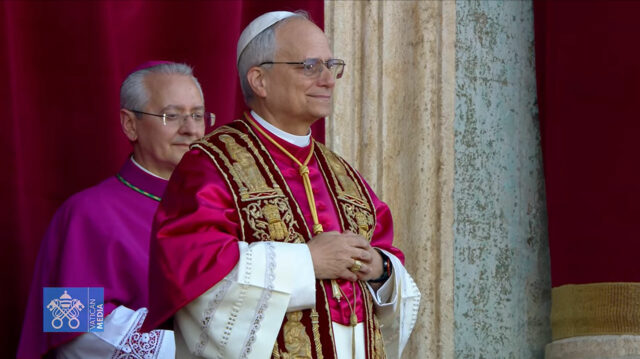
The new pope appeared on the Vatican balcony wearing the traditional papal garments: white cassock, short red cape, decorated red and gold stole, and golden cross hanging around his neck. Francis, on the other hand, had appeared dressed in the plain white cassock of a pope.
Certainly, he had not chosen the simplicity of Francis. Was this a sign that he would be more of a traditionalist?
His choice of a papal name, I believe, could indicate a different point of view. Pope Leo XIII wrote a groundbreaking encyclical in 1891, “Rerum Novarum,” subtitled “On Dignity and Labor.” In this he stressed the rights of workers to unionize and criticized the conditions in which they worked and lived. He also championed other rights the ordinary worker deserved from their bosses and from their government.
In his first remarks from the balcony, offering a glimpse into the direction of his papacy, Leo XIV stressed the role of Catholics and the church as peacemakers and bridge-builders, in dialogue with other religious traditions and cultures. His first words were “Peace be with you all,” describing this peace as “a disarmed peace, a disarming peace.” He further urged Catholics to act together “without fear … united with one another … to build bridges” through dialogue and outreach – to bring peace to the world.
He may not follow exactly in Francis’ footsteps, but he will likely continue walking in the same direction. – Reuters
SYDNEY – The New Zealand government said on Friday it would spend NZ$774 million ($457 million) in its 2025 budget for redress and compensation for hundreds of thousands of children, young people and vulnerable adults who were abused in state care.
A public inquiry last year found some 200,000 children and vulnerable adults in state and faith-based care experienced some form of abuse from 1950 to 2019, forcing Prime Minister Christopher Luxon in November to offer an historic national apology to victims and their families.
“We know there is nothing we can do to take away the pain of survivors,” Erica Stanford, the lead coordination minister for the government’s response to the inquiry, said in a statement.
“But the government has committed a significant investment … to improve the redress system and strengthen the care system to prevent, identify, and respond to abuse in the future.”
The average compensation payment for new claims will be raised to NZ$30,000 ($17,703) from NZ$19,180, and more money will be provided for survivors who suffered extreme abuse, while processing of claims will be sped up from 2027 to cut wait times, the statement said.
The redress does not include claims that sit with school boards, faith-based organizations, or other non-state providers, it said, adding the government will be receiving further advice on those later in the year.
Those from the Indigenous Maori community in state and foster care institutions were especially vulnerable to abuse, findings in the public inquiry noted last year.
The inquiry commissioned in 2018 was expanded to include churches and other faith-based institutions, following calls from victims and others.
Pope Francis, who died last month, had met abuse victims in several parts of the world during his 12-year papacy and made addressing the issues a priority after historical revelations of abuse from Chile to New Zealand.
Francis created the Vatican’s first anti-abuse commission, became the first pope to expel a cardinal from the priesthood for sexual abuse and installed a global system for Catholics to report suspicions of abuse or cover-ups by bishops.
The Catholic church on Thursday elected Cardinal Robert Prevost, who has spent most of his career as a missionary in Peru, as a successor to Francis, becoming the first U.S. pope and taking the name Leo XIV.
In an interview with the Vatican News website in 2023, Prevost said the Church must be transparent and honest in dealing with abuse allegations.
But SNAP, a US-based advocacy group for victims of clerical sex abuse, expressed “grave concern” about his election, renewing accusations that Prevost failed to take action against suspected predatory priests in the past in Chicago and in Peru. – Reuters
Pope Leo XIV | Screenshot from Vatican Media Livestream
CHICAGO – The old parish church buildings on Chicago’s far South Side where Pope Leo XIV grew up, attended grammar school and launched his career as a priest are now vacated and in disrepair, a victim of the sometimes painful changes within the Roman Catholic Church since he was a boy.
Even so, the derelict structures stand as a silent reminder to the new pontiff’s deep, longstanding ties to the city and the second-largest Catholic archdiocese in the United States.
Former Cardinal Robert Prevost stunned his hometown on Thursday when the Vatican announced that the 69-year-old Chicago native had been chosen as the first U.S.-born pontiff in the 2,000-year history of the Catholic Church.
His selection unleashed celebration among Catholics in the Midwestern city and a flurry of questions about the future of his papacy, from how it would shape the divide between church conservatives and liberals to whether he was a fan of the Chicago Cubs or their rivals, the White Sox.
“For Catholics in Chicago, this is somebody who gets us, who knows us, who knows our experience, seeing the closures and the dwindling congregations, and the diminishing Catholic presence in America in general,” said Father Michael Pfleger, a priest at St. Sabina Catholic Church on Chicago’s South Side known for his political activism.
A crowd of clergy and staff members at the Catholic Theological Union in Chicago’s Hyde Park, where the future pontiff obtained his master’s degree in divinity in 1982, erupted in joyful cheers as live television showed Pope Leo walking out onto the Vatican balcony in Rome.
“Many of us were just simply incredulous and just couldn’t even find words to express our delight, our pride,” said Sister Barbara Reid, president of the theology school. She said the room fell into prayer after the initial burst of excitement.
Ms. Reid described Pope Leo as a brilliant intellectual of extraordinary compassion.
“It’s an unusual blend that makes him a leader who can think critically, but listens to the cries of the poorest,” she said.
Lawrence Sullivan, vicar general for the Chicago Archdiocese, its 1.9 million Catholics and 216 parishes, said Pope Leo was also a very prayerful man.
“It’s a day of great excitement for Chicago, for the United States, to have one of our own be elected as the pope,” he said.
Chicago Mayor Brandon Johnson, in remarks posted on social media, was more plain-spoken in his exuberance, declaring: “Everything dope, including the Pope, comes from Chicago!”
The pope-to-be, by all accounts an exceptional student as a youngster, grew up in the old St. Mary of Assumption parish at the far southern edge of Chicago, attending grade school there and serving as an altar boy. The family lived in the adjacent town of Dolton, just south of the Chicago city limits.
He later studied at the novitiate of the Order of Saint Augustine in St. Louis, according to the Catholic Conference of Illinois, before graduating from Villanova University near Philadelphia in 1977 with a mathematics degree.
He returned to Chicago to attend divinity school and joined the Augustinian religious order. When newly ordained he celebrated mass in his home parish. Since then he has spent most of his career overseas, mainly in Peru.
“I didn’t think an American pope would actually ever be elected in my lifetime,” said Gardis Watts, a Theological Union student who resides in Dolton and is two weeks away from obtaining his own divinity degree.
St. Mary of the Assumption church, situated in a leafy area on the far South Side near the Little Calumet River, has long been shuttered, tattered curtains fluttering in the red brick building’s shattered windows. Blocks of clapboard houses and Protestant churches surrounding the church – which closed when the archdiocese consolidated parishes – were quiet on Thursday afternoon.
CUBBIES OR SOX?
In a goodwill gesture in keeping with the atmosphere of excitement on Thursday, the Chicago Cubs said they had invited the new pope to Wrigley Field to sing “Take Me Out to the Ballgame,” a seventh-inning tradition led by a different celebrity at every home game.
The storied Major League Baseball team said they could not confirm that Pope Leo was a Cubs fan. His brother, John Prevost, who lives in New Lenox southwest of Chicago, said the new pontiff was not.
Residents of Chicago’s South Side tend to favor the Cubs’ cross-town rivals, the White Sox.
Kevin Schultz, professor of history and Catholic studies at the University of Illinois at Chicago, said Leo’s ascendancy would inject energy and excitement into an archdiocese whose community is defined by an array of ethnicities and languages and is increasingly shaped by migrants from Latin America.
“We are in the forefront of the changing dynamic of the church throughout the world, with our increasing number of immigrants constituting a larger and larger percentage of the Catholic population in the archdiocese of Chicago,” Schultz said.
Dolton resident Jasmine Ramirez, 23, who lives across the street from Pope Leo’s childhood home and described herself as not “very Catholic,” said it was “cool” that “somebody like a pope lived in front of us. I feel like it’s a small world.”
The rise of the Chicago-born priest to the papacy was not without controversy.
In 2023, survivors of clergy sex abuse filed a complaint with the Vatican over Prevost and others after the Chicago-based chapter of the Augustinian order that Prevost once led paid a $2 million settlement over rape accusations by a priest whose name was left off a public list of sex offenders. – Reuters
L-R: BusinessWorld Insights forum host Dr. Danie Laurel, Philippine Energy Efficiency Alliance President Alexander D. Ablaza, and Meralco PowerGen Corp. President and CEO Emmanuel “Manny” V. Rubio during the forum’s panel discussion — Photo by Arjale Jayrie G. Queral
Efficiency and conservation crucial in attaining energy security, recent BusinessWorld Insights forum notes
By Bjorn Biel M. Beltran, Special Features and Content Assistant Editor
The energy industry is the core of civilization. Agriculture harnessed the power of the sun and gave the first people their roots. Fire brought warmth and community, then eventually, warfare and conquest. The industrial revolution, driven by coal and steam, redefined what humans could build, move, and imagine. Even language reflects this primacy: we call energy ‘fuel’, because energy quite literally fuels human progress.
Securing that energy, then, is tantamount to securing continued and sustained progress. For the Philippines, which continues to enjoy steady economic growth on the back of a young and talented workforce, keeping the energy supply stable and affordable is a critical goal for the government.
National Electrification Administration Administrator Antonio Mariano C. Almeda
“The pace at which our economy grows demands responsiveness and forward thinking — qualities that we need to explore as we determine how to adapt to economic changes and strengthen our capacities,” Antonio Mariano C. Almeda, administrator from the National Electrification Administration, said in a video message at the recent BusinessWorld Insights forum themed “Energy Security: Powering the Philippines’ Economic Growth.”
Energy security is a whole-of-nation endeavor, and Mr. Almeda recognizes the power of unity and collaboration between different sectors in the country in the pursuit of ensuring that all Filipinos benefit from progress.
“While the objective of fully electrifying the nation is a challenging endeavor, we are fortunate to have found reliable partners from the public and private sectors to support us. Through collaboration, we can accelerate the expansion of rural electrification projects to reach more communities, especially those in underserved areas,” he said.
Engr. Ernesto O. Silvano, Jr., deputy administrator for technical services at NEA, followed up on this speech with a discussion on the “Challenges and Opportunities in Energy Supply Chain in 2025.”
National Electrification Administration Deputy Administrator for Technical Services Engr. Ernesto O. Silvano, Jr. — Photo by Arjale Jayrie G. Queral
“Today, as we navigate a rapidly changing energy industry — one shaped by climate change, technological disruption, global market volatility, and the rising needs of a growing population — our mission must evolve and respond with greater urgency and purpose,” Mr. Silvano said.
Optimizing the energy grid
Towards that mission, the Philippines is in a position better than many other countries in the world. Alexander D. Ablaza, president of the Philippine Energy Efficiency Alliance, said that the country has some of the most inclusive, comprehensive energy frameworks out there.
For instance, the Philippine Energy Plan, which is the comprehensive long-term energy blueprint of the current administration, includes, among others, aggressive Renewable Energy (RE) and Energy Efficiency and Conservation (EEC) institutionalization programs for the entire government; the moratorium on new coal power projects; a mechanism allowing foreign ownership on large-scale geothermal projects under financial and technical assistance agreement (FTAA); the resumption of indigenous oil and gas exploration; the introduction of liquefied natural gas (LNG) portfolio; establishment of strategic petroleum reserves; and exploration of new energy sources like green hydrogen.
To tackle energy security, Mr. Ablaza instead called for a “paradigm shift” with how the conversation around the topic should be approached.
“Every time we talk about clean energy and sustainable energy, we should keep that balance of keeping energy efficiency in renewable energy, because that will bring us to our 2050 pathway,” he said during the forum’s panel discussion.
Mr. Ablaza also cited the call from the 28th Conference of the Parties to the UN Framework Convention on Climate Change (COP28) to double energy efficiency progress through 2030.
Alexander D. Ablaza, president of Philippine Energy Efficiency Alliance
“Energy efficiency should be regarded as an infrastructural asset class, one that should be ready for public private partnership transactions,” he said, adding that optimizing the flow of capital from investors to energy service companies can be the next step towards an energy secure future.
Emmanuel “Manny” V. Rubio, president and CEO of Meralco PowerGen Corp. (MGen), agreed, saying that the country currently has enough supply to sustain its current progress, but highlighting that preparations should be made for further on.
“The Philippines is entering an era of growth with our population over 115 million people, with energy demands rising fueled by rapid urbanization, economic expansion, and an ever-increasing standard of living,” he said.
At the same time, he noted that the government is aiming for a 35% renewable energy share by 2030 and a 50% share by 2040 as part of the Philippine Energy Plan.
“Quite aggressive, but I think with what we’re doing now with what we’re seeing, I think it’s achievable,” he said. “And hopefully, we won’t use diesel anymore. In fact, we have de-commissioned a number of our diesel plants because we believe that we won’t be needing them.”
Currently, Mr. Rubio believes that it is prudent that the Philippines has not yet committed to a long-term net zero target, as the current energy transition from fossil fuels to renewable is a delicate balancing act. The high variability of renewable energy is an issue that is still being addressed; and as the country waits for better technologies to resolve it, he said that focus should be redirected towards easier targets.
Emmanuel “Manny” V. Rubio, president and CEO of MGen
“One of the lowest hanging fruits in the energy industry is energy conservation. It is always said that the cheapest plants are the plants that you don’t have to build. You don’t have to build something you don’t need,” he said.
Building power plants, renewable energy or otherwise, requires massive investment and time: in capital outlays, land use, regulatory hurdles, and long lead times. Energy conservation and efficiency, he noted, can optimize the country’s current supply so that more plants are not necessary.
“Ambition needs action, and it also needs, of course, a realistic plan aligning all the things that need to be considered. So, action needs alignment, and we make it our mission to power the future by growing and diversified energy portfolio, one that balances renewables, transitional fuels like LNG, and reliable sources like coal, while ensuring affordability and good stability,” Mr. Rubio said.
As the power generation arm of Meralco, MGen holds a portfolio with a combined gross capacity of 2,602 megawatts (MW) from both traditional and renewable energy sources. The company is currently developing a project, now known as MTerra Solar, which consists of a 3,500-MW solar power plant and a 4,500-megawatt-hour (MWh) battery energy storage system.
As the Philippines moves towards a new era of growth, it is clear that the path ahead is no longer just about finding more power but using it wisely. The country stands on the cusp of economic transformation, and now it must reevaluate how it approaches that which powers it. Energy conservation and efficiency, at this point, are critical pillars of national development.
“While the path to energy security is not without challenges, through forward-thinking solutions, collective effort, and an unwavering commitment to serve, we can build a resilient, inclusive, and future-ready energy sector,” Mr. Silvano concluded in his speech.
This BusinessWorld Insights forum was presented by BusinessWorld Publishing Corp. together with sponsorsMGen and Semirara Mining and Power Corp.; partner organizations Asian Consulting Group, American Chamber of Commerce of the Philippines, British Chamber of Commerce of the Philippines, Bank Marketing Association of the Philippines, CCI France Philippines, Management Association of the Philippines, Philippine Chamber of Commerce and Industry, Philippine Franchise Association, and Philippine Retailers Association; and official media partner The Philippine STAR.
“Reinvention is necessary for those aiming for longevity in the amusement parks business, according to Benedicto C. Torres, Jr., president of Global Gutz Parks Philippines, Inc.
Interview by Patricia Mirasol Video editing by Arjale Queral
Pope Leo XIV | Screenshot from Vatican Media Livestream
VATICAN CITY – U.S. Cardinal Robert Prevost was elected in a surprise choice to be the new leader of the Catholic Church on Thursday, taking the name Leo XIV, becoming the first American pontiff.
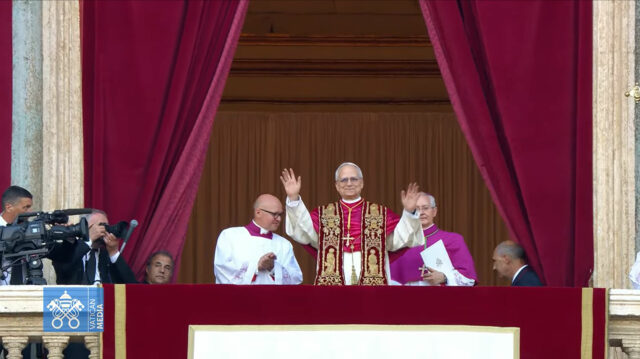
Pope Leo, appeared on the central balcony of St. Peter’s Basilica around 70 minutes after white smoke billowed from a chimney atop the Sistine Chapel signifying the 133 cardinal electors had chosen a new leader for the 1.4 billion-member Catholic Church.
The choice of Mr. Prevost was announced by French Cardinal Dominique Mamberti with the Latin words “Habemus Papam” (We have a pope) to tens of thousands of people gathered in St. Peter’s Square to hear the news.
Aged 69 and originally from Chicago, Prevost has spent most of his career as a missionary in Peru and became a cardinal only in 2023. He has given few media interviews and rarely speaks in public.
Pope Leo becomes the 267th Catholic pope after the death last month of Pope Francis, who was the first Latin American pope and had led the Church for 12 years and widely sought to open the staid institution up to the modern world.
Pope Francis enacted a range of reforms and allowed debate on divisive issues such as women’s ordination and better inclusion of LGBT Catholics.
Ahead of the conclave, some cardinals called for continuity with Francis’ vision of greater openness and reform, while others said they wanted to turn back the clock and embrace old traditions. – Reuters