Home Blog Page 1116

Philippine jobs ‘exposed’ to AI risks estimated at 35-37%

JOBSEEKERS file application forms at a job fair at a mall in Manila. — PHILIPPINE STAR/EDD GUMBAN

BETWEEN 35% and 37% of Philippine jobs are at risk of displacement to artificial intelligence (AI), the World Bank said.

“About 35% to 37% are exposed” to AI risks, World Bank Group Lead Economist and Program Leader for the Prosperity Unit for Brunei, Malaysia and the Philippines, Gonzalo Varela told a panel on Monday.

He also noted the high adoption of generative AI in the operations of the Information Technology Business Process Management industry.

The IT and Business Process Association of the Philippines in December reported that 67% of its surveyed members are already using AI in customer service, data entry, and quality assurance, though challenges persist.

However, 8% of its members surveyed reduced their workforce because of AI.

In a separate report in August, the bank said the Philippines ranked fourth in ChatGPT traffic as of March 2024.

The World Bank noted that five middle-income countries — Brazil, India, Indonesia, Mexico and the Philippines — showed “generative AI traffic levels significantly higher relative to the US than their other metrics would suggest.”

Bilal Khan Muhammad, social sector economist at the Asian Development Bank, noted that AI advancements are now impacting white-collar jobs, with many tasks being performed by AI tools.

“But then with the recent advancements in AI, we also see white-collar jobs have also been replaced by these AI tools where we are seeing a lot of tasks now can be performed by the AI itself.

You just ask the AI to help you with the representation or format a document or help you prepare a draft,” he said.

Mr. Varela said AI could be a “productivity shock” and provide opportunities for workers in the Philippines.

The government’s Trabaho Para Sa Bayan plan needs to explore how “to take advantage of the technological changes that are going to affect job creation,” he added.

At the same event, the departments of Economy, Planning, and Development (DEPDev), Trade and Industry and Labor and Employment, launched the Trabaho Para sa Bayan Plan 2025-2034.

The 10-year plan aims to strengthen and future-proof the workforce.

The plan includes a research agenda to gauge the impact of AI on labor demand across various industries, job roles, and skill levels, and identify vulnerable occupations.

Labor Secretary Bienvenido E. Laguesma said the government has yet to firm up a national policy on AI.

“We believe that AI can supplement, can complement, but cannot replace,” he told reporters. 

Mr. Laguesma noted that the National Innovation Council, chaired by President Ferdinand R. Marcos, Jr., approved the creation of a think tank which will create a roadmap for AI use.

The think tank, whose lead agency will be the Department of Science and Technology, will guide the drafting of AI policy.

“Protection does not mean retention. It could mean upgrading, looking for another job, facilitating their employment, and the provision of social safety nets. That’s where we are,” Mr. Laguesma said.

Meanwhile, DEPDev Undersecretary Rosemarie G. Edillon noted that the low exposure of AI stems from the overall low level of technology adoption in the Philippines.

“Underlying all this, especially on the part of data and then creating models, this is really where you will need this policy on ethics, on the use of AI,” she added. — Aubrey Rose A. Inosante

Energy dep’t outlines measures to ensure reliable power for polls

PHILIPPINE STAR/MICHAEL VARCAS

THE Department of Energy (DoE) said on Monday that measures are in place to ensure stable and reliable power during the midterm elections, and also directed the removal of campaign materials attached to power infrastructure.

“The delivery of stable and reliable electricity is a national priority, especially during elections when the democratic process relies heavily on uninterrupted power,” Energy Secretary Raphael P.M. Lotilla said in a statement.

Mr. Lotilla said the DoE is working closely with the Commission on Elections (Comelec) and the energy industry “to ensure that the power sector infrastructure remains clear of any obstructions, especially those that endanger lives and disrupt essential services.”

Comelec has received reports of campaign materials being illegally affixed to power poles and cables.

“These practices not only breach election rules but also pose serious safety hazards and threaten the stable operation of the country’s power systems,” the DoE said.

In a virtual briefing, Energy Undersecretary Felix William B. Fuentebella affirmed the full readiness of the Energy Task Force Election.

“We’d like to assure everyone that the Energy Task Force Election is doing its best to ensure unimpeded power supply during the election period,” he said, adding that the task force is scenario planning to map out its planned responses.

The DoE said public and private energy companies conducted inspections and maintenance of critical infrastructure, including pre-election checks of polling and canvassing centers, particularly in critical areas identified by Comelec.

In off-grid and remote areas, distribution utilities overseen by the Small Power Utilities Group maintained lines to ensure continuous power supply.

Meanwhile, the National Grid Corp. of the Philippines conducted inspections and cleared its right-of-way areas along high-voltage transmission corridors, according to DoE.

“Contingency plans are in place, and we are in constant coordination with the security forces to help ensure a smooth and secure election,” Mr. Fuentebella said. — Sheldeen Joy Talavera

April WESM rates decline on higher supply margin

BW FILE PHOTO

ELECTRICITY PRICES on the Wholesale Electricity Spot Market (WESM) declined in April as supply improved with power generators scheduling less maintenance during election season, the Independent Electricity Market Operator of the Philippines (IEMOP) said.

The market operator reported that the national average WESM price decreased 15.3% month on month to P4.52 per kilowatt-hour (kWh).

Between March 26 and April 25, available supply increased 8.8% to 21,345 megawatts (MW). Demand rose 7.8% to 14,739 MW.

“Given the upcoming elections and the dry season, there are fewer scheduled outages, so the supply margin is higher compared to the previous month despite the increase in demand,” Arjon Valencia, corporate planning and communications manager of IEMOP, said via Viber.

In Luzon, the WESM price fell 16.5% month on month to P4.59 per kWh, with supply rising 10.9% to 15,000 MW while demand grew 9.3% to 10,613 MW.

IEMOP said that Visayas average dropped 17.6% to P4.52 per kWh. Supply improved 8.4% to 2,563 MW while demand increased 5% to 2,009 MW.

The Mindanao WESM rate fell 6.3% month on month to P4.11 per kWh. Available supply increased 1.8% to 3,782 MW while demand climbed 3.6% to 2,118 MW.

IEMOP operates the WESM, where energy companies buy power when their long-term contracted power supply is insufficient for customer needs. — Sheldeen Joy Talavera

Airport fee increases need to go into upgraded facilities, analysts say 

PHILIPPINE STAR/RYAN BALDEMOR

By Beatriz Marie D. Cruz, Reporter

THE increased terminal fees for air passengers will need to be backed up by improved facilities, though the impact on traffic volume is expected to be minimal, analysts said.

“The price increases will only have a negligible effect on tourism. The proposed increases represent only a fraction of total overall travel spend for the traveler,” Alfred Lay, director for hotels, tourism, and leisure at Leechiu Property Consultants, said via Viber.

Improved facilities “significantly improve the perception of travelers for any destination and in turn, help keep the hotels and resorts full,” Mr. Lay said.

In April, the Civil Aviation Authority of the Philippines announced an increase in the passenger service charge and other fees at its airports.

For air passengers departing from international airports and principal class 1 and 2 airports, the terminal fee was raised to P900 ($17) for international flights from P550 previously.

Cyndy Tan Jarabata, president and chief executive officer of TAJARA Leisure & Hospitality Group, Inc., said increased fees may be needed to cover rising utilities, labor, and operating costs.

“However, if they’re going to increase the price, there’s an expectation among many that the services they offer will improve too,” Ms. Jarabata said in an e-mail.

Ninoy Aquino International Airport, the country’s main gateway, has been ranked among the world’s worst airports in terms of cleanliness, delays, and substandard facilities.

Ms. Jarabata said secondary airports need to raise their game.

“Terminals need to be well-kept and should provide efficient services to every traveler, especially in secondary destinations, which are beginning to get more traction.”

Visitor arrivals to the Philippines declined 0.5% to 1.65 million in the three months to March, the Department of Tourism reported.

Drought tolerance being developed in sugarcane

PHILSTAR FILE PHOTO

THE Philippine Sugar Research Institute Foundation, Inc. is seeking to develop sugarcane varieties tolerant of drought and resistant to disease, the Department of Science and Technology (DoST) said.

One of the projects will utilize in-vitro techniques to identify sugarcane with the desired qualities, the Philippine Council for Agriculture, Aquatic and Natural Resources Research and Development (PCAARRD), an arm of the DoST, said.

Sugarcane-growing areas in the Philippines experience dry periods lasting four to six months, making drought tolerance a vital trait for sustainable production.

Diseases such as downy mildew and smut can cause significant yield losses, the DoST, which is helping funding the project, said.

The second project will seek to develop a hybrid of wild and conventional varieties to achieve disease resistance and high sucrose content. 

“These efforts are expected to provide valuable insights into the diversity and phenotypic variation of sugarcane and its relatives, contributing to the long-term breeding efforts toward a more resilient sugarcane industry,” PCAARRD said. — Kyle Aristophere T. Atienza

Ban on S. Korean pork products lifted

REUTERS

THE Department of Agriculture (DA) said it lifted a 2019 ban on imports of processed pork products from South Korea, following a risk assessment of Korean efforts to contain African Swine Fever (ASF).

Memorandum Order No. 23 permits the entry of pork items subjected to high-level heat treatment.

The restriction was imposed in 2019 to shield the hog industry from ASF.

The DA said it reconsidered its stance following the findings of the recent Import Risk Analysis dated April 8, 2025, which concluded that sterilized pork products from South Korea intended for export meet World Organization for Animal Health standards and are deemed a “safe commodity.”

The report cited South Korea’s “robust” veterinary oversight and ASF control systems.

It also noted the shelf stability and secure packaging of South Korean pork products.

“With these assurances, sterilized pork products from South Korea are permitted for import in accordance with existing Philippine regulations,” the DA said in a statement.

“With this policy shift, more pork products are anticipated to be available to consumers in the Philippines. It may also indicate a potential thaw in agri-trade relations between the two countries,” the DA said. — Kyle Aristophere T. Atienza

Unpacking the fiscal battleground of the 2025 Philippine elections

Less than a week before the 2025 midterm elections, the air crackles with promises, rhetoric, and the tug-of-war for the hearts and minds of voters. But, beyond the focus on personal appeal and platforms to win votes through touching promises of a better future.

A crucial battleground is continually emerging: taxation. Tax policy, far from being a purely economic concern, is poised to define the upcoming elections and the future of the economy.

The Philippines, like many developing nations, wrestles with a complex fiscal and taxation reality, grey areas in tax law, and copious bureaucracy. The lingering economic scars of the pandemic, coupled with inflation and persistent social inequality, have brought tax policy into sharp focus. Voters are, as they should be, no longer content with vague promises; they demand concrete plans on how candidates intend to fund their ambitious ideas and agendas, more than how these will be implemented, while wishing for reduced taxes and, if not possible, a freeze on escalating rates on taxes already imposed, and ensuring a more equitable and transparent distribution of national wealth.

TRAIN, CREATE AND EOPT
The last administration left behind a complex fiscal legacy. The Tax Reform for Acceleration and Inclusion (TRAIN) Law, which was praised but also has been a magnet for criticism, particularly regarding its impact on consumer prices, because it lowered individual income tax rates, increased tax-exempt income, and offered an optional and simplified 8% flat tax in lieu of graduated income tax and percentage tax, resulting in higher disposable income. Conversely, its excise taxes on fuel and sweetened beverages attracted mixed responses and eroded the purchasing power of ordinary consumers.

The Corporate Recovery and Tax Incentives for Enterprises (CREATE) Act, designed to attract investment and stimulate economic recovery, is also facing scrutiny for its potential long-term impact on government revenue. While the law seeks to streamline and rationalize the various fiscal incentives previously granted under different laws, the reduction in corporate income tax rates it introduced, which is intended to boost competitiveness, raises concerns about the government’s ability to fund future essential social services.

The Ease of Paying Taxes (EoPT) Act, which was anticipated by the majority of taxpayers for its removal of the P500 annual registration fee, the introduction of the “file and pay anywhere” mechanism, and uniform tax base and documentation (i.e., VAT invoice) for all types of transactions, is continuously receiving comment on other items that were excluded from the relief measures, such as its failure to clarify the timing of claiming of creditable withholding tax (CWT), in contrast to its detailed provisions on VAT refund claims.

These three landmark items of legislation will undoubtedly cast a long shadow over the 2025 elections, forcing candidates to articulate their positions on their continuation, amendment, or repeal. The electorate will demand answers on how these policies have impacted their lives and will look forward to what alternatives are being proposed.

HOT-BUTTON QUESTS: FUELING THE ELECTORAL FIRE
Several tax-related issues are poised to ignite the electoral fire, driving the debate and shaping the candidates’ platforms:

• Efficient spending: Taxes are expected by the voters to be spent on projects proposed by qualified legislators who put the welfare of citizens as a top priority. Candidates should always observe and provide a cost-benefit analysis to ensure that advantages significantly outweigh disadvantages.

• The Campaign against tax evasion and corruption: Voters are increasingly demanding transparency and efficiency in tax administration. Candidates will be expected to propose concrete measures to combat tax evasion, streamline tax collection, and ensure that public funds are used judiciously.

• The green agenda: Favorable tax treatment for sustainable development will never be irrelevant, as environmental concerns are gaining momentum, particularly among younger voters. Candidates may be challenged to articulate tax policies that incentivize companies that offer green jobs and promote sustainable development, such as carbon taxes and penalties for environmental degradation.

ACCOUNTABILITY, EQUITY AND CLARITY
In these high-stakes elections, voters hold the power to shape the fiscal future. They must demand accountability, equity and clarity from the candidates vying for their votes.

• Equity in burden-sharing: Candidates must demonstrate a commitment to ensuring that the tax burden is distributed fairly, with those who have more contributing their fair share, and that no tax incentives are being abused.

• Accountability for actions: Candidates must be held accountable for the potential impact of their tax policies on the various sectors of society, particularly on the most vulnerable.

• Clarity of vision: Candidates must articulate their tax proposals in clear and understandable terms, avoiding technical jargon and vague promises.

SHAPING THE FISCAL TRAJECTORY BEYOND THE POLLS
The 2025 elections are not just about choosing leaders; they are about shaping the nation’s fiscal trajectory for years to come. The choices made at the ballot box will determine the government’s ability to fund essential social services, invest in infrastructure, and address the pressing challenges facing our country.

Voters must engage in informed discussions, scrutinize candidates’ tax proposals, and demand a commitment to fiscal responsibility and social equity. By making informed choices, and not just by voting based on popularity or one-sided debate, we can ensure that the 2025 elections become a turning point in the journey towards a more prosperous and equitable future.

The taxman cometh like he always does, and the voters must be prepared to hold him accountable.

Let’s Talk Tax, a weekly newspaper column of P&A Grant Thornton that aims to keep the public informed of various developments in taxation. This article is not intended to be a substitute for competent professional advice.


Charisse A. Datiles is a senior in charge from the Tax Advisory & Compliance Practice Area of P&A Grant Thornton, the Philippine member firm of Grant Thornton International Ltd.

business.development@ph.gt.com

Shares drop on profit taking before inflation data

BW FILE PHOTO

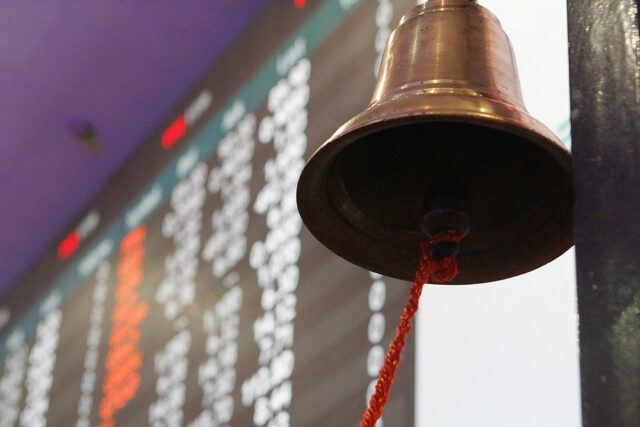
PHILIPPINE STOCKS ended their three-day climb on Monday as investors booked profits before the release of April inflation data.

The benchmark Philippine Stock Exchange index (PSEi) dropped by 0.81% or 52.23 points to close at 6,359.63, while the broader all shares index went down by 0.58% or 21.86 points to 3,719.26.

“Philippine shares succumbed to profit taking, pulling back to the 6,300 level, while investors wait for the latest inflation print,” Regina Capital Development Corp. Head of Sales Luis A. Limlingan said in a Viber message.

The Philippine Statistics Authority is scheduled to release April consumer price index (CPI) data on May 6 (Tuesday).

A BusinessWorld poll of 14 analysts yielded a median estimate of 1.8% for the April CPI. This is within the Bangko Sentral ng Pilipinas’ (BSP) 1.3% to 2.1% forecast.

If realized, April inflation would be steady from the March print and be sharply slower than the 3.8% clip logged in the same month in 2024. This would also mark the ninth straight month that inflation settled within the BSP’s 2-4% target range.

“The PSEi corrected lower, considered a healthy profit-taking after gaining for three straight trading days, after US stock market futures declined by 0.6%-0.7% after the weaker US dollar recently weighed on sentiment,” Rizal Commercial Banking Corp. Chief Economist Michael L. Ricafort said in a Viber message.

Philippine stocks also went down ahead of the US Federal Reserve’s policy meeting this week, where it is widely expected to keep rates steady, Mr. Ricafort added.

The dollar weakened and US equity-index futures dropped, threatening to end the S&P 500 index’s longest winning streak in two decades, as uncertainty about US trade policy hung over markets, Bloomberg reported.

A gauge of the greenback declined for a second day and contracts for the S&P 500 retreated 0.7% after US President Donald J. Trump said he had no plans to talk to his Chinese counterpart this week, though he signaled trade deals with other unspecified partners could come as soon as this week.

All sectoral indices closed lower on Monday. Holding firms sank by 1.6% or 87.60 points to 5,357.68; mining and oil fell by 1.52% or 146.83 points to 9,456.89; services declined by 0.72% or 14.52 points to 1,978.52; financials went down by 0.45% or 11.17 points to 2,462.59; property decreased by 0.45% or 10.55 points to 2,299.67; and industrials dropped by 0.17% or 15.69 points to 8,931.82.

Value turnover fell to P5.67 billion on Monday with 699.74 million shares traded from the P6.86 billion with 706.15 million issues exchanged on Friday.

Decliners edged out advancers, 93 versus 92, while 61 names were unchanged.

Net foreign selling stood at P77.41 million on Monday versus the P660.33 million in net buying recorded on Friday.

Mr. Ricafort put the PSEi’s next minor support at 6,205-6,300 and minor resistance at 6,490. — Revin Mikhael D. Ochave

Peso snaps three-day climb as trade woes linger

BW FILE PHOTO

THE PESO weakened anew against the dollar on Monday, snapping its three-day rise, as better-than-expected US jobs data supported bets that the US Federal Reserve would keep rates unchanged for now and amid the Trump administration’s ongoing tariff negotiations.

The local unit closed at P55.77 per dollar on Monday, dropping by 20 centavos from its P55.57 finish on Friday, Bankers Association of the Philippines data showed.

The peso opened Monday’s session flat at P55.57 against the dollar. Its worst showing was at P55.799 while its intraday best was at P55.38 versus the greenback.

Dollars exchanged rose to $2.296 billion on Monday from $2.1 billion on Friday.

The peso declined as the dollar partially recovered over the weekend following the US nonfarm payrolls report released on Friday and amid optimism on countries’ trade negotiations with the United States, a trader said in a phone interview.

The peso dropped on Monday as it corrected from its recent rally that saw it hit an over one-year high on Friday, Rizal Commercial Banking Corp. Chief Economist Michael L. Ricafort added in a Viber message.

The local unit also weakened after US President Donald J. Trump said he had no plans to speak with Chinese President Xi Jinping this week, he said.

For Tuesday, the trader expects the peso to move between P55.50 and P56 per dollar, while Mr. Ricafort sees it ranging from P55.65 to P55.85.

The dollar slipped anew on Monday as a meteoric surge in its Taiwanese counterpart stoked speculation some Asian countries were prepared to engineer revaluations of their currencies to win US trade concessions, Reuters reported.

Asia-Pacific currencies were the major developed market beneficiaries of the fallout from that, and the dollar was down 0.44% on the Japanese yen at 144.3. The Australian dollar hit a five-month high in early trade, and was last up 0.4% at 0.6473.

More dramatically, the dollar slid over 3% against the Taiwan dollar to 29.772, adding to a record 4.4% move on Friday. That brings the Asian currency to near three-year highs.

While Taiwan’s central bank has denied the White House was pressing for a rise in some Asian currencies as part of a trade deal, markets were sensing a shift anyway.

China’s yuan traded offshore hit its highest in almost six months at 7.1879 per dollar as investors wagered Beijing might let its currency strengthen as part of Sino-US trade talks.

However, negotiations still seemed distant and the currency was last at 7.2043 per dollar.

While the Chinese Commerce Ministry has indicated Beijing was evaluating an offer from Washington to hold talks over Mr. Trump’s 145% tariffs, the two sides still seem far apart.

In a TV interview aired on Sunday, Mr. Trump reiterated that he believed China wanted to do a deal, but offered no details or timeline.

Mr. Trump did say he would not attempt to remove Federal Reserve Chair Jerome H. Powell, but also repeated calls for lower interest rates and called Mr. Powell a “stiff.”

The Fed meets on Wednesday and is widely expected to leave rates steady following a solid March payrolls report.

Markets now imply only a 37% chance of a Fed cut in June, down from 64% a month ago. Goldman Sachs and Barclays both shifted their cut calls to July from June.

Yet it was notable the dollar only got a limited lift from the jobs data and was struggling to keep the gains. — A.M.C. Sy with Reuters

Philippines, US scrap live-fire naval drill after old ship sinks in rough seas

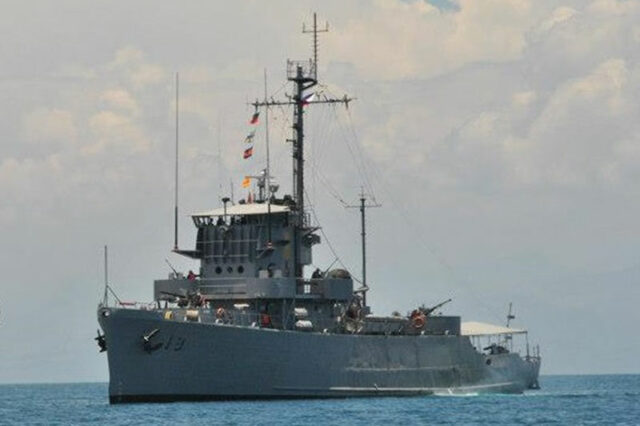
BRP MIGUEL MALVAR (PS-19) — COMMONS.WIKIMEDIA.ORG

By Kenneth Christiane L. Basilio, Reporter

PHILIPPINE-US forces canceled a live-fire drill on Monday after a decommissioned Philippine Navy vessel sank in waters near Zambales province facing the South China Sea hours before it could be targeted in their annual Balikatan (shoulder-to-shoulder) exercise.

The World War-II era ship BRP Miguel Malvar (PS-19) sank on Monday morning due to rough sea conditions while being towed to an area where the Philippines and US had planned to fire at it using anti-ship missile systems and military jets, their forces said in a joint statement.

“Prior to towing the target vessel to the operational area, the BRP Miguel Malvar underwent environmental cleaning and preparation for the marstrike,” they said, referring to the planned maritime strike drill.

More than 14,000 Filipino and American troops are participating in the Balikatan exercise, held in areas of the Philippines facing regional flashpoints like the South China Sea and Taiwan, and featuring advanced US missile systems. It began on April 21 and will run until May 9.

Their forces have practiced how to repel an invasion in western and northern Philippines and held naval drills with allies like Australia within the country’s exclusive economic zone in the South China Sea.

They were also supposed to sink the BRP Miguel Malvar with the use of the Philippines’ FA-50 fighter jets, A-29B turboprop attack aircrafts, fast-attack ships and its anti-ship cruise missile system, while the US planned to use its F-16 and F-18 fighter jets.

Despite the ship’s sinking, the Philippines and US said the maritime strike exercise “remains unaffected” because they would continue with virtual naval strike missions to rehearse command and control operations in a wartime scenario.

“The training will integrate ground, maritime and air-based sensors and shooters into a combined, joint fire network, as the Philippine and US joint task forces exercise command and control while increasing combined warfighting capability,” they said.

Meanwhile, a detachment of Philippine marines led the joint amphibious landing exercises in Palawan province, where they simulated a beach landing and tactical retake of an island as part of Balikatan drills, the Armed Forces of the Philippines said in a separate statement.

The Philippines and US held the drills with Australian forces, while troops from Japan and the United Kingdom served as observers.

“It showcased the growing interoperability and cohesion among partner nations in maintaining regional security,” the Philippine military said.

Also on Monday, the Philippine Army said it is prepared to provide support to the police and Commission on Elections by deploying more than 16,000 troops nationwide across checkpoints and polling precincts during the midterm elections on May 12.

About 9,700 troops would be stationed at more than 63,000 election stations nationwide, with 6,700 troops deployed throughout election checkpoints, it said in a separate statement. An additional 12,300 troops are on standby for possible deployment.

“Our troops have undergone rigorous orientation on their roles during this critical democratic exercise,” General Roy M. Galido, commanding general of the Philippine Army, said in the statement.

China’s coast guard last week said it conducted law enforcement patrols around the disputed Scarborough Shoal and nearby waters in the South China Sea.

The coast guard said it had strengthened patrols since the start of April, and carried out tracking, surveillance and interception operations “in accordance with laws and regulations,” according to a report from a Chinese military news website.

It said it had warned and expelled “illegal vessels” that veered within its waters to protect China’s sovereignty and interests, China Military Online reported on April 30.

Tensions between the Philippines and China over the South China Sea have worsened in the past year as Beijing continues to assert its sweeping claims, including on Scarborough Shoal, a key fishing ground claimed by both nations that it has controlled since 2012.

Chinese patrols around Scarborough Shoal coincide with the Balikatan exercise, which seeks to improve interoperability and preparedness to address shared regional security concerns. Beijing has said the drills are provocative.

Started in 1991, the Balikatan exercise has evolved into Southeast Asia’s premier combat rehearsal as the Philippines and US seek to strengthen security cooperation and enhance force interoperability in response to China’s growing assertiveness in the region.

Chinese spy accessed mobile phone data of state workers, says NBI

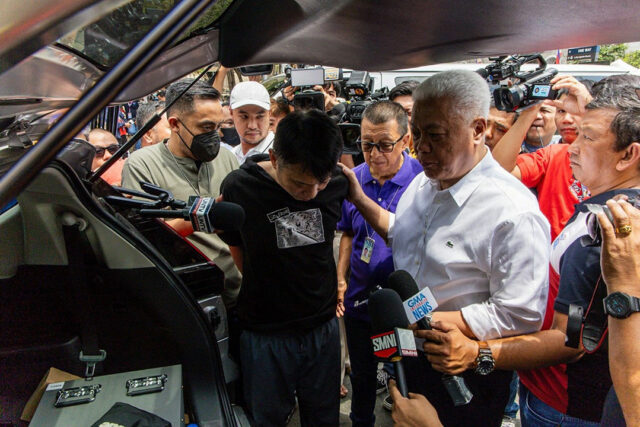
Photo shows a Chinese national getting handcuffed outside the Commission on Elections office in Manila on April 29. — JUCRA POOL PHOTO

By Adrian H. Halili, Reporter

THE National Bureau of Investigation (NBI) on Monday said that the suspected Chinese spy they had arrested accessed data containing the identity of about 5,000 mobile phone subscribers using an international mobile subscriber identity device (IMSI) device.

At a Senate committee hearing, NBI spokesman Ferdinand M. Lavin said the alleged spy drove near the offices of the Supreme Court, Department of Justice, Villamor Airbase, Bureau of Internal Revenue and Commission on Elections (Comelec) to eavesdrop on their employees.

“Our technical intelligence informed us that (the IMSI catcher) had accessed about 5,000 mobile subscribers’ identities,” he told senators.

The IMSI is a phone eavesdropping device used to intercept mobile communications and track location data by acting as a fake mobile tower.

Mr. Lavin said the device accessed the personal data not of only employees working there but also passersby who happened to be within the IMSI range.

“The range is between 500 meters to 3 kilometers,” he said. “We can just imagine that in a highly populated area, especially in the metropolis, they picked up a lot.”

He said that NBI expects to finish the cyber-forensic lab exam and release an initial report before the May 12 election next week.

“We will also do an analysis on the data captured by the IMSI device,” Mr. Lavin added, noting that they would send a copy of their report to the Comelec.

Last week, authorities arrested a Chinese national after being caught allegedly carrying the telephone eavesdropping device near the Comelec headquarters in Intramuros, Manila.

The bureau monitored the suspect’s activities for five days before taking action on April 29.

At same hearing, Comelec Chairman George Erwin M. Garcia said the agency’s data remained uncompromised.

“As far as the Comelec is concerned, there were no systems compromised as the election data were not present in our main office (in Intramuros). It is in another place,” he added.

He said that there is a misinformation and disinformation campaign against the election body.

“We noticed, since last month, there have been efforts against the Comelec of a massive misinformation and disinformation campaign… There is mind conditioning,” Mr. Garcia added.

He said he expects the disinformation campaign to intensify in the coming days before the election next week.

Earlier, the National Security Council said that there were “indications” that China was trying to sway the midterm national and local elections in favor of its bets.

The Chinese Embassy in Manila has denied these claims.

Filipinos will pick a new set of congressmen, 12 of the 24-member Senate and thousands of local officials on May 12.

DoTr orders shorter driving hours, regular drug testing for public utility drivers

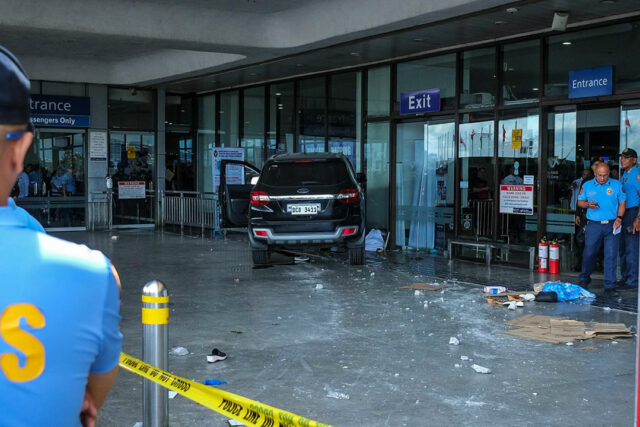
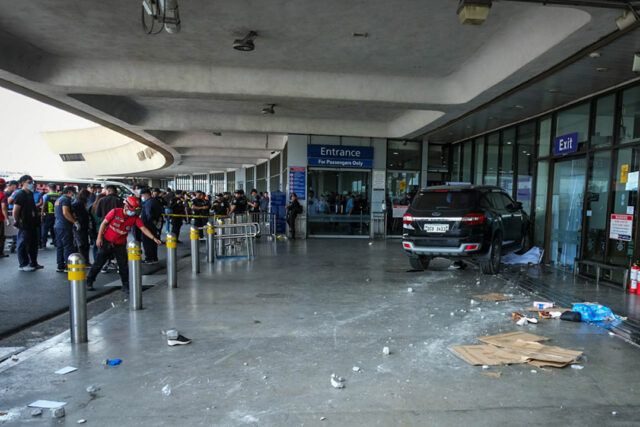
PHOTO SHOWS the Ford Everest SUV that crashed into the departure area of Manila’s international airport on May 4, 2025. — PHILIPPINE STAR/RYAN BALDEMOR

THE Department of Transportation (DoTr) will enforce shorter driving hours and regular drug tests for public utility vehicle (PUV) drivers after a series of road accidents this month.

“Today, I will sign a department order ordering mandatory drug testing for all drivers of public conveyance users,” Transportation Secretary Vivencio B. Dizon told a news briefing on Monday. “I also asked the LTFRB (Land Transportation Franchising and Regulatory Board) and LTO (Land Transportation Office) to revise the maximum number of consecutive hours for drivers of PUVs.”

This came after a Solid North Transit, Inc. bus crashed and caused multiple vehicle collisions at the Subic-Clark Expressway, killing 10 people on May 2, and a car crashed into Terminal 1 of the Ninoy Aquino International Airport (NAIA) on Sunday, killing two people.

Mr. Dizon said the department order, jointly prepared by the agency’s attached agencies LTFRB and LTO, would be effective immediately.

All PUV drivers must undergo mandatory drug tests every 90 days, he said, adding that the cost would be shouldered by the drivers’ operators.

The DoTr through LTO and LTFRB will also cut the maximum number of consecutive driving hours for PUV drivers to four from six hours.

Operators must assign a reliever driver for trips that last more than four hours, he said.

“I am asking the LTO and LTFRB to really make roadworthiness checks,” Mr. Dizon said. “Similar to mandatory drug testing, LTO and LTFRB must come up with very strict and enforceable and regular roadworthiness check, similar to other countries.”

He also ordered the LTO and LTFRB to come up with proposals to tighten the rules on PUV operations and the strict issuance and renewal of driver’s licenses.

Meanwhile, the presidential palace said President Ferdinand R. Marcos, Jr. has ordered Mr. Dizon to identify and hold accountable those responsible for the recent road accidents and to put in place reforms to prevent further loss of life.

The President sought a review of driver licensing to ensure that only fit, capable, and responsible people — whether driving public or private vehicles — are allowed on the road, it said in a statement.

He also ordered a nationwide audit of bus operators, with clear sanctions for those who fail to comply with safety and maintenance standards.

The President also ordered the Labor department to crack down on unsafe and exploitative practices in the transport sector “because driver fatigue, long hours and pressure to meet quotas should never put lives at risk.”

“We owe it to the victims and their families to act — not only with sympathy, but with resolve,” Mr. Marcos said. “These lives will not be lost in vain.” 

Also on Monday, the Department of Migrant Workers (DMW) said it would extend full support to the family of an overseas Filipino worker (OFW) whose four-year-old daughter was killed in in the NAIA car-ramming incident.

“The department also stands ready to assist the OFW in terms of explaining his absence from work to his current overseas employer,” it said in a statement.

Along with the Overseas Workers Welfare Administration (OWWA), DoTr and New NAIA Infra Corp. (NNIC), the DMW has started providing assistance and support to the OFW, his injured wife and mother.

The child was one of the two people who died as the Filipino migrant worker prepared for his trip to Europe.

The OFW’s wife remains in critical condition in the hospital, while his mother also sustained injuries but was reportedly in stable condition.

NNIC President Ramon S. Ang earlier said the company would extend assistance to the victims.

“The department joins the bereaved OFW and his family in their strong plea to have the perpetrator of this tragedy brought to justice,” the DMW added. — Ashley Erika O. Jose and Chloe Mari A. Hufana